Decisions II: Regret

Emory S. Land Executes Operation AJAX

US Navy again.

Having just written about decisions, and having just watched a documentary on Robert McNamara, I wanted to write a follow-up. Towards the end of the documentary the interviewer asks Bob there if he had any regrets about the war. I decided a while ago that when it came to regret in decision-making, that would have a very specific meaning for me.

If you make enough decisions clearly some of them will go poorly. But as I wrote in the last blog post, you can never know the counter-factual about your decisions. If decisions go poorly, you should look back and analyze what went wrong and how it could have gone better, in order to extract lessons learned from the event. If there was a bad outcome, you should look back and be sad about the negative consequences of the decision. But that’s not the same as regret. A lot of things become more clear in hindsight, and forces and factors will play out how they play out after your decision is made. Instead, I would reserve regret for decisions you knew you had made wrongly or poorly at the time you made them. Regret is reserved not for decisions that necessarily went poorly, but for decisions where you did not do your best in making them.

Back on the submarine, we would have critiques and a common “root cause” people tried to cite for when things went wrong is that they felt rushed, or had an “undue sense of urgency.” This usually actually translated into “it was near the end of the work day and I wanted to go home, so I rushed the work.” So our XO called us into the wardroom one day and clarified that “an undue sense of urgency” would be reserved for situations where someone was holding a gun to your head and telling you to get it done.

Flash forward a bit and we’re in the shipyard in shift work. The days in shift work are endless and we were coming up on a deadline to get out of there. I was the Reactor Control Assistant at the time, and the division was supposed to get a piece of testing done. If we didn’t get the testing done, we couldn’t leave the shipyard when we wanted, and this would have made people upset. I got relieved from my shift as Engineering Duty Officer, and was trying to help get the maintenance started per the schedule. The on-watch EDO didn’t want to do the maintenance. I pushed where I thought appropriate, but it was getting late and the the guys that were supposed to do the maintenance were coming up on 20 hours without sleep, and the maintenance was supposed to take several hours. So I gave up and went to the wardroom to work on my own qualifications.

There I found the XO. I sat down and he asked me about the maintenance my division was supposed to get started. I explained that I Just Couldn’t Get It Done. Then this man, that had explained that an “undue sense of urgency” was “someone holding a gun to your head,” he looked me straight in the eye and said to me “you know, sometimes you wish you could just take people out back and shoot them.”

The XO and I did not have the greatest relationship. This was not friendly banter. I understood that he was talking directly to me and about me. And reflecting on the gun comment, I thought I had top-cover. This was exactly the undue sense of urgency he talked about, and if things went poorly I would walk into the critique and say proudly exactly why I thought that sense of urgency was undue. So I got up, left the wardroom, and went back to the engineroom to Just Make It Happen. I cajoled the EDO, and told him the Division Chief and I would personally supervise the thing. So he relented and let us do it.

The guys were pissed. They were not happy about this. They needed sleep. They too were going to just be coming back up on watch soon. They were exhausted. But we felt like we needed to make this happen, and I felt like I had been threatened. So I “supervised” the maintenance but mostly I was standing guard to wake guys up in case the XO or the Naval Reactors rep came around the corner. My guys were falling asleep in the midst of this maintenance. This was Reactor Controls Division maintenance too, on the systems that monitor the nuclear reactor. I was myself falling asleep standing up but since I was standing I was slightly more awake than the guys.

And the whole thing went fine. We completed the maintenance. No mistakes. We reviewed and submitted the paperwork. We did our bit and after a lot of other stuff the ship left the shipyard on time (well, way delayed, but “on time” on the delayed timeline).

The decision to go ahead and push that maintenance is one of my bigger regrets.

That maintenance did not need to get done. It was going to prevent the ship from getting underway if it wasn’t completed, and a delay would have delayed other things, but no lives were in the balance here. It would have been annoying and caused a lot of headaches to get delayed, but no one would have been unsafe. But because I felt some pressure from my chain of command, I went ahead and made it happen. I set a bad precedent for my guys, and overturned every discussion we had ever had about fatigue and safety and the importance of doing reactor controls division maintenance right.

And most importantly, the whole time I knew the right answer. The right answer would have been to push back, to say, look, it’s impossible to get this done right now, my guys are too fatigued, and here’s the schedule for getting it done. It doesn’t matter what the XO said or a theoretical threat to get taken out back, I was there as an officer in the US Navy to make the right decision even when there is pressure to do the wrong thing. And I failed that test. I reflected and learned and grew from that experience, and I was young and inexperienced as a leader and decision-maker, but I don’t get that decision back. If I had just been stupid and made the wrong decision out of stupidity, I could forgive myself for that. But because I didn’t do my best in making the decision that day, I regret it. It wouldn’t be the last or the worst decision I came to regret, but it was an early one and indicative of the framework I would eventually develop.

Decision Making

USS Key West Completes Mobile Logistics Demonstration with USNS Richard E. Byrd

This isn’t really related and I hate to put everything in a military context but I hadn’t posted a picture in a while. This one’s not mine it’s from the Navy.

In a class today (as I’m writing this), we talked about decision making. The context was the whole pandemic thing going on, and the tendency of leaders who are worried about liability to wait on data to make a decision they already know they need to make. The advice was to put a lid on the amount of data you need to make a decision. That is, instead of always wanting for data, which is a dangerous path because there is always more data that you both could get and more data that you wish you could have, decide what data is truly important to make the decision. When you have that data, go ahead and make the decision. An objection was raised, in that some decisions are so monumental and the outcomes so unknowable, such as injection aerosols into the atmosphere to halt climate change, that you might never know the amount of data needed to make the decision, and simultaneously it might be better to wait.

Having made a number of decisions when I was in the Navy, I have a framework for how I think about decisions. An upfront point I want to make, and it is an insight I learned from an Animorphs book, is that not making a decision is just as much making a decision as making a decision is. That is, you can never really delay a decision, or choose not to make the decision. You are merely choosing to do nothing now, and then maybe do something later. Or you are choosing to let someone else make the decision, but that doesn’t absolve you of the responsibility of putting the decision in their hands. That is, you have chosen to let other factors or other people make the decision for you. That can sound nice, but since you chose to let someone else make the decision, the responsibility for the outcome of their decision still rests with you.

I also like to say that I used to think that 99% of decisions don’t matter, but now I think that it is something more like 99.999% of decisions don’t matter, or maybe none at all do. The important thing is that a decision is actually made. My favorite depiction of this was in the movie Battle: Los Angeles. In the movie (if I remember correctly), Staff Sergeant Michael Nantz is haunted by a decision he made in Iraq when leading his squad. They came to a fork in the road, and he had to choose to go left or right. He chose one, his squad was ambushed, and all his squadmembers killed. But the outcome of the decision was unknowable. He had no way to tell that if he chose a particular route, they would be ambushed. But he had to make a decision; they couldn’t just sit there. So he made a decision, and it went poorly, and although he was responsible for the outcome of that decision, it wasn’t his fault. So I hesitate to say any decision matters because the counter-factual is unknowable. If you do your best in making a decision, and make that decision decisively, and accept responsibility for the outcome, then you can’t beat yourself up over how else things could have gone.

The next bit is to address how to know when you are doing your best in making a decision. As a Division Officer and a Watch Officer, I messed a whole lot of stuff up. Like a whole lot of stuff. I was responsible for two incident reports (not actually the ship record I think), and for at least part of I think every year I was there I was responsible for the majority of critiques. Maybe it’s not the most healthy thing, but when I was making a decision I started to think, if everything went horribly wrong, how I would explain my decision at the critique. Could I articulate my thought process that lead me to a decision? Was there an obvious thing I could have done to mitigate a bad outcome? If I decided to forgo something, was I able to explain my risk calculation is forgoing it? What were the factors influencing my decision? Was I harried, tired, rushed, lazy? Most of all, was my decision reasonable?

If, in the world where every risk we took went south and things blew up horribly, I could imagine myself still successfully explaining my actions, then I figured the decision was good to go.

As a leadership point, I think one important skill to practice is actually making decisions. Especially in a scenario like a Navy ship, where the Engineer or the XO or the Captain are just a phone call away and encourage you to call them, and where they’re paranoid about letting you run free anyways, it’s easy to just keep shoving decisions up a level. Call up the Engineer and ask for advice or permission for things. Instead, you have to consciously make every single decision you are allowed to make. I would get frustrated when other people stood Officer of the Deck and didn’t take advantage of the situation to do as many practical factors for people qualifying as possible. You had a whole nuclear-powered warship at your disposal to do pretty much anything you wanted! Surface the thing! Dive again! Ventilate! Snorkel! Do Williamson turns for funsies! But no instead people would do boring stuff because they were afraid to make a decision. One way I tried to fight this was by making small decisions. As soon as I took the watch I liked to change course, speed, and depth by as small a factor as possible, usually one degree or one turn. By making small decisions, and by encouraging my under-instructs to make small decisions, it makes you more comfortable and practiced in making the large decisions when the moment calls for it.

Peace Corps Op-Ed

A version of the 2016 Peace Corps logo with the dove replaced with a fish
This is a version of the Peace Corps logo I made to celebrate the Rural Aquaculture Promotion (RAP) Program. I think you will agree is a huge improvement as tilapia are the true harbingers of peace.

What with all 7300 Peace Corps Volunteers being evacuated, I wrote an Op-Ed in support of them. I couldn’t get it published anywhere, and it seems they are implementing my suggestions anyways, so here you go:

Evacuated Peace Corps Volunteers Will Need Extra Support

In an unprecedented move for the organization, and in response to the COVID-19 crisis, the Peace Corps has evacuated all 7300 of its volunteers from around the globe. In the midst of the ongoing crisis, these returning volunteers deserve special support including extended counselling benefits, medical insurance, and unemployment benefits.

I have had the opportunity and privilege to serve in both the US military and the Peace Corps. I graduated from the Naval Academy in 2011 and served as a submarine officer for five years, stationed on a submarine operating out of Guam. There, my shipmates and I were on the forefront of US engagement in the western Pacific, and I served with pride among sailors doing the utmost for their country.

After I resigned my commission, I searched for another opportunity to serve my country. I found that opportunity in the Peace Corps, and in February of 2017 I arrived in Zambia as a Rural Aquaculture Volunteer. I found among my fellow volunteers a remarkable cohort of Americans who were absolutely dedicated to showing the best of the United States around the world. Their passion for service to their country was as fervent as any I found in the military.

In many ways the service of a Peace Corps Volunteer is much lonelier and more untethered than those that serve in the military. Peace Corps Volunteers are sent alone into their new communities, after a few months of language and professional training, and are expected to work and thrive with little direction from headquarters. They too put their bodies on the line; friends of mine in Zambia suffered from malaria, tuberculosis, broken bones, parasites, and more, often in their isolated villages where the only way to get them to a hospital was to dispatch a Land Cruiser from hours away. And whenever my fellow volunteers were forced to leave their communities, their greatest desire was to get back as soon as possible to continue their work.

The Peace Corps was right to evacuate volunteers in order to ensure their safety. However, the scale of the evacuation is unprecedented and I suspect will overwhelm the Peace Corps’ ability to adequately help every evacuated volunteer. Re-entry into the United States is stressful for volunteers in the best of circumstances, as they experience “reverse culture shock.” An evacuation exacerbates the stress, anxiety, and depression of re-entry, and now thousands of volunteers will need help simultaneously.

When sending these volunteers overseas, the United States asked them to prepare their lives for two years of service. They quit their jobs and moved out of their homes. Now, they are being sent back to the United States with little idea of what to do next. Volunteers had only days warning, and many were unable to go back to their communities to retrieve belongings or say goodbye. They were certainly unable to line up jobs or apply to schools.

Given their difficult adjustment returning home, many evacuated volunteers will benefit from seeking counselling and therapy. Peace Corps normally offers vouchers for three sessions of counselling to returning volunteers, but these can be hard to use as many therapists don’t accept them . Evacuated volunteers should have additional counselling made available, and the network of therapists should be expanded. Careful attention will have to be paid to other medical needs, as undoubtedly volunteers were not able to undergo as rigorous a medical screening as they would have normally received prior to returning home. This screening checks for and documents injuries sustained in the course of service, as well as diseases volunteers could be bringing back home. With the medical system dealing with COVID-19, finding space for evacuated volunteers will be difficult. Priority should be given to ensuring volunteers receive adequate medical screening, along with appropriate and timely care for any issues discovered.

Volunteers are returning in the midst of an economic crisis. Currently, returned Peace Corps volunteers are not eligible for unemployment benefits. This should be temporarily changed to allow evacuated volunteers to receive these benefits. In addition to medical screenings, Peace Corps medical insurance coverage should be extended. Currently, evacuated volunteers get two months of limited insurance free, and can pay for a third month. This coverage does not meet minimum essential coverage according to Affordable Care Act requirements. Coverage should be extended to cover the height of the COVID-19 crises. In addition, student loan deferments that Volunteers were eligible for while in service should also be extended. These measures will ease the financial burden of volunteers unexpectedly returning during the economic crises caused by COVID-19.

The threat of COVID-19 is unprecedented in modern times, and in response the Peace Corps has taken unprecedented measures to protect its volunteers. I know from my experiences that the work these volunteers do is as important as any that serve their country overseas. Given the crisis that is gripping the United States, and in acknowledgement of the sacrifice they have made to serve their country, these volunteers need and deserve an extra measure of support to ensure their smooth transition home.

Roads, Busses, & Schooling

IMG_0327

A school I visited in Zambia.

Reading this week:

  • The Good Shepherd by C.S. Forester

I was supposed to be in Kenya this week for a school project, but COVID-19 put a damper on those plans. So in search of content I wanted to share some thoughts on a sort of pet notion of mine: the effect of school busses on education.

I am more or less obsessed with the notion that the key to all development is building good roads. This of course comes from my experiences in Zambia, where the village I lived in, while only 12km away from Mbala, was connected to the town only via an absolutely terrible dirt road that took a 4×4 a hour to travel down. That, combined with the education I saw in Zambia, got me thinking about busses.

I think busses are a little-sung hero of public education (not entirely; there appears to be a globe-spanning school bus industry that does its best to trumpet its advantages). I didn’t have to think about them much until I had to think about the implications of living without them. In Zambia I don’t think I saw any school busses. I would see a bus for the nursing school driving around, and one time I wound up on a bus that was almost entirely chartered by a girl’s boarding school that was sending a chunk of students back to Mbala, but as far as I know there aren’t any examples of dedicated public transportation for schools. The upswing of that is that kids have to walk to school. That by itself is good and fine; kids should of course be expected to walk to school uphill both ways in the snow. But what it means is that you wind up having schools every 5-10km or so, so that kids are able to walk to school in under an hour (people at a fairly brisk pace walk about 5km an hour). An hour walk doesn’t sound too bad, until you do it every day both ways in the hot African sun without shoes.

The upswing of having schools every 5-10km is that they have to be small. If the country has so many teachers, and those teachers are going to be split up among so many schools, then the more schools you have the fewer each school gets. One school near me had only one teacher who was teaching, or at least trying to teach, 150 students. So this, I think, is one of the big advantages of busses: they let you consolidate schools. That would allow you to pool resources in a lot of better ways. Teachers could specialize in just one subject or just one grade, which I think could improve teaching. These schools I am talking about are mostly primary schools, which covered grades 1-7. Back in my elementary school, we had one teacher that taught most every subject which I think is normal, but we were able to have a dedicated art teacher and a dedicated computer lab. In Zambia computers are part of the school curriculum, but there is no way these tiny schools would have the resources to maintain a computer. In a more consolidated school, I think you could  manage to have something like that. You might even be able to have a dedicated administrative staff, which would be a boon. In the school with the lone teacher, whenever he needed to talk to the school district office he had to go into town which cost a whole day of instruction.

School busses would also provide a lot more school access. It is sustainable, if less than ideal, to have a whole bunch of primary schools spread around rural areas. But for secondary schools, the curriculum there requires dedicated science teachers and the like. So by necessity (and, unfortunately, demand), there were a far smaller number of secondary schools. The closest secondary school to my village was in Mbala, which like I said is 12km away. This was generally a 2.5-3 hour walk, which is more or less impossible to do every single day if you’re a high school student. The upswing is that secondary schools in Zambia tended to be boarding schools, though if you lived near enough you could of course just be a day student. But boarding schools were necessarily more expensive, and so out of reach of the vast majority of students. If there were school busses that could take students to school, far more students would have access to education.

I tried to find articles and research that could help me determine the exact effects that school busses had on education. I couldn’t find a whole lot that was specifically about busses (I did come across this article, which I think explains my own academic success), so I tried to find research about school size. Turns out there are a lot of articles in that vein, mostly it seems tied to the small schools movement. The general theme in these articles is that smaller schools provide more access to teachers and community, which is good and excellent. An interesting insight in this article is that larger schools are favored by governments because they tend to be cheaper to run. In the context of Zambia, the education system is already pretty dismal due to a lack of budget, so I think that if larger schools are cheaper this could be a major advantage, despite a potential reduction in community, if it means that more students have access to education at all. One newspaper article from 1988 was in line with my thinking, pointing to research that said students in bigger high schools did better because they got to enroll in the more specialized and advanced classes that those schools were able to support.

I would like to see more research on the exact impacts that bussing can have on student’s education, especially with regards to access to education and the effect on schooling. That might be another arrow in the quiver of arguments for why roads are so awesome, because it would be hard or impossible to have busses without an adequate road network. Of course, it might be out of reach anyways; not only would you have to build a whole road network, but according to one article bussing in the United States costs about $500 per pupil per year. In Zambia in 2018, the government was able to allocate about $200 per pupil total for education. There is lots and lots of work to do to make sure every kid can get a quality education.

The Draft

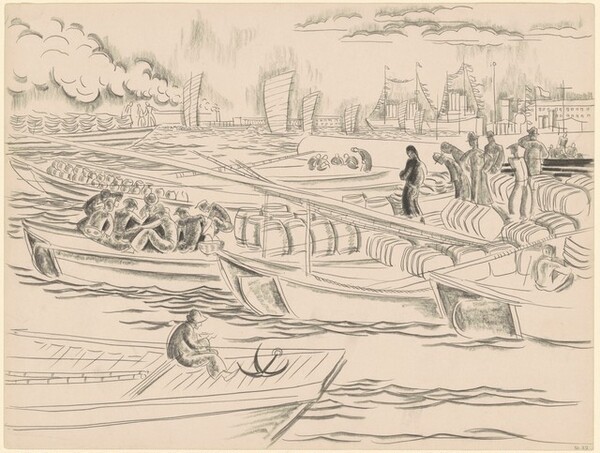
Shanghai Harbor by Thomas S. Handforth

Reading this week:

  • 1Q84 by Haruki Murakami
  • How Everything Became War and the Military Became Everything by Rosa Brooks

We’re no longer in the “stretch” portion of content, technically, because I am back from my trip, but I guess the internet was worried about World War III after the strike against Soleimani. This, as we are all aware, apparently lead large swaths of the American Youth to be afraid they were about to be drafted (NYT). In a later article about a fraud centered around the draft, the New York Times also characterized text messages saying people were going to be drafted as “scary” (NYT).

I have a great many complex feelings about this. I’m not sure I can characterize them fully here, but I’ll give it a go. First off, the draft in its most recent iterations is terrible. It is classist, and in America that therefore means it is racist. Theoretically any man of the right age can be called on to join the military, but there are exceptions. There were deferments for college, or if your job was vital to the war effort. The sorts of people going to college or who have jobs vital to the war effort are going to be from a certain social class. And if you can’t get deferments for college or your job, if you have enough money and know the right people you can always find a doctor to give you a diagnosis of bone spurs. So the draft was never as egalitarian as it should have been. The military doesn’t even particularly like the draft; it is way easier to manage an all-volunteer force, because everyone there theoretically wants to be there, as opposed to a force full of people who were, uh, drafted into it.

But what rankles me is that people are afraid of it. That, like I said, the NYT characterizes the draft as “scary.” What, exactly, is so scary about serving your country?

I am going to put aside the conscientious objectors, because those people aren’t necessarily afraid to be drafted. I also understand on a lot of levels why the draft would be scary. Anything strange and foreign is scary. I understand the people that are in no position to be drafted, because they need to support their families or other reasons. But these 18 year olds? These college students? What’s their excuse?

If the fear is that you will be drafted and then go on to be killed or seriously injured, I understand that as a specific fear, but what is the alternative? If you don’t go, then someone else will have to. Increasingly, the military is part of a caste system – it is the children of military that go on to serve in the military (NYT again, these warnings are for the paywall). That was the case for me. I’m 3rd gen military, on both sides (my grandparents were both in WWII, so maybe that’s not so special). My parents never pushed me into the military but at age 18 or so I suddenly woke up and pure instinct pushed me to go to the Naval Academy.

The big advantage of the draft, that although it is in-egalitarian, is it did do something to spread out who participated in the military. It also spread out the burden. When the draft was around, wars meant that your kid might be called up. Without the draft, wars can be fought by other people, those anonymous “boots” that always wind up “on the ground.”

Personally I think joining the military is about the best thing you can possible do at age 18, and, failing that, at about age 22 right out of college. Serve four or five years, and then go on to do whatever you’re were originally going to do. It gives you discipline, it gives you life skills, and at the very least it gives you a paycheck while you get a little bit older and wiser. People are idiots at 18, so join the military and when you get out at 22 or 23 you won’t be quite as dumb and can go to college as a not-dumb-kid.

Here’s what I am trying to get at. I’m not sure if I support a draft or not; I see a lot of pros and cons either way. If we just re-up the last draft law, probably not, because as I said before it is racist. And I don’t think some sort of universal service would work for the United States the way it does for Singapore or Israel, because we’re just too big. But at my grumpy old age of 31, it upsets me that young people should be so afraid of the draft. Sign up. Serve. See the system from the inside. Learn who the people are that fight the nation’s wars.

Keurigs & Environmentalism

I had a Keurig I owned for many years that I loved very much that I had named Henry and had given a whole backstory to (he was in love with the printer, Maria, but Maria was in love with the computer, Isabelle) that I only relatively recently got rid of, and I am discovering I have zero pictures of it despite it being such a meaningful appliance. So I have created a very silly picture of a green Keurig to grace this otherwise serious post.

Until this week, at my program at Yale they provided us with disposable K-Cups to make coffee. A certain crowd agitated, and without warning they decided to stop providing disposable K-Cups. Instead they had roast coffee grounds, the reusable K-Cups, and pour-over coffee makers, with discussions ongoing about getting a regular coffee maker. I am perpetually grumpy and anti-authority, and was upset about this change. I’ve put my analysis below, but as far as I can tell disposable K-Cups are the most efficient method of producing coffee man has ever created. It’s stunning. They are so miserly with coffee, and coffee is such an energy-intensive crop (especially when you consider coffee being drunk in New England with the transportation energy included) that the extra roast coffee grounds required to make coffee for literally any other method (including, importantly, reusable K-Cups) more than offsets the carbon cost of the plastic in K-Cups.

This is an important point when it comes to environmentalism. You have to consider the whole picture. Single-use plastics are bad but they don’t exist in a vacuum; if they are replacing something else, what is the alternative? By switching from disposable K-Cups to another coffee brewing method, we’ve eliminated bright white plastic from sitting in our garbage can, but we’ve replaced it with an even greater amount of carbon dioxide we just release into the atmosphere. That carbon dioxide is easy to ignore though, because it is invisible and happens far away from us (or at least a bit down the road). People don’t have a good grasp on the fact that an electric kettle is a 3kW device that sucks down just gobs of power, and that’s because they don’t have a good grasp on how many of the systems we just take for granted in the Western world actually work.

To make a vaguely related point, this is why I get upset when people talk about nuclear waste. Nuclear waste is bad, I agree, but it is better than CO2. Dealing with nuclear waste is a relatively easy technical problem; you just bundle it up and stick it in a hole. It’s easy to transport and it just sits there. But people can see it, and have to do the actual transporting. It’s easier to be in favor a natural gas power plant in your backyard because the only waste that thing generates is invisible gasses that just float away.

The takeaway here is not that K-Cups are good for the environment. Turns out coffee is bad for the environment. But if you’re going to drink coffee (and participate in all the other terrible, environmentally unfriendly aspects of a modern Western lifestyle), then it seems that disposable K-Cups are literally the least bad way to do it.

My Analysis of the Carbon Footprint of K-Cups:

Disposable K-Cups: Each K-Cup is made of 4g plastic and 10g roast coffee (numbers range from 3-4g of plastic, and 5-11g of coffee).

Reusable K-Cup: Instructions call for using 2tbsp of coffee, which is 16g.

Carbon Footprint of Plastic: The “recyclable” K-cups (the latest ones) use polypropylene (PP). According to EPA estimates, each short ton of PP produced results in 3.02 metric tons of CO2 production, which is equivalent to 3.33g of CO2 production for 1g of PP produced.

Carbon Footprint of Coffee: Estimates here are hard to get. The most complete study was for coffee produced in Costa Rica and consumed in Europe. If you subtract consumption (brewing the cup, producing the filter), they estimate 2.83kg of CO2 for every 1kg of green coffee. For every 16oz of green coffee you generally produce 12oz of roast coffee, so you produce 3.77g of CO2 for 1g of roast coffee grounds. That is on the low end of estimates; other sources I found say 5.5g to 11g of CO2 for every 1g of roast coffee. Estimates for the carbon footprint of coffee are always going to be all over the place because it will depend on where they come from (our local roaster sources coffees from as close as Mexico and as far away as Sumatra) both due to transportation costs and production methods. The coffee plantation I lived next to had center-pivot irrigation and that had to consume tons of energy. The sources cited before also note the huge impact fertilizer use has on carbon footprint.

Carbon Footprint, Disposable vs. Reusable K-Cup: A Disposable K-Cup has a carbon footprint of 55.0g CO2 (13.3g from the plastic, 4g of plastic, 37.7g from coffee). The Reusable K-Cup has a carbon footprint of 60.3g CO2 (all from the coffee). So net, a Disposable K-Cup has a lower carbon footprint than a reusable K-cup. This is a low-end estimate; the difference gets much worse for Reusable K-Cups if we use the higher coffee carbon footprint from the other sources. Coffee is such an energy intensive crop and Disposable K-Cups are such an efficient coffee brewing system that the additional plastic in a disposable K-Cup is more than offset by the additional coffee in a reusable K-Cup. You even throw away less trash; the Disposable K-Cup weighs a total of 14g, but the Reusable K-Cup uses 16g of coffee, which also just gets thrown away (we don’t have a compost bin or anything). The major assumption in this is that the transport and packaging costs of K-Cups and roasted coffee is the same. I think this is a safe assumption because the K-Cup manufacturers have economies of scale, and when the K-Cups are delivered it is via very efficient delivery systems. The smaller scale of operations of the local roaster we get our coffee from likely means they are less efficient in their roasting and packaging operations and in their delivery systems. K-Cups are so efficient that Bloomberg credited the rise in K-Cup use over traditional coffee pots for a downturn in worldwide coffee demand. I also did not include the energy estimates for brewing the cup of coffee because I assume this is the same for disposable and reusable K-Cups, but this is significant for other brewing systems.

Waste in Other Brewing Methods: It takes a large amount of energy to heat water. At Yale, the electricity comes from the Central Power Plant (CPP), which uses natural gas and has a 20% thermal efficiency (20% of the thermal energy at the power plant is converted to electrical energy, which is per the tour I took at the beginning of the semester and is normal for turbine systems). 12oz of water weigh 0.78lbs, 1 BTU is the energy required to raise 1lbs of water by 1°F, and 53.07 kg CO2 is produced for every 1 million BTUs from natural gas. Thus, heating the water for one cup of coffee produces 29.4g CO2, which is equivalent to the plastic in just under two disposable K-Cups:

(212-70°F)*0.78lbs*(1BTU/°F-lbs)*(53.07kgCO2/1,000,000 BTU)*(1000g/1kg)/20% = 29.4g CO2

The takeaway from this analysis is that a major inefficiency in other types of brewing systems is wasted energy from heating extra water. If you make pour-over coffee using the kettle, every 2.4 extra teaspoons of water heated to boiling results in 1g of CO2 released into the atmosphere. If we get a coffee pot with a burner to keep the coffee warm, that would likely be the most significant energy loss in the whole system. If we get an airpot brewing system or even a traditional Mr. Coffee, then every cup of coffee left over at the end of the day or thrown away because it is cold or stale is two K-Cups worth of CO2 emissions wasted.

That also doesn’t count the roasted coffee used. Every other method calls for using more coffee than the K-Cup contains. Instructions for Century Series Air Pot Brewers call for 2.5oz of roasted coffee to produce 2.2L of coffee, which comes out to 11.43g per 12oz cup. If we produced coffee in accordance with the instructions, and drank every single cup, that is more efficient than a Disposable K-Cup. But between the coffee and the power, every wasted 12oz cup has a carbon footprint of 72.4 g CO2 (43g from coffee, 29.4g from heating water), or the equivalent to the plastic in 4.2 disposable K-Cups (that is also under ideal conditions; the calculation for heating water above doesn’t account for any losses). 11.43g of roasted coffee is also on the low end, as this source recommends 21.26g of roasted coffee per 12oz cup, which appears to align with a common suggestion of 20g per 12oz cup for other methods. One of the biggest efficiencies from K-Cups is that they result in no wasted cups of coffee at the end of the day; people don’t have to brew a whole pot of coffee to drink just one cup.

Conclusion: Coffee is energy-intensive no matter how you choose to go about making it. But because the Disposable K-Cup is such a resource-efficient method of brewing coffee, it is the least bad method. By eliminating Disposable K-Cups, we’ve eliminated that plastic from landfills but traded it for a larger mass of CO2 released into the atmosphere, where it is a much tougher problem to deal with. Plastic is unsightly but once you dump it in a landfill it tends to actually stay there. It is easier to pretend that the CO2 isn’t a problem, but that’s only because we can’t see it.

Appendix 1: Creamers

Dairy milk produces 1467g of CO2 per liter of milk. Almond milk produces 396g of CO2 per liter. A standard creamer packet contains 11mL of liquid. If you assume people put 22mL (two creamer packets) of milk into their coffee (for those that do), that is 32.3g of CO2 per cup of coffee for dairy milk and 8.7g of CO2 per cup of coffee for almond milk. Each creamer packet worth of dairy milk is just shy of 1 disposable K-Cup worth of plastic in terms of CO2 emissions.

Lord Jim

Lord Jim

Reading this week:

  • The Education of an Idealist by Samantha Power
  • Why Europe Intervenes in Africa by Catherine Gegout

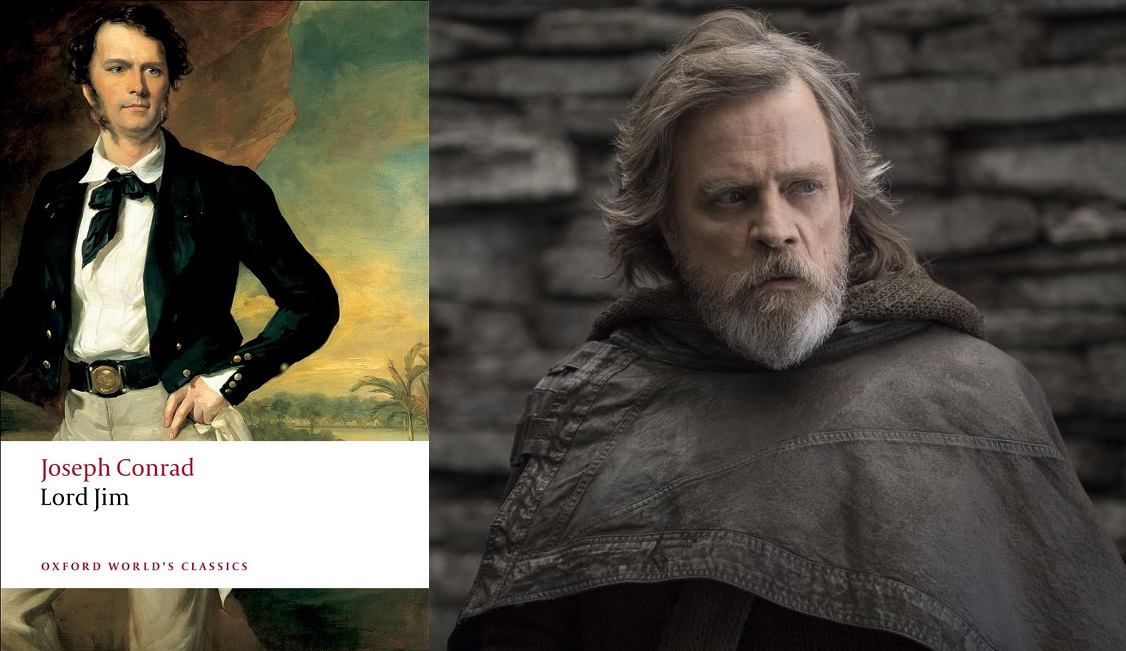
So this post is about both Lord Jim and Star Wars: The Last Jedi. I read Lord Jim in the Peace Corps and only came across it because it was free for Kindle on Amazon. I found the novel to be very powerful and it resonated with me on a personal level. It follows Jim, in Joseph Conrad’s “dude telling a story is the story” style, who we meet as he is first mate on the Patna, a steamship carrying Muslims on the Hajj. After the ship strikes an underwater object and appears ready to sink, Jim abandons ship with the other crewmembers, leaving the passengers to their fate. Once they reach port, the other crewmembers run away, but Jim faces a trial for his and their actions. After this he spends a great deal of time running away from anyone who might even have heard of him, before finding some level of glory on a remote island.

What made this book stick with me was the nature of Jim’s failure. Most of the failure I think you’ll find written about or shown in movies is just not reaching a goal. The hero tries really really hard but just can’t make it. They run as fast as they can but don’t make the touchdown, or fight as hard as they can but just don’t beat the bad guy. This is a relatable and blameless sort of failure. Maybe you studied really hard and tried to write the best admission essay possible but you just didn’t get into that dream school. So you failed, but as long as you put in the best effort possible that failure isn’t really your fault.

But Jim’s failure in Lord Jim is of a whole different sort. Jim is a relatively experienced seaman serving as an officer onboard a ship carrying passengers who’s life he is responsible for. When the ship appears ready to sink, he wants to load the passengers onto lifeboats and do what he can to save them. If he can’t save them, he knows it is his duty to die trying. But meanwhile the rest of the crew is abandoning ship, and doing it as quietly as possible so the passengers don’t panic, rush the lifeboats, and keep the crew from saving themselves. Jim teeters on the edge of this decision, standing dumbstruck as he watches the rest of the crew put the lifeboat to sea. Finally, at the last possible second, Jim jumps into the lifeboat and saves himself, leaving the passengers (so he thinks) to die.

This is a radically different version of failure. Jim knew what the right answer was, knew what his duty was, and instead chose the wrong answer aware the whole time that it was the wrong answer. It’s not that Jim just didn’t try hard enough, it’s not that Jim made a sincere effort and just made a mistake, it’s not that Jim made what he thought was the right decision that later turned out to be wrong, it’s that Jim leapt into that lifeboat knowing the whole time he was abandoning his duty. And while Jim faces his failure with honor in the courtroom, he afterward runs from every port he lands in as soon as he hears his failures are catching up to him.

Which brings me to The Last Jedi. One of the big criticisms of the movie was the character arc of Luke Skywalker. People didn’t want to believe that the young man so full of hope that takes down the Empire in the first three movies could turn into a bitter old man by The Last Jedi. But man when I saw that movie I got it. This Esquire article tries to explain Luke’s exile as some sort of enlightened pacifism, but that’s not it. The only reason Luke could fall so far is because he used to be that young man full of hope and righteousness. In Luke’s flashbacks we learn that the moment of his fall was when he came into Ben Solo’s room with the intent to kill the future Kylo Ren because Luke feared what Ben could become. Luke suffered the same failure that Jim did. Luke’s failure wasn’t that he didn’t try hard enough when training Ben, or that he didn’t kill Ben when he had the chance, Luke’s story is that he chose the wrong answer despite knowing it was wrong. Luke knew that killing Ben was wrong and evil, but chose to do so anyways. He stopped himself before he committed the act, but it was too late and Ben had seen his mentor betray him. Luke knew he had failed and couldn’t look himself in the mirror let alone face anyone else.

I understood both these characters because I had been there. At the Naval Academy and throughout the Navy they teach you integrity is the most important thing. We do trainings on trainings on trainings. We talk about it all the time, discuss scenarios. I was so tired of integrity trainings that I joked that you can only become so integreful, and I should be exempt because I was at maximum integrity (you can’t tell the truth more than 100% of the time). But then one day I was standing as a duty officer and I lied. I thought I had a good reason (and I learned everyone always thinks they do), but I knew it was wrong. And when I got caught and had to face my failure I couldn’t. You have a whole image of yourself and what kind of person you are but when it is put to the test you find out what you’re really made of. When Luke failed he sent himself into exile on Ahch-To. Jim ran away from any port that had even heard of his actions. I spent two years in Zambia.

Jim is saved because he winds up in the remote village of Patusan. Alone and just forced to be the best man he can be, free of anyone who might have heard of his past failures, he finds success and courage. The next time he has to decide to run or to do the right thing, he chooses the correct path. Luke is saved because Rey shows up. When he tells her of his failures, she just doesn’t care. She knows the kind of man Luke is and can be, and that’s all she demands of him. So that’s what he winds up giving. If audiences don’t understand these characters, I think it is because they have never really had to face failure the way these characters have had to. Theirs isn’t a failure of effort but a failure between them and the very nature of their being. Finding yourself after a failure like that is a deeper arc then just running a bit faster or fighting a bit harder.

Battleship

Battleship Poster.jpg

The greatest movie ever made was the 2012 blockbuster Battleship. I love this movie un-ironically. It is amazing. It is fantastic. It exceeds everything else that has ever hit the silver screen, and quite possibly any other form of art or self-expression that has been hoisted into the human consciousness. I will be having a totally normal day, and I am not joking here, but suddenly this absolute cinematic masterpiece will pop into my head and I can’t think of anything else. This happened today and I spent a few hours clipping out some of my favorite scenes and creating the gifset below with the hopes that magnificent triumph of storytelling will reach a greater appreciation throughout the world.

Let’s start with the basics of this movie. I am not so blinded with love that I don’t notice the movie’s flaws. The movie spends the first ten or fifteen minutes attempting, for some reason, to set up a love story or something. If I was director I would have skipped this and gone straight to fighting aliens. It features Taylor Kitsh as an undisciplined bad boy, forced into the Navy by his older brother (played by Alexander Skarsgård!) after he steals a burrito. The love interest is Brooklyn Decker, who’s admiral father is played by Liam Neeson! The cast this movie puts together! An absolute powerhouse collection of movie stars assembled so that the real stars of the movie, the ships, don’t too far outshine these bit characters. Other significant players include Tadanobu Asano as the captain of a Japanese destroyer inserted to play the straight man, and Gregory D. Gadson as an Army double amputee inserted to provide a message of overcoming setbacks, or something, and also beat the shit out of some aliens. And I haven’t even mentioned that this movie includes freakin’ Rihanna, who is an absolute badass in the role of Petty Officer Cora Raikes.

After the movie sets up this love story/bad boy plot, aliens land. Frankly the Navy handled the first encounter kinda poorly but who gives a shit because now we’ve set up the thrust of the movie: aliens have landed and it is them versus the finest goddamned Navy the world has ever seen. Due to that first encounter our bad boy Taylor Kitsh is in charge of the small fighting force left to actually fight the aliens, with a ragtag crew at his side. The rest of the movie is them kicking some serious alien ass.

So let’s discuss Battleship as it compares to some other examples of the Navy movie genre. The most famous Navy movie of all time is Top GunTop Gun is okay. Launching planes to “Danger Zone” is a great thing to do, but because of that scene the movie peaks right at the start and it’s all downhill from there. Then the rest of the movie you get like what? One and a half dogfights? Psh lame. Plus as a general rule aircraft carriers are pretty uncool; they have Starbucks onboard. Movies like the recent Hunter Killer have a special place in my heart for being submarine movies, but even that action-packed thriller suffers for featuring a Virginia-class; fast attacks are supposed to be nuclear-powered sports cars and any boat with bilge keels is more like a minivan. But what does the movie Battleship offer you?

Mahalo Motherf

Battleship offers you RIHANNA SHOOTING AN ALIEN IN THE FACE WITH A FIVE INCH CANNON. Citizen Kane parades itself around as the greatest movie ever made, but at no point in Citizen Kane does an absolute fantastic piece of naval hardware get used to obliterate an alien at point blank range by one of the most versatile women of the modern era.

Fire Everything

The whole movie (except for the love story portions) is just badass nautical action after badass nautical action. It doesn’t hold back. In the above scene they think they’re down to a one-on-one battle, and they decide to throw literally everything their destroyer has at the alien ship. They launch every missile, they got all the dudes on machine guns, and our bad boy and his Japanese buddy are on the bow with 50 cal rifles for absolutely no good reason except for that it is fucking awesome.

Approach

But the real star of this movie, the real reason you came to see it, is the titular battleship, the USS Missouri, BB-63, the Mighty Mo’ herself. Here is another sincere, deeply held belief of mine: the Iowa-class battleships are the most beautiful thing mankind has ever created. The four sister ships are the largest and most powerful warships to ever float (that survived the war anyways) and represent the pinnacle of warship design in the final glorious age of that artform. Those babies got curves. Left without other options, our ragtag crew decide to try to bring her back to life and go head to head with the aliens once again.

Old Guys

And thus kicks off the greatest 10 minutes of cinematic history to the tune of “Thunderstruck” by AC/DC, itself perhaps the finest accompaniment possible to the seagoing splendor of this film. The crew has a problem: they have no idea how to drive the Mighty Mo’. But no worries! Out of the woodwork come the original crew of the battleship. There is a whole scene where old, proud men with even older and prouder mustaches appear in mankind’s greatest moment of need to take the old but gallant girl out of retirement to face battle one more time.

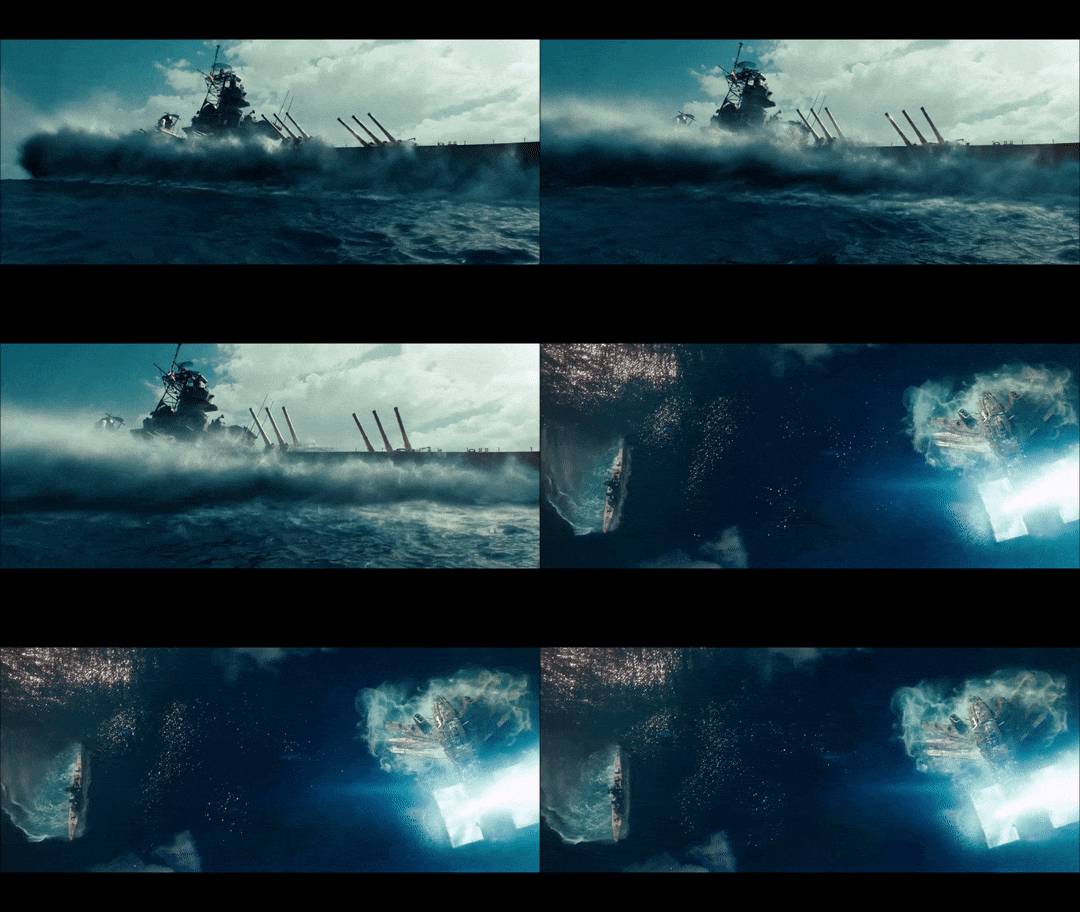
Big Wave

I cannot stress enough that I am being 100% honest here, but the whole scene where they bring the ship back to life gives me tingles every time I watch it. It’s so magnificent. The enginerooms on steamships always get me hot and bothered anyways, but watching, even in CGI, an Iowa-class battleship get the fires in her heart lit once more very nearly brings tears to my eyes. And to watch the bow crash through the waves on her way to her sacred duty one last time would be a sight I would do anything to see for real if I could.

Alien Tackle

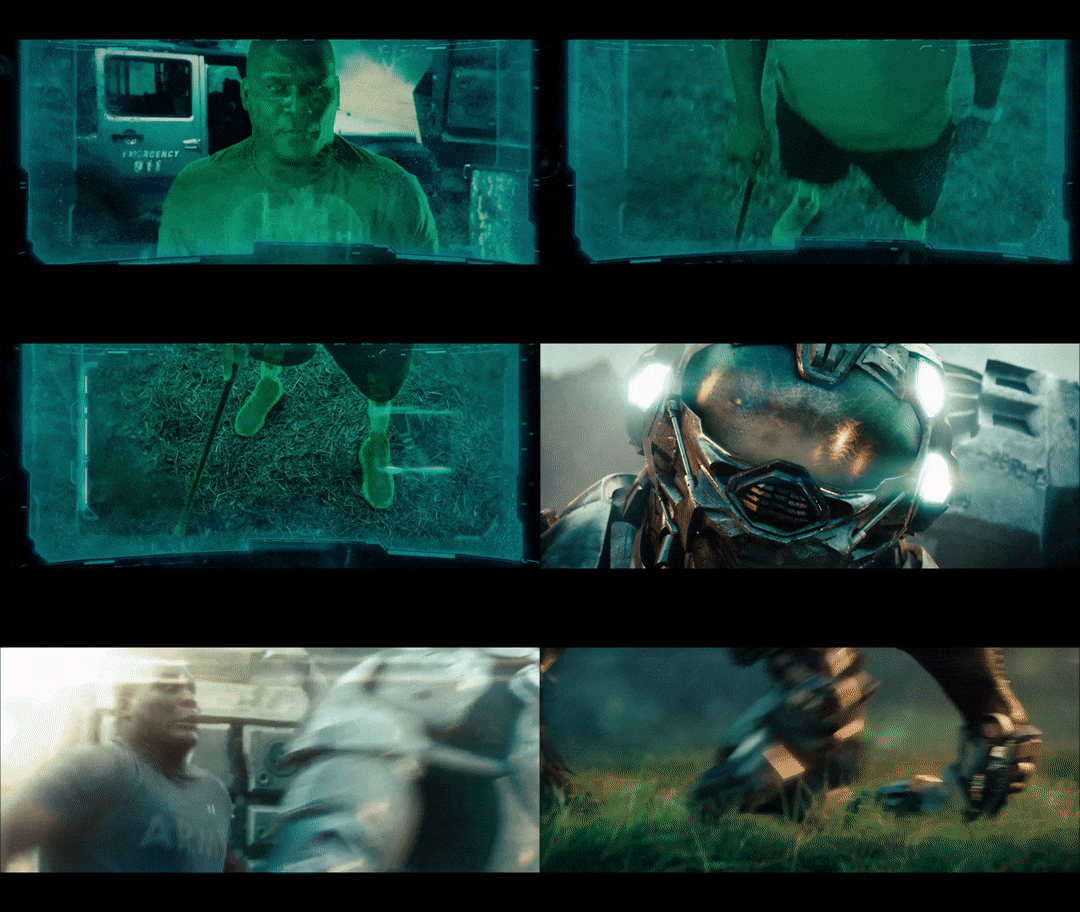
A brief interlude here to emphasize this movie has everything. I love the battleship most of all but there is a whole storyline that happens on land, and that storyline is badass. On the ship, they needed a five inch cannon to take out one of the aliens. Our double-amputee friend though, he just straight up tackles one of the dudes. He goes toe to toe with a huge armored alien and he doesn’t even have any toes. He’s an Army dude so that’s points against him but still man, respect.

Power Slide

But back to the battleship. I love the movie Casablanca. Play it Sam, play as “Time Goes By.” We’ll always have Paris. Here’s looking at you kid. Fantastic. But at no point in Casablanca do they powerslide a freakin’ Iowa-class warship and then fire a broadside at an alien spaceship. I mean holy shit. It’s Tokyo Drift but with 57000 long tons. Show me another movie that powerslides an Iowa-class battleship and I’ll show you another movie that has even half a chance at beating this one as the greatest of all time.

Drop Some Lead Small

And just look at that broadside in action. I’m only giving you seconds-long chunks of these scenes, and all silent. It goes on for ten minutes or more, just non-stop battleship action. I could run the thesaurus dry and not have the words to convey it to you. You have to watch it.

Old Dude Shooting

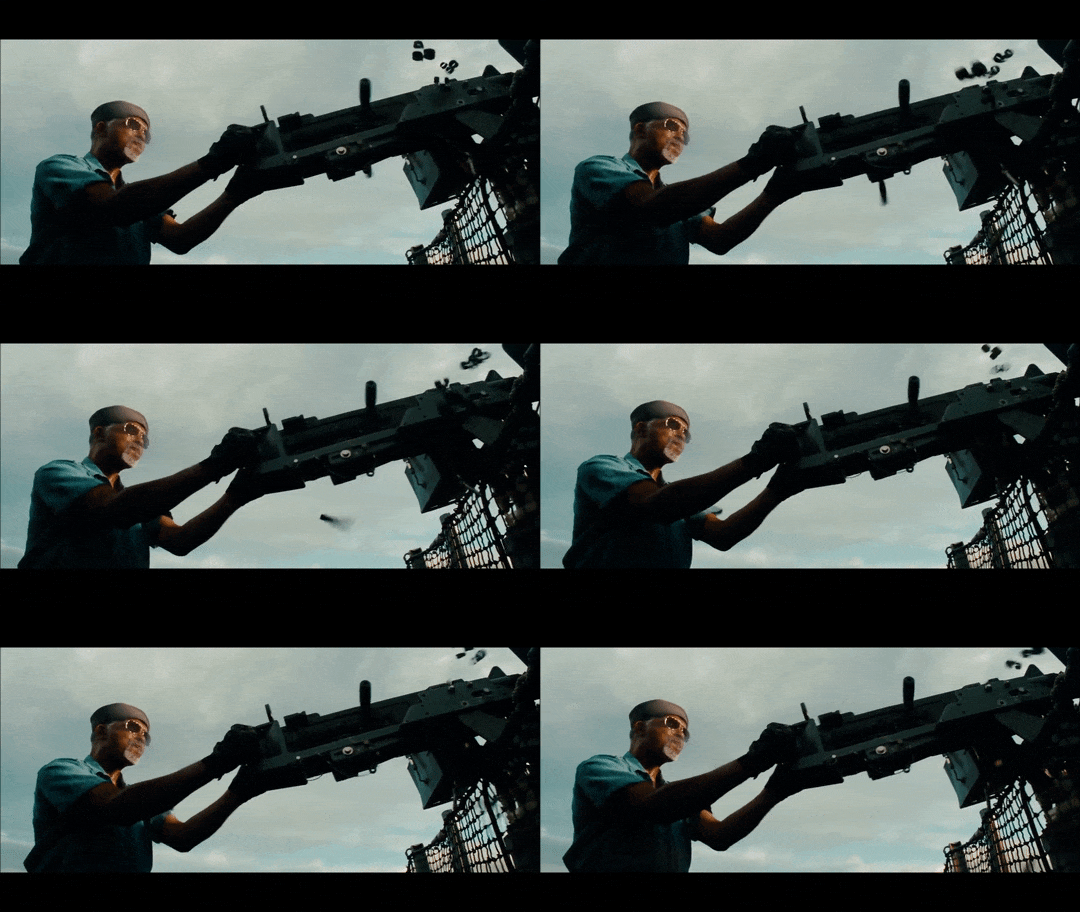
Even the old dudes get in on the action! In Marine Week, we were taught to hold a machine gun burst for the amount of time it takes you say “Die Motherfucker Die.” These old dudes 100% ignore that advice and fuckin’ get some when it comes to shooting aliens. The ship is already launching full broadsides of 16″ rounds at these aliens and they’re still firing 50 cal machine guns I think mostly for funsies. Amazing. Fantastic. World-class.

Stupid Jets

The only major mark against the movie though frankly is right at the end. After all this SWOtivating battle action, after our blackshoe friends do all the hard work and kill 90% of the aliens and knock down the force field that was keeping the rest of the Navy at bay, some freakin’ pilots swoop in and act like they actually contributed. Terrible. Pilots. Ugh.

So that’s the movie Battleship. It’s so fantastic. It’s everything you could possibly want in a movie. It’s got romance. It’s got intrigue. It’s got the Navy’s finest warships going head to head with an advanced alien race and kicking their fucking asses by virtue of being total badasses. I love this movie. Please spread my gospel.

Things I Learned in the Peace Corps, Part II

I’m not religious, but the Quran describes heaven as a place of gardens and flowing water.

I have gained a whole lot of perspective on how to evaluate the effectiveness of aid. It’s really easy to poo-poo the whole aid business, and point to all the failures, but the biggest thing I probably learned is that most aid projects are going to fail no matter what. I think the aid business (or at least people with Big Ideas and Deep Thoughts about the Business of Aid) are looking for the magic bullet aid project, one that will work every single time, but that is impossible. As an agriculture extension agent, the best lens to view our projects is as new business ventures. Even if the goal of a particular project isn’t a cash crop, I think of them as having business implications. If I ask a maize farmer to grow some orange sweet potatoes so his kids can get vitamin A, I’m asking him to divert time away from maize (where he makes his money) and invest time in these potatoes, and hopefully the payoff (in the form of his kids health or food security) from the potatoes is worth his time and effort, or at least more than the money he lost from growing less maize (and, hopefully it wasn’t cheaper to just buy those same potatoes from some other farmer with the money he would have made from the maize) (I’m sorry for all the parenthesis). If I ask a farmer to dig a fish pond, I’m asking him to spend money buying fingerlings, and hopefully some predator or disaster doesn’t kill all the fish (and lose the farmer his time and money) before he can eat or sell them. So once you realize a lot of these aid projects are businesses, you then have to remember that most businesses fail. This is true even in the best of circumstances, and subsistence farmers are not in the best of circumstances. So if you have a project where you try to convince ten farmers to plant fruit trees and two of them stick with it, it’s easy to mock your 80% failure rate, but it is probably more accurate to applaud your 20% success rate.

I also learned it is really important to frame your definition of success properly. Let’s say you give a farmer a couple of goats and teach him some stuff about animal husbandry. You leave and the farmer does great. He breeds his goats and increases his flock and starts making money. He feeds his family and sends his children to school. He buys a TV but it is kinda cheap and it breaks a year later, but whatever, he’s pretty successful. Then in year four his kid gets cancer, and the only way he can pay for his kid’s medical bills is to sell off his whole herd of goats. To make it a happy story, the kid survives. But then you come back in year five to evaluate the long-term effects of your goat project. He invites you into his hut and you ask him where his goats are, and he says he sold them all. You notice his busted television and you conclude he wasted your kindness by selling the couple of goats you gave him for some quick cash to buy a cheap television. So is that guy a failure because obviously giving a guy some goats isn’t a sustainable project five years down the road, or is it a roaring success story because he fed his family for four years, sent his children to school for four years, and saved his kid from cancer, all for the price to you of three or four measly goats?

I learned that aid takes time. One notable thing about the Peace Corps is that we’re here for two years. When you come in you’re supposed to make sure your life is in order so you can dedicate a whole two years of your life to living and working with the same relatively small group of people. Two whole years! But two years is all of two rainy seasons which is all of two growing seasons. Take my orange sweet potatoes project. I’m a huge orange sweet potato fan. I showed up in the village in May. A few months later I went to an orange sweet potato workshop and learned all about ’em. I came back to my village and my host dad and I spent a growing season figuring out this whole potato thing and increasing our seed stock. Then this growing season we started giving out some seed to some more farmers. So when I leave at the end of my service, after two years of potato efforts, I’ll be able to point to five or six farmers who have planted a small field or two of potatoes. I know, from being here, that’s a pretty decent accomplishment, but if I had come here to start the Orange Sweet Potato Revolution, spreading the Gospel of Orange Sweet Potatoes throughout the land, that’d be a pretty dismal failure. I’m not even sure those farmers will stick with it next year. But maybe next fall, now that people have seen those farmers grow potatoes, there is plenty of seed stock, and people have developed a taste for orange sweet potatoes, there will be a hundred farmers growing them, and maybe a few years after that they’ll have replaced white sweet potatoes entirely and no one will ever suffer a vitamin A deficiency again. But I will never know because I won’t be here, and if I had to re-apply for grant funding or something after two years, maybe those grant people would put their cash elsewhere. It takes a few years to change the world.

I learned that to see the benefits of aid you sometimes have to look in unexpected places. This I think about mostly in the context of Peace Corps volunteers not thinking they have an impact. Your impact can be in a lot of subtle ways. At my own site, my host dad kept coming up with and asking me about ideas he had to improve the integration in his garden. I was pretty stoked he was implementing all these things. Finally one day at lunch I discovered that he had a copy of the Integration Manual that the previous volunteer had left behind. If it weren’t for the previous volunteer, my host dad never would have had access to this whole wealth of ideas to improve his garden, but the previous volunteer had no idea she was still having an effect. I hate unsourced aid stories, but I heard of one village that had really good dental hygeine. This stunned the clinic workers, because the surrounding villages just weren’t at the same level. It turns out that years previously, they had a Peace Corps Volunteer that brushed his teeth twice a day, which the villagers could see because the volunteer was brushing his teeth outside. He never talked to the villagers about it, they never asked him about it, but the whole village started brushing their teeth twice a day because they saw the volunteer doing it. So that volunteer had a years-long health impact on the village and he had no idea. When I went to Camp GLOW (empowerment lessons for girls), we partnered with a local Zambian organization that has programs for girls. One of their trainers got her start when she herself went to a GLOW camp when she was a teenager. So years later she was there working to pass those same lessons she learned onto more and more girls every year, which might not have ever happened if some volunteer hadn’t taken her to a GLOW camp. There are a lot more stories like that if you look, and they all demonstrate long-term, positive effects of aid and of individual volunteers that no one is going to think to measure for until you start looking for stories. I learned that aid can matter a lot, even if the number of fish ponds you manage to get dug is pretty small.

There is probably nothing I learned in the Peace Corps I couldn’t technically have learned out of a book or from some aid worker’s blog posts. But after 27 months of living and working on the ground in a developing country, right next to the people who need help the most, I have gained the perspectives I think are vital to really understand the problems people face and to ask the right questions for the world’s challenges.

Things I Learned in the Peace Corps, Part I

By the time this is published my Peace Corps service will have come to a close. I quit a $130,000/year (plus benefits! and equity!) job to come out here and work for free and it has been worth it. Of the Peace Corps’ three goals, only one of them is actually about providing technical help to countries in need, and the other two are about learning about people and culture. So here are my thoughts about what I learned (stretched out over two posts to cover the weeks I’m on COS trip; whoo COS trip!)

I of course learned a great deal about Zambia and by extension Sub-Saharan Africa. Maybe I shouldn’t say “of course” because so much of the history of this area is poorly documented, or the connections are poorly explained, or both, and learning about the history and culture of this place takes a special effort. It’s really easy to live here for two years and never ask why things are the way they are. I am especially glad I wound up living in the Mbala region, because there are so many different things here to lead you down rabbit holes of history and culture. It was a quick mention of the SS Good News that lead me to learn all about the London Missionary Society, the Stevenson Road, and how and why colonialism came to Northern Zambia. Poking around more leads you to the slave trade, and the revelation about how much the slave trade affected so many different aspects of culture and the distribution of people, even this far from the coasts. These days I tend to think that instead of turtles all the way down, it’s the slave trade, linking everything from the Bantu migration to the modern-day borders of Zambia and Tanzania. That’s a history that is hard to find until you look. I also love the pre-history of this place, reaching all the way back to man’s earliest uses of fire, and I love to think about the unbroken chain of people all living in this very spot.

In the modern-day, it is fascinating to catch glimpses into a national psyche that both prides itself on being a Peaceful Nation (how different is that from the American ethos?) while also being proud of their history of supporting the freedom struggles of other Southern African countries. Every time I go down to Lusaka, I pass the bombed-out Chambeshi Bridge which attests to the pain Zambia has felt for helping others throw off the chains of colonialism. Like all cultures, Zambia can be a mix of contradictions, both declaring itself to be a Christian Nation while having people sue each other over witchcraft in the courts, or watching the country reconcile pride in tribes and traditions while also being One Zambia, One Nation. Seeing what goes on in Zambia also gives insights into American culture, because a lot of the things an American might find distasteful about Zambia, from a lack of infrastructure to child marriage, weren’t all that weird in America not so long ago. Living in a foreign culture can do a whole lot to put your own in perspective.

The most significant parts of what I learned in the Peace Corps is really just an actual understanding of things that maybe I knew beforehand only intellectually. Before I came to Zambia I was aware that people lived on $1/day (I guess the more modern definition of “extreme poverty” is actually $1.90/day, adjusted for purchasing power parity) but I didn’t really know what that meant. Now I know what it is actually like to cook on a brazier. I know what it is like to get all your water from a stream that may or may not be muddy any given day, and is the same stream where people wash their clothes and small children. I know how much effort and time it takes to hoe ridges, plant the seeds, and spend a rainy season weeding to get the same amount of beans that sells for a few dollars at the market. I know how much it sucks to walk three hours to town only to be told to come back tomorrow and hike three hours back in the equatorial sun. Early on in service I found plans for a “low-cost” solar dryer that was supposed to only need $10 worth of parts. Now I know asking a guy to build that could be the same thing as asking him to not send his kid to school for the next year.

One thing I learned that is especially hard to glean from just numbers is the impact of infrastructure and its secondary effects. I think about the schools in Zambia a lot. Around me there are three schools, and none of them have water or electricity. They are all located 10-20 kilometers away from the nearest “big” town (Mbala) down dirt roads that can be downright treacherous in the rainy season. Besides the obvious difficulties of teaching subjects like “computers” in a school without electricity, the most insidious effect I think is how hard it is to retain teachers. Qualified teachers are, by definition, people who have gone to college and are used to Big City Living. Even if they grew up in a village, most don’t want to go back to living in a place where they fetch water from a stream. So the schools can’t retain teachers; as soon as they can, the teachers leave for jobs in town. This diminishes the quality of education these kids could possibly receive, all else being equal, and means it is impossible to maintain clubs or other empowerment projects long-term. Even things like administrative tasks are made harder. At a nearby school I have worked at, there is one government teacher (the rest are volunteer teachers from the community). Whenever he needs to do basic admin tasks, like print out tests, he has to go to the school board office in town, which means he has to spend the whole day there and the students are deprived of the one person at the school actually qualified to teach. Living here I have seen how the lack of infrastructure contributes to a cycle of illiteracy and poverty that would have been hard to understand if I had never witnessed it for myself, first-hand.