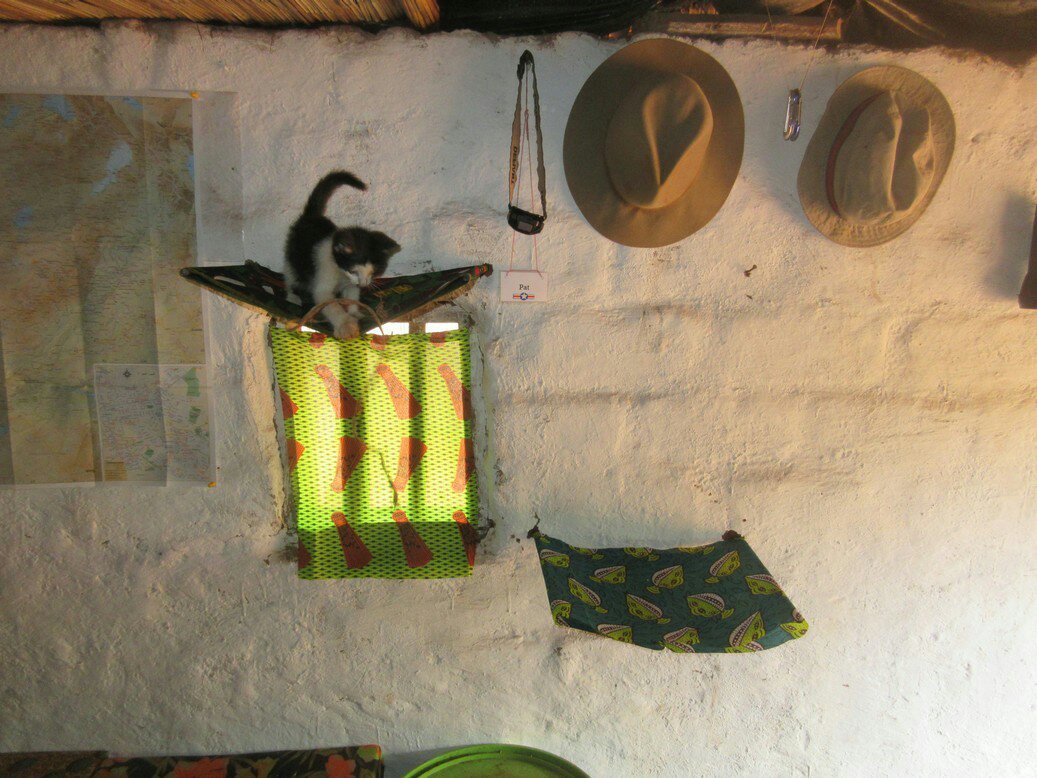
Chobe National Park (Family Vacation Part 2)

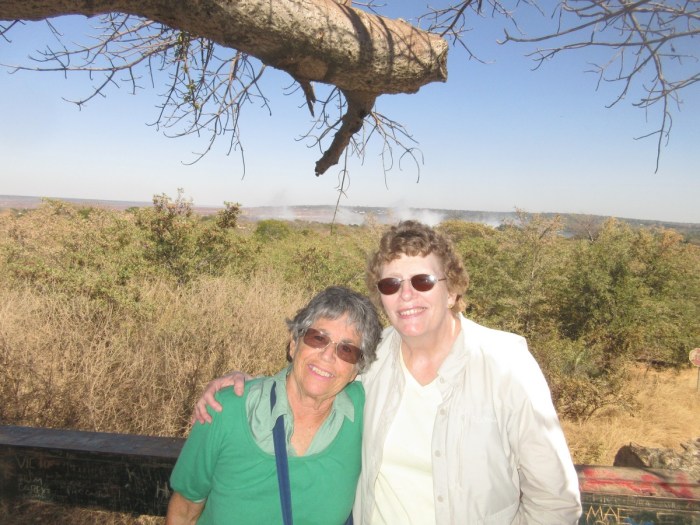
IMG_8622

Tourists, amiright?

As part of the Livingstone portion of the Family Vacation, we decided to visit Chobe National Park to go on a safari. This was a whole-day experience and quite worth it. My dad did all the arrangements for the safari, and the safari vehicle picked us up at about 0730 to take us over to Chobe. Protip: bring your passports, as Chobe is over in Botswania. Another family we traveled with forgot their passports and were turned back to Zambia.

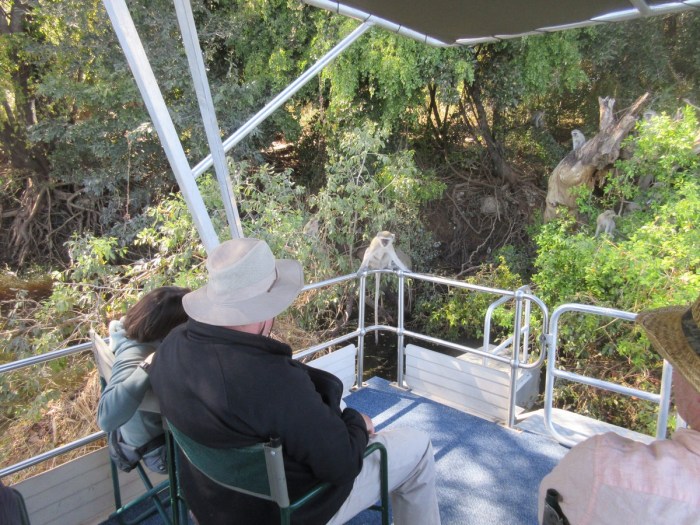
The safari came in two parts, with a boat safari in the morning and a driving safari in the afternoon. After getting over to Botswania and being served some coffee, we loaded up on the boat. Since there were 8 of us, the family got a boat to ourselves. Our tour guide was really awesome and very knowledgeable about the animals we were going to see on the Chobe River. Having been on a booze cruise on the Zambezi, I was a bit worried about how many animals we were actually going to see. I didn’t need to worry, but I was relieved when we spotted some velvet monkeys in a bush along the riverbank. We poked the boat over there for a closer look and some of the monkeys jumped on board.

IMG_8558

A little further down the river is when we really started to spot all sorts of wildlife. Our guide spotted a tiny little kingfisher and we spent some time maneuvering the boat to get a good shot. Mom is a bird lover and was interested in getting a good picture, though not as interested as the guy in another boat with a much nicer camera. There were a lot of boats on the river but the animals didn’t seem to mind and it is not worth worrying about all the other tourists. The trick is just to enjoy the animals.

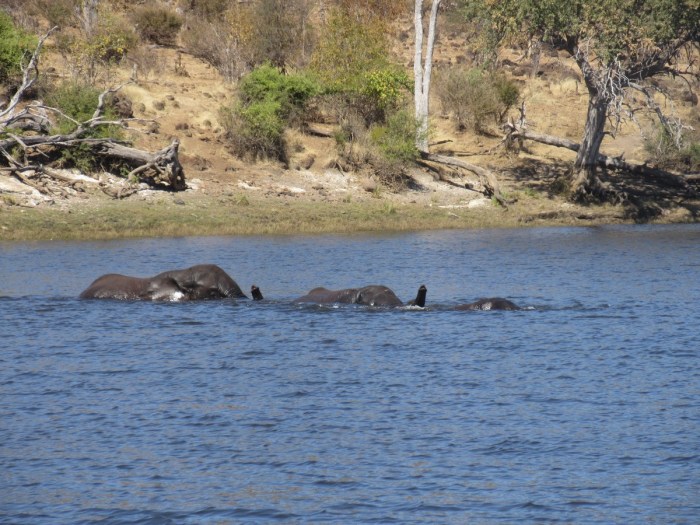
And enjoy we did! Just along the river we saw water buffalo, cranes, storks, hippos feeding in the daylight, crocodiles, riverbuck, kudu, impala, and lizards. The coolest part though was when some elephants decided to cross the river.

IMG_8673

Watching the elephants swim across the river to get to some of the good river grass was pretty amazing to watch. We watched them as they approached the river, evaluated the merits of a swim, and then waded into the river, eventually sticking their trunks above the surface to snorkel. The seemed like they had a good time and were rewarded with grass.

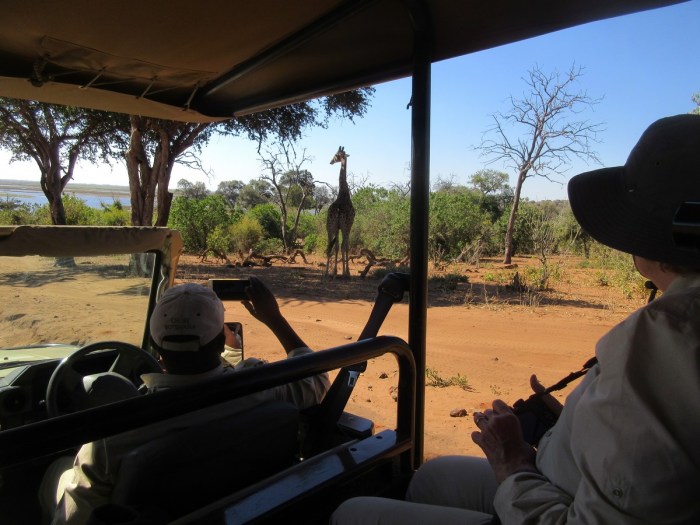
We eventually docked and had lunch. In the afternoon we had a driving safari. On the driving safari, we saw a lot of the animals we had seen from the boat, but a major new addition were some giraffes. Elephants are cool, but giraffes are my favorite animals to see on a safari just because of how weird they look. I feel like elephants look about like you would expect an elephant to look, but the scale of giraffes throw you off. Especially when they run, they look like they are moving pretty slow but are in fact booking it, galloping off into the distance.

IMG_8745

It was a long and pretty awesome day with some great tour guides and a lot of really cool animals. I know there are a lot of tourists there, but I highly recommend visiting Chobe if you have the chance.

Livingstone (Family Vacation Part 1)

IMG_8510

Reading this week:

  • Starship Troopers by Robert Heinlein

Since I’m really a bit over a year into this whole Zambia thing, and it is summer vacation back in America, my family came to visit me and see what I do here. It was quite a little adventure.

The first major thing we did on the vacation was to go visit Livingstone. I suppose you can’t really come all the way to Zambia without visiting Livingstone. Plus, I figured Livingstone was probably a pretty good way to ease the family into the whole concept of Zambia. My family is actually a relatively experienced bunch of travelers, with my dad’s family having lived in several developing nations in his youth. Still, Zambia is an experience.

The vacation was with quite a group. The total list of people was both my parents, my brother, my grandma, my aunt and uncle, and my cousin Judy, and when you include me that is eight people rolling around Zambia. Later on, my girlfriend Lily joined us bringing the total to nine. To get all those people around we first rented a giant van, and then later two smaller 4x4s. The part I was most excited about when it came to this vacation was seeing people who hadn’t been to the country before interact with Zambia. Lemme tell ya, that involved a lot of complaining about roads.

IMG_8514

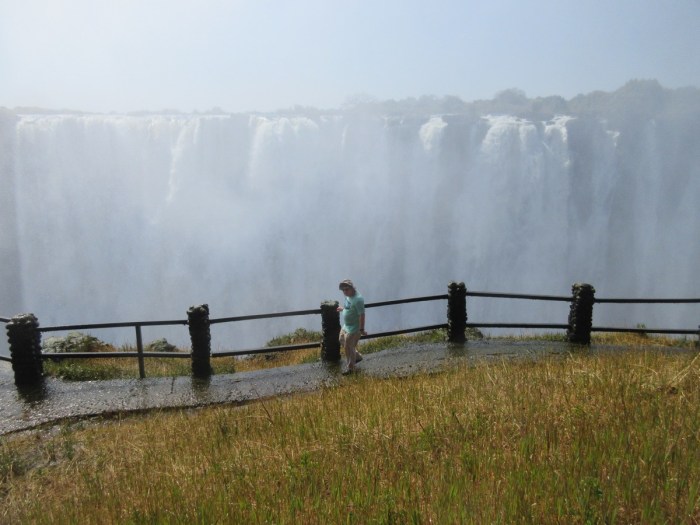
But besides the roads the family really enjoyed Livingstone. One of the first things we did was see the falls of course. I had been before, but during low water, and while it wasn’t quite high water when we were there, there was a lot of water. They rented ponchos at the falls which mom took advantage of, but I depended on my safari jacket alone.

IMG_8518

The most impressive traveler on the trip was my grandma, who I didn’t mention is 92. I was worried about her getting around but she had her walking shoes on and wound up doing everything we did on the vacation (well except for a Zambezi River “float,” but that was only because the seats on the raft didn’t have any backs; she enjoyed herself anyways).

IMG_8834

One of the themes of this vacation was me dragging my family off to see things I normally wouldn’t be able to see, because they’re slightly off the beaten path and I don’t have a car here. The thing in Livingstone in this category was the Big Baobab Tree. This tree is apparently somewhere between 1000-2000 years old and the big attraction here is that it has stairs leading to a platform at the top. From the platform you can see the “smoke” from the falls and have a pretty good panorama of the surrounding areas. Worth a visit!

Badass Corn Husker

IMG_8368

Reading this week:

  • The Barefoot Architect by Johan van Lengen
  • Goldfinger by Ian Fleming

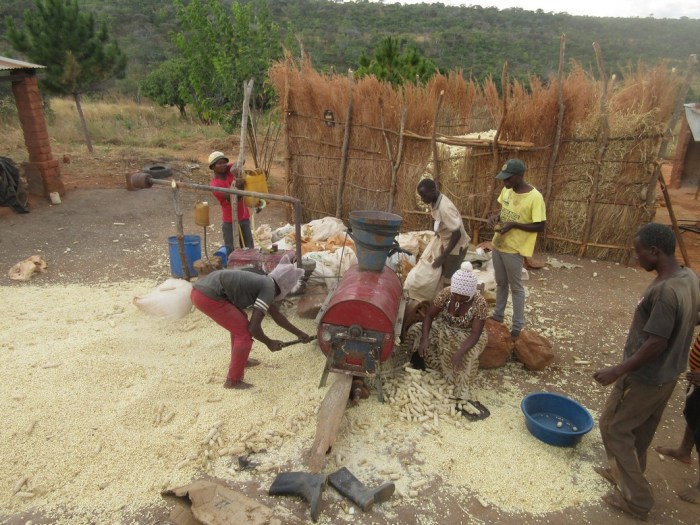
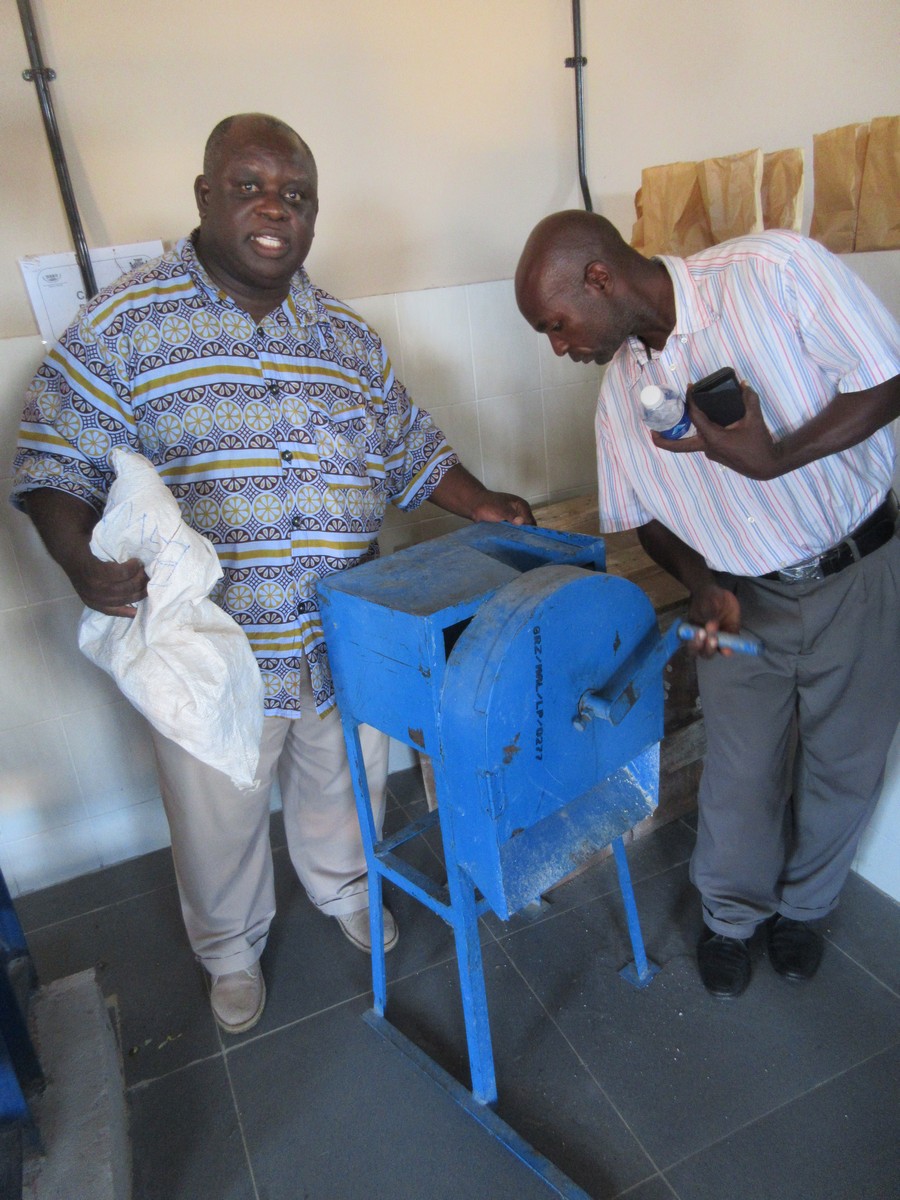
So this is one of the coolest pieces of appropriate technology I’ve seen in a while: a home-made diesel-powered high-speed corn husking machine. The guy who built it is rapidly becoming one of my favorite farmers. He lives up the valley from me and until recently I didn’t know how awesome his setup was. He came to my attention because he built some beehives and wanted me to take a look at them. He had heard I had been to the beekeeping workshop, but since I wasn’t around for a while he had gotten all the advice he needed from my counterpart. Development complete, let me tell ya. While we were there looking at the beehives, it turns out he had also just dug a fish pond. We went to go stock the fish pond today, and then he decided to show us his super awesome corn husker.

IMG_8190

He took that beehive to the District Agricultural Show and won 80 kwatcha!

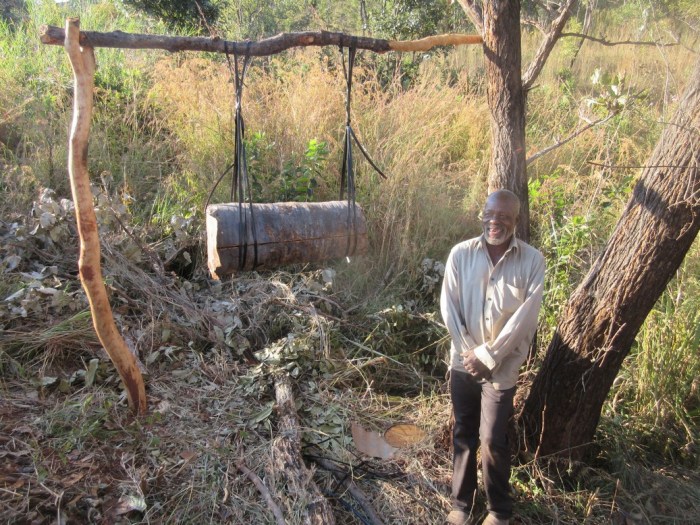
This dude is a pretty nifty engineer. He has a hand-cranked Chinese diesel engine that he can move around and hook up to a few different belt-driven machines on his property. The diesel is normally used for his hammer mill where he grinds up maize, but he also has a grinder for metal fabrication and who knows what else really. He also dug a pit that he can drive his car over to work on it (“costs 35 kwatcha in town,” he tells me) and the first time I met him he was working on a rifle.

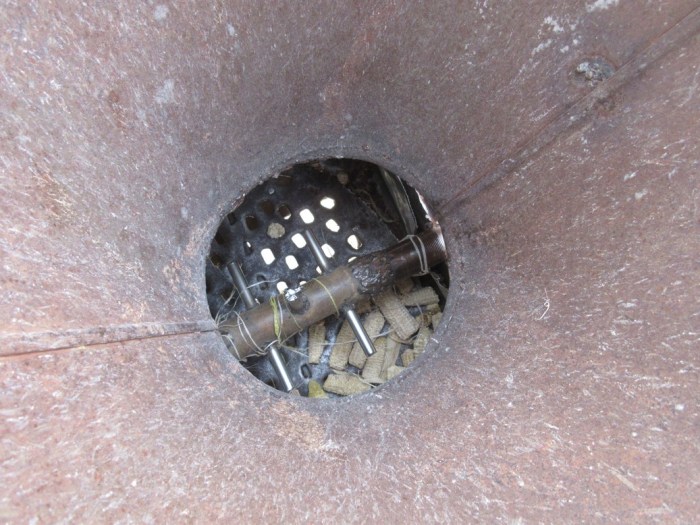
The corn husker is not an exercise in subtlety. It is housed in an oil drum and has a feeder funnel welded onto the top of it. Going through the oil drum he has placed a very heavy-duty metal rod suspended on bearings that appear to be rescued from a car. The metal rod has spokes coming off of it, and below the spoked metal rod is a grating. As the corn cobs are fed in the top, they are simply beat mercilessly by the belt-driven spoked metal rod. The cobs flail around inside the husker, losing their kernels. The kernels drop through the metal grating while the corn husks get pushed towards the end by the additional corn cobs being dropped in the top. One person tends the corn husk discharge chute, keeping an appropriate back-pressure of corn husks and feeding not fully-husked, um, husks back in the top for another run-through.

IMG_8361

The last thing the corn cob sees before being violently husked.

The whole thing was fantastic to watch and fantastically loud (hearing protection, alas, is not really a thing in this country, and least in the rural areas). The thing is certainly fast; most people do this by hand and the only other appropriate tech I’ve seen for this problem is a little metal die thing to make it easier to husk by hand. It is a four-person operation: one guy is tending the engine, another is feeding in corn cobs, the third is tending the corn husk discharge chute to keep the system operating well, and the fourth is shoveling corn kernels away from the kernel discharge chute. Cobs go in, cobs fly out the top, cobs spill out the end, kernels fall out in heaps. It’s pretty awesome.

IMG_8360

I was really amazed to see what people can do when they have a problem they want to solve. The farmer there built it himself, and also appears to have come up with the idea himself. I asked if he had seen other people with something similar and he didn’t say he had. He’s not the first guy to invent a corn husker but he might be the first to build one out of car parts, an oil drum, and a Chinese diesel.

HIV Football Tournament

Reading this week:

  • Left Bank by Agnès Poirier

This past weekend I helped out at another volunteer’s HIV Football Tournament. This program was put on by Mel, and I attended to pick up any lessons I could about maybe running a similar event in my village. Overall it was a lot of fun and a lot of people got tested for HIV and learned about HIV prevention.

The event I attended was actually the culminating day of a series of football matches. It was the final match between the last two teams in the tournament. There were a total of six teams at the beginning of the tournament. Part of Mel’s rules to be able to play in the tournament is that you had to get tested for HIV. Although she plans to host a net ball tournament next year, she was focusing on men as her target demographic and football is a great way to get men interested in HIV. Throughout the course of the tournament, she also arranged to have testing available at the games, so she wound up getting 105 people tested, which is a pretty awesome accomplishment!

The arts group struts their stuff.

As the day of the finals dawned, we were a little worried because we found out morning of that the Chief’s daughter was getting married that same day. We were pretty worried that the wedding would depress turnout at the event, and towards the beginning of the event our fear seemed justified because the crowd was pretty small. Luckily though, Mel had arranged to have an arts group from Kasama come to perform at the event. Their main role was to put on a skit about HIV stigma and prevention, but they also did several dance performances. This was very useful for literally drumming up a crowd. As the arts group started to perform, people began to filter into the event from the surrounding areas and the local market, so before long there was a pretty large crowd.

Mel teaching about HIV & gender.

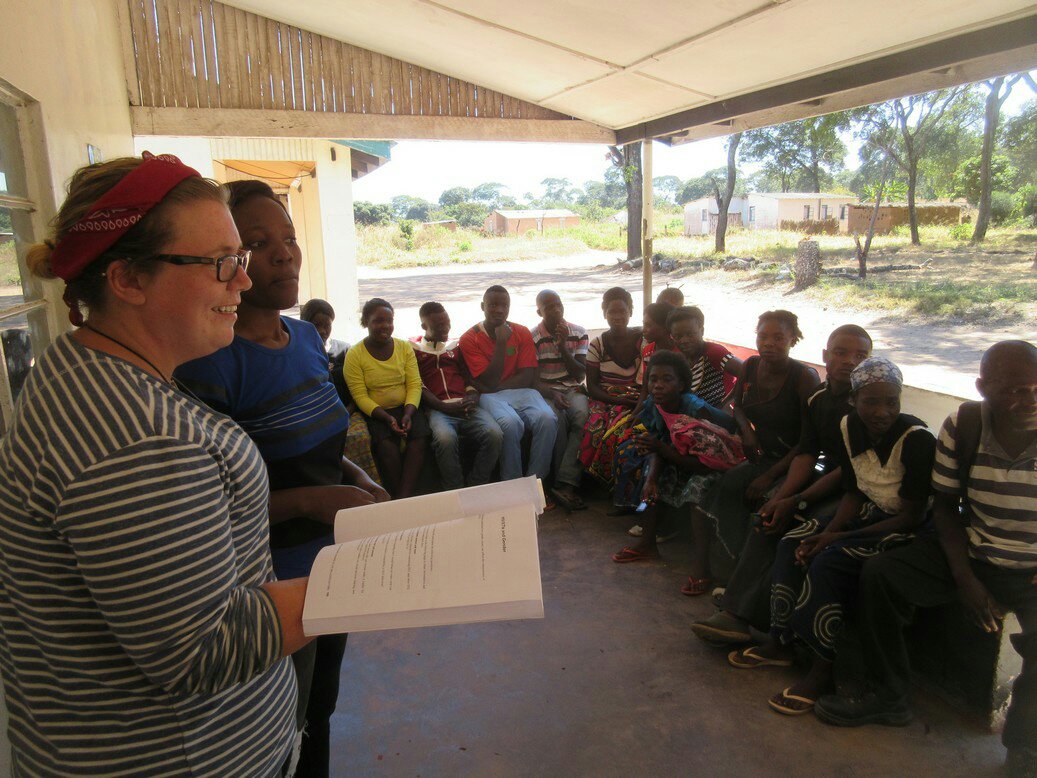
After the first dance we broke into two groups to teach about HIV. Putra and Thomas, the other two volunteers that came to help, took the younger part of the crowd and taught a GRS lesson about how ARVs work to protect the body from HIV. Mel and I took the older part of the crowd and talked about HIV and gender. The physical differences between men and women, along with the different cultural expectations between men and women affect their likelihood of getting the virus. Those topics aren’t really any different here in Zambia than the are back in the USA. One of the major points I talked about during the discussion is the fact that women with a lot of sexual partners are seen as promiscuous, while men with a lot of sexual partners are seen as manly. That means men can be a vector for HIV, as they spread it among their multiple partners. We try to emphasize that the best thing to do, if you choose to be sexually active, is to have one mutually faithful partner and to both get tested for STIs regularly.

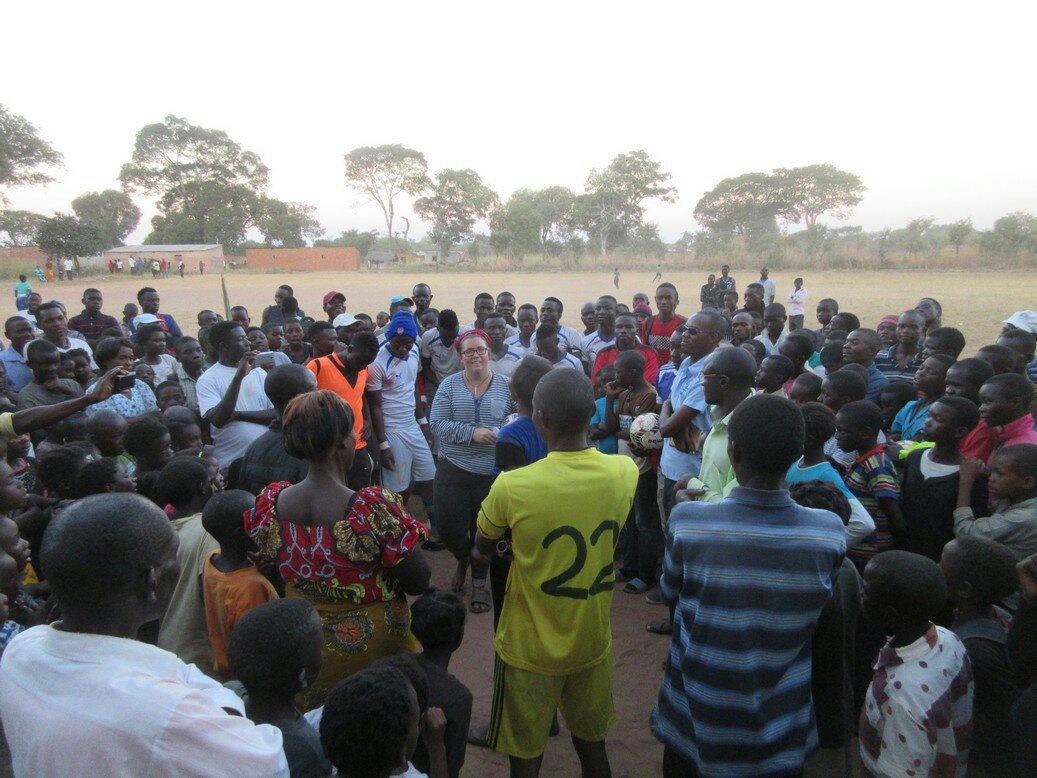
After the lessons there was more dancing, and then lunch, and then we convened for the big event. Watching the football match was a lot of fun. There must have been hundreds of people watching. Not only was the football match probably the most interesting thing going on during a Saturday afternoon, but the stakes were pretty high because as part of the tournament Mel was offering prize money. The crowd was really into it. It was a little sad for us, because the team we were rooting for (the team one of Mel’s friends was playing on) lost 0-3, but the crowd brought a lot of energy. Whenever the other team scored the whole crowd would rush onto the field and run around before clearing out in about a minute to let the game continue. When the game was finally over the whole crowd paraded the winning team around the field and then back to Mel so she could award the prizes and thank everyone for coming.

After the game we filtered back to Mel’s place and cooked dinner. I had a really great time at the game and I think it was pretty awesome l how many people Mel got tested and taught about HIV. People had a lot of fun and I was glad to be part of it!

Camp GLOW

IMG_7898.jpg

Drawing a map of their community.

Reading this week:

  • Interpreter of Maladies by Jhumpa Lahiri

This past week I helped out with Camp GLOW. GLOW stands for Girls Leading Our World, and is a camp designed especially for girls. It is an amazing program and I am really glad I got to bring two girls to the camp.

The focus of Camp GLOW is on female empowerment and health. The camp serves to overcome two shortcomings faced by a lot of girls in these communities. First is the lack of opportunities for girls and the lack of empowerment for women. Women in a lot of cases are expected to fall into certain traditional roles, becoming wives and mothers at sometimes a very young age. The camp tries to teach girls that they can spend time focusing on themselves, finishing their education and deciding their own future before getting married and having kids if they so choose. The camp also teaches girls about health. Most girls (or people really) in Zambia don’t get a comprehensive health education, especially relating to topics like HIV and STIs. So the camp spends some time talking to girls about reproductive health, family planning methods, and ways to prevent HIV and STIs. A big focus there is teaching girls how to get what they want out of a relationship and negotiate things like condom use during sex. So overall it is a really great program.

IMG_7879.jpg

A garden at the location we had Camp GLOW; I was excited about it because I was the only agriculture volunteer there and it was super nice. The lake is in the background.

We conducted the program at a fantastic location near Mpulungu on Lake Tanganyika. Another benefit of the camp is that the girls got to see the lake, and after sessions each day they would go swimming which they really enjoyed. Camp GLOW, like the other camps Peace Corps conducts, also gives the girls a chance to hang out with other kids from all over the province they normally wouldn’t meet, and for Camp GLOW gives the girls a chance to hang out with just other girls in an environment away from their parents or teachers.

The sessions were a mix of different things. For some of the sessions, we did activities from Grassroots Soccer. These activities use soccer-type games to teach a lesson. One of the games we played was “risk factors,” where cones represent different risk factors for getting HIV, like unprotected sex or mixing sex with alcohol. The girls dribble a ball around the cones and if they hit a cone, that is like doing one of those risk factors. At first, if the girls hit a cone they have to do a pushup, but as the activity progresses soon all the girls have to do pushups if one girl hits a cone. That drives home the effect that HIV has on the community.

IMG_7894

Risk factors game.

We also did a variety of classroom sessions. The girls were very studious during all of these, and would copy notes from our flip charts after the sessions were over. They were all very excited to go home and teach their friends about the things they learned. There were also a variety of girls only sessions, where the male PCVs left to give the girls an all girl environment. From what I heard, these sessions were very interactive and gave the girls a chance to ask a lot of otherwise embarrassing questions they otherwise wouldn’t get a chance to ask or would be too scared to ask.

IMG_7907

Girls copying notes all studious-like.

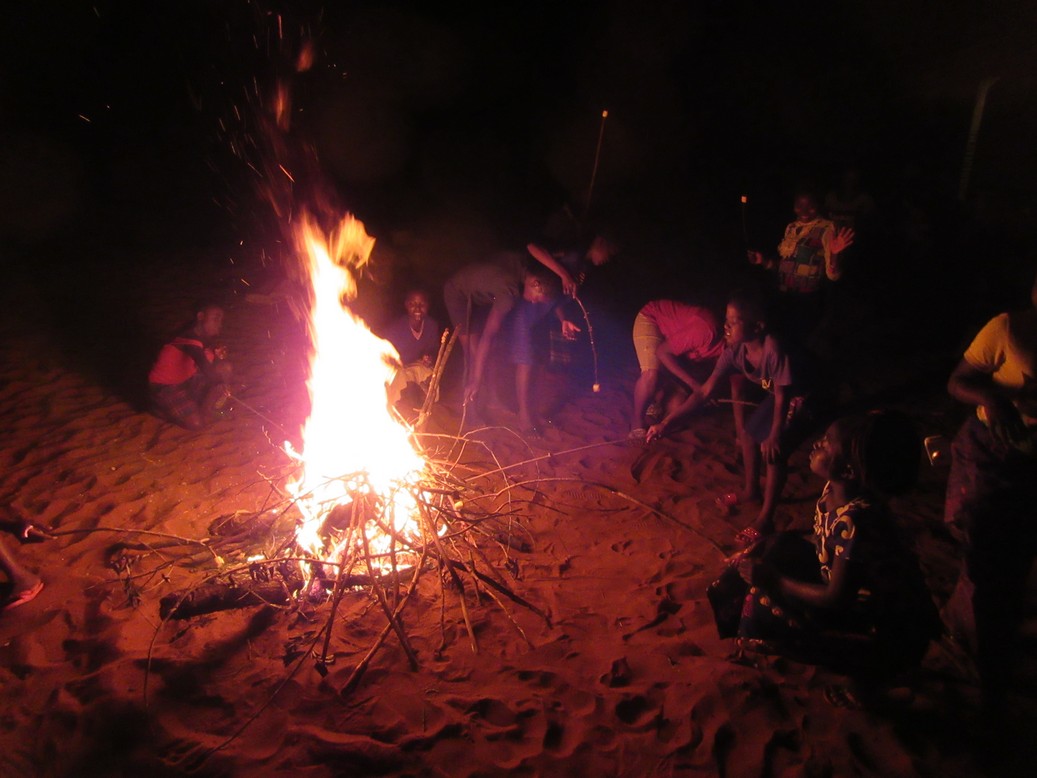
The camp also included a few different purely fun activities. On two nights we had bonfires and on one night we roasted marshmallows. I got to build the fires so I was pretty excited about that. The girls enjoyed the s’mores though let me tell ya if campers ever compare notes Americans will quickly get a reputation for being obsessed with s’mores. Not the worse national trait. The girls also had a lot of time to play netball and swim like I said before.

IMG_7927

I made a really hot fire which actually isn’t great for marshmallows but I had fun and that’s what counts, right?

Overall it was a really fantastic week and the girls had a lot of fun and I think got a lot out of it. The camp is also supposed to be a lead-in to a weekly GLOW Club in each community, so I’ll see about starting one. At the very least, two girls from my community got to learn some stuff and hopefully they’ll teach their friends what they learned to really spread it around. One story I really liked is that one of the women that helped lead the course was a GLOW girl herself 10 years ago which inspired her to be part of an organization that helps teach more girls about health and HIV. There’s sustainable development for you.

District Field Day

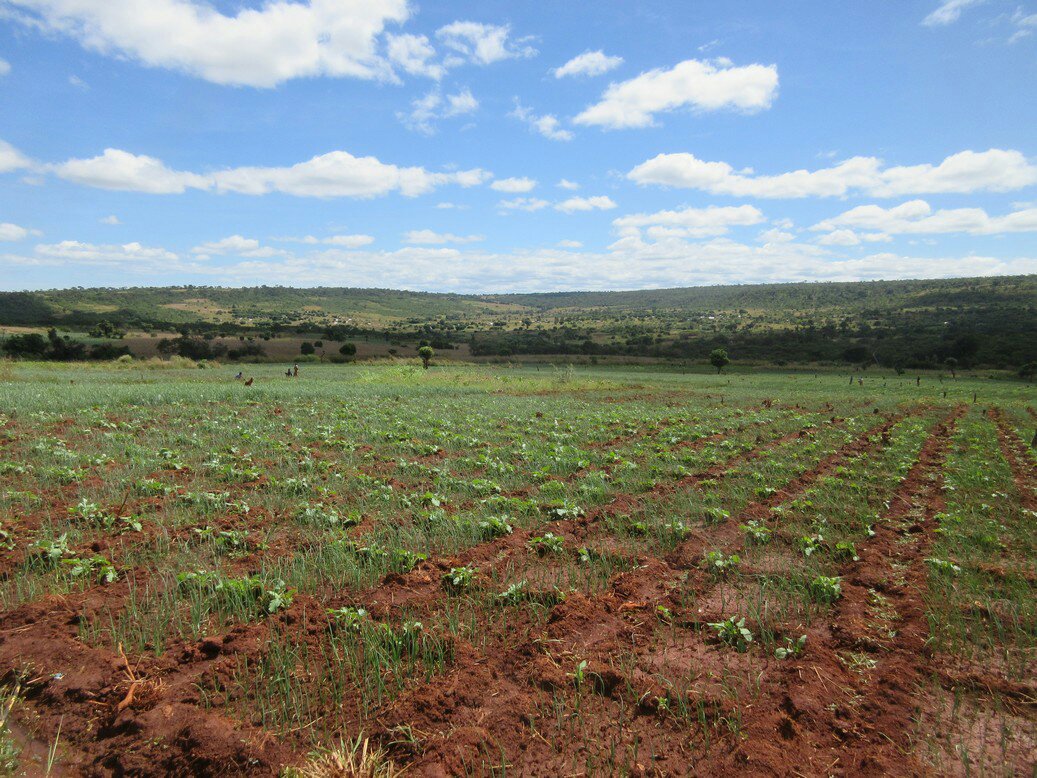
An onion field.

Reading this week:

  • Self-Published Kindling by Mik Everett
  • The Freeze-Frame Revolution by Peter Watts

The Ministry of Agriculture, as you might expect them to, hosts a lot of different sorts of events to promote agriculture and perform some extension work. Today I went to a Field Day hosted in a nearby village. The point of a Field Day is to let farmers see other farmer’s fields, see what is working and what isn’t, and spread around agricultural knowledge. This I am totally onboard with because there aren’t any better ways to improve these guys’ farming techniques than to show them another successful farmer in the flesh.

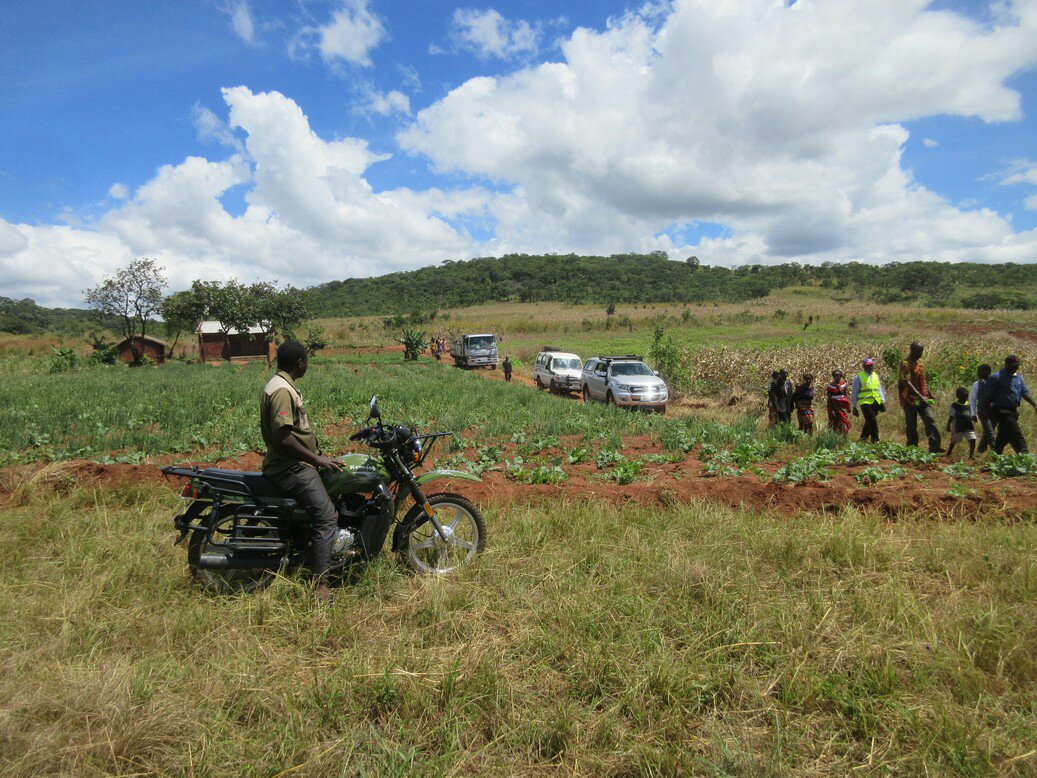
The village was about an hour walk away and my host dad and I rolled in around 0930 as everything was getting set up. There were a lot of people on motorcycles arriving, along with a variety of cars and Land Rovers in various states of repair, so the whole thing (to me) had a sort of Mad Max vibe but if Mad Max just wanted to throw a pretty okay dance party. Once we had a quorum we head out to the fields.

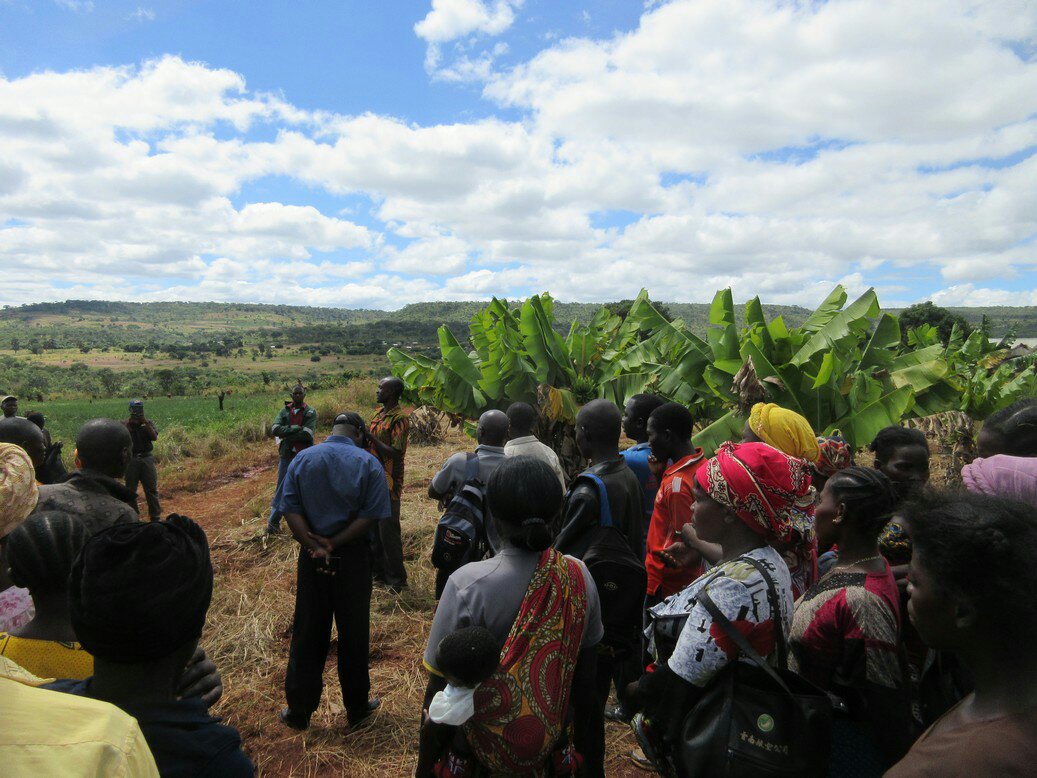
Farmer explaining the benefits of banana trees.

For the Field Day, they split this farmer’s place into different “stations.” At each station the farmer (and sometimes the sponsoring seed rep) talked about the type of crop they were growing and the sort of fertilization and weeding schedule they had used. They told us how long the crop we were seeing had been growing and what sort of profits they usually see from the crop. In my valley onion is a really popular and really profitable crop so a lot of farmers were interested in that. I was personally most impressed with a really nice banana orchard the farmer had set up by a furrow. Oh! I was also really impressed with the really nice concrete furrow with sweet little doors to direct the flow various places. That was really nice.

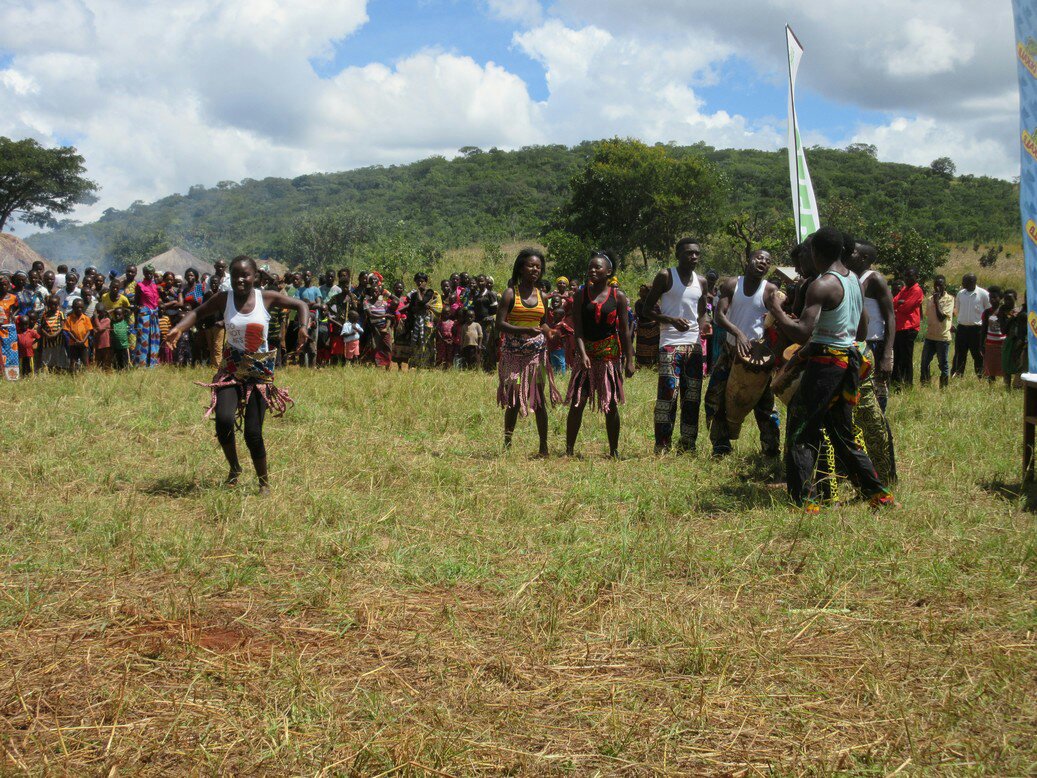
An intermission in the speeches brought out the dance team.

After the field presentations we went back to the soccer field where they had set up a tent and loudspeaker. At this point came the speeches. These were long. They were also in a mix of Mambwe and Bemba and spoken by native speakers for native speakers, so I didn’t get a whole lot out of them. One unfortunate habit of Zambian public gatherings is that people like to make sure every relevant party gets a chance to thank every other relevant party for their participation, which is totally nice and I’m not suggesting they shouldn’t do it or stop doing it, but it does make things take a while. The seed reps were also doing, as far as I could tell, seed giveaways so that is pretty cool. All I’m trying to say is that we were there for three hours and I hadn’t had lunch.

Luckily, the lunch problem was solved when we (the organizers and myself; my host dad was one of the organizers) went to the host farmer’s house and had a very nice lunch. They even had nshima made from orange maize, which we made sure to devour in a edible vote of support.

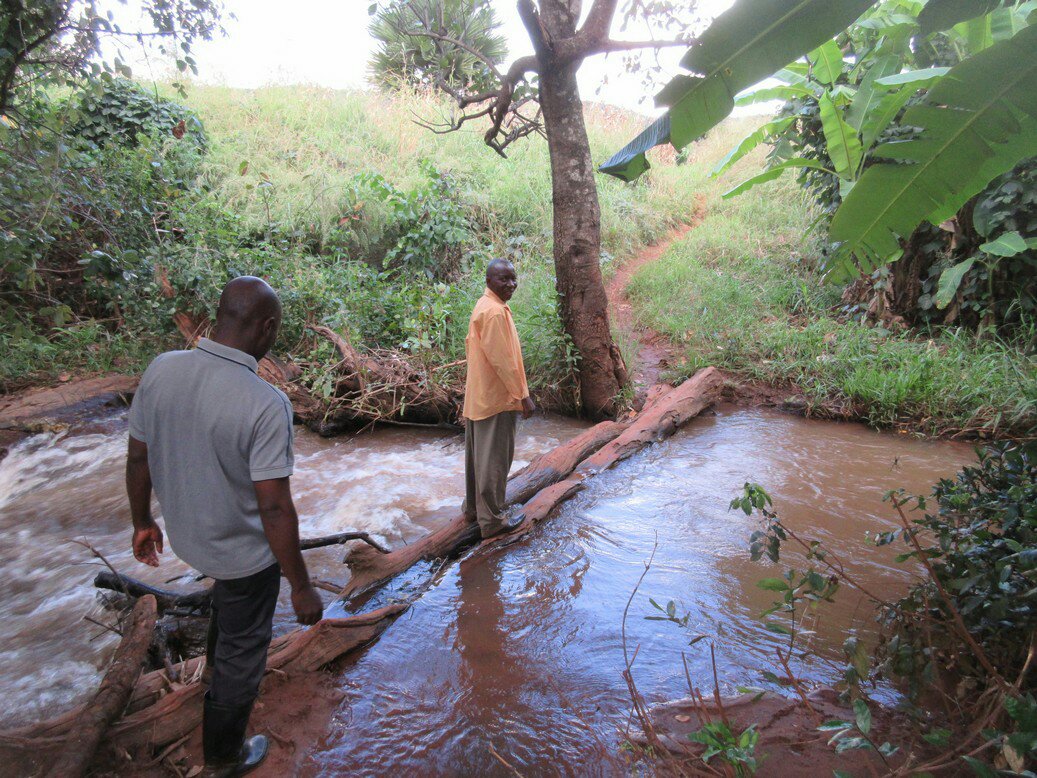
Bridge over the mighty Mwambezi on the way to the fish ponds.

The final activity of the day was to travel over to a nearby farmer’s ponds to check them out. He apparently had been doing fish farming before and was looking to get back into it, so was looking for pond renovation advice. His ponds were very nice and I only suggested a few little things, like adding screens to the inlets and making one shallow pond a bit deeper. My host dad actually did most of the talking which I was pretty proud of, seeing as I was a part in making him such a knowledgeable fish farmer. That sort of things really gives you high hopes for sustainability.

Host dad looks over the ponds.

Land Use Cycle

What with all my adventures largely centered around walking off into the bush, and my obvious interest in agricultural systems, I’ve started to notice a lot about land use. I’m not exactly breaking new intellectual territory here, but one thing to realize about the area is that there really isn’t any “virgin” land. Agriculture has been going on in this region for at least a millenia or two, and pretty much everywhere that can be farmed has been farmed at some point.
In Religious and Ethical Values in the Proverbs of the Mambwe People, Fr. Andrzej Halemba describes the cultivation system:

“In the forested areas… to enrich the soil with the requisitie potassium and phosphorus, the Mambwe people have for generations used a method of shift cultivation called citemele. This requires the soil to be improved with the ashes from burnt branches and trees. This allows fields to be utilised for the period of three to five years, whereafter the people set off in search of new richly forested land.”

So there is a general pattern to land use around here. The most amazing thing to me is how easily you can see the evidence of prior land use all over the place, mostly in the form of ridges. As I must have described by this point, most of the forest in this area is a short sort of scrub forest. There are few or no large, towering trees. From my readings on the Stevenson Road, this appears to always have been the case (though in that article they blamed termites). I don’t know if it is just the type of tree, but it seems to me like it could be from the cycle of land use.
Since it is a cycle, I’ll just start with cultivated land. After land has been cleared, ridges are formed and crops planted. The same fields are used for a period of years, and from the two growing seasons I’ve seen it looks like similar crops are planted in the same fields for multiple years (ignoring intercropping). Here is a cassava field:

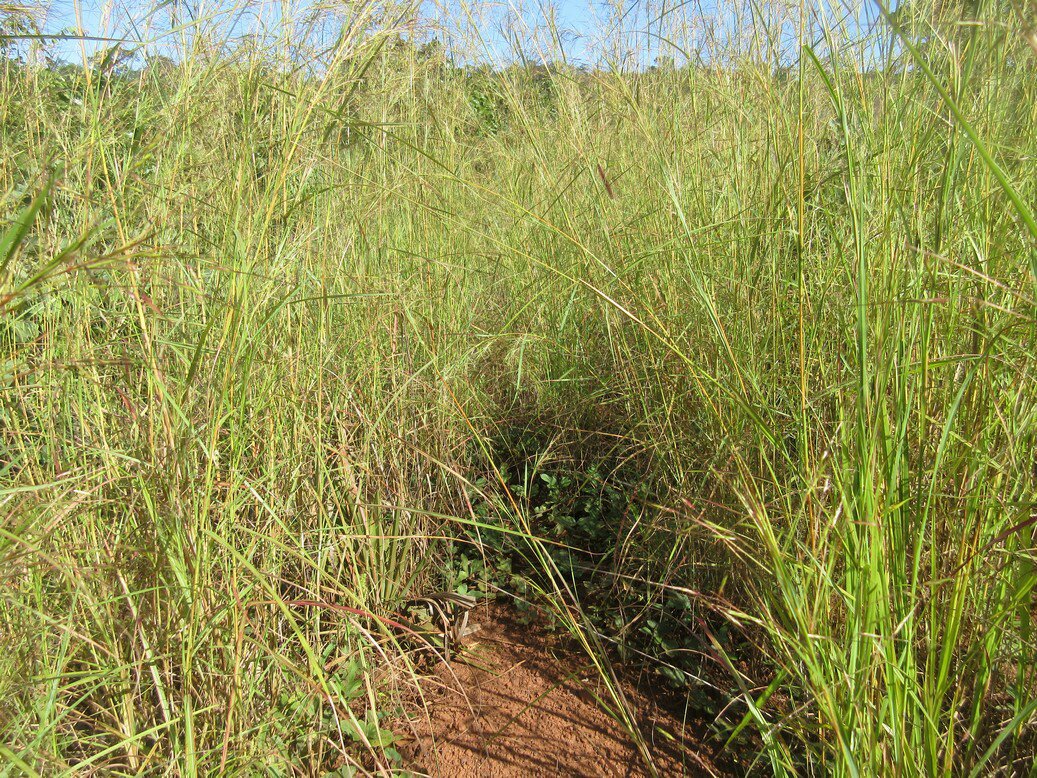
After a while the field is left fallow. The below picture is of a field very recently left fallow. Turns out it is way hard to photograph ridges in a way that makes them super obvious in pictures, but in the below picture the grass is more or less growing on the ridges. That gap in the middle of the grass is the area between the ridges. From almost any distance away it just looks like a grassy field, but if you walk over the land it is obvious there are ridges there.

After the field is left fallow for a few years, the forest takes back over. Again in the below picture are some ridges, starting in the lower right corner and center of the picture and extending off into the distance. This stretch of forest isn’t exactly old growth but it is pretty well developed, and still there are ridges. Really the whole point of this blog post is me expressing how amazed I am that ridges stick around for so long, even as a forest grows over them.

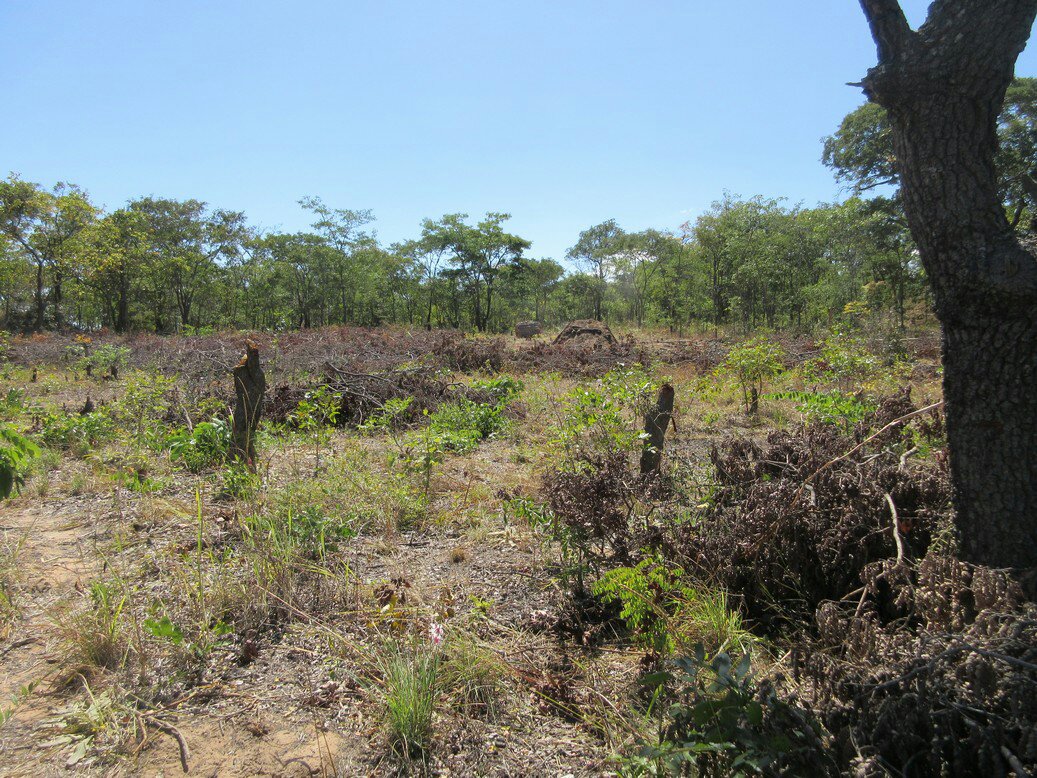
The forest isn’t just useless to the people; beside letting the area regain some nutrients, the villagers use the forest to gather wood for cooking and building. The forest also provides a location for bees and other polinators to live, and although bushmeat isn’t a very large part of the diet in my village that is also a bonus. When it comes time to start the cycle again, they’ll clear a patch of forest. The trees are chopped down and then used to make charcoal. They then sell the charcoal or keep it for their own fuel use.

In the middle background there is a mound of charcoal burning (or I guess really wood being turned into charcoal).

The LIFE program has at least some focus on reducing climate change and reducing deforestation. These are noble goals (and I do see a lot of news articles about deforestation in Zambia), but on a small scale at least I think this method of land use is probably pretty efficient. Even with charcoal making/burning, these guys have a way smaller carbon footprint than almost anybody in the West.
Besides ridges, there are a few other indications of land use. Sometimes you run across old foundations of houses or other buildings. I am always amazed when archeologists dig up an ancient city that a whole city could become buried, but seeing how quickly things can get overgrown and buried it isn’t too much of a surprise:

As a final example, the below picture is of a furrow (this whol article I kept typing “furrow” when I meant “ridge” but hey now I’m onto furrows). It’s an old furrow my host dad plans to refurbish, and he has cut away the grass to get to it. Seeing this sort of stuff in the modern-day world really helps to put into perspective how easy it is to miss the signs of “advanced” civilizations when you’re talking about indigenous cultures. If you’re thinking about cultures like the indigenous peoples of the Americas, they might not have left large stone cities, but mastering irrigation and agriculture is pretty advanced (to be clear here, I’m not patronizing the villagers I live with, but trying to put the civilizations we only know about via archeology in context) and sometimes the only signs of it are going to be a very shallow ditch in the field. That’s something to think about.

Roots Roots and More Roots

IMG_7599

Reading this week:

  • The Tibetan Book of the Dead translated by Robert A.F. Thurman

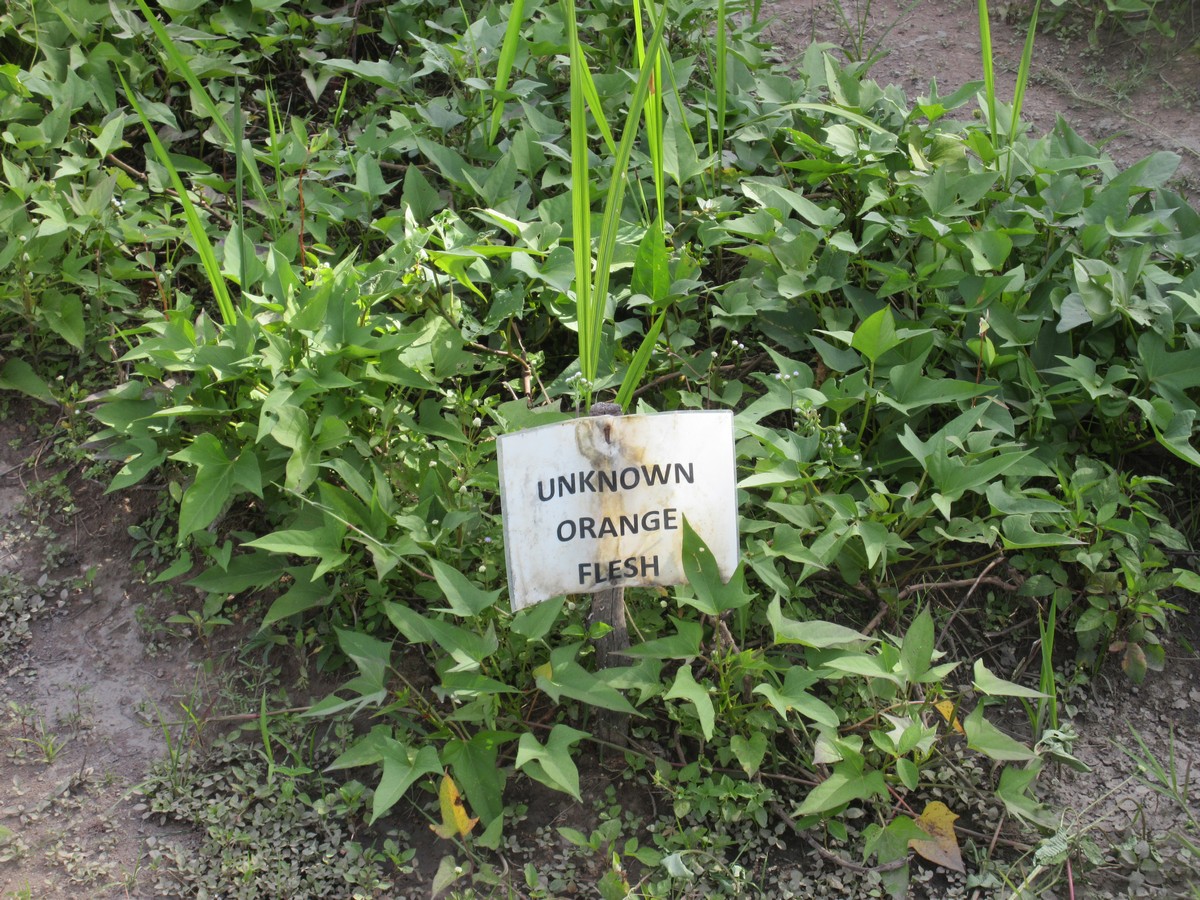
This past week (feel like I gotta get a new start for these articles) I went to an Orange Fleshed Sweet Potato (OFSP) Workshop! Loyal readers (there are none) will note I have already been to a workshop on OFSP, but this one was bigger, better, and longer. OFSP Reloaded. Where the previous workshop was meant to be an introduction to both OFSP and orange maize, this workshop was focused on producing orange fleshed sweet potato with a particular bent towards seed production.

Overall the workshop went pretty well. The first day was all classroom stuff and focused heavily on nutrition. OFSP are, of course, high in Vitamin A. Vitamin A is one of four major nutritional deficiencies in Zambia, along with protein, iodine, and iron. Since people already grow and enjoy the white-fleshed varieties of sweet potatoes, it is a relatively easy “upgrade” to the orange kind. During the workshop we focused on overall nutrition, why it is necessary to eat a balanced meal, and, most importantly, techniques we can use to teach these concepts back in our villages. One of the best ways to do this is using the “Go, Grow, Glow” model. In this model, carbohydrate foods are “Go,” giving you energy. Protein foods are “Grow,” helping to build the body. Finally, “Glow” are foods with minerals and vitamins that help maintain overall health. By assigning foods to these categories and encouraging people to eat all three with every meal we help teach about a balanced diet.

IMG_7632

Over and above the previous workshop we did more hands-on activities. We went through the entire process of planting vines for rapid vine multiplication and for root production. We also did some rudimentary soil testing that people could do on their own land for little money. First, by feeling the consistency of the soil the farmers can determine if it is sandy, clay, or loam soil (or a combination). Then, by adding either vinegar or bicarbonate (baking) soda to some soil and seeing if it fizzes, farmers can determine if the soil is basic or acidic and act accordingly.

IMG_7645

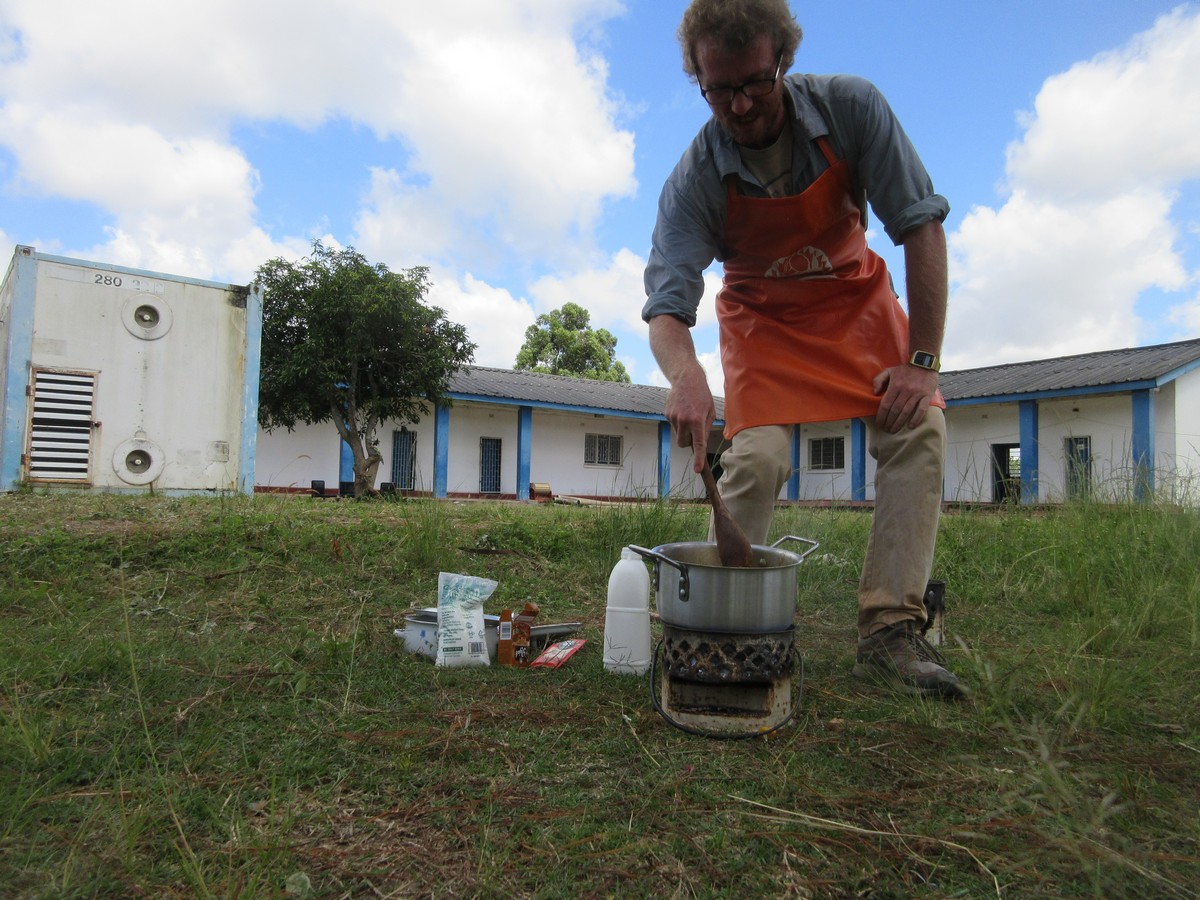
Dramatic low-angle cooking shot.

We also spent a whole day cooking meals with orange fleshed sweet potatoes. Traditionally, sweet potatoes are mostly consumed for breakfast and are only boiled. That might be unpalatable for some people, and since it is a “breakfast food” people might not eat the potatoes for lunch or dinner. So we used OFSP to make meals like curry or stew. We were also focusing on processing sweet potatoes, so we made OFSP flour. This flour is easy to make (just dry the potatoes and then pound them) and can be mixed 50/50 with wheat flour. The mixed flour can then be used like 100% wheat flour in recipes for bread, fritters, or other baked goods. This allows people to get Vitamin A in more of their foods and is a cheaper alternative to pure wheat flour. We even made OFSP pancakes on the cooking day and they were pretty awesome.

Finally, and exciting for me, my host dad and I got to see a cassava processing center. This workshop took place in Mansa in Luapula Province, the location of the nation’s root and tuber research center. Besides the sweet potatoes, they also have improved cassava varieties. I was interested in bringing back some improved cassava to the village, and my host dad was interested in seeing the processing facility. They have a very nice facility there where they have machines to grate, press, fry, and mill the cassava in bulk. Cassava is a very popular food security crop here, but with some mechanization can be a very profitable crop as cassava flour gets a much higher price than maize flour. And it takes less resources than maize! The research center here has planting and harvesting machines that they will bring to your fields for only ~$260/Ha. I am told this is cheap, especially as it includes fertilizer and herbicide, though farmers have to provide their own planting material.

IMG_7733

Cassava/Sweet Potato Chipper. For making chips.

On top of all THAT, they also grow a lot of cocoyam (taro) here in Luapula province, and I was able to secure some seed for that as well. So now my host dad and I will be bringing back three different root crops to our village and I am pretty excited. Diversifying crops leads to better food security, as well as potentially introducing new markets that farmers could use to make more money. Root crops are usually relatively easy to grow, drought resistant, and very hardy, and make ideal crops for food security. Two years ago I never would have thought I would be this excited for roots man.

Kitten!

20180328_202913-596824180.jpg

Reading this week:

  • Origamy by Rachel Armstrong

This post is about my sweet new cat, Inwanwa. Unfortunately, shortly after I wrote the post Cats, Munono (the eponymous cat) disappeared. I don’t know where he wound up but I hope it is someplace nice; maybe his newfound fame lead him off to Nollywood or similar climes.

img_7141885686130.jpg

Anyways, getting a cat was kind of an impulse decision. Peace Corps regs prohibits the Peace Corps Houses from having house pets. This is an allergy and health regulation, but at our house in Kasama stray cats manage to eke out a living on the grounds despite us reading the aforementioned Peace Corps regulations to them. Cats! At any rate, presumably due to the proclivities of these cats, the house got a kitten infestation.

The story of me and Inwanwa is probably something along the lines of the cutest Rom-Com ever, because the first time he saw me he hissed at me and refused to come near me. By the next time I had come to the house, however, someone had fed the kittens and so suddenly they were all about people. This sounds cute, because it was, but the cats had to go. No longer afraid of people, they would aggressively go after your food on the porch and sneak into the kitchen in the house and wreck havoc (but cute havoc) as kittens are wont to do. So they had to go.

20180330_145056-2099839311.jpg

My poor cat here, no one wanted him. I didn’t really want him either, because owning a cat is like, responsibility, but Munono was missing and I have a big ole soft spot for the unloved. So my fellow PCVs, sensing weakness, pressed me to adopt him and so I did. The morning when I left he was unceremoniously put into a cardboard box lined with panty liners and I carted him home. This must have been traumatic for the poor thing because carting him home involved waiting an hour for a minibus, a three hour minibus ride, and then being strapped to the back of my bike and biked home. The poor thing survived in good condition and was welcomed home with some ham.

I was worried he would hate me after that little ride but apparently not. So now I own a cat. I had decided to name him after his distinctive mustache, so he was dubbed “Inwanwa,” which is apparently Mambwe for “mustache.” I asked my host dad and he didn’t think there was a Mambwe word for “mustache” (not a popular hair style) but the dictionary says it is Inwanwa so there we go.

img_7165-569865121.jpg

Since getting the cat my hobbies have largely been making cat toys (he prefers toilet paper rolls) and pounding rebar into my walls and damaging the brickwork to make him platforms he doesn’t use. But he is cute and he likes to take naps on my lap and also claw me a lot. He has taken to stalking chickens and so my biggest fear is that he becomes a chicken killer, which would be expensive for me. He doesn’t eat kapenta which means I have to feed him cat food and when he can’t get me to play by clawing at me he bats at the dogs’ tails, which is playing with fire little cat. They mostly ignore him. So yeah, standard issue cat.

Biking the Mwambezi, Part II

IMG_7531

Reading this week:

  • Factfulness by Hans Rosling with Ola Rosling and Anna Rosling Rönnlund
  • Empire of the Sun by JG Ballard

Lemme tell ya, the view at the top of the hill was gorgeous. I wasn’t expecting it before I crested the hill, but from up there you get a gorgeous, unfettered view of the lake. You can see for miles, probably across the border. Maybe not, but it is the highest hill around and the scenery is beautiful and everything is awesome and also of course there was a maize field. I mean I know I just said all that about fields on top of hills but really man. This hill is super high and super hard to climb and super far away from anything including water but someone decided to put a shack up there and plant maize.

Sightseeing done, I descended a bit towards the maize field. I figured there would be a path from there. I ran across what I assume were the owners of the house; in a small clearing I found three dudes looking at some maize. I said hello and asked about a path towards Kituta Bay and they pointed the way and off I went. I always wonder what these guys think. I walk into the backcountry a lot and so these dudes are just having a normal day and then out of nowhere (I scaled the untraveled back of this hill) this white dude with a backpack stumbles from the woods, says hello in local language, asks directions, and then off he goes. Maybe I’m thinking too highly of myself but I wonder if a year from now they’re gonna say to each other “remember that time that white guy showed up? Weird…”
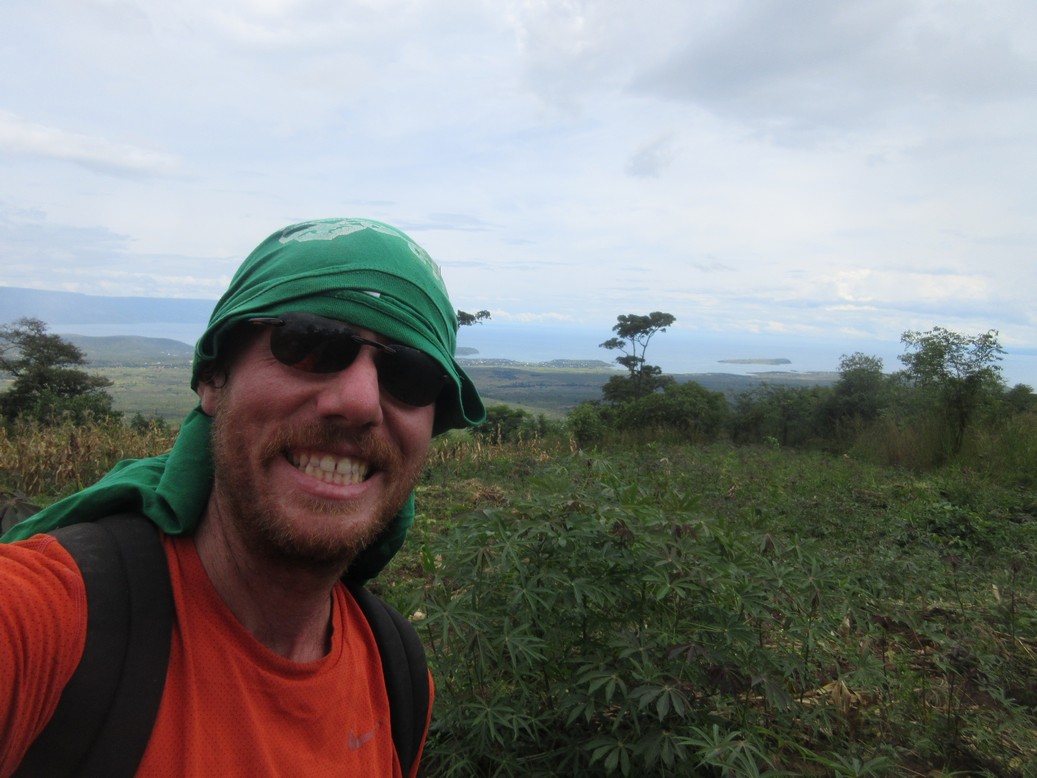
IMG_7534

I wasn’t panicking yet but I was wearing a t-shirt on my head.

Here’s where this adventure really probably starts to fall apart. I followed the path for a little while, but it petered out when I came across a stream. Obviously the path was just to the water source. But I had to keep going downhill so back into the bush I went. Bushwhacking through here was not easy. I had to keep knocking down grass, and I kept running into these tangled vines that were hard to get through. They’re at about waist height and hard to see and exist only, as far as I can tell, to make walking through the bush hard. I kept coming across little paths that gave me hope but just lead to dead ends where people made charcoal. I plan to write a post on land use but there isn’t really any virgin land around here and you always come across paths that sometimes lead nowhere. Very frustrating.

I really started to worry when I ran out of water. I was deep in the bush, miles from anything. Mpulungu was way farther away than it looked from the top of the hill, and I couldn’t decide if it was a better idea to head for Kituta Bay, which I kinda thought was closer and I knew had a shop or give up and head towards Mpulungu. I kept wavering which didn’t make my path shorter. I kept cresting ridges, which was exhausting, expecting to come to the bay but just finding another valley. The sun was high, I was sweating, hydration was nowhere near, no one knew where I was really, no cell reception, those godforsaken vines kept getting in my way, my knee was starting to hurt, my shin was bruised from an earlier fall, and I was yelling at nature a lot. Things were not good. Then it started to rain.

IMG_7552

One of the interminable valleys with a path that lead nowhere.

The rain was probably a good thing. It kept me cool so I didn’t sweat as much and didn’t get as thirsty. I kept pressing on, because there was nothing else to do, and finally came across a promising path. I ate some of the food I brought and with my blood sugar back up and a path to follow I felt a lot better mentally.

Eventually I came across some houses. I probably should have bailed and gone to Mpulungu, but I had come this far and I was going to see those goddamned waterfalls. So I asked directions (in Mambwe) and the man I met originally wouldn’t talk to me and just called for this other guy. This other guy spoke English so we introduced ourselves. I explained I was looking for the falls and he began to show me to the path and asked where I was from. “I’m from the USA originally but I live near Mbala now.” “Ah, so you are from the USA. You are in Northern Zambia now!” “I know, I live near Mbala. I’ve lived here for about a year.” “Just across the border is Tanzania, and we are near Lake Tanganyika!” “I live near Mbala!” “You live near Mbala!”

The guy was nice though and showed me the path and warned me it was far. I figured he really just meant far for a white guy so I said it was no problem and soldiered on. I could hear the river again at this point even if I couldn’t see it and that was encouraging. The rain had also let up but shortly after this point came back with a vengeance. I was wearing a rain jacket but skipped my rain pants because my pants were already wet, but still I am surprised every time just how more wet I can get. But I trudged on because I was going to see this waterfall, goddamnit. I kept following the path and asked directions one more time when I came across a home and finally I turned the corner and I was in Kituta Bay.
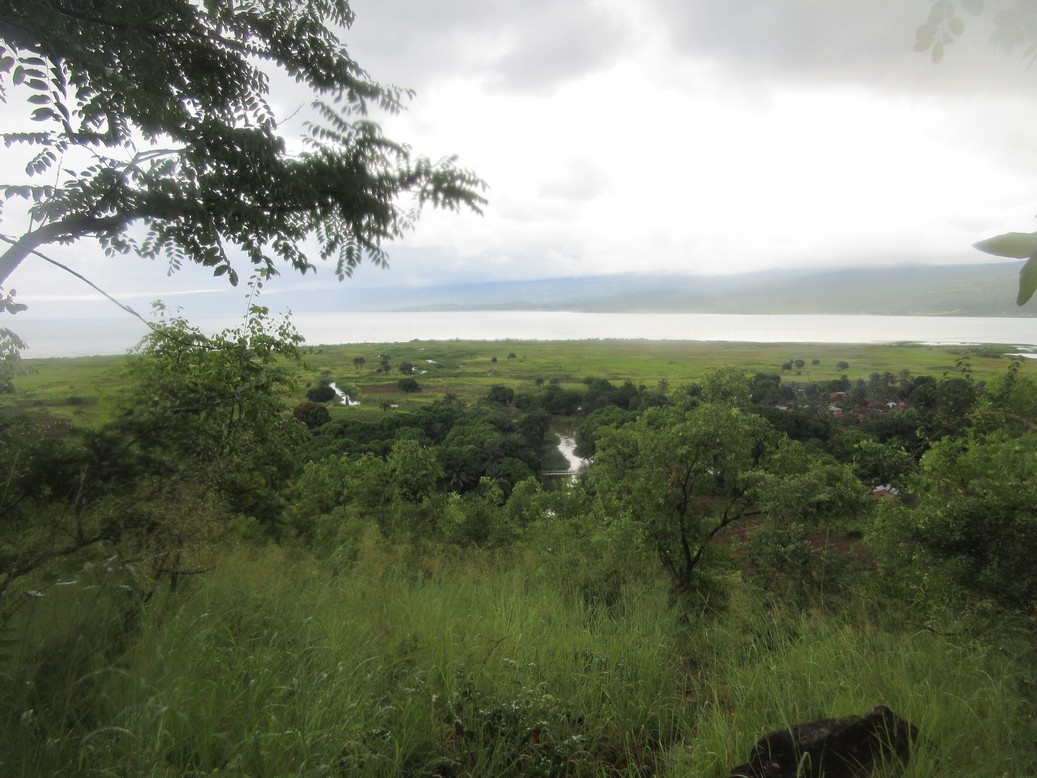
IMG_7559

The end of the mighty Mwambezi. The Lunzua really.

Well almost. I was perched on top of a cliff that did an amazing job framing the bay and the river as it snaked its final few yards to Kituta Bay. The cliff had a path down that was already sheer and not totally awesome for a dude who had at this point a pretty bum knee but I made it down. At least I knew I was relatively safe at this point because I had gone from here to Mpulungu before, so I could find my way, and the village had a store where I could buy drinks.

I hobbled down the path towards the waterfalls (which I could hear but not see) and asked some directions towards the waterfall. Some kinds helpfully showed me a path towards the waterfall . The path ended before the waterfall with the kids saying “that’s it,” but I forged ahead through the forest. The kids followed, pointing out where I could go, which is like, I HAVE EYES KIDS, which I said (in Mambwe) because I was cold, thirsty, tired, and grumpy at this point, and I was so close to these waterfalls. I almost gave up in the last 10 yards or so because I didn’t know it was only like 10 more yards and I was like, crawling across rock faces holding onto branches but finally I turned a corner and THERE WAS THE LUNZUA WATERFALLS HALLELUJAH.
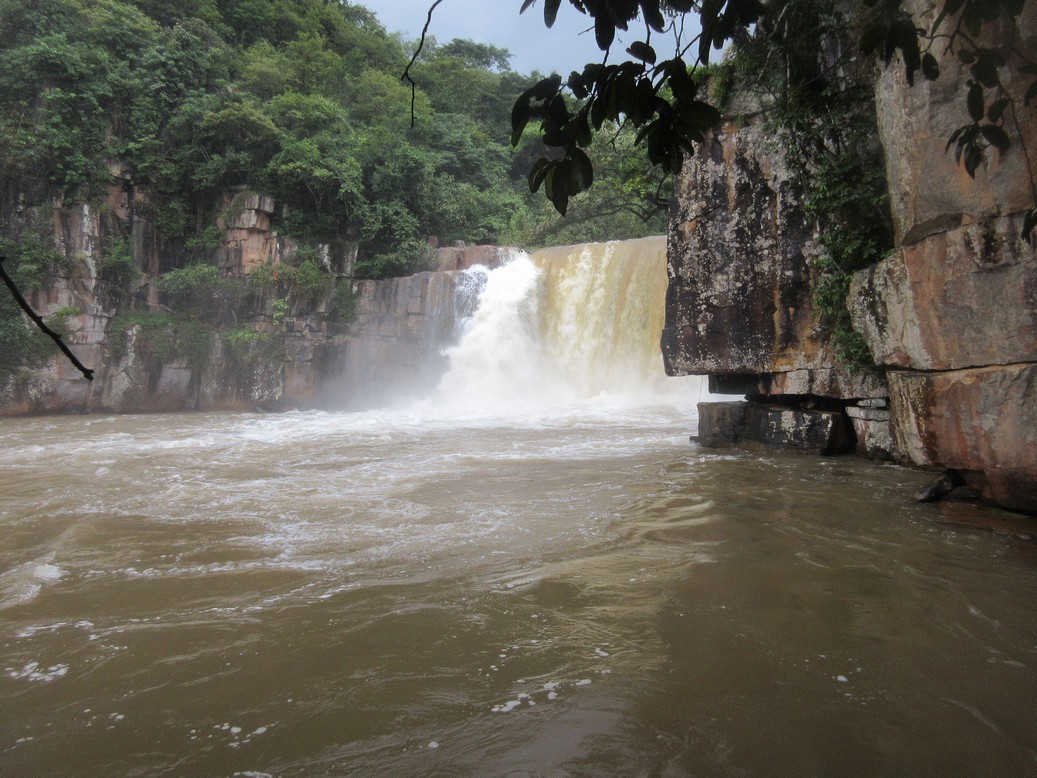
IMG_7582

Lunzua Falls. If you want to see them, it is much easier to just walk over from Mpulungu.

So I had made it. Whoo. I sat down, ate my “lunch” (six hardboiled eggs), squeezed out my socks, took some pictures, finally looked at the time, and panicked. It was 1630, which meant I was about four hours behind schedule. This was worrying because it was about ah hour until dark, it was at least an hour walk to Mpulungu, a storm was brewing again, and I knew there was no moon. So again, not good.

I wrapped up lunch and hobbled back across the rock faces and into the village to buy some drinks. Walking through the village I was asking directions to the shop, so one old dude told a small girl to lead me there. This signaled to all the other children in the village that it was okay to gawk at the white guy. So before I knew it I had a pack of I swear 100 kids following me to this village yelling “Muzungu!” (“White guy!”). As I was buying some Shake n’ Sips one dude even tried to hand me a wet naked baby because he wanted to take a picture of me with said baby. I turned him down. I then hobbled out of the village as fast as I could with kids running ahead of me and walking backwards just so they could gawk.
IMG_7577

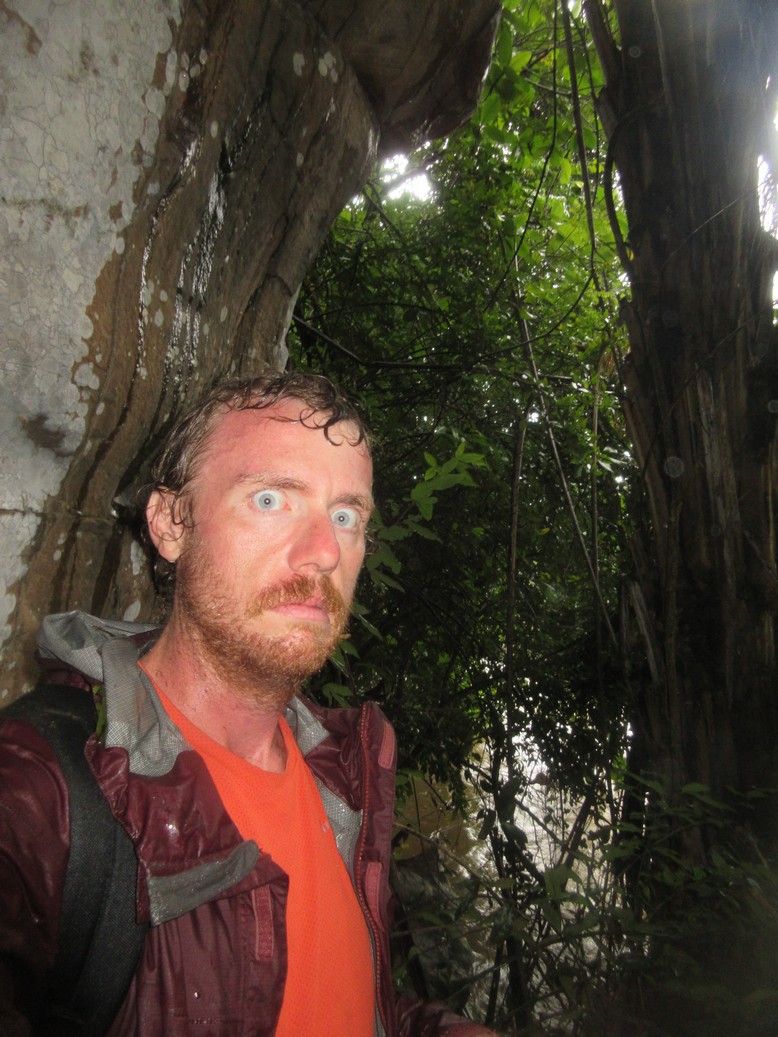
It had been a day by this point but it wasn’t over.

I had been to Mpulungu via the route from the village before, so I knew I could make it if I had to, but I wasn’t excited about going there in the dark and rain. Luckily though two dudes were leaving the village at the same time and heading to Mpulungu, so I fell in with them. They were very nice and understanding. By this time it was a downpour again and the path was mostly a river, I was limping as fast as I could on an aching knee, and it was getting dark fast.
I was so glad when I finally saw the lights of Mpulungu, but we were still a long way off. It is hilly around here, like I said, so there I am hobbling down rocky hills trying to keep up. Finally we got to the outskirts of town, which didn’t make me feel a lot safer because it was dark, I was hurt, lightening was flashing, and we were passing loud bars with drunk people more than a little curious about the white guy. But suddenly we burst out onto tarmac and I knew where I was. I thanked the dude that I had traveled with profusely and hurried down the tarmac to find a lodge. Room secured, I finally got out of my wet clothes and shoes. I was alive, I was okay, dinner was two Shake n’ Sips and some peanuts and my knee was not okay and I’ll probably never do that trip again but hey, I saw the waterfall and I got two blog posts out of it.