
Reading this week:
- The Marsh Arabs by Wilfred Thesiger
- Once There Was a War by John Steinbeck
So I know I like just did a Zambian News post, and was going to try to hold off on doing another one, but then out of nowhere this fantastic headline appeared:
ARE WE WITNESSING THE DEATH OF JOURNALISM IN ZAMBIA?
How can you say that?! If anything, Zambia has the best journalism on the planet! Where else, tell me, do you get hard-hitting, in-depth, grade A reporting like “Most Zambian Men Have Low Sperm Count?!” What other news organizations cover the important witch-doctor-and-magic-charm beat, with important stories such as “Tenant Sues Landlord for Calling him a Wizard” (I feel like in America if someone called you a wizard it wouldn’t be a defamation case), or “Sacrifice Your Boyfriend or Son and You Will Be Rich, Witch Tells Slayqueen” (other items required for the ritual: 30 hard boiled eggs, $100, a syringe filled with blood from his left testicle, two black feathers, and urine mixed with salt), or “52 year old Zambian Woman Sleeps With Her Son Every Wednesday To Sustain His Wealth” (Quote from the article: “Yvonne, a native of Ndola confessed to ZambiaWatchDog that she is the main pillar of her son’s success by offering her nakedness to him once a week as instructed by the witch doctor he got his riches from. ‘We have sex every Wednesday and we do it at my house where the charm was buried.’ According to Yvonne, ‘the price is that, once I stop sleeping with him, all our hard earned wealth will vanish in thin air and my son will die a very painful death.'” My only question is why Wednesday in particular?)?!
Zambian news has invaluable life advice! How about the article “How to Get Your Man to Marry You Without Being Pushy or Looking Desperate – For Women?” In case you missed the article (which, if you couldn’t tell, is written by a guy who blames women in casual relationships for playing “heart games”) the author gives four-part advice:
- Date someone with a vision
- Look like a wife (this references a bible quote)
- Meet each other’s family
- If you are selling a cow, stop giving free milk to customers who only need milk
Where else are you gonna get such hard-hitting advice outside sleazy Tumblr blogs?!
I mean, to be fair, a lot of Zambian news could happen anywhere. The Man hospitalized after waiting for a no-show facebook girlfriend for ten days at Airport could have been from anywhere. Unless you clicked through, how could you tell “Garden Sewer Ponds Crocs Posing Danger to Life” isn’t Florida (most concerning part of this article is the guy who notes “My friends and I spend most of our time at the sewer ponds, especially during weekends”)? Just try to name a dude in the world that doesn’t sympathize with the defendant in Bring Back My Pants [Underwear] and Show Them to the Court, Husband Tells Wife? Underwear is important!
With that being said, I guess, I can’t imagine this narrative arc happening a whole lot of other places:
- Government Declares One Week of National Prayer & Fasting for Cholera, Rains (In Zambia, “thoughts and prayers” are national policy. Every Zambian is requested to pray for 30min/day for 7 days.)
- Cholera Update: Outbreak has Earned Zambia a Bad Name, Says Chalikosa (Well, yeah.)
- Those mocking Cholera prayers are under devil’s attack
And in the final category, not only does Zambian news have magic, politics, and life advice, there is also a large amount of good ole’ fashioned sex (er, s*x):
- Kitwe S*x Workers Disappoints Government (this is actually a story about a government program to empower sex workers in Kitwe by helping them start businesses selling beans or kapenta or other activities and the women aren’t participating because they make more money more quickly by being sex workers, but the headline makes it seem like a comment on the quality of the sex workers)
- Kim Jong-Un Gives A Last Warning To The African Youths (you wouldn’t think this is a story about sex, but the story has the line “I [Kim Jong-Un] have the ability to hit you from inside my bedroom, do not let me use force to tell you to stop.”)
- Man Cheats of Wife with USA Tourist, He Leaves Too Much Evidence on His Phone (From the article: “Apparently they only had oral and an@l s*x. But Elena wants him back and proposed that he brings his wife along! She also promised him some s*x from the front.”)
So to Mr. Man Proclaiming The Death of Journalism in Zambia, I say: that shows you!


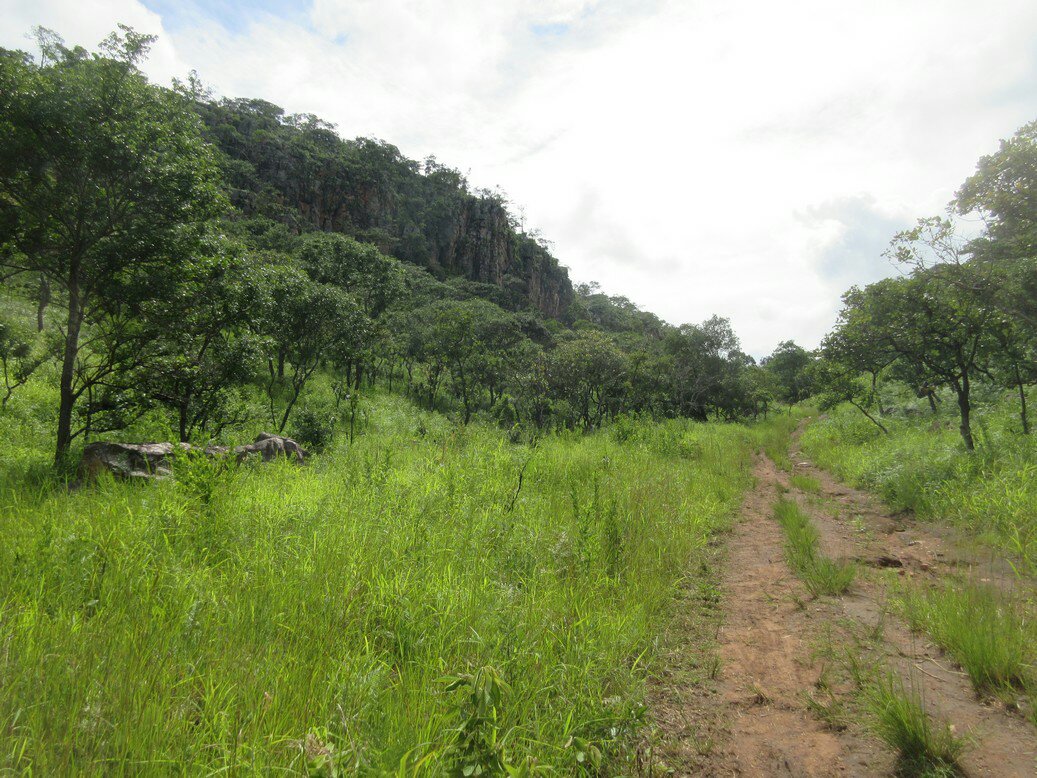 Looking up Itimbwe Gorge. Reading this week:
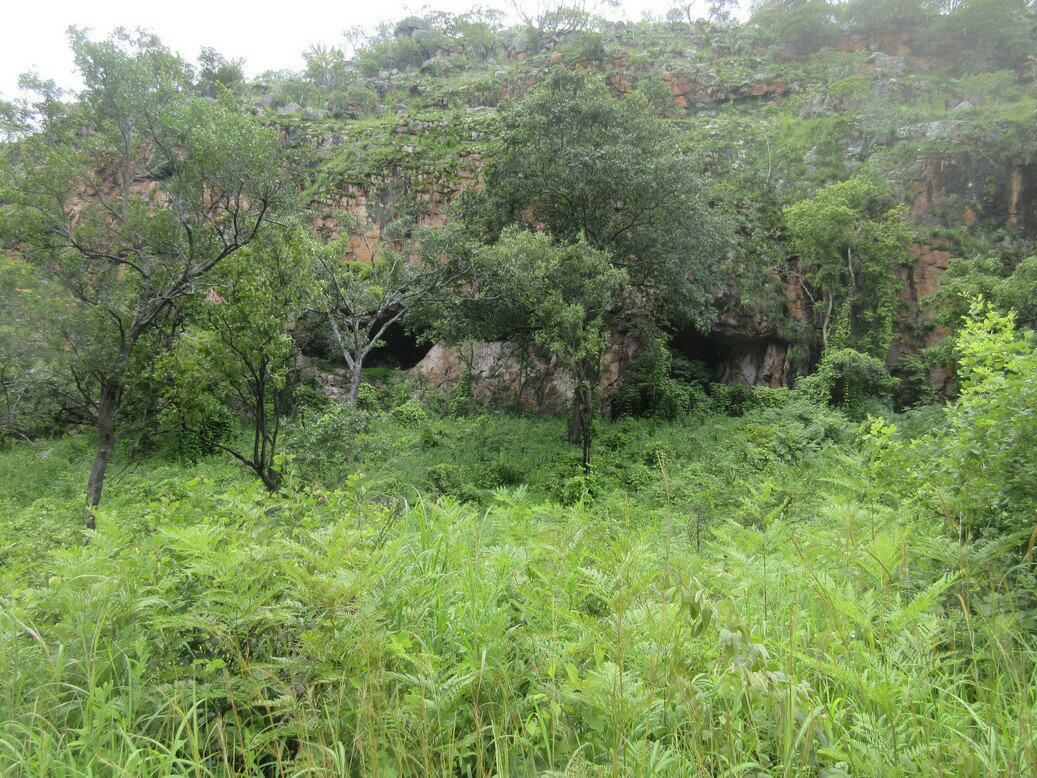 The caves as viewed from the road. Once I made it to the gorge, I found the caves really quickly on the right side as you’re facing downhill, about halfway down the gorge. I actually initially decided these weren’t the caves I was looking for because they didn’t look exactly like the pictures in
 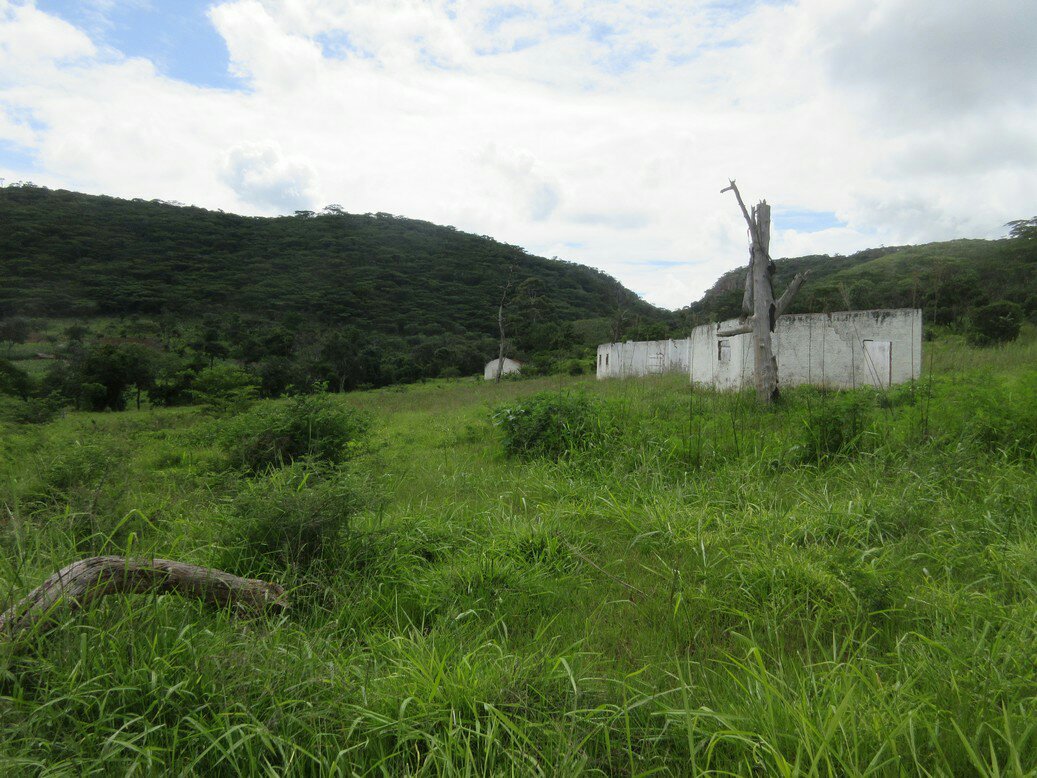 Abondoned farm buildings.
 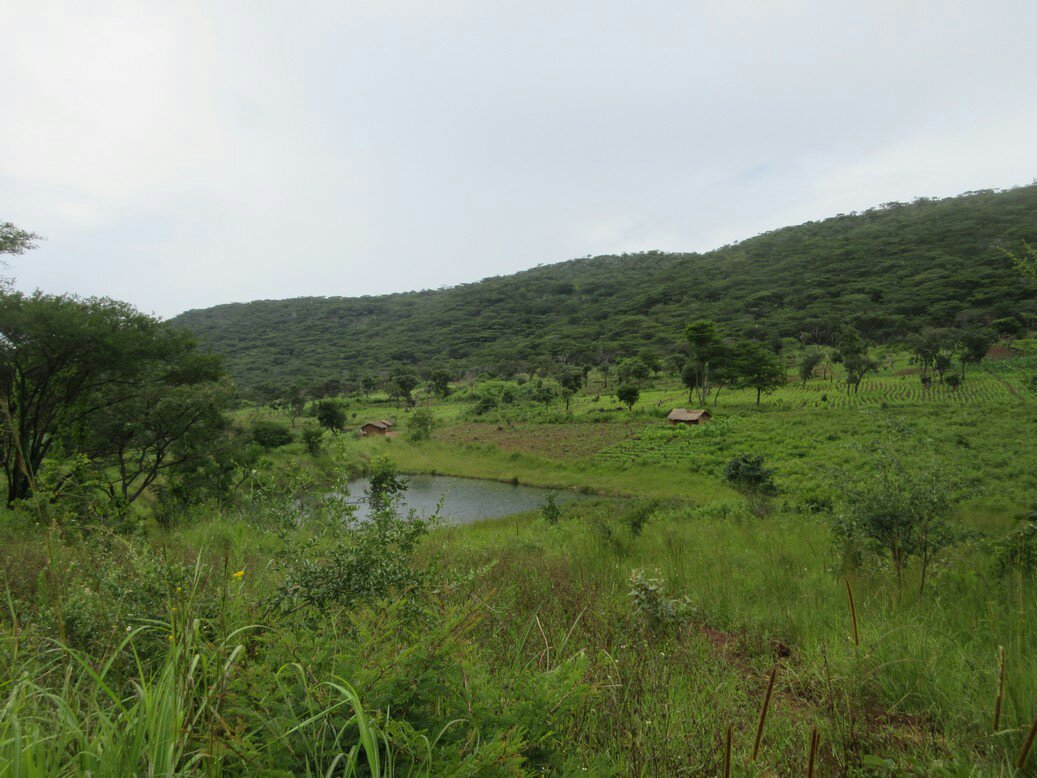 The pool referenced in the first pdf, and the current residents of the valley. At the bottom of the hill I found some of the landmarks referenced in the first pdf (“Notes on Archeological Indications in Abercorn Township and Vicinity”):
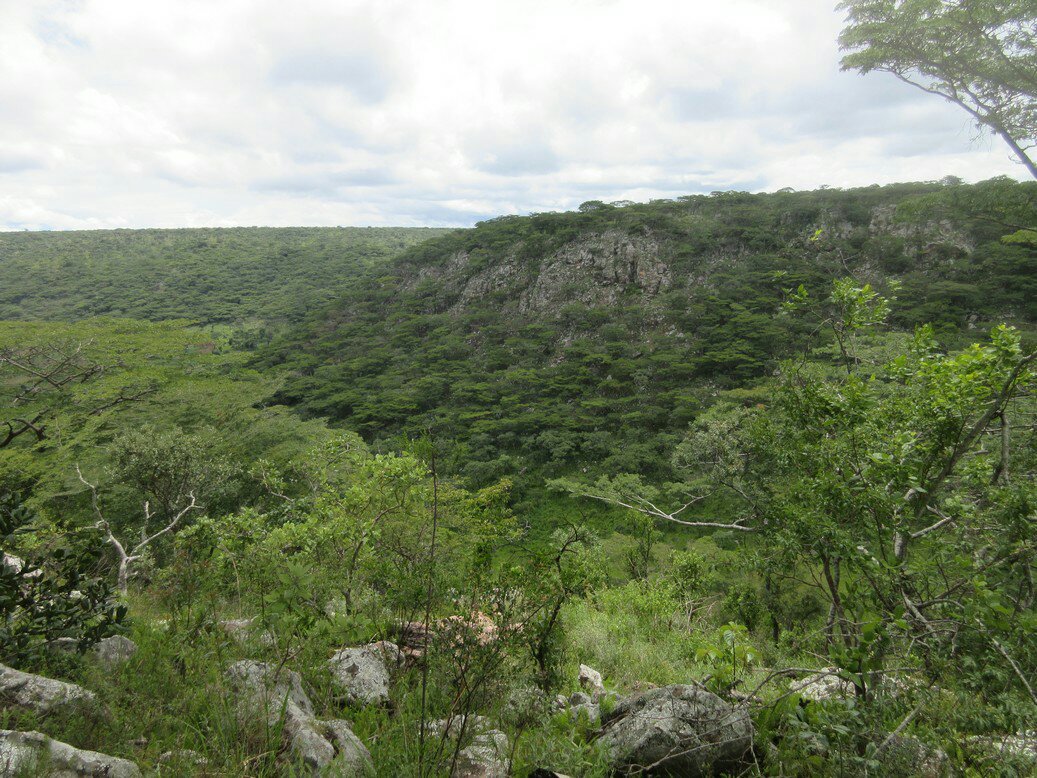 Itimbwe Gorge is on the other side of that ridge.
 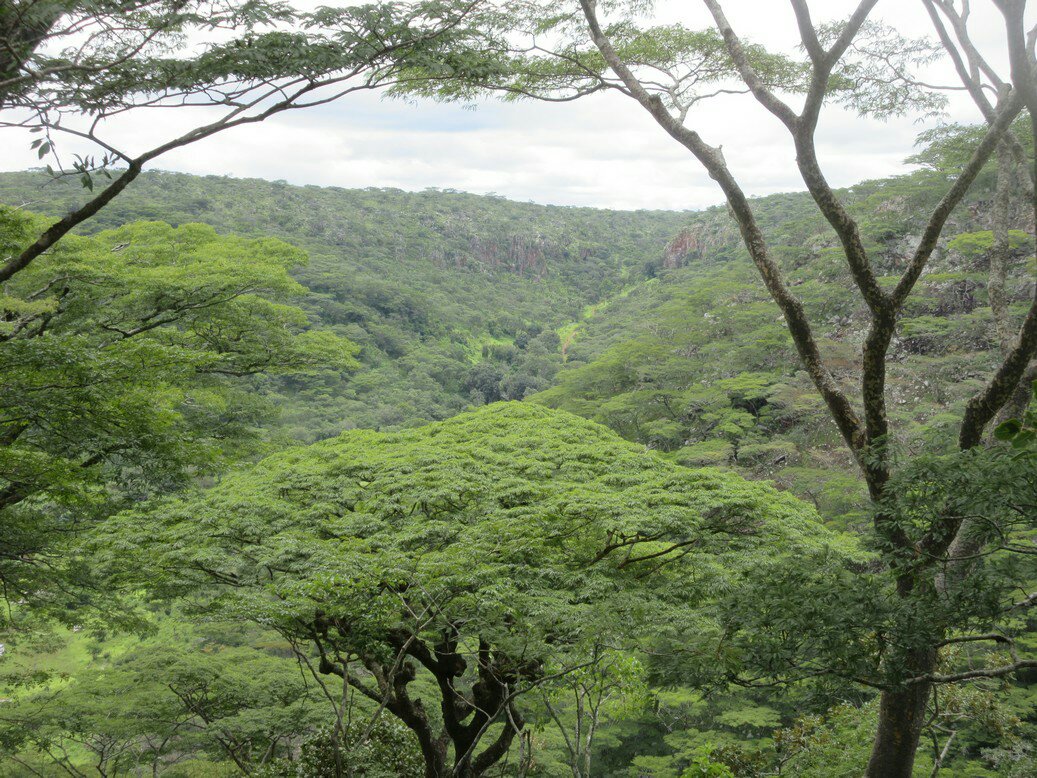 After walking along Malawe Ridge for a bit I descended back into the valley to start heading back up Itimbwe Gorge. The coolest part about living in Mbala is all the history that has happened like right here. Up at Kalambo Falls there is evidence of occupation from 100,000-200,000 years ago, meaning that this region is one of the longest continually inhabited regions on Earth.
 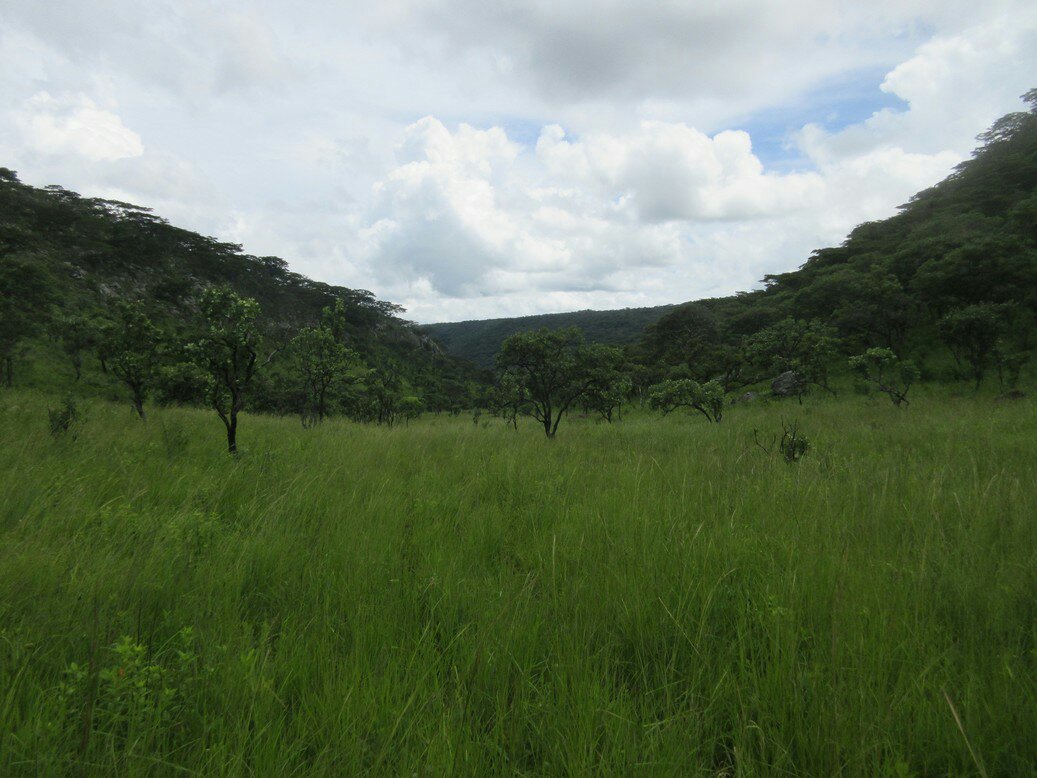 As I descended into the valley and looked around with little evidence of human habitation (well, minus the trails and evidence of annual burning to keep the vegetation down), I tried to imagine the landscape 1000 millenia ago, teeming with wildlife and inhabited by literal cavemen. This area would have provided everything they needed, from water to game to shelter. It’s worth pausing to realize that agriculture is a realtive newcomer to the region, having been introduced by the Bantu people only 1000-2000 years ago. Pulled from my reveries by the realization I had better find these caves and then start heading home, I went back up Itimbwe Gorge to explore the caves. The first two caves described in the pdf wre the ones I eventually explored, but they only mention occasional habitation. The pdf mentions a third cave “at the foot of a high vertical face nearby” in which there are abundant signs of permanent occupation. I never found that cave, but hiking up to one pot that wasn’t cave did give yet another pretty view.
 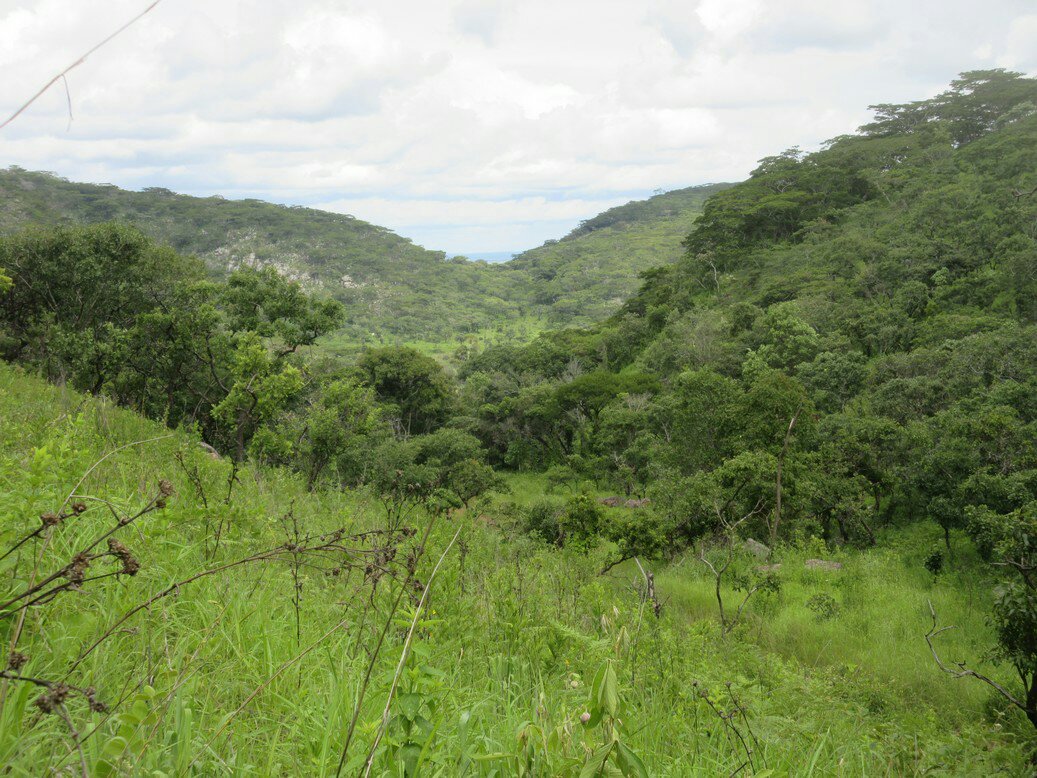 The cave I did find is described as:
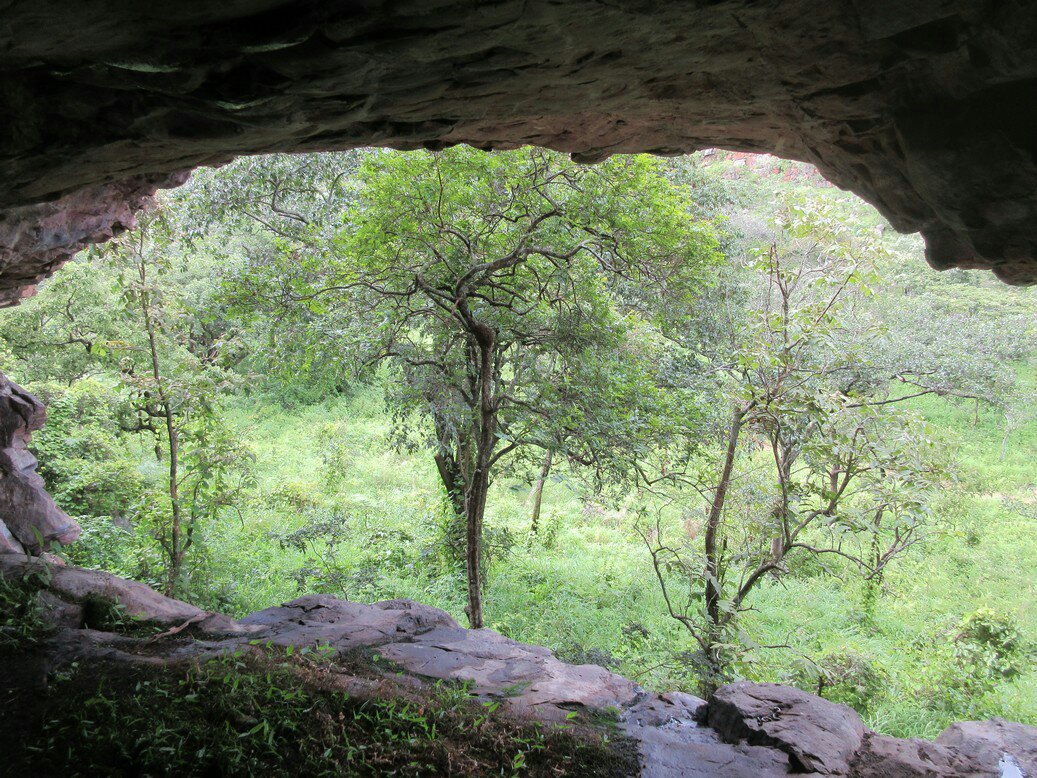 Still, despite it being kinda hard to scramble up the 10 feet, it is easy to imagine taking refuge in the cave, cooking a meal and watching the klipspringer run by. It is pretty amazing to me that all this is within biking distance of Mbala and there’s not even an informational marker saying what this site is. There is so much tourism possibility in Mbala, not to mention the cultural importance of these sites, that just a little development I think could go a long way. In a way that makes it cooler to be able to go out and explore these things, but you wish there were more resources to take care of them properly. After leaving the caves I biked home, running into a rain storm on the way, but overall it was a pretty awesome day.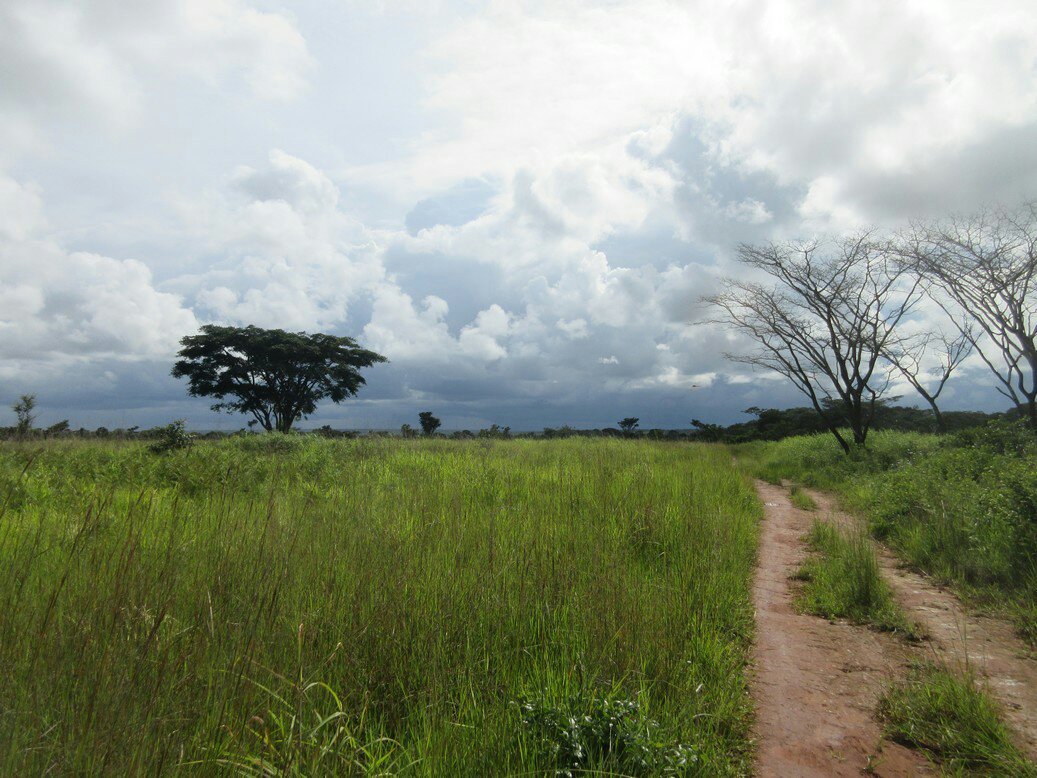


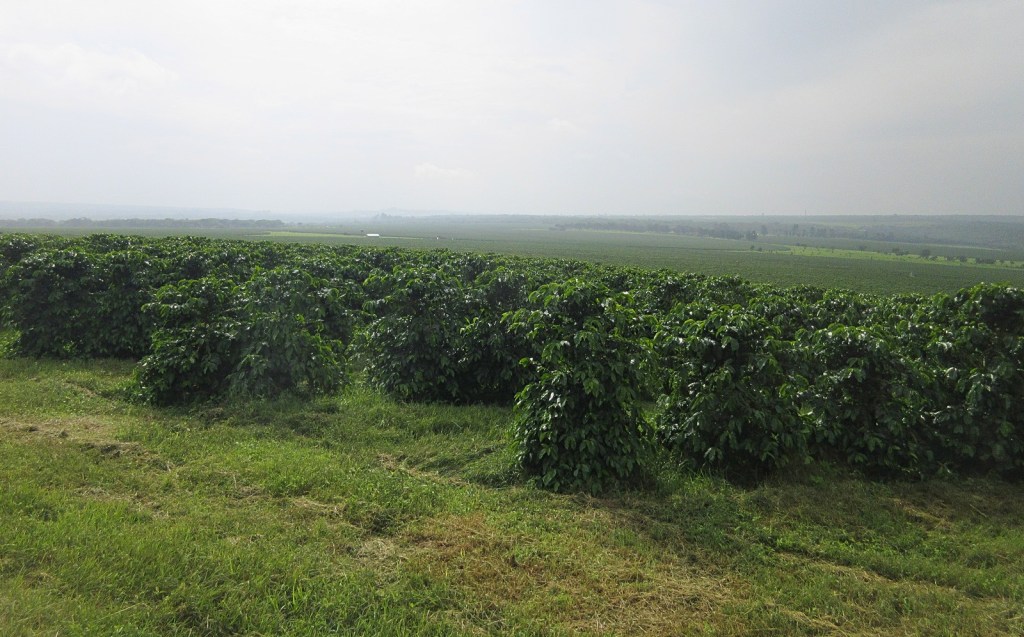
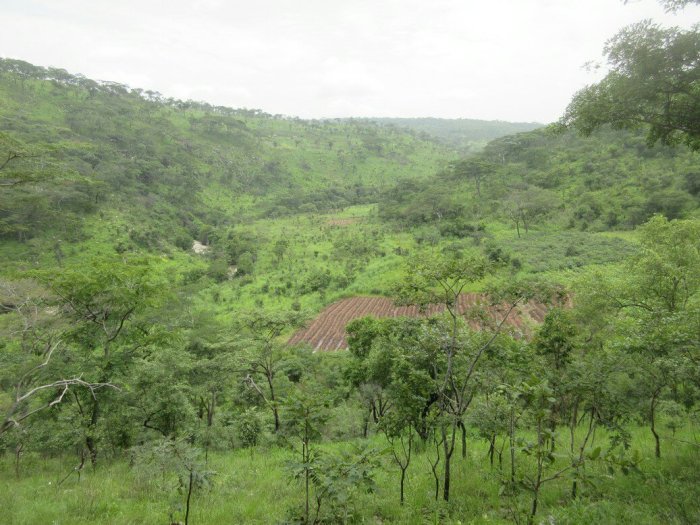


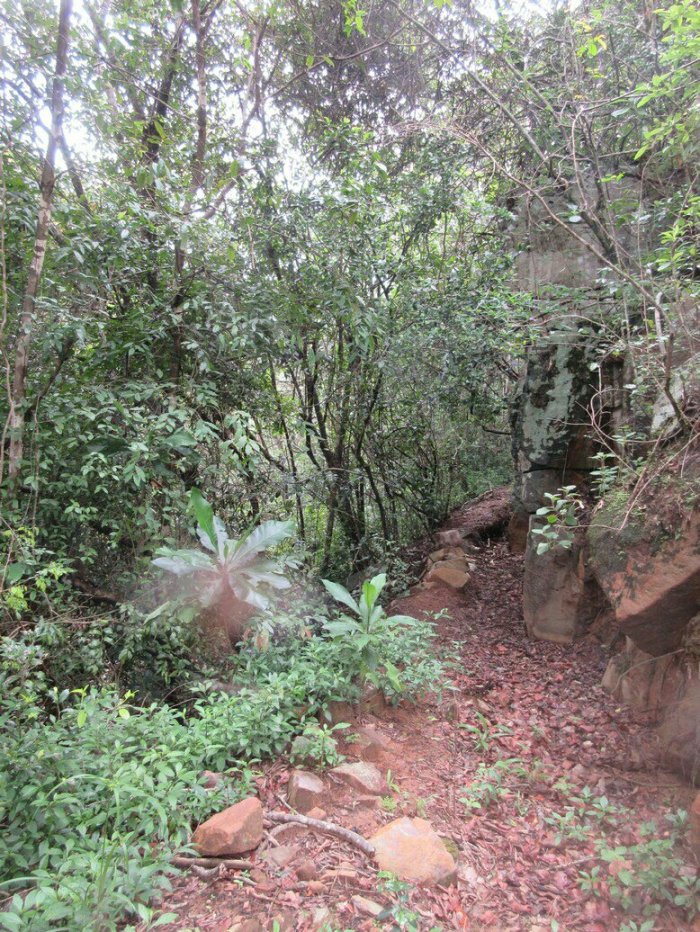

 Continuing along the river, first on top of the ridge and then closer to it, I eventually came back to Isanya Estates. The above picture is a furrow the plantation has dug running off the river, but it looks sorta tropical-y and jungle-y, so I took a picture. With the hike over, I hadn’t really identified any likely locations for the village. I do think it is probably closer to modern-day Mbala than they think, but I don’t have an exact spot. The best part of the hike for me was discovering that these were these deep, beautiful valleys near me. My own valley is less steep (probably why they put a village here), so that is how I think of the surrounding landscape, but I am right on the cusp of the Great Rift Valley. The scenery and geography around here is pretty breathtaking and it is good to get out and take a look.

 For Christmas, Lily came up to visit my site in the Mbala area. While she was up here, we went to go visit Kalambo Falls. We stayed at the Kalambo Falls Lodge, which is right next to the falls. Getting to the falls is a 40ish km ride from Mbala over a pretty terrible road, but at least it is a very scenic drive so it’s got that going for it. Kalambo Falls Lodge is pretty new and when we stayed there we were the only two people, so that was neat.
 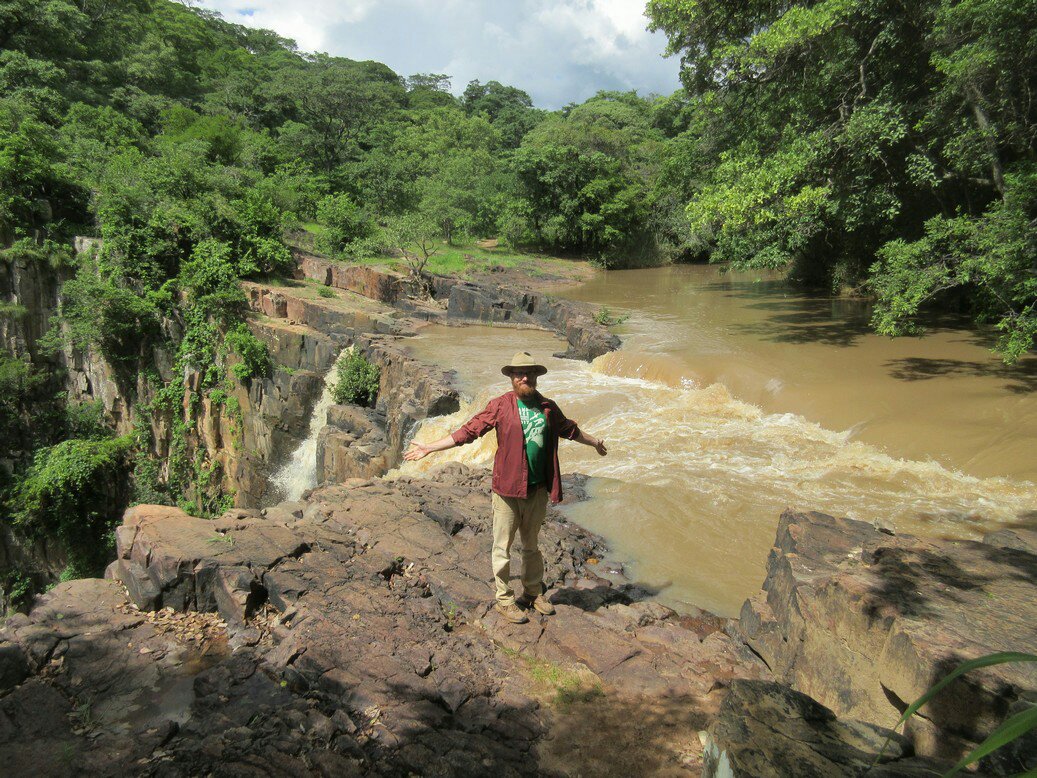 After arriving at the lodge and unpacking, we walked down to the path to start checking out the falls. We were the only visitors at the time. There is a well-maintained concrete path that takes you to various viewing areas and to the top of the falls. Kalambo Falls is notable for being the highest waterfall in Zambia at about 222m. This is far taller than Victoria Falls, but of course far less wide. Kalambo Falls is also the second highest waterfall in all of Africa, and the 12th highest in the world, so, you know, quite an attraction. Kalambo Falls is on the Kalambo river, and forms the border between Zambia and Tanzania.
 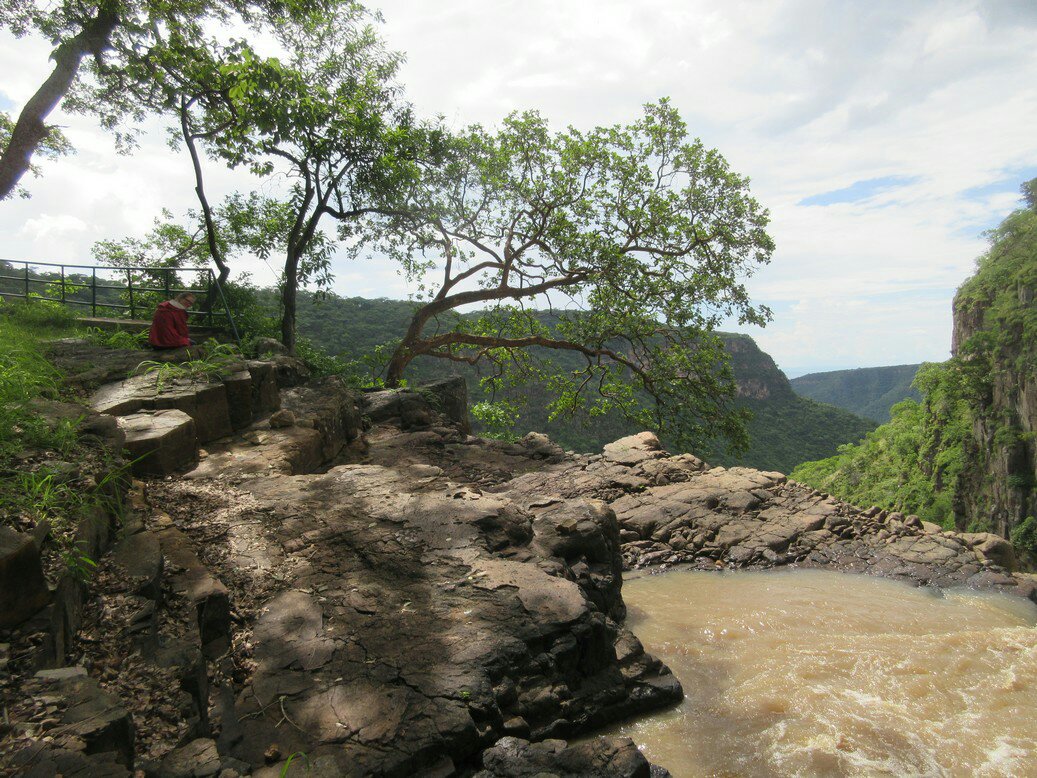 Lily, overlooking the falls and wondering when I’ll be done. Besides its physical characteristics, Kalambo Falls is known for being an extensive archealogical site, with evidence for habitation at least 200,000 years old. I’ve read on other
 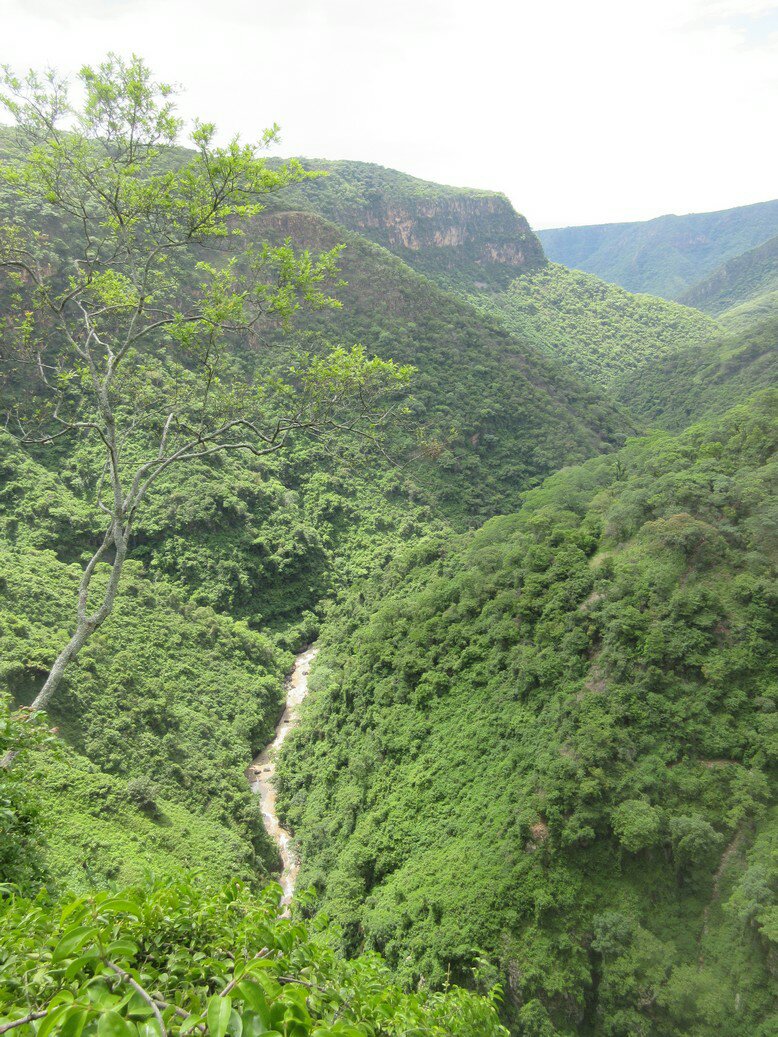 Even without seeing the ancient man sorta stuff, the site is fantastically beautiful. Most people visit the lodge by hiking up from one of the lodges on the shore of Lake Tang, but since we were staying at the lodge we got to see the site in both the evening and the morning. The falls plunge into a deep gorge lined with mysterious-looking jungle. At the bottom, the Kalambo river winds the last 6km to Lake Tang. Standing on the edge looking down at the birds swooping around gives a massive sense of vertigo. There are some baboons in the area (thankfully a lot more scared of people than the Victoria Falls brand) which we managed to catch a glimpse of. Kalambo Falls is gorgeous and I recommend anyone in the Mbala area do their best to go take a look. There can’t be many more places in the world like it.
 Reading this week:
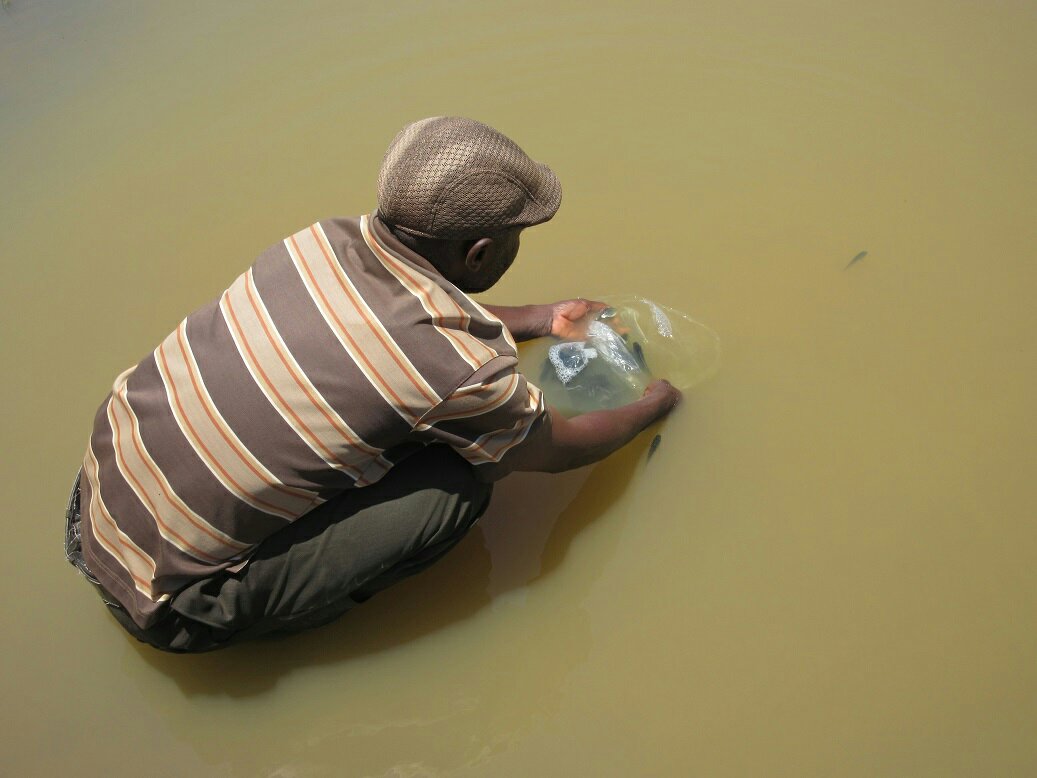 All the ponds have been stocked. The photo above is my host dad stocking one of the ponds. He got involved in an experiment on supplemental feeds. He has been supplied with commercial feed, and also makes his own feed. One pond he’ll provide commercial feed, and the other pond he’ll give the feed he makes. When we harvest we’ll see which fish grew the best.
 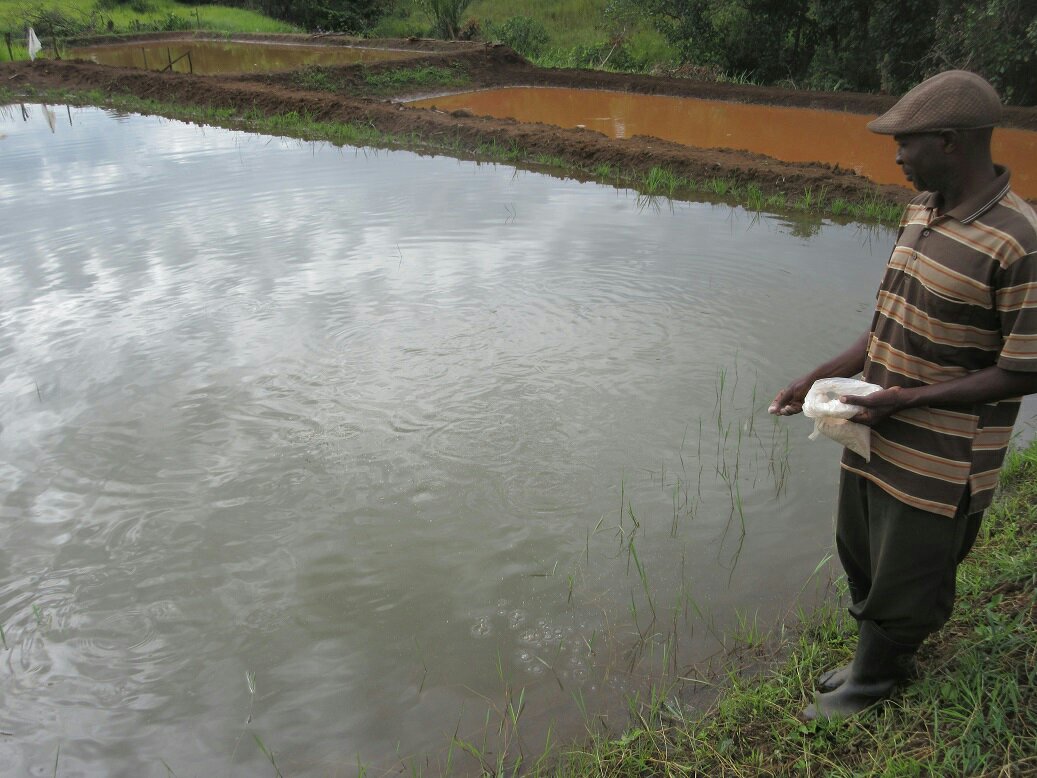 My host dad feeding fish. If I had one criticism of the ponds, it is that they don’t have a very good bloom. With rainy season we are getting more mud and run-off into the ponds, which makes it harder to tell if we have a good bloom and is also not great for the fish. The fish don’t seem to be suffering too much for it so I am not worried, and he’s been good about providing feed so the fish are growing no matter what.
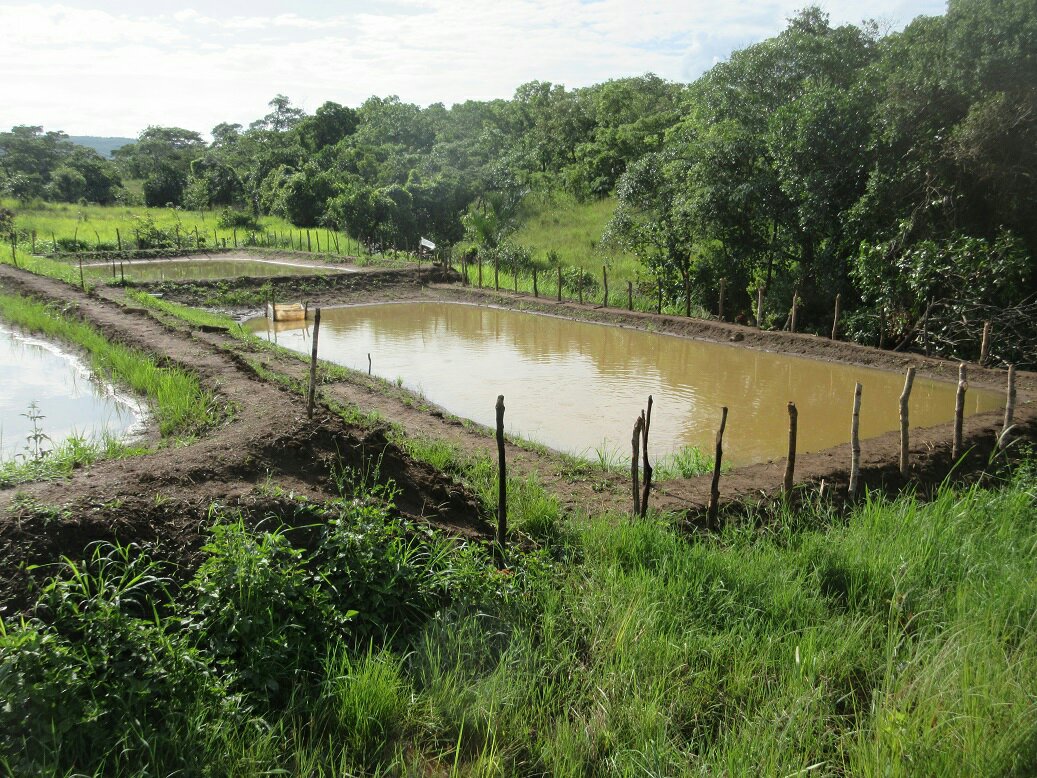
 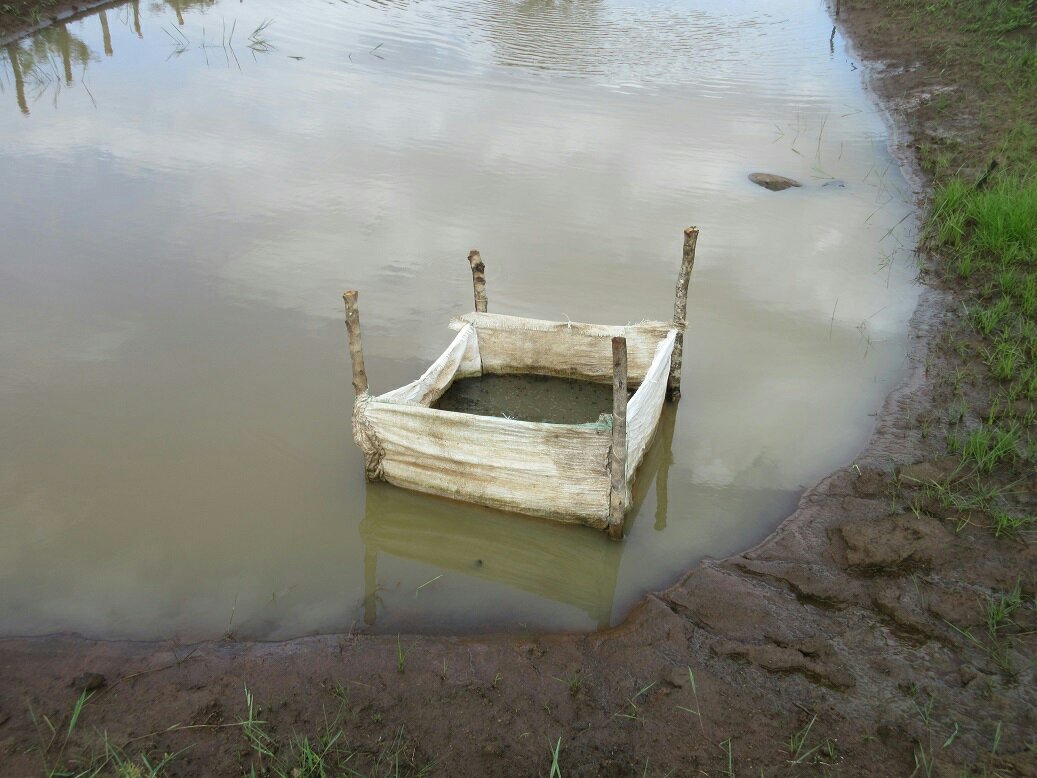 My host dad has been doing a lot of work to improve the ponds. He’s in the process of building a fence around the ponds to keep out predators. He always refers to it as “preventing THE predator,” like there is a particular lizard that is his nemesis or as if there is an alien hunter eating his fish. He also invented the above contraption. My host dad fertilizes his ponds with manure, and the usual RAP suggestion is to put the manure in a sack to place in the pond. He has instead made a basket out of mealie meal sacks and suspended it on four sticks. This has the same effect of holding the manure in a certain location, but makes it a lot easier to add manure just by dumping it in the top. I’m looking forward to harvesting these ponds in February or March and seeing how the fish have grown. At that point we’ll have completed all parts of the fish farming cycle, and both my farmers and I will have had hands-on experience with all portions of it. My big hope is that once people see my host dad make money after the fish harvest, everyone will be exited about fish farming and come to me wanting to stake ponds.


 Pat in the World
You must be logged in to post a comment.