Zanzibar II: Princess of the Universe

Reading this week:

  • Status and Identity in West Africa edited by David C. Conrad and Barbara E. Frank

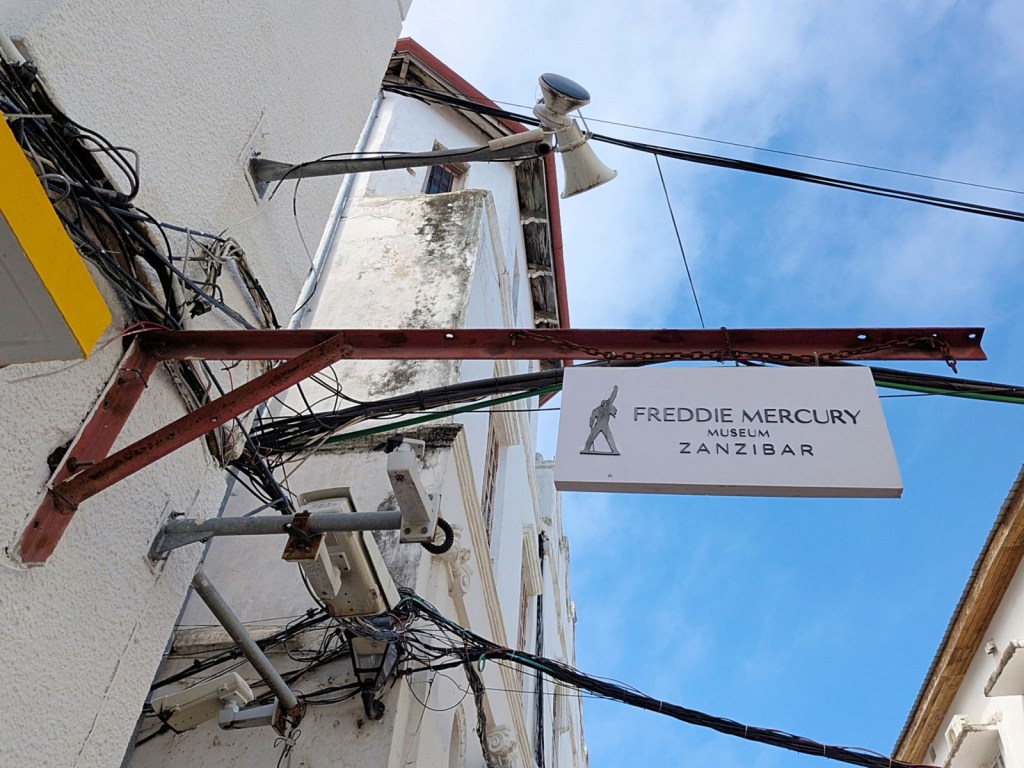
It only occurred to me after posting the last one that this should really be Zanzibar III. But alas. I left you off last time after we had finally made to Zanzibar and wandered both into and out of the Freddie Mercury Museum. My whole thing with Stone Town is that it is not very big. You can, if you are determined, and don’t get caught up in too many shops, see pretty much everything in a day I think. It was easy to go directly from museum to museum. So off we were to the slavery exhibition at the Christ Church Anglican Cathedral.

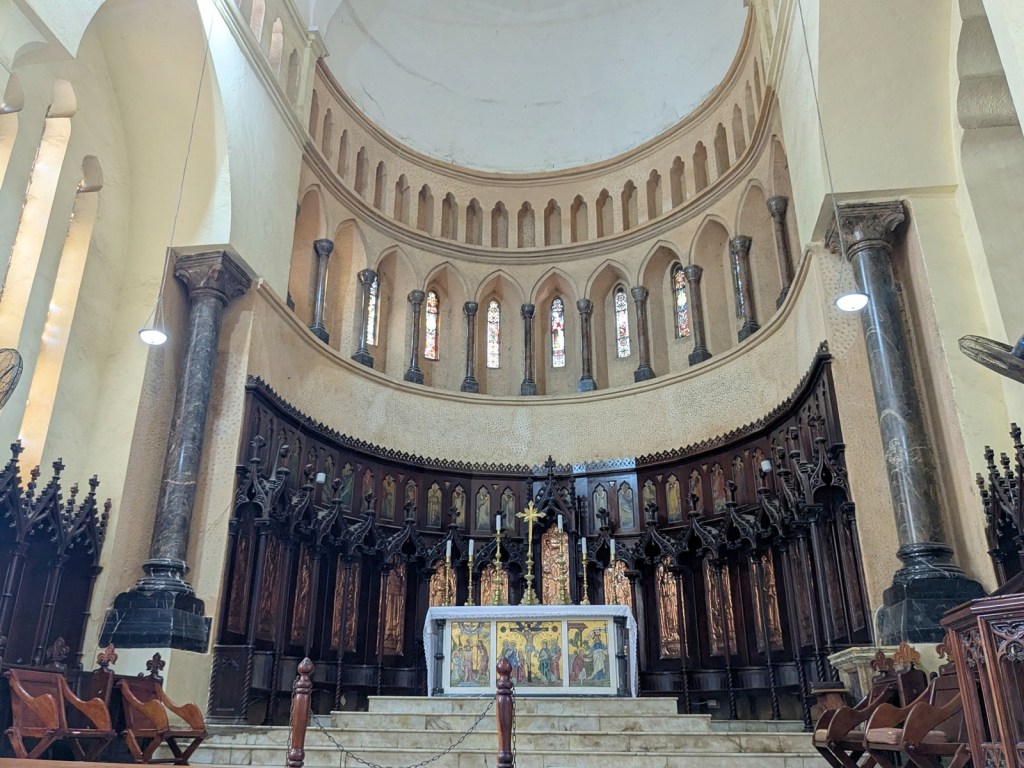
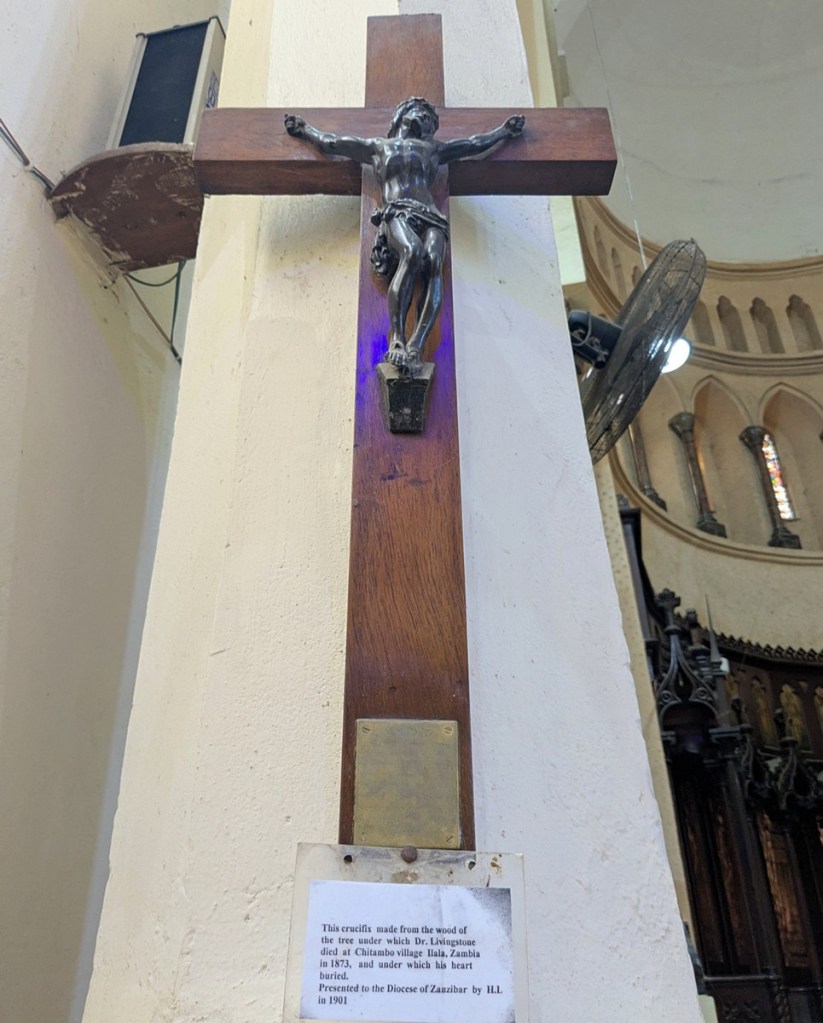
I went to the same exhibition last time I was in Zanzibar and found it very impressive. This time a tour guide took us around the church which is an experience I don’t remember from before. We must not have gone in. It was indeed pretty interesting to see the inside of the church and in there our guide gave us a history of the east African slave trade. My most significant takeaway is the particular way the guide said Bagamoyo (“bwaaaga, bwaga moyyy-yo”) to emphasize the etymology which apparently means “to lay down your heart” in Swahili. Inside the church there is also a cross made from the wood of the tree under which Livingstone’s heart was buried. I don’t actually think the list of objects made from that tree is too long, but here is a chunk of it and here is another chunk of it (different from the chunk of a the tree under which he met Stanley) and I reminded of all the pieces of George Washington’s house that I’ve seen in various museums and things and you wonder how any of it could be left. To be clear none of the original Livingstone tree is left but you get my point.

After the interior of the church we visited the holding cell/dungeon where the enslaved persons were imprisoned to await being sold. Then we were left on our own to visit the exhibit itself. Here the lack of sleep from the night before was starting to hit us, so we did not have the wherewithal to read every portion of all the signs. As I have done much more reading on the slave trade in the years between my visits I now understand there is more nuance than I had thought in the story that is displayed, but I still think the exhibit is very good. My super amazing wife and I learned most significantly that Connecticut was a major center of the ivory industry. Next time we are up there we will have to figure out a way to explore that subject more deeply.
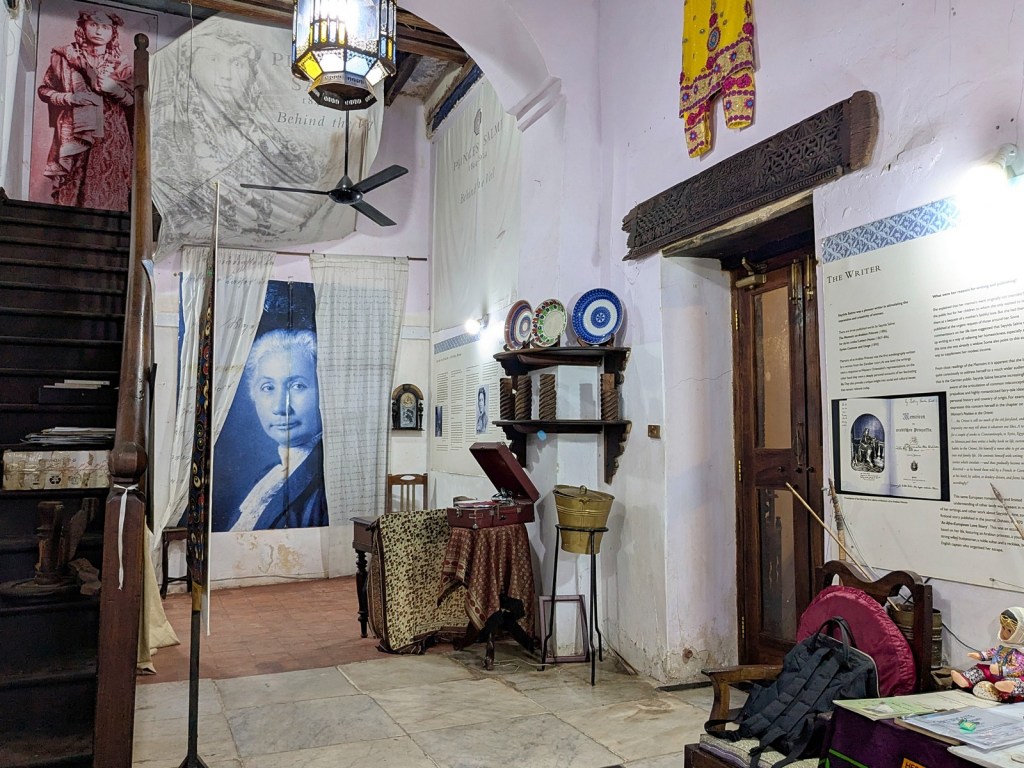
From here we were drawn closer to the orbit of our hotel, Emerson Spice. We managed to run into a new Zanzibari museum for me, the Princess Salme Museum. A slightly surreal experience; we thought it was closed, but someone was in there and took our fee, and then promptly disappeared. Later the museum’s proprietor showed up, also surprised about the lack of his colleague. One of the two mentioned that it was “the smallest museum in the world” though having been to the Freddie Mercury museum I’m not sure it’s the smallest museum in Stone Town. There is quite a bit of scholarship in there and we learned a lot about Princess Salme, aka Emily Ruete. She had quite the life and certainly had to scrap for herself. We both fought the urge to buy a copy of her memoirs, each thinking about our large stacks of unread books at home. Before we departed the museum the proprietor took our pictures at the museum for us and put rose water on our hands as he wished us on our way. Then, if I am recalling the series of events correctly, we ducked into an art exhibit being put on by Emerson themselves, which was fairly moving.
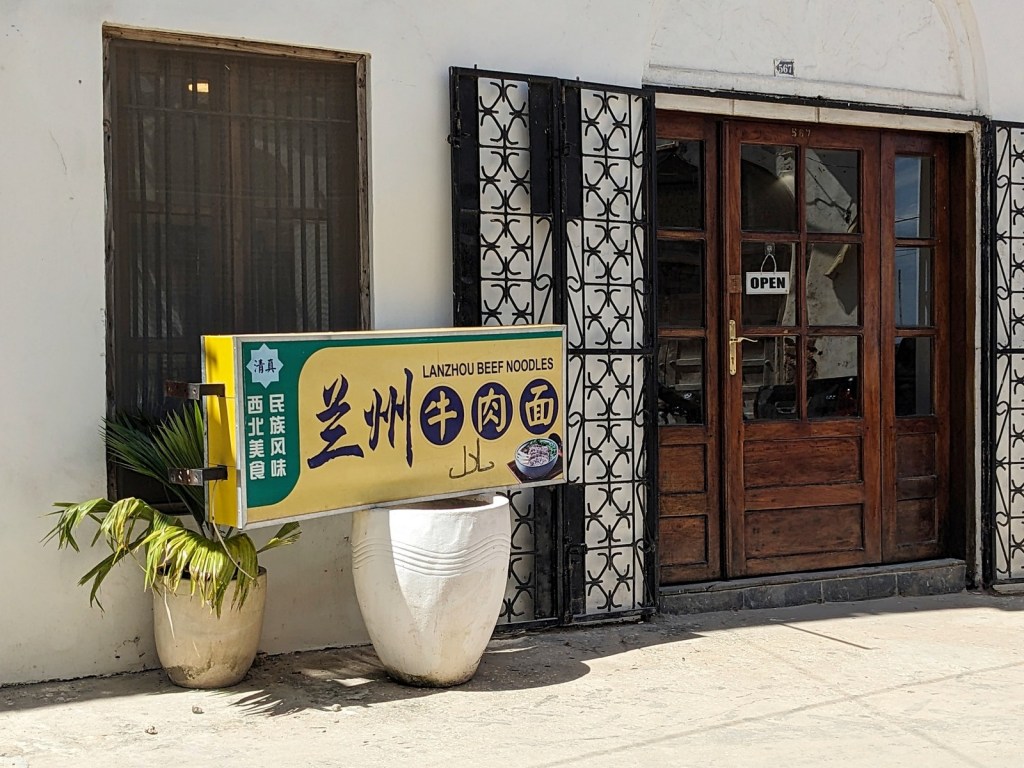
Three-ish museums and we hadn’t even had lunch yet, which we rectified by going to a Lanzhou noodle place. This is noteworthy because my super amazing wife had the eponymous noodles in Lanzhou and really enjoys them and now here we were in Zanzibar of all places having the noodles. We tried to go back the next day but they did not have electricity so we were glad we got to go at least once. It also fueled us up adequately to do some Tanzanite shopping, which we were doing at the behest of some relatives. This was less intimidating than anticipated; all the salespeople were very nice and not pushy. But this was after visiting Tippu Tip’s house. I had thought I had done this the first time I was in Zanzibar because back in those days I only had a paper map to go off of and misinterpreted the building, but now I could be sure. Plus the sign was a good indication I was in the right spot this time.

Tippu Tip’s house, finally

From there the day wound down until we were enjoying cocktails and then an astounding multi-course meal on the room of the Emerson Spice Hotel. The courses were all creative and delicious and produced somehow in the tiny open-air kitchen, also on the roof. In my last post I commented how it was nice to be in a medina and linked to our trip to Fez, but over dinner that night my super amazing wife pointed out that Stone Town was more like Tangier, both in seaside color scheme and in being an international entrepôt. Wherever it is I was glad we were there.

Zanzibar I: Don’t Stop Me Now

Forodhani Gardens by day

Reading this week:

  • Back to the Future: the Ultimate Visual History by Michael Klastorin with Randal Atamaniuk

A strange sensation, going back to a place. When I return to a spot I always think in physics terms. I imagine the paths I have taken in the intervening moments, winding across continents and over oceans and through grad school and marriage and career changes, and that in physics terms if I have wound up in the same spot then in net terms nothing has changed. I know a man cannot step in the same river twice, but we weren’t visiting a river, we were visiting Zanzibar.

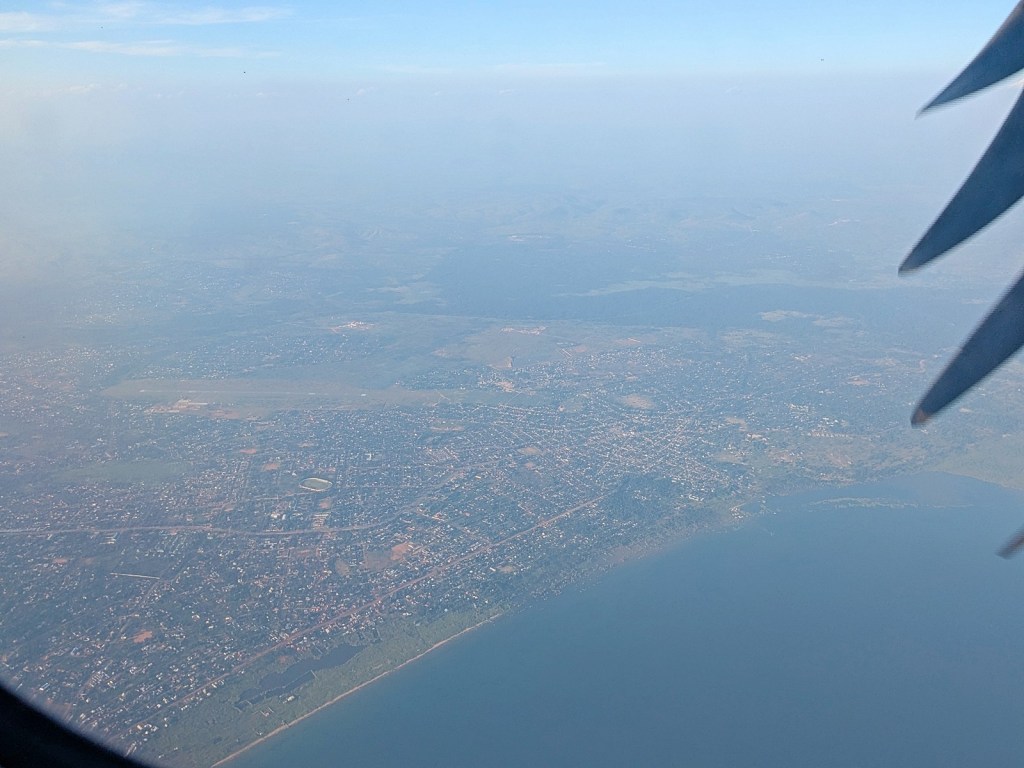
To shift from melancholy into despair, I am now two for two having trouble getting to Zanzibar and arriving a day late. After a lovely morning hanging out in Kigoma we had arrived at the airport only to watch our departure time slip farther and farther away. The airport itself though (as discussed) is not much more than a shack with a metal detector in it does also feature a gift shop (more of a gift counter) of sorts selling jars of local honey and bags of dagaa, which is charming, along with a snack bar on the inside. But our boarding time came and went with no communication, no airplane landing on the tarmac, and conflicting information via our phones. Eventually though we did board only to sit there waiting, the flight attendant said, on “paperwork” as I slowly failed to come to terms that we would miss our connecting flight to Zanzibar. The final blow to my hopes and dreams was the announcement that instead of flying direct to Dar we would be going through Burundi which would have sounded fun except that I didn’t want to go to Burundi. So we arrived in Dar late at night, quickly gave up on the very lackadaisical (in our opinion) customer service guy on the ground, and got a taxi to the nearest hotel where we got maybe four hours of sleep.

Zanzibar at sunrise

Four hours of sleep because we were taking the first available flight the next day, which we had booked for surprisingly cheap. We had pondered taking the ferry, which I had enjoyed last time, but logistically it was easier to fly which is fairly wild. As we shuffled into the airport at five in the morning we thought maybe we could have taken a later flight, but it all worked out in the end when we arrived at our hotel still in time for the breakfast that came with the room we hadn’t gotten to use the night before.

Zanzibar at breakfast

And what a breakfast. Last time I visited Zanzibar I only wrote the one blog post about it because honestly I didn’t enjoy it all that much. It was interesting, and it was pretty, but for reasons I could never quite put my finger on it wasn’t that enjoyable. Now I think the reason was money, which we had more of this time around. That meant things like we could stay at the Emerson Spice Hotel, which was gorgeous and you got to eat a breakfast of fresh fruits and new Zanzibari pastries daily up on the rooftop overlooking the dense streets in the medina leading to the ever-beautiful Zanzibar Channel. Fortified, and with the trials of travel shedding from our shoulders, we were off to the races.

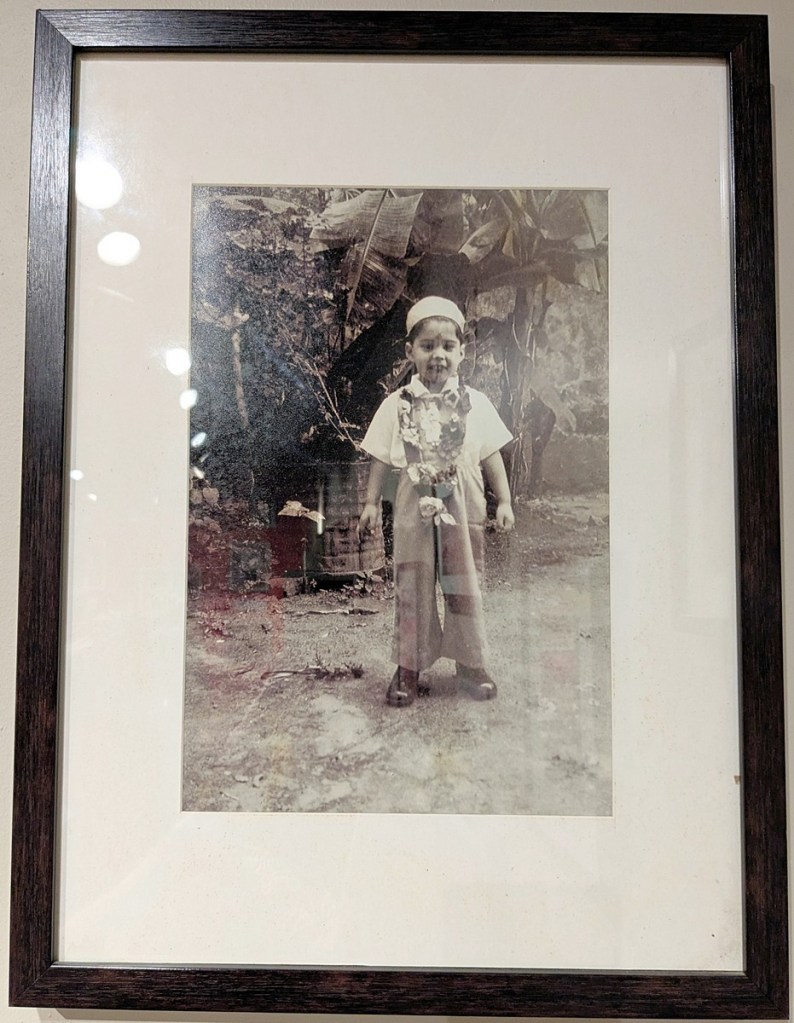
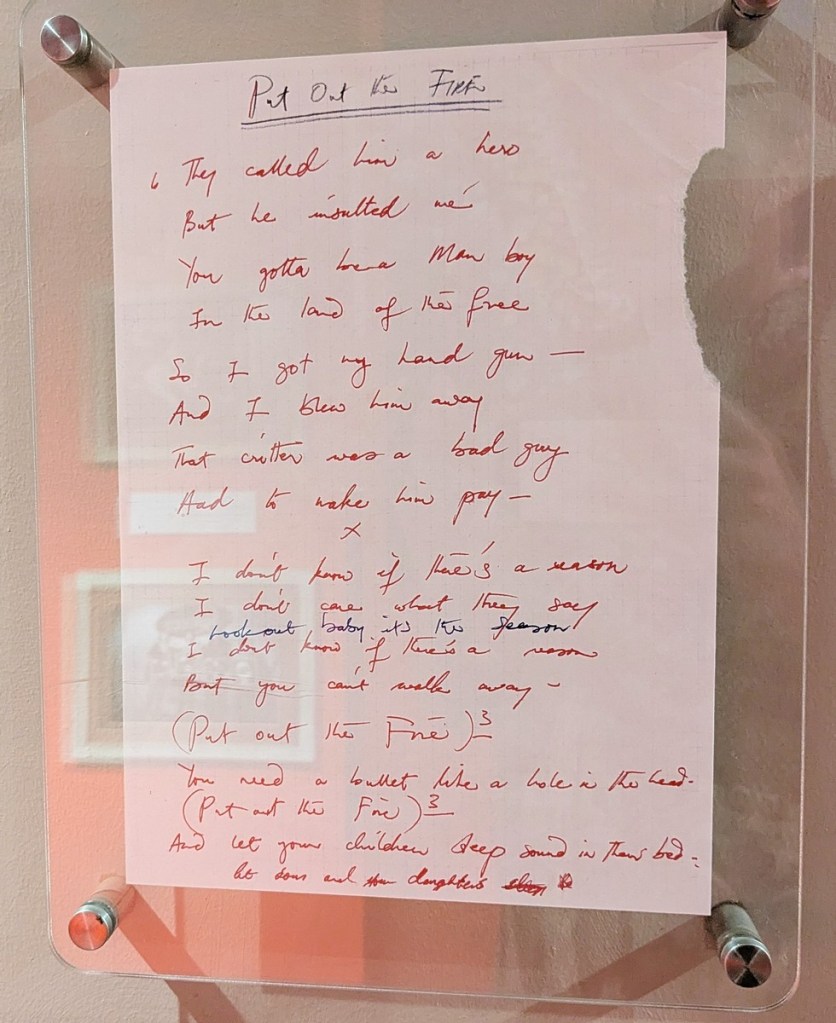
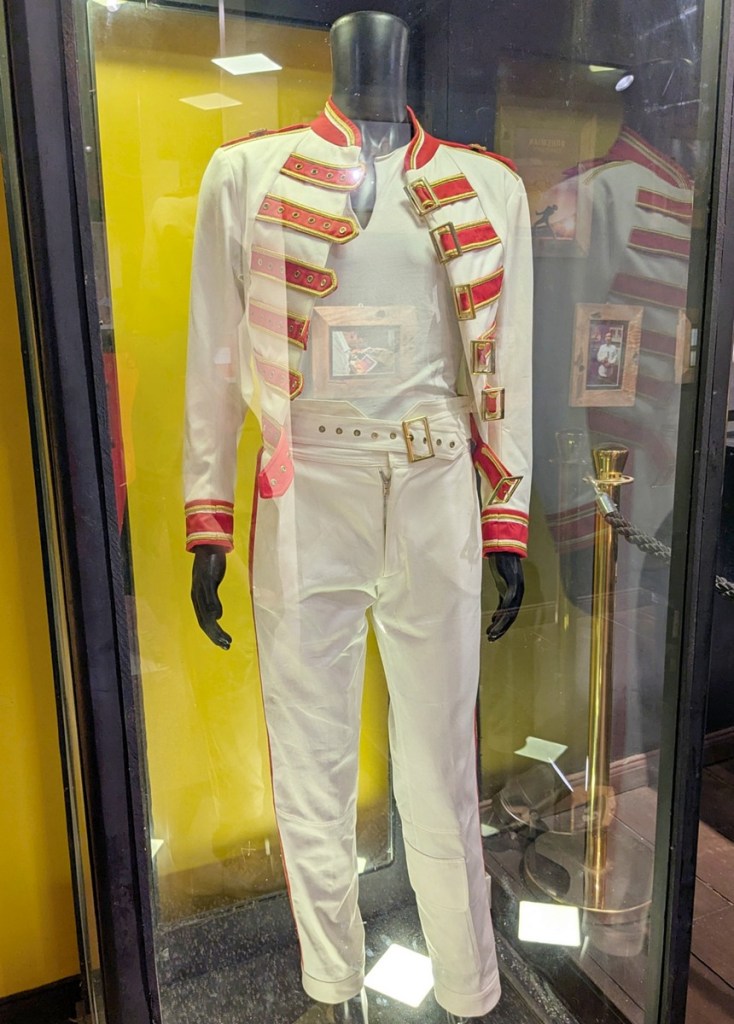
The races being the streets of Stone Town. It was a much more pleasant experience than I remember. As we poked around the shops and the Old Fort I felt less hassled. It very quickly got very hot though. Coming from the highlands of Tanzania we hadn’t expected such a significant temperature increase. Fortunately though there were places you could duck into with air conditioning, like the Freddie Mercury Museum. That was a fun visit. I hadn’t gone last time and it is very well done. It is like all namesake museums hagiography in that I question the scholarship, but it does have a whole bunch of artifacts and some very interesting stuff on Zanzibar. It is smaller than I expected and they really missed an opportunity for a gift shop but it was very fun to listen to his music and see his handwritten lyrics and find out about the history of Zoroastrianism on Zanzibar.

And um I will leave it at that for the first blog post. It was good to be in Zanzibar and it was good to be back in Zanzibar. It was fun to be in the shops and it was fun to be with the love of my life and it was fun to be in a medina again after our trip to Morocco. More adventures await.

They fixed the sign

Kigoma VIII: Loose Ends

Reading this week:

  • Sultan to Sultan by M. French-Sheldon
  • Journey to the Source of the Nile by Christopher Ondaatje

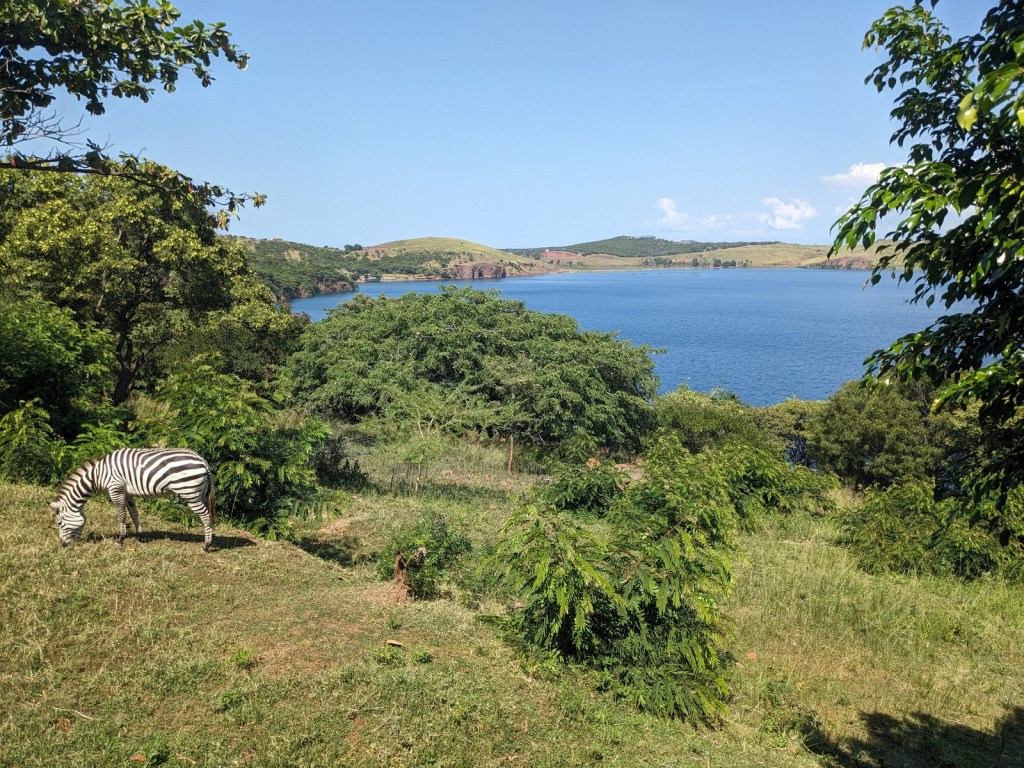
After our very adventurous day going all around Kigoma and Ujiji, our next day and a half in Kigoma were pretty quiet. We mostly just hung out at the Kigoma Hilltop Hotel, enjoying the views and restaurant and pool. More exciting entertainment was provided by the waiters in the restaurant chasing away the monkeys that congregated to take advantage of the morning breakfast buffet. We also took a very lovely stroll down to the hotel’s beach. It is a rocky beach but we weren’t actually planning to swim anyways, and there are some lovely little beach huts down there and a very attentive attendant. And not to mention the views are pretty:

You can see the Hilltop Hotel atop the middle hill.

Before we travelled to Kigoma I had looked up various old pictures of Kigoma on the ole’ internet there and wanted to recreate some of them. I didn’t mention it but yet another spot we went on during our tour was of course the railway station. There is a police station around the front so you’re not particularly supposed to take pictures of that side, but on the tour I got a photo of the back. The old photo (a Flickr embed you can click on) is from 1954:

Africa Railways - Tanganyika Railway - TR Class ML 2-8-2 steam locomotive Nr. 600 (Bagnall 2832 / 1947) at Kigoma station (real photo postcard)

And just so you can really picture the scene below is looking the other direction; follow those tracks and you’ll get to Dar:

Who doesn’t love trains.

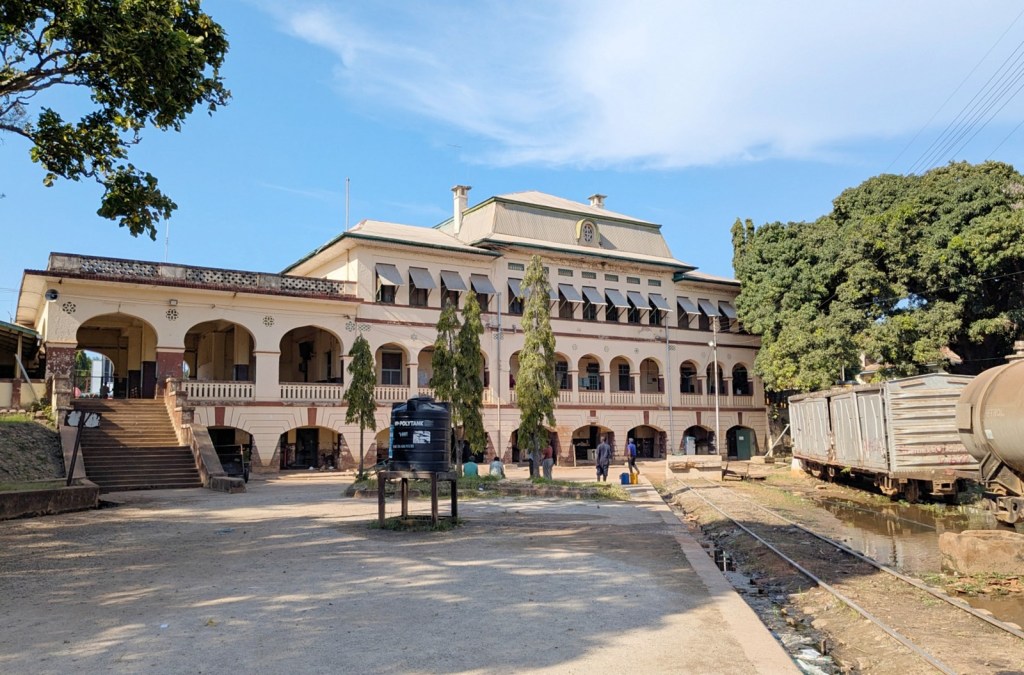
In the morning of the day we departed I took a long walk from the hotel into town to try to recreate a few more pictures, and left to my own devices I could get a photo of the front of the train station. In addition to the train station, the building behind it is also still there. As I was approaching the perspective for the shot the two “Cheetah” trucks pulled up blocking much of the view, but upon reflection I think they better illustrate the hustle and bustle of Kigoma these days compared to when you could apparently have a rather large lawn in the middle of what is now downtown (the below photo is from 1926):

Africa Railways - Tanganyika Railway - Scenes along the line at Kigoma (1926) - Kigoma station and the British HQ

One more photo I wanted to recreate is the one right here. That photo is actually from the Gordon-Gallien Expedition, but the only source I can find for it is via Getty and so I am afraid to embed it. But if you scroll to the top photo you can judge for yourself how I did.

As I was researching Kigoma you can some info about many different sites but they usually lack any sort of indication as to where they are in Kigoma. So I present you the below photo of of the Kaiser House. If you want to take a look at it yourself (or a look at the wall surrounding it anyway), it is here. Purportedly, it was built as a hunting lodge for Kaiser Wilhelm II when he was planning a trip to Kigoma in the summer of 1914. That trip got cancelled but the building remains. The same Wikimedia page I just linked to says it is used by the Tanzanian police but Lonely Planet says the regional commissioner lives there; perhaps these mean the same thing. I couldn’t get a much closer look than what is pictured here.

There are a couple mysteries I wasn’t able to solve while in Ujiji. The first is what and where the Cine-Atlas is. The second and more involved one is the location of the graves of Rev. John Thomson and Rev. Arthur Dodgshun. Each had died in Ujiji but what I learned reading The Central Africa Diaries of Walter Hutley is that they had been buried in Kigoma. The London Missionary Society thought they would be able to procure and build on land in Kigoma (where the harbor is better, important for the Good News), and so the two were buried closer to that area than the rented house in Ujiji. In his diary Hutley describes visiting the grave:

(May 24 [1880]) Since I went there before there has been the addition of another, viz. that of L’abbe Debaize, and at the head of each Hore has placed a stone which states the name and date of death of the deceased. Visiting these it brought up in my mind many recollections of each. I would have liked to have seen them alone, as that little spot seems almost hallowed with the remains of such dear friends. But we could not stay long to ruminate. Passing along the ridge of the hill we soon came to the brow which overlooks the market at Gungu…

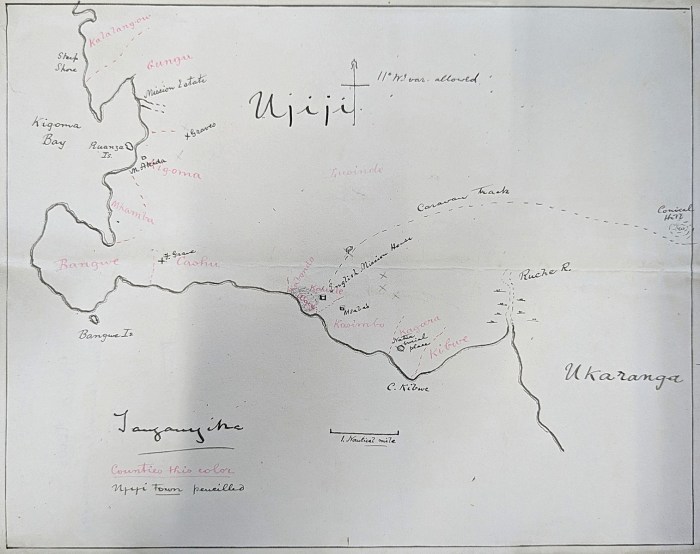
Going off that I spent some time while we were lounging trying to figure out where this spot could have been; it would have been astounding to find the graves. While there I wondered if the graves could in fact be somewhere on the grounds of the Kigoma Hilltop Hotel as it is on a hill overlooking the harbor. But it was as I was writing these blog posts I finally spotted that on Ed Hore’s map of Ujiji (previously seen here) there are two different spots marked with graves; Thomson, Dodgshun, and Debaize must be the farther north one closer to the area marked “Mission Estate”:

If I had realized that earlier it would have narrowed the search, but perhaps it is for the best. We were visiting on the tail end of the rainy season, so if the graves were undisturbed they were probably overgrown with grass, and given the nearly 150 years the graves have been there, what are the chances they are undisturbed? So it would probably have been a long hot day tramping around people’s back yards for nothing. But then again as my dad said when we couldn’t do everything we wanted to do in Disneyworld when we visited as kids, you gotta save something for next time.

So at the end of all that, just a couple final pictures for you below. Unbeknownst to me as I was walking around Kigoma having a grand ole’ time seeing the sights was that the next step, getting ourselves to Zanzibar, was going to be dreadful. But until then, it was a beautiful day.

Kigoma VII: Embroidery

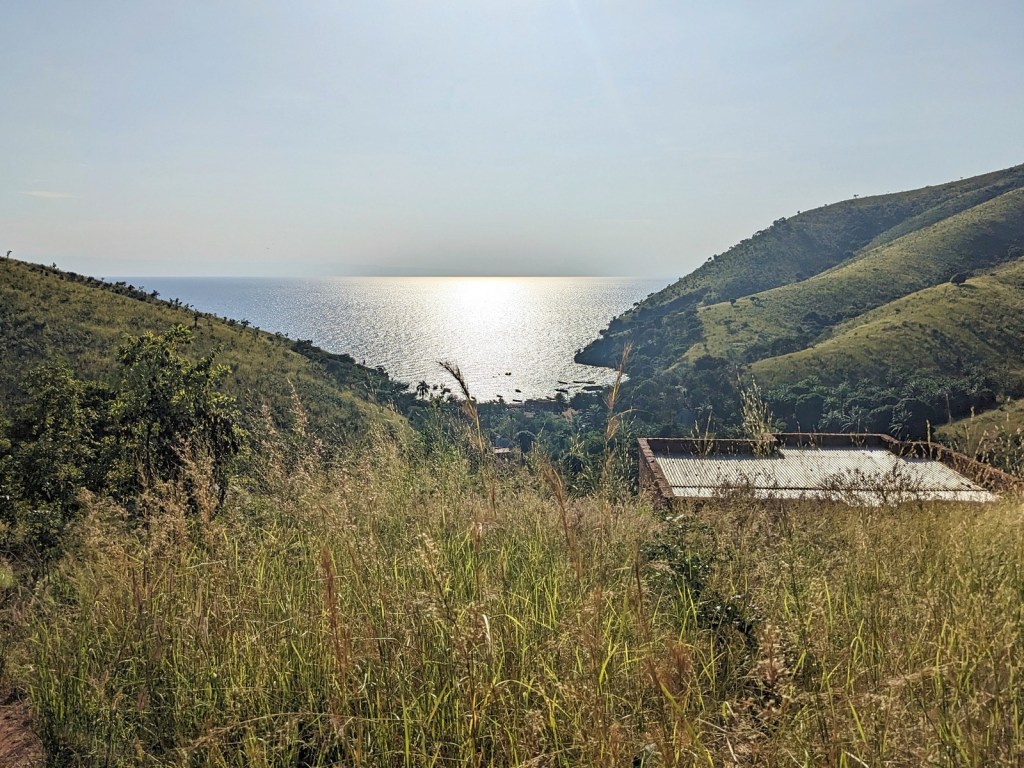
The view before the descent into the fishing village.

Reading this week:

  • American Serengeti by Dan Flores

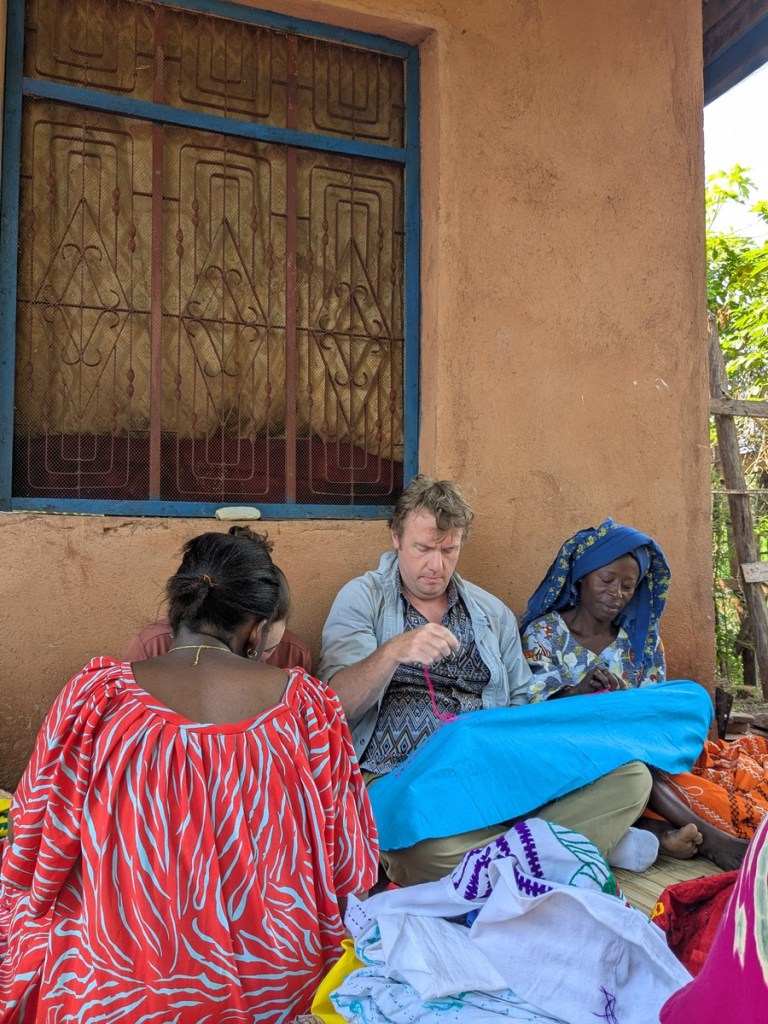
Our final formal event of our very fun day with Kigoma Eco-Cultural Tourism was the one nearest and dearest to Elizabeth’s (the owner’s) heart: learning to embroider traditional mashuka ya Kigoma. But first, lunch. This was very exciting because I finally got some ugali on this trip. It’s called nsima in Mambwe, and I ate it every day in Zambia, and I had been missing it. All the places we had been to so far catered a little too much to tourists to serve any ugali with dinner but now here we were at the very nice Juke Fast Food where they will serve you your goat stew with ugali and it was very good.

My super amazing wife and I did not know about mashuka ya Kigoma until we came to Kigoma, though the artform is purportedly known throughout Tanzania. What they are is bedsheets embroidered with fancy designs (“mashuka” being “sheets”). My super amazing wife and I had initially thought they might be something like taatit rugs, special sorta newlywed gifts, but they do not seem to be so narrowly employed. Instead, as far as well could tell, they are just fancy “good” sheets.

Examples of sheets embroidered by the co-op women being inspected by a co-op chick.

Although we were going to embroider some ourselves, first we did some market research by stopping by the market and researching the wares. This was extremely impressive. The women all unfolded the many, many examples they had. Some of the designs were very complex and very wild. A number had embroidered animals, like large zebras or peacocks. Others took more inspiration from pop culture, like one that had a swirling repeated Coca-Cola logo motif. Others were more geometric.

At the back of the market we saw some of the division of labor in the mashuka economy. Although Elizabeth assured me that there are women that do the same, we saw a setup where men were first creating the bedsheets themselves by sewing together two strips of fabric to create a single bedsheet (hey, again like taatit). I was tempted to think that meant the craft started with ‘merikani but that would be some irresponsible speculation. Neither Elizabeth nor Peter (our guide) could report when mashuka ya Kigoma started, except that it was apparently long ago. After the men create the bedsheet they then also draw the designs (again Elizabeth says some women do their own patterns). From these the women do the embroidery to decorate the sheet.

I do not know how they do it, it was so hard.

For most women who do this work it is a supplemental income method. When we visited the market on our walking tour all the women who were selling vegetables were also embroidering sheets as they waited for customers. The women we were going to be learning from do it in the afternoons. They are part of a co-op that Elizabeth helped organize. In the mornings the women work in their gardens and then after lunch all gather to hang out and embroider sheets. When we arrived they had already gotten started, so we all said our hellos and settled down to do some needlework.

Instead of starting in on a whole sheet my super amazing wife and I both had basically samplers. Elizabeth’s co-op focuses on more traditional geometric designs, executed with some basic stitches. By “basic” here I mean there is a set of standard ones they use and not “simple,” because the women tried to teach me and I just did not get it. Having tried my hand at it the most stunning thing about these sheets is how cheap they are. Each of these women fully embroiders a whole sheet in about two weeks and despite all that work we bought a sheet and pillowcase set (our samplers were really meant to be half a pillowcase each) from them for I think about $30. Having tried it this is bonkers to me. After a very short amount of time (it can’t have been an hour) sitting on a mat trying to embroider I was a broken man. My back ached and my legs were falling asleep and I just got progressively worse and worse at this M design this woman tutoring me tried to impart upon me. Quite the learning experience and a valuable and concrete lesson on the value of women’s work; I think those sheets should really be like $1000 each.

The fruits of my painful labor.

Eventually our backs and our egos were taken pity upon and Peter took us on a walk to “show us the environment.” This meant going down the hill to the little fishing village nestled in a cove. This was very pretty but also hot and long and in the end we had to walk back uphill which finished us off. But the village was very interesting to see. Of all the spots where we witnessed the rising lake levels this was the starkest. Out in the water was standing by itself the minaret of a former mosque. I guess the tower was made of concrete but the rest of the mosque had been made of mud brick so with the lake washing away the foundations the bricks had returned to just mud. The most fun part of it all was when one of the fishermen who were bringing in their boats greeted us with a “Bonjour!” I trawled up every ounce of high school French I could in an exercise of us mostly not understanding each other, but in the end I learned he was Congolese (if the French didn’t give it away) and lived in the village. He invited us (as a joke) to go fishing with him which I deferred until “maybe tomorrow.”

Minaret turned mooring.

Environment seen, we then hiked back up the hill which finally did in my super amazing wife and I. Elizabeth rescued us in the car and brought us, after our very long and very interesting day, back to our hotel. Just to put a point on how great Elizbeth and Kigoma Eco-Cultural Tourism is, she finished overnight our samplers and brought them to the hotel the next day so we could take the finished product home. So one last time, if you are in Kigoma you have got to hit them up. Meanwhile though we pulled ourselves to the hotel restaurant where we watched another amazing Tanganyika sunset go down over Congo while enjoying the company of each other and some cold Stoney Tangawizis.

Kigoma VI: Livingstone Memorial Museum

I oughta actually read Livingstone’s books. I have done a bit of following in his footsteps. He came through near where I was a Peace Corps volunteer, having visited Lake Chila and crossed the mighty Lucheche. And then of course subsequently I travelled to the spot he died before we visited the spot he was born. Back when I was on the submarine and Africa was really still a strange and novel place to me I read Tim Jeal’s biography of Livingstone (called Livingstone), and quite recently I have read his invaluable follow-up in the form of a biography of Stanley (called Stanley). Still I haven’t actually read Livingstone’s books themselves for fear that it would keep me from reading other books more narrowly tailored to the particular historical niche I have staked out: the Central Africa Mission of the London Missionary Society.

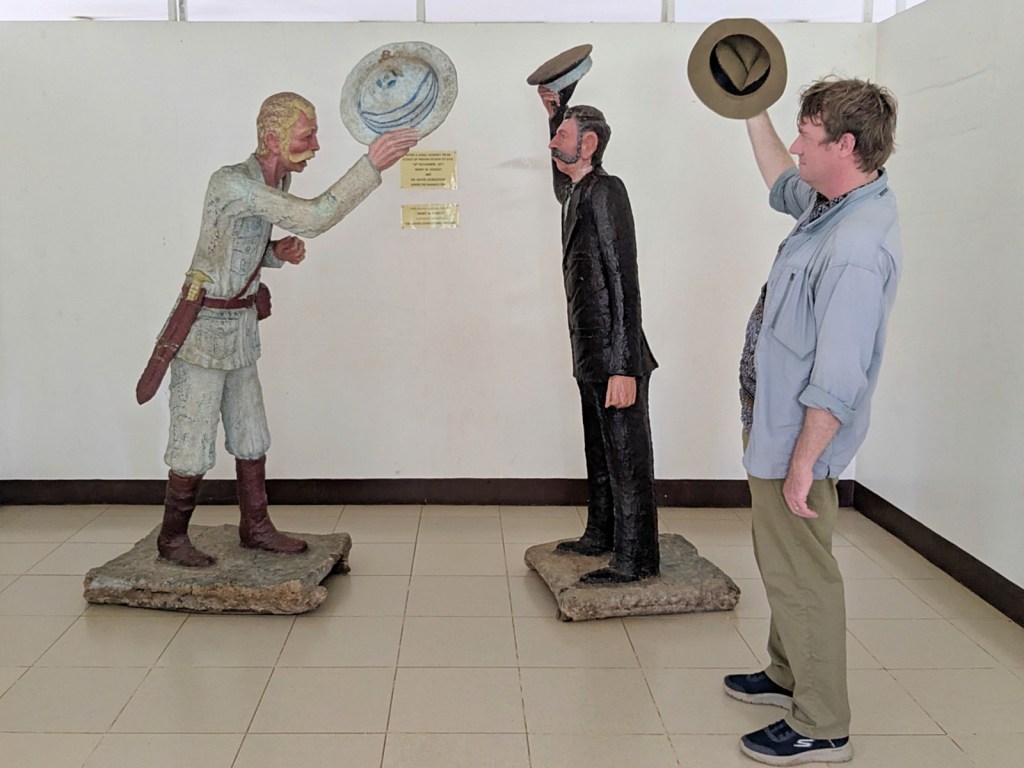
But that is neither here nor there, the here and there in this case being specifically the Livingstone Memorial Museum. The museum is in the spot it is because on its grounds is the memorial to the most famous event in both Livingstone and Stanley’s lives, that day in November 1871 when Stanley found Livingstone. As I have learned from Stanley, there is no real telling which day exactly in November the meeting happened as both men had lost track of the date in various deliriums, and furthermore significant reason to doubt that Stanley ever said “Dr. Livingstone, I presume?” But still a very famous spot!

We arrived at the museum in the care of Elizabeth and Peter of Kigoma Eco-Cultural Tourism. When we arrived we were greeted by the only tour guide on duty, but he departed immediately with a different group to give a tour in Swahili. We used the time first to visit the museum’s gift shop (very good, I got two cool bird paintings and a warming basket) and then when it was clear we had even more time we explored the galleries. It is a small museum, but I think it is pretty good for what it is. Although they had a room dedicated to Livingstone’s various journeys much more interesting were some informative displays of local cultural artifacts. They had examples of specially shaped baskets, some designed to hold gifts and other designed to keep food warm, which explained strange baskets I had seen in the Ujiji market alongside the spears.

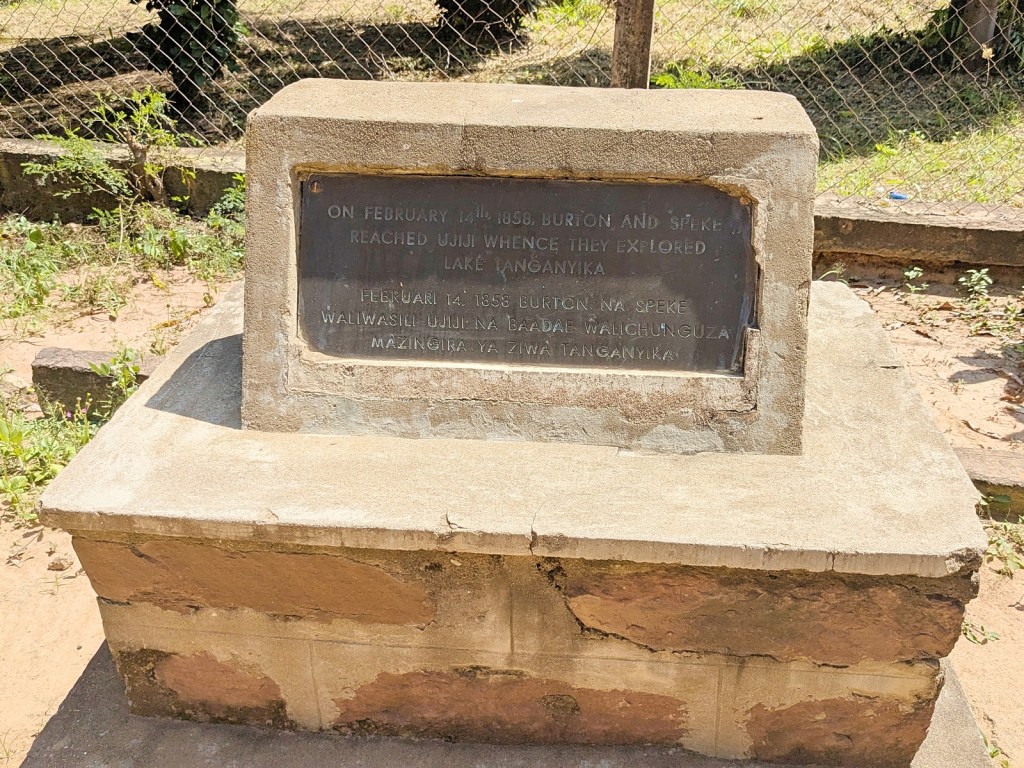
Eventually the guide returned and off we were to the memorial itself which from the museum sits atop a small bluff. The most interesting thing (to me) the guide said was that the bluff marked where the lake’s shoreline was when Stanley found Livingstone. If true that is a bit ominous for Kigoma and Ujiji given the currently rising lake levels. For the rest of the information our guide here gave us I didn’t pay wayyyy too close attention as I was very familiar with the story. But it was bouncing with excitement to be on this very spot. It is at least the third iteration of a memorial, the first being the mango tree itself under which the meeting took place, the second I think a plaque, and now the third and current monument. Although the original mango tree died the mango trees on the four corners of the plinth are supposed to have been planted from grafts of the original tree. Also on the plinth is a plaque commemorating the arrival of Burton & Speke, which must have also happened near that spot.

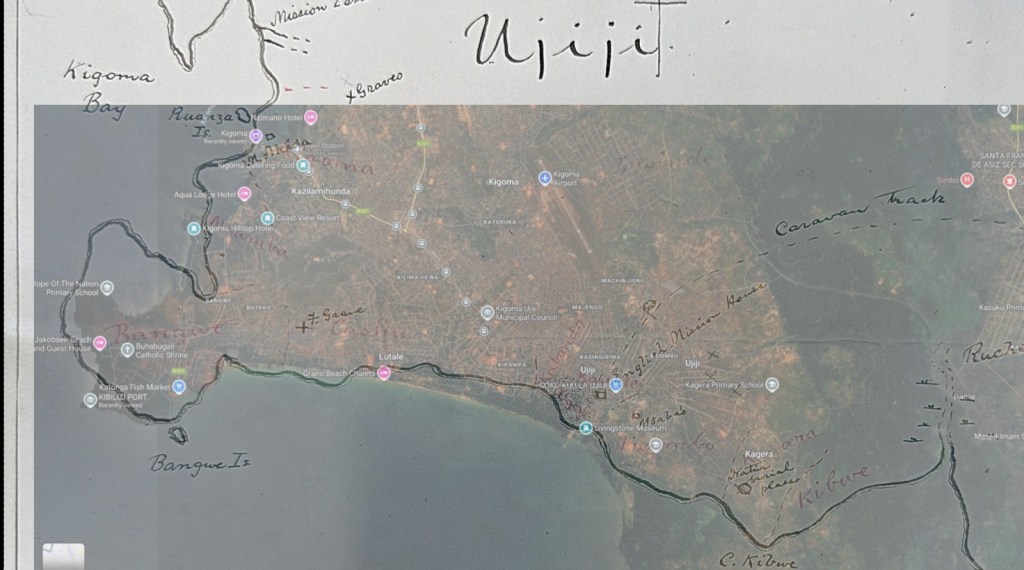
Speaking of “near that spot,” the site of the LMS Mission House. Like I said in the last post I wanted to find where it was. Having considered it at length, this is probably impossible; it was just a rented house as the LMS were never given permission to build their own place. When I was in the SOAS archives I did find a map that Hore drew showing the approximate location of the mission house. I tried to do some fancy stuff and overlay the map over the Google aerial image using Bangwe island as a guide (below) and even maybe make the nautical mile match up but I’m not sure it really sheds any light on the issue. The most relevant part of the map is probably that the mission house was near the end of the caravan track, and I think the museum is probably also around where the caravan track ended. Of course probably everything in Ujiji was because it wasn’t all that big of a town, so where Burton & Speke arrived and where Livingstone camped out and where the LMS set up shop were all probably pretty close to one another. And now so were we! Man history is awesome.

After taking photos and admiring the spot we were done and the guide led us down back to the museum. Once again Peter suggested we could “say goodbye” and once again I was confused until the guide himself said exactly “you can give me a tip.” This was a relief because it cleared up the situation and we gave him a tip. He was a very nice man and a very good guide really; he apparently volunteers at the museum and otherwise is retired. It was at this time that I dragged us across the road to see the boatyard where they were building the giant canoes, and we could see up close another spot badly flooded from the rising lake levels. But I’ve covered that and we still had plenty to do on this day so we piled into the car once again and off we went.

Kigoma V: Ujiji Walking Tour II

Reading this week:

  • The Central African Diaries of Walter Hutley edited by James B. Wolf
  • Mirambo of Tanzania by Norman R. Bennett

Alright I ended the first part of the story of our Ujiji Walking Tour a bit abruptly there after trying to impress you all with various links to obscure and not-so-obscure websites in an effort to establish my independent researcher bona fides. I’ve gathered my thoughts however so now I hope you’ll continue with me as I recount the rest of the particular adventure.

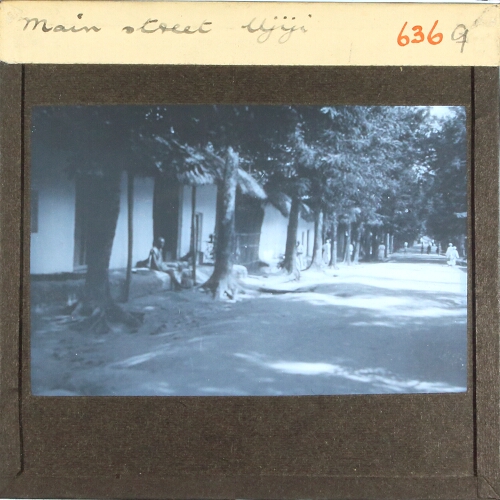
A slide from the LUCERNA collection.

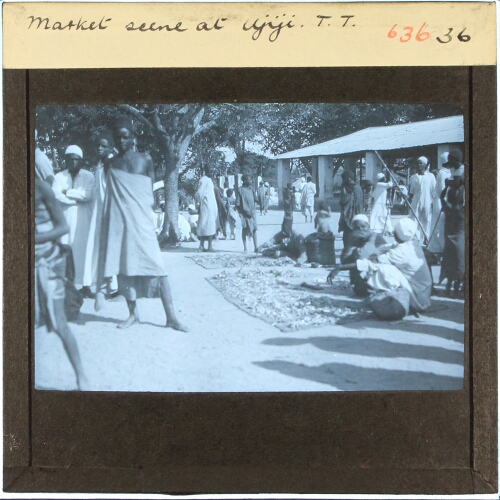
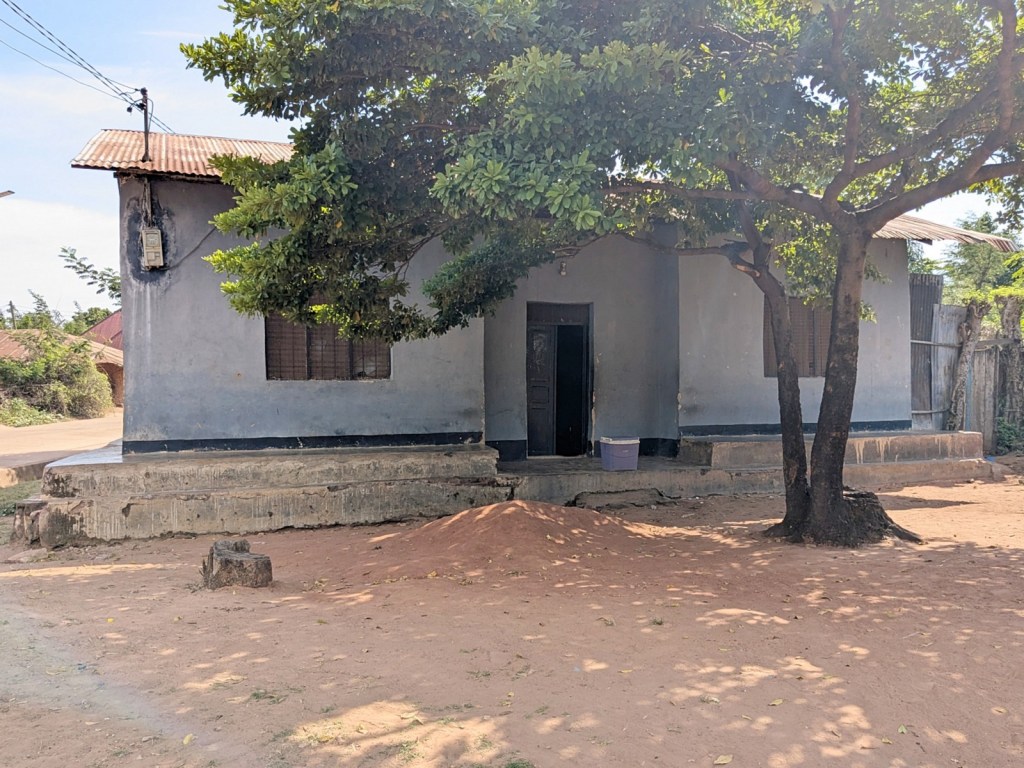
After the location of Tippu Tip’s house we walked just a little farther up to the location billed as the former slave market. I have no real way I think to verify this. I did not mark this on the map as we were walking around but I think it is here. The structure is not new but I am not so sure it is 1880s old (here is a picture from Kigoma Eco-Cultural Tourism’s Instagram feed), so I will take it more as the location of the former slave market. I would say though the structure is at least 1920s old because there it is in the above picture (I think) in a photo taken by the Gordon-Gallien Expedition. According to London Missionary Society lore the daily slave market stopped as soon as the missionaries pitched up in Ujiji (openly anyways, the trade in enslaved persons according to the missionaries just moved to private spaces).

Peter, our wonderful tour guide, told us the small shops around the market were originally slave pens which, again, I am not so sure is true, but poking around one of those shops was the most fun experience. I had noticed some pots out front and asked about them. Peter explained some were for cooking and some were for rituals, and we went over to check out the shopkeeper’s other wares as he was setting up for the day. In the “rituals” category Peter pointed out the different spears available, some with wooden shafts and some spears entirely made out of metal (in this case repurposed rebar); I didn’t really understand this until we went to the museum later but the all-metal spears are apparently for rituals and other traditional ceremonies, while the wooden-shafted ones are for normal spear purposes. I was tempted to get one but it would have been too big for my suitcase. The shop also had barkcloth which was very cool to see in the wild and that got my super amazing wife jazzed because it was a textile she hadn’t known about. Peter modelled some of the barkcloth in the traditional manner. I feel bad I didn’t get anything from the stall but I wasn’t sure this was an appropriate moment to start shopping as we were in the midst of a tour. The most tempting thing was a very cool looking boat where the only drawback was that it said “Burundi” on the side, which although a wonderful example of the connected lacustrine economy would have been confusing on my shelf.

From the market we wound our way up through some gorgeous gardens to the top of the hill. Here I kept looking over my shoulder because I wanted to recreate the below engraving but with a photo. The scan I have here comes from Ed Hore’s book Tanganyika: Eleven Years in Central Africa. I think I will address this more fully when I talk about the museum, but one thing I wanted to do on this trip was figure out where the LMS’ mission house was, and I thought maybe discovering the perspective of the below engraving might have helped. I have since figured out the engraving is more of a stock photo than anything related to the LMS, because it was originally used to illustrate a story about Stanley in The Graphic in 1890. I did not get as expansive and unobstructed view as I had hoped (I was tempted to ask someone if I could go on their roof but thought better of it) but the below ain’t too shabby I think; you can see Bangwe island jutting out from the peninsula and the rolling hills. Next time I visit I’ll figure out a way to do a better job.

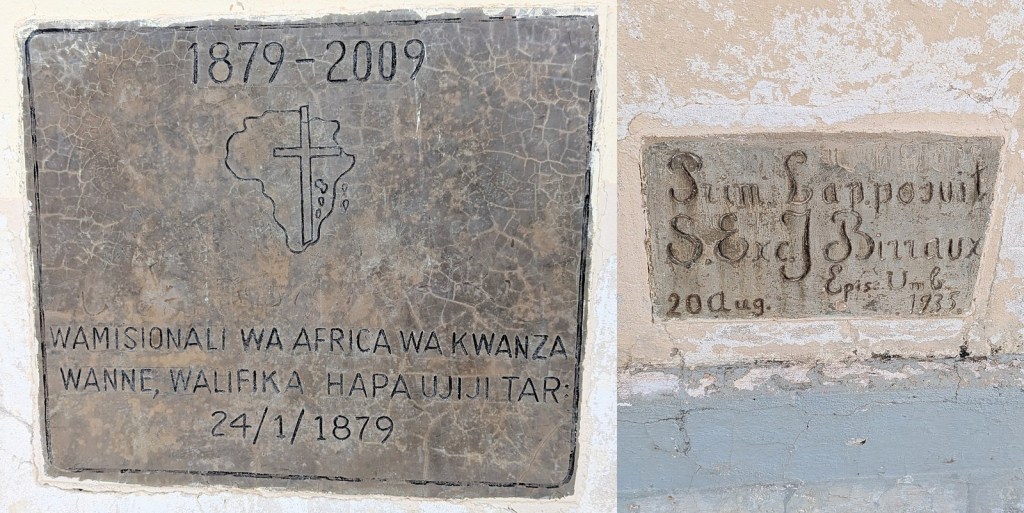
At the top of the hill we were winding up we suddenly swap denominations to come across a Catholic church. I know less about this church than I thought I did, specifically when it was built. Although the LMS missionaries got to Ujiji to settle first, the White Fathers were only five months behind them arriving in January 1879. But that doesn’t reveal when the church was built. Of the two plaques on, one commemorates the White Fathers arriving in 1879 and the other I can’t tell what it means. Maybe that the church was built in 1935? Also next to the church is the former mission school which is now  a public school but retains its fancy brickwork.

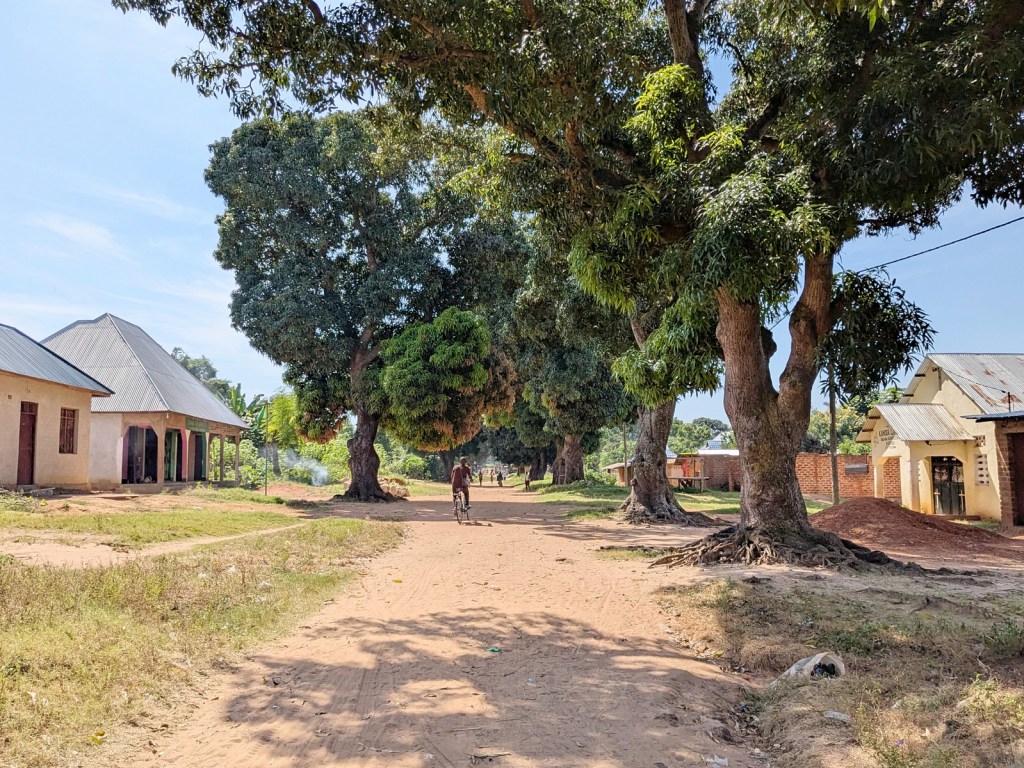
Our walking tour of Ujiji ended on the Tabora Road, or the “trail of tears” as Peter told us it was known. This moniker derives from the fact it is the old caravan route down which ivory and enslaved persons would have been exported (there’s a lot of scholarship that adds nuance to that) and explorers/missionaries/colonialists arrived. The road was lined with large mango trees, again purportedly planted by enslaved persons to provide shade along the route. It was very interesting to me to confirm that this was the road along which all these people would have arrived in Ujiji, especially having seen as we came the other way the crest of the hill and view of the lake it would have provided. We walked along for a bit as we passed different small shops and houses and people going about their daily business along what is still an active path for commerce and travel. It was compelling to me to imagine setting out from here to Tabora and all the way back to the coast as all those caravans would have done, but before we could take that plunge we met back up with Elizabeth, piling into the car to head back down to the lake and the Livingstone Memorial Museum.

Kigoma IV: Ujiji Walking Tour I

A house where Julius Nyerere slept in 1954 and 1958, with the “Nyerere Tower” to the right marking the occasions.

Reading this week:

  • From Zanzibar to Ujiji edited by Norman Robert Bennett

Alright! Now we have arrived at the seminal moment of the whole vacation, wherein we went on the walking tour of historic Ujiji! Fresh off the Liemba we piled on in to the car and drove to our first stop: the Nyerere House.

The Nyerere House is actually how I found out about Kigoma Eco-Cultural Tourism, from whence we met our tour guide Peter who was showing us around and the owner Elizabeth who was driving us around. I was doing a reverse image search to try to find out where the heck this Nyerere House is. I will solve the mystery for future travelers: it is right here. It is actually just up the street from the Livingstone Memorial Museum, which we will get to (both literally and figuratively) later. But what is the Nyerere House? It seems that Julius Nyerere stayed in the house twice, once in 1954 and 1958. For this claim however I have not been able to find a lot of documentary evidence. I suppose in retrospect it is not too surprising that there isn’t a detailed itinerary of every single place that Julius Nyerere ever slept easily available online, but originally I was even more confused because I thought the claim was that Julius Nyerere lived in the house in those years but that is definitely not true. Still, the fact that I can’t just conjure up an intricately detailed biography of the man at will hurts me a bit.

But for the sake of putting it all in one spot, here is what I have found. There is the inscription on the monument outside the house (here’s a close-up picture) which if I just plug it into Google Translate the machine mind tells me Nyerere died there which I think is a wrong choice of idioms. If only I spoke Swahili. There is also this Facebook post that Google Translate tells me claims he only slept there. As for what exactly Mwalimu there was doing in Kigoma, he was campaigning I guess. This niche wiki page says that Nyerere visited Kigoma on his TANU campaign (this less niche wiki page informs me Nyerere transformed the TAA into TANU in 1954) as so would have needed someplace to sleep. As for the 1958 visit, presumably that was during the campaign for the elections that year. So that is very cool I suppose.

However I did not really set the scene here before diving into the obscure links I found to try to determine the truth behind a particular historical claim. It was a lovely day in Ujiji and it was extremely cool to be there. I know I have tried to wax and wane poetic in the previous several posts about walking in the footsteps of these historical figures I have been reading about but it is so true dude, like so true. It is one thing to read about the hills they traversed and the waterfront they frequented but another thing to be there and understand the very landscape they were talking about. Things have changed a little bit. Dr. Beverly Brown in her dissertation and authoritative history of Ujiji titled appropriately Ujiji: The History of a Lakeside Town (which you can definitely download from somewhere because I have a copy but now I can’t figure out where from), she describes it around the time the various Victorians would have visited (pg 90):

“In Ujiji, houses were sheltered from view by the luxuriant growth of gardens and fruit trees, and courtyard enclosures protected the Arabs’ domesticity from prying eyes. As a result, the settlement pattern was porous: green spaces separated family from family. The narrow roadways followed the houses, rather than vice versa, twisting and turning with the unique sprawl of each homestead…”

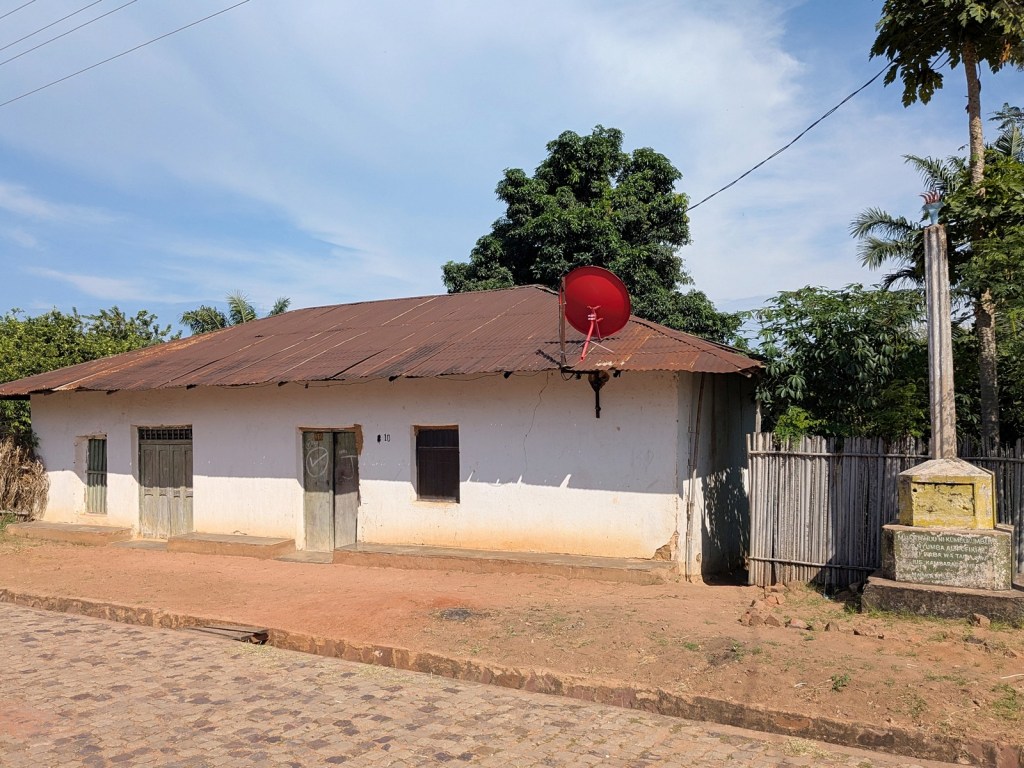
These days the roads are paved and much straighter but still the place has a charm. As we walked along various kids said hello which was nice. I had thought we would proceed directly to the waterfront at the Livingstone Museum, but instead we took a left and came upon a house that Peter told us used to be where Tippu Tip (or as Peter pronounced it, Mr. Tip Tip) lived. He clarified the house itself (which is here) was new but the foundation was the same. Across the street was a very large and very gnarled old mango tree purportedly planted by enslaved persons to provide shade, which seems to be a common claim around Ujiji. The two most famous people associated with Ujiji I think I can say are Tippu Tip and Livingstone (Nyerere notwithstanding), so various spots wind up associated with them. This includes the mosque we passed on the tour which claims to have been founded in 1840 and was supposedly where Tippu Tip conducted his prayers. To throw some cold water on this, both claims seem very unlikely; according to Ujiji no mosques were built in Ujiji until the 1890s (pg 110, which also notes prayers would have been conducted on followers’ verandas), by which point Tippu Tip would have been back in Zanzibar. There is perhaps nuance to the claim I am not understanding, but the 1840s has to be rather early for a formal mosque anyways, as the first caravans would have arrived in Ujiji only about a decade before and the “Arab” population of the town would have been under a couple dozen (again according to Ujiji).

I am going to pause this narrative here because it has already gotten a little convoluted and long, but we will return in the next post with more Ujiji historical sites, don’t you worry.

Kigoma III: MV Liemba

Reading this week:

  • Daybreak in Livingstonia by James W. Jack, M.A.

One of the most exciting parts of our day bopping around Kigoma was that we got to visit the MV Liemba!!! You all will know this of course, but she was originally constructed in Papenburg, Germany in 1913 before being deconstructed and shipped to Lake Tanganyika in pieces. Our tour guide Peter told us that when this happened the rail had only reached Tabora so between Tabora and Kigoma she was carried by porters, but I don’t think this is true. The internet consensus seems to be that the railway reached Kigoma in February 1914 though the exact source for that is unclear to me, it is potentially from here (the source for my boat-specific claims is The Lake Steamers of East Africa). Anyways that distracts from my point that it was then launched onto Lake Tanganyika as the Goetzen in February 1915 and was the major feature of the Battle of Lake Tanganyika. The Germans though pre-emptively scuttled her in July 1916. After the war the Belgians tried to raise her in 1918 and then the Brits first tried raising her in 1922 but weren’t successful until October 1924. By May 1927 she was back in service as the Liemba (the non-Swahili word for Lake Tanganyika) and for the past century has been plying a fortnightly route up and down Tanganyika except for shipyard periods.

I’m (about to be) on a boat!!!

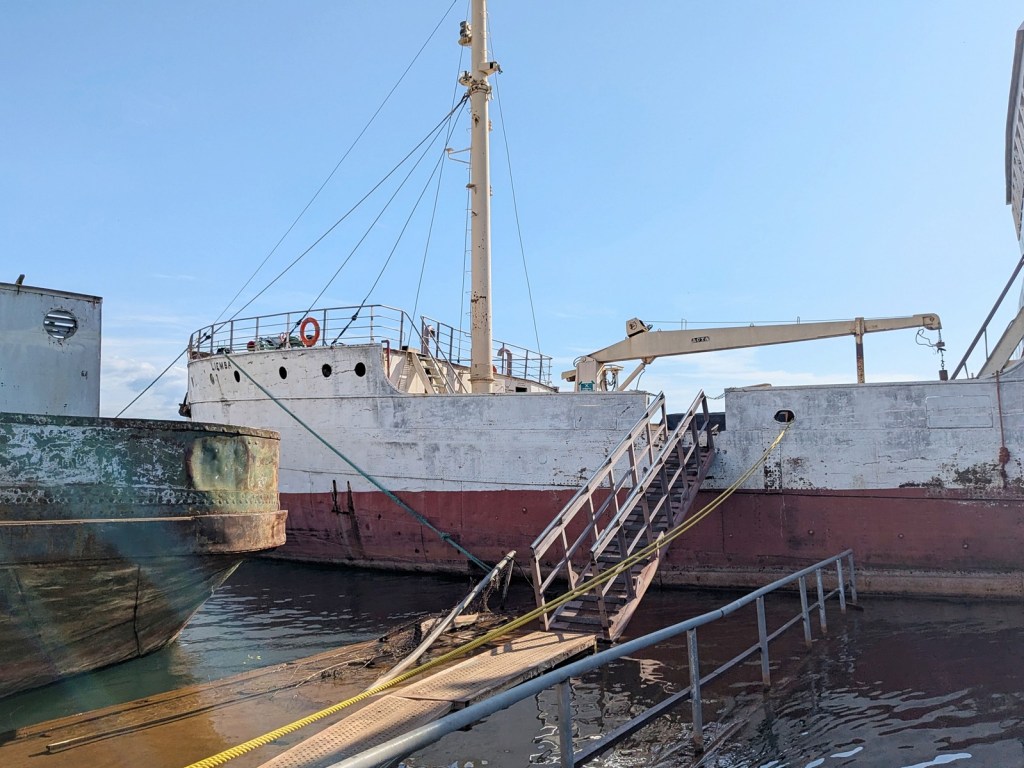
Which we were in now! This is why it was so exciting to see the Liemba in Kigoma. Ever since learning about her I had wanted to see her but I was very confused as to why she never made, as far as I could tell, any of her famous visits to Mpulungu. My dream was (and remains) to take the train from Dar es Salaam to Kigoma and then ride the Liemba on her whole two-week voyage, or maybe just down to Mpulungu (I would also be very happy with the reverse of this trip), but I could never figure out her schedule. As was confirmed here, this is because her most recent voyage was in 2018 and she had been awaiting a refit. Which is underway! Before I discovered Elizabeth and Kigoma Eco-Cultural Tourism, my big plan was just to beg the shipyard to let me poke around. But since Elizabeth offered a tour of the Liemba I just signed up with her.

I suppose all gangways are over water but this one especially so given the rising lake levels.

And so we arrived at the shipyard and got ready to check out the Liemba. For the record I found the following all very charming, but it was an interesting experience. I had thought Elizabeth had some arrangement with the shipyard but upon arrival it seemed sliiiiightly more like the actual plan was just to show up and sweet-talk our way in. She did this very effectively. There was some hesitation at first. We never actually wound up being able to go inside the ship as they were in the midst of some major I think electrical work, but it was decided we could get close to the ship on the dock. Here you could see the impact of the rising lake level because a chunk of the dock was underwater and we had to skirt around the edge of a fence to keep our shoes from getting wet; between the ship and the limited above-water portions of the dock a walkway had been placed somewhat haphazardly. As we were standing there it was then decided that we could at least go up to the foredeck of the ship of the ship. Not the most exciting tour but I thought it was super fun just to be on the ship! So much history, so very boat, much cool.

With the actual tour portion over we then spent some time talking to a former port employee that Elizabeth knew and had arranged to meet us to give us the lowdown on the Liemba refit. Since he had worked for the port he also knew a lot about the port operations and I tried to think of all the intelligent questions I could to ask him. Some things he told us:

  • The new engines they are putting in her will be rated to 1000 horsepower. The previous ones were 750 horsepower. They hope this will get her cruising speed up to 12 knots from 10.
  • The refit was scheduled to take another six months but our man here was predicting it would take another year (so mid-2026). Though the last journey was in 2018 the refit had started August 2024.
  • The ship is rated to carry 600 passengers, split among first, second, and third-class. There are three saloons where passengers can get meals at varying price levels. He told us how many first and second-class cabins but I forget how many it was exactly; I think there were ten first-class cabins sleeping two each but only two second-class cabins sleeping four each.
  • I had asked if refurbishing the Liemba was cheaper than building a new boat and apparently it is not. But since the Liemba is so famous and the ships are government-owned, it is “political.” No complaints from me on this use of Tanzanian taxpayer money.
  • For port operations, I had noticed a crane for shipping containers. Given my Mpulungu experience of seeing breakbulk shipping, I asked about container ships. Our guide reported that there are only two ships on Lake Tanganyika designed to carry shipping containers, one rated for something like 36 containers and the other 48. Sometimes though containers are put on ships anyway.
  • Kigoma is reportedly mostly an export port, again like Mpulungu, because Congo imports so much. From Kigoma he said it is a lot of building materials. From Congo he reports they import logs but the guide’s understanding is that they are mostly re-exported out of Tanzania without further processing. I won’t think too deeply about that.

And so yeah! That was our experience and at this point we said goodbye to our guide and loaded back up into the car. The only awkward part of the whole thing was that Peter had pointedly told us that we could “say goodbye” to our port guide there, so I said goodbye. Later we figured out that this was code for giving a tip; Elizabeth later passed him some cash on our behalf. But still I am over the moon that I got to see the Liemba in the flesh and learn about port operations and so now all I have to do is the same long overland and overlake journey I have wanted to do for years and I can’t wait until I get back to do it on a newly refurbished MV Liemba!

Kigoma II: Fish n’ Boats

Reading this week:

  • Gastro Obscura by Cecily Wong and Dylan Thuras
  • When Life was Rusted Through by Owen Letcher

Alright. In the last post my super amazing wife and I had travelled from one end of Tanzania to the other to arrive in the historic town of Kigoma on Lake Tanganyika. This and the next few posts will be a convoluted and involved effort of trying to unpack the experience and history of a single day trying to explore everything that Kigoma and Ujiji.

I must assure my dear readers that the confused and disjointed nature of the narrative is not a fault of the actual day we had, which was fantastic. Our guide on the experience was Kigoma Eco-Cultural Tourism, who were absolutely phenomenal. Consider this a ringing and unabashed endorsement. If you go to Kigoma you have to hit them up. On our journey we were led by the owner herself, Elizabeth, alongside our tour guide Peter. Elizabeth can put together just about any experience you want in just about any order, which is what she did for us. I wanted to go on three of the experiences (I actually wanted to go on many more but alas there is only so much time) and because I remained wishy-washy about what to do with the rest of our time in Kigoma I asked to do all three in one day and she was more than happy to accommodate.

Caulking close-up.

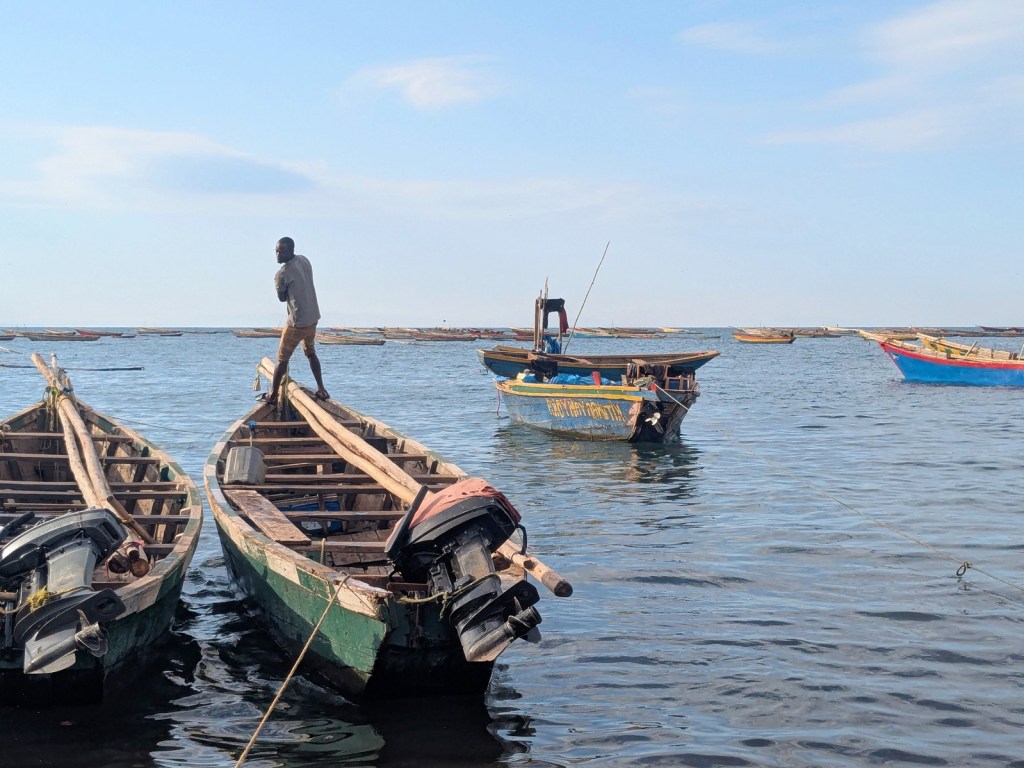
The first stop on our tour was the Katonga fish market. This was not actually a specific part of any of our itineraries but Elizabeth wanted us to experience the eco-culture which was fine by me because I am always more than happy to admire any of the local boats. We went first thing in the morning so we could catch the boats coming in from fishing. This was indeed pretty cool. I suppose nothing too crazy, men coming in from fishing boats with fish and women buying and selling fish. The main type of fish on sale at this moment was mikebuka (I had it in my notes as “mugabuka” which I only mention here because later in the day I saw a sign that said “Make Ujiji Great Again,” so that made me think of MUGAbuka, but the internet consensus seems to be to spell it as “mikebuka” or, less melodiously, “sleek lates”).

There is a rhythm of which fish get caught at which time of day and at what time of year which I didn’t manage to entirely gather during our visit. At night the men fish with lights to attract the fish, and so much of the bustle while we were there were the fishermen unfitting large LED lights mounted on poles. They are powered by racks of car batteries which in turn, Peter told us, are charged by solar panels during the day. Very ecological! Or maybe not so ecological. The lake is definitely being affected by human activity. Much like Lake Manyara, Tanganyika is rising. This was very noticeable throughout the day. This is not an entirely unusual phenomenon (and many explorers spent much time trying to figure out where all the lake’s water went) but it is bad right now and still getting worse. Fish stocks are also being depleted. Despite the efforts of the Lake Tanganyika Authority it is hard to equitably manage the lake when these fishermen need to put their kids through school. Nonetheless the fishing communities are aware of and feeling the strain of the lake’s ecology changing so rapidly.

But back to the fish market. Peter was proud to tell us that Tanganyika fish were very valuable, way better than those Lake Victoria fish. Tanganyika dagaa was reportedly going for 40,000 Tanzanian shillings (TSh) a kilo for export, whereas Victorian dagaa go for only 7,000 TSh. Fish wind up being exported even to the United States and Canada (again as reported by Peter) where there are Tanzanian ex-pats, and in fact when I was googling the spelling of “mikebuka” most of the results seem to be websites trying to ship you fish. But besides fish I tried to learn about people, and asked about people travelling around the lake. To which Peter reported that many people travel around the lake, and many of these fishermen will have wives on both sides, in Tanzania and Congo. Peter explained they are Muslim and polygamists, you see, but I suppose sailors are the same everywhere. For some more details I wrote down, Peter told us that small mikebuka were known as “nyam nyam” (no telling if I have the spelling right), and that sheep are called “kondoo” in Swahili; disappointingly for us apparently they are used only for meat, and not wool.

Absolutely enormous canoe under construction; you can see a goat for scale in the shadows underneath the prow.

And then also of course were the boats. The ones at Katonga fish market were of average size for fishing boats. Peter explained that the caulking was made with cotton and palm oil. We later got to see this process in action. One of the most stunning things I learned about on this trip to Tanganyika were these absolutely massive canoes. I regret never being able to get a better photo of them, they were almost always too far away. I first spotted them from a distance as we were driving in from the airport, and later in the day I dragged Elizabeth and Peter to a boatyard across from the Livingstone Memorial impromptu to see some being made. “Canoe” is very much not the right word, but what I found so amazing is that they had the exact same construction as the fishing boats, but just on a much more massive scale. The photo I have above is of one under construction, and in this photo it doesn’t even seem so massive but to the right you can see a goat for scale. They are flat-bottomed with a huge freeboard and as far as I can tell powered just by a small outboard. I only ever saw a small poop deck on any of them, which must be where you steer from. Elizabeth and Peter told us they are primarily used for transporting goods to small villages up and down the lake and also to Congo and Burundi, and we saw one near our hotel getting loaded up with bricks. It was in the boatyard we saw the palm oil & cotton caulking in action, with several men in the midst of constructing one. They told us they can finish one in a month if they have all the materials and tools. Amazing.

That was later in the day though. For now we wrapped up our visit to the fish market. We had spent most of the time just hanging out watching the world go by. We spent probably slightly longer watching the proceedings than really felt not rude but no one really batted an eye to us being there. Peter told us to make sure to greet people which we tried to do. Eventually though we wound our way out between the fish and lights and batteries and got back to the car for our next stop: another boat.

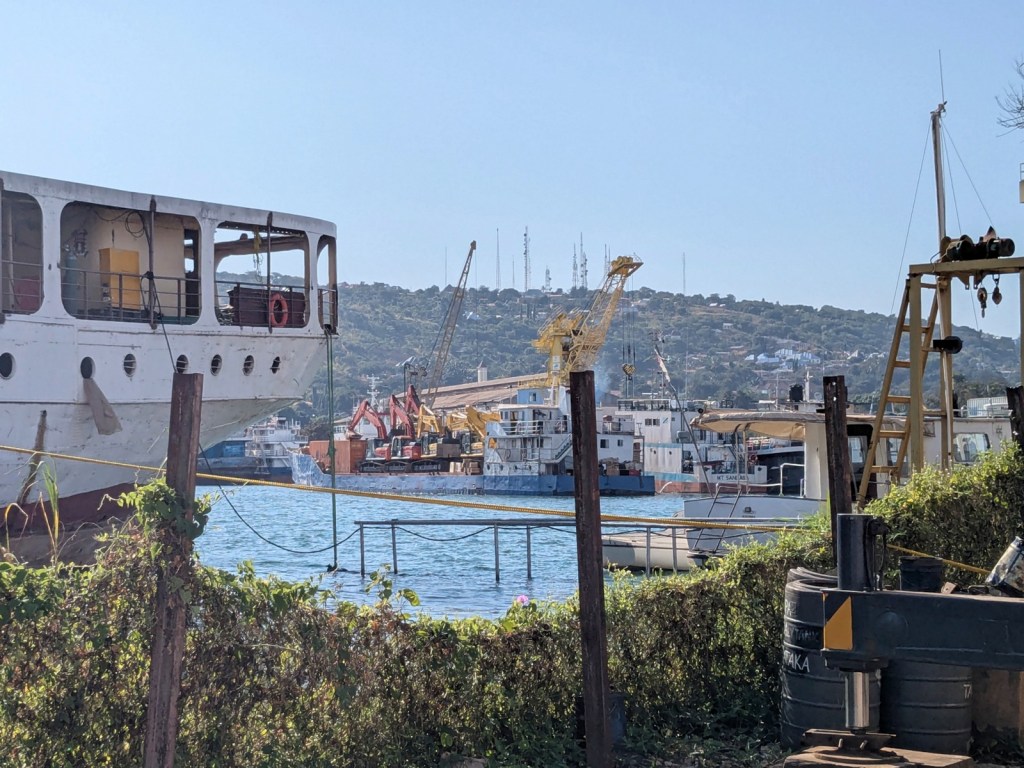
Some ships in Kigoma harbor.

Kigoma I: To Tanganyika in a de Havilland

Welcome to Kigoma

Reading this week:

  • Ujiji: The History of a Lakeside Town by Beverly Bolser Brown
  • The Western Ocean by Alan Villiers (not his best work)
  • Stuff Every Coffee Lover Should Know by Candace Rose Rardon

With the conclusion of our safari we now turned to the second segment of our Tanzania vacation: the historic city of Ujiji. Well I mean Kigoma. Ujiji is more of a neighborhood now so when booking our flights we were going to Kigoma and the lodge we were staying at was the Kigoma Hilltop Hotel. So we were going to Kigoma but I was going there for Ujiji.

As you will have quickly understood by now the impetus of us travelling to the far side of Tanzania was to see the location of so much of the focus of the London Missionary Society and their Central Africa Mission. They spent so much time and money and lives getting to Ujiji and trying to establish a base there and after all this reading I had to see it for myself. And I also had to go for the sheer number of historical events! We have been to Livingstone’s birthplace, and I have been to Livingstone’s deathplace, and so how could I not go to the spot where the most famous event of his life occurred? And then the final reason for wanting to go, which was to show my super amazing wife the gigantic lake that shaped my Peace Corps experience and in many ways has shaped my subsequent career. I wanted to see it again for myself and show her its wonder.

As an early example of the historical resonances I was searching for, to get to Kigoma we had to go through Zanzibar. It was a stopover on our flight from Arusha (Kilimanjaro airport to be specific) which we woke up rather early for. The fact that we were going to Kigoma caused some consternation among the various tourism industry personnel we encountered; Obedi was surprised we had heard of the place. Even the airport check-in counter lady seemed surprised, exclaiming “what?!” when we said we were going to Kigoma, except we subsequently concluded she just didn’t understand our accents. Then it seemed like we had already somehow missed our flight, but the issue there was only that it wasn’t on the departures board. You would think Kigoma was not so well-travelled, though of course historically it was anything but.

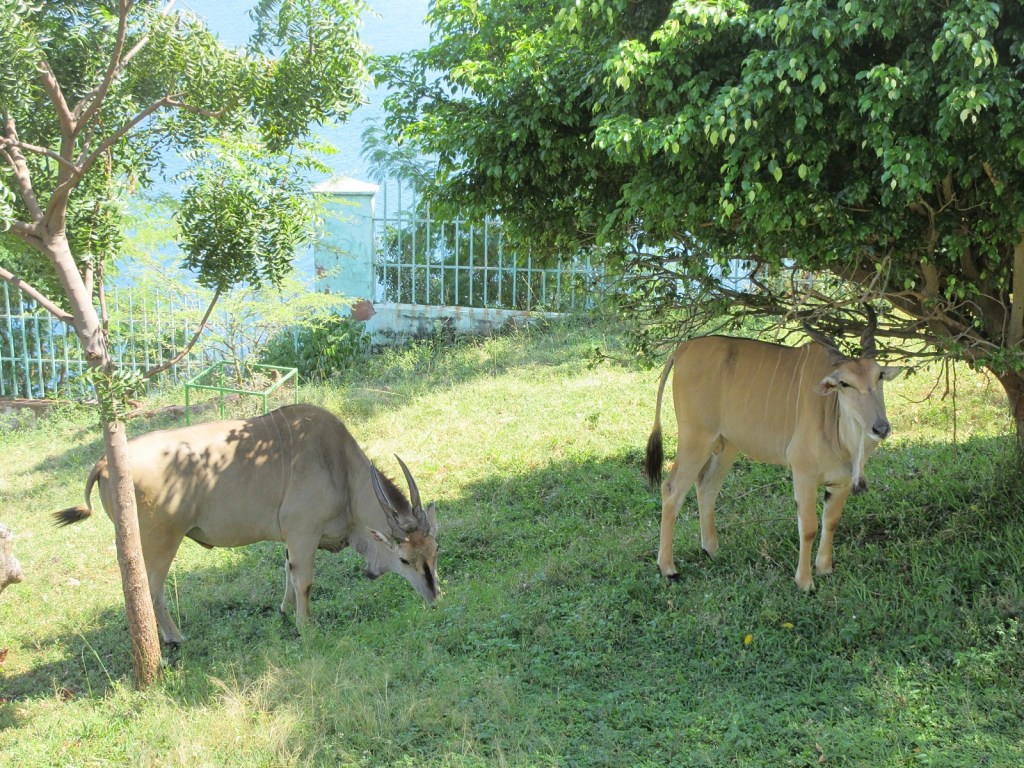
Eland by our deck.

No matter our tribulations though they of course pale in comparison to what every single person doing it by caravan went through. I have read many of their stories; as it is tautologically the first part of getting to the Lakes region, it is the most vivid part of anyone’s narrative before they eventually settle into the new normal of interior Africa living. During our time in Tanzania I was reading a couple London Missionary Society books, including the Rev. Arthur Dodgshun’s journal. He spent the better part of two years getting from Zanzibar to Ujiji, a journey that only took us about two hours (not counting the layover in Dar). And he died at the end (in his journal Dodgshun mentions reading The Last Journals of David Livingstone only for this to be his last journal as well); this post is evidence that luckily didn’t happen to us.

Instead we landed perfectly safety at the Kigoma Airport. As we taxied down the runway I spotted a small decrepit-looking shack that I figured must have been like, the colonial-era terminal, but no it is in fact the current one. Our checked bags were just delivered through an open hatch. But as we stepped outside the ride we had arranged was ready to whisk us off to the Kigoma Hilltop Hotel was waiting there for us. The ride was gorgeous and a mini-preview of the very involved next day I had planned for us. I even saw the MV Liemba way off in the distance. And in a call back to the previous five days upon arrival to the hotel we were greeted by eland, wildebeest, and zebra. Turns out the grounds are a bit of a nature preserve. We checked in and were ferried past the zebra and to our room via golf cart.

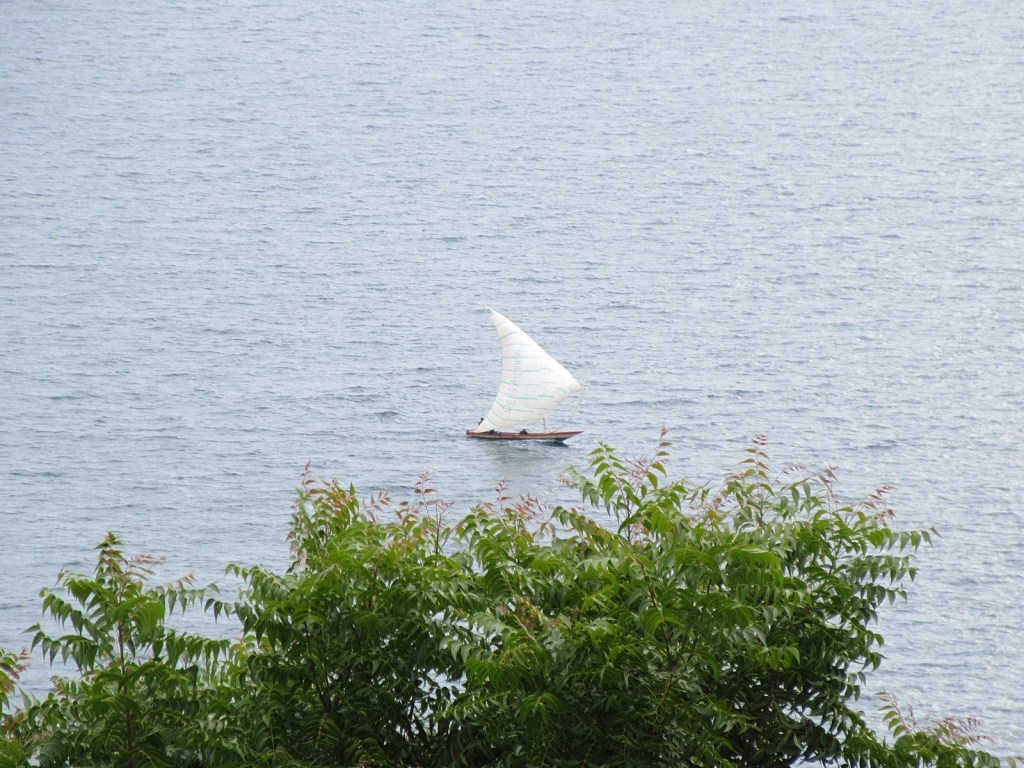
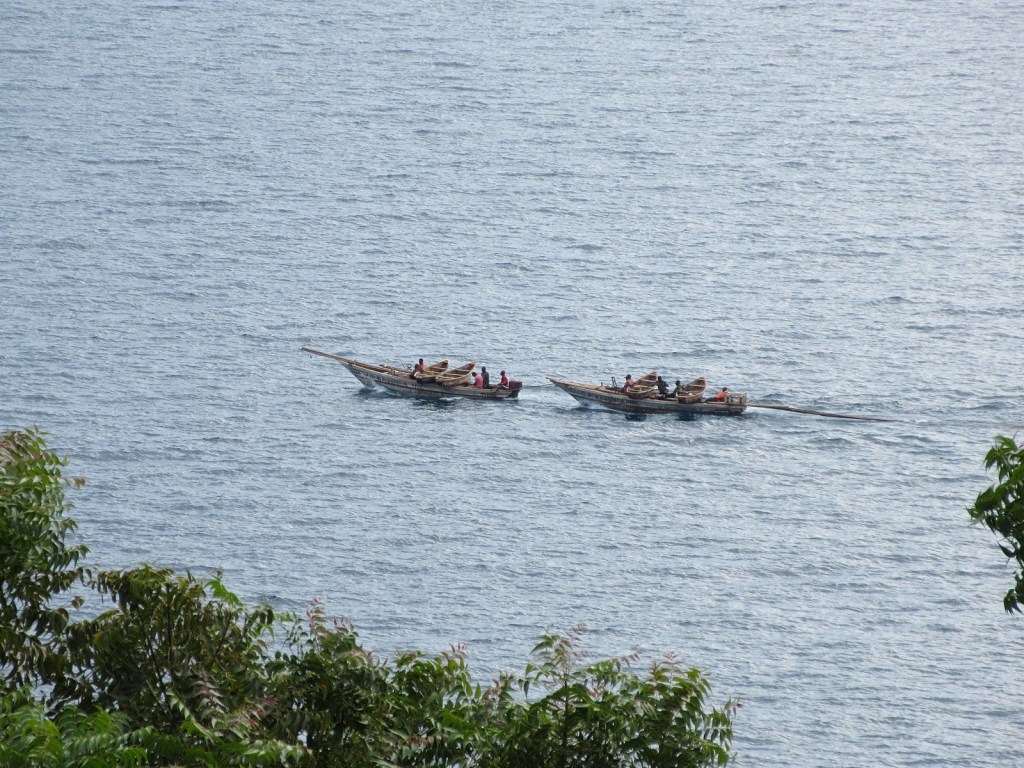
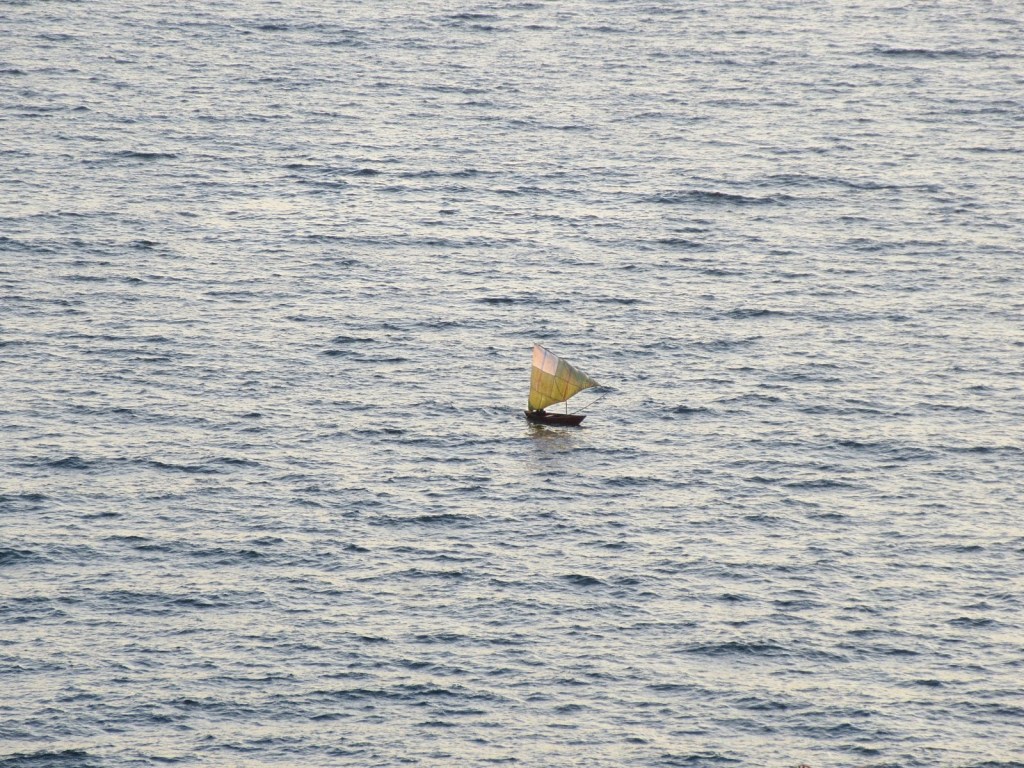
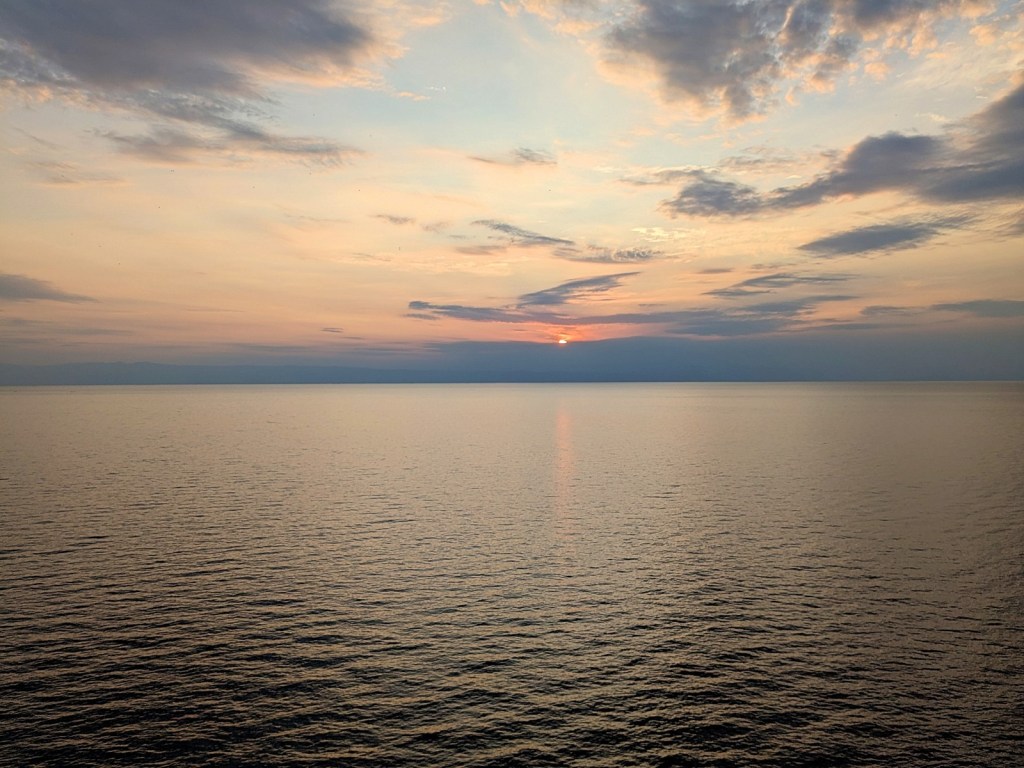
And uh we didn’t do much else that night. It was just relaxing being in the midst of such beauty. It was very interesting to see the rhythm of marine traffic going back and forth. When we arrived we watched a fleet of dhow-rigged canoes coming in. Later, a number of larger canoes carrying smaller canoes went back the other way, so many that you could hear the droning from room’s patio. We ate dinner at the hotel restaurant where I tried to get my kapenta fix in with dagaa. Eventually the sun set over the lake, and it was exciting to be able to see the DRC backlit by the dazzling reds and oranges. And I mean, man. I was finally here. The place I had read so much about and that was positively palpable with history.

Sunset over Tanganyika.