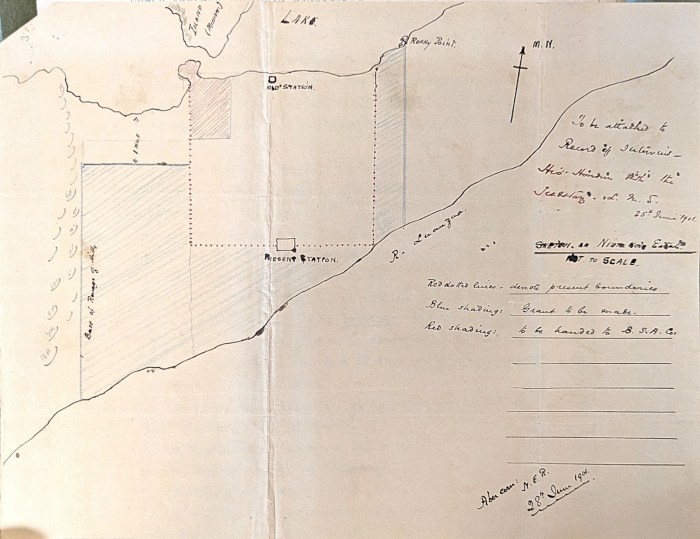
LMS Land Swap Letter

A mea culpa: just two posts ago I talked about how I didn’t really have an explanation for the above map (and an accompanying letter), which was illustrating land that the London Missionary Society was swapping with the British South Africa Company (BSAC) around their Niamkolo station. That post was part of this ongoing series where I put online things I found in the SOAS archives, and this post continues that because if I had scrolled a little bit farther down in my file I would have found the answer. I didn’t fail to do that just to stretch two posts out of it, I was just silly. I had speculated in the previous post that maybe the answer was trains; much more excitingly, it was boats!

The letter transcribed:

Tanganyika Concessions Co. Abercorn

Dec 4th 1900

Dear Sir,

                Mr. Irwin, our Traffic Manager, who is about to put together our steamer “Cecil Rhodes” on the lake, has carefully examined the two sites that I had chosen, namely Niamkolo and Kasakalawe. Mr. Irwin has decided to build his steamer at Kasakalawe because he is in hopes of getting there erected houses and sheds of the Flotilla Company. Also there is a good road to the place and no uncertainty about freehold possession. However, there is no anchorage there and Niamkolo is the only possible place where we could with safety erect our patent slipway, being an ideal anchorage. In the future we shall have to find some good anchorage for the repairing & docking of our steamer & other companies’ steamers. The other Cos will probably gladly avail themselves of our slipway.

                I therefore shall ask your Committee to consider whether you would let us have permanently one half square mile at the mouth of the straight opposite the island by the shore, about 2 ½ (or 2) miles from the Mission house, & out of sight of it. A road would be made to it from Abercorn, which would skirt the [?] village at some distance – we should be glad to pay for this land, to give you a site in the new Abercorn, which will be begun next year, and which is absolutely the property of our Company, and to grant you special rates in steamer passage & transport on Tanganyika – the B.S.A. Co. have the right to ground enough in our new town to build there their offices, but they will not encourage anybody to build outside our township, except at very large prices as they wish our Company to succeed. I have no doubt that Mr. Codrington will grant us the 2 square miles that I have applied for at Kasakalawe to make an official port, but we would far prefer to be at Niamkolo, as a better anchorage. If there is a possibility of a mile square being sold to us at Niamkolo, we would let Kasakalawe lapse & make the official port at the former place, but if only half or quarter mile is allowed us we shall only be able to put a few [?] and our slipway there – A half-mile would possibly be ample – a quarter mile is rather cramping.

                Kindly let me know the Committee’s views on the subject. I hope that if you consult your Directors at home you will be good enough to forward them a copy of this letter. This would be more direct than if I sent a copy through my Directors to yours.

Believe me, yours faithfully,

M.J. Holland, Lake Tanganyika Concession Co Ltd

And photos of the letter itself:

“M.J. Holland” I assume must be Michael James Holland. He worked for Tanganyika Concessions Limited, which was nicknamed “Tanks,” an appropriate moniker for an inherently dispossessive colonialist enterprise. Though still different, it seems to have been closely related to the BSAC. But for our purposes, as you can see from the letter the important bit is that they were putting together the Cecil Rhodes. Loyal readers will recall that I visited the boat’s boiler, which still lies in the village of Kasakalawe right to the west of Mpulungu. I didn’t find it last time I looked, but this page and this page contains more information on the Cecil Rhodes, including pictures of the hulk as it rests on the Tanganyika lakebed.

According to the letter, Tanganyika Concessions was looking for a place to build and anchor the Cecil Rhodes. The LMS was sitting on the best anchorage around so they asked to do a land swap. If my assumption in the previous post that the letter dated July 12, 1900 had something to do with this land swap, then something must have been discussed prior to the above letter, dated five months later. But everything must have worked out between the LMS missionaries and Tanks because according to The Great Plateau of Northern Rhodesia the Cecil Rhodes was launched in October 1901. The above-linked Mr. Codrington described Lake Tanganyika’s merchant marine in a May 1902 article in The Geographical Journal:

The vessels now plying on Tanganyika are – the “Tanganyika Concessions” steamer Cecil Rhodes (twin screw), with a carrying capacity of from thirty to forty tons; the German Hedwig von Wissmann, with about an equal capacity; the African Lakes Corporation’s steamer Good News, with a carrying capacity of twenty tons; and the Congo Free State schooner, carrying about one hundred tons. Some five or six dhows, the property of Arab and Greek traders, compete in a small way with the European-built vessels. The lake, though said to be more stormy than Nyasa, is considered a safe waterway by the skippers of the vessels, no dangerous rocks being reported. The level of the lake in June, 1901, was 4 or 5 feet higher than in the corresponding month of 1900, the Lukuga outlet having again silted up.

A couple points of the above: by this time the LMS had sold the Good News to the African Lakes Corporation, explaining the ownership status. I did notice the conflicting dates with the fact Mr. Codrington’s journey started in June 1901, before The Great Plateau says the Cecil Rhodes was launched. And finally, before looking into this again I had never heard of the “African International Flotilla and Transportation Company” and so I will have to research more. Nor do I have any idea what the 100-ton Congo Free State schooner could be. So many more questions than answers out of one short paragraph.

But again back to land swaps. Not only did it all work out for the Cecil Rhodes and Tanks but that land is still where the Mpulungu Harbor Corporation is today. It is not immediately clear to me what the exact corporate lineage is between the Tanganyika Concessions Company and the MHC but I am sure it is interesting. Also very interesting is this cool video about the Mpulungu Harbor Corporation from four years back:

Map of LMS Niamkolo Station

As you all will recall I went to visit the London Missionary Society archives at SOAS back when we visited the UK. I am trying to put the stuff I dug up online. I already did some of this, putting the real exciting photos and things up already. I already put one map up, but now here are two more maps, these of the Society’s stations at what is now Mpulungu:

Map dated June 28, 1901
Map dated June 2, 1902

I say “what is now Mpulungu” because according to the Wikipedia page for Mpulungu, the harbor was only built in 1930 and presumably the town grew up around that. The LMS referred to the location and Niamkolo. The maps above still map pretty closely onto a more modern-day map of Mpulungu. Niamkolo church is marked on Google Maps which provides a reference point. The Lunzua River is marked on both maps though it is not plotted as accurately. By the time of the maps though the stone Niamkolo church had been abandoned for healthier climes at a more elevated spot, labelled in the first map as “Present Station” and in the second map as “L.M.S. Station.” I think the newer spot must be the location where the photo at the top of this page was taken, which was covered in this post.

In the first map there is red and blue shading referring to a land swap arrangement between the LMS and the British South Africa Company (BSAC). I am not quite sure what is going on there. If the Wikipedia is right, no one would have been too interested in what is now Mpulungu harbor for another couple decades (outside of missionary work). By chance I took photos of another letter (transcribed below with photos at the bottom) from John May, answering a question from headquarters about the LMS’ landholdings in Niamkolo, Kawimbe, and Kambole. So clearly something was being contemplated but as for what that was is still buried in the archives. Though they are still discussing extending a railway to Mpulungu; maybe BSAC was contemplating it even then?

Kawimbe

July 12th, 1900

Dear Sir,

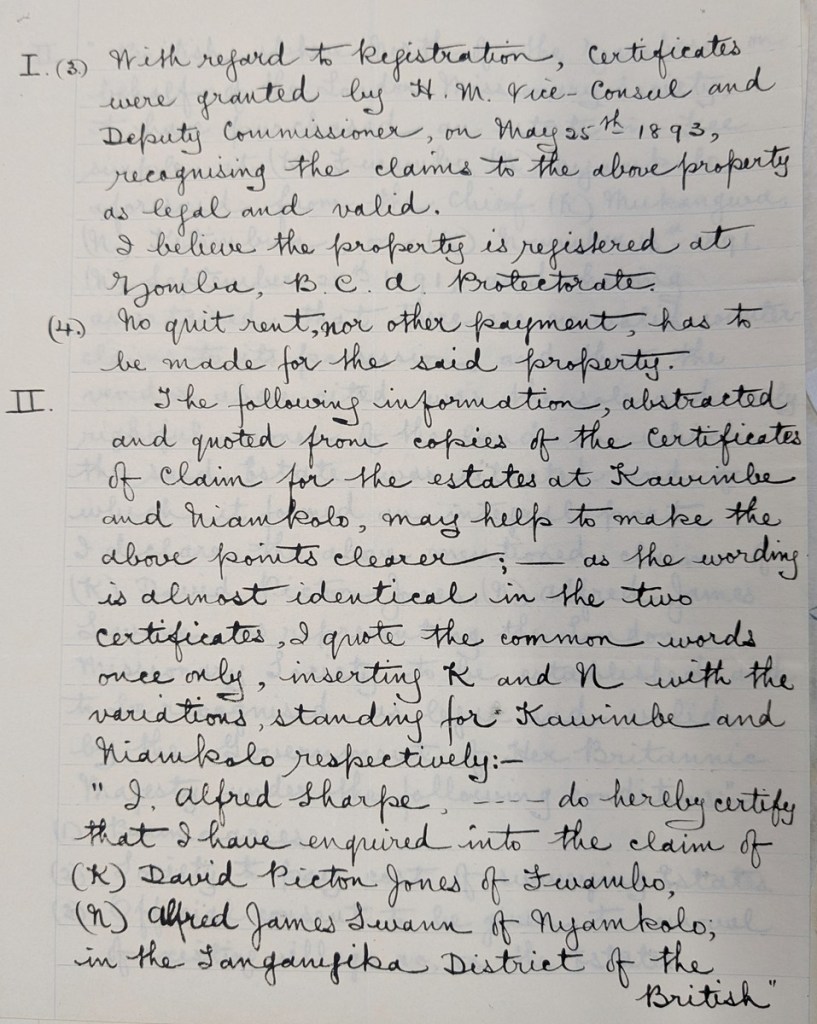
                In reply to your letter of March 2nd, 1900, I am sending you the following information trusting it is what you require:-

I. (1) The property belonging to the Society in the Central African Mission is –

Land at Kawimbe and Niamkolo.

A brick dwelling-house, and wattle-and-daub buildings at Kambole.

(2) The property at Kawimbe is held in the name of the Rev. D.P. Jones of this Mission, on behalf of the Society.

That at Niamkolo in the name of Alfred James Swann, Esquire, formerly in this Mission; on behalf of the Society. Mr. Swann agreed to the conditions attached to the deeds, on behalf of the Society.

(3) With regard to Registration, Certificates were granted by H.M. Vice-Consul and Deputy Commissioner, on May 25th 1893, recognizing the claims to the above property as legal and valid.

I believe the property is registered at Zomba, B.C.A. Protectorate.

(4) No quit rent, no other payment, has to be made for the said property.

II. The following information, abstracted and quoted from copies of the Certificates of Claim for the estates at Kawimbe and Niamkolo, may help to make the above points clearer; – as the wording is almost identical in the two certificates, I quote the common words once only, inserting K and N with the variations, standing for Kawimbe and Niamkolo respectively:-

“I, Alfred Sharpe, —- do hereby certify that I have enquired into the claim of (K) David Picton Jones of Fwambo, (N) Alfred James Swann of Niamkolo; in the Tanganyika District of the British sphere north of the Zambezi, on behalf of the London Missionary Society, to have purchased an estate in fee simple at (K) Fwambo, (N) Niamkolo, aforesaid from the Chief (K) Mukangwa, (N) Kitimbwa, on (K) November 13th 1891, (N) September 25th 1891; and having ascertained that there are no valid counter-claims to the possession, and that the vendor above-cited was the sole and only rightful owner of the land on which the said Estate was situated and of which it formed an integral part, I declare the above mentioned claim of (K) David Picton Jones, (N) Alfred James Swann, as representing the London Missionary Society to be established and to be recognized as legal and valid by the Government of her Britannic Majesty under the following conditions:”-

(1) Boundaries.

(2) Society to pay cost of surveying Estates.

(3) Official consent to be given to removal of existing villages, etc. on the Estates.

(4) Royalty of 5% to be paid to the Government on minerals found on the Estates.

(5) Government has the right to make public roads, railways, or canals, across the Estates.

(6) Government has the right of control over water not wholly included in the bounds of the Estates.

“And in witness to the validity of the above mentioned claim of the said (K) David Picton Jones, (N) Alfred James Swann, as representing the London Missionary Society, subject to the foregoing six conditions, I have hereunto set my hand and seal this Twenty Fifth day of May Eighteen hundred and Ninety three at Blantyre, British Central Africa Protectorate.

(signed) Alfred Sharpe, H.M. Vice Consul and Deputy Commissioner

“I, Alfred James Swann on behalf of the said London Missionary Society, do hereby agree to the foregoing six conditions which are attached to this recognition of the claim of the said London Missionary Society.

(signed) Alfred James Swann.”

III. We have applied again for an extension of the Niamkolo Estate, and for a grant of land at Kambole. We understand there will be no difficulty in getting a secure title to this extra land. The draft deeds would be made out in the name of the London Missionary Society Corporation, and would of course be submitted to the Board for approval before completion.

I am, dear Sir, Yours very faithfully,

John May

Secretary, Tanganyika D.C. [District Committee]

And the original letter:

The Gordon-Gallien Expedition

While looking up the sorts of things I am wont to look up, I stumbled across the story of the Gordon-Gallien Expedition to map Kalambo Falls and since it is so neat I now share it with you.

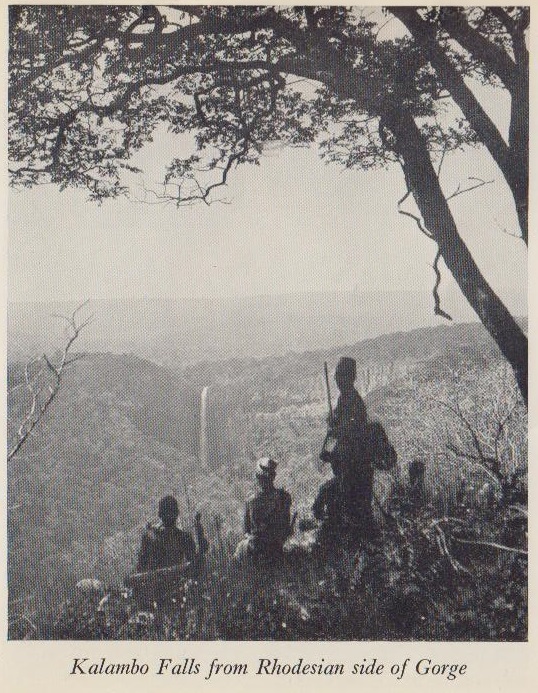
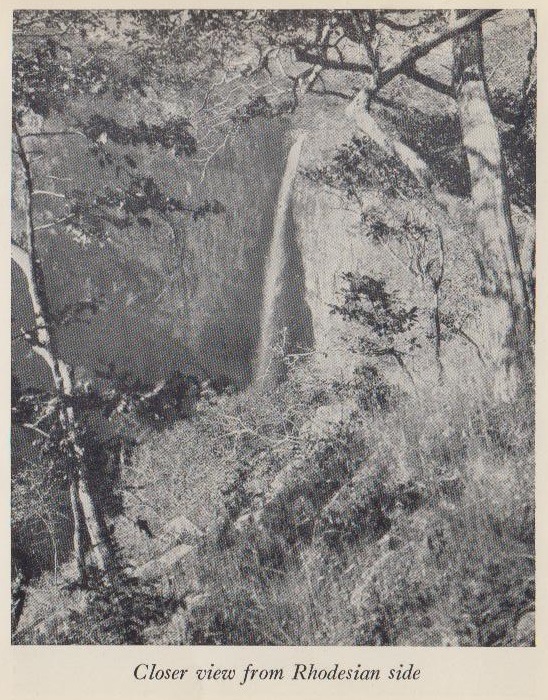
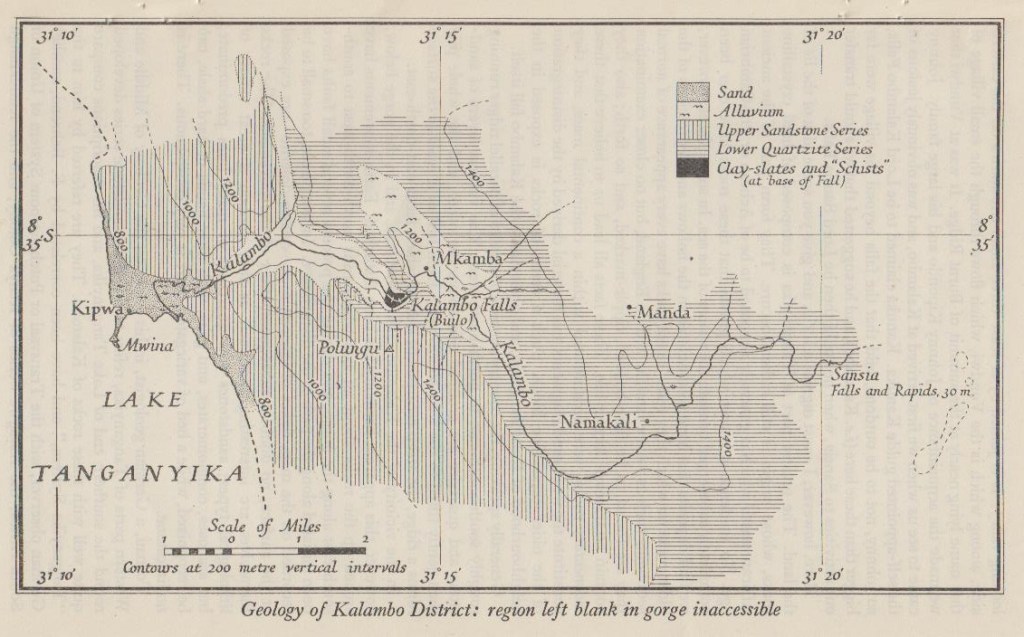
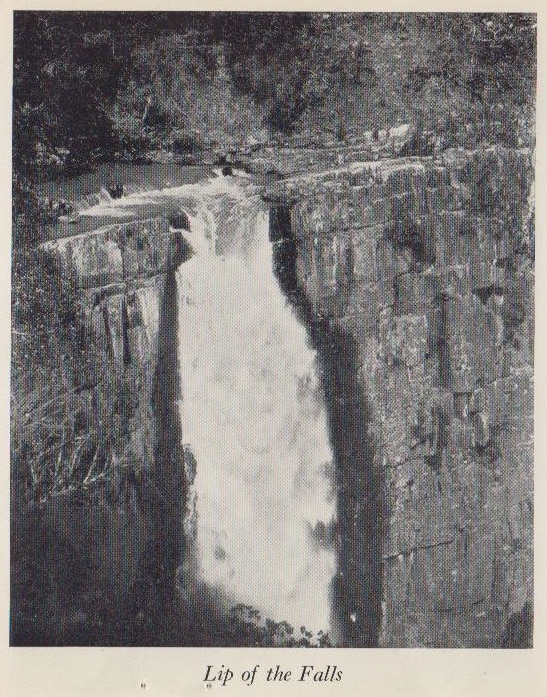
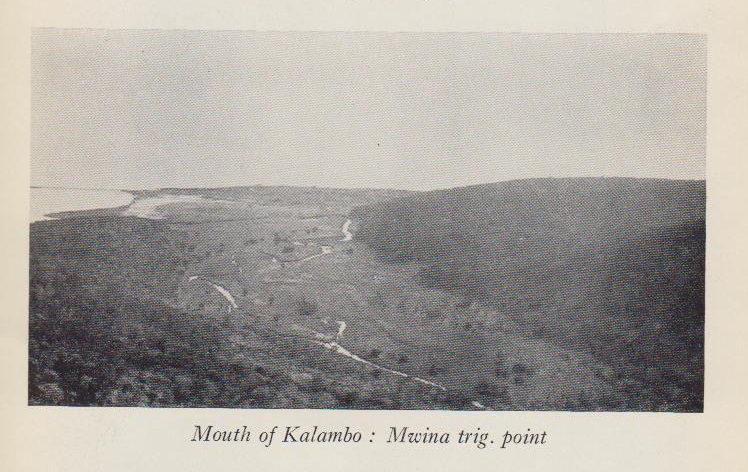
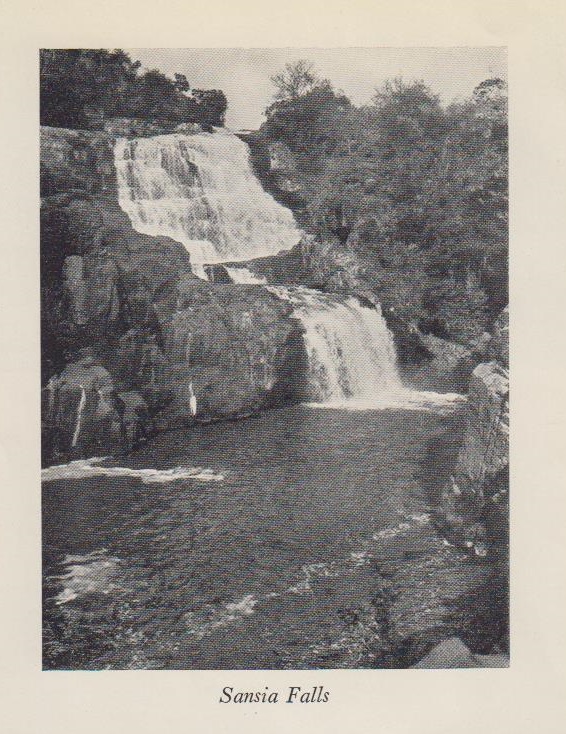
The information I am getting on the expedition comes from the July 1929 edition of The Geographical Journal where the results of the survey were published. You could do like I did and buy a copy of the relevant articles that were cut out and separated from the edition (I tried to buy the whole issue but couldn’t find one but for some reason just a cut-down version was available). The big advantage there in doing that is the article came with a very lovely map of the falls and expedition route suitable for framing, but also you can just read the articles online here! For the purposes of this post I have scanned in the photos published in the articles but as you read along I also point you to the wonderful Lucerna Magic Lantern Web Resource which has a number of slides from the expedition which I assume were used during the presentation to the Royal Geographical Society that is covered by the above-linked papers. There are a lot of really really cool photos in there.

See? Suitable for framing!

But back to the story! The Gordon-Gallien expedition was named after its singular protagonist, British adventurer and pilot Mrs. Enid Gordon-Gallien. I am gleaning this from the Wikipedia page from where I also stole the her very apt appellation, but after adventures during the First World War, driving across the desert to Baghdad, and being shipwrecked near Australia she decided to turn her sights to something really exciting and took up surveying. She then asked what would be useful to survey and the answer from the Society was to tackle Kalambo Falls. The existence of Kalambo Falls had been known well before this (here it is in a photo by LMS missionaries probably around 1910) but seems like no one had gotten around to putting it on the map exactly. In fact according to the comments made by Col. Sir Charles Close (President of the Royal Geographical Society when Mrs. Gordon-Gallien was giving her presentation), the Anglo-German delegation that went out to survey the border between Rhodesia and German East Africa didn’t even know it was there. And Sir Chuck would know because he was in charge of the British half!

And so Mrs. Gordon-Gallien set off to map the falls and also do what would be a dream trip for me. She had gathered up surveyor J.W. Cornwall and geologist Colin Rose and off they went. They took the train from Dar es Salaam to Kigoma, where they lingered for two weeks waiting for the next boat. During the fortnight there they got the expedition ready but also did a favor to the German authorities and took the longitude of Kigoma, which apparently no one knew. Tell you what man, you kids these days with your GPS. Back in the day you had to wait for a wealthy British lady with cool hobbies to decide to do an expedition to even find out where your own major colonial center and railhead was! That out of the way, they hopped on the MV Liemba and got dropped off at Kasanga to make the final overland trek to Kalambo Falls.

Once at the falls they settled into their work. They set up camp and scouted the area and worked to find the old triangulation points from the border-mapping expedition. They checked out the falls further upstream and the outlet of the Kalambo river into Lake Tanganyika. They climbed to the bottom of the falls and got an accurate height and took pictures of the falls and surrounding areas and, you know, did survey stuff. Pretty cool! The report really is a lively read of measuring various distances and altitudes. They spent a total of six weeks doing this which is a pretty good way to spend a summer I think. There is a whole undercurrent of rivalry between locals Johnny Kipondo and Kanuka, each vying to show their at least informal dominion over the falls area. Also some shade thrown at the German border surveyors for not putting permanent marks over their trig points. Those silly Germans!

When it was time to pack up they did not return to the lake but instead marched over the border to Abercorn (now Mbala). There they picked up a car and started driving back up through the south of German East Africa, coming to the path of the railway again not terribly far from Dar. That must have been a beautiful trip but the description given in the Journal is achingly short. Mrs. Gordon-Gallien quotes J.W.’s journal to describe “Even from the car we saw herds of mpala and duiker, or dik dik; the mpala, slim and graceful, standing for a moment to watch us before disappearing with great bounding leaps…” while the geologist Rose only has time to say that “the sight of the Great Rift Valley lying at our feet will always stand vividly in my memory.”

All in all a very cool story of a very cool expedition led by a very cool woman and you should pop on over to the article linked above to read all about it.

More LMS Photos

Reading this week:

  • Visions from the Forests, General Editors Jan-Lodewijk Grootaers and Alexander Bortolot
  • Sacred River by Syl Cheney-Coker
  • Afro Sport

This fall I got to visit the London Missionary Society archives kept at SOAS in London! It was super cool. I had wanted to visit them for a long, long while, and if I was rich I would pay to have them all digitized, transcribed, and hosted online. I only was able to spend a morning in the archives but I thoroughly enjoyed it. The process of accessing the archives was super simple and everyone was really friendly, but since it was only a morning worth of looking I could only look at so much. I will write more about my visit to London (don’t you worry about that) and what else I could find in the archive, but one priority was pictures. I’ve seen a variety of LMS-related pictures in lots of places but I figured the archives would have a pretty good selection. Below is what I found, all photographed hastily on my phone camera as I tried to look through as many scraps of the archive as possible.

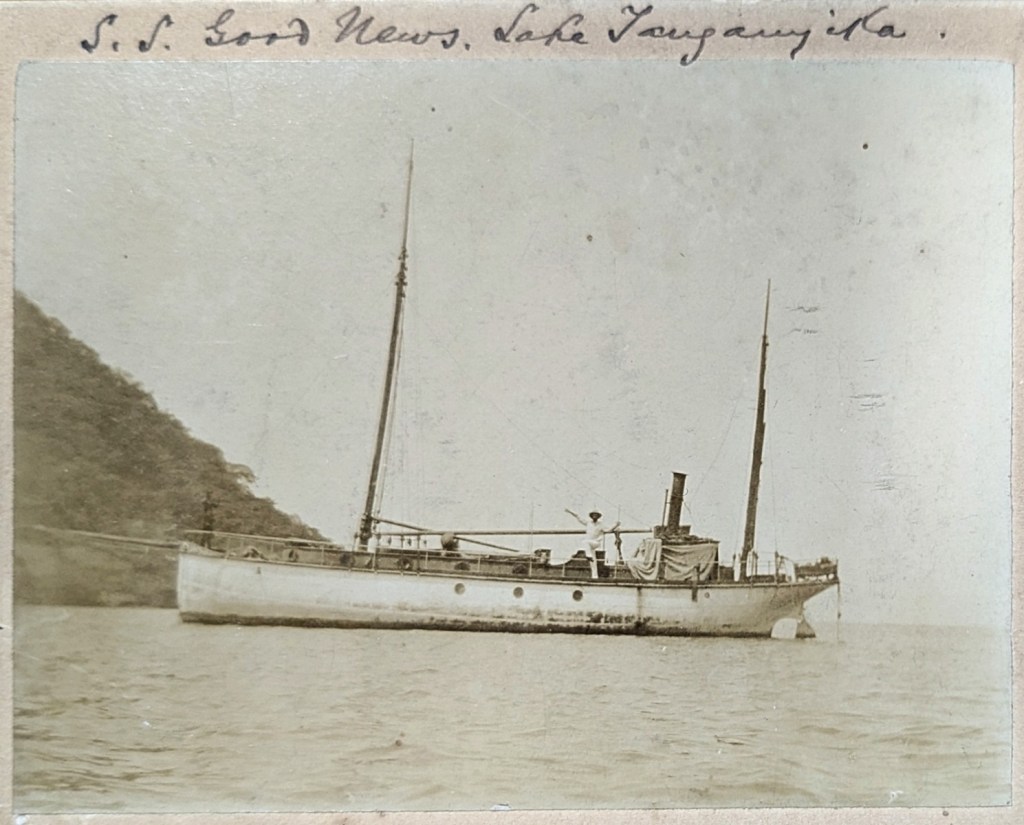
Good News

The first chunk of photographs I looked at were of the S.S. Good News, which of course you know is my particular obsession.

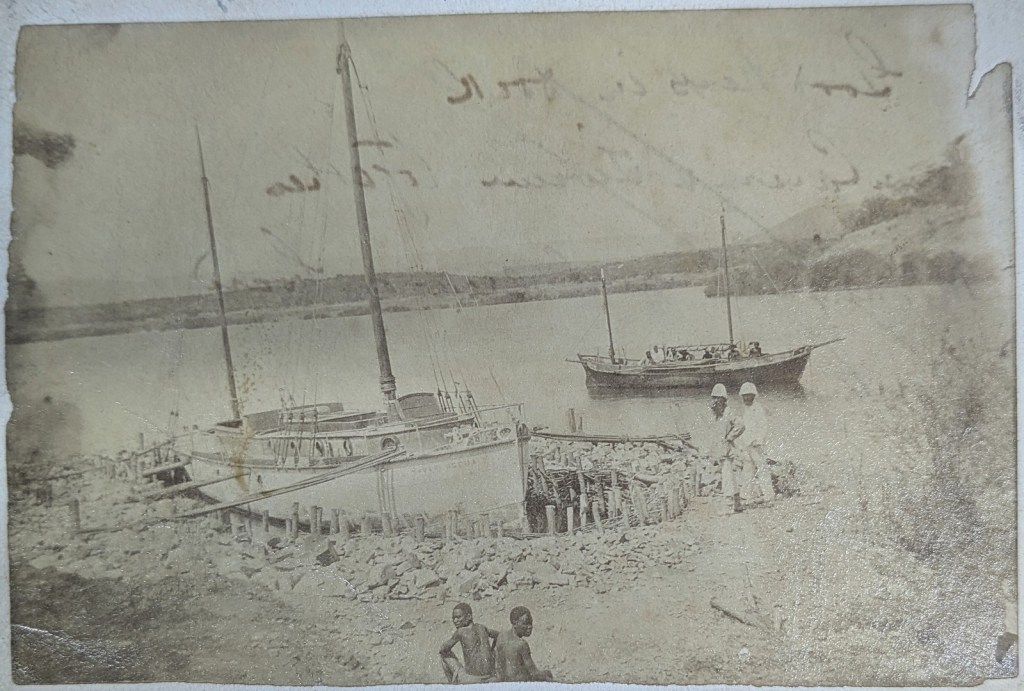
The above photograph is of the Good News in drydock following some damage, with the Morning Star alongside it. This was not a new photo for me but neat to see it in the flesh.

The above photo and the next two were new to me, and it seems like they might have been from the same photo session. If they are, then the above photo must have been taken by Alexander Carson, because the caption on the back says that is A.J. Swann in the photo. I think this is corroborated by the hat.

Here’s what I mean by the hat; the caption on this photo identifies that as A.J. Swann on the deck of the Good News; his mate is unnamed.

And then above is Alexander Carson, which is why I think the first of these three photos was taken by him. At first I had actually thought this was another picture of Swann given the similar outfits and beards. I guess this is why they had different hats.

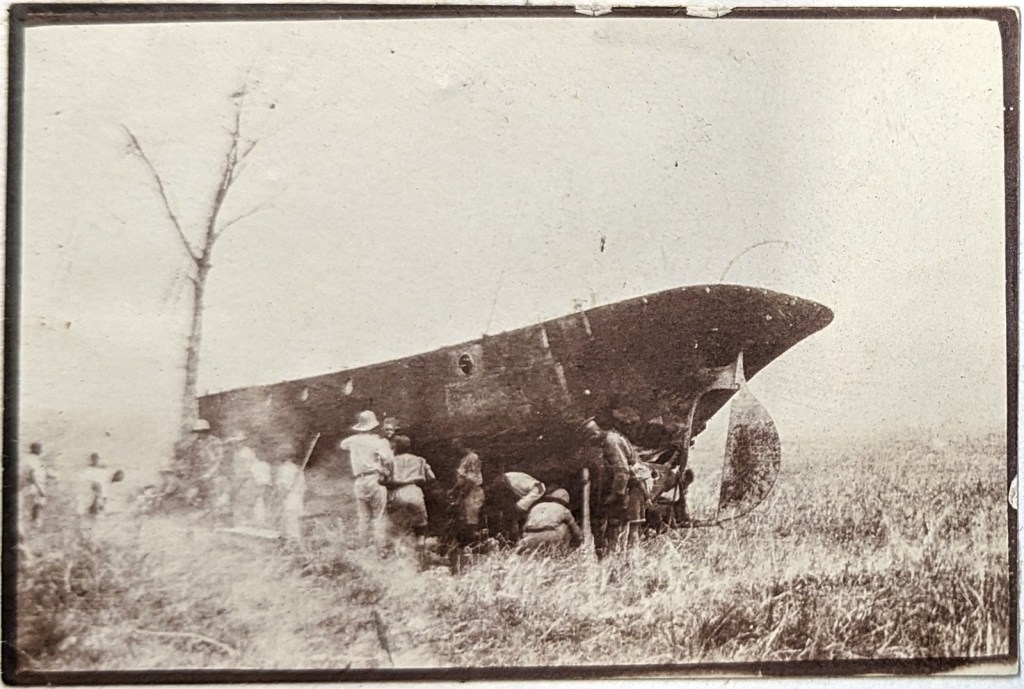
These two photos, one of the hull of the Good news and the other of a young man, were pasted onto a piece of paper. The only context was given by a short letter, originally typed on a different piece of paper but cut out and pasted onto the same paper as the photos. I’ve seen this exact photo of the Good News before, as in someone else took a photo of this same document out of the archives (I can tell from the larger crop of that photo). The letter reads:
Dear Mr. Chamberlain,

Yours of yesterday to hand. Considering the fact that the photo was taken at Kituta, and that the only steamer there was the “Good News” you will be safe I think to conclude it is the hull of that vessel. The “Morning Star” & the “Good News” were both damaged by the Huns but the latter was not completely destroyed. It is the properly of the A.L.C. [African Lakes Corporation].

Trusting you are well and with kind regards.

Yours sincerely

R. Stewart Wright

If Rev Wright took the photo, that dates it to between 1915 (when he left the Mission) and the start of WWI (when the Germans shelled any other potentially workable steamer on Lake Tanganyika to ensure their naval superiority). However, it doesn’t give a lot of clues to the identity of the man.

Portraits

The next section is portraits. The first two are particularly cool because I’ve seen them before, but as engravings instead of as pictures.

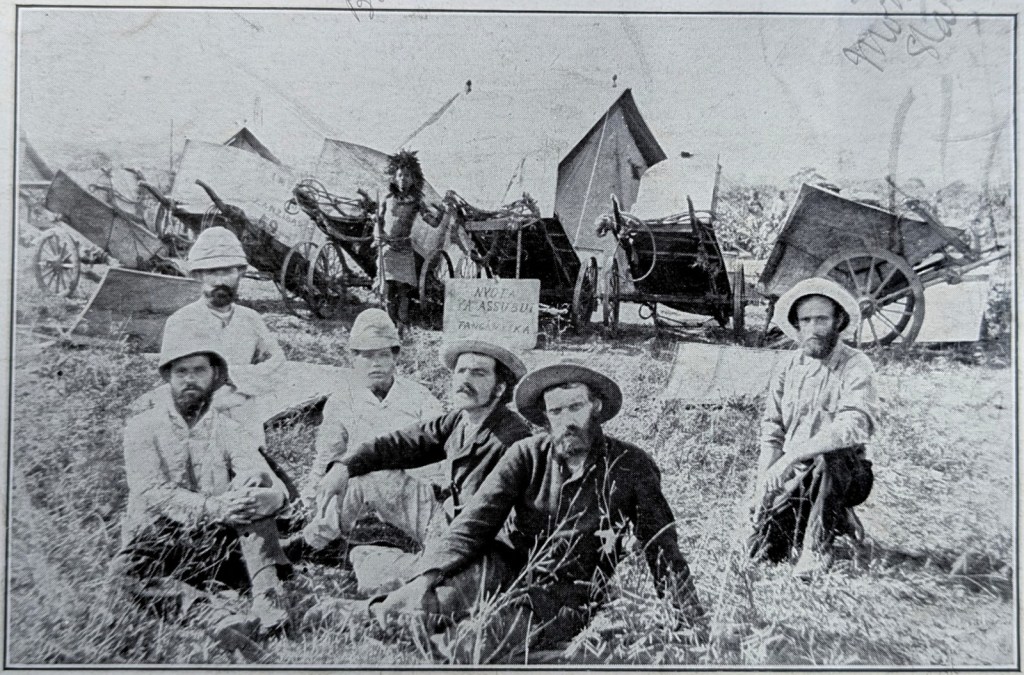
The caption for the above photo, from the January 1884 edition of the Chronicle (where it was included as an engraving) was: “The group of figures in the above engraving from a photograph will be recognized by many of the Society’s friends. From left to right the names are as follow: – Rev. D.P. Jones, behind him Captain Hore, Mr. A. Brooks, the late Rev. J.H. Dineen, the late Rev. J. Penry, and Mr. A.J. Swann. The trucks in the background contain the larger sections of the life-boat.” That life-boat was the Morning Star.

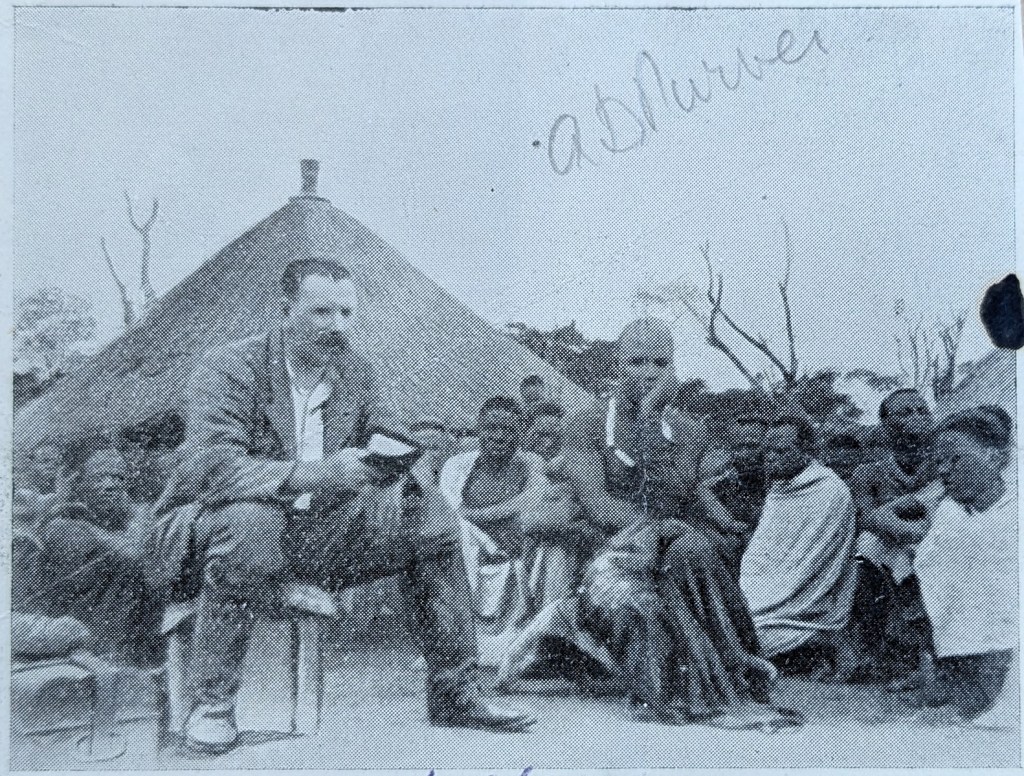
The above photo is Adam Purves, and was featured (as an engraving) in the December 1900 edition of the Chronicle with the caption “Mr. Purves Preaching to the Awemba.”

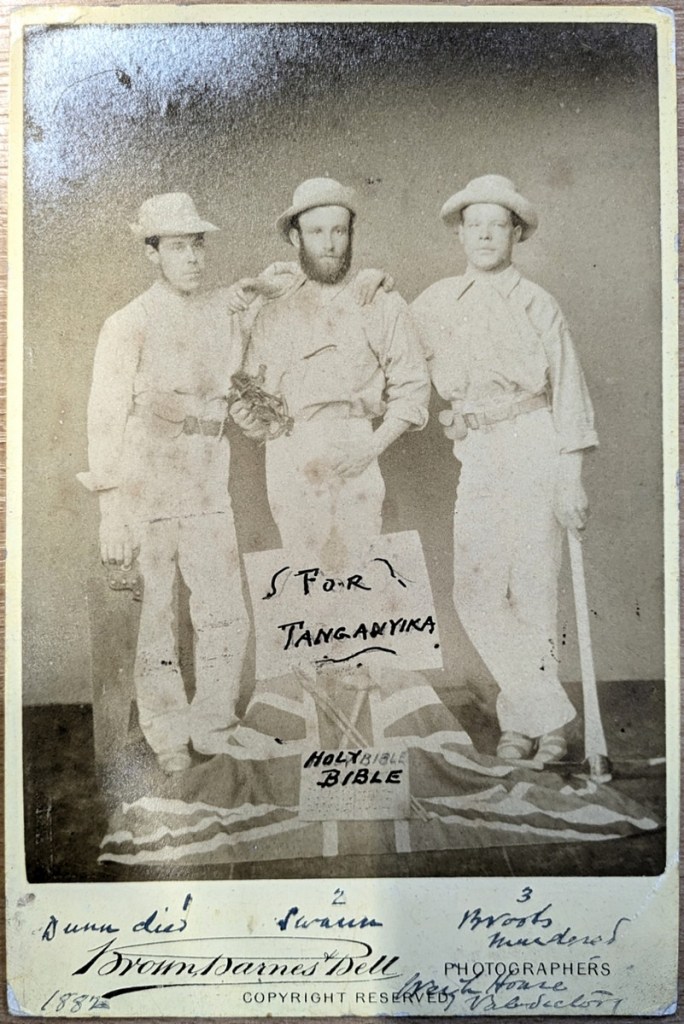
There were a few different copies of this photo in the archives, of James Dunn, A.J. Swann, and Arthur Brooks. It was taken in 1882 before they set out, apparently at the studios of Brown, Barnes & Bell. They’re posing with the tools of their trade(s), as they all were artisan missionaries. Dunn (with a saw) and Brooks (with a pickaxe) were slated to form an industrial station at the south end of Lake Tanganyika, and Swann (holding a sextant) of course joined the marine department. This copy of the photo has been updated with their eventual fates, with Dunn having died of fever in 1884 and Brooks killed as he was returning to the coast on his way home to England in 1889.

I can’t quite make out the names listed on the back of this photo; they were written in pencil and were a bit faded and I took a poor picture. The couple in the middle are Mr. and Mrs. James Hemans (also here).

This one is also a bit mysterious, I think the caption identifies the seated missionary as Rev. W.C. Willoughby, and it doesn’t name the missionary in the back (Swann maybe?), nor does it name any of the people with them (except as “natives”).

Now this is pretty neat because this is Mirambo. You can find this photo in a few different spots already on the internet (like his German Wikipedia page) or the cover of the book on Mirambo by Dr. Bennett, but hey here is a slightly wider shot even if I could have done a better job reducing glare. Someday I’ll go back to the archive and digitize these things with more skill.

Lifestyle

And then finally we have two photos that just show some of the lifestyle in and around the mission stations at the turn of the century. The above photo is just labelled “Swann’s tent.”

And then our final photo is only really notable to me because a nearly identical version is online in the USC archives, they must have been taken one right after the other. It was taken at Kambole, and according to the USC page it was more specifically taken by Rev. James Ross circa 1925, featuring a tip cart made at Kambole in front of a wheat field.

So pretty neat. The trip to the archives was fun and I will milk it for several more posts as I figure out all I was able to take a look at; I took a bunch of pictures of documents without having a chance to really read them in the moment but I will work my way through them. I’ve already learned a few significant details and will have to update my transcription of the Chronicle with more photos and biographic details when I get the chance.

LMS Photo Album Pictures

At risk of copyright infringement, I wanted to highlight for my loyal readers a super cool book of photographs that I saw pop up on eBay, leading me to the wonderful-looking shop Globus Rare Books & Archives. If you click the link (provided no one has since bought it), you’ll find for sale at the bargain-basement price of $3,750 (man I wish I was rich) a “historically significant collection of original photos, illustrating the activities of the Central Africa Mission of the London Missionary Society.” It’s so cool man. So many photos of cool things I hadn’t seen before, and it amazes me that this sort of ephemera survives and makes its way out there into the world.

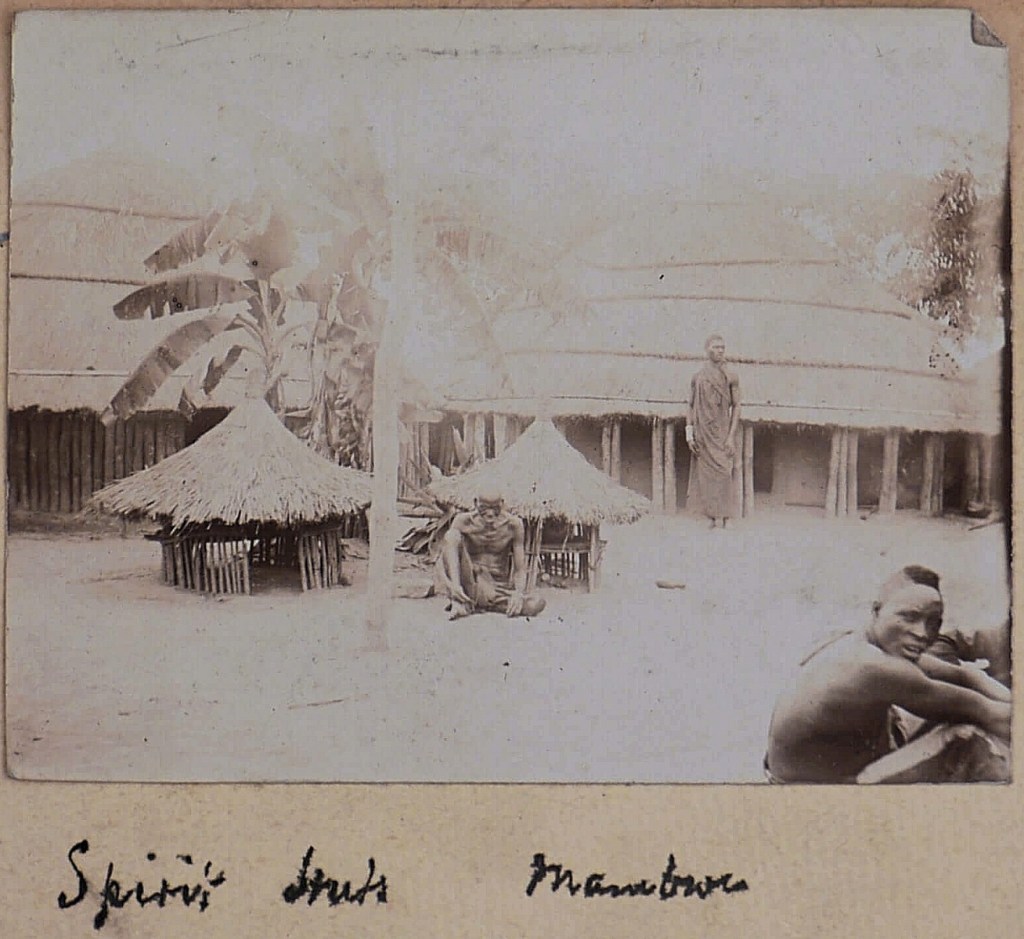
Since it’s a missionary photo album, most of the pictures are focused on daily missionary life, along with travel through places they would have seen on their way to and from the mission. There are also a number of photos of contemporary life in the area, such as this one labelled “Spirit Huts – Mambwe:”

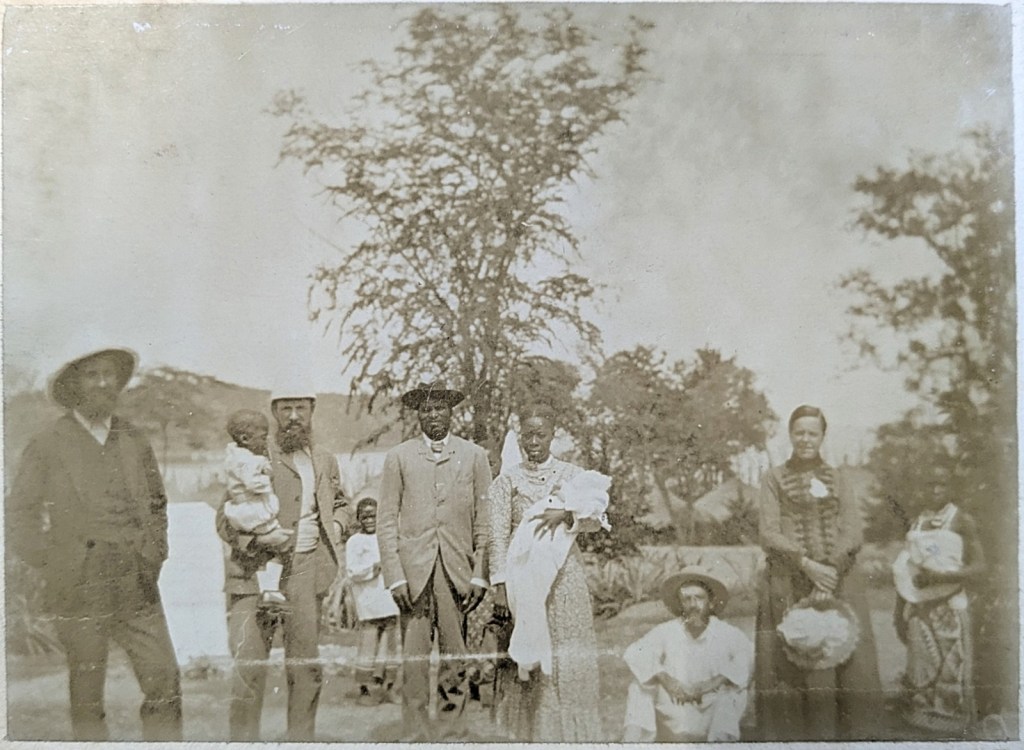
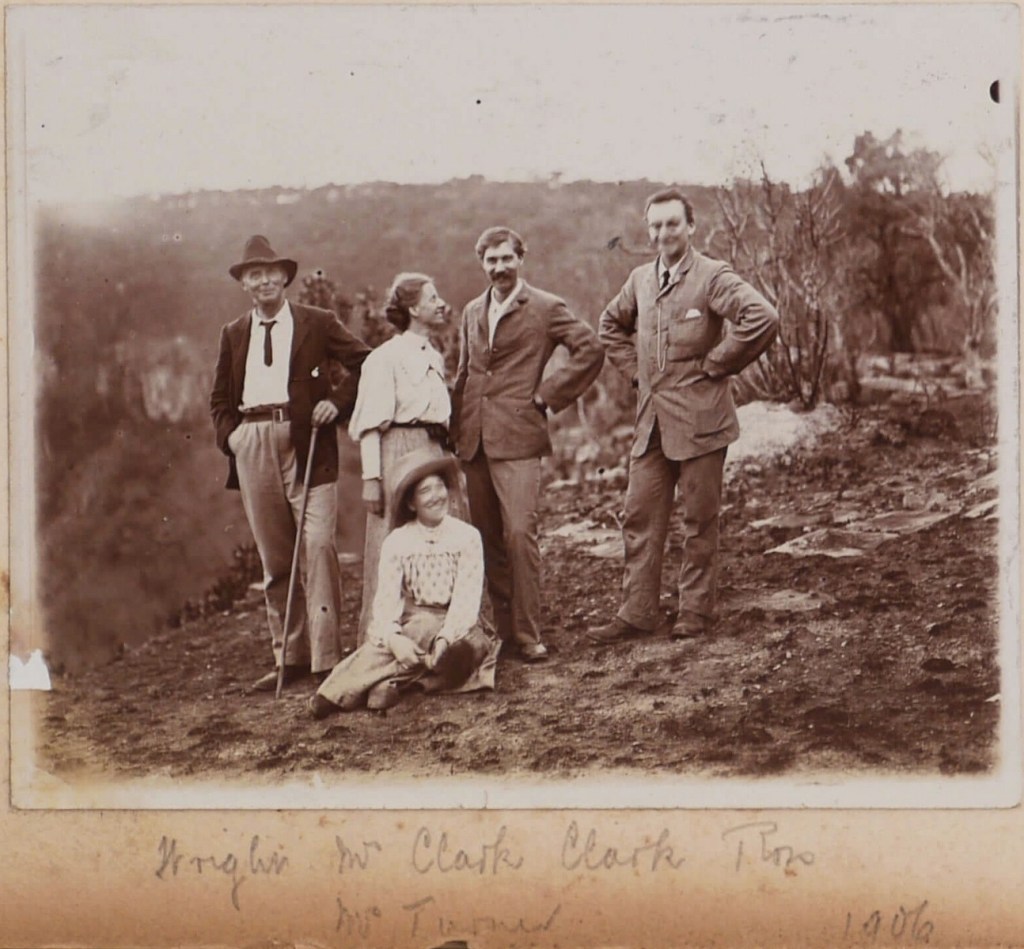
I can’t tell who made the album, though the pictures seem to range around 1905-1910. There are a few different group photos of the missionaries. The below photo is labelled “Wright, Mrs. Clark, Clark, Ross, Mrs. Turner. 1906.” So that is Rev Robert Stuart Wright, Rev Earnest Howard Clark and Harriet Emily Clark, Rev James Arthur Ross, and Gertrude Alice Turner. When I was assembling the LMS biographies I couldn’t find a picture of either of the women, so the above is the best photo I’ve seen of either Harriet Clark or Gertrude Turner. In 1906, Wright was stationed at Niamkolo, Ross and the Turners at Kambole, and I think the Clarks might have been stationed at Kawimbe (they were married there, at least). All of which to say is the above photo could have been taken in a wide variety of places and it’s hard to tell. There are plenty of cliffs around the southern part of Lake Tanganyika though I wonder if maybe it was taken on a sightseeing trip to Kalambo Falls. They certainly seem to be having a rather grand time!

This set of photos is sadder. Our friends at Globus interprets the below two captions as “Mrs. McNeil’s grave, Kawimbe” and “May & Mrs. McNeil, Abercorn, 1907”:

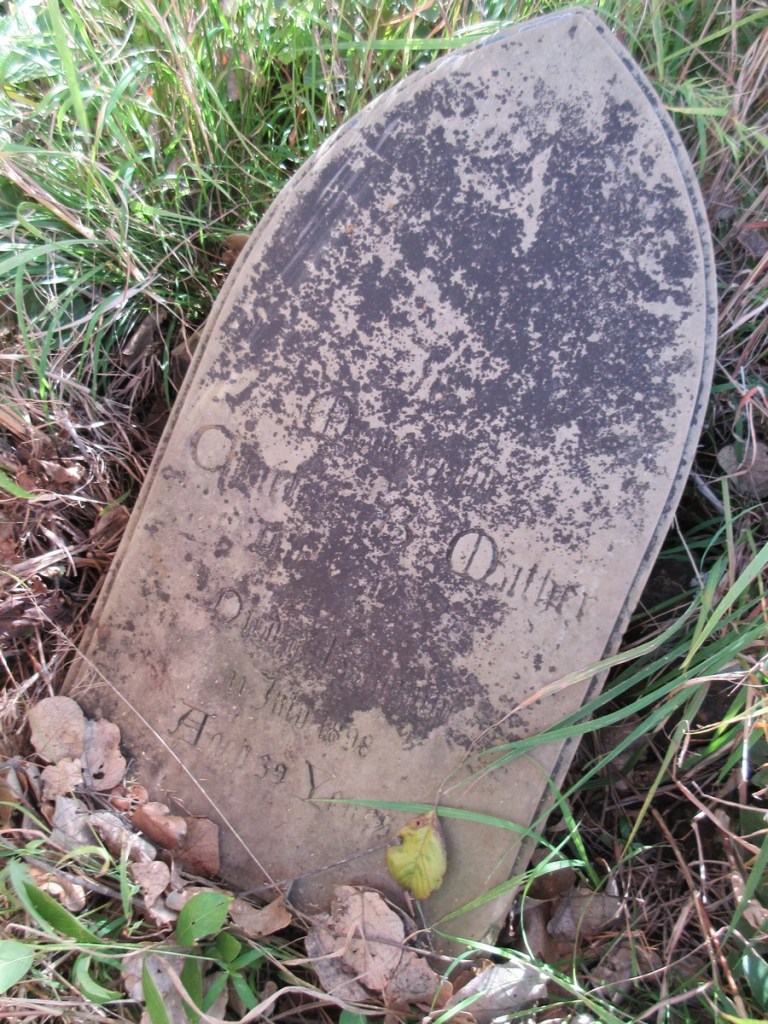
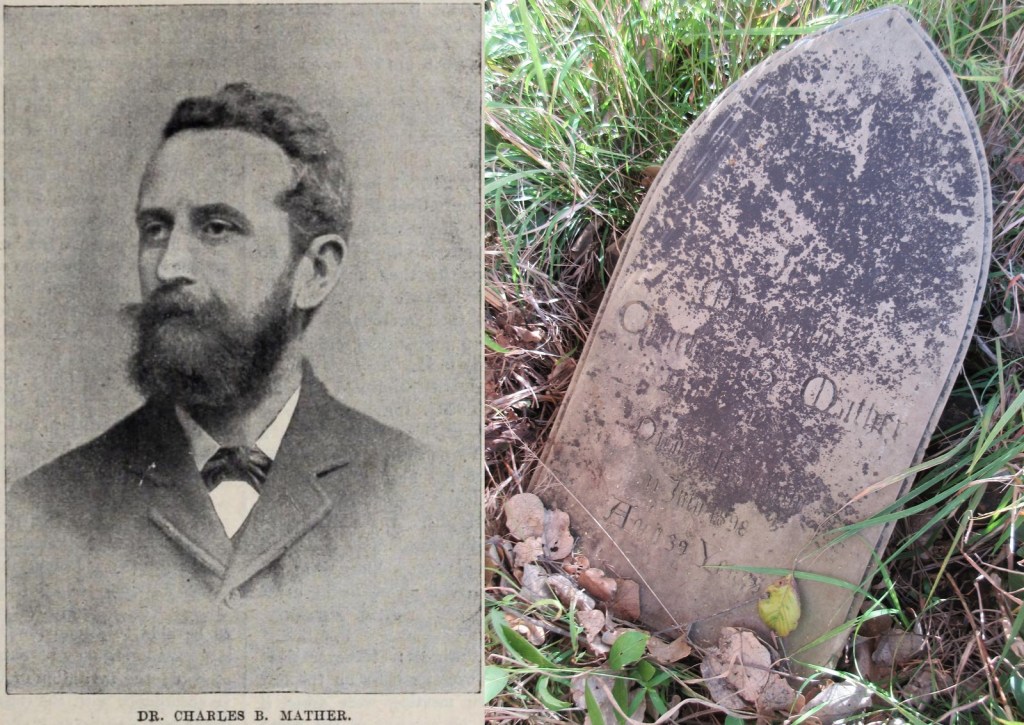
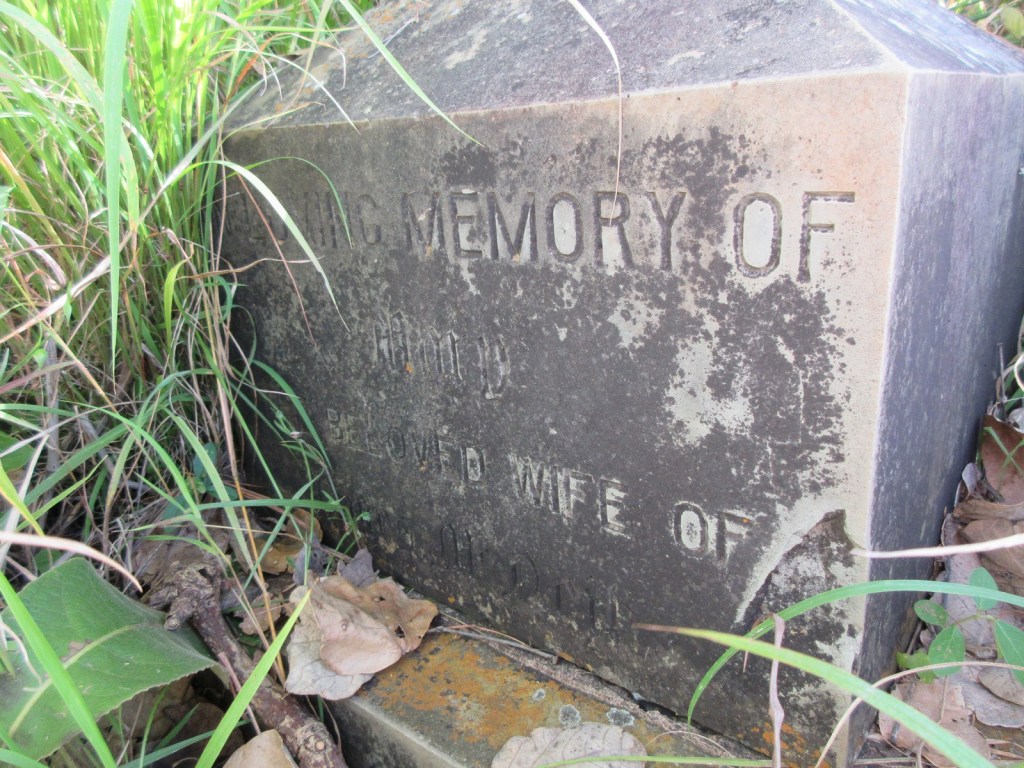
I’m not sure who either of these women are. I can’t find a record of any McNeil being associated with the London Missionary Society, so it may be a member of another missionary society or the British colonial administration. I’d have to do more digging and I’m not familiar with all the records. However, if the graveyard pictured is the Kawimbe church graveyard, I have been to it! I wish I had known what I was looking at when I visited and one of these days I have to go back. When I visited it, it was overgrown, and I didn’t take pictures of every gravestone (and the ones I did take aren’t very good), but going through my files I have the two below. On the bottom left is a stone that I think says “In Loving Memory of Amy, the Beloved Wife of [] McNeil.” Of course it is a bad photo, I am bad at reading this particular type of writing, and also there is no gravestone in the picture of Mrs. McNeil’s grave. But maybe they added it later. The photo on the right I thought might be the gravestone pictured as being behind Mrs. McNeil’s grave since it’s a similar shape. It’s the gravestone of Dr. Charles Mather, who died in 1898.

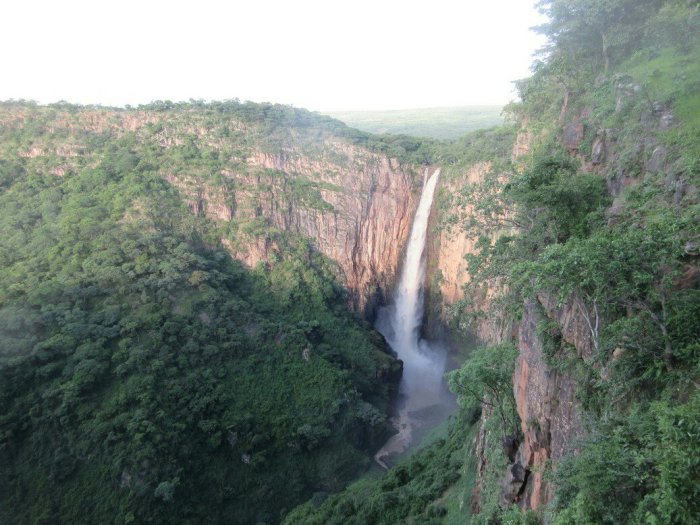
Also included in the album are landscape shots, and having lived in the area it is entrancing to see people a century ago enjoying the same sights. The photo at the top is Kalambo Falls, where I have also been, and it was as impressive then as it is now:

Less touristy but just as interesting to me is a panorama shot labelled “View from Niamkolo Station.” The first time I tried to find the Good News, I wound up on the plain above Mpulungu and must have stood pretty close to the spot where that photo was taken (though not exactly the same). Since then, as you can barely see in my photo, Mpulungu has built up a lot more since then, but the distant shores of Lake Tanganyika fade away in just the same way.

Besides landscape shots, there are architecture shots. The below photo (as you can see) is labelled as the church in Kambole. Since the album spans about 1905-1910, this would have 10-15 years after the mission at Kambole first opened. USC Libraries has another collection of LMS Central Africa Mission photos, and this photo is also labelled as “The Church” in Kambole. It is from a different angle but looks like it could probably be the same building, except in the linked photo the church has a cross on the top which I don’t see in the above photo. The linked photo is labelled as being circa 1925, so another 10-15 years afterwards and has definitely gotten a new thatching job at the least. Still, pretty neat to see the same subject (potentially) a number of years apart.

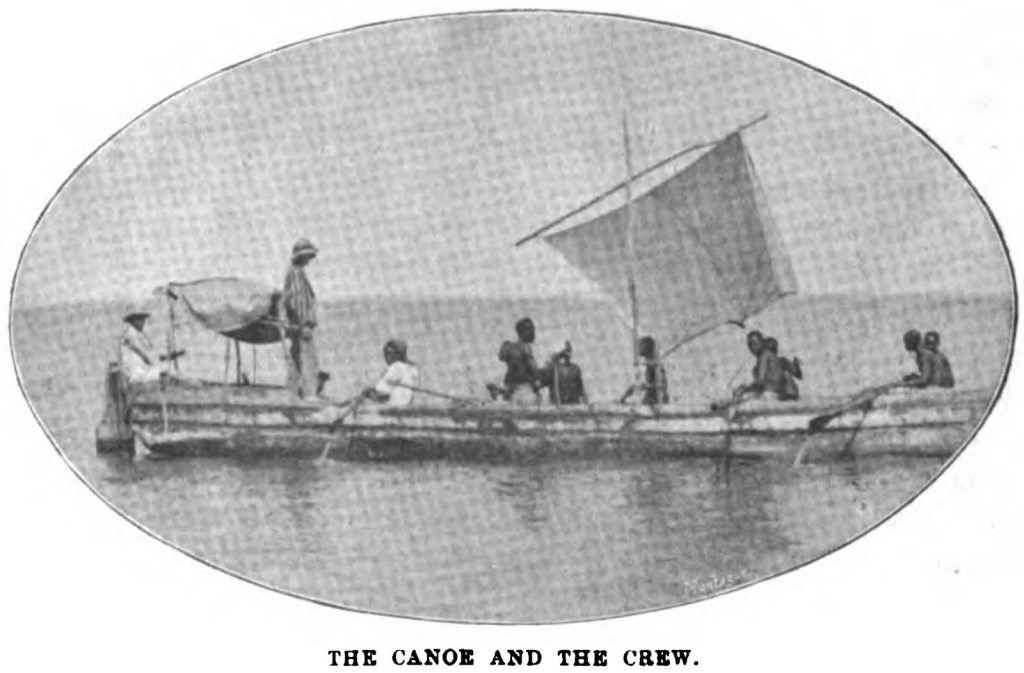
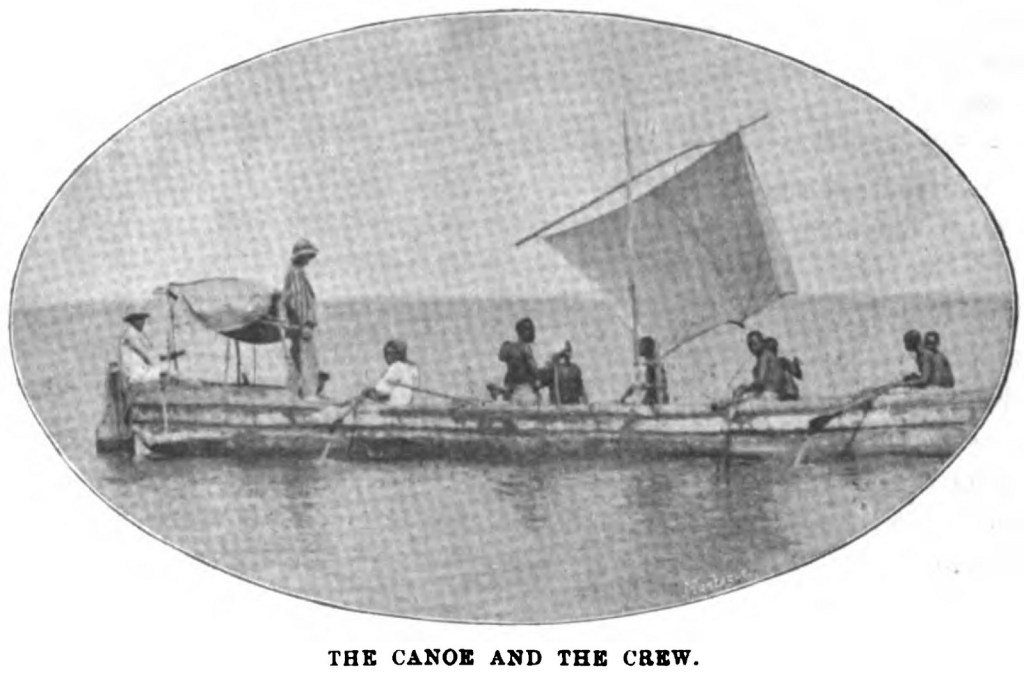
Then there are some more adventure-oriented photos. The stern-on shot at left at bottom is labelled “LMS Canoe T’yika.” There were a few different canoes owned and operated by the LMS through the years. This one doesn’t seem to have had a name, but looks to be the same canoe pictured in the story “Afloat and Ashore in Central Africa,” by the Rev. R. Stewart Wright published in the November 1905 edition of the Chronicle:

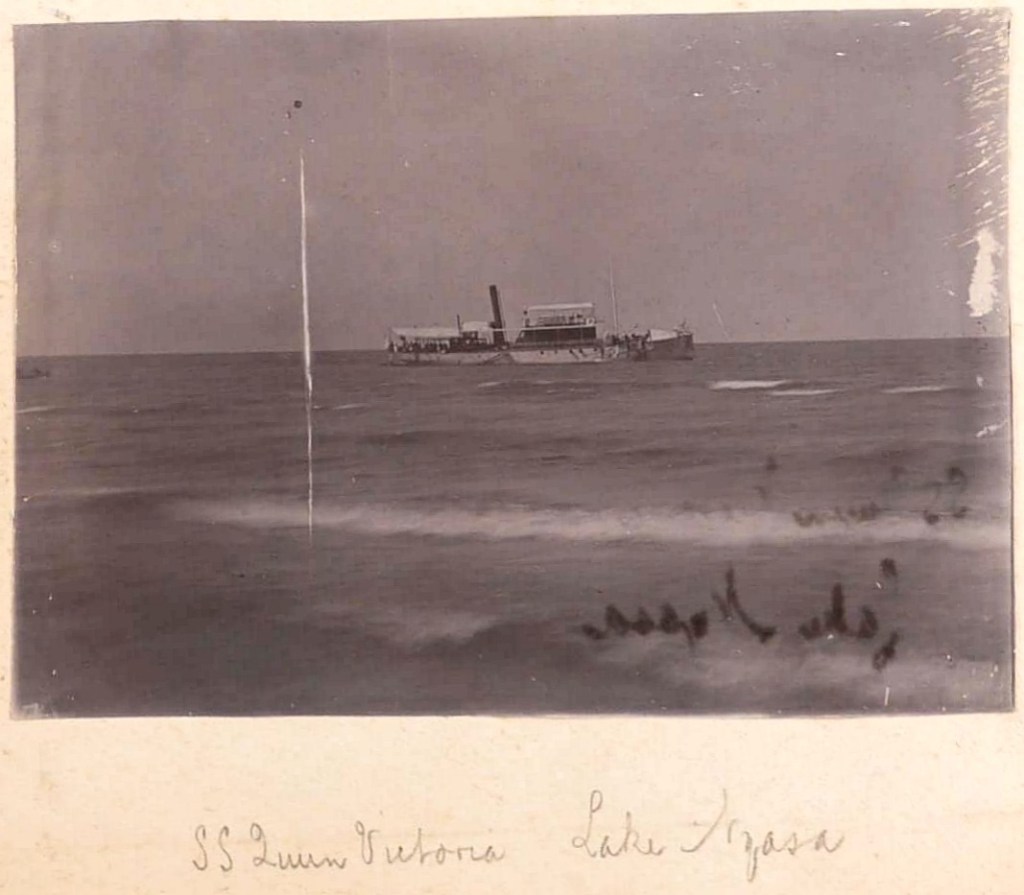
And then speaking of boats, here are two more! Neither of them are in our usual area of operations for this blog, but are neat nonetheless. The ship on the left below is identified as the SS Clement Hill at its launch. The Wikipedia article differs, but according to The Lake Steamers of East Africa by L.G. “Bill” Dennis she was launched on December 21, 1906 in Kisumu (Lake Victoria), and she carried 250 tons of cargo and passengers in “elegant accommodation.” On the right is the SS Queen Victoria, a cute little boat not covered in Lake Steamers but which makes an appearance in this pdf. According to that pdf she was put into use on Lake Malawi by 1898, making her probably around a decade old in the above photo, give or take.

Anyways, as long as it hasn’t been sold yet you should def check out the album, there are more pictures of Zambia, Zanzibar, and Uganda, and it’s all super cool. And then someone should give me enough money to buy the thing. If you’re reading this from Globus Books then please don’t be mad at me, I just want everyone to know about this fantastic photo album you have.

The Chronicle, 1876-1905

At long last, I have finally completed my transcription of The Chronicle of the London Missionary Society for all articles relating to their Central Africa Mission from 1876-1905. This represents the first 30 years of the mission, starting from when Robert Arthington offered £5,000 to get them to put a steamer on Lake Tanganyika.

This was definitely a project of the “we do this not because it is easy, but because we thought it would be easy” category. I had been using the Chronicle as a resource because it is convenient documentation of early observations of the peoples and lands around Lake Tanganyika. Although modern technology is wonderful and nigh-magical, when it comes across PDFs of century-old missionary magazines sometimes the text recognition software doesn’t do so well (honestly amazing we have this technology at all, just to emphasize) and so the search function can be hit or miss. “No problem,” I thought, “I’ll just manually scroll through and transcribe everything so I can ensure that I get all the relevant information.” Very nearly three years after I began that project in earnest I have finally compiled my “complete” edition. It is only 322,104 words and 686 pages long.

My dream for this transcription is that it will be an easy reference document. That is why I compiled biographies for all the missionaries associated with the mission during this time period, available in the front of the PDF. I had also thought of putting together an index, to really add a sense of academic pizzazz, but upon further reflection I thought that the search function would now be a lot easier to use since I typed everything out and also adding an index would be a whole lot more work on top of what I already did and I couldn’t bring myself to do it. But, as I say throughout the document, if anyone out there in this big beautiful world of ours actually uses this resource please please please let me know I will be absolutely over the moon. I think my blog has been cited in at least one student’s college paper and I am happy about that. Please though if you do use it as a reference verify your quotes with the actual source document. I change a lot of spellings and although in this edition I went through and proofread everything, I can’t 100% guarantee I transcribed it all correctly. I’m only one guy.

I think I will put this project down for a while. I initially chose this time period because after 1905 the issues of the Chronicle available online began to peter out. That is until I made the extremely distressing discovery that the SOAS website now has (nearly) them all listed. So there is scope to do the next 30 years. However, I have a lot of Central Africa Mission books to read (and a lot of other books to read) and I want to get a move on with those. My other dream is to be able to spend a whole lot of time in the SOAS archives themselves and my other other dream is to do some on-the-ground research in Zambia, but for now the usual life things stand in the way. But this project will continue in one form or other.

Previous entries on my Chronicle series available here!

The Chronicle, 1901-1905

From March 1905

This post has been superseded!

We take a break from Puerto Rico content (there is a lot more to come, don’t worry) so as to bring you, my loyal reader(s), what will likely be the last segment of my transcriptions of the The Chronicle of the London Missionary Society for a while at least (please see previous segments here: 1876-1880, 1881-1885, 1886-1890, 1891-1895, 1896-1900). However don’t fret! This project is far from over. It is just that, as I alluded to at the end of the last installment, the availability of the Chronicle past 1905 becomes spotty thus making it difficult to put together full transcriptions.

What I would like to do as a next step is put together all 30 years I have transcribed so far (30 years ain’t too shabby, is it?) and extract from it useful information to guide follow-on research. I am specifically thinking at minimum an index, but I would like to compile a timeline of the Central Africa Mission and put together short biographies of all the missionaries, at least as far as their association with Central Africa and the LMS goes. Someday when I A) figure out how to apply for a research grant or something, B) apply for those grants, and C) win one, I would like to go out and find the years of the Chronicle that the internet doesn’t have yet and also of course get my butt over to London to look at all the LMS archives in the flesh. And then I dunno write a book or something? But to write a book I would also want to do a lot more research on the ground in Zambia, and we can already see this is more than a nights and weekends project. But a boy can dream.

But back to these five years, specifically (those are 1901-1905, just to recap). Since it is now tradition, I will say that this edition bucks the trend of downward word counts, coming in at about 54,000 words (the whole project is running to over 300,000, so the proofreading required for the compiled edition will take a hot minute). It also features a whopping 45 pictures, representing very nearly half of the total pictures from Central Africa the Chronicle published over the entire 30 years I have covered.

The Mission is well established at this point, even to the extent that by the end of 1905 Rev. R. Stewart Wright is talking about the work of “our early missionaries, some twenty years ago.” The Mission is, however, still expanding, setting up new bases in “Awemba Country” (Bemba in the modern parlance). Besides their drive to evangelize as much as possible, that effort was driven also by a fear of the Catholics claiming more area (there is a short article, tinged with fear, noting that the White Fathers have the rest of Lake Tanganyika surrounded by well-staffed stations, with some of their African converts being trained in medicine) as well as the not-so-hidden protagonist of this whole story, Mr. Robert Arthington, of Leeds, donating £10,000 for “the extension of mission work to the Awemba tribes” (Although Mr. Arthington died in 1900, he left a final donation to the London Missionary Society that was to only be used for new endeavors and not for the maintenance of the Society’s established endeavors, which due to some court stuff continued to cause the Society some headache throughout this period).

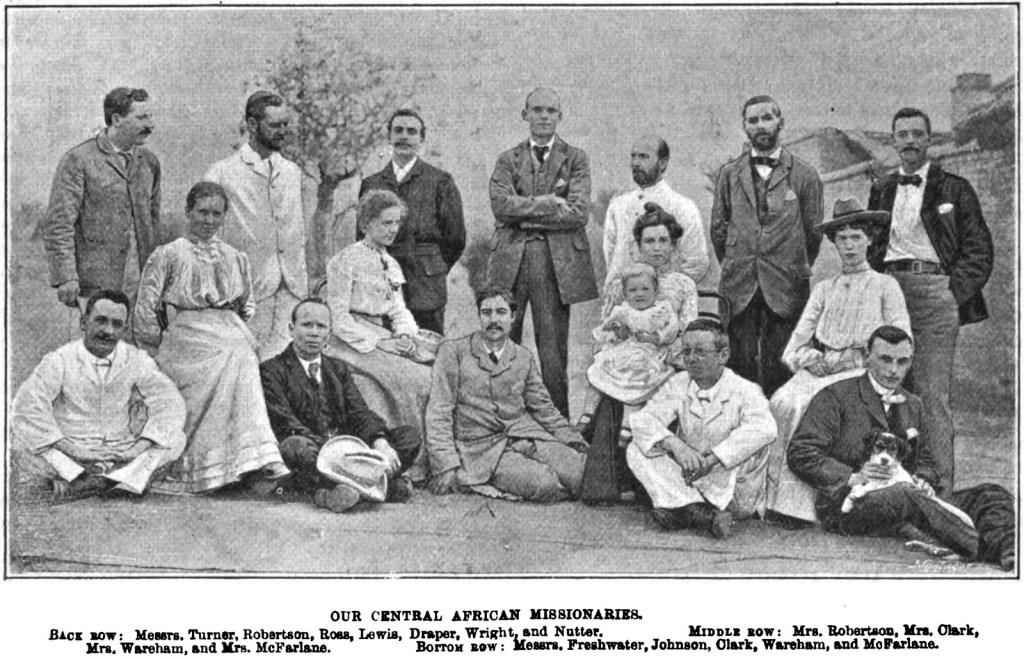
As illustrated by the group photo at the top, the Mission is also benefitting from being it seems less deadly to missionaries than it was in its early years. I am sure this is a byproduct of them figuring some stuff out (like in 1897 the fact that mosquitoes transmit malaria) as well as colonialism making it easier for these British people to travel around and communicate with central Africa. It was safe enough that they are regularly sending out women to the Mission, albeit it as the betrothed to missionaries already in the field (where they hop on down to the magistrate in Abercorn to get hitched) and not as missionaries in their own right. There was still danger of course, but at this point when a missionary in central Africa dies it is shocking instead of routine.

The biggest development I was pleased with at this point is that the Chronicle mentions Africans with increasing regularity. I know it’s a minor thing but hey in a literal sense at least it’s not nothing. I think a big chunk of this is that the missionaries are finally having some success in converting Africans to Christianity, once they had really settled down and had a generation of people grow up around them.

So that’s that, for now. As always, if you are finding this useful or want to swap info on the Central African Mission of the London Missionary Society, hit me up. I would be very excited to hear from you.

The Chronicle, 1896-1900

Reading this week:

  • Dhow Chasing in Zanzibar Waters by Captain G.L. Sulivan, R.N.
  • Across Africa by Commander V.L. Cameron, R.N., C.B., D.C.L.
  • Earthlings by Sayaka Murata

This post has been superseded!

Look guys I know it is absolutely astounding that I have posted sections from The Chronicle two weeks in a row. I can barely believe it myself and for the sake of my reader(s) I hope you like this content and are not pining after descriptions of me wandering around art museums or something. I like it and that’s all that matters on my blog. Anyways. A couple of factors at play here. First is that the downward trend in the length of these updates continue their downward trend, this one clocking in at juuuust shy of 33,000 words. More importantly however is that I was procrastinating some things and doing this was my excuse to avoid doing the other things. Please see previous updates in my plan to transcribe every article in The Chronicle of the London Missionary Society relating to their Central Africa Mission here: 1876-1880, 1881-1885, 1886-1890, 1891-1895.

I have mentioned several times now that the first reason I got interested in the London Missionary Society is because they launched the first steamship on Lake Tanganyika, the SS Good News. That era in LMS history has come and gone, however this era we are entering now is interesting because it much more closely overlaps my own experience in Zambia.

The Society by the end of this era is running three main Mission stations, having given up the Urambo Mission to Moravian missionaries in 1898 in order to consolidate their efforts at the southern end of Lake Tanganyika. There is a mission at Kambole, which I think was in the area now occupied by Nsumbu National Park, which I am sad that I never got to go to. Then there are missions at Niamkolo and Kawimbe. When I was a Peace Corps Volunteer I lived about smack dab in the middle of those two stations, making the LMS’s old stomping grounds my old stomping grounds. I’ve used pictures from this era of the Chronicle to talk about some of these things, such as Niamkolo church.

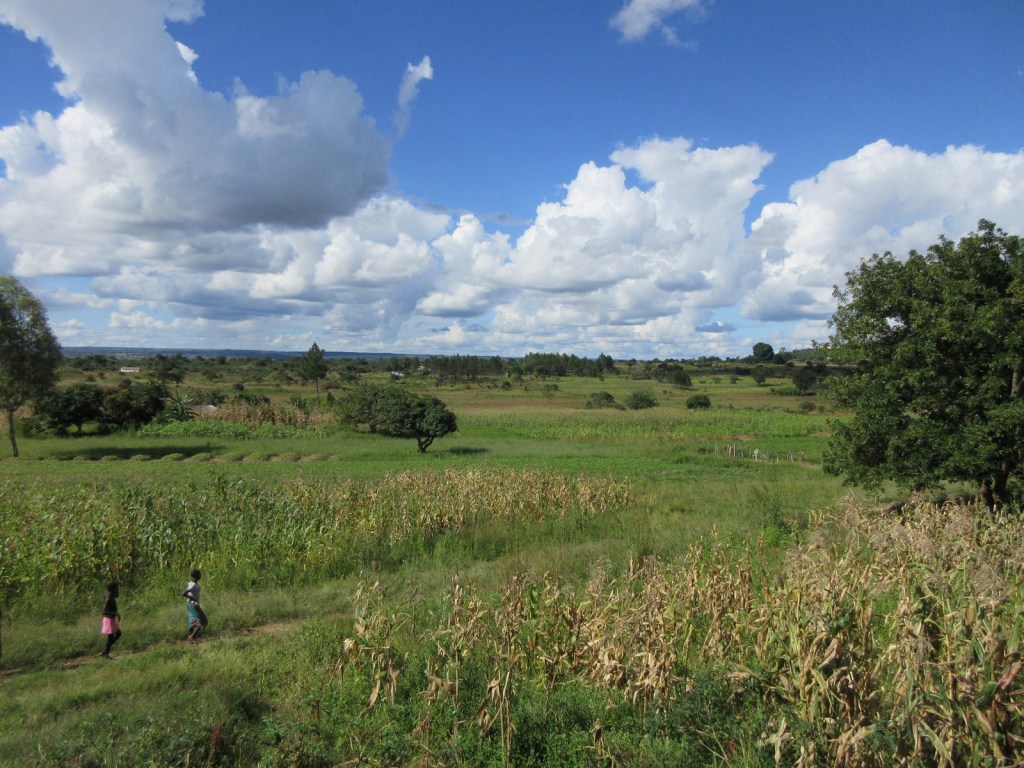
View from near the spot where the LMS Kawimbe mission was; I can’t imagine it looked way too different in 1899.

I also got interested in Kawimbe because that is where large chunks of the story of Mama Meli took place. In that article I just linked one of the things that my friend Katie and I looked at was a cemetery where many of the missionaries were buried. As part of this project I have finally been able to connect the names on some of these gravestones with the stories of the people behind them. One of the things I want to do if I am ever in Zambia again is to go back to that cemetery and do a better job photographing the memorials and documenting the people buried there. But when I do manage to identify one, such as John May Jr. or, below, Dr. Charles B. Mather, it feels like an exciting accomplishment:

But besides people dying, what’s going on with the Central African Mission? Both a lot and not so much. In 1897 they sent out seven new missionaries to Central Africa (with the Hemans returning), significantly boosting that Mission, since the numbers had dwindled to three people. This significant increase should have led to a lot more activity in the missions, and I think it will and does eventually, but for a long stretch during this interval things are pretty quiet as I think the new missionaries get up to speed and more settled. As I keep saying during these summaries the missions are getting more and more settled and integrated (they proudly talk about at one point that the Central African missions had finally become self-sustaining as far as local expenditure is concerned) and that continues to be the case here. Colonialism continues to take hold as well (“British Central Africa” is referred to regularly), and there is even now a telegraph line to Mbala/Abercorn. The Mission also at this point has a small but regular number of converts coming in, the payoff for their now 25 years in Central Africa. As I read about the Missionaries training carpenters and blacksmiths and converting people to Christianity, I think about the different churches I saw during my time in Zambia or the carpenters and metalworkers that I met, and I wonder which and how many of those people are the direct cultural descendants of the people that these missionaries trained.

As always, if you are finding this useful (or maybe just finding this at all) I would be absolutely delighted to know. My current thinking is that I will keep this project going through about 1915, which will put us into World War I and I think the London Missionary Society might no longer necessarily be the best place to find out about the culture and people in the area. But that is pure conjecture; I’ve never read that far in the Chronicle (though honestly issues become harder to find online at that point). But I guess we’ll see when I get there.

The Chronicle, 1891-1895

Reading this week:

  • The War That Doesn’t Say Its Name by Jason K. Stearns

This post has been superseded!

Friends, I am stunned and astonished to say that I have completed yet another installment of my plan to transcribe every article in The Chronicle of the London Missionary Society relating to their Central Africa Mission (here is: 1876-1880, 1881-1885, 1886-1890). I have been starting with their stats, so I will let you know that this is even shorter than the previous “teeny-tiny update” at only 36,700 or so words. It does however have something like double the number of pictures as the preceding 15 years of articles combined.

Previously I posited that the amount of coverage the Central African Mission was getting had nosedived because it had become Just Another Mission within the London Missionary Society’s repertoire, and that I think is still true. My numbers are a little artificial too, because sometimes I skipped articles when the mention of the Mission was literally only passing. Also, the format of the Chronicle also changed during this time period to be longer and fancier (and with more pictures), but also mentions of the Central African Mission can arise in a wider variety of spots (different “Secretarial Notes,” in regular columns like “Month to Month” and “Personal Notes,” and sometimes in space-filling asides at the bottom of otherwise unrelated columns) so I am worried I missed some things, despite scrolling through every page. Another reason I think coverage was diminished in this era is because 1895 was the centenary of the London Missionary Society, and they were focused on their older missions, such as the South Seas and South Africa.

One of the themes I see running throughout these five years is the London Missionary Society coming to grips with the impact of colonization on their sought-after flock. Colonization is firmly established at this time – in 1894 they even see A.J. Swann resign his post with the Society “in consequence of his having accepted an official position under the British Administrator in Central Africa.” In general too the Society is in favor of colonization, welcoming a “flood” of Europeans into Africa even as they bemoan this flood is too focused on seeking gold over the spiritual enlightenment of the people. However, in a surprisingly (to me) progressive note, the Foreign Secretary, Rev. Thompson, worries about an effort by Cecil Rhodes and the British South Africa Company to take what is now Botswana away from direct rule by the British Empire and put it under direct control of the company:

Now it transpires that Lord Knutsford, when Colonial Secretary, promised the Company that in due time the Bechwanaland Protectorate should be added to their dominions. Lord Ripon in turn confirmed this promise, and now Mr. Rhodes is agitating for the realization of the compact. The chiefs and people of Bechwanaland object to the change. They have no complaint to make against the Company, but they see that it is a company with the interests of its own shareholders to care for. They think that Imperial rule is likely to be more impartial and unbiased than even the best-intentioned financial corporation.

R. Wardlaw Thompson, October 1895

The Society is forced in this era to take a look at what they have wrought, and decide whether they approve of what they have done.

Just to mention a few other things that happened during this era. First, when describing a trip through Bembaland (here “Awemba”) in an article from January 1895, Rev. W. Thomas (not the Foreign Secretary) notes “How little credit the native gets, as a rule, in books of travel!” I’ve commented on the same thing to criticize my own writing, so good on him here. It is also during this time that a great era for the London Missionary Society came to and end: in a note on the “Proceedings of the Board” in May of 1894, they announce that “the sale of the Mission steamer, Good News, on Lake Tanganyika, Central Africa, to the African Lakes Company (Limited), was approved.” How short a useful life that boat lived despite all the effort and lives that went into putting it on the Lake. But by this time Kavala Island had been abandoned, with the focus of the Mission moving inland, and they had little use for it. Their needs seem to have been adequately met by the Morning Star, but it was wrecked in February of 1895 in a gale (though they think they can repair it). As I have mentioned, the whole reason I started researching this stuff was because I was interested in these boats.

Anyways! As I always say at the end of these posts, if you find this useful please leave a note at the bottom of the post. I would be very interested to see if anyone is as interested in this stuff as I am and are finding these transcriptions useful. Someday I want to compile them all into one big document (and it will be very big) with regularized spellings and a nice index and maybe biographical notes of the missionaries so it’s easy to see who was where, when. But there is a lot of typing to do between now and then.

P.S. – I don’t have a great place to put these, but check out these pictures by Rev. D.P. Jones of two dudes fishing at Niamkolo and a stockade fence with human skulls:

The Chronicle, 1886-1890

Reading this week:

  • The Last Gift by Abdulrazak Gurnah

This post has been superseded!

In the unsustainably short interval of only five weeks, I am once again pleased to announce the third part of my ongoing project to transcribe every article in The Chronicle of the London Missionary Society relating to their Central Africa mission. The interval was so short because it has been a very slow period at work, but also because this is a teeny-tiny update, at a mere 38,000 words. I was wondering if this update would put the totals for this project above the 200,000 word mark, but it was not to be.

In this third semi-decade of the Central Africa Mission’s existence, it seems to be gaining a very different character. The reporting on the Mission in the Chronicle really took a nosedive. Part of the reason for that is fighting in the area cutting off the mails and therefore communication with the mission, so the Chronicle was forced to just give mild speculation based on rumors they had heard with no actual information. But I think a much bigger reason is that the Mission had simply become just another mission.

By this point they were fairly well established in Central Africa. They had four main stations – Urambo, their first permanent station; Kavala Island, where they had set up their marine department when it was clear they were unwelcome in Ujiji; Niamkolo (spelled Niumkorlo during these years) to get a presence at the south end of the lake; and Fwambo, a newly established mission “fifty miles inland on the route to Lake Nyassa” (I think this is now Kawimbe Mission, but I am not sure). The routes to these stations were well-established, the mail fairly regular (when there wasn’t fighting), and the Missionaries were spending their time building their infrastructure and their trust with the local communities. This is not the exciting part of missionary work. If there was exciting stuff, it wasn’t actually reported in the Chronicle – often the editor notes that urgent news had been reported in the daily papers, and in this magazine they were then just noting that all had turned out well (or not).

The Mission also starts to be swept up in world events. In 1876 they were some of the only Europeans in the area, but by 1890 colonization is starting to firmly take hold. Part of the reason for the fighting that cut off the mails is that the Germans were attempting to take hold of what would become German East Africa, and the native peoples were fighting back. Then in March of 1890 the Chronicle is reporting on a speech from the Duke of Fife where he discusses the recently founded British South Africa Company. And in December of 1890 they even note that Urambo is likely to be made a military station. The London Missionary Society in 1890 is no longer the vanguard of the European takeover in the Tanganyika region.

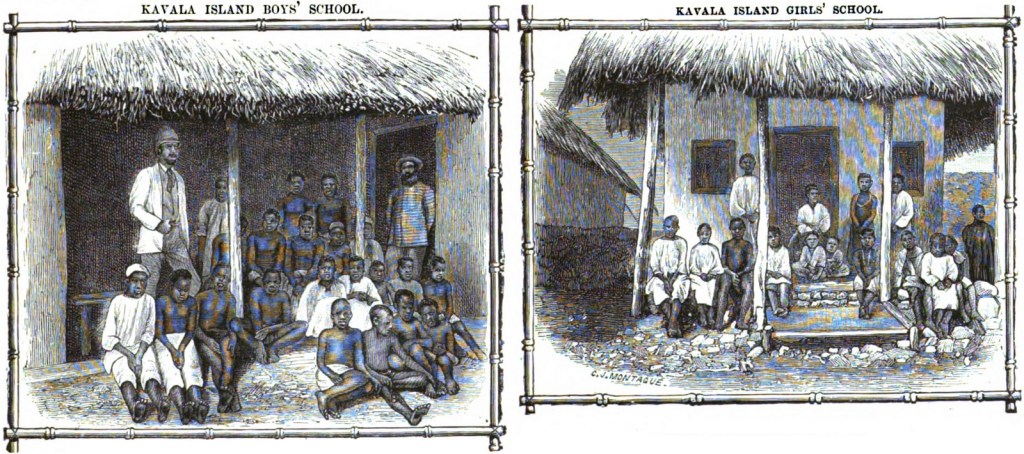
For our interests here in this blog there are a few other developments. This era is when James Hemans heads to the mission. On the other hand, our man Ed Hore has left the mission, with the latest news that he has gone on a tour of the Society’s missions around Australia. His wife, Annie Hore, was left in London to give birth to their daughter. Annie had been the first woman sent out to Central Africa by the Society and founded the Mission’s first school, the Kavala Island Girls’ School pictured above. While she was the first, in this era it is now becoming common for men to go out with their wives, a further signal that Central Africa was no longer the wild domain of only people like Livingstone and Stanley, as far as Europe was concerned.

Although the London Missionary Society might have felt that Central Africa was no longer so dangerous, with family life taking hold in the Mission comes the normal tragedies of everyday existence. In June 1889’s “Announcements” they report under Births: “Jones – November 16th, at Fwambo, Central Africa, the wife of the Rev. D.P. Jones, of a son.” Then, on the very next line under Deaths: “Jones – December 26th, at Fwambo, Central Africa, the infant son of the Rev. D.P. Jones, aged 6 weeks.”

As ever, if you find this work useful, please let me know. I’d be excited to collaborate.