Natural Dyeing

Reading this week:

  • The Uttermost Part of the Earth by E. Lucas Bridges

Back when we visited Shetland Wool Week, one of the things we really wanted to do was go to a natural dyeing class. I have a whole degree in chemistry so that sort of thing of course interests me. Unfortunately we were thwarted by the overwhelming popularity of Wool Week and so couldn’t do it there. But why go all the way to Shetland when you can do something at home? The answer to that is Shetland is beautiful but that is not the point.
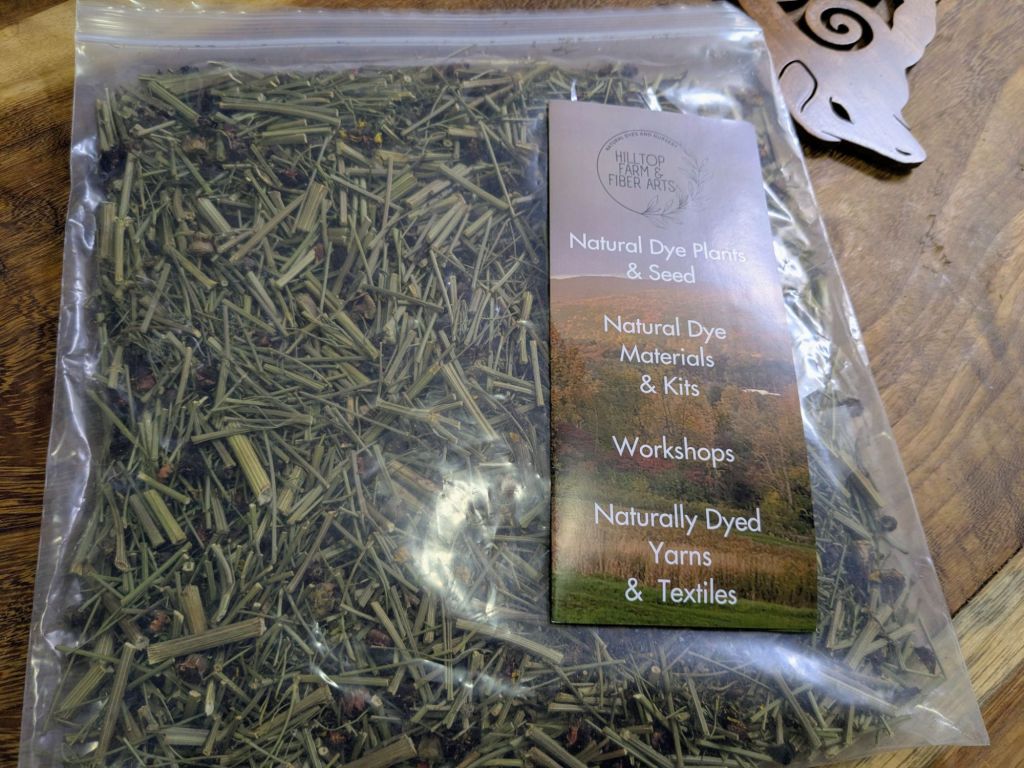
We had managed to pick up a natural dye kit from Hilltop Farm and Fiber Arts while we were up in their neck of the woods. These kits contain pretty much everything you need to try out some natural dyeing. It comes with a skein of yarn, ready to be dyed, mordant, the dye stuff (in our case a bunch of marigold bits), and some safety items like a mask and gloves. All in all pretty comprehensive.

Our skein, ready for the time of its life.

The caveats in the above paragraph, “pretty much” everything you need and “pretty” comprehensive are because the thing we lacked was a big ole’ pot. You should keep your dye equipment separate from your cooking equipment, and while we have a fair-sized pot we didn’t actually have a BIG pot, so the hardest part of this whole adventure was going out and sourcing a hefty stainless steel cauldron in which to do our chemistry adventures. But we felt it was worth the investment, even if we couldn’t use it to make the overwhelming amount of spaghetti of my dreams, because we hope to do more dyeing in the future now that we are experts courtesy of this kit.

Anyways! Although we were willing to invest in a pot we were only willing to invest in the one pot, so we had to do everything in series instead of doing some things in parallel. Turns out the process of natural dyeing is heating water up to 180F or so and keeping it there for an hour, and doing that multiple times. The first time around was to put the mordant on the yarn. In our case it was aluminum sulfate, and the kit came with a pre-measured pack. So you just had to dump it in water, let it dissolve, heat the whole thing up to temperature, and put in the yarn. The trickiest part was keeping it at the right temperature, as you don’t want it to boil lest that felt the yarn and ruin it (ruin it for knitting purposes anyway).
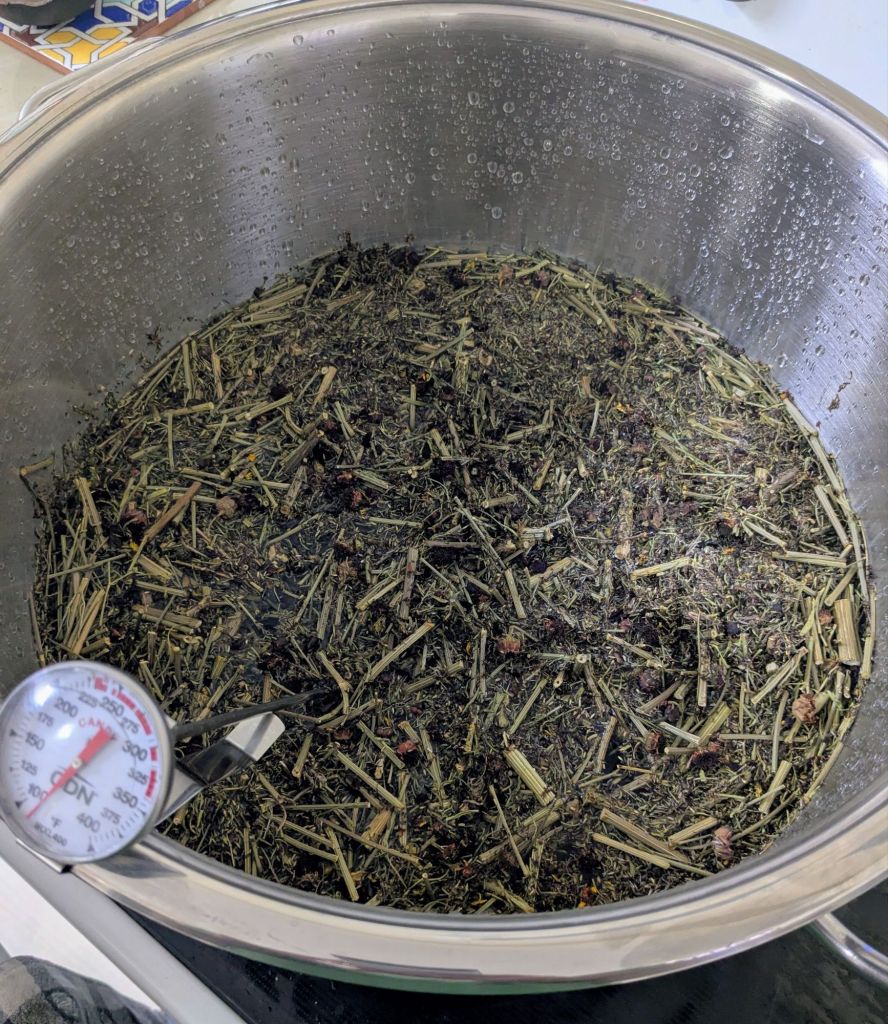
With that out of the way, next was to make the dye itself. This was very similar to making a pot of tea, because it’s pretty much the same thing. We had dumped out the remaining mordant mix, filled the pot up again, added all the marigold bits, and then of course we just had to keep it at 180F again for an hour or so. I notice now, perusing Hilltop’s website, that they sell dye bags, which would have been handy. We were making this pot loose-leaf style, which was well and good but made it rather difficult to filter out all the marigold bits once we were done with them. For us this involved an additional bucket or two. We got there in the end but an oversized tea (dye) bag would have made our lives much easier.

Then the real exciting part! Now that we had dye, we just had to add back in the yarn and yes of course then keep it at 180F for an hour (photo at the top). If our dye to yarn ratio had been closer, the yarn would have sucked out all the dye out of the liquid which would have been cool to see, but we had made a very strong tea. So the water was still very brown when we extracted our new golden yarn, but that’s fine, we had a beautiful yarn. The next step did not involved any temperature control, but just letting the yarn cure for two weeks (aka let it hang up and stay dry) and then give it a regular wash. And we had natural-dyed yarn, extremely cool! My super amazing wife isn’t quite sure yet what she’ll make with it but it is exciting to know that we had an intimate hand in making the yarn ready for use:

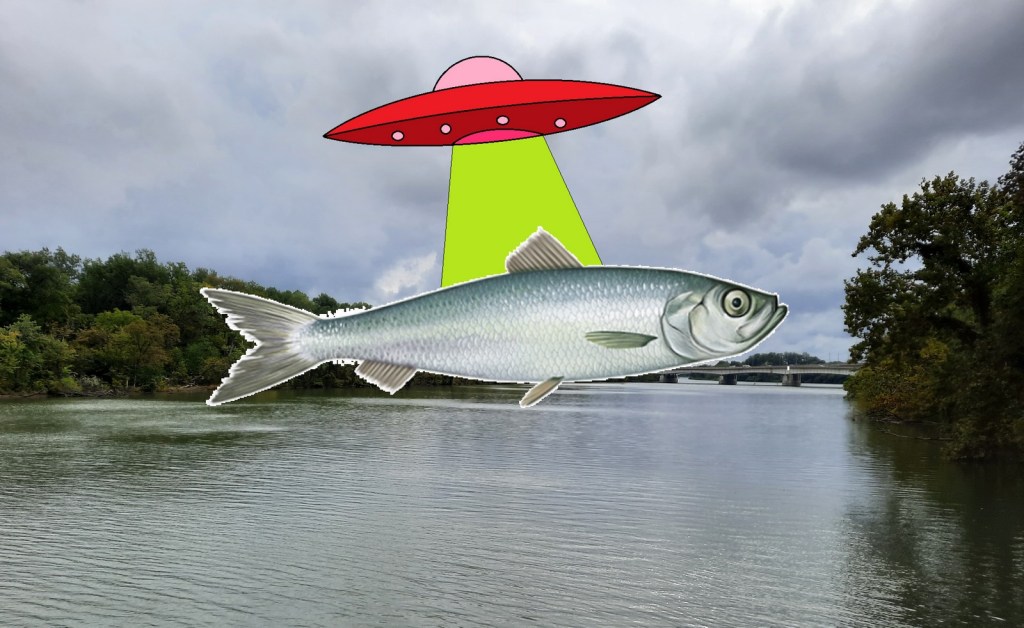
Fish Adventures with Mr. Fishy Dude

As a fun diversion, the below is a school assignment my mom sent me recently and which I apparently wrote when I was 11. What the exact assignment was is likely lost to time. The story itself reflects at best a medium understanding of fish biology, but I think that is compensated by an excellent showing of story structure and that certain je ne sais quoi of PatInTheWorld writing. Please enjoy:

Hi! I’m Mr. Fishy Dude! I would love to tell you a strange story of adventure and sadness. It’s a story of hard work and mayhem. Yeah, but who cares?

My story starts one nice spring day, when I and one hundred thousand other fish suddenly got this strange feeling that we should go on a mission to lay eggs and die for our offspring.

Welcome to the ocean with me and a school of one hundred thousand fish. Due to just plain instinct, we are going from this ocean into the estuaries and rivers. From there, we will go further into the streams and creeks to our spawning grounds. Exciting, huh?

When we first started migrating, nothing much was happening. We were following the distant smell of our spawning grounds, and having smaller fish for lunch – the usual. Then, out of nowhere, a school of striped bass came along! I guess I forgot to mention that I’m a herring. So striped bass are bigger than us and to them, we’re lunch! So, we dodged, we swam, but in the end, one forth [sic] of us got digested. Now, we were only 75,000 fish. We were all sad at the loss of our companions. That will always be in my mind, along with a deep fear of striped bass.

We swam on. Very soon, though, we ran into a fisherman’s net. All of us escaped through holes just big enough for us. We also saved most of the fish from another school, but they’d already lost a lot of their fish. That school swam on with us for awhile [sic], but unfortunately, we must have gotten greedy, because some more of us died because of lack of food. I’m so sorry that we were greedy.

After that, we had finally found, by following the scent of the distant spawning ground, what we had traveled the ocean for; the estuaries and rivers.

When we got to the estuaries and rivers, that other school split up from us. They asked if we would meet again, and I said it was always a possibility. After swimming around for a while, I got the feeling that something bad was going to happen. And it did. It was a horrible scene! Our fish were just being ripped apart, stomach and eyes flying. I guess I’ll always have nightmares about it. The striped bass were back! One fourth of us perished. Our school only had fifty six thousand, two hundred fifty fish left in it. After that terrible scene, we saw another poor school get caught in a gill net and choked in mud. Only a few of them survived. That will be in my nightmares too!

Next, we found strange man made objects. It had little pools that went up and up to another part of the river. I figured out that we were supposed to jump from one pool to the next until we got to the top. We did, and it worked. When we got to the top, it was the beginning of the streams and creeks, the last step to the spawning grounds!

We thought we were home free, but we were not. There was more trouble ahead. The spawning ground was within our grasp. We met the two schools we met before and they joined us. After awhile [sic], we found anther strange man-made object. It wasn’t a fish ladder, it was a flood control. It started sucking our fish in and destroying them! A lot of places to spawn were destroyed. One half of us died. Now, we only had 28,125 fish in our school. We were in bad shape.

The other schools that joined us shared our luck. Some of their eggs got covered in mud, and others got nibbled by small fish. The other school separated from us. And then, our hearts jumped! It was the spawning grounds.

We were all glad to get to the spawning grounds. We made it! I decided to leave this part out because its got a lot of love and mushy stuff you wouldn’t like. After mating, we laid eggs and died. However, my conscious self is passed on to my child most like me. I got this power from an alien species who were not so smart by human standards. They felt that we were smarter than humans, which, was, of course, right. They gave one fish, me, that power. It also made me immortal as long as I manage to spawn. Our school had 843,750 fry (baby fish). After taking some time to grow, our offspring returned to the sea.

The streams and creeks were not familiar to me. The flood control had changed them. Still, out of instinct, we knew where to go. When we were swimming, I saw something that was a strange color. Then I realized, that’s toxic sludge, also known as toxic chemicals. I told my school to go around it, but they wouldn’t listen. Half of my school swam through it. They died. Now we only had 421,875 fish left. So, the lesson of this little story is always listen to the immortal fish in the school.

We decided to put that behind us, although we were sorry for those poor fish who did not listen to their elders. We swam on. Then, we found the fish ladder – the gateway to the estuaries and rivers! In the estuaries and rivers all we really did was swim, swim, and for a change of plans, did some more swimming. We saw some striped bass, but easily got around them. Finally, we found the ocean.

In the ocean, we all swam off with the current to find lunch and grow up so that we could make the amazing journey that our fathers and mothers had made. This, my friends, is, at long last, the end of my story.

Grandma

My grandma died in August. She was 98 ½. 98 ½! A phenomenal run. She outlived Castro, but not Jimmy Carter.

She was my last grandparent. My mom’s parents died when I was a kid, and my dad’s dad died over a decade ago. That left grandma, but she had a lot left in her. At one point I hadn’t been home for Christmas for a few years due to Navy obligations. I wouldn’t have gone home that year either, but grandma was getting up there in age and I put my foot down with the captain so I could make sure I made it home at least one more time. I guess this would have been when grandma was 89, on the very cusp of 90. I arrived to find her running around the kitchen, doing the important parts of making Christmas eve dinner. That dinner was always spaghetti with anchovies, and for me that’s grandma’s dish. I made it, here, a few days after she died.

Grandma didn’t really start to fade until about three years back. My wife and I were staying with her for about a month. During that time a tumor was growing on her leg. Benign, but large and prone to bleeding. The family pushed her to get it removed and that was what did it. They put her under to take it out and she didn’t leave the hospital for another two weeks and never totally recovered.

My parents had already rearranged their lives to be able to take care of her. My great uncle, who was my grandpa’s brother and who had married my grandma’s sister, moved himself into a nursing home toward the end, selling the house where we had most often celebrated Christmas. I think he figured it would be easier for everyone. But grandma never wanted to leave her house. She had bought it with my grandpa at least 30 years back, in Florida a block away from the beach. Until the condos across the street stopped trimming their trees you could watch the sunset over the ocean from her balcony. It was decorated with the grandpa’s art and the souvenirs they had picked up on their many world travels.

She lived on the second floor, and the stairs eventually became the obstacle that kept her in her house. Her son-in-law (my uncle) had rebuilt those stairs for her when the old ones were getting rickety. Several years ago we had rigged up a pully system to let her bring groceries up more easily, but eventually grandma was no longer doing her own shopping. She still wouldn’t let anyone get rid of her car, in case she needed it again. A year ago dad installed a chairlift to save them carrying grandma up and down when it was time for doctors’ appointments.

She wasn’t always so old of course. Her and grandpa had quite the life, living abroad for many years and visiting as many countries as they could. In the States they had a big blue van they would travel around in with a mattress in the back, before that sort of thing was cool. We’d visit almost every summer and Christmas. One summer in middle school I visited on my own, staying with them for a month and a half. Grandma could be very much the typical grandma. On that visit I think I had coleslaw for the first time and I discovered I liked it. So she then had some for me with every meal until I didn’t like it anymore. I also discovered in Florida that I liked Tang and so she made sure I had such a steady supply I am pretty sure it gave me stomach problems. Then she could be not so typical. One time (years later of course) I had described a bad experience with tequila and she scolded me for drinking it wrong, explaining the appropriate lime & salt procedure. I couldn’t believe a grandma was allowed to know such things.

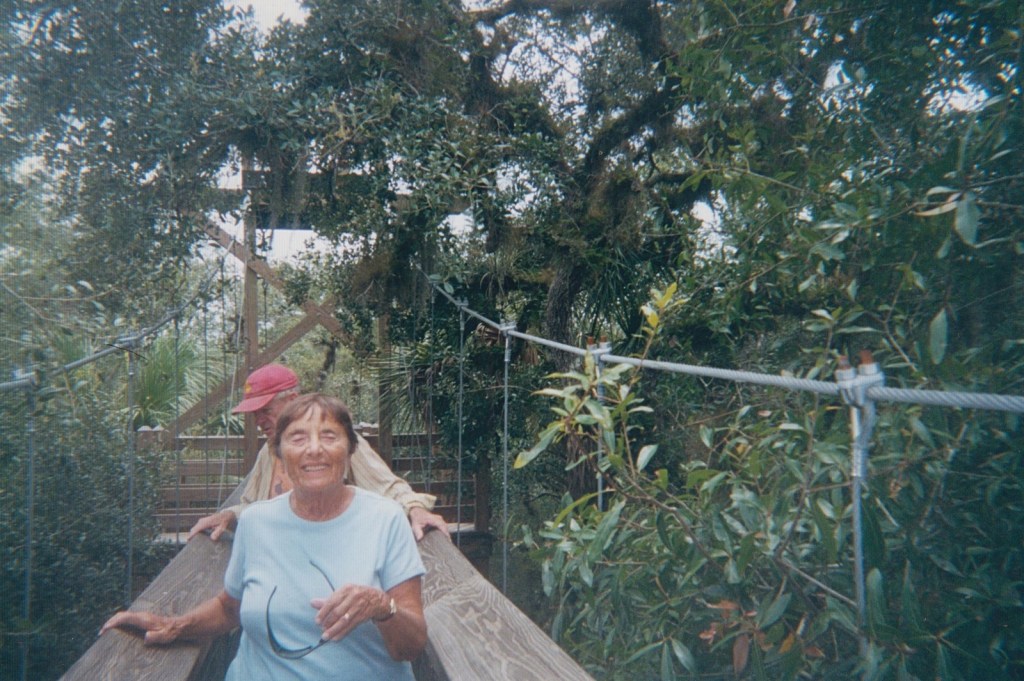
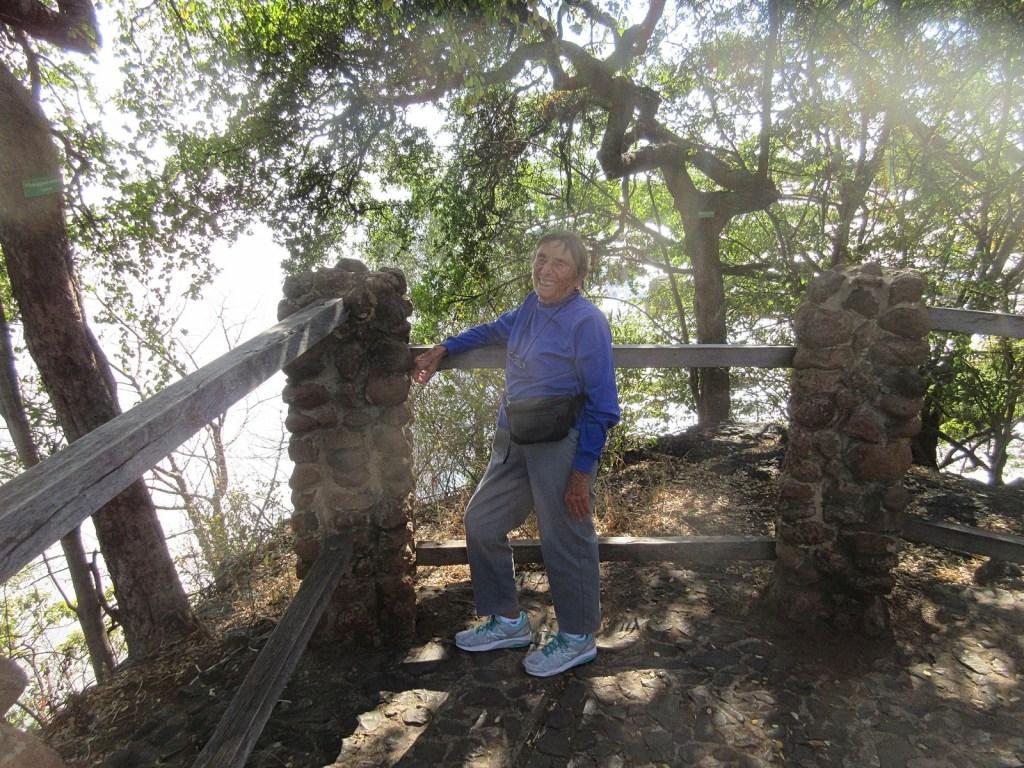
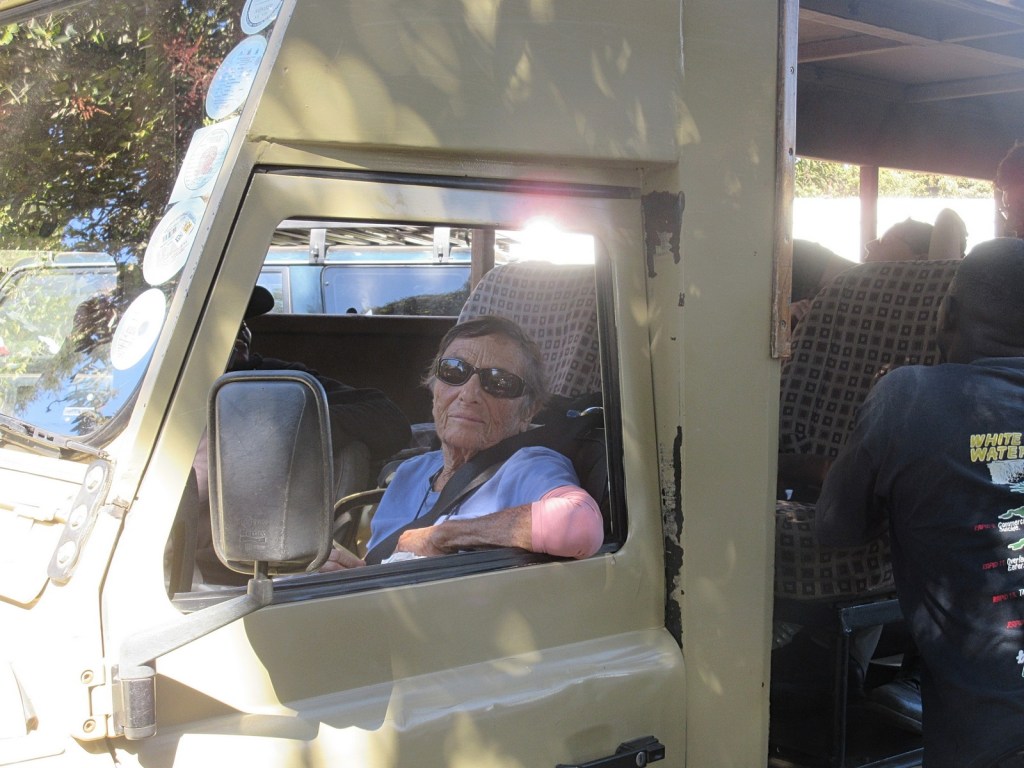
Tequila would be old hat though for someone so adventuresome. I think the last international trip she took was all the way to Petra. That must have been right before COVID hit. I remember showing the photos to my friends, who were worried about their own trips. You can’t exactly scooter to Petra either, not that she would ever have. She also came to Zambia when I was there in the Peace Corps. A 92-year-old woman, going on a hiking safari where she could have been attacked by a lion or trampled by a zebra! I liked taking pictures of her sitting in land cruisers; when she didn’t feel like making a particular trek she would just perch herself in the front passenger seat. Though she did manage to hike herself down a long flight of stairs to the viewpoint for Kalambo falls. Indomitable, that one.

Her very final trip though was for me, to see the marriage celebration of my super amazing wife and I. It wasn’t exactly a wedding, but a weekend up in Massachusetts with both our families. This was after the surgery on her leg; at one point she asked my mom what she was doing there, noting “whoever this is for they better really appreciate it.” And I really did. She got to meet my wife’s family, and my father-in-law asked about her every time we spoke, impressed as everyone was by how sprightly she was even then. A much longer time ago, back when I was at the Academy, I took grandpa by car up in Connecticut (grandma was visiting Japan with my sister at the time, so he didn’t have much to do). As we were driving along grandpa told me that we were at the very spot where he had proposed to grandma. Back when they were both so young. And now she finally got to see me married.

My grandma was an amazing person. In writing this I am embarrassed all my memories of her were her as old, though that’s not my fault. What is my fault is that this is the same format of blog post I used for our cat. It’s such an inadequate way to encapsulate a whole life. Grandma saw countries rise and fall, taught generations of students, raised kids, travelled the world and made her home all over. She was mom and wife and friend and auntie and her own unparalleled person. And she was my grandma. I love you, grandma.

Chocolate Chip Cookies

From Wikimedia Commons – turns out I don’t have any of my own photos of chocolate chip cookies I could find, presumably because they get eaten up so fast.

This may cause strife, even within my own marriage, but I have to speak my truth: there is no better chocolate chip cookie than the Nestle Tollhouse Chocolate Chip Cookie. Nay, there is no better cookie than the Nestle Tollhouse Chocolate Chip Cookie.

Right up front, you must know that this comes from the heart. I’m not in the pocket of big cookie and have no relationship with the Nestle company. I just have a life-long relationship with chocolate chip cookies. They might be the very first thing I learned to make in the kitchen. They were always my favorite, and I always liked to “help” mom make them, which involved eating a lot of cookie dough at various stages of cookie dough-ness. Eventually I realized I could just do it myself, the instructions were right there on the package. I could have cookies whenever I wanted. One time I recall making cookie dough just because I wanted to eat the dough and my sister snitching on me, like I was doing something wrong. But love can’t be wrong, she should have known this. I eventually got a chemistry degree and a daresay step one of that was discovering that I was good at following instructions for mixing things and then heating them up.

I realize that people have incentives to say that cookie recipes other than the Nestle Tollhouse one are better. And I am not knocking other types of cookies! I, too, will enjoy an M&M cookie, or a double chocolate chunk cookie, or a white chip macadamia nut cookie. There is room in this world for all types, except maybe oatmeal raisin, look I know I am not breaking new ground here on the cookie opinion front. But what really gets my goat are the fancy-pants recipe writers, who think their take on the chocolate chip cookie could ever be better than the original, the sublime, the Nestle Tollhouse Chocolate Chip Cookie.

I’m talking about the people who think you need flaky sea salt as a topping. Who create absurd shortbread versions, who think it means something to add browned butter to the recipe. Those recipe writers who think their version could possibly be more “gourmet,” or somehow better, than the simplest and most straightforward of them all. These people are blasphemers, who would who create Ecce Mono of Ecce Homo, who would look around on a perfect summer day with cloud-dappled skies and a gentle breeze and wonder if things couldn’t be made oh so slightly better by adding I dunno a wine bar. The Nestle Tollhouse Chocolate Chip Cookie is already the most masterful mix of flavors, the perfect proportion of chip to dough, the correct amount of crinkle, and the leading luxury in an overwrought age. They can do no better.

I mean, there are actually tips and tricks to improve your cookie a little bit. But even as I say that they mostly boil down to following the instructions. When they say cream your sugar and butter, they mean it. Mix it until the sugar is fully dissolved. Add the eggs only one at a time, preferably at room temperature, to let the sugar and butter meld even more. The flour should be put in only a bit at a go, to make the mixture smooth. The one tip not in the instructions is to maybe refrigerate the dough overnight. If it has benefits, it is to let the dough homogenize a bit more and I think maybe it does something to the edge of the cookies when you bake them and the dough is a bit cold. But that’s not totally necessary, just an added bonus when after you make your first batch you stick the rest of the dough in the fridge to make the next batch the next day.

But look, I know I’ve gone too far here. I mean, I’m still right, Nestle Tollhouse is the best, you don’t need any other cookie recipe. But the joy of baking is in the process and the sharing, and it doesn’t matter so much what cookie recipe you use if it achieves that end. This brings me to my final tip, which is the most important of all. The secret ingredient that will make every cookie delicious. The first step in any cookie recipe should be to ensure you are making them with love.

Recent Art Purchases

Reading this week:

  • Prelude to Imperialism by H. Alan C. Cairns

Long-time and even not-so-long time readers of this blog will remember when I fretted endlessly about whether or not to buy a pretty pot at the Renaissance Festival. I have been to a number of art museums at this point and I like to think I appreciate art, and I have even followed in the footsteps of the Rubells who apparently would buy art on $5-$10 layaway plans because they were poor but still wanted to support artists. They have in unrelated news become fabulously wealthy, but still my point then was that I wasn’t sure enough in myself and my own aesthetic sense to commit to purchase an item solely because it was a joy to look at. I have apparently gotten over that and have gone on an art buying spree.

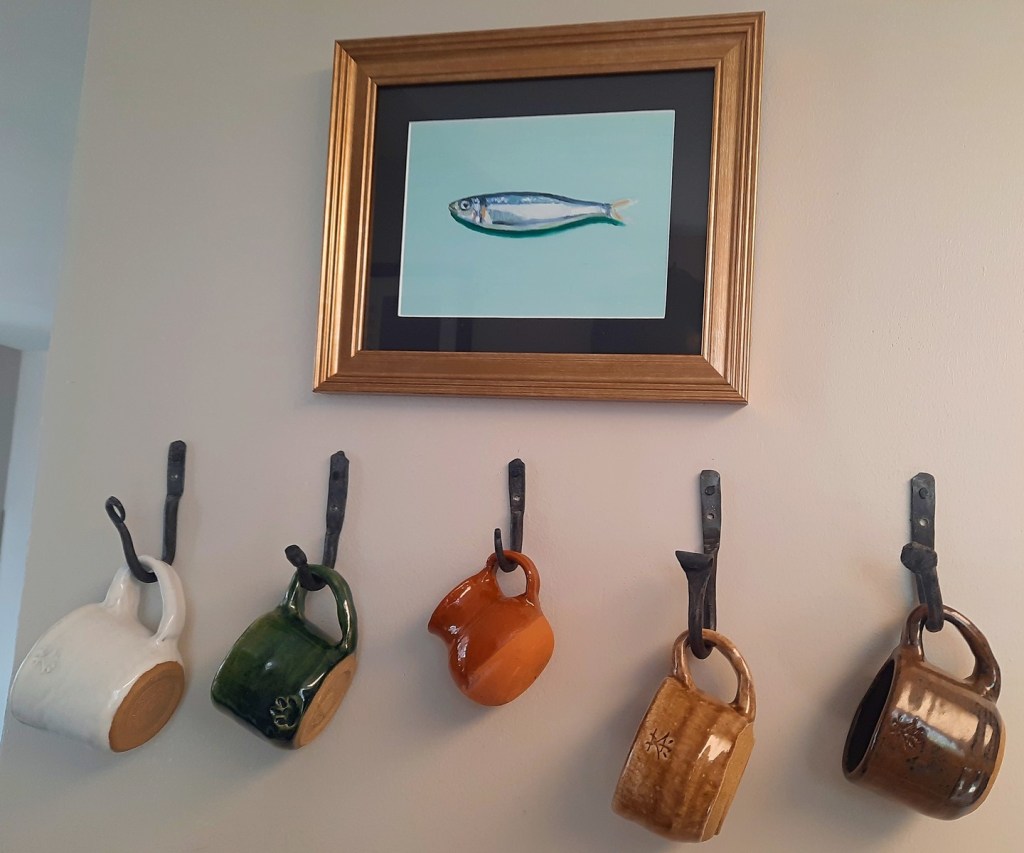
I have a zoomed-out photo here so I could also show off hooks blacksmith’d by my dad holding mostly mugs made by my super amazing wife but also a tiny little jar (the middle one) I picked up in Mexico.

After the pot the next art art piece I bought was the above oil painting of a fish. It is by Sarah Sutphin, who is based in Chicago. I found her via the Canned Sardines subreddit, which I found in turn via BoingBoing. Buying this piece satisfied a few itches. One, I had been on the hunt for a reasonably-priced oil painting for a while. When we visited the Ships of the Sea Maritime Museum, it had occurred to me that there must be tons of 19th-century oil paintings of ships just laying about anywhere, and it would be fun to own one. I have since come to the conclusion they might not be as dime-a-dozen as I thought, on both halves of that hyphenated phrase. But Sarah works in oil, so it ticked that box, and also I thought the sardine was kinda cool. I like to rib my super amazing wife for not enjoying canned food so much, and a sardine is up that alley. Plus it is very pretty and was very reasonably priced, at I think $50. Sarah has raised her rates a bit because being a working artist is a grind, but still her prices remain eminently reasonable. She can paint a fish way better than I ever could.

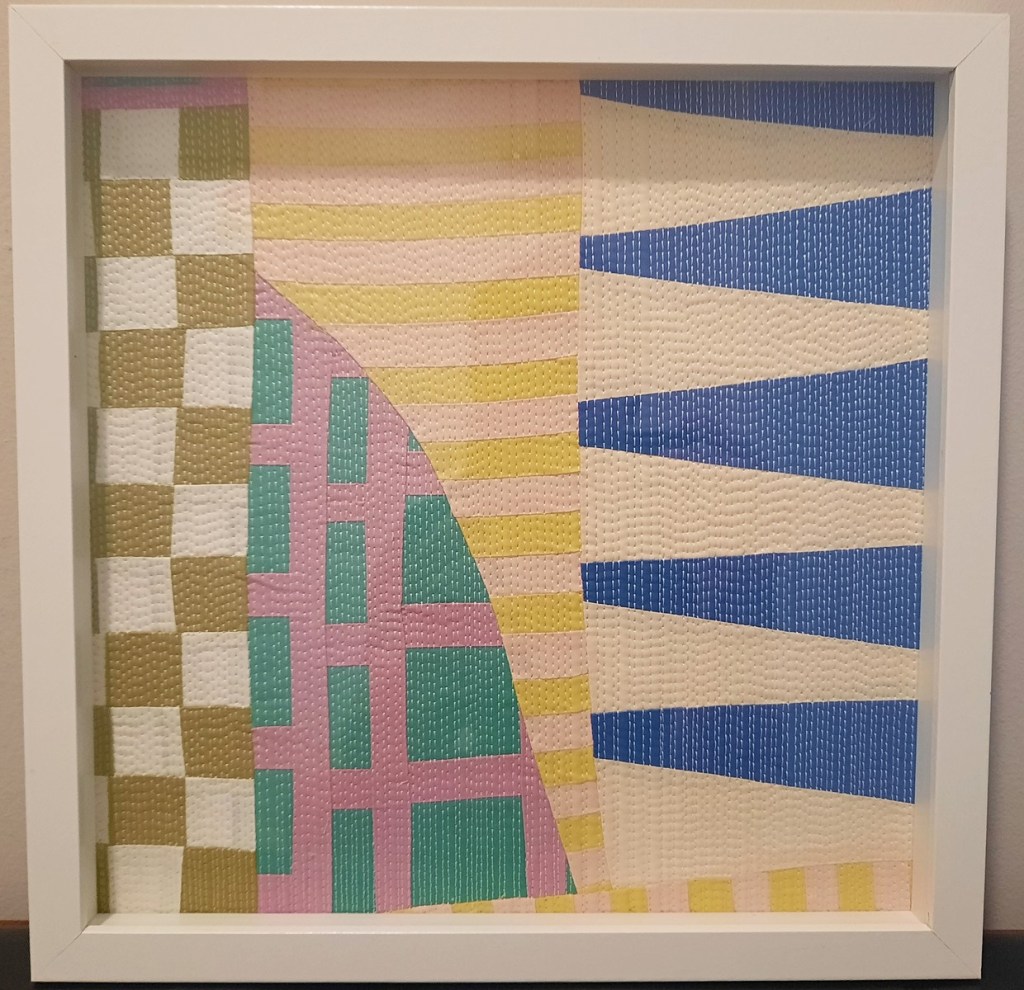
However, with the purchase of the fish I became The Type of Person Who Buys Art which really just opens up the possibilities. The sardine was a reasonable expense I could buy on a lark, but my next piece of Art was the above textile piece by Annabel Wrigley. I had spotted some of her pieces Shop Made in Virginia. I had admired some of her larger pieces because I liked how she combined the different fabric shapes, and then the sort of stitched quilting over the whole thing really tied it together. Her larger pieces really lean into the organic and rounded shapes which I liked a lot. I had then noticed and considered buying one of her smaller pieces, much more in my price range at about $150. But then they sold out and I had to wait but then there was a restock. I popped in every time I passed the shop to look at them and then finally bit the bullet, taking one home. It now sits in the middle of our largest art wall, along with pieces from my travels and my super amazing wife’s travels. The wall gets us compliments from the cat sitter.

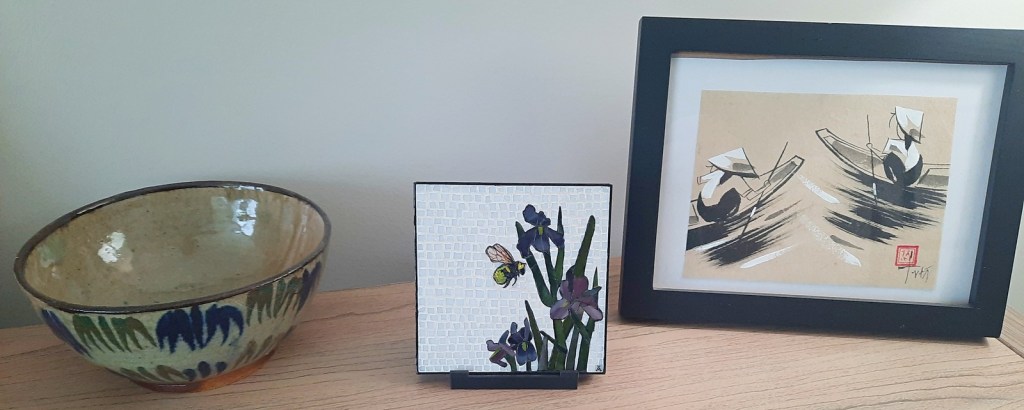
The really dangerous part however of buying the textile piece is that it established a firm upward trend in the purchase price of the art I buy, which can only be sustainable for so long. The next stop in this trend I spotted at Shop Made in Alexandria, a suspiciously even more localized shop. The above piece was made by Maria Vud of Old Town Mosaic Art. I think the biggest reason I like it is that it reminded me of the intricate and detailed Byzantine mosaics that I first saw at Dumbarton Oaks. Maria produces absolutely gorgeous work in tiny little packages. I’m not quite sure how she does it but the way the tiles and the glass pieces and occasional painted work all come together it is dazzling in the light. Plus I liked this particular piece because of a fondness for bees. My super amazing wife and I had wanted to get another piece to compliment the sardine, but it was sold before we committed. We eagerly await her further work.

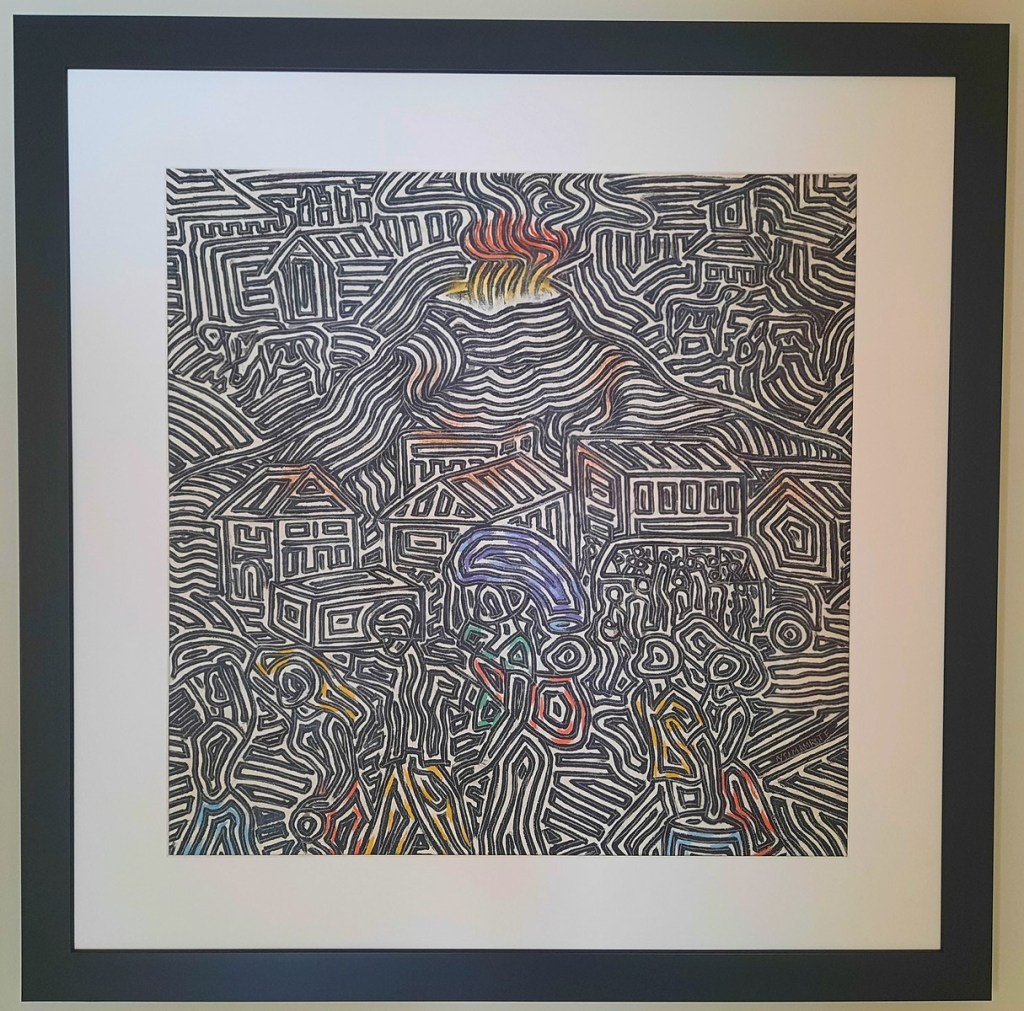
Which brings me to my latest and so far priciest art purchase. Via ClockoutDC I learned about Gallery Article 15 which is an extremely cool shop. It is run by a former Foreign Service Officer who now runs the art gallery as the only such place in the US solely dedicated to Congolese art. This is a really important way to get these artists known to a wider audience, which benefits both the artists (and their livelihood) and the robustness and richness of the American art market. The above piece is titled Les Sinistres D’eruption De Volcon De Nyriangongo and is by Narcisse Nsimambote. I’ve climbed to the top of Mt. Nyiragongo, so I felt a connection to the piece, and I really liked Narcisse’s style. The longer you look at it the more shapes and figures you can pick out of the lines, rewarding a prolonged look. And the highlights of color draws you to certain parts while connecting the whole. The price of the art itself was $350 (I was afraid it was going to be $1000), which feels like a really accessible way to enter into the fine art world and supporting some excellent cross-cultural art pollination, just like my little bee above.

Anyways I hope everyone enjoyed my taste in art. I am excited to share what we wind up getting next, even if my wallet isn’t.

Rocks

Reading this week:

  • To the Central African Lakes and Back, Vol I by Joseph Thomson

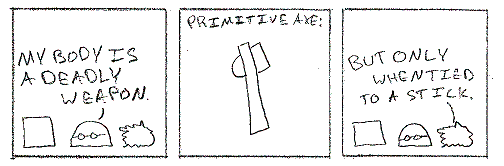
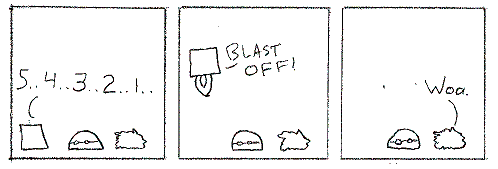
I need an easy post this week, so I shall revisit the creative output of my past. Back in high school I drew a webcomic called Rocks. It was about rocks. The precise reasons for this escape me but a friend of mine had sent me a list of things webcomic artists shouldn’t do so I did them. I wound up drawing well over a hundred of these comics, so only a fraction of the total output is represented below. This was the point in my life where I looked forward to Friday night because I would watch Stargate SG-1 and drink a lot of caffeine and stay up all night coding HTML and PHP for my website which back then, much like today, nobody read. I had a lot of fun. Here’s the cast of characters for my little comic:

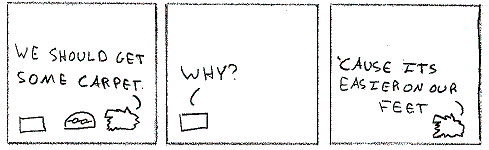
Our #1 rock, the star of the show, is Rocky. He came unto the scene as a former pet rock, abandoned by his master on the side of the trail. He’s a little irregularly shaped, but that just adds to his infinite charm.

To Rocky’s far left is his fine friend Shale. Shale’s pretty regularly shaped, but as he explains, that’s because his dad was a quartz. We don’t know exactly where Shale has been, or how he came to be here, but he does have a penchant for scaring hikers.

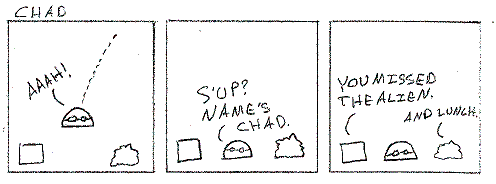
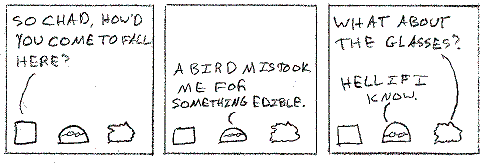
Finally, smack dab in the center, is Chad. Chad is semi-circular, and wears glasses. Where he got the glasses, no one knows, but he wound up in the bunch after a bird mistook him for something edible. Plus, with a name like Chad, you can’t go wrong.

Rocks started out with a episodic storyline:

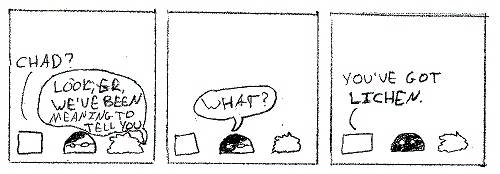
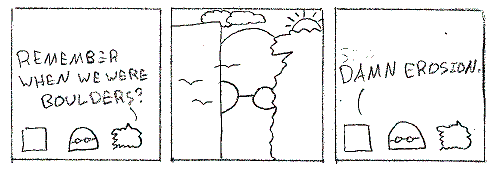
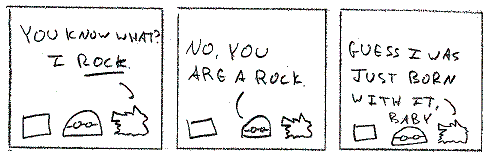
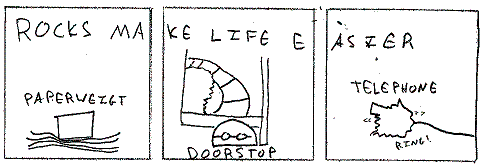
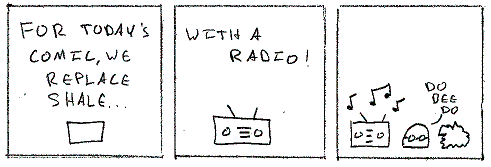
After that the episodic nature of the comic petered out. I tried to do a lot of different things with my three panels and three characters, but looking back it really shined when it leaned into the fact it was about rocks:

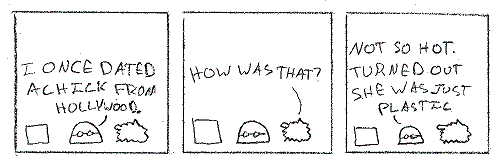
(I’m less proud of this “plastic” joke these days)

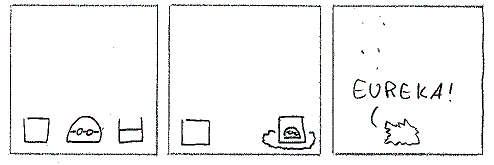
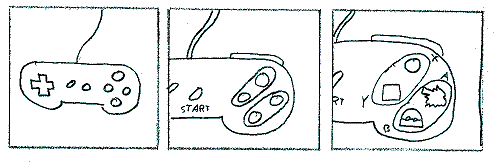
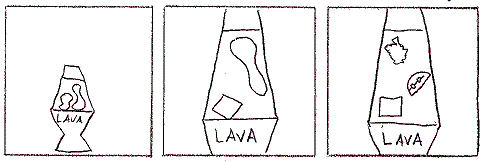
At various points however it just went fully surreal:

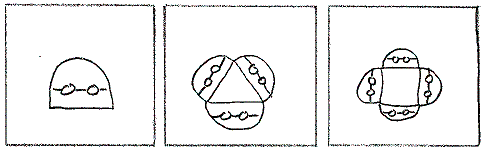
And then finally one day I drew my very last Rocks and never again picked up my webcomic pen:

Sometimes I consider revisiting Rocks but I never have. I just repost them on the internet every once in a while to relive my long-haired glory days of webcomic almost-fame. I think I mined the very depths of rock-based webcomic humor the first time around, but Hollywood loves a reboot so maybe there’s a chance to tread new ground. Only time will tell.

A Comment on Africa Logos

A DALL·E render for “Pixel art of a graphic designer creating an Africa logo.” DALL·E knows what’s up with Africa logos.

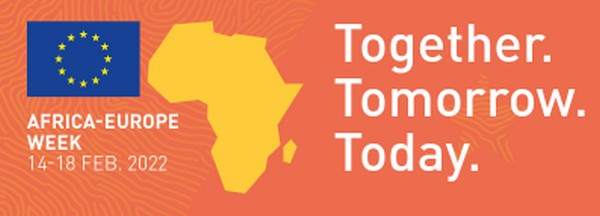
This post is just a comment on the wide wide world of logo design for Africa-focused organizations. Although I am nonetheless going to publish this call-out post, I do have to offer a pre-emptive apology to the world of logo designers for Africa-based organizations. You see, I used to think that there was only one Africa logo in the world, and that logo was “put the name of your organization in the Gulf of Guinea.” And like look, I get it. It’s just so enticing. It is yearning for your organization to fill the gap left by South America all those 140 million years ago. And, you know, maybe you’ll spice it up a little, you can draw a stylized version of Africa that really conveys the nature of your organization. That’ll be fun. Maybe if you’re Google and therefore have access to all the resources in the world to really come up with an original logo, you’ll think to yourself, “What is really the most significant thing about Africa?” and drop an elephant in there:

But back to the apology bit. You see I look at the logos of a lot of different Africa-focused organizations. So I notice these things. And I eventually realized there wasn’t just the one Africa logo, there was at least two. Besides sticking your logo in the Gulf of Guinea, you could also stick your organization name in the Indian Ocean:

So sorry for my assumption, to all the logo designers for Africa-focused organizations. But come on guys. Start looking at these logos and it is quickly obvious that the only type of logo anyone likes to do for an Africa-focused organization is draw a stylized version of Africa and stick the organization’s name somewhere around it. There has to be a more creative approach than that out there somewhere and I encourage anyone taking a stab at it to try to think outside the box. And no, putting the name of your organization across your stylized picture of Africa doesn’t count:

That’s all I got on this one. Maybe I will continue to update this page with more logos. One final thing to think about: when designing your logo, how many of the African islands do you include? Poor Madagascar getting left out all the time. And if Madagascar can’t always make it in, what chance does Mauritius have?

300th Blog Post!

This is my 300th post on this blog! I will therefore do the very self-indulgent thing and do some personal reflection. Of course this whole blog is self-indulgent, as I think most blogs are, so we’re right on theme.

I am extremely pleased with having gotten to 300 blog posts. That wasn’t a particular goal or anything, but I like to think it shows some commitment. There have been ups and downs. I think for a while when I first started I was shooting for two blog posts a week, but that was unsustainable. I just wasn’t doing enough stuff. Once a week, however, I think is the perfect amount. It is regular enough to keep you honest but not too much that it is a burden. I chose to publish on Sundays because I read a lot of other blogs and not many publish on Sunday so I figured I would have a bit of a niche. Plus it gives me most of the weekend to scramble to publish something (I like to publish at noon). But even after settling on once a week there were some long stretches there where I didn’t write anything but now I am pretty dedicated to it and that feels like a good thing.

In my memory, the main reason I started a blog was as a creative outlet. At some point during my time at the Naval Academy I discovered that I needed some sort of creative outlet to keep myself from going crazy. Just doing schoolwork all the time didn’t work for me. Back then my creative outlet was writing for The LOG. But reviewing my aptly-named First Blog Post, I told the world my primary reason for writing this blog was to push myself to go out and do things and look at places. I think I have been pretty successful on both fronts. This blog gives me a way to put something out into the world, even if no one reads it except for my super amazing girlfriend, and it has definitely pushed me to go out and do activities I wouldn’t necessarily otherwise have done because getting blog material was the reason I needed to push myself out of inactivity. So that’s great!

In each of these posts I shoot to write about 750 words. This number comes mostly from the site 750Words, which I used to use. They explain that 750 words is about three pages of hand-written paper, which is what you are supposed to write everyday to become a better writer, or at least get in the habit of writing. I think I also read somewhere that 750 words is about the ideal blog post length because people will read it, or something. It hasn’t catapulted me to the top of the SEO ranks, I can tell you that (except for some very particular and very obscure topics), but still that’s what I go for, though some posts fall far short and some posts far exceed that goal. I explain all that to say, if I am somewhere near my goal of 750 words on average, and I have 300 posts, then that is over 200,000 words, which is a book! A book! I effectively wrote a book! A very disjointed book that will require a lot of editing but a book nonetheless! That’s pretty cool and I am proud of that.

In order to celebrate my 300th post, I’ve mostly done some backend stuff I have been meaning to do for a while. A big thing I did is go through and make sure every post had a picture (except for the very first one, just to be idiosyncratic). Some of these posts maybe didn’t need pictures but I added one for consistency’s sake. I have also fixed some errors I had been meaning to for a while, but since some posts needed it more than others and 300 posts (well 299 besides this one) is a lot to go through not every post got gone over with a fine-toothed comb. Nonetheless, there were some glaring errors that I have now corrected. There were other, minor things that were only for me like removing some pictures I had double-uploaded. Turns out editing a blog on your phone in a mud hut in Zambia is not the most technologically smoothest thing to do and will create some errors. But those are now fixed!

However I think for the average reader of this blog the most significant update is that every post is now in one or more categories. This is handy because it makes it possible to group say, all my London Missionary Society (or Chronicle thereof) posts in one place, or link together all my posts from travel to a particular spot like the DRC or Guatemala. I had meant to do this for a while but as the number of blog posts pile up it just gets to be a more and more monumental task but now I have tackled it and only hope that I remember to keep categorizing posts going forward. Here’s to hoping.

How I have I changed over the course of this blog? My life has changed a lot, that’s for sure. In my first blog post I was still in the Navy, and then I had a whole Peace Corps and then Grad School experience, and now I am back out into the “real” world doing a job. I have also met the most fantastic person in the world, my super amazing girlfriend. But most of that would have happened without the blog I think. As for blog-induced change, I have definitely developed more of a “voice,” as I said I hoped to do in my first blog post. Sometimes this has been a hindrance. In a blog post I will simply link to something as way of explanation but when I was in grad school this technique did not work in term papers and I had to adjust. And sometimes I worry when I am out and about in places I am spending time mentally writing a potential post instead of taking in all the beauty. But at the same time thinking about a blog post makes me think about the narrative of a place I am visiting and to be able to reflect and articulate what is significant about that story. So maybe pros and cons there.

I guess it’s not a great conclusion but moving forward I don’t think this blog will change much. By far my most well-read blog posts are the one about Joe Biden’s ties (I found it linked by a Russian blog for reasons that are inscrutable to me, and sometimes I wonder if people are searching for metaphorical ties and find my post about real ones) and the one where I mentioned a strip club on Saipan (as I linked to before in this very post). One move would be to chase these successes but I don’t think that is the direction I want to travel. I will instead continue to focus on obscure interests (that so far evidence shows interest only me) and the many many many more adventures I plan to have with my super amazing girlfriend. To any and all of you who read this blog thanks for coming along with me. Hopefully someday I will in fact write that real book and then when I become a rich and successful author people will all flock to this blog but you will be able to say to yourself that you were there the whole time, reading as he invented cool new KitchenAid attachments or looked at some dirt.

Thanks for reading!

-Pat

KitchenAid Attachments

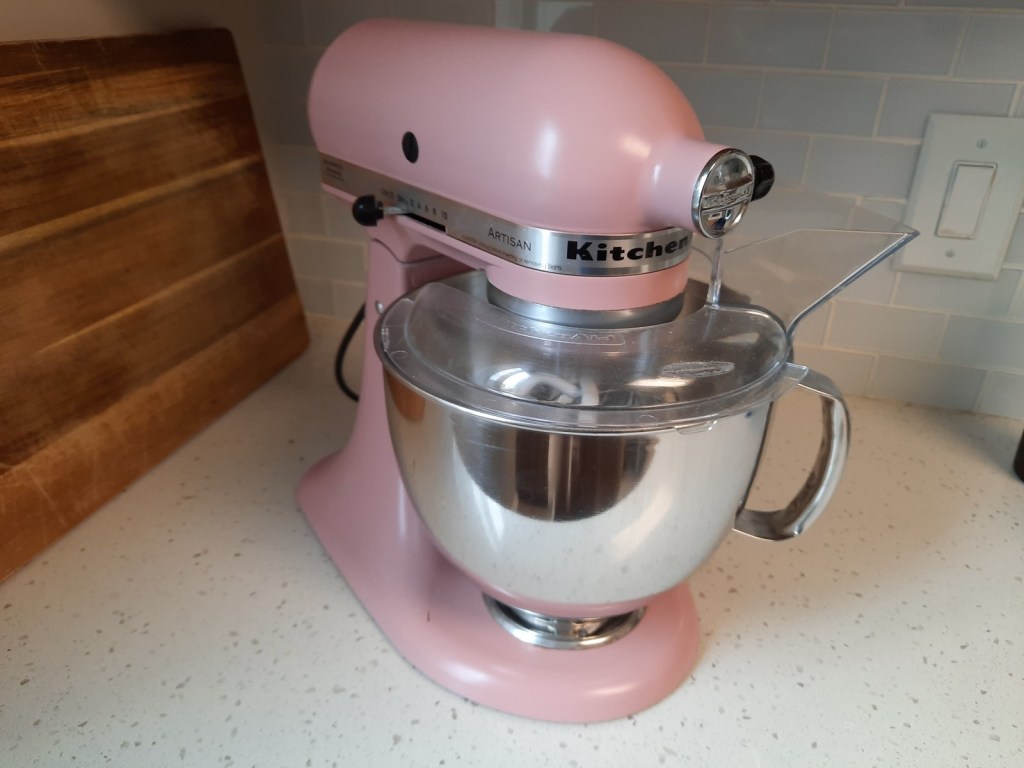
Look, this post is for me. I mean they are all for me but in this post I am trying to manifest some stuff into the world. The picture up top is of my super amazing girlfriend’s KitchenAid mixer. It is one of her favorite things ever, right up there with me, Tink, and, uh, I’m struggling to come up with a third because I think everything else is so far down.

The most interesting feature I think of the KitchenAid mixers is the power takeoff. It’s got a technical name that I am unable to Google right now, but you can attach accessories to the KitchenAid and the motor in the mixer will spin ’em. I have been thinking a lot about KitchenAid accessories lately because we have recently gone through a process to get the pasta roller and cutter attachments as cheap as we could, and frankly we did pretty good. They haven’t arrived yet but already we are extremely excited to make pasta. After some I was going to say quick back-of-the-envelope calculations but in fact they were took-a-while-and-involved-a-spreadsheet calculations, I can say they’ll have paid for themselves after we make pasta only 245 times (this is 1471 servings of pasta, though my super amazing girlfriend paid for them so I personally am in the money already. By the way, since my super amazing girlfriend is the only one that reads this blog, I am in fact very excited about the attachments as you can tell, the homemade pasta will be way better, and I was just curious. Math!).

Anyways though I gotta say I am pretty disappointed with the range of potential KitchenAid attachments out there. If you do some more quick Googling you will find like, top 10 lists of best KitchenAid attachments, but these are stupid lists because there are only like 10 attachments out there. Which boggles my mind, personally. The KitchenAid has been around for a century, which is longer than like, spaceflight and, uh, waterskiing. That is ample time to have invented some really super cool attachments! I mean the ones they got are nice, but they could do better.

I will provide some historical perspective, courtesy of this CNET article I will link to several times. There have been attachments that have come and subsequently gone. When I was brainstorming possible attachments, I kept thinking of workshop equipment, because it is funny to think of a drill press powered off the KitchenAid. But they were already close actually, with both a grinder and buffing wheel in the form of a knife sharpener and silver polisher. So that’s neat!

But the point of this blog post is that I have brainstormed some KitchenAid attachments people should bring into the world. Someday I may bring them into the world, and they would not be my first kitchen invention, because one time I put together a toaster with a functioning battleshort switch, making me the only person in the world with tactical toast. The only thing stopping me right now is the fact I lack a metalworking shop, which might change someday. In the meantime, I beg any and all adventurous inventors out there to bring my dreams into reality:

Butter Churn

The first accessory I thought of was a butter churn. I couldn’t believe these didn’t exist yet, though it was likely undermined by all the different cooking websites telling me you could just make butter in a KitchenAid, no attachment needed. But I still think there is probably an opportunity to make an old-timey looking butter churn powered by like a fly wheel coming off the KitchenAid and I think it would give anyone’s kitchen a wonderful rustic charm as well as providing endless fresh butter the instant my super amazing girlfriend lets us get a cow to keep on the patio.

Taffy Puller

The KitchenAid Taffy Puller is still in my list of plausible inventions I can’t believe don’t actually already exist. I mean sure, who is pulling taffy that often in their kitchen, but my counterpoint to that is the number of new never-used KitchenAid accessories on eBay makes me think that all these attachments are niche and rarely used, so what’s one more? Plus I hear taffy is hard to pull so the sheer horsepower in the KitchenAid is going to make this a winner.

KitchenAid Rotisserie

Honestly this is another one I can’t believe doesn’t exist already. Trying to think of reasonable kitchen gadgets, there both are and aren’t a bevy of ones that spin. Like, what’s the difference between a food processor and a blender, really? In fact there is a KitchenAid food processor, but it looks kind of gangly dangling off the end there in space. But as I was thinking of spinning things, I came up with this brilliant idea, because who (besides like, a large bevy of people actually) doesn’t like meat roasted by slowly rotating it over a heat source? With that in mind, I bring you the KitchenAid rotisserie. Here is the fully-enclosed version, but you could also imagine a version that just did the rotation while the chicken was kept over a handy indoor grill.

Shop Vac

Of course, why just think about food when using a KitchenAid mixer? Hence my next brilliant idea: the KitchenAid vacuum. This would be especially handy for kitchen cleanup, when you could finally get all those little crumbs that fall between the oven and the cabinet. Oooh ooh now that I am thinking about it this could double as a vacuum sealer for food. Jeez I am so brilliant.

Backhoe

Of course, what really got me thinking about all this was that the KitchenAid power takeoff was pretty similar to those ones you find on tractors or Land Rovers. Some follow-up research led me to be very disappointed in the limited range of accessories to attach to one’s Land Rover power takeoff (winches seem to be the only real idea, which would also be great for the KitchenAid frankly), but luckily I found a backhoe attachment for a tractor. Brilliant! When I showed this picture to my super amazing girlfriend she asked “what would you do with that?” But what wouldn’t you do is the question. I mean, probably anything that didn’t involve digging, but I think this would be endless fun for the whole family as they gathered around the KitchenAid backhoe and dug up the kitchen linoleum, or something. If I had a metal shop and probably a YouTube channel and more time and also knew anything at all about hydraulics, this is the one I would build for sure.

Other Free Ideas

I got tired of expertly photoshopping all of these (my super amazing girlfriend when I showed her these pictures, reacted with a slightly exasperated “this is what you’ve been working on for hours with a look of concentration???”), but I have a bevy of other ideas. These are all free for anyone to make and implement, but you have to email me a picture and if you become rich and famous please say nice things about me.

  • Salad spinner. Gone are the days of spinning salad by hand, like it’s 1800.
  • Water pump. For uh, spraying things I guess. For watering plants from across the living room.
  • Fan. Because if you can’t stand the heat, instead of getting out of the kitchen just install your KitchenAid fan.
  • Hand mixer attachment. This is supposed to be ironic but I think you could use a drain snake-like mechanism to connect the power to a hand mixer and that could be handy for things.
  • Speaking of which, drain snake. To unclog the kitchen sink. Incredibly handy!
  • Cake decorating stand. Instead of having to spin the cake around by hand, it’ll spin it for you, cutting effort dramatically. Could also work for pizzas to ease putting on toppings, or double as a potter’s wheel.
  • Winch. This is an homage to the LandRover, but could be useful for putting things in high cabinets.
  • Combine Harvester. Like the kind you pull behind a tractor, but smaller. Useful for houseplants in the kitchen.
  • Automatic pot stirrer. When I suggested this to my super amazing girlfriend she was like “the KitchenAid is already a stirrer” so this should be easy, but in this case it is like an extension that juts out over your stove and into your pots.
  • Toothbrush. Like an spinning electric toothbrush, or the kind at the dentist. Get your teeth really clean. You’ll have to brush your teeth over the kitchen sink, obviously.
  • Honey extractor
  • Milk separator. Clearly now I am thinking about my future self-sustaining ecofarm that is off the grid but still on the electrical grid, specifically.
  • Mangle (old timey clothes wringer). See above.
  • Paint mixer. Like the kind you see at hardware stores to mix up your paint where it shakes it around real good. Clearly could also double as a cocktail shaker, and I think it would also be fantastic for un-separating non-homogenized peanut butter.
  • SodaStream. Presumably those just have a pump which pumps air? If so the pump can be run off the KitchenAid. Could also be good for inflating balloons or air mattresses/pool toys.
  • Hot Wheels set. Great for brand synergy and keeping the kids entertained while you are cooking.
  • Carding machine and spinning wheel. Ashamed I didn’t think of this before. Of course the on/off-grid farm will have sheep!

I’ll add to this list if I think of anymore. Suggestions welcome! Someone should build these. Please.

Give a Man a Cow

Reading this week:

  • Congo by David Van Reybrouck

When I want to remind myself to do something, I either open up a tab and type in a google search or else send myself an email. This blog post is mostly for my own benefit (all these blog posts are for my own benefit), because writing it will let me close a tab I’ve had open for I think about a year now. As documented elsewhere on this blog, I think about international development a lot, and in this post I am working through some thoughts on program effectiveness vs. a program’s ability to raise money.

Evaluating the effectiveness of development programs is a something I find to be quite fraught. In my limited experience, you very quickly wind up doing something like trying to put a dollar value on quality-adjusted life-years, and then find yourself trying to weigh the relative effectiveness of improving someone’s floor or buying them HIV meds. If you get too wrapped up in effectiveness, I also think you wind up in a bit of a moral conundrum: what if you have a program, but then find some other program is more effective? Aren’t you obligated to transfer all your funds into the new program, lest you are wasting limited resources and letting people die? Then again, if you don’t try to evaluate effectiveness of programs, you will do ineffective programs and waste even more of the limited resources and that is even worse! Not an easy business to be in.

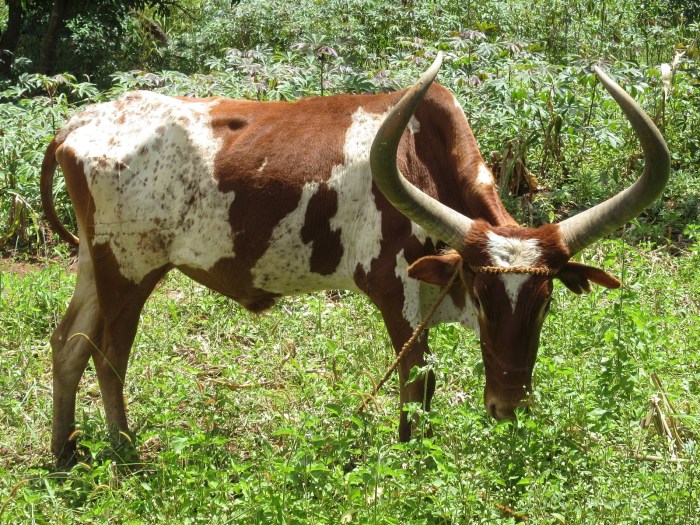
There is of course an ongoing movement to just give people money instead of doing almost any other sort of development project. Giving people money is pretty darn effective in a lot of cases, which should be intuitive. Development projects come in and try to identify a needs gap, and then fill that gap. They come in and go “man these people could really use a cow” and then give them a cow. Instead of trying to identify people’s gaps, you could instead just give them the money and let them fill their own gaps. This makes sense. If someone offered me a cow, I would probably take it, and then just go and sell it and spend the money on whatever I actually wanted (just giving money, I want to say, is far from a cure-all, and there are ways to make the impact of direct cash transfers more effective, but still).

On the other hand, the gigantic advantage, I think, of running a give-people-cows charity is that it is much easier to solicit donations. If you go on the website for Heifer International, they give you a whole “gift catalog” of different animals you can buy for families. As yet another caveat, this is actually misleading, when you “buy” a “cow” from them for a family, they actually just use your $500 to fund their programs in general, though some of those include buying cows for people. But let’s pretend they’re exclusively in the business of buying people animals, because that is what their website wants you to think. Heifer International clearly thinks that people are much more willing to cough up donations if they can believe that they are buying a cute widdle baby goat for a specific, photogenic family in a picturesque but nondescript developing country. Contrast that with GiveDirectly, which firmly believes in direct cash transfers. If you go on the website you really gotta kinda poke around before you find any picturesque families!

The thing I was thinking about when I opened up a tab a year ago is the balance between program effectiveness and funding raising effectiveness. To wit, if my program is half as effective as yours, but I can raise twice as much money, aren’t we doing equal good in the world? What I really wanted to do was come up with a donor discount rate, a reasonable quantification of exactly how much less money you raise when you’re like “hey we’re just gonna give cash to people, they need that $20 more than you do” instead of saying “wanna buy a chicken?”

After thinking about it off and on for a year, I realized that was going to be hard. There are too many variables for me, personally, to figure out. Are there people that will only donate money if they can buy a chicken, or if they can’t buy a chicken will they donate to direct cash transfer charities? Are the different chicken charities competing with each other? How do people pick which charities to donate to anyways? Beats me! Plus market forces have probably already revealed the answer: there are more “donate things” charities than “donate cash” charities (I think), so charity world clearly thinks one method is more effective than the other.

Nevertheless, I will do some pointless math on Heifer International and GiveDirectly. According to the abstract from this decade-old study, for every $1 Heifer International spends, they cause somewhere between $1.19, $1.25, or $2.35 of benefit to a household. Let’s average those and say $1.60. Meanwhile in the year ending June 30, 2020, they raised just south of $108 million and spent about $94 million, doing I suppose $150 million “worth” of “good” in the world. On the other hand, according to this only couple-year-old study(‘s abstract, as I understand it), for every $1 GiveDirectly transfers, the community benefits $2.60 worth. Meanwhile, in 2019, they raised about $42 million and gave about $33 million in grants, doing, by my hokey system, $85.8 million “worth” of “good” in the world. So there ya go. Except in writing this post I have learned that in 2020 they raised $300 million and spent at least $210 million, mostly it seems because MacKenzie Scott really likes what they do. I guess that answers that debate.

Jeez I love what MacKenzie Scott has been up to. If you’re hiring, MacKenzie, I will work so hard at giving your money away.