Biking the Mwambezi, Part I

IMG_7443

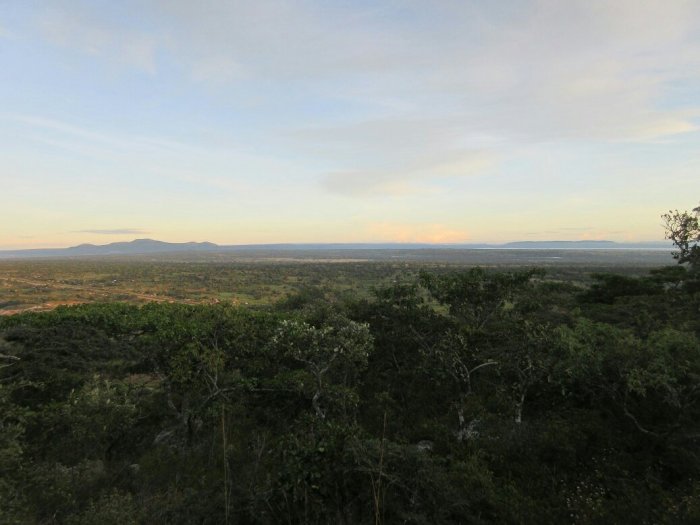
The valley where a lot of the village farms.

First off, “Biking the Mwambezi” is pretty much entirely a lie. That was my intention, and in almost no way did it pan out. My village is near the Mwambezi River. I was hoping to follow the Mwambezi River to where it emptied into the Lunzua River, which culminates in the Lunzua Falls where the river flows into Lake Tanganyika at Kituta Bay (since the lake sometimes empties into the Congo River, that means I live in the Congo River Basin, which I think is kinda neat). I hadn’t gone that way before, but from the satellite photos on Google Maps, it all looked pretty bikeable.

I left the house at 0630 when it was still early but there was enough light. I started off on my bike. My village actually does a lot of its farming not in the valley the village is in, but in another valley tucked away around a ridge. This path is well traveled and therefore bikeable. Past the fields, however, it pretty quickly deteriorates and I was pushing my bike over a thin path through tall grass. I got soaked in this process, brushing past the dew-wet grass.
IMG_7467

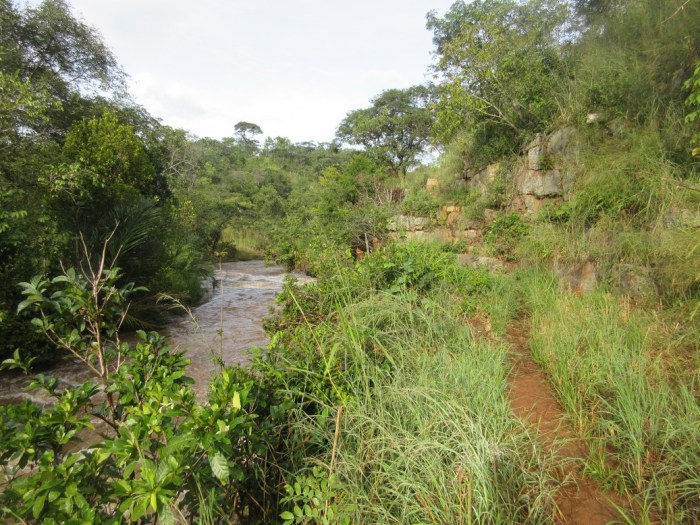
The mighty Mwambezi.

The major redeeming feature of this part of the adventure was being near the Mwambezi River. Lake Tang (the Mambwe word for the lake is actually “Liemba;” “Tanganyika” is a Swahili word), as I think I have discussed before, is actually a Great Rift Valley, er, valley that is filled with water. The area surrounding it, including where I lived, is therefore comprised mostly of stunningly beautiful river valleys and gorges and escarpments that surround and empty into the lake. So that means I was traveling through one of said gorgeous river valleys.

After about two hours of bushwhacking, I finally found a stretch of good path that was bikeable. So I hopped on my bike, biked about 25 yards, heard a rubbing sound, looked back, and watched my tube blow out because my tire had a hole in it. This, obviously, put a pretty major damper on my “biking the Mwambezi” plans. Since I was two hours into the bush, I figured the best course of action was to leave my bike with someone, with the plan of returning later, probably the next day. You see, I was expecting to be at the falls by noon and back home that same evening, and I figured there would be replacement tires I could buy in Mpulungu. Every one of these assumptions was wrong.

I walked my bike a little until I came across a house with someone home. It took some explaining, but I conveyed that I wanted to leave my bike at their house and come back with parts to fix it. People are friendly so they were more than willing to let me leave my bike against their house. The most amazing part of this for me was that, two hours into the bush, in a village that I had never been to before, people knew who I was. As I was trying to convey that I wanted to leave my bike there, I heard one guy explaining to another where I lived and who I lived with. I guess word of the white guy gets around.

Having found a place to stash my bike, I figured it would be best to just continue on my trip, just sans bike. When I originally conceived this plan, it was to be a hike anyways, with the bike a later update. Plus I really just wanted to go see the falls. So I made some mental excuses and continued on, getting to Isoko a short while after.

IMG_7490

Isoko, with sugarcane underneath the palms (closer to the river).

Isoko is a really nice village. I have recently learned that a Chief lives there, though when I looked around (briefly) I didn’t find his palace. But it is relatively close to Mpulungu, and has relatively good roads, and so is therefore relatively developed. One of the advantages of walking over biking is that you notice a lot more things, and it is a lot easier to take detours down small paths to learn what people are growing. Since integration is such a big part of fish farming, I’m really interested in what people are growing, especially crops they don’t grow in my village. Taking one of these detours I found out that they grow mostly sugarcane in Isoko. I also admired one person’s guava orchards and the living fences most people had set up. It is a really nice village!

One of the major disadvantages of walking, however, is that it is harder to get away from the small children that tend to gawk and then follow me as I wander around the backcountry. A group of these kids started following me and wouldn’t leave me, despite my detours. They convinced themselves I was going to Mpulungu (which was true, but not via the shortest route) and that they could lead me there in exchange for money. As we walked along, we crossed the Mwambezi, which I didn’t really want to do (my planned route didn’t involve any river crossings, except at the end), and meant I was a bit lost. That, combined with my strong desire to get away from these kids, convinced me it was a good idea to scale a rather large hill to get my bearings. The other disadvantage of walking is that on a bike, you tend to stick to actual paths instead of barreling off into the woods.

IMG_7503

The kids I didn’t like.

One of the many things that amazes me about what people do around here is that on top of almost any hill you’ll find a cassava or maize field. Like, scale a huge hill way away from anything and I swear you’ll find maize. I asked about this and my host uncle says the reason is that the soil is better up there, and in the valleys it tends to be swampy. Fair enough, but jeez that is a lot of walking. So I scaled this hill and found a maize field. I also discovered that right next to this hill was an even bigger hill, where I figured I could get an even better view. So off I went.

Scaling the hill was probably a bad idea. First off, there was no path, so I was really bushwhacking. It was scrub forest, so it was pretty easy going. Second though, about halfway up the hill I discovered the hill was a lot taller than I thought. And looking back I could watch the rain slowly coming across the valley. But I still had water and I thought I was making good time and my knee wasn’t hurting so up I went to the top of the hill.
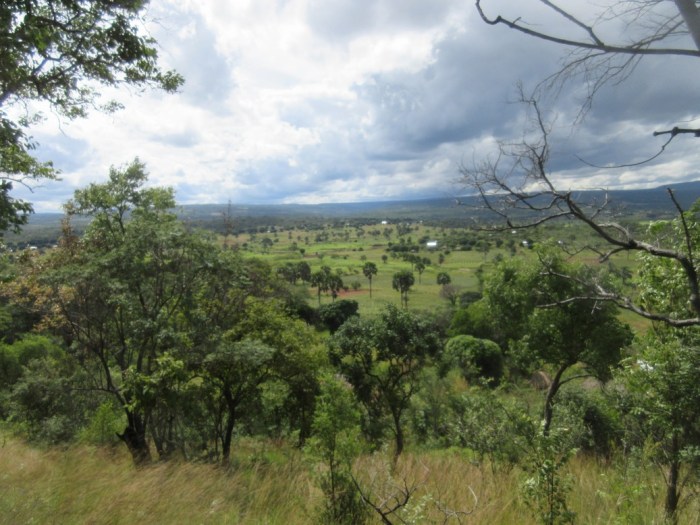
IMG_7504

Looking back across the valley over Isoko.

This is where I end this blog post and tell you to read part two because if I was gonna hike for 12 hours I’m gonna get two blog posts out of it, that’s for sure.
Site Visit 2018

Reading this week:

  • Nathaniel’s Nutmeg by Milton Giles

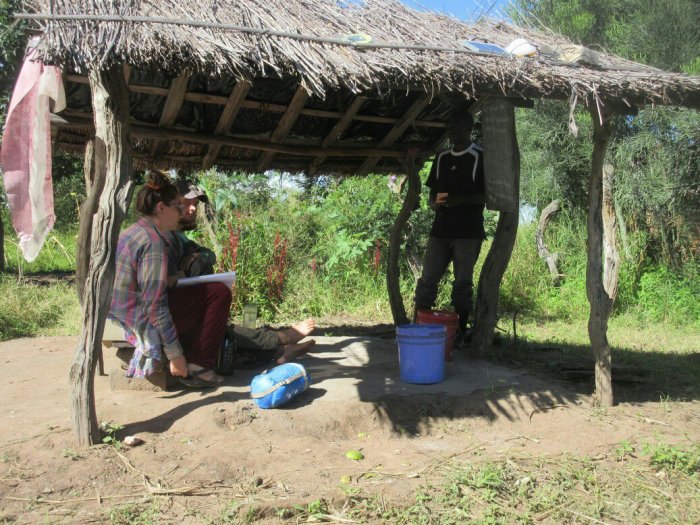
This past week I helped out with cluster site visit. During Pre-Service Training, the Trainees go on site visit. Site visit happens in two parts: first, they go to cluster site visit, where all the trainees of a certain language group (in our case, of course, Mambwe) assigned to the province go to a site visit together with PCVs. The second part of site visit is individual site visit, where they split up and visit their individual sites, alone. Cluster site visit gives the trainees the chance to get language and culture training close to where their actual site will be. It also gives them a chance to learn about the little tips and tricks of village life, like how to light a brazier or cool hints on how to set up their eventual home.

I wasn’t originally going to help with site visit but some plans fell through and I was free so I went. I couldn’t go for the whole time, but I spent two full days with the trainees. It was lead by another volunteer, Mitch, because it took place at his site. My main roles, besides imparting my wisdom and knowledge, were to help cook and clean while the trainees were in class.

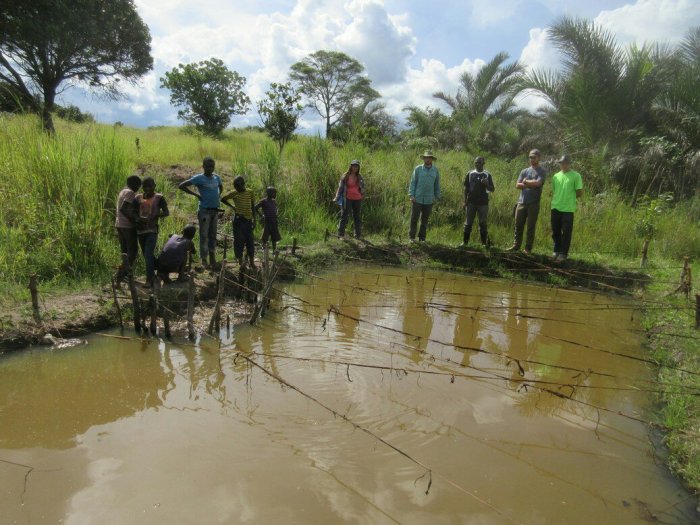
I arrived at the site on Thursday afternoon after having hitched from Mbala. Mitch and the trainees were out at the time so I set up my tent and made myself comfortable. They came back and we cooked dinner. The next morning there was of course breakfast, and in the afternoon we did some technical training. Mitch brought the trainees around to view some of the ponds in his area. This gave the trainees a vision of what actual, in the field ponds looked like. For myself, I always like to keep an eye out for how other people do things and see if there were any ideas for me to implement. The other big part of this excursion was going off to see the village headman and ask him about his role for the benefit of the trainees.

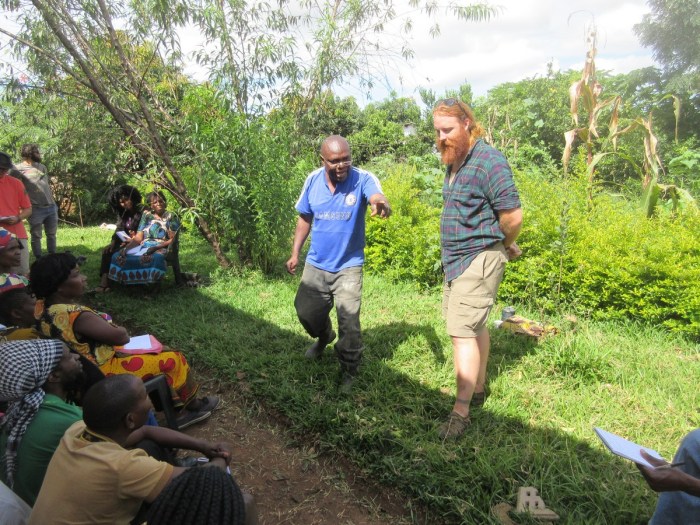
The next day the big exercise was preps for the following day’s fish farming presentation. Part of the trainee’s assignment during site visit is to give presentations to local farmers in Mambwe about fish farming. This is mostly for the benefit of the trainees, frankly (the volunteer usually brings experienced fish farmers, and they know more than the trainees). It’s best to have hands-on activities and visuals, so Mitch thought it would be useful to send the trainees out into the village, armed with their knowledge of Mambwe, and have them find supplies. These included manure, cassava leaves, and ash. This was successful and with supplies gathered we went and looked at some more ponds.

The next day was Sunday and I had to depart. Mitch has a cool-looking hill near his site and I wanted to make sure I climbed it. I didn’t get a chance before, so on Sunday I woke up at 0430 and beat through grass in the dark to be on top of the hill for sunrise. It was worth it, despite getting soaked from dew. Mitch is on the east side of the escarpment that Mbala sits on, so from the top of the hill you could overlook this massive lowland covered with mist and fog at the beginning of the day. It’s a really great hill to get the lay of the land and see how everything is connected. Sightseeing accomplished, I went back to Mitch’s site and packed up to head out. I could have been in less of a hurry; it took me two hours to get a hitch, but I got home fine. I hope I managed to impart some wisdom and knowledge or whatever on the trainees, and I think they’ll have a great time at individual site visit.

Beekeeping Workshop

IMG_7080

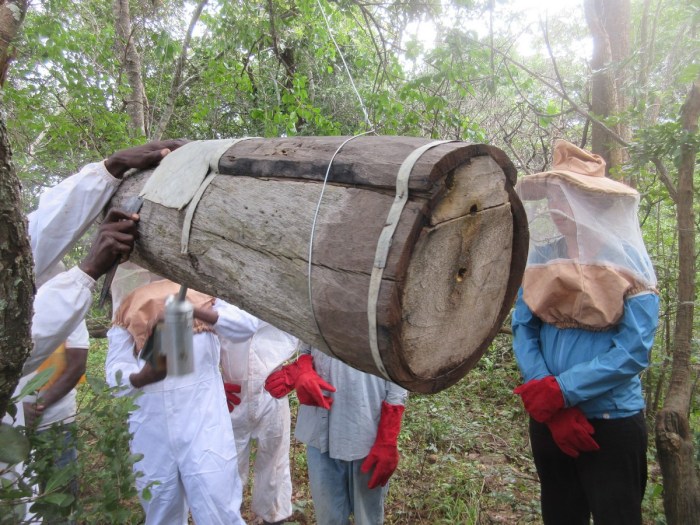
Bees at the end of a log hive.

Reading this week:

  • Dark Star Safari by Paul Theroux
  • Down and Out in Paris and London by George Orwell

We just wrapped up the Feed the Future Beekeeping workshop here in Kasama. It was pretty interesting. Beekeeping is a pretty popular Income Generating Activity (IGA) here in Zambia because it is relatively simple and honey sells for a good price. Plus, people like just having honey as a sweetener and stuff.

There is, as usual, a big focus on using local materials at a village level to do beekeeping. The first step in beekeeping is to make a hive, and then bait it. No one uses the kinds of hives you see in America, because those are pretty expensive and no one here sells them anyways. Instead, you’ll pretty commonly see a beehive made out of a log, or bark:

IMG_7072

The above picture is of a beehive made out of a hollowed-out log. Bees will build a hive in pretty much any dark, enclosed space that is made out of natural materials. Besides wood, some people just dig a hole in a termite mound, or build a hive out of reeds and cover it in mud. As long as the container is waterproof, the bees will move in. You do, of course, leave a small hole at one end to let the bees enter and exit the hive. You only want a hole at one end because that encourages the bees to put all their brood combs on one end (where the queen lays eggs), and all of the honey comb at the other.

IMG_7084

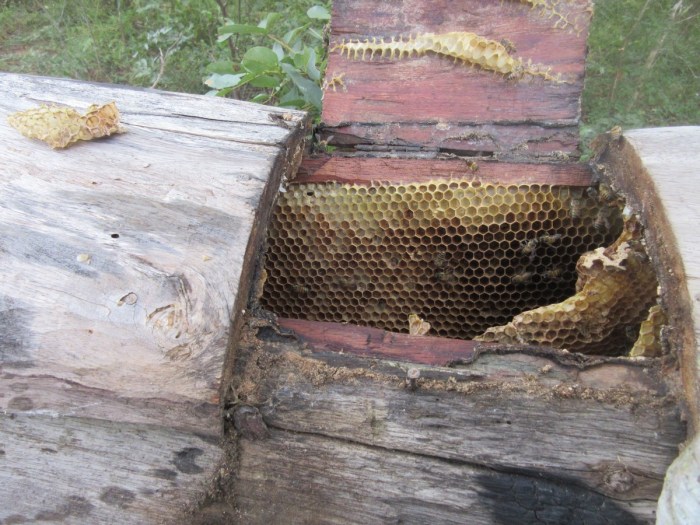
This log hive has a trapdoor on the top, about halfway down the hive. This lets the farmer open it up and extract the honeycomb, which hopefully will be in the back half of the hive. The goal is to extract the honeycomb while not interfering with the rest of the hive, so the bees don’t all die or move out.

To encourage the bees to move into the hive you built for them, you do have to bait it. To bait a hive, you just melt some beeswax and put it in the hive and near the entrance to the hive. Swarming bees will smell the beeswax, discover your hive, decide it is a nice place, and move in.

The other type of hive you typically see is a top-bar beehive. There are a few variations on a top-bar beehive. There are top-bar beehives with straight sides, sides at a 60 degree angle, and made out of various materials including wood or brick.

IMG_7085

A hanging top-bar beehive, with entrance holes and landing pad on the front.

The trick with a top-bar beehive is the top-bars. These are wooden slats exactly 33mm wide that form the top of the hive (in the above picture, there is an additional roof, so you can’t see the top-bars). This width lets the bees build comb while maintaining adequate bee-space between the combs. Bee-space is the distance between the combs that let the bees walk on the combs. By baiting the middle of the top bar, you can convince the bees to build combs along them. The biggest advantage here is that it lets you extract comb sorta like you do with the hives back home:

IMG_7088

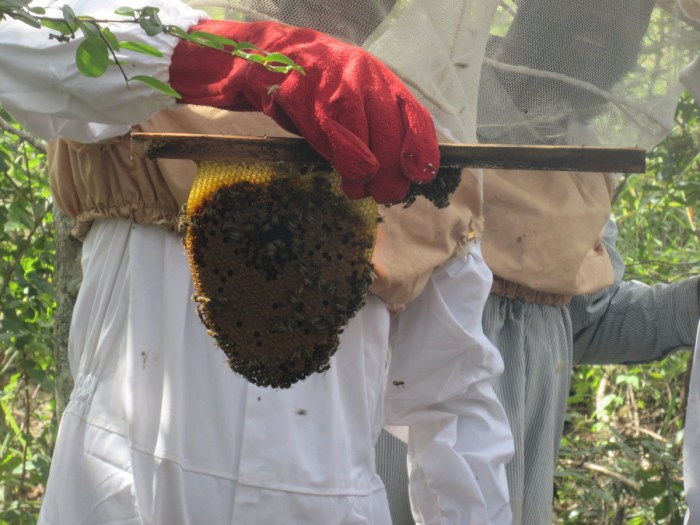
A top bar with attached comb (and bees). The hive here is relatively small so just a small amount of comb is attached to the top bar.

Using a top-bar beehive makes beekeeping more sustainable because the beekeeper isn’t forced to cause as much damage to the hive when they’re harvesting honey. However, getting a top-bar beehive built, especially with top bars cut to relatively exacting specifications, can be kinda hard. This can make them out of reach for beginner beekeepers, which is why we also learn about more traditional hives. My strategy for this workshop was to just bring the town carpenter. I figure he can learn how to build the boxes and then we’ll have a source of them in the village.

Besides building hives, we also learned about honey processing. We learned a few different methods of this as well, and the focus was again on things you can find in the village.

IMG_7090

The above picture is us sieving out honey. Because we were at a lodge and low on buckets, we used a now very sticky hot water heater as our bucket. But the strategy here is to put a bunch of mashed up comb and honey into some sieve cloth at the top of the bucket, and then leave it in the sun. The sun warms it up to where the wax becomes soft, and the honey just filters out into the bottom of the bucket.

IMG_7119

Me, stirring some wax.

Besides honey, we learned to process wax. After you extract the honey, you just take all the leftover gunk and then heat it up along with some water. Once it is all melted, you scoop the melted mixture into another rough cloth (we used a mealie-meal sack) and then filter it through the cloth, squeezing to get all the wax out. This leaves behind dead bug bits, sticks, and propolis, while the water/wax mixture falls into a bucket below. As it cools, the wax separates out from the water, giving you a cooled chunk of wax that you can use to bait more hives or make candles, etc.

Overall it was a good workshop and I am excited to hopefully raise some bees in the village. It’s a great activity to earn some additional income for farmers, especially since it doesn’t require a whole lot of labor. Plus, getting fresh honey right from the source is about the height of luxury around here. I’ll let you know how it goes.
Oh! This was probably the coolest thing we learned about: they make elephant fences out of beehives.

Animal Husbandry Workshop

IMG_6964.jpg

Reading this Week:

  • Lord Jim by Joseph Conrad (I think it would be a lot less interesting for anyone without leadership experience at sea)

This past week I attended the Animal Husbandry Workshop. I played this workshop a little differently, and instead of inviting someone from my village as a counterpart, I invited a guy I knew from town. He helps out several cooperatives in the area, and I thought of him especially because one of the cooperatives is interested in improved goat production. In my own village, I am hoping to invite him down to do some lessons which are more effective due to his finer understanding of local farming systems, obviously far better local language skills, and the automatic respect Zambian farmers have for other Zambian farmers. He actually showed up, unlike some other counterparts I have had, so there is that as well.

The biggest thing I think in any of these workshops isn’t so much the actual information we deliver via lecture, but the opportunity for the counterparts to see different examples of farming systems away from their own community. You can talk a lot about how to set up a farming system but it is way better just to show it to someone. We spent most of the week at Misamfu Agricultural Research Station, a facility operated by the Zambian government down near Kasama. They keep a variety of animals there, and also have a host of improved agricultural practices.

IMG_6939

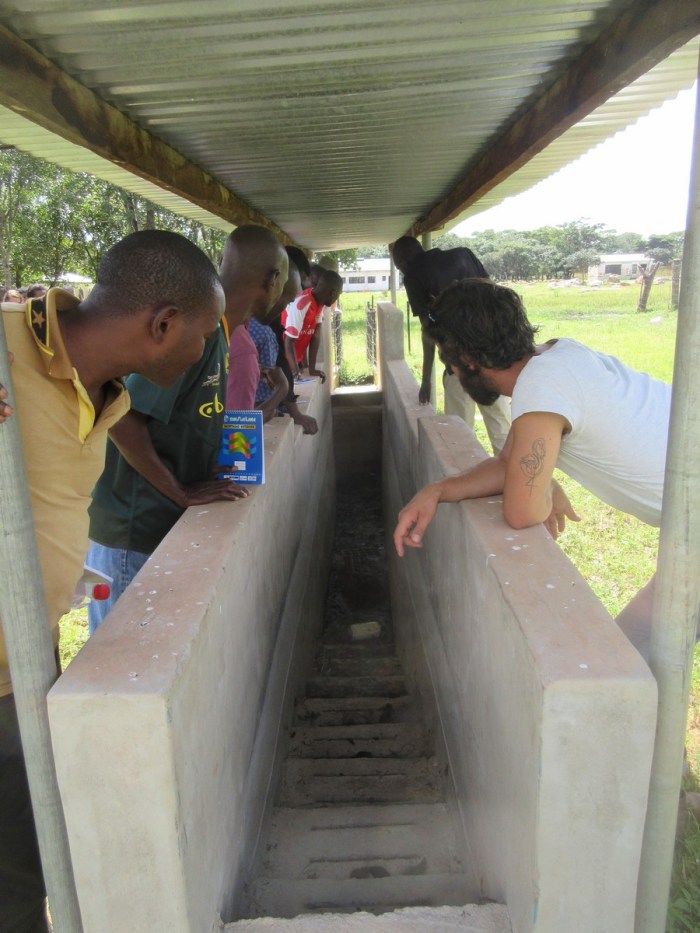
Counterparts crowded around a goat house.

On the animal side at Misamfu we mostly learned about goats and chickens. They had a rather large chicken production facility, and they also had a large goat setup. Their stuff is all very nice and represents the sort of ideal of animal raising, but it is all very achievable in a village setting. That is especially true if a farmer starts small and works their way up.

IMG_6935

A (currently dry) dip tank used to get rid of pests from goats.

Besides the animals at Misamfu, we talked about conservation farming practices. I was disappointed to learn most of the conservation farming practices they use are more ideal for flat land, which doesn’t describe any of the land near me in Mbala. The whole area up there is a series of valleys are you descend toward Lake Tanganyika, itself a Great Rift Valley, uh, valley that is just filled with water. Still, the techniques they teach about intercropping and the concepts of improving the soil via green manure and compost are still very applicable.

IMG_6956

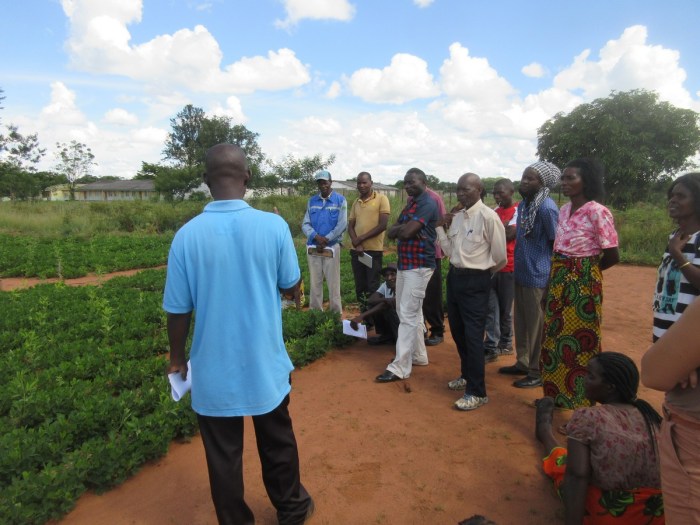
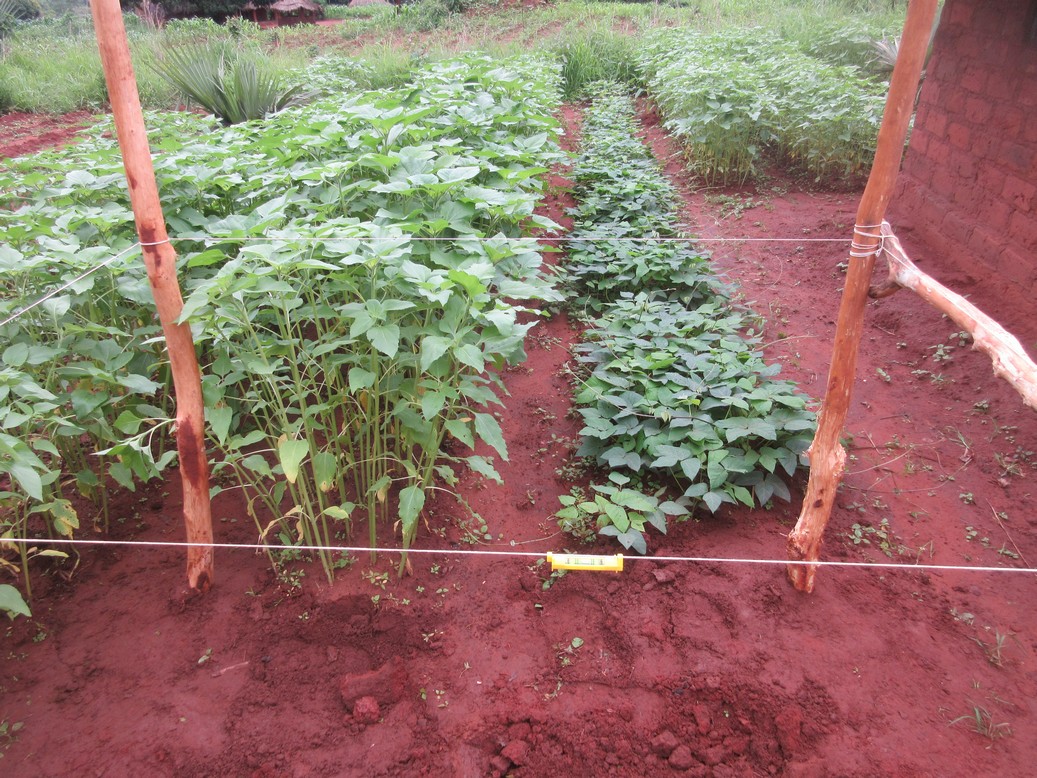
A conservation farming test plot. Here they were growing groundnuts and pigeon pea together using conservation farming techniques.

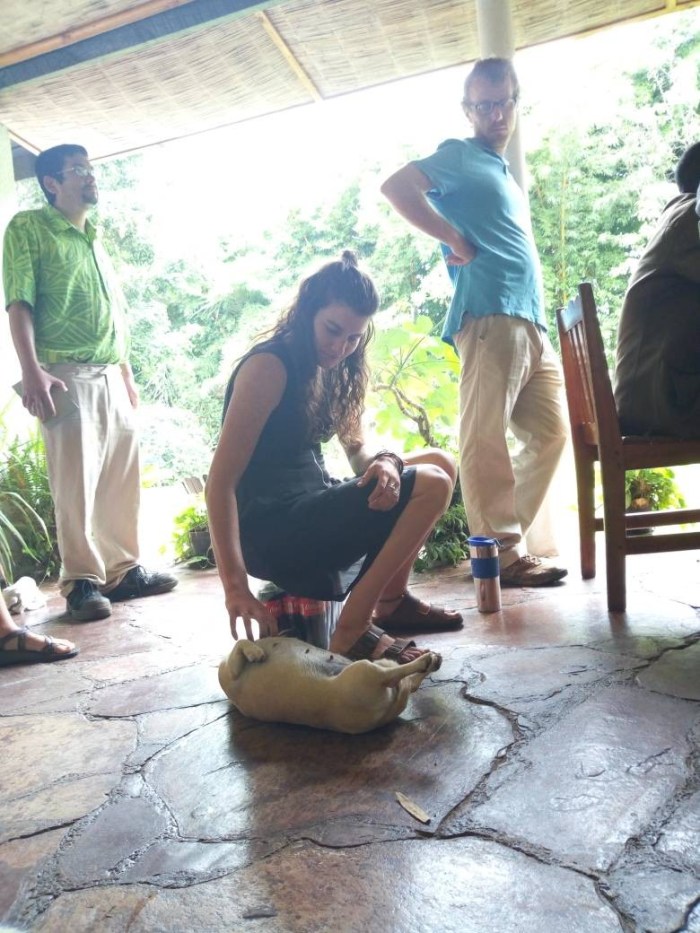
Besides Misamfu, we also visited a lodge in Kasama. The draw there was officially the fact that they keep bees, but they also have several extremely cute dogs that are hungry for attention.

IMG-20180306-WA0005

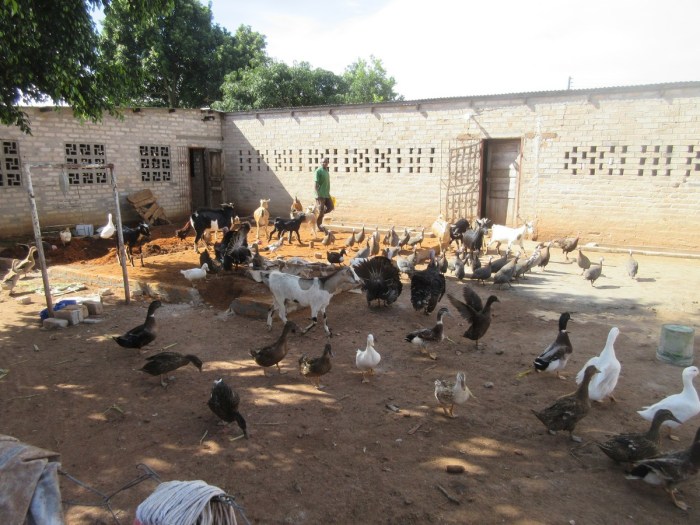
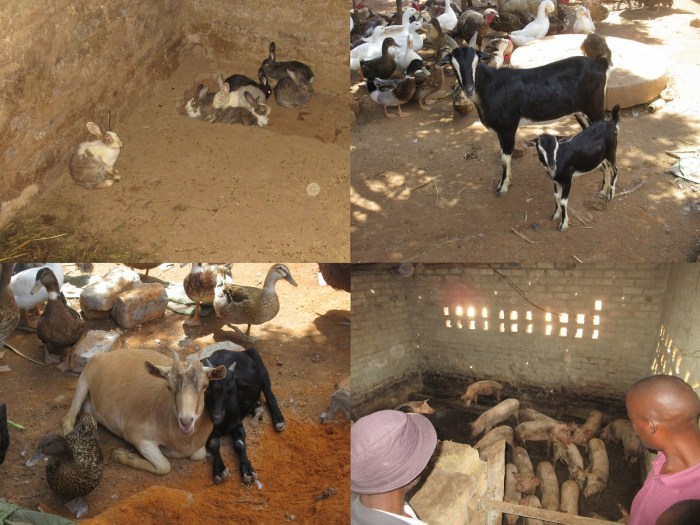
The other exciting place we went was to Mr. Siame’s farm. “Farm” is a bit of a misnomer; he has a small plot of land, but he uses some very intensive farming techniques, along with integration, to produce a whole lot in just a little space. He keeps a variety of animals, including ducks, turkeys, guinea fowl, chickens, goats, pigs, and rabbits. They are all right next to his house on one side.

Animals

Even more exciting for me, which I kept pointing out to people, is the garden he keeps on the other side of his house. The garden is in close proximity to the animals, which means it is easy for him to use animal manure as fertilizer. And, in turn, it is easy for him to use the products of the garden to help feed his animals. The garden is beautifully set up, with a live fence/hedge, followed by the actual garden area, and then lined entirely with various types of fruit trees. That is a whole wide range of food products right in his own back yard, providing different types of food at different times throughout the year. It’s pretty awesome. And although he is retired now, he was doing much the same thing back when he was a full time teacher! He was so passionate about his work and the things he did that I really hope it inspires a lot of the counterparts to at least start toward something similar.

IMG_6984

Mr. Siame with his awesome garden in the background.

I am really glad I got to go to the Animal Husbandry Workshop this year. I got to see a lot of examples of different ways to implement and combine agricultural systems and the counterparts had great discussions on raising animals, integration, and also HIV. I can’t wait to convince some people to raise more animals, better.

Being a PST Trainer

IMG_6893.JPG

Reading this week:

  • Dhalgren by Samuel R. Delany
  • The Door into Summer by Robert A. Heinlein

This past week I got to travel back down to Chongwe to help train the new intake of RAP Volunteers. Every week during PST they bring down one or two currently serving volunteers in order to help out with training and to give the new PCTs some perspective on how their service will go. I was excited to go down because I always like to have a hand in training the new guys in any job I have, and I was excited to share some of the stuff I learned.

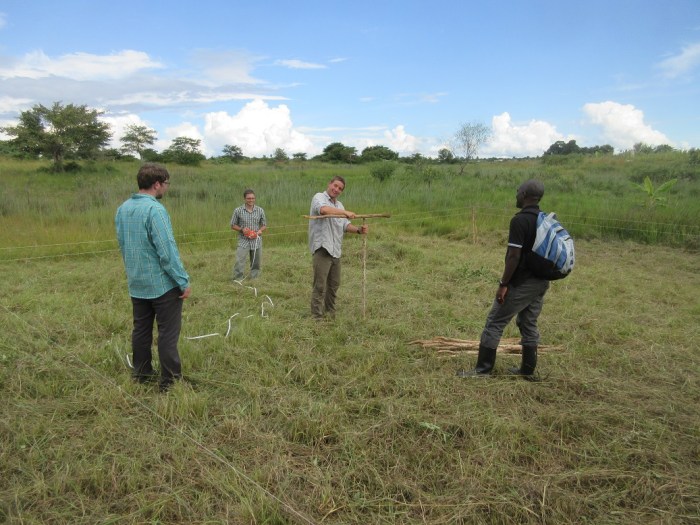
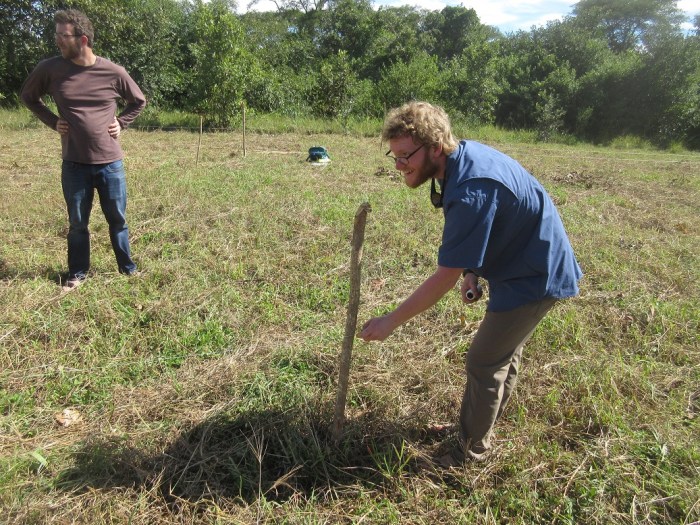
This week was pond staking week. They had briefly learned how to stake a pond the previous week, but this week was all about the hands-on. On Monday, when I showed up to training, the first thing we did was stake ponds. They split into small groups of all PCTs and staked some ponds while I wandered around and offered some pointers. I have staked a pond or two in my day at this point so I had some tips to share. Plus it is always funny to pass on the random stuff our trainers focused on, and in this case I taught more than one person the clove hitch.

IMG_6888

On Wednesday they had another practice day at staking, but they switched up locations in order to give them some practice on a new spot. They did fine. This all was in preparation for their big practicum which occurred on Saturday. For this, each PCT was supposed to bring a member of their host family, and then the host family would help them stake the pond. This served to give every PCT a helper (it’s hard to stake a pond by yourself and you ideally have three people) as they staked ponds without the help of other PCTs. More importantly, it also gave the PCTs practice explaining pond staking to someone who had probably never staked a pond before, and also gave their host families a chance to learn about what the PCTs do out there in the field. They have only recently started bringing host families to events like this, and it is a lot of fun to show them the work they are helping to support when the PCTs become full-fledged PCVs.

Saturday went mostly fine. All the ponds were good; they were scored out of 20 but 2 bonus points were available, and of everyone I scored they all got 22/20, except for one PCT who got 21/20 because she had forgotten how to do the evacuation point and just guessed. She guessed mostly correctly. Right at the end of the pond staking it started to rain and we all got soaked, but we got it done.

20180302_151049

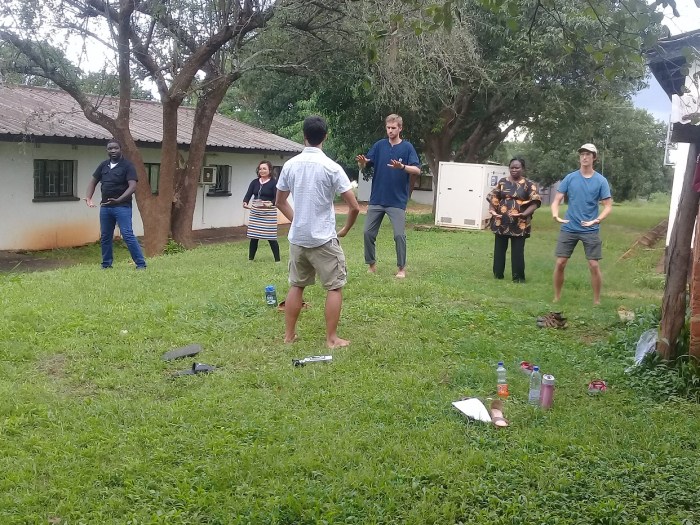
PCTs during a non-pond-staking training exercise.

During the rest of the training I offered my own perspectives and experiences about what I had seen over the past year. The other major thing I offered during training was my site presentation. Every PCV that comes down to help with training gives a presentation on the work they have done and their site. The PCTs enjoy seeing people’s sites and it gives a lot of ideas about the things they could do and ways to improve their work and their site. My big message, however, was to convey accurate expectations of success. Like all sorts of jobs where you are there to help people out, your productivity in terms of things like ponds staked and fish stocked only partially depends on you; you need to have people willing and eager to do the work. If a lot of people want to build fish ponds you will help build a lot of fish ponds, but if no one wants to build fish ponds despite you getting out there and telling people the Good News of the Gospel of Aquaculture, then you aren’t going to build any fish ponds and that is not your fault!

They understandably tend to send PCVs down to training who have done a lot of aquaculture work, so that gives PCTs the impression that everyone works super hard and does all sorts of things while at site. That’s not always accurate. The first two generations of volunteers at my site couldn’t get anyone to build a fish pond, and they’re digging them now but they were also reminded that I am the last volunteer they are going to get. Success in Peace Corps service can be defined in a lot of ways, but you can’t focus on just easy to measure metrics like square meters of fish ponds started during your service. Just being in the village helps to accomplish goals 2 and 3, learning about your host nation and teaching your host nation about America. So that was my big message and I hoped I conveyed it. That was the biggest lesson I learned during community entry and I just hope these guys don’t have to wait that long to figure it out.

Malaria Bike Tour

IMG_6778.jpg
Group photo after teaching about malaria.

Reading this week:

  • The Autobiography of Malcom X as told to Alex Haley
  • Crossed Wires: Vol 1 by Iris Jay

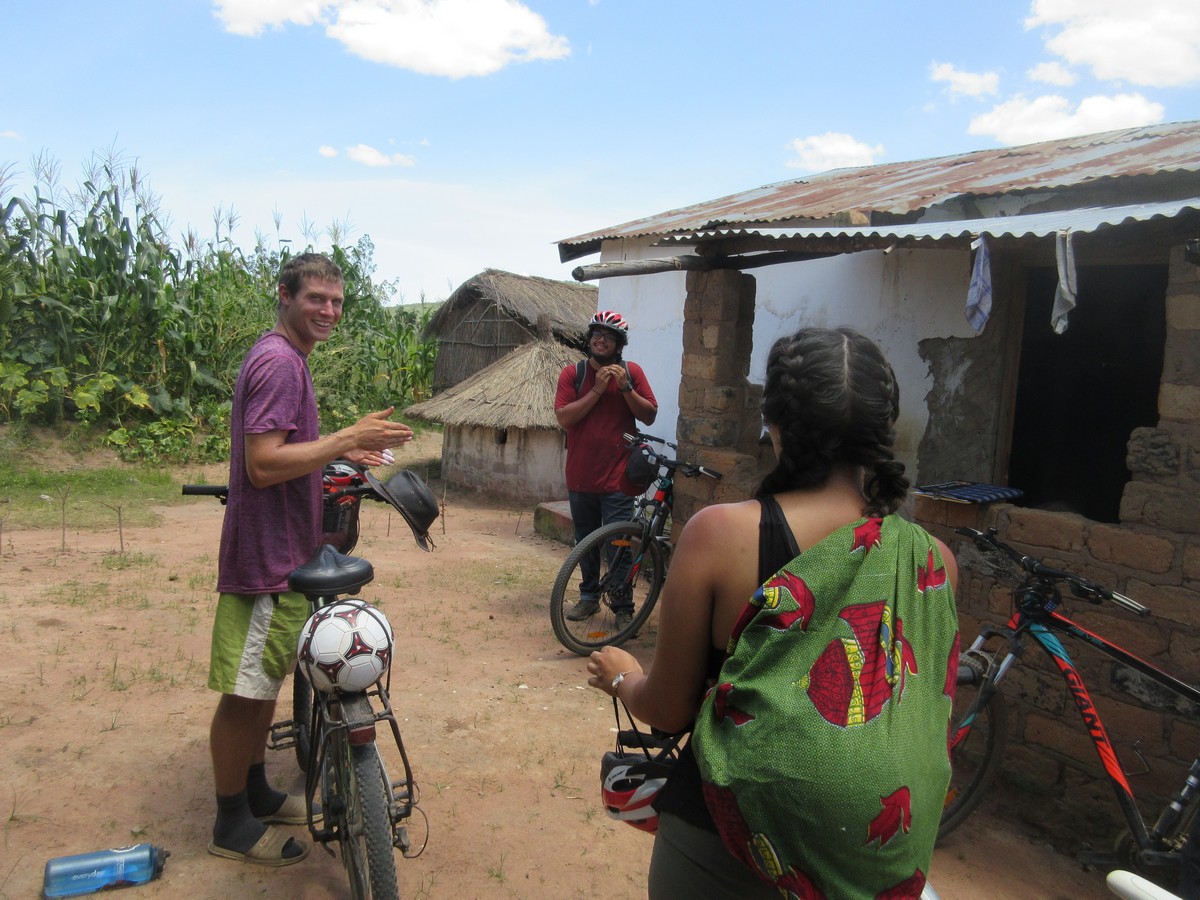
This past week I participated in the Mbala Malaria Bike Tour. Bike tours are a pretty popular Peace Corps Zambia activity and the concept is pretty simple: a bunch of volunteers get together and bike to each other’s site, hosting programs at local schools or clinics. The advantages are that doing a program in a big group of volunteers is a lot more fun, spreads out the work, and creates excitement when a whole bunch of volunteers roll into town to teach about malaria. It was all organized by our fearless leader, Maggie.

IMG_6836.jpg

For our bike tour, we visited four volunteer’s sites, all centered around Mbala itself. At each site we visited the local school for the program. Most of our activities were based off the PC Skillz [sic] Malaria manual. These programs use soccer-based games to teach about malaria. Our target audience was pupils in grades 5-9 generally.

IMG_6737
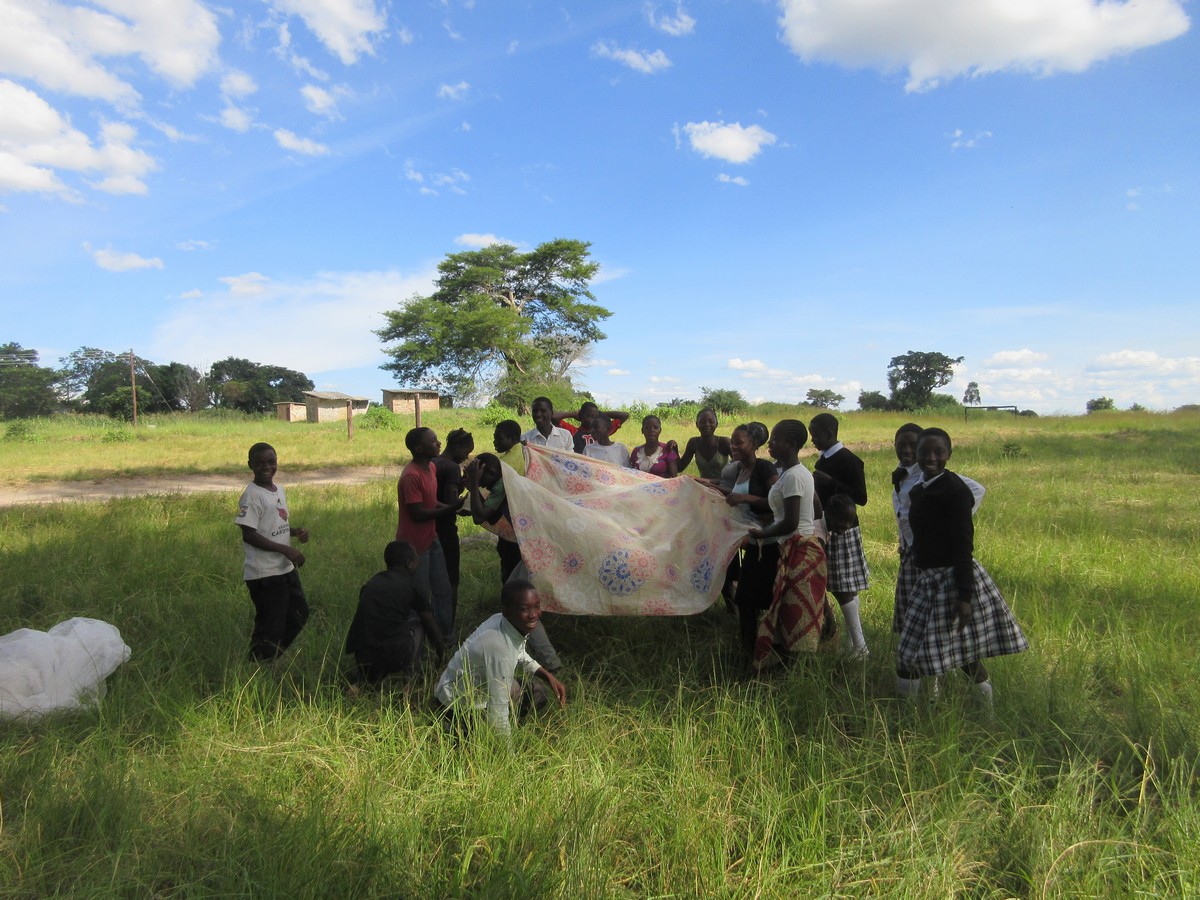
This is “Bed Net Ball,” run by the other volunteers. The sheet is a mosquito net, and first they use the sheet to toss a soccer ball (the mosquito) up in the air. The pupils have to get under the “mosquito net” before the “mosquito” comes back down.

The general program was to bike to the next volunteer’s site in the morning, eat lunch, and then commence the program at around 1400. For me, I got to visit a side of Mbala district I haven’t been to and got to see more of the most beautiful district in Zambia. Plus, it’s always pretty fun to visit other volunteer’s sites, check out their houses, and play with their dogs.

IMG_6698
IMG-20180222-WA0003.jpg

Most of the schools put a lot of prepwork in for our visit. Before our program began, we would be treated to a skit about malaria, or in one case a personalized welcome song from the school choir, which was impressive. They were universally educational and pretty funny as well.

IMG_6844.jpg
Personalized welcome song from the school choir.

For the activities, we worked in pairs to run stations. On each day we had a total of three stations, and the pupils rotated around learning about malaria. As we went along, my station wound up evolving. The first day we played a true/false game about various malaria myths. That wasn’t really interactive enough, so the next day we ditched that to play a risk factors game. In the risk factors game, the pupils dribble a soccer ball around cones (in our case, rocks) that represent risks for getting malaria: not sleeping under a mosquito net, not finishing your medication if you get malaria, not removing stagnant water, and not cutting your grass. On the first round, if they hit a rock with the ball, they have to do jumping jacks. On the second round, if they hit a rock with the ball, the whole team has to do jumping jacks. The students are more careful not to hit the rocks on the second round, and the lesson is that not taking malaria precautions increases risk for the entire community, not just themselves. When people think about the risk to the entire community, they are more careful.

IMG_6715
Busting some malaria myths via true/false.
IMG_6801
Risk factors game.

On the third and fourth days, I switched stations and helped teach “Health Ball.” In this game, the students try to pass to each other either a soccer ball or a much smaller rubber ball without the ball touching the ground. The soccer ball is easier, and that represents going to the clinic to get medicine to treat malaria. The small rubber ball represents going to a traditional healer or just staying home and hoping to get better, like it was just a cold. The message is to always go to the clinic!

IMG_6865
An extra game, “Mosquitoes & People” (aka Sharks & Minnows); the arch is the mosquito net that the pupils have to get under before the mosquito gets them.

All in all the bike tour was a lot of fun and we managed to reach over 400 students and teach them about malaria. Some of the stuff was things they had heard before, but repeating the message never hurts and we did do some mythbusting of common malaria myths. The real goal is to get the pupils to go home and tell their parents and family about what they learned to help reach the whole community. Hopefully we get to do more bike tours in the future and teach about even more topics.

IMG_6866

Cats

Reading this week:

  • Art Sex Music by Cosey Fanni Tutti

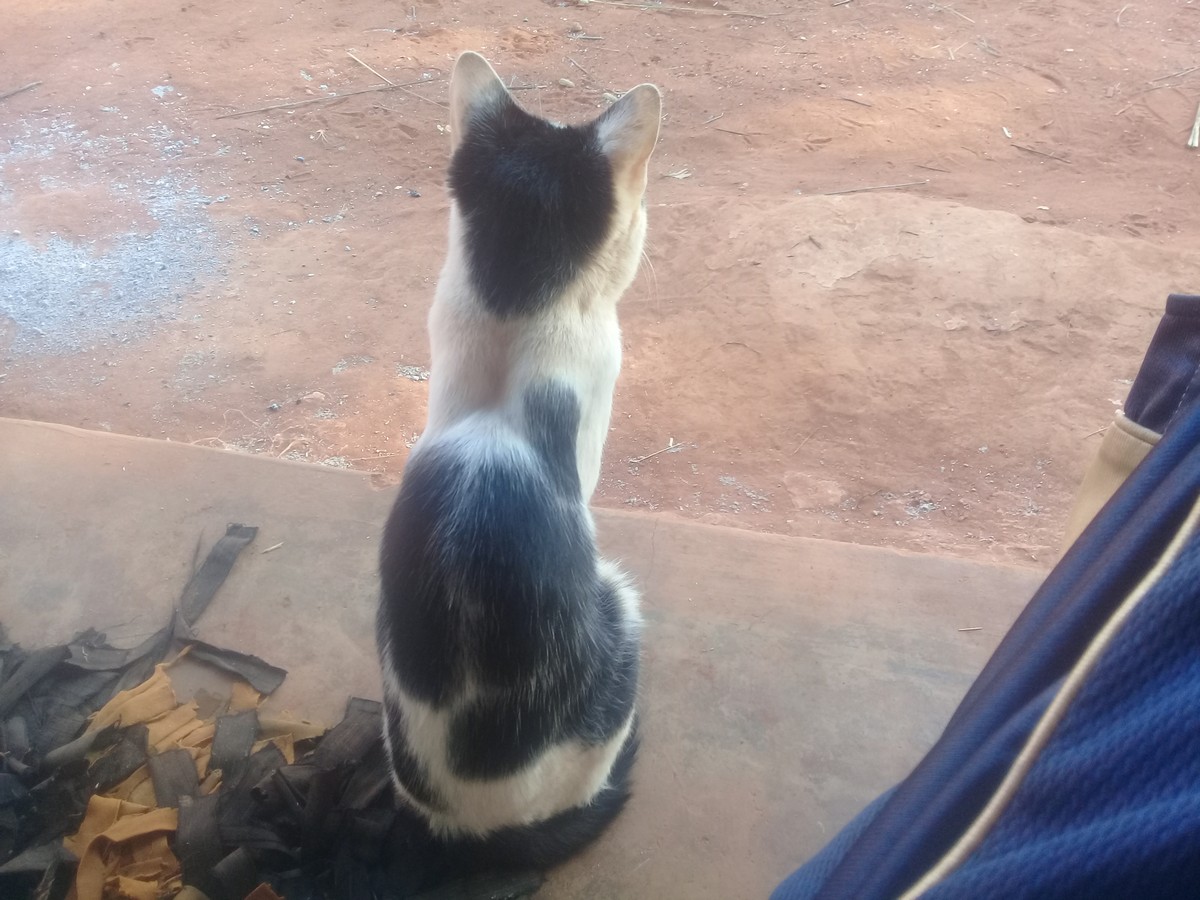
Just to be completionist, this is a post about cats. One cat specifically. His name is Munono:

20170528_073824

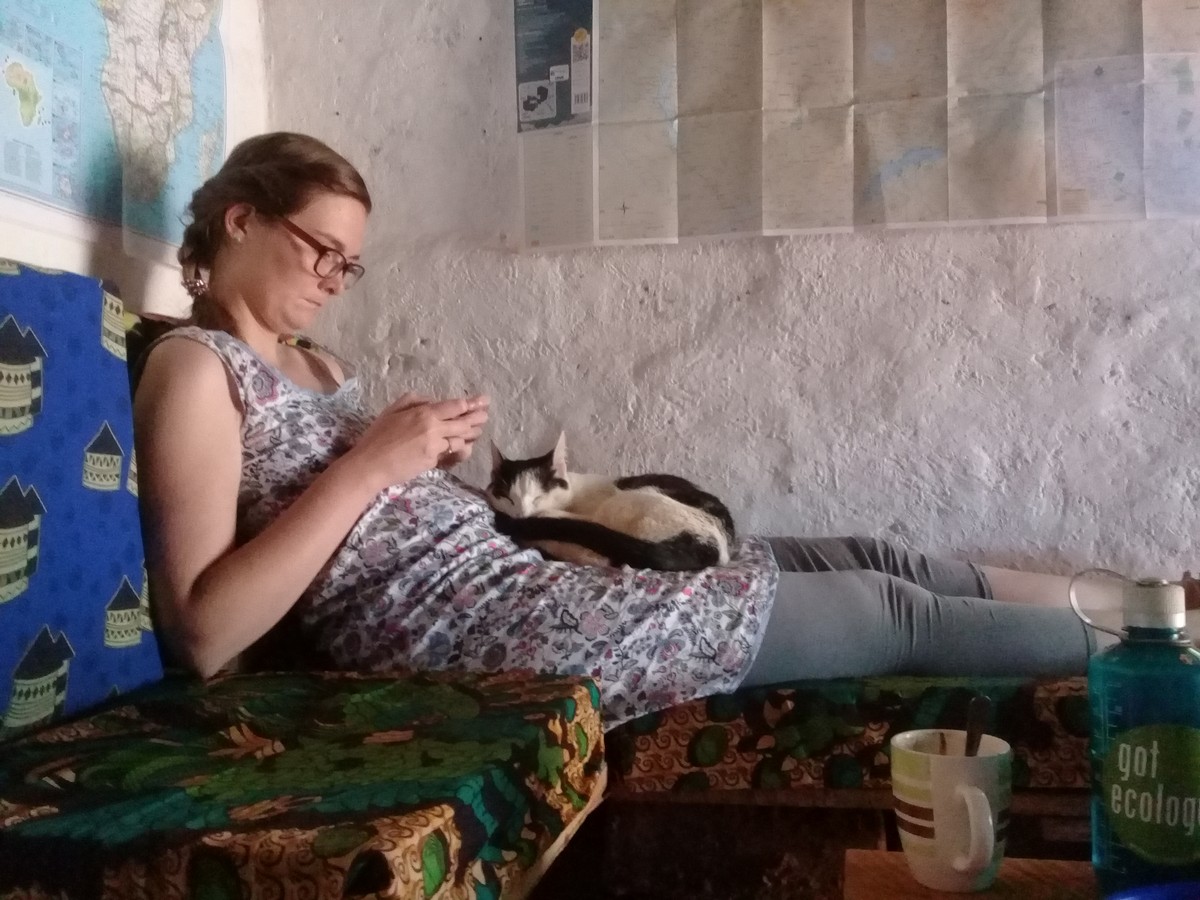
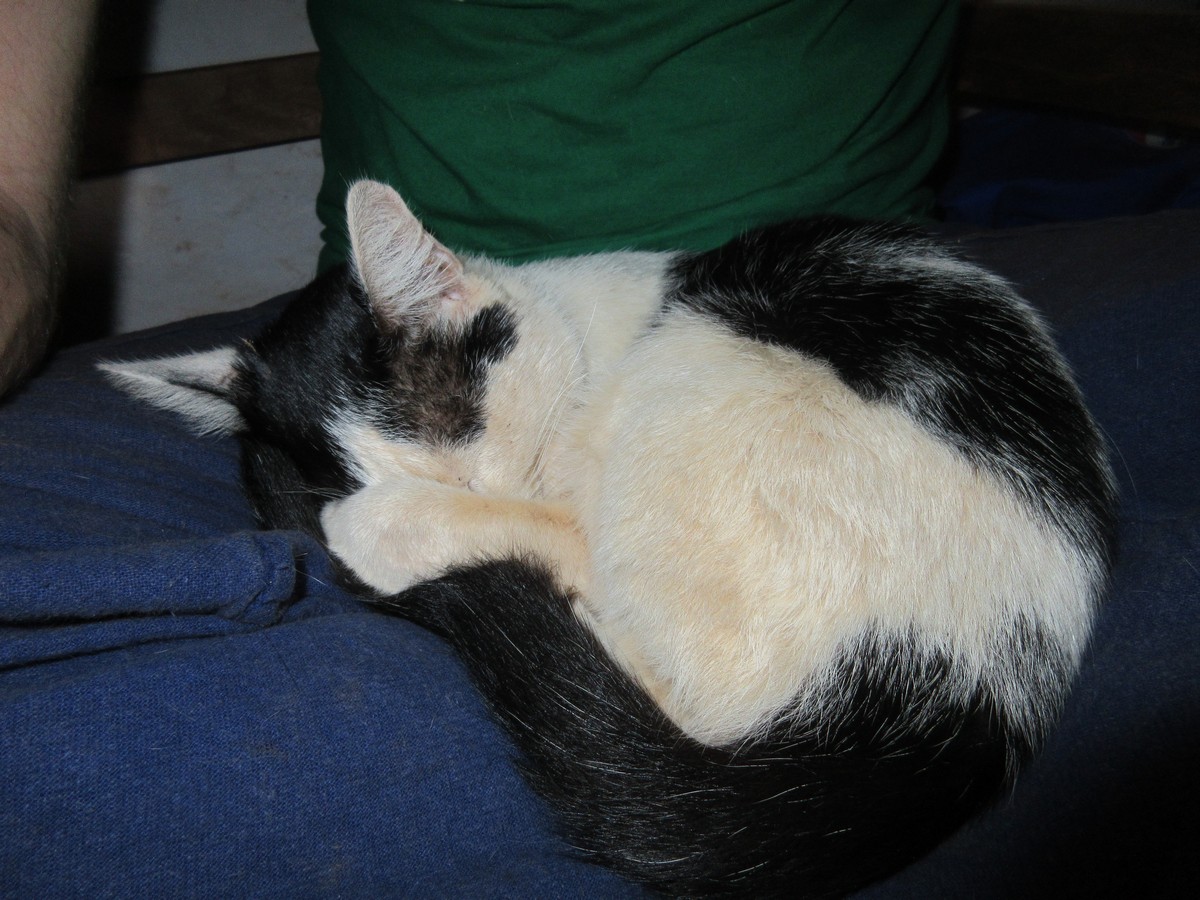
Munono is another semi-inheritance from the previous volunteer. Munono officially belongs to my host family now, but he likes to hang out. He usually comes over in the morning or in the evening and spends some time curled up in my lap. Like most Zambian animals it seems he was a little bewildered by affection at first, but eventually became a sucker for a comfortable lap to nap on.

20171225_084610

As far as I can tell, this cat is useless. I’ve seen him stalk a few things, but the only thing I’ve ever seen evidence of him catching is carbs. He loves carbs. This is because most of what he eats is nshima, which is carbs personified. He hangs out at meals and meows after food, and, when he is persistent enough, he gets tossed a lump of nshima with maybe a kapenta or two in it. He scarfs it down.

20170709_070622

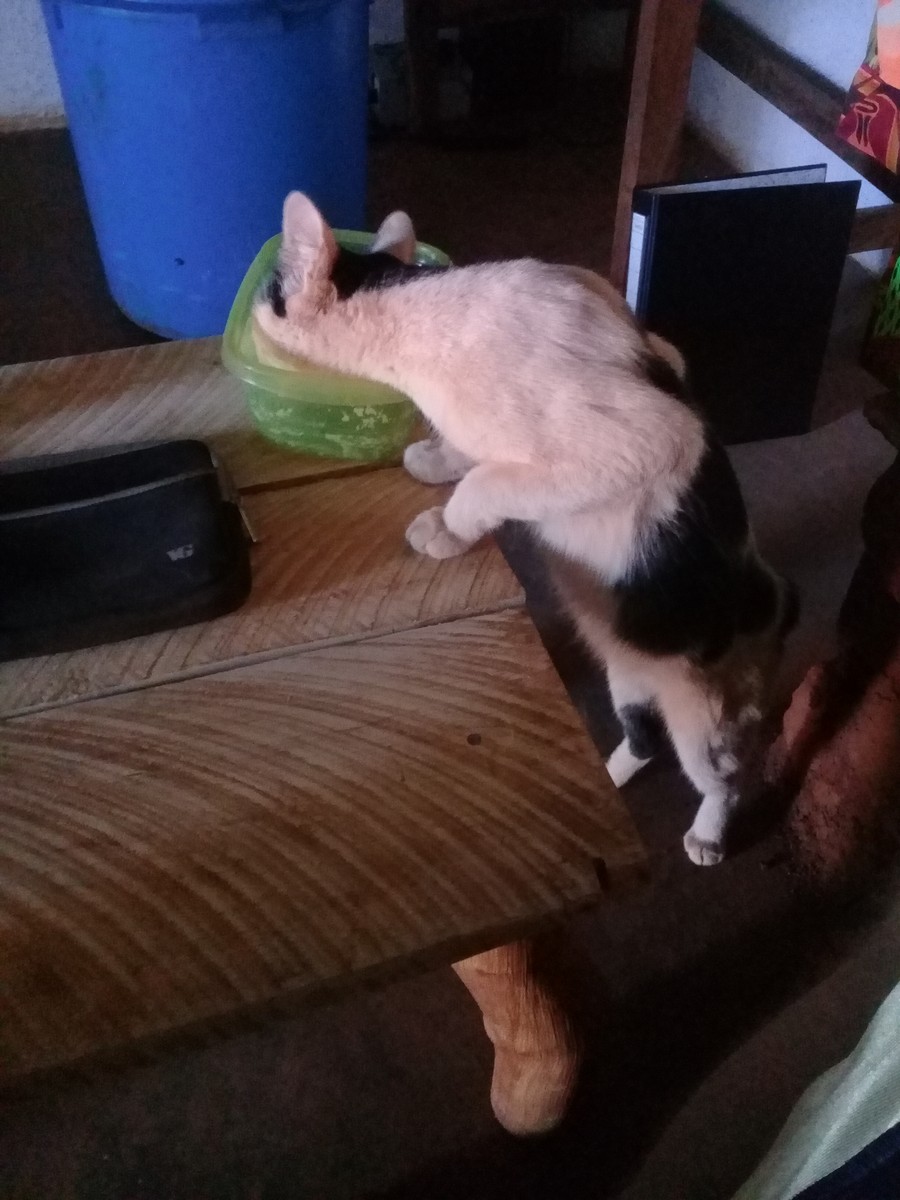
Munono, scarfing down the rest of my breakfast cereal.

Because of the cat I have to keep any baked goods high up and inaccessible. To date, he has successfully hunted down a loaf of banana bread and several cookies. I’ve smartened up over time, reducing his kill count.

The cutest thing about Munono is probably the way he sleeps. His tail seems to have a mind of its own, so if he wants to sleep undisturbed by his own tail whacking him in the face, he’s got to pin it down. On top of that, to make sure he has an adequate sleeping environment, he puts his widdle paw over his widdle eyes on his widdle face and curls up tight and is all set to nap until I cruelly have to stand up and get on with my day. I always feel bad about it. I know, I am the worst.

IMG_5719

D’awwwwwwwwwwwwwwwwww.

Goats

Reading this week:

  • Zambezi Valley Insurgency by J.R.T. Wood (would not recommend for casual reading; pretty dry accounting of operations from the Rhodesian perspective and clearly on the side of the Rhodesians, with no discussion of strategy for either side)
  • Bush War Rhodesia by Peter Baxter (still written from the Rhodesian perspective, but focuses on strategic goals and covers the entire war)
  • The Drowned World by JG Ballard

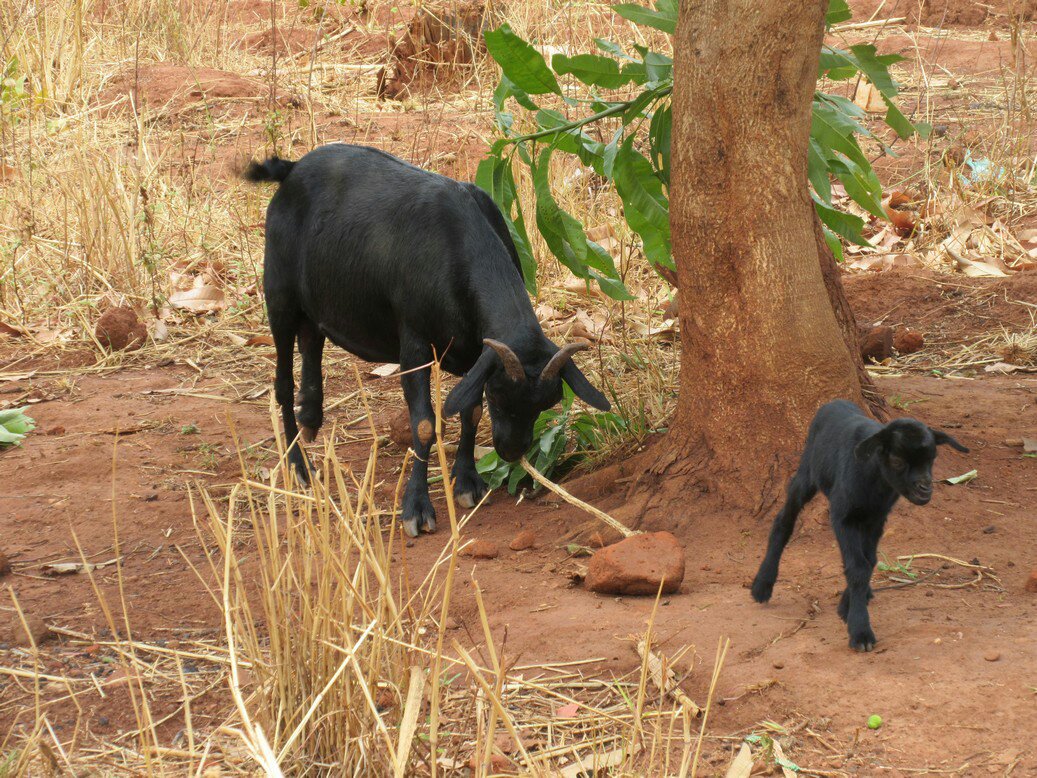
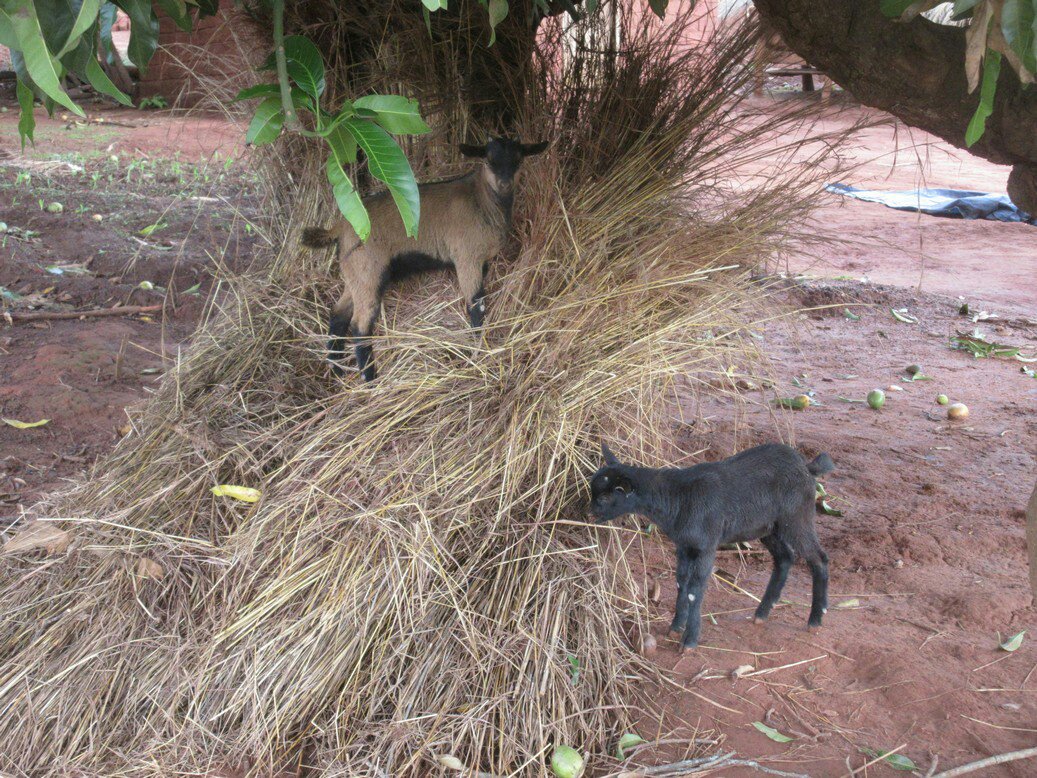
I have a love-hate relationship with goats. There are a ton of goats in my village. They’re a pretty popular animal in Zambia. They’re easier to manage and easier to feed than cows, and they require less land. They’re smaller than cows, which is an advantage when you slaughter them. There’s no refrigeration in the village, so if you’re gonna slaughter an animal you have to eat it or sell it all in one go. It’s usually on menus in the fancier places as “Imbushi,” which is the Bemba word for goat. The “love” part of this relationship is because those buggers are so darn cute when they’re babies. They’re small! They got little knobby knees and high-pitched voices! They run around but stick close to their moms! Look at this picture of me hugging a little baby goat! It’s the greatest! The “hate” part though? They can be such little shits. Here’s some goats hanging out near my insaka. Cute right? Look at those little guys, perched on the wall! And then they get up and kick over the bricks and cause all sorts of damage and then poop right in the middle. Stupid goats. The soundscape of the village is dominated by goats. I wake up most morning to the sounds of goats bleating. There was one goat for a while that would frequent my yard, sneezing heavily while also trying to call some willing female to mate with. I think Barry White would have worked better. When you first start living around goats, it is hard to distinguish the sound of children screaming and goats screaming. They’re very similar, though with experience you can tell them apart. It is handy to forget that, however, when the neighbor kids are crying and you can pretend it is just goats. In the dry season, the goats just wander around freely. They eat whatever they can find, which is fine. In the rainy season though, people start growing maize and the goats get tied up. The baby goats, however, get to wander around. Usually they stay with their parents. Sometimes, those little assholes break my fence and eat my velvet bean: The worst part? There is no gate on that fence! They could have just walked around to the open door and eaten my velvet bean without knocking down my fence. But nope, little shits gotta create more work while destroying my velvet bean. I got friends who are good with goats. Someday I will learn their ways. I just want to be friends with the baby goats, but they’re all scared of me. Probably because I chase them from my garden and then up the hill to teach them a lesson, but still. It’s been on my to-do list to get some goats and milk them and make goat cheese both because I love goat cheese, and also because I want people to get more protein in their diet so they aren’t all so short so they build houses to such a height where I don’t hit my head on my doorframe every other day walking out of my house. It’s the little things that keep you going.
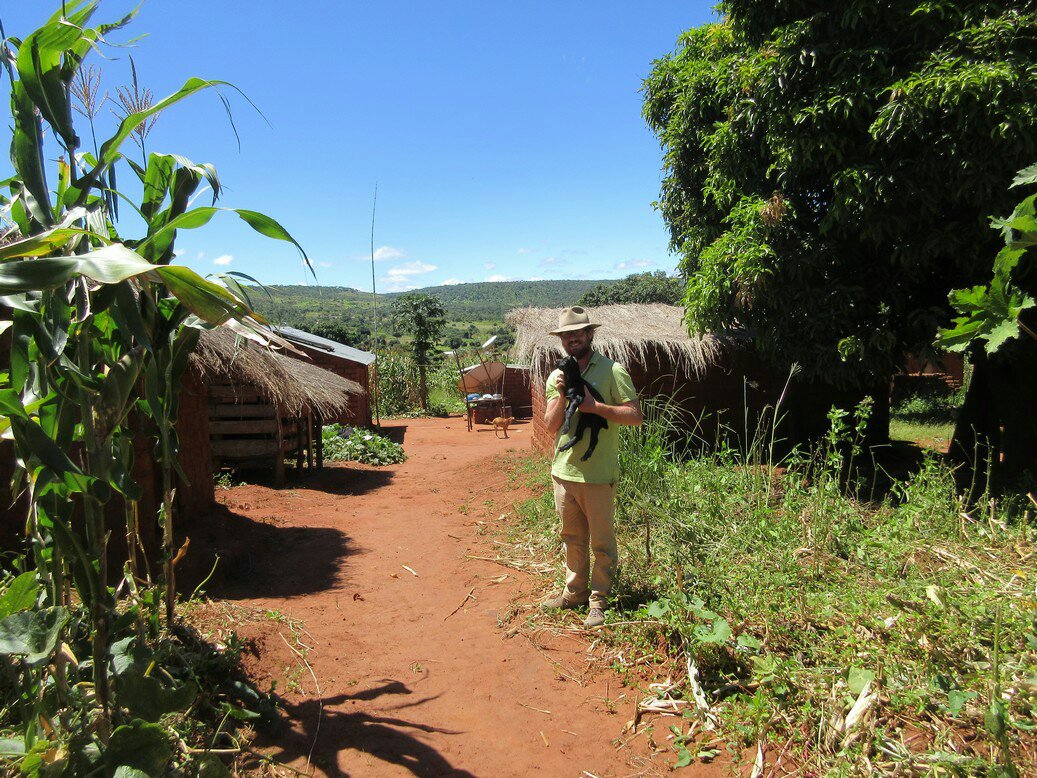
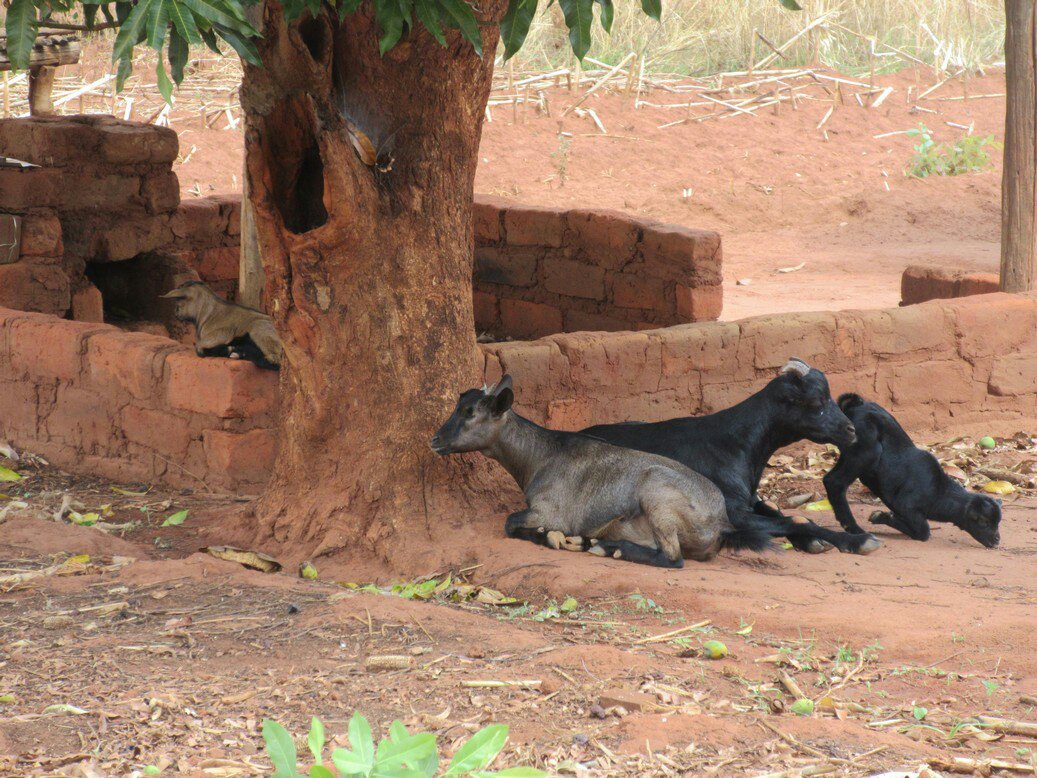
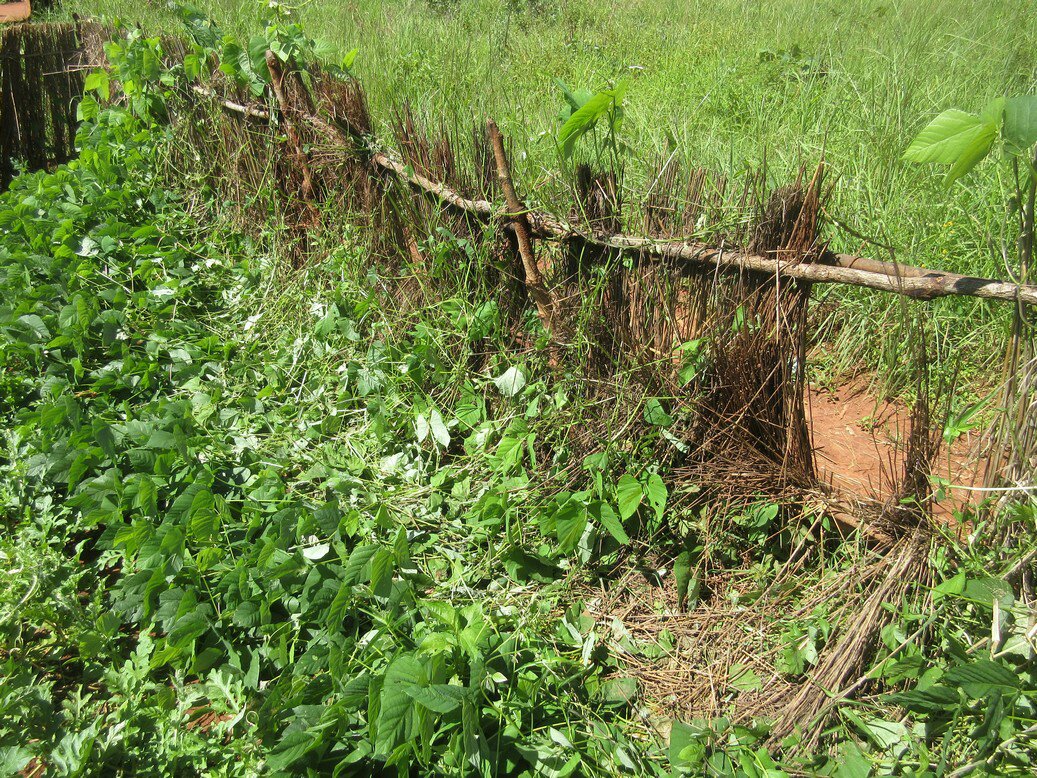
As a slight update from when I originally wrote this post, I seem to have gained the advantage in the war with the goats. Since the goats had it out for my velvet bean I had to take a more active role in preventing them. The solution was to chase these suckers down. Turns out it is hard to chase goats down because they are more maneuverable through low dense brush than I am, but the trick is to enlist some children. As I was chasing a goat around the village, the kids would get in on the action and help me chase it down. The children are shorter than I am, and are therefore more maneuverable in the low brush, but also strength in numbers lets us corner the goat into an ambush. After we corner it we tie it up and admonish whoever owns it to keep it tied up from now on. The goats hate being tied up. When they are first tied up they yell and try to get out. Then they get distracted by some grass and start eating. They’re terrified of me now though for chasing them down. The only bad part about this whole experience is the first time I chased down a goat with the kids, the kids asked for money. I threw some kwatcha their way in appreciation, but this created a bit of a monster; the kids would ask for kwatcha anytime they chased down a goat. This built a lot of enthusiasm for keeping goats away from my garden, but I was worried the kids were letting the goats go or something. At any rates the goats seem to be tied up more consistently these days and hopefully my velvet bean makes it all the way to harvest. At least I know the stuff makes good goat fodder.

Dogs

Reading this week:

  • A Passage to India by E.M. Forster
  • Lost Horizon by James Hilton
  • King Leopold’s Ghost by Adam Hochschild

A lot of Peace Corps Volunteers get pets. There are advantages to pets. Cats catch mice for you. Dogs can be nice to have around. I like dogs a lot more than children, for example. Dogs have several advantages over children:

  • Dogs don’t ask me for stuff over and over again.
  • Dogs don’t play the game “let’s see what we can do to piss off Pat.”
  • When I tell the dogs they gotta get out of my yard, they leave.

That being said, I had not planned to get any pets. Pets are work. You gotta feed them and get them shots and find someone to feed them when you’re away. That being said, I more or less have two dogs:

The one on the left is Muka. Muka is my host family’s dog, but he was originally the previous volunteer’s dog. He is a good dog and is pretty well known in the surrounding villages, having been on many adventures with the previous volunteer.

Muka attended about half the meeting and then, sensing it was useless, left.

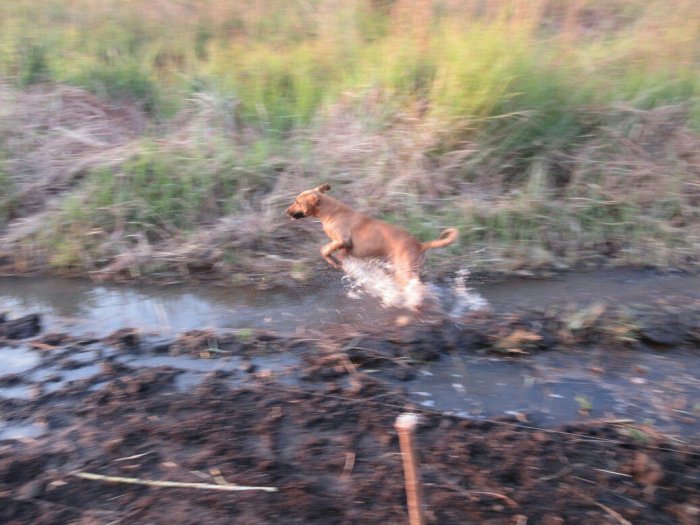
He’s got his quirks. His worst habit is that every once in a while he’ll spot a girl with a load on her head and suddenly growl and bark at her. I don’t know why he has a thing against women carrying things on their heads, but maybe he is just overzealous about gender equality. He likes to pretend he isn’t falling asleep. He’ll come in, sit by me, and then do head bobs and touch n’ goes instead of just laying down to sleep. He is a big fan of mud. Here is his, moments before sharing his mud enthusiasm by covering me in mud:

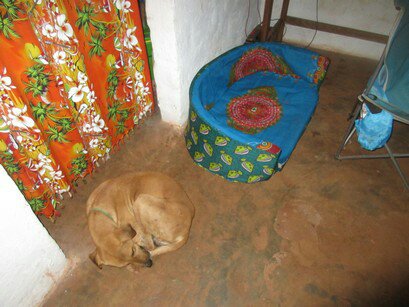
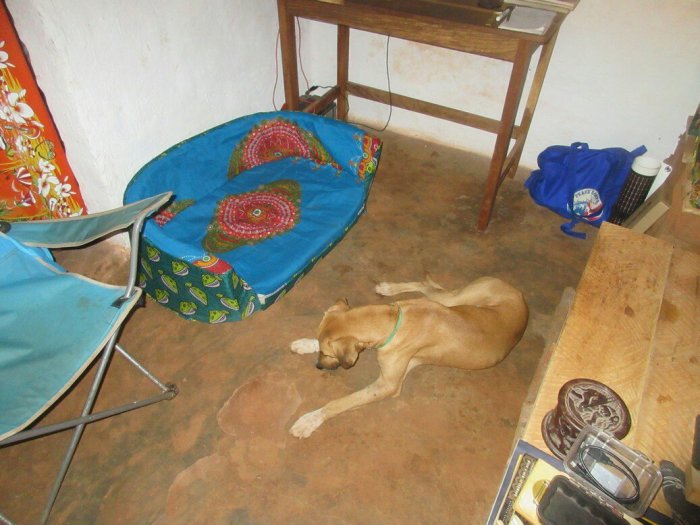
He was also, until recently, afraid to hang out inside my hut. When there was food on the line, he would forget this taboo and hang out under my armpit until he could lick the bowl, but otherwise he was afraid. When a rainstorm hit a week or two ago I lured him inside with a dog treat and closed the door. I didn’t want him to be wet and cold. He stood around nervously, until I scratched him behind the ears enough until he fell asleep. That changed something I guess and now the mutt rolls in like he owns the place. At night he departs to do whatever he does at night, but he’s scratching at my door at 0500 asking to be let in. So what do I do, since I am so kind and generous? I built the dude a dog bed. I went into town, bought foam and chitenge, and slaved over a needle for hours sewing him what I am willing to say with some seriousness is probably the most comfortable dog bed in all of Mbala District. Does he use it?

Nope.

No.

Not a chance. But you know who is all about the dog bed life?

Lala. Lala, being a refined lady, didn’t think twice and flopped right down on that thing the second she saw it. Lala is short for Katungalala. Only I call her Lala. She is this guy Abraham’s dog. “Katungalala” apparently means “diseased,” which is not a nice thing to call a dog. It is important to note that ZamDogs aren’t like American dogs. The dogs here aren’t companions, they’re security systems and garbage disposals. The upswing of that is if you show a dog some affection and don’t kick it, she’ll follow you around everywhere and then eventually spend her days snoring behind you and getting underfoot when you’re trying to sweep. Lala is also Muka’s girlfriend. Muka’s not a great boyfriend. He sleeps around and gets jealous, growling at Lala to get away when he thinks there is a treat on the line. But now I more or less have two dogs. They try to earn their keep every once in a while. When I run out to chase off goats or kids, they come out and help. Do they proactively chase away goats from my garden so the goats don’t eat all my velvet bean? No. But they’re cute. And so now, despite never actually getting a dog, I buy treats by the kilo and spend money on flea collars and flea powder and dog multivitamins because that is a thing. I fret over Muka’s botflies (dude, first off, when I squeeze the larva out, Muka eats them, and second, he’s got botflies on his balls, in case you think your day is bad, but he won’t let me tweezer those suckers out, not that I blame him) and have to try to make amends when he growls at people who don’t deserve it (one time he chased off a whole crowd at the nearby football field, then came trotting back to my porch wagging his tail happy as can be), and put up with these guys getting underfoot at every possible moment. But they are also the best adventure buddies there are and I wouldn’t trade them for anything.

Building a Chicken Coop

20180110_180917

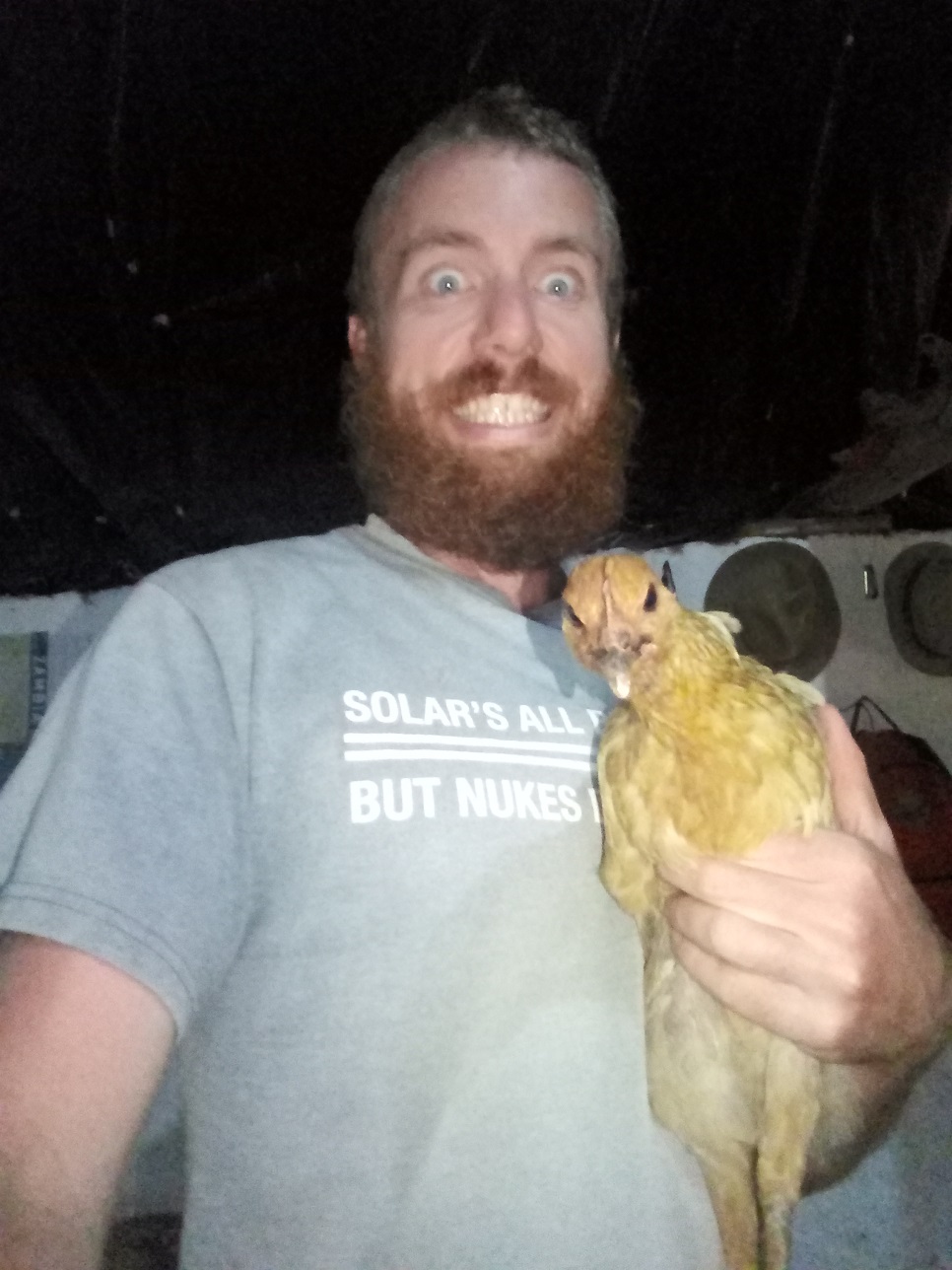
Susan and I.

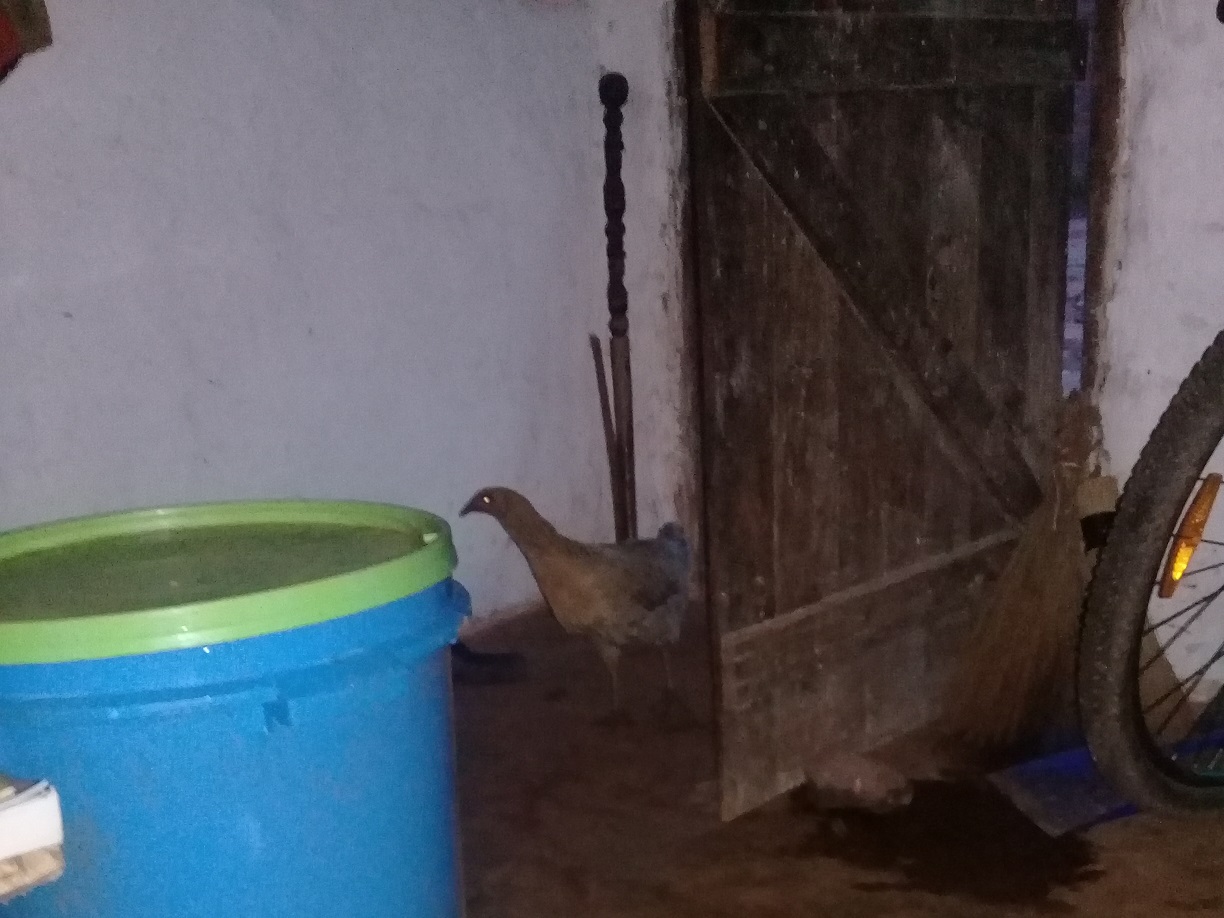
For these past two weeks I have been building a chicken coop. It all started when a chicken decided she lived in my house. One night she walked in like she owned the place and took residence in my chicken. I didn’t mind that until the next morning, when I discovered a bunch of chicken poop in my kitchen. This was clearly unacceptable, so something had to be done. First, I named her Susan, and second, I decided to build a chicken coop.

20180106_182608

Susan, sneaking into the house.

Most of the time when I build things with sticks they wind up kinda low-quality, but given the importance of this project to Susan I decided to make it as high-caliber as I could. The first step was heading off into the forest and gathering supplies, ie, a whole bunch of sticks. This inevitably involves chopping down trees, which I feel terrible about, and to assuage my guilt I donated $50 to Trees for the Future (I’m trying to plant trees myself, but so far with my pollipot tree nursery I am 1/25 in getting the things to sprout).

IMG_6405

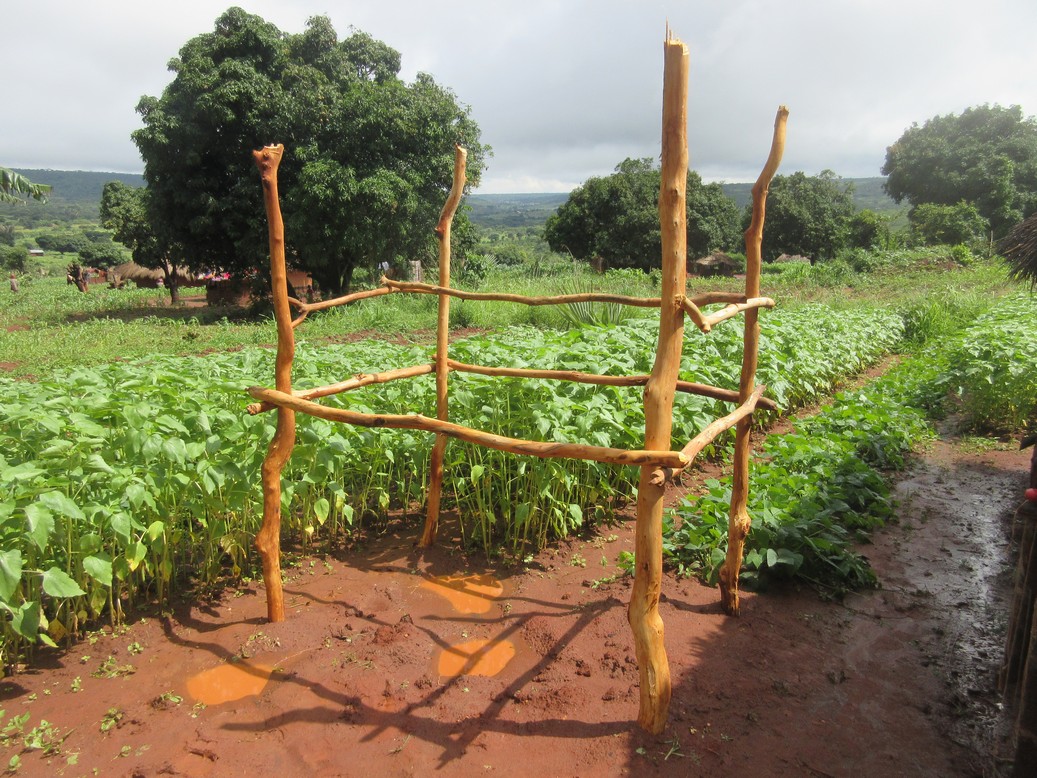
After I had the necessary sticks, I cleared out a little spot next to my house (had to move some of the sunflowers to do it) and planted the first four poles in the ground. I decided to make the coop 1m x 1.5m, which should be sufficient room for up to 10 chickens, but I’m thinking I’ll get like four. Borrowing some techniques from pond staking, I used my line level to make sure that the floor was nice and level for the chickens.

IMG_6408

The basic design of the coop is pretty simple. I just imagined it being a night shelter, so the major piece of “furniture” in the thing is a perch for them to sleep on. That is the pole going across the middle there. One of the most time-consuming portions of the work was stripping the bark off of all the sticks. Parasites and other bugs that bother the chickens can hide in the bark of the wood (along with making it more prone to attack by termites), so it is necessary to strip it all off. That takes time, however. As a side note, I am still sorta consistently amazed that you can get wood from a tree. Like, who’da thunk?

IMG_6406

The whole process took me about two weeks off and on, with pretty much daily trips into the forest to gather more sticks (whenever I am gathering sticks for these projects, I always find myself briefly worrying if using dissimilar woods is going to cause corrosion problems down the line). Susan would come by and inspect the work as it was going along. The chickens also really like it when I move dirt around, because it digs up bugs for them to eat.

IMG_6413

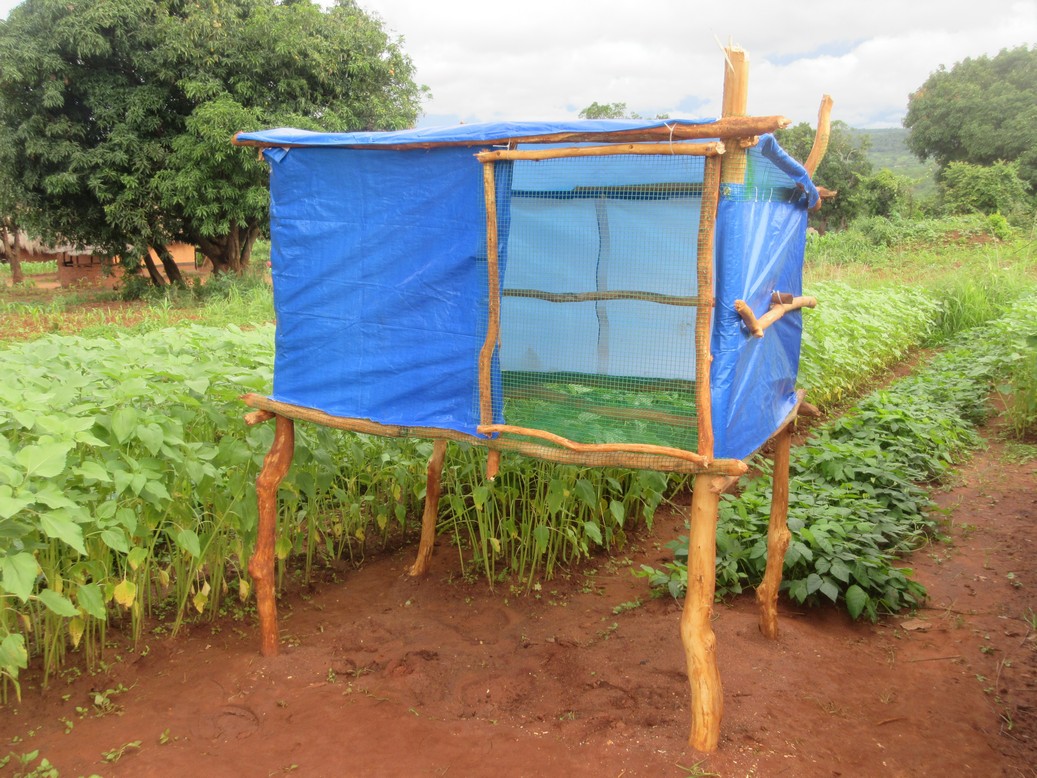
Once I had the frame of the chicken coop in place, I covered it with a tarp. The tarp was a relatively cheap and available building material, as opposed to getting bamboo from the next village over or finding enough sticks to block the wind and rain. In most of the projects I do using free village-appropriate materials is a priority so they can be used as an example to the farmers I work with. In this project, however, my neighbors already have chicken coops of their own made out of a variety of materials, so they don’t need me to show them how it is done. They use a wide variety of materials, and I’ve seen designs use bamboo, sticks, and grass, and I’ve even seen a few that construct a small brick coop on top of a wooden platform.

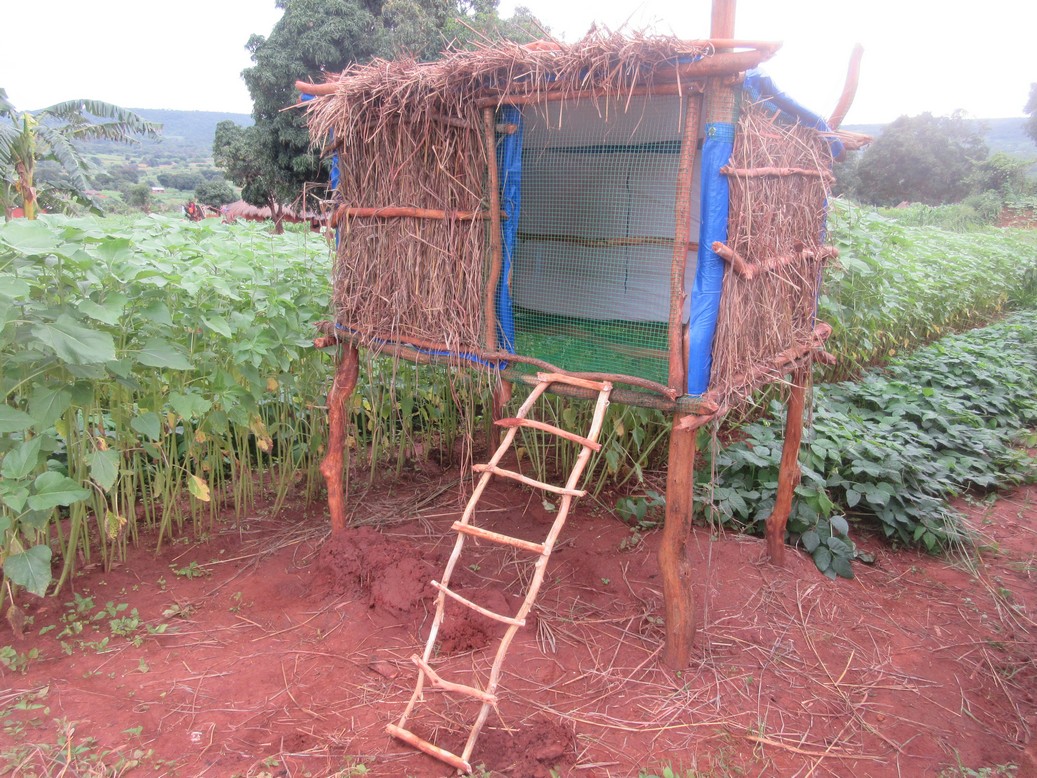
IMG_6516

After nailing the tarp onto the frame, I covered the tarp with grass. The grass serves mostly to protect the tarp from the sun, and also to make the thing blend into the surroundings a bit more and appeal to my own aesthetic sense. I wish I had been able to cover up the blue tarp a bit better but that would have required more sticks and engineering I was unwilling to implement. The floor of the chicken coop is wire mesh that I had originally intended to use on a rabbit hutch that I’ve never gotten around to building. At the tops of the sides there are also mesh windows. The mesh on the floor is intended to make cleaning the coop easy, and also make it easy to collect chicken manure for use in the ponds or my gardens. The windows at the top, along with the floor, are there to provide adequate ventilation. The door is also mesh, and hangs down from the frame in the front. Once I get chickens, I’ll keep them cooped up at night, and let them roam free during the day. I’ll be providing supplemental feed and making sure they have a consistent source of water. Hopefully if they lay eggs fairly consistently I will have a regular supply of eggs to use in meals and baking.

So that’s my chicken coop. It was a fun project to build and now I guess I’m obligated to get chickens. I’ll let you know how that goes.