The Clark Museum

IMG_5372

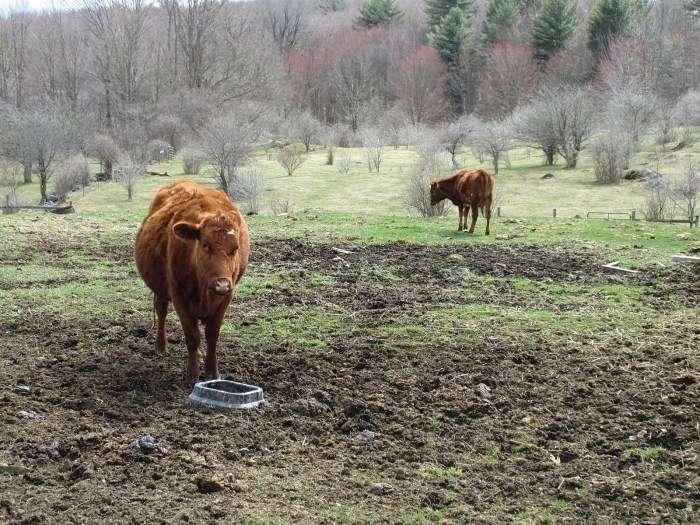
Two weeks ago, as you’re reading this, my super amazing girlfriend and I were back in the Berkshires! The major upswing for you is that I have included a picture of some cute cows at the top!

But in addition to hanging out with entertaining farm animals, we also decided to get some culture in, and visited The Clark, which is an art museum. For social distancing measures, they had timed tickets, and we decided to get there as early as possible. When we arrived there were some early rains, courtesy of Isaias, leading to a somewhat gloomy-looking scene in their courtyard outside:

IMG_5329

The existence of The Clark made me ponder what is the ideal number of art museums to have. This museum surprised me; I had never ever heard of them, but they had Degas and Stuart and Monet and Renoir and Van Gogh and Rodin! Surely there is a number of art museums that is too high; if there were too many, you could never collect all those artists all in one place. Then again maybe an art museum for every individual person would make more room for newer artists and lesser-known artists instead of just these sorta dudes. It also has to be possible to have too few art museums. The Louvre, I hear, is pretty great, but already you can never get through it all. If all of earth’s art were crammed into one spot, then very few people could get to it, and no one could appreciate it.

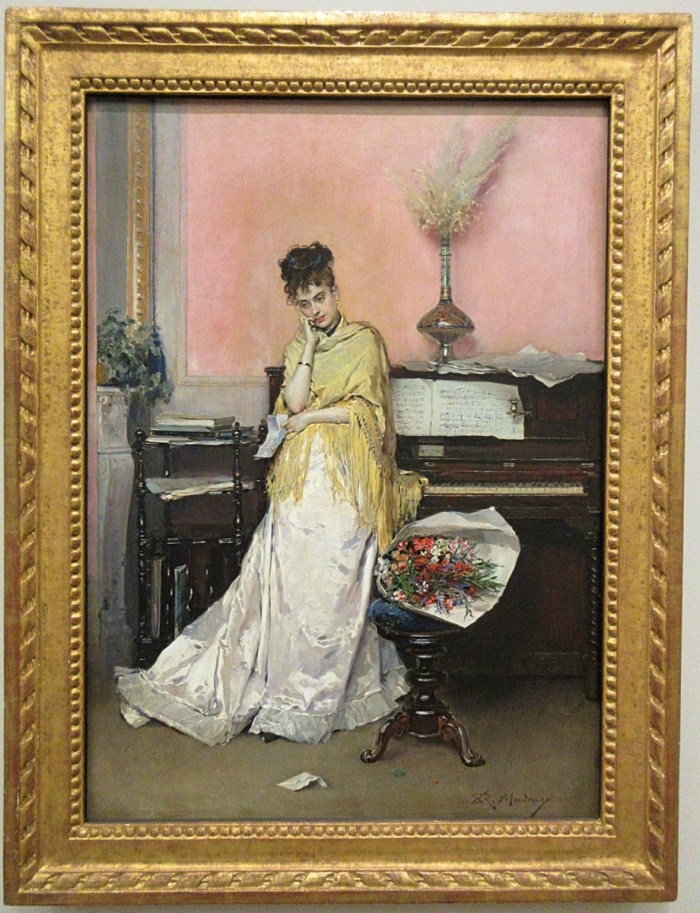
When I walk around art museums, I like to take pictures. I think it gives me a sense of ownership over the pictures. I also really enjoy art museum gift shops, because they let you in some way take the art home. This is perhaps not the best way to appreciate art, but it does let me share with you versions of the artworks that are far worse than what you would see in person, by virtue of being taken on my just okay camera with my just okay eye for framing. My favorite was the piece below, titled “Reverie – The Letter:”

IMG_5331

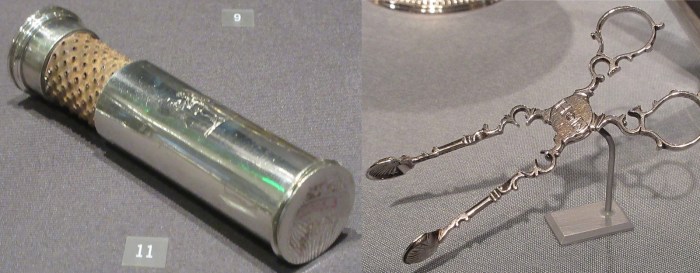
Sometimes this whole “take a picture of the artwork so I can feel like I took a piece of it home” also extends to the physical pieces the wind up in these places, like the below. I have been meaning to check if I could find either of these things to buy and keep in the home, each for very specific reasons. The thing on the left is apparently a nutmeg grinder, and I have very fond memories of grinding fresh nutmeg over painkillers, so you can see why it appealed to me. The thing on the right, on the other hand, is called “sugar nippers,” which is inherently hilarious and you can also see why I would want one.

IMG_5348

I also sometimes take pictures of things in art museums that are only tangentially related to art. I noticed that the museum took great care to make the clamps that were holding pieces of artwork down blended into whatever they were clamping. They really put some effort into this! You can see some of those efforts in the collage below. On the painting, they made sure to do some sorta pointillist thing to make the clamps blend in, and on both of the statues they painted in some marbling which I found impressive. I just thought they were some fantastic little details:

IMG_5349

There is also another theme that is sure to get my attention in art museums, and that is boats! The gift shop had a postcard of the below painting, so I did in fact get to take some of the artwork home, but they didn’t have any lapel pins for sale. The Berkshires has a severe lack of lapel pins, frankly. Someone should get on that.

IMG_5334

The Clark is actually separated into at least two parts, and they had a separate annex where they were exhibiting some work by Lin May Saeed which was very interesting. There was one large piece done out of paper that really spoke to me because I had previously read The Marsh Arabs.

To get to the annex you had to take a ~8 minute walk on some trails outside the museum. We took different paths to get up there and to get back. The walk up took us through the woods which was lovely. The rain had just let up, so they were quiet and peaceful. On the way back we took a different path which took us by a field which apparently sometimes has cows. The fence pictured below is an artwork titled “Teaching a Cow How to Draw” by Analia Saban, a title which to me has strong Cow Tools vibes. But it seemed to me to be a pretty nice fence, and I think it was raw wood, so it would be interesting to see it age into the landscape.

IMG_5366

By the time we had made it down to The Clark proper, the sun was largely out and the museum had started to get more crowded, so people were out and about in the courtyard that had been rather rainy and gloomy just a bit before. It was nice to see the place populated, pandemic-related concerns aside. Places like that only come alive when there are people in them:

IMG_5370

Mystic Seaport Museum

IMG_5258

Last weekend my absolutely amazing girlfriend and I went to the Mystic Seaport Museum, which was awesome. It was her idea; her family used to go to Mystic on vacation when she was a kid and so had some nostalgia for the area, and she also knows I like boats. I have been to Mystic a few times, but never actually made it into the museum, despite the aforementioned deep love of boats. So on a particularly hot Saturday in July we packed up the DeLorean and head up to Mystic to check it out.

It was a great day to go to the seaport. We got there right when it opened at 10, and initially had some confusion about the ticket counter (well, I had some confusion), though after a security guard cleared it up for us we were right in. They were handing out a free book that day with admission, Through Hand and Eye by a guy named Ted Hood, who I had never heard of but is a sailor dude and apparently important (or self-important) enough to get an autobiography published of himself that normally costs $50. And more importantly, they were renting out sailboats FOR FREE!!!!

IMG_Whatever

I was very excited for this because I very rarely get to sail and I do love it so. I guess on a normal day you can pay money to rent one of their sailboats, but given that large chunks of the museum were closed due to coronavirus, they were letting people just take boats out as a bit of compensation I guess. Since it was free, and first come first serve, I was anxious about getting there in time to be able to take a boat out. So I speed walked us right over there and arrived before the boathouse even opened up. I loitered nervously and made sure to get even closer when another couple arrived, though I shouldn’t have worried because they wanted a rowboat.

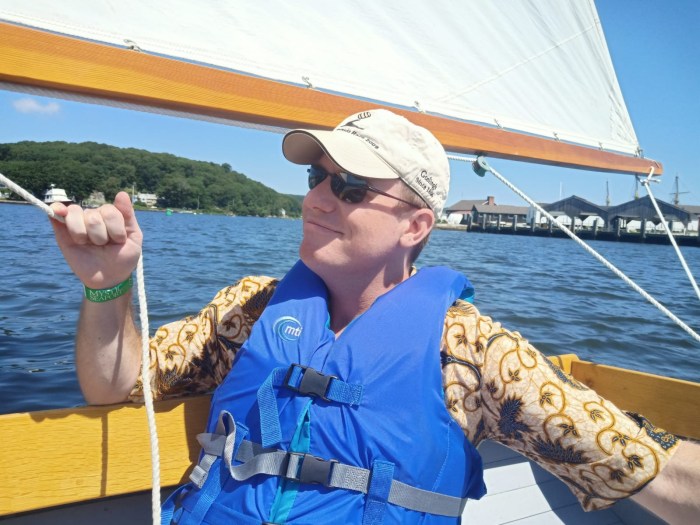
I was excited to take my girlfriend sailing because she had “maybe once, though I can’t remember for sure” gone sailing before. And I mean I talk endlessly about it. I even wrote an essay for a magazine about sailing mostly to impress her. So I was excited to take her sailing and show her both the literal ropes and the metaphorical ropes, and teach her all sorts of great vocabulary like “port” and “sheet.” To be able to take the sailboat out, you had to pass a rigorous knowledge test, which consisted of the person asking “do you have small boat sailing experience?” to which I cunningly answered “yes,” though I had specifically worn my 2009 Marion-Bermuda race hat to show off my sailing credentials.

So with a shove from the dockhand we were off! We were sailing in the river there and it was a lot of fun. The breeze was light but constant and there was plenty of room and not much traffic and we got to go around for like 40 minutes before I started to feel guilty and pulled us in with a slightly too aggressive docking maneuver (we made it anyways). I had her take the tiller for a bit and she did amazing, absolutely fantastic, because she is both absolutely amazing and absolutely fantastic. It was a great time.

IMG_5287

The YP (Yard Patrol) craft!

Then we were off to see the rest of the museum. One of the more exciting bits was discovering that the Joseph Conrad (pictured up top) was owned by Alan Villiers. I own a number of his books so it was really cool to walk around his boat. That era of ships is also pretty astounding to me, because of how it spans different eras. The Joseph Conrad is a square-rigged sailing ship, but has an iron hull, you know? Villiers was of an era where you could both work on sail-powered cargo ships and then later also see the moon landing.

As we walked over into the shipyard area, I was also absolutely delighted to discover they had a YP! I almost didn’t recognize it at first because I walked up to it at a weird angle, and it was painted a super weird blue instead of it’s usual inspiring grey. I guess this one is owned by the Merchant Marine Academy, and was at the seaport because they’re experienced with working on wooden hulls. But my long and lasting experience with YPs (which I think I’ll detail next week) meant she couldn’t hide from me for long.

IMG_5270

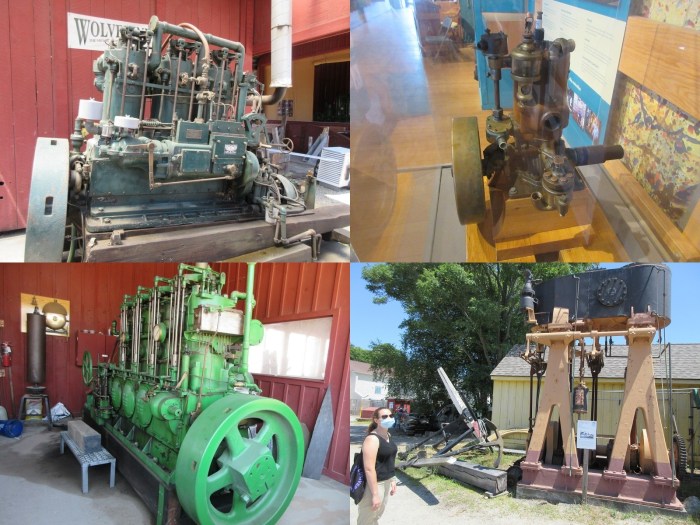
Walking around the rest of the museum was also very nice. It’s not a single building, but actually a small village-looking thing. Although like I mentioned, much of it was closed, there was still plenty to look at. There was a scale model of the river from 1870 or so, and an old US Life-Saving Service hut, and various buildings full of boats. In the above picture, I convinced my super amazing girlfriend to stand next to a triple-expansion steam engine, because I find steam engines very sexy. I am comfortable posting the above picture because she has a mask and that will provide her some deniability of my obsession with steam engines. Actually going through my camera roll I managed to take pictures of a whole host of engines that day:

IMG_5277

So yeah. It was a great day at the Seaport Museum. We saw all sorts of ships and saw all sorts of nautical stuff and even got to go sailing!!! We managed to have lunch at a seafood shack not too far away, and after we were hot and tired from walking around and getting excited about nautical stuff we went to downtown Mystic and had some ice cream. After all that, the only other picture I wanted to post for you guys was the one below of the two little sailboats (one of these we had taken out earlier) because I thought they looked like they were racing. Maybe they were just going about the same direction at about the same time, but it my heart you can’t have two sailboats doing that and not believe they are racing:

IMG_5299

Maryland

IMG_5058

A coal bunker I got built for my Eagle Scout Project.

As I mentioned last week, my super amazing girlfriend and I traveled down to Maryland. I don’t quite know what to say about it, though I gotta say something because I am low on other potential blog content and although the aforementioned girlfriend is the only one that reads this blog, it’s important to me to get something out.

IMG_5072

It’s kinda weird to talk about Maryland. I mean, not desperately weird to talk about the state itself. I’ll talk your ear off. But anytime I move someplace new now, the latest round being moving to New Haven to attend Yale, you gotta tell all sorts of people where you’re from. “Where are you from?,” they ask, and I respond “Maryland.” This just feels weird at this point because I haven’t really lived there for nearly a decade, since graduating from the Naval Academy. That’s not true either, as I have spent several months-long stretches living in my parents’ basement (“the guest room,” my mom insists on calling it). But I suppose that is where I grew up and for large swaths of time has been my legal residence, and it was to my parents’ house that much of my mail always went. But now that picture gets complicated, because my parents are moving, cutting my last real physical ties to the state.

IMG_5080

“Where in Maryland?” is the follow-up question to where I’m from. I typically answer “Annapolis,” which is not really true. Much of the center bit of the tri-city (Annapolis, Baltimore, Washington DC) area is a sort of formless suburb of any or none of those cities, and I’m really from one of those suburbs. But then again it is sorta kinda true, because being from a formless sorta suburb there’s nothing really in my home town to latch onto as a sort of origin story waypoint, except for maybe a rather popular donut shop. I even went to High School out of my district. But then again if I’m from anywhere in Maryland, I do feel like I’m from Annapolis. I went to the Naval Academy for four years after all, an experience that feels often like an origin unto itself. When I go back to Maryland, it’s Main Street in Annapolis that I make sure to travel back to.

IMG_5076

But my girlfriend had never been to Maryland, so it’s a half decent excuse to drag her around and show her some stuff. It’s also a good excuse to wander around some bits you don’t normally wander around. The day we visited Annapolis was sunny and hot. We parked a few streets from Main, instead of paying for parking right downtown. Much of Annapolis was closed that day; I couldn’t show her the Academy, which would have been most of the tour, and the historical sites like the Capitol building were closed to visitors. But we managed to wander up and see a cannon I had never seen, and I read a plaque which finally clued me into the identity of the Old Treasury Building. We got to wander into my favorite used book store before many of the crowds arrived. We had arrived in Annapolis before many people were downtown, but by the time we left the crowds felt somewhat oppressive in a COVID-19 world. We managed to get some ice cream though.

IMG_5064

Besides Annapolis, we went to go visit a park near my house. This park’s main feature was a coal bunker, the building of which I had organized in pursuit of becoming an Eagle Scout. I’m still rather proud of the thing, and it is still standing and still bunkering coal 13 years or so later. It’s pictured up top. The coal bunker is next to a blacksmith shop, and the blacksmith shop is there because the park used to be a farm. In a nod to the park’s farm origins, there are a variety of animals kept by the local 4-H club, which included alpacas, which are viewed in high esteem by my girlfriend. So that was nice. In the same park we returned later with my dad and brother to look for deer, which when combined with the alpacas gave the whole event a lot of safari vibes. Or I thought so, anyways. We were just walking instead of bounding around in a Land Cruiser pickup.

IMG_5084

Eventually we left Maryland and returned up here to New Haven, and the next time I head southwards my parents will have moved to Florida, leaving me without any convenient place to stay east of Silver Spring. I’ll be back in Annapolis again, for sure: there are Academy reunions held with vigor every five years. But I guess we have to see if it still feels like home.

Mt. Vernon

20200704105812_IMG_5190

Yesterday, on the 4th of July (if I get this posted in time), my super amazing girlfriend and I went to Mt. Vernon (specifically “George Washington’s Mt. Vernon”). She is a big fan of presidential historic sites, and since we were in Maryland for the week so I could retrieve some things to store in my near-mythical storage unit, we decided to take the drive on down to see George Washington’s old digs. In addition, it seemed like a vaguely patriotic thing to do on a day when most fireworks displays were otherwise cancelled.

The particular bit of George Washington myth-making that intrigues me the most is the vision of a man who only really ever wanted to be a farmer, but kept acquiescing, with great reluctance, to lead a revolutionary army or serve as President of the United States. It is the central myth of George Washington, a myth that serves to embody in a man the notion that the revolution the founding fathers fought was for the people and by the people, and not for the aggrandizement of any one person. The nice lady at the tomb made sure to call out the myth explicitly: the one thing she said that stuck was her noting that peopled called ole’ GW the “American Cincinnatus.” It is also a myth that could be true. The facts are a matter of the historical record: George Washington did fight the revolutionary war, and did resign his commission when it was done. George Washington did serve as President of the United States, and did quit after two terms despite no one forcing him to. The story you tell around those bare-bones facts is a story about his motivation for doing so, the truth of which is unknowable without being in George Washington’s head.
20200704105124_IMG_5185

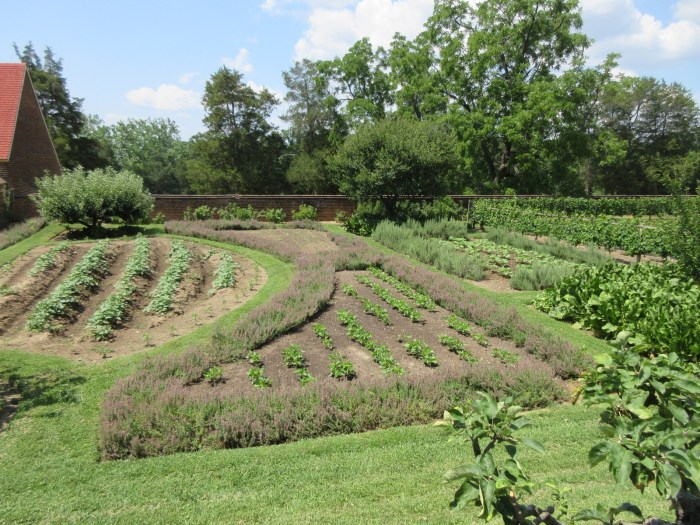
Some of the vegetable gardens.

One version of the myth I toyed with as we explored the grounds of Mt. Vernon was George Washington as just a conservation farming nerd. I imagined him as willing to fulfill the duties to which he was called, but viewing those duties as a distraction from his true passions of soil improvement and crop rotation. I like to picture him meeting an ambassador for the first time, and sure, yeah, doing the whole diplomacy thing, but most desperately interested in having the ambassador send over seeds for exciting new crops. That’s a man that quits the presidency only because he just can’t get anyone in the government to get as excited as he does about manure processing.
20200704084910_IMG_5104

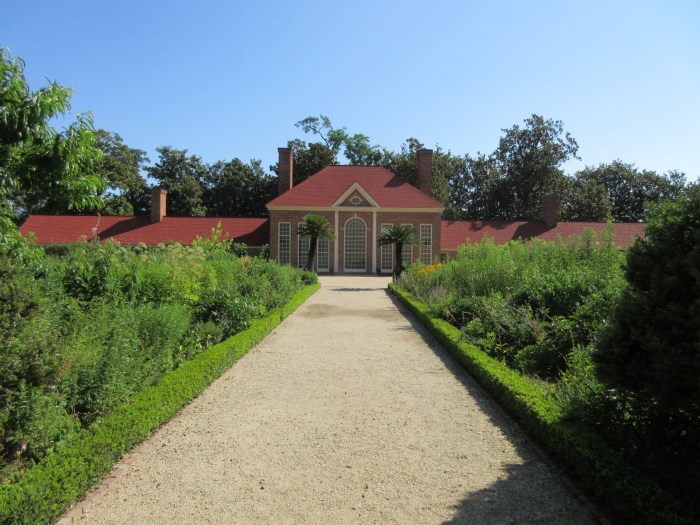
Greenhouse framed with some palms.

Touring Mt. Vernon makes this an easy version of George Washington to conjure. Although there is a museum, the site isn’t a presidential library or anything of that sort, and besides for the whole President thing visiting Mt. Vernon is really just a plantation tour. Like my personal vision of the man, I too am a conservation farming enthusiast, and I thoroughly enjoyed walking around and checking out some of the traditional crops they have growing there and the extensive gardens. The plaques describe Washington’s extensive efforts at growing living fences, and makes note of the garden he would personally tend as he recorded the successes and failures of different experiments. His careful forest management, innovative barn designs, and greenhouse with exotic fruits are all lauded in detail.
20200704104620_IMG_5180

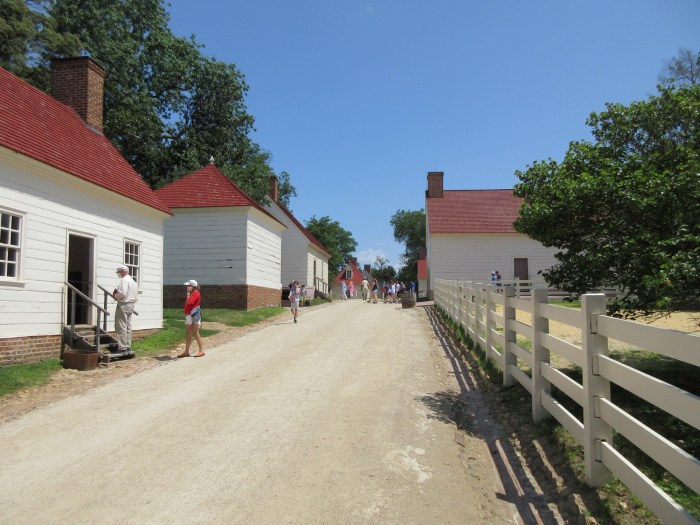
As we wandered up towards the main house, which is surrounded by outbuildings, I wondered what it would have sounded like in 1798. This is my schtick at places like this; you can see the buildings easily enough, but can you really get a sense of the place? As all plantations were, Mt. Vernon was essentially a small town. It was fairly crowded on July 4th, 2020 (masks were worn and social distancing measures were in place), but there was a whole wide array of sounds the landscape was missing. What would it have sounded like with horses pulling carriages up the path? With the roaring fire in the greenhouse keeping the orange trees warm, fed by an enslaved tender? With enslaved women doing the washing in the wash house? With the enslaved blacksmith pounding away in the blacksmith shop? With an enslaved carpenter repairing the roofs on the buildings? With the enslaved cooks chopping meat in the kitchen?

The myth of George Washington as a humble farmer who just really wanted to tend to his fields works well in the 20th century, against the backdrop of the US presidency as the most powerful position in the world. Why would any one man give up so much power over the running of the entire country? But in 1797, the landscape was much different. The presidency was a small job in a new, daring, but weak nation. But at home, at Mt. Vernon, George Washington was instead the lord and master of over 500 enslaved persons, wielding over them the power of life and death. He was, as the museum tells me, one of the richest men in America. So that’s my other vision of George Washington, as a man who returns from his duties, back to Mt. Vernon, so he could finally exercise real power.
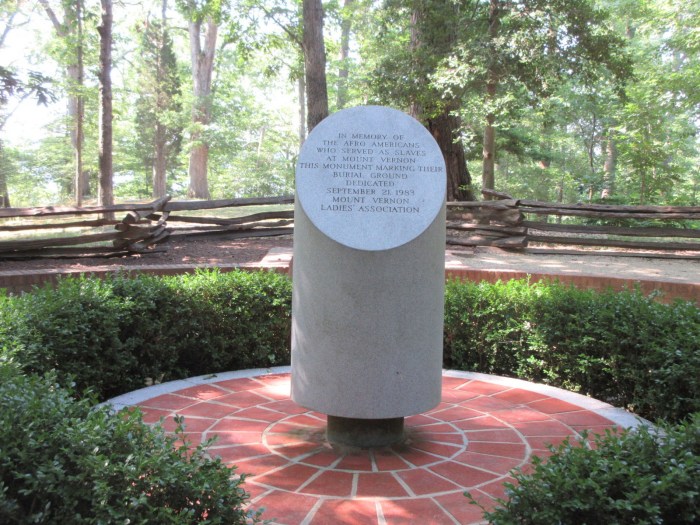
20200704090723_IMG_5116

1983 monument to the enslaved persons of Mt. Vernon.

20200704090808_IMG_5118

Slave Cemetery

Mt. Vernon confronts George Washington’s legacy of slavery, but it is in no way a reckoning. At the slave cemetery, nearby Washington’s tomb, there are two markers, one dating from 1929 and another from 1983, and archaeological efforts are ongoing. Throughout the site, there are constant references to the work that enslaved persons did. In all these references, the interpretation falls far short. They all report, I assume, facts, but fail to contextualize them in ways that speak to truth.
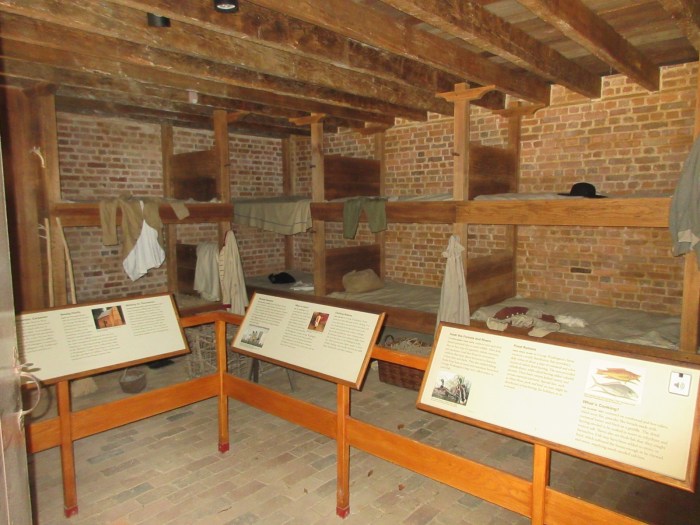
20200704111656_IMG_5202

Near the main house, there are bunk rooms for both enslaved men and enslaved women. “Why Bunk Rooms?,” one plaque asks, before answering that “the unusual barracks-style1 bunk rooms were useful here because most of 59 adult slaves at the Mansion House Farm were either single men, or men whose jobs required them to live apart from their families six days a week.” That is a strange and underhanded way to phrase that George Washington, in his power over these people, decided it was more important that he have a butler on-hand than to allow these men to see their families for more than one day a week.
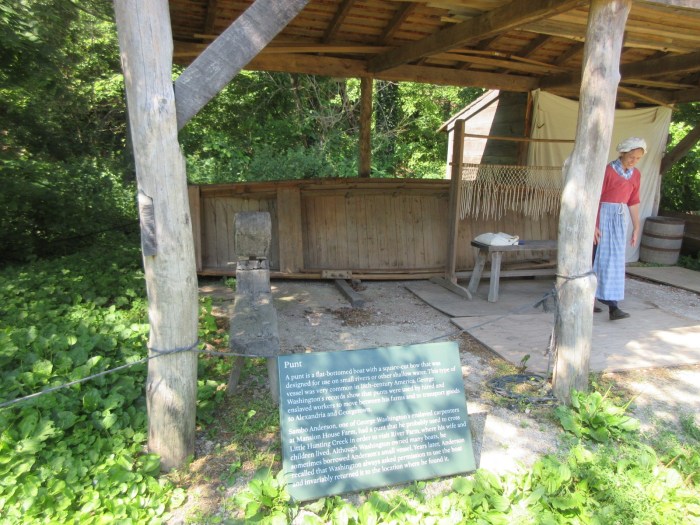
20200704093256_IMG_5139

Punt plaque.

Down by the water, nearby a model slave house made up to look quaint and cozy, there’s another plaque describing a punt. A punt “is a flat-bottomed boat with a square-cut bow that was designed for use on small rivers or other shallow water.” At the bottom, the plaque tells a touching tale about how “Sambo Anderson, one of George Washington’s enslaved carpenters, had a punt that he probably used to cross Little Hunting Creek in order to visit River Farm, where his wife and children lived. Although Washington owned many boats, he sometimes borrowed Anderson’s small vessel. Years later, Anderson recalled that Washington always asked permission to use the boat and invariably returned it to the location where he found it.” This story tells us that George Washington was nice to the people he enslaved. He asked permission to borrow Sambo’s boat! And returned it to the same spot! The plaque doesn’t bother to delve into why Sambo was forced to live away from his family. The insidious task the plaque undertakes is to polish the sharp edges of the relationship between Sambo and George Washington. George Washington had the power to order Sambo killed at any time and for any reason. George Washington personally prevented Sambo from living his own life as he chose. If you’re George Washington, why not be nice to a fellow human being whose life you could end at any time?

20200704112841_IMG_5218

Outside of the COVID-19 era, we might have come across it sooner, but it wasn’t until we were really heading out of Mt. Vernon that we found the portion of the museum dedicated to discussing the lives of enslaved persons on Mt. Vernon. Here, the museum works to paint a picture of a man torn in his very soul about the legacy of slavery. It’s a picture I just couldn’t buy.

In the submarine force, we had these training modules, called SOBTs (Submarine On-Board Training), that detailed events that lead up to various submarine accidents. Almost invariably there was a note in there, along the lines of “and the Quartermaster thought the ship was in trouble and this was a Bad Idea, but he told no one and did nothing about it.” I always felt you didn’t get credit for that; no one cares if you thought something was a bad idea if you didn’t do anything about it. Right from the start the museum spins a similar tale about Washington. It explains that his views on slavery changed over time, and towards the end of his life he thought it was a bad idea. But he didn’t do anything about it. You don’t get credit for freeing enslaved persons after you die and don’t need them anymore. I found frustrating the line that he was “unable to extricate himself from slavery during his lifetime.” That’s not true. What is true is that he couldn’t find a way to do it, and maintain the lifestyle to which he had become accustomed.

In my head as I was imagining this post it was an eloquent analysis of the mythmaking surrounding the founding fathers, a notion buoyed by a viewing of Hamilton last night on Disney+. It’s turned into more of a screed, but one that’s necessary, I think. The museum continues to shy away from truth while reporting facts. It discusses how slavery was economically unviable, how George Washington lamented that many of the enslaved persons didn’t really earn enough to make their “upkeep” profitable. That turns slavery into a charity case: these people couldn’t survive on their own, being unable to do productive work, but good ole’ George Washington keeps them on the farm anyways so they could stay fed and clothed. Let’s ignore why they were never able to save up for a retirement on their own.

The museum details the various punishments that George Washington could employ to keep the enslaved persons under control. The direst was selling them to the West Indies, which the museum noted was tantamount to a death sentence. This was reserved for only the most pernicious troublemakers, for whom George felt there was no real remedy. This puts the onus on the enslaved persons: if only they had acted better, Washington wouldn’t have been forced to send them to their deaths. The crimes for which these men paid with their lives? Fighting for their freedom and inconveniencing George Washington.

The most galling was the museum noting that freedom for many of the people George Washington freed in his will was “bittersweet.” Washington did not really own all of the enslaved persons on his farms; many he controlled via his marriage to Martha Washington, who had inherited them via the Custis line. Since the persons enslaved by Washington and persons enslaved by the Custis’ had intermarried, in some cases only parts of some families were freed upon Washington’s death. This is what made freedom “bittersweet,” in the museum’s telling. In that telling, sure, slavery was bad, but at least it kept families together!

The museum is wrought with, at first I was going to say “contradictions” like that, but “contradictions” is not quite right. There is no way to tell the whole truth of the life of a slaveowner and make that slaveowner look anything but evil. Whatever ideals George Washington fought for, he compromised them at home. The only question we have to answer is how much can a man compromise, and still get credit for fighting? In the year 2020, we can no longer accept a moral compromise that entailed the enslavement of hundreds of people so one man could continue to live a particular lifestyle. George Washington could have freed his slaves in his lifetime, but he just couldn’t figure out a way to do it and still be the “gentleman farmer” that he, or maybe just historians, imagined himself to be. When people argue against tearing down Confederate statues on the slippery-slope principle that, before you know it, we’ll be tearing down George Washington, they think they have a pretty rock-solid argument. Instead, I think we must reevaluate these men with every new generation. While it is imperative to learn about the context in which history happened, in order to actually understand the decisions people like George Washington made, we are not bound by the moral judgements of the past. It is the right of every present generation to look back and judge these men by the standards to which we would like to uphold, and only then take the lessons from their lives to help us live ours.

1I also want to say, the plaque notes that the bunkhouse as it is shown at Mt. Vernon today is based off of barracks occupied by Continental Army troops, which they make note of I guess as a way of citing their sources, but also seems to me says something like “look, George Washington treated enslaved persons just as well as Army troops! Couldn’t have been all that bad!”

Hammonasset

20200614112600_IMG_5035

When I took this photo I initially didn’t spot my own legs on the viewfinder; my swimsuit just ended as far as I could tell.

Reading this week:

  • The Arabs: A Short History by Philip K. Hitti (1949)
  • Black Leopard, Red Wolf by Marlon James
  • Make Your Bed by Admiral William H. McRaven (USN, Ret) (gift)
  • Designing Your Life by Bill Burnett and Dave Evans (from a seminar)

This past weekend (as I’m writing this) my girlfriend and I went to Hammonasset!

When I was a wee youth, my family and I would go camping at Hammonasset nearly every summer. My dad has roots in Connecticut, and I think we generally went up to coincide with a family reunion on that side. The big draw of the place for us kids was that there are miles of biking trails (or at least, trails upon which you can bike), which must have offered a pretty nice vacation for my parents. We just went off all day, entirely failing to bother them, and just made sure to stay generally within the confines of the state park. It had been years since I had been here, and I hadn’t quite ever placed Hammonasset (when I was a kid I always wondered how the name related to pigs, and specifically pigs on some sort of asset, but the name apparently actually means “where we dig holes in the ground“) in my head geographically until I was driving to New London to meet up with some friends and spotted the sign. Turns out it is only like a half hour drive from New Haven, so since it was a sunny weekend my girlfriend and I decided to have a beach day to get out of town.

20200614090024_IMG_5013

We left fairly early, because we were afraid of the beach being at capacity and not being allowed in. We got there in plenty of time when the park was still relatively uncrowded (later in the day it got crowded to the point where I kinda no longer felt it was pandemic-appropriate, but we managed to minimize interactions I think) and started off going on some nature walks. When I was smaller I remember the park being much bigger, but it has some very lovely trails overlooking marshes and such. You could even spot, from one rather nice location, some navigational markers (pictured above), which I then got to explain in great detail to my girlfriend. Sudden realization: maybe she asked about them on purpose so I could talk about the International Association of Marine Aids to Navigation and Lighthouse Authorities System B????? Awww she’s so sweet.

20200614090918_IMG_5018

20200614091718_IMG_5019

20200614091939_IMG_5020

Besides navigational markers, the park seems to be very very good for birds, with a variety of habitats and a whole mess of bird houses placed all over the park. I made sure to take several pictures. Other things I took pictures of (not included here) were some solar panels (infrastructure!!), a spiral herb garden, and my girlfriend eating a sandwich. I also took some pictures of sailboats, who appeared to be drifting but with gusto, the usual fate of sailboats in Long Island Sound:

20200614093545_IMG_5029

With our exploring done, it was time to hit the beach. We gathered up the camping chairs we had brought, took off our pants, and settled in. We mostly sat there reading our respective books, which is about the best way to spend a day on the beach if you ask me. Sunscreen was not applied as liberally as it should have, but frankly that would have been difficult in the best of times. The day was beautiful and warm even if the water was cold (we dipped our feet in and got no further) and the beach drew a rather massive crowd. I think they should have limited it a bit more, but people seemed to be at least trying to keep their distance from each other.

After a few hours, we decided we had enough sun and packed it up. We drove around the park a little, and I indulged in a bit of nostalgia, pointing out, for example, the parking lot where I used to ride my bike into flocks of birds in order to scare them, or the field where I used to fly a kite and where that day other people were flying kites. A pretty fun experience and I highly recommend.

20200614094916_IMG_5034

Sheep Shearin’

IMG_4885

Reading this week:

  • Walking with the Wind: A Memoir of the Movement by John Lewis with Michael D’Orso

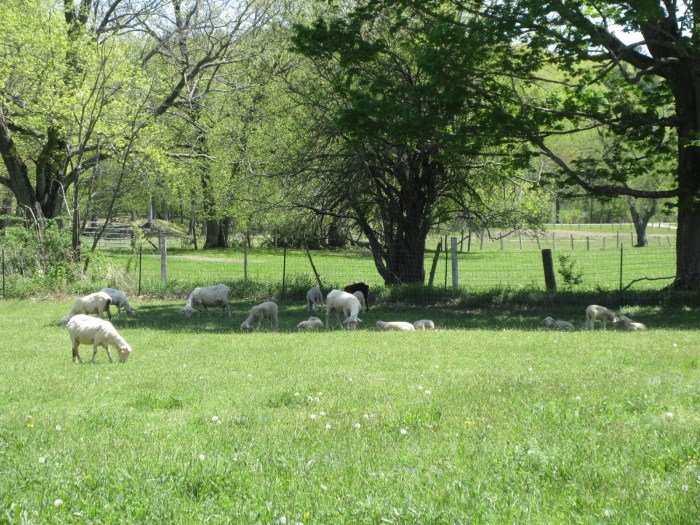
This past week it was back to farm country. We were officially on summer break, so we decided to head back north for some idyllic pastoral scenes, such as the above one with fluffy sheep. But! These fluffy sheep were not to last, because the World Famous Fred DePaul was coming down to shear some sheep and I got to help out!

IMG_4888

Glamour shots.

Shearing sheep was the big event for the weekend. It only happens once a year, after all. Or anyway it’s supposed to happen once a year. The big drama this particular weekend is that the local newspaper had a front-page photo of Sheep Shearin’ Fred shearing a sheep that hadn’t been sheared in two years. This was dramatic because any responsible sheep farmer knows to shear their sheep every year, because it’s neither good for the sheep nor good for the wool to let the sheep go two years. Fred didn’t own the sheep, but everyone involved was worried that their good reputation would be harmed by the journalistic indiscretion. What has the world come to anyway?

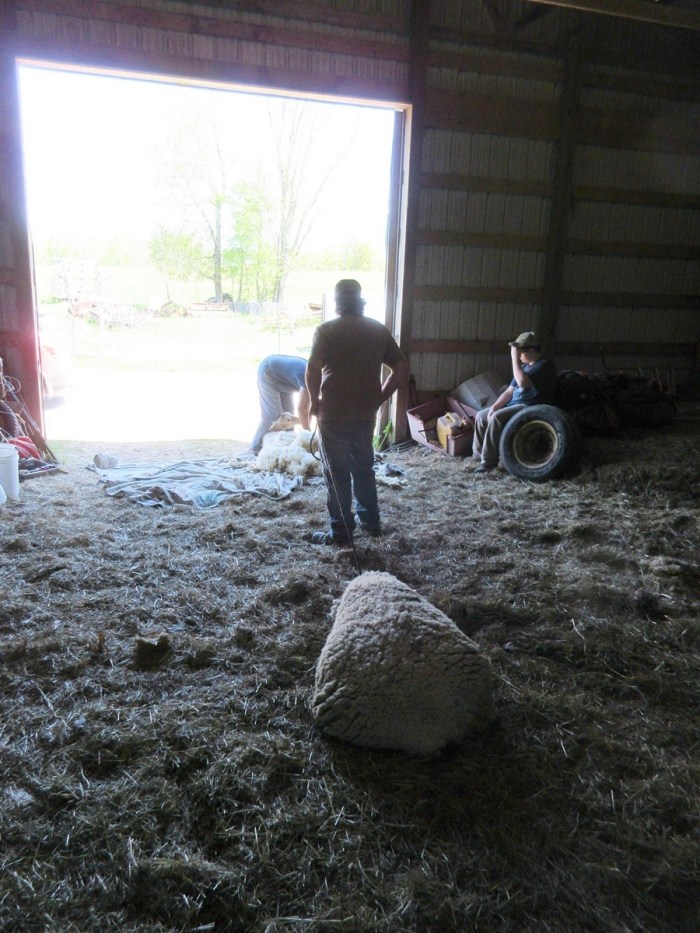
Sheep shearing was scheduled to start at about 10 in the morning with the arrival of Fred. Farmer Billy, as my girlfriend’s dad is known to his legion of online fans, had prepared by rounding up the sheep. Besides being sheared, they were getting their hooves trimmed and getting deworming shots. All the lambs were getting banded and docked just so they wouldn’t feel left out.

20200524091140_IMG_4892

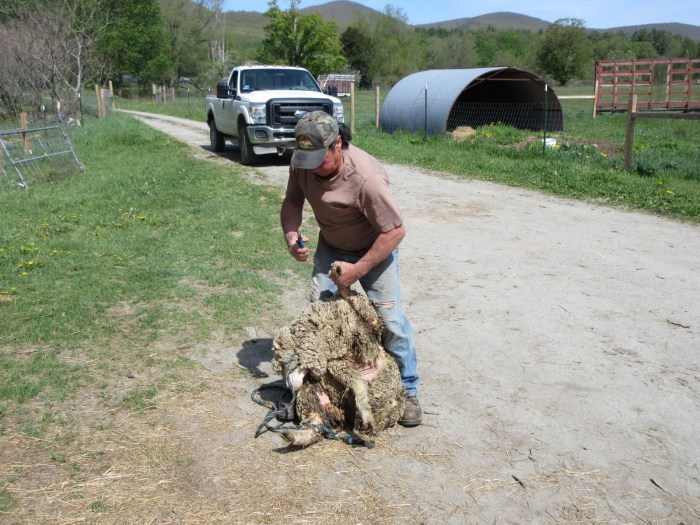
It is a joke that I managed to make several times that day, but with the whole world protesting so they can be allowed to get a haircut the sheep were notably unethusiastic about their all-inclusive spa day. I mean between a haircut and a mani-pedi what more could you want? But they were unenthusiastic (I know I can’t blame ’em). To shear the sheep, you flip ’em on their back or on their butt, at which point they largely go limp. Most of the time I thought they resembled toddlers who didn’t want to do something, having to either be dragged along or hiding behind their parents. But Fred and Farmer Billy are very experienced and caused them no harm. I feel like after they’ve been sheared they must have quite the spring in their step, having lost all that fuzz. At the very least they must be cooler, with summer temperatures finally starting to make a debut.

20200524102717_IMG_4900

One of the sheep reluctantly waiting her turn.

My role in the whole operation was largely moral support. I opened several gates and reluctantly bagged several bags of wool. One time I also measured out some medicine, but that was only because no one else was available. I did get kudos for grabbing the lamb of one particularly protective sheep. “Wow, you dove right in there!,” I was lauded, after heroically picking up a cute lil lamb, which we then used to lure its mom towards her inevitable haircut. Later my girlfriend took over lamb-holding duties, and she had to pose for both me and her mom as we obsessively took the cutest pictures ever. Those pictures are not included because she is the only person that reads this blog and I think she would be upset if I posted them.

20200524124943_IMG_4908

After several hours the sheep were all finished getting sheared, and were released back into the field, where they were quickly distracted from their woes by grass. If I learned anything that day it is that, as my girlfriend pointed out, sheep are very easily distracted by grass. All the little lambs had very tight rubber bands around their tails at this point and couldn’t care less when presented with some grass.

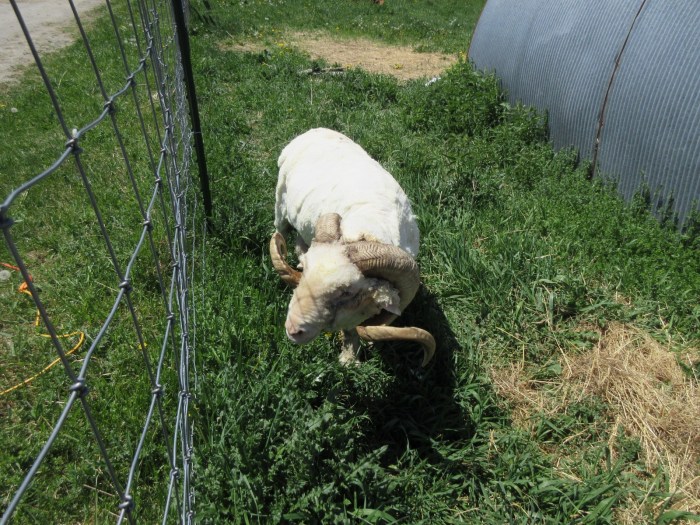
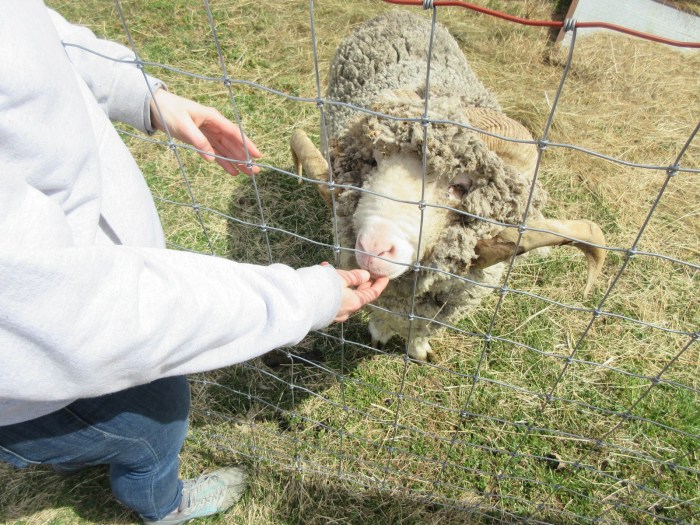
Of all the sheep, the most dramatic makeover was Emmett, the friendly ram. He was tricky because his horns had to be maneuvered around, and I had failed to realize he had ears, but here he is, in all his shorn glory:

20200524124748_IMG_4907

Overall quite the exciting day, and afterwards I lay down on the couch for quite some time out of laziness. I hope my lamb-wrangling skills managed to impress Farmer Billy.

Farm Country

IMG_4818

Reading this week:

  • The Last Emperox by John Scalzi

This past weekend, my super amazing and super smart and super good-looking girlfriend, who is all those things not only because she is the sole regular reader of this blog, and I had an opportunity for a socially distanced change of scenery, aka spending a few days in an unoccupied house her parents own. So we went! It was really nice being able to spend a few days in her hometown. I even sorta kinda got to meet her parents, from an appropriately social distance. Now I can put accurate imagery to all her stories of her youth.

IMG_4813

Some of the most interesting stuff going on was happening in her own back yard. In the area several different solar farms have popped up. I’m all for solar, even if I like nuclear power more, and given the massive area of land that it will take to generate a sufficient amount of solar-powered electricity, we all need to get used to having solar panels near us and around us. But solar panels are of course contentious, unfortunately. People tend to think they change the character of the place. One of the more disappointing things about Yale is that apparently the thing keeping them from covering the whole place in solar panels is that they want to maintain the look of the place. Kinda sad that even at the liberal tree-hugging bastion that is purportedly Yale saving the planet ranks lower than aesthetics (not that a few solar panels on Yale are going to save the planet or anything).

The other interesting development is that nearby a marijuana farm is moving in. This, like solar panels, is also contentious. But soon you’ll be able to stand on the hill and look over fields of solar panels and weed, which has have been the weird wet dream of at least certain hippies back in the ’70s or something. I don’t live in the place, and I didn’t grow up in the place, but a large part of me thinks that these changes should be embraced. Solar farms and marijuana farms aren’t exactly traditional agriculture, but they are farms nonetheless, no?

IMG_4834

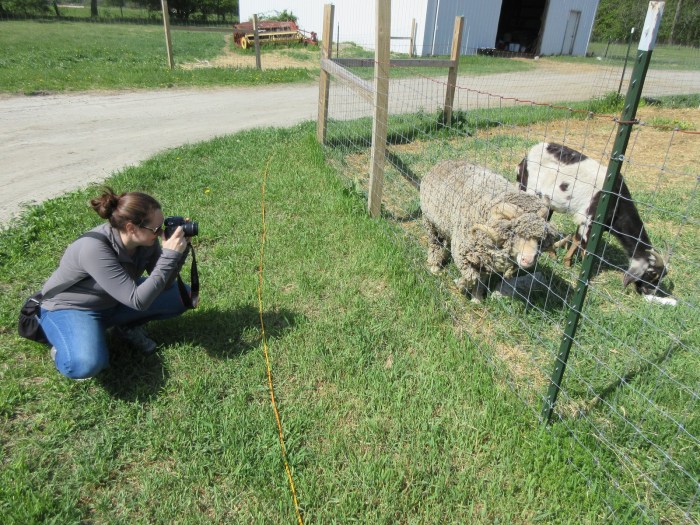
Although we had to stay socially distant from people, that was very much not true of animals. And fortunately new forms of rural land use have not yet pushed out the wide variety of pastoralism in the region, so there were very many animals to pet. Reviewing my photos, my new kink appears to be pictures of my girlfriend scratching animals’ snouts:

IMG_4812

Emmett, the friendly ram.

IMG_4862

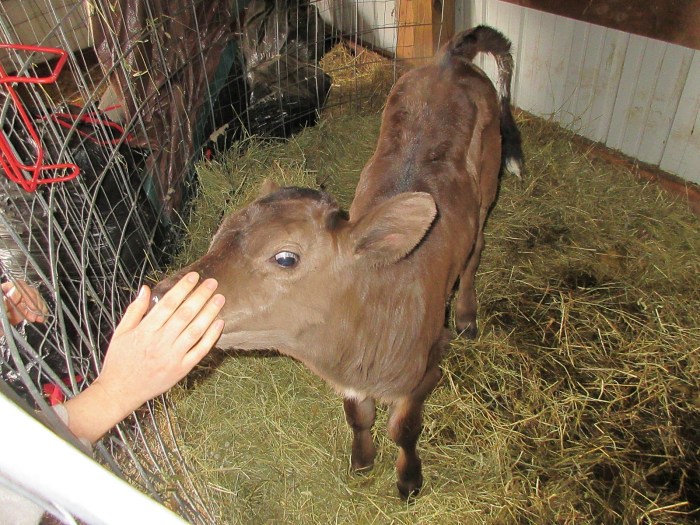
I like this photo because it looks like this super-cute calf is like INTO whatever she’s got on her hand.

The real bonanza for animals was the local Hancock Shaker Village. The Village is currently closed due to pandemic, but my girlfriend knows some people and was able to take me around for the tour. The place is super cool and I am excited to go back when it’s open and I can see woodworking and blacksmithing and hopefully even more animals. My favorite part was Pepper, the extremely friendly cat pictured up top, who liked to climb on people and demand scritches. These are some of the absolute best cat traits. I carried her around as we checked out the animals, which included a barn full of little babies and even more animals around the grounds. These were a small fraction of the total animals that reside at the Village when it is up and running.

IMG_4846

IMG_4849

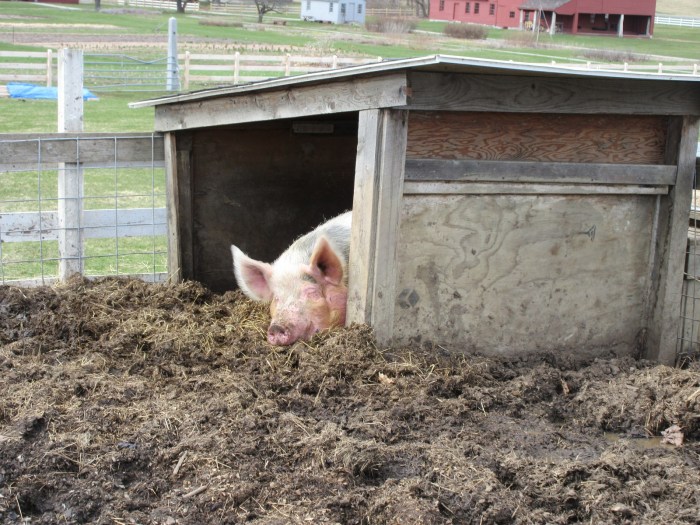
Oh, to be a Very Large pig, relaxing in my pig house.

When we weren’t living the authentic life of a 19th Century Shaker, we spent most of the time in the house, relaxing. And also doing like, homework. We’re grad students, you know, and this involves a lot of homework even or maybe especially in the midst of a pandemic. But when the work got to be too much you could look out the wind and view grazing sheep.

IMG_4860

So it was an idyllic few days up in farm country, looking at animals, snuggling on the couch, and eating delicious mac n’ cheese and even more delicious ham. We eventually left in the midst of some rain, to return to sitting in our own apartments. I’m excited to come back up when the weather is nice enough and we can watch clouds that look like sheep go by, and have sheep that look like clouds nibble our pockets.IMG_4870

Barn find (not really).

Myakka River State Park

IMG_3615

Reading this week:

  • The Great Railway Bazaar by Paul Theroux

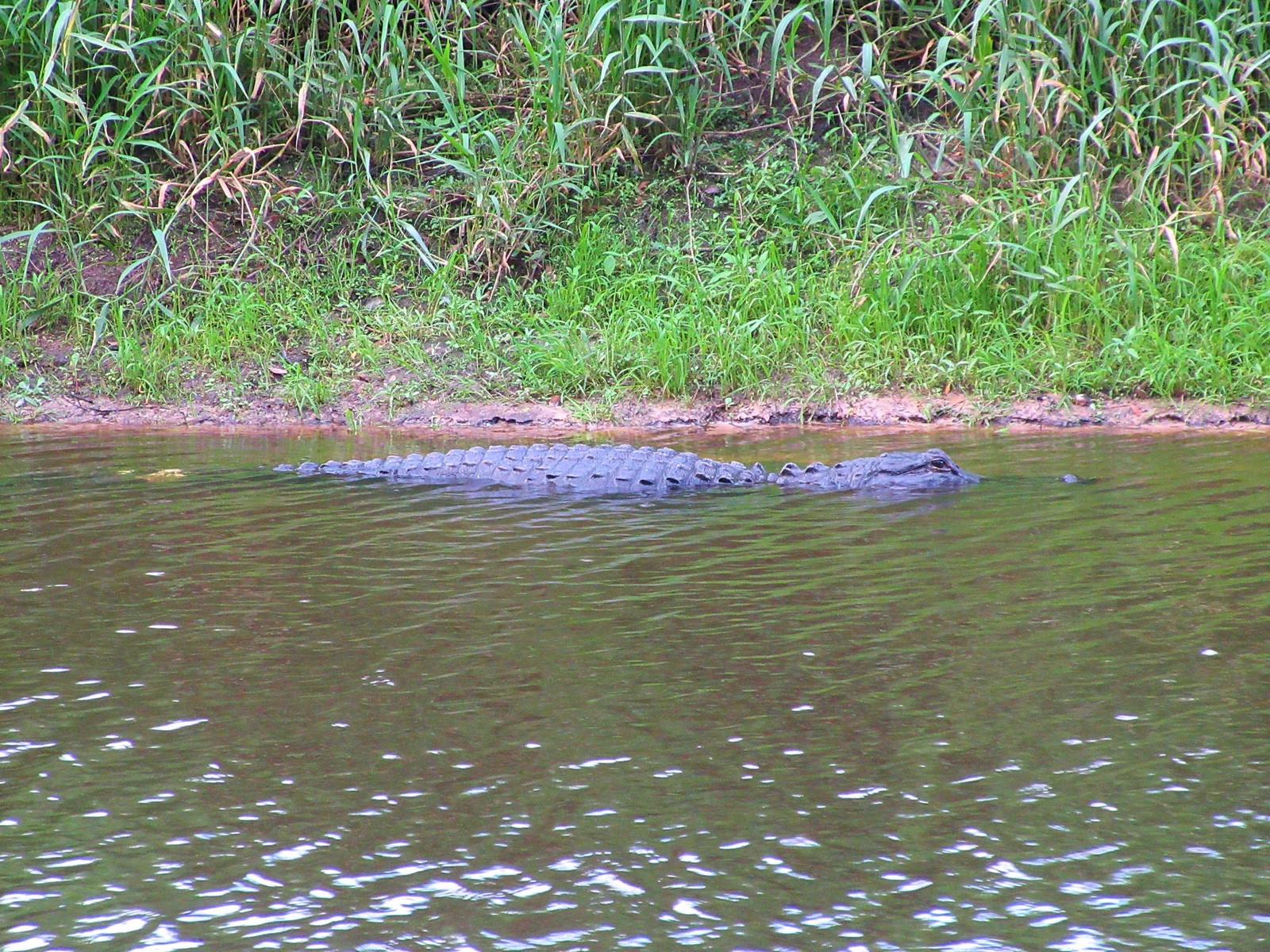
We are, as noted, in the “stretch” portion of content. That means a whole post on Myakka River State Park! It is a pretty nice little state park. It was created when the Civilian Conservation Corps did their usual thing and found a river and dammed it up. They cleared, we were told, about 1000 acres of forest to do this. They also didn’t quite dam it up, they in fact built a weir. Over the years I guess silt has kinda dammed up the place anyways, because the weir is no longer in use except by a bevy of alligators that like to hang out next to it. Why was the CCC so enthusiastic about damming up rivers? I can barely remember the last time I saw a lake that wasn’t made by the CCC. Someone in the CCC must have been related to a beaver.

IMG_3626

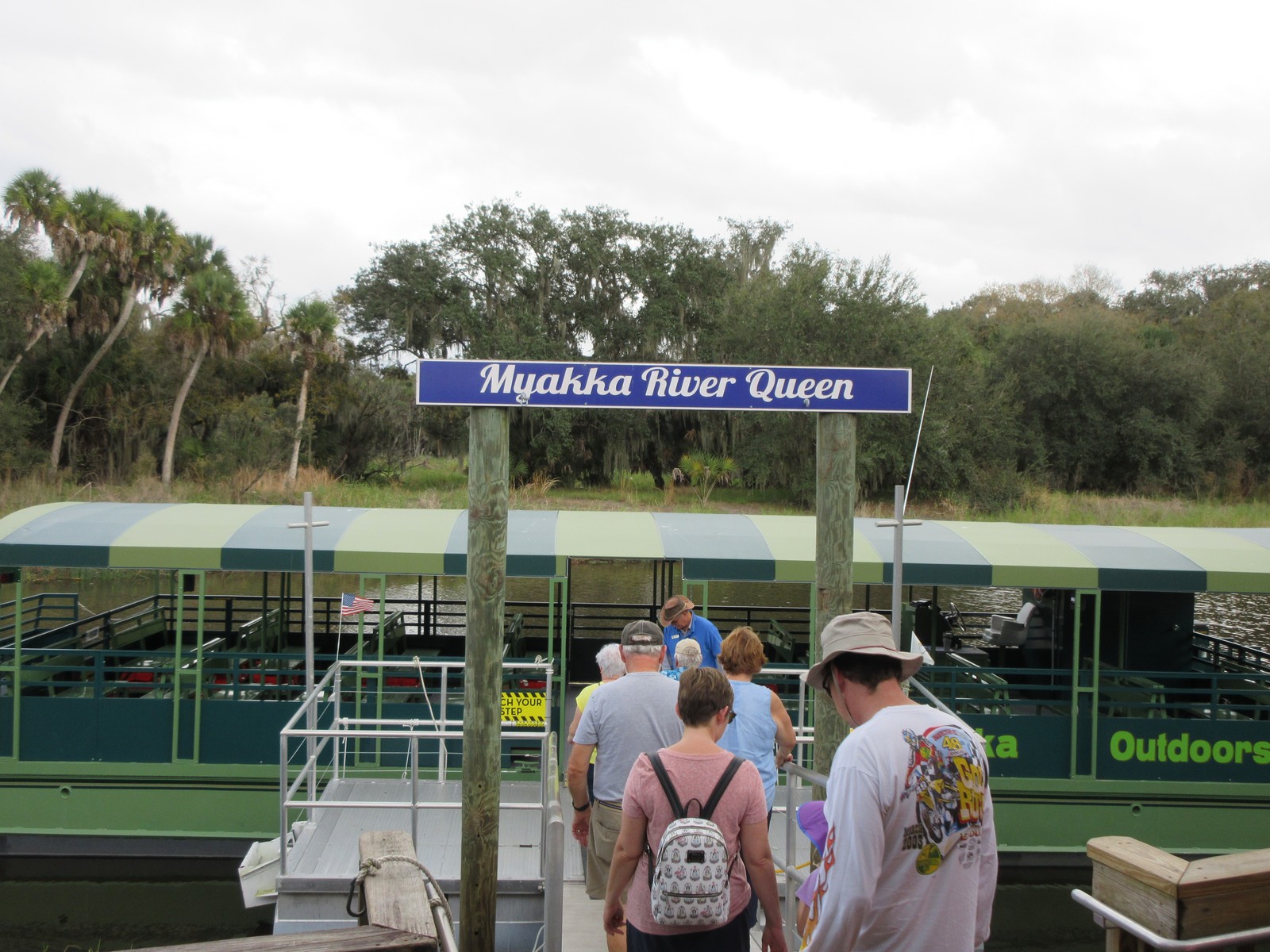
One of the more exciting things you can do on the lake is take a boat tour. We’ve been going to this place for years, but haven’t been in a while. The last time I was here they had these sweet air boats that claimed to be the world’s largest, but now they have just regular boat-boats. I guess they’re slightly modified; on the back are what looks like outboard motors but those have in fact been retrofitted with jet-ski like jet drive things. The boat tour is pretty nice. It is nothing crazy, they just take you out to where they have seen wildlife lately (today it was across the lake) and then you uh, look at said wildlife. We saw a whole lot of alligators. They for serious have a whole bunch there. Like tons. We also saw some birds. I was slightly disappointed because Captain Ted there told us that a week before some people saw a Florida panther and so I was scanning the shoreline the whole time but with no luck.

IMG_3629

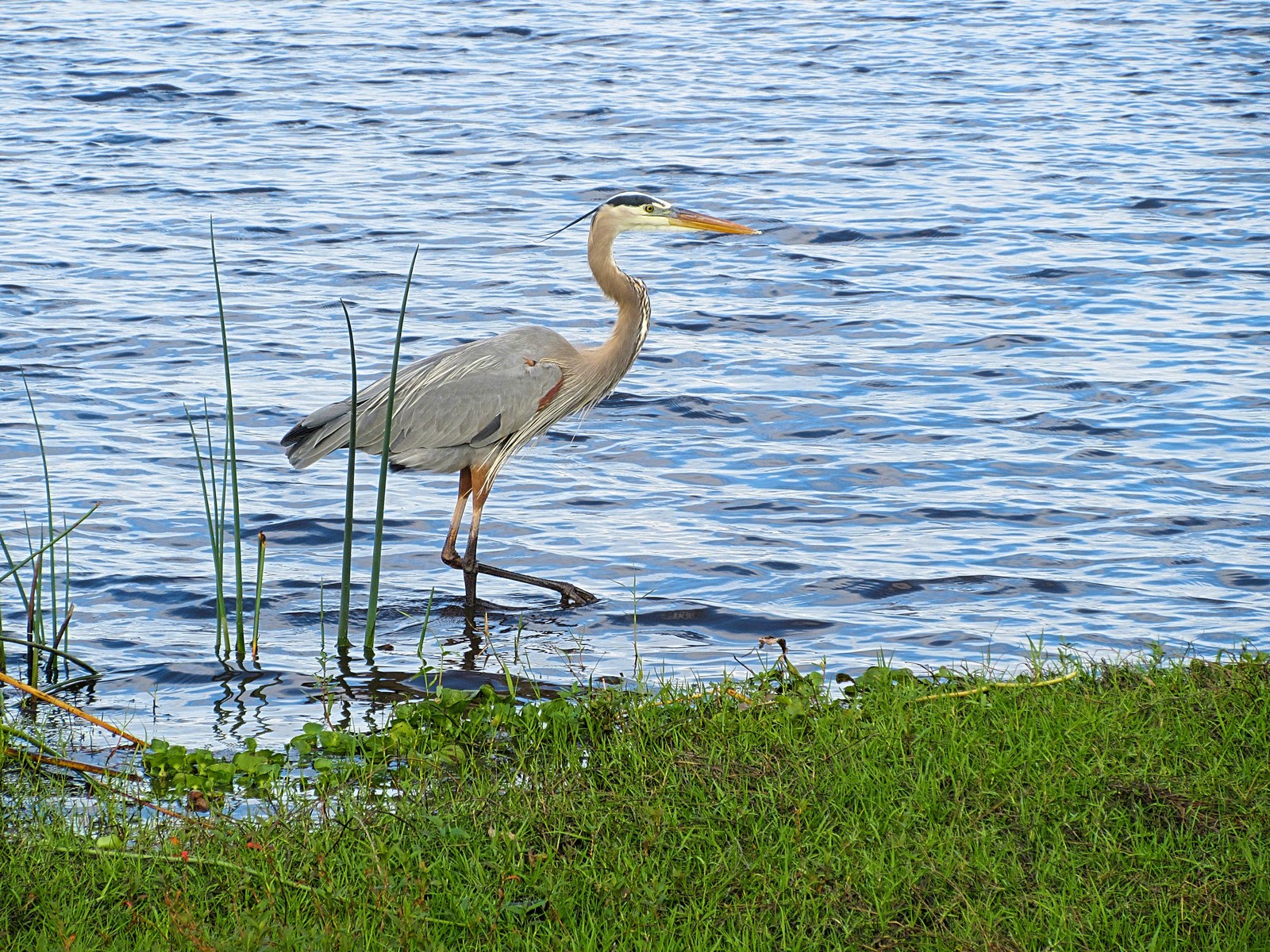
…yaas queen.

After the boat tour we wandered around a bit more. I got a pretty good shot of a Blue Heron (see below) and at some point we also had lunch. They offer various alligator dishes (I had a chicken ceaser wrap) but come to think of it they never told us where the alligator meat came from.

IMG_3651

The final thing we did at the park was walk a bit of a ways down a nature trail. There was tons of nature, and here again I was looking for a panther and was again disappointed, though considering now I was on foot instead of on a boat perhaps I should not have been. I did, however, see yet another alligator:

IMG_3666

Dalí Museum

IMG_3576

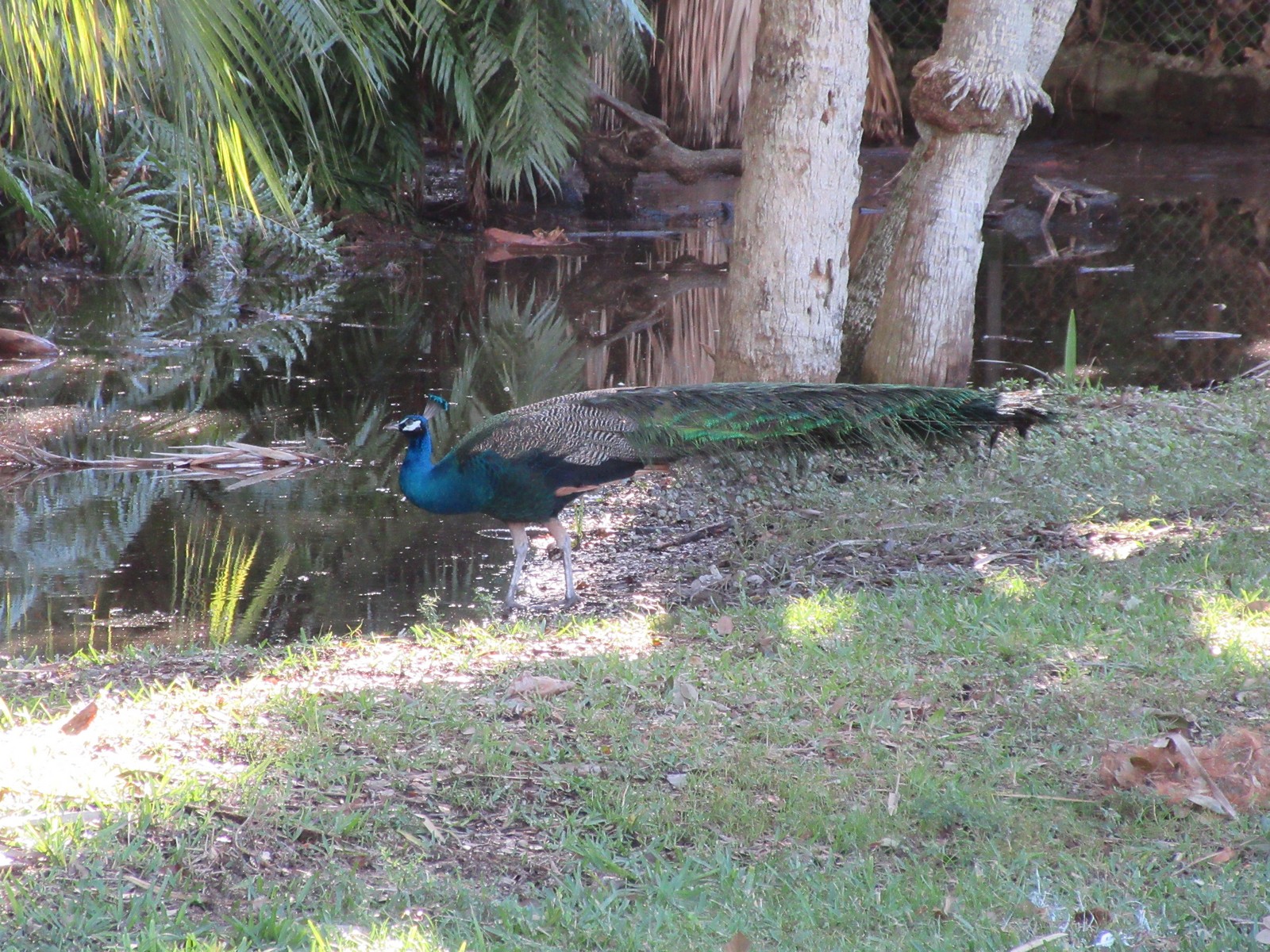
Peacock chillin’ at the Jungle Prada site.

Reading this week:

  • Dereliction of Duty by H.R. McMaster
  • The Sex Factor: How Women Made the West Rich by Victoria Bateman
  • It’s Our Turn to Eat by Michela Wrong
  • Moonraker by Ian Fleming

We have a couple of factors at play here. The most important one is that I am going on a vacation soon and need to squeeze out a few weeks of content to hold me over until I can bring all of my zero readers fantastic pictures of my travels. So now I shall write about a lovely morning I had after taking some aunt and uncle to the airport. On the way to the airport we passed the Dalí Museum, and they suggested I go. I originally heard “Dolly Museum,” and I was confused, but forged ahead nonetheless.

IMG_3582

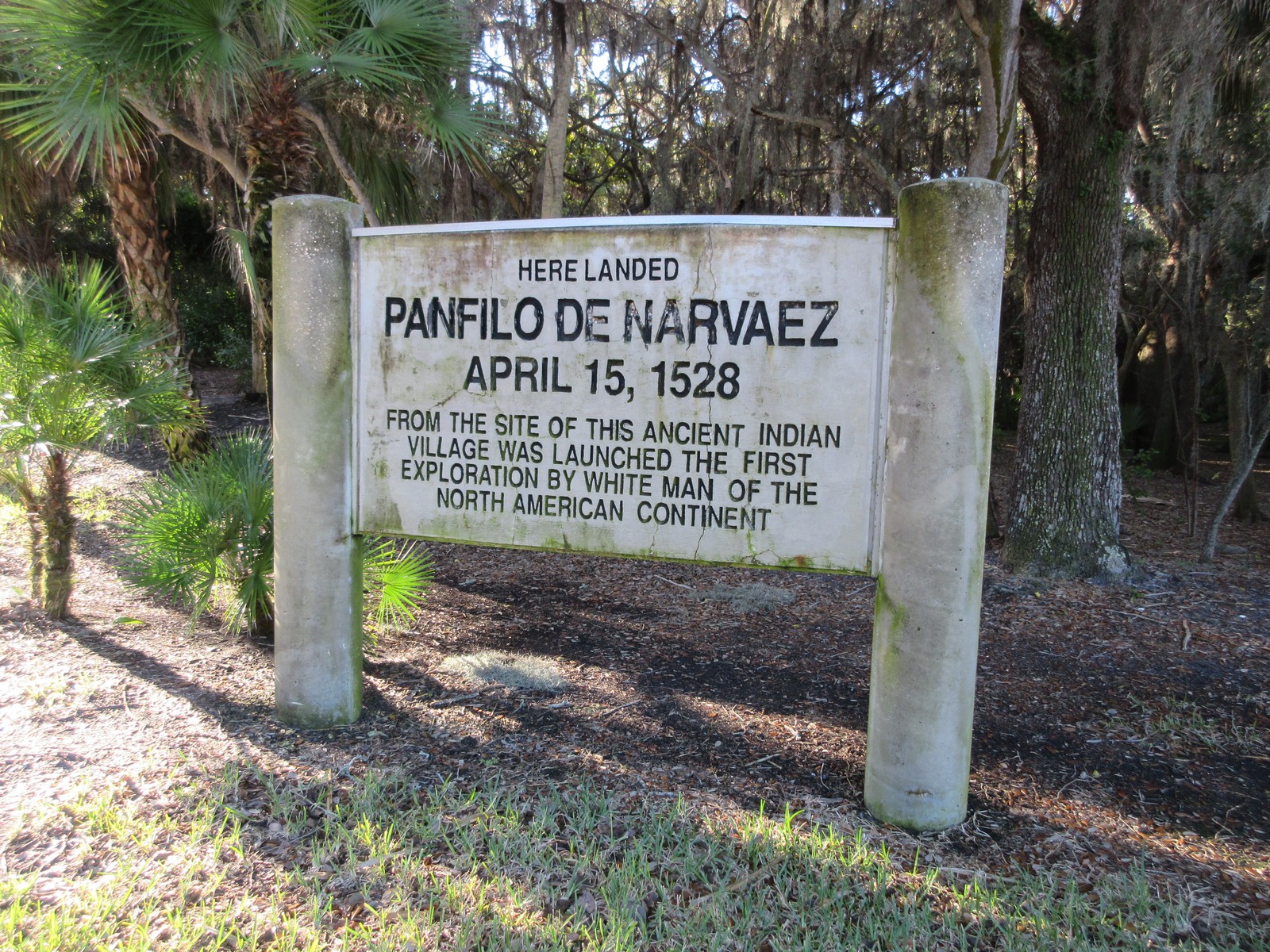
But first! I went to go see the Jungle Prada Site. I went to go see it because I like to tally up places that I have been on Atlas Obscura, and also I had to kill like an hour before the museum opened. The flight was early. As you can read on the sign in the picture above, the Prada site is the landing spot of Panfilo de Narvaez, who I guess has claim to launching the first exploration by white man of the North American continent. He did this, in conquistador fashion, by immediately ransacking the village where he landed (inhabited by the Tocobaga) and then setting off in search of gold. Along the way he mutilated the chief of the Tocobaga, killed the chief’s mother and fed her to his dogs, and tried to kill the neighboring Apalachee tribe, before being killed by the Apalachee and having only four of his men escape on rafts to Mexico. Other than that it is a very lovely spot.

IMG_3610

I tried to be artsy in the framing of this photo.

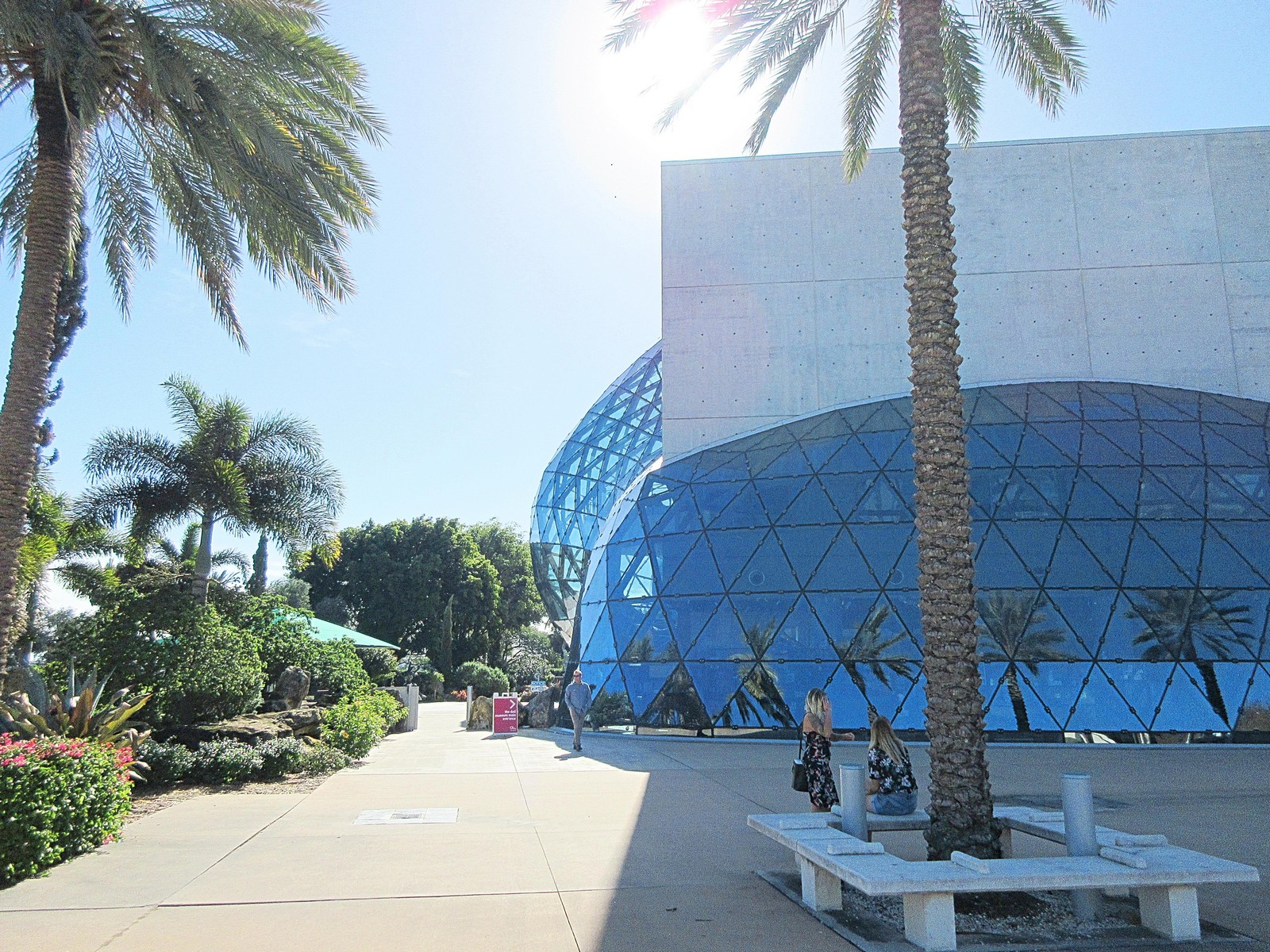
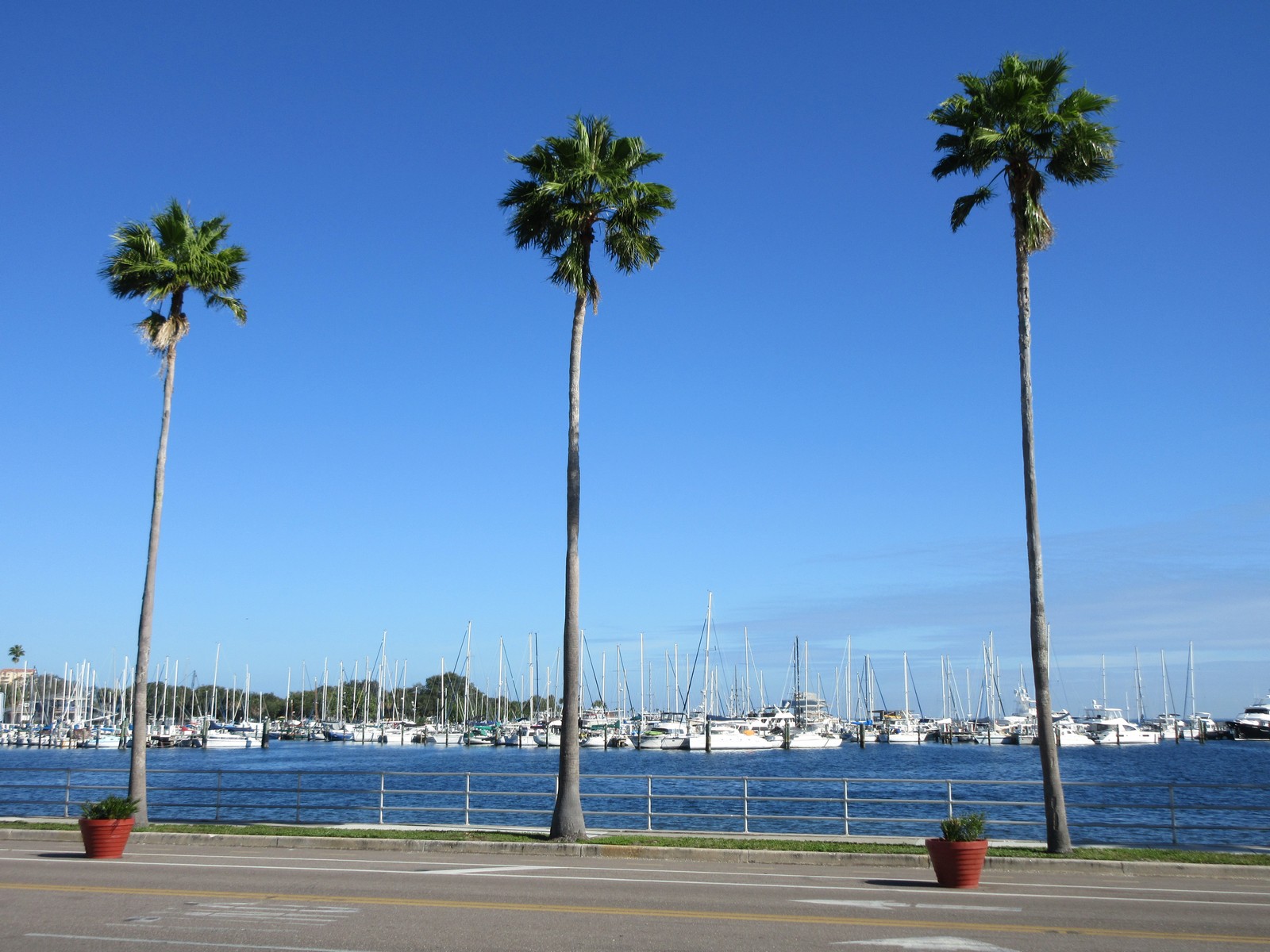
The museum is not huge and frankly I spent more than I anticipated. Parking was $10 and admission for military (they didn’t specify if it was veteran or not so I got it) was $23 and then (this is more my own fault) I spent like $20 in the gift shop. But it was pretty great! The site is gorgeous, as you can see in the photo above. You enter the museum and then have to go up to the third floor to see the galleries. They do this because they are worried about flooding. The previous museum was on the first floor of a warehouse which, in Florida, makes it in a flood zone, so now they have truly elevated the artform.

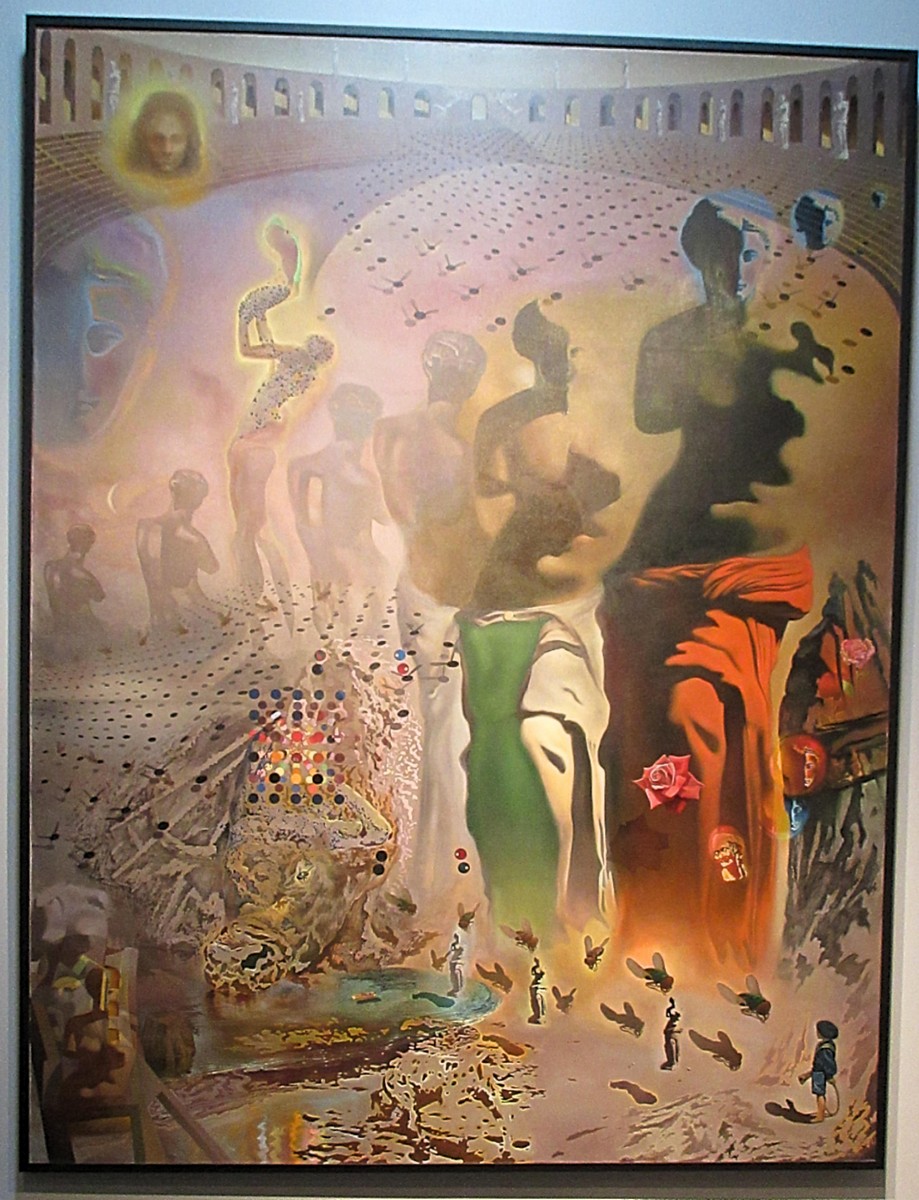
They have two main exhibits, which are a large main gallery with Dalí’s works, and then another gallery which I think rotates. At this time it was an exhibit of French surrealists, which included some works by Dalí. I got to the museum at 10:00 and it was fairly empty for a bit though by the time I left an hour later it had filled up considerably. I guess people want to go out and see things the day after Christmas (when I went). The main gallery is arranged chronologically. I walked through backwards, so I saw his later stuff first. I liked it better than his earlier work, and I bet I am not unique in that. My favorite was “El torero alucinógeno.” It is one of his masterworks (or at least it is very big) and has all sorts of symbolism and meaning I guess. I bought a print in the gift shop. Mostly I liked the colors.

IMG_3588

Sorry it’s a crap picture.

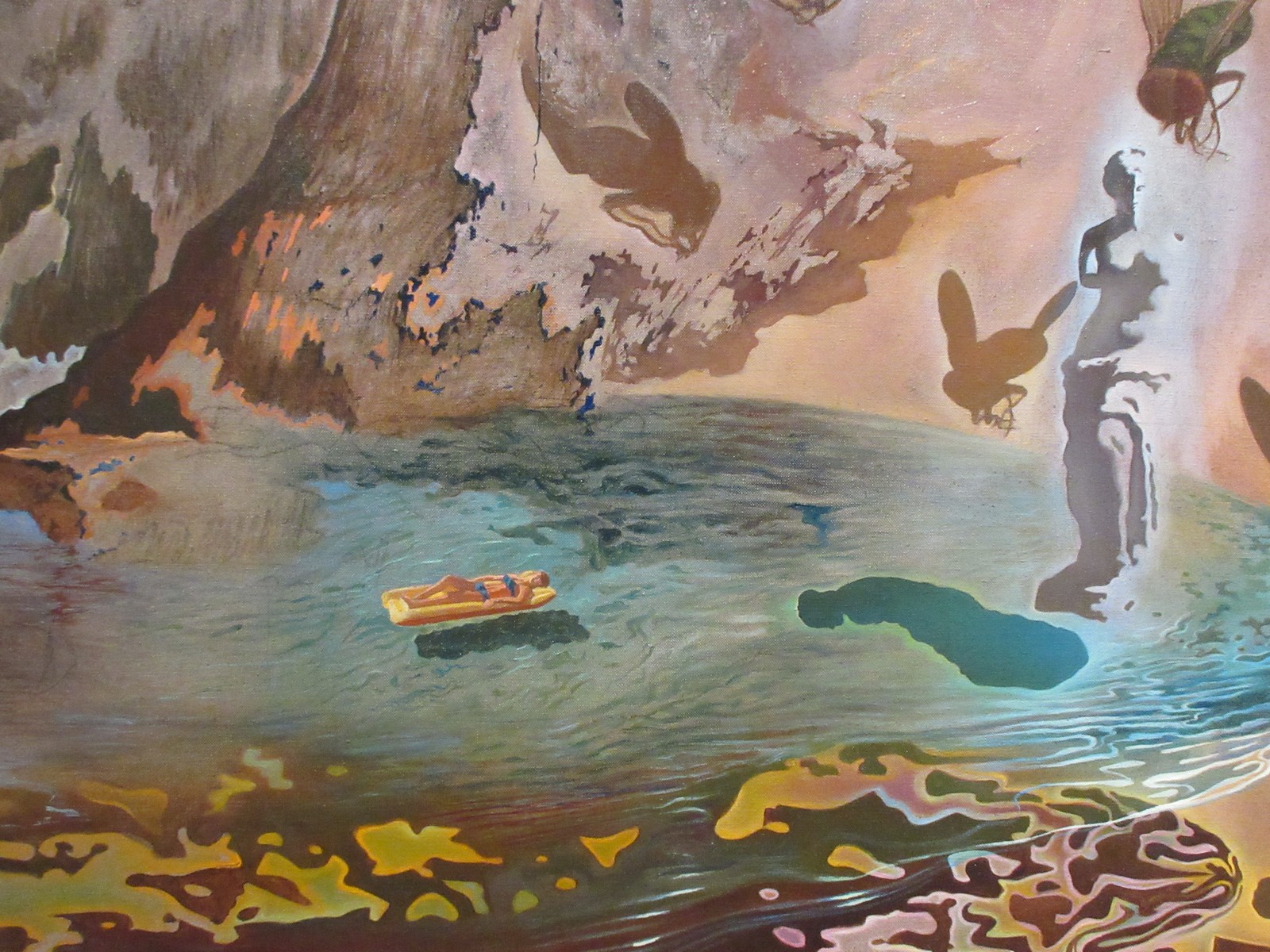
IMG_3589

A detail from the picture.

I might have to reassess my art museum strategy. In the past I was very happy to go alone and just judge the art for myself. But now it all feels a little silly to see it without context. And I tried but I was too impatient to walk through with the tour guide today. I gotta get more art friends and then hopefully they’ll either tolerate me dragging them to art museums and asking for explanations and/or they’ll be nice enough to invite me along when they go. But the museum was very nice and it was remarkable to see the craftsmanship of these things up close. I don’t know if you know this but Dalí was like, a really good painter. If you’re in town I recommend it. But go with a crowd to have some company and then also to spread out the cost of parking. And if you absolutely hate the art it’s still Florida outside and that is pretty gorgeous in and of itself:

IMG_3598

DC Friends

20191217_142715

Reading this week:

  • Invisible Women by Caroline Criado Perez

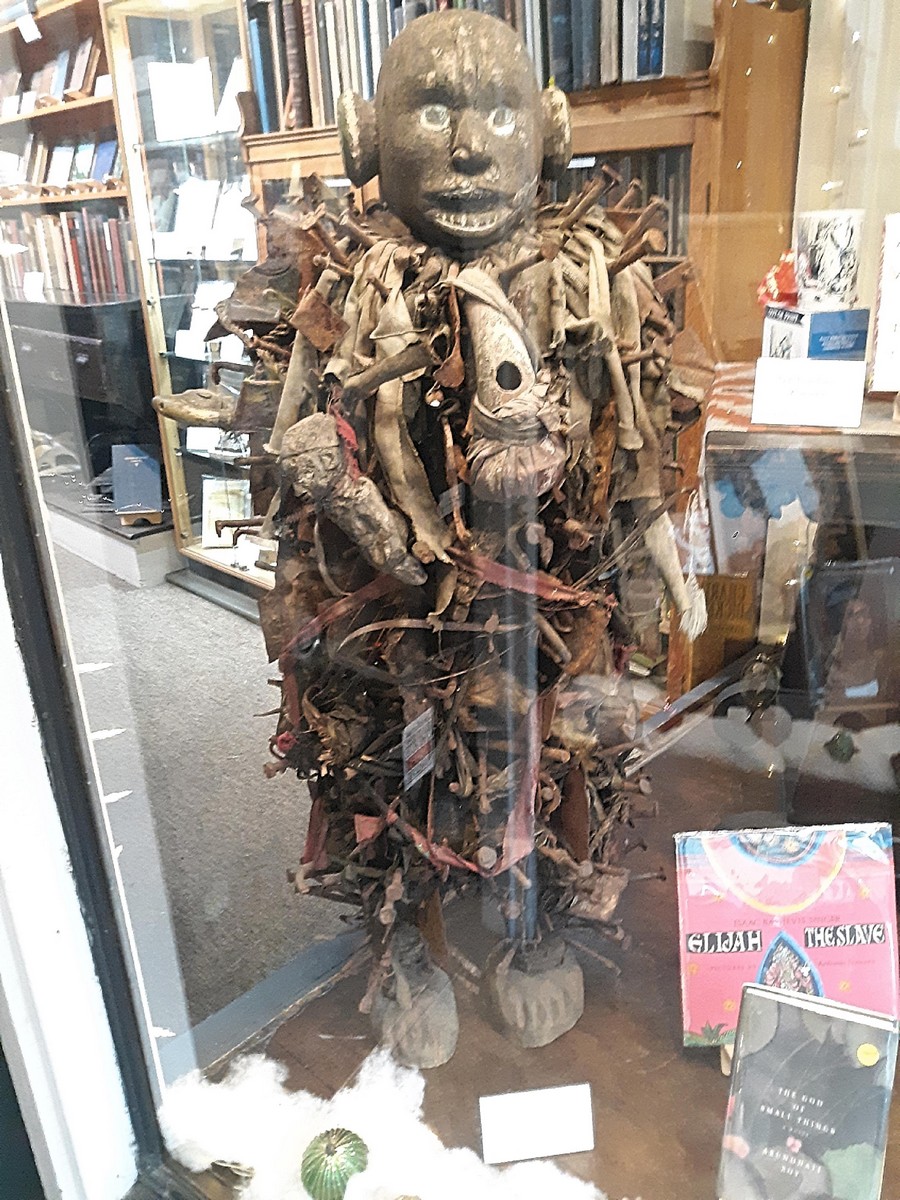
Before we talk about anything else, let’s note the top picture. It’s a Congolese nkondi, which, when I took the picture, could be found for sale in an otherwise very lovely bookstore in downtown Annapolis that I frequent whenever I’m in town. If you had something like $1500, it could be yours, presumably to display in the corner of your living room or something so you could go “look, it’s a Congolese nkondi. It’s witchcraft!” Whenever I see something like this, I have to wonder how it wound up in some Maryland storefront. What are the chances every person in the chain between here and the Congo thought they were getting the better end of the bargain? The store is about 500 feet from a memorial to Alex Haley and Kunte Kinte, who was delivered, enslaved, to the Annapolis docks. The cultural context of the nkondi has been reduced to whatever the storeowner could Google and stick on an index card next to a price. Maybe it was all on the up-and-up going all the way back to when the thing was hopefully made as an export piece for the tourist market, but does the person selling it and the person that is going to buy it have any clue?
20191219_163924

Anyways, that’s not what this post is about. This post is about friends! With finals over, for the week before Christmas I went to go stay with my parents down in Maryland. Maryland is conveniently very close to DC, which is, conveniently, where a good chunk of my Peace Corps friends have moved to. So, since I am trying this hip new thing of actively maintaining friendships, I visited as many as I could while I could. It was great! It is extremely lovely to have friends, and they are all settling down to a variety of exciting things. They are working for the EPA and the Peace Corps and the FDA and all sorts of cool places! My major mission while visiting all of them was to get in with the DC happy hour scene I hear about so that I will then have friends who are in with the DC happy hour scene. This, I am told, is useful.

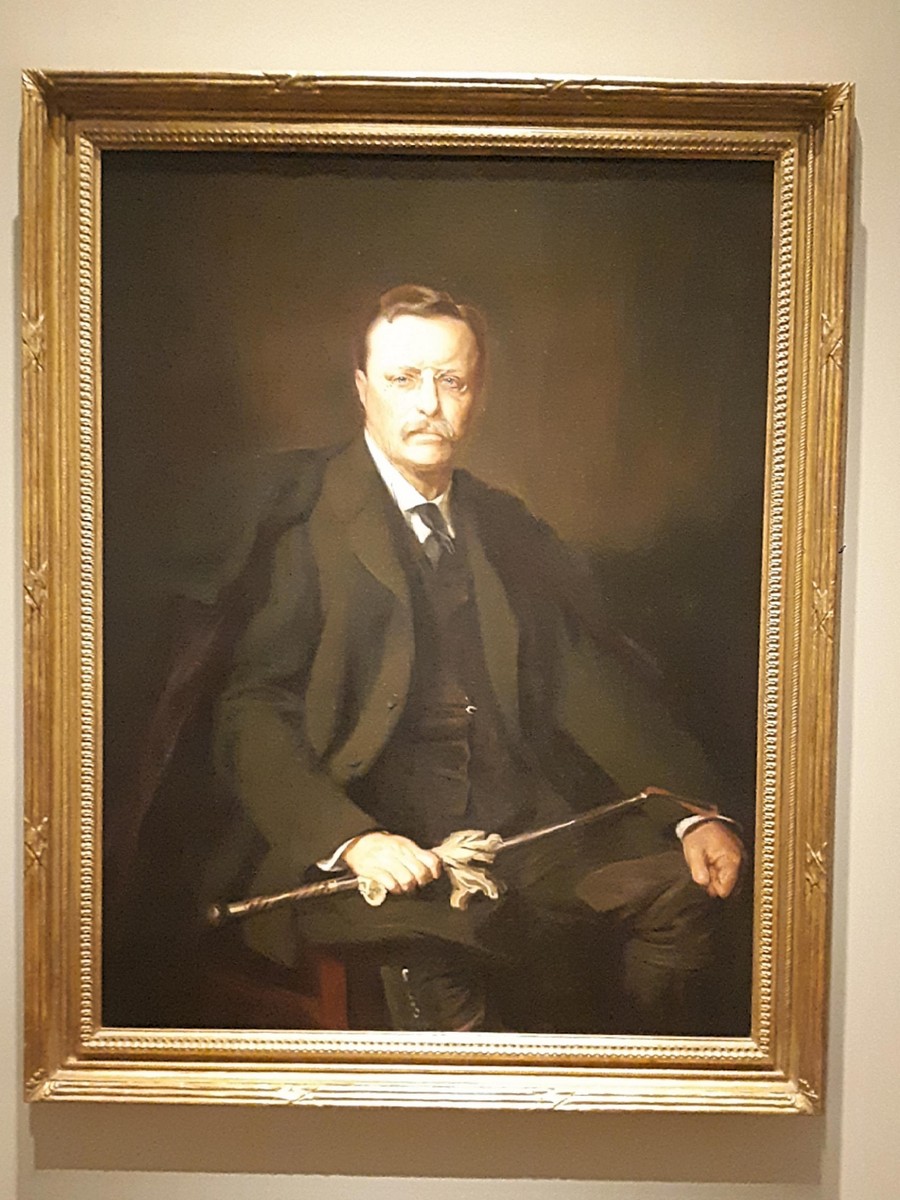
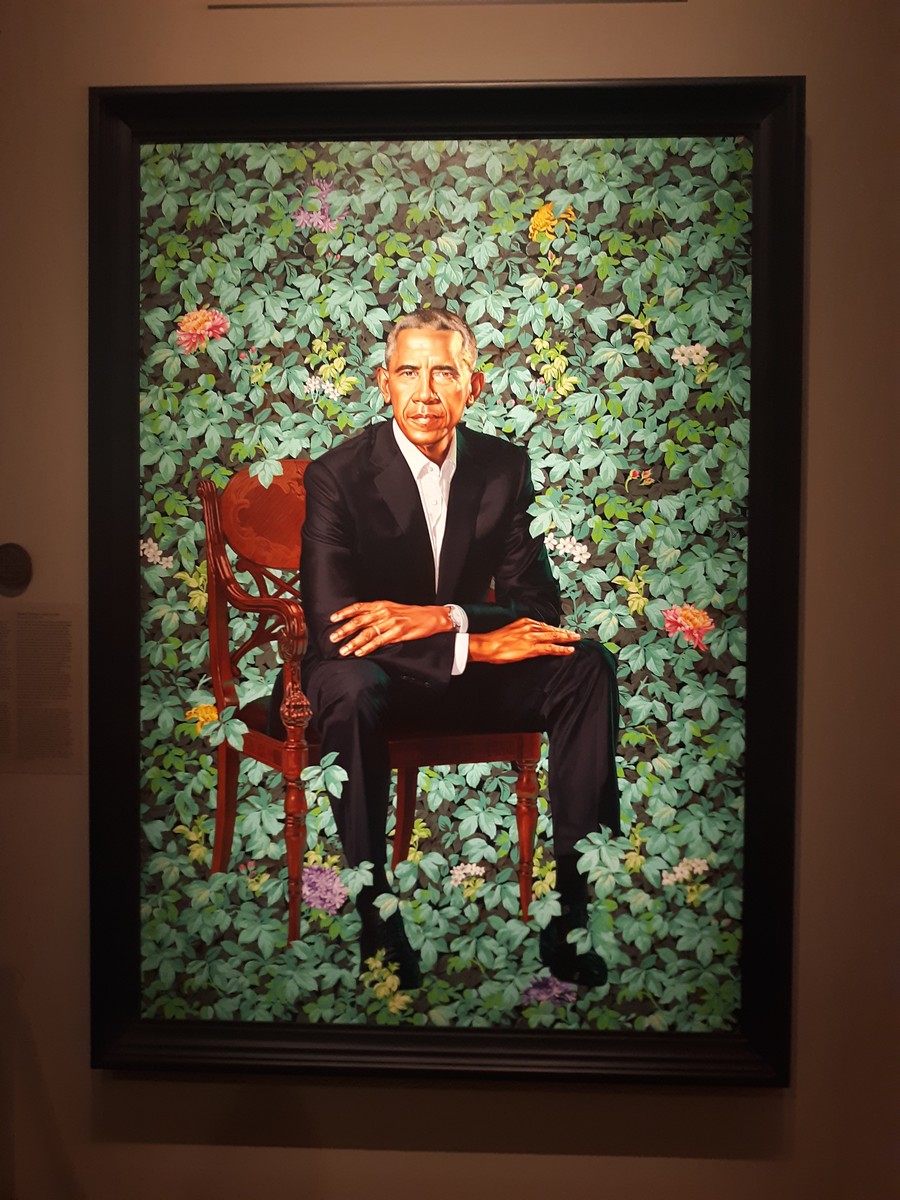
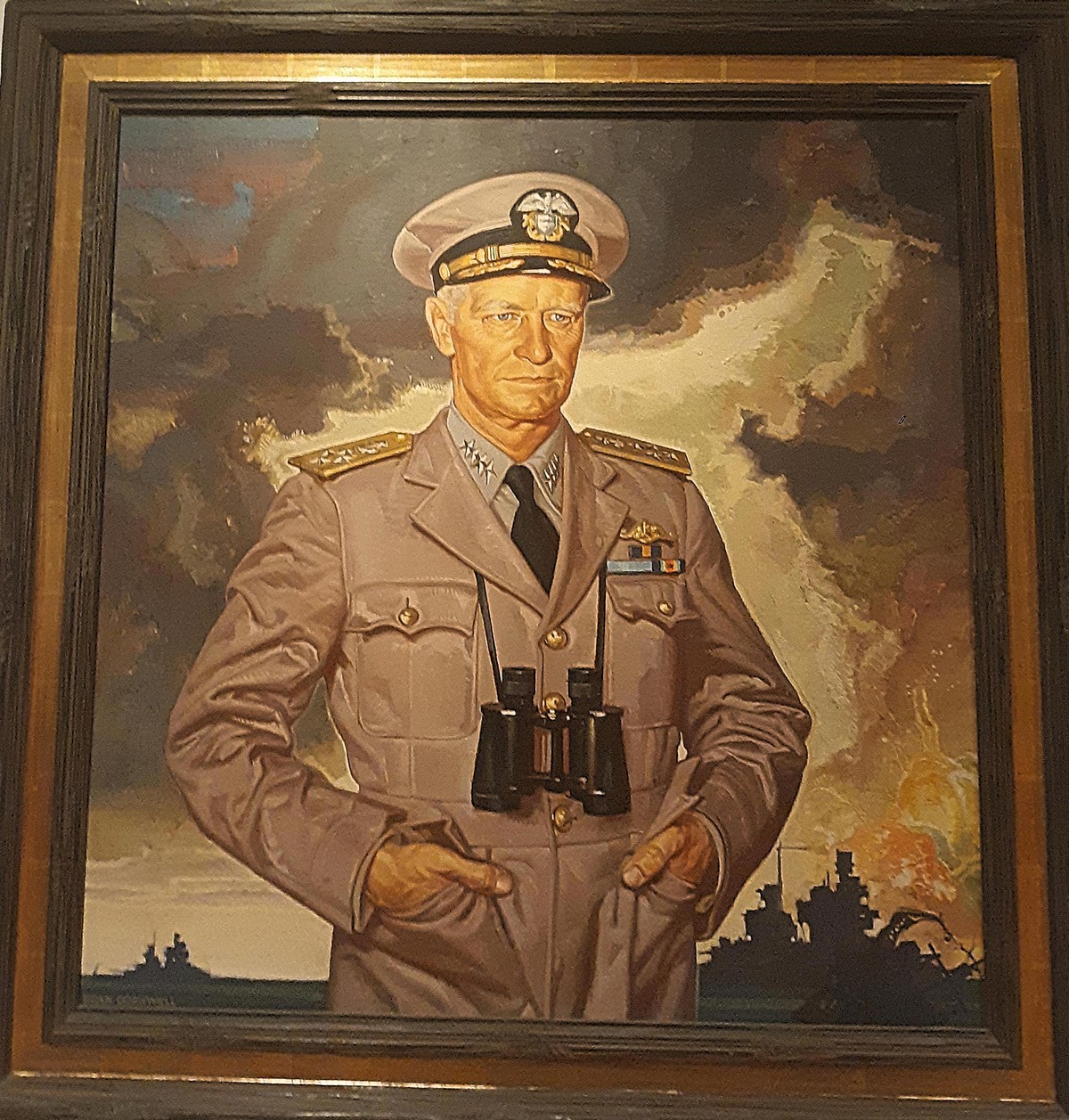
Importantly for the context of this post I also have a friend who is working at the Smithsonian American Art Museum (I write this blog partially just to stay in the habit of writing, but now I find when I write essays I write them like they’re blog posts, ie I will just mention something without any context, imagining that I will just add a hyperlink; this is probably not a great thing?), which is co-located with the National Portrait Gallery. The National Portrait Gallery is full of portraits, so when I was waiting around for her to get off work so we could get dinner I went to go look at some portraits. I was happy to see ole’ 2-6 Teddy Roosevelt, and while there you also have to of course check out Barack Obama. Then finally it was on to my absolute favorite admiral, the inestimable Chester Nimitz. Related, I am currently reading Invisible Women, and now that I am writing this blog post I feel terrible. Anyways.

20191219_164033

20191219_164737

What is he possibly looking at with those binoculars when he would also be wearing this outfit, with his hands in his pockets? Goddmanit I love you Chester Nimitz.

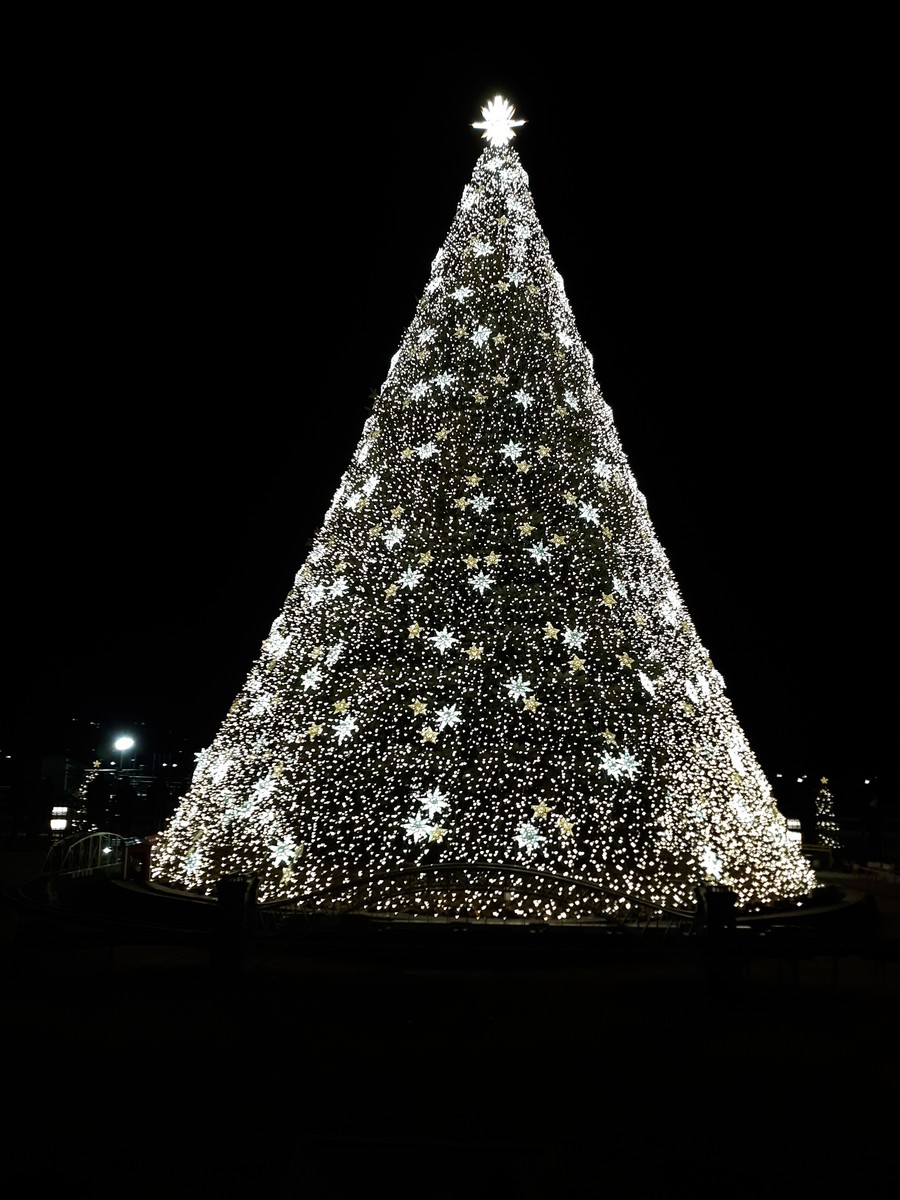
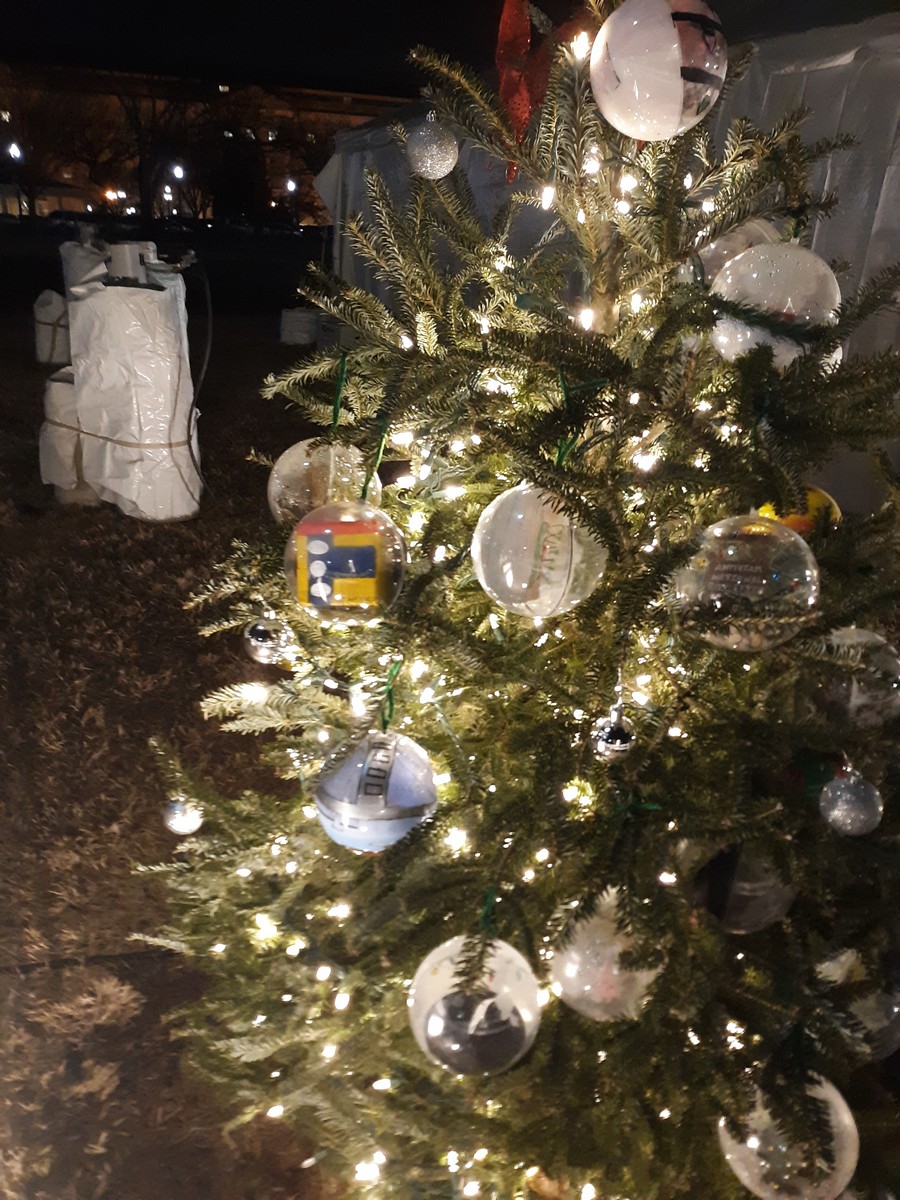
My other friend (man I have so many DC friends) also wanted to take a picture of the National Christmas Tree to send to her mom. So after dinner we wandered on down there to take a look. It was pretty neat! They don’t actually decorate the tree so much as design a whole different tree out of lights and then put the light-tree around the real-tree, but there ya go. They also had model trains running around, at which people from all over the world have apparently thrown coins (the around-the-world-ness evident from the variety of coins). And then they had around the big tree in the middle a whole set of smaller trees, arranged as though it was some sort of tree-cult ritual scene. The smaller trees were decorated from representatives from the 50 US states and then also, encouragingly, each of the US territories. 99% of the time, you’re totally forgotten, US Virgin Islands, but not at Christmas time! I was going to be resolutely unimpressed with the mini-trees, until we came across the Maryland one and it had an Old Bay ornament, so then it was worth it.

20191219_200017(0)

20191219_200220