Kigoma III: MV Liemba

Reading this week:

  • Daybreak in Livingstonia by James W. Jack, M.A.

One of the most exciting parts of our day bopping around Kigoma was that we got to visit the MV Liemba!!! You all will know this of course, but she was originally constructed in Papenburg, Germany in 1913 before being deconstructed and shipped to Lake Tanganyika in pieces. Our tour guide Peter told us that when this happened the rail had only reached Tabora so between Tabora and Kigoma she was carried by porters, but I don’t think this is true. The internet consensus seems to be that the railway reached Kigoma in February 1914 though the exact source for that is unclear to me, it is potentially from here (the source for my boat-specific claims is The Lake Steamers of East Africa). Anyways that distracts from my point that it was then launched onto Lake Tanganyika as the Goetzen in February 1915 and was the major feature of the Battle of Lake Tanganyika. The Germans though pre-emptively scuttled her in July 1916. After the war the Belgians tried to raise her in 1918 and then the Brits first tried raising her in 1922 but weren’t successful until October 1924. By May 1927 she was back in service as the Liemba (the non-Swahili word for Lake Tanganyika) and for the past century has been plying a fortnightly route up and down Tanganyika except for shipyard periods.

I’m (about to be) on a boat!!!

Which we were in now! This is why it was so exciting to see the Liemba in Kigoma. Ever since learning about her I had wanted to see her but I was very confused as to why she never made, as far as I could tell, any of her famous visits to Mpulungu. My dream was (and remains) to take the train from Dar es Salaam to Kigoma and then ride the Liemba on her whole two-week voyage, or maybe just down to Mpulungu (I would also be very happy with the reverse of this trip), but I could never figure out her schedule. As was confirmed here, this is because her most recent voyage was in 2018 and she had been awaiting a refit. Which is underway! Before I discovered Elizabeth and Kigoma Eco-Cultural Tourism, my big plan was just to beg the shipyard to let me poke around. But since Elizabeth offered a tour of the Liemba I just signed up with her.

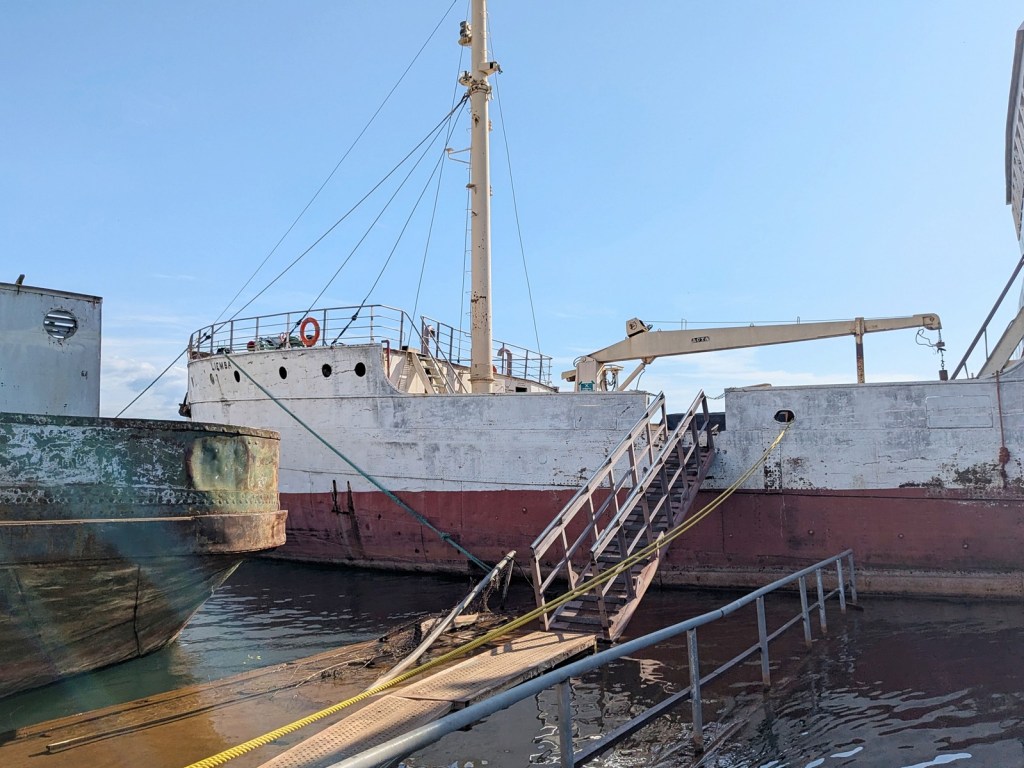
I suppose all gangways are over water but this one especially so given the rising lake levels.

And so we arrived at the shipyard and got ready to check out the Liemba. For the record I found the following all very charming, but it was an interesting experience. I had thought Elizabeth had some arrangement with the shipyard but upon arrival it seemed sliiiiightly more like the actual plan was just to show up and sweet-talk our way in. She did this very effectively. There was some hesitation at first. We never actually wound up being able to go inside the ship as they were in the midst of some major I think electrical work, but it was decided we could get close to the ship on the dock. Here you could see the impact of the rising lake level because a chunk of the dock was underwater and we had to skirt around the edge of a fence to keep our shoes from getting wet; between the ship and the limited above-water portions of the dock a walkway had been placed somewhat haphazardly. As we were standing there it was then decided that we could at least go up to the foredeck of the ship of the ship. Not the most exciting tour but I thought it was super fun just to be on the ship! So much history, so very boat, much cool.

With the actual tour portion over we then spent some time talking to a former port employee that Elizabeth knew and had arranged to meet us to give us the lowdown on the Liemba refit. Since he had worked for the port he also knew a lot about the port operations and I tried to think of all the intelligent questions I could to ask him. Some things he told us:

  • The new engines they are putting in her will be rated to 1000 horsepower. The previous ones were 750 horsepower. They hope this will get her cruising speed up to 12 knots from 10.
  • The refit was scheduled to take another six months but our man here was predicting it would take another year (so mid-2026). Though the last journey was in 2018 the refit had started August 2024.
  • The ship is rated to carry 600 passengers, split among first, second, and third-class. There are three saloons where passengers can get meals at varying price levels. He told us how many first and second-class cabins but I forget how many it was exactly; I think there were ten first-class cabins sleeping two each but only two second-class cabins sleeping four each.
  • I had asked if refurbishing the Liemba was cheaper than building a new boat and apparently it is not. But since the Liemba is so famous and the ships are government-owned, it is “political.” No complaints from me on this use of Tanzanian taxpayer money.
  • For port operations, I had noticed a crane for shipping containers. Given my Mpulungu experience of seeing breakbulk shipping, I asked about container ships. Our guide reported that there are only two ships on Lake Tanganyika designed to carry shipping containers, one rated for something like 36 containers and the other 48. Sometimes though containers are put on ships anyway.
  • Kigoma is reportedly mostly an export port, again like Mpulungu, because Congo imports so much. From Kigoma he said it is a lot of building materials. From Congo he reports they import logs but the guide’s understanding is that they are mostly re-exported out of Tanzania without further processing. I won’t think too deeply about that.

And so yeah! That was our experience and at this point we said goodbye to our guide and loaded back up into the car. The only awkward part of the whole thing was that Peter had pointedly told us that we could “say goodbye” to our port guide there, so I said goodbye. Later we figured out that this was code for giving a tip; Elizabeth later passed him some cash on our behalf. But still I am over the moon that I got to see the Liemba in the flesh and learn about port operations and so now all I have to do is the same long overland and overlake journey I have wanted to do for years and I can’t wait until I get back to do it on a newly refurbished MV Liemba!

Kigoma II: Fish n’ Boats

Reading this week:

  • Gastro Obscura by Cecily Wong and Dylan Thuras
  • When Life was Rusted Through by Owen Letcher

Alright. In the last post my super amazing wife and I had travelled from one end of Tanzania to the other to arrive in the historic town of Kigoma on Lake Tanganyika. This and the next few posts will be a convoluted and involved effort of trying to unpack the experience and history of a single day trying to explore everything that Kigoma and Ujiji.

I must assure my dear readers that the confused and disjointed nature of the narrative is not a fault of the actual day we had, which was fantastic. Our guide on the experience was Kigoma Eco-Cultural Tourism, who were absolutely phenomenal. Consider this a ringing and unabashed endorsement. If you go to Kigoma you have to hit them up. On our journey we were led by the owner herself, Elizabeth, alongside our tour guide Peter. Elizabeth can put together just about any experience you want in just about any order, which is what she did for us. I wanted to go on three of the experiences (I actually wanted to go on many more but alas there is only so much time) and because I remained wishy-washy about what to do with the rest of our time in Kigoma I asked to do all three in one day and she was more than happy to accommodate.

Caulking close-up.

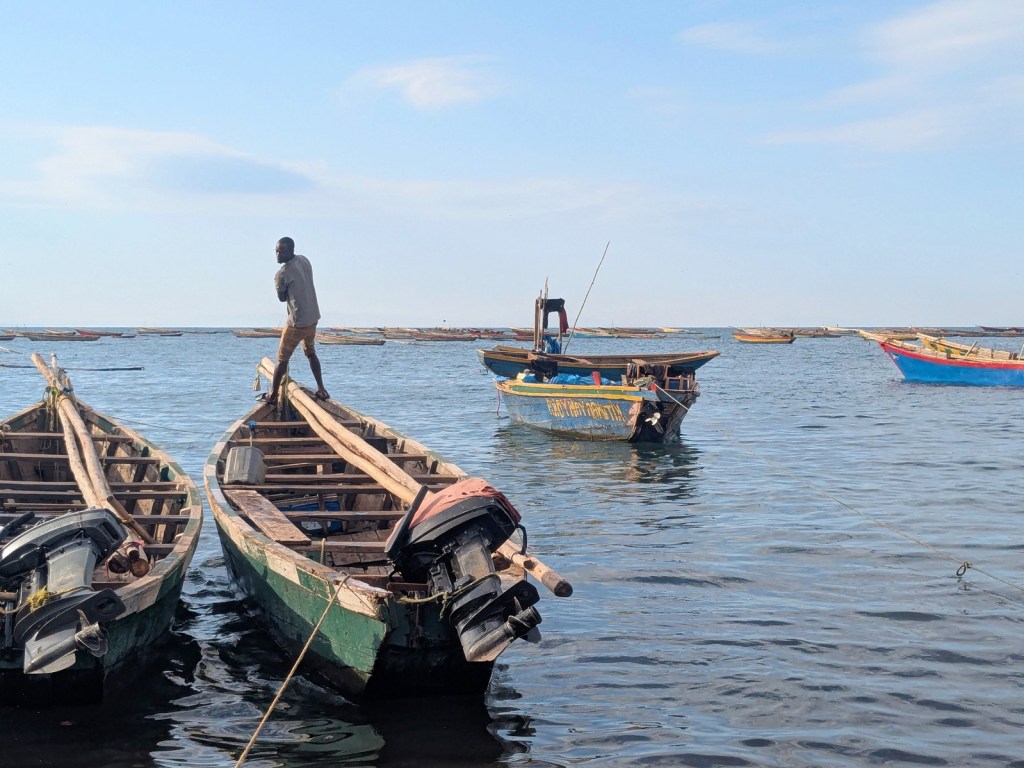
The first stop on our tour was the Katonga fish market. This was not actually a specific part of any of our itineraries but Elizabeth wanted us to experience the eco-culture which was fine by me because I am always more than happy to admire any of the local boats. We went first thing in the morning so we could catch the boats coming in from fishing. This was indeed pretty cool. I suppose nothing too crazy, men coming in from fishing boats with fish and women buying and selling fish. The main type of fish on sale at this moment was mikebuka (I had it in my notes as “mugabuka” which I only mention here because later in the day I saw a sign that said “Make Ujiji Great Again,” so that made me think of MUGAbuka, but the internet consensus seems to be to spell it as “mikebuka” or, less melodiously, “sleek lates”).

There is a rhythm of which fish get caught at which time of day and at what time of year which I didn’t manage to entirely gather during our visit. At night the men fish with lights to attract the fish, and so much of the bustle while we were there were the fishermen unfitting large LED lights mounted on poles. They are powered by racks of car batteries which in turn, Peter told us, are charged by solar panels during the day. Very ecological! Or maybe not so ecological. The lake is definitely being affected by human activity. Much like Lake Manyara, Tanganyika is rising. This was very noticeable throughout the day. This is not an entirely unusual phenomenon (and many explorers spent much time trying to figure out where all the lake’s water went) but it is bad right now and still getting worse. Fish stocks are also being depleted. Despite the efforts of the Lake Tanganyika Authority it is hard to equitably manage the lake when these fishermen need to put their kids through school. Nonetheless the fishing communities are aware of and feeling the strain of the lake’s ecology changing so rapidly.

But back to the fish market. Peter was proud to tell us that Tanganyika fish were very valuable, way better than those Lake Victoria fish. Tanganyika dagaa was reportedly going for 40,000 Tanzanian shillings (TSh) a kilo for export, whereas Victorian dagaa go for only 7,000 TSh. Fish wind up being exported even to the United States and Canada (again as reported by Peter) where there are Tanzanian ex-pats, and in fact when I was googling the spelling of “mikebuka” most of the results seem to be websites trying to ship you fish. But besides fish I tried to learn about people, and asked about people travelling around the lake. To which Peter reported that many people travel around the lake, and many of these fishermen will have wives on both sides, in Tanzania and Congo. Peter explained they are Muslim and polygamists, you see, but I suppose sailors are the same everywhere. For some more details I wrote down, Peter told us that small mikebuka were known as “nyam nyam” (no telling if I have the spelling right), and that sheep are called “kondoo” in Swahili; disappointingly for us apparently they are used only for meat, and not wool.

Absolutely enormous canoe under construction; you can see a goat for scale in the shadows underneath the prow.

And then also of course were the boats. The ones at Katonga fish market were of average size for fishing boats. Peter explained that the caulking was made with cotton and palm oil. We later got to see this process in action. One of the most stunning things I learned about on this trip to Tanganyika were these absolutely massive canoes. I regret never being able to get a better photo of them, they were almost always too far away. I first spotted them from a distance as we were driving in from the airport, and later in the day I dragged Elizabeth and Peter to a boatyard across from the Livingstone Memorial impromptu to see some being made. “Canoe” is very much not the right word, but what I found so amazing is that they had the exact same construction as the fishing boats, but just on a much more massive scale. The photo I have above is of one under construction, and in this photo it doesn’t even seem so massive but to the right you can see a goat for scale. They are flat-bottomed with a huge freeboard and as far as I can tell powered just by a small outboard. I only ever saw a small poop deck on any of them, which must be where you steer from. Elizabeth and Peter told us they are primarily used for transporting goods to small villages up and down the lake and also to Congo and Burundi, and we saw one near our hotel getting loaded up with bricks. It was in the boatyard we saw the palm oil & cotton caulking in action, with several men in the midst of constructing one. They told us they can finish one in a month if they have all the materials and tools. Amazing.

That was later in the day though. For now we wrapped up our visit to the fish market. We had spent most of the time just hanging out watching the world go by. We spent probably slightly longer watching the proceedings than really felt not rude but no one really batted an eye to us being there. Peter told us to make sure to greet people which we tried to do. Eventually though we wound our way out between the fish and lights and batteries and got back to the car for our next stop: another boat.

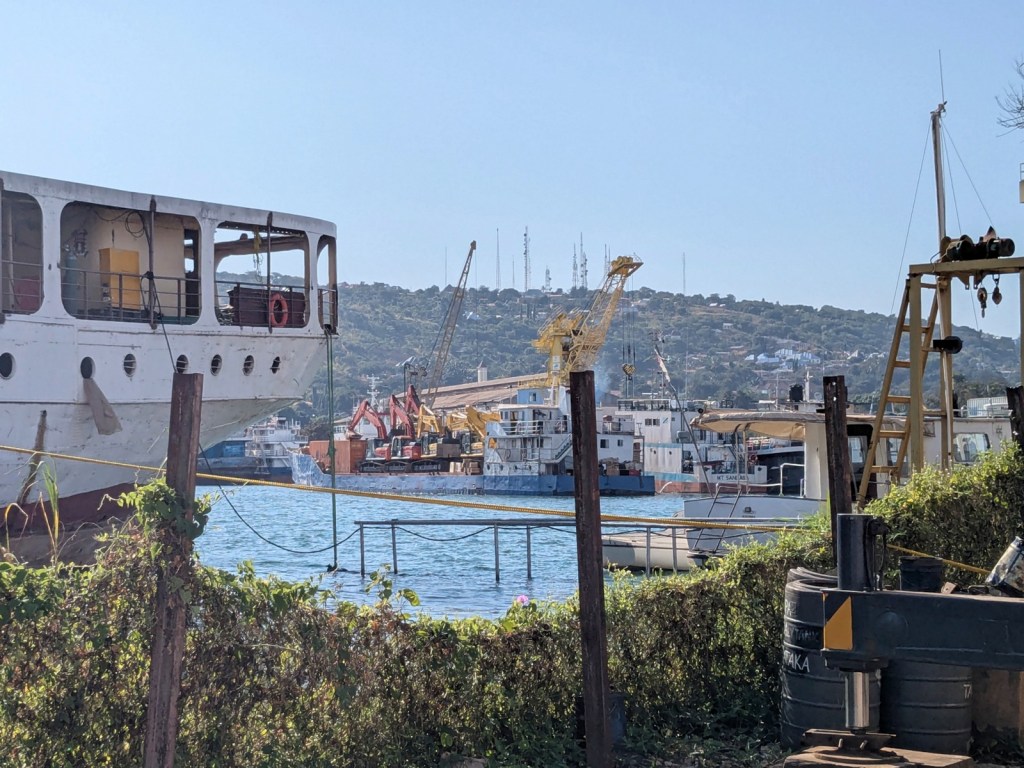
Some ships in Kigoma harbor.

Kigoma I: To Tanganyika in a de Havilland

Welcome to Kigoma

Reading this week:

  • Ujiji: The History of a Lakeside Town by Beverly Bolser Brown
  • The Western Ocean by Alan Villiers (not his best work)
  • Stuff Every Coffee Lover Should Know by Candace Rose Rardon

With the conclusion of our safari we now turned to the second segment of our Tanzania vacation: the historic city of Ujiji. Well I mean Kigoma. Ujiji is more of a neighborhood now so when booking our flights we were going to Kigoma and the lodge we were staying at was the Kigoma Hilltop Hotel. So we were going to Kigoma but I was going there for Ujiji.

As you will have quickly understood by now the impetus of us travelling to the far side of Tanzania was to see the location of so much of the focus of the London Missionary Society and their Central Africa Mission. They spent so much time and money and lives getting to Ujiji and trying to establish a base there and after all this reading I had to see it for myself. And I also had to go for the sheer number of historical events! We have been to Livingstone’s birthplace, and I have been to Livingstone’s deathplace, and so how could I not go to the spot where the most famous event of his life occurred? And then the final reason for wanting to go, which was to show my super amazing wife the gigantic lake that shaped my Peace Corps experience and in many ways has shaped my subsequent career. I wanted to see it again for myself and show her its wonder.

As an early example of the historical resonances I was searching for, to get to Kigoma we had to go through Zanzibar. It was a stopover on our flight from Arusha (Kilimanjaro airport to be specific) which we woke up rather early for. The fact that we were going to Kigoma caused some consternation among the various tourism industry personnel we encountered; Obedi was surprised we had heard of the place. Even the airport check-in counter lady seemed surprised, exclaiming “what?!” when we said we were going to Kigoma, except we subsequently concluded she just didn’t understand our accents. Then it seemed like we had already somehow missed our flight, but the issue there was only that it wasn’t on the departures board. You would think Kigoma was not so well-travelled, though of course historically it was anything but.

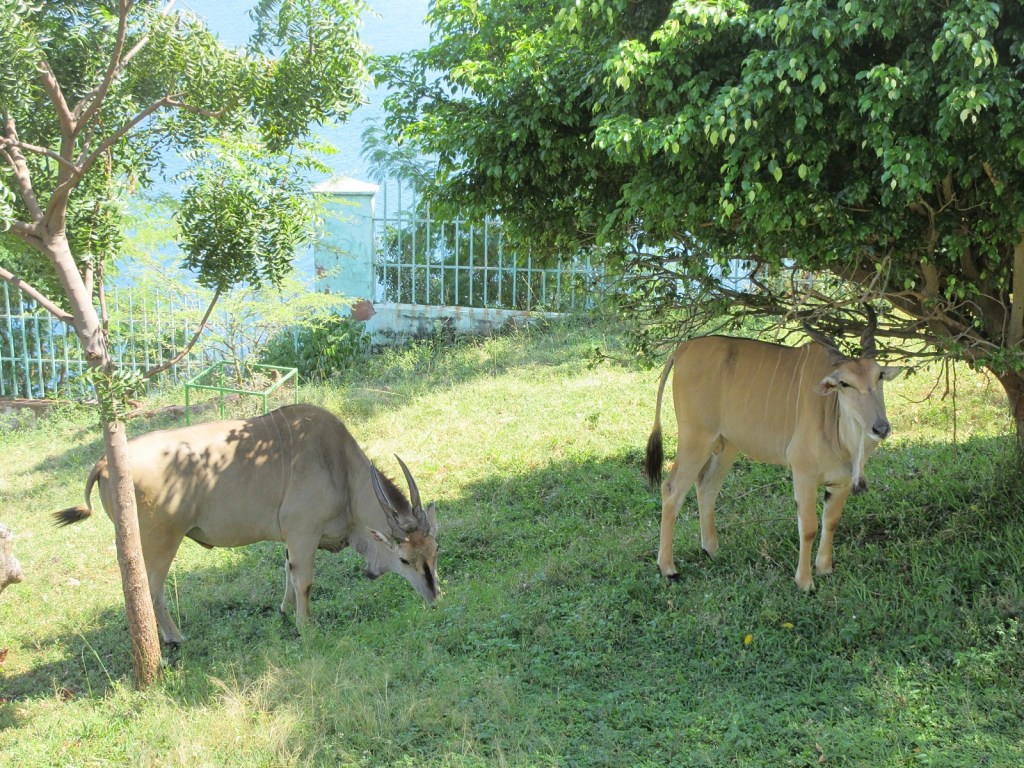
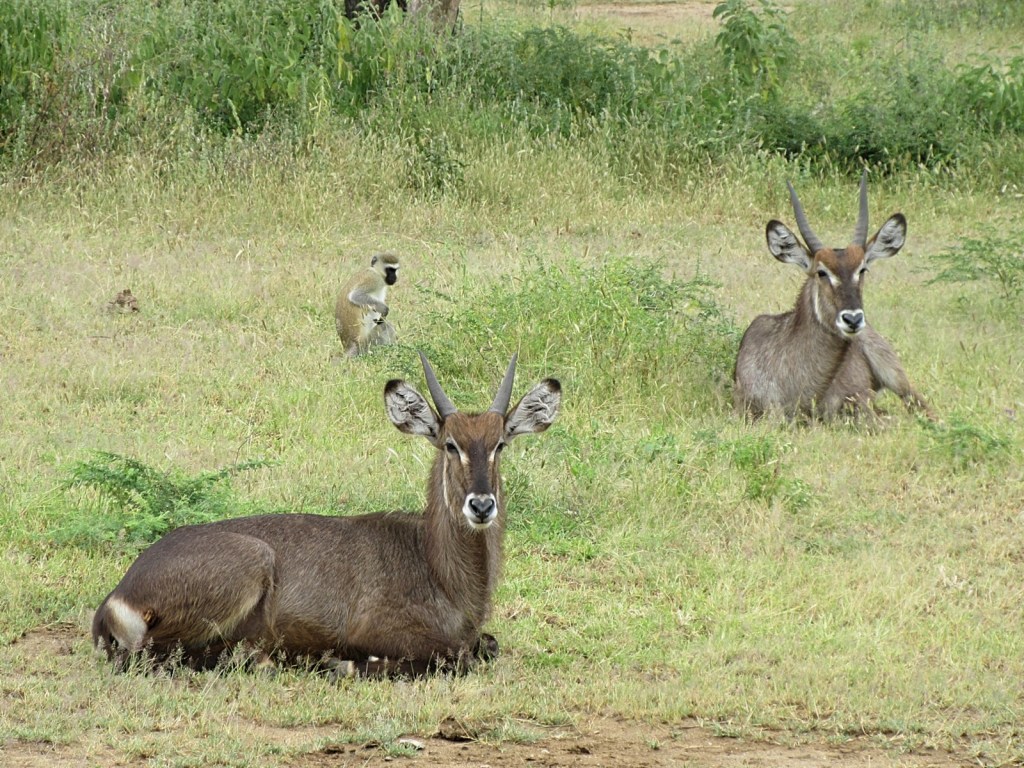
Eland by our deck.

No matter our tribulations though they of course pale in comparison to what every single person doing it by caravan went through. I have read many of their stories; as it is tautologically the first part of getting to the Lakes region, it is the most vivid part of anyone’s narrative before they eventually settle into the new normal of interior Africa living. During our time in Tanzania I was reading a couple London Missionary Society books, including the Rev. Arthur Dodgshun’s journal. He spent the better part of two years getting from Zanzibar to Ujiji, a journey that only took us about two hours (not counting the layover in Dar). And he died at the end (in his journal Dodgshun mentions reading The Last Journals of David Livingstone only for this to be his last journal as well); this post is evidence that luckily didn’t happen to us.

Instead we landed perfectly safety at the Kigoma Airport. As we taxied down the runway I spotted a small decrepit-looking shack that I figured must have been like, the colonial-era terminal, but no it is in fact the current one. Our checked bags were just delivered through an open hatch. But as we stepped outside the ride we had arranged was ready to whisk us off to the Kigoma Hilltop Hotel was waiting there for us. The ride was gorgeous and a mini-preview of the very involved next day I had planned for us. I even saw the MV Liemba way off in the distance. And in a call back to the previous five days upon arrival to the hotel we were greeted by eland, wildebeest, and zebra. Turns out the grounds are a bit of a nature preserve. We checked in and were ferried past the zebra and to our room via golf cart.

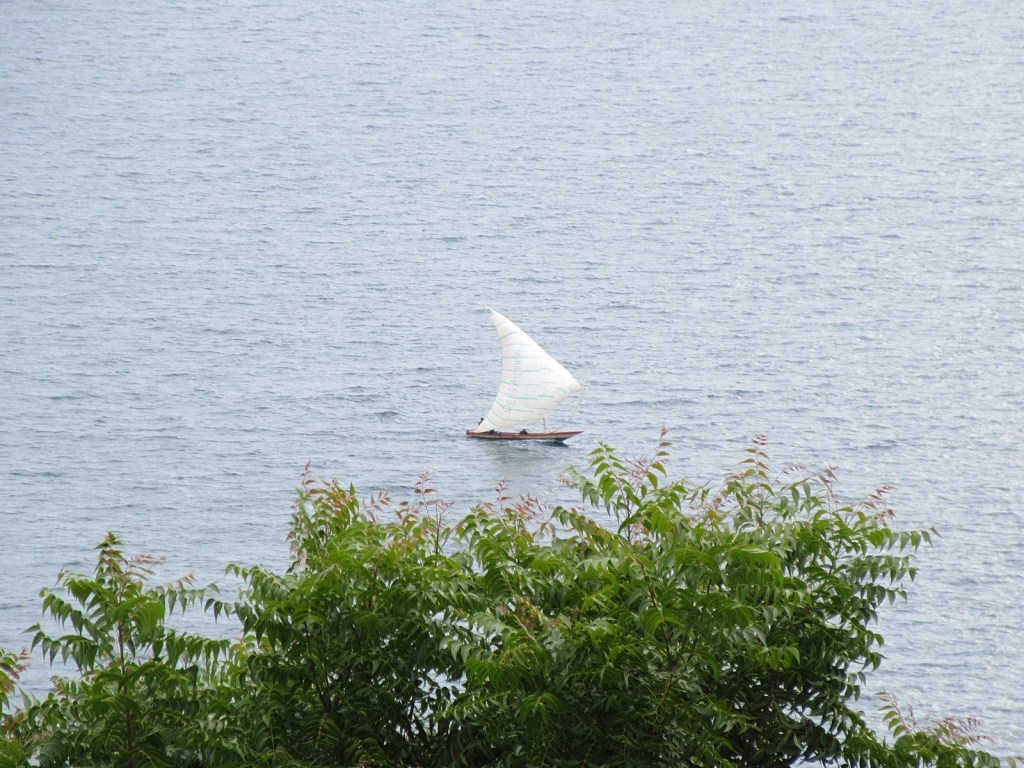
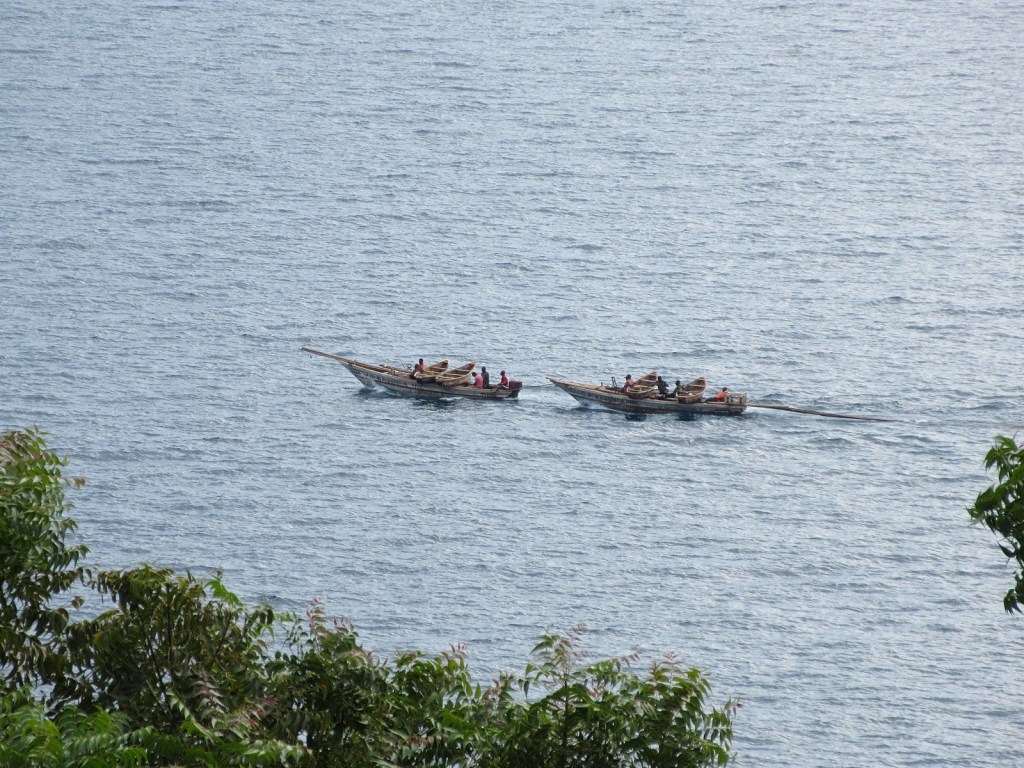
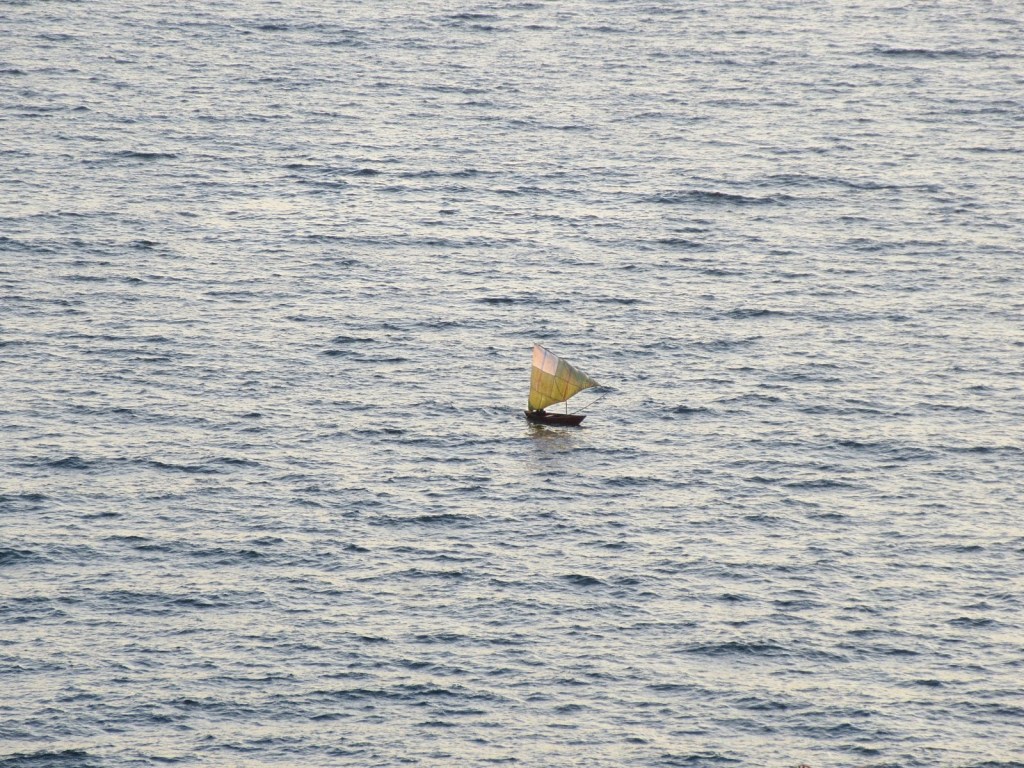
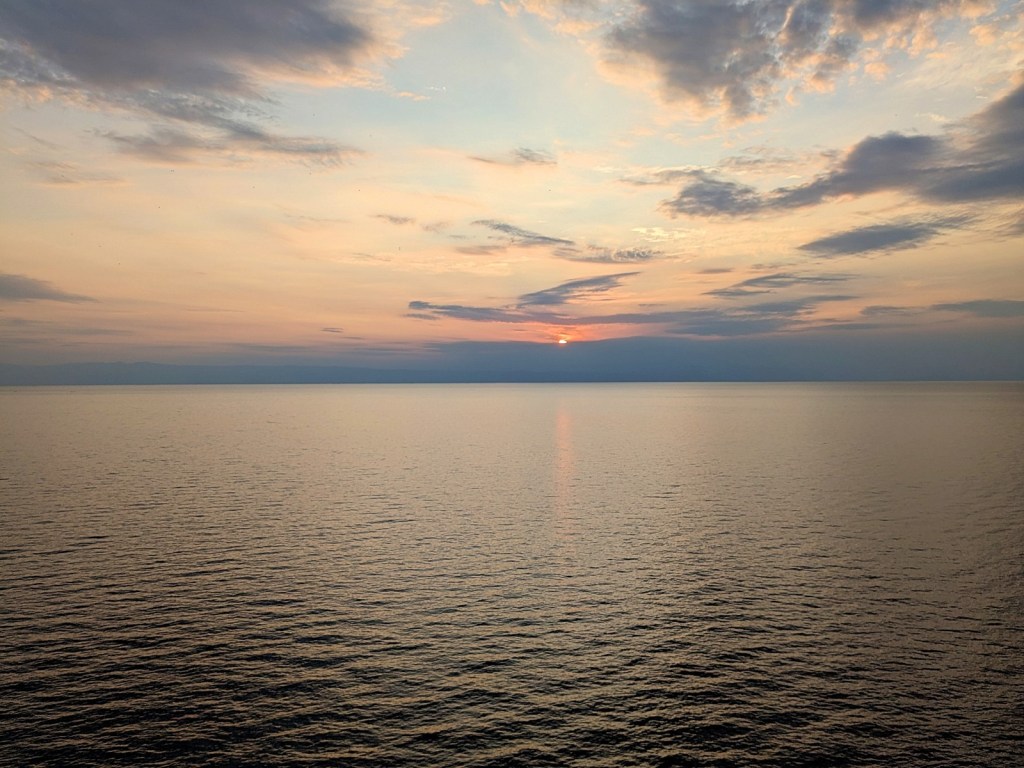
And uh we didn’t do much else that night. It was just relaxing being in the midst of such beauty. It was very interesting to see the rhythm of marine traffic going back and forth. When we arrived we watched a fleet of dhow-rigged canoes coming in. Later, a number of larger canoes carrying smaller canoes went back the other way, so many that you could hear the droning from room’s patio. We ate dinner at the hotel restaurant where I tried to get my kapenta fix in with dagaa. Eventually the sun set over the lake, and it was exciting to be able to see the DRC backlit by the dazzling reds and oranges. And I mean, man. I was finally here. The place I had read so much about and that was positively palpable with history.

Sunset over Tanganyika.

Safari VII: Tarangire

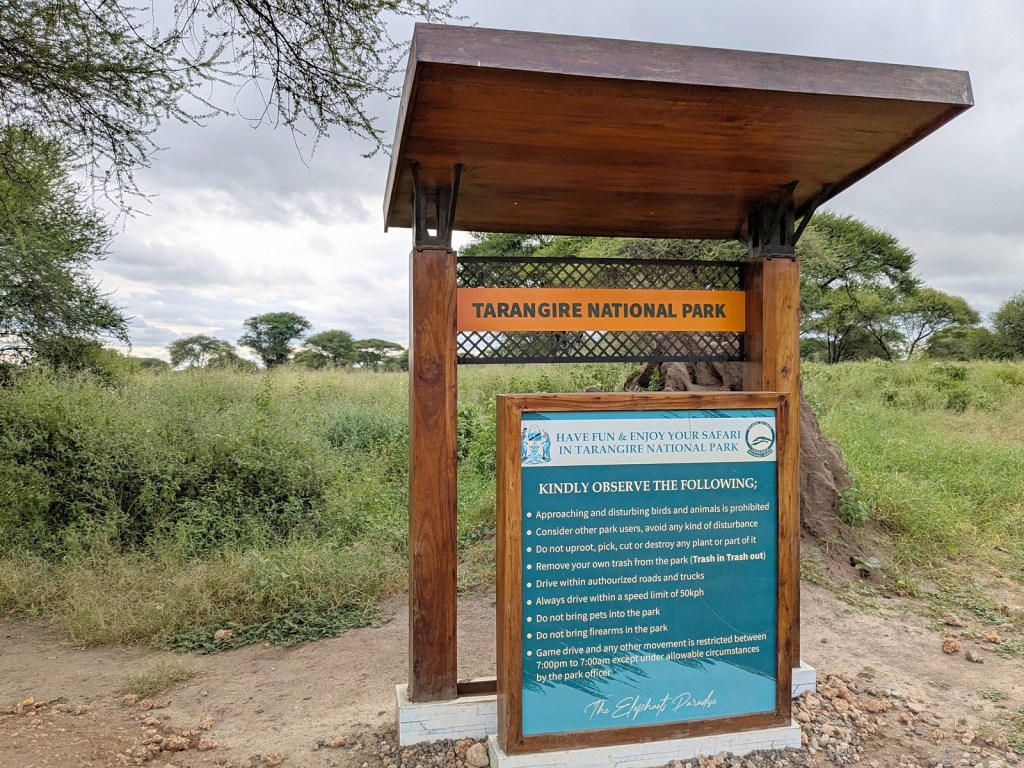
They have a big gate too but I forgot to take a picture.

Reading this week:

  • Stanley by Tim Jeal

There is a more or less standard northern safari circuit in Tanzania and so we set out on our last safari day to the only park we had left: Tarangire.

The famous baobab trees: baobabulous.

Tarangire was a suitable denouement to our journey. While we were there it was a very quiet park, or felt like it when we were driving around. At lunch I saw the greatest concentration of safari vehicles yet, but maybe there just aren’t so many good picnic spots. The animal life too was pretty quiet. The park is known for elephants and baobab trees, and as we drove in we saw baobabs in spades. The elephants though were scarce. We drove a couple of the circuits without seeing any. We were also at one point driving towards “Elephant’s Paradise,” a bit of a lagoon I gather, but from a passing vehicle another safari guide told Obedi there weren’t any there.
Rock hyrax! With a face that says “get off my lawn.”

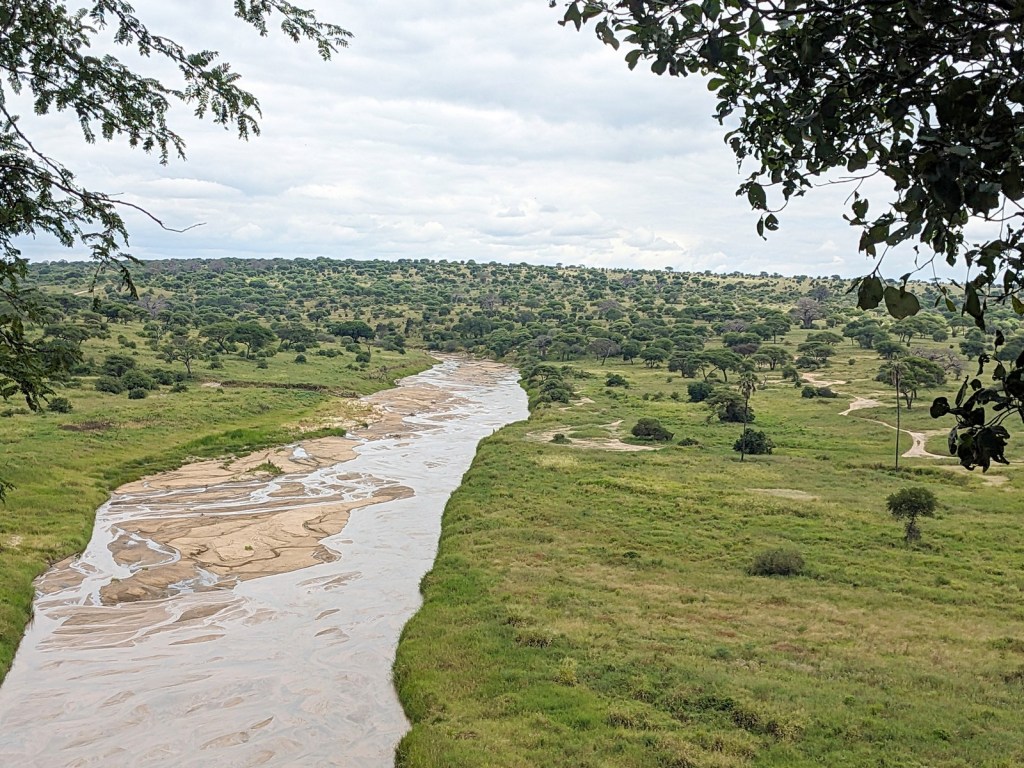
So we were forced to admire the landscape. In the Serengeti I was impressed by the endless horizon but in Tarangire the rolling hills cut through by the river’s floodplain give a huge sense of scale. No wonder you could lose an elephant herd or two behind all the baobabs. But after much searching Obedi found for us a particularly elusive find: a rock hyrax! Anyone can find an elephant, it took Obedi to find a rock hyrax. He explained that rock hyraxes are the closest living relatives to elephants, which scientists can tell from their internal testes and long gestation period. We nodded along knowingly. Must be strange living so close to much more famous in-laws.

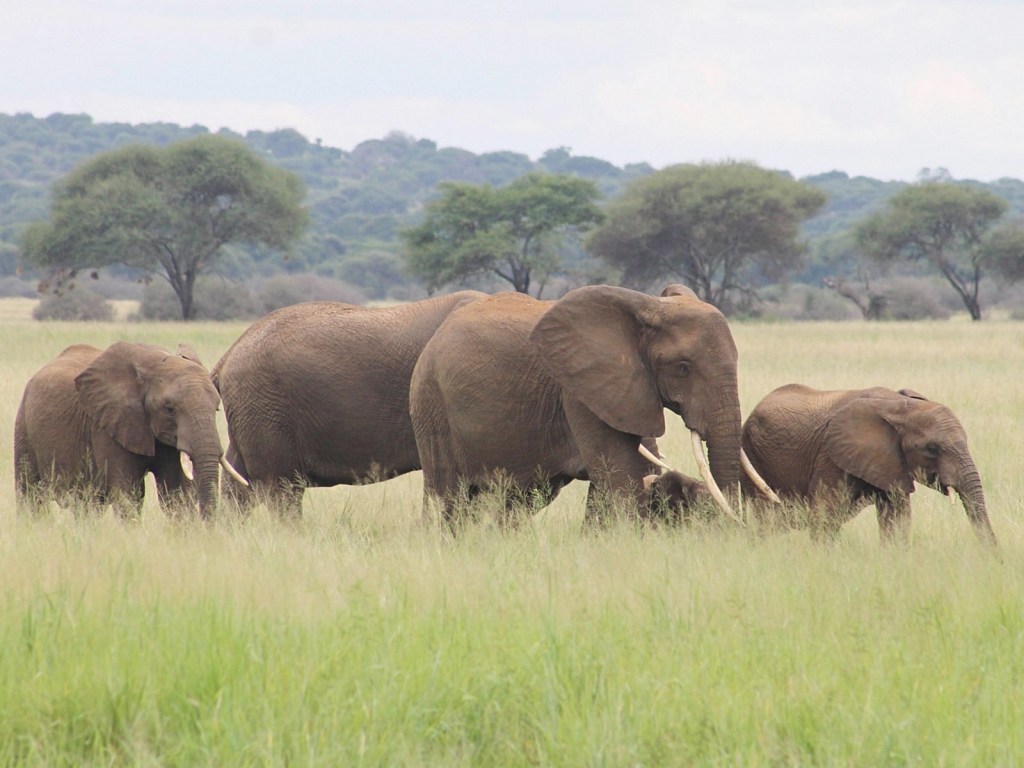
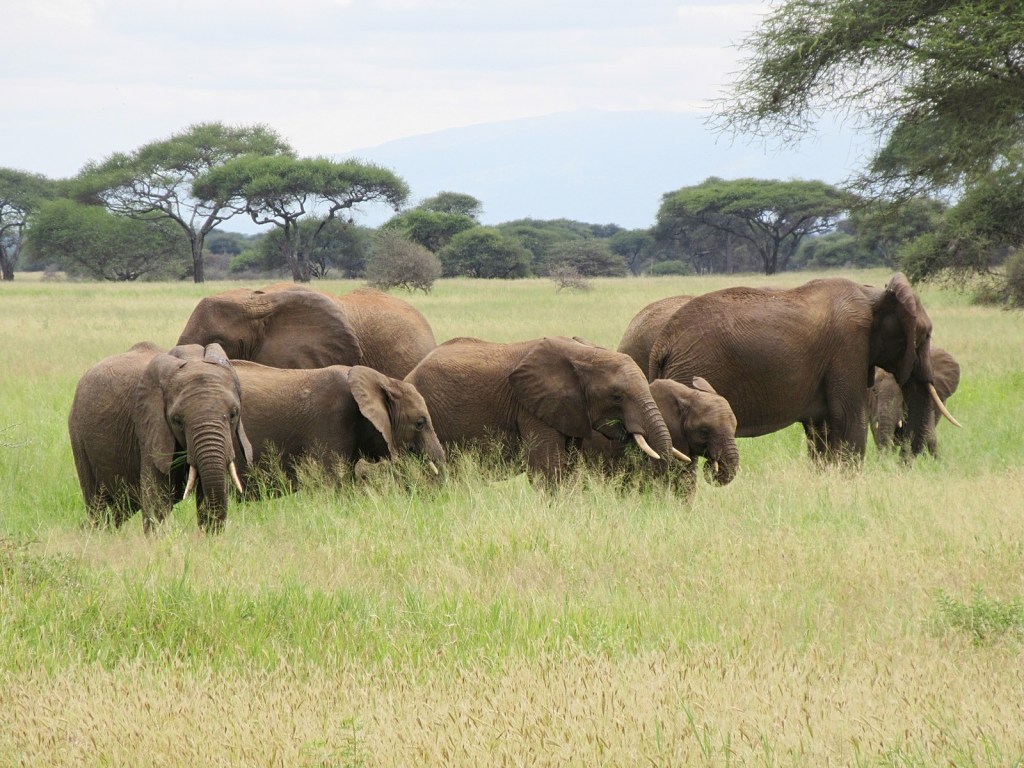
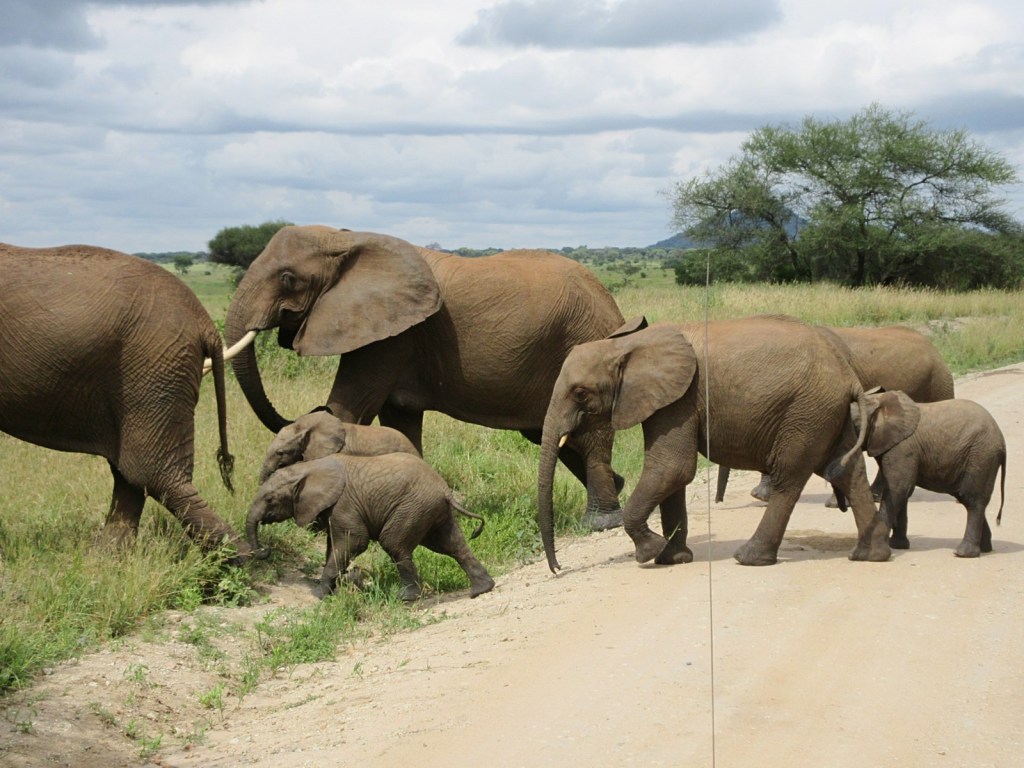
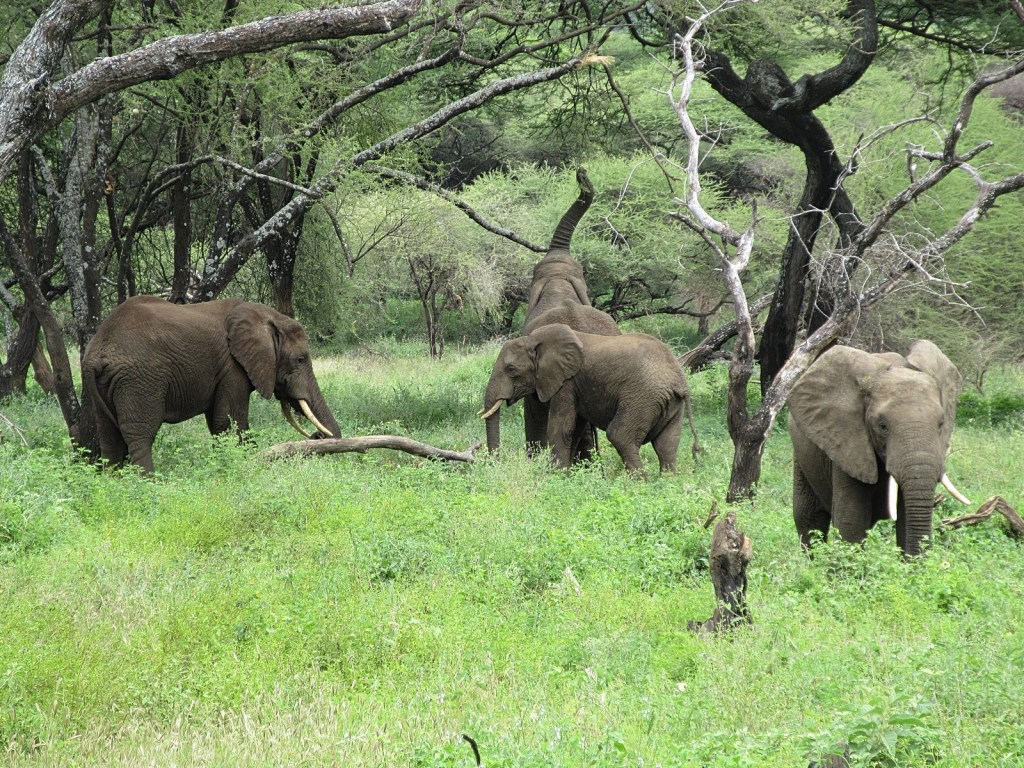
Eventually we came across larger animals (it was as I’ve said the tail end of the rainy season, so the grass was still quite tall all over, meaning the animals were somewhat more spread out than in the drier months). Especially magical was getting close to a small herd of elephants, all of them apparently female except for a very young male or two. We were the only tourists in this stretch of the park so it was just us watching them as they emerged from the forest and crossed the field and road on their way to the river, munching as they travelled. They were majestic as they went along, and as a special treat there were a couple tiny small babies in the herd that were very cute.

Vastness enough to hide some elephants.

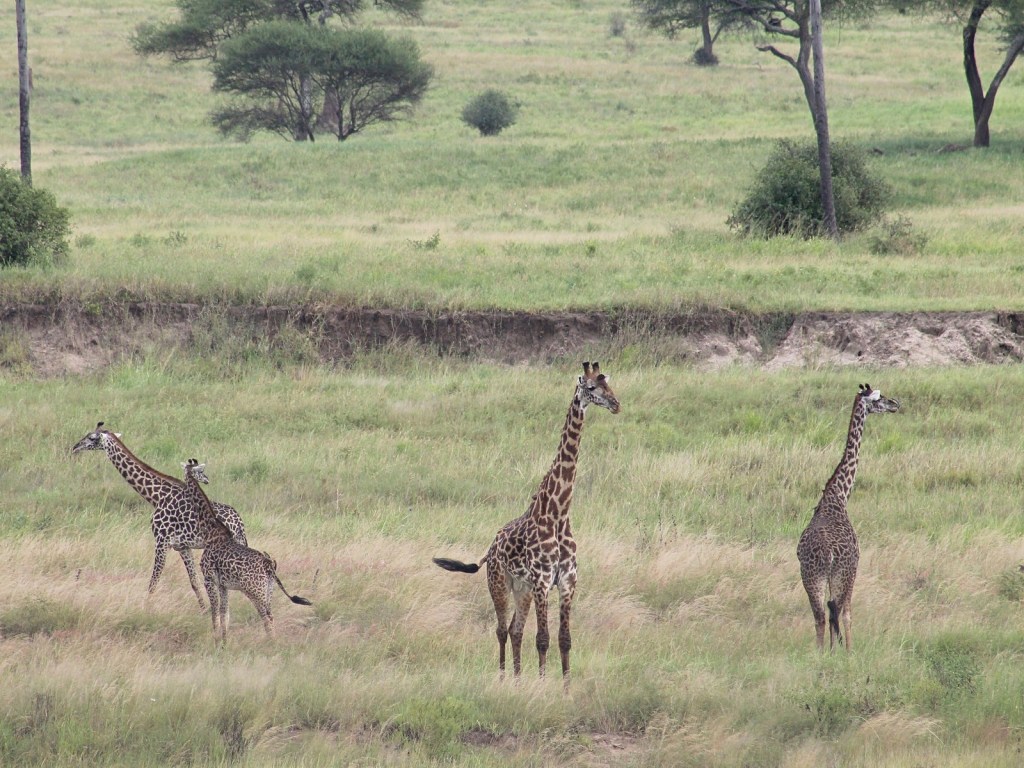
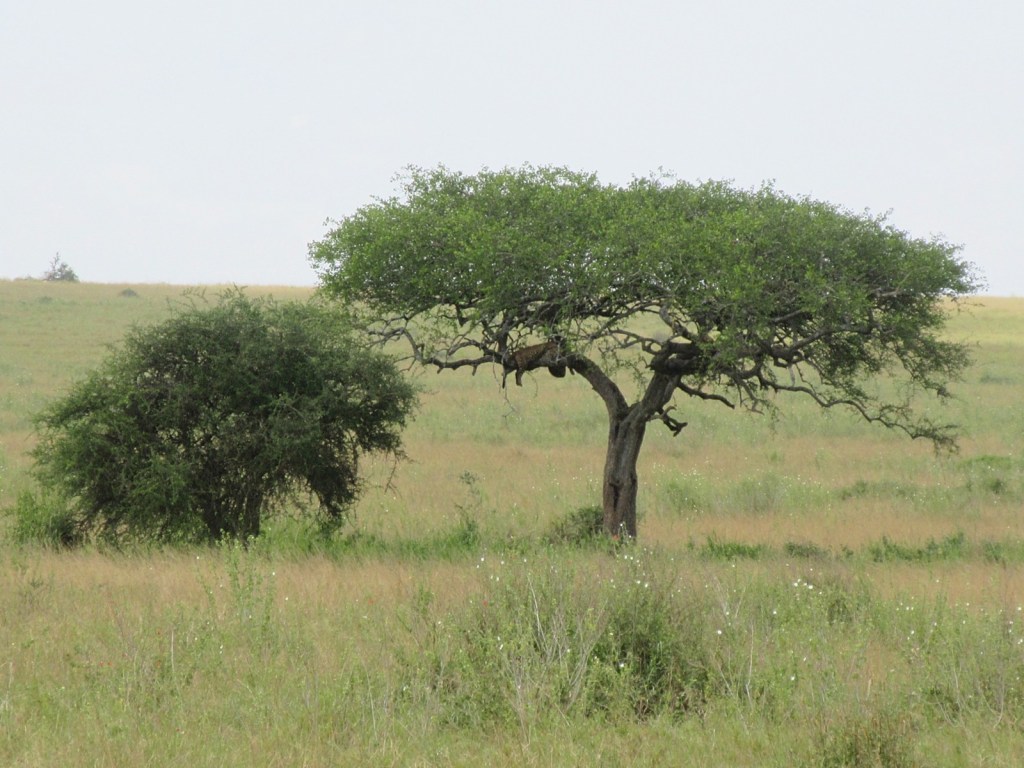
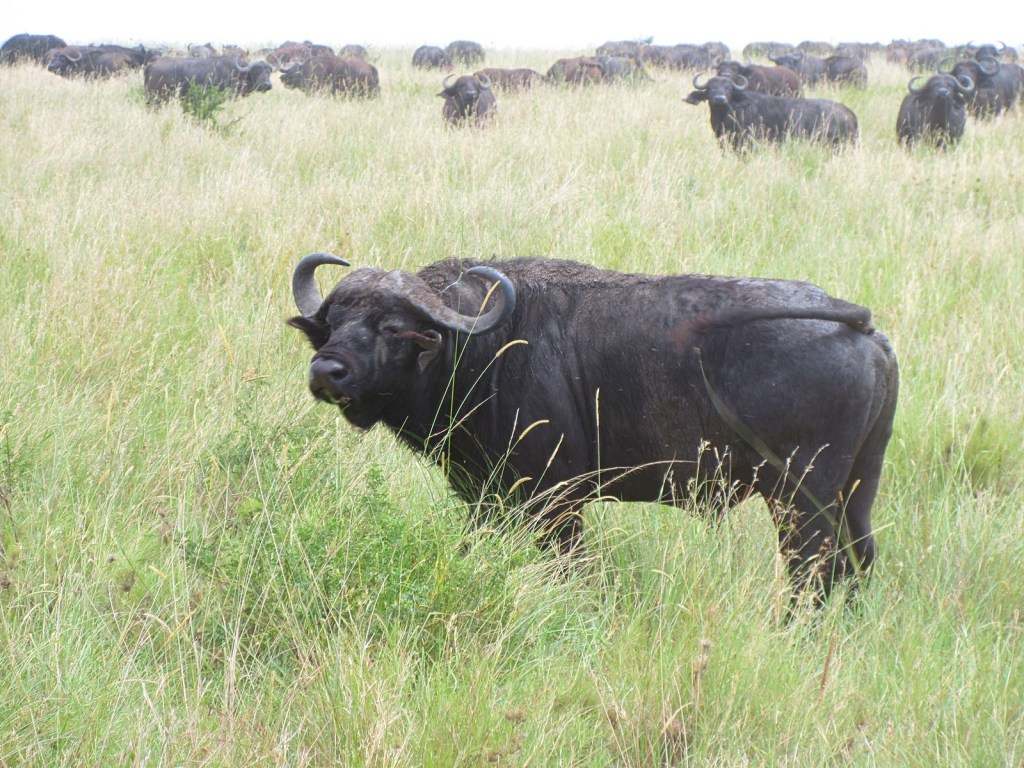
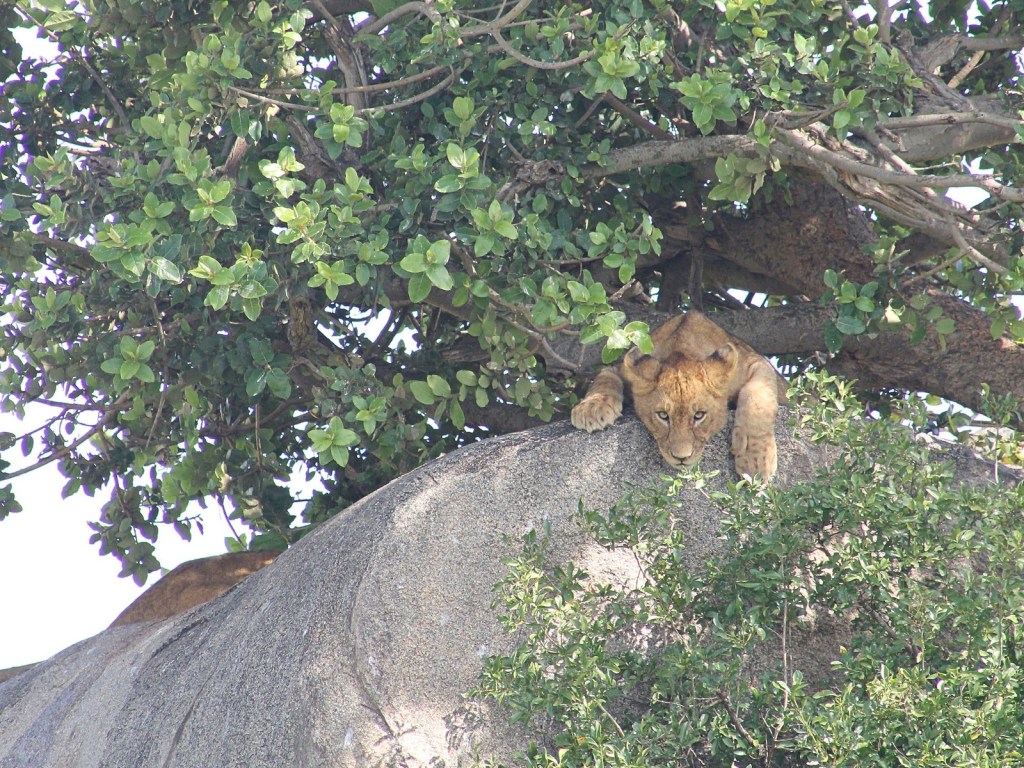
Snaking down the river valley we were also treated to giraffes and buffalo in the distance, and then in a surprise a whole pride of lions sleeping in a tree. The one high up with only its tail and paw sticking out below the canopy looked particularly snug. The river, I must mention, is what gives the park its name, with “tara” (Obedi told us) meaning “river” and “ngire” meaning “warthog.” I don’t recall if we actually saw any warthogs there; if not that was our loss.

There were only two downsides to the park. The first was that this I think was the only place we actually encountered tsetse flies. I read about them lots, and their impact on the socio-economic and cultural landscape of what is now Tanzania, so this was a bit of a Pleakley and the mosquitoes situation for me. I’m still not entirely sure we got out bite-free though we trained to remain particularly vigilant with the fly whisks that Obedi had come prepared with.

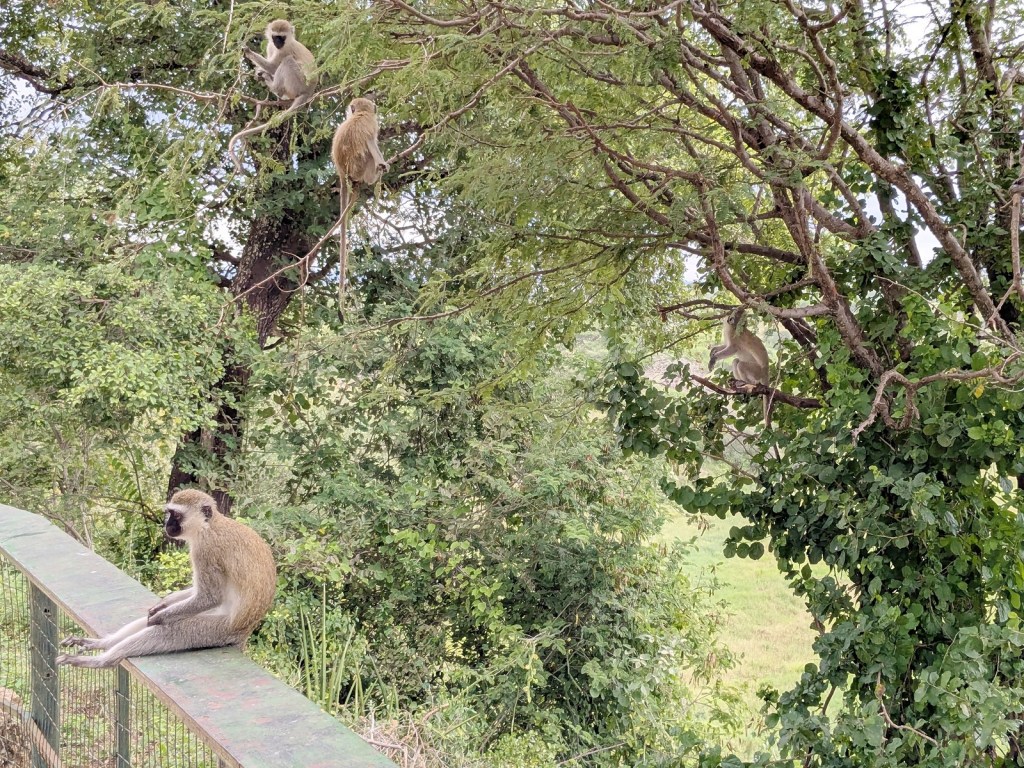
The second downside, which actually I am only really calling a downside for narrative purposes, was the monkeys at the picnic area. These monkeys mean business. They have learned the ways of tourists and at lunch time (and only at lunch time reportedly; you can breakfast with only humans for primate company) they report to the picnic area to see what they can steal. Our picnic table remained unscathed both through vigilance and by virtue of having a lunch packed in thermoses instead of lunch boxes. The monkeys, you see, have learned what the lunch boxes that local lodges pack are and will even jump into open cars if they spot any in there. Stereotypically, they enjoy fruit the most and are on the hunt for bananas, but we did watch one make off with a juice box. The monkeys definitely provided entertainment; we watched one of our fellow tourists physically defend his lunch from a monkey and succeed in saving his apple. Others though the monkeys correctly identified as much easier marks (Obedi also told us they know not to try the safari guides and instead only target tourists). But if you didn’t have any lunch to steal the fearlessness of the monkeys did provide ample opportunity for (relatively) close-up photos.

Chillin’ with the boys, stealing juice boxes.

But with lunch eaten and tsetse flies avoided, it was time to wind our way out of the park and back to Arusha. We had to stop in for a debrief where we gave a glowing trip report, and then Obedi took us to the lodge we were staying at before our flight early the next morning (a small enough lodge where after I ordered chicken for dinner I overheard the waitress on the phone asking someone to pick up some chicken at the market). I am very excited to go back to Arusha. There are more parks to see, more seasons to experience, and a whole city to poke around in which we didn’t do this time. I can’t wait.

The Tarangire, winding its away along as we had to, too.

Safari VI: and Beyond

Having spent our second night in the infinite Serengeti plains, today we would be heading out. I was about to type that we would take the scenic route out, but that’s silly because all the routes in the Serengeti are scenic.

Given that cheetahs were my super amazing wife’s favorite animal to see, Obedi mostly spent the game drive trying to find more for us. Despite checking out it seemed nearly every single kopje we never did find any more, so Obedi tried to make up for it by pointing out a bunch of birds (I denounce being a birder but I am in my 30s and it sneaks up on you and Obedi had noticed). I wrote down in my notes that we had spotted a “Butaloo eagle” but it seems much more likely it was a bateleur eagle. We also stopped at one point to admire a very small parrot-looking bird that he identified as a (Fischer’s) lovebird. There was only the one though so we’ll try not to dwell on that.

I have a fondness for guinea fowl.

We then spent some time (unintentionally) herding wildebeest around. There was a whole herd right on the road we were meaning to traverse, so as we inched along the wildebeests inched along too, grunting at us as we went. Also I have not found a spot to mention this so I will shove it in here, but the zebras would stand together with their necks touching and looking in opposite directions, which is of course to keep an eye out for predators but looked very loving.

Joining the herd.

Before long though we were back to what I thought of as kopje surfing. Each kopje is surrounded by a circle of road and branching out are roads connecting them. As we travelled over the Serengeti I kept switching metaphors, thinking of the safari vehicles as either ships in the sea or as slot cars on the track. It was easier to think of each of us as ships when the horizon really opened up, and you could spot the other vehicles from far off, waving at their occupants as they came close. When we were bouncing between kopjes though it did seem more like we were slot cars on our little tracks, bunching up and spreading out. Bunching out when we all crowded around a kopje which featured a lion, and spreading out to investigate the other kopjes which were inevitably unoccupied if they didn’t already have a safari vehicle around.

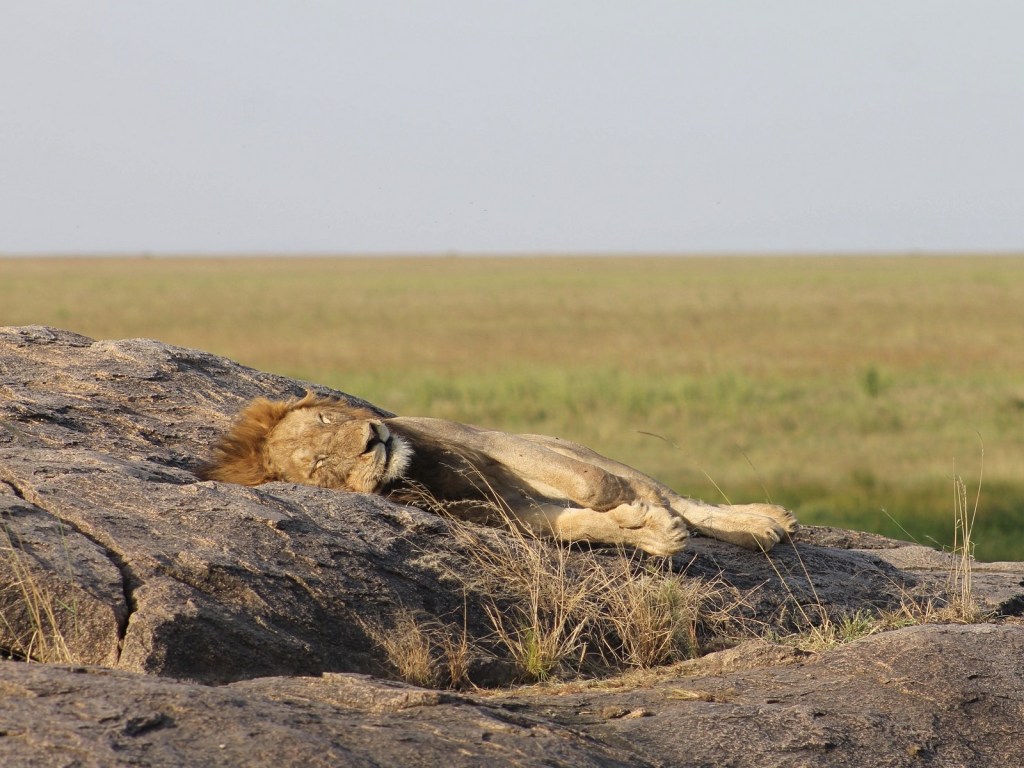
As just mentioned on the occupied kopjes the occupants were lions. Which were very cool. We did see a whole lot. We were especially rewarded on one kopje (kopje kopje kopje) with cubs. One hammed up its cuteness by looking very bored as it slouched off the edge of the rock. Another youngin’ cured its boredom by getting up and grabbing a bone to chew on that was just laying around. Oh, a lion’s life.

The closest we did come to seeing another cheetah is when I thought I spotted one drinking from a pool, but it was in fact a hyena. Which brings me to the “ugly five,” which safari operators point out after you’ve seen the Big Five. I think the “ugly five” is a very rude term. None of these things are official, but one list I have includes as the ugly five hyenas, marabou storks, wildebeest, vultures, and warthogs. Tell you what, all of those animals think you’re the one with an ugly mug. Both my super amazing wife and I both think warthogs are pretty cute to boot, for the record.

Cuties.

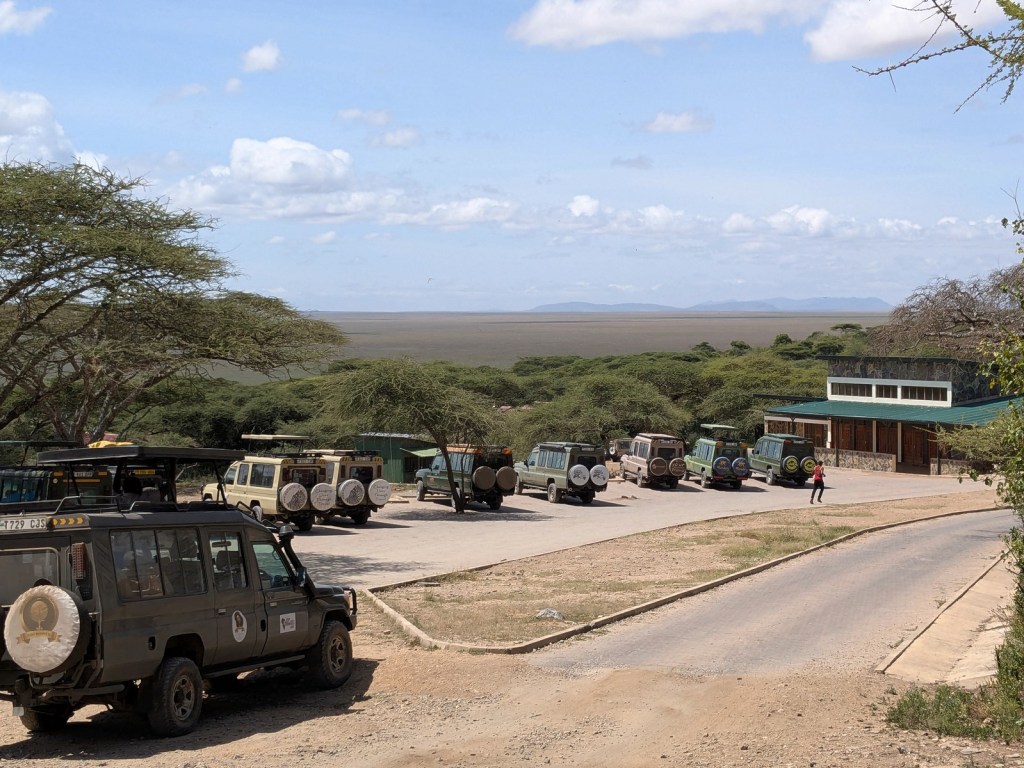
But anyways. All our winding over the Serengeti brought us almost inevitably to the gate (only almost because over lunch we got Obedi to tell us about getting lost on the plains during his first solo tour guide trip) where we stopped for lunch. Obedi pointed out the procession of tour guides heading for the only empty picnic table only to turn away when they discovered the rather large amount of elephant poop next to it. Besides the carbon cycle the picnic spots were also a handy place to admire all the safari vehicles lined up. I was pretty intrigued that every single safari vehicle was the same, differentiated only by the various animals and natural features they named themselves after. There has got to be a reason they all settled on the one design but I haven’t figured out what that is.

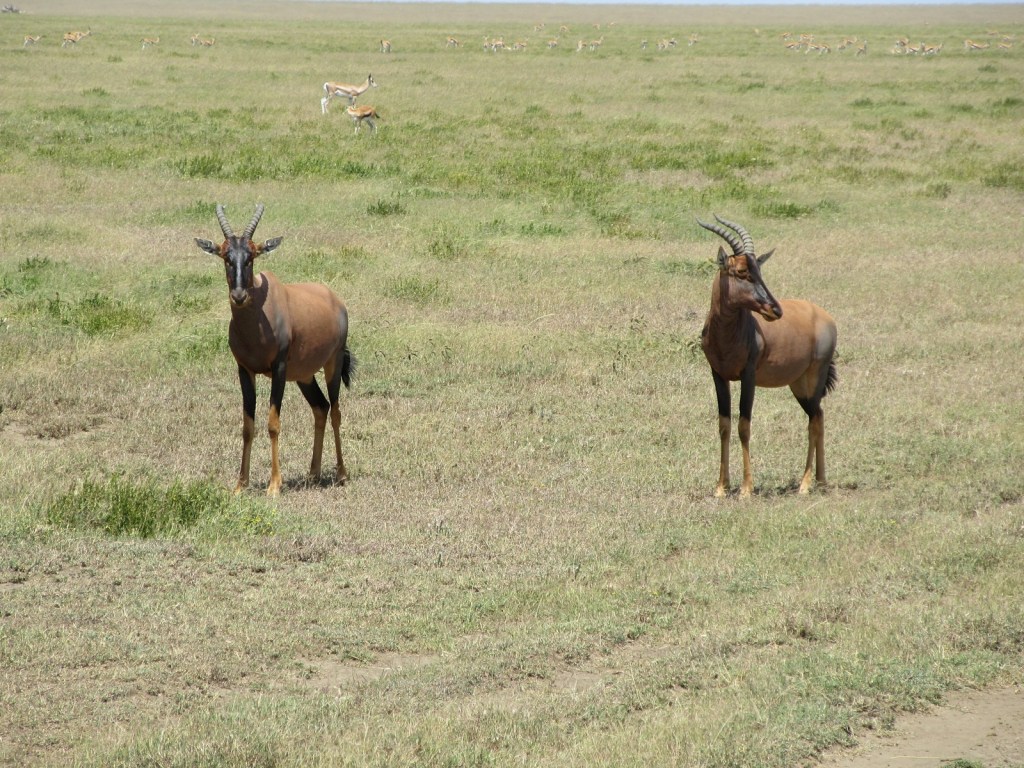
With lunch eaten we began the reverse of the long and dry trek that had brought us to the Serengeti in the first place. We saw several more animals along the way, gazelles and elands and topi and warthogs and I think a couple more lions. The dust though man. When we arrived at the lodge the lady taking our bags to the room spent some time beating all the dust off. Obedi told us as we were heading out that the reason the Serengeti is lacking in trees is the layer of volcanic ash deposited when Ngorongoro erupted (which resulted in the crater) keeping the trees from taking root. The dust is harsh; it stuck to my teeth. And deadly – as we zoomed down the road we solemnly passed the remains of two cars that had been in a head-on collision the previous day. Looking down at my seat belt I was not sure it would do much if we had the same crash. But we didn’t crash and by the evening we were back in the highlands, in the same greenery-filled lodge we had stayed in on the way out, relaxing with Stoney Tangawizis as the sun set over coffee plantations. Only one more day in our safari to go.

Topis
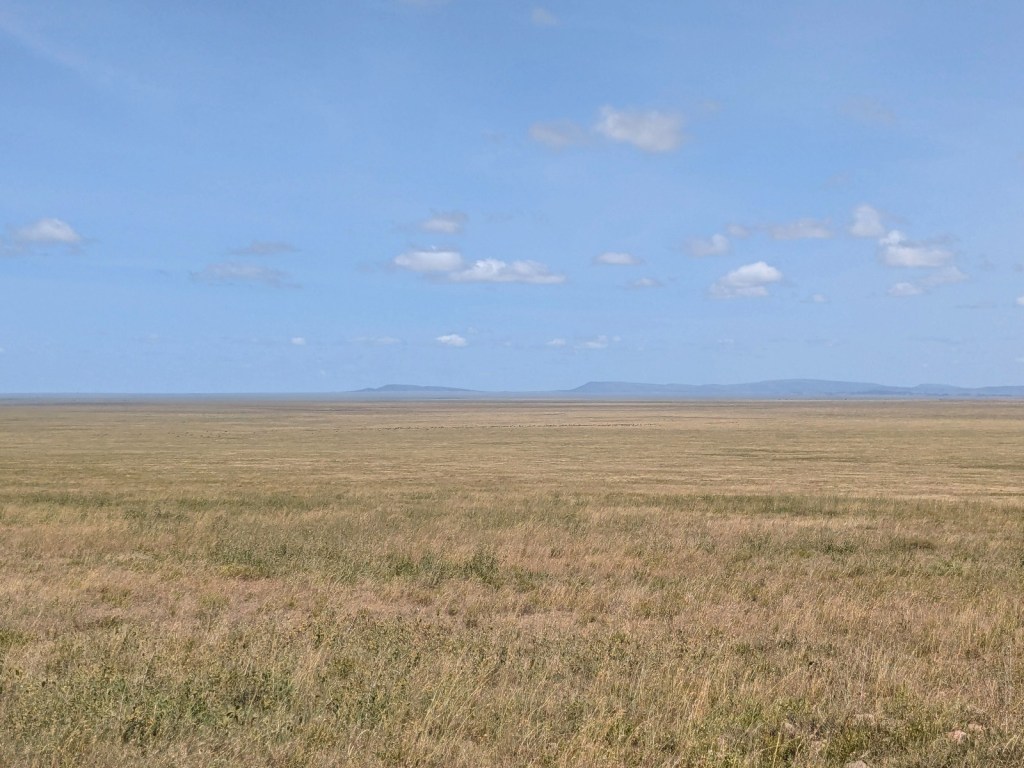
An unbelievable vastness.

Safari V: Carrion’ On

Reading this week:

  • Atlas Obscura: Wild Life by Cara Giaimo and Joshua Foer
  • A Fistful of Shells by Toby Green

On this safari we spent two nights in the Serengeti, a change from our pace otherwise of moving to a new lodge every night. This one was a tented camp, though tented only in the most technical sense; the tents had toilets. On arrival we were greeted not only with the juice ritual but with the singing of Maasai. Other than laying out the metaphorical red carpet for arriving guests, the Maasai’s other job was escorting you to and from your tent after dark, in case the animals come out and attack. My super amazing wife and I would have indeed been a tasty treat for any lions as we turned in after dinner, being more than a little overstuffed from the “live pasta” bar they had. Ah, nature.

The next morning started relatively slow since we were of course already in the midst of the park, and so we set off at only 7am. As we passed a small stream I joked about seeing hippos, but that joke was on me. Our first animal sighting was in fact a pair of hippos by the side of the stream, still enjoying what was for them a late dinner out. As we were taking photos I spotted that the female had a gash in her side, and the oxpeckers (in this case misnamed) were ducking down and pecking into the gash. That must have hurt but she trundled on apparently unbothered. Slightly farther down the road we stopped to admire a trio of young male lions on the prowl.

There were three; it’s the one you don’t see.

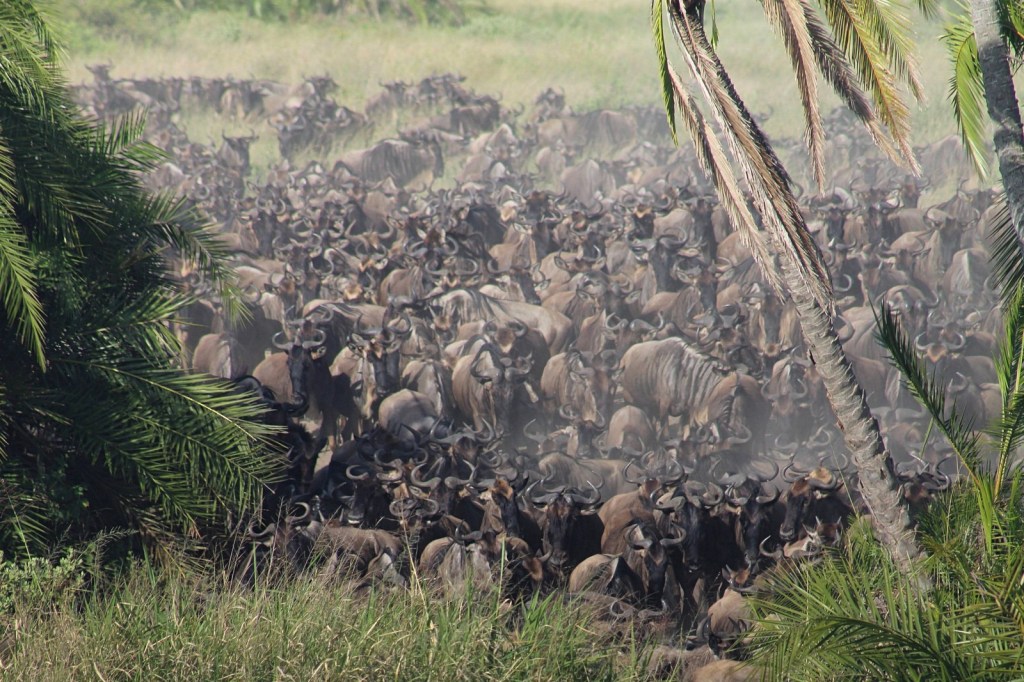
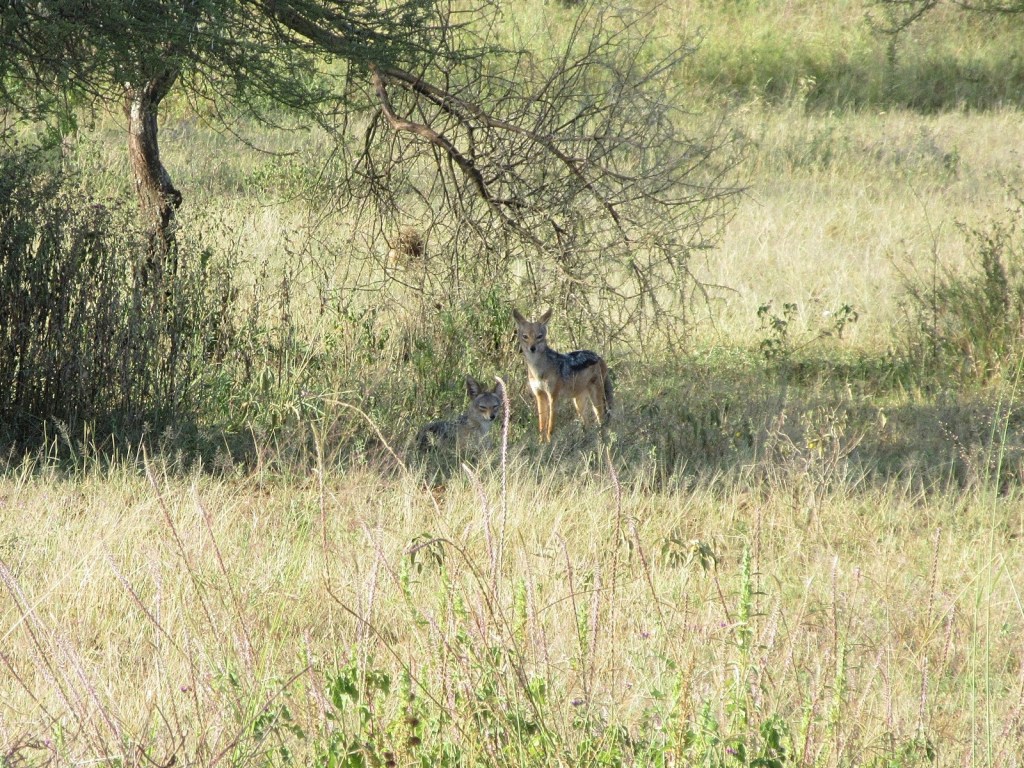
One of the more interesting panoramas of the day came early, when we saw a flock up ahead of marabou storks alongside some vultures. Getting closer it was evident that they were all waiting patiently as a hyena took its share of a wildebeest carcass. Farther off we even saw some jackals, again very cool to see. Eventually the hyena did decide it had enough and we watched the other scavengers move in to scavenge. The whole day increasingly made me feel bad for wildebeests. I like them a lot, as they are so funny-looking and have an amusing habit of joining a whole variety of herds, whether that herd is comprised of wildebeests or not. Besides the wildebeest being scavenged, we later on saw another carcass of one with another marabou stork perched on top, a herd of wildebeests being scattered by a grumpy-looking elephant who evidently thought they had gotten too close, and finally a little baby wildebeest getting chased around by a march larger and evidently also grumpy Cape buffalo. The things a wildebeest has to put up with just to eat some grass.

A line at the buffet.

A big thing I paid attention to this day was the sounds of it all. We had parked next to a mixed herd of wildebeest and zebra and eventually it occurred to me to try to record the sounds of the bugs flitting about and the neighing and barking of the wildebeests and zebras (it’s the zebras that do the barking). But in this spot every time I went to go and record that soon a car or truck was rolling past (often in other cases we were that car, so no hard feelings). Or a plane, since here we were also near an airstrip. This wasn’t even the high season for tourists, and we did often have what seemed like the whole Serengeti to ourselves, but one ponders what it does to the soundscape. Later on as we watched a herd of wildebeests cross a small stream, the grunting of thousands of wildebeests created a hypnotizing and encompassing background drone. Safaris though are a treat for all the senses; passing a pool hosting a cramped mass of hippos, Obedi commented that you could “smell the nature.”

The soundscape of a thousand grunting wildebeest was hypnotizing.

Another exciting part of the day was that we rounded out our Big Five. Elephants we got on day one at Lake Manyara; lions, buffalo, and rhinoceros on day two in Ngorongoro Crater; and so today when we set out Obedi mentioned that he wanted us to see a leopard. And you know I made this joke about just yesterday too but Big Cats safaris once again pulled off showing us big cats. We in fact wound up seeing two leopards today. The first one was spotted courtesy of a passing truck driver (he came by when I was trying to record the bug sounds). Both were in distant trees, and the first one was munching on yet another unfortunate wildebeest. The second was nice enough to be snoozing on a relatively low branch (instead of deep in a tree like the first one), really allowing me to show off my wildlife photography skills here:

Cute little dangly leopard legs.

And so we spent the day trundling around the vast Serengeti seeing what we could see. I wish I was able to admire the birdlife a bit better. The megafauna and megabirds on the veldt get all the glory, but if you pay attention you can see all sorts of birds flitting in and out of the tall grass. These ground-dwelling birds tended to be ground-colored, though also in the small bird category were lilac breasted rollers which were pleasingly plentiful. The smaller mammalian life deserve praise too I suppose. We saw dik-diks a couple times and they were very cute but already famous, and more than once we saw banded mongoose scurrying suspiciously across the road.

Banded mongoose, on the lookout.

The funniest part of the day was when Obedi took us to a picnic spot to use the bathroom facilities. It was a very lovely picnic spot, perched on top of a small hill, so lovely in fact that as we got right into the middle of it I spotted a lion having a nice little nap right by a picnic table. This Obedi thought was over-the-moon hilarious; “I have to take a picture of this!” All well and good except we all did need to pee so the solution was to park the car as close and physically possible to the bathroom (which was about 30 yards from the lion), duck across quickly through the doors, and close the gate behind us. As we were leaving the picnic area the lion hadn’t moved, and on our way out Obedi warned some other drivers who were heading to the picnic spot. When we did settle down for lunch we made sure to scope out the surroundings thoroughly before digging into the meal.

Instead of take out this lion is probably waiting on delivery.
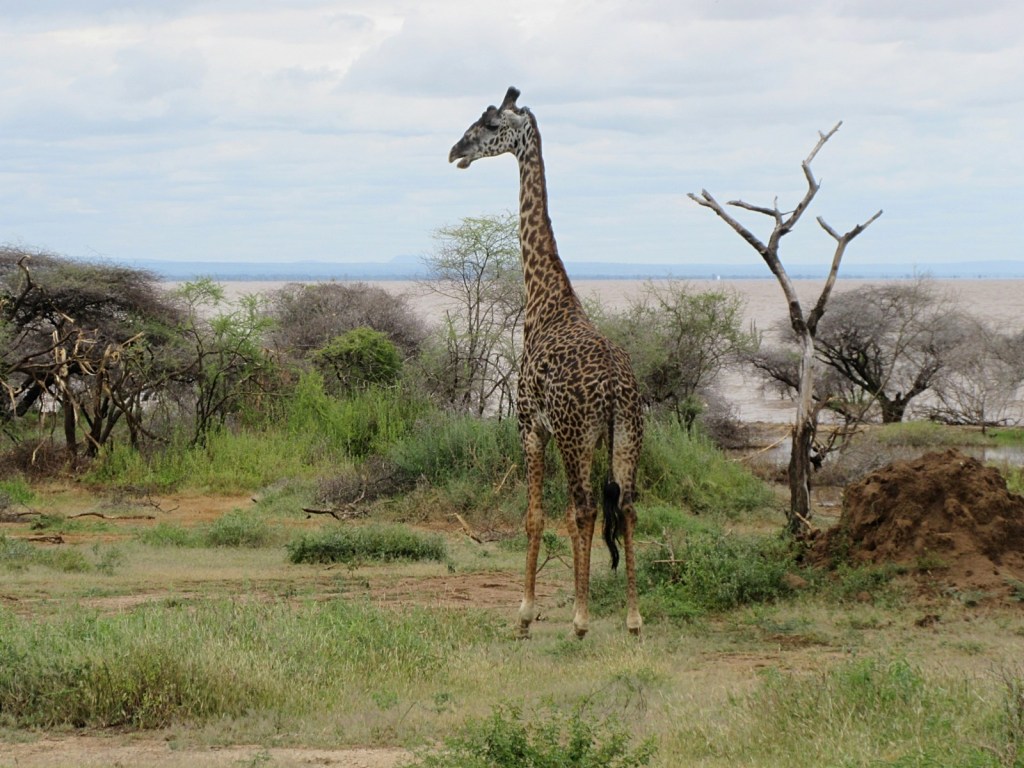
Eventually we wound our way back to camp, this time in the early afternoon instead of early evening. Along the way we saw some lions in a tree scoping out a herd of zebra on the horizon, making up for the lack of tree-dwelling lions at Lake Manyara, and a herd of elephants fresh from their mud-wallowing skincare routine. A final surprise was a giraffe about eye-level with us as we crossed a bridge. With a long afternoon in camp we settled in to relax, enjoying sundowners and listening to the rain-like sounds of the wind breezing through the grass in the park beyond. The swifts nesting in the eaves of the tent added a little wild-life spotting excitement. And so ended a gorgeous day in one of the most gorgeous spots on earth.

Safari IV: Into the Serengeti

In the last post we had ascended out of the Eden of Ngorongoro Crater to begin the trek to our next destination: the Serengeti.

Before embarking on this grand safari I had of course looked at everything on the map, and charted driving times to try to get a sense of what our days would be like. But like everything experiencing it was something else. The Ngorongoro Conservation Area and Serengeti National Park are right next to each other; the signs reading “leaving Ngorongoro” and “welcome to Serengeti” nearly abut, or at least I remember it that way. The two ecosystems though seem like they could not be more different. As we climbed out of the crater we were surrounded by lush green. The road curves along the edge of a valley, and in the middle is nestled a small Maasai compound with their cows grazing next to zebra. But then you crest the hill and begin the long descent and the environment changes suddenly, the road twisting through a dry and dusty expanse of whistling acacia. Even in our enclosed and (nominally) air-conditioned safari vehicle, it was hot and bright and tiring to travel through. Still, life continues; at one point we passed a giraffe among the trees and across the road a Maasai woman selling wares to passersby.

Where it all began.

Another surprise this trip was a brief stop at the fork to Olduvai Gorge. Until we were at the little rest stop and bathroom break I hadn’t realized it was so close. We didn’t have time to explore the cradle of humanity but it was still nice to have a miniature homecoming.

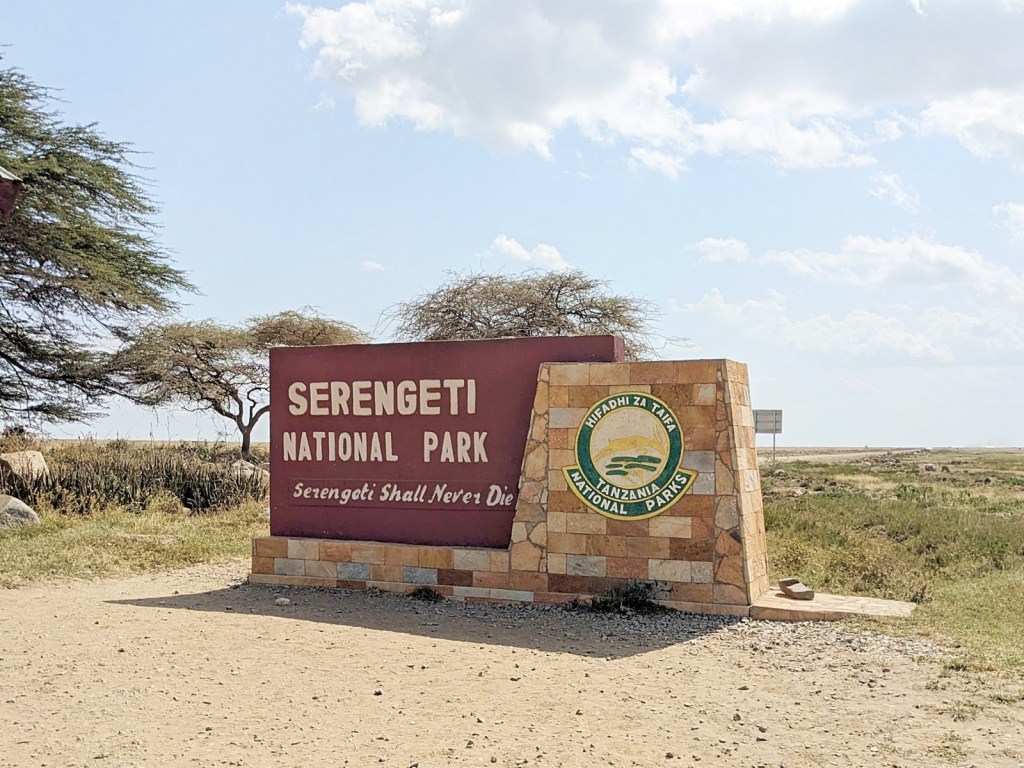
Eventually the Serengeti proper began and it was mesmerizing. Even without animals the landscape itself would be a fantastic draw. At the gate pictured at the top Obedi told us that “Serengeti” means “endless plain” (Wikipedia tells me this etymology is disputed) and endless it definitely seems to be. From the gate we drove straight for miles and miles through dry-looking grass broken up in parts by zebras and wildebeest and gazelle. Later on I watched a dust devil spin by. One of the things that most amazed me about the Serengeti though is that within the endlessness the landscape could change. The first major landmark of the Serengeti was the large kopje where Obedi had to do the paperwork for our trip, which marked a change from the grasslands. After arrival in this section we could hop from kopje to kopje which spotted the horizon. But even these we could drive past into a greener veldt. Then again later on you could find higher hills blanketed with more acacia forests. Both endless and ever-changing, it is really a wonder.

But the Serengeti did have animals, so we were not confined to landscape spotting. Prior to the safari my super amazing wife and I had both picked our dream animal to spot; mine was easy as giraffes are my favorite but her deepest hope was to spot a cheetah. And bam, almost as soon as we hit the Serengeti, Big Cats Safaris pulled through and showed us Big Cats. As we approached the rocks I had spotted feline heads which I had assumed at first would be lions, but lo! there was not one but three cheetahs, brothers by the look of them, all snoozing away happily on their rock. At the base of the rock was the remains of a gazelle, so the cheetahs were sleeping off a hearty lunch. This being a highlight of the whole trip for my super amazing wife, we lingered for a long while by the cheetahs before scooting off to give another safari vehicle a chance to admire them.

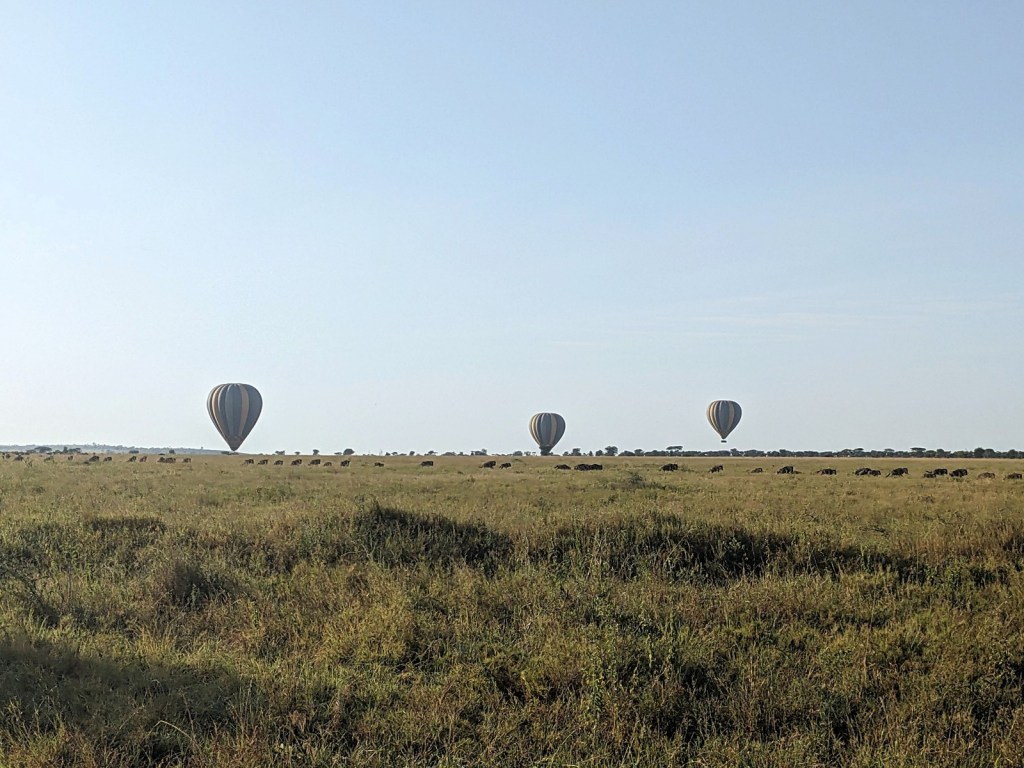
And so on we drove through the changing landscape. What also stunned me is how much the animal landscape could change as well. During this time of year the wildebeest great migration was in the area so at times we would pass these massive herds of wildebeest, usually accompanied by zebra, or else herds of gazelles or buffalo, so much that even in the endless plains it didn’t seem like there could be room for them all. But then on we would drive into a new patch of infinity where it was just us and the grass and the sky and I wondered where they all went.

Eventually though the sun began to make its way towards the horizon, rays playing across the land, and we made the definitive turn towards camp. Despite being just at the tail end of the rainy season, we didn’t get rained on at all during our safari, though towards the evening we had been chasing a rain cloud. Behind that rain the sun finally set, with astonishing reds painting the clouds. Our final stop before camp was a gas station, quite the sight in the Serengeti; the most exciting part however was watching a baboon snatch a Fanta someone had left on a curb. Truly nature is wonderful. A few more paths in the dark and we arrived at the camp.

Safari III: Ngorongoro Crater

Our next day on safari dawned bright and early, slightly too early for us in fact as we were a bit late to our scheduled departure time. The nice thing about being on a private safari though is that the car does not leave without you. We packed up and during the drive Obedi pointed out for us the kids going to school (it was now Monday) in their different uniform sweaters, including one group on a tractor-slash-school bus.

Eventually we arrived at the gate of the Ngorongoro Conservation Area, which was guarded by baboons. We slowly skirted past a troop which included a baby climbing the “Don’t feed the baboons” sign until its mother got worried and plucked it off. Ngorongoro is a Conservation Area (as opposed to a national park), as Obedi explained, because Maasai live in the Area. They live there because the British kicked them out of the Serengeti in the colonial era and relocated them to Ngoronogoro.

A picture taken on our way back, this time without fog.

From the gate it was another 45 minutes or so of driving before we started descending into the crater itself. This was along somewhat freaky roads with steep drop-offs. Our (my) fears were ameliorated however by the dense fog we had ascended into (so we couldn’t see the slopes), though that meant we also skipped the viewpoint looking into the crater along the way (later on our return trip the fog had lifted and we got to point all the views). Eventually the steep drop-offs opened up into these highlands with rolling plains and cows herded by Maasai.

We finally came to the entry road and began our descent. The crater is one-way, with a road leading down and then a road leading back up. Obedi told us the crater is 610 meters deep and the roads are again kind of scary but before long we were down there. The big change from Lake Manyara is that this day we saw lions, and loads of ‘em. They were near the “entrance” and if Obedi couldn’t tell their location by the Swahili chatter coming over the radio set he could definitely tell by the line of safari vehicles. So we drove on over and checked ‘em out.

A fine breakfast.

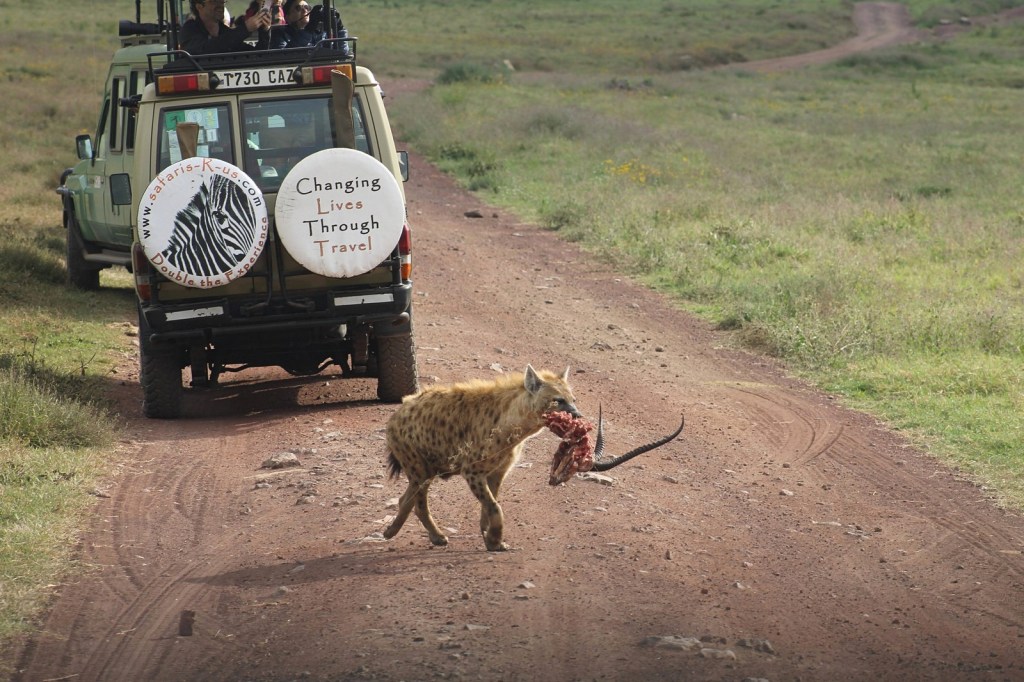
Here, the pride was mostly resting. Not too far away we also spotted gazelles, both Thompson’s (smaller, with a black stripe) and Grant’s (larger, no stripe) and a warthog. This had us thinking we might see some stalking action from the lions, but no. Instead, while we were admiring them we spotted some other movement a little way off. This we quickly identified as a hyena. Not too far off I also spotted a jackal, which I had initially mistaken as the hyena’s cub. The jackal also got a few bites into the carcass of a gazelle that the lions had evidently left, but the most exciting part was watching the hyena come up and make off with the head. We watched the hyena cross the road to find somewhere to enjoy its snack in peace.

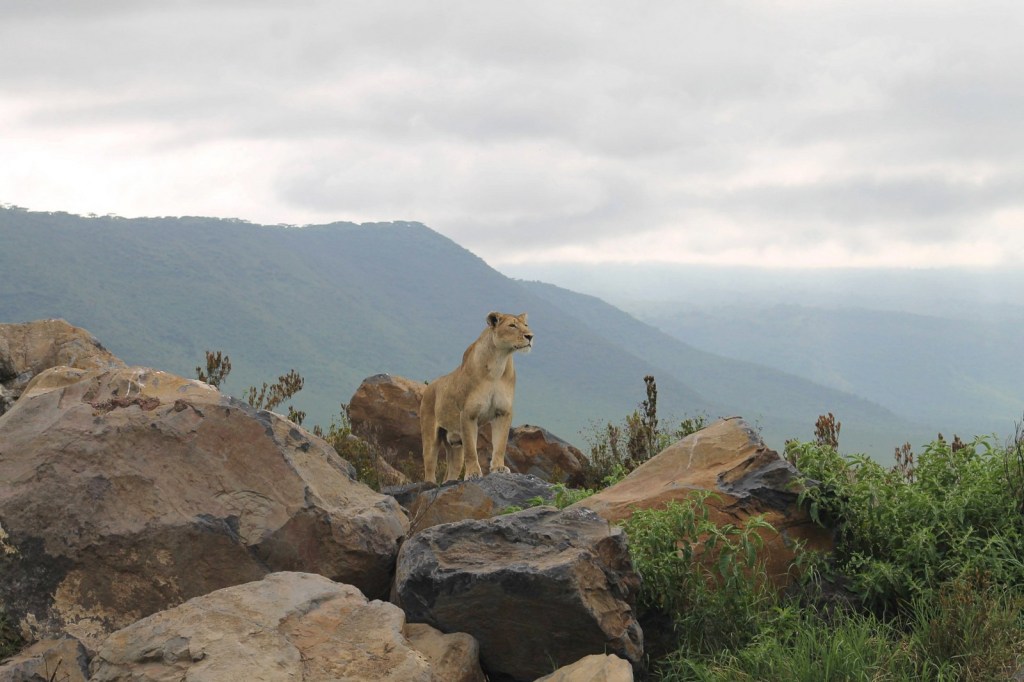
From here we drove up to a hill that was also in the process of being carved out as a quarry; the conservation area uses the stone on the roads. A couple lions had taken advantage of the rocky hill as a good place to spot game, including at least one mother cub. We didn’t see the babies but from the look of the mom it was obvious she had hidden them somewhere nearby. We admired her surveying the terrain. She then popped down behind the rock and within the bushes. There she would have been entirely invisible even though she was still very close to us; the only thing that gave her away was the rustling of the branches. Also on this hill we got to catch just a glimpse of a serval as it leapt above the grass in the middle of a pounce.

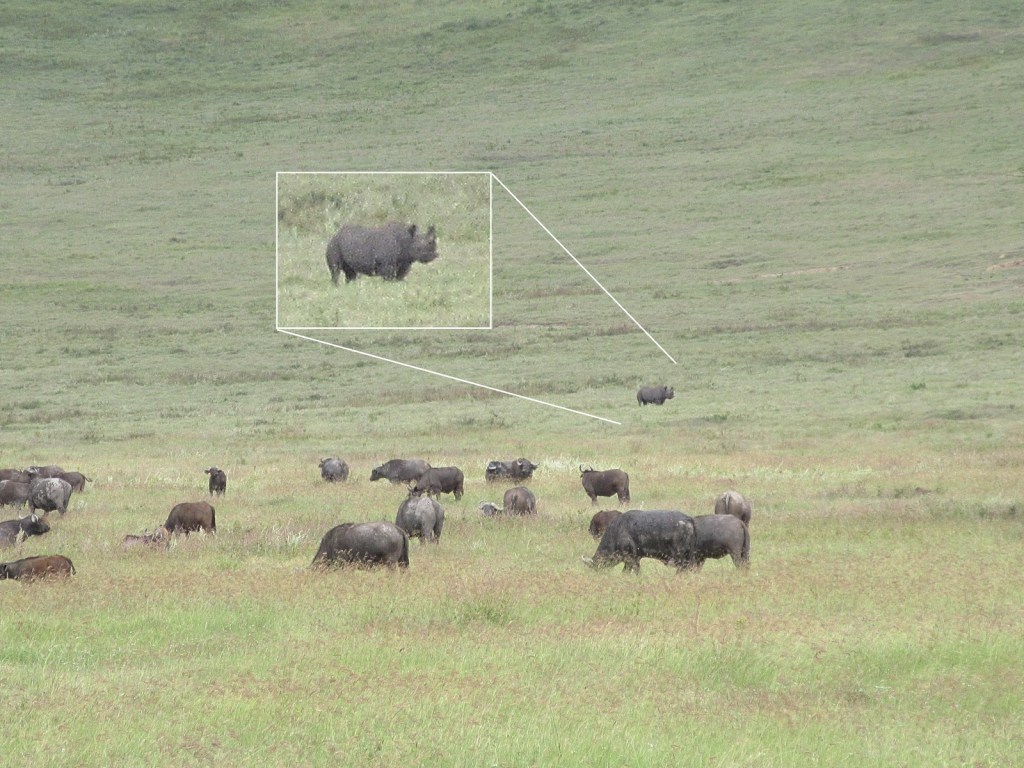
Big and small felines and canines under our safari belt, we drove off into the middle of the crater proper. It is such a beautiful place. The whole time I kept wavering between it seeming more like a Lost World or Garden of Eden. Given how close Olduvai gorge is, maybe Garden of Eden should win. But just within the crater you get the hills and forest and plans and marshy rivers and a lake. Though we started with the predators the crater is full of gazelles and buffalo and even a few rhino. Although they were distant the rhinos here ensured that we could claim the full Big 5 on this trip.

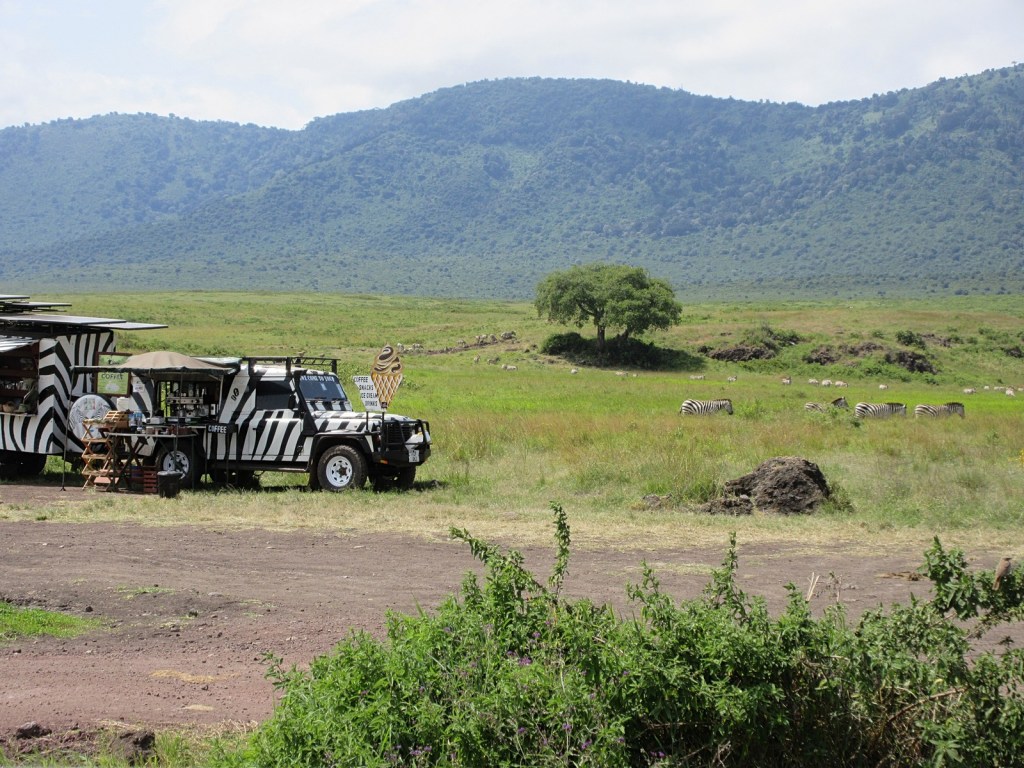
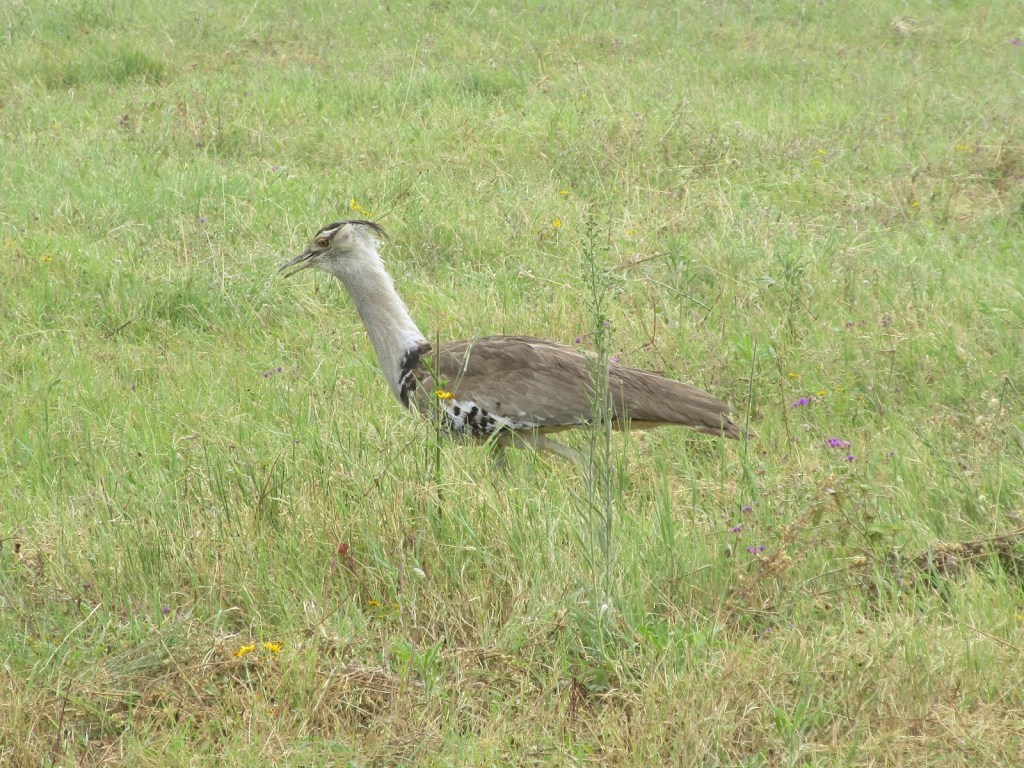
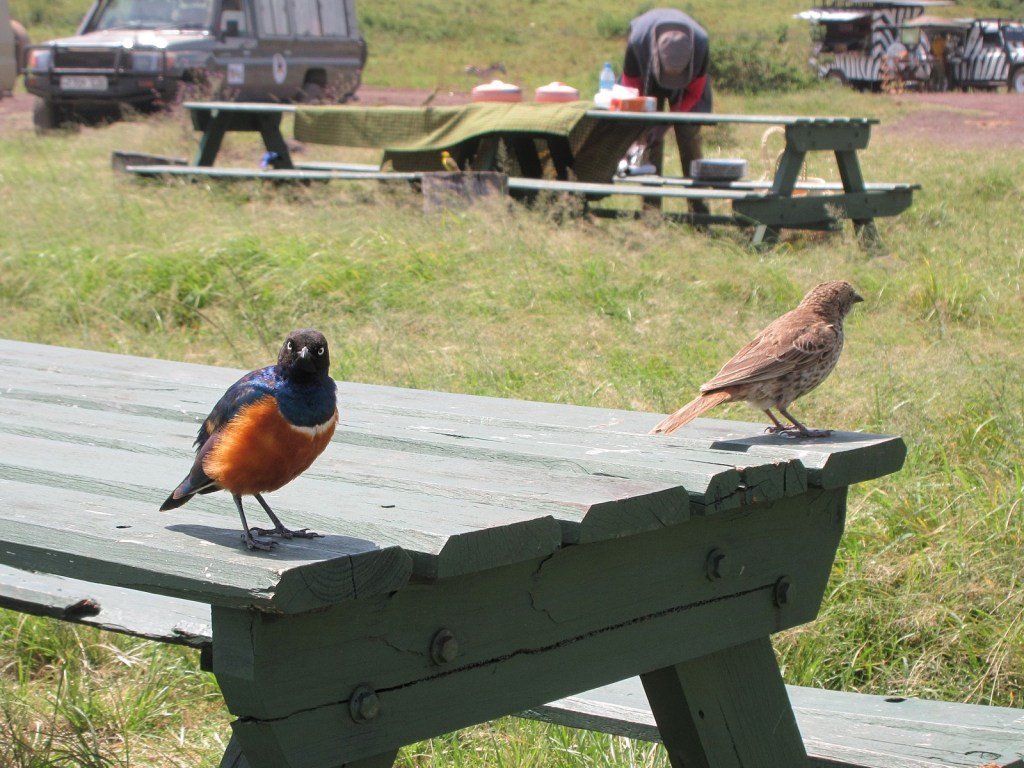
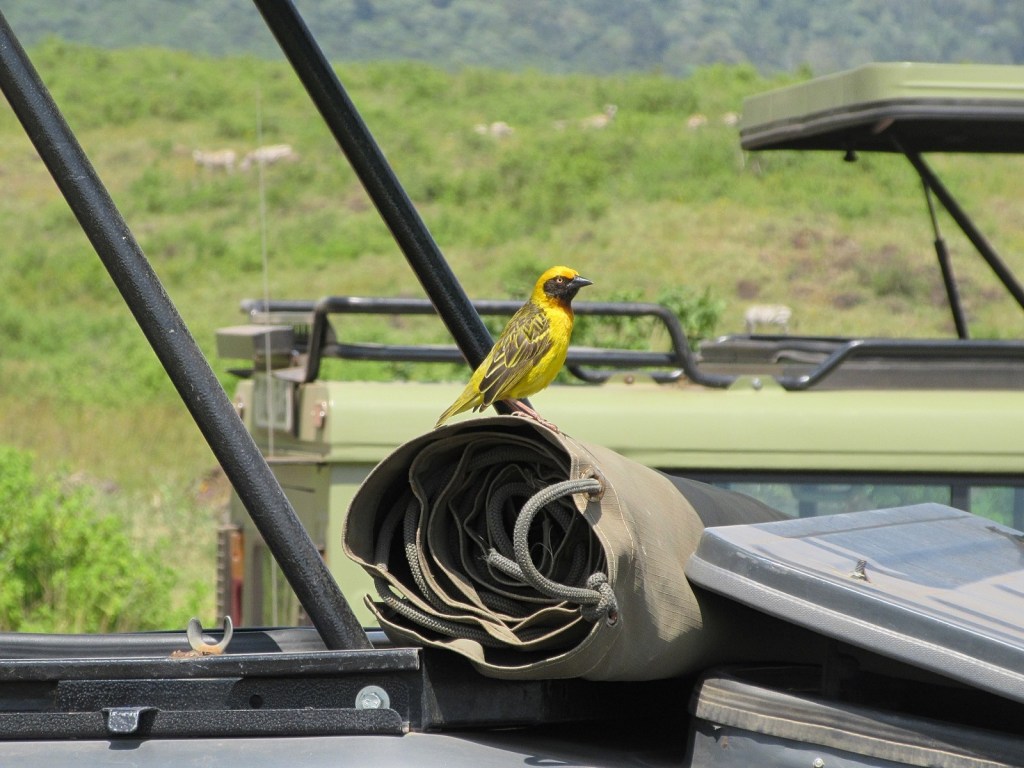
Besides the mammals I enjoyed seeing all the birds; only after selecting the photos for this post did I realize I had included mostly birds. I was happy we got to see a kori bustard (largest flying bird native to Africa) and several sandgrouse skirting through the grass. The lake even had flamingoes, and I was surprised to see ostriches on the road (the first I had seen in the wild). Though the most stunning part of our picnic lunch spot was the whole herd of zebras surrounding it (and maybe the hippos snorting in the pond nearby), it was also fun to have the little birds flitting about. Some went into the various safari vehicles parked around to see if they could pick up some food. It definitely felt like paradise.

After our lunch stop it was time to head out. We had to drive back up around to the exit road. Along the way we passed a motor grader under which I spotted three lions taking advantage of the shade for a nap, so some cats under a Cat. We made sure to soak in the final views of this amazing mass of wildlife, crowded into a natural geologic wonder. We could have spent forever perched on the rim but we had other locales to look forward to, so off we went.

Safari II: Lake Manyara

I know Jurassic Park got it from safari parks, but every time I pass one of these sorts of gates I expect to see a t-rex.

Now that we were well rested, the first full day of our safari dawned bright and early (the animals weren’t on vacation even though we were, so they did not sleep in and to catch them you have to wake up early too). Obedi picked us up at 7:30 and we head into Arusha proper for our in-briefing. Here I appreciated that we were given guidance on when to tip and how much. It is also a funny reflection of the things that tourists care about; our in-briefer mentioned there will be bathrooms every few hours but if we need to we can “mark our territory” in a bush.

Sufficiently warned of what was ahead, we started the drive to the park. Along the way I spotted all sorts of things I thought were cool, including a shop named “Kalambo Falls Mini Market” (notable as it we were at least 500 miles from the falls themselves), railroad tracks which Obedi told us were from the ‘30s, the Arusha clocktower (apparently the halfway point of a Cape-to-Cairo journey), the Arusha Regional Library, and a number of busses that said “Atomic Energy” which I couldn’t tell if that was an energy drink or the bus company or what. On the outskirts of town were lots of coffee plantations, with nice big shade trees. Obedi told us most of the coffee was for export as Tanzanians drink tea. Obedi also described to us the impact of climate change as he saw, saying how he thought the dry season these days was warmer and drier than he remembered from his youth. When we were firmly outside of town the view opened up and we were firmly in big sky country with dramatic clouds and mountains in the far distance and incongruously, camels. They are residents of Meserani Snake Park, which, right, of course.

Takes a trained eye to see something as large as an elephant.

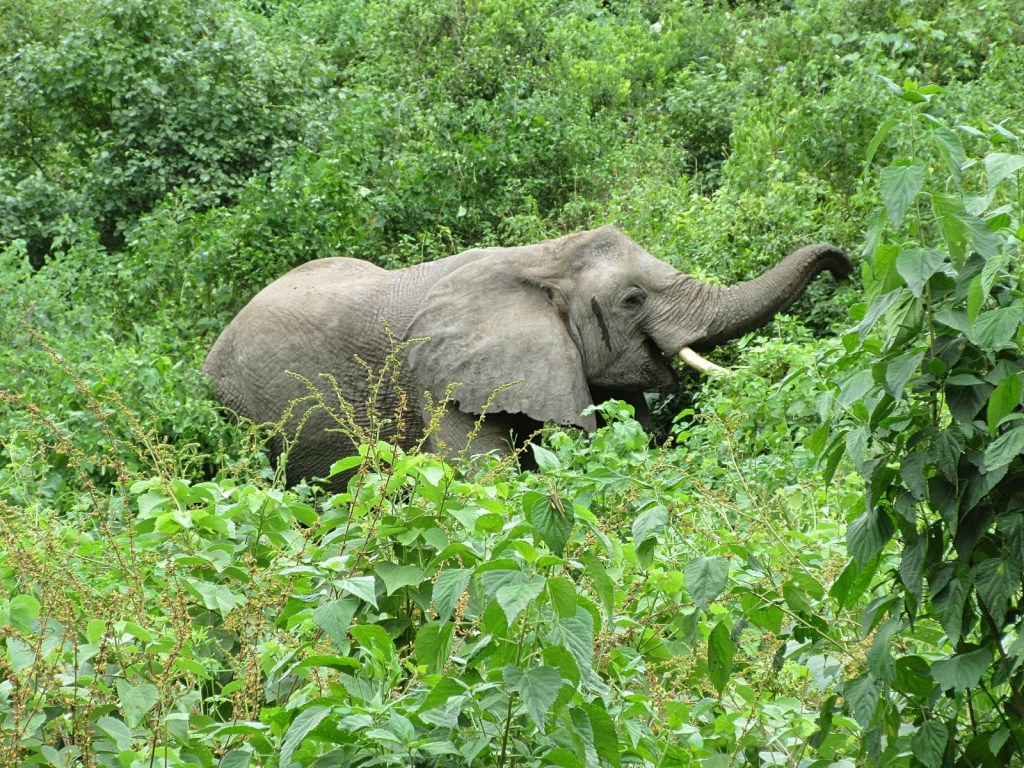
Eventually we arrived at our very first safari park: Lake Manyara National Park. At the gate we were greeted by olive baboons (we kept our distance) and visited the gift shop while Obedi took care of the paperwork; I picked up a lapel pin for Ngorongoro Crater (foreshadowing) by there were no Lake Manyara pins. As soon as we drove into the gate proper BAM, elephant up on the hill in the forest munching on leaves. I was the one to see it so Obedi told me “good spot” but I am sure he says that to everyone (later he tried to point out a giraffe to my super amazing wife and I, and we were very confused about where it was, but it was in fact only 30 feet away in full view and we were just looking in the exact wrong direction). I was happy because I was worried my super amazing wife wouldn’t be able to see any animals but here was an elephant very kindly wasting no time in showing off so that was perfect. We stayed for a while watching this elephant enjoy his brunch.

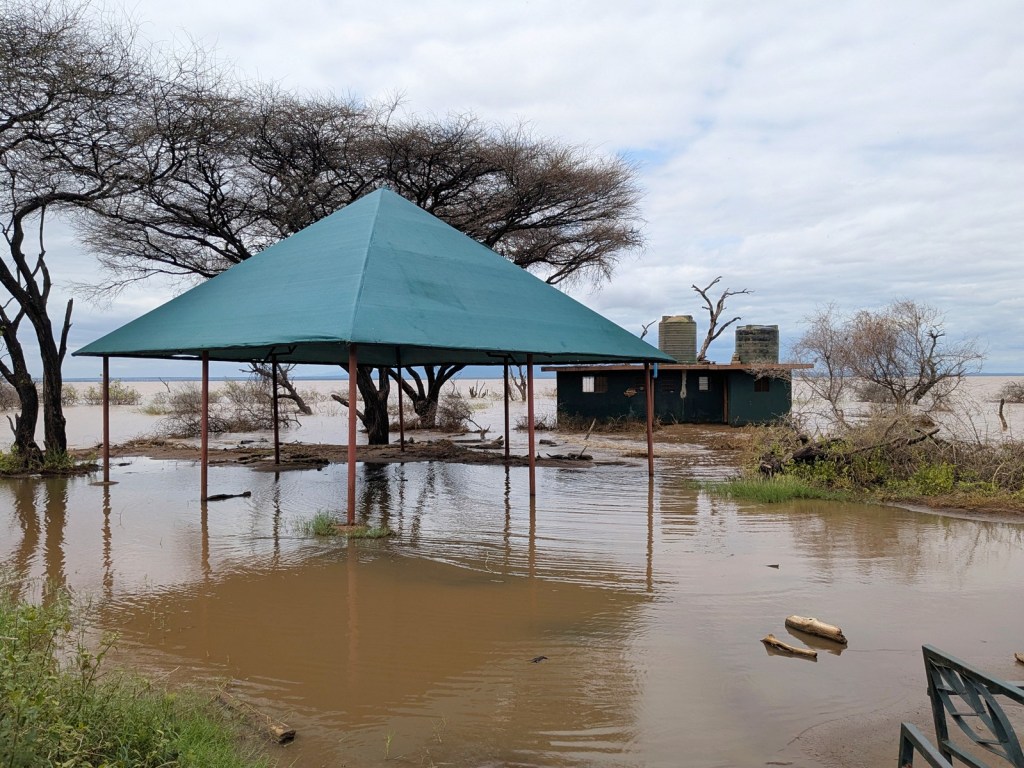
Flooded picnic spot and bathrooms now with indoor AND outdoor plumbing.

Lake Manyara is famous for its tree-climbing lions. We did not see any lions in this park, let alone in trees, but that is okay. They have apparently scooted off to some other locales due to Lake Manyara flooding. Obedi told us the lake has been expanding since at least 2020 due to heavy rains, and the levels surprised even him. When we eventually stopped for lunch the picnic spot we were going to use was flooded, though when he was there only in March it was still entirely useable. He told us park management is clearing the brush from some of the land to recreate the open land which used to be by the lake (now in the lake) which some animals need. Some brief googling tells me that Lake Manyara flood levels fluctuate a lot, as it is fed by underground streams and has no outlet. Obedi was even more worried about agricultural runoff into the lake. He blamed that, along with the rising lake level, for changing the pH so that it no longer supports the same food chain meaning the lake has lost its flamingos.

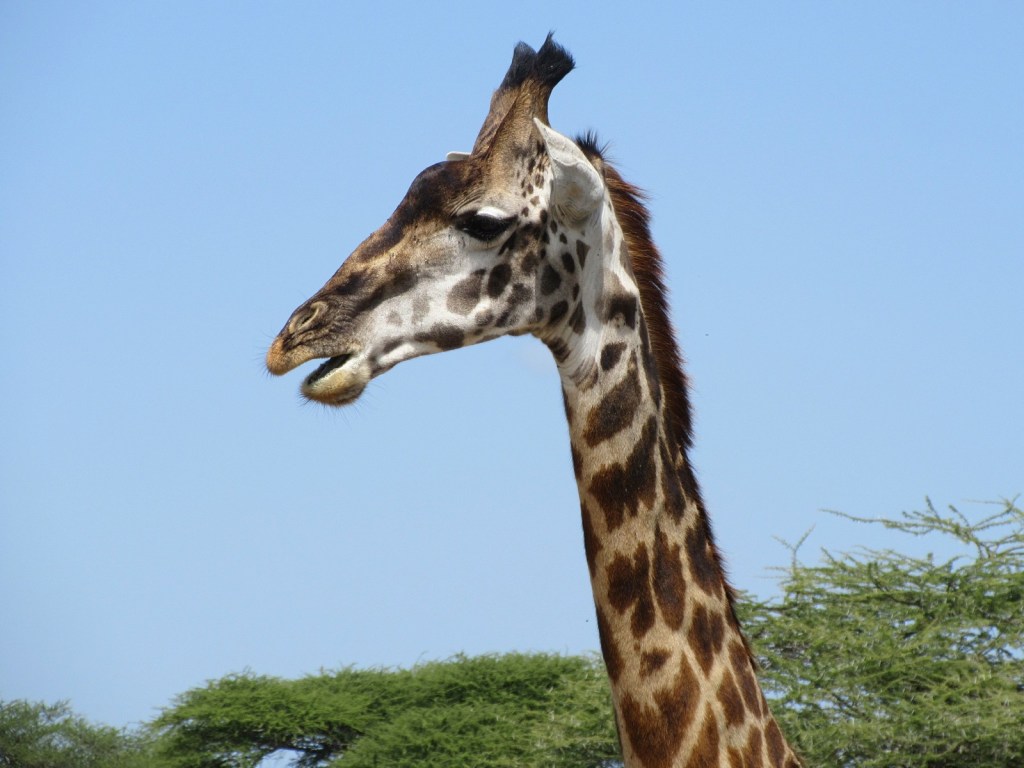
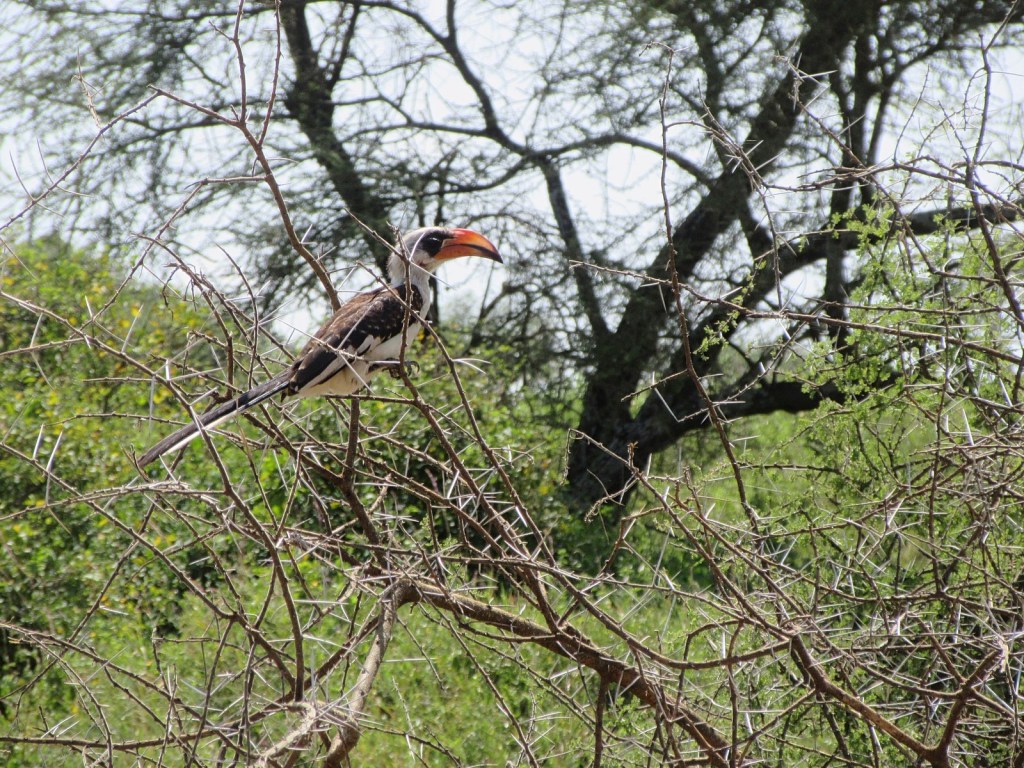
But I put that all there just to get out of the way some of the downer information about what was a pretty amazing park. Obedi was extremely knowledgeable about just about everything, pointing out to us quinine, tamarind, and wild mango trees, along with yellow bark acacia. He spotted for us impalas and bushbucks and vervet monkeys (with very bright blue balls), blue monkeys (without blue balls), southern ground hornbills (especially awesome looking), dwarf mongoose, black bishops, and everything else the park had to offer. My super amazing wife had never been on any safari of course but I had never been on one in a forest, so this was interesting. Especially like, the giraffes. I realize eating treetops is their whole thing but kinda weird to see giraffes not out on the plains.

Our close encounter of the elephant kind.

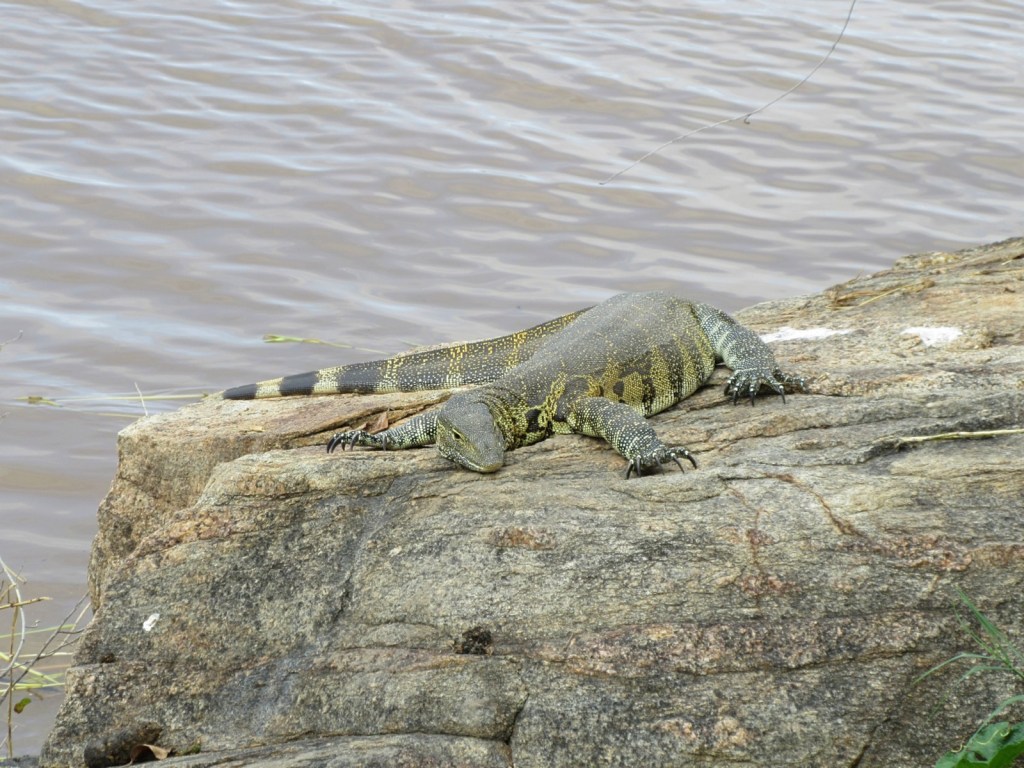
The most exciting part of the day was when we stopped by some elephants. One of the elephants I think clearly did not really like us hanging out there. He got real close to us and flapped his ears which was great for photos but not so great for my confidence we weren’t going to be tipped over so we scooted on along. Elephants man, they are big! And so quiet. We drove as far into the park as we could until a road was finally too flooded for Obedi to be comfortable driving across. Up that way we saw a monitor lizard and a hippo, along with some more birds.

Our first game drive under our belt, we left the park around 3 and zoomed off to our lodge. Along the way were South of the Border-esque signs for The Tanzanite Experience, where we did not stop. There was a separate sign (not for the Experience) that advertised “wood caving and antics” which sounded a lot more fun than whatever they actually had, but we did not stop there either. At the lodge we partook in the juice ritual before settling into a very lovely evening and delicious dinner (the buffet used hot coals in the table to keep the food warm). Our first full day in Tanzania was a complete success.

Overlooking Lake Manyara.

Safari I: Arrival

With one brief interlude that was really foreshadowing it is time for me to tell you all about our next trip – to Tanzania!

I was very excited for my super amazing wife to see Tanzania. For various logistical reasons it didn’t make a lot of sense this round to go to Zambia, though she is excited to see my ole’ stomping grounds someday. But Tanzania is right next door and gave us the opportunity to go on safari, to see Lake Tanganyika, and to recreate sort of our Morocco trip by going to the medina of Stone Town. It is such a beautiful part of the world and I spend all my time reading about people caravanning between Zanzibar and Ujiji so it was high time we took a stab at it ourselves.

To travel to Tanzania, we flew to Kilimanjaro airport via Nairobi. For that flight we were lucky enough to be on the left side of the plane and got to see out the window the awe-inspiring sight of Mt. Kilimanjaro. I really wasn’t prepared, but the snow-capped peak rising out of the endless clouds served as a welcoming beacon for the trip.

The snows of Kilimanjaro.

Our safari read-ahead materials had warned us that since Kilimanjaro is such a small airport that customs could take a while, but our airplane was also small so we breezed through and were picked up by Obedi, who would be our guide on our safari. We had booked a safari via African Big Cats Safaris and they were great; you should definitely book your safari with them and ask for Obedi. When I spotted a very pretty bird in the parking lot I joked that our safari was starting already and Obedi was kind enough to laugh, so we hit it off right away.

The first real stop of our safari though was in fact the lodge we were staying at that night, where we were greeted with juice (de rigueur at all the lodges, we were to find out) and led to our very lovely little room. We had made a list of things that we really ought to see in Arusha during our one day there, but after briefly unpacking we lay down on the bed and promptly fell asleep for three hours. This prevented us from going into town but did not prevent us from sightseeing, as long as you count the monkeys that were roaming the grounds as sights (I do). We watched one climb up a string of lights which felt very 21st-century. Besides the monkeys we had the lodge mostly to ourselves. As usual the timestamps on these posts won’t make sense, but we had arrived towards the end of May, after the rains but ahead of the high season.

Monkey business over, we settled in for a delicious dinner at the lodge and a relaxing evening. It was so good to be back in east Africa. I was entranced even just by the drive between the airport and the lodge. Being at the end of the rainy season everything was so green. I pointed out all the ag stores to my super amazing wife, and was second-handedly proud of all the Zamseed (the Zam is from Zambia) locations that were around, easy to spot because their roofs were painted with “Good Seed. Pure Seed. Zamseed.” We saw cows and goats and people going about their business, houses with their gardens, and pottery and baskets and plants for sale by the side of the road. I was excited to see it all again and show it to my super amazing wife for the first time. And finally before we went to bed (again) to look up and see the Southern Cross in the sky meant to know we were in for a really fantastic adventure.