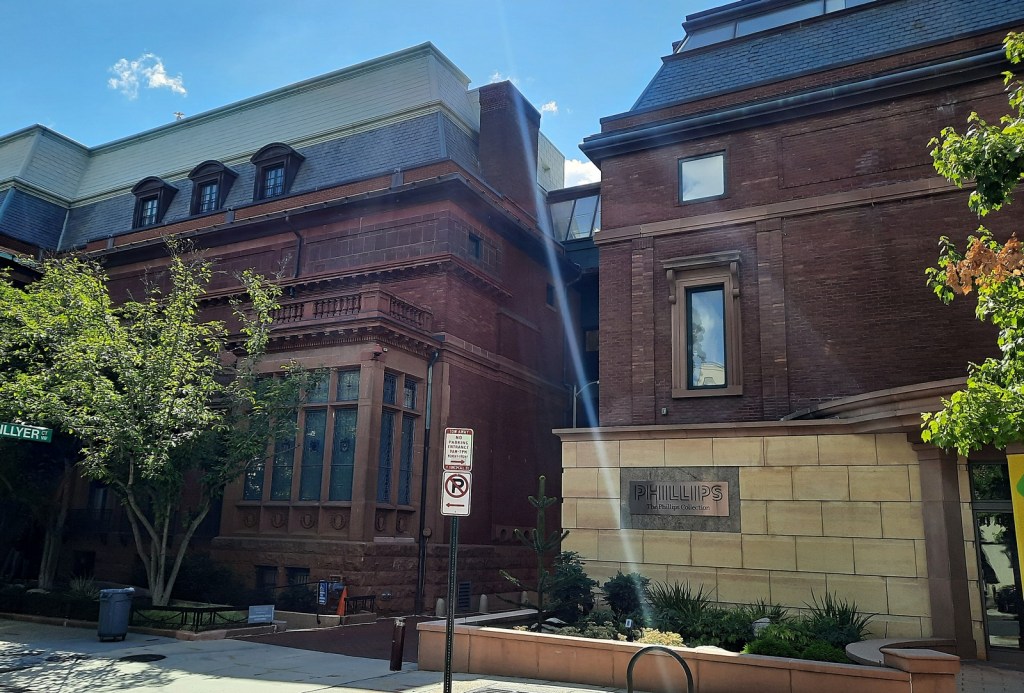
Phillips Collection

Reading this week:

  • Son of Old Man Hat, told by Left Handed, recorded by Walter Dyk

Recently, as part of a lovely Saturday afternoon out and about in DC, my super amazing girlfriend and I went to the Phillips Collection.

The Phillips Collection is a bit outside of our normal museum circuit. This is primarily because it costs money, and in a town like DC that is frankly a very steep hurdle. Specifically it cost my super amazing girlfriend $16 and me $0 because veterans get in for free, and although in the end I offered to go 50/50 on it she hasn’t sent me a Venmo request yet. So there you go.

Also a little outside our usual paradigm is that the Phillips Collection is a Museum of Modern Art. I have a very well documented (on this blog) like of very old things, so the items in this collection are from my point of view young whipper snapper upstarts. The museum itself however is 100 years old so Modern is a bit of a stretched definition. Their collection had a few of the classics too. You got your Van Gogh, your Mondrian, Renoir, Monet, etc. But after cruising around the museum the items I liked best were the most modern. In fact the oldest item I bothered to take a picture of was the below picture from 1922 and that is mostly because it had boats. Specifically, a regatta’s worth:

Small Picture of a Regatta by Paul Klee, 1922

To flash forward a bit, when we finally left the museum I overheard a dude on the sidewalk complaining. He said something like “I can appreciate a good scam; if you can roller some paint onto a canvas and sell it as art good on ya.” Look I gotta say a lot of the art doesn’t quite speak to me. They got a room full of Rothkos here and his art has never really moved me. A long time ago now a friend of a friend took us to see a whole mess of his black-on-black works and they were… fine. But like man, first off the joke is old. “My toddler could do that” well they didn’t and if they could you would be a terrible parent because a lot of these oil paints I am pretty sure are toxic and you don’t want your toddler playing with them. Second dude like, clearly some people find meaning in this. Maybe you should figure out what that is.

The paintings I liked best on this trip were the ones where the materials gave them a very different depth and texture than the paintings I am used to. One piece of artwork that I really liked but didn’t photograph was “Untitled 598” by Florence Pierce. I didn’t take a picture because I knew it would be flat and the picture on their website doesn’t do it justice either. The black spot in the middle is like a rough, textured black, but very black indeed. Like you had painted sandpaper with the blackest black. The rest of it is resin put over a wavy metal sheet, so throughout the piece it has different depths and the light travels through and seeks out different paths through it. I found another piece of hers for sale online for $20,000 so maybe I should cash out my retirement, I dunno. Then again my super amazing girlfriend just took a ceramics class, and she brought home a bowl that is absolutely gorgeous because the clay on the bottom wasn’t smooth, and had a spiral pattern from being thrown on the potter’s wheel. When she glazed it the glaze settled into the grooves leaving peaks with different depths of glaze that did nearly the same thing. So maybe I can save the $20,000 (+$450 shipping) and admire the beauty that both she is and brings home instead.

Black Tiles by Kate Shepherd, 2010

The next paintings that really caught my interest were by Kate Shepherd. The above one is titled “Black Tiles.” I am very used to the look of oil paint on canvas, but a major thing I saw on this visit was the use of glossy acrylic paints. A lot of the paintings in the museum took advantage of those materials I thought to really interesting effect. In Kate Shepherd’s paintings (the ones on display at any rate), what she has done is used high-gloss acrylic paint and covered a wood panel as a background. She has a series of these and the acrylic gives the wood panel a very shiny, very smooth surface that is the opposite of the texture you see with oil on canvas. On top of that background she paints white lines in geometric patterns. The other paintings that were on display consisted of mostly straight lines, but in “Black Tiles” she uses curvy lines to give a 3D effect. Combined with the glossy background as I walked towards or away from the painting, with the reflected light changing, it gave a sense of motion that was a tad mesmerizing.

The Charming Statesman by Federico Solmi, 2019

Finally and just to round it out was “The Charming Statesman” by Federico Solmi. This is done with white pen on black paper and it took me a second to figure out what was going on. I thought it was by an African artist with African themes and then I stepped back a bit and realized it was ole’ GW (I think?). Quite the effect nonetheless and the horses’ eyes match the peoples’ eyes and there are flags and it speaks to jingoism (maybe?) but through the eyes of like uh, well maybe the horses or something? I dunno dude, it’s art, and I don’t think my toddler could do this. I liked it at any rate. The Phillips Collection is worth a visit, especially if you can get in for free, but even if you can’t. I had a good time.
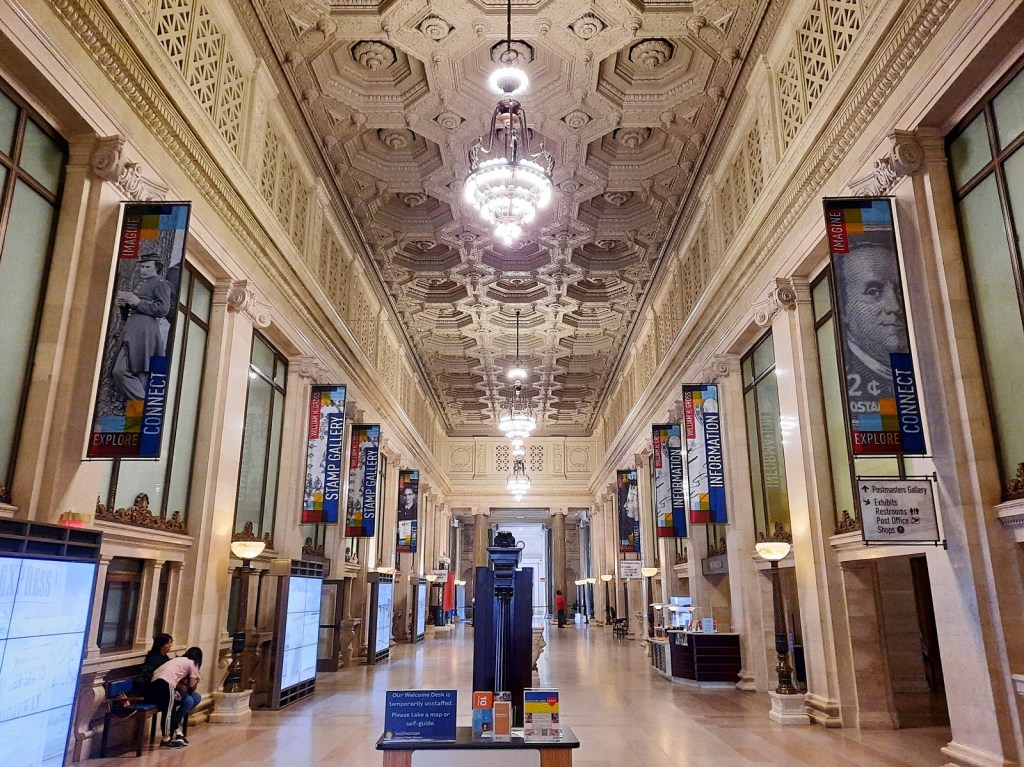
National Postal Museum

Housed in the old City Post Office Building, my super amazing girlfriend declared this the “prettiest Smithsonian.”

As you can tell from my myriad blog posts, my super amazing girlfriend and I are working our way through all the Smithsonians. This is a wonderful hobby and I recommend everyone take it up. As you can tell from the title, this of course brought us to the National Postal Museum!

I had myself been to the Postal Museum once before in my ongoing quest to visit a bunch of Atlas Obscura places. This museum is lucky enough to house Owney the Postal Dog, who is a 125-year-old stuffed dog that was once an enthusiastic mascot for the postal service, having trained himself to ride the rails and collect various postal badges. My poor super amazing girlfriend has heard me wonder aloud about this several times at this point, but between Owney, my favorite stuffed goat, and the stuffed mascot of our most recent alma mater (I didn’t know about this one until she told me about it), there must have been a trend at some point to hand beloved animals over to taxidermists once they died. It makes me wonder if, as is the case with all fashion, the great wheel of trends will come full circle once again one of these days and we shall see a resurgence of dead animals gracing our hallways. One can only hope (one way or the other). Anyways here is Owney:

Back to the museum! It is split into two approximately equal parts, with one part residing upstairs and the other downstairs. The upstairs part is all about stamps. Stamps are a pretty robust technology and last time I visited I remember not being so interested in the stamps, but this time I had a new appreciation after seeing the exhibit. The postal museum’s stamp collection is very robust, and going through every single stamp they have on display would take quite a while. I petered out after opening two dozen or so drawers and slide-out displays, but all the stamps are very neat to look at, especially the famous ones like the inverted jenny. Appealing to our Global Affairs hearts, the museum also has a robust display of historic international stamps. Speaking of stamps and international stuff, one time long ago I was in Singapore, having ridden a submarine there. We (the officers and crew) didn’t know we were going to go to Singapore before we set off on this underway, and there is no internet on a submarine, so we were entirely unprepared for what we were going to experience. There was a robust rumor going around that there was a place where you could pay money to fistfight an orangutan. That was, again for better or worse, untrue, but what was true is that the ship had to post a special watch at the “Four Floors of Whores” to keep sailors out of trouble. I relate this to say that when me and a group of my friends saw a sign pointing to the “Singapore Philatelic Museum” we had no idea what kind of wild, depraved, or frightening things we would see there and therefore charted a wide path around it. Later, when we learned what “Philatelic” meant, we were embarrassed. Anyways here is a misprinted stamp I liked from the Congo Free State (only about 40 of the misprinted stamps survive):

Once you get your fill of stamps at the postal museum (and who could, really), you head downstairs where the displays are more about the history of the postal service and how the mail is actually delivered. They had a lot of interesting stuff! I kept teasing my super amazing girlfriend that they have a Massachusetts simulation, which is a little faux-wooded are meant to represent the New York-Boston Post Road circa 1673. They have another display on the history of mail trucks, and a riveting portion on sub-contracting. The postal service apparently sub-contracts out a lot of especially difficult mail delivery, and they have displays of people carrying mail via donkey or sled dog and the like. This portion also include a big-rig truck you can pretend to drive, which is a hoot. All in all, quite the interesting portion and gives you a solid appreciation for the mail.

Having learned a great deal about letters, stamps, mailboxes, and all the other bits that make those things useful, we ticked another Smithsonian off our to-do list and re-emerged into the hot DC sun. Then we got out of the sun and onto the metro to go find a nice cup of tea. Not a bad way to spend an afternoon.

Puerto Rico IX: El Final

Reading this week:

  • Ever Green by John W. Reid and Thomas E. Lovejoy

Loyal reader(s), thank you so much for going on this whole Puerto Rico journey with me. I know I’ve extended it beyond all reasonable bounds but the story reaches its thrilling conclusion here. When we last left our plucky protagonists (my super amazing girlfriend and I) we were just departing Jayuya to head to our final night’s stay.

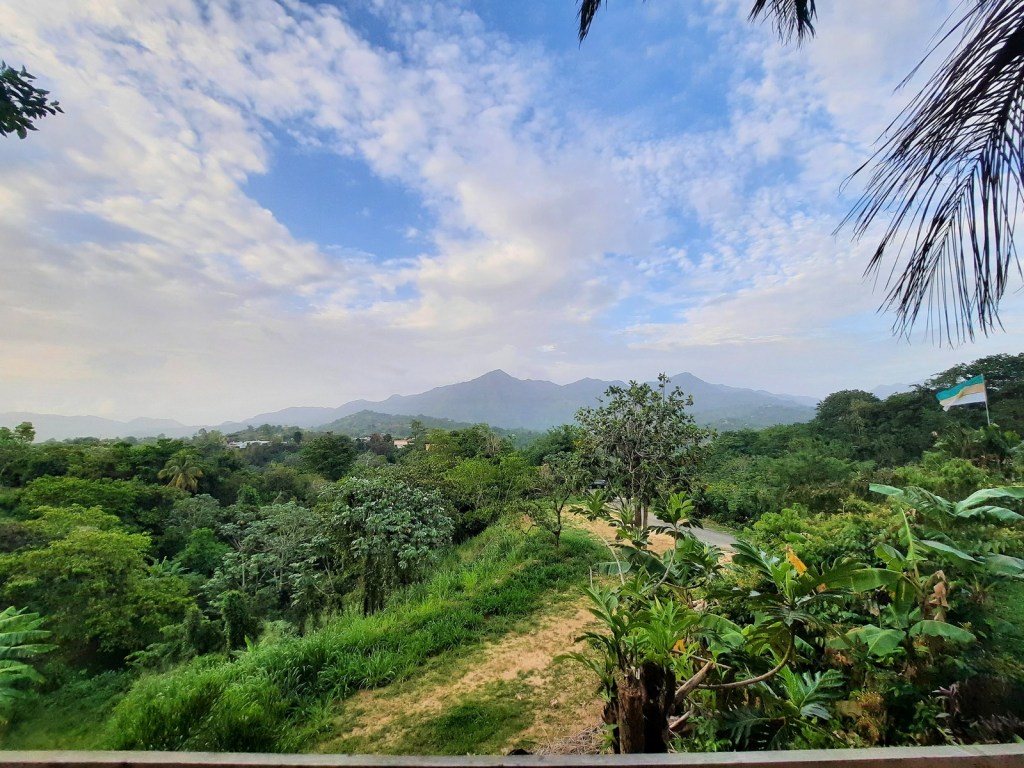
We stayed in a tiny little lodge overlooking the Cañón Blanco. Cañón Blanco is a short stretch of Río Caonillas that our host told us was only uncovered by Hurricane Maria and has a whole variety of petroglyphs (though they are hard to spot and we didn’t wind up seeing any). I’m a little out of timeline order but although we didn’t see any petroglyphs the Cañón Blanco was still a gorgeous spot. As the name suggests it is a series of cataracts on the river carved out of white stone. It’s actually only about 10 yards off the road but despite that it feels totally cut off from the rest of the world and you can just listen to the water and the frogs and admire the valley and the mountains around you. It was only a short walk from our lodge and along the way we got to admire all the different flowers and trees that populated the valley.

As to the lodge, I just told you in the last blog post how wild I am for integrated farming. So imagine my joy after seeing Sandra Farms when I then came to this lodge which was yet another integrated farming dreamland. The lodge’s host had sculpted the area off the deck into everything I would ever want out of a yard. There were banana trees, papaya, guava, sugarcane, mango, even tomato and pumpkin. It was great and after I complimented her on it, she showed us some spots we missed, explained that she was trying to live off the land, and gave us mangos, which is an A+ garden appreciation interaction if there ever was one. There was even an aggressively friendly cat to top it all off. The night was capped off by a drive up to the top of the mountain where we ate dinner at a restaurant at the end of another ridgeline road with a deck looking down and out over these unforgettable Puerto Rican mountain landscapes. The coquí then serenaded us to sleep.

Our final day in Puerto Rico started late, since we had no reason or desire to rush out of this idyllic little valley. When we finally did get a move on it was an easy drive back to San Juan. The one thing we had missed on our first go around was the Casa del Libro, and given our passion for both books and museums, we could hardly stand to leave Puerto Rico without seeing it. On the day we visited they had an exhibit up featuring centuries of Puerto Rican maps, from the earliest depictions by the Spanish to American army maps from shortly after the Spanish-American War. We spent the last few hours we had in Puerto Rico wandering around Old San Juan one last time, getting ice cream and trying to do some last-minute souvenir shopping. Then it was off to the airport and back home to Tink.

“Vista de la bahía de San Juan,” Peter Schenk, 1625

I am really glad we visited Puerto Rico. It was not what I was expecting. There are the little stupid things, like the fact I really was not expecting there to be mountains in central Puerto Rico. Hills yes, but the mountains? Geology man. More significantly I had really expected more of a Guam vibe, since both islands in many ways have similar backgrounds, joined the US at the same time for the same reason, and are of course both currently US territories. I’m struggling to put it in a way I am comfortable with, because by definition both Puerto Rico and Guam are equally American, but Puerto Rico felt to me with my Maryland background more foreign than Guam ever did. Pontificating out of my ass here, I wonder if the difference is that Guam feels like the US liberated it after the Japanese invaded during WWII, whereas Puerto Rico has only ever seen the US continue the same political limbo it has always left it in. It was also very eye-opening to walk around Ponce and see the impact Maria had and is still having on the island. I said it at the time but I wished I could have seen Ponce even 10 years ago. It was clear before but even moreso now that the US really needs to fix its relationship to its overseas territories. Although it is up to the people in these places, I personally support statehood for all US territories (after significantly improving indigenous rights in the case of American Samoa). Puerto Rico was amazing and eye-opening and I am so glad we went.

Puerto Rico VIII: Coffee Coffee Coffee

Carmelo and a coffee plant.

Reading this week:

  • The Black Joke by A.E. Rooks (fantastic!)
  • You Have a Friend in 10A by Maggie Shipstead

Look, I know I have stretched this Puerto Rico series beyond all reasonable limits but we’re almost there. Our final full day in Puerto Rico was probably my favorite. My super amazing girlfriend had wanted, despite being a avowed tea fanatic, to see a coffee plantation. All the recommended ones were extremely difficult to actually tour due to limited times, so we wound up finding a tour at Sandra Farms Coffee and it was the best thing that could have happened.

Getting there was no easy feat. By this point we were prepared for the roads in central Puerto Rico, but that didn’t mean my super amazing girlfriend’s stomach liked them any better. We were however on the lookout for any dirt trails that Google tried to lead us down and managed to avoid them. The approach to Sandra Farms is over the windiest and hilliest road yet, but one stretch along the ridge of a mountain rewarded us with the best valley views yet with the shimmering surface of a lake far below. With the wisdom of experience we had left plenty early and thus arrived plenty early and got to poke around.

Coffee seedlings.

Much to the chagrin of my super amazing girlfriend the two things in this world that really get me hot and bothered are steam power and integrated farming. I would have gone absolutely gaga over this place in my Peace Corps days and since I’ve learned to be somewhat more demur I only went bananas. Because, you see, they had a ton of bananas and just about every other fruit and vegetable imaginable. Sandra Farms is draped over a mountain ridge, with coffee plants running down the steep incline. In and about the coffee there were the just-mentioned banana trees, and as I wandered around snapping photos I saw more and more. There was taro, dates, coconuts, tomato, passionfruit, star fruit, everything. And while we waited an extremely friendly dog trotted up to greet us and it was just perfect.

View from the farm.

And then the tour began! Capping the trend on this trip, we got the personal tour for just the two of us. Our guide was Carmelo, who ran the farm for the owners, Israel and Sandra, who are retirees. The tour didn’t cover much geographic ground, and thinking back it would have been cool to see the cacao plants, but it was nonetheless very thorough and lasted about two hours. He began with an extensive history of coffee cultivation in Puerto Rico including an explanation of the latest labor practices and trends on the island which I was very interested in. Then he took us to the coffee plants to show us what it was supposed to look like, how it was picked, and various pest control measures. We proceeded to the processing equipment for extracting the coffee bean and drying it, which on Sandra Farms will soon be solar powered. And then the tour capped off with a trip up to the house, where he showed us the roaster and then we got to sample the goods. Carmelo ground the coffee beans for us there and made us pour-over coffee so it was just perfect and then we got to sip coffee while sampling the chocolate the farm also produced while overlooking some of the most gorgeous sites we had seen yet. There was also a puppy! We then of course bought chocolate, biscotti, and turmeric they grew on the farm and extremely happy departed back down the road.

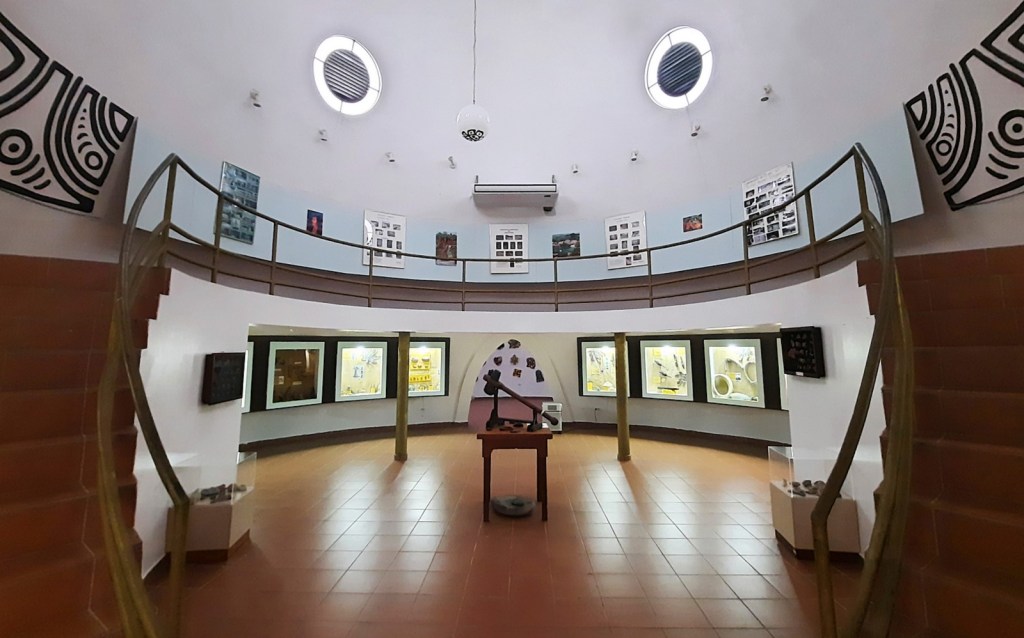
Interior of the Museo del Cemí.

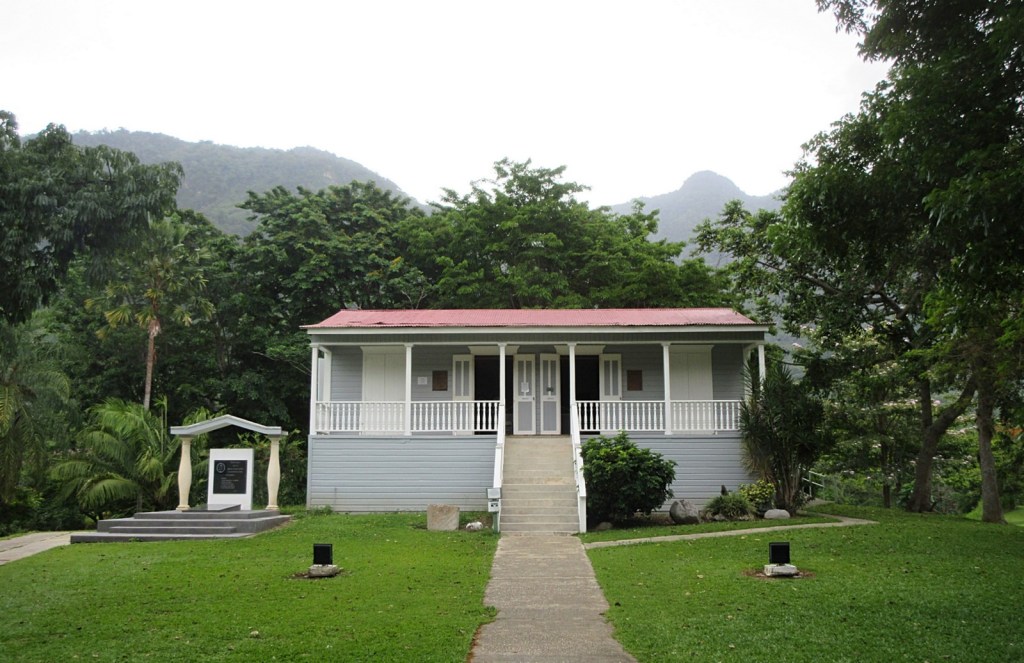
The day was far from over! For our next stop we went to Jayuya, home of Casa Nemesio Canales and the Museo del Cemí. These two museums are right next to each other on the same plot in the middle of a verdant valley surrounded by mountains. We took a wrong turn on our way but got there eventually. Both museums are very small. The Casa is a museum to Nemesio Canales, a Puerto Rican writer who participated in the revolution in the 1860s. The house has displays on his life, the town, and what living in Jayuya was like at the time. The Cemí museum is shaped like a cemi stone and is also very small (big for a cemi). Inside there are some very nice displays with Taino artifacts. And uh there you go.

From there I finally took pity on my super amazing girlfriend’s stomach and we proceeded to our place for the night, which was absolutely stunningly drop-dead gorgeous and I cannot rave enough about it. But I’ll rave about it in the next and final post.

Casa Nemesio Canales

Puerto Rico VII: Higher and Higher

Reading this week:

  • Fuzz by Mary Roach

One thing we had been wondering as we wandered around Ponce is where all the tourists were. The plaza around Parque de Bombas wasn’t exactly crowded, we had the Music Museum to ourselves, and Tibes Indigenous Site had as many stray horses as guests. But today we found our answer: Castillo Serrallés.

Castillo Serrallés is the former residence of Don Juan Eugenio Serrallés, who made it big in the sugarcane business and founded Don Q rum. It is perched high up on the hill overlooking Ponce and is quite the architectural feat. We were stunned to find the first two morning tour slots sold out and had to settle for noon (we spent the morning strolling along a beach, the only time we touched the ocean). We arrived to find probably 20 or so other tourists already waiting. My theory here is that they were almost all on some version of a rum tour, seeing various rum sites around the island. Which is sad, because there are a lot of other cool museums and sites in Puerto Rico and as we saw yesterday they could do with some tourist dollars.

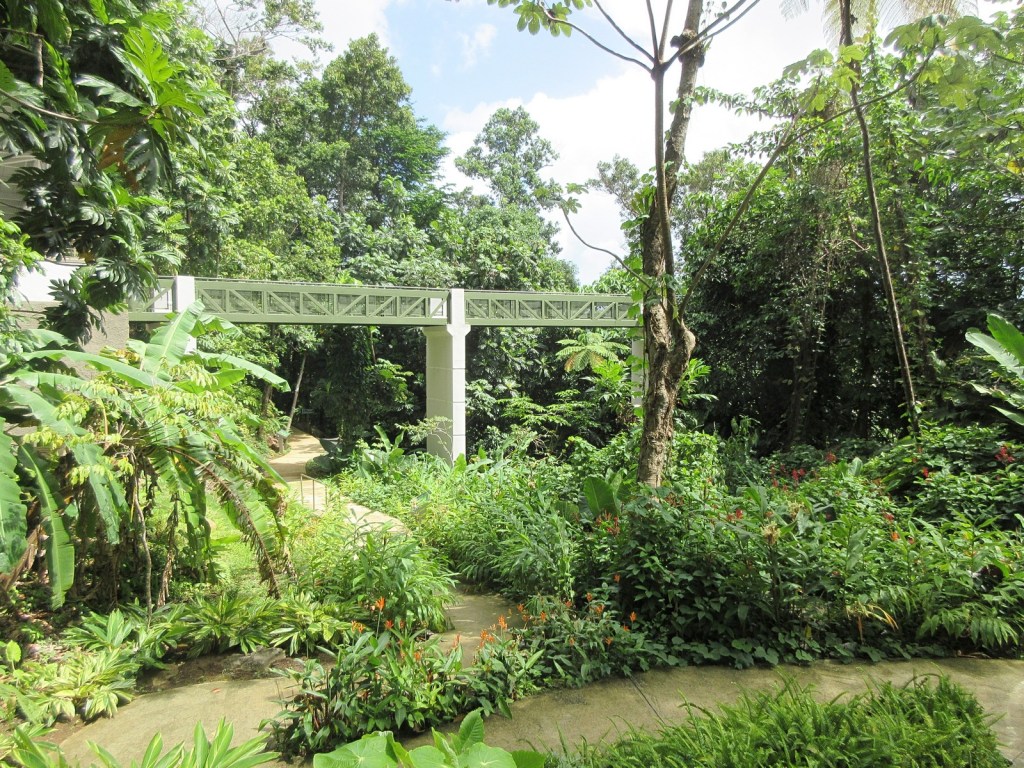
View over the garden.

The tour of the mansion however was pretty good. The house itself is an excellent architectural example, made of concrete and looking like a Spanish villa or something. It is as luxurious as you would expect the home of a rum baron to be, and you’ll have to take my word on it because they didn’t allow pictures inside. The main attraction is probably the garden, which is a sculpted landscape cascading down the hill with a fountain and trees and all that. At no point in the tour did they discuss the sugarcane industry itself, except to show some pictures, which had me concerned because we were celebrating wealth built on the back of an industry which to put it mildly didn’t have great labor relations. But they had a butterfly garden that despite the lack of butterflies was pretty enough to distract from little questions like that.

From there we crossed the street to go up the Cruceta del Vigía. This is a big cross-shaped building that it turns out is not religious at all, but is instead modeled after a yardarm flagpole that was historically on the spot that displayed the flags of the ships in the harbor for the convenience of people who didn’t want to bother with the half-day drive into town (at that time) if their ship hadn’t come into harbor. Included in the ticket for the Castille is a ticket to go up into the building, which offers views even more sweeping and panoramic than those you got from the Castille. It is very nice! There’s also a bar. Then next door to that is a “Japanese garden” which is not as nice as the garden in front of the Castille but someone is training those bonsai trees and it is peaceful in its way.

At this moment, since it was late but not too late in the day, we continued our now tradition of showing up at the last minute to Taino sites. We had planned to go at some point to the Caguana Indigenous Site, especially after our guide at Tibes told us that Caguana was modelled after Tibes. We wanted to complete the set. Maybe we should have gotten the hint, however, that it would be a doozy to get to when Google Maps informed us it would take an hour to go the 30 miles or so to get there. Unburdened by knowledge, we set off, thinking crossing the mountains would be as easy at the trip between San Juan and Ponce.

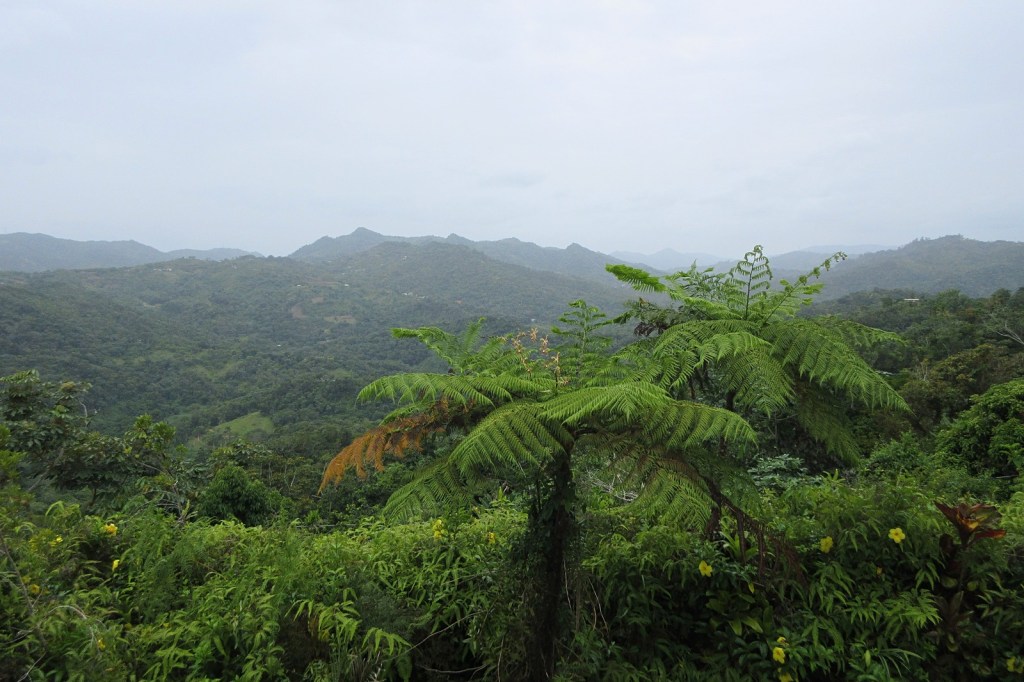
This was not accurate. We were unprepared. In this area of Puerto Rico the roads rapidly become these well-paved but tiny, windy, and steep paths the curve up and down mountainsides, letting you easily imagine plunging to your sure death if you take the turn wrong. I eventually got pretty okay at driving these, but on this first trip we just kept waiting for it to end. And my poor super amazing girlfriend, whose stomach was not ready for what we were going to put it through. The only saving grace here was that the drive was gorgeous. Stunning mountain valley after stunning mountain valley, overrun with lush vegetation. Honestly with all these roads you don’t really need to go to El Yunque at all. We still have some lingering questions after the drive, like, how on earth did they get those roads there, and also what do the people who live on these roads perched on the side of a mountain do for a living, and most importantly why did all the other drivers tailgating me think that was going to help the situation???

Luckily, we survived at made it to Caguana (not before Google tried to take us on a dirt road up the side of a mountain, but we resolved that eventually). It was really nice! Again, we pretty much had the place to ourselves. Where Tibes was at the base of the mountains on the plain, Caguana is nestled firmly in the mountains and is surrounded by gorgeous peaks that the nice people at the site said might be the inspiration for the characteristic cemi stones. And the sounds! It’s worth going just to hear all the birds and other animals making the spot serene but alive. The site didn’t take too long to explore. They have a very tiny museum and then you were off to see the stone-lined courts. These were lined with larger stones than at Tibes, and here the petroglyphs were marked and easier to see. We basically walked around long enough to get our land legs back while I tried to imagine a whole crowd of people there watching a ball game and performing ceremonies, and then got back in our car for the return trip we were no better prepared for. Again we survived and for dinner back in Ponce we had Mexican food and ice cream in the plaza and it was a perfect evening.

Here you can see half the museum.

National Arboretum

Reading this week:

  • Do Not Disturb by Michela Wrong
  • The Daughter of Doctor Moreau by Silvia Moreno-Garcia
  • Footprints: In Search of Future Fossils by David Farrier

One of the best places in DC to go is the US National Arboretum, and I finally got to go with my super amazing girlfriend. For many years I had wanted to go to the National Arboretum. When I was a kid and my family drove into DC to visit the museums and the like, we would always pass by the arboretum on the way. As a kid I wasn’t that into trees, but eventually, as I have discussed many times, I went to the Naval Academy. One of the things about the US Naval Academy, or USNA if you will, is that as a midshipman you are normally only allowed to wear “spirit” gear. On weekends during your 1/C and 2/C (Senior and Junior) years you can wear normal civilian clothes, but during the week you gotta wear USNA-themed clothes. At the time I thought it would be hilarious, just knee-slappingly funny, to get a shirt from the US National Arboretum, or USNA if you will, and wear it as spirit gear. Alas, I never achieved that dream while it would have been particularly funny, but years later (and about five years ago now), I did manage to go to the arboretum and obtain an USNA shirt and I wore it to death while in the Peace Corps. And now, although I was down a shirt but up a super amazing girlfriend and we went to go see the arboretum.

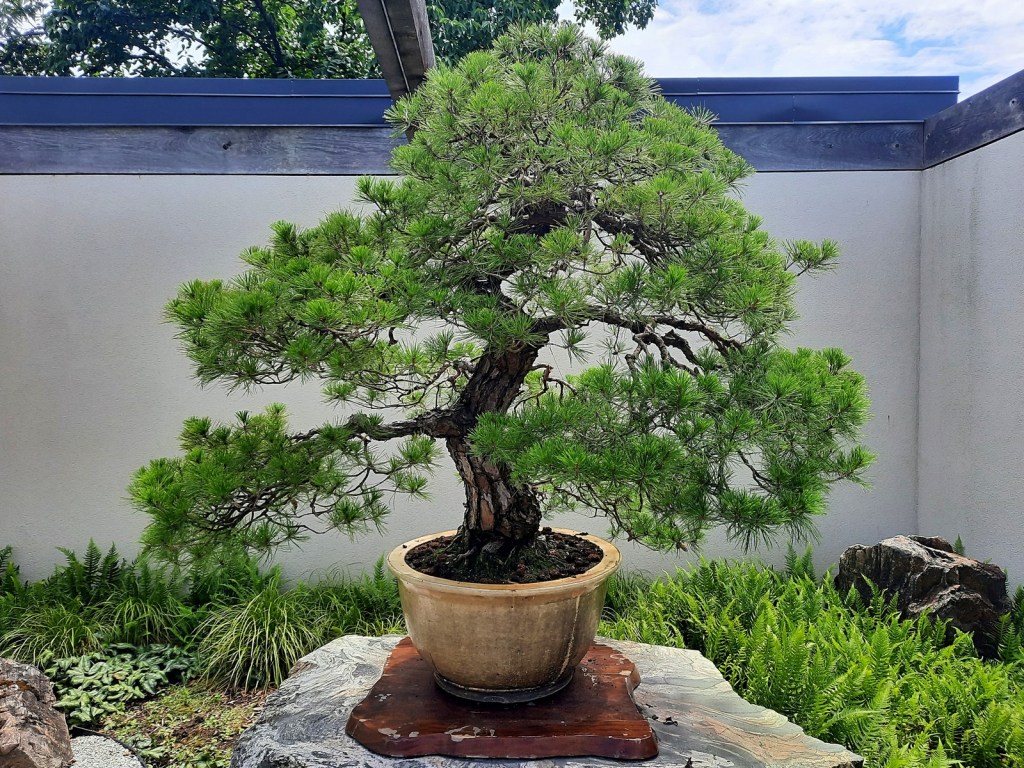
One of the most impressive parts of the arboretum is their Bonsai and Penjing Museum (penjing, as we learned, being a Chinese version of miniature landscapes that bonsai also represents). Although I am not normally a museum-book-buyer, last time I visited the arboretum I thought they were so gorgeous I actually bought their book about the collection. Besides their sublime beauty, one thing I like about the bonsai and penjing collection at the arboretum is its efficiency: the whole arboretum is literally about trees, but instead of hiking around and seeing a bunch of big trees, you can walk a far shorter distance and see a whole bunch of tiny trees. That is mostly a joke but it is an extremely impressive collection and is placed in a walled-off and peaceful garden area and would be a wonderful place to spend a whole day just in quiet contemplation. Of course what I especially like in museums are the especially old things, and at the museum they boast a number of 19th-century trees while the one pictured above has been in training since 1795! And it isn’t even the oldest, with that honor being held by very-nearly-400-year-old tree from 1625! Despite the tree being relatively tiny it still makes you feel small.

Although it is easy to see all the tiny trees, seeing the whole arboretum would take many afternoons. It is a big and impressive place. After the bonsai and penjing museum we walked over across the street to the National Herb Garden, where we admired all the National Herbs. You can see above me admiring them. Although the whole arboretum is massive just this garden must be a huge amount of work, given the size and number of specimens. They had a whole section just dedicated to peppers and another labelled the “Beverage Garden” dedicated to things you would find it drinks. They have shadier and sunnier portions and nestled in and amongst the herbs and throughout the entire arboretum there were plenty of picnickers and groups and couples sprawled out and enjoying the lovely and extremely sunny afternoon. The only downside of the arboretum is that it is relatively poorly served by public transportation. I personally thing it would be well worth it to spend a few billion bucks to run a metro station out there just so more people could enjoy it.

Although the sun was nice my super amazing girlfriend and I decided to get out of it and drove to the far end of the park to check out the Asian collections. She was particularly interested in all the camellia plants because they are of course closely related to tea. We hiked around the trails and the best part was probably the few moments we spent relaxing in the above pavilion, taking a forest bath as it were and listening to the sounds of nature there and admiring a squirrel jumping about. I tried to trick her into thinking there was a panda walking around but she didn’t fall for it. Nonetheless it was extremely peaceful and, you know, anytime I am hanging out with my super amazing girlfriend it is a nice time. If I can do it around trees all the better. Satisfied with having gotten back to nature, and an especially gorgeous example of it, we head back home to hang out with our cat.

Puerto Rico VI: Menos Museos a Ponce

Reading this week:

  • African Kaiser by Robert Gaudi (could have used a more enthusiastic editor)

Our fifth day in Puerto Rico found us waking up in Ponce. Visiting Ponce was quite an experience and not really at all what I had been expecting. We planned two full days in Ponce and the major reason for that is all the museums in the town. The guidebook we had in fact described Ponce as a museum town and that was very clearly true at some point.

The first place we went is the Ponce Art Museum, aka Museo de Arte de Ponce, ie MAP. We approached and were very quickly disappointed, finding it closed. I’m going to say this was not entirely our fault, as there was another confused dude wandering around trying to figure out if there was another door or something, and once we tried to figure out what the deal was the museum’s socials and website had wildly conflicting information. For example, the website said “The Museum is partially open.” I eventually found an article that explains a lot of the museum’s current woes, which are both a litany of natural disasters and more man-made ones. The forces that hit an institution such as MAP also seem to have barreled over the many other museums in the town. Ponce looks like it was once home to a wide variety of the local cultural institutions my super amazing girlfriend and I are big fans of, and man tell you what if I was the rich it is to places like this my money would go.

Despite all that we did manage to find some gems in Ponce. The brightest building there is of course the Parque de Bombas, which houses a small museum all about the Bomberos. I was delighted to discover that Teddy Roosevelt had visited at one point and had given them a trophy. Everyone likes trophies. Then we wandered on down the street and walked past the Museo de la Historia de Ponce, which we knew would be closed, but luckily a block beyond that is the Museo de la Música Puertorriqueña, which is fantastic.

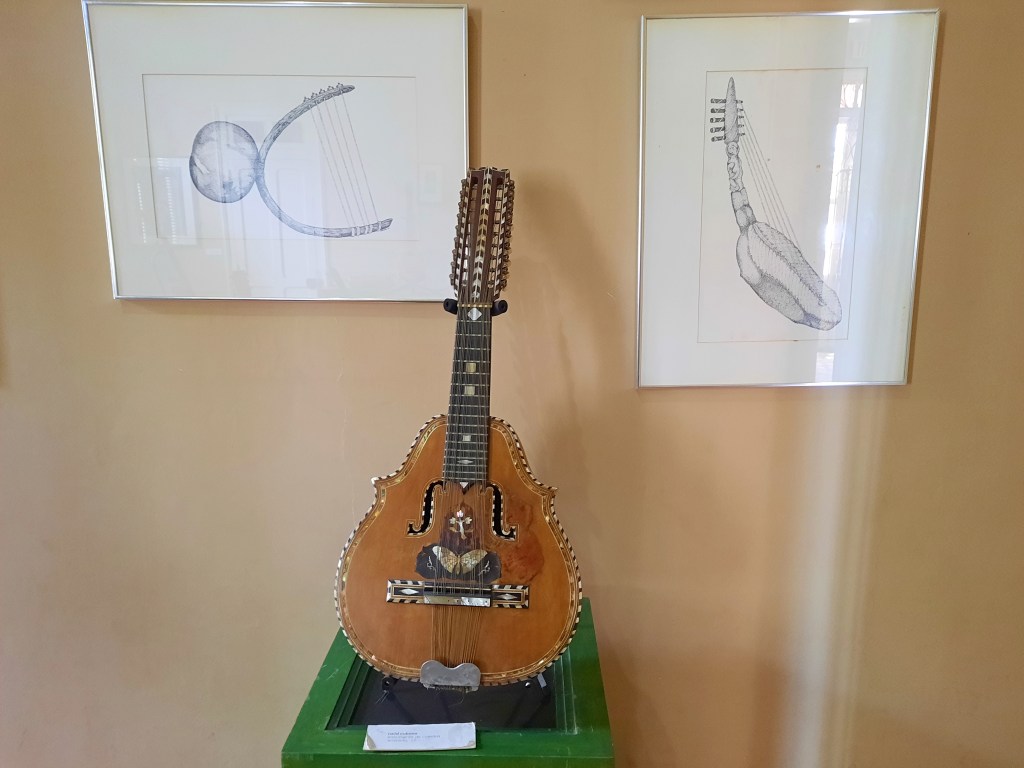
I should clarify that in many ways the Museo de la Música Puertorriqueña is not fantastic. It took us a bit to find the door, first off (I led us the wrong way and my super amazing girlfriend eventually led us the right way), and also it was very hot and there were very few signs around to explain things. However, when we went we were the first people to have visited in days and therefore got a very personal tour from the very nice man working there that day. It was fantastic, as he showed us around and even went so far as to play some of the instruments for us. He was very clearly dedicated to the collection they had there and it was in fact pretty impressive, including a very old Rickenbacker electric guitar and on the wall a number of prints by Rafael Tufiño. I mentioned before the Puerto Rican museums’ dedication to contextualization, and here was no different. Alongside the numerous Puerto Rican instruments the museum put similar and ancestral instruments from different cultures around them as a way of explaining how Puerto Rican music developed, all explained in detail by our extremely gracious host. It was sad that we had to leave eventually but off we went.

Our host, peeking in from the right.

For our next stop, in what would be a trend as we visited Taino sites, we arrived shortly before closing at the Tibes Indigenous Ceremonial Center. This was probably my super amazing girlfriend’s favorite part of the whole vacation. We were not in fact the only tourists here (I forgot to put this in somewhere, but also there were free-range horses in the parking lot) but nonetheless we got yet another excited and personal tour around the place. “The place” involved a small gallery of art we didn’t get to see, a museum, and the site itself. Calling Tibes a Taino site is actually a little wrong, as it is largely a pre-Taino site, as the museum aptly explains while it walks you through the cultural development of the island and the significance of the site. After the museum our new host walked us through the botanical garden standing between us and the site itself, and then off we were to the site. The main body of the site is a series of courts or fields outlined by stones. The courts were apparently home to a ball game and other ceremonies, as well as being an astronomical observatory. Our host showed us the various alignments and the different pictographs at the site, and it was great to walk around and try to get a feel for the pre-European history of the island for the first time on our trip.

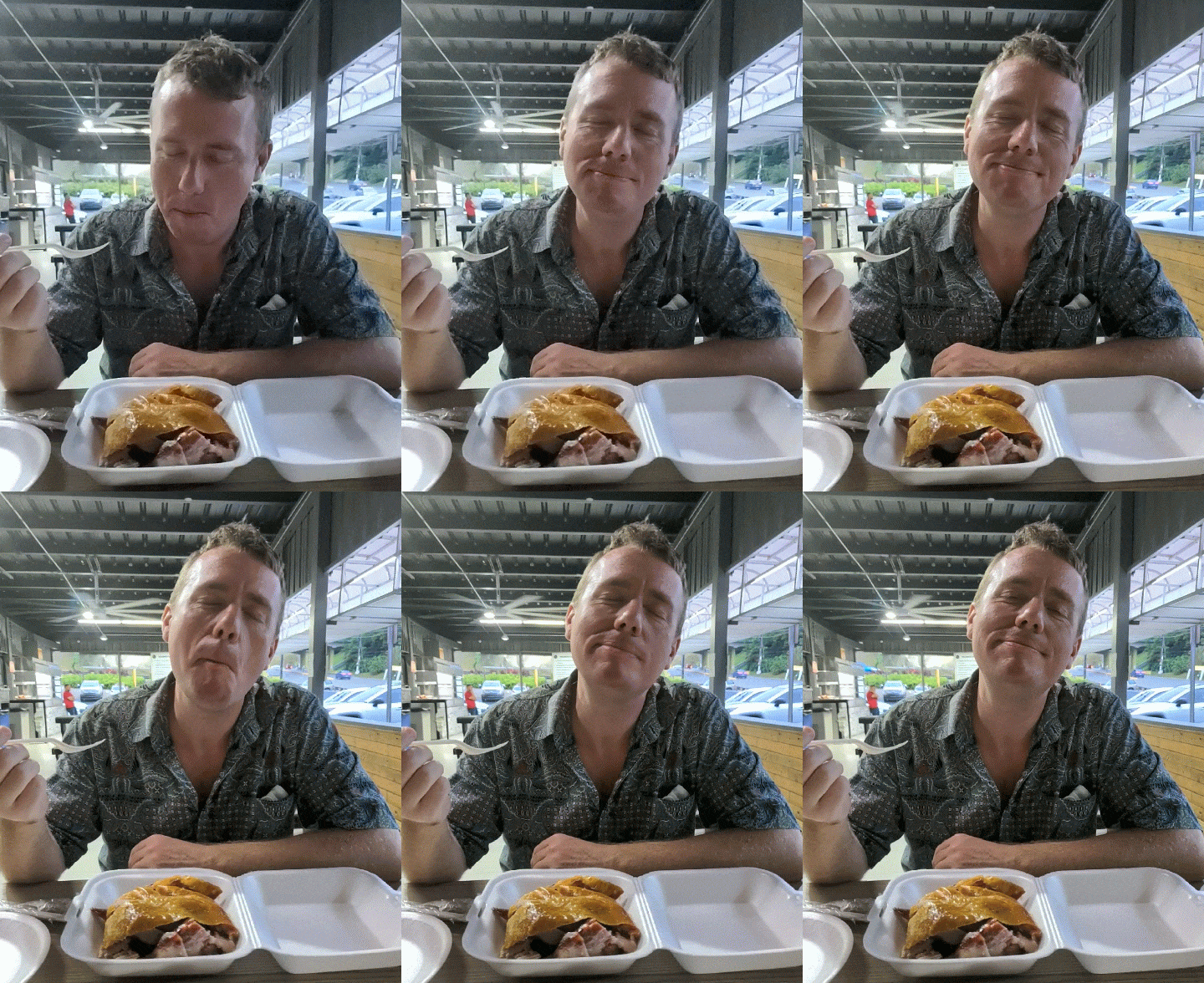
Since like I said it was nearly closing anyways our visit wasn’t all that long and off we were for what would prove to be our most harrowing journey of the day. We had wanted of course to go to a lechonera but hadn’t found a convenient time until now, so we started driving back across the mountain range. This was all going smoothly until we got really close and it started to rain. This was the first of many windy mountainous roads we would travel over the next few days, and I was inexperienced and nervous in the rain. We kept trying to find ourselves a lechonera only to keep finding them closed, what with lechonering being mostly a lunch thing it turns out, and the starting and stopping and lack of dinner and the getting dark and the rain and the blind curves was stressing me out. Thankfully we finally found a lechonera that wasn’t closed and had what was the most delicious pork I had ever tasted. We ate more than I actually thought would have been possible between my super amazing girlfriend and I.

One final anecdote from here. I had been amazed during my few attempts to speak Spanish at how bad my pronunciation was, as evidenced by the utter confusion on the face of anybody I tried to talk to. I was wondering how bad I could really be, like when I tried to say “treinta” how did the nice lady at the gas station get “ochenta?” I had been discussing this very topic with my super amazing girlfriend as we travelled back over the mountains. Which brings us to the lechonera. My super amazing girlfriend pointed at something and the nice lady behind this counter said something that sounded like “thirty.” We were bewildered, because nothing in this situation had anything to do with 30. After an unedifying back and forth the poor lady got out her phone and went to Google translate and pointed at the English result, which was in fact “Turkey.” So I learned that day that no yeah I am really bad at Spanish. Thankfully, humbled and full of pork, we made our ways back to Ponce and settled safely back in for the night.

“Danza Negra” by Rafael Tufiño, 1968

Puerto Rico V: El Yunque

Yokahu Tower

Reading this week:

  • The Slave Trade Today by Sean O’Callaghan (this book is definitely unethical and has some clear errors but is probably useful as an artifact)

Our fourth day in Puerto Rico dawned bright and early (kinda, we were reasonable about it) because we had big plans to escape the confines of San Juan and explore this gorgeous island. That’s right, we were renting a car, and having successfully secured passes the previous day, our first stop was El Yunque National Forest.

Picking up the car and getting there was easy, and the first place we stopped was of course the Visitor Center, aptly named El Portal. We could have done more research on El Yunque before we left, so we were unaware that you don’t need the pass to visit El Portal (though there is an entry fee, but if you have a National Parks Pass you can get in for free). So if you are visiting Puerto Rico and don’t get the El Yunque pass, don’t despair, El Portal is great! It’s a largely outdoor visitor center complex that tells you a lot about the history of the forest and all about the different ecosystems there, and has an extensive set of “discovery trails” that take you through a forest section and you of course see all sorts of plants and stuff. Also a delightful gift shop and cafeteria. We poked around and had a grand ole’ time but worried about the time on our timed passes we set out for the park proper.

The causeway is the entryway to El Portal with the discovery trail below.

When I found out the park had passes I figured it was just a COVID thing or something but now I understand they are very necessary. The forest, or at least the portion that requires the passes (there are actually a lot of ways to access the forest, it is a relatively small portion that requires the pass though it is where many of the popular trails are) is basically one long road with various small parking areas. You drive up the road, steeply ascending the mountains of El Yunque and can stop off and park at various spots to hike the myriad trails and see the multitudinous sights. There is only the one road and only so many parking spots, so if they let just unlimited numbers into the park it would only be one long perpetual traffic jam. But as it was it was quite pleasant and fairly easy to navigate.

Serious hiking!

Neither my super amazing girlfriend nor I were prepared for any serious hiking. That def requires a bit of planning, as many of the trails (they sternly warn though we did not verify) are fairly strenuous and take a few hours to traverse. It seems like an awesome experience but for sure looks like a thing best started early in the morning and with plenty of water. But the forest was still awesome for us more casual viewers. There are plenty of places to get food (we stopped by a very tiny hot dog stand run by a woman who seemed far more east coast than central Puerto Rico and I wondered how she wound up in the middle of the United States’ only tropical rainforest selling potato chips) and easier sights and we enjoyed a number of them.

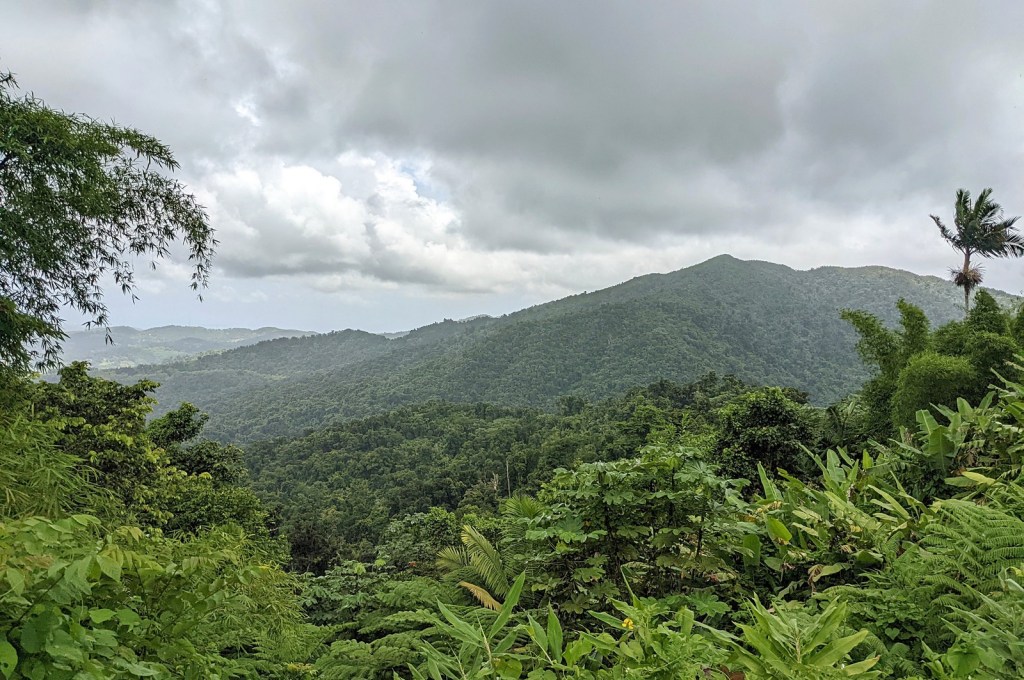
View from the tower.

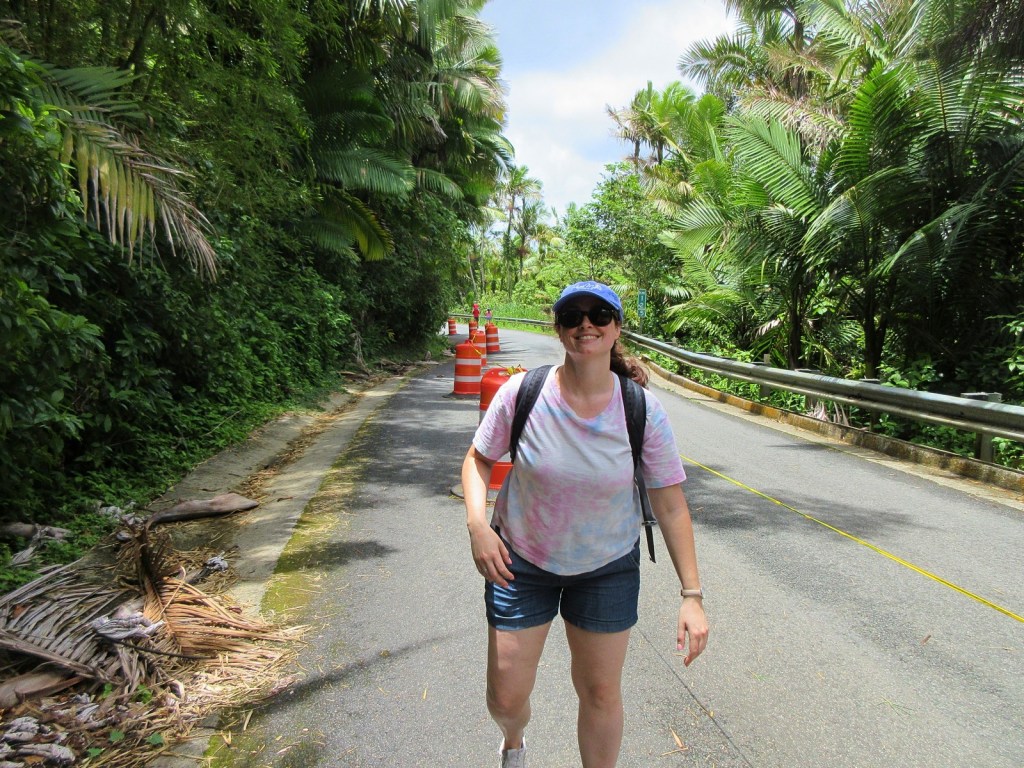
The first and one of the most spectacular sights was Yokahu Tower which is a big ole’ tower you can climb up and get fantastic views of the forest stretching down to the ocean on one side and on the other the very peaks of the mountains, including the eponymous El Yunque. So we climbed up and snapped a bunch of photos and then went down and got that hot dog I mentioned and then got back in our car and continued to climb up the mountain. We hadn’t planned out anything beforehand so we mostly stopped at whatever was interesting. There was a pool you couldn’t swim in built by the Civilian Conservation Corps and um lots and lots of trees. One thing I liked about El Yunque is they were in fact really into trees here, focusing most of the materials on the environmental aspects of the park. They were super into it, though I do think that was potentially at the expense of thinking about the original inhabitants of the park and that is always something we should think deeper about. We eventually got to the end of the road (there was road construction so on normal days you could go even farther) and hiked up the trail a bit, but then got tired and turned around. One nice thing is that we had the very picturesque La Coca Falls to ourselves on the way out and so we took tons of photos.

Baño Grande, Novia Pequeña

After having gotten our fill of El Yunque, we stopped by once again at the Visitor’s Center for lunch and then departed for Ponce, where we were planning on staying a few days. It was a perfectly easy drive over the mountains to get there and we settled into our place not too far from the center of town. It was a much different vibe in Ponce than San Juan and we were looking forward to spending plenty of time poking around.

La Coca Falls

300th Blog Post!

This is my 300th post on this blog! I will therefore do the very self-indulgent thing and do some personal reflection. Of course this whole blog is self-indulgent, as I think most blogs are, so we’re right on theme.

I am extremely pleased with having gotten to 300 blog posts. That wasn’t a particular goal or anything, but I like to think it shows some commitment. There have been ups and downs. I think for a while when I first started I was shooting for two blog posts a week, but that was unsustainable. I just wasn’t doing enough stuff. Once a week, however, I think is the perfect amount. It is regular enough to keep you honest but not too much that it is a burden. I chose to publish on Sundays because I read a lot of other blogs and not many publish on Sunday so I figured I would have a bit of a niche. Plus it gives me most of the weekend to scramble to publish something (I like to publish at noon). But even after settling on once a week there were some long stretches there where I didn’t write anything but now I am pretty dedicated to it and that feels like a good thing.
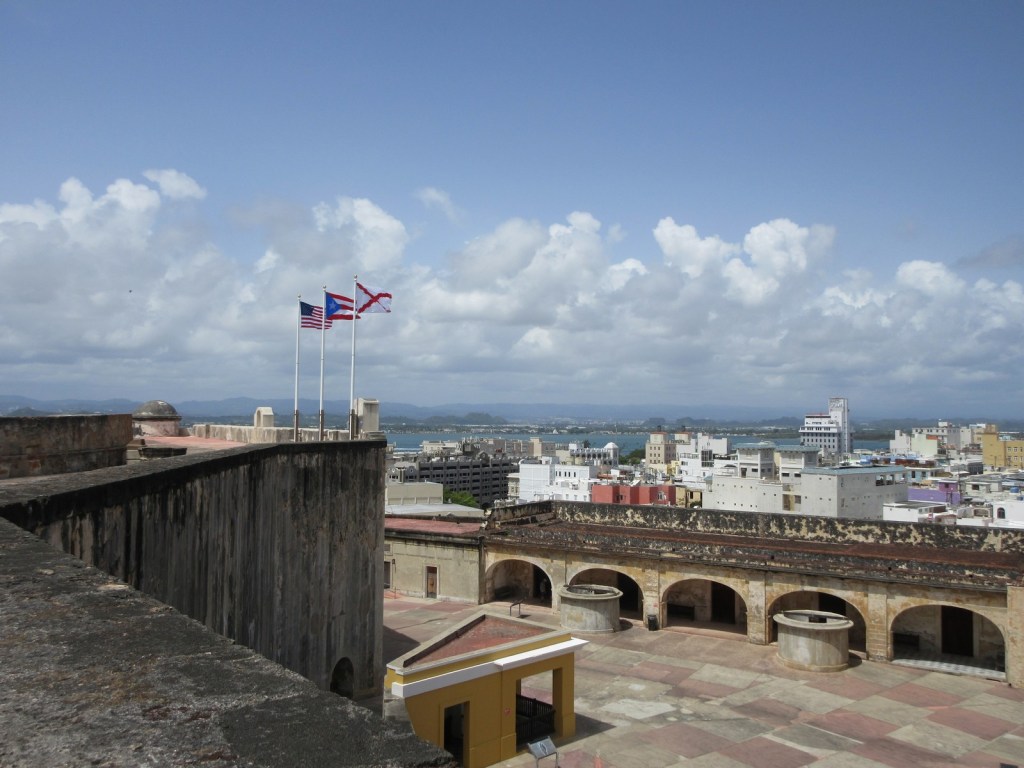
In my memory, the main reason I started a blog was as a creative outlet. At some point during my time at the Naval Academy I discovered that I needed some sort of creative outlet to keep myself from going crazy. Just doing schoolwork all the time didn’t work for me. Back then my creative outlet was writing for The LOG. But reviewing my aptly-named First Blog Post, I told the world my primary reason for writing this blog was to push myself to go out and do things and look at places. I think I have been pretty successful on both fronts. This blog gives me a way to put something out into the world, even if no one reads it except for my super amazing girlfriend, and it has definitely pushed me to go out and do activities I wouldn’t necessarily otherwise have done because getting blog material was the reason I needed to push myself out of inactivity. So that’s great!

In each of these posts I shoot to write about 750 words. This number comes mostly from the site 750Words, which I used to use. They explain that 750 words is about three pages of hand-written paper, which is what you are supposed to write everyday to become a better writer, or at least get in the habit of writing. I think I also read somewhere that 750 words is about the ideal blog post length because people will read it, or something. It hasn’t catapulted me to the top of the SEO ranks, I can tell you that (except for some very particular and very obscure topics), but still that’s what I go for, though some posts fall far short and some posts far exceed that goal. I explain all that to say, if I am somewhere near my goal of 750 words on average, and I have 300 posts, then that is over 200,000 words, which is a book! A book! I effectively wrote a book! A very disjointed book that will require a lot of editing but a book nonetheless! That’s pretty cool and I am proud of that.

In order to celebrate my 300th post, I’ve mostly done some backend stuff I have been meaning to do for a while. A big thing I did is go through and make sure every post had a picture (except for the very first one, just to be idiosyncratic). Some of these posts maybe didn’t need pictures but I added one for consistency’s sake. I have also fixed some errors I had been meaning to for a while, but since some posts needed it more than others and 300 posts (well 299 besides this one) is a lot to go through not every post got gone over with a fine-toothed comb. Nonetheless, there were some glaring errors that I have now corrected. There were other, minor things that were only for me like removing some pictures I had double-uploaded. Turns out editing a blog on your phone in a mud hut in Zambia is not the most technologically smoothest thing to do and will create some errors. But those are now fixed!

However I think for the average reader of this blog the most significant update is that every post is now in one or more categories. This is handy because it makes it possible to group say, all my London Missionary Society (or Chronicle thereof) posts in one place, or link together all my posts from travel to a particular spot like the DRC or Guatemala. I had meant to do this for a while but as the number of blog posts pile up it just gets to be a more and more monumental task but now I have tackled it and only hope that I remember to keep categorizing posts going forward. Here’s to hoping.

How I have I changed over the course of this blog? My life has changed a lot, that’s for sure. In my first blog post I was still in the Navy, and then I had a whole Peace Corps and then Grad School experience, and now I am back out into the “real” world doing a job. I have also met the most fantastic person in the world, my super amazing girlfriend. But most of that would have happened without the blog I think. As for blog-induced change, I have definitely developed more of a “voice,” as I said I hoped to do in my first blog post. Sometimes this has been a hindrance. In a blog post I will simply link to something as way of explanation but when I was in grad school this technique did not work in term papers and I had to adjust. And sometimes I worry when I am out and about in places I am spending time mentally writing a potential post instead of taking in all the beauty. But at the same time thinking about a blog post makes me think about the narrative of a place I am visiting and to be able to reflect and articulate what is significant about that story. So maybe pros and cons there.

I guess it’s not a great conclusion but moving forward I don’t think this blog will change much. By far my most well-read blog posts are the one about Joe Biden’s ties (I found it linked by a Russian blog for reasons that are inscrutable to me, and sometimes I wonder if people are searching for metaphorical ties and find my post about real ones) and the one where I mentioned a strip club on Saipan (as I linked to before in this very post). One move would be to chase these successes but I don’t think that is the direction I want to travel. I will instead continue to focus on obscure interests (that so far evidence shows interest only me) and the many many many more adventures I plan to have with my super amazing girlfriend. To any and all of you who read this blog thanks for coming along with me. Hopefully someday I will in fact write that real book and then when I become a rich and successful author people will all flock to this blog but you will be able to say to yourself that you were there the whole time, reading as he invented cool new KitchenAid attachments or looked at some dirt.

Thanks for reading!

-Pat

Puerto Rico IV: Big News

She’s so fantastic. Super amazing.

Reading this week:

  • On the Missionary Trail by Tom Hiney
  • Simone by Eduardo Lalo
  • River of the Gods by Candice Millard

On our third day in Puerto Rico, we did wake up bright and early. Or earlyish anyways. During the trip we wanted to visit El Yunque National Forest, but pro tip for those that want to visit you need to get passes in advance and the correct time to do that is 30 days before you want to go, which is when the passes become available. A limited number are available the day before so we had to be ready and on our phones to snap up passes when they became available. We were ready and we did indeed snap up those passes.

By this point in our time in Puerto Rico we had managed to get a variety of Puerto Rican food for lunch, dinner, and even brunch, but we had not yet tackled the most important meal of the day. So for breakfast, on the suggestion of my super amazing girlfriend, we set out for a very cool old-fashioned diner named Mallorca where we got mallorcas, which are a Puerto Rican pastry that is apparently equally happy to be served with powdered sugar as it is to be served with ham, cheese, and powdered sugar. I opted for the straight powdered sugar version while my super amazing girlfriend got her mallorca with cheese and said she liked it.

Fueled, we were off for our next adventure, which was Castillo San Cristobal. I know a guy named Cristobal, so it was nice to finally check out his digs. Castillo San Cristobal is the other big fort in San Juan, the other one being El Morro which of course I covered last week. Our guidebook warned that if you visited both in the same day they might start to run together, what with them being two parts of the same interlocking city defense system, so we hadn’t done that.

While conceptually the two forts are pretty similar, we liked the vibe at Castillo San Cristobal a lot better. I think what it was is that it is more in the city. El Morro, as the name suggests, is out on a pointy point of land and it feels more like maybe you are out at sea or something. But Castillo San Cristobal is nestled firmly within Old San Juan, so as you look out you see the city and people and all that and it feels like you are in the midst of the hustle and bustle. But yeah like El Morro it has cannons and passages and I think we spent the largest chunk of our time hounding fellow tourists to take our picture. The single coolest part was probably in a dungeon-like area, where they had centuries-old graffiti of Spanish galleons, which is cool, but which had been drawn by “a Spanish captain held here to await execution for mutiny,” which is grim.

Leaving the Castille, we head back to our room to cool off and rehydrate and this was the most exciting part of the day, because my super amazing girlfriend found out she had finally been placed on the register for the foreign service!!!! This doesn’t mean she’ll be able to join the foreign service necessarily but it is a huge step and I am proud of her and she is the coolest person ever!!!!!!

To celebrate we got the hell out of San Juan. That’s not true, we had planned to leave anyways. My super amazing girlfriend had wanted to visit a rum distillery, and so we went to Ron del Barrilito in Bayamón. By visiting we actually missed the mark on the whole distillery thing, because they aren’t one, but oh well. To get over there we took the ferry, which cost an astoundingly cheap 50 cents and provided some fun views of the harbor if you weren’t too worried about leaving on a regular schedule. Ron del Barrilito is a Puerto Rican rum brand founded by an engineer with a fondness for port. What they do is take raw distillate, flavor it with dried fruit and the like according to their secret recipe, and then age it. We had a fantastic tour. We were the only two on it and our guide was a true Barrilito believer (he had a tattoo). We walked the grounds a little bit, looking at the outside of the house and the old windmill, then were brought into the bottling line and where the mix the distillate and everything, and then shown the aging warehouses which were of course filled with barrels. We learned some about the mixing process which I think is super impressive. A cocktail of your choice comes with the tour and it was great.

In the middle is the “Freedom Barrel,” which was barreled in 1952 and Ron del Barrilito says they’ll open up in the town square for everyone to drink when Puerto Rico gains its independence.

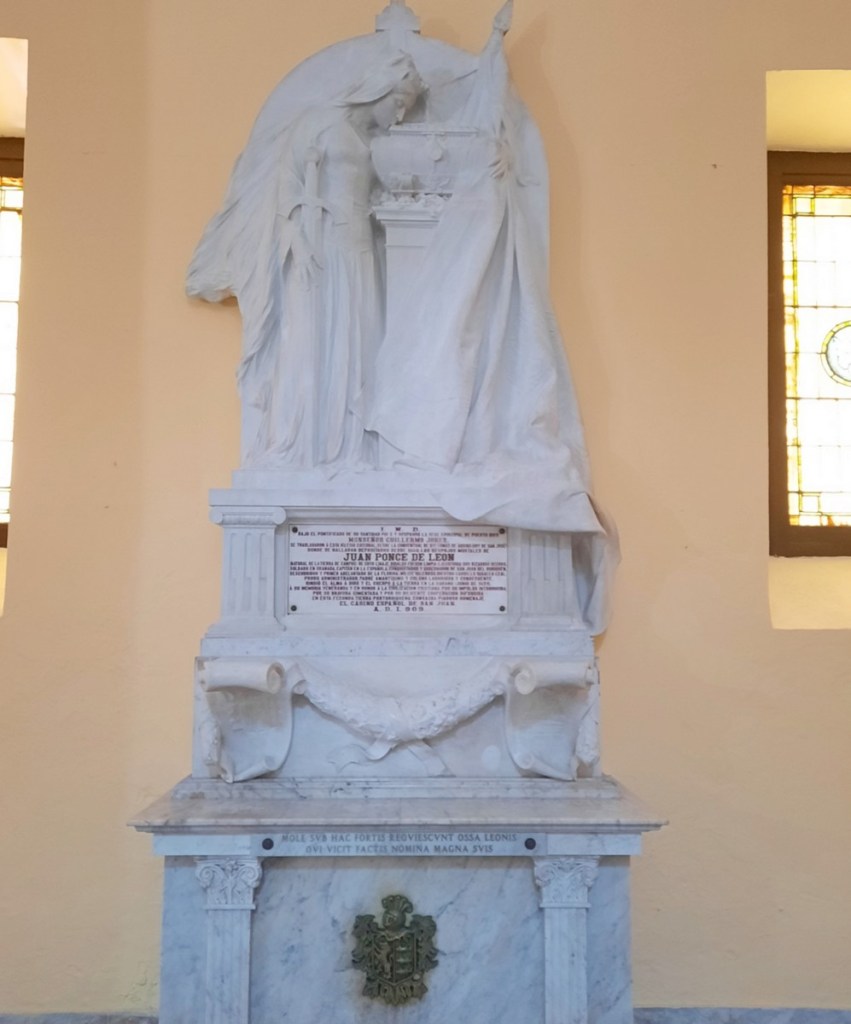
After enjoying the cocktail we head back to the ferry which we found out would not be leaving for like two hours. So we explored the waterfront there which was nice and watched two huge cruise ships pull into port. When we returned to Old San Juan we found it fairly packed but managed to find a quiet place for dinner, an experience only marred by the fact that a mango fell out of a tree and hit my super amazing girlfriend’s shoulder which really hurt her. Based on how delicious mangos are we both put aside any plots for revenge but this won’t be forgotten, mangoes. Also at some point we went to go see the tomb of Juan Ponce de León, again not thinking too deep about his legacy. All in all it was a fantastic day and we were left excited for our fourth day in Puerto Rico, which would see us break out of the confines of San Juan entirely.

The mortal remains of Juan.