Operational Risk Management Part II

In last week’s blog post I explained that I think most of the mishaps that happen in the Navy are fundamentally a breakdown of operational risk management. In turn, that breakdown stems from an inability to adequately assess risk. Military personnel are highly trained, and much of the structure of the military is there to help reduce risk. That means that people can do stupid stuff for a long time, getting by on skill alone until finally the situation becomes too big and people are injured or killed. Until that point, however, people will be unable to truly assess the risk they are facing.

Like I said last week, I had a lot of things go wrong on my watch, and many of them were my fault. I wound up in many critiques and wrote two incident reports. There were several times where I was the majority of the ship’s critiques. I only really started to get better when I started to actively think a lot about the risk/reward of any given evolution. Risk is a little abstract to think about, so what I started doing, unconsciously at first, was to think about explaining my actions at a hypothetical critique.

This is a technique I recommend. Before you start an evolution, imagine that something has gone wrong and you have to explain your actions to a very critical board of people. That way, if you are cutting a corner that potentially increases risk, you have to have worked out your exact reasoning for why you did that. This kept me from doing a lot of the little stupid stuff. If my reason for skipping the maintenance brief was “well I just didn’t think we needed that,” then I had to think about how that would sound out loud in front of Naval Reactors and Squadron personnel. I don’t think supervisors should live in fear of what could go wrong, but it works as a thought exercise in evaluating the risk/reward for your actions. Usually we assume that everything will go right, so any action we take is justified in the end. But if you start with the assumption that something will go wrong, then suddenly you have to work to explain what you did.

Once a year a submarine has to do an emergency blow. An emergency blow is when high pressure air is used to push all the water out of the main ballast tanks, causing the submarine to surface in an emergency. In 2001, the USS Greeneville was conducting an emergency blow as part of a VIP tour. They surfaced into the Ehime Maru, killing nine people. It can be a very, very dangerous evolution due to the fast nature of an emergency blow and reduced situational awareness. When our annual emergency blow came up, I was selected as OOD (I was to drive the ship). The original plan was to conduct the emergency blow during our normal watch time, which was during daylight hours.

Unfortunately, our assigned time to pull into port changed, meaning we could no longer do the emergency blow as scheduled. At the last minute, the command decided to change the plan. The emergency blow was rescheduled for the middle of the night. I flat out refused to perform the emergency blow and the evolution was cancelled. I had imagined what I would say to an admiralty board in case I got somebody killed in the performance of the blow. Changing the time would have meant we no longer had the benefit of the sun, reducing our ability to see contacts through the periscope. Having the daytime watchstanders perform the evolution at night meant they would no longer be alert.

Fundamentally, I didn’t believe anything would have gone wrong in the evolution; the watchstanders were very good, and there weren’t any contacts visible on the radar or in the moonlight. But still, something could have gone wrong, and I could not have justified these risks to anybody. We did not need to perform the emergency blow right then; we would have another shot at an upcoming underway. If we had performed the evolution during the day, with full visibility and alert watchstanders, and still something had gone wrong, I could have fully justified that we took every precaution possible to ensure the evolution would have gone smoothly. If we had gone along with the plan to perform it in the middle of the night, we would have been increasing risk when the evolution was not necessary to perform right then.

The second major change is that I would empower more junior watchstanders to make more calculations with risk. Unfortunately, and it is an unsolvable problem, there is a tension in a peacetime vs. wartime Navy (or military). In wartime, a large amount of risk is necessary; ships and sailors must go into battle. In peacetime, there are no battles to fight, so a lot less risk is acceptable. But the Navy must still train for wartime, where being shy about risk is no longer acceptable. This creates a tension in how much risk a CO should encourage.

Unfortunately, the way I saw every one of my captains try to solve this tension was by telling junior personnel to encourage risk. Each captain wanted me and my cohorts to recommend and push for higher risk activities. This would put us in the high-risk (and hopefully high reward) mindset. Meanwhile, the captain would be the final arbiter of risk and, if our plans were too risky, he would veto them. This method was employed by my captain that got fired as well as by the “fixer” captain sent in to replace him.

There are two major problems with this method. One, it depends on the captain to be perfect at assessing risk. The chain of command exists for much the same reason that the triple-check of the tagout system exists: it is highly unlikely that me, my department head, the executive officer, and the captain will all make the same mistake. But these captain’s methods, where they wanted to be the arbiter of risk, meant that they were the sole arbiter of risk. If they made a mistake, there was no one to back them up, and others (the ones in the dangerous situations) paid the price.

The other problem is that it means that more junior personnel never get practice assessing risk. If your marching orders are to disregard the risk of an evolution, depending on others (the captain) to evaluate risk, then you’ll never get good at it. This would be especially problematic when one of these officers, in turn, becomes captain. After a whole career of never assessing risk, these officers would be ill-equipped when it was finally their job to be the one to assess risk.

I do think it is necessary and important to be willing to take on risk where there is a commensurate reward. The fundamental tension of a peacetime vs. wartime Navy will never go away, but you can think like you are in wartime even if you then act like you are in peacetime. Whenever there is a potential evolution (and it fits to do this), I think that multiple courses of actions (COAs) should be presented. These should come with an honest and complete evaluation of the risk and the potential higher rewards that come with with COA. Both high and low-risk COAs should be evaluated on their merits, and then the COA chosen with the lowest risk that achieves the necessary objective.

The military is a fundamentally dangerous job. Risk will never go away. The military does a great job, and should continue to do a great job, at training personnel to excel in their skillsets and to put measures in place to reduce risk as much as possible. I think the military’s “can-do” attitude, necessary in wartime, hampers the ability to conduct honest and accurate risk assessments in peacetime, leading to unnecessary injury and death. To solve that, every person participating in an evolution needs to think through where risks are being taken on for what reward. More junior personnel, especially supervisory personnel such as officers, should be required to evaluate risk honestly instead of pushing for more risk in the name of training for wartime. A focus on operational risk management won’t solve every problem, but I can tell you it helped me.
Operational Risk Management Part I

Reading this week:

  • Neptune’s Inferno by James D. Hornnfischer

Recently (as I’m writing this), this USNI News article popped up in my news feed: “Investigation: Reckless Flying Caused Fatal T-45C Crash That Killed Two Naval Aviators.” In the incident, a student pilot was flying with an instructor. The instructor was performing and telling the student to perform advanced maneuvers that were not part of the plan. Both pilots misjudged the height and speed of the aircraft and crashed, killing both of them.

I’m not a pilot and I don’t have the skill to judge the technical aspects of the incident. But I was a nuke and a whole lot of things went wrong on my watch, many of them entirely or partially my fault. In the nuclear Navy, when things go wrong we hold a “critique.” A critique is an analysis of what exactly happened and the root causes of what happened (the other communities have similar systems but I haven’t experienced those first hand). Since I caused a lot of things to go wrong I went to a lot of critiques.

When things go wrong there are only really, fundamentally, a few root causes. Something could have broken. Sometimes things just break. You can probably dig down and analyze the cause of that failure, but sometimes mechanical and electrical devices just fail in ways that the watch team could not have predicted. Sometimes, people do go rogue. I had one mechanic who was getting fed up with the maintenance approval process (it was a busy day and his maintenance was low-priority for us so it kept getting pushed aside, but it was high priority for him because it was between him and going home) and so he just opened up the panel on the piece of equipment he wanted to work on and got to work. This is a big no-no and landed us in a critique.

But the vast majority of the time, when things go wrong, it is human error. Under the category of “human error” there are of course sub-categories. Sometimes, people just weren’t trained properly. Through no particular fault of their own they wind up in a situation they are not trained for and make a bad decision because of it. Sometimes there are hard decisions to make, and you can’t know everything, so you make a decision that turns out to be wrong. But the vast majority of cases that fall under “human error,” and therefore in the vast majority of cases that go wrong, it is my belief the fundamental root cause is poor operational risk management, or ORM.

ORM is the practice of balancing the risk associated with an action with the potential reward. Good practitioners of ORM will actively seek the ways to reduce risk, but it is also true that risk cannot be eliminated. Risk should be taken on, however, only in proportion to the commensurate reward. Flying planes, and especially warplanes, is an inherently dangerous thing to do. Aviation has a fantastic safety record and is one of the safest methods of transportation out there, but you’re still hurtling your body through space at high speed and high altitude. That is risky. The safest thing to do is to not fly. But not flying is not really an option; modern war requires aircraft and people to fly those aircraft, and the only way to get really good at flying airplanes is to practice flying airplanes. So you seek to reduce risk: you install safety equipment in the aircraft, you use simulators to practice where possible, you train the pilots to be familiar with the limitations of the aircraft and avoid exceeding them, and you only perform maneuvers that are as risky as necessary to successfully complete the training. In that way, the risk is reduced and becomes commensurate with the training value achieved from actually flying the airplane.

The most frequent way ORM falls apart is a bad evaluation of risk. If risk is evaluated poorly, then it will be impossible to tell when the risk being taken on has exceeded any potential value from the evolution. You can google a whole set of articles on why people are bad at evaluating risk, but in the Navy, I think the root cause is that most people are phenomenal at their jobs.

In the T-45C crash, neither pilot was a bad pilot. The Navy put a whole lot of time and money into training both of them and it showed. Again, I’m no pilot, so maybe they were actually terrible, but according to the article both pilots were conducting very advanced, unplanned maneuvers, passing the controls back and forth pretty continually and everything was going fine right until the end. The instructor was an experienced pilot but the student was still managing these maneuvers despite being a student. These two men were very good at flying airplanes, as far as I can tell. The upswing of being a very good pilot is that you can do a lot of dangerous things for a long time and have everything turn out just fine. Given how nonchalant he was, this could not have been the first time the instructor was conducting these sorts of maneuvers, and since he lived through every other time, then every other time must have turned out just fine. So, in my analysis, the instructor was unable to evaluate risk because every other time he did something stupid he managed to survive based on skill alone, which meant these activities no longer felt risky.

Given the Navy’s (and presumably the whole military’s) skill at training their personnel, this inability to properly assess risk of course extends to all communities. Last year, of course, both the USS Fitzgerald and the USS John S. McCain collided with merchant ships leading to the loss of life of 17 sailors. In the Navy’s investigation of the incident, they concluded that “the crew and leadership on board failed to plan for safety, to adhere to sound navigational practices, [and] to carry out basic watch practices.” What that translates to is that the crew did not implement the appropriate risk reduction procedures commensurate with the amount of risk they were taking on. In both the surface and submarine fleets, the way you mitigate risk in high-risk situations, such as operating near navigational hazards or near a large number of other ships is to station more watch standers who are able to better evaluate information as a team than one person is able to do alone. On both those ships, the situations that lead to the incidents, with inadequate watchstanders and inadequate safety precautions could not have been one time events.

Having been on a ship where things went wrong, and having been responsible for those things, I can tell you that suddenly a whole lot of people unfamiliar with the facts of the case have a lot of strong opinions on what you must have done wrong. I’m not here to do that in these incidents, and for all of them the Navy’s official reports compiled by the experts in these events are available to read. But what I am comfortable saying what I am saying because I’m not saying these people were bad watchstanders, I am saying I think they were probably very good. Both of those ships must have operated with inadequate watchstanders numerous times, and were able to do that because the watchstanders they did have on watch were highly trained and very good at driving ships. That means they, like the pilots, were able to do dangerous things and have nothing bad happen, which means they were ill-equipped to adequately assess the risk they were taking on and mitigate it.

I think some of the structural aspects of the Navy can contribute to this inability to assess risk. In 2016 two Riverine Command Boats attempted to transit from Kuwait to Bahrain. On the way they were seized by Iranian forces and held captive. In the Executive Summary of the incident report, the very first cause of the incident listed is that the command “demonstrated poor leadership by ordering the transit on short notice without due regard to mission planning and risk assessment. He severely underestimated the complexity and hazards associated with the transit.” In this case, what I suspect happened is that every other time the CO ordered this crew to perform a task, they pulled it off. Short notice, no notice, difficult conditions, you name it. So the CO lost his ability to adequately assess risk when it came to ordering this unit to perform a transit.

A similar thing happened to us. The first time we did a berth shift (when we moved the submarine from one pier to another), we took a week to prepare. It is, fundamentally, a pretty risky task, because you don’t have the reactor running and just have the diesel, which means the submarine has very little ability to get itself out of a bad situation and limited backup systems in case something goes wrong. But we did a lot of berth shifts and did them all perfectly and so before you knew it squadron was comfortable giving us two hours of warning to do a berth shift where previously we spent a week getting ready. We even did a berth shift with only one tug where normally you have two, vastly increasing the risk of the operation. We may have gotten a bit better at berth shifts, but at no point did the risk actually reduce, just our perception of the risk did.

In the case of the Riverine Squadron, this meant the CO was comfortable ordering the boat crew to make a high-risk transit with little warning time. This is especially dangerous because the CO is supposed to be the final arbiter of risk. If he is the one ordering the mission to go ahead, he has to have made a decision that the mission has an acceptable level of risk compared to the potential reward. I firmly believe that the officer in charge of the actual mission has a parallel responsibility to assess risk and must refuse to carry out the mission if in his opinion the risk vs. reward calculation is not worth it. But given that the order comes from the CO that fundamentally alters the officer’s ability to assess risk; the CO has many more years of experience and often has access to more information and his judgment should therefore be more reliable. But I think our CO here had seen this unit succeed many times, changing his assessment of the risk, and the feedback loop to the officer in charge meant that no one was able to assess the risk any more.

I’m going to keep harping on things that make it harder to assess risk, but I am trying to drive home the point that assessing risk is a fundamentally hard thing to do in the Navy precisely because we work so hard to reduce it. A major aspect of Navy maintenance procedures is to require several people to verify that something is safe. Before working on a piece of equipment, we’ll tag it out. What this means is that we’ll turn off and isolate every power source to a piece of equipment (including electrical, mechanical, and hydraulic power) and hang tags on those switches, valves, or isolations to make sure that no one turns them back on (similar to but not the same as civilian lockout-tagout). To tag out a piece of equipment one person has to determine what isolations are needed, another person has to verify them, and, before the tagout is hung, the supervisor also verifies it. For more complicated tagouts even more people can be involved but at the absolute minimum three people look at a tagout to make sure the worker won’t be harmed when he goes into a piece of equipment.

For something to go wrong then, all three of those people have to make the same mistake. Things, therefore, rarely go wrong. Two people can miss an isolation and have the third person catch it. In that case, nothing bad happens; the equipment doesn’t get worked on until the problem is fixed and the worker doesn’t get shocked or hurt by dangerous equipment (for nukes chuckling about the inevitable critique, yeah, but my point is no one was injured). Further, as I have been harping on, all three people in that process are usually pretty darn good at their jobs! That means mistakes are rarely made anyways, but it further drives down the possibility that all three people fail in the exact same way. But that, in turn, increases complacency. One guy, swamped with work, can maybe not do as thorough a job, knowing he’s got two other pretty smart people who will check the work and make sure nothing bad happens. The problem, of course, crops up when the other two people make the same assumption, or maybe one person makes an honest mistake and the other two don’t check it. No matter how good you are, everyone makes a mistake every once in a while.

Please stick around for part two, next week, where I solve the problem.

Roots Roots and More Roots

IMG_7599

Reading this week:

  • The Tibetan Book of the Dead translated by Robert A.F. Thurman

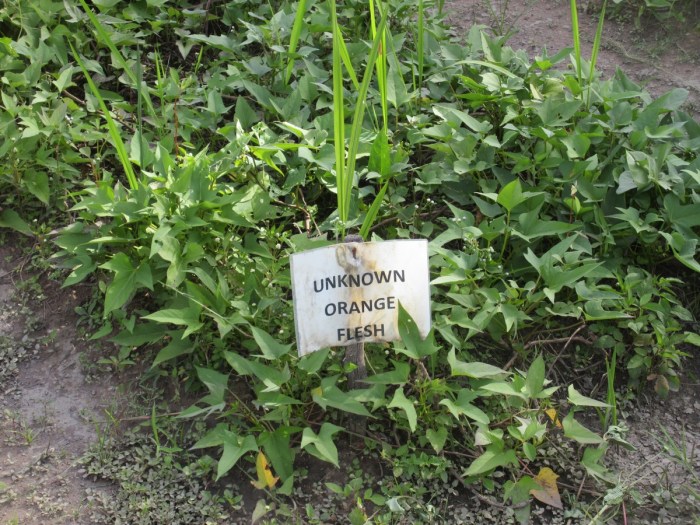
This past week (feel like I gotta get a new start for these articles) I went to an Orange Fleshed Sweet Potato (OFSP) Workshop! Loyal readers (there are none) will note I have already been to a workshop on OFSP, but this one was bigger, better, and longer. OFSP Reloaded. Where the previous workshop was meant to be an introduction to both OFSP and orange maize, this workshop was focused on producing orange fleshed sweet potato with a particular bent towards seed production.

Overall the workshop went pretty well. The first day was all classroom stuff and focused heavily on nutrition. OFSP are, of course, high in Vitamin A. Vitamin A is one of four major nutritional deficiencies in Zambia, along with protein, iodine, and iron. Since people already grow and enjoy the white-fleshed varieties of sweet potatoes, it is a relatively easy “upgrade” to the orange kind. During the workshop we focused on overall nutrition, why it is necessary to eat a balanced meal, and, most importantly, techniques we can use to teach these concepts back in our villages. One of the best ways to do this is using the “Go, Grow, Glow” model. In this model, carbohydrate foods are “Go,” giving you energy. Protein foods are “Grow,” helping to build the body. Finally, “Glow” are foods with minerals and vitamins that help maintain overall health. By assigning foods to these categories and encouraging people to eat all three with every meal we help teach about a balanced diet.

IMG_7632

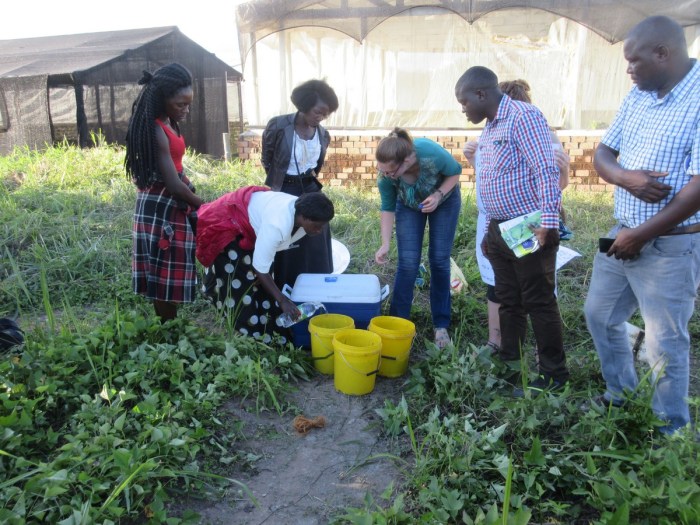
Over and above the previous workshop we did more hands-on activities. We went through the entire process of planting vines for rapid vine multiplication and for root production. We also did some rudimentary soil testing that people could do on their own land for little money. First, by feeling the consistency of the soil the farmers can determine if it is sandy, clay, or loam soil (or a combination). Then, by adding either vinegar or bicarbonate (baking) soda to some soil and seeing if it fizzes, farmers can determine if the soil is basic or acidic and act accordingly.

IMG_7645

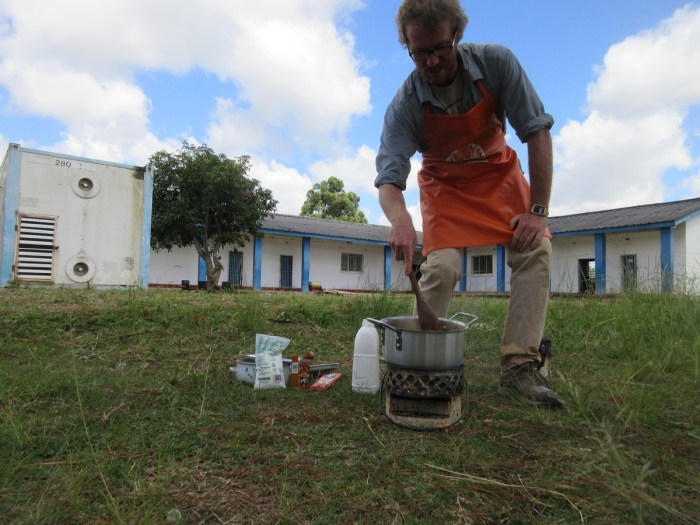
Dramatic low-angle cooking shot.

We also spent a whole day cooking meals with orange fleshed sweet potatoes. Traditionally, sweet potatoes are mostly consumed for breakfast and are only boiled. That might be unpalatable for some people, and since it is a “breakfast food” people might not eat the potatoes for lunch or dinner. So we used OFSP to make meals like curry or stew. We were also focusing on processing sweet potatoes, so we made OFSP flour. This flour is easy to make (just dry the potatoes and then pound them) and can be mixed 50/50 with wheat flour. The mixed flour can then be used like 100% wheat flour in recipes for bread, fritters, or other baked goods. This allows people to get Vitamin A in more of their foods and is a cheaper alternative to pure wheat flour. We even made OFSP pancakes on the cooking day and they were pretty awesome.

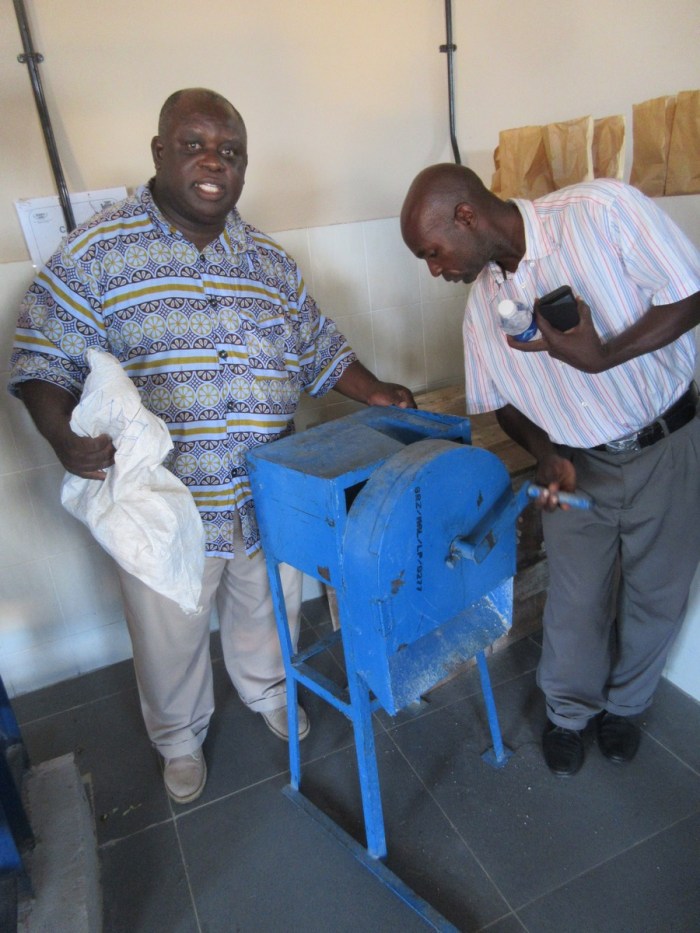
Finally, and exciting for me, my host dad and I got to see a cassava processing center. This workshop took place in Mansa in Luapula Province, the location of the nation’s root and tuber research center. Besides the sweet potatoes, they also have improved cassava varieties. I was interested in bringing back some improved cassava to the village, and my host dad was interested in seeing the processing facility. They have a very nice facility there where they have machines to grate, press, fry, and mill the cassava in bulk. Cassava is a very popular food security crop here, but with some mechanization can be a very profitable crop as cassava flour gets a much higher price than maize flour. And it takes less resources than maize! The research center here has planting and harvesting machines that they will bring to your fields for only ~$260/Ha. I am told this is cheap, especially as it includes fertilizer and herbicide, though farmers have to provide their own planting material.

IMG_7733

Cassava/Sweet Potato Chipper. For making chips.

On top of all THAT, they also grow a lot of cocoyam (taro) here in Luapula province, and I was able to secure some seed for that as well. So now my host dad and I will be bringing back three different root crops to our village and I am pretty excited. Diversifying crops leads to better food security, as well as potentially introducing new markets that farmers could use to make more money. Root crops are usually relatively easy to grow, drought resistant, and very hardy, and make ideal crops for food security. Two years ago I never would have thought I would be this excited for roots man.

On Development

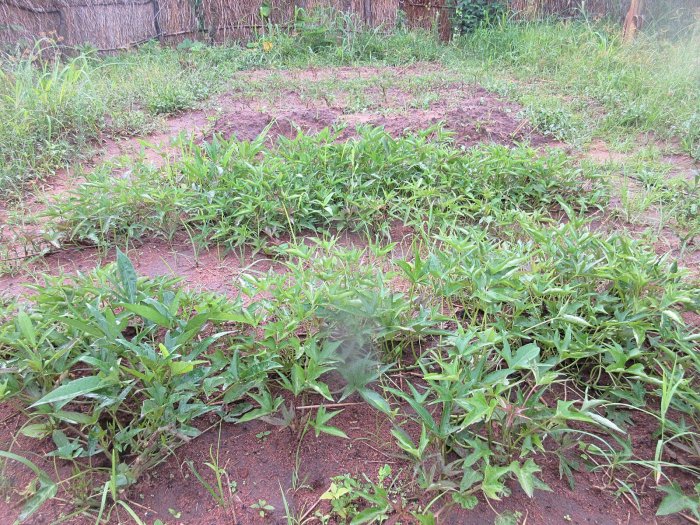
Sweet potatoes

Reading this week:

  • The Undercover Economist Strikes Back by Tim Harford
  • The Death and Life of Great American Cities by Jane Jacobs

I wanted to share a few thoughts on development work. The methods and effect of development work is a popular topic among Peace Corps Volunteers as would be expected. Books like Dead Aid are pretty common reads among PCVs, and I pay close attention when people like Tim Harford or Tyler Cowen talk about development. The topic of development is consistently in vogue due to the number of international agencies out there and the billions of people targeted by the work.

I think the current trend is to bash development work. There are projects like What Went Wrong? to document where projects failed (to be fair to them, their eye is towards doing it better). Having read Dark Star Safari, Paul Theroux travels through Africa and takes a dim view of the effect of development work (again to be fair, he doesn’t bash their intentions, except for the proselytizing ones).

The biggest thing I’ve learned since being here is that it is hard to tell what’s going to stick. I’ve brought a counterpart to several workshops, including workshops on animal husbandry, mushroom growing, rice growing, orange-fleshed sweet potatoes, and beekeeping. Of these, so far the only project we’ve implemented is orange-fleshed sweet potatoes.

I think it is inevitable that most development projects are going to fail. I don’t blame anything like the culture or people becoming dependent on handouts, I just think of development work like a business. It might not be universally true, but most of the projects I’m around here to implement are really about introducing new businesses. A fish pond provides other benefits, but the end goal of digging a fish pond is to sell the fish and make money. If I teach a farmer about beekeeping the end goal is to harvest and sell honey and beeswax and make money. If we get farmers to plant a new crop, the end goal there is to have diversified the outputs of the farm to allow the farmer to sell more products and make more money. In that perspective, a lot of development work is about helping people start a new business.

Unfortunately, even under the best of conditions, most businesses fail. Businesses fail here for the same reasons that they fail back in America. A lot of these projects have a pretty high start-up cost in terms of money, time, and labor. Digging a fish pond is hard, and even if digging a pond out of dirt is “free,” it still takes weeks or months. People are already busy doing things like hoeing and weeding their fields by hand, and the time it takes to dig a fish pond is time the farmer could have spent doing other things. After the pond is dug, it takes money to buy the fingerlings to stock the pond. People also must have all these resources available before they even begin as there aren’t really any sources of credit available to villagers around here. Back in America, people who want to start a business can take out a business loan to get the capital to start. But a farmer here who wants to stock a reasonably-sized fish pond has to have at least 150 Kwatcha when they’re struggling to put together 20 Kwatcha every four months to send their kid to school.

Even if a farmer overcomes the startup costs, they may find that the new business just isn’t cost effective. A farmer could decide to undertake improved animal husbandry as a business and start raising goats. The farmer could very well find that raising the goats takes time away from growing maize (so he can’t grow as much) and that the cost of vaccines, supplemental feed, and paying for any damages that the goats cause if they escape is more expensive than anticipated. He could find the market price he counted on doesn’t materialize and goats sell for less than he expected, driving down profits from his goat business. So the farmer sells off his goats and gives up on animal husbandry. That has an effect on the rest of the community. Where I live, people wait for someone else to try something new. If that other person is successful, then they’ll undertake the risk and start that same project. If that person fails, then they won’t bother with it. My village grows a lot of onions because one person tried it and found it profitable. It was hard to get anyone to dig a fish pond because years ago they tried it and it failed. Now that my host dad has dug a fish pond, people are waiting to see if he makes money before they try it themselves.

Although it is hard to predict what projects exactly will be successful, I do think there are some things you can do to improve your chances. A lot of these have been detailed elsewhere. Just handing a village something like a tractor with no training on repair and no way to pay for gas is going to be pretty useless. You have to make sure there is actually a market for whatever you’re proposing people make or grow, and a way to get it to that market. Projects should focus on people’s ability to maintain it using the resources they have available.

Along those lines, one lesson I have learned is on the definition of “low cost.” Sometimes I Google for ideas for things like improved solar dryers and come across projects that comment on their “low cost.” But when these projects say that, they usually mean that they are less than $25 or something like that, maybe even $2. But around here, $2 is a term’s worth of school fees, which I mentioned a lot of people have trouble scraping together. So if you come in with your “low cost” project of $2, you could be asking someone to choose between your project or sending their kid to school. So while I understand the need to spend money to make money, “low cost” can still be very pricey.

But with all that, I do think development work is very possible and very important, even if it could be done better. I think the timelines on a lot of these projects are really too short to tell if you’re going to be successful. I have two years here in Zambia, but the agricultural cycle takes about a full year. That means I really only have two shots to introduce a new agricultural system. And if I introduce something in that second cycle then I’ll probably be gone before I can really tell if it works. Agricultural projects can take years to pay off; techniques such as conservation farming require 3-4 years of labor invested before the farmer really starts to see savings in labor and fertilizer. On the health front, if I teach about malaria or HIV, then really the metric there is if they get malaria of HIV for the rest of their lives, not just in the two years I’m around to watch.

But development does have an effect on people’s lives. In Dark Star Safari, Paul Theroux meets people he knew and taught or taught with as a Peace Corps Volunteer and then afterwards as a university professor. These are people that have successful careers and have raised families. People have a lot of teachers in their lives, and each affects them, but who’s to say Mr. Theroux there didn’t have some meaningful impact in improving at least some of his student’s lives? Even if most businesses we help people start eventually fail, some will succeed and give people a shot at making more money than they otherwise would, with follow-on benefits like being able to send their kids to school or invest in more businesses. If they don’t start any businesses, then all of them will fail.

I’m very much in favor of development work as a whole. I think there are a whole lot of ways to do it wrong, and I’m not even sure the Peace Corps method is the best method if you’re main goal is improving lives most effectively and cost-effectively (America gets other benefits from the Peace Corps, don’t forget). But I think it is going to be easy to point out the ways the development fails because the nature of development work means most development projects will fail. But some will succeed and it is hard to tell on what timeframe they’ll make an impact.

Kitten!

20180328_202913-596824180.jpg

Reading this week:

  • Origamy by Rachel Armstrong

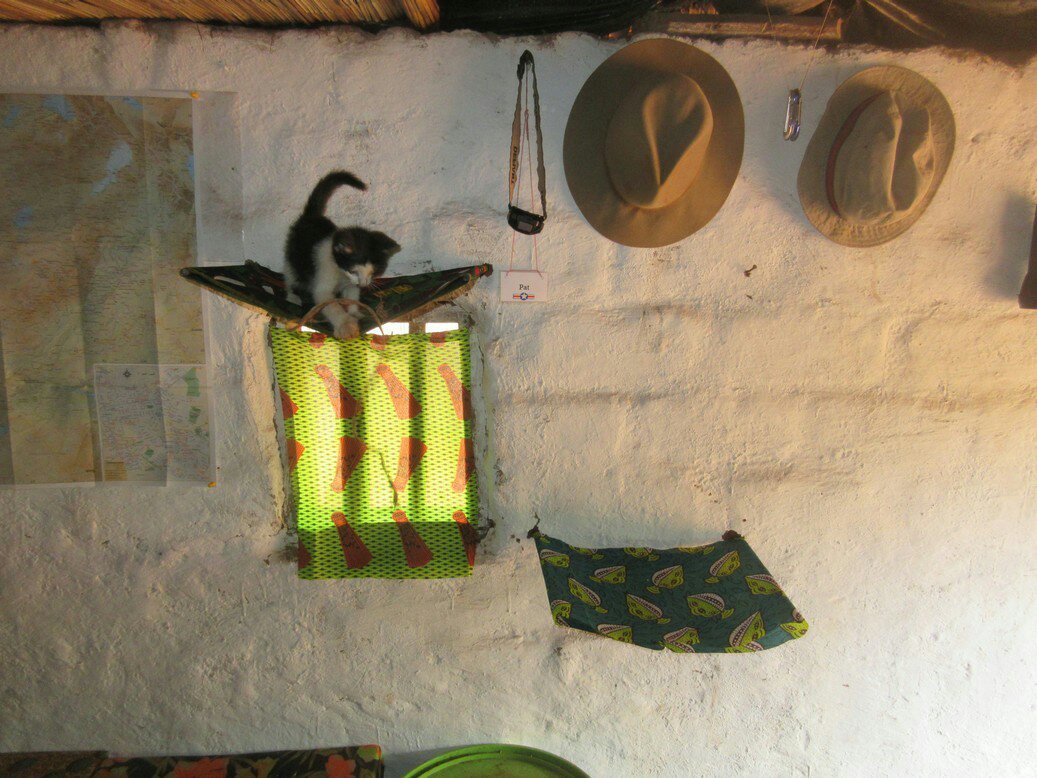
This post is about my sweet new cat, Inwanwa. Unfortunately, shortly after I wrote the post Cats, Munono (the eponymous cat) disappeared. I don’t know where he wound up but I hope it is someplace nice; maybe his newfound fame lead him off to Nollywood or similar climes.

img_7141885686130.jpg

Anyways, getting a cat was kind of an impulse decision. Peace Corps regs prohibits the Peace Corps Houses from having house pets. This is an allergy and health regulation, but at our house in Kasama stray cats manage to eke out a living on the grounds despite us reading the aforementioned Peace Corps regulations to them. Cats! At any rate, presumably due to the proclivities of these cats, the house got a kitten infestation.

The story of me and Inwanwa is probably something along the lines of the cutest Rom-Com ever, because the first time he saw me he hissed at me and refused to come near me. By the next time I had come to the house, however, someone had fed the kittens and so suddenly they were all about people. This sounds cute, because it was, but the cats had to go. No longer afraid of people, they would aggressively go after your food on the porch and sneak into the kitchen in the house and wreck havoc (but cute havoc) as kittens are wont to do. So they had to go.

20180330_145056-2099839311.jpg

My poor cat here, no one wanted him. I didn’t really want him either, because owning a cat is like, responsibility, but Munono was missing and I have a big ole soft spot for the unloved. So my fellow PCVs, sensing weakness, pressed me to adopt him and so I did. The morning when I left he was unceremoniously put into a cardboard box lined with panty liners and I carted him home. This must have been traumatic for the poor thing because carting him home involved waiting an hour for a minibus, a three hour minibus ride, and then being strapped to the back of my bike and biked home. The poor thing survived in good condition and was welcomed home with some ham.

I was worried he would hate me after that little ride but apparently not. So now I own a cat. I had decided to name him after his distinctive mustache, so he was dubbed “Inwanwa,” which is apparently Mambwe for “mustache.” I asked my host dad and he didn’t think there was a Mambwe word for “mustache” (not a popular hair style) but the dictionary says it is Inwanwa so there we go.

img_7165-569865121.jpg

Since getting the cat my hobbies have largely been making cat toys (he prefers toilet paper rolls) and pounding rebar into my walls and damaging the brickwork to make him platforms he doesn’t use. But he is cute and he likes to take naps on my lap and also claw me a lot. He has taken to stalking chickens and so my biggest fear is that he becomes a chicken killer, which would be expensive for me. He doesn’t eat kapenta which means I have to feed him cat food and when he can’t get me to play by clawing at me he bats at the dogs’ tails, which is playing with fire little cat. They mostly ignore him. So yeah, standard issue cat.

Biking the Mwambezi, Part II

IMG_7531

Reading this week:

  • Factfulness by Hans Rosling with Ola Rosling and Anna Rosling Rönnlund
  • Empire of the Sun by JG Ballard

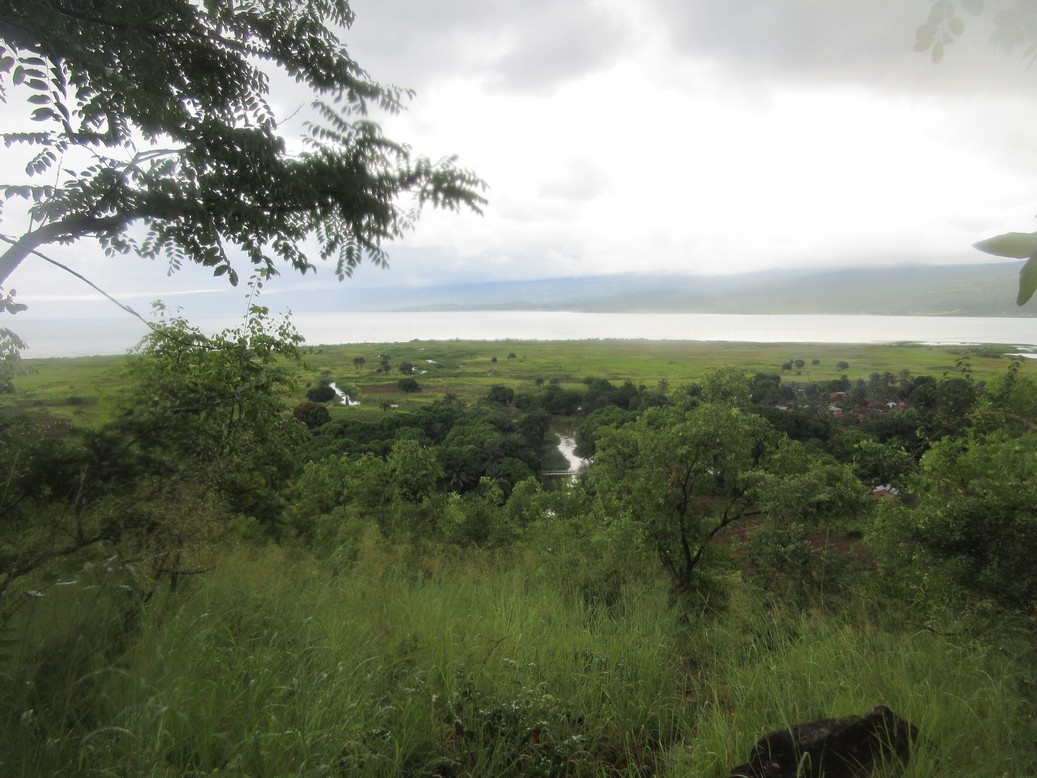
Lemme tell ya, the view at the top of the hill was gorgeous. I wasn’t expecting it before I crested the hill, but from up there you get a gorgeous, unfettered view of the lake. You can see for miles, probably across the border. Maybe not, but it is the highest hill around and the scenery is beautiful and everything is awesome and also of course there was a maize field. I mean I know I just said all that about fields on top of hills but really man. This hill is super high and super hard to climb and super far away from anything including water but someone decided to put a shack up there and plant maize.

Sightseeing done, I descended a bit towards the maize field. I figured there would be a path from there. I ran across what I assume were the owners of the house; in a small clearing I found three dudes looking at some maize. I said hello and asked about a path towards Kituta Bay and they pointed the way and off I went. I always wonder what these guys think. I walk into the backcountry a lot and so these dudes are just having a normal day and then out of nowhere (I scaled the untraveled back of this hill) this white dude with a backpack stumbles from the woods, says hello in local language, asks directions, and then off he goes. Maybe I’m thinking too highly of myself but I wonder if a year from now they’re gonna say to each other “remember that time that white guy showed up? Weird…”

IMG_7534

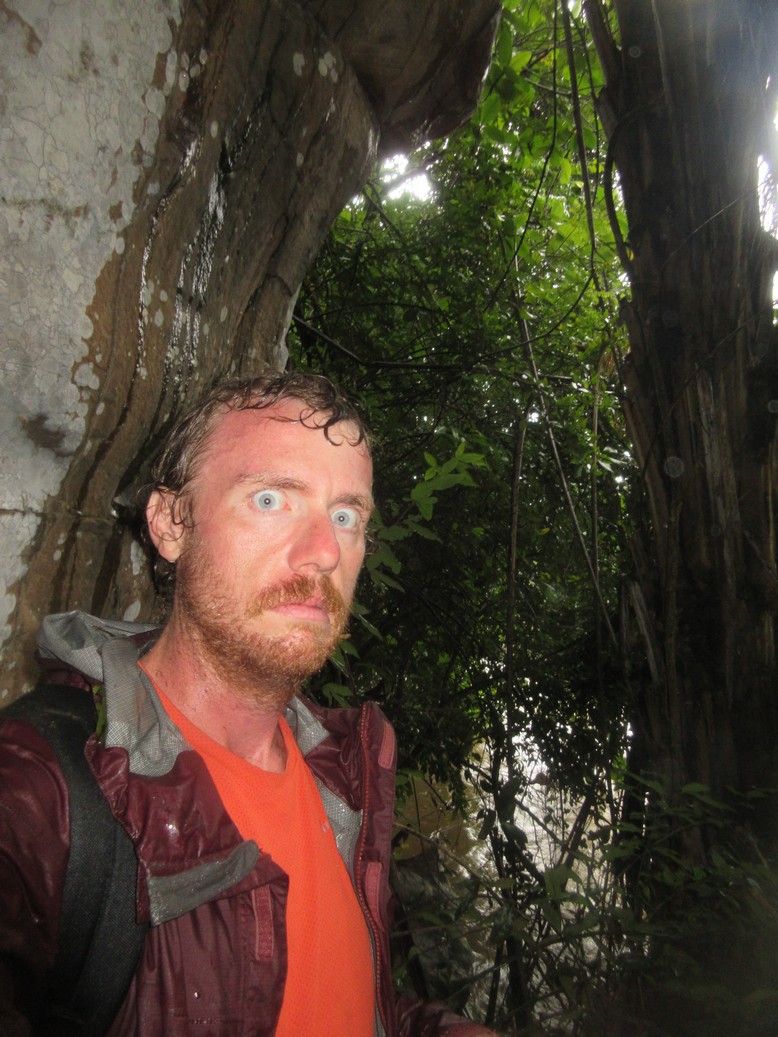
I wasn’t panicking yet but I was wearing a t-shirt on my head.

Here’s where this adventure really probably starts to fall apart. I followed the path for a little while, but it petered out when I came across a stream. Obviously the path was just to the water source. But I had to keep going downhill so back into the bush I went. Bushwhacking through here was not easy. I had to keep knocking down grass, and I kept running into these tangled vines that were hard to get through. They’re at about waist height and hard to see and exist only, as far as I can tell, to make walking through the bush hard. I kept coming across little paths that gave me hope but just lead to dead ends where people made charcoal. I plan to write a post on land use but there isn’t really any virgin land around here and you always come across paths that sometimes lead nowhere. Very frustrating.

I really started to worry when I ran out of water. I was deep in the bush, miles from anything. Mpulungu was way farther away than it looked from the top of the hill, and I couldn’t decide if it was a better idea to head for Kituta Bay, which I kinda thought was closer and I knew had a shop or give up and head towards Mpulungu. I kept wavering which didn’t make my path shorter. I kept cresting ridges, which was exhausting, expecting to come to the bay but just finding another valley. The sun was high, I was sweating, hydration was nowhere near, no one knew where I was really, no cell reception, those godforsaken vines kept getting in my way, my knee was starting to hurt, my shin was bruised from an earlier fall, and I was yelling at nature a lot. Things were not good. Then it started to rain.

IMG_7552

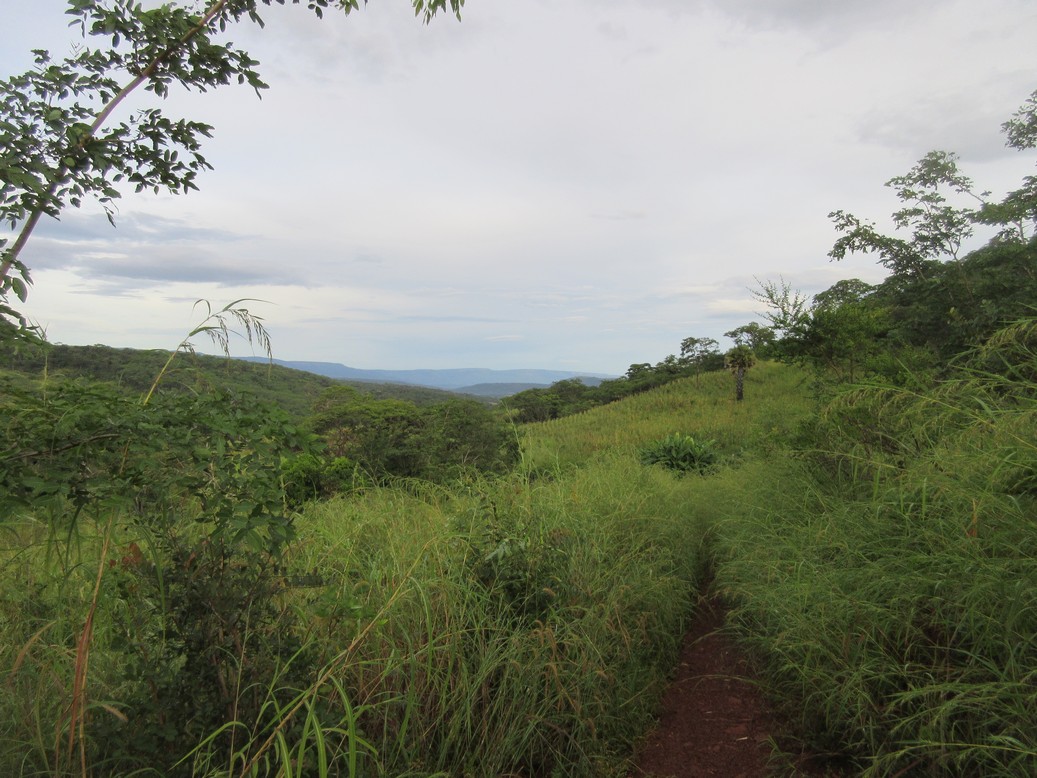
One of the interminable valleys with a path that lead nowhere.

The rain was probably a good thing. It kept me cool so I didn’t sweat as much and didn’t get as thirsty. I kept pressing on, because there was nothing else to do, and finally came across a promising path. I ate some of the food I brought and with my blood sugar back up and a path to follow I felt a lot better mentally.

Eventually I came across some houses. I probably should have bailed and gone to Mpulungu, but I had come this far and I was going to see those goddamned waterfalls. So I asked directions (in Mambwe) and the man I met originally wouldn’t talk to me and just called for this other guy. This other guy spoke English so we introduced ourselves. I explained I was looking for the falls and he began to show me to the path and asked where I was from. “I’m from the USA originally but I live near Mbala now.” “Ah, so you are from the USA. You are in Northern Zambia now!” “I know, I live near Mbala. I’ve lived here for about a year.” “Just across the border is Tanzania, and we are near Lake Tanganyika!” “I live near Mbala!” “You live near Mbala!”

The guy was nice though and showed me the path and warned me it was far. I figured he really just meant far for a white guy so I said it was no problem and soldiered on. I could hear the river again at this point even if I couldn’t see it and that was encouraging. The rain had also let up but shortly after this point came back with a vengeance. I was wearing a rain jacket but skipped my rain pants because my pants were already wet, but still I am surprised every time just how more wet I can get. But I trudged on because I was going to see this waterfall, goddamnit. I kept following the path and asked directions one more time when I came across a home and finally I turned the corner and I was in Kituta Bay.

IMG_7559

The end of the mighty Mwambezi. The Lunzua really.

Well almost. I was perched on top of a cliff that did an amazing job framing the bay and the river as it snaked its final few yards to Kituta Bay. The cliff had a path down that was already sheer and not totally awesome for a dude who had at this point a pretty bum knee but I made it down. At least I knew I was relatively safe at this point because I had gone from here to Mpulungu before, so I could find my way, and the village had a store where I could buy drinks.

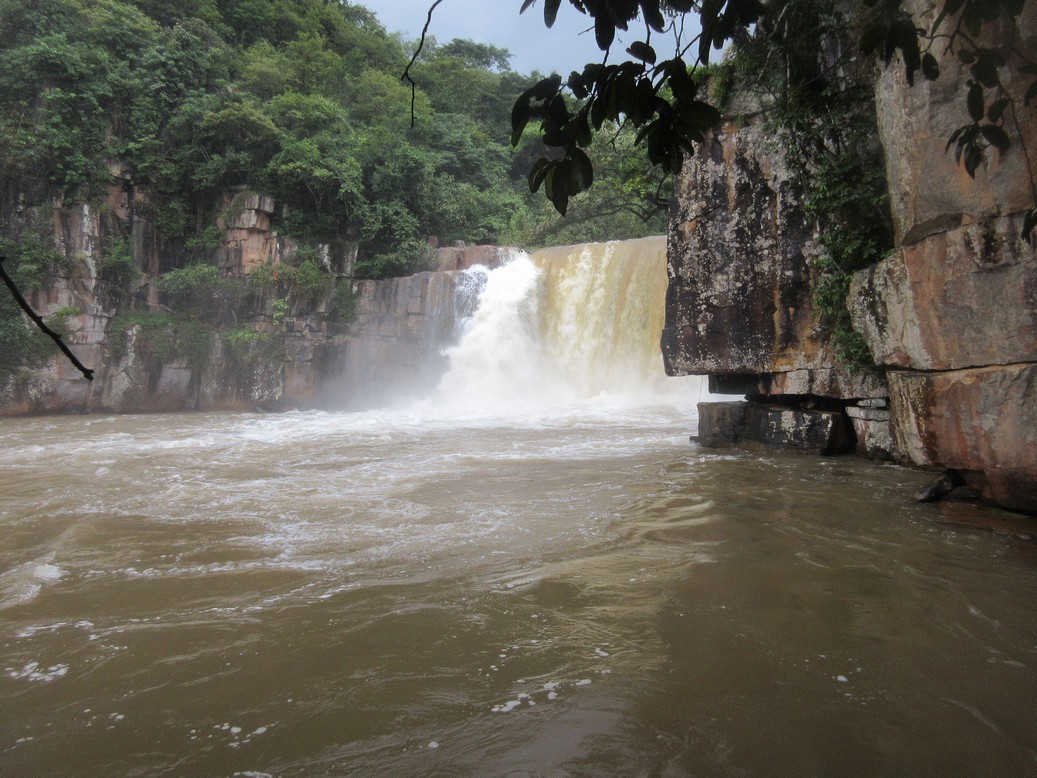
I hobbled down the path towards the waterfalls (which I could hear but not see) and asked some directions towards the waterfall. Some kinds helpfully showed me a path towards the waterfall . The path ended before the waterfall with the kids saying “that’s it,” but I forged ahead through the forest. The kids followed, pointing out where I could go, which is like, I HAVE EYES KIDS, which I said (in Mambwe) because I was cold, thirsty, tired, and grumpy at this point, and I was so close to these waterfalls. I almost gave up in the last 10 yards or so because I didn’t know it was only like 10 more yards and I was like, crawling across rock faces holding onto branches but finally I turned a corner and THERE WAS THE LUNZUA WATERFALLS HALLELUJAH.

IMG_7582

Lunzua Falls. If you want to see them, it is much easier to just walk over from Mpulungu.

So I had made it. Whoo. I sat down, ate my “lunch” (six hardboiled eggs), squeezed out my socks, took some pictures, finally looked at the time, and panicked. It was 1630, which meant I was about four hours behind schedule. This was worrying because it was about ah hour until dark, it was at least an hour walk to Mpulungu, a storm was brewing again, and I knew there was no moon. So again, not good.

I wrapped up lunch and hobbled back across the rock faces and into the village to buy some drinks. Walking through the village I was asking directions to the shop, so one old dude told a small girl to lead me there. This signaled to all the other children in the village that it was okay to gawk at the white guy. So before I knew it I had a pack of I swear 100 kids following me to this village yelling “Muzungu!” (“White guy!”). As I was buying some Shake n’ Sips one dude even tried to hand me a wet naked baby because he wanted to take a picture of me with said baby. I turned him down. I then hobbled out of the village as fast as I could with kids running ahead of me and walking backwards just so they could gawk.

IMG_7577

It had been a day by this point but it wasn’t over.

I had been to Mpulungu via the route from the village before, so I knew I could make it if I had to, but I wasn’t excited about going there in the dark and rain. Luckily though two dudes were leaving the village at the same time and heading to Mpulungu, so I fell in with them. They were very nice and understanding. By this time it was a downpour again and the path was mostly a river, I was limping as fast as I could on an aching knee, and it was getting dark fast.

I was so glad when I finally saw the lights of Mpulungu, but we were still a long way off. It is hilly around here, like I said, so there I am hobbling down rocky hills trying to keep up. Finally we got to the outskirts of town, which didn’t make me feel a lot safer because it was dark, I was hurt, lightening was flashing, and we were passing loud bars with drunk people more than a little curious about the white guy. But suddenly we burst out onto tarmac and I knew where I was. I thanked the dude that I had traveled with profusely and hurried down the tarmac to find a lodge. Room secured, I finally got out of my wet clothes and shoes. I was alive, I was okay, dinner was two Shake n’ Sips and some peanuts and my knee was not okay and I’ll probably never do that trip again but hey, I saw the waterfall and I got two blog posts out of it.

Biking the Mwambezi, Part I

IMG_7443

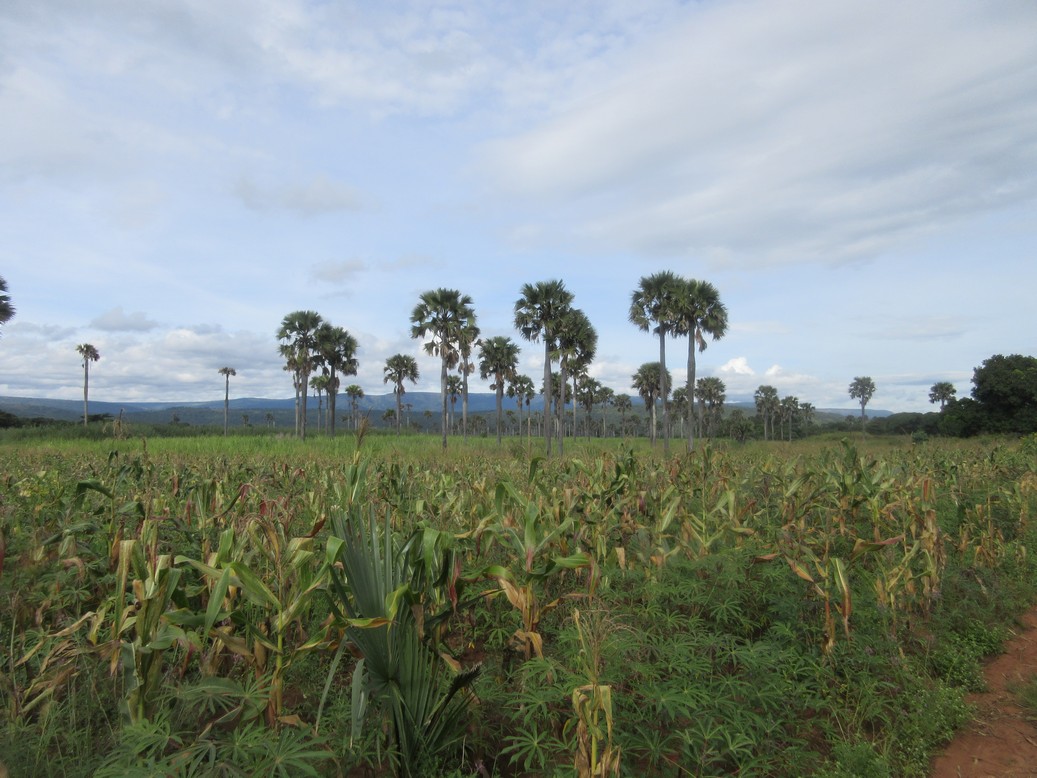
The valley where a lot of the village farms.

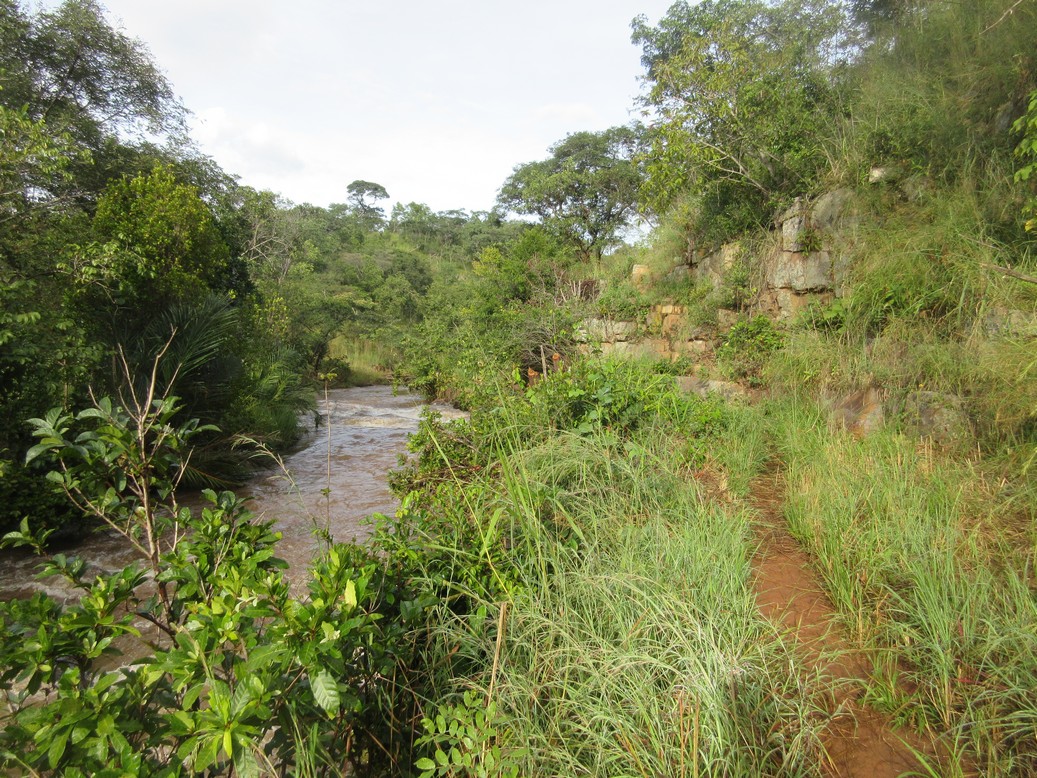
First off, “Biking the Mwambezi” is pretty much entirely a lie. That was my intention, and in almost no way did it pan out. My village is near the Mwambezi River. I was hoping to follow the Mwambezi River to where it emptied into the Lunzua River, which culminates in the Lunzua Falls where the river flows into Lake Tanganyika at Kituta Bay (since the lake sometimes empties into the Congo River, that means I live in the Congo River Basin, which I think is kinda neat). I hadn’t gone that way before, but from the satellite photos on Google Maps, it all looked pretty bikeable.

I left the house at 0630 when it was still early but there was enough light. I started off on my bike. My village actually does a lot of its farming not in the valley the village is in, but in another valley tucked away around a ridge. This path is well traveled and therefore bikeable. Past the fields, however, it pretty quickly deteriorates and I was pushing my bike over a thin path through tall grass. I got soaked in this process, brushing past the dew-wet grass.

IMG_7467

The mighty Mwambezi.

The major redeeming feature of this part of the adventure was being near the Mwambezi River. Lake Tang (the Mambwe word for the lake is actually “Liemba;” “Tanganyika” is a Swahili word), as I think I have discussed before, is actually a Great Rift Valley, er, valley that is filled with water. The area surrounding it, including where I lived, is therefore comprised mostly of stunningly beautiful river valleys and gorges and escarpments that surround and empty into the lake. So that means I was traveling through one of said gorgeous river valleys.

After about two hours of bushwhacking, I finally found a stretch of good path that was bikeable. So I hopped on my bike, biked about 25 yards, heard a rubbing sound, looked back, and watched my tube blow out because my tire had a hole in it. This, obviously, put a pretty major damper on my “biking the Mwambezi” plans. Since I was two hours into the bush, I figured the best course of action was to leave my bike with someone, with the plan of returning later, probably the next day. You see, I was expecting to be at the falls by noon and back home that same evening, and I figured there would be replacement tires I could buy in Mpulungu. Every one of these assumptions was wrong.

I walked my bike a little until I came across a house with someone home. It took some explaining, but I conveyed that I wanted to leave my bike at their house and come back with parts to fix it. People are friendly so they were more than willing to let me leave my bike against their house. The most amazing part of this for me was that, two hours into the bush, in a village that I had never been to before, people knew who I was. As I was trying to convey that I wanted to leave my bike there, I heard one guy explaining to another where I lived and who I lived with. I guess word of the white guy gets around.

Having found a place to stash my bike, I figured it would be best to just continue on my trip, just sans bike. When I originally conceived this plan, it was to be a hike anyways, with the bike a later update. Plus I really just wanted to go see the falls. So I made some mental excuses and continued on, getting to Isoko a short while after.

IMG_7490

Isoko, with sugarcane underneath the palms (closer to the river).

Isoko is a really nice village. I have recently learned that a Chief lives there, though when I looked around (briefly) I didn’t find his palace. But it is relatively close to Mpulungu, and has relatively good roads, and so is therefore relatively developed. One of the advantages of walking over biking is that you notice a lot more things, and it is a lot easier to take detours down small paths to learn what people are growing. Since integration is such a big part of fish farming, I’m really interested in what people are growing, especially crops they don’t grow in my village. Taking one of these detours I found out that they grow mostly sugarcane in Isoko. I also admired one person’s guava orchards and the living fences most people had set up. It is a really nice village!

One of the major disadvantages of walking, however, is that it is harder to get away from the small children that tend to gawk and then follow me as I wander around the backcountry. A group of these kids started following me and wouldn’t leave me, despite my detours. They convinced themselves I was going to Mpulungu (which was true, but not via the shortest route) and that they could lead me there in exchange for money. As we walked along, we crossed the Mwambezi, which I didn’t really want to do (my planned route didn’t involve any river crossings, except at the end), and meant I was a bit lost. That, combined with my strong desire to get away from these kids, convinced me it was a good idea to scale a rather large hill to get my bearings. The other disadvantage of walking is that on a bike, you tend to stick to actual paths instead of barreling off into the woods.

IMG_7503

The kids I didn’t like.

One of the many things that amazes me about what people do around here is that on top of almost any hill you’ll find a cassava or maize field. Like, scale a huge hill way away from anything and I swear you’ll find maize. I asked about this and my host uncle says the reason is that the soil is better up there, and in the valleys it tends to be swampy. Fair enough, but jeez that is a lot of walking. So I scaled this hill and found a maize field. I also discovered that right next to this hill was an even bigger hill, where I figured I could get an even better view. So off I went.

Scaling the hill was probably a bad idea. First off, there was no path, so I was really bushwhacking. It was scrub forest, so it was pretty easy going. Second though, about halfway up the hill I discovered the hill was a lot taller than I thought. And looking back I could watch the rain slowly coming across the valley. But I still had water and I thought I was making good time and my knee wasn’t hurting so up I went to the top of the hill.

IMG_7504

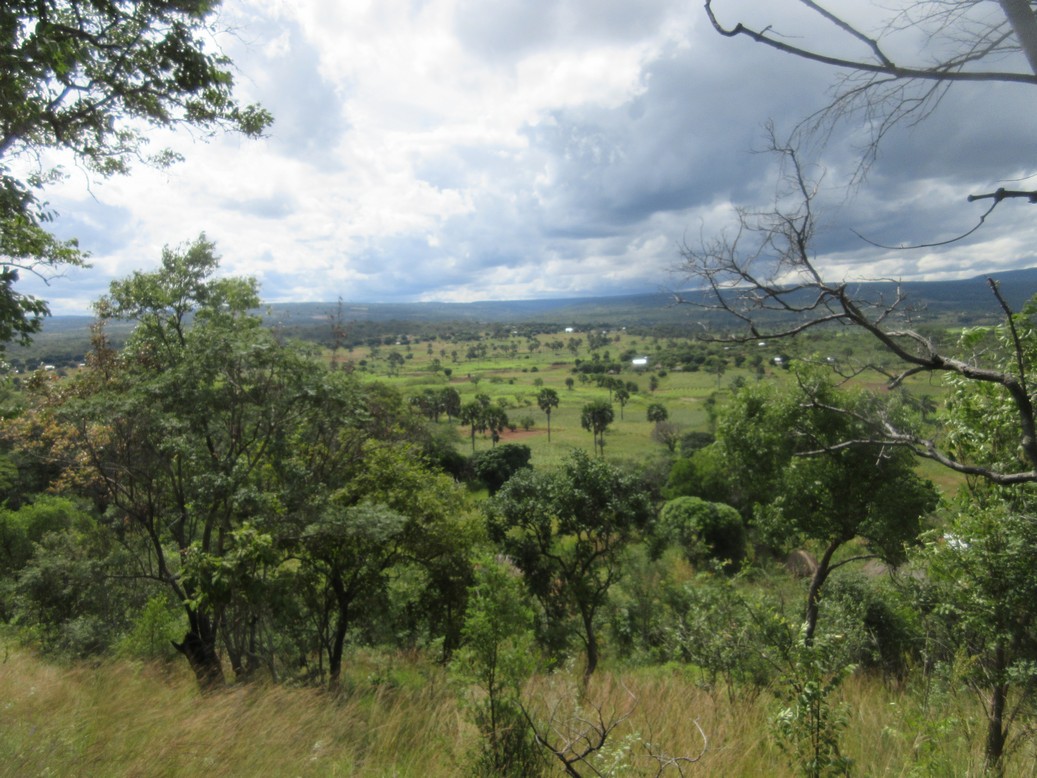
Looking back across the valley over Isoko.

This is where I end this blog post and tell you to read part two because if I was gonna hike for 12 hours I’m gonna get two blog posts out of it, that’s for sure.

Site Visit 2018

Reading this week:

  • Nathaniel’s Nutmeg by Milton Giles

This past week I helped out with cluster site visit. During Pre-Service Training, the Trainees go on site visit. Site visit happens in two parts: first, they go to cluster site visit, where all the trainees of a certain language group (in our case, of course, Mambwe) assigned to the province go to a site visit together with PCVs. The second part of site visit is individual site visit, where they split up and visit their individual sites, alone. Cluster site visit gives the trainees the chance to get language and culture training close to where their actual site will be. It also gives them a chance to learn about the little tips and tricks of village life, like how to light a brazier or cool hints on how to set up their eventual home.

I wasn’t originally going to help with site visit but some plans fell through and I was free so I went. I couldn’t go for the whole time, but I spent two full days with the trainees. It was lead by another volunteer, Mitch, because it took place at his site. My main roles, besides imparting my wisdom and knowledge, were to help cook and clean while the trainees were in class.

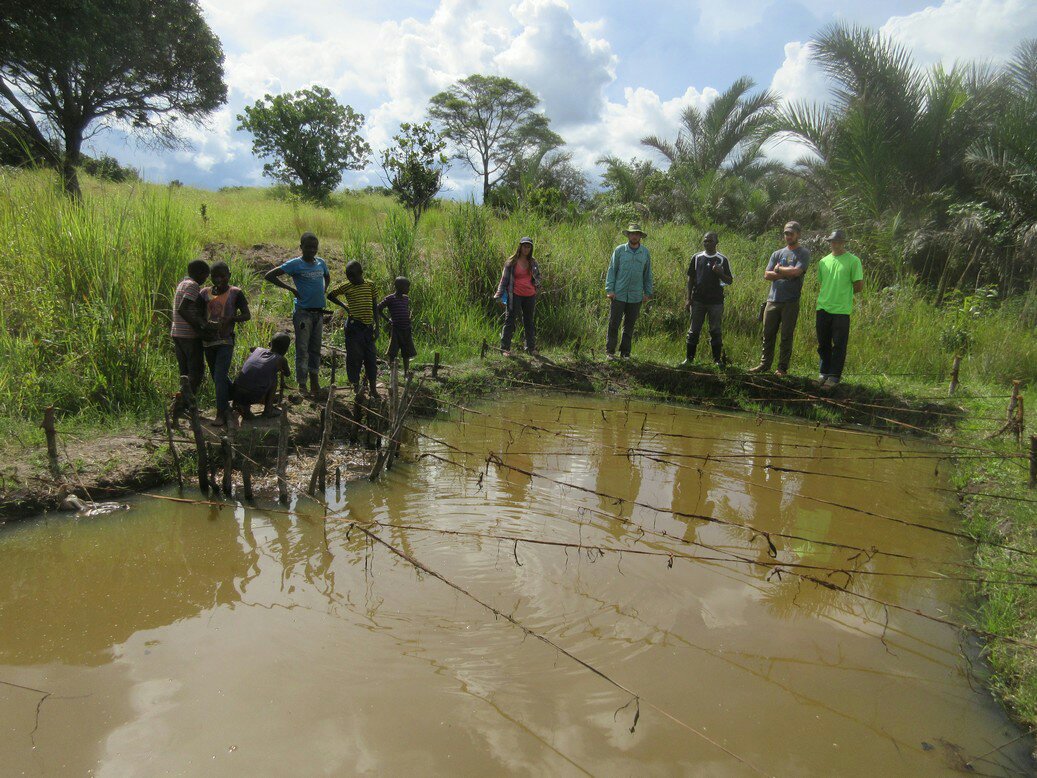
I arrived at the site on Thursday afternoon after having hitched from Mbala. Mitch and the trainees were out at the time so I set up my tent and made myself comfortable. They came back and we cooked dinner. The next morning there was of course breakfast, and in the afternoon we did some technical training. Mitch brought the trainees around to view some of the ponds in his area. This gave the trainees a vision of what actual, in the field ponds looked like. For myself, I always like to keep an eye out for how other people do things and see if there were any ideas for me to implement. The other big part of this excursion was going off to see the village headman and ask him about his role for the benefit of the trainees.

The next day the big exercise was preps for the following day’s fish farming presentation. Part of the trainee’s assignment during site visit is to give presentations to local farmers in Mambwe about fish farming. This is mostly for the benefit of the trainees, frankly (the volunteer usually brings experienced fish farmers, and they know more than the trainees). It’s best to have hands-on activities and visuals, so Mitch thought it would be useful to send the trainees out into the village, armed with their knowledge of Mambwe, and have them find supplies. These included manure, cassava leaves, and ash. This was successful and with supplies gathered we went and looked at some more ponds.

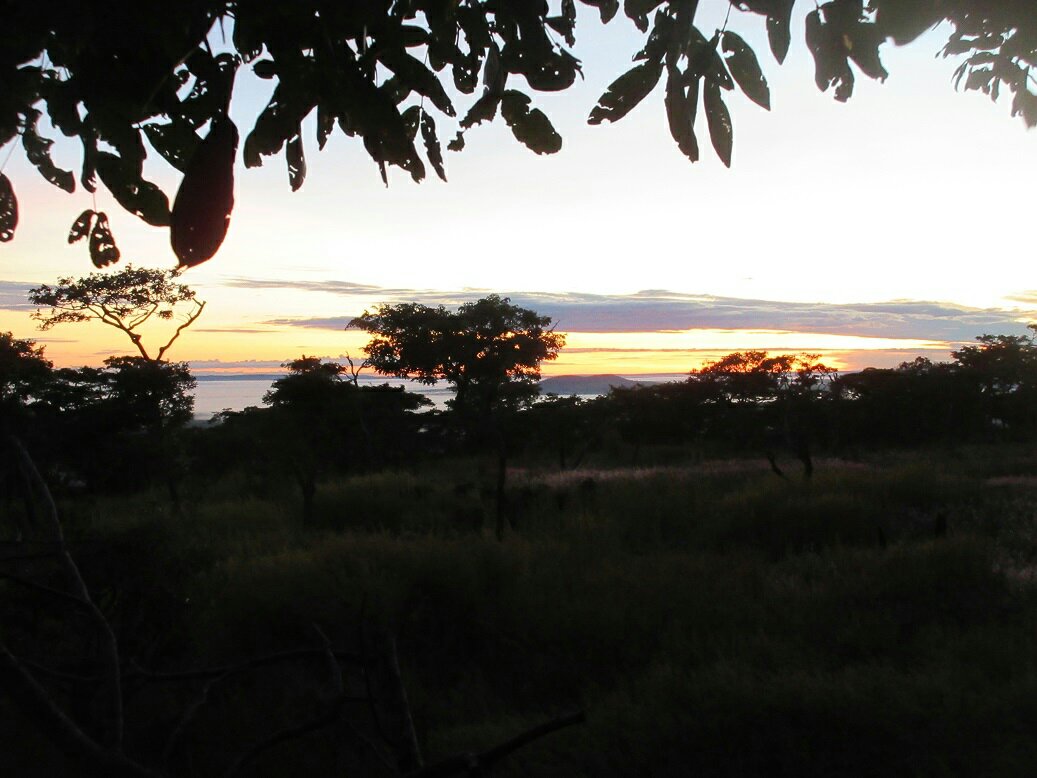
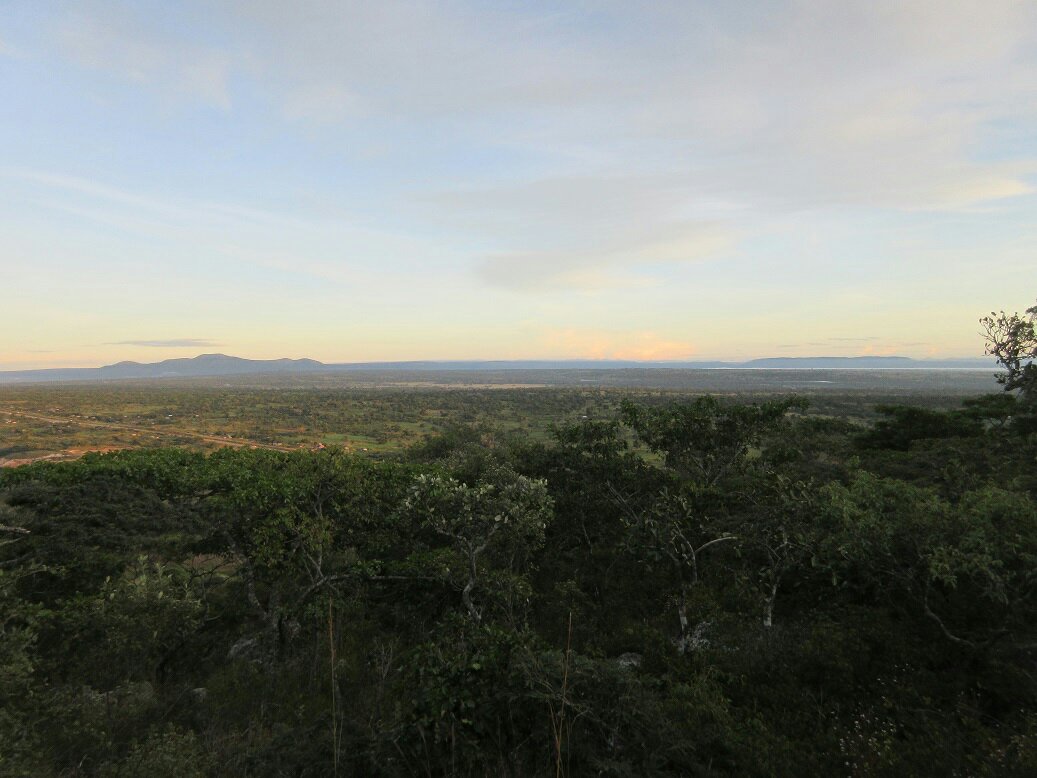
The next day was Sunday and I had to depart. Mitch has a cool-looking hill near his site and I wanted to make sure I climbed it. I didn’t get a chance before, so on Sunday I woke up at 0430 and beat through grass in the dark to be on top of the hill for sunrise. It was worth it, despite getting soaked from dew. Mitch is on the east side of the escarpment that Mbala sits on, so from the top of the hill you could overlook this massive lowland covered with mist and fog at the beginning of the day. It’s a really great hill to get the lay of the land and see how everything is connected. Sightseeing accomplished, I went back to Mitch’s site and packed up to head out. I could have been in less of a hurry; it took me two hours to get a hitch, but I got home fine. I hope I managed to impart some wisdom and knowledge or whatever on the trainees, and I think they’ll have a great time at individual site visit.

Beekeeping Workshop

IMG_7080

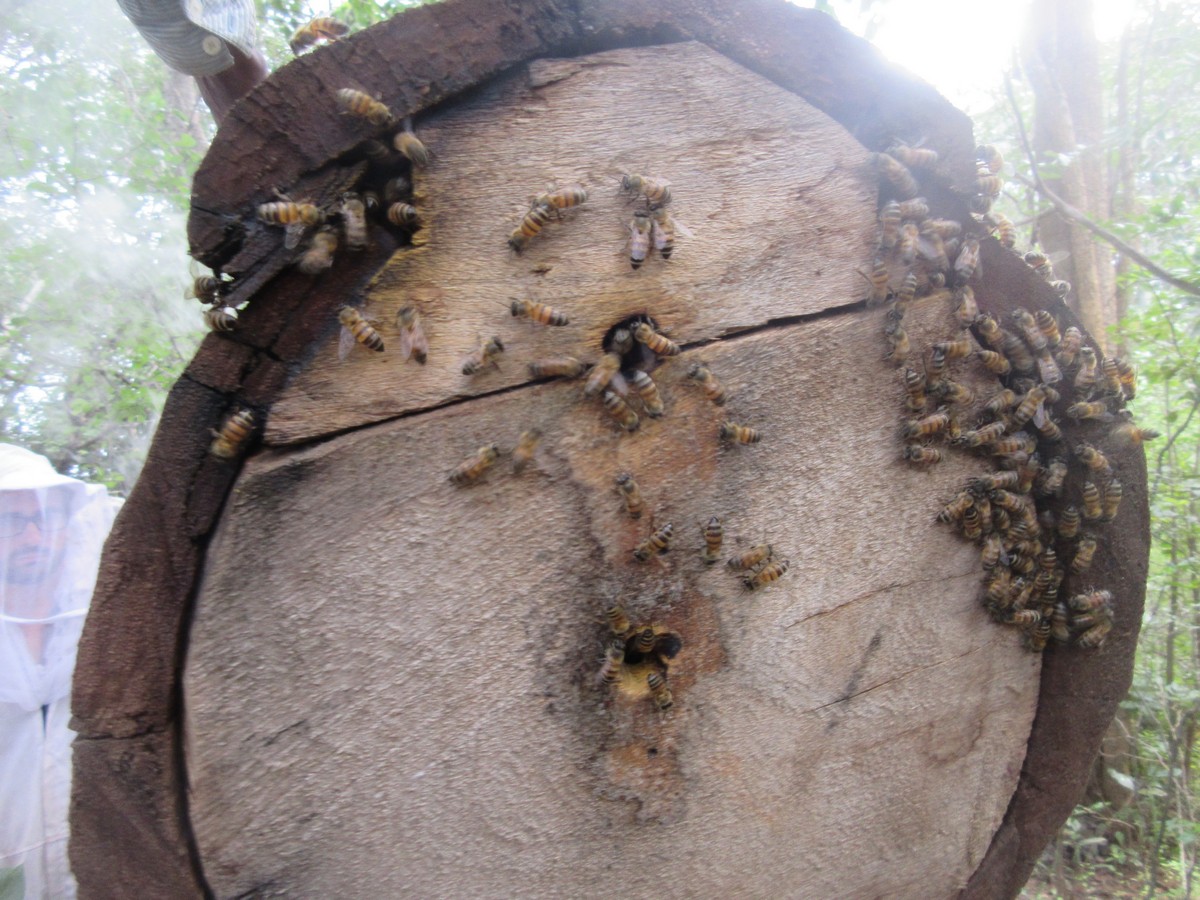
Bees at the end of a log hive.

Reading this week:

  • Dark Star Safari by Paul Theroux
  • Down and Out in Paris and London by George Orwell

We just wrapped up the Feed the Future Beekeeping workshop here in Kasama. It was pretty interesting. Beekeeping is a pretty popular Income Generating Activity (IGA) here in Zambia because it is relatively simple and honey sells for a good price. Plus, people like just having honey as a sweetener and stuff.

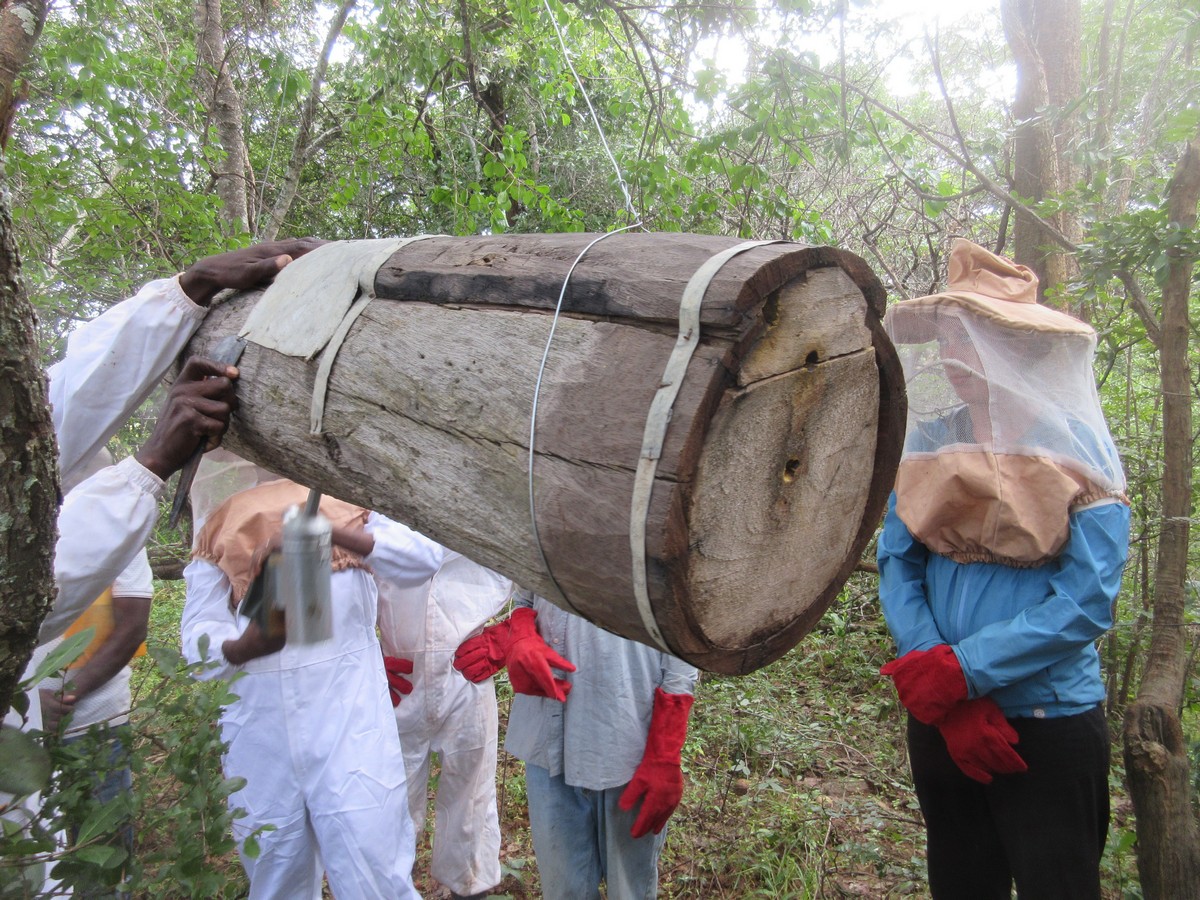
There is, as usual, a big focus on using local materials at a village level to do beekeeping. The first step in beekeeping is to make a hive, and then bait it. No one uses the kinds of hives you see in America, because those are pretty expensive and no one here sells them anyways. Instead, you’ll pretty commonly see a beehive made out of a log, or bark:

IMG_7072

The above picture is of a beehive made out of a hollowed-out log. Bees will build a hive in pretty much any dark, enclosed space that is made out of natural materials. Besides wood, some people just dig a hole in a termite mound, or build a hive out of reeds and cover it in mud. As long as the container is waterproof, the bees will move in. You do, of course, leave a small hole at one end to let the bees enter and exit the hive. You only want a hole at one end because that encourages the bees to put all their brood combs on one end (where the queen lays eggs), and all of the honey comb at the other.

IMG_7084

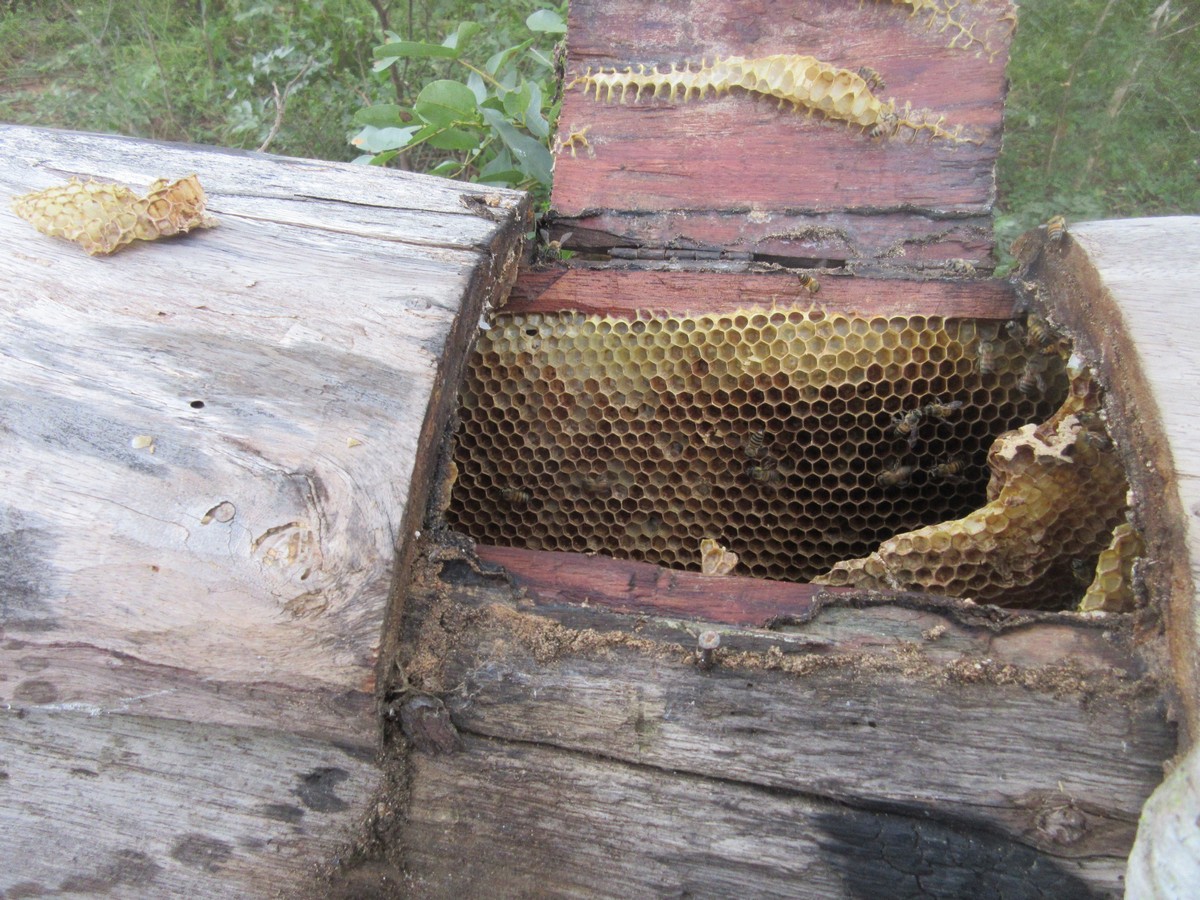
This log hive has a trapdoor on the top, about halfway down the hive. This lets the farmer open it up and extract the honeycomb, which hopefully will be in the back half of the hive. The goal is to extract the honeycomb while not interfering with the rest of the hive, so the bees don’t all die or move out.

To encourage the bees to move into the hive you built for them, you do have to bait it. To bait a hive, you just melt some beeswax and put it in the hive and near the entrance to the hive. Swarming bees will smell the beeswax, discover your hive, decide it is a nice place, and move in.

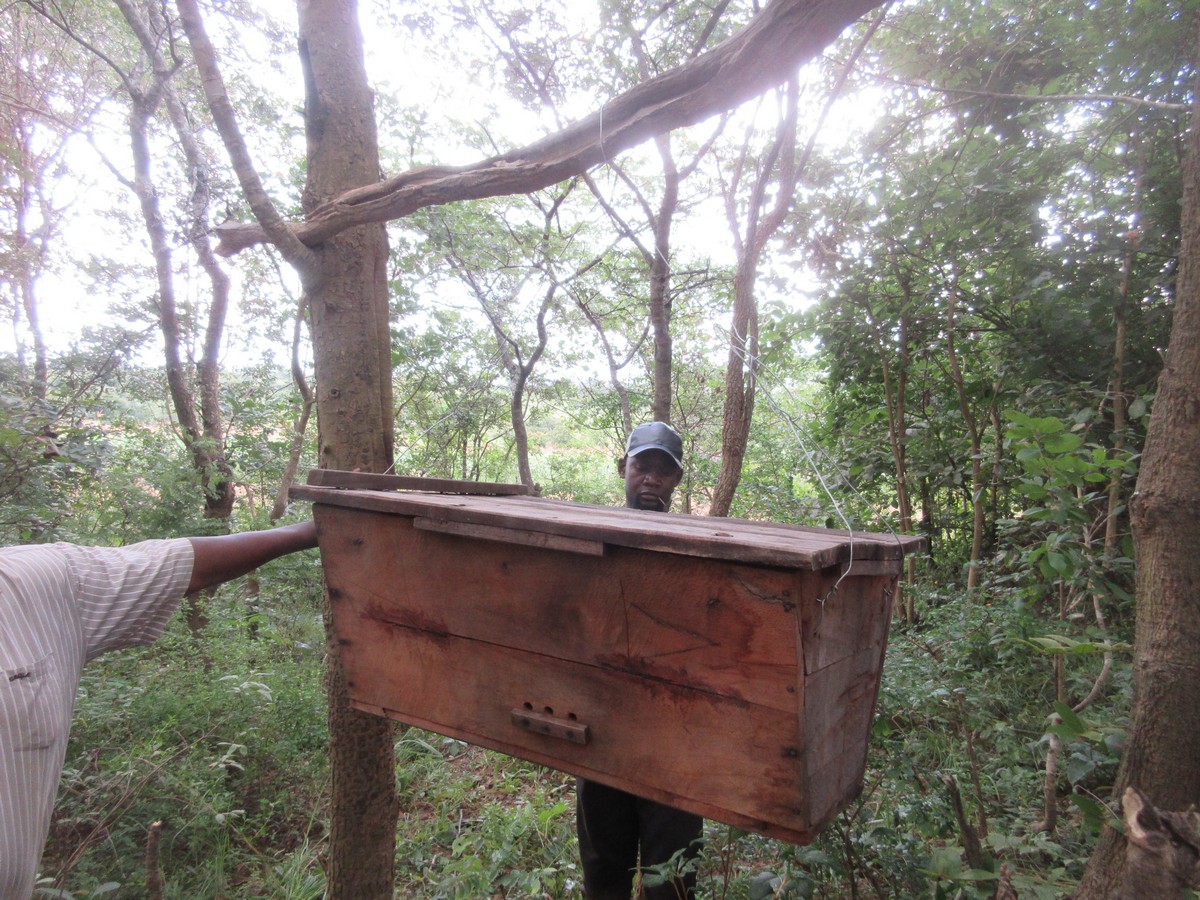
The other type of hive you typically see is a top-bar beehive. There are a few variations on a top-bar beehive. There are top-bar beehives with straight sides, sides at a 60 degree angle, and made out of various materials including wood or brick.

IMG_7085

A hanging top-bar beehive, with entrance holes and landing pad on the front.

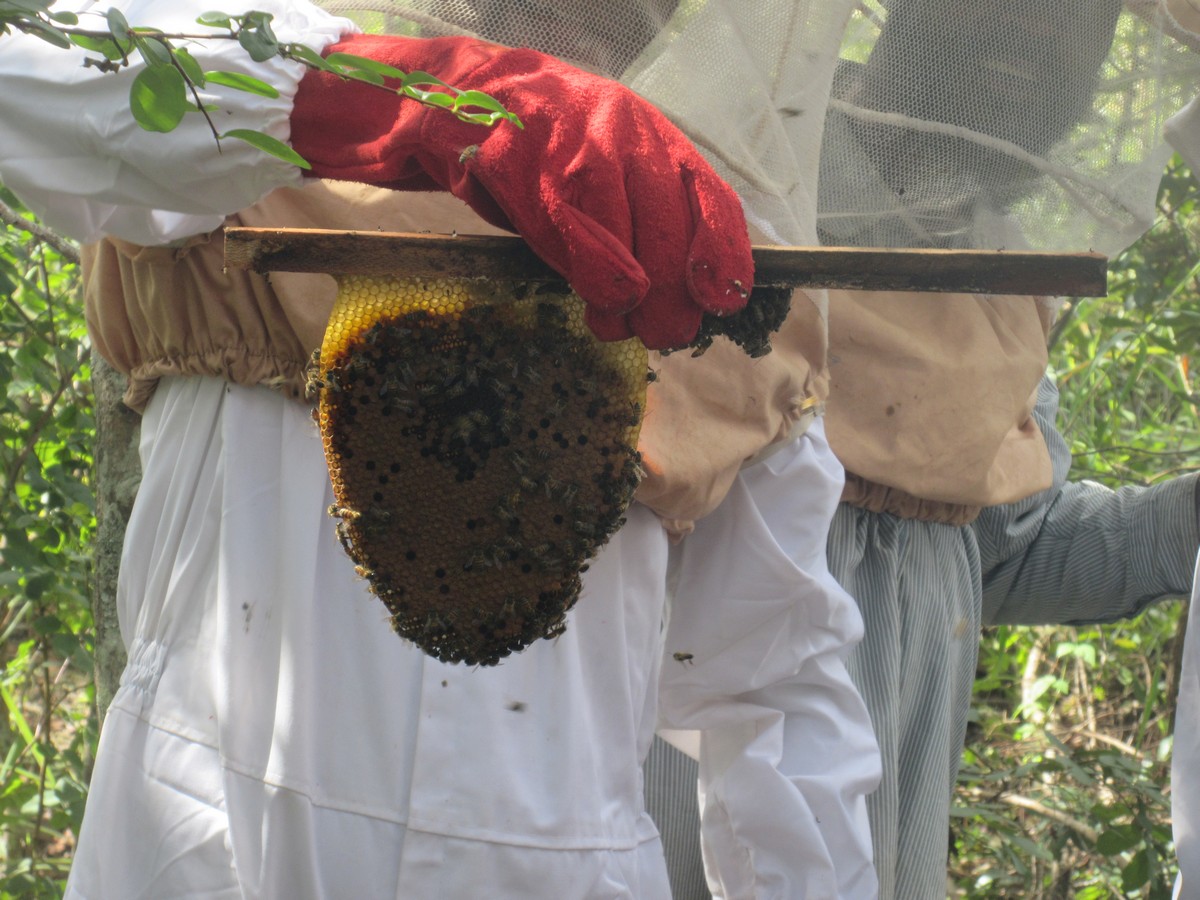
The trick with a top-bar beehive is the top-bars. These are wooden slats exactly 33mm wide that form the top of the hive (in the above picture, there is an additional roof, so you can’t see the top-bars). This width lets the bees build comb while maintaining adequate bee-space between the combs. Bee-space is the distance between the combs that let the bees walk on the combs. By baiting the middle of the top bar, you can convince the bees to build combs along them. The biggest advantage here is that it lets you extract comb sorta like you do with the hives back home:

IMG_7088

A top bar with attached comb (and bees). The hive here is relatively small so just a small amount of comb is attached to the top bar.

Using a top-bar beehive makes beekeeping more sustainable because the beekeeper isn’t forced to cause as much damage to the hive when they’re harvesting honey. However, getting a top-bar beehive built, especially with top bars cut to relatively exacting specifications, can be kinda hard. This can make them out of reach for beginner beekeepers, which is why we also learn about more traditional hives. My strategy for this workshop was to just bring the town carpenter. I figure he can learn how to build the boxes and then we’ll have a source of them in the village.

Besides building hives, we also learned about honey processing. We learned a few different methods of this as well, and the focus was again on things you can find in the village.

IMG_7090

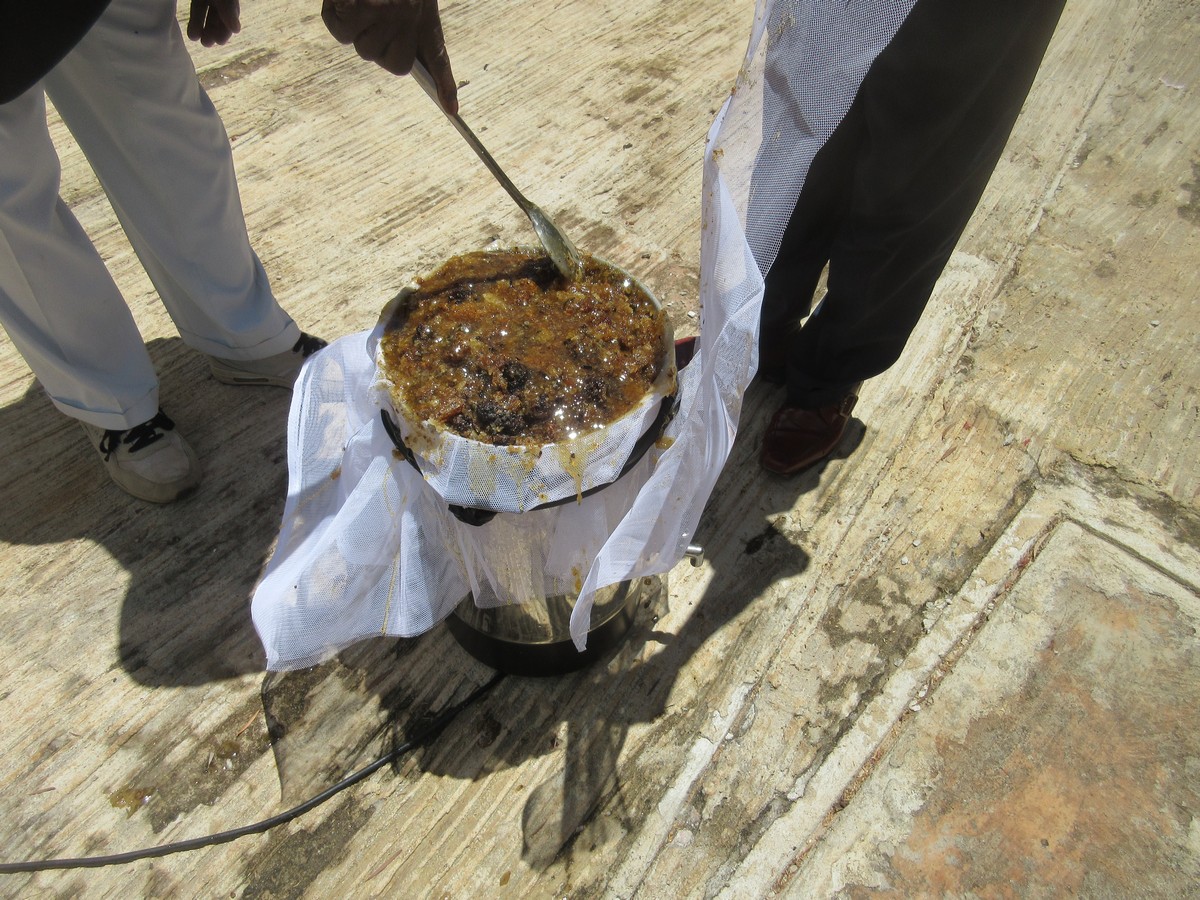
The above picture is us sieving out honey. Because we were at a lodge and low on buckets, we used a now very sticky hot water heater as our bucket. But the strategy here is to put a bunch of mashed up comb and honey into some sieve cloth at the top of the bucket, and then leave it in the sun. The sun warms it up to where the wax becomes soft, and the honey just filters out into the bottom of the bucket.

IMG_7119

Me, stirring some wax.

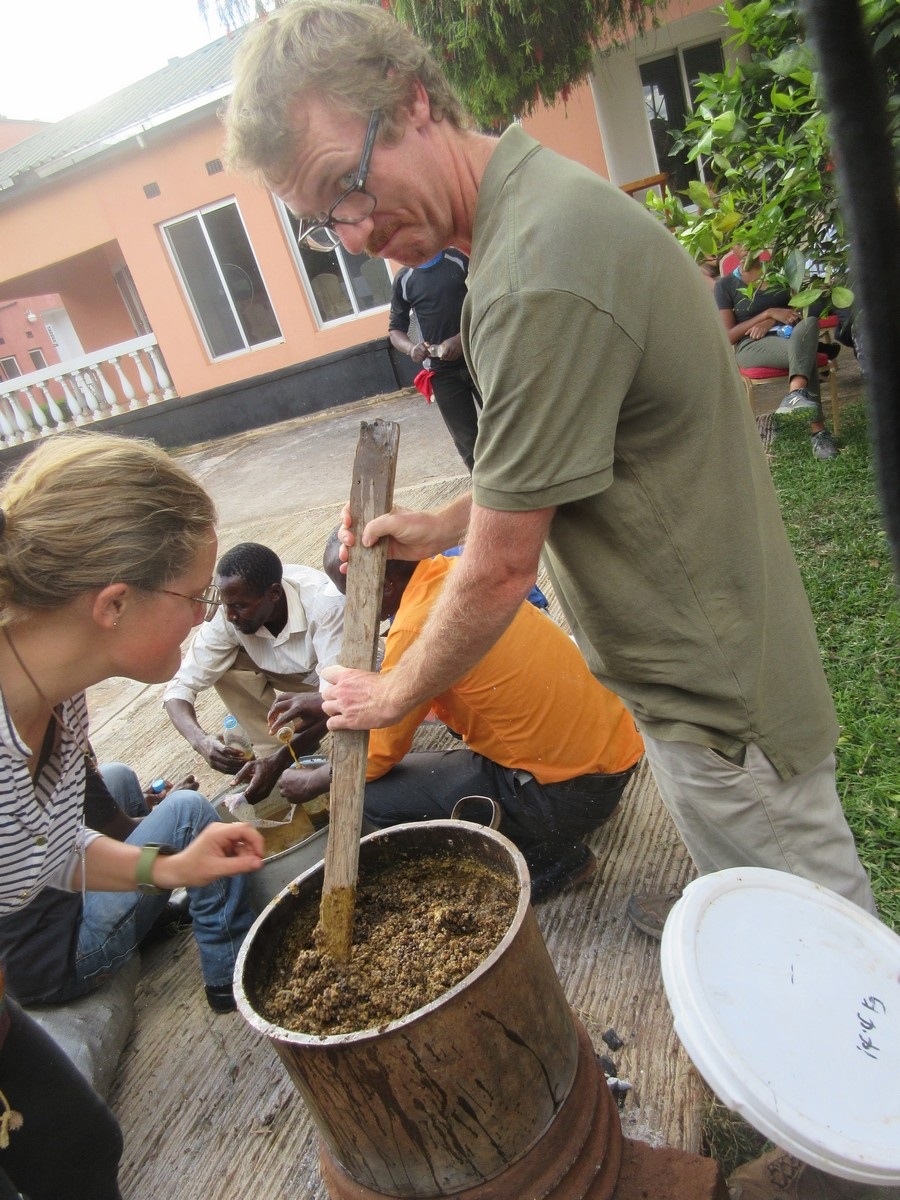
Besides honey, we learned to process wax. After you extract the honey, you just take all the leftover gunk and then heat it up along with some water. Once it is all melted, you scoop the melted mixture into another rough cloth (we used a mealie-meal sack) and then filter it through the cloth, squeezing to get all the wax out. This leaves behind dead bug bits, sticks, and propolis, while the water/wax mixture falls into a bucket below. As it cools, the wax separates out from the water, giving you a cooled chunk of wax that you can use to bait more hives or make candles, etc.

Overall it was a good workshop and I am excited to hopefully raise some bees in the village. It’s a great activity to earn some additional income for farmers, especially since it doesn’t require a whole lot of labor. Plus, getting fresh honey right from the source is about the height of luxury around here. I’ll let you know how it goes.

Oh! This was probably the coolest thing we learned about: they make elephant fences out of beehives.

Witchcraft and Flying

20180313_103622.jpg

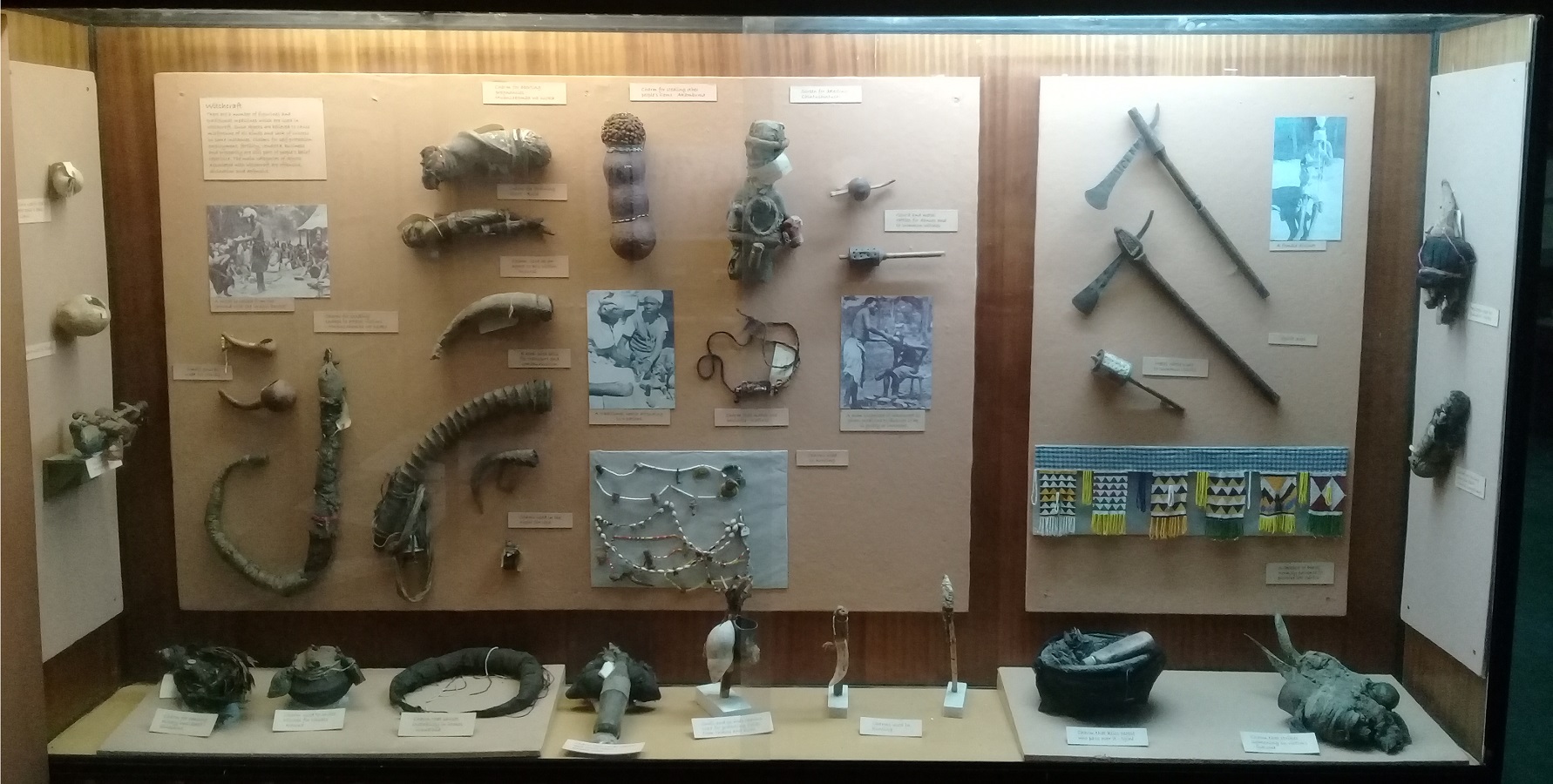
The Witchcraft exhibit at the Moto Moto Museum in Mbala.

Reading this week:

  • Return to Laughter by Elenore Smith Bowen

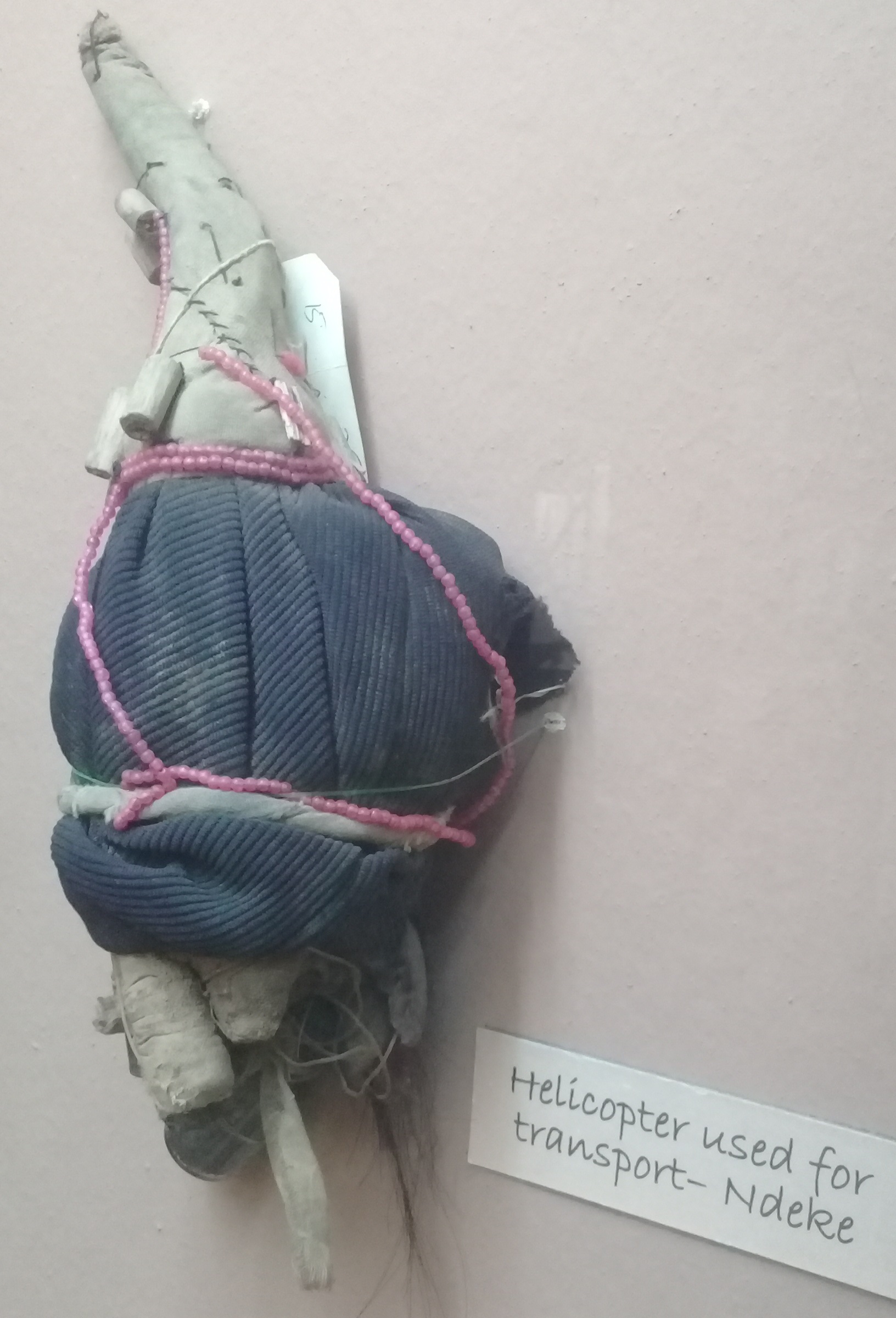
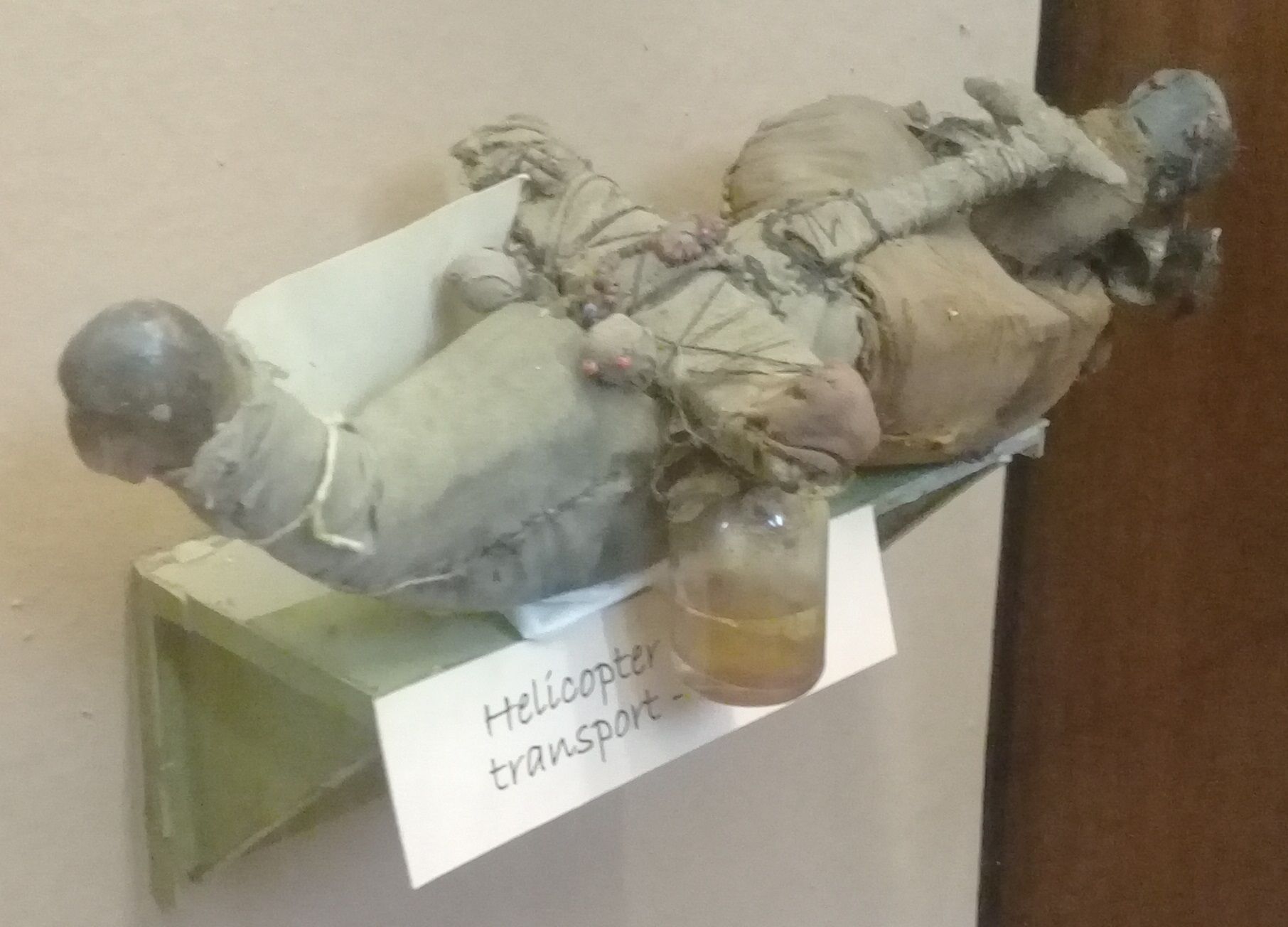
One of the topics I run across pretty frequently is the subject of witches and flying. As far as I can tell the belief that witches can use “airplanes” to fly is pretty widespread across sub-Saharan Africa, at least among those that belief in witchcraft. Two different specimens of aircraft (labelled “helicopters”) are on display at the Moto Moto Museum, and in books like Congo Journey the topic of flying on a magic airplane is casually mentioned like you’re supposed to realize what they’re talking about. If you google something along the lines of witchcraft, flying, and Africa, the most common hits are articles about a Swaziland law prohibiting witches from flying above 150 meters (for the record, the law prohibits any unlicensed aircraft from flying above 150 meters, and the witches thing comes from a government spokesman mentioning that even witches would be subject to the law; the way I read it, he was either joking or making a point about the all-encompassing nature of the law).

Nevertheless, the ability of witches to fly is accepted as fact among the circles that believe in witchcraft (here’s a story about Zambia’s Minister of Higher Education asking the nation’s scientists to study witchcraft). Stories of witches flying and crashlanding regularly make the news:

Among all the different stories of flying witches, there are some common components. One, the witch has to be naked to fly. Witches are usually “caught” when there is a naked person wandering around where they shouldn’t be wandering around. Two, flying requires an airplane of some sort. These come in a variety of forms. There is the puku horn mentioned in the article above. The Moto Moto Museum, like I said, has two examples. The first a little bit more abstract:

20180313_103427

“Ndeke” is just the local word for “airplane.”

The other example looks a little bit more like an airplane, and features a small figurine actually piloting the thing:

20180313_103258

A video on YouTube purports to show a witch’s aircraft that crash-landed when it ran out of fuel. It most strongly resembles a small model airplane:

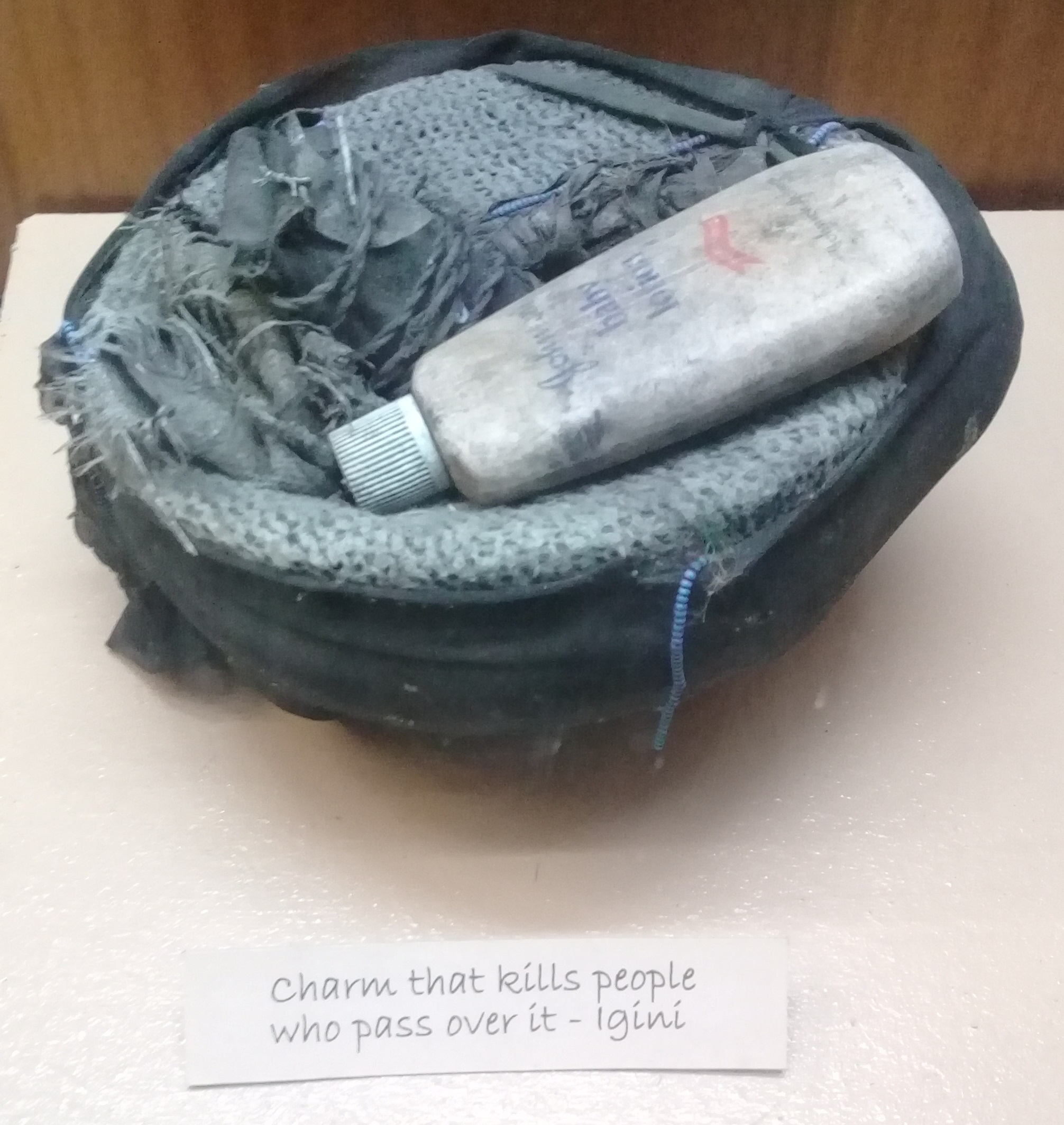
I’m not entirely sure it is directly related flying witches, but the Moto Moto Museum also features a “charm to kill people who pass over it.” I figured it might be a witchcraft defense:

20180313_103412

Although the thought that there are witches flying around sub-Saharan Africa on small model airplanes while naked is kinda funny, it hides a larger problem with the belief in witchcraft in general in Africa. Witchcraft is far too often an excuse to abuse the disabled or elderly. Like I said, “witches” are often identified when a dazed, naked person is found wandering around where they shouldn’t be. Instead of potentially getting mental help or other care, they’re accused of being witches and ostracized by the community. The Human Rights Commission has expressed concern about the influence of beliefs in witchcraft and “witch-hunters,” and although Zambia has made many aspects of witchcraft illegal, including claiming to be a witch, accusing others of witchcraft, or claiming to be a witch-hunter, the beliefs and their effects remain widespread. The recent film “I Am Not a Witch” tries to tackle some of the issues surrounding witchcraft (it does have its critics, however).

The subject of witchcraft is a pretty hard one to fully tackle, given the differences you find in each region, and how easy it is to get accused of witchcraft yourself if you start asking too many questions. Flying witches is a pretty common subject to run across though, so I hope this info is enlightening.