Paperwork enthusiast seeking new frontiers of paperwork. Former submariner, former Peace Corps Volunteer. Opinions, thoughts, and comments reflect no actual persons, living or in the Navy.
The cultivation center of a model mushroom farmer. Reading this week:
Star.Ships: A Prehistory of the Spirits by Gordon White
Death in the Clouds by Agatha Christie
This week I attended the mushroom workshop. This took place in Lusaka and is another thing I’m pretty excited about implementing in the village. Although the workshop itself was a Peace Corps event, the training was conducted by China Aid, the PRC’s international development agency. This marks a new stage in my historically tumultuous relationship with the PRC. But anyways. They have a big research center on the outskirts of Lusaka, and from the looks of it focus on agricultural techniques (and the growing of Chinese vegetables, from the looks of their garden; I spent some time thinking about stereotypical things to focus on, development-wise *cough* JICA and rice *cough,* but that’s probably a topic best left to scholars or whatever). One of their big specialties is mushroom growing, and that’s of course why we were there. Mushrooms can be a pretty excellent crop for a farmer. They grow on agricultural waste products, like corn cobs or elephant grass, are easy to grow, are rich in vitamins and stuff, and sell pretty well. China Aid will sell, at a low price, bags of cultivated mushroom mycelium. All the farmer does with these is cut a few holes and wait for mushrooms to grow. This isn’t really very sustainable, because the farmer would have to keep buying these cultivated mycelium all the way from Lusaka (and transport them to their farm, like I did; they’re basically bags of mold and it was a little weird to carry around). So the workshop focused on mushroom spawning. My biggest criticism of the workshop is that it wasn’t very village-based. They did talk about the technologies you would use in the village, but it was mostly along the lines of “…and if you don’t happen to have an autoclave, you can use an old oil drum!” However, with work, it does seem very possible in the village to grow mushrooms all the way from scratch, eliminating the need to buy cultivated products from China. I am excited to give it a whirl. Maybe once I am back in the States I can use my skills to sell like artisan mushrooms and the local farmer’s market. Hand crafted! On a final note, the other awesome part of the China Aid research complex is a sweet basketball court. We had driven by the place many times but never seen anyone play, until now. Between sessions there was a pickup game or two, which for any passerbys must have been kinda confusing. But there we go.
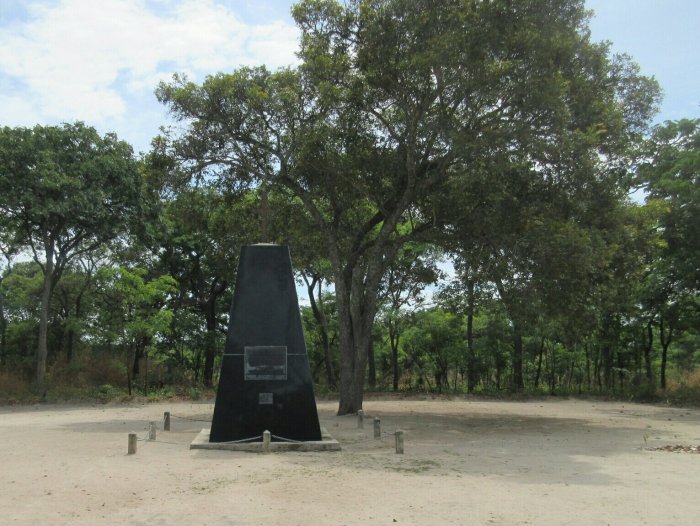
The exact spot David Livingstone died. There used to be a hut here.
Reading this week:
Congo Journey by Redmond O’Hanlon
The Lost City of Z by David Grann
Vacationland by John Hodgman
So I went to the David Livingstone Memorial, which was a really amazing adventure as far as I am concerned and it was awesome. I woke up in Samfya after my hunt for the elusive Kongamato and boarded a bus heading south. This didn’t go so smooth at first because it was raining some and I managed to drop my bus ticket in a puddle, and then subsequently drop my wallet and glasses trying to get the bus ticket, and then the parking lot bus wrangler begged me for money (“cheap change” was his phrase) and there weren’t any yamayos selling fritters so I was hungry but eventually off we went.
With some help from the guy sitting in front of me, I managed to communicate that I wanted to get dropped off in Chalilo, which is a small village (really a stretch of shops) along the rode heading south from Samfya, and about 10km north of Kasanka National Park. I was worried because we were driving through some rain, but the bus was playing Drunken Master on their television which was a nice change from the gospel songs you usually get. I got dropped off in Chalilo eventually, bought a fritter and some bananas, and set off.
I was a little unsure of where to go at first because I was expecting a sign for the memorial, but there was none. There was a sign, however, for Chief Chitambo’s Palace, so I followed that. Eventually down that road there were signs for the monument so I knew I was going in the right direction. It is 26km from the roadside to the monument, and I was hoping that I would be able to hitch a ride with a car going my way. I quickly saw two vans going the opposite direction, which gave me hope there would be vehicular traffic, but alas, there was none. After walking for an hour, however, I got the bright idea to ask someone to rent their bike. So I walked into the next hut and spoke with the man there and we agreed on a price and off I went.
I should have been far more picky about the bike I chose. The one I got was really terrible. I didn’t realize how terrible until about 10-15km further on, when it broke. Since I was close (so I thought) to the memorial, I kept going on foot, after asking a dude to watch the bike for me. I think I walked for maybe two more hours. I got to the monument a little before 1400 after having set off at 0930 from the roadside.
The monument area is really well kept, and has a sign and a fence so it is easy to find. I wandered in and started looking around. The area has two markers. The first marks the actual spot Livingstone died. The second spot, where the large pyramid is erected, marks the spot where his heart and entrails were buried. To be able to carry his body back home, Livingstone’s porters removed his heart and guts and buried them under a tree before drying and salting his body. The original tree was cut down during a later expedition and is now in London, but the tree next to the monument is an offshoot of that original tree.
Also, in what I am sure is a comment on the current geopolitical landscape, on the site of the monument there’s a borehole sponsored by China Geo. I kinda wonder what Livingstone would think of that.
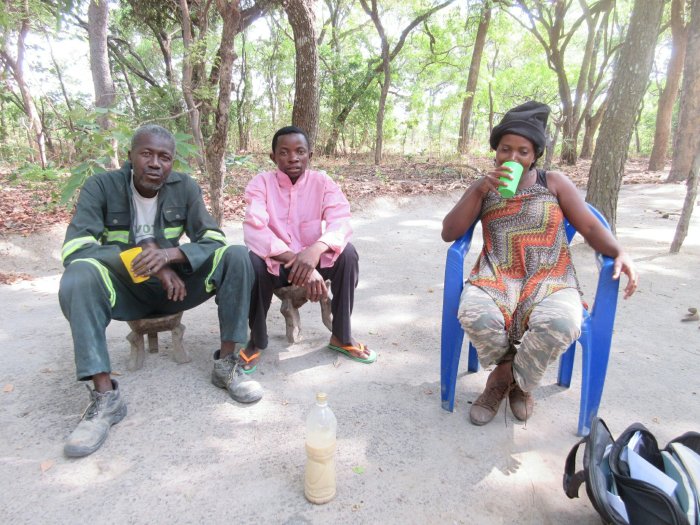
About the time I got to the pyramid the caretaker, Barbara, showed up. Barbara is a Zambian woman and is extremely friendly and has worked there since 2012 along with her assistant, Chabi. She collected my entry fee (8 ZMW) and had me sign the guestbook (I was the first guest in a week) and then we chit-chatted. I told her how I had gotten there (she hadn’t spotted a bike or car and was curious) and she was pretty astonished. She insisted on feeding me nshima and some local beer and that was pretty amazing. We talked about how she liked the job and about fish farming and it was all pretty awesome.
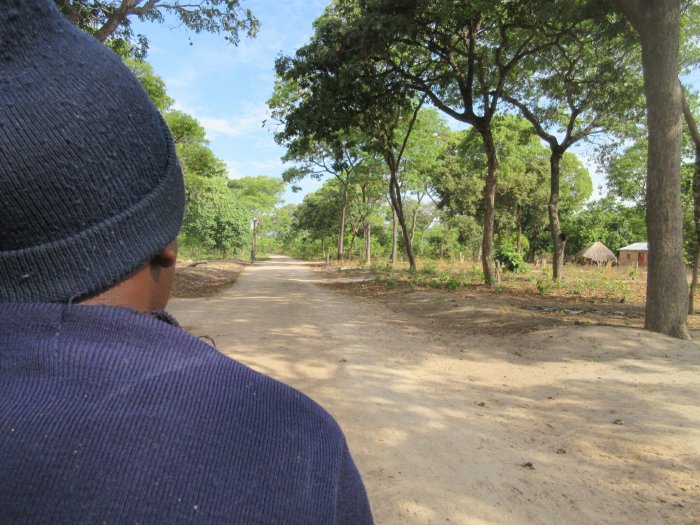
Since it was getting late in the day (1500), she tried to arrange a ride for me. The only car she knew of was broken, so instead she called over a dude with a bike. This was my only chance to get out of there, so I took it. I wound up riding most of the way back out sitting on this dude’s luggage rack as he pedaled us out of there. I think other people have had worse times travelling in Zambia, but there are also many people who have been more comfortable.
The view from the luggage rack.
Eventually I made it back to the roadside, bought some water, and then started walking south out of town. Barbara had warned me to not try to sleep by the roadside in Chalilo, and it was getting dark and a massive lightening storm was up ahead. Thankfully, probably right in time, I managed to flag down a truck and hop onboard.
That was a great end to an amazing adventure. It might sound a little unexciting, but I was so happy to have been able to traverse the African bush, talking to strangers to get where I needed to go and see a historic site not many get to see. As I was rocketing along in the truck towards a massive storm lighting up the sky, it is pretty amazing to reflect both how much has changed since Livingstone was there, and then again how little. On the journey there you still see women cutting leaves to make dinner and men thatching huts and the landscape has to look about the way it did to Livingstone. And to have been aided by the hospitality of the descendants of the same people that helped Livingstone in his final days is poignant, I think.
Following the rice workshop, I went down to Samfya to hunt the elusive Kongamato. Although its usual haunt is up in Northwest province, there have been sightings near Lake Bangwelu and the surrounding wetlands so I decided to come to Samfya to take a look.
Checking into the lodge, I surveyed the scene. There were sandy beaches and a huge expanse of water but no signs of prehistoric pterodactyls. Ever intrepid, I reasoned that maybe the mighty cryptid wasn’t a fan of surf and sun, and instead I found a patch of jungle and marched right into that. It was quite jungle-y, and full of bugs and trees and some lily pads, but unfortunately there were no flying reptiles. Stumbling out of the mighty jungle, however, and conveniently close to a rather nice beach bar, I did run across this canoe. Given the large gash in the side, I reasoned it could possibly have been the victim of a Kongamato attack, given their penchant for flipping over canoes.
Since the beach bar was so close to the potential evidence of the Kongamato attack, I reasoned it was probably a good place to sit and wait for the mighty aviator to return. Patiently I waited long enough to drink three beers, my responsible drinking limit. No Kongamato was sighted. I did, however, spot some birds. Given the elusive nature of the Kongamato, despite my utmost efforts in finding it, we must conclude that it is very endangered and has possibly suffered habitat loss. I therefore recommend the Kongamato be immediately added to the endangered species list. Thank you.
This week I went over to Luapula Province to participate in a rice workshop. This workshop was put on in conjuction with JICA, the Japanese International Cooperation Agency. Among other things, JICA promotes rice growing, so is delighted to come out and demonstrate rice techniques to Peace Corps volunteers and their Zambian counterparts. Travelling to Luapula was fun and it was my first time in the province. It looks a lot like Northern Province, but it is still cool to be able to look out across a river and see the DRC. The DRC looked a lot like Zambia. My part of the workshop was to teach techniques for integrating rice and fish. Unfortunately, my knowledg was all theoretical, but people seemed to enjoy it and I had done a good chunk of reading on the subject. Real-life examples are scarce because it is easier and usually more efficient to grow rice and fish seperately, but there are some advantages to growing them together. I am personally motivated to go try a test plot to see if I can make it work. The JICA rice demonstration was pretty interesting and it seems fairly simple to grow rice. JICA recommends the use of NERICA rice, which stands for “New Rice for Africa.” It is a hybrid of Asian varieties, which produce large yields, and African varieties, which are acclimated to the climate and diseases of Africa. Together, they produce a hardy rice suited for growing in areas where the land isn’t constantly inundated. In addition to rice, we learned about a variety of other topics, such as making charcoal from corn husks. Since maize is such a large crop, there are a large number of husks come harvest season. These are usually wasted, but can be converted into charcoal relatively. This requires a longer process than using charcoal made from wood (the corn husks are less dense than wood, and therefore need to be pounded and shaped into briquets to match the characteristics of wood charcoal), but are more environmentally friendly because they don’t require chopping down trees. Overall it was a really great workshop and I learned a lot along with the counterparts and other volunteers. I’m excited to get back up to Luapula to see more of the sights and learn more about rice.
Kavala Bay, looking toward the mainland with the SS Good News steaming in the background, from Hore’s book.
Reading this week;
Tropic of Capricorn by Henry Miller
Continuing our story from last week, we pick up with Swann’s description of building the SS Good News:
Major Dates:
Launched: December 1884
First Voyage: 5 May 1885
First Steam: 7 September 1885
Whilst I was lying on my back beneath the steamer, hammering up keel rivets, an inquisitive native edged up to me and asked: “Is this vessel not all iron?” “Yes,” I answered, “Why do you ask?” Picking up a washer, he beckoned me to the river, and dropping it in, said: “Do you see that?” “No! I don’t,” I replied. “How can I?—it’s out of sight.” “Yes, it is; but what I meant was, do you see, it sinks” “Of course it sank; it’s iron.” “Well!” he exclaimed, pointing to the steamer. “If such a little piece of iron sinks, how do you expect that big lump will swim?” He thought he had cornered me. “Look here, old chap,” I said, “just you wait until this moon dies, then come here and help us put her in the river, and you will see her swim; at present you must take my words and believe them, for they are true.” He looked at me and whispered, “You are right. She will not sink, because if the whole tribe tried they could never carry her into the water; she’s too heavy! No, she will neither sink nor swim!”
With this parting shot he left me. He was soon to learn that necessary lesson which must be taught all primitive people—that a white man speaks the truth. Grease for the launching ways had to be procured from hippopotami, some of which will yield several bucketful’s of fat when in good condition. Many a day’s exciting sport was enjoyed hunting these valuable creatures, especially when the pursuit was followed in canoes, for you can never be certain their great carcasses won’t come up suddenly under the canoe, disturbing its equilibrium; and there was always the danger of crocodiles joining in the hunt… We were extremely glad to hammer up the last rivet and launch the Good News into Tanganyika.
I did not forget the old sceptic, who stood amongst the crowd of natives watching the iron vessel swimming. Making my way up to him and touching him on the shoulder, I asked, “What about the lump of iron swimming now?” He was not to be cornered quite so easily as I imagined. Looking straight into my eyes, and scornfully pointing to the vessel, he answered: “You put medicine [magic] into it!” The reply was extremely disappointing. I had hoped to impress on him, and others, the fact that our word could be relied upon. We wanted to win their confidence. “Look here, old man,” I said. “Never you mind whether there is medicine in it or not. I told you it would float. Does it?” “Yes, it does,” he answered; “and I’ll believe anything you tell me after this!”
Edward Hore:
All the [Africa Lakes] Company’s stations, from Karonga’s to Quilimane, were choked with our Good News material and with necessaries for the F.C.S.M. stations. The missionaries on those stations were kept very short of supplies already, in consequence of our Good News business requiring all the Company’s transport capacity.
[In December 1884] the hull of the Good News was so far completed as to be ready for the launch. At the shipbuilding yard in the Lofu River the combined technical skill and organising tact and determination of our brethren there had surmounted every difficulty, and made a brilliant success of the launch of the Good News on the 3rd March. On the 13th Mr. Swann arrived in the Morning Star [to the Missionary Station] to give us the details of that interesting and most important achievement, the floating of our vessel, the subsequent completion of which has enabled us literally to “take possession” in the Lord’s name of this beautiful inland sea, Tanganyika.
Now that the hull of the vessel was afloat, enabling her to be completed anywhere… this meant, of course, we might just as well be in the place selected as the permanent locality of our department, where we could at once complete the Good News, serve the stations, and secure proper shelter and comfort for ourselves. The place long before selected for that purpose was Kavala Island, where I had deposited my wife and child, and where, when the hull of our vessel was afloat, it was decided to remove her for completion and the establishment of a permanent station…
Kavala is one of a group of islands off Uguha, and about six miles from Mtowa in that country. It is about three miles long, and from half a mile to a mile across, with a fine deep bay on the landward side forming a harbour. In form it is a long irregular hill rising out of the lake, with deep water all round, and nearly a mile distant from the adjacent coast of Uguha. Its position in the length of the lake may be clearly seen on the map. Its form, and the nature of the soil, make it healthy, and it is well ventilated by the lake winds; being, in fact, at sea, whilst, being an island, it is free from the effects of warlike disturbances or attacks of wild beasts. Half an hour or an hour in a native canoe takes one to the mainland, where, in a richer but less healthy soil, the natives of the island have their larger plantations.
On the 18th April 1885, I sailed for the Lofu River, where I had the great joy of seeing our vessel afloat. Mr. Roxburgh, although really very ill, was in wonderful spirits at the successful issue of his work. Mr. Swann had packed all our property and prepared the Good News for her first trip. The vessel herself being the mere shell, without deck, fittings, or rigging, was now entirely under jury rig, consisting of two rough poles for masts secured by temporary framework: the big lateen sail forward, and another one aft. I also had sixteen long sweeps to work on poles temporarily fixed along the vessel’s sides, and stability was secured by a good load of the heavy stores and shipbuilding materials. Although temporary platforms were rigged over the vessel, she was still practically an open boat. I had confidence, however, in my knowledge of the lake, the nearly certain occurrence of strong fair winds to make a passage, and the paddles to put her into port, and was therefore, notwithstanding some anxiety, able with intense gratification to feel my beautiful vessel for the first time rise and fall upon the bosom of the lake, and “turning about whithersoever I listed.”
Bidding farewell to Messrs. Harris and Brooks, we sailed out of the Lofu River on the 5th May. Mr. Roxburgh was with me in the Good News, and Mr. Swann sailed the Morning Star as tender and escort. First giving us a tow out into deep water, he sailed away to make a call for mails at Karema, and then to proceed to Kavala, and there cruise about to give assistance or tow us into harbour. A strong fair breeze, however, gave us a quick and safe passage. At 5.30 P.M. on the 7th we were close to Kavala, and after a vigorous pull up with the paddles, anchored in our own harbour at 6. The arrival of the great white hull of the Good News was a great astonishment to the Kavala people; she was indeed “a big ship ” to them, and every one crowded to the shore to gaze… Mr. Roxburgh, however, was quite worn out with his rough life and continuous hard work; he had in no way spared himself, and now, the excitement over, he was suffering.
During the voyage he still kept up, but as soon as we reached Kavala he seemed much worse with decided dysentery. Rest, better accommodation and food, and all the assistance we could render, served only to prolong his life for a few more days, and on the 18th he died. We had at least the satisfaction of feeling that we had been able to make his last days a little more comfortable; all of us who knew him bore testimony to his faithful work, and felt assured that he had so lived that for him to die was gain. To his patient toil and superior skill the solid workmanship of the sides and frame of our good vessel is due, besides other good work about our boats and houses, wherever his skill could be applied. Over his grave we erected a fitting memorial made of one of the steel plates similar to those of which the Good News is built.
Swann:
A few more days sufficed to rig up jury-masts on the Good News, as we had to sail her up north to home depot. Hore had now returned, and he took command, whilst I piloted the Morning Star. It was a grand race up the lake with the monsoon. In the darkness we parted company, and dropping mails at the French station of Karema, we bowled along, shaping a course for home. We were making a record passage, but on rounding the cape we saw the Good News had outrun us, having arrived some hours previously. James Roxburgh, our engineer, who before he came to Africa had turned the mighty shaft in Glasgow for the ocean liner Orient had completed his last task. Bravely he battled against fever month after month. The excitement of his work kept him going, but shortly after the Good News dropped her anchor in port for the first time, he “crossed the bar,” dysentery completing the mischief of malaria.
Hore:
Two more voyages, having received the last lot of material from the African Lakes Company on 26th September, were made in bringing away our property; the Calabash, on the 17th November, being the last boat to arrive. Some of her crew had the smallpox, and we were obliged to put her in quarantine, in a little bay a mile off, until the men had recovered. The Calabash, no longer seaworthy, was beached; the last of her timbers coming apart as the Good News was ready for service.
We continued till July of 1886. The entire lining and internal fittings, the deck, upper works, and rigging, the boiler and machinery of the Good News still remained to be put together and attached to the hull; the masts were yet growing somewhere on the forest slopes of the lake shore. Some fittings (lost on the Nyassa route) were only now coming to us from Zanzibar. The last stores by Nyassa had only just arrived. Month after month Mr. Swann worked in the shed at the ironwork, while I worked on board, superintending, meantime, the erection of workshops, boat-sheds, and houses, and the making of roads; dropping our tools at intervals for a voyage to Ujiji with and for the mails, generally taking it in turns. Then the dry dock was built; trees were cut on the opposite shore for the masts and laid down to season, and gradually the Good News grew in beautiful detail.
On 7th June, the dry dock being completed, the vessel was placed in it and a good job made of cleaning her bottom and repainting; thus thoroughly testing also the efficiency of the dock. On the 28th the mainmast was put in, then the mizzen-mast, and by the end of the month the rigging was set up and the vessel practically complete as a sailing vessel. The cabin fittings and other things for comfort and appearance still left some months of work, thus short-handed and busy with many affairs. Mr. Swann had gone to Niumkolo in the Morning Star to fetch Mr. Carson, who came out by the Nyassa route. They arrived at Kavala on 4th July, and right glad we were to see and welcome our new colleague in such good condition as he arrived. A house was ready for him, and this was the case for each missionary who arrived at Kavala. Five days after, the riveting of the boiler commenced, Messrs. Carson and Swann working together for nearly two months at this, the heaviest of the work, made heavier and more difficult in that the dome part, originally riveted at home, had been separated at Nyassa for easy transport.
The Good News was afloat, decked, masted, and rigged; an ample engineer’s workshop erected, with shears and other arrangements all standing ready for manipulating the boiler, the plates and rivets of which were ready, but for which the technical skill of an engineer was so desirable in order to make a superior finish, when Mr. Carson arrived to us, who so ably and well completed this part of our vessel’s equipment. Mr. Carson had finished refitting the engine, and now we had the very interesting if somewhat difficult work of putting the boiler into the vessel. Shears were made with trees we had cut on the mainland, and rigged up by help of the chain cable and anchor ; and by rendering the boiler buoyant with tight air space and other parts plugged with pithwood, it was floated to its place under the shears and safely hoisted on board. On the 7th September steam was got up, and with all our party on board we made a short trial-trip out into the straits. It was a time of great and thankful rejoicing with us as after many days we found ourselves steaming out on the waters of Tanganyika at last in our beautiful vessel, now practically complete in all essentials. Every plate and plank of her has a history, and every rivet a story of months and years of labour only known to a few. The complete and beautiful vessel herself has before her, we trust, a long and eventful life of useful service to the glory of God and the extension of His kingdom.With the completion of the work of my own special department—the building, equipment, and establishment of the Good News as our perfected means on the lake of support, transport, mails, and of intercommunication—I began to feel the effects in my own person of these years of work and anxiety.
On the 12th September we sailed in the Good News on her first voyage to Kigoma (a spacious harbour on the east side of Ujiji), where we met our caravan from the coast and loaded up. Visitors, both Arab and native, flocked to Kigoma to inspect this new wonder, and on this voyage I felt that the crowning event of ten years’ work was achieved; nor would I grudge one of those days of hardship or difficulty that might in any way have been instrumental to this end.
Another voyage to the south, taking back Mrs. Jones and the remainder of goods, and a voyage to Ujiji, completed in this year (1887) nineteen voyages made by our boats: altogether over 4500 miles, of which 1100 were done under steam.
The Good News in Lake Tanganyika, from Hore’s book.
Reading this Week:
The Log from the Sea of Cortez by John Steinbeck and E.F. Ricketts
Slaughterhouse-Five by Kurt Vonnegut
Important Dates:
Keel Laid – 21st October 1883
As I alluded to in last week’s post, my latest obsession is researching the SS Good News. To that end, I downloaded two books from the Internet Archive: Tanganyika: Eleven Years in Central Africa by Edward C. Hore (1892), and Fighting the Slave Hunters in Central Africa by Alfred J. Swann (1910). These two men describe the construction and launch of the SS Good News. Edward Hore was the master mariner in charge, having been employed by the London Missionary Society in Africa for some time. Swann was hired to help with the Good News along with the Morning Star, a sail lifeboat they transported overland from Zanzibar to Ujiji (meanwhile the parts of the Good News were shipped via the Shire river and Lake Nyasa [Malawi] with the African Lakes Company). Hore provides the best description of the Good News:
The design for our missionary vessel was on a liberal scale. The ample funds provided, and the liberal donation by Mr. G. S. Goodwin of Liverpool of his services as marine architect in the design and building, secured to us a first-class vessel of best material and form, and specially suited to the service. The Habari Ngevia (Good News), built of the best mild steel, with deck and all woodwork of Indian teak, is an auxiliary screw steam yacht 54 feet long by 12 feet beam, strongly built and fitted as for sea service. Two masts, with rigging and sails ketch rigged, make her a complete sailing vessel, and the internal fittings secure safety and comfort. The whole material, fittings, machinery, and outfit, in small pieces suitable for overland transport, and marked and numbered for re-erection,—a mass of material weighing altogether about fourteen tons,—was delivered to the care of the African Lakes Company for dispatch to the south end of Tanganyika by their Quilimane and Nyassa route.
Hore and Swann had to locate a suitable place to build the steam ship. In their original choice of location, raids from neighboring tribes and Arab slave traders had caused all the local Lungu people to flee. This sent Hore and Swann to the Lofu (or Lofubu) river in search of a place suitable for construction a boat, including people they could hire to assist. From Hore’s account:
In sixteen days we reached the south end. In vain I looked for the many well-to-do villages of my old acquaintances, the prosperous and lively Walungu; of some of them all vestige was gone, the sites overgrown with jungle, of others nothing remained but the blackened ruins. Of the people we saw nothing, until, coming upon a solitary fisherman in his little canoe, we heard something of the sad story. The neighbourhood we thus examined was that of Niamkolo and the surrounding district. Niamkolo was the place we intended to settle at to build the Good News, and was in every way a desirable locality. But the disturbed condition of the country made it unsuitable at that time for our purpose; for, for some months at least, we must concentrate on the building of the Good News at some place where food and native labour were to be had. Sailing on round the south end, we found the same signs of destruction everywhere, until we made the Lofu River, where I judged, if anywhere, the remnant of the tribe would be collected.
Here we found—some of them on a little floating island just within the river mouth, some on a sandy spit which had formerly been its bar—a number of refugees, mostly women and children, several of whom were evidently dying of starvation. That night we gave a supper of hot porridge to the poor women and children, by cooking what meal we had in the boat. The news spread fast that the wazungit (white men) had come—news of old friends come back—news of work for food supplies—of protection from their enemies—hope of brighter things all round… All this, as giving opportunity for befriending the natives, had great weight with us; and although somewhat away from direct communication with Nyassa, the neighbourhood otherwise suited us, and was soon decided upon. Moving up river to explore on 27th July, we came to at a bend of the river, and by next day we settled on this spot as the site of our “temporary marine depot.” The natives, advised us to go farther up river; but I knew its treacherous nature.
On the 28th the boats were moored alongside the river bank, and we began clearing the ground; native labourers were engaged, and a tariff arranged of prices for poles and other building materials. The next fortnight was indeed a busy time. Two houses of three compartments each quickly grew into shape: at either end a dormitory—in the centre, in one case, a store in the other a general living- room. At the river bank a jetty was run out as a landing-place, and a little village of grass huts at one side accommodated our men.
As soon as the houses were built, the ship-building shed was commenced near the river bank, abreast of the spot chosen for the launch. It was a large building, 60 feet by 20 feet, high enough to give space for work both above and below the vessel as it came into shape; the blocks were laid down the centre, and one side extended as a workshop.
Swann’s account of choosing a location:
At the south end we sailed up the Lofu River, having taken sixteen days from Eavala Island. The river, which drains the great valley, was nearly blocked up by sud. Numerous hippopotami gave us to understand we were interlopers by raising their enormous heads uncomfortably near the boat. Ugly crocodiles, in large numbers, slid off the sandbanks as we drew near. Storks, cranes, ibis, cormorants, and egrets adorned every creek, whilst thousands of wild geese and duck of many kinds stood closely packed together on the mud-flats; never having been shot at, they took no notice of us until we passed within a few yards of where they stood. It was fortunate for us they lived here in such numbers, as eventually they became our food-supply during famine. We were now amongst the Walungu, who owned nearly the whole of the southern end of the lake. Formerly a numerous tribe, at this time they were a scattered people, exposed to the Arab raids on one hand and to the fierce Awemba on the other… Small groups of villages were built on the floating sud, which was banked in mid-stream, forming small islands, thus affording protection from enemies on the mainland. They were naturally suspicious; only one old fisherman ventured to paddle out to sell fish, but of course he was in reality spying on us. He said that the whole country was at war, and that we were not safe from attack anywhere up the river. A mile or two ahead a broad valley opened out, on which could be seen several villages surrounded by stockades. Near this we formed a permanent camp, and prepared ground on which to lay the keel of the S.S. Good News, which was expected to arrive at any time.
We had not long to wait; for whilst sitting at breakfast, a stranger suddenly appeared in our camp, and without form or ceremony introduced himself as “Lieut. Pulley, of her Majesty’s Navy.” He had accompanied Mr. Fred Moir from Lake Nyasa with the first consignment of our vessel. In a few days we were surrounded with steel frames, keel-plates, tools, etc. The cheerful society of these strangers acted as a tonic. They told us of their exciting journey across country, of war on the Shire River, where, unfortunately, brass bearings had been cut out of our cylinders, brass steam-cocks chopped off to make ornaments, angle-irons bent double, and rod-iron stolen to make spears. Chapter after chapter of such misfortunes to our vessel followed in succession, until one wondered which end of the ship to attempt to construct first.
The most amusing of all was to find that the great iron rudder could not be traced. It must be borne in mind into what a multitude of pieces a steam vessel has to be divided in order to permit of its being carried by porters; also that the whole had to pass up the Zambezi and Shire Rivers in barges, then through the Shire Highlands and up Lake Nyasa, and finally across the Plateau to Tanganyika, a journey of nearly 1000 miles. War against the white man was raging at the time, and these thousands of loads of metal presented great temptation to the half-savage tribes through whose country they were transported by the African Lakes Corporation. The departure of Hore for Zanzibar left but three of us to build the vessel. It was slow work. Those thousands of rivets haunted my dreams. Fever was sapping our constitutions, and the task at times seemed too great. Day by day plate was added to plate; but, as the structure neared completion, it was obvious to me that one more of my comrades would not long survive the physical strain of such hard work and fever combined.
Hore again:
News had also come to us (not long indeed before his arrival on the scene) of a very valuable accession to our staff in the shape of an engineer, Mr. Roxburgh, whose services were to be specially devoted to the erection of the Good News. When we arrived at the south end of the lake in July, and were looking for the Walungu, we were also looking for the African Lakes Company; we almost expected, from what we had heard, to find a station erected—at least we expected to see, or hear of, an extensive expedition bringing us the material of the Good News. No sign or news of any such were to be obtained, and at once on settling on our site parties of messengers were despatched Nyassa-wards to inquire after them, but still no news.
On 29th September our settlement was all astir with the cry, “A white man is coming,” and in a few minutes he appeared, in the shape of Lieutenant Pulley, R.N., who had accompanied Mr. F. Moir from Nyassa, and on reaching the lake near Niumkorlo had followed the coast round and thus found us here. Mr. Roxburgh was with them, and the loads they were conveying were coming along by relays. This was on Saturday night… Mr. Roxburgh soon made himself at home with us; he had had a long and trying journey of many shifts and changes, and had already done a lot of work in looking after the goods and vastly accelerating their arrival to us. On 21st October the first two pieces of keel were laid—the Good News was commenced.
And for the next sixteen months, except for the intervals, alas, in which we were waiting for materials, the wild banks of the Lofu River resounded to the noise of the anvil and riveting, as the skeleton, and then the shell, of the vessel slowly rose into shape. Three weeks sufficed for all that could be done with the materials now on hand, and Mr. Roxburgh sailed with me on a voyage to Uguha and Ujiji. And so the whole year was spent in voyages and spells of shipbuilding as materials arrived. And all through the stay in the Lofu River we were gradually laying the foundation of eventual Christian teaching amongst the people by making their acquaintance and making known our errand, while our native sailors and workmen and two or three Uguha boys were serving a sort of apprenticeship to civilisation and industrial work which has resulted in many able helpers on our stations and boats ever since.
The shell of the vessel was now rapidly coming into shape. Everybody took part in the riveting; but Mr. Roxburgh, whose whole time was devoted to it, had the hardest and most continued manual labour, resulting in the best of work upon our vessel, but, sadly to him, in the eventual failure of his health and strength.
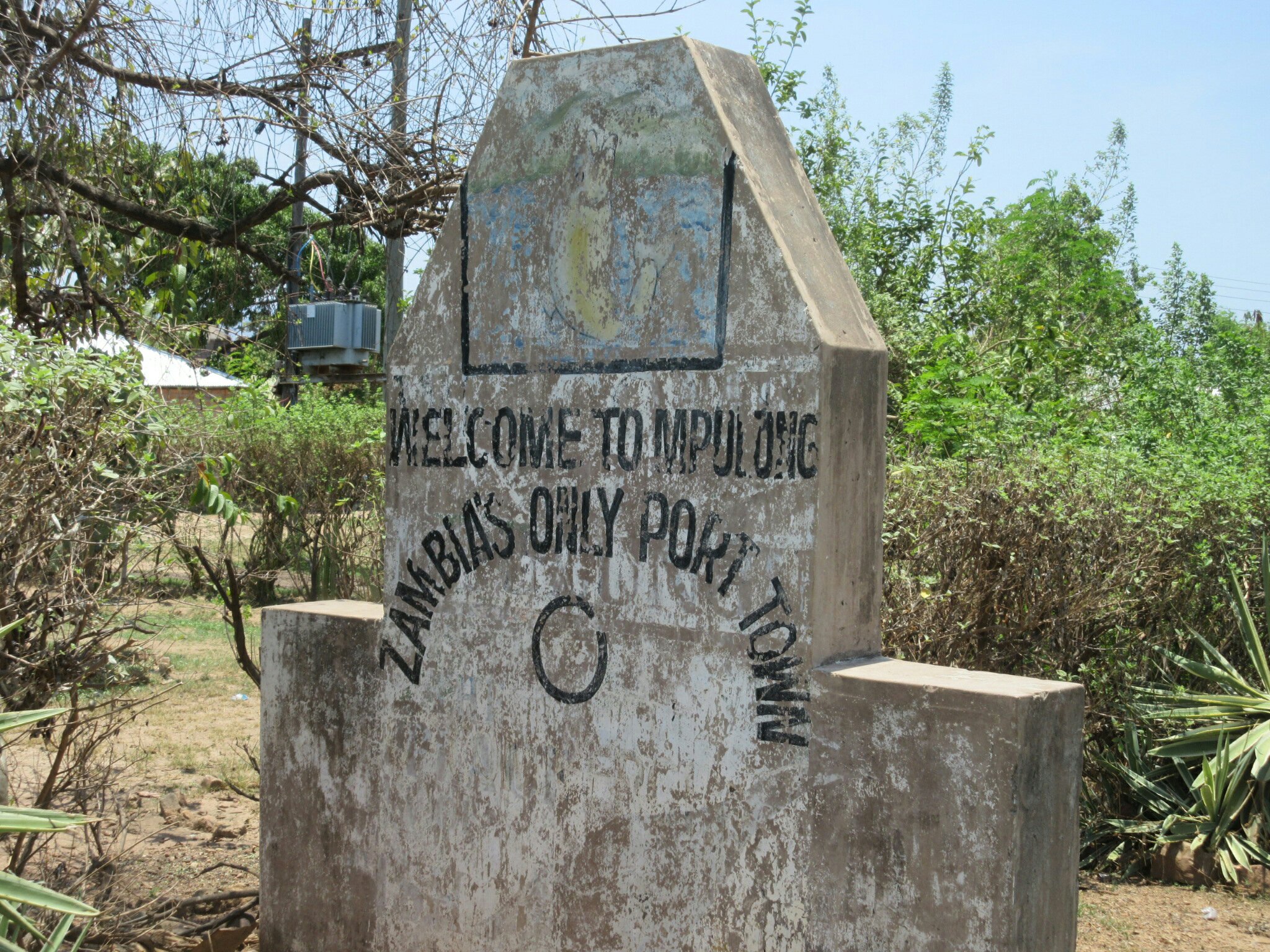
This weekend I took a trip to Mpulungu. Mostly I just wanted to see it, because it is relatively near me, and also I was looking for the SS Good News. I decided to bike to Mpulungu and that wasn’t too bad. From Mbala it is downhill and I managed to get to Mpulungu in a little over two hours.
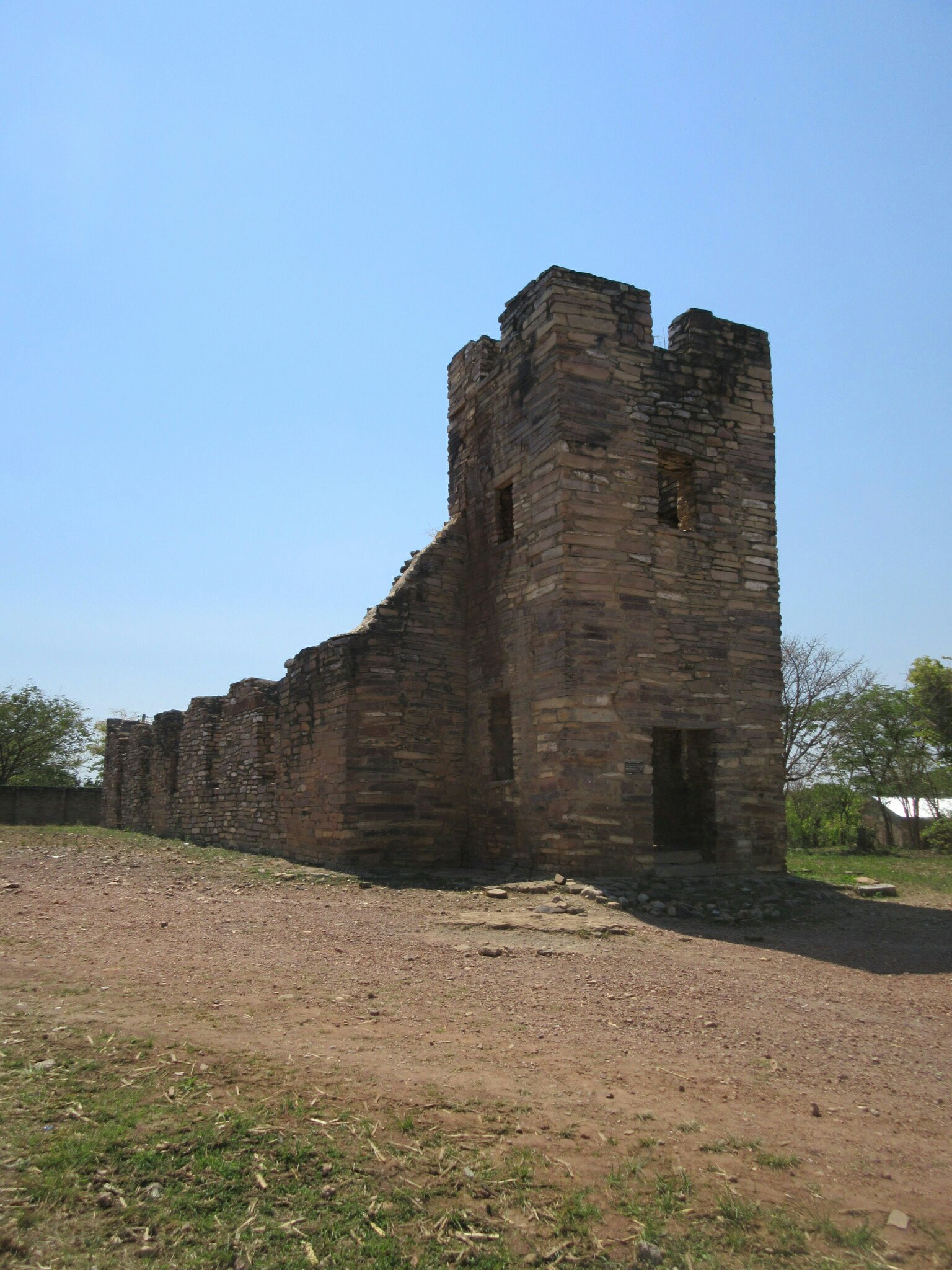
Upon arriving the first thing I did was bike around to get the lay of the land. I very quickly ran into Niamkolo Church. I guess it is pretty obvious what it is, being the only real tourist attraction of Mpulungu and looking pretty church-like, but there wasn’t even a sign. A small, nearby pillar has a plaque describing it, and that’s it. Niamkolo Church, by the way, was built by the London Missionary Society in 1895-6, and it was used until 1908 when the amount of sleeping sickness in the area prompted the society to move further inland. The church’s current claim to fame is that it is the oldest still standing stone structure in Zambia. It is cool to see and it doesn’t really take long to take it all in; there are some walls and a belltower but no roof. Some thorny branches in the doorways made it clear people would rather you didn’t go in there.
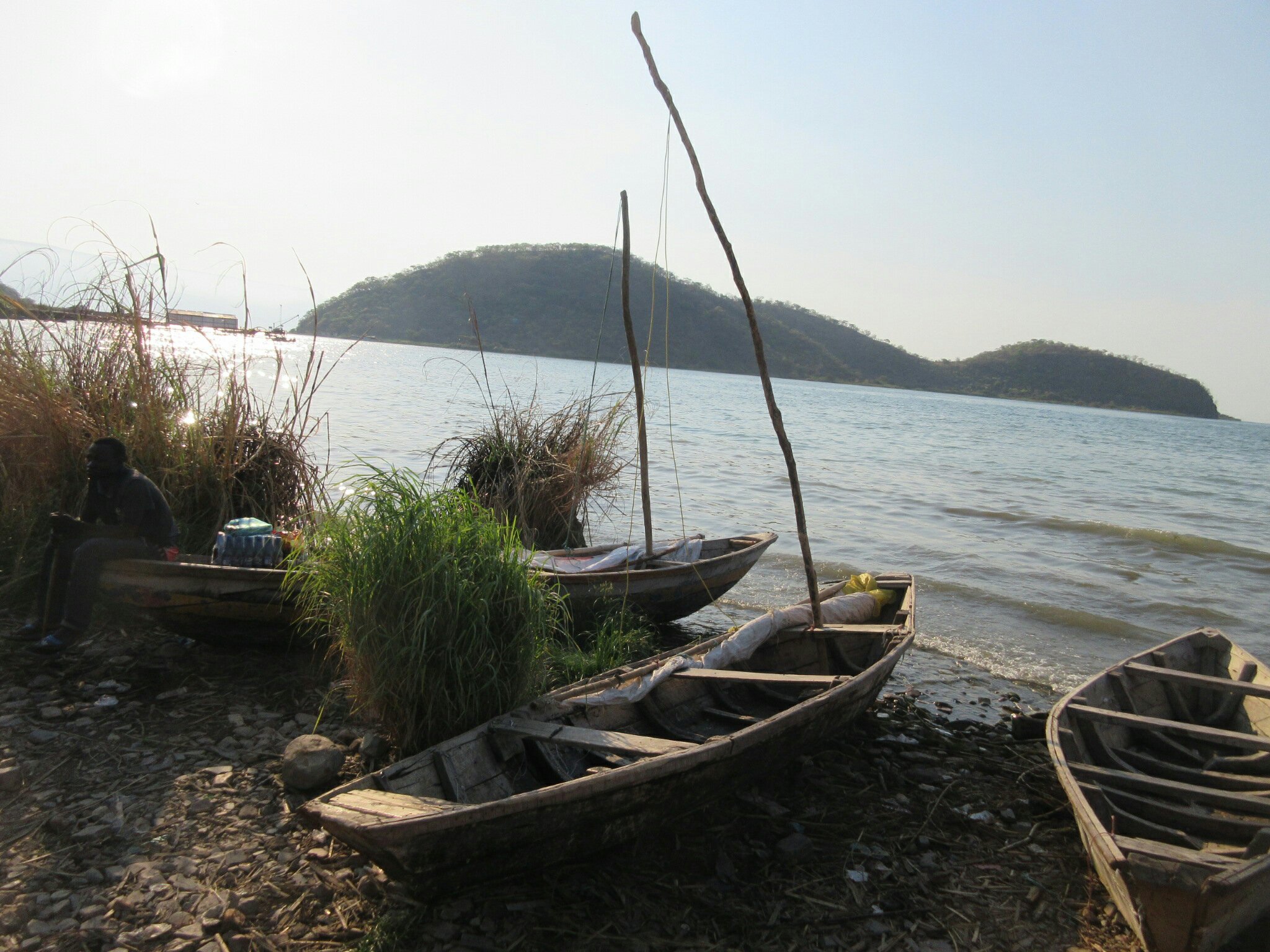
After checking the church out I went to take a look at the harbor. Mostly, I like looking at harbors, but also my dream here was to find a sailboat and then I would make friends with the owners. Alas, no sailboat, which wasn’t really a surprise. I was kinda surprised by the overall dearth of boats, but maybe the fishing fleet was out on the lake. The lake is pretty beautiful. It quickly disappears over the horizon, which isn’t surprising, because it is the longest lake in the world. Second oldest and second deepest, too. In the evening, I did eventually stumble across two small fishing boats that had a mast and sails made of mealie meal sacks. I’m not sure what kind of performance they get out of those sails.
After getting some nshima for lunch, I head out for the real object of my quest: to find the SS Good News. This boat was the first steamship launched on Lake Tanganyika and was built by the London Missionary Society, of Niamkolo Church fame like I just mentioned. This boat is apparently up on blocks now as a monument, but the location is hard to pin down for lack of good information. A few different websites said it was at a particular GPS coordinate in the vicinity of Mpulugu, so I spent some time trying to get to the spot and find it. I was very nearly overcome with heat exhaustion and dehydration getting there and back, but I got to the spot. There was no boat. Wherever the SS Good News is, it is not at 8°46’0.01″S 31°7’59.98E. I did see some pretty views though.
After the SS Good News adventure, I found a lodge and settled in for the night. Having been here, I have to agree with what most of the tourist books say, that Mpulungu is only really worth visiting if you’re passing through. It’s nice, but unless you really want to see Niamkolo Church, there’s not much else to do.
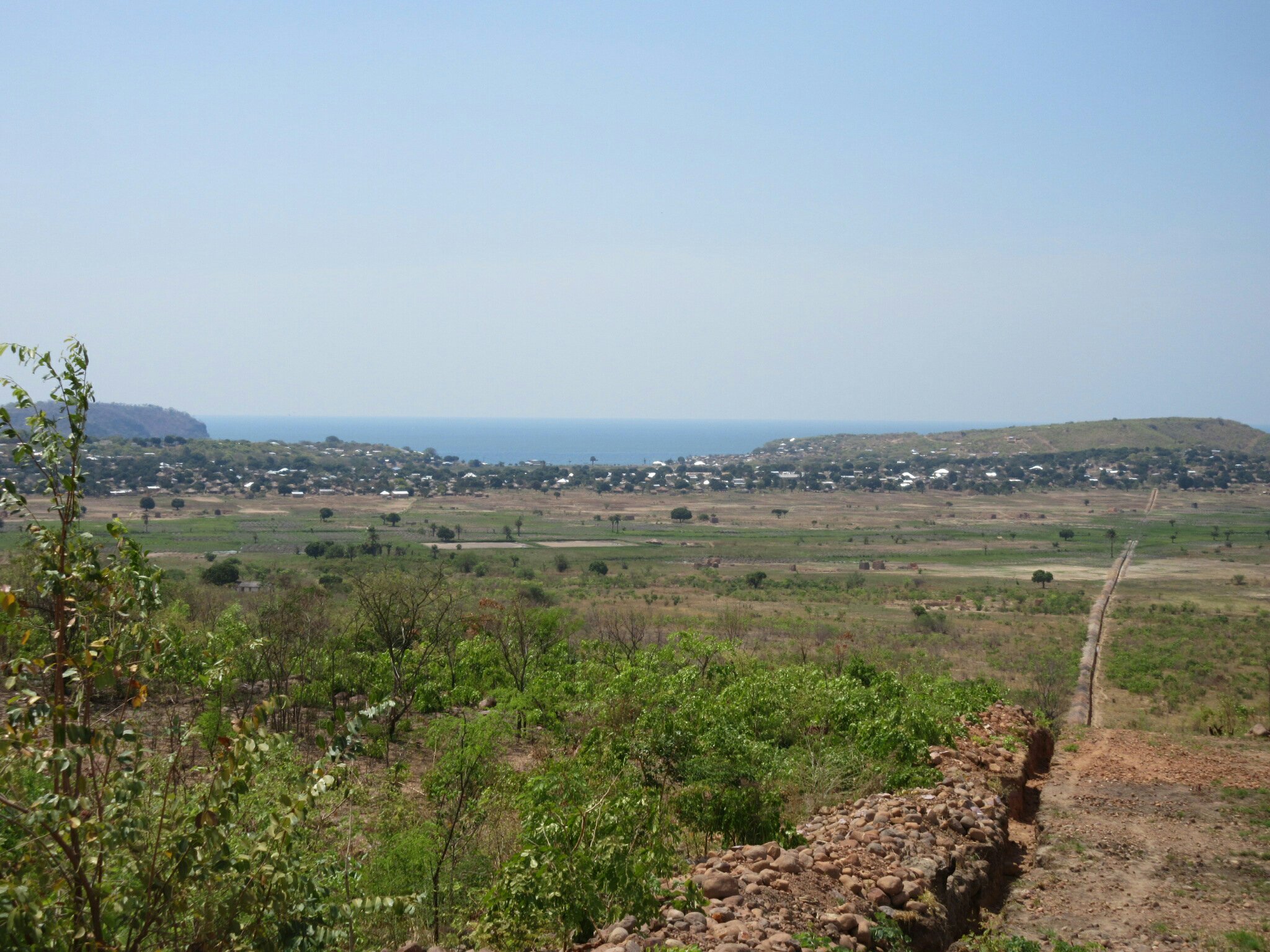
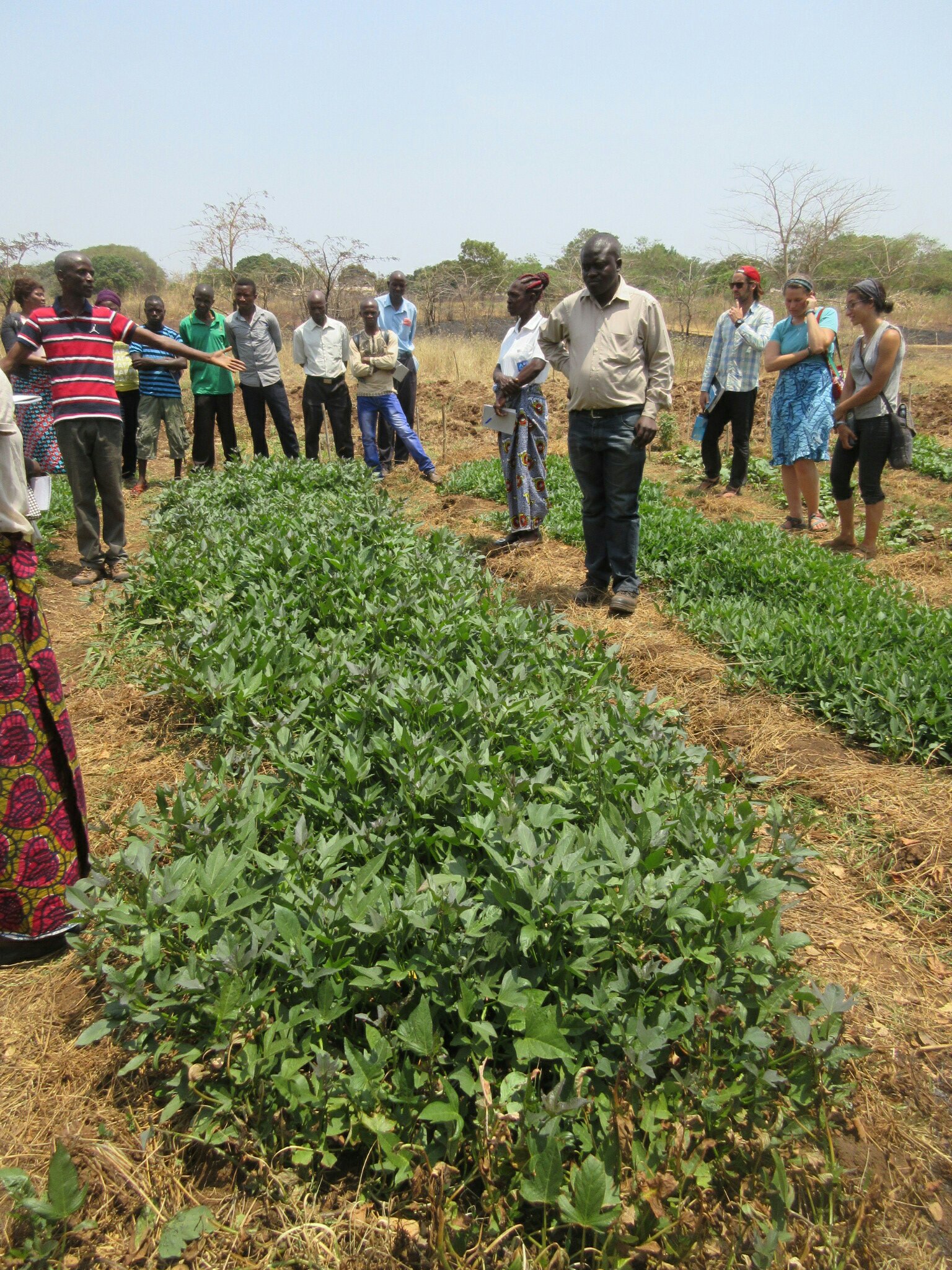
This past week I attended an Orange-Fleshed Sweet Potato and Orange Maize workshop over in Chipata in Eastern Province. This was a pretty good workshop and like always I am excited to see new parts of Zambia. The advantage of OFSP (what the cool kids call those sweet potatoes) and orange maize is that they are high in Vitamin A. Vitamin A deficiency is a fairy large problem in Zambia, and there are a couple of different initiatives to get it into everyone’s diet. The sugar you get in Zambia is an off-white brown because it is fortified with Vitamin A. Another one of those initiatives, of course, is OFSP and orange maize. The first two days of the workshop were all about growing sweet potatoes. I suppose with both orange maize and OFSP the methods are pretty much the same as growing the not-orange variety, but I guess fewer people know how to grow sweet potatoes so we spent nearly all the time on that. Practically everyone in Zambia grows maize so that wasn’t really talked about, except for some strategies to avoid cross-breeding the white and orange varieties. Unfortunately, the milling companies only really want to buy the white kind, because it produces white mealie meal that people produce their nshima with. Orange maize produces orange nshima, which is awesome and healthy and tastes the exact same except maybe sweeter, but goes over the exact same way colored ketchup did in the states. The third day was all about cooking. This was entertaining because in my group all of the counterparts were male, and men don’t usually cook. Men do actually know how to cook, but the women are so much better at it. So you got these yamayos doing all this cooking stuff, and in our group the volunteers were kinda struggling but then every once in a while one of the men would step in and actually be pretty awesome. Or maybe I just have no idea how to cook porridge and they have at least a bit of a clue. The final day we also went to go see a tree nursery. The purpose of this trip was mostly to inspire the counterparts to start tree nurseries. The dude running this one makes, apparently, gobs of money so that is fairly inspirational. It worked on my host dad, at least, who now wants to start a tree nursery. So my next job is learning how to make a tree nursery so I can teach it to them. I’ll let you know how it goes.
Where are you Going, Where have you Been? by Joyce Carol Oates
The Petrified Ants by Kurt Vonnegut
Timequake by Kurt Vonnegut
This past week I helped teach at Camp TREE. TREE stands for “Teaching Respect for Everyone’s Environment” and it is a week long camp about the environment and related topics.
The Peace Corps camps that we take these kids too are a pretty cool opportunity for the kids. I say “kids” but these are really teenagers. In our case we took them down to Kasanka National Park in Central District. A lot of times these camps are the kid’s only opportunity to go to a place like a national park and see things like animals or an unspoiled environment they probably otherwise wouldn’t get to. It is also a rare opportunity for the kids to interact with other Zambian youths that aren’t in their community, away from the pressures of home and parents and the like.
This week there were the two PCVs running the event, Jenna and Bryan, along with six PCVs (myself included) helping out. We all brought three pupils from our village so we had a nice little gaggle of kids. There were various sessions planned, and we all helped teach various sessions. We held the sessions in both English and Bemba to make sure all the kids could understand.
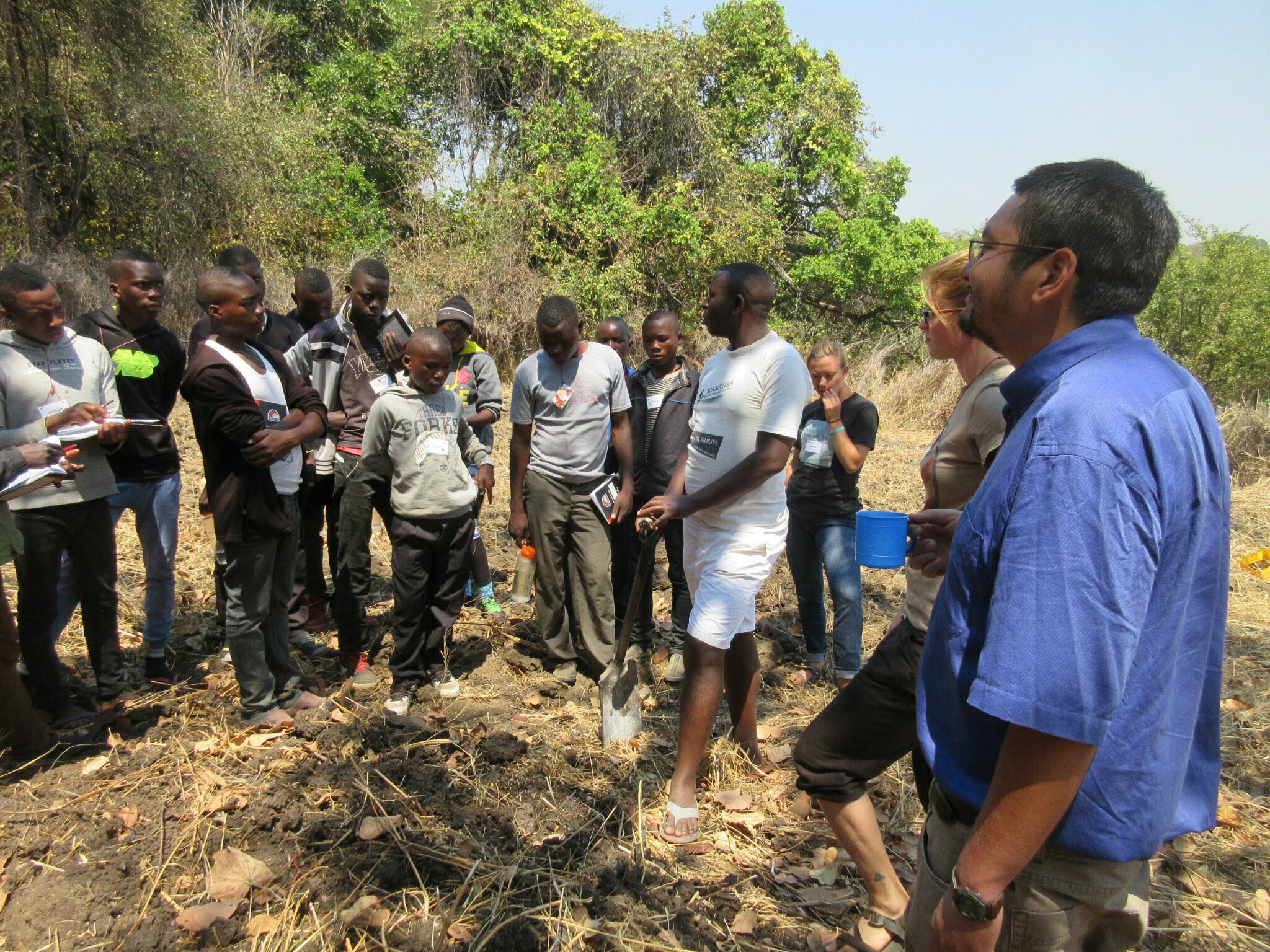
The sessions were a mix of classroom type stuff, games that may or may not have anything to do with the thing we were teaching about, and some team-building exercises. One of my favorite sessions was talking about the food web and food chains. After going over some classroom stuff we went outside and made a food web as the kids all named different animals that eat each other. Then we demonstrated the importance of the food chain by having them do a “group sit” where everyone is in a circle and sit in each other’s laps. Then I removed one animal from the food chain and they all fell down. Exercises like that let the kids relate the things they were learning to things they have already seen around their village, and help to drive in the message while they still have fun.
We also learned some practical things, like how to make compost. Compost is popular in Zambia because fertilizer is so necessary for growing crops, and is a major expense for most farmers. Anything they can do to make fertilizer or compost more accessible is very popular.
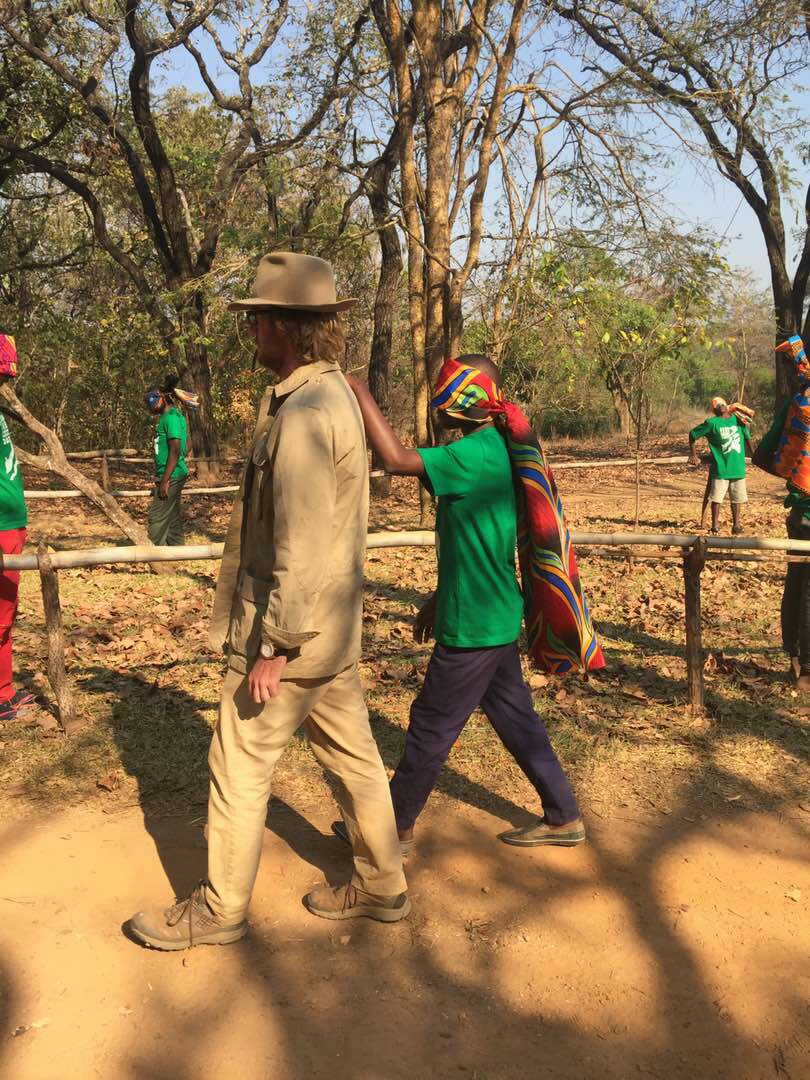
Team building exercises helped the kids learn some stuff about empowerment so hopefully they can come back to the vil and help teach other people and kids about what they learned. In one exercise that was pretty enjoyable to watch, we blindfolded the kids and told them we were taking them to a maze. They had to keep their hand on a log and follow it while blindfolded to get out of the maze. Secretely, it was just a circle. To get out of the maze, you had to raise your hand and ask for help. The lesson here is sometimes you have to ask for help. I was pretty proud that the last two kids were two I brought. Never give up, never surrender!
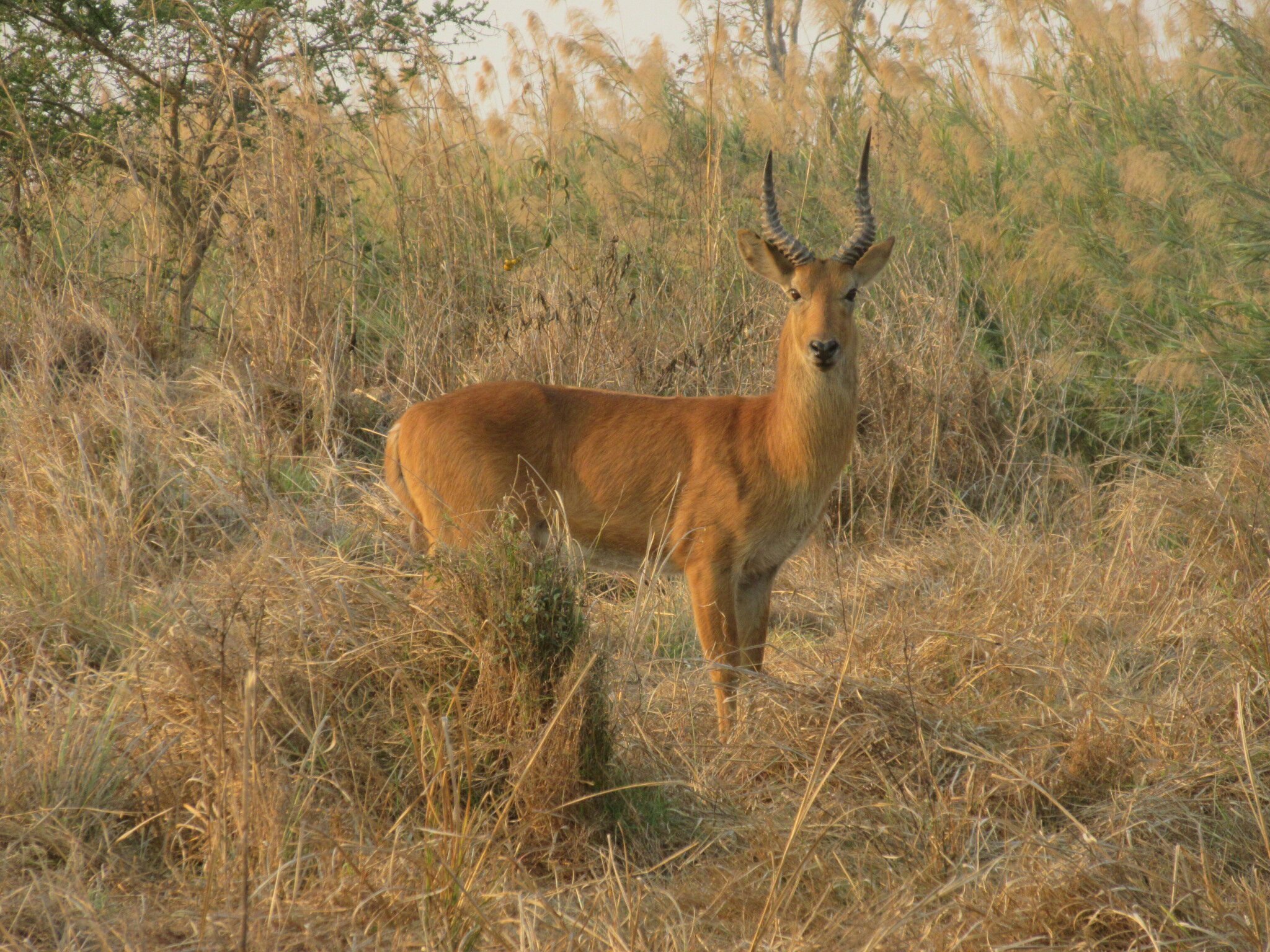
One of the final things we did was go on a game drive. A lot of times these kids never really get to see the diverse fauna of Zambia because around their villages the animals have all been hunted. Going on a game drive is the only way they are really able to see things like pukus or warthogs. On our game drive we were hoping to see elephants but didn’t find any. Despite that, the kids had a great time riding in the back of a safari truck and seeing all sorts of antelope and birds and just the wilderness of Zambia.
I was worried about Camp TREE but going to it was such a great experience for the kids and they really got so much out of it. It was great watching their moments of discovery and seeing them get excited about looking at things through microscopes and picking up animals bones. They were so happy to be hanging out with peers and hosting impromptu dance parties every night. As I write this after we’ve gotten back the kids I brought are still wearing their Camp TREE shirts. A great success all around.
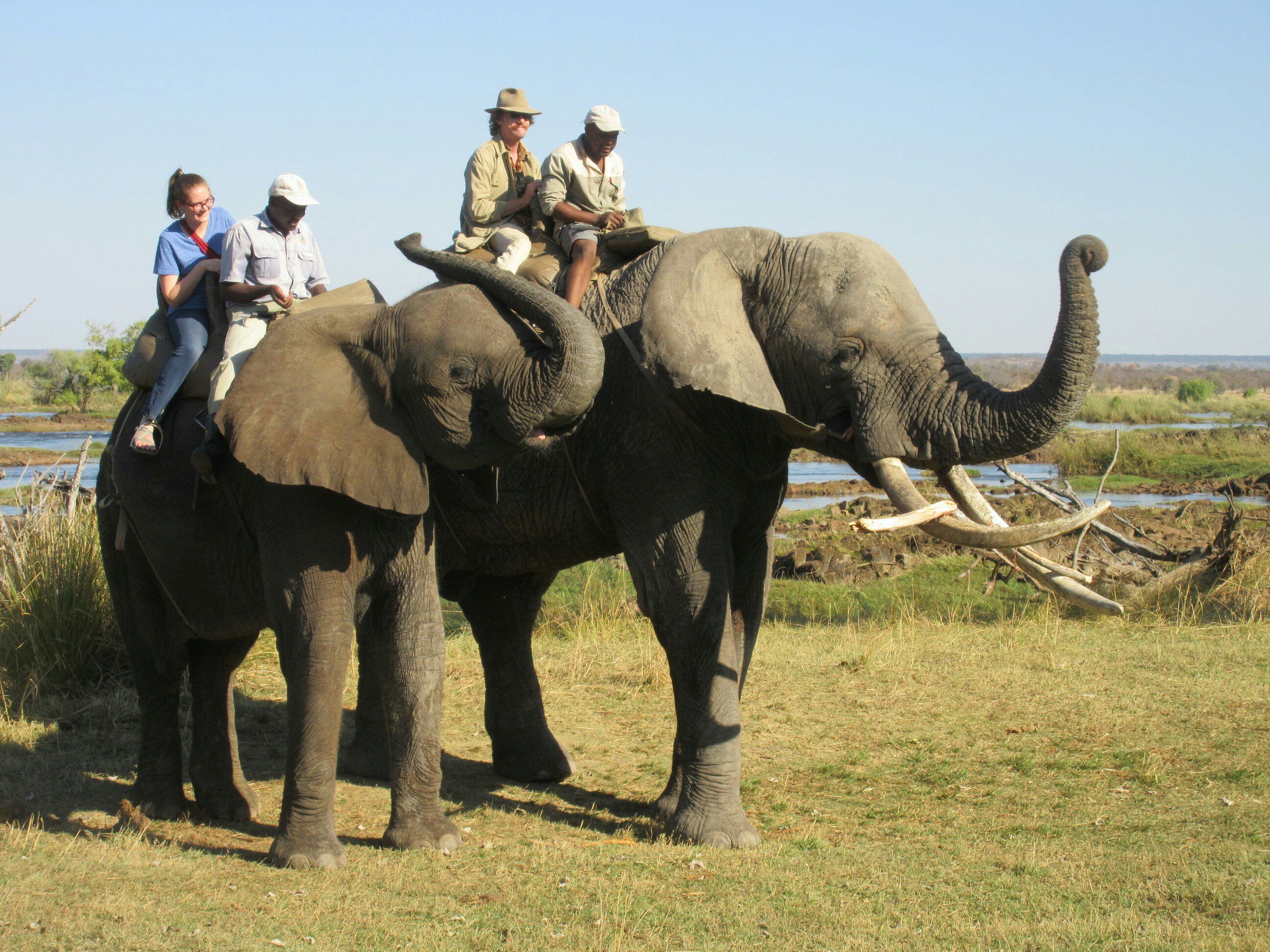
So my girlfriend’s #1 dream during her time in Zambia was to ride an elephant and we got that accomplished in Livingstone. Also during our time in Livingstone we did a game drive in Mosi-o-Tunya National Park and took a booze cruise on the Zambezi. All activities I highly recommend. The elephant ride took place at the elephant cafe, which is in the park. The elephants are orphans and have been taken care of in Zambia for about 15 years, having previously been taken care of across the river in Zimbabwe. The girlfriend and I were the only two people riding the elephants that afternoon, so we got a personalized experience. On each elephant it is you and then the elephant’s trainer. Most of the trainers, it seems, came over with the elephants from Zimbabwe, and have been working with and caring for these animals for years. My elephant was named Danny and was the current bull. He was about 50 and was a very nice guy. The ride itself was probably about two hours, and took us on a jaunt through the park. We saw a good chunk of animals, including a giraffe, warthogs, impala, and zebras. Mostly it was cool to be riding around on an elephant and taking in the Zambian landscape. After the ride you got to do a meet n’ greet sorta thing with the elephants. You dismounted and then wandered over to feed the elephants some and thank them for carrying you around. Danny was really nice though suddenly being on the ground next to him and his giant tusks was rather imposing. He was calmer than I was and I sat on his knee so that was cool. You can pay to have a dude follow you around and take pictures and a video, and we did, and they produced a really cool video we’ll get to show to disinterested relatives for years to come. The next day we took a game drive through the park. For various reasons ours was kinda hokey (but cheap) and we went in an old British taxi. Once in the park you have free reign to drive around, with the only mild requirement being you stick to the roads. In the park we saw elephants, warthogs, impala, buffalo, and zebras, so that was pretty phenomenal. We also briefly glimpsed in the park some rhinos. Deep in the park you can go see white rhinos. These are a few re-introduced white rhinos and their offspring, and they are kept under constant armed guard. You can, however, go walk up to see them. That was a pretty cool experience and given the watchful eyes of the guards they seem pretty safe from poachers. The rhino we saw had a calf with her, and they were sleeping. The final animal experience we went on was a booze cruise. The main attraction here was, of course, the booze, though for me I was absolutely tickled pink to be on a boat and I asked to drive it and the dude for whatever silly reason totally said yes: The tour takes you up and down a stretch of the Zambezi actually only a little upriver of the falls, though given the amount of rocks I think it would be more than difficult to go over accidentally. It is on the banks of the national park, so there are plenty of animals around. We saw crocodiles and a whole lot of hippos, along with a very large amount of other booze-cruisers. The cruise ended after we watched the sunset over the Zambezi. It was gorgeous and I highly recommend. My favorite part is that the guy driving the boat, the bartender, and the grillmaster were all qualified to do each other’s job’s, which was the sort of skills egalitarianism I like.

 The cultivation center of a model mushroom farmer. Reading this week:
 My biggest criticism of the workshop is that it wasn’t very village-based. They did talk about the technologies you would use in the village, but it was mostly along the lines of “…and if you don’t happen to have an autoclave, you can use an old oil drum!” However, with work, it does seem very possible in the village to grow mushrooms all the way from scratch, eliminating the need to buy cultivated products from China. I am excited to give it a whirl. Maybe once I am back in the States I can use my skills to sell like artisan mushrooms and the local farmer’s market. Hand crafted!
 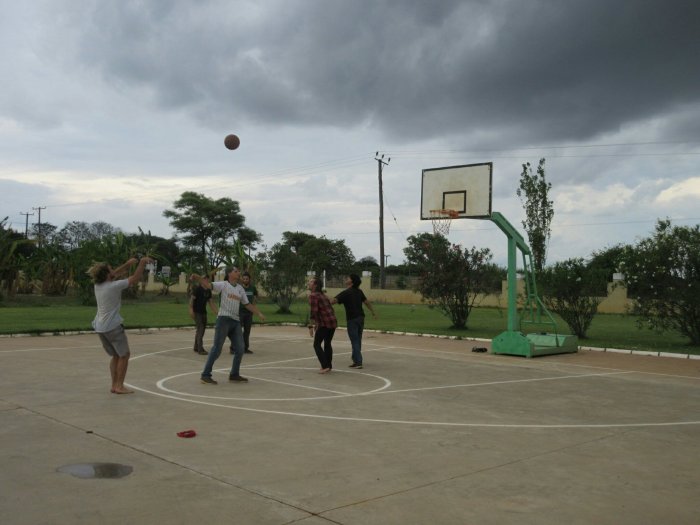 On a final note, the other awesome part of the China Aid research complex is a sweet basketball court. We had driven by the place many times but never seen anyone play, until now. Between sessions there was a pickup game or two, which for any passerbys must have been kinda confusing. But there we go.
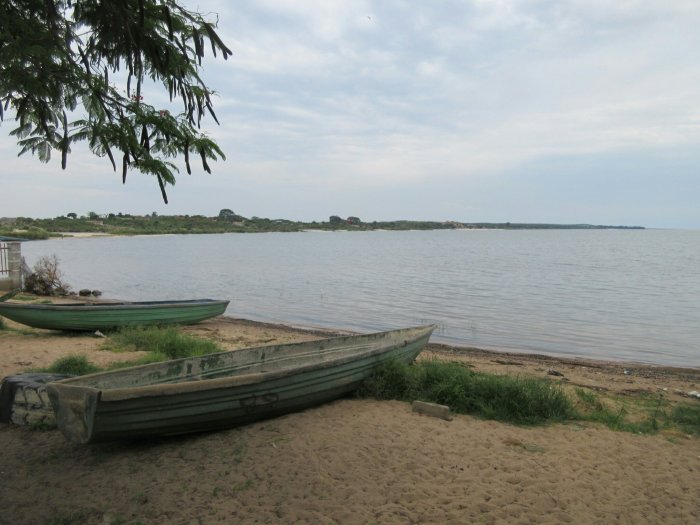
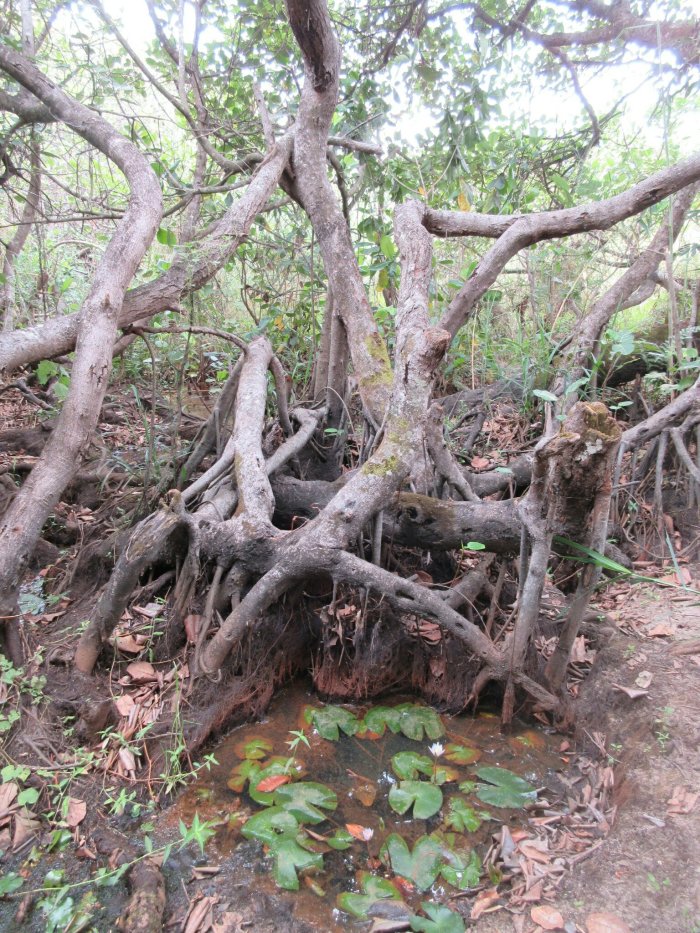 Ever intrepid, I reasoned that maybe the mighty cryptid wasn’t a fan of surf and sun, and instead I found a patch of jungle and marched right into that. It was quite jungle-y, and full of bugs and trees and some lily pads, but unfortunately there were no flying reptiles.
 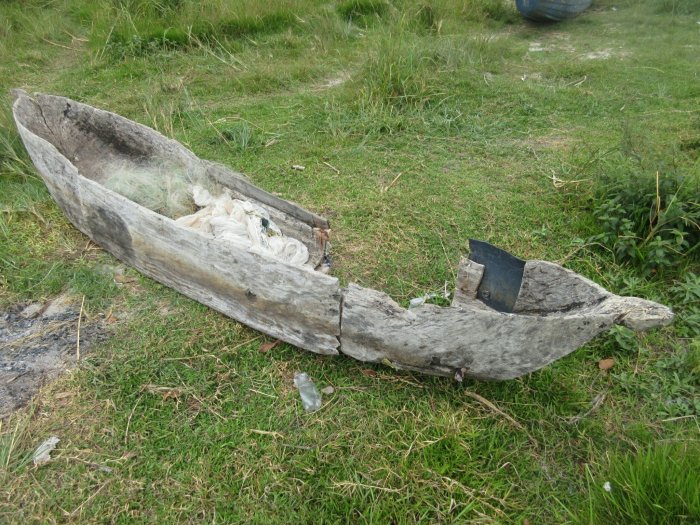 Stumbling out of the mighty jungle, however, and conveniently close to a rather nice beach bar, I did run across this canoe. Given the large gash in the side, I reasoned it could possibly have been the victim of a Kongamato attack, given their penchant for flipping over canoes.
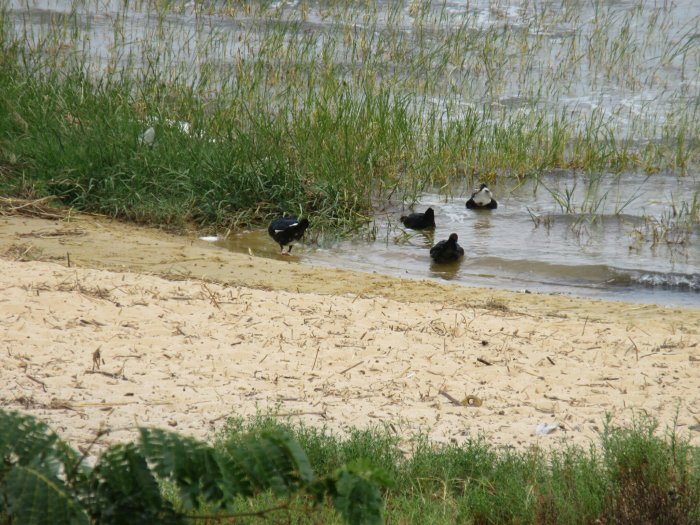
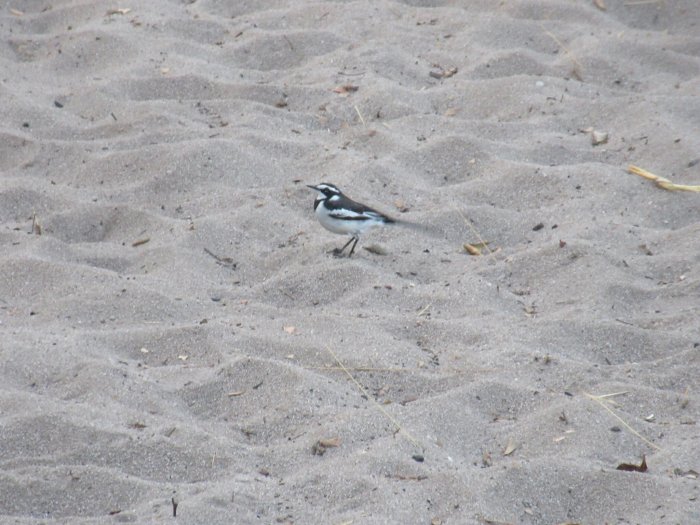 Given the elusive nature of the Kongamato, despite my utmost efforts in finding it, we must conclude that it is very endangered and has possibly suffered habitat loss. I therefore recommend the Kongamato be immediately added to the endangered species list. Thank you.
 The JICA rice demonstration was pretty interesting and it seems fairly simple to grow rice. JICA recommends the use of NERICA rice, which stands for “New Rice for Africa.” It is a hybrid of Asian varieties, which produce large yields, and African varieties, which are acclimated to the climate and diseases of Africa. Together, they produce a hardy rice suited for growing in areas where the land isn’t constantly inundated.
  In addition to rice, we learned about a variety of other topics, such as making charcoal from corn husks. Since maize is such a large crop, there are a large number of husks come harvest season. These are usually wasted, but can be converted into charcoal relatively. This requires a longer process than using charcoal made from wood (the corn husks are less dense than wood, and therefore need to be pounded and shaped into briquets to match the characteristics of wood charcoal), but are more environmentally friendly because they don’t require chopping down trees. Overall it was a really great workshop and I learned a lot along with the counterparts and other volunteers. I’m excited to get back up to Luapula to see more of the sights and learn more about rice.

 Reading this week:
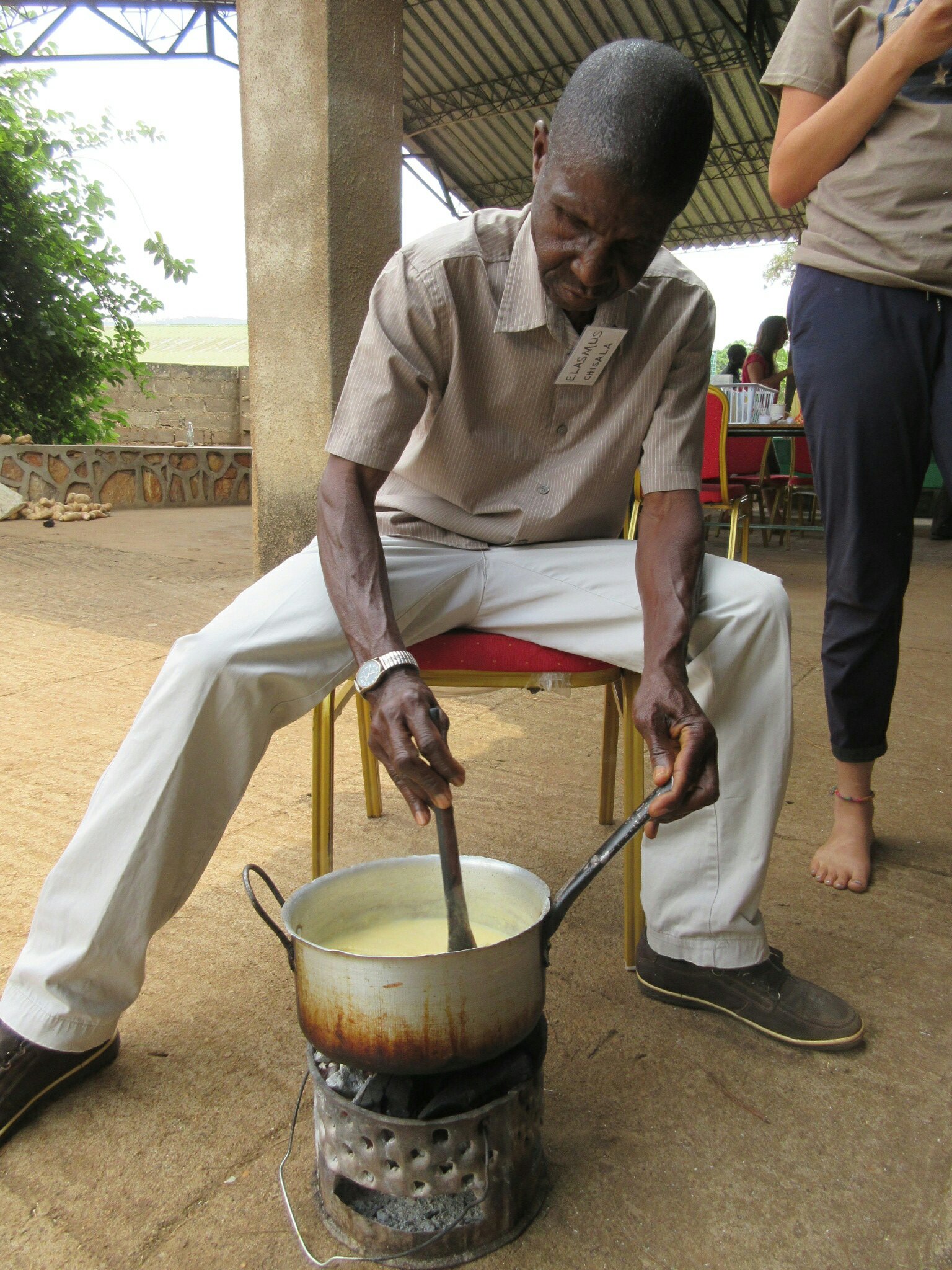 The third day was all about cooking. This was entertaining because in my group all of the counterparts were male, and men don’t usually cook. Men do actually know how to cook, but the women are so much better at it. So you got these yamayos doing all this cooking stuff, and in our group the volunteers were kinda struggling but then every once in a while one of the men would step in and actually be pretty awesome. Or maybe I just have no idea how to cook porridge and they have at least a bit of a clue.
 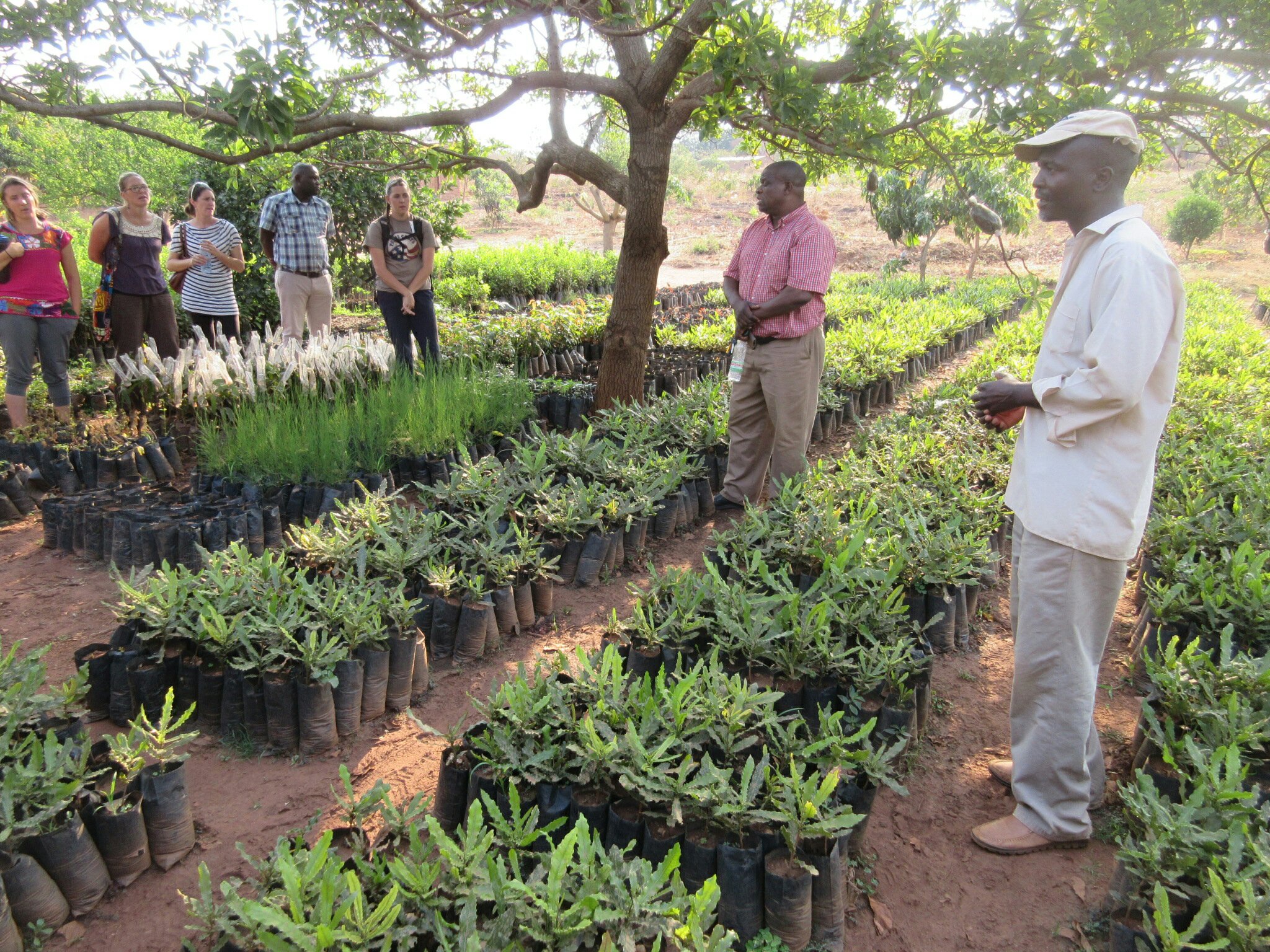 The final day we also went to go see a tree nursery. The purpose of this trip was mostly to inspire the counterparts to start tree nurseries. The dude running this one makes, apparently, gobs of money so that is fairly inspirational. It worked on my host dad, at least, who now wants to start a tree nursery. So my next job is learning how to make a tree nursery so I can teach it to them. I’ll let you know how it goes.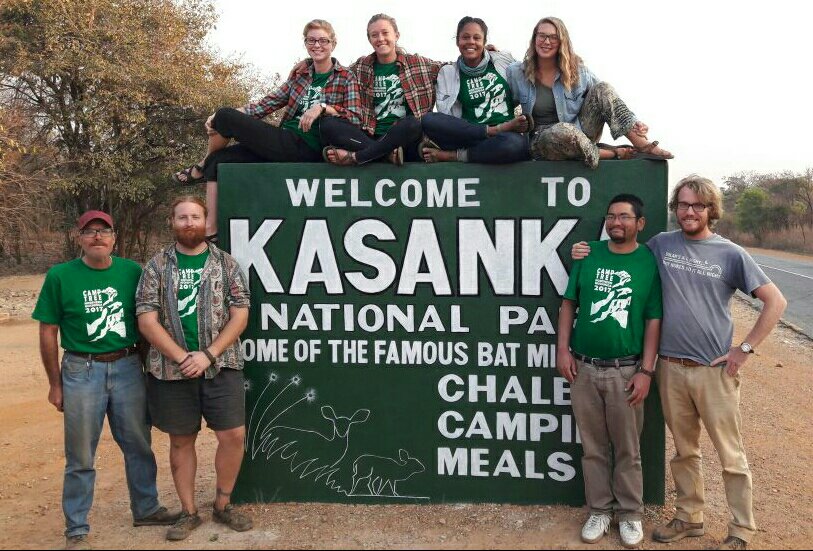
 Reading this week:
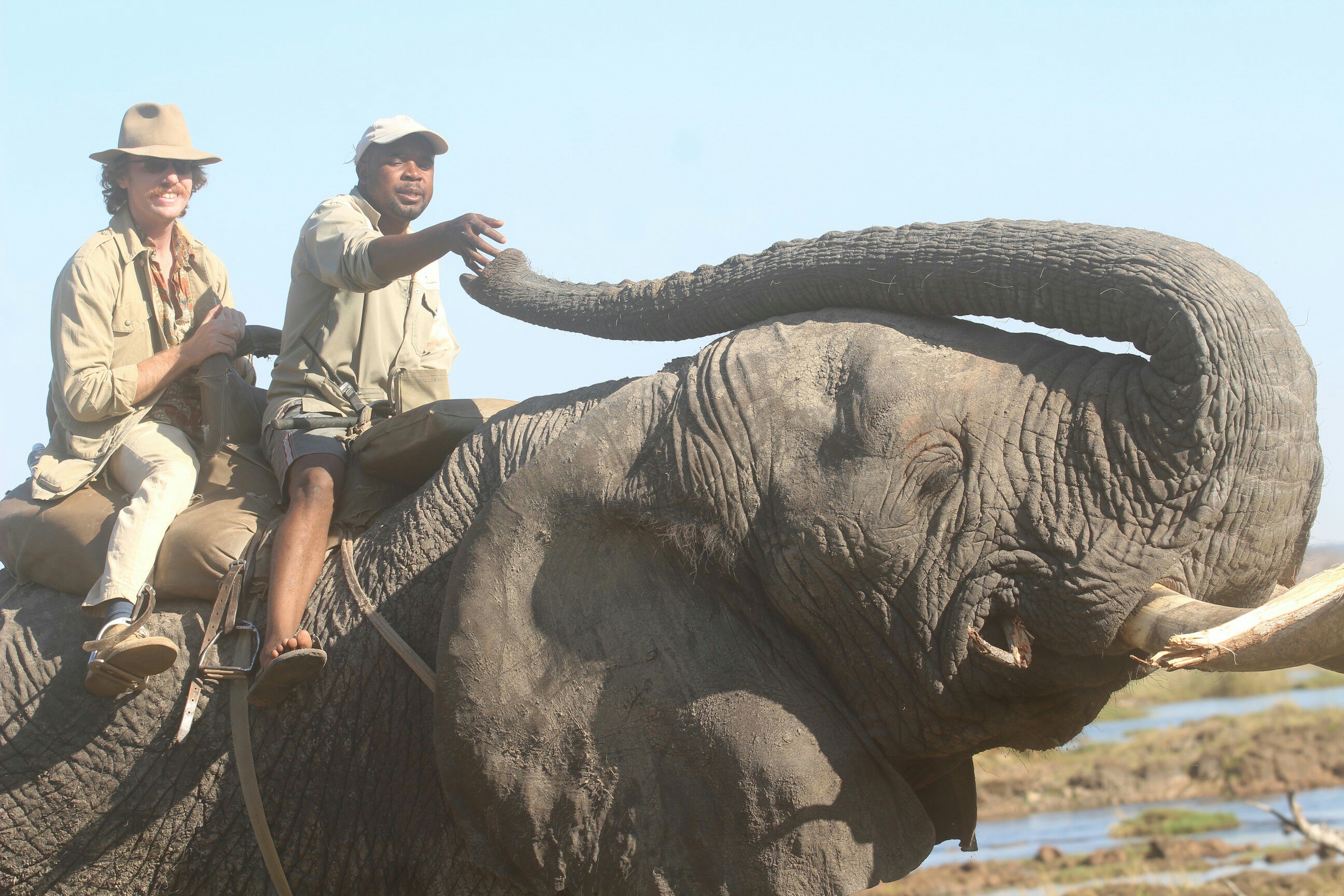 On each elephant it is you and then the elephant’s trainer. Most of the trainers, it seems, came over with the elephants from Zimbabwe, and have been working with and caring for these animals for years. My elephant was named Danny and was the current bull. He was about 50 and was a very nice guy. The ride itself was probably about two hours, and took us on a jaunt through the park. We saw a good chunk of animals, including a giraffe, warthogs, impala, and zebras. Mostly it was cool to be riding around on an elephant and taking in the Zambian landscape. After the ride you got to do a meet n’ greet sorta thing with the elephants. You dismounted and then wandered over to feed the elephants some and thank them for carrying you around. Danny was really nice though suddenly being on the ground next to him and his giant tusks was rather imposing. He was calmer than I was and I sat on his knee so that was cool. You can pay to have a dude follow you around and take pictures and a video, and we did, and they produced a really cool video we’ll get to show to disinterested relatives for years to come. The next day we took a game drive through the park. For various reasons ours was kinda hokey (but cheap) and we went in an old British taxi. Once in the park you have free reign to drive around, with the only mild requirement being you stick to the roads. In the park we saw elephants, warthogs, impala, buffalo, and zebras, so that was pretty phenomenal. We also briefly glimpsed in the park some rhinos.
 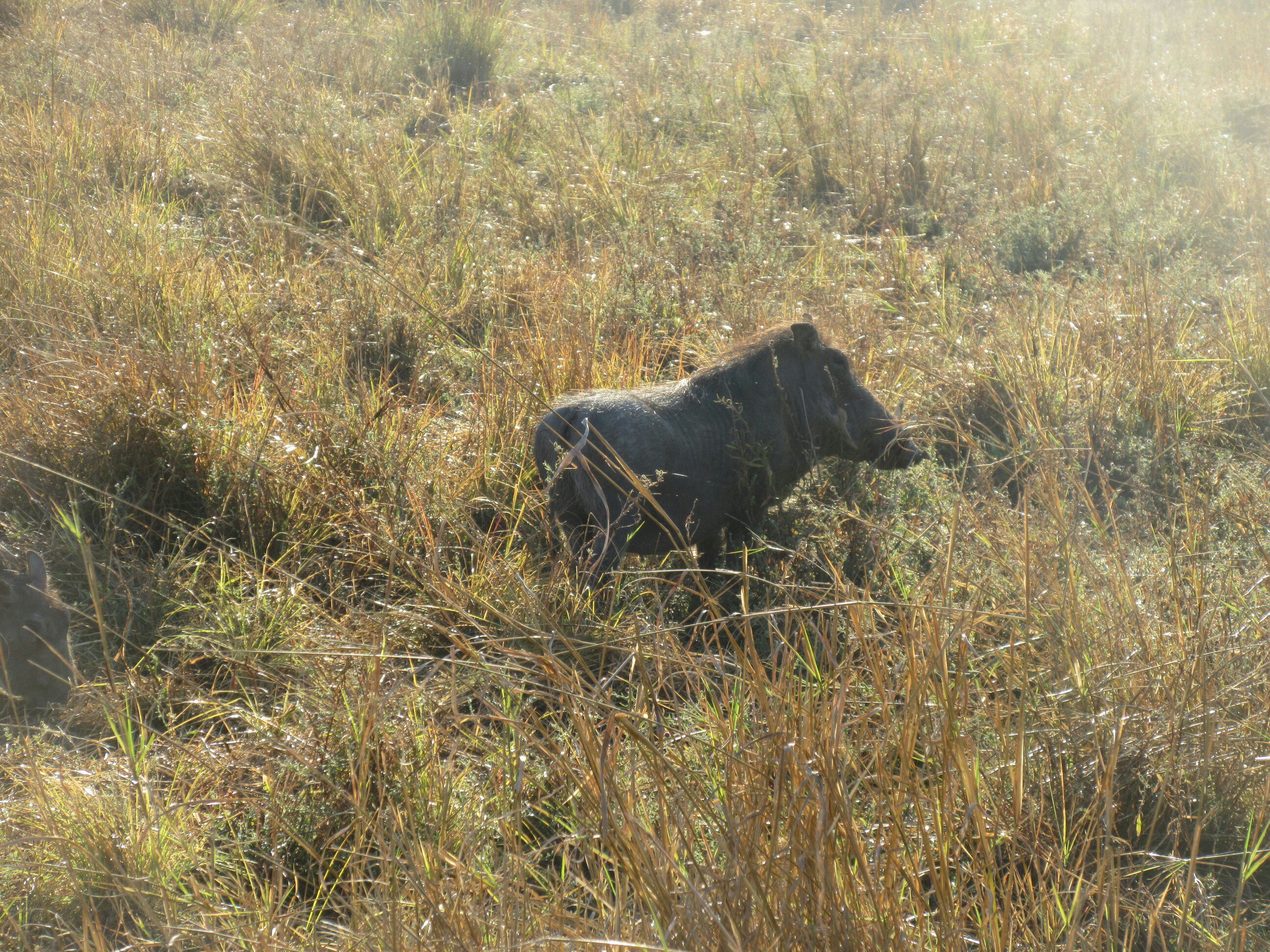 Deep in the park you can go see white rhinos. These are a few re-introduced white rhinos and their offspring, and they are kept under constant armed guard. You can, however, go walk up to see them. That was a pretty cool experience and given the watchful eyes of the guards they seem pretty safe from poachers. The rhino we saw had a calf with her, and they were sleeping.
  The final animal experience we went on was a booze cruise. The main attraction here was, of course, the booze, though for me I was absolutely tickled pink to be on a boat and I asked to drive it and the dude for whatever silly reason totally said yes:
  The tour takes you up and down a stretch of the Zambezi actually only a little upriver of the falls, though given the amount of rocks I think it would be more than difficult to go over accidentally. It is on the banks of the national park, so there are plenty of animals around. We saw crocodiles and a whole lot of hippos, along with a very large amount of other booze-cruisers.
  The cruise ended after we watched the sunset over the Zambezi. It was gorgeous and I highly recommend. My favorite part is that the guy driving the boat, the bartender, and the grillmaster were all qualified to do each other’s job’s, which was the sort of skills egalitarianism I like.
 Pat in the World
You must be logged in to post a comment.