The Village (Family Vacation Part 6)

IMG_9057

Aunt, uncle, host dad, potatoes.

Reading this week:

  • Ghost Wars by Steve Coll
  • Rise to Globalism by Stephen E. Ambrose and Douglas Brinkley
  • Why Nations Fail by Daron Acemoglu and James Robinson (I think their argument is a lot better for explaining the world post-1500 than “since the Neolithic”)

The highlight of the whole trip for my family, and really the whole reason they came to Zambia, was to finally see my site. This was quite an experience for them and I am really glad that they were able to come.

A lot of volunteers, when their family visits, spend at least one night at their site. Since I had a total of nine people, I decided this wasn’t particularly feasible and so we just did a day trip. That was enough though. I had warned my host family we were coming, so I sent my host dad a text to confirm we were on our way, we loaded up into our vehicles, and off we went.

One of the best parts about my site is that I am in a valley, and right at the entrance of the valley you get a magnificent view of the whole area, including some of the surrounding villages and the fields, looking way out even to the Tanganyika escarpment. On the way in we stopped there and took pictures. I wish they could have seen my village during the rainy season when everything is lush and green, but it is still a gorgeous view. After photos, we continued on our way into the village picking up a whole trail of kids along the way. Since a car driving in full of my family was probably the most exciting thing going on that day, every single kid in the village was following my family to my doorstep.
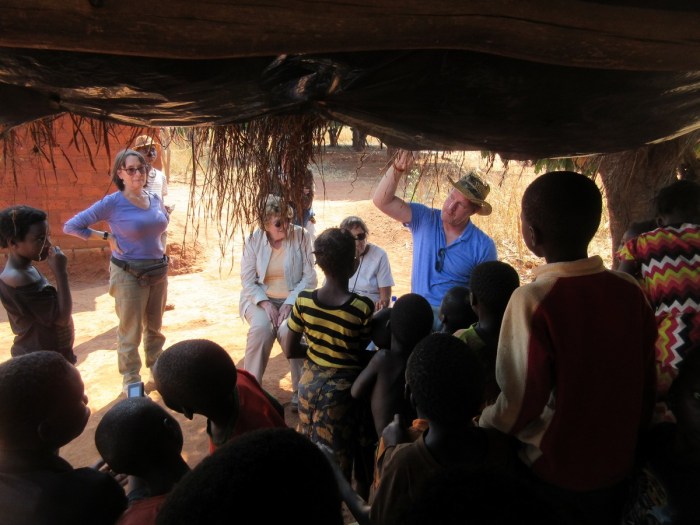
IMG_9061

My uncle explaining something or other to an enraptured audience.

As we got out of the car my host dad and mom came out and greeted us, and that was fun for me to have my real dad and mom meet them. Introductions were made all around and I brought my family over to my house to get a good look. I think they were pretty impressed with my setup but maybe that is my ego talking. The family was probably most amused by all the kids since I guess they’re not used to having a gaggle of dozens of children enthralled by your mere presence. My aunt and uncle took the opportunity especially to put on some little mini-shows for the kids; they had a previous job putting on live plays of poetry for school assemblies so this was right up their alley. Even my mom got in on the action and the kids all seemed to love it.

Since I am always excited to show off my host dad’s ponds and gardens, I dragged the family pretty quickly down there and gave them the whole tour. My host dad came along of course and had a good time explaining everything we were doing together with to my family. I know that it was really my host dad doing all the work, since all I am is an adviser, but the family was pretty impressed by all my host dad had accomplished and thought his gardens and ponds were really very beautiful. Same, fam, same.

KODAK Digital Still Camera

After viewing the ponds my host family invited us over to lunch which was really very nice of them. We were a big crowd like I mentioned but my host dad I think had a lot of fun hosting us. That was really cool my host family got to see how I eat lunch every day. By this point in the trip they had already eaten some nshima, but it just isn’t the same in a sorta fancy restaurant as it is with good ole’ fashioned home cooking, you know?

In addition to lunch, my parents had wanted to give some gifts to my host family to thank them for taking such good care of me. From America, my family had brought some nice pocket knives and kitchen scissors, which I thought were pretty good gifts. To this stack I added some little things I was planning on giving to the host family anyways, like a packet of watermelon seeds for my host mom. So I arranged for my mom to give my host mom a small stack of gifts, and for my dad to hand my host dad a small stack of gifts. Smiles all around and everyone really had a good time. A little after lunch, having thoroughly viewed the village and having had my two families finally interact, we packed up and headed out. Quite the experience for both parties and I am really glad it could happen.
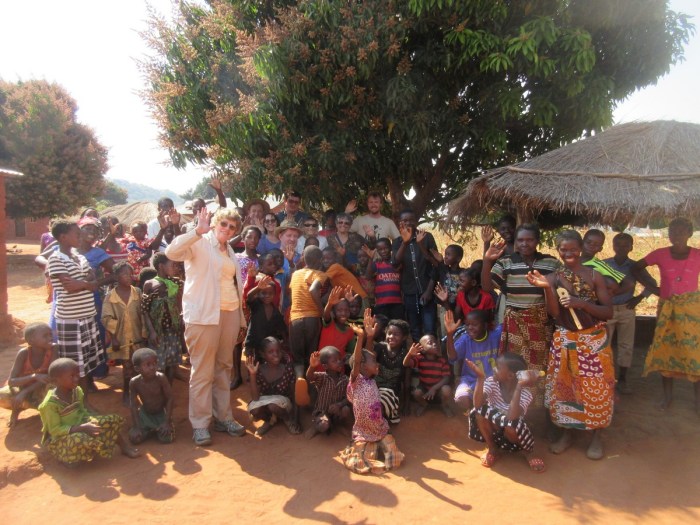
IMG_9067

I don’t know who most of these children are.
Nachikufu Cave (Family Vacation Part 5)

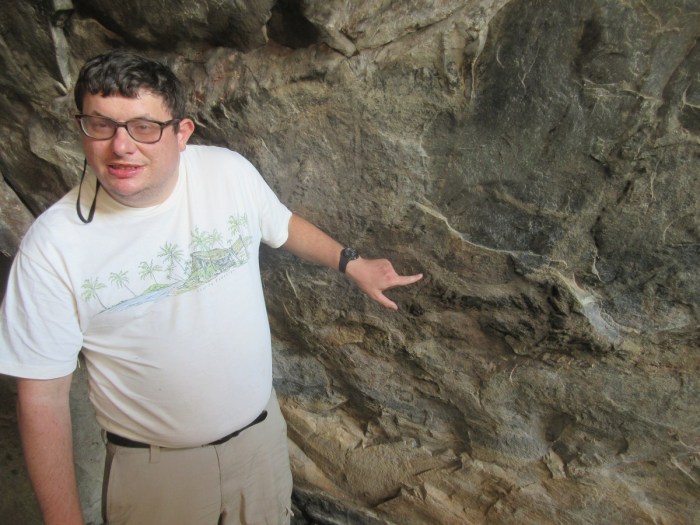
IMG_8971

It was hard to get Ian to smile and point at the same time.

Reading this week:

  • Guns, Germs, and Steel by Jared Diamond

The Nachikufu Cave was the one must-see thing on the whole trip. The only way we got my brother to agree to come all the way to Zambia was to promise to go to the cave. You see, Ian is big into cryptids, and the Nachikufu Cave is on the cryptid circuit because of two cave paintings that kinda sorta look like long-necked dinosaurs. So we promised we would go and go we did.

Besides the whole cryptid thing, the Nachikufu Cave is in fact pretty cool. It’s only a few kilometers off the Great North Road and is a very well done little site. If I can quote A Guide to Zambia’s Heritage in the entirety for it’s entry on the cave:

The site was used by the Bisa and the Lala people during the Bemba and Ngoni raids in pre-colonial era as a hide-out. It also comprises priceless archaeological and scientific information that dates to about 15000-20000 years ago.

The rock shelter and cave comprises numerous Naturalistic and Schematic rock art paintings such as elephants, antelopes, and elaborate grid-like/rectangular motifs. Nachikufu Cave undoubtedly offers tourist enjoyment and experience of historic times.

So that all is pretty neat. The cave has a fence around it that is locked, but you have to pass by the caretaker’s house to get to the cave so if you wait a bit he’ll show up. While we were waiting, we enjoyed the landscape which is pretty marvelous. You can definitely imagine the ancient cavemen keeping a lookout for game and sharing stories by painting on the walls at night, and posing on the top of the cave for pictures to post on Facebook.

IMG_8996

Once the caretaker arrived and opened the gate, he showed us around the little displays they have of the cave paintings and the archaeological finds in the area. The cave itself is like, a prototypical caveman cave with a nice floor and a big cavern you could take shelter in and a few small paths. There is also a good number of bats. So that all was pretty cool to see. Plus the caretaker has a nice dog that lets you scratch behind his ears.

IMG_8976

This pretty much sums up any of my family trips.

Kabwe (Family Vacation Part 4)

IMG_8931

On the way north, dad decided to have us stop for the night in Kabwe. Kabwe has several claims to fame, among them being one of the most polluted places in the world (thanks to decades of lead mining) and the site of the discovery of the Broken Hill Man. It was always my family’s first (sorta) taste of up-country living.

We got to Kabwe in pretty good order, having switched from driving one giant van to two smaller 4x4s. They were far more nimble and capable, but since we had only two registered drivers (my uncle and my dad) somewhat less convenient in that regards. Which, really, is why we stopped in Kabwe; so we could break up the northbound driving.

IMG_8933

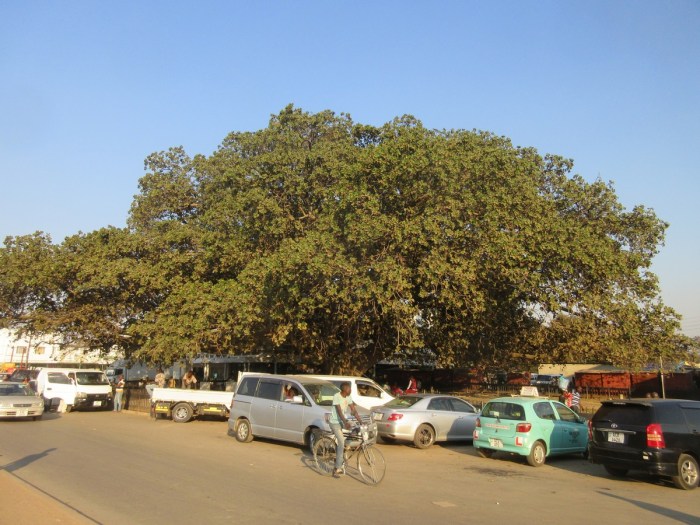
The first thing I wanted to do in Kabwe was to go see the Big Tree. It is Kabwe’s other claim to fame. Seeing this sucker was a bit of a headache for me. First, my family asked if it was in walking distance of the lodge. I said yes, but I guess my current version of walking distance has increased somewhat from where it used to be. The second thing is that my family expected me to like, know exactly where it was. I hadn’t quite gotten across to the family yet that things like maps aren’t necessarily the most reliable here, and even big important things like Big Trees aren’t necessarily well marked. But after wandering only a little bit through Kabwe, we found it.

IMG_8938

So we poked around a bit, and my family took a whole bunch of pictures of the locals using the tree as a meeting place, the same that people have done for hundreds of years. So that is pretty cool I guess. After looking at the tree and buying a coke nearby, it was off to see the monument to the Broken Hill Man

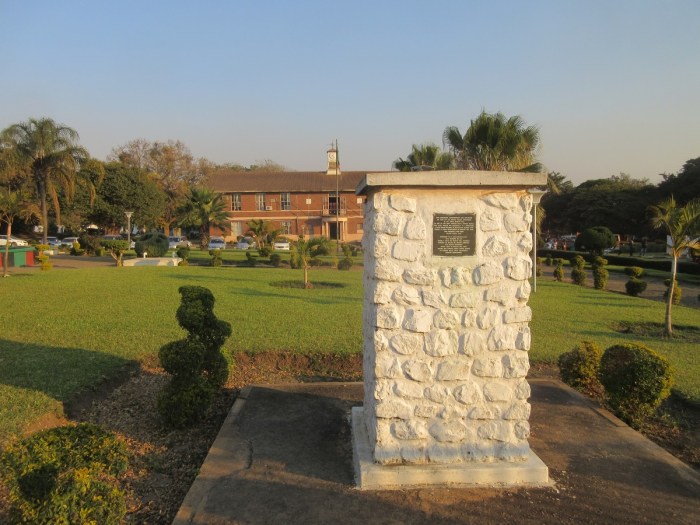
Zambia has been working hard for a while now to get back the skull of the Broken Hill Man (it currently rests in the Natural History Museum in London). In the meantime though, they have erected a lovely little monument on the grounds of the Civic Center, which is a few blocks up the street (like, literally go uphill) from the Big Tree. Kabwe is rather convenient for getting all your Kabwe siteseeing in at once.

IMG_8943

After reading the plaque on the monument, and poking around for a bit, the family did some grocery shopping at the nearby ShopRite and departed in a taxi for the lodge. Since the taxi was full of all them, that left me to walk back to the lodge by myself. Frankly, it was a pretty nice little respite.

Chirundu Fossil Forest (Family Vacation Part 3)

IMG_8916

Modern-day Ian, 150 million year-old tree.

After leaving Livingstone, we drove back north to Lusaka, but on the way we took a little detour (it was a big detour) to see the Chirundu Fossil Forest. This was a spot I had been wanting to go to but I have no reason to ever go to this corner of the country (it’s on the Kariba road, a good chunk off the main road to Lusaka). So when I had the opportunity to manipulate my brother to dragging the whole family to the Chirundu Fossil Forest, I took it.

IMG_8925

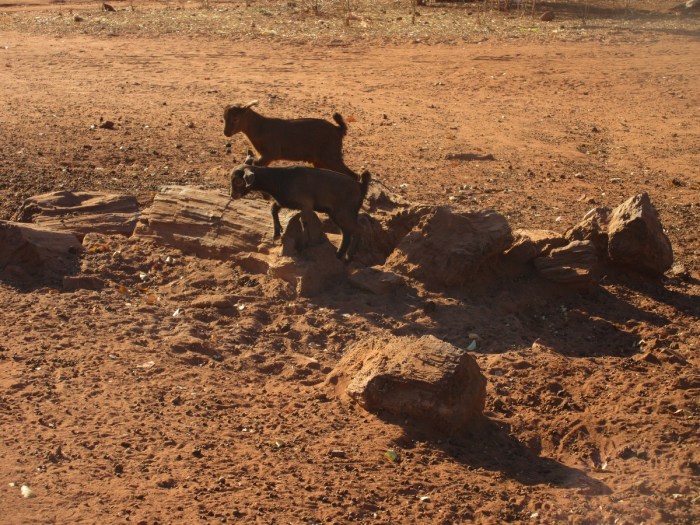
Little baby goats!

The place takes a bit of finding. It is right on the tarmac but is only marked by a small sign on the right side of the road as you are heading to Kariba. Like a lot of sites in Zambia, this site is pretty amazing to me because it is the ancient fossilized forest and people are just living there. Like, I saw people using some of the fossils to decorate their front yard. There were little goats playing on ancient logs. It was cute.

IMG_8897

Once you find the marker you’re pretty free to wander around. I think there is nominally an entry fee but no one came to collect it, though a villager came to greet us. If you ask they’ll show you some of the bigger logs. You start to question which of the logs laying around are ancient and which are modern; the fossilized logs are so well preserved that you can see all the features of the tree rings. The logs all look like they just fell over maybe a month ago, not eons ago.

Since it was late in the day though and my dad and uncle didn’t really like driving at night, we looked around and hustled on out of there so we could make it back to Lusaka.

Chobe National Park (Family Vacation Part 2)

IMG_8622

Tourists, amiright?

As part of the Livingstone portion of the Family Vacation, we decided to visit Chobe National Park to go on a safari. This was a whole-day experience and quite worth it. My dad did all the arrangements for the safari, and the safari vehicle picked us up at about 0730 to take us over to Chobe. Protip: bring your passports, as Chobe is over in Botswania. Another family we traveled with forgot their passports and were turned back to Zambia.

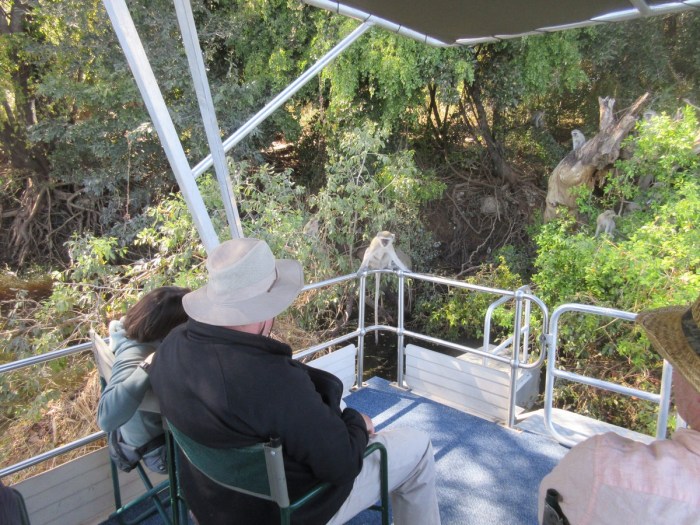
The safari came in two parts, with a boat safari in the morning and a driving safari in the afternoon. After getting over to Botswania and being served some coffee, we loaded up on the boat. Since there were 8 of us, the family got a boat to ourselves. Our tour guide was really awesome and very knowledgeable about the animals we were going to see on the Chobe River. Having been on a booze cruise on the Zambezi, I was a bit worried about how many animals we were actually going to see. I didn’t need to worry, but I was relieved when we spotted some velvet monkeys in a bush along the riverbank. We poked the boat over there for a closer look and some of the monkeys jumped on board.

IMG_8558

A little further down the river is when we really started to spot all sorts of wildlife. Our guide spotted a tiny little kingfisher and we spent some time maneuvering the boat to get a good shot. Mom is a bird lover and was interested in getting a good picture, though not as interested as the guy in another boat with a much nicer camera. There were a lot of boats on the river but the animals didn’t seem to mind and it is not worth worrying about all the other tourists. The trick is just to enjoy the animals.

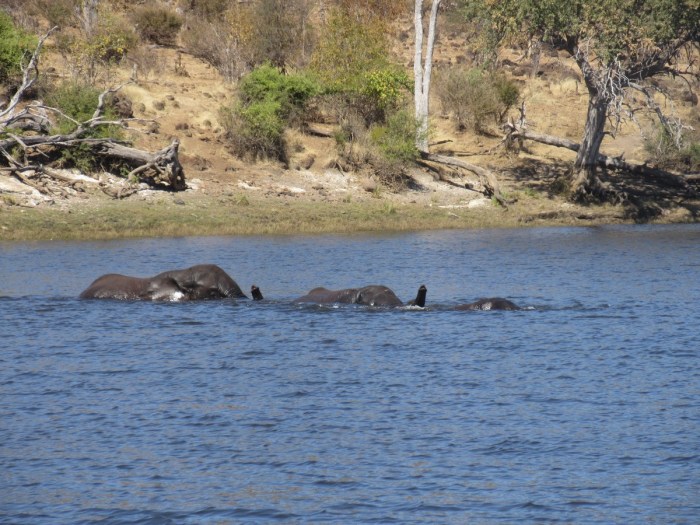
And enjoy we did! Just along the river we saw water buffalo, cranes, storks, hippos feeding in the daylight, crocodiles, riverbuck, kudu, impala, and lizards. The coolest part though was when some elephants decided to cross the river.

IMG_8673

Watching the elephants swim across the river to get to some of the good river grass was pretty amazing to watch. We watched them as they approached the river, evaluated the merits of a swim, and then waded into the river, eventually sticking their trunks above the surface to snorkel. The seemed like they had a good time and were rewarded with grass.

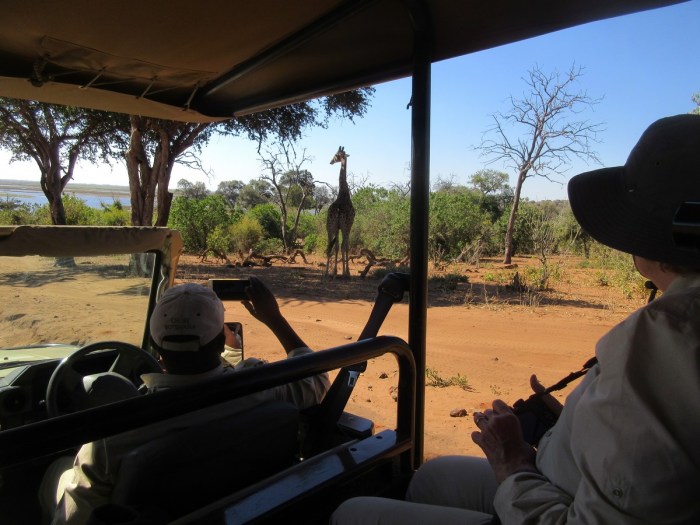
We eventually docked and had lunch. In the afternoon we had a driving safari. On the driving safari, we saw a lot of the animals we had seen from the boat, but a major new addition were some giraffes. Elephants are cool, but giraffes are my favorite animals to see on a safari just because of how weird they look. I feel like elephants look about like you would expect an elephant to look, but the scale of giraffes throw you off. Especially when they run, they look like they are moving pretty slow but are in fact booking it, galloping off into the distance.

IMG_8745

It was a long and pretty awesome day with some great tour guides and a lot of really cool animals. I know there are a lot of tourists there, but I highly recommend visiting Chobe if you have the chance.

Livingstone (Family Vacation Part 1)

IMG_8510

Reading this week:

  • Starship Troopers by Robert Heinlein

Since I’m really a bit over a year into this whole Zambia thing, and it is summer vacation back in America, my family came to visit me and see what I do here. It was quite a little adventure.

The first major thing we did on the vacation was to go visit Livingstone. I suppose you can’t really come all the way to Zambia without visiting Livingstone. Plus, I figured Livingstone was probably a pretty good way to ease the family into the whole concept of Zambia. My family is actually a relatively experienced bunch of travelers, with my dad’s family having lived in several developing nations in his youth. Still, Zambia is an experience.

The vacation was with quite a group. The total list of people was both my parents, my brother, my grandma, my aunt and uncle, and my cousin Judy, and when you include me that is eight people rolling around Zambia. Later on, my girlfriend Lily joined us bringing the total to nine. To get all those people around we first rented a giant van, and then later two smaller 4x4s. The part I was most excited about when it came to this vacation was seeing people who hadn’t been to the country before interact with Zambia. Lemme tell ya, that involved a lot of complaining about roads.

IMG_8514

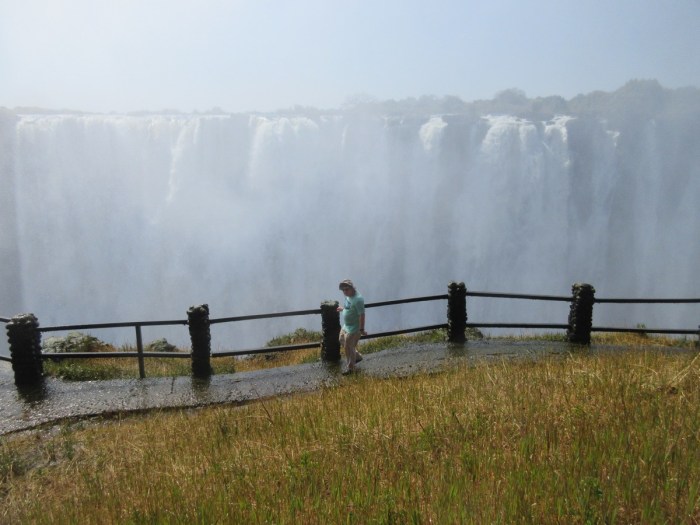
But besides the roads the family really enjoyed Livingstone. One of the first things we did was see the falls of course. I had been before, but during low water, and while it wasn’t quite high water when we were there, there was a lot of water. They rented ponchos at the falls which mom took advantage of, but I depended on my safari jacket alone.

IMG_8518

The most impressive traveler on the trip was my grandma, who I didn’t mention is 92. I was worried about her getting around but she had her walking shoes on and wound up doing everything we did on the vacation (well except for a Zambezi River “float,” but that was only because the seats on the raft didn’t have any backs; she enjoyed herself anyways).

IMG_8834

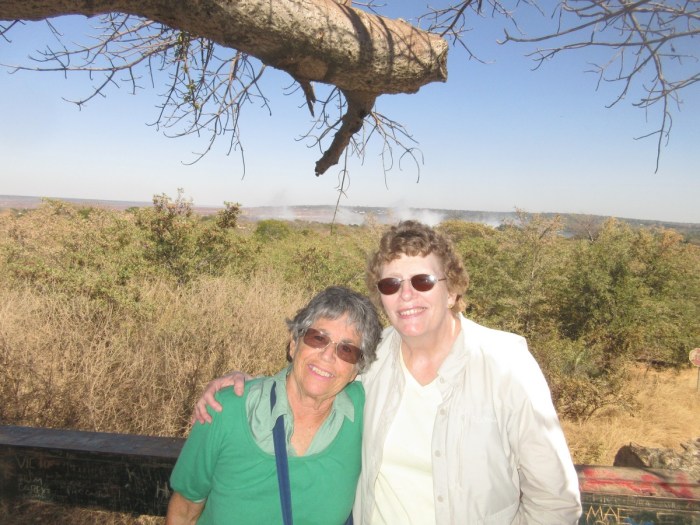
One of the themes of this vacation was me dragging my family off to see things I normally wouldn’t be able to see, because they’re slightly off the beaten path and I don’t have a car here. The thing in Livingstone in this category was the Big Baobab Tree. This tree is apparently somewhere between 1000-2000 years old and the big attraction here is that it has stairs leading to a platform at the top. From the platform you can see the “smoke” from the falls and have a pretty good panorama of the surrounding areas. Worth a visit!

Badass Corn Husker

IMG_8368

Reading this week:

  • The Barefoot Architect by Johan van Lengen
  • Goldfinger by Ian Fleming

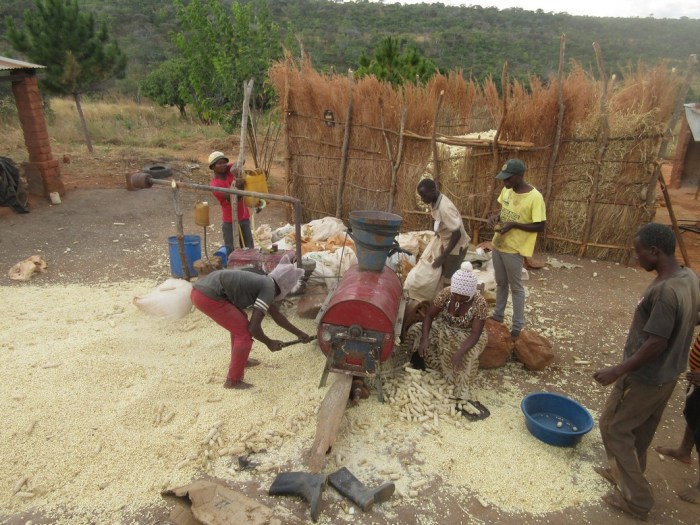
So this is one of the coolest pieces of appropriate technology I’ve seen in a while: a home-made diesel-powered high-speed corn husking machine. The guy who built it is rapidly becoming one of my favorite farmers. He lives up the valley from me and until recently I didn’t know how awesome his setup was. He came to my attention because he built some beehives and wanted me to take a look at them. He had heard I had been to the beekeeping workshop, but since I wasn’t around for a while he had gotten all the advice he needed from my counterpart. Development complete, let me tell ya. While we were there looking at the beehives, it turns out he had also just dug a fish pond. We went to go stock the fish pond today, and then he decided to show us his super awesome corn husker.

IMG_8190

He took that beehive to the District Agricultural Show and won 80 kwatcha!

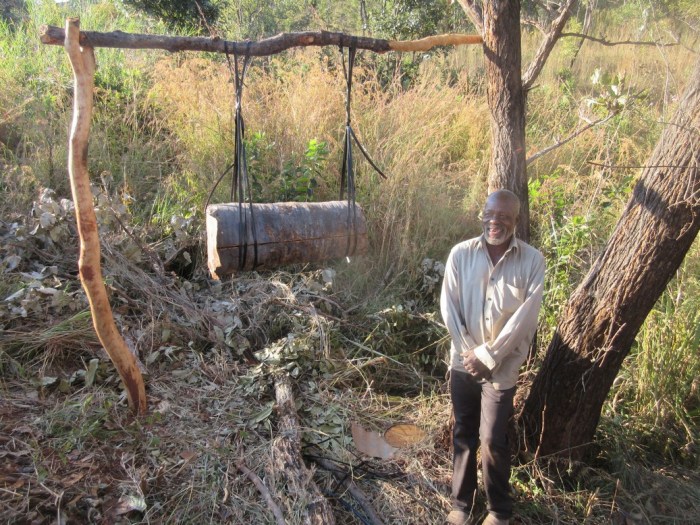
This dude is a pretty nifty engineer. He has a hand-cranked Chinese diesel engine that he can move around and hook up to a few different belt-driven machines on his property. The diesel is normally used for his hammer mill where he grinds up maize, but he also has a grinder for metal fabrication and who knows what else really. He also dug a pit that he can drive his car over to work on it (“costs 35 kwatcha in town,” he tells me) and the first time I met him he was working on a rifle.

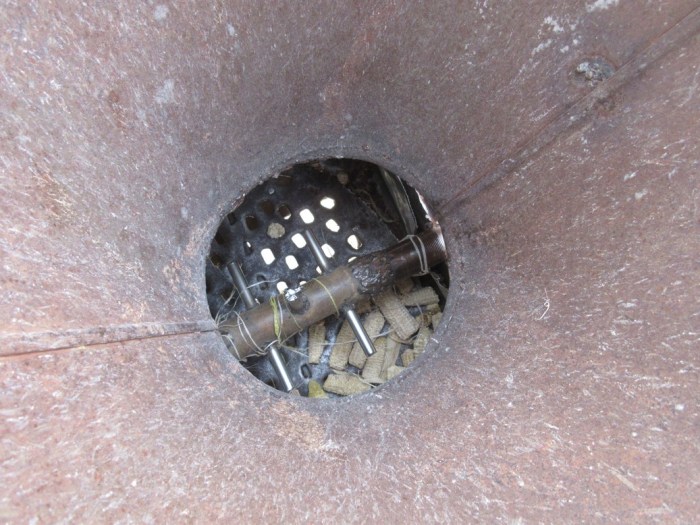
The corn husker is not an exercise in subtlety. It is housed in an oil drum and has a feeder funnel welded onto the top of it. Going through the oil drum he has placed a very heavy-duty metal rod suspended on bearings that appear to be rescued from a car. The metal rod has spokes coming off of it, and below the spoked metal rod is a grating. As the corn cobs are fed in the top, they are simply beat mercilessly by the belt-driven spoked metal rod. The cobs flail around inside the husker, losing their kernels. The kernels drop through the metal grating while the corn husks get pushed towards the end by the additional corn cobs being dropped in the top. One person tends the corn husk discharge chute, keeping an appropriate back-pressure of corn husks and feeding not fully-husked, um, husks back in the top for another run-through.

IMG_8361

The last thing the corn cob sees before being violently husked.

The whole thing was fantastic to watch and fantastically loud (hearing protection, alas, is not really a thing in this country, and least in the rural areas). The thing is certainly fast; most people do this by hand and the only other appropriate tech I’ve seen for this problem is a little metal die thing to make it easier to husk by hand. It is a four-person operation: one guy is tending the engine, another is feeding in corn cobs, the third is tending the corn husk discharge chute to keep the system operating well, and the fourth is shoveling corn kernels away from the kernel discharge chute. Cobs go in, cobs fly out the top, cobs spill out the end, kernels fall out in heaps. It’s pretty awesome.

IMG_8360

I was really amazed to see what people can do when they have a problem they want to solve. The farmer there built it himself, and also appears to have come up with the idea himself. I asked if he had seen other people with something similar and he didn’t say he had. He’s not the first guy to invent a corn husker but he might be the first to build one out of car parts, an oil drum, and a Chinese diesel.

Contested Succession of Senior Chief Tafuna

20180619_134801.jpg

Sorry it is a crappy picture.

Reading this week:

  • Let’s Explore Diabetes with Owls by David Sedaris
  • Dhow Cultures of the Indian Ocean by Abdul Sheriff (extremely illuminating)

So here is a story I only really recently dived into concerning the succession of Senior Chief Tafuna. If I haven’t mentioned the role of traditional leaders before, the traditional system of government is still very much in place. The Chiefs of Zambia are officially recognized by the government, and hold office in the House of Chiefs, which advises the government. In addition, Chiefs get a stipend from the government and act as an intermediary between the people in their chiefdoms and the government. In addition to those powers granted by the government, the Chiefs hold very real traditional power in their chiefdoms. People seek them out to settle disputes, Chiefs appoint village headmen which run the villages, Chiefs have a large role in land management and apportioning land use to different people, and command the respect of the people of Zambia. The power of Chiefs isn’t limited to the village; I have seen educated city-slickers get nervous in the presence of a Chief. And between the government stipend and the gifts people are required to bring to the Chief when visiting or asking him (or her!) to settle disputes, being a Chief can be a pretty lucrative gig.

This story begins in July of 2013, when the previous Senior Chief Tafuna died. As can be seen in the top diagram, Senior Chief Tafuna is the senior-most traditional leader among the Lungu people (I live in a Lungu village). Besides the fact that dying left the role of Senior Chief open, even the decision about where to bury the late Senior Chief caused contention, with one group objecting to burying him among the previous Senior Chiefs. Since he didn’t complete all of the traditional ceremonies when he was elected 45 years previously, they held he wasn’t really the Senior Chief.

Though the previous Senior Chief Tafuna died in July of 2013, it wasn’t until November of that year that the Lungu Royal Establishment elected a new Senior Chief Tafuna. I’ll note at this point that the names sometimes get confusing, because the name of the Chief is linked to the job, ie, although (in this case) Rafael Sikazwe Chipampe is elected, he is then known as Senior Chief Tafuna. The news articles from the election noted that there may have been some contention about who get elected Chief, but it was only the faintest of foreshadowing of what would happen next.

The first real grumbles of trouble came about a year later, when Chief Chitosi started to say that Rafael Chipampe (aka the elected Senior Chief Tafuna) was elected improperly. Without much detail, he complained that the Lungu chiefs did not follow the right channels in electing the new Senior Chief, and therefore Rafael Chipampe was not a legitimate Senior Chief. Meanwhile, the other Chiefs were saying to not entertain anyone other than Rafael Chipampe claiming to be Senior Chief Tafuna.

The crises became acute, however, when the government officially recognized Ben Mukupa Kaoma (aka Chief Mukupa) as the new Senior Chief Tafuna in 2016. This was contrary to the wishes of the Lungu Royal Establishment. Nonetheless, Chief Ben Mukupa Kaoma proceeded to Isoko (near Mpulungu) to assume the throne at the palace of Senior Chief Tafuna. This incensed Raphael Chipampe Sikazwe, the elected and acting Senior Chief Tafuna. This prompted Raphael Sikazwe to lead an angry mob which murdered Chief Ben Mukupa Kaoma.

As a suspect in a murder case, Raphael Sikazwe, acting Senior Chief Tafuna, went on the run. He eventually turned himself in. Although he plead not guilty to the crime, he was found guilty and sentenced to death. Since then, the succession dispute has not been resolved.

This story interested me at first because of its own proximity on my life; when I first showed up to the village I had heard that our Chief was “in exile” but I didn’t really ask more questions than that. When I saw the story about “Senior Chief Tafuna sentenced to death” I took a closer look. Between the witchcraft stories and succession disputes over thrones, I am always vaguely amazed at the Game of Thrones sort of stuff that goes on around here. On the other hand, the number of people that died over this is very sad, but goes to show the influence that traditional leaders still have here in Zambia and the lengths people will go to in order to get these roles.

HIV Football Tournament

Reading this week:

  • Left Bank by Agnès Poirier

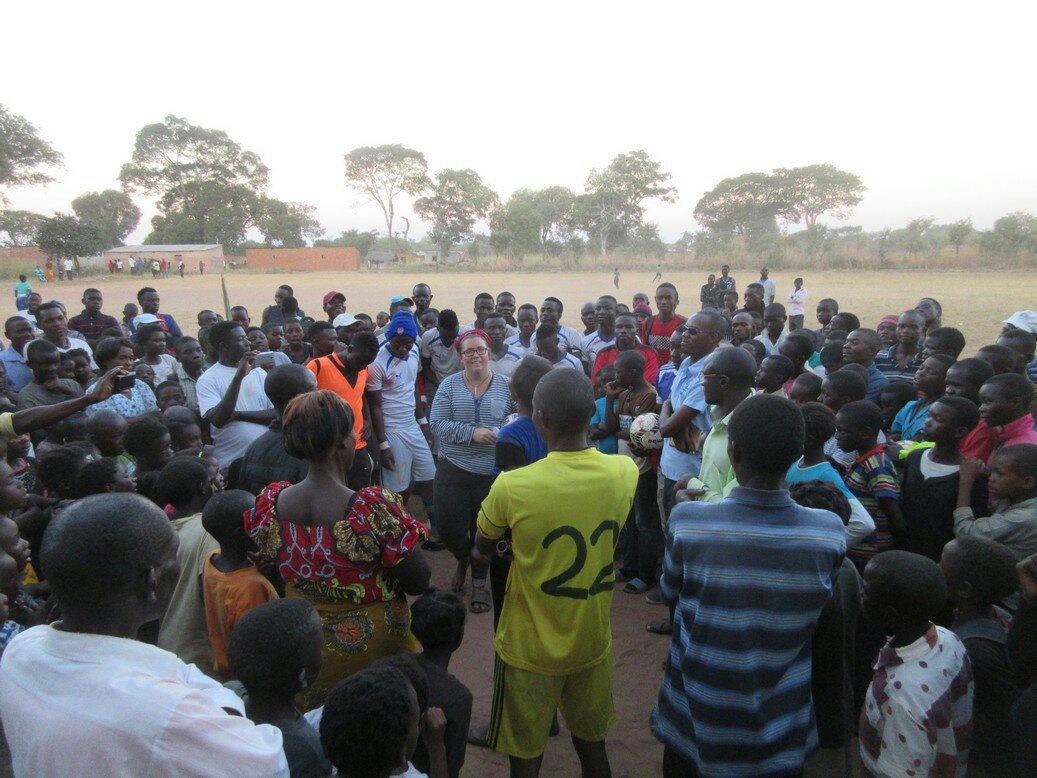
This past weekend I helped out at another volunteer’s HIV Football Tournament. This program was put on by Mel, and I attended to pick up any lessons I could about maybe running a similar event in my village. Overall it was a lot of fun and a lot of people got tested for HIV and learned about HIV prevention.

The event I attended was actually the culminating day of a series of football matches. It was the final match between the last two teams in the tournament. There were a total of six teams at the beginning of the tournament. Part of Mel’s rules to be able to play in the tournament is that you had to get tested for HIV. Although she plans to host a net ball tournament next year, she was focusing on men as her target demographic and football is a great way to get men interested in HIV. Throughout the course of the tournament, she also arranged to have testing available at the games, so she wound up getting 105 people tested, which is a pretty awesome accomplishment!

The arts group struts their stuff.

As the day of the finals dawned, we were a little worried because we found out morning of that the Chief’s daughter was getting married that same day. We were pretty worried that the wedding would depress turnout at the event, and towards the beginning of the event our fear seemed justified because the crowd was pretty small. Luckily though, Mel had arranged to have an arts group from Kasama come to perform at the event. Their main role was to put on a skit about HIV stigma and prevention, but they also did several dance performances. This was very useful for literally drumming up a crowd. As the arts group started to perform, people began to filter into the event from the surrounding areas and the local market, so before long there was a pretty large crowd.

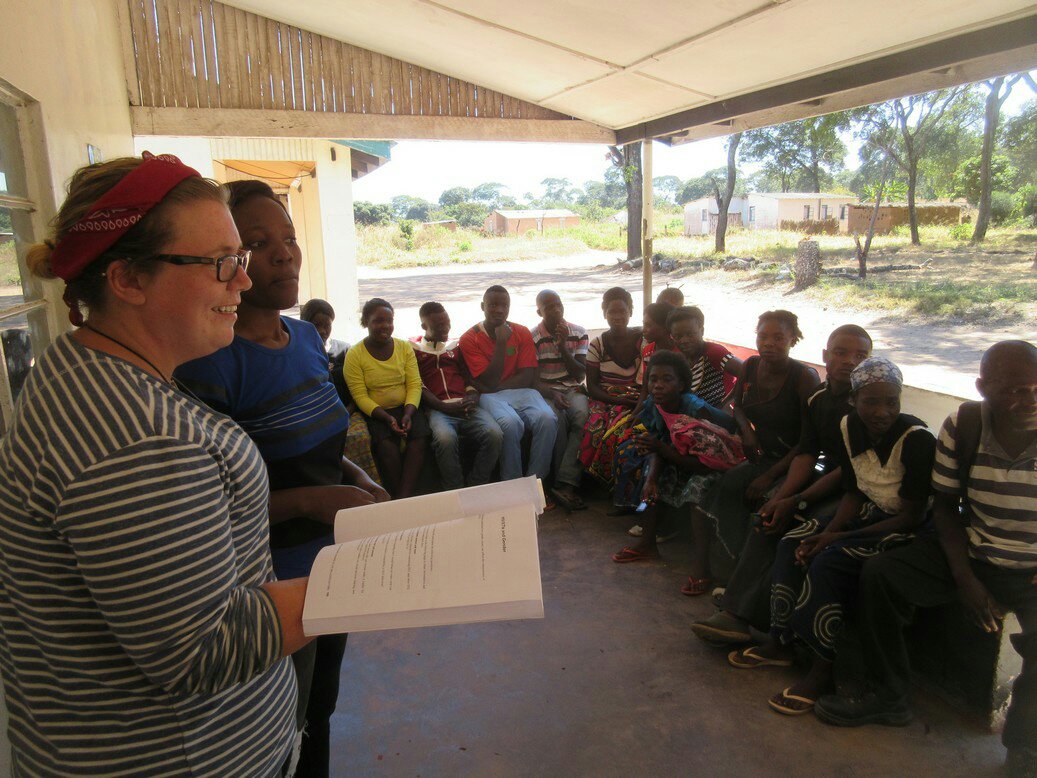
Mel teaching about HIV & gender.

After the first dance we broke into two groups to teach about HIV. Putra and Thomas, the other two volunteers that came to help, took the younger part of the crowd and taught a GRS lesson about how ARVs work to protect the body from HIV. Mel and I took the older part of the crowd and talked about HIV and gender. The physical differences between men and women, along with the different cultural expectations between men and women affect their likelihood of getting the virus. Those topics aren’t really any different here in Zambia than the are back in the USA. One of the major points I talked about during the discussion is the fact that women with a lot of sexual partners are seen as promiscuous, while men with a lot of sexual partners are seen as manly. That means men can be a vector for HIV, as they spread it among their multiple partners. We try to emphasize that the best thing to do, if you choose to be sexually active, is to have one mutually faithful partner and to both get tested for STIs regularly.

After the lessons there was more dancing, and then lunch, and then we convened for the big event. Watching the football match was a lot of fun. There must have been hundreds of people watching. Not only was the football match probably the most interesting thing going on during a Saturday afternoon, but the stakes were pretty high because as part of the tournament Mel was offering prize money. The crowd was really into it. It was a little sad for us, because the team we were rooting for (the team one of Mel’s friends was playing on) lost 0-3, but the crowd brought a lot of energy. Whenever the other team scored the whole crowd would rush onto the field and run around before clearing out in about a minute to let the game continue. When the game was finally over the whole crowd paraded the winning team around the field and then back to Mel so she could award the prizes and thank everyone for coming.

After the game we filtered back to Mel’s place and cooked dinner. I had a really great time at the game and I think it was pretty awesome l how many people Mel got tested and taught about HIV. People had a lot of fun and I was glad to be part of it!

Zanzibar

Peak tourist.

Reading this week:

  • An Object of Beauty by Steve Martin
  • An Inquiry into the Nature and Causes of the Wealth of Nations by Adam Smith (this one took a bit; it gets a little dry in the middle)

Since we’re halfway through our Peace Corps service, and to see more of Africa, my girlfriend and I took a vacation to Zanzibar. Going to Zanzibar is a pretty standard vacation for Peace Corps Zambia volunteers because there is a train that goes to Dar Es Salaam, and between there and Zanzibar it is an easy ferry ride.

Taking the train to Dar Es Salaam was pretty interesting. The only bad part about it was that it wound up being about 30 hours behind schedule by the time we got to Dar. But taking a train any distance was a new experience for the both of us, and the country we were traveling through is very pretty. We passed through mountains on the train, and then as we descended towards sea level things got more tropical. I spent a lot of time staring out the window, just checking out people’s gardens by the side of the track and taking in the big mountains and waterfalls you could see from the train. At one point the
train passes through the Selous Game Reserve, and from the train we saw giraffe, wildebeest, and baboons, so that was really cool.

We arrived in Dar in the late afternoon and spent the night there so we could catch the ferry the next morning. Dar is a really impressive city coming from Zambia, and we ventured out to get some dinner after we had settled into the hotel. It was Ramadan when we were visiting, so after dark there was a lot of food and activity. The next morning we got on the ferry and that was a pretty smooth experience. The ferry ride takes about two hours to Zanzibar and I was having a grand ole’ time checking out all the dhows sailing around and just enjoying being on the ocean again. After arriving in Zanzibar we walked to our lodge and after settling in there we head out to explore Stone Town.

Stone Town is the big city on Zanzibar. I really enjoyed walking around there. It is a very old city, having been the main port of the major center of trade that was Zanzibar. It is comprised of a lot of
narrow, winding alleyways filled with shops. Most of the shops were pretty touristy, but I still enjoyed taking in all the sights. One of the things I liked the best about it was the (I spent some time trying to avoid a cliché here to no avail) contrast between old and new in the harbor. You had these modern port facilities with a container ship unloading and a high-speed ferry docking and in between them dhows zooming around. When I woke up early in the morning and looked into the harbor there were guys paddling canoes in between a barge and a luxury yacht. There were also a whole lot of cats.

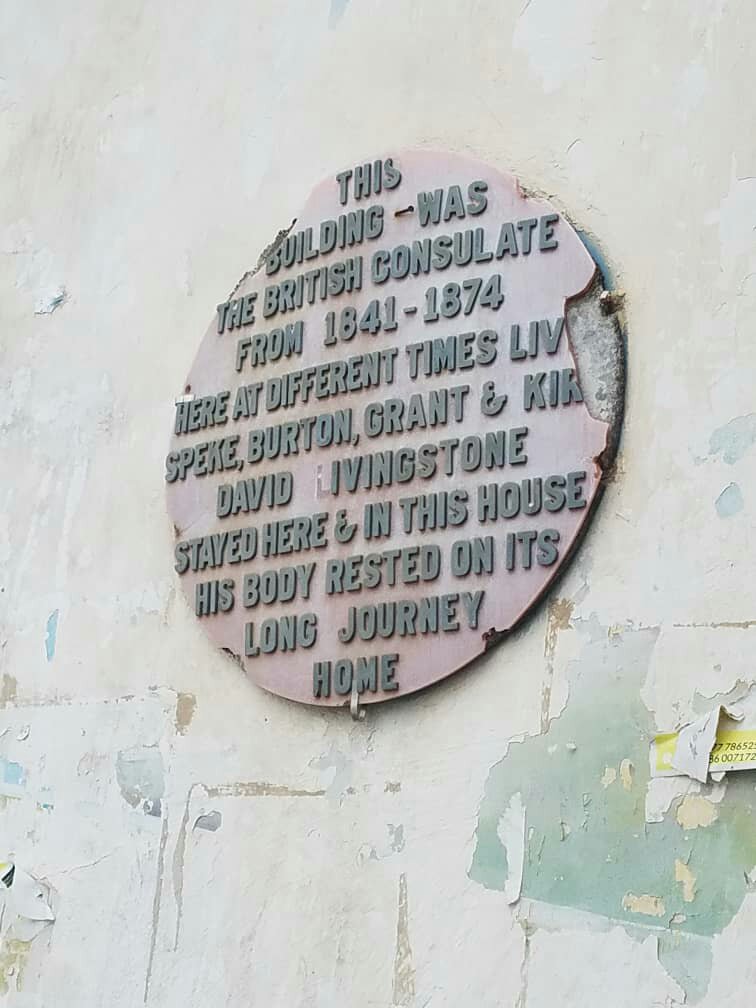
As for sights in Stone Town, the only real like sights sights we went to were the Sultan’s Palace Museum and the Slave Museum. The Palace Museum was pretty neat. It has a small but nice array of artifacts from Zanzibar’s heyday as a center for global trade under a sultanate. That same sultanate lasted until the ’60s when it was overthrown by the Revolutionary Government of Zanzibar which still rules, which I only mention because that is an awesome name for a government. The museum also had some sweet carved chairs I was really jealous of. Oh, unrelated, but kinda nearby is the site of the old British consulate where Livingstone’s body passed through after he died near the Bangwelu Swamps.

The Slave Museum is on the current site of an Anglican church but on the former site of one of Zanzibar’s slave yards. Zanzibar’s major export back in the 1800s were slaves. The museum has a very informative display about Zanzibar’s role in the East Africa slave trade. They captured slaves pretty far into Africa, including where I live now here in Zambia. Part of the reason the London Missionary Society was in the area was to help halt the slave trade. Besides the displays, at the museum you can visit the dungeon/holding cell where they kept slaves while they were waiting to be sold, and a monument to the slaves that worked on Zanzibar or passed through the slave markets.

Slave memorial.

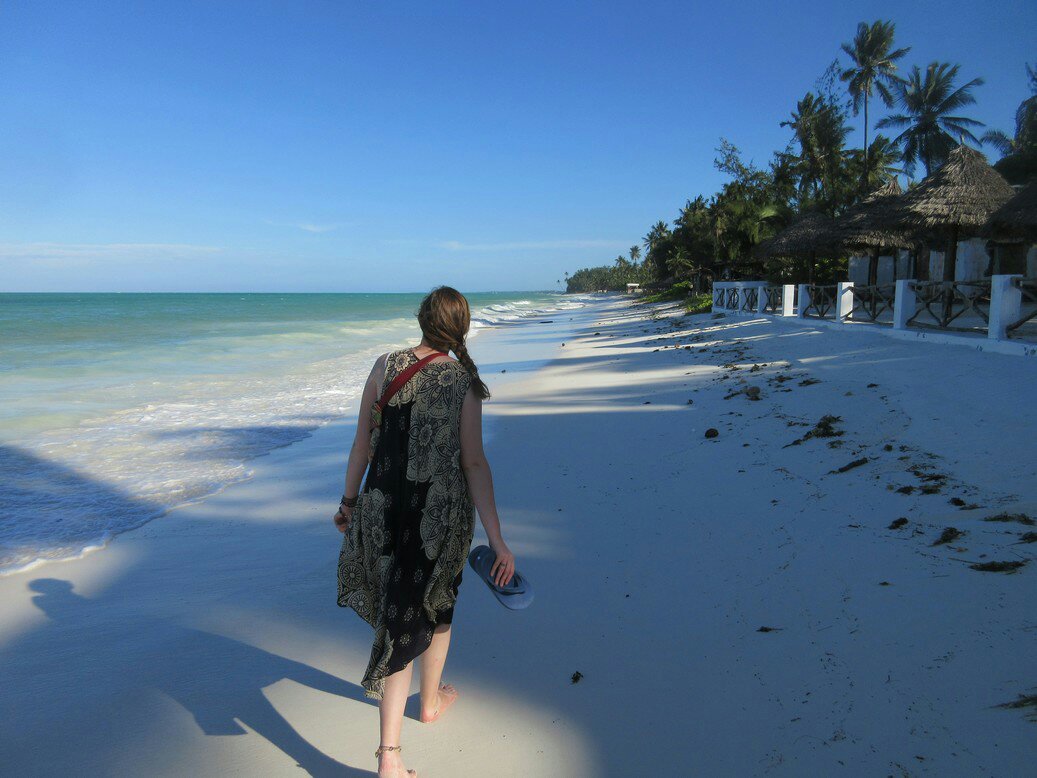
After two full days in Stone Town, we took a taxi over to the other side of the island to a lodge in Bweju. This was the beach portion of the vacation. The area over on the east side of the island is really popular for kite surfing, and we kinda did our math wrong because kite surfing weather isn’t really beach bumming weather. But still we were at a great lodge and we largely had the beach to ourselves.

I was interested in driving through the island to check out everyone’s gardens. Zanzibar is a lot more tropical than Zambia, but there were still a lot of similarities. I saw a lot of cassava being grown and even one field of maize. We passed through a large number of rice fields, and there were cows everywhere. What I was most excited about was my latest obsession, cocoyam (aka taro). Cocoyam was pretty popular on the island, and commonly intercropped with banana, which is pretty much the definition of tropical paradise. Besides these, Zanzibar had many different kinds of fruit trees (mango, coconut, banana, oranges, guava, breadfruit, star fruit, and so many more) and of course spices.

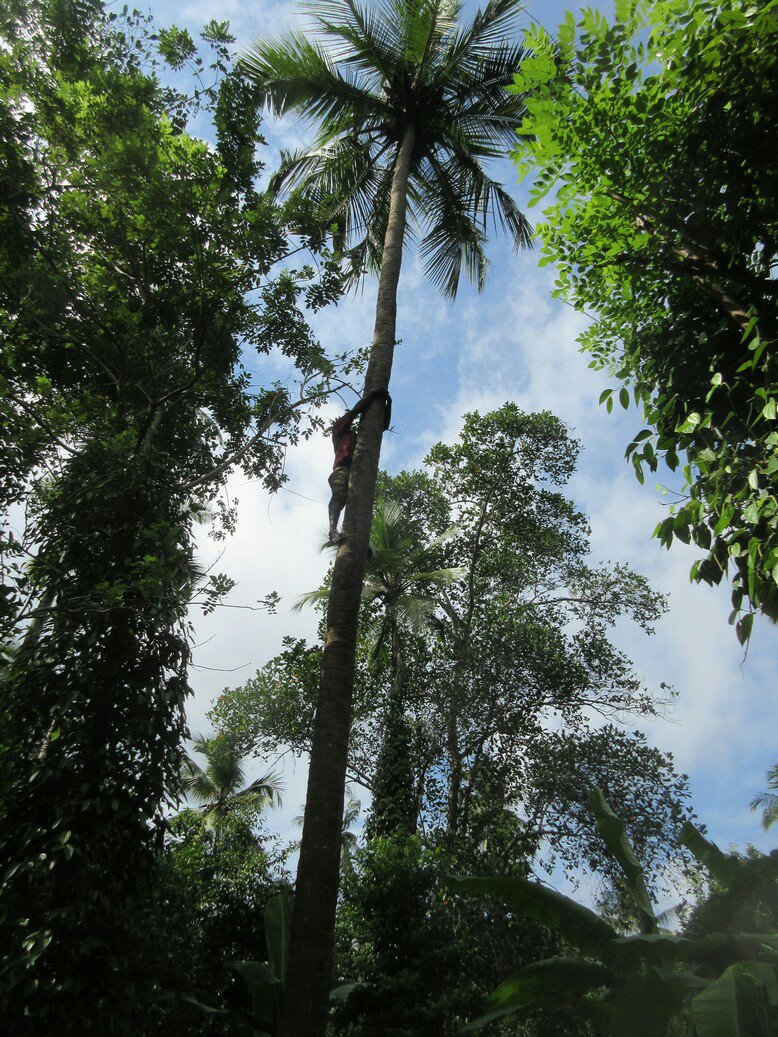
Man climbing a tree to get us a coconut. He also sang.

The big touristy thing we did while we were over in Bweju was go on a spice tour. Besides its history with slaves, Zanzibar is also famous for its spices. The spice trade was a major driver of the slave trade, with slaves being used to harvest labor-intensive spices like cloves. The spice tour we went on was at one of many small spice farms that specialize in these sorts of tours, and we saw a large variety of spices being grown. We saw vanilla, cloves, nutmeg, uh, and such a bewildering array of other spices I can’t remember them all. This experience was kind of peak touristy, but we were into it. We saw the spices, a man climbed up a tree to get us a coconut, we were fed a variety of tropical fruits, and had the opportunity to buy spices to woo our friends and families. They also made us sweet hats.

Nutmeg.