Paperwork enthusiast seeking new frontiers of paperwork. Former submariner, former Peace Corps Volunteer. Opinions, thoughts, and comments reflect no actual persons, living or in the Navy.
My super amazing wife and I got married about a year ago (as loyal reader(s) of this blog will recall) but we never went on a honeymoon so we decided it was time to go on a honeymoon. We also decided that honeymoon is a state of mind and that we can call any vacation a honeymoon but this is the first vacation we called a honeymoon so we had to go big. Specifically, we had to go to Spain.
Travel to Spain was straightforward and everything went perfectly smoothly. The first city we were going to was Madrid. We arrived in the evening and got a taxi to the place we were staying, the biggest hiccup being that I couldn’t figure out how the key worked but luckily my super amazing wife saved the day and so we had a place to sleep. We were pooped but needed dinner so we grabbed something easy, spotting on the way a fantastical-looking pastry shop which we returned to for dessert. The only mistake we made here is that within mere hours of landing in Madrid I had one of the best cheesecakes I have ever had in my life and I spent the rest of the trip chasing that same high with only varied success.
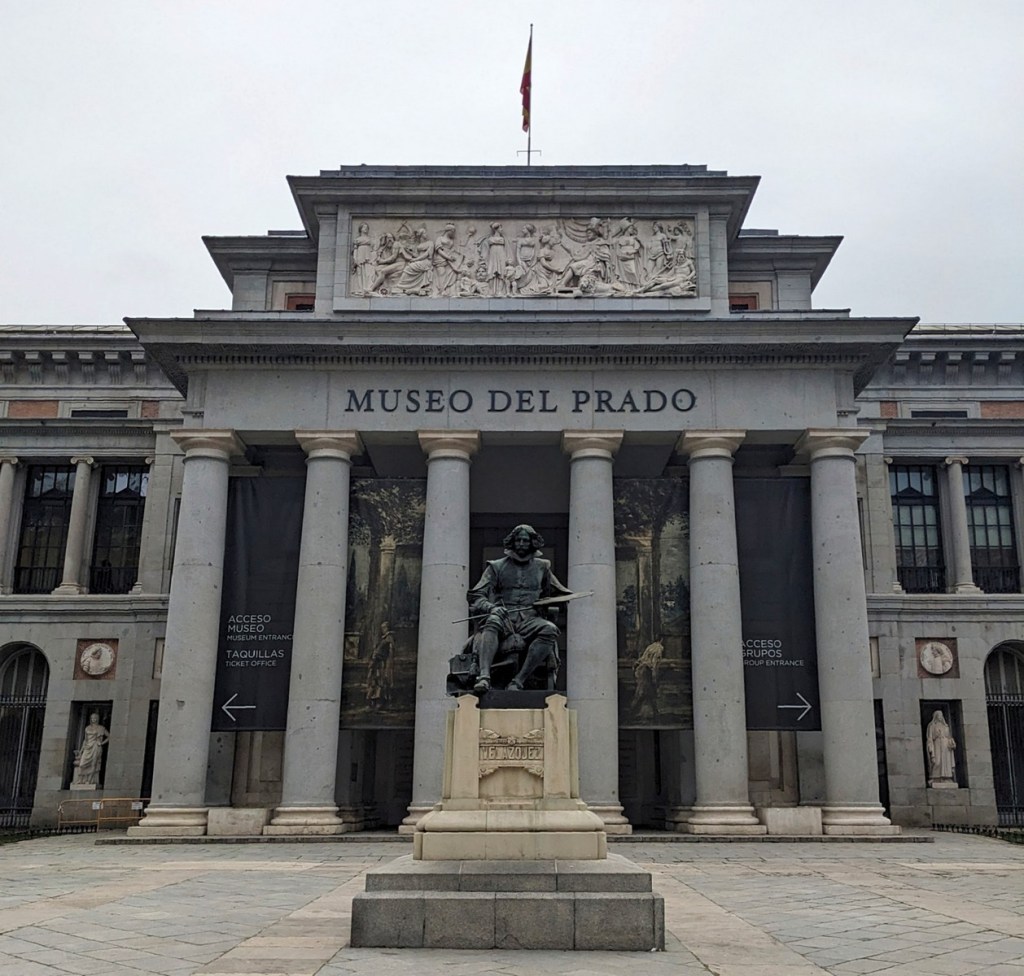
The next morning our first destination was yet another wondrous pastry shop where we got some heavenly pastries for breakfast. Fortified, we quickly made it to our first big honeymoon adventure: Museo del Prado. The museum was great! For those that haven’t clicked the link, it’s an art museum, and a big one, focused on classical art. In line with their pre-20th-century vibe, photography was not allowed, so I can’t do my normal thing of showing you bad photos of great art. Instead I will have to simply describe the journey and use links along the way.
Overwhelmed by the layout, the first wing we managed to focus on was where they kept all their Hieronymus Bosch works. I already used “fantastical” in this post to describe a pastry shop but man that was a waste because now I need to talk about Bosch. The biggest work with the biggest crowd was The Garden of Earthly Delights of course. I had seen pictures of that thanks to the Spanish classes I did poorly in (I would also have seen it if I had done well), but his other works were more astounding. I am disappointed to learn it is merely attributed to the “workshop of,” but the single most surprising was The Temptations of Saint Anthony Abbot, which features prominently an old lady that is also a house (which apparently makes it a brothel? Or maybe it is the naked lady that makes it a brothel. Not knowing St. Anthony I don’t know which is the tempting part for him). I mean, look, if this was a Dalí that would be run-of-the-mill, pedestrian, expected. But Bosch(‘s workshop) painted this in 1510! How did they know to do that? The past is both a foreign country and yet exactly the same, I don’t know how they do it.
From Bosch we wandered into some religious iconography which I am usually pretty whatever about, but all the works in the Prado were bright and beautiful and being a big fan of art restoration YouTube I was desperately impressed by their restoration department. Those people know what they are doing, it is evident. Another extremely fun exhibit they had was “Reversos,” which was all about the backs of paintings. A couple of things fell under that bracket. One was the literal backs of paintings, which held other sketches and earlier works and clues to the history of the paintings on the front. Another batch were painters being cheeky, imagining works from another perspective or painting the literal backs of paintings as a meta-joke. Even meta-er was the painting we bought a print of, which featured a cat busting through some canvas to try to eat some sardines that are hanging off the back of a painting, which is not where I would store sardines but there you go.
You of course also can’t go to the Prado without talking about Goya. They got a lotta Goya at the Prado. A whole lot. Multiple rooms are dedicated to the Black Paintings. I knew about the Black Paintings and was expecting all of Goya to be surreal and dark and wicked but the Black Paintings wing was one of the later ones we visited, and there is whole other wing full of his earlier works which are bright and cheery and meant to portray beauty. These are also cheeky in their way, the museum displayed side by side both The Naked Maja and The Clothed Maja, which is funny in addition to being an interesting exploration of the cultural background of the time. Sometimes I think I should spend more time in art museums focused on single paintings, but zooming through such a massive collection of one person’s oeuvre has its attractions as well. In the rest of the museum there was tons more to see, and just to name some others I liked there was La suerte de varas,Margarita delante del espejo, La aguadora (so achingly bright even in paint), and The Pearl and the Wave (which is funny for the name alone).
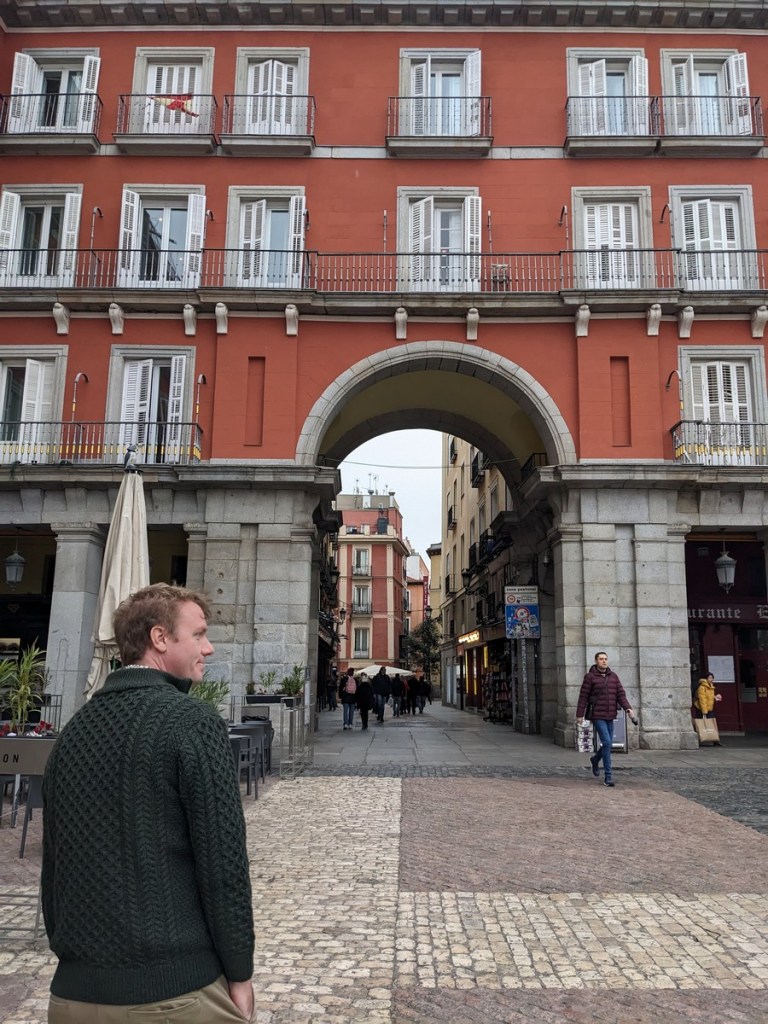
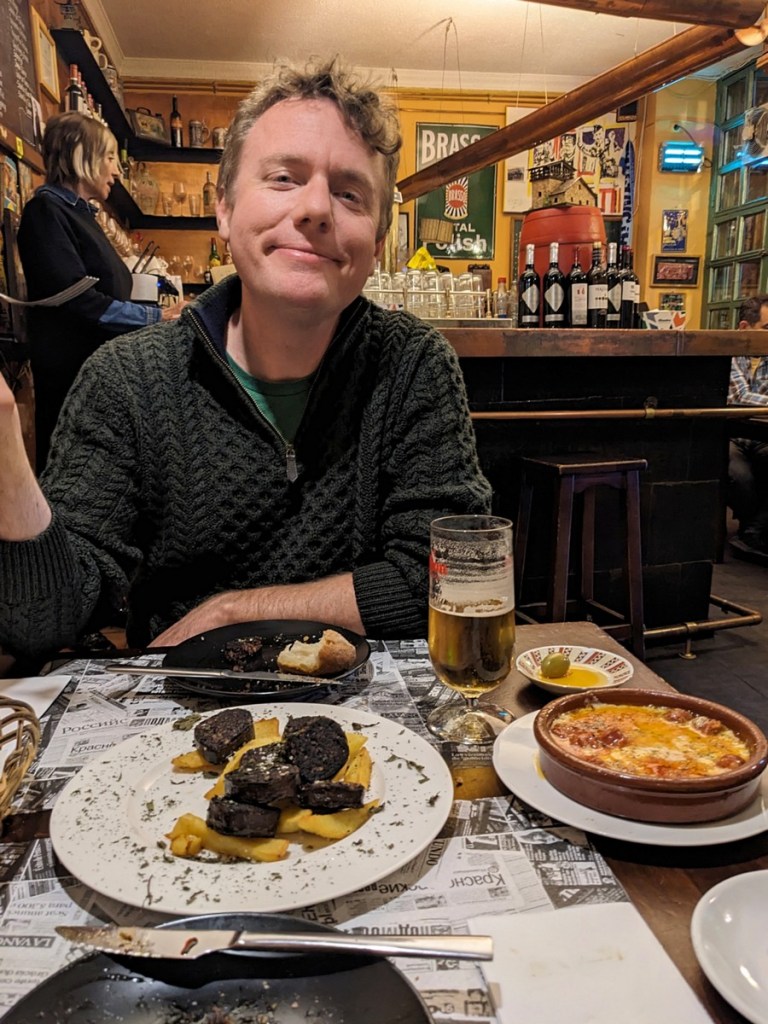
Full of art, we needed to get full on food and found a wonderful little cafe for lunch. Full of lunch we needed to get full of Naval History and so then went to the Museo Naval! But they let me take pictures so I will cover them in the next entry. After the Museo Naval we then had some time to poke more around Madrid and carved a touristy path, exploring the shops and the statues and the Plaza Mayor (above) before finally winding up back at the place we were staying and checking out the closest restaurant which had the significant advantage of being achingly delicious. I did not know if I would be a fan of the blood sausage but I didn’t want it to stop, as you can see below. As a final note, man I enjoy being able to order “una cerveza” and subsequently being served a cerveza without all the hassle of picking one. This is the height of luxury, don’t let anyone lie to you.
Tales from the Dark Continent edited by Charles Allen
Journey into Africa by James McCarthy
Having stumbled out of the Royal Museum for Central Africa and into the daylight (well into the overcast skies), I proceeded to make my way into Brussels proper. Since the trolley out to the museum was undergoing maintenance, this involved a bus ride to the metro station and then a lovely metro ride into the city center. Except I didn’t really mean to go into the city center, that was too far, I meant to go to the city edge because there was supposed to be a yarn store which I was going to check out on behalf of my super amazing wife, but then I couldn’t find it which made yarn hunting feel a bit demoralizing so trying to figure out what else to do in Brussels I went to the Royal Museums of Fine Arts! Oh also there was an accordion player on the metro when I was riding it. When we were in Spain (which I will write about later) there was an accordion player on the metro and now here I was in Belgium with a metro-bound accordion player so I assume this is a European thing?
The first thing to know about the Royal Museums of Fine Arts is that “Museums” is plural. I did not realize this for quite a while and it made the whole experience rather bewildering. Not helping was the fact that I entered the place about two hours before closing and I was concerned that I wouldn’t be able to see every single piece of fine art within that time and by golly I wanted to get my money’s worth. So I beat through the crowds and rushed over to the ticket machine and got what I thought was a general entry ticket to the singular Museum which noted what I thought was just a special exhibit: IMAGINE! 100 Years of International Surrealism. Ticket in hand I wandered off to the first exhibit I thought might be interesting to see, the Magritte Museum.
I found the Magritte Museum (what I at that time thought was the Magritte exhibit) and first had to figure out how to work the lockers so I could store the bag of Belgian chocolates I got for my super amazing wife at the behest of the friend I came to Belgium to see. With that done I got into the rather long line for the Magritte exhibit and waited and waited and finally got to the front where you scan your ticket only for my ticket to not work. Because it was actually a ticket for the surrealism exhibit, and the docent eventually told me that I had to go to that exhibit and couldn’t come into the Magritte exhibit. Stressed and put out, I went down to the surrealism exhibit, only to come across another barrier. Besides my time limit and being bewildered, the other off-putting thing about the museum was that every single other tourist there was as confused and bewildered as I was, so here I was trying to get into an actual exhibit to see some actual art in this museum only to find another tourist arguing with the docent there and it took a while. I mean maybe like 2 minutes but I was stressed! I just wanted some culture! And I was very annoyed at not being able to see any Magrittes in this town where Magritte lived! I didn’t even want to see any Magrittes before I came to Brussels but now that I was here I wanted to see some Magrittes and I had been thwarted! The whole thing was very annoying! But eventually I got into IMAGINE! and it turns out it had a pretty good chunk of Magrittes anyway.
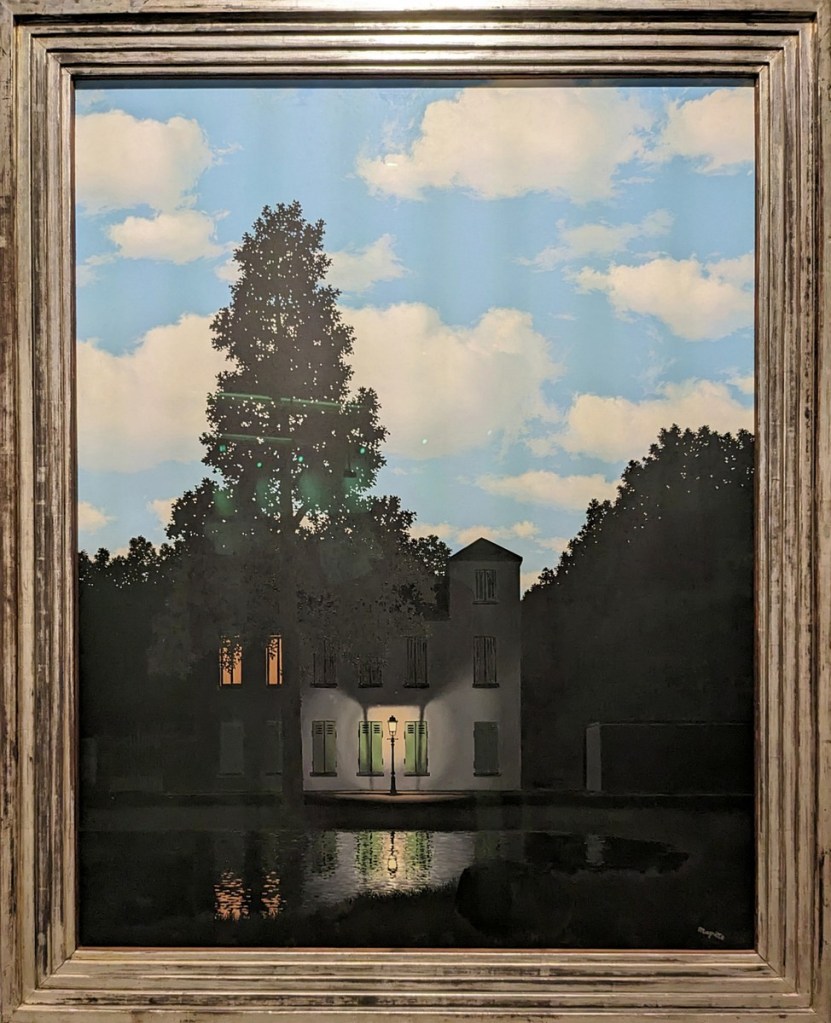
I really liked the one above, “The Dominion of Light.” I have a cousin who told us once proudly that she knew she had good taste because everything she likes turns out to be expensive. In that case I have really great taste because another one in the series sold for £59.4 million. I think I like what everyone else likes about it, the paradox that makes you work hard to try to understand it. Plus he paints really good. Pretty big plus if you’re a surrealist.
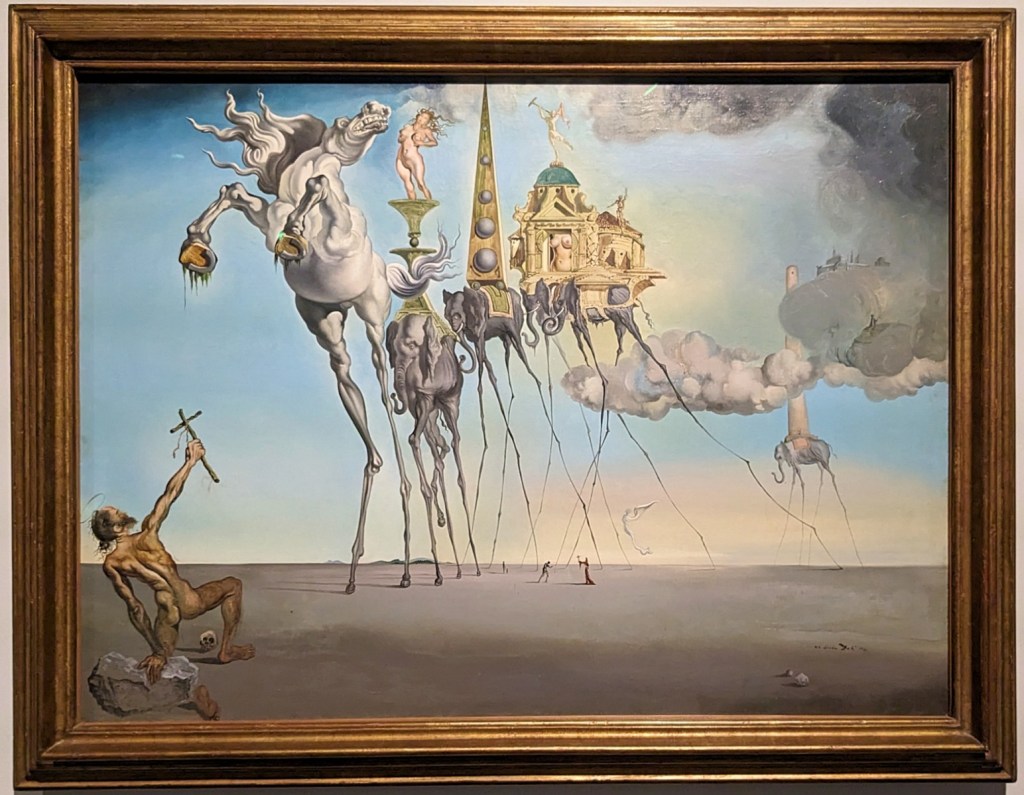
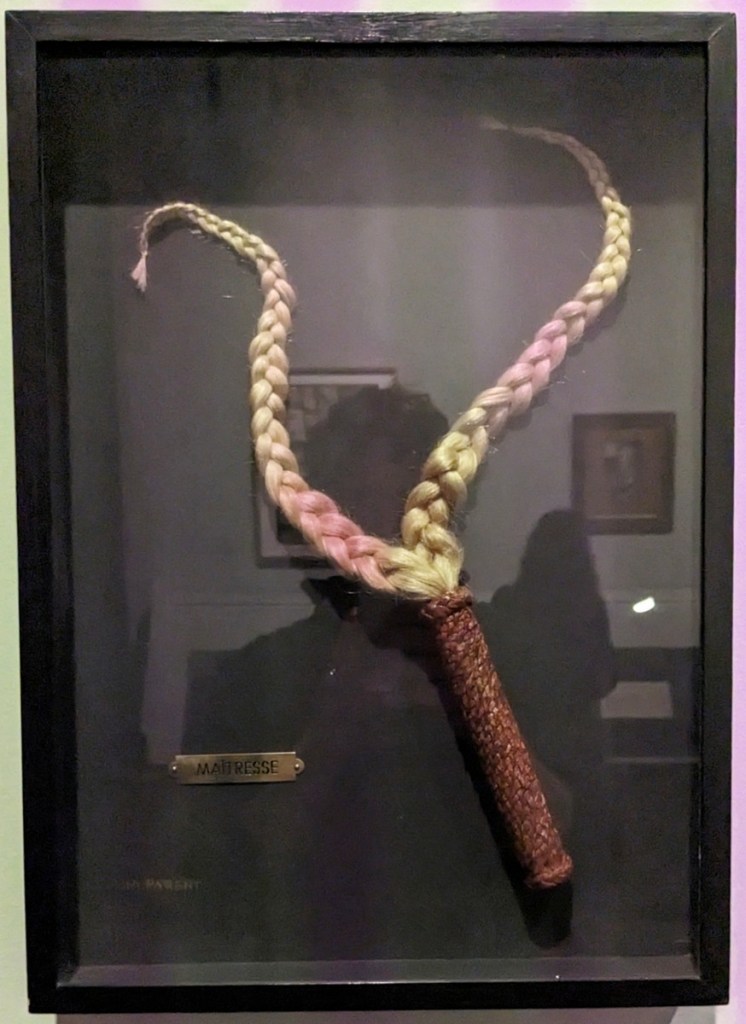
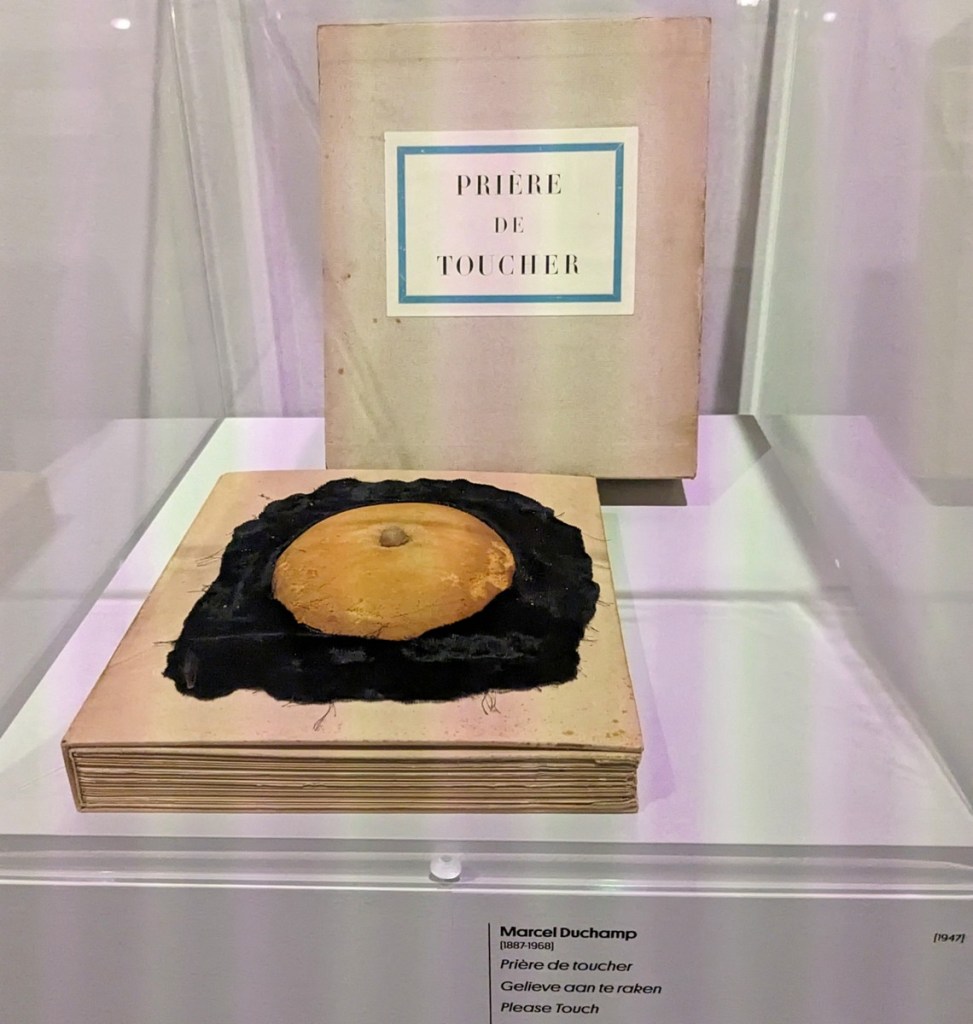
A few other works jumped out at me. Having been to the Dalí Museum, I find it fun to see a Dalí anywhere else. Like, you’re a Dalí! You should be in the Dalí Museum! That’s where Dalís go! Of course that is silly but that is the way my brain works so it is extra surreal to see the surrealist elsewhere. My two absolute favorite pieces in the surrealist exhibit however were in a section that gave you a little warning that some topics might be sensitive for particular viewers. They meant sex, sex is the topic that might be sensitive. The first was the sculpture? object? in the gallery on the left by Mimi Parent. A whip made out of two braids of hair, two pigtails, is pretty provocative, but then you title it “Mistress” and man (woman?) that is the height of wit. I loved it. The other probably wouldn’t have been so great on its own, Duchamp putting a boob on a book, but the museum itself managed to put together just an absolutely exquisite meta-artwork by taking a sculpture titled “Please Touch” and putting it under glass.
Full of surrealism I now had an hour left before the museums closed. What to do? I had already paid I think €18.50 to see the surrealists, and I was in a bit of a huff that didn’t cover the entire museum, did I really want to pay another €10 to see more stuff when I only had an hour? I waffled but eventually decided that art is priceless and got a ticket (correctly, this time) to see what I thought was the actual Fine Arts museum itself but now reading the website I realize is the Old Masters Museum. It was still not smooth sailing from here, because first I had to confirm what ticket I needed, and then wait in line for that, and then try to enter only to be told I needed to recheck my chocolate bag because I had retrieved it, and that being accomplished I was then once again in a line behind other bewildered tourists, and the poor docent who must be at least trilingual and is therefore very impressive was trying to explain to the bewildered tourist what to do while other tourists were skipping the line which annoyed me and the lady in front of me but we eventually got there, we figured it out, I entered the museum, and admired some old masters.
View of the entry way from the Old Masters Museum itself.
Old masters are not normally really my style. I probably waffle on that but like religious iconography just doesn’t really vibe with me. Maybe if I knew more Christian lore it would but I don’t. Plus I was annoyed by the whole process of getting in the door so it took me a bit to settle down and what really did it for me was going into the Bruegel room. It wasn’t a huge collection but the neatest part (for me) was the two different versions of “The Numbering at Bethlehem” but Bruegel I and Bruegel II. Kinda fun to paint the same painting as your old man just to prove you got the chops. I assume that is what he was doing, I don’t know. They weren’t directly next to each other so you had to shuffle between the two to take in the pair, but overall I thought it was pretty neat and it chilled me out enough to really examine the rest of the artwork in a levelheaded manner.
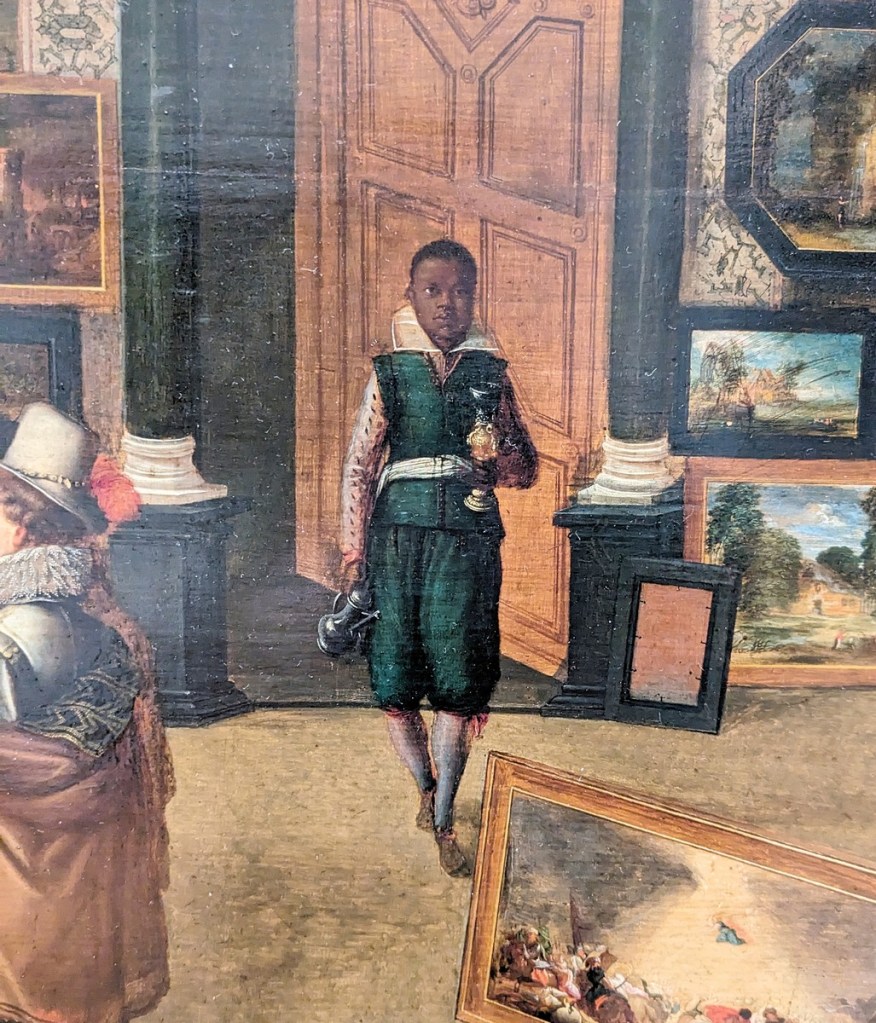
Of the rest of the paintings the one that really caught my attention was “The Art Lover’s Gallery,” which was displayed just sorta tucked away in a hallway. It wasn’t a major focal point of the collection but it had exactly the thing to appeal to me: an astrolabe. I noticed that the dudes in the frilly collars had a whole set of navigational instruments and man do I love navigational instruments. Plus the room is decorated in a way I would like to decorate, choc-a-bloc with paintings and other curiosities. I had almost walked away when I realized too that my astrolabe tunnel vision kept me from noticing the black boy that looks to be maybe a servant wandering in with tea? I’m not sure. But since this painting is from 1621 there is a whole world to be unearthed just from his presence in the painting. Unfortunately I did not have the time and do not have the knowhow to unearth that world, but it was a pretty neat way to end my time in the Royal Museums of Fine Arts.
Cabinet d’amateur, attributed to Hiëronymus II FranckenHot hot navigational tools action.A cool dude.
The timeline of the official date of this post and of subsequent posts aren’t going to make a lick of sense but that is what happens when I am behind on writing and I feel bad about it. But anyway for undisclosed reasons I recently found myself in Brussels for a day. I had a friend to see and I wouldn’t ever tell her this but she was actually only my second priority for the day, the first priority being seeing the Royal Museum for Central Africa!
I learned about the museum from Adam Hochschild’s book, King Leopold’s Ghost (available in the gift shop). He does not exactly speak highly of the museum in the book, but given it is a repository of so many artifacts from central Africa (and more specifically the DRC, Rwanda, and Burundi), I wanted to go, trusting myself to contextualize what I was seeing appropriately. Since the publication of King Leopold’s Ghost, and possibly spurred on by it, the museum closed down for five years between 2013 and 2018 to rethink and revamp its collections and displays, and Adam Hochschild had a chance to revisit it, which he wrote about in The Atlantic. In the article Adam describes taking “one of Europe’s loveliest urban journeys” to the museum via the trolly. I was so excited to see the museum that I took a slightly different path, going to the museum via the bus straight from the airport (still an extremely lovely trip). I think I was the very first guest in the museum that day.
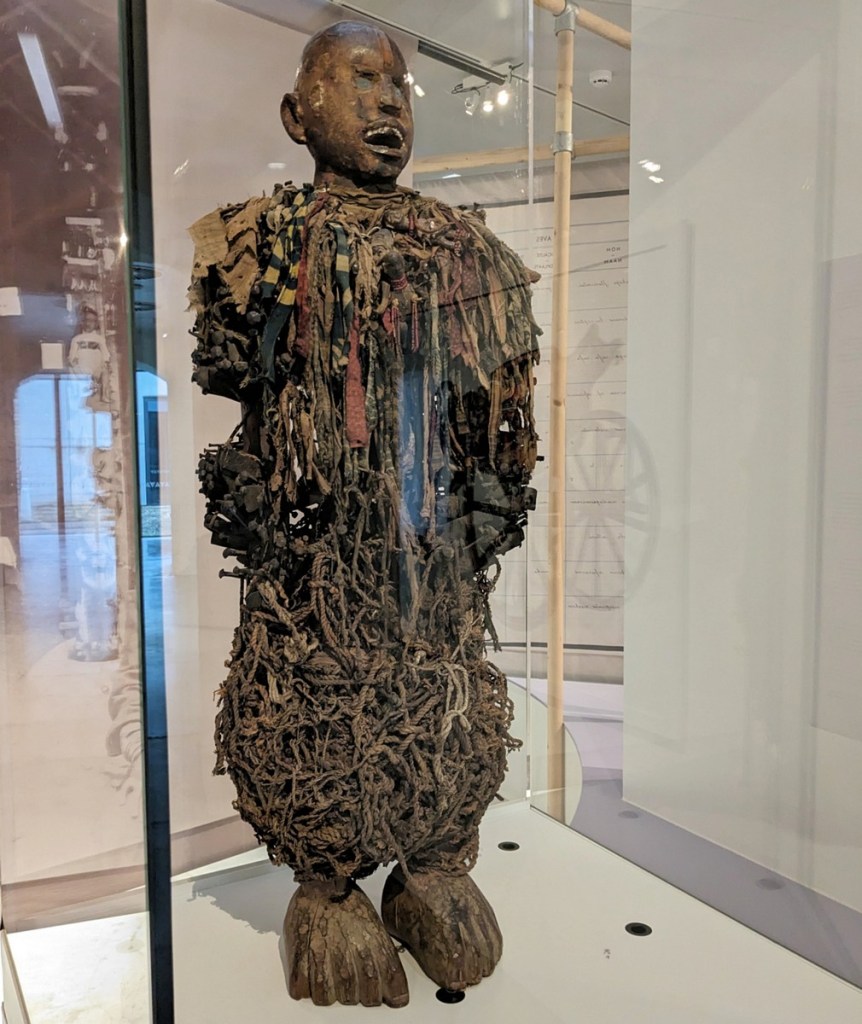
I knew the museum had been revamped and had reopened in 2018, so was hoping that it would embrace more modern views of what this sort of institution ought to be. After entering the museum the very first exhibit I saw was “Rethinking Collections,” and the very first artifact I saw in that very first exhibit was the dude above. A more proper name for this dude is “a kitumba sculpture stolen by the Belgian tradesman Alexandre Delcommune from the Congolese chief Ne Kuko” (okay full disclosure the very first artifact you actually see is in the hallway to that exhibit, which is this extremely cool pirogue) (as a second parenthetical I was going to call the pirogue “potentially problematic” and alliteration aside that applies to every artifact so I am going to skip it generally). There is of course a sign next to the kitumba sculpture and I was worried about the tone it was setting. The sign notes that Ne Kuko asked Delcommune for the statue back, and Delcommune refused. The sign then notes that a descendant of Ne Kuko has asked for the statue back more recently, but that the museum hadn’t given it back then either. Then the story on the sign ends, leaving me wondering, you know, why the heck they didn’t give it back. Maybe I missed it in the exhibit itself but it wasn’t until I was able to review the museum’s page on the statue (linked above), where they note that “there is still no legal framework for the restitution of objects and human remains,” explaining why they still have it.
I am in many ways very sympathetic to this excuse, being a dedicated government bureaucrat myself, and if I was a museum administrator that would kind of be the end of the story for me. But as a society that excuse is awfully thin. Laws are all made up, you know? We can just change them. Returning to the moment in the exhibit, I was just left with a sign that said they had turned down requests for restitution twice, which wasn’t encouraging. The purpose of the “Rethinking Collections exhibit was to ask “How do we trace the origin of collections? What new insights can be gleaned from these provenances? And what should become of such collections, within and beyond museum walls?” For this visitor at least it missed the mark a bit, but as Adam Hochschild pointed out in his Atlantic article, these signs in this museum are the result of compromises. As we evolve maybe we’ll get closer to a better answer.
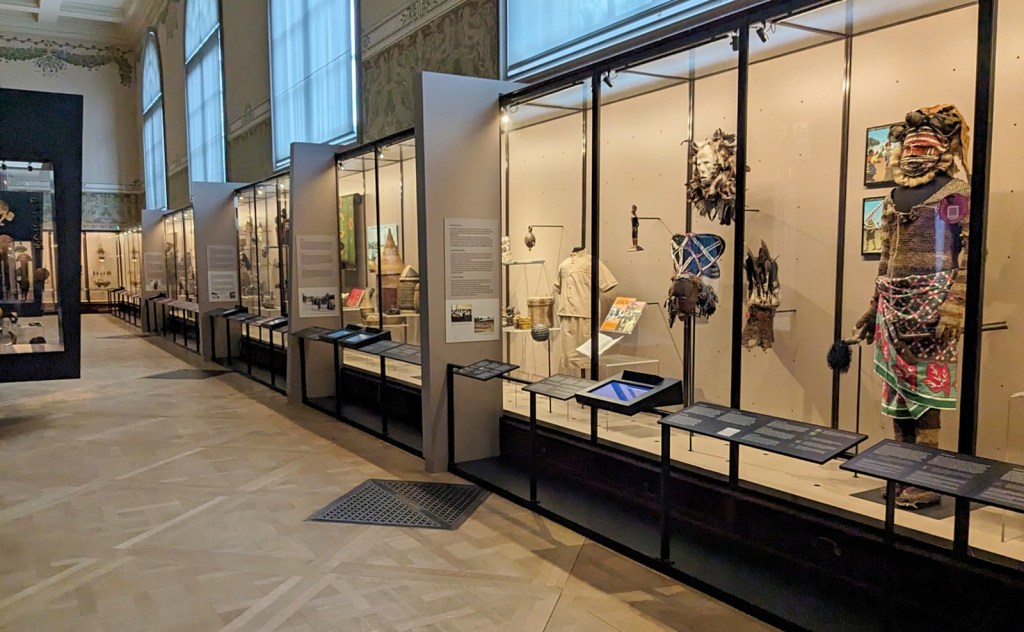
Having gone through that exhibit, I finally went upstairs into the main building itself (you enter through an annex and then go through an underground hallway). The building was first opened in 1910, purpose-built for this museum, and it is constructed as like a palace to display the grandeur of Belgian colonialism. Let me tell ya it is certainly awe-inducing. I was overwhelmed by the sheer mass of the collection. The picture above is just one small corner and I think it would take days to give every artifact its due consideration. It’s in a big square, with two layers of rooms, and I chose to go through the museum counter-clockwise. This had me starting with the I guess you would say ethnographic portions of the museum. As you can see above and below these displays are chock full of artifacts collected during the colonial era, and reflect the western interest in the more “exotic” aspects of the Congo basin cultures the colonialists were encountering.
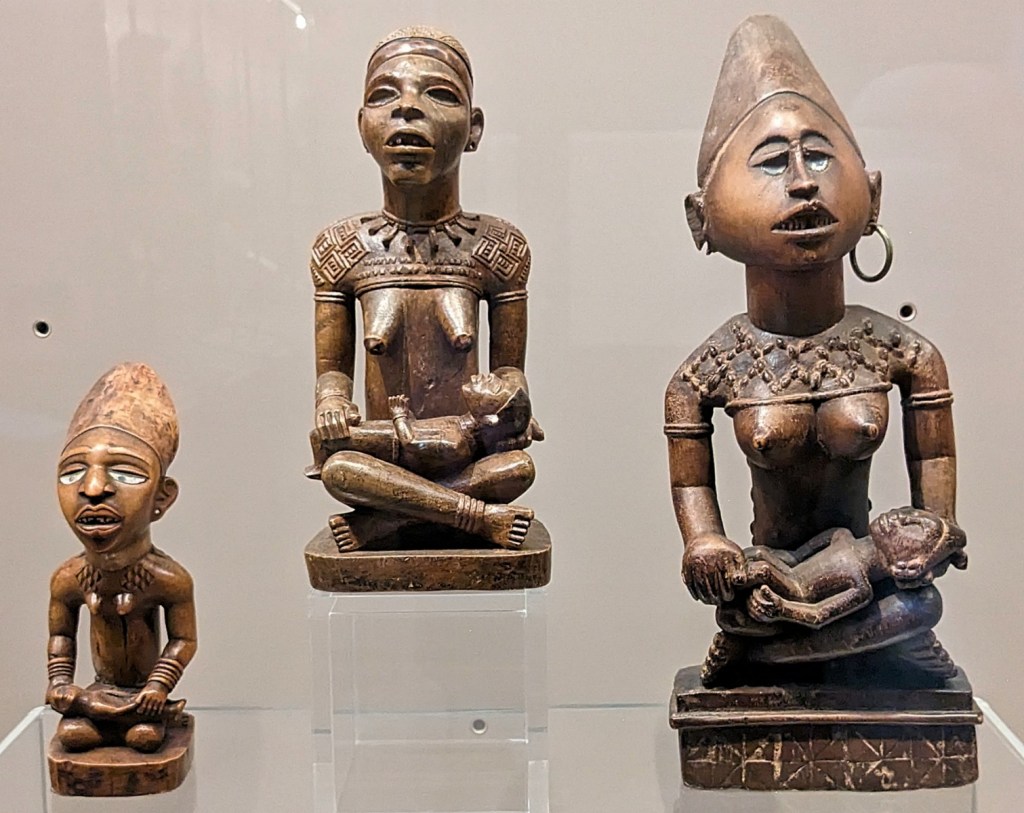
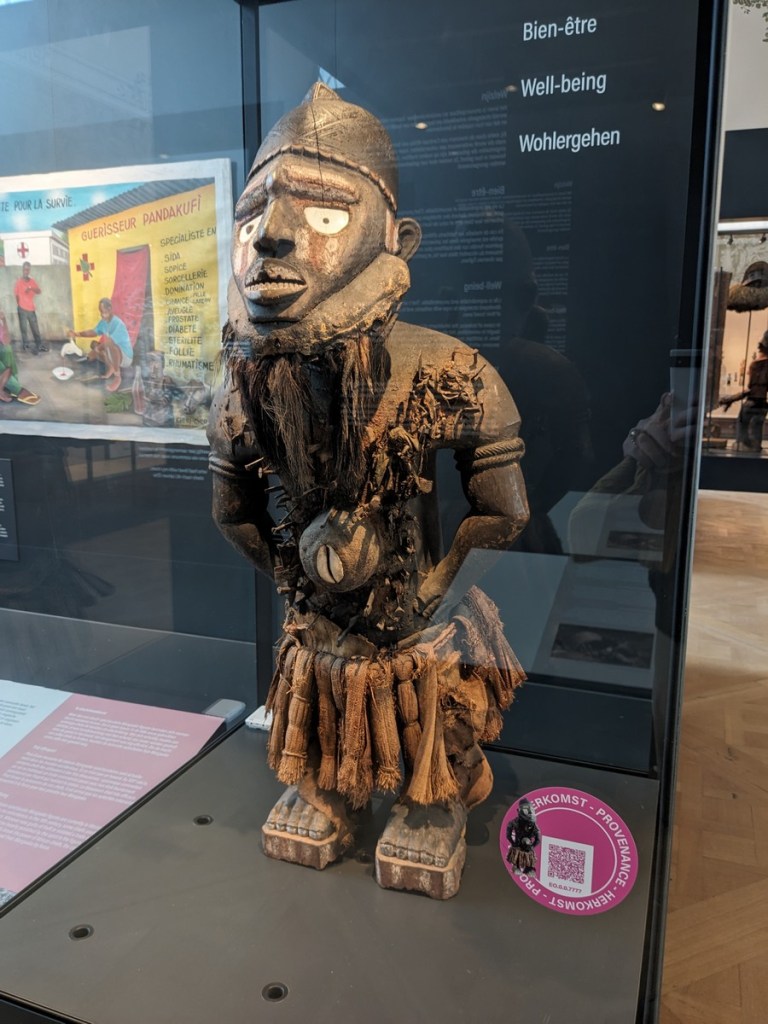
I had been familiar with much of the sorts of types of objects on display, having done my reading and visited places like the Smithsonian Museum for African Art. The nkisi mangaaka I actually recognized from the book Kongo: Power and Majesty, which my super amazing mother-in-law had given me for Christmas last year, so that was a bit like seeing a celebrity in person. However a whole category of objects I had no idea existed were what the museum called “currency in the shape of throwing knives.” There is a spectrum I think between actual throwing knives and currency in the shape of throwing knives, but some examples are below. They had even more elaborate versions but those did not photograph well on my smart phone camera so you are left with these ones that I think are slightly closer to the “actual throwing knives” part of the spectrum, but not by far (there’s also a ceremonial axe). The sheer artistry of the metalwork in these knives (along with, you know, every single other metal object in the museum) is overwhelming and extremely cool and I dunno man if I was a young bride-to-be in Congo I think I would want my husband to come up with some of these things in order to bond our families together, you know? They had some really nice hoes as well but you also gotta throw in some of these knives man. They’re so cool.
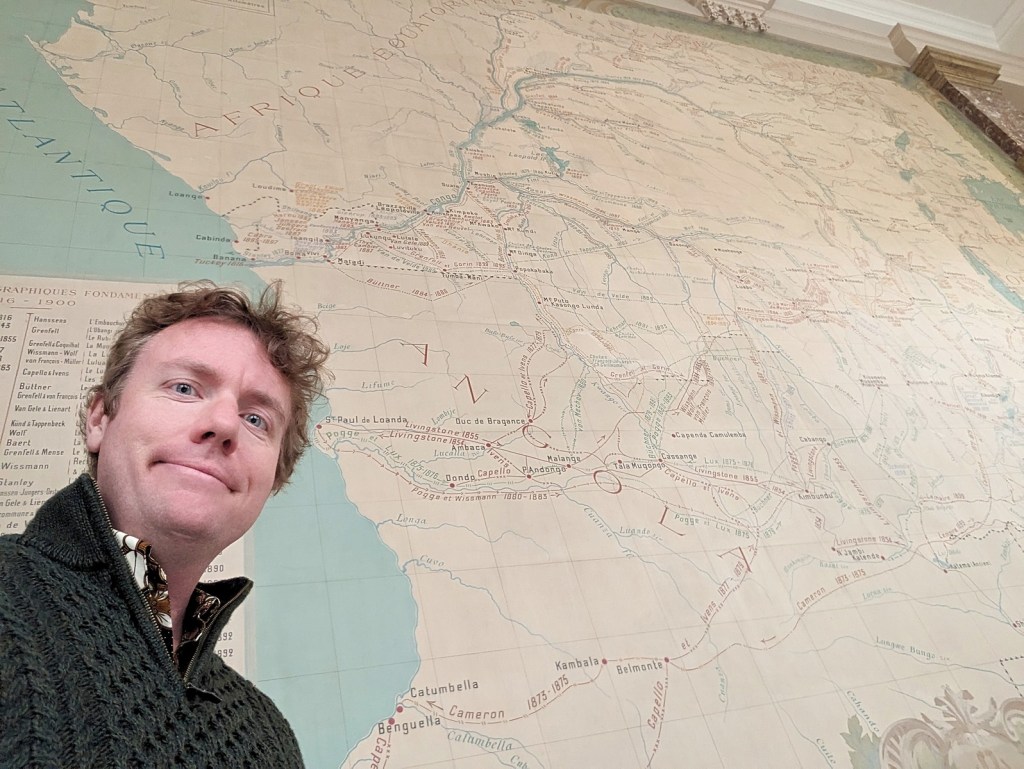
One of the more impressive things which I did not expect to see (besides the knives) were several gigantic maps of central Africa, depicting various aspects of Belgian colonial interests. I used a selfie in the picture below to try to give you some sense of scale, but man it doesn’t hit. These things are huge. The building itself is huge, with 50-foot ceilings (or something like that, they are TALL), and these maps go from nearly the floor to nearly the ceiling. The one above depicts the routes various European travelers took through Africa (you should be able to see Cameron and Livingstone labelled above). Others depicted political boundaries or natural resources. As a man who likes maps (i.e. I guess a man), these were about the mappiest maps you could map. They were scattered throughout the building and provided impressive backdrops to the displays.
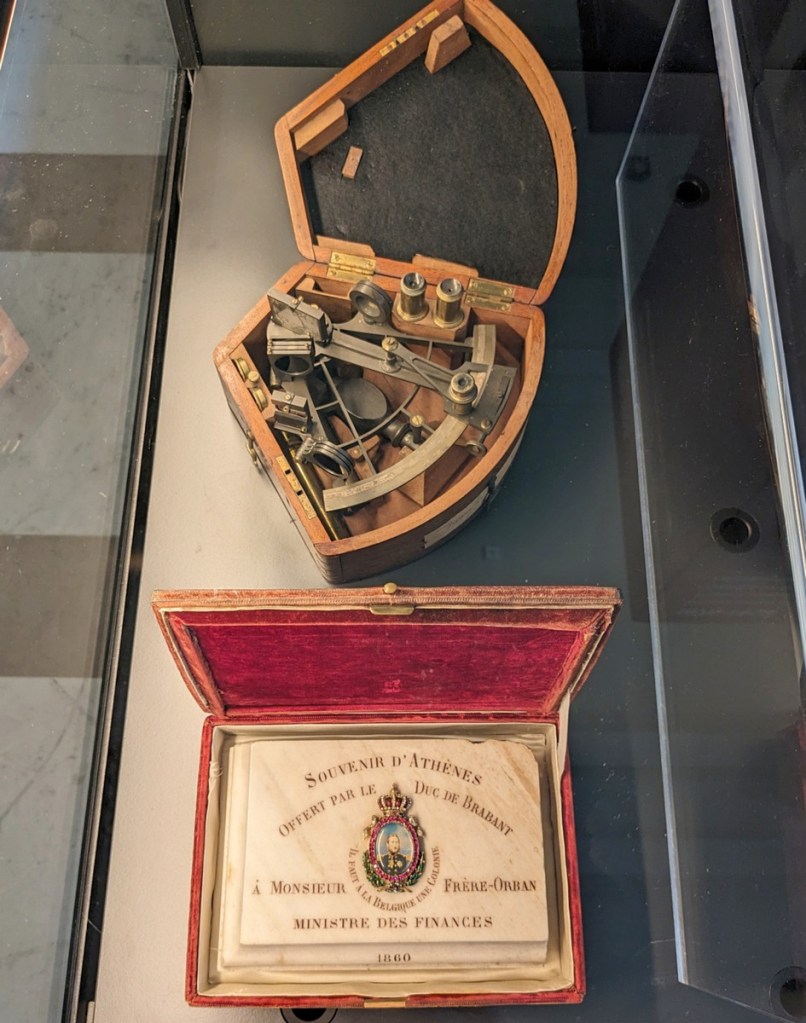
If I recall correctly, the displays the particular map above were backdropping were, fittingly, about the various horrors of colonialism. It is quite the mix of artifacts. I was excited to spot a sextant and then a little stunned to discover it was owned by Stanley. I have read about Stanley a lot and he seems almost not real. Then you come across an actual object he used, one I’m familiar with. That same feeling went for the objects below associated with Tippu Tip. Tippu Tip! When I was in Zanzibar we went to a Chinese restaurant that I later think I figured out what in Tippu Tip’s old house, which doesn’t help make the man seem real. My super amazing wife and I have been to Rick’s Cafe in Casablanca (I will write about that eventually), and you know that’s fake, and so I guess Tippu Tip’s house felt the same? But here you have a necklace supposedly owned by him (link in the caption for more details), and a dagger owned by his son. The actions of Tippu Tip and his fellows was used to justify so many of the actions of the Europeans took in Africa that again he is much larger than life, too large to have been real, and yet here is his stuff. Lest the section is entirely the Big Man theory of history, it also gets down to more of the brass tacks of colonialism. They have several examples of the hippo-hide chicottes (whips) on display, along with photos of the horrors inflicted on the people of the Congo.
The next part of the museum was about the natural resources in central Africa:
Another criticism of this and similar museums as an institution that I hadn’t thought about too deeply until I read the Atlantic article is the fact that people, animals, and geology are all lumped together into a single museum. This is not a pattern that is replicated in museums about more “western” subjects, with western peoples getting their own museums separate from western animals and western geology. The Royal Museum addresses this a little bit obliquely, in some signs about the “crocodile room” (pictured above). They’ve preserved the crocodile room to look like it would closer to 1910, meant to catalogue all the items under Belgian colonial rule, both natural and man-made. The paintings lining the upper parts of the walls are also meant to depict an idealized Congo, peaceful and prosperous.
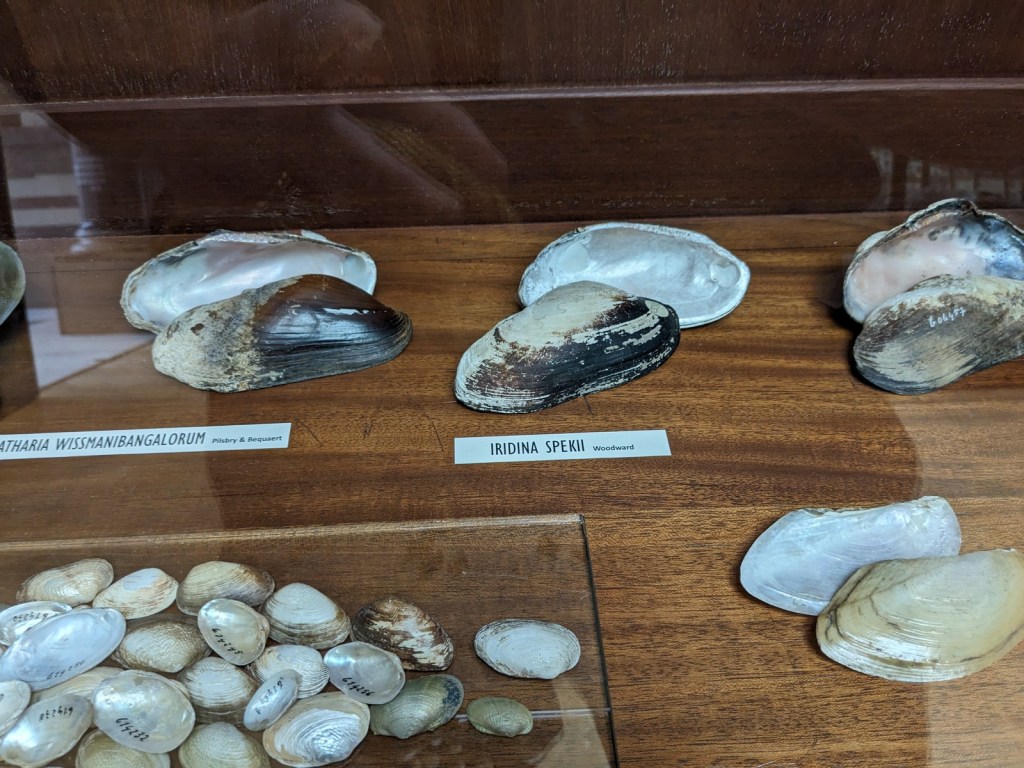
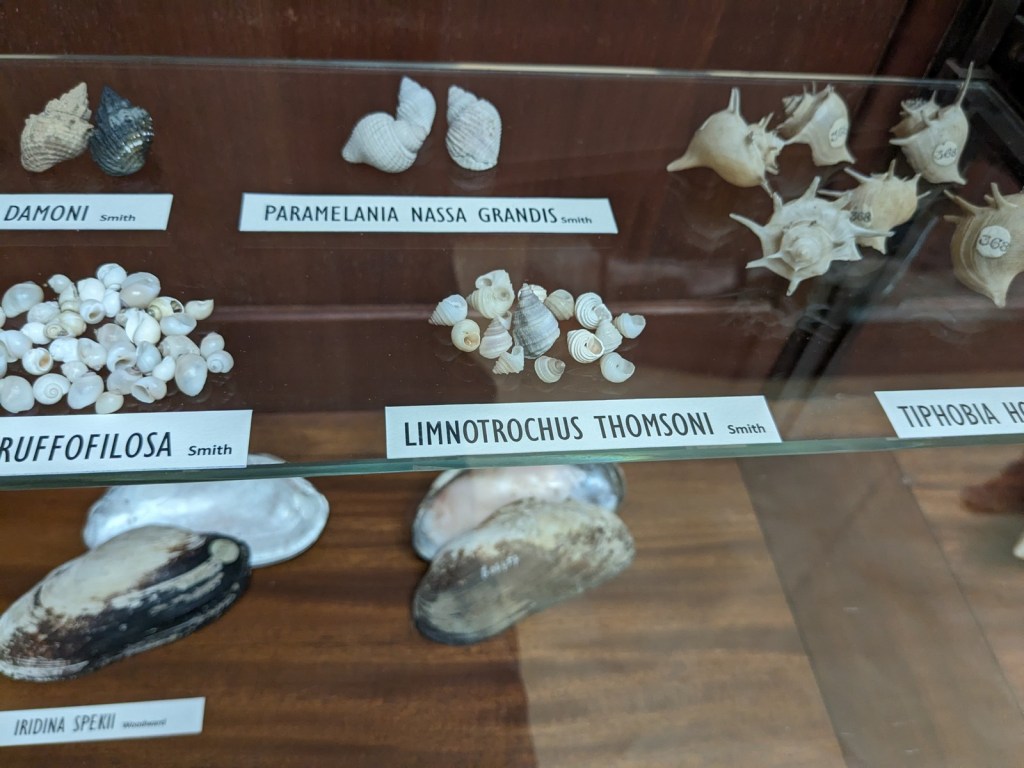
That being said it was neat to see the different animals and shells. Some of the more interesting things for me (pictured above) were a tilapia (because we’re big tilapia fans around here), along with shells named after various famous British travelers in Africa. One oversight I noticed is they neglected to include (as far as I could tell) any examples of the most important specimens, my main man Ed Hore’sTiphobia horei. Later on they also had examples of more robust fauna:
Also notable in this general section was a whole room dedicated to the mineral resources of the country. They had discussions on the some of the political implications of the exploitation of these minerals from the DRC, but as these rocks sit there sterile on a shelf it is hard to imagine the suffering they can help perpetuate:
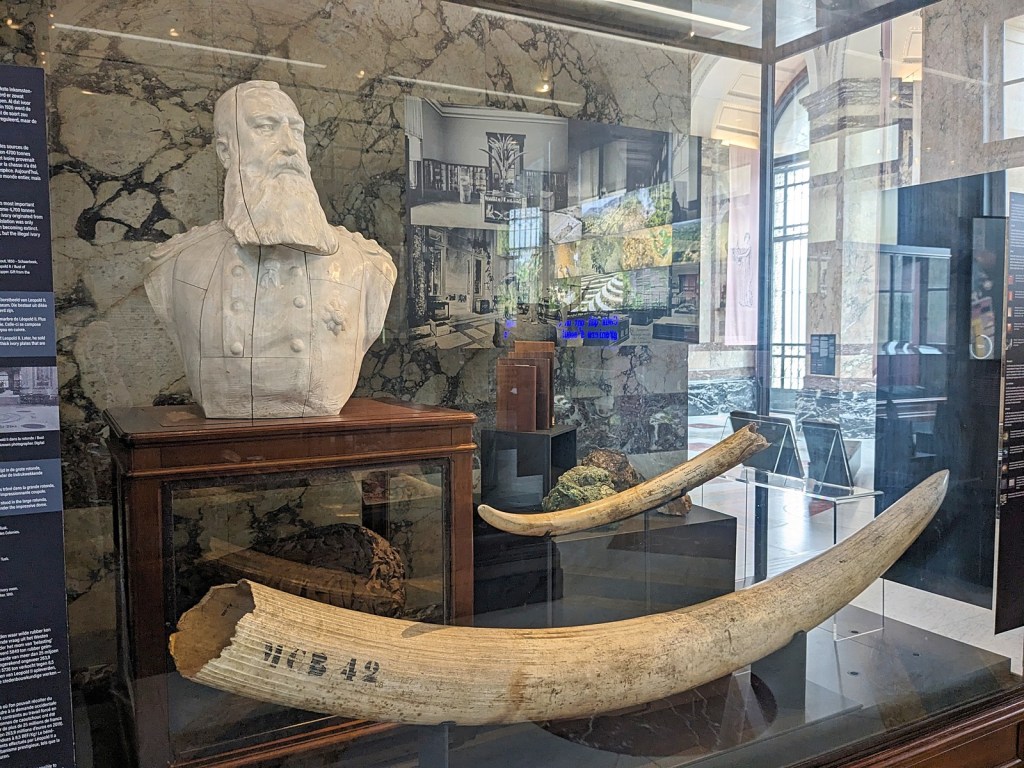
The focus of the section on the natural resources of the Congo was the “paradox” it creates, where DRC is sitting on trillions of dollars worth of minerals and other resources and yet still remains poor due to exploitation. The section had a long discussion on what those resources are and how they have been exploited and what resources the Congolese people themselves use. As can be seen from the ivory bust of King Leopold below, that all is put in stark terms.
From the accompanying plaque: “Spurred on by King Leopold II, the Compagnie Belge Maritime du Congo (CBMC) was founded in 1895. The aim: a regular shipping connection between Antwerp and Congo.” The boat model is of the Ville de Bruxelles.
In the second half of the museum, which I didn’t really get great pictures of because at this point I was exhausted just from the sheer scale and trying to see it all, the exhibits turned towards the more modern eras of the Congo and its relationship to Belgium. A particularly interesting section talked about the Congolese diaspora in Belgium post-independence, and another highlighted the relationships between traditional music and modern-day Rumba. But the single most powerful section trying to address the modern and historical relationship of Belgium and the Congo was in the rotunda.
The Grand Rotunda of the museum was designed (like the rest of it), to showcase the glory and what have you of the Belgian empire. Besides being a gigantic and impressive room, it features four gilded bronze sculptures by Arsène Matton. The sculptures represent a colonial vision, with the Belgians presented (according to the sign) “as if there had been no civilization beforehand… African women are sexualized. An Arabo-Swahili slave trader tramples a Congolese who tries to protect his wife. It is clichéd colonial propaganda, but it is still effective more than a century later.” Apparently “the statues in the niches are part of the protected heritage building and may not be removed.” Like I said above the legal excuse I think is a pretty thin one but in this case it meant the museum was forced to be a little more creative in how it addressed the statues.
The art project they have done instead is called RE/STORE, and for it “the museum invited Congolese artist Aimé Mpane to create a project that would serve as a counterweight.” The result are these translucent banners hung in front of the statues that speak to them and provide an alternative vision of colonial-era Congo, one where there is civilization and the horrors of colonialism aren’t excused. I thought it was really cool how instead of just acting as a counterweight the banners really speak to and respond to the statues themselves for a super stunning effect, and is a great example of how to communicate with these previous idioms of how we view our relationships with other peoples.
And that was my visit to the Royal Museum for Central Africa. The place is far from perfect but they seem to be trying, and I hope we can put in place in the near future the institutions needed to bring some justice to the colonial relationship with Africa. Everyone should be able to see the treasures the museum holds, especially the people that should rightfully own them.
It has taken me weeks and weeks to write up all these blog posts but I am glad we are finally approaching the end of the story of our Mexico vacation. On that day I arose with some stomach troubles which were very unpleasant. I figured this was karma for my atrocious behavior at Xochicalco. I never really recovered throughout the day but I kept it together well enough to attend the wedding.
The wedding was fantastic. It made me feel much better about not putting on a wedding for the marriage of my super amazing wife and myself, because boy howdy we could never have competed. It took place at an extremely professional wedding venue that was set up so you could proceed, over the course of the event, from the wedding itself to a garden cocktail hour to dinner and the dance floor with absolutely no friction. We had plenty of friends there besides the bride and groom so the conversation was lively and flowing. I am a sucker for any declaration of love so if I hadn’t had to excuse myself at an inopportune time I am sure I would have teared up at “I do” (they might have said it in Spanish, not sure, I missed it). Everything was set out so thoughtfully, including free flipflops if your feet started to hurt in your heels and a late-night snack so you could rally if you began to falter halfway through the six or seven hours of scheduled dancing.
And boy did people dance! I eventually got up to dance and kept going until I just couldn’t anymore because I knew once I stopped I would be over for the night. We left at a relatively reasonable hour, i.e. extremely early for a Mexican wedding. The dance floor broke after we left, as a testament to how vigorously people were dancing. The playlist was nothing but hits and it couldn’t have been better. It was great to see our friends married off and to do it in such a fun and beautiful setting was just icing on the cake.
The next day we were much better rested than most of our compatriots, several of whom we ran into on the bus station on the way back to Mexico City. We arrived at the airport with plenty of time to spare before we had to take off and took the opportunity to do some airport souvenir shopping. From there it was an almost perfectly smooth flight back to the States, except our first leg was a bit late so we had to run to catch our connecting flight, but we caught it and it was fine. We arrived back at Dulles to cold and drizzling weather, a jarring change from gorgeous Mexico City, but we also arrived back to our extremely cute cat, so it all worked out in the end. I don’t think this will be our last time in Mexico City.
Joseph Thomson: African Explorer by Rev. J.B. Thomson
We were of course not the only people going to our friends’ wedding (it was a huge crowd), but we had arrived in Cuernavaca a day before everyone else because I wanted to go to Xochicalco. Honestly anytime there is ever a hint of a vast ancient city that is not super often visited I dearly want to go.
The problem with Xochicalco is that it is not quite as easy to get to as Teotihuacán. To get to Teotihuacán you simply follow the very easy instructions (including pictures!) that various internet travel bloggers have written out for you and dedicated busses to take you right there. This is not the case for Xochicalco. The travel guide said local busses could take you there, but other websites said it wasn’t so simple. I looked up how much it would be to Uber there, and it was very reasonable, but it wasn’t so clear that we would be able to Uber back. The solution we settled on was to hire a private driver, and I absolutely hated this. It got to me. I was thoroughly repulsed by the idea of taking a private driver there over using a bus or something. I tell myself this was because I felt like by rejecting the bus we were rejecting a sense of adventure, but it was probably also the price (~$100 USD, honestly reasonable) and more probably that I had just decided I didn’t want to do a private driver and was mentally digging in and rejecting all reasonable arguments to the contrary. We did wind up taking a private driver but the upswing of all these mental gymnastics is that I was just a little shit about it the entire time, an absolute man-baby of quiet simmering temper tantrum as we visited. This was extremely unfair to my super amazing wife, and I’m sorry.
The ride there was pleasant enough and interesting. At one point we diverted into this strange dirt road underpass thing that our driver paid an unofficial toll for. I was wondering where we were going but looking at the map he was probably taking a shortcut which must have been very worth it because a lot of other people were too. Along the road I saw fields of sugarcane and maize and several fields of grass that had been burnt off in a way that reminded me of Zambia. I spotted cows and was interested in all the different plant nurseries I saw, from big ones to small ones. As we drove through the town of Xochicalco there were piles of pots and pots stacked on eaves, drying and/or ready for sale. On the road up to the site there was an orchard of baby orange trees and a seemingly out of place boat on a trailer and a saddled horse and papaya trees and a monument or grave on a hill by the side of the road.
Eventually we arrived and since we only had our driver for three hours I was in a mad rush to see everything. I barreled my way through the crowd of students hiking up to the site from the museum and got tickets and darted through the museum and then zoomed up to the site itself, leaving my super amazing wife far back in my wake. She eventually and much more gently than was possibly justified corrected me on this and we hiked through the site together. It was hot and dusty and we probably didn’t bring enough water despite bringing a lot of water, and now that we are through my personal and interpersonal drama, I will tell you: Xochicalco is a fantastic site.
The history of Xochicalco sits neatly between Teotihuacán and Templo Mayor. It was evidently a powerhouse in its day and the city sits perched atop a very high hill overlooking the valleys below. My super amazing wife, who let me reiterate in reflection of how I acted that day is indeed super amazing, has heard me point out many times that whenever there is a dwelling on top of a hill I think it must be a man who put it there because they aren’t the ones who have the haul water to the top. There were reservoirs in the city which stored rainwater which is cool but still during the dry season there must have been a whole lot of women hauling a whole lot of water. The upswing of those women’s work many many years later is that we get to enjoy some really amazing views. The trip to Xochicalco is worth it for the views alone.
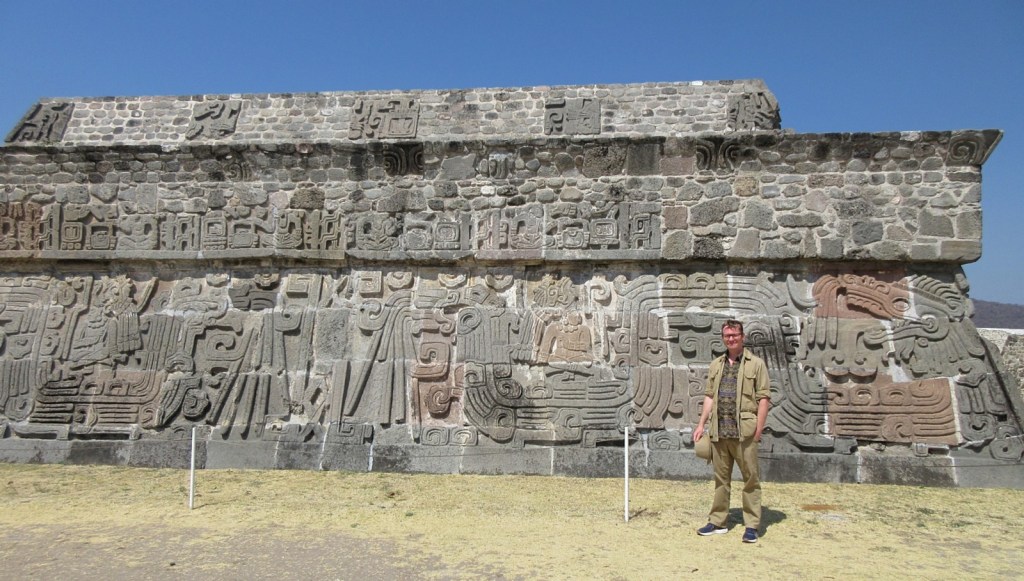
The perhaps crown jewel of the Xochicalco site is the Temple of the Feathered Serpent, which is just covered with stone decorations which is near the very top of an already high-up site. The city has several other courtyards and pyramids of various sizes and you can wander around what used to be the residences for the ruling elites. They had some nice digs. There is also an observatory at the site which we didn’t get to see because it wasn’t the right time of year, so maybe that is the actual crown jewel, but what we saw was pretty impressive anyways. Like I said I was in a massive hurry to see the site and insisted that we more or less zoomed through, but after we got about halfway it was clear it wasn’t going to take us the full three hours anyways to see the site and I slowed down and even backtracked some. There is also a really good museum on site housing a variety of artifacts from the very life of the city, including some interesting displays on construction techniques and the different crenellations and other features you’d find in different cities and civilizations. Apparently these guys were super into starfish, which is interesting.
Temple of the Feathered Serpent, and me.
After 2.5 hours I had absolutely run out of things we could do at the site, so we drove on back to the hotel. We had some much-needed lunch and lounged the rest of the day by the side of the pool, where in an attempt to order pina coladas I got us instead some wine that tasted like apple juice. Relaxing in the air conditioning we eventually drifted off to sleep.
So far on our adventure in Mexico everything had gone perfectly smoothly. Astonishingly smooth. We swung big and hit it out of the park on every attempt. However on this day when we were off to Cuernavaca things got a little shaky. We were off to Cuernavaca because that is where our friends’ wedding was going to be and the wedding was the whole reason we were in Mexico. So we woke up early and had breakfast and packed and called a ride and head off to the World Trade Center very early. Good thing we head out early too because we did not accurately predict how long the traffic would take. But with our buffer, we were fine. Or so we thought.
I had thought the World Trade Center was going to have a bus-stop looking thing but it did not. We talked to our driver about this and he said the busses were in the back, which confirmed my impression from looking at the map and stuff. So there we waited and no bus ever arrived and we were very confused. I tried to find the bus office and failed and we missed our bus. This was very frustrating but eventually we went around the front of the building and with me watching our stuff my super amazing wife finally found the bus office and got us new tickets and figured out where to go. Meanwhile I stewed at my own incompetence. We had Starbucks sandwiches for lunch (surprisingly good) and caught the noon bus and had a perfectly pleasant and scenic ride to Cuernavaca, where we arrived at around 2:30 in the afternoon. From the bus stop we took another ride to the Holiday Inn Cuernavaca, which frankly I can’t recommend enough. Beautiful pool, colorful greenery all around the grounds, and slightly confounding windows lodged in spacious and comfy rooms.
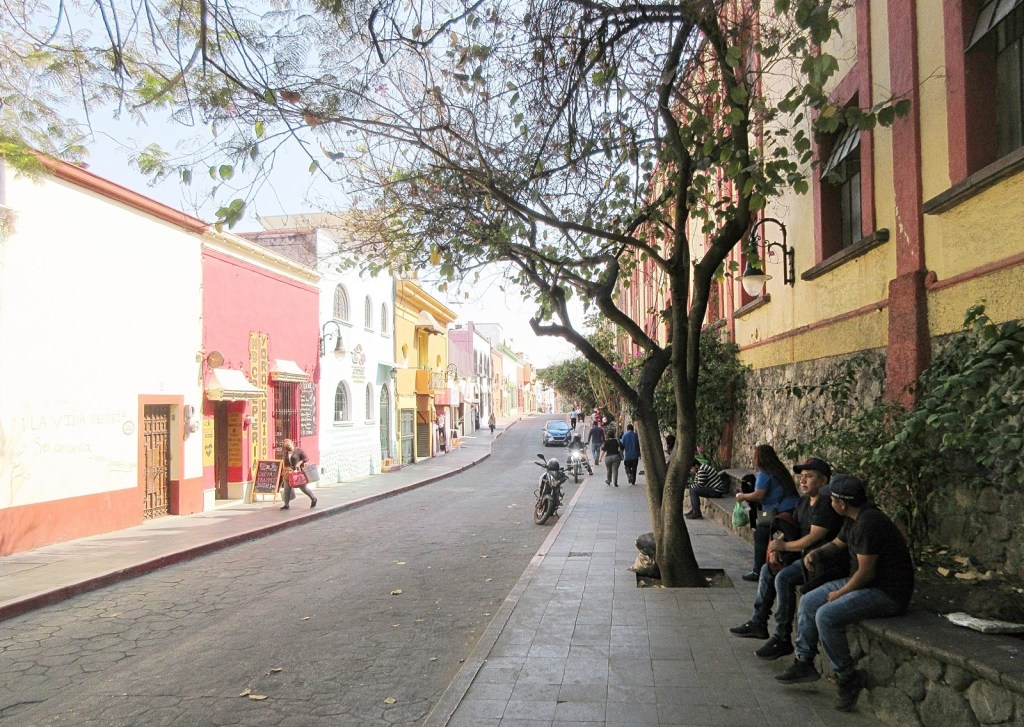
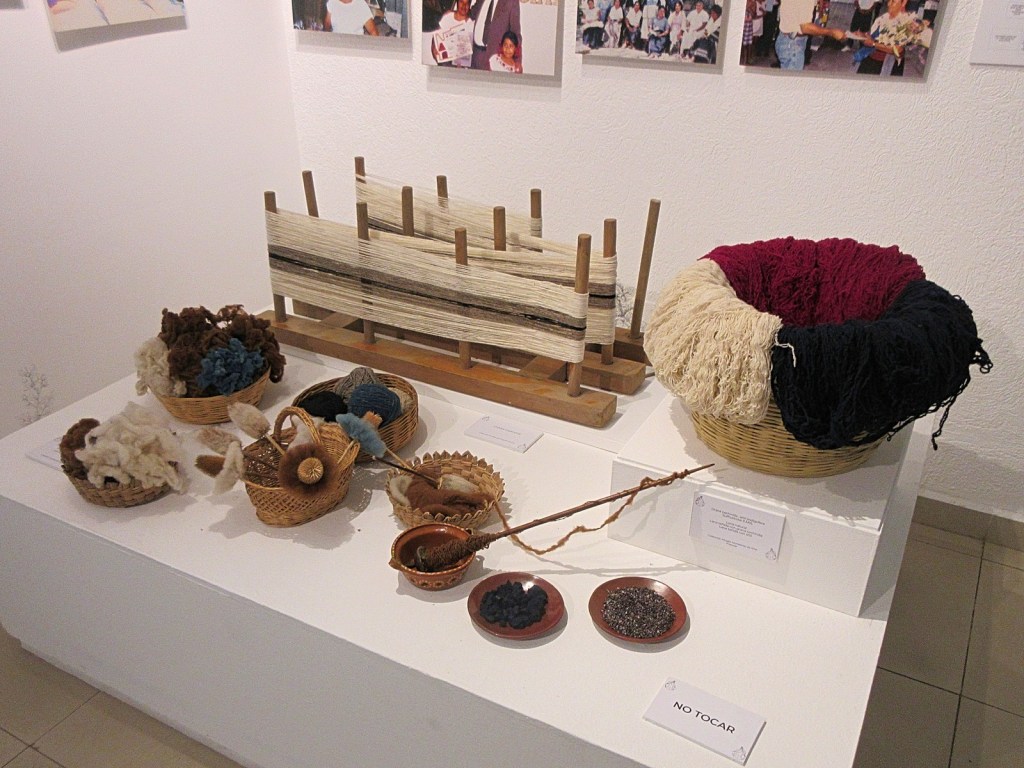
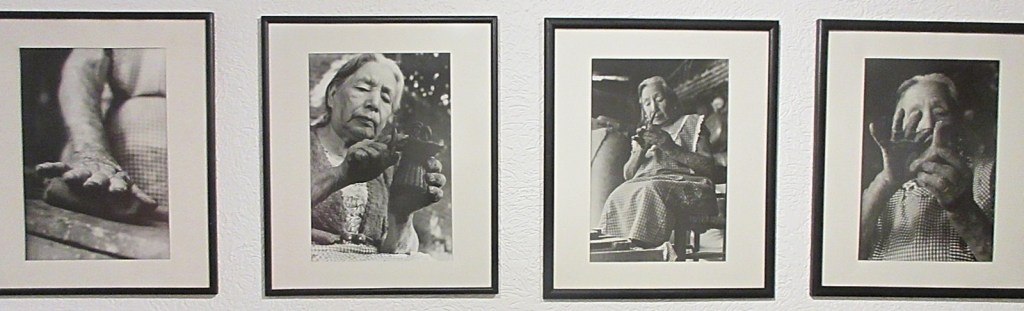
Severely behind my mental schedule, I convinced my super amazing wife that we should try to accomplish in the remaining two hours or so of the day everything I had wanted to do with a full day in Cuernavaca. This we largely pulled off! The first place we were off to was Museo Morelense de Arte Popular, or MMAPO. I had seen MMAPO in the travel guide and thought it was going to be a little rinky-dink place, but it was in fact fantastic. It was pretty small but had a great selection of local art. We of course loved the textiles and I was also drawn to several different versions of a granary which was apparently a local style. When we visited they had a photo series of traditional crafts which included some ceramics. This was nice because my super amazing wife is into ceramics, which is the reason we were at MMAPO. One of the big draws of the place is its gift shop, which features actual local handicrafts. By this point we had been to a couple different markets in Mexico City, and frankly a lot of the stuff was same-same and clearly meant for the tourist trade (we were of course tourists looking to buy tourist things, so this isn’t a criticism). But MMAPO had much more unique stuff and while she got a cool little pot I got a nifty little clay jug. Fun!
From there we went to the Robert Brady house which, wow, talk about gorgeous. Oh to be rich and have artist friends. I think his house is about how I would decorate if I had unlimited funds and also if I could get it all done while my super amazing wife was gone for a week or two. Just jam-packed with different art pieces from around the globe arranged into different thematic rooms with different colors where he housed various visiting friends. Sunken bars overlooking pools and airy bedrooms that were cool and inviting on a hot day. Works by Frida Khalo crammed into corners and recesses filled with statues and tile bathtubs to die for, all surrounding a garden courtyard thing. Ugh fantastic. Well worth the price of admission and if only I could live there. But I could not so next we went around the block to Jardin Borda. More just fantastical and fantastically laid out gardens in picturesque pathways and the tree nurseries of my dreams. If you climbed the back wall you got a fantastic view over the town and across to the mountains that lined the valley, providing a backdrop to the jacaranda trees blooming while we were there. I also almost got attacked like a duck and had to dance like in an old western movie to avoid being nipped until I could run away. We sought refuge in the art display they also had in the grounds and then head out.
Robert Brady’s poolside lounge.
We were off to take a glance at the Palacio Cortes but then noticed the Cathedral was actually open so I dragged us in there. There were some murals I had wanted to look at but as we were wandering around we were accosted by a tour guide. I did actually want someone to show me around so I took him up on the offer, thinking he would ask like 20 pesos afterwards and I would kindly give him 50. The actual price was 300 pesos, but I have spent more money on dumber stuff. It was an alright tour. I think he was a little drunk but he was enthusiastic about the place and it was very cool to see the indigenous influences on the Cathedral (and other associated churches? Very confused about how they are all related, seems like a colleges/university thing, but I dunno, religion is weird, and hoo boy did the Spanish like putting up churches) and also they had some sheep there mostly as a display but we always like sheep. So that was a nice time.
Jardin Borda
After exiting the Cathedral we finally glanced at the Palacio Cortes and after much effort got a ride back to the hotel where we recovered from a very interesting day. There was great food at the hotel and we collapsed asleep. The next day would bring more wonderful if trying adventures.
And on the fifth day, we went to go see some commies. After a lovely and quiet early morning, my super amazing wife and I called up a ride and went down to see the beautiful neighborhood of Coyoacán. The main draw was being loyal liberals, i.e. doing what the New York Times told us to do. We were dropped off at our first destination, the Trotsky Museum, but we got there before it opened so we walked around the block of leafy trees and colorful houses.
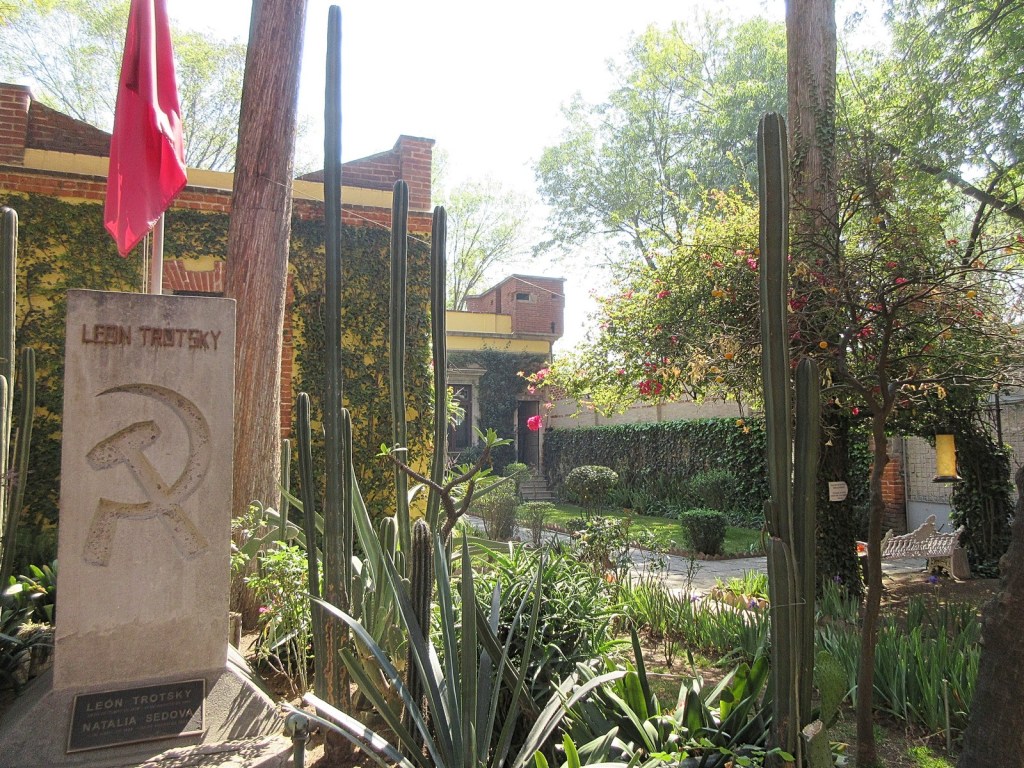
The Trotsky Museum is an interesting little place. It is definitely a pro-Trotsky institution. Going there felt like closing a particular loop because we had been to the Spy Museum which houses the ice pick that Ramón Mercader used to kill him. When you enter there is a little museum and then it spits you out into Trotsky’s yard from whence you can tour the rather fortified house. There is also a cafeteria but we were there too early for it to be open so I didn’t get to check out the menu. Whatever the cafeteria serves, Trotsky had excellent metaphorical taste at least in his choice of location because the yard is beautiful. It is tropical and manicured and well-kept. This is fitting because the Trotsky presented by the museum was a lovely old man who wore sweater-vests and liked to tend to his chickens in and amongst some political writing. Although the museum has a few pictures of Trotsky leading the Red Army they mostly come across as aghast that anyone would have it out for the kind of dude who liked to go fishing with some Greek guys he met. I don’t actually know a lot about Trotsky, but I was a little incredulous they couldn’t you know get it even if they didn’t condone it. But what do I know? On the way out we stopped by the gift shop where I only got a pin and turned down the chance to get a Trotsky t-shirt or Trotsky box of matches for my communist friends.
Our next stop was Casa Azul, which was the opposite of Trotsky’s journey. As the New York Times laments however Casa Azul is very popular and our timed tickets weren’t for a bit, so we talked the fairly short distance to downtown Coyoacán to enjoy the neighborhood. It is easy to enjoy! There is a beautiful park and a fountain with some coyotes and a market we wandered through and we couldn’t have spent a nicer hour or so until it was ticket time. While wandering down there we also saw an industrial tortilla machine in action and I want one now. But off we were to Casa Azul.
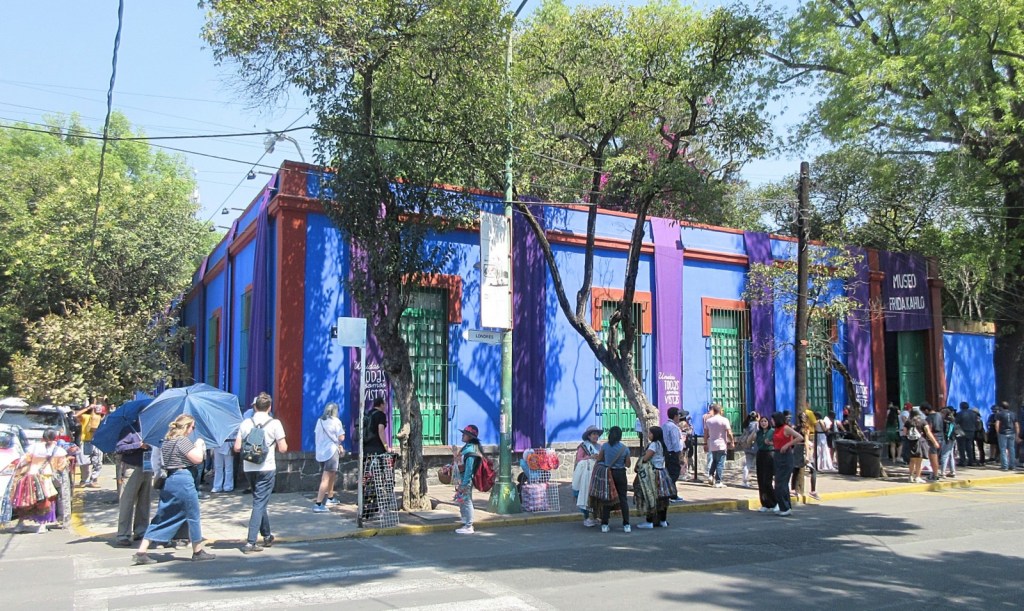
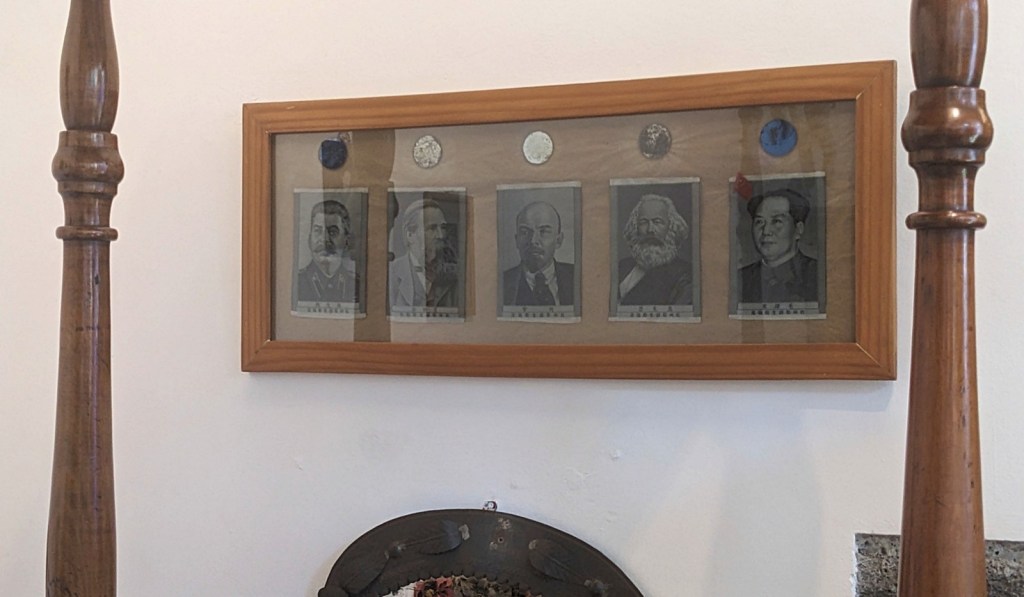
I know I keep describing things as “lovely” but they all deserve it, including Casa Azul. The museum is really well done and you walk through the house and see all of Frida Khalo’s things and her paintings and her garden, but the whole time I was wondering if Khalo would have liked the way she was presented. In the Trotsky Museum he is a pottering if respected old man and in the Khalo Museum she is an artist and a woman and a bisexual and several other things all helpfully outlined on a sign but what isn’t emphasized is that she was a COMMUNIST! This was an important part of her identity! She had an affair with Trotsky! Her art wasn’t about painting pretty pictures or just about expressing her physical pain but she infused her art with her politics and supported these causes and this whole intellectual, political side of her is, from my viewing, just kinda swept aside in the presentation of her in the museum. They don’t hide her politics; they have up the roster of communist leaders she hung at the foot of her bed and they have a picture of her in one of her plaster corsets upon which she has painted proudly the hammer and sickle, but they just kind of elide over it. My best guest is that when you become a tourist attraction you don’t really want to say anything controversial (though maybe I should give them credit for “bisexual”). But would Khalo approve of having her edges sanded off? Great gift shop though.
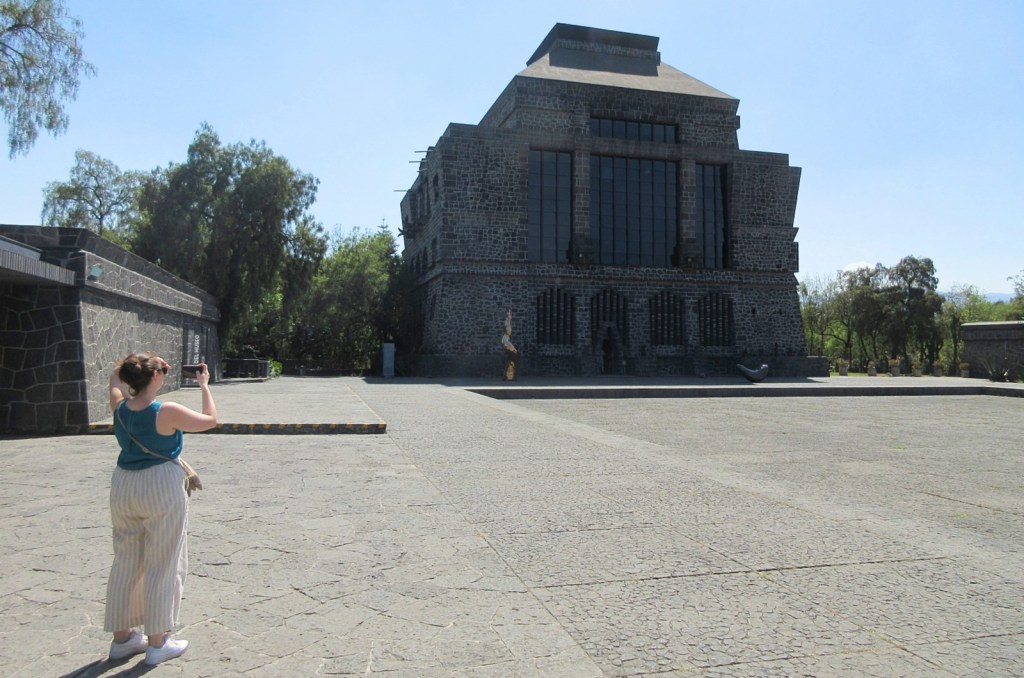
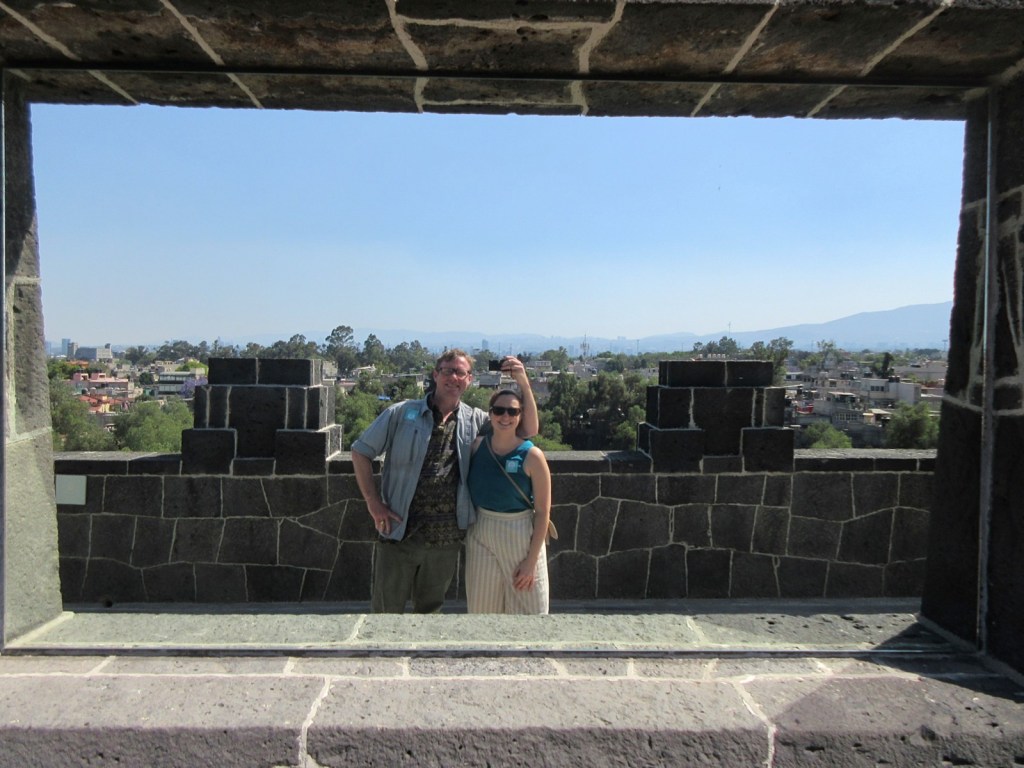
But that brings us to our final destination for the day, Museo Anahuacalli. There are no edges sanded off of that place. It is a taxi ride away from Casa Azul and out of the leafy center of Coyoacán. Anahuacalli is Diego Rivera’s monument to himself and it is monumental. You enter the gate and it spits you out onto a black stone courtyard in the blazing sun devoid of green and loomed over by the pyramid of volcanic rock that is Anahuacalli. Rivera built it with a very particular vision and as you enter you are thrust into darkness, with the light filtered through translucent stone. The pyramid is filled with Rivera’s collection of Mesoamerican art and artifacts. The collection is huge and impressive but sad for being ripped from its context. There is little in the way of explanation for any of the objects. You can descend a level into Rivera’s temple underworld but then as you start to climb up the pyramid things get brighter. There is a huge room (with gigantic pictures of communists, and throughout the pyramid mosaics of communist symbols; these people we visited today really liked communism) and at the top you can go outside to beautiful vistas of the Mexico City landscape. Well worth the visit for that alone.
The Making of the African Queen by Katharine Hepburn
Our big day in the city center began with some pastries. For these we walked down to a shop near the place where we were staying and indecisive about which to pick we just got a bunch and somehow ate all of them. Mexico City has excellent pastries, can recommend. Fortified, we got ready, called a Didi, and head in.
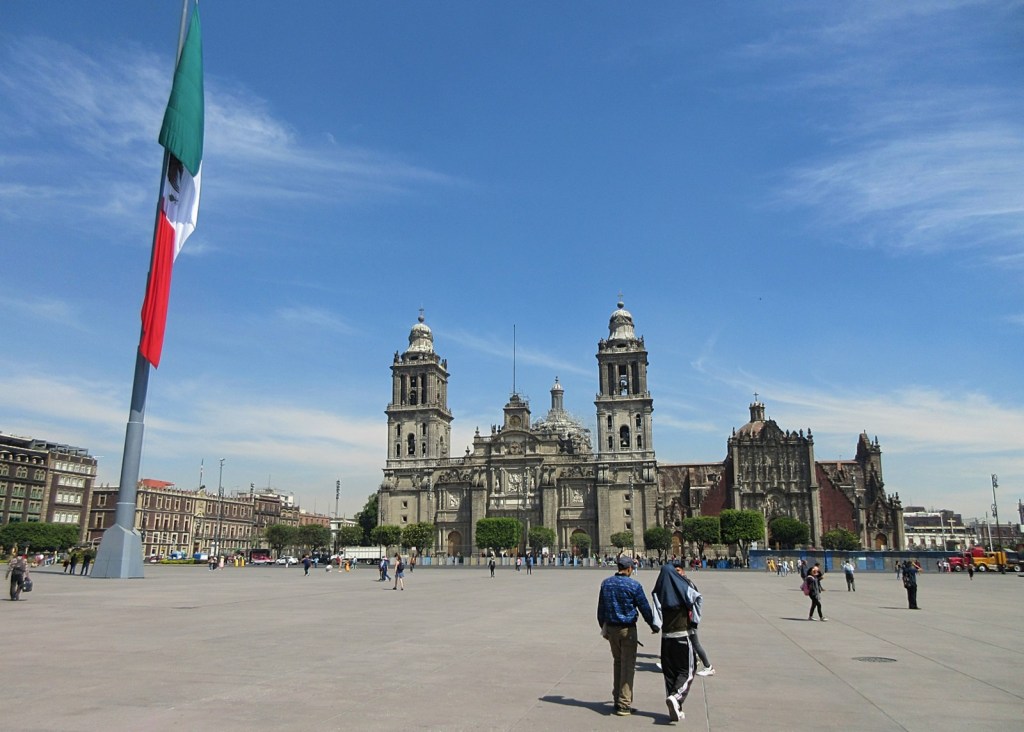
Per our request, our Didi dropped us off at the Templo Mayor, except (per our unfortunate instructions) we were at I think the back of the complex, right on a very very busy street full of shops. I know I wax and wane about the everyday commerce of ancient cities, but Mexico City is an ancient city and people must have been doing their shopping on this very spot for centuries and centuries. This is a thought I shared with my super amazing wife, and she appreciated it for what it was, but did not appreciate it for what it wasn’t, in that it wasn’t me trying to figure out how to get us off this busy city street and to our intended destination. So we walked and saw the backs of more impressive buildings, such as the Palacio Nacional. Our attempts to see the fronts of these buildings were thwarted for quite some time due to all the streets that were closed on account of recent and pending protests, but finally we stumbled out onto the Plaza de la Constitución.
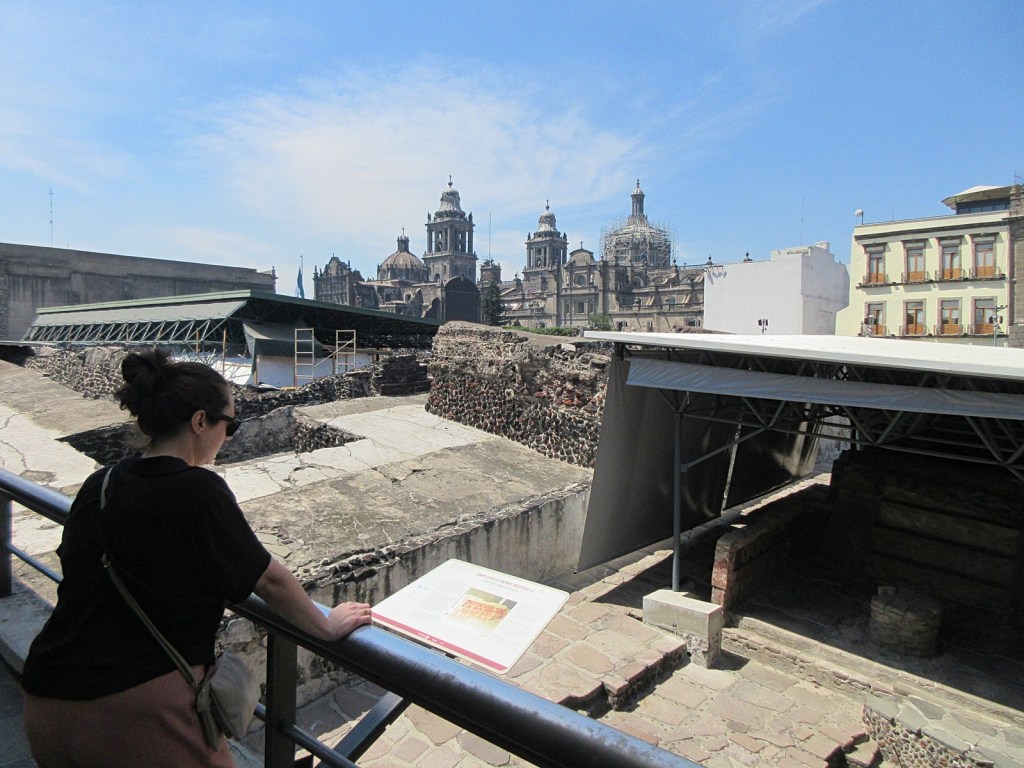
This let us get our bearings and at long last we wound our way to the Templo Mayor. The neat thing, or at least one of the many neat things, and also tragic things while I am thinking about it, about the Templo Mayor is that it has been more or less razed, with its building materials recycled into the various buildings that surround it. But because it has been razed as you walk along the pathways over it you go deeper and deeper into the temple and can see the iterations of the temples that came before and were built over to construct a larger and larger pyramid. There are also scattered around the temple signs of the colonial structures that were built on the spot, including even the wooden foundations of houses and a sewer. There are a few displays right when you enter the temple complex but after you walk around the temple there is a big museum full of artifacts and history that is really well done. They had a lot of types of artifacts I hadn’t seen before in relation to Aztec and pre-Aztec art, such as these cute little sacrificial knife dudes:
Cute!
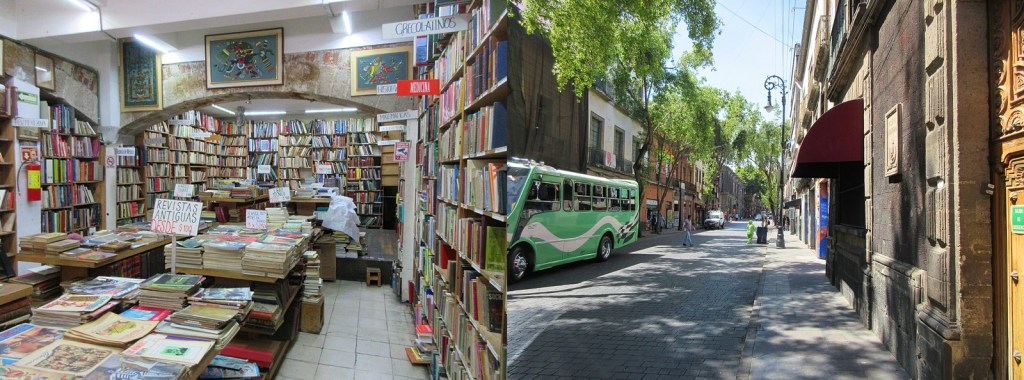
After we emerged blinking into the sun from the temple complex, it was time for lunch. That didn’t stop us from perusing the Catedral Metropolitana but it did prevent me from enjoying it much because I was getting hangry. So we stumbled through a Chinatown we hadn’t known existed and got ourselves some fish tacos. Fortified, we took a look at some other sites, such as the House of Tiles and a beleaguered Alexander Von Humboldt, and then explored a street we had spotted on our Didi ride that was just chock-a-block with used bookstores. Our dream! Of course neither of us read Spanish but it was cool to see a whole street of used bookstores, something that the less-literary (apparently) society of the United States just does not support anymore. One of the stores had three gigantic cats napping on a couch, which drew us right in. This is the power of marketing.
Bookstore and bookstore street.
From there we tried to figure out what to do next and while wandering around stumbled into the Museo Nacional de Arte, which we hadn’t realized was there. So of course we had to check it out. It is in a gigantic gorgeous building with the sort of inside-outside architecture that I really like, not to mention a bunch of beautiful art. The only downside is that a lot of the galleries had an entrance and an exit which you had to use in accordance with their designated purpose, and while we were adept at finding exits the instructions to the entrances were always confusing (that lack of Spanish again) but we managed to make it eventually via trial and (much) error. I liked best the 19th century landscapes of Mexico, which were large and intricate and detailed. José María Velasco was well represented. In other art items, there was a statue by Rómulo Rozo that I found alluring along with some magnificent skateboards by Dario Escobar:
It’s called “Sin Título,” whatever that means.
We wrapped the day up by visiting some markets on the hunt for souvenirs, and my super amazing wife walked away with a mug and I walked away with two dearly priced mangos. After our now customary shower we went out for traditional Mexican food, found the place closed, and got sushi and tempura instead. We returned and drifted off asleep, dreaming of a mango breakfast.
Used and Rare by Lawrence and Nancy Goldstone (antiheroes)
Having filled up our cultural bucket the day before with the history presented in museums, on our third day in Mexico we decided to go see the real thing: Teotihuacán. The day went astonishingly smoothly. Thankfully for our limited Spanish there are many travel blogs on the internet that described in detail exactly how to get to the pyramids, and we simply followed those instructions and got there no problem. The bus that goes to the pyramids first goes through the town of San Juan Teotihuacán before it finally winds itself to the archeological site, and as we bumped over the last few potholes I was getting very impatient but it was well worth the trip. Plus as the bus rode along it was interesting to watch the landscape go from Mexico City to Mexico Rural with farm fields and a glimpse of a shepherd tending his flock.
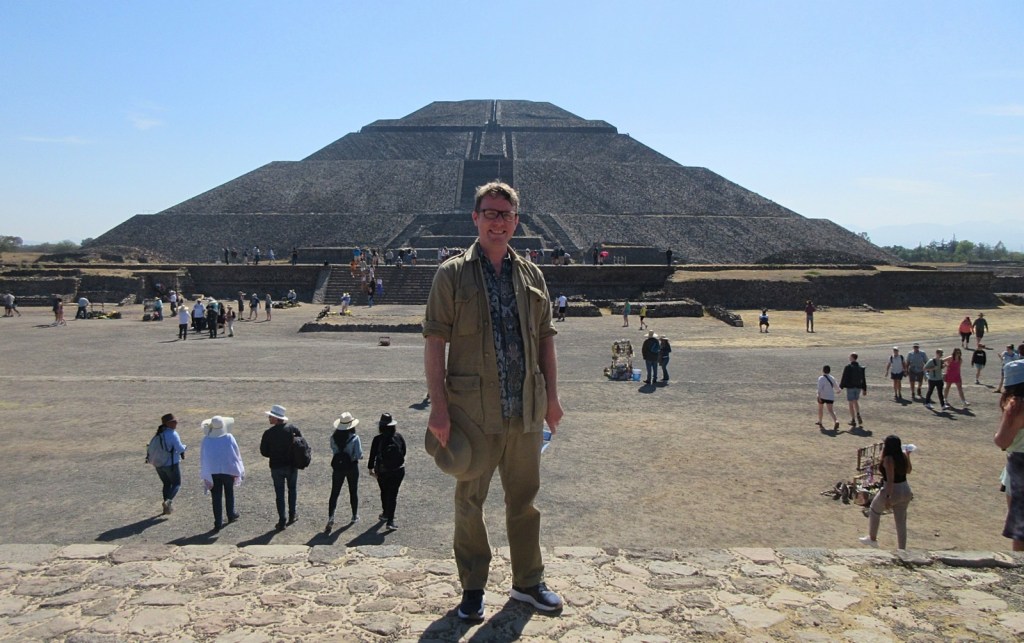
Pyramid of the Moon framed by the mountain. My sun and moon is in the foreground.
We were dropped off at Gate 2 for the site and as soon as you step off the bus you are greeted with the sight of the absolutely massive Pyramid of the Sun simply dominating the skyline. It is huge. Gigantic. Stupendous. An impressive feat for any civilization at any time. Overawed, we bought our tickets and entered the archeological zone. One of the things I liked best about our visit were all the people. I like my ancient cities to feel like cities and this one did. The crowds were light when we first arrived but more and more people came, but what set Teotihuacán apart from my last visit to an ancient city, Tikal, was that there were people everywhere selling souvenirs. That’s what made it feel more like a city to me. Tons of buskers were around peddling whistles and masks and statuettes. Teotihuacán was built by a pre-Aztec civilization, and even the Aztecs would make pilgrimages to the city to be in awe of what they did. I assume they too wanted something to remember their trip by and I liked to think how by visiting we were part of that very same tradition in our own way. And from one of the stands at the end of the day I bought a very cute little clay chihuahua with a piece of maize in its mouth.
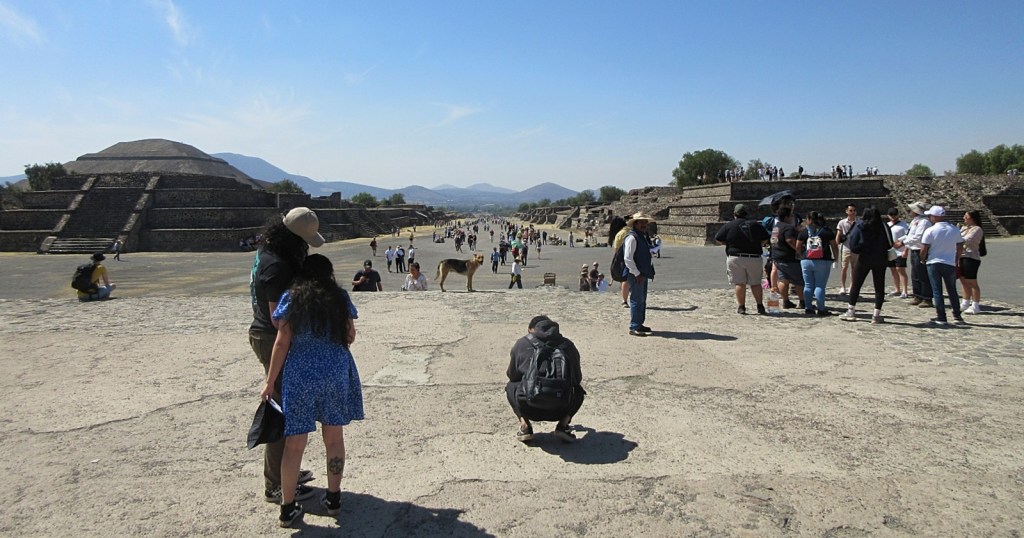
Caldaza de los Muertos filled with los Vivos.
The part of the city on display is arranged along a long rode that the Aztecs decided was a road of the dead, Caldaza de los Muertos, having assumed the smaller temples were all tombs. Gate 2 spits you out towards the end that terminates at a plaza at the foot of the Temple of the Moon. The plaza was magnificent and there you could see how the city was arranged. From various points around the plaza, as you look up at the Pyramids of the Moon and Sun are framed and mirror the mountains that surround the site, I think communicating how the city builders were connected to the world around them. At Tikal, you are immersed in jungle and so the city comes to you in pieces, but Teotihuacán was surrounded by scrub which put the city in the context of its valley.
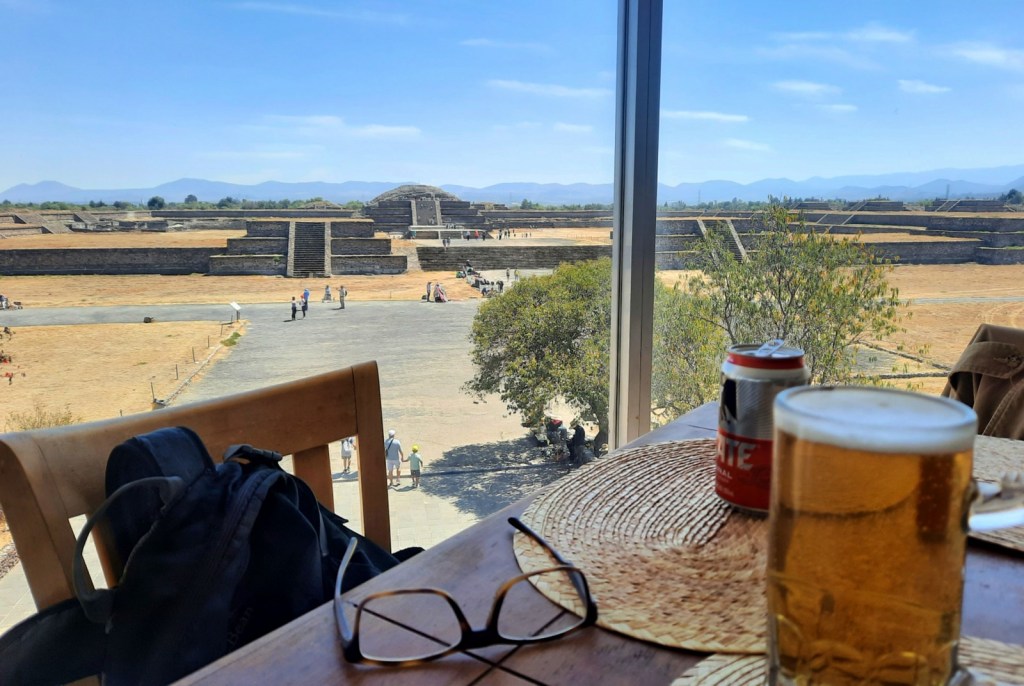
After taking in our fill of the Pyramid of the Moon’s plaza, we then hiked all the way down the Caldaza de los Muertos to arrive at the other end of the city, passing many many smaller temples and apparently residential districts along the way. You also pass over the San Juan river, which a criminally under-highlighted sign explains that one of the things the Teotihuacán builders did was divert the river in order to make it cross the city perpendicularly. That’s really cool! Geoengineering to make your city better reflect the cosmos! Think of all the digging. Just thinking about all that hard work, not to mention our relatively lengthy hike on an increasingly warm and dry day had us very tired and thirsty. Luckily at the far end of the Caldaza the archeological site has a very uncrowded restaurant that serves surprisingly delicious food alongside a necessarily refreshing beer. If you get a window table you overlook the Quetzalcoatl temple complex. As we ate a dust devil picked up in its own small homage to the storm god.
After lunch we checked out the Quetzalcoatl temple for ourselves. It has some of the most impressive decorations on the site, because the pyramid has been deconstructed. The Mesoamerican civilizations would build pyramid on top of pyramid, burying the last one to create something bigger. Since the Quetzalcoatl pyramid was no longer intact, decorations from its younger days are now on display and visible and cool to see. Also on the day we visited the Quetzalcoatl pyramid was the only one you could climb up, with the Pyramids of the Sun and Moon closed for repairs. This is probably a good thing though because we were tuckered out just climbing that one, so who knows if we would have survived the Pyramid of the Sun.
The final part of our visit was the museum on site, where they had lots of cool stuff. The most stunning part of the museum was a room where they had a scale model of the whole city with the Pyramid of the Sun itself serving as a backdrop thanks to a gigantic window. Whoever designed this setup deserves an award, it was awesome. Hot and tired, from there we decided to head back into town where we were finally revived with showers and some time to chill. We eventually head out for dinner. On the way I was impressed to see a man playing the accordion for tips, one of many talented musicians we saw earning their keep by entertaining sidewalk diners. The working musician is alive and well in Mexico City. For dinner we went to Pato Manila, a place that serves verifiably delicious duck tacos, and for dessert went to the Churreria El Moro where there was quite a crowd. We finally went back to our place to gird ourselves for going for the next day’s adventure into the beating heart of a modern city.
Tippu Tip and the East African Slave Trade by Leda Farrant
What with the red-eye flight we took to get to Mexico we had collapsed asleep in the beautiful apartment we were staying at and therefore arose on our first full day peppy and ready to absorb some culture. The plan for the day was to explore the environs of Chapultepec Park. We had a leisurely morning, ate pastries for breakfast, and set out walking to see the sights of the day.
We entered the park via the Estela de Luz. It was Sunday, and despite the relatively early hour the park was already filling with people. One thing we had noticed right away is that Mexico City, at least in the neighborhood we were staying, is very much a dog town. There were tons of people walking their well-behaved off-leash dogs in the gorgeous early morning air and people already strolling the paths of the park. Our first destination was the Museo Nacional de Antropología, and as we made our way there we watched the many, many vendors that line the paths set up their many, many booths. I regret not buying for my brother a t-shirt that featured Darth Vader in as a stylized Aztec god.
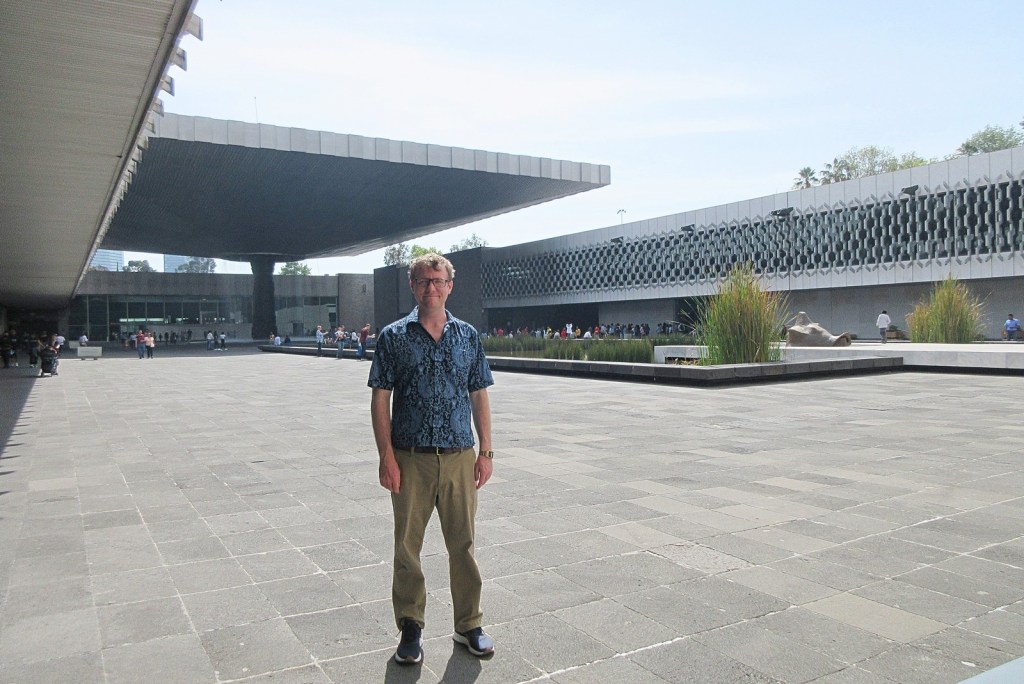
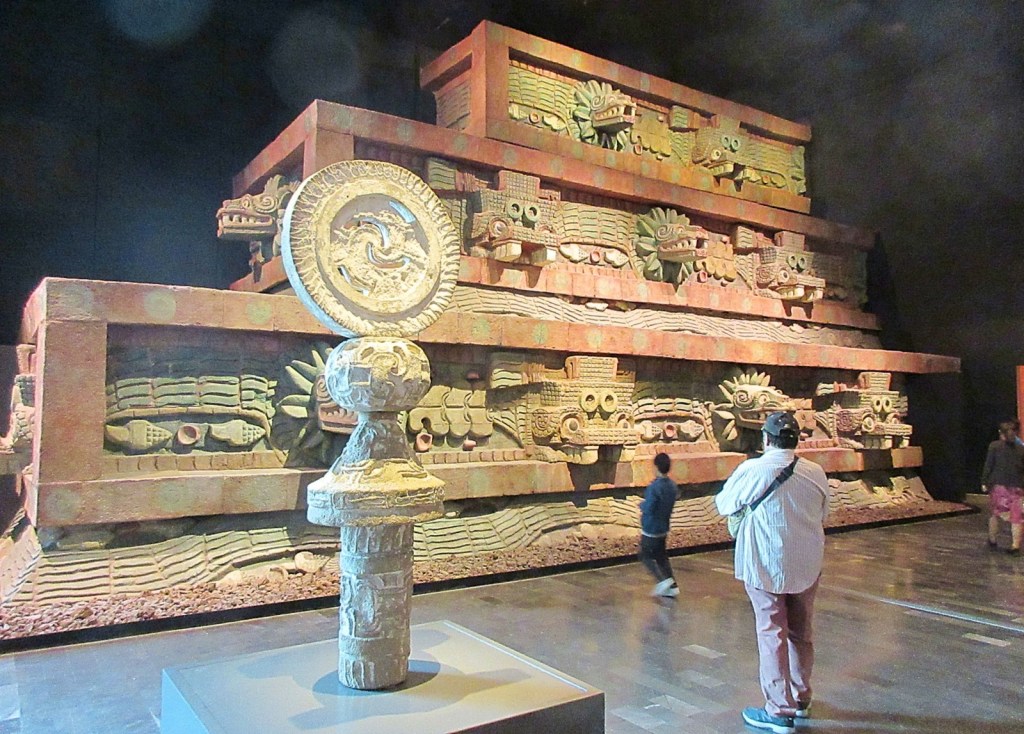
We got to the anthropology museum fairly early but it was quickly brimming with people. After the entryway it opens up into a massive sunny courtyard anchored by a gigantic fountain, though with the water spilling from above the effect was (for the better) more mountain waterfall or perpetual rain. The place was fairly overwhelming, a sense which was ameliorated by the fact we couldn’t read most of the signs. It separates itself into different sections based around separate cultures, and we were glad to see a whole section on Teotihuacán, which we had planned to visit the next day. The museum is really well put together, and you can weave inside and outside the building to see artifacts and recreations of temples and sights. That made these cultures feel more alive than if it was just pots in display cases. The museum is also where you will find some of the more famous icons of Mexican culture, as experienced from the United States anyway.
I like museums best when they can really give you a sense of what life was actually like for the people they are telling you about. The monumental is cool but I try to focus on the objects that feel touched by people. Throughout our trip to Mexico City we saw a great number of ancient pottery stamps (below), which I hadn’t seen before in any anthropology museum. That speaks to people making sure the everyday was still beautiful. And although I just poo-poo’d the monumental, some of the most stunning displays were full-sized recreations of what some of the temples would have looked like in their heyday (as you can see above), with their decorations intact and new-looking. Extremely cool to see!
We had lunch in the museum’s excellent and airy café and then exited via the gift shop. An observation on the gift shop culture we witnessed in Mexico City: I collect lapel pins and my super amazing wife collects bookmarks. In the places we’ve been to in the United States, we are far more likely to find a lapel pin than a bookmark. However in Mexico she was deluged with bookmarks while the lapel pins available left me very much wanting. We also saw throughout our trip a veritable riot of bookstores, which leads me to conclude the Chilangos are a much more bookish culture than anywhere I’ve seen back home. If only I read Spanish.
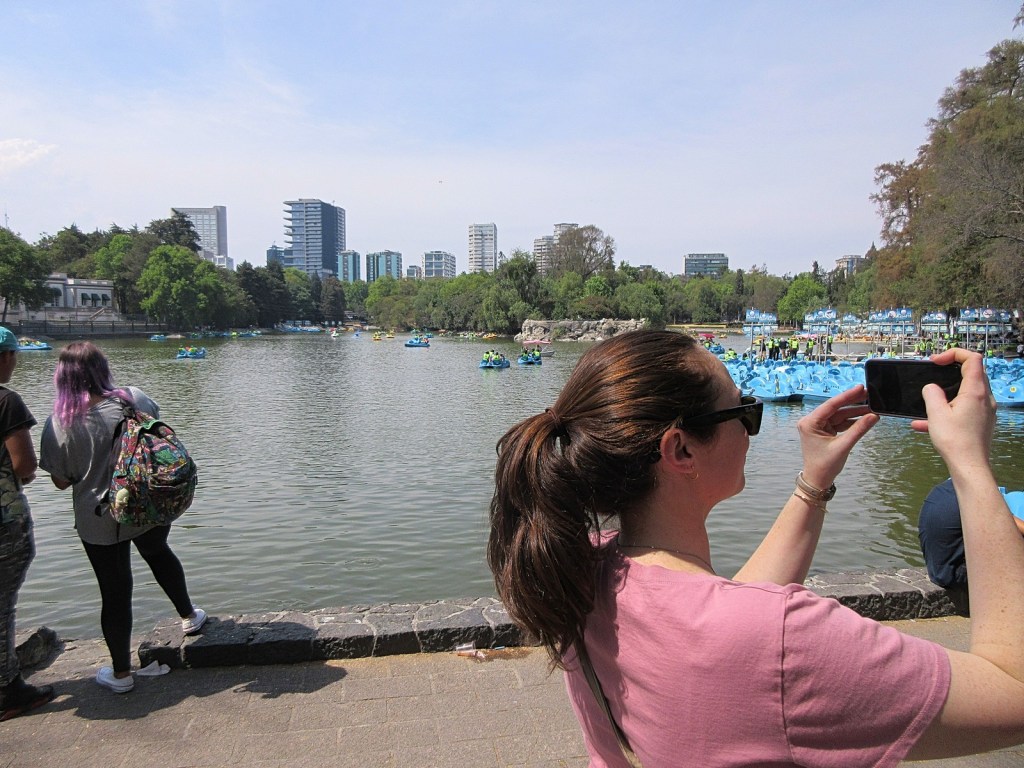
A sunny Sunday in Chapultepec park.
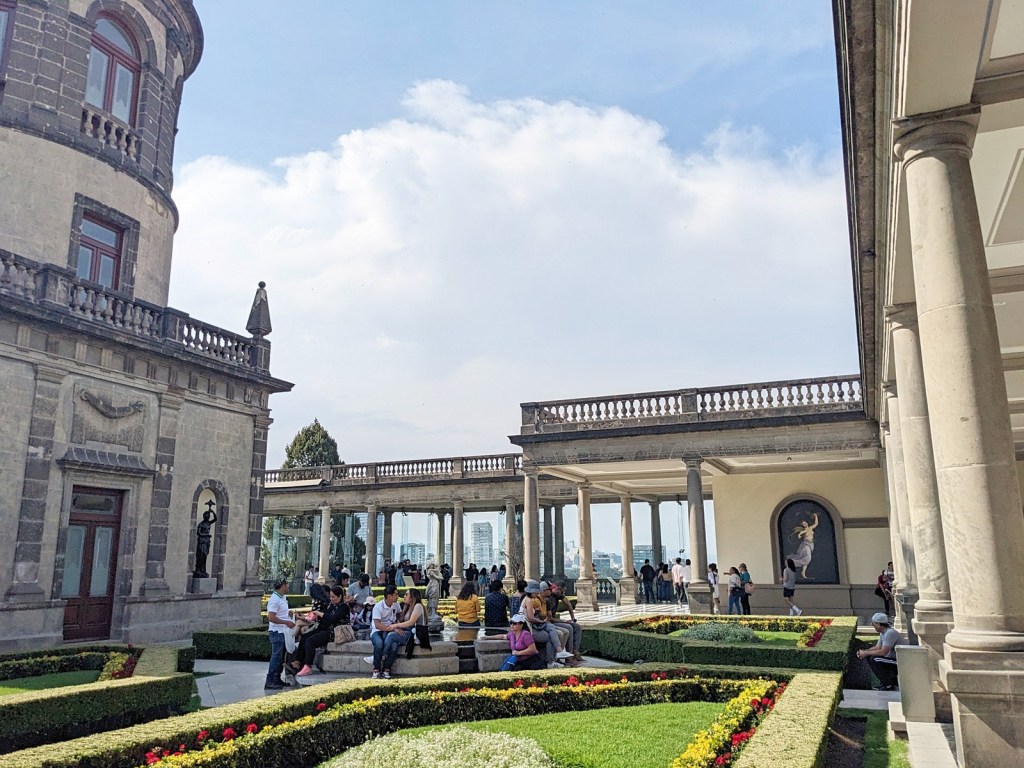
After the anthropology museum we were off to Chapultepec Castle, home of the Museo Nacional de Historia. It is perched on the top of the tallest hill in the park, which caused me to comment to my super amazing wife about how it is always men that want to live on top of hills because they don’t do all the work of hauling water and food up there every day. She has heard me say this many times before and is slightly tired of it. But what the site lacks in practically it rewards with views in spades. It was mid-afternoon by this point, so we were a bit hot and flustered as we trudged up to the castle, but it was awfully pretty. It was also very crowded, as admission is free for residents on Sundays, but I like it when public spaces are full of the public. The park itself was full to the brim as we made our way to the castle and I wasn’t quite sure how the place fit all the people we saw walking up the hill. The castle itself has been home to various Mexican presidents and emperors, and much of the museum is sumptuous rooms where these autocrats/democrats slept and/or held meetings. On the roof was a very tidy garden. It’s good to be king I suppose (until the firing squad gets to you).
Finally the day was wrapping up and to refresh ourselves we went to a Cafebrería. There I had a flotado which consisted of lime ice cream in coke and has a fair shot of being the original recipe for ambrosia. That night, fortified with a shower, we went to Taquería Orinoco for dinner and tried to eat everything. We got most of the way to everything and had to burn it off with a rousing game of Scrabble when we returned to the apartment. Exhausted, we once again collapsed asleep dreaming of even greater adventure the next day.





















 Pat in the World
You must be logged in to post a comment.