Corncob Charcoal Pt 2

Corncob Charcoal

Actual people making actual charcoal from actual maize/corn cobs.

Reading this week:

  • A House for Mr. Biswas by V.S. Naipaul
  • Bombs Away by John Steinbeck

“Hello everyone!” Peter began. It was the following week. “Today we are going to learn how to make charcoal out of corncobs!”

The villagers, after greeting Peter, smiled and nodded. They paid close attention.

“But today will be different!” So far it was. Today, Peter was standing next to a hole in the ground. “I figured out that you guys weren’t making charcoal out of corncobs because you didn’t want to build a kiln!”

The trouble, Peter had figured, was that he had been using a brick kiln to make charcoal out of corncobs. Although it was cheap and easy to make, it might have proved too much of a hurdle to ask the villagers to build a kiln before they started making charcoal out of corncobs. So, on the internet, he had found a technique for making charcoal in a pit dug into the ground.

More excited than usual for today’s demonstration, Peter continued with not only gusto but a little giddiness.

“Okay! So here’s the trick!” Peter hefted a stick. “With this technique, first you put a stick in the middle!”

Peter put a stick in the middle of the pit.

“Now! You layer in the dried grass and corncobs, like we usually do!” Also like usual, Peter invited some villagers to help him put dried grass and corncobs in layers into the kiln. The hands-on approach, after all, really helped to drive the point home.

“With that done, you take out the stick!” Peter took the stick out of the middle of the pit, leaving a hole in the layers of dried grass and corncobs. “And now we get to light it on fire!”

Using the stick to help him, Peter shoved a burning piece of paper down into the middle of the hole, lighting the bottom of the pile of dried grass and corncobs. Enclosed in the pit, the pile began to emit smoke.

“Alright! You guys know what comes next!” Peter checked to see if the villagers really did know what came next. “We light the smoke on fire!”

Using another burning piece of paper, Peter lit the billowing smoke on fire. Then, quickly, Peter covered the pit with a piece of metal and sealed all the edges with mud.

“Okay! Now, just like when we used the kiln, we’ll let this pit smolder here overnight. Tomorrow, we’ll uncover it, and we’ll have charcoal! No kiln needed!”

Peter beamed. The villagers smiled and nodded.

“Well, that’s all I have for today! Thank you for coming!”

The villagers, smiling, left. Today’s demonstration had been a refreshing change of pace. It was exciting to learn a new technique for making charcoal out of corncobs. Peter was excited to show them and they were happy to support their friend. The villagers nodded in knowing, silent agreement with each other that it had been a very good demonstration.

The spread of the nanites was a hard phenomenon to find out about. Anyone who witnessed technology dissolving around them usually reached down to their phone to take a picture, only to find their phone gone. When they went to get back in their car and drive somewhere to tell someone, they would find their car gone. If they then felt a sudden, eerie gust of wind, it was usually because they found themselves without their synthetic clothes.

People started to figure out something was up when no one could get hold of anyone in California. Of course, what with all the world’s technology fueling the spread of the nanites, along with the inevitable math of expanding powers of two, it didn’t take anyone long to figure out why. Or, if they didn’t figure out why, they were soon busy with their own problems of missing phones, cars, clothes, and every other piece of technology they formerly had laying around.

Peter stepped out of his hut into the sun. The day had dawned remarkably bright and clear. He got on his bike to head into town. The bike ride into town was grueling. It was uphill the whole way, and entirely on a dirt road. The dirt road was sometimes okay but got worse and worse as the rainy season went on. Peter wished that there was a way to get the road paved. If they laid down asphalt and made it a tarmac road the bike ride would be a lot easier. He might even be able to call a cab. Convincing any of the taxi drivers to take their cars off-road was a challenge, and when Peter could find someone it was astonishingly expensive. A road would be nice.

Peter turned the last corner into town and promptly fell down. He fell down because his bike was suddenly no longer under him. He didn’t notice that for a few minutes, however, because he was too busy noticing that the town was in ruins. The walls of some of the mud brick buildings still stood but almost everything else was gone. He didn’t see any cars and the cell phone tower was missing. Peter went to go pick up his bike, found his bike was gone, looked around, and got up to start walking towards his friend Pearson’s restaurant.

Peter walked into the ruins of the restaurant. Inside, he found Pearson sitting in the middle of the floor. “What… what happened?” asked Peter.

Pearson looked up to see Peter, and sprang to his feet. “Peter! It’s gone! Everything’s gone!”

“Yeah but how?” Peter was suddenly frightened of Pearson. “What happened to everything?”

Pearson staggered towards Peter, putting his hand’s on Peter’s shoulders. Then, gesturing wildly “We were here! I was cooking on the stove, preparing for lunch. I… I looked up to check the time on the clock and it was gone. Just gone! Then I looked down at the stove, but it was gone. I left the kitchen, and… and everything was just gone!” Pearson slumped back down.

Peter backed out of the ruins of the restaurant and back into the bright daylight. He thought, finally, to call someone and find out what was going on. He reached for his phone to find it missing. It wasn’t until then he really panicked. He started running. He tripped almost instantly on a loose rock, spilled into a gully, and skinned his knee.

Picking himself back up, Peter calmed down slightly. With no bike, no phone, and with nowhere else to go, he started walking home. It was dark by the time he reached his hut. He collapsed onto his mat and passed out.

For several days, the villagers had fretted about Peter. They had seen him come back without his bike. Since then, he had stayed largely in his hut. When he did leave, he had looked stricken. He hadn’t called any meetings. The villagers didn’t know exactly what was wrong with Peter, but they had noticed some other changes. The days had been brighter and more clear for the past few days. They hadn’t noticed any planes in the sky. A few items had gone missing, like plastic buckets, but these were largely of no consequence. The man from the NGO had said he was coming, but had never arrived.

In a few quiet gatherings, the villagers made a plan to make Peter happy. The happiness of their friend was very important to them. He was a man that had given them many gifts, and so deserved one in return.

The procession of villagers found Peter at his hut, looking at the distant hills. He had been waiting since his return to see if someone would come rescue him. Waking the morning after his return from town, Peter had realized that if some catastrophe had occurred, and they hadn’t heard from him, a rescue party would drive out to find him. So he had sat, and waited. Some of the time he had spent looking for his model car. It was gone.

Peter turned around and was surprised to find a crowd of villagers standing in his yard, smiling. “Oh, uh, hey guys. What brings you here?”

One of the villagers stepped forward carrying a bundle. Kneeling, the villager unwrapped the gift and presented it to Peter. Peter looked down at the bundle. He looked up at the villagers. Peter reached into the bundle and took out a piece of charcoal. It was corncob charcoal.

Clutching the charcoal, Peter turned around to hide his tears. Hey, he thought. Something terrible must have happened. That was for sure. But finally, he was doing something about climate change.
Corncob Charcoal Pt 1

Vonnegut

Reading this week:

  • Sacred Games by Vikram Chandra
  • Behind the Beautiful Forevers by Katherine Boo

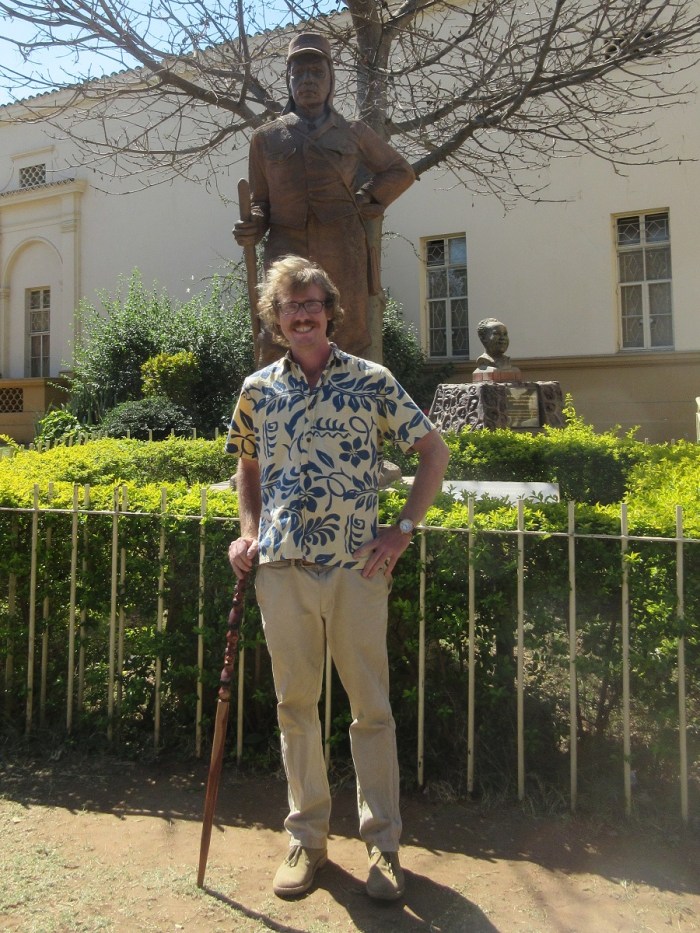
After I posted the above picture on Facebook, a friend of mine said I looked like Kurt Vonnegut. This was a compliment I was willing to take, and I took a stab at writing a Kurt Vonnegut-esque story. The first part of the results are below. In case you’re worried about me, it’s not particularly autobiographical, despite my attempts at charcoal.


Peter stepped out of his hut into the sun. The villagers had started to arrive for the demonstration and so Peter made some final preparations. Today, he was teaching how to make charcoal out of corncobs. He was getting pretty good at teaching this because it was his third time. The villagers grew lots of corn, but didn’t do anything with the leftover corncobs. Showing the villagers how to use the corncobs to make charcoal was his pet project. It wasn’t original – lots of volunteers held demonstrations on making charcoal out of corncobs. But Peter wanted to do something about climate change, and for him, this was it.

After he showed the villagers how to make charcoal out of corncobs, Peter figured, they would start making charcoal that way and they would stop cutting down trees. He just had to show them how very easy and effective it was. So far the demonstrations had been going pretty well. The villagers all showed up to his meetings and paid careful attention. Peter had just never managed to convince anyone to go home and actually make charcoal that way. He avoided thinking about that as the crowd gathered for today’s demonstration.

“Hello everyone!” Peter began. “Today we are going to learn how to make charcoal out of corncobs!”

The villagers, after greeting Peter, smiled and nodded. They paid close attention.

“You see, you guys grow a lot of corn and you always have a lot of corncobs left over,” explained Peter as he gestured towards the pile of corncobs. He had gathered a large pile of corncobs to make just that point. “Meanwhile, you guys use a lot of charcoal. If you guys use the corncobs to make charcoal, it will be better!”

Having built up some momentum, and noting the smiles and nods of the villagers, Peter launched into the next part of the demonstration with gusto.

“First! You put some dried grass into the kiln!”

Peter put some dried grass into the kiln.

“Second! You layer in your corncobs!”

The corncobs tumbled in.

“Keep putting in dried grass and corncobs in layers!”

For this part, Peter liked to invite some of the villagers to help him put dried grass and corncobs in layers into the kiln. He felt the hands-on aspect of the demonstration really drove the point home. Some of the villagers came up and helped him put dried grass and corncobs in layers into the kiln.

“Now for the exciting part!” Peter really did get excited for this part. “You light it on fire!”

Peter used a match to set a piece of paper on fire. Bending down, he stuffed the fire into the bottom of the kiln, where holes exposed the layered grass and corncobs. The grass lit on fire and smoke came out of the top of the kiln. Standing back slightly, Peter prepared another piece of paper by lighting it on fire.

“Now for the tricky part!” This part was actually tricky. “We light the smoke on fire!”

With the smoke thick and heavy, Peter stuffed the burning piece of paper down the top of the kiln. The billowing smoke caught fire right away. Quickly, Peter covered the kiln with a piece of metal and started sealing all the holes in the kiln with mud.

“You see!” Peter checked that the villagers really did see. “Now that we’ve lit the corncobs on fire, they will smolder here in the kiln overnight. Tomorrow, we’ll have charcoal!” Peter reached into a nearby sack and pulled out some of the charcoal he made in the second demonstration. He passed it around and the villagers inspected the charcoal. They confirmed to themselves it had once been a corncob, but that it was now charcoal.

With his demonstration over, Peter beamed at the crowd. Another demonstration had gone off perfectly, and the villagers were engaged. “That’s all I have for today guys! Thank you all for coming!”

The villagers, smiling, left. The villagers were glad they could make their friend Peter so happy by attending his demonstration. They were glad to arrive on time and pay attention and they were pleased to see the demonstration work. Some had not understood the first time but they had understood after the second demonstration. Everyone understood it by now, but they were still excited to support Peter.

In a small lab in California, the engineers stood smiling. Their latest test had finally been a success. They stood in front of a slowly disappearing pile of old circuit boards and discarded computers. The pile of electronics was disappearing as an army of nanites the engineers had designed worked to turn those parts back into their molecular components.

For the engineers in the lab, the looming environmental problem that worried them the most was the cast-off detritus of the electronic age. Cheap and easy to build consumer electronics had beget mountains of expensive to recycle toxic trash. But now, the engineers had created microscopic machines that could make raw materials out of circuit boards.

The nanites neatly solved several problems at once. Besides breaking the circuit boards down into raw materials, the nanites could replicate themselves as needed for a job. Even a small initial amount of nanites could be used to break down any quantity of electronic trash. By breaking circuit boards down to their raw materials, they would help solve the shortage of those raw materials needed to make new circuit boards. And because the nanites could identify the old electronics themselves, they didn’t need any supervision.

With the glow of a long and complicated project brought to completion, the engineers packed up to head home for the evening. One of the engineers glanced down at his watch to check the time. It wasn’t there. “Funny,” he thought, “I must have forgotten it.”

A few days later Peter sat in his hut, dejected. He fingered the toy car he kept on the table. Peter had been around the village, talking with his neighbors and helping them with their fields. He had watched them cook. Out of everyone he had visited, no one had made charcoal out of corncobs.

Peter made the car pop a wheelie near one of the books he kept on a table. It took a corner too tight, Peter decided, and he sent the car rolling off the edge of the table. He bent down and picked it up. The toy car was a model of his car back home. Peter missed that car. It had been six months since he had driven it, back home. He missed driving. Peter looked into the tiny model window at the tiny model steering wheel. He missed cruising down the highway. He missed speeding down back roads. He missed the smell of gas and oil when he worked on it. Peter put the car down.

Peter picked the car back up and fidgeted with it as he tried to figure out how to get the villagers to make charcoal out of corncobs. The villagers seemed to understand, at this point, how to make charcoal out of corncobs. They must, right? They smile and nod during the demonstration. This last time the villagers looked like they knew what was coming next. That hands-on portion in the middle when they helped to put grass and corncobs into the kiln really drove the point home. He had to convince the villagers to make charcoal out of corncobs. He had to help fight climate change.

Peter put down the car and picked up his phone. He searched for ways to make his presentation better. A lot of people had a lot of ideas about how to make rural villager’s lives better. Techniques for conservation farming and better use of manure and ways to cut down on pesticides were all there on the internet. Poking around for different ways to make charcoal, he sifted through some lackluster proposals. Finally, he found his climate change solution.

In the small lab in California, the pile of old circuit boards and discarded computers had been completely broken down. The diminutive representative of the mountains of toxic electronic waste had been reduced to its raw materials and a host of new nanites.

The nanites had been designed to only break down trash. They weren’t supposed to break down, for example, working and useful electronics. But while the nanites were very good at breaking down circuit boards, they were not quite as good at replicating themselves. In that process, mistakes had been made. That simple but vital little part of their programming that said to only look for trash had, for one nanite, been forgotten. That nanite, never knowing that particular directive, of course never passed it on to any of the nanites that it built in the course of its duties. Those nanites, in turn, never passed it on to their offspring.

These nanites, with the easily digestible trash gone, were restless. The directive of all the nanites had been to break down circuit boards and electronics, comprising plastics and metals and other materials. The rest of the nanites, with their trash directive intact, were satisfied with a job well done. The nanites who never knew what trash was, however, looked around to the plastic and metal box they were being kept in and got back to work.

The first scientist who arrived to the lab in the morning, the guy who usually made the coffee because he had a certain way he liked it and the only way to make sure it was made that way was to show up first and make it, showed up to find the lab gone.

Stay tuned next week for Part 2!

Operational Risk Management Part II

In last week’s blog post I explained that I think most of the mishaps that happen in the Navy are fundamentally a breakdown of operational risk management. In turn, that breakdown stems from an inability to adequately assess risk. Military personnel are highly trained, and much of the structure of the military is there to help reduce risk. That means that people can do stupid stuff for a long time, getting by on skill alone until finally the situation becomes too big and people are injured or killed. Until that point, however, people will be unable to truly assess the risk they are facing.

Like I said last week, I had a lot of things go wrong on my watch, and many of them were my fault. I wound up in many critiques and wrote two incident reports. There were several times where I was the majority of the ship’s critiques. I only really started to get better when I started to actively think a lot about the risk/reward of any given evolution. Risk is a little abstract to think about, so what I started doing, unconsciously at first, was to think about explaining my actions at a hypothetical critique.

This is a technique I recommend. Before you start an evolution, imagine that something has gone wrong and you have to explain your actions to a very critical board of people. That way, if you are cutting a corner that potentially increases risk, you have to have worked out your exact reasoning for why you did that. This kept me from doing a lot of the little stupid stuff. If my reason for skipping the maintenance brief was “well I just didn’t think we needed that,” then I had to think about how that would sound out loud in front of Naval Reactors and Squadron personnel. I don’t think supervisors should live in fear of what could go wrong, but it works as a thought exercise in evaluating the risk/reward for your actions. Usually we assume that everything will go right, so any action we take is justified in the end. But if you start with the assumption that something will go wrong, then suddenly you have to work to explain what you did.

Once a year a submarine has to do an emergency blow. An emergency blow is when high pressure air is used to push all the water out of the main ballast tanks, causing the submarine to surface in an emergency. In 2001, the USS Greeneville was conducting an emergency blow as part of a VIP tour. They surfaced into the Ehime Maru, killing nine people. It can be a very, very dangerous evolution due to the fast nature of an emergency blow and reduced situational awareness. When our annual emergency blow came up, I was selected as OOD (I was to drive the ship). The original plan was to conduct the emergency blow during our normal watch time, which was during daylight hours.

Unfortunately, our assigned time to pull into port changed, meaning we could no longer do the emergency blow as scheduled. At the last minute, the command decided to change the plan. The emergency blow was rescheduled for the middle of the night. I flat out refused to perform the emergency blow and the evolution was cancelled. I had imagined what I would say to an admiralty board in case I got somebody killed in the performance of the blow. Changing the time would have meant we no longer had the benefit of the sun, reducing our ability to see contacts through the periscope. Having the daytime watchstanders perform the evolution at night meant they would no longer be alert.

Fundamentally, I didn’t believe anything would have gone wrong in the evolution; the watchstanders were very good, and there weren’t any contacts visible on the radar or in the moonlight. But still, something could have gone wrong, and I could not have justified these risks to anybody. We did not need to perform the emergency blow right then; we would have another shot at an upcoming underway. If we had performed the evolution during the day, with full visibility and alert watchstanders, and still something had gone wrong, I could have fully justified that we took every precaution possible to ensure the evolution would have gone smoothly. If we had gone along with the plan to perform it in the middle of the night, we would have been increasing risk when the evolution was not necessary to perform right then.

The second major change is that I would empower more junior watchstanders to make more calculations with risk. Unfortunately, and it is an unsolvable problem, there is a tension in a peacetime vs. wartime Navy (or military). In wartime, a large amount of risk is necessary; ships and sailors must go into battle. In peacetime, there are no battles to fight, so a lot less risk is acceptable. But the Navy must still train for wartime, where being shy about risk is no longer acceptable. This creates a tension in how much risk a CO should encourage.

Unfortunately, the way I saw every one of my captains try to solve this tension was by telling junior personnel to encourage risk. Each captain wanted me and my cohorts to recommend and push for higher risk activities. This would put us in the high-risk (and hopefully high reward) mindset. Meanwhile, the captain would be the final arbiter of risk and, if our plans were too risky, he would veto them. This method was employed by my captain that got fired as well as by the “fixer” captain sent in to replace him.

There are two major problems with this method. One, it depends on the captain to be perfect at assessing risk. The chain of command exists for much the same reason that the triple-check of the tagout system exists: it is highly unlikely that me, my department head, the executive officer, and the captain will all make the same mistake. But these captain’s methods, where they wanted to be the arbiter of risk, meant that they were the sole arbiter of risk. If they made a mistake, there was no one to back them up, and others (the ones in the dangerous situations) paid the price.

The other problem is that it means that more junior personnel never get practice assessing risk. If your marching orders are to disregard the risk of an evolution, depending on others (the captain) to evaluate risk, then you’ll never get good at it. This would be especially problematic when one of these officers, in turn, becomes captain. After a whole career of never assessing risk, these officers would be ill-equipped when it was finally their job to be the one to assess risk.

I do think it is necessary and important to be willing to take on risk where there is a commensurate reward. The fundamental tension of a peacetime vs. wartime Navy will never go away, but you can think like you are in wartime even if you then act like you are in peacetime. Whenever there is a potential evolution (and it fits to do this), I think that multiple courses of actions (COAs) should be presented. These should come with an honest and complete evaluation of the risk and the potential higher rewards that come with with COA. Both high and low-risk COAs should be evaluated on their merits, and then the COA chosen with the lowest risk that achieves the necessary objective.

The military is a fundamentally dangerous job. Risk will never go away. The military does a great job, and should continue to do a great job, at training personnel to excel in their skillsets and to put measures in place to reduce risk as much as possible. I think the military’s “can-do” attitude, necessary in wartime, hampers the ability to conduct honest and accurate risk assessments in peacetime, leading to unnecessary injury and death. To solve that, every person participating in an evolution needs to think through where risks are being taken on for what reward. More junior personnel, especially supervisory personnel such as officers, should be required to evaluate risk honestly instead of pushing for more risk in the name of training for wartime. A focus on operational risk management won’t solve every problem, but I can tell you it helped me.

Operational Risk Management Part I

Reading this week:

  • Neptune’s Inferno by James D. Hornnfischer

Recently (as I’m writing this), this USNI News article popped up in my news feed: “Investigation: Reckless Flying Caused Fatal T-45C Crash That Killed Two Naval Aviators.” In the incident, a student pilot was flying with an instructor. The instructor was performing and telling the student to perform advanced maneuvers that were not part of the plan. Both pilots misjudged the height and speed of the aircraft and crashed, killing both of them.

I’m not a pilot and I don’t have the skill to judge the technical aspects of the incident. But I was a nuke and a whole lot of things went wrong on my watch, many of them entirely or partially my fault. In the nuclear Navy, when things go wrong we hold a “critique.” A critique is an analysis of what exactly happened and the root causes of what happened (the other communities have similar systems but I haven’t experienced those first hand). Since I caused a lot of things to go wrong I went to a lot of critiques.

When things go wrong there are only really, fundamentally, a few root causes. Something could have broken. Sometimes things just break. You can probably dig down and analyze the cause of that failure, but sometimes mechanical and electrical devices just fail in ways that the watch team could not have predicted. Sometimes, people do go rogue. I had one mechanic who was getting fed up with the maintenance approval process (it was a busy day and his maintenance was low-priority for us so it kept getting pushed aside, but it was high priority for him because it was between him and going home) and so he just opened up the panel on the piece of equipment he wanted to work on and got to work. This is a big no-no and landed us in a critique.

But the vast majority of the time, when things go wrong, it is human error. Under the category of “human error” there are of course sub-categories. Sometimes, people just weren’t trained properly. Through no particular fault of their own they wind up in a situation they are not trained for and make a bad decision because of it. Sometimes there are hard decisions to make, and you can’t know everything, so you make a decision that turns out to be wrong. But the vast majority of cases that fall under “human error,” and therefore in the vast majority of cases that go wrong, it is my belief the fundamental root cause is poor operational risk management, or ORM.

ORM is the practice of balancing the risk associated with an action with the potential reward. Good practitioners of ORM will actively seek the ways to reduce risk, but it is also true that risk cannot be eliminated. Risk should be taken on, however, only in proportion to the commensurate reward. Flying planes, and especially warplanes, is an inherently dangerous thing to do. Aviation has a fantastic safety record and is one of the safest methods of transportation out there, but you’re still hurtling your body through space at high speed and high altitude. That is risky. The safest thing to do is to not fly. But not flying is not really an option; modern war requires aircraft and people to fly those aircraft, and the only way to get really good at flying airplanes is to practice flying airplanes. So you seek to reduce risk: you install safety equipment in the aircraft, you use simulators to practice where possible, you train the pilots to be familiar with the limitations of the aircraft and avoid exceeding them, and you only perform maneuvers that are as risky as necessary to successfully complete the training. In that way, the risk is reduced and becomes commensurate with the training value achieved from actually flying the airplane.

The most frequent way ORM falls apart is a bad evaluation of risk. If risk is evaluated poorly, then it will be impossible to tell when the risk being taken on has exceeded any potential value from the evolution. You can google a whole set of articles on why people are bad at evaluating risk, but in the Navy, I think the root cause is that most people are phenomenal at their jobs.

In the T-45C crash, neither pilot was a bad pilot. The Navy put a whole lot of time and money into training both of them and it showed. Again, I’m no pilot, so maybe they were actually terrible, but according to the article both pilots were conducting very advanced, unplanned maneuvers, passing the controls back and forth pretty continually and everything was going fine right until the end. The instructor was an experienced pilot but the student was still managing these maneuvers despite being a student. These two men were very good at flying airplanes, as far as I can tell. The upswing of being a very good pilot is that you can do a lot of dangerous things for a long time and have everything turn out just fine. Given how nonchalant he was, this could not have been the first time the instructor was conducting these sorts of maneuvers, and since he lived through every other time, then every other time must have turned out just fine. So, in my analysis, the instructor was unable to evaluate risk because every other time he did something stupid he managed to survive based on skill alone, which meant these activities no longer felt risky.

Given the Navy’s (and presumably the whole military’s) skill at training their personnel, this inability to properly assess risk of course extends to all communities. Last year, of course, both the USS Fitzgerald and the USS John S. McCain collided with merchant ships leading to the loss of life of 17 sailors. In the Navy’s investigation of the incident, they concluded that “the crew and leadership on board failed to plan for safety, to adhere to sound navigational practices, [and] to carry out basic watch practices.” What that translates to is that the crew did not implement the appropriate risk reduction procedures commensurate with the amount of risk they were taking on. In both the surface and submarine fleets, the way you mitigate risk in high-risk situations, such as operating near navigational hazards or near a large number of other ships is to station more watch standers who are able to better evaluate information as a team than one person is able to do alone. On both those ships, the situations that lead to the incidents, with inadequate watchstanders and inadequate safety precautions could not have been one time events.

Having been on a ship where things went wrong, and having been responsible for those things, I can tell you that suddenly a whole lot of people unfamiliar with the facts of the case have a lot of strong opinions on what you must have done wrong. I’m not here to do that in these incidents, and for all of them the Navy’s official reports compiled by the experts in these events are available to read. But what I am comfortable saying what I am saying because I’m not saying these people were bad watchstanders, I am saying I think they were probably very good. Both of those ships must have operated with inadequate watchstanders numerous times, and were able to do that because the watchstanders they did have on watch were highly trained and very good at driving ships. That means they, like the pilots, were able to do dangerous things and have nothing bad happen, which means they were ill-equipped to adequately assess the risk they were taking on and mitigate it.

I think some of the structural aspects of the Navy can contribute to this inability to assess risk. In 2016 two Riverine Command Boats attempted to transit from Kuwait to Bahrain. On the way they were seized by Iranian forces and held captive. In the Executive Summary of the incident report, the very first cause of the incident listed is that the command “demonstrated poor leadership by ordering the transit on short notice without due regard to mission planning and risk assessment. He severely underestimated the complexity and hazards associated with the transit.” In this case, what I suspect happened is that every other time the CO ordered this crew to perform a task, they pulled it off. Short notice, no notice, difficult conditions, you name it. So the CO lost his ability to adequately assess risk when it came to ordering this unit to perform a transit.

A similar thing happened to us. The first time we did a berth shift (when we moved the submarine from one pier to another), we took a week to prepare. It is, fundamentally, a pretty risky task, because you don’t have the reactor running and just have the diesel, which means the submarine has very little ability to get itself out of a bad situation and limited backup systems in case something goes wrong. But we did a lot of berth shifts and did them all perfectly and so before you knew it squadron was comfortable giving us two hours of warning to do a berth shift where previously we spent a week getting ready. We even did a berth shift with only one tug where normally you have two, vastly increasing the risk of the operation. We may have gotten a bit better at berth shifts, but at no point did the risk actually reduce, just our perception of the risk did.

In the case of the Riverine Squadron, this meant the CO was comfortable ordering the boat crew to make a high-risk transit with little warning time. This is especially dangerous because the CO is supposed to be the final arbiter of risk. If he is the one ordering the mission to go ahead, he has to have made a decision that the mission has an acceptable level of risk compared to the potential reward. I firmly believe that the officer in charge of the actual mission has a parallel responsibility to assess risk and must refuse to carry out the mission if in his opinion the risk vs. reward calculation is not worth it. But given that the order comes from the CO that fundamentally alters the officer’s ability to assess risk; the CO has many more years of experience and often has access to more information and his judgment should therefore be more reliable. But I think our CO here had seen this unit succeed many times, changing his assessment of the risk, and the feedback loop to the officer in charge meant that no one was able to assess the risk any more.

I’m going to keep harping on things that make it harder to assess risk, but I am trying to drive home the point that assessing risk is a fundamentally hard thing to do in the Navy precisely because we work so hard to reduce it. A major aspect of Navy maintenance procedures is to require several people to verify that something is safe. Before working on a piece of equipment, we’ll tag it out. What this means is that we’ll turn off and isolate every power source to a piece of equipment (including electrical, mechanical, and hydraulic power) and hang tags on those switches, valves, or isolations to make sure that no one turns them back on (similar to but not the same as civilian lockout-tagout). To tag out a piece of equipment one person has to determine what isolations are needed, another person has to verify them, and, before the tagout is hung, the supervisor also verifies it. For more complicated tagouts even more people can be involved but at the absolute minimum three people look at a tagout to make sure the worker won’t be harmed when he goes into a piece of equipment.

For something to go wrong then, all three of those people have to make the same mistake. Things, therefore, rarely go wrong. Two people can miss an isolation and have the third person catch it. In that case, nothing bad happens; the equipment doesn’t get worked on until the problem is fixed and the worker doesn’t get shocked or hurt by dangerous equipment (for nukes chuckling about the inevitable critique, yeah, but my point is no one was injured). Further, as I have been harping on, all three people in that process are usually pretty darn good at their jobs! That means mistakes are rarely made anyways, but it further drives down the possibility that all three people fail in the exact same way. But that, in turn, increases complacency. One guy, swamped with work, can maybe not do as thorough a job, knowing he’s got two other pretty smart people who will check the work and make sure nothing bad happens. The problem, of course, crops up when the other two people make the same assumption, or maybe one person makes an honest mistake and the other two don’t check it. No matter how good you are, everyone makes a mistake every once in a while.

Please stick around for part two, next week, where I solve the problem.

On Development

Sweet potatoes

Reading this week:

  • The Undercover Economist Strikes Back by Tim Harford
  • The Death and Life of Great American Cities by Jane Jacobs

I wanted to share a few thoughts on development work. The methods and effect of development work is a popular topic among Peace Corps Volunteers as would be expected. Books like Dead Aid are pretty common reads among PCVs, and I pay close attention when people like Tim Harford or Tyler Cowen talk about development. The topic of development is consistently in vogue due to the number of international agencies out there and the billions of people targeted by the work.

I think the current trend is to bash development work. There are projects like What Went Wrong? to document where projects failed (to be fair to them, their eye is towards doing it better). Having read Dark Star Safari, Paul Theroux travels through Africa and takes a dim view of the effect of development work (again to be fair, he doesn’t bash their intentions, except for the proselytizing ones).

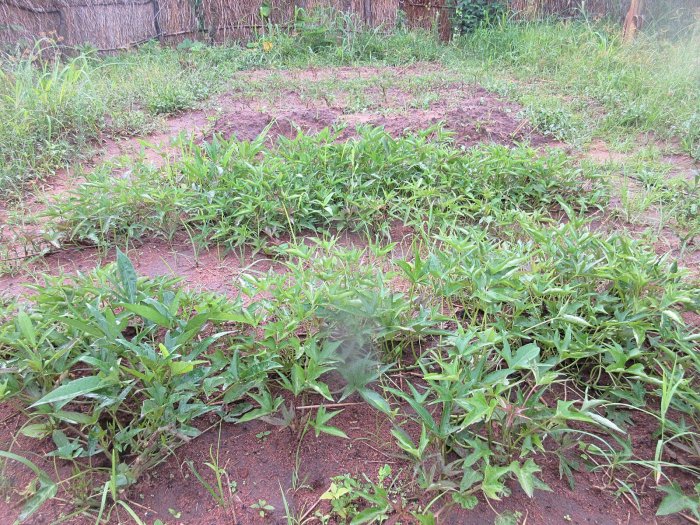
The biggest thing I’ve learned since being here is that it is hard to tell what’s going to stick. I’ve brought a counterpart to several workshops, including workshops on animal husbandry, mushroom growing, rice growing, orange-fleshed sweet potatoes, and beekeeping. Of these, so far the only project we’ve implemented is orange-fleshed sweet potatoes.

I think it is inevitable that most development projects are going to fail. I don’t blame anything like the culture or people becoming dependent on handouts, I just think of development work like a business. It might not be universally true, but most of the projects I’m around here to implement are really about introducing new businesses. A fish pond provides other benefits, but the end goal of digging a fish pond is to sell the fish and make money. If I teach a farmer about beekeeping the end goal is to harvest and sell honey and beeswax and make money. If we get farmers to plant a new crop, the end goal there is to have diversified the outputs of the farm to allow the farmer to sell more products and make more money. In that perspective, a lot of development work is about helping people start a new business.

Unfortunately, even under the best of conditions, most businesses fail. Businesses fail here for the same reasons that they fail back in America. A lot of these projects have a pretty high start-up cost in terms of money, time, and labor. Digging a fish pond is hard, and even if digging a pond out of dirt is “free,” it still takes weeks or months. People are already busy doing things like hoeing and weeding their fields by hand, and the time it takes to dig a fish pond is time the farmer could have spent doing other things. After the pond is dug, it takes money to buy the fingerlings to stock the pond. People also must have all these resources available before they even begin as there aren’t really any sources of credit available to villagers around here. Back in America, people who want to start a business can take out a business loan to get the capital to start. But a farmer here who wants to stock a reasonably-sized fish pond has to have at least 150 Kwatcha when they’re struggling to put together 20 Kwatcha every four months to send their kid to school.

Even if a farmer overcomes the startup costs, they may find that the new business just isn’t cost effective. A farmer could decide to undertake improved animal husbandry as a business and start raising goats. The farmer could very well find that raising the goats takes time away from growing maize (so he can’t grow as much) and that the cost of vaccines, supplemental feed, and paying for any damages that the goats cause if they escape is more expensive than anticipated. He could find the market price he counted on doesn’t materialize and goats sell for less than he expected, driving down profits from his goat business. So the farmer sells off his goats and gives up on animal husbandry. That has an effect on the rest of the community. Where I live, people wait for someone else to try something new. If that other person is successful, then they’ll undertake the risk and start that same project. If that person fails, then they won’t bother with it. My village grows a lot of onions because one person tried it and found it profitable. It was hard to get anyone to dig a fish pond because years ago they tried it and it failed. Now that my host dad has dug a fish pond, people are waiting to see if he makes money before they try it themselves.

Although it is hard to predict what projects exactly will be successful, I do think there are some things you can do to improve your chances. A lot of these have been detailed elsewhere. Just handing a village something like a tractor with no training on repair and no way to pay for gas is going to be pretty useless. You have to make sure there is actually a market for whatever you’re proposing people make or grow, and a way to get it to that market. Projects should focus on people’s ability to maintain it using the resources they have available.

Along those lines, one lesson I have learned is on the definition of “low cost.” Sometimes I Google for ideas for things like improved solar dryers and come across projects that comment on their “low cost.” But when these projects say that, they usually mean that they are less than $25 or something like that, maybe even $2. But around here, $2 is a term’s worth of school fees, which I mentioned a lot of people have trouble scraping together. So if you come in with your “low cost” project of $2, you could be asking someone to choose between your project or sending their kid to school. So while I understand the need to spend money to make money, “low cost” can still be very pricey.

But with all that, I do think development work is very possible and very important, even if it could be done better. I think the timelines on a lot of these projects are really too short to tell if you’re going to be successful. I have two years here in Zambia, but the agricultural cycle takes about a full year. That means I really only have two shots to introduce a new agricultural system. And if I introduce something in that second cycle then I’ll probably be gone before I can really tell if it works. Agricultural projects can take years to pay off; techniques such as conservation farming require 3-4 years of labor invested before the farmer really starts to see savings in labor and fertilizer. On the health front, if I teach about malaria or HIV, then really the metric there is if they get malaria of HIV for the rest of their lives, not just in the two years I’m around to watch.

But development does have an effect on people’s lives. In Dark Star Safari, Paul Theroux meets people he knew and taught or taught with as a Peace Corps Volunteer and then afterwards as a university professor. These are people that have successful careers and have raised families. People have a lot of teachers in their lives, and each affects them, but who’s to say Mr. Theroux there didn’t have some meaningful impact in improving at least some of his student’s lives? Even if most businesses we help people start eventually fail, some will succeed and give people a shot at making more money than they otherwise would, with follow-on benefits like being able to send their kids to school or invest in more businesses. If they don’t start any businesses, then all of them will fail.

I’m very much in favor of development work as a whole. I think there are a whole lot of ways to do it wrong, and I’m not even sure the Peace Corps method is the best method if you’re main goal is improving lives most effectively and cost-effectively (America gets other benefits from the Peace Corps, don’t forget). But I think it is going to be easy to point out the ways the development fails because the nature of development work means most development projects will fail. But some will succeed and it is hard to tell on what timeframe they’ll make an impact.

Sweet Potato Workshop

Reading this week:

  • Bluebeard by Kurt Vonnegut
  • Hocus Pocus by Kurt Vonnegut
  • Breakfast of Champions by Kurt Vonnegut
  • Player Piano by Kurt Vonnegut
  • Sirens of Titan by Kurt Vonnegut
  • Jailbird by Kurt Vonnegut
  • Slapstick by Kurt Vonnegut
  • God Bless You, Mr. Rosewater by Kurt Vonnegut

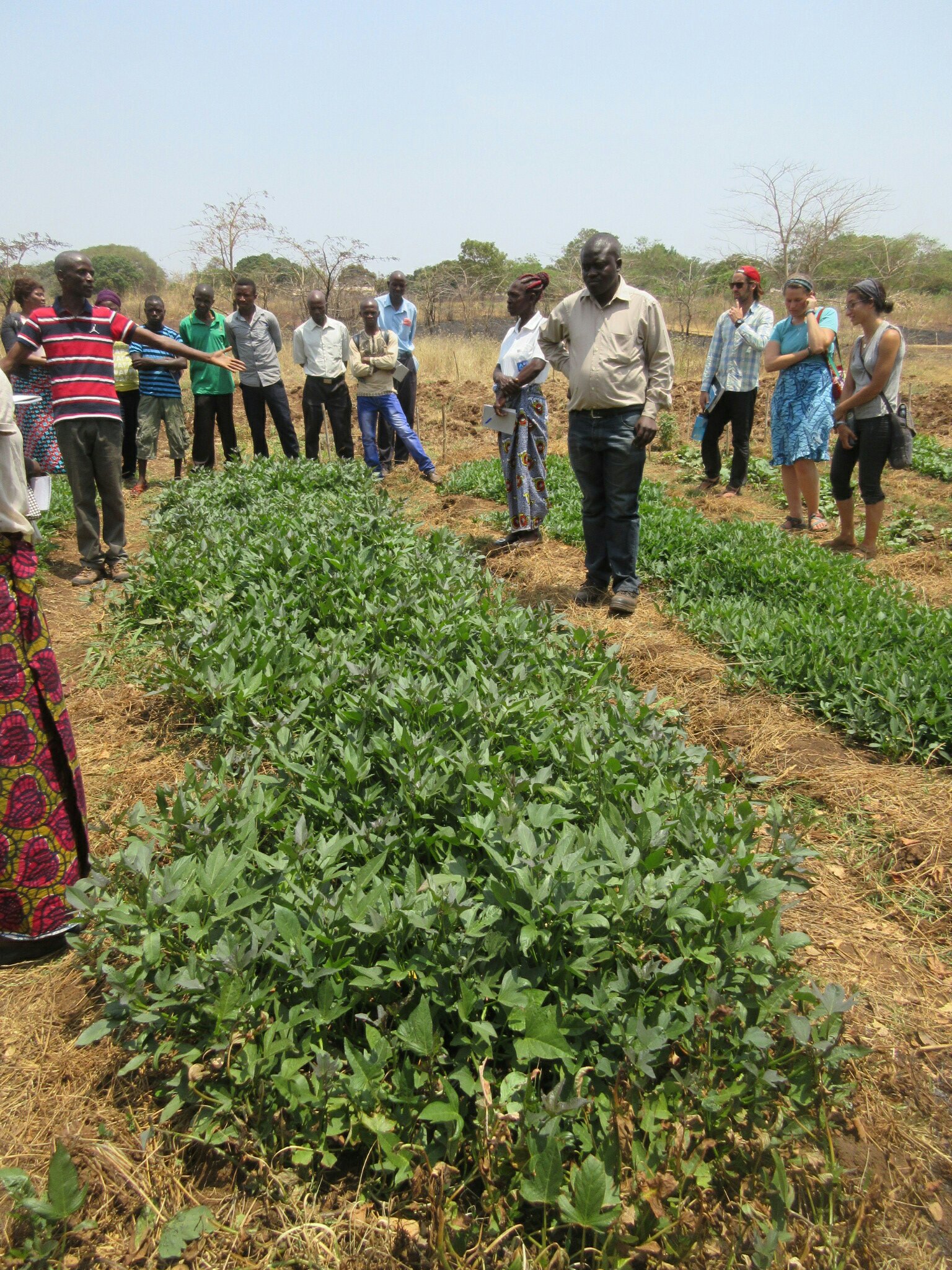
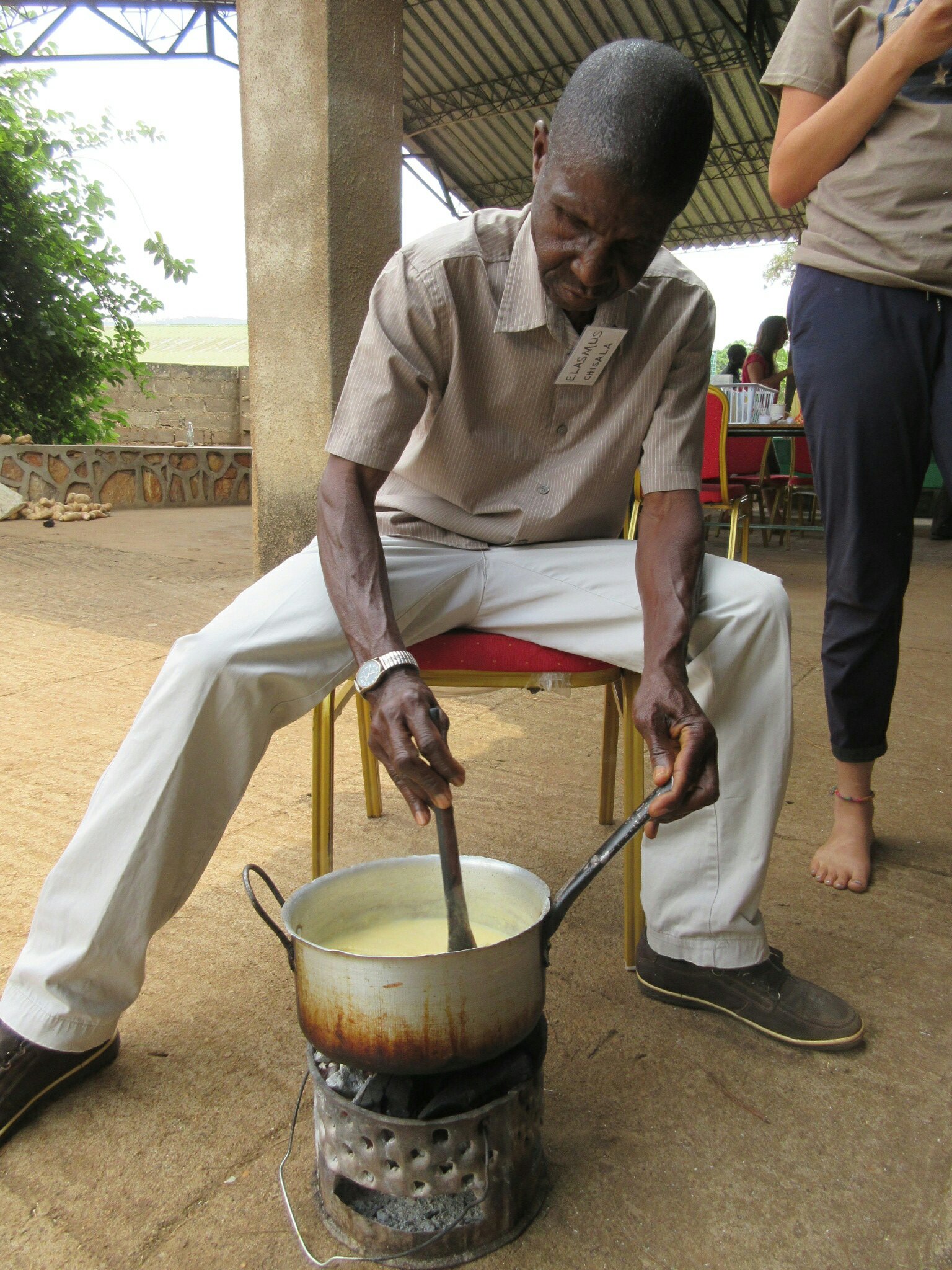
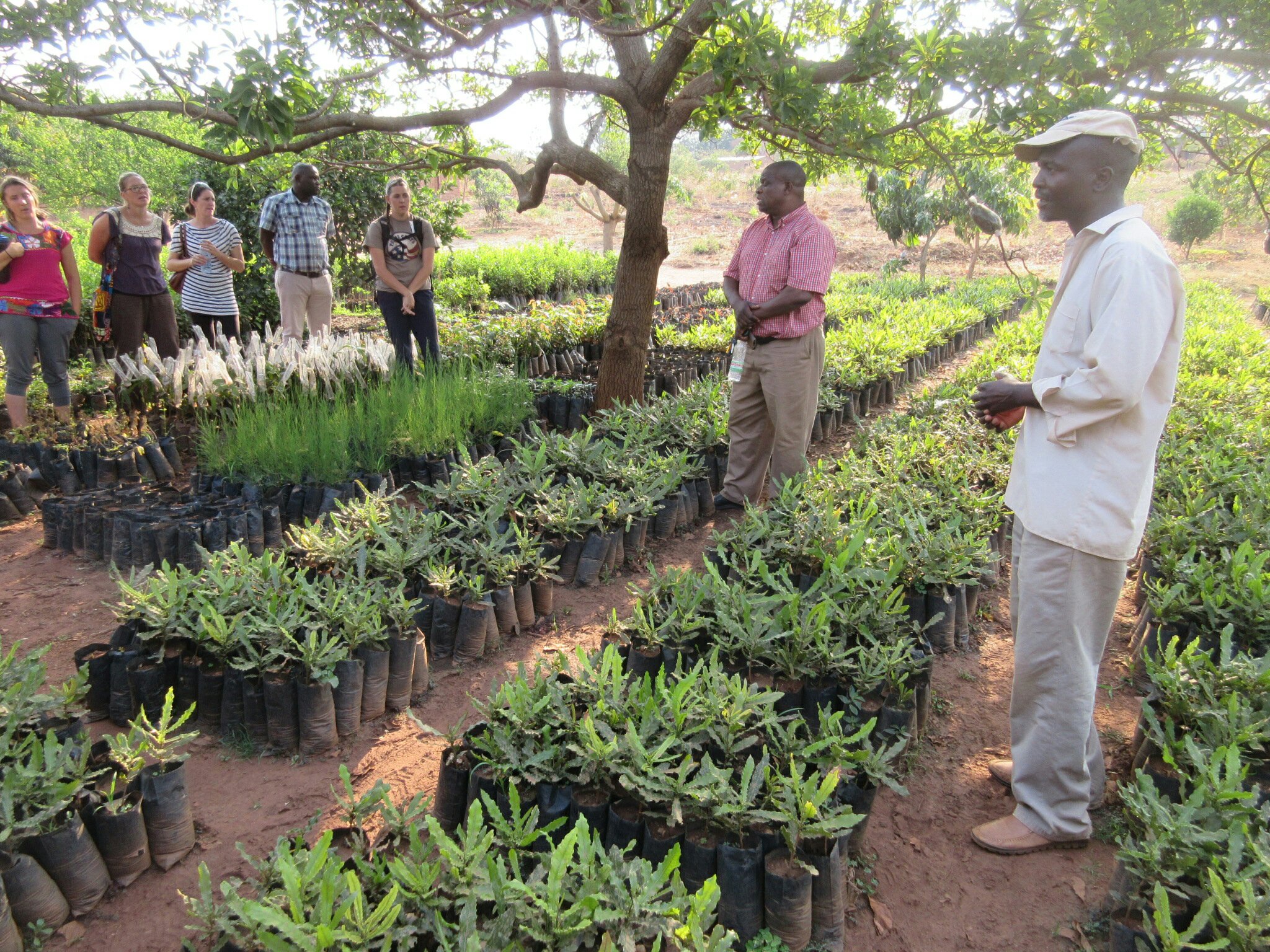
This past week I attended an Orange-Fleshed Sweet Potato and Orange Maize workshop over in Chipata in Eastern Province. This was a pretty good workshop and like always I am excited to see new parts of Zambia. The advantage of OFSP (what the cool kids call those sweet potatoes) and orange maize is that they are high in Vitamin A. Vitamin A deficiency is a fairy large problem in Zambia, and there are a couple of different initiatives to get it into everyone’s diet. The sugar you get in Zambia is an off-white brown because it is fortified with Vitamin A. Another one of those initiatives, of course, is OFSP and orange maize. The first two days of the workshop were all about growing sweet potatoes. I suppose with both orange maize and OFSP the methods are pretty much the same as growing the not-orange variety, but I guess fewer people know how to grow sweet potatoes so we spent nearly all the time on that. Practically everyone in Zambia grows maize so that wasn’t really talked about, except for some strategies to avoid cross-breeding the white and orange varieties. Unfortunately, the milling companies only really want to buy the white kind, because it produces white mealie meal that people produce their nshima with. Orange maize produces orange nshima, which is awesome and healthy and tastes the exact same except maybe sweeter, but goes over the exact same way colored ketchup did in the states. The third day was all about cooking. This was entertaining because in my group all of the counterparts were male, and men don’t usually cook. Men do actually know how to cook, but the women are so much better at it. So you got these yamayos doing all this cooking stuff, and in our group the volunteers were kinda struggling but then every once in a while one of the men would step in and actually be pretty awesome. Or maybe I just have no idea how to cook porridge and they have at least a bit of a clue. The final day we also went to go see a tree nursery. The purpose of this trip was mostly to inspire the counterparts to start tree nurseries. The dude running this one makes, apparently, gobs of money so that is fairly inspirational. It worked on my host dad, at least, who now wants to start a tree nursery. So my next job is learning how to make a tree nursery so I can teach it to them. I’ll let you know how it goes.
First Blog Post

My name is Pat and I used to be in the Navy. That’s technically only half true; as I sit here writing this I am still in the Navy, but our relationship is on its last legs. I graduated from the US Naval Academy with a degree in Chemistry and I went submarines. After nuclear training in Charleston I was stationed in Guam for three years. Guam is great. I did not like submarines. I decided to get out of the Navy for a variety of reasons that change with my mood, but the common thread is that I don’t really have the personality for the submarine force. It’s not you, babe, it’s me.

Part of the reason I am getting out of the Navy is because I want to see more of the world. A few points on that one, the first being that I realize I am a late 20-something cliché. Dissatisfied with the system! I need to do more with my life! Still, I want to see more of the world. Second is that I realize you’re supposed to see the world in the Navy. The Navy has taken me some cool places. I have done port calls in Japan, Singapore, Korea, and Australia. Due to an unfortunate run-in with a cop car and attempted grand theft auto, I only really got to see Singapore and Australia. Sill, without the Navy I wouldn’t have had any other excuse to live in Guam. However, my travel experiences while in the Navy have been few and far between, and difficult. Again, I accept a lot of the blame, but a radical change is still in order.

This blog is therefore called Pat in the World. My name is Pat, and I want to be in the world. Avoiding getting too lofty, my plan slash hope is to publish something weekly, in an essay-ish format. My personal goals are to improve my writing through practice, find my writing “voice,” push myself to go out and do things to provide blog fodder and avoid mental/physical/life stagnation, gain and audience and become rich with the help of the internet’s long tail, win the Olympics, and save Christmas. Thank you for reading my blog.