LMS Biographies, Part IV

Reading this week:

  • In Quest of Gorillas by William K. Gregory and Henry C. Raven

To make up for a whole bunch of blog posts, I am publishing in post format the biographies I compiled for my world-famous “The Chronicle of the London Missionary Society for all articles relating to their Central Africa Mission from 1876-1905.” I appreciate your patience!
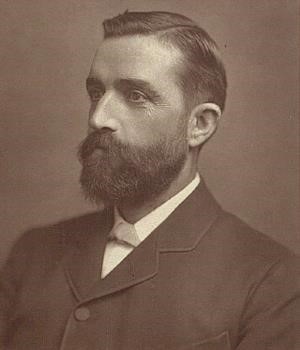
Edward Coode Hore
Born: July 23, 1848, in Islington
Died: April 1912, in Hobart

Mr. E.C. Hore departed England for Zanzibar on April 14, 1877 [May 1877] and arrived on August 1. He arrived at Ujiji a year later on August 23, 1878 [Dec 1878]. He explored the southern end of Lake Tanganyika in the Calabash in February 1879 [Jan 1880] and March 1880. Mr. Hore returned to England, departing Ujiji on November 3, 1880 [Jun 1881] and arriving on February 23, 1881 [Apr 1881]. On March 29, 1881 he married Annie Boyle Gribbon and while in England passed the examinations for Master Mariner. On February 4, 1882 the couple had a son, John Edward, nicknamed Jack [Mar 1882]. They departed England on May 17, 1882 [Jul 1882], reaching Zanzibar on June 19 [Sep 1882]. Due to difficulties Mrs. Hore and Jack returned to England, arriving on December 24, 1882 [Feb 1883]. Mr. Hore arrived at Ujiji on February 23, 1883, conveying sections of the Morning Star. He returned to Zanzibar to meet Mrs. Hore and his son Jack, arriving on September 26, 1884 [Feb 1885]. The family arrived in Ujiji on January 7, 1885 [May 1885]. They settled at Kavala Island. They returned to England in 1888, departing Lake Tanganyika in June [Ninety-Fifth Depart] and arriving on October 26 [Dec 1888]. On April 5, 1889, Jack died in London [May 1889]. In April 1890 Capt. Hore departed on a deputation tour [Apr 1890]. Mrs. Hore had a daughter on August 22, 1890 [Oct 1890]. Capt. Hore resigned from the London Missionary Society in December 1890 and visited the United States, returning to England in April 1891. He then joined the London Missionary Society steamer John Williams as First Officer and then Captain from 1893 [Nov 1894] until 1900 [Apr 1900]. The family settled in Tasmania.

Annie Boyle Hore, née Gribbon
Died: April 28, 1922, in Sydney

Ms. Gribbon married Mr. Edward C. Hore on March 29, 1881 and on February 4, 1882 had a son John Edward, nicknamed Jack [Mar 1882]. They departed England on May 17, 1882 [Jul 1882], reaching Zanzibar on June 19 [Sep 1882]. Due to difficulties Mrs. Hore and Jack returned to England, arriving on December 24, 1882 [Feb 1883]. Mrs. Hore and Jack departed again on June 11, 1884 for Quelimane [Jul 1884]. The family arrived in Ujiji on January 7, 1885 [May 1885]. They settled at Kavala Island. They returned to England in 1888, departing Lake Tanganyika in June [Ninety-Fifth Depart] and arriving on October 26 [Dec 1888]. On April 5, 1889, Jack died in London [May 1889]. On August 22, 1890, Mrs. Hore had a daughter [Oct 1890], named Joan1.

Walter Hutley
Born: January 18, 1858, at Braintree
Died: 1931 in Adelaide, South Australia2

Mr. W. Hutley had six years’ experience as a builder and joiner3. Appointed to the Central Africa Mission as an artisan missionary, he left England on April 14, 1877 [May 1877]. He arrived at Ujiji on August 23, 1878 [Dec 1878]. He departed Ujiji October 22, 1879 alongside Rev. W. Griffith to establish a station at Mtowa [Mar 1880]. He returned to Ujiji in November 1880. Due to failing health, he departed Ujiji on January 11, 1882 and arrived in England March 1 [Apr 1882]. In February 1883 Mr. Hutley married Laura Palmer, the sister of Dr. Walter Palmer4. His connection with the London Missionary Society ceased in June 1883. In 1884 the couple moved to Adelaide, South Australia.
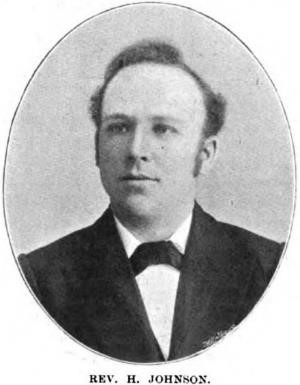
Rev. Harry Johnson
Born: December 17, 1868, at Market Harborough
Died: 1964†

Rev. Harry Johnson studied at Cheshunt College and was ordained on April 23, 1896 [Jun 1896]. He departed England on May 15, 1896 [Jun 1896]. He worked at Kawimbe for one year and then transferred to Kambole. On August 26, 1897, he married Minne A. Allen in a ceremony presided by Commissioner Alfred Sharpe [May 1898]. The couple had a daughter on July 23, 1898 [Dec 1898] and a son on December 21, 1899 [May 1900]. The family departed for England on furlough on June 1, 1900 [Jul 1900], arriving on August 18, 1900 [Oct 1900]. There they had another daughter on August 23, 1901 [Oct 1901]. Rev. Johnson may have returned to Central Africa alone, departing England on April 30, 1902 [Jun 1902], and arriving back in England on January 6, 1905 [Feb 1905]. He visited Australia on a Deputation tour in 1906 and then became a pastor in Bradford before finally retiring in New Zealand†.
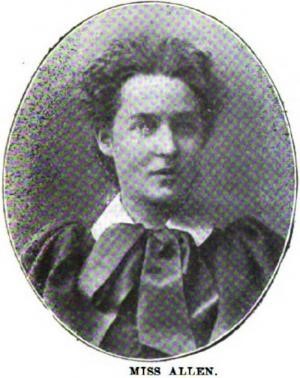
Minnie A. Johnson, née Allen
Died: March 10, 1915, at Christchurch, New Zealand

Ms. Allen departed England on June 8, 1897 [Jul 1897] and married Rev. Harry Johnson at Zomba on August 26 [May 1898]. The couple had a daughter on July 23, 1898 [Dec 1898] and a son on December 21, 1899 [May 1900]. The family departed for England on furlough on June 1, 1900 [Jul 1900], arriving on August 18, 1900 [Oct 1900]. There they had another daughter on August 23, 1901 [Oct 1901]. Mrs. Johnson retired in New Zealand with her husband†.

Notes:

Unless otherwise noted, missionary biographies are derived firstly from London Missionary Society: A Register of Missionaries, Deputations, Etc. From 1796 to 1923, prepared by James Sibree, D.D., Fourth Edition, published by the London Missionary Society, London, 1923. Brackets with [Month Year] indicate the issue of The Chronicle of the London Missionary Society which records the preceding event. Information denoted by a dagger (†) is from Christian Missionaries and the Creation of Northern Rhodesia 1880-1924, by Robert I. Rotberg, published by Princeton University Press, Princeton, New Jersey, 1965. Other sources are denoted by a footnote.

1 “Captain Edward Coode Hore (1848-1912): Missionary, Explorer, Navigator, and Cartographer, Part 1,” by G. Rex Meyer, Church Heritage, March 2013.

2 The Central African Diaries of Walter Hutley 1877 to 1881, edited by James B. Wolf, published by the African Studies Center, Boston University, 1976.

3 Ibid.

4 Ibid.

LMS Biographies, Part III

To make up for a whole bunch of blog posts, I am publishing in post format the biographies I compiled for my world-famous “The Chronicle of the London Missionary Society for all articles relating to their Central Africa Mission from 1876-1905.” I appreciate your patience!

Rev. William Griffith
Born: November 6, 1853, at Llangadock, Carmarthenshire

Rev. W. Griffith studied at Carmarthen and Western Colleges and was ordained April 1, 1879, at Gwynfe, Carmarthenshire [May 1879]. He departed England for the Central Africa Mission on April 18, 1879 [May 1879], arrived in Zanzibar May 27 [Jul 1879], and set out for Lake Tanganyika on June 13 [Aug 1879]. He arrived at Ujiji on September 23, 1879 [Jan 1880] and departed for the western side of the lake on October 22 [Mar 1880]. He settled at Mtowa and then Butonga [Jun 1882]. He departed Butonga September 3, 1883 and arrived in London on February 23, 1884 [Apr 1884]. He resigned from the London Missionary Society in June 1885.

Rev. John Harris
Born: February 3, 1856, at Staveley, Derbyshire
Died: May 29, 1885, at Niamkolo [Oct 1885]

Rev. John Harries studied at Rotherham College and was ordained on April 21, 1884, at Garden St. Church [May 1884]. He departed England on June 11, 1884 [Jul 1884], and travelled to Lake Tanganyika via Lake Nyasa, arriving at Liendwe on December 16, 1884 [May 1885]. He travelled to Uguha, arriving January 27, 1885, before returning to the southern end of Lake Tanganyika at Niamkolo.

James Henry Emmanuel Hemans
Born: December 6, 1856, in Manchester County, Jamaica
Died: September 1908, in Hampton, Jamaica

Mr. J.H.E. Hemans arrived in England alongside his wife on October 16, 1887 [Nov 1887]. He was appointed a schoolmaster at Fwambo for the Central Africa Mission and the couple departed England on June 2, 1888 [Jul 1888]. They arrived at Lake Tanganyika on October 18, 1888 [Ninety-Fifth Report] and at Fwambo on November 3. In 1891 they transferred to Niamkolo but returned to Fwambo in September 1894. The Hemans returned to England on furlough, arriving October 16, 1895 [Dec 1895], and then travelled to Jamaica, departing England on May 20, 1896 [Jun 1896] and arriving back on February 3, 1897 [Mar 1897]. They departed England on June 8, 1897 [Jul 1897] to return to Niamkolo [Jan 1903]. The Hemans returned to England a final time, arriving October 15, 1905 [Nov 1905], after which their connection with the London Missionary Society was terminated. They returned to Jamaica, departing England on February 23, 1907.

Maria Cecilia Clementina Hemans, née Gale
Born: September 20, 1876, at Fourth Paths Mission Station, Jamaica

Having married Mr. Hemans on December 25, 1884, Mrs. Hemans arrived in England alongside her husband on October 16, 1887 [Nov 1887]. She worked alongside him in Central Africa, returning to England and Jamaica once on furlough before settling again in Jamaica after their connection with the London Missionary Society ceased.

Notes:

Unless otherwise noted, missionary biographies are derived firstly from London Missionary Society: A Register of Missionaries, Deputations, Etc. From 1796 to 1923, prepared by James Sibree, D.D., Fourth Edition, published by the London Missionary Society, London, 1923. Brackets with [Month Year] indicate the issue of The Chronicle of the London Missionary Society which records the preceding event. Information denoted by a dagger (†) is from Christian Missionaries and the Creation of Northern Rhodesia 1880-1924, by Robert I. Rotberg, published by Princeton University Press, Princeton, New Jersey, 1965. Other sources are denoted by a footnote.

LMS Biographies, Part II

To make up for a whole bunch of blog posts, I am publishing in post format the biographies I compiled for my world-famous “The Chronicle of the London Missionary Society for all articles relating to their Central Africa Mission from 1876-1905.” I appreciate your patience!

Rev. Joseph Henry Dineen
Born: July 14, 1853, at Keighley, Yorkshire
Died: July 25, 1883, at Uguha [Dec 1883]

Rev. J.H. Dineen studied at Regent’s Park College in London and was an ordained pastor of a Baptist Church at Gildersome, near Leeds. He was ordained as a medical missionary to the Central Africa Mission on April 27, 1882 [Jul 1882] and departed England on May 17 [Jul 1882], arriving at Zanzibar on June 19 [Sep 1882]. He left Zanzibar on July 10 for Ujiji. From Ujiji he eventually went to Uguha on the west side of Lake Tanganyika on account of ill-health.

Rev. Arthur William Dodgshun
Born: July 5, 1847, at Leeds
Died: April 3, 1879, at Ujiji [Jan 1880]

Rev. Arthur W. Dodgshun studied at Cheshunt College and was ordained March 15, 1877 at Queen St. Church, Leeds [Apr 1877]. He departed England on March 29, 1877 at arrived at Ujiji on March 27, 1879 [Jan 1880] where he died a week later.

Walter Draper
Born: April 8, 1861, at Hoddesdon, Hertfordshire
Died: 1927†

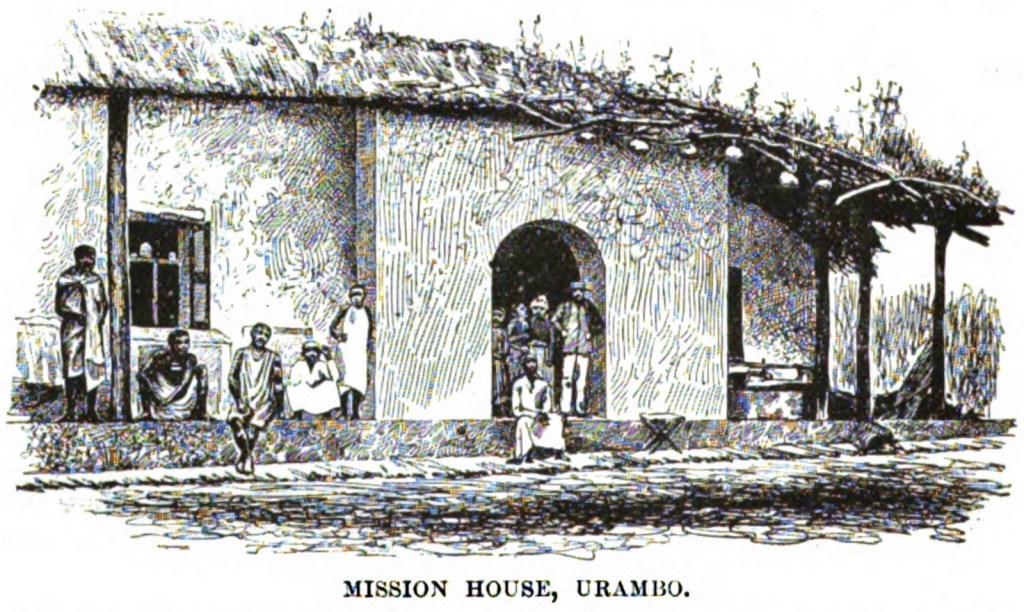
Mr. W. Draper was appointed as an artisan missionary to Urambo and departed England on June 2, 1888 [Jul 1888]. He reached Urambo on November 2, 1888 [Ninety-Fifth Report]. After Rev. Shaw resigned from the London Missionary Society due to ill-health, Mr. Draper was the sole missionary at Urambo. In 1898, the Urambo Mission was transferred to the Moravians and Mr. Draper returned to England, arriving on August 2, 1898 [Sep 1898]. He was reappointed to Kawimbe and departed England on June 21, 1900 [Aug 1900]. He arrived at Kawimbe September 22, 1900. On June 14, 1903, he held the first Christian service ever at Mbala (then Abercorn) [Oct 1903]. He returned to England on furlough, arriving November 9, 1904 [Jan 1905] and departing again May 26, 1906. He married May P. Blantyne, of the Livingstonia Mission, on June 25, 1915.

Photo: Abercornucopia

James Dunn
Born: September 19, 1859, at Kingston-on-Thames
Died: March 6, 1884, in Uguha [Jul 1884]

Mr. Dunn was appointed as an artisan missionary, slated to form an industrial station at the south end of Lake Tanganyika [Jun 1882] alongside his friend Arthur Brooks [Mar 1889]. He departed England on May 17, 1882 [Jul 1882], arriving at Zanzibar on Jun 19 [Sep 1882], from where he went onward to Uguha on the western side of Lake Tanganyika.

William Freshwater
Born: November 1, 1872, at Market Harborough
Died: 1936†

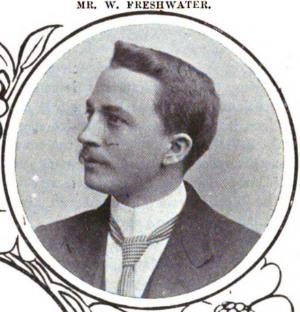
Mr. W. Freshwater initially apprenticed as a cabinet-maker† before studying at Harley House, London. Appointed as a lay missionary, he was dedicated to missionary service on April 10, 1902 [May 1902]. Slated for Mbereshi [May 1902], he departed England on April 30, 1902 [Jun 1902]. He arrived at Mbereshi on September 6 [Nov 1902]. He returned to England on furlough in 1907 and married Nancy Swingler (1874-1959†) on May 15, 1908. The couple worked at Mbereshi, Mporokoso, and Kafulwe†.

Notes:

Unless otherwise noted, missionary biographies are derived firstly from London Missionary Society: A Register of Missionaries, Deputations, Etc. From 1796 to 1923, prepared by James Sibree, D.D., Fourth Edition, published by the London Missionary Society, London, 1923. Brackets with [Month Year] indicate the issue of The Chronicle of the London Missionary Society which records the preceding event. Information denoted by a dagger (†) is from Christian Missionaries and the Creation of Northern Rhodesia 1880-1924, by Robert I. Rotberg, published by Princeton University Press, Princeton, New Jersey, 1965. Other sources are denoted by a footnote.

LMS Biographies, Part I

To make up for a whole bunch of blog posts, I am publishing in post format the biographies I compiled for my world-famous “The Chronicle of the London Missionary Society for all articles relating to their Central Africa Mission from 1876-1905.” I appreciate your patience!

Arthur Brooks
Born: October 5, 1860, at Edgware
Died: January 21, 1889, at Mkange [Mar 1889]

Mr. Brooks was appointed as an artisan missionary, slated to form an industrial station at the south end of Lake Tanganyika [Jun 1882] alongside his friend James Dunn [Mar 1889]. He departed England on May 17, 1882 [Jul 1882], arriving at Zanzibar on Jun 19 [Sep 1882]. He assisted in the construction of the steamer Good News at Liendwe. On the way to his return to England, he was shot at Mkange [Mar 1889].

Alexander Carson, B.Sc.
Born: February 26, 1850, at Stirling, Scotland [Aug 1896]
Died: February 28, 1896, at Fwambo [Aug 1896]

Mr. Carson studied at Glasgow. Appointed as an engineer to the Central Africa Mission, he departed England on February 19, 1886 [Apr 1886] and arrived at Quelimane on March 28, 1886 [Jul 1886]. He arrived at Kavala Island on July 4, 1886 [Dec 1886]. He returned to England on furlough, arriving April 15, 1891 [Jun 1891]. He departed England again on April 30, 1892, returning to Central Africa for more general missionary work [Aug 1896]. He arrived at Fwambo in August 1892 [Jan 1893]. He had intended to resign [Aug 1896], but before he could depart he died of malaria. He was noted as a hard and honest worker, taking a special interest in teaching [Aug 1896].

Rev. Earnest Howard Clark
Born: October 21, 1898, at Wathamstow

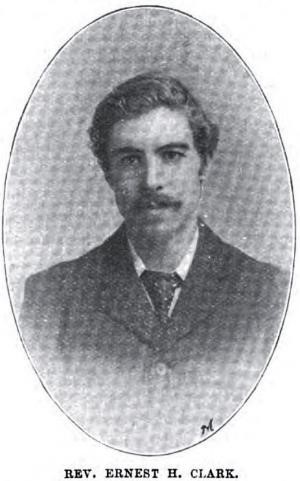
Rev. Ernest H. Clark studied at Cheshunt College and took a course in the elements of surgery and medicine at Livingstone College [May 1903]. He was ordained on February 11, 1903 and departed England on April 10 [May 1903]. He reached Kawimbe on June 24 [Aug 1903] and was appointed to Niamkolo [Feb 1904]. On July 23, 1904, he married Harriett Emily Thom at the Mbala (then Abercorn) Registry and then the Kawimbe Church [Nov 1904]. The couple worked in the Central Africa Mission until 1936†.

Harriet Emily Clark, née Thom

Ms. Thom trained as a nurse and departed England on April 21, 1904 [Jun 1904]. She married Rev. Ernest H. Clark on July 23, 1904, first at the Mbala (then Abercorn) Registry and then the Kawimbe Church [Nov 1904]. She later took additional training in Midwifery and worked in the Central Africa Mission until 1936†.

Elbert Sills Clarke
Born: 1850, at St. Mary Cray, Kent

E.S. Clarke studied at the East London Institute and had joined a mission in South Africa. Invited to join the Central Africa Mission, he departed directly for Zanzibar while his wife and family went to England [Sep 1877]. After making it to Kirasa with the Mission he suffered from fever and returned to Zanzibar on January 2, 1878. He resigned from the London Missionary Society and returned to South Africa [Apr 1878]. His wife was born Emma Forthergill and did not join him in Central Africa.

Notes:

Unless otherwise noted, missionary biographies are derived firstly from London Missionary Society: A Register of Missionaries, Deputations, Etc. From 1796 to 1923, prepared by James Sibree, D.D., Fourth Edition, published by the London Missionary Society, London, 1923. Brackets with [Month Year] indicate the issue of The Chronicle of the London Missionary Society which records the preceding event. Information denoted by a dagger (†) is from Christian Missionaries and the Creation of Northern Rhodesia 1880-1924, by Robert I. Rotberg, published by Princeton University Press, Princeton, New Jersey, 1965. Other sources are denoted by a footnote.

The Chronicle, 1876-1905

At long last, I have finally completed my transcription of The Chronicle of the London Missionary Society for all articles relating to their Central Africa Mission from 1876-1905. This represents the first 30 years of the mission, starting from when Robert Arthington offered £5,000 to get them to put a steamer on Lake Tanganyika.

This was definitely a project of the “we do this not because it is easy, but because we thought it would be easy” category. I had been using the Chronicle as a resource because it is convenient documentation of early observations of the peoples and lands around Lake Tanganyika. Although modern technology is wonderful and nigh-magical, when it comes across PDFs of century-old missionary magazines sometimes the text recognition software doesn’t do so well (honestly amazing we have this technology at all, just to emphasize) and so the search function can be hit or miss. “No problem,” I thought, “I’ll just manually scroll through and transcribe everything so I can ensure that I get all the relevant information.” Very nearly three years after I began that project in earnest I have finally compiled my “complete” edition. It is only 322,104 words and 686 pages long.

My dream for this transcription is that it will be an easy reference document. That is why I compiled biographies for all the missionaries associated with the mission during this time period, available in the front of the PDF. I had also thought of putting together an index, to really add a sense of academic pizzazz, but upon further reflection I thought that the search function would now be a lot easier to use since I typed everything out and also adding an index would be a whole lot more work on top of what I already did and I couldn’t bring myself to do it. But, as I say throughout the document, if anyone out there in this big beautiful world of ours actually uses this resource please please please let me know I will be absolutely over the moon. I think my blog has been cited in at least one student’s college paper and I am happy about that. Please though if you do use it as a reference verify your quotes with the actual source document. I change a lot of spellings and although in this edition I went through and proofread everything, I can’t 100% guarantee I transcribed it all correctly. I’m only one guy.

I think I will put this project down for a while. I initially chose this time period because after 1905 the issues of the Chronicle available online began to peter out. That is until I made the extremely distressing discovery that the SOAS website now has (nearly) them all listed. So there is scope to do the next 30 years. However, I have a lot of Central Africa Mission books to read (and a lot of other books to read) and I want to get a move on with those. My other dream is to be able to spend a whole lot of time in the SOAS archives themselves and my other other dream is to do some on-the-ground research in Zambia, but for now the usual life things stand in the way. But this project will continue in one form or other.

Previous entries on my Chronicle series available here!

The Chronicle, 1901-1905

From March 1905

This post has been superseded!

We take a break from Puerto Rico content (there is a lot more to come, don’t worry) so as to bring you, my loyal reader(s), what will likely be the last segment of my transcriptions of the The Chronicle of the London Missionary Society for a while at least (please see previous segments here: 1876-1880, 1881-1885, 1886-1890, 1891-1895, 1896-1900). However don’t fret! This project is far from over. It is just that, as I alluded to at the end of the last installment, the availability of the Chronicle past 1905 becomes spotty thus making it difficult to put together full transcriptions.

What I would like to do as a next step is put together all 30 years I have transcribed so far (30 years ain’t too shabby, is it?) and extract from it useful information to guide follow-on research. I am specifically thinking at minimum an index, but I would like to compile a timeline of the Central Africa Mission and put together short biographies of all the missionaries, at least as far as their association with Central Africa and the LMS goes. Someday when I A) figure out how to apply for a research grant or something, B) apply for those grants, and C) win one, I would like to go out and find the years of the Chronicle that the internet doesn’t have yet and also of course get my butt over to London to look at all the LMS archives in the flesh. And then I dunno write a book or something? But to write a book I would also want to do a lot more research on the ground in Zambia, and we can already see this is more than a nights and weekends project. But a boy can dream.

But back to these five years, specifically (those are 1901-1905, just to recap). Since it is now tradition, I will say that this edition bucks the trend of downward word counts, coming in at about 54,000 words (the whole project is running to over 300,000, so the proofreading required for the compiled edition will take a hot minute). It also features a whopping 45 pictures, representing very nearly half of the total pictures from Central Africa the Chronicle published over the entire 30 years I have covered.

The Mission is well established at this point, even to the extent that by the end of 1905 Rev. R. Stewart Wright is talking about the work of “our early missionaries, some twenty years ago.” The Mission is, however, still expanding, setting up new bases in “Awemba Country” (Bemba in the modern parlance). Besides their drive to evangelize as much as possible, that effort was driven also by a fear of the Catholics claiming more area (there is a short article, tinged with fear, noting that the White Fathers have the rest of Lake Tanganyika surrounded by well-staffed stations, with some of their African converts being trained in medicine) as well as the not-so-hidden protagonist of this whole story, Mr. Robert Arthington, of Leeds, donating £10,000 for “the extension of mission work to the Awemba tribes” (Although Mr. Arthington died in 1900, he left a final donation to the London Missionary Society that was to only be used for new endeavors and not for the maintenance of the Society’s established endeavors, which due to some court stuff continued to cause the Society some headache throughout this period).

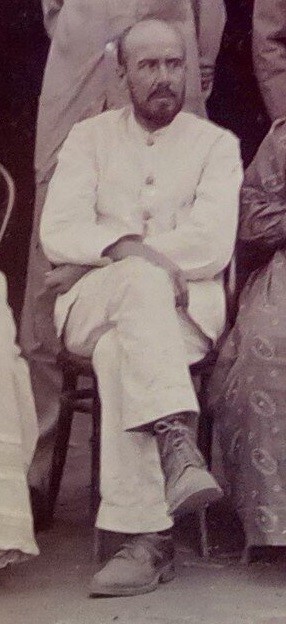
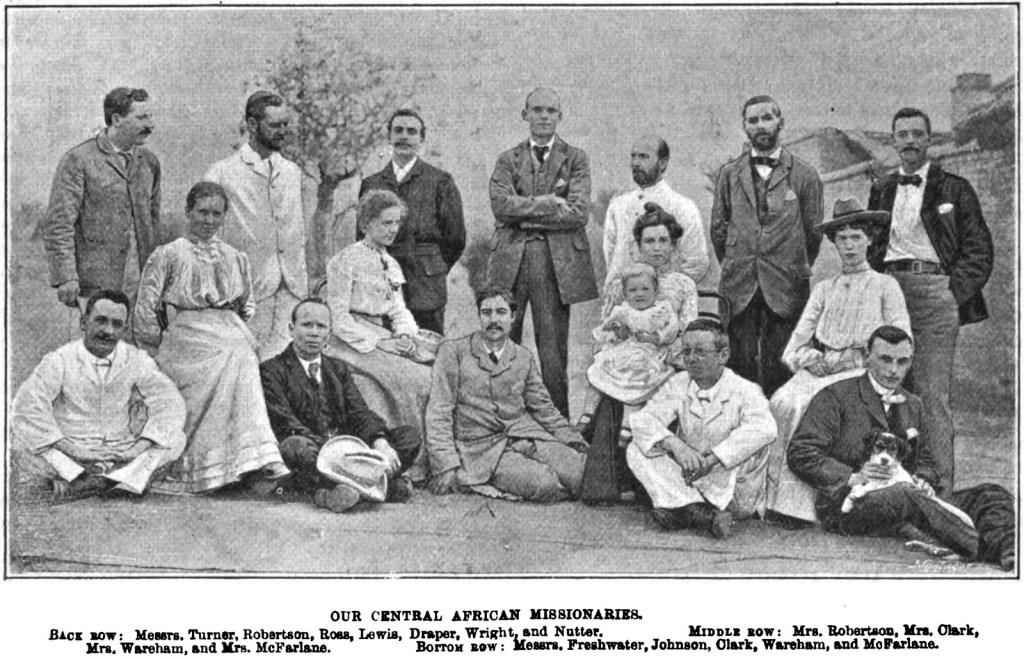
As illustrated by the group photo at the top, the Mission is also benefitting from being it seems less deadly to missionaries than it was in its early years. I am sure this is a byproduct of them figuring some stuff out (like in 1897 the fact that mosquitoes transmit malaria) as well as colonialism making it easier for these British people to travel around and communicate with central Africa. It was safe enough that they are regularly sending out women to the Mission, albeit it as the betrothed to missionaries already in the field (where they hop on down to the magistrate in Abercorn to get hitched) and not as missionaries in their own right. There was still danger of course, but at this point when a missionary in central Africa dies it is shocking instead of routine.

The biggest development I was pleased with at this point is that the Chronicle mentions Africans with increasing regularity. I know it’s a minor thing but hey in a literal sense at least it’s not nothing. I think a big chunk of this is that the missionaries are finally having some success in converting Africans to Christianity, once they had really settled down and had a generation of people grow up around them.

So that’s that, for now. As always, if you are finding this useful or want to swap info on the Central African Mission of the London Missionary Society, hit me up. I would be very excited to hear from you.

The Chronicle, 1896-1900

Reading this week:

  • Dhow Chasing in Zanzibar Waters by Captain G.L. Sulivan, R.N.
  • Across Africa by Commander V.L. Cameron, R.N., C.B., D.C.L.
  • Earthlings by Sayaka Murata

This post has been superseded!

Look guys I know it is absolutely astounding that I have posted sections from The Chronicle two weeks in a row. I can barely believe it myself and for the sake of my reader(s) I hope you like this content and are not pining after descriptions of me wandering around art museums or something. I like it and that’s all that matters on my blog. Anyways. A couple of factors at play here. First is that the downward trend in the length of these updates continue their downward trend, this one clocking in at juuuust shy of 33,000 words. More importantly however is that I was procrastinating some things and doing this was my excuse to avoid doing the other things. Please see previous updates in my plan to transcribe every article in The Chronicle of the London Missionary Society relating to their Central Africa Mission here: 1876-1880, 1881-1885, 1886-1890, 1891-1895.

I have mentioned several times now that the first reason I got interested in the London Missionary Society is because they launched the first steamship on Lake Tanganyika, the SS Good News. That era in LMS history has come and gone, however this era we are entering now is interesting because it much more closely overlaps my own experience in Zambia.

The Society by the end of this era is running three main Mission stations, having given up the Urambo Mission to Moravian missionaries in 1898 in order to consolidate their efforts at the southern end of Lake Tanganyika. There is a mission at Kambole, which I think was in the area now occupied by Nsumbu National Park, which I am sad that I never got to go to. Then there are missions at Niamkolo and Kawimbe. When I was a Peace Corps Volunteer I lived about smack dab in the middle of those two stations, making the LMS’s old stomping grounds my old stomping grounds. I’ve used pictures from this era of the Chronicle to talk about some of these things, such as Niamkolo church.

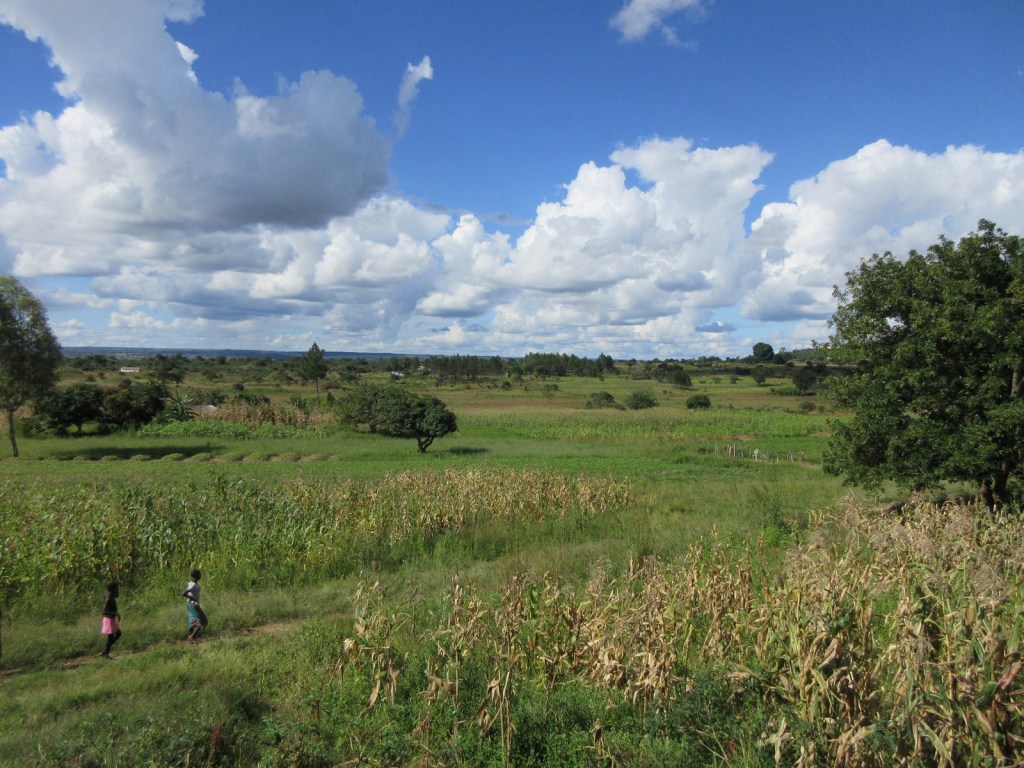
View from near the spot where the LMS Kawimbe mission was; I can’t imagine it looked way too different in 1899.

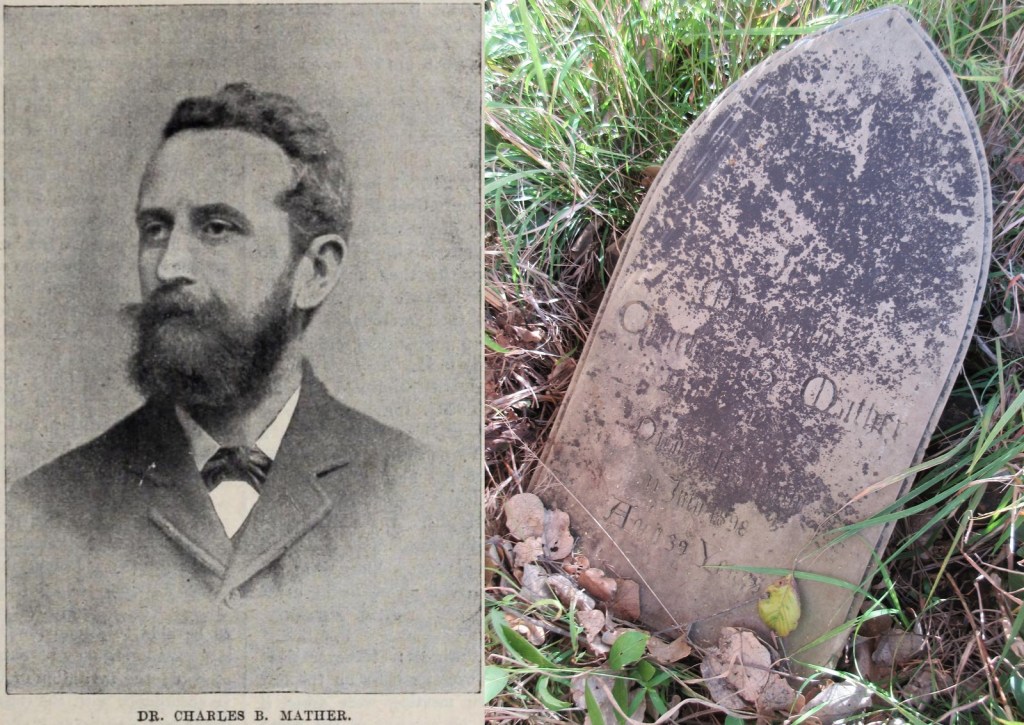
I also got interested in Kawimbe because that is where large chunks of the story of Mama Meli took place. In that article I just linked one of the things that my friend Katie and I looked at was a cemetery where many of the missionaries were buried. As part of this project I have finally been able to connect the names on some of these gravestones with the stories of the people behind them. One of the things I want to do if I am ever in Zambia again is to go back to that cemetery and do a better job photographing the memorials and documenting the people buried there. But when I do manage to identify one, such as John May Jr. or, below, Dr. Charles B. Mather, it feels like an exciting accomplishment:

But besides people dying, what’s going on with the Central African Mission? Both a lot and not so much. In 1897 they sent out seven new missionaries to Central Africa (with the Hemans returning), significantly boosting that Mission, since the numbers had dwindled to three people. This significant increase should have led to a lot more activity in the missions, and I think it will and does eventually, but for a long stretch during this interval things are pretty quiet as I think the new missionaries get up to speed and more settled. As I keep saying during these summaries the missions are getting more and more settled and integrated (they proudly talk about at one point that the Central African missions had finally become self-sustaining as far as local expenditure is concerned) and that continues to be the case here. Colonialism continues to take hold as well (“British Central Africa” is referred to regularly), and there is even now a telegraph line to Mbala/Abercorn. The Mission also at this point has a small but regular number of converts coming in, the payoff for their now 25 years in Central Africa. As I read about the Missionaries training carpenters and blacksmiths and converting people to Christianity, I think about the different churches I saw during my time in Zambia or the carpenters and metalworkers that I met, and I wonder which and how many of those people are the direct cultural descendants of the people that these missionaries trained.

As always, if you are finding this useful (or maybe just finding this at all) I would be absolutely delighted to know. My current thinking is that I will keep this project going through about 1915, which will put us into World War I and I think the London Missionary Society might no longer necessarily be the best place to find out about the culture and people in the area. But that is pure conjecture; I’ve never read that far in the Chronicle (though honestly issues become harder to find online at that point). But I guess we’ll see when I get there.

The Chronicle, 1891-1895

Reading this week:

  • The War That Doesn’t Say Its Name by Jason K. Stearns

This post has been superseded!

Friends, I am stunned and astonished to say that I have completed yet another installment of my plan to transcribe every article in The Chronicle of the London Missionary Society relating to their Central Africa Mission (here is: 1876-1880, 1881-1885, 1886-1890). I have been starting with their stats, so I will let you know that this is even shorter than the previous “teeny-tiny update” at only 36,700 or so words. It does however have something like double the number of pictures as the preceding 15 years of articles combined.

Previously I posited that the amount of coverage the Central African Mission was getting had nosedived because it had become Just Another Mission within the London Missionary Society’s repertoire, and that I think is still true. My numbers are a little artificial too, because sometimes I skipped articles when the mention of the Mission was literally only passing. Also, the format of the Chronicle also changed during this time period to be longer and fancier (and with more pictures), but also mentions of the Central African Mission can arise in a wider variety of spots (different “Secretarial Notes,” in regular columns like “Month to Month” and “Personal Notes,” and sometimes in space-filling asides at the bottom of otherwise unrelated columns) so I am worried I missed some things, despite scrolling through every page. Another reason I think coverage was diminished in this era is because 1895 was the centenary of the London Missionary Society, and they were focused on their older missions, such as the South Seas and South Africa.

One of the themes I see running throughout these five years is the London Missionary Society coming to grips with the impact of colonization on their sought-after flock. Colonization is firmly established at this time – in 1894 they even see A.J. Swann resign his post with the Society “in consequence of his having accepted an official position under the British Administrator in Central Africa.” In general too the Society is in favor of colonization, welcoming a “flood” of Europeans into Africa even as they bemoan this flood is too focused on seeking gold over the spiritual enlightenment of the people. However, in a surprisingly (to me) progressive note, the Foreign Secretary, Rev. Thompson, worries about an effort by Cecil Rhodes and the British South Africa Company to take what is now Botswana away from direct rule by the British Empire and put it under direct control of the company:

Now it transpires that Lord Knutsford, when Colonial Secretary, promised the Company that in due time the Bechwanaland Protectorate should be added to their dominions. Lord Ripon in turn confirmed this promise, and now Mr. Rhodes is agitating for the realization of the compact. The chiefs and people of Bechwanaland object to the change. They have no complaint to make against the Company, but they see that it is a company with the interests of its own shareholders to care for. They think that Imperial rule is likely to be more impartial and unbiased than even the best-intentioned financial corporation.

R. Wardlaw Thompson, October 1895

The Society is forced in this era to take a look at what they have wrought, and decide whether they approve of what they have done.

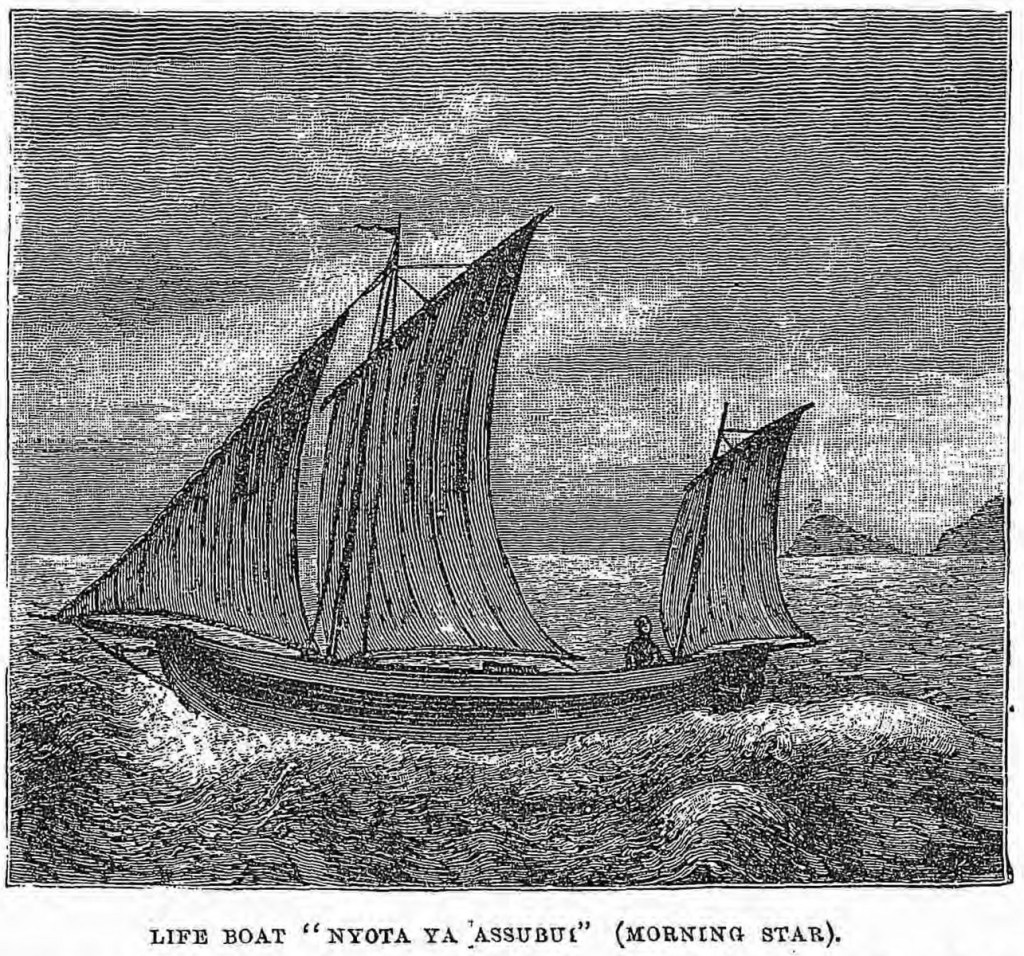
Just to mention a few other things that happened during this era. First, when describing a trip through Bembaland (here “Awemba”) in an article from January 1895, Rev. W. Thomas (not the Foreign Secretary) notes “How little credit the native gets, as a rule, in books of travel!” I’ve commented on the same thing to criticize my own writing, so good on him here. It is also during this time that a great era for the London Missionary Society came to and end: in a note on the “Proceedings of the Board” in May of 1894, they announce that “the sale of the Mission steamer, Good News, on Lake Tanganyika, Central Africa, to the African Lakes Company (Limited), was approved.” How short a useful life that boat lived despite all the effort and lives that went into putting it on the Lake. But by this time Kavala Island had been abandoned, with the focus of the Mission moving inland, and they had little use for it. Their needs seem to have been adequately met by the Morning Star, but it was wrecked in February of 1895 in a gale (though they think they can repair it). As I have mentioned, the whole reason I started researching this stuff was because I was interested in these boats.

Anyways! As I always say at the end of these posts, if you find this useful please leave a note at the bottom of the post. I would be very interested to see if anyone is as interested in this stuff as I am and are finding these transcriptions useful. Someday I want to compile them all into one big document (and it will be very big) with regularized spellings and a nice index and maybe biographical notes of the missionaries so it’s easy to see who was where, when. But there is a lot of typing to do between now and then.

P.S. – I don’t have a great place to put these, but check out these pictures by Rev. D.P. Jones of two dudes fishing at Niamkolo and a stockade fence with human skulls:

The Chronicle, 1886-1890

Reading this week:

  • The Last Gift by Abdulrazak Gurnah

This post has been superseded!

In the unsustainably short interval of only five weeks, I am once again pleased to announce the third part of my ongoing project to transcribe every article in The Chronicle of the London Missionary Society relating to their Central Africa mission. The interval was so short because it has been a very slow period at work, but also because this is a teeny-tiny update, at a mere 38,000 words. I was wondering if this update would put the totals for this project above the 200,000 word mark, but it was not to be.

In this third semi-decade of the Central Africa Mission’s existence, it seems to be gaining a very different character. The reporting on the Mission in the Chronicle really took a nosedive. Part of the reason for that is fighting in the area cutting off the mails and therefore communication with the mission, so the Chronicle was forced to just give mild speculation based on rumors they had heard with no actual information. But I think a much bigger reason is that the Mission had simply become just another mission.

By this point they were fairly well established in Central Africa. They had four main stations – Urambo, their first permanent station; Kavala Island, where they had set up their marine department when it was clear they were unwelcome in Ujiji; Niamkolo (spelled Niumkorlo during these years) to get a presence at the south end of the lake; and Fwambo, a newly established mission “fifty miles inland on the route to Lake Nyassa” (I think this is now Kawimbe Mission, but I am not sure). The routes to these stations were well-established, the mail fairly regular (when there wasn’t fighting), and the Missionaries were spending their time building their infrastructure and their trust with the local communities. This is not the exciting part of missionary work. If there was exciting stuff, it wasn’t actually reported in the Chronicle – often the editor notes that urgent news had been reported in the daily papers, and in this magazine they were then just noting that all had turned out well (or not).

The Mission also starts to be swept up in world events. In 1876 they were some of the only Europeans in the area, but by 1890 colonization is starting to firmly take hold. Part of the reason for the fighting that cut off the mails is that the Germans were attempting to take hold of what would become German East Africa, and the native peoples were fighting back. Then in March of 1890 the Chronicle is reporting on a speech from the Duke of Fife where he discusses the recently founded British South Africa Company. And in December of 1890 they even note that Urambo is likely to be made a military station. The London Missionary Society in 1890 is no longer the vanguard of the European takeover in the Tanganyika region.

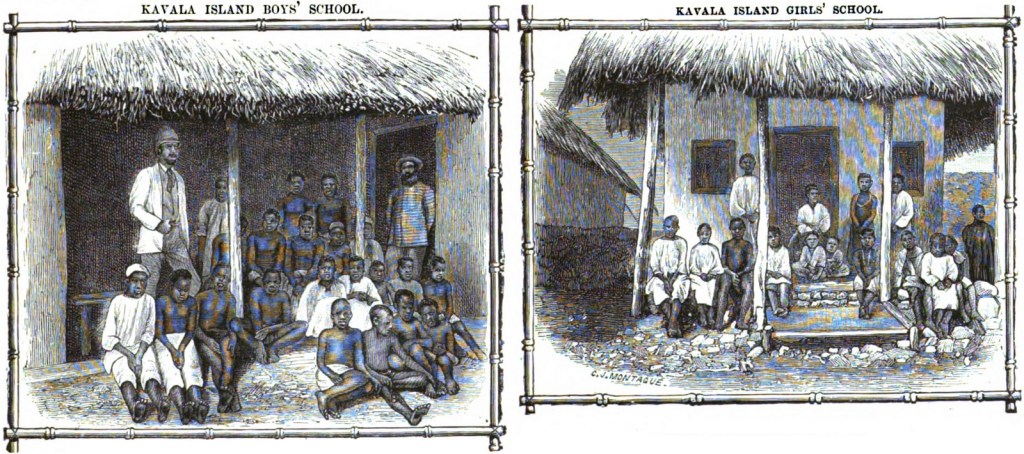
For our interests here in this blog there are a few other developments. This era is when James Hemans heads to the mission. On the other hand, our man Ed Hore has left the mission, with the latest news that he has gone on a tour of the Society’s missions around Australia. His wife, Annie Hore, was left in London to give birth to their daughter. Annie had been the first woman sent out to Central Africa by the Society and founded the Mission’s first school, the Kavala Island Girls’ School pictured above. While she was the first, in this era it is now becoming common for men to go out with their wives, a further signal that Central Africa was no longer the wild domain of only people like Livingstone and Stanley, as far as Europe was concerned.

Although the London Missionary Society might have felt that Central Africa was no longer so dangerous, with family life taking hold in the Mission comes the normal tragedies of everyday existence. In June 1889’s “Announcements” they report under Births: “Jones – November 16th, at Fwambo, Central Africa, the wife of the Rev. D.P. Jones, of a son.” Then, on the very next line under Deaths: “Jones – December 26th, at Fwambo, Central Africa, the infant son of the Rev. D.P. Jones, aged 6 weeks.”

As ever, if you find this work useful, please let me know. I’d be excited to collaborate.

The Chronicle, 1881-1885

This post has been superseded!

I am pleased to announce the second part of what must be honestly the most anticipated project of the century, to wit me transcribing every article in The Chronicle of the London Missionary Society relating to their Central Africa mission. The first part of this project spanned the years 1876 to 1880 (more details on this project overall at that link), and the second part, linked above and embedded below, covers the next five years, 1881-1885.

This batch of transcriptions clocks in at a relatively modest 66,000 words, about 15,000 fewer words than the last time. Opening up the last time I posted a batch of transcriptions I am more than a little surprised that it was only back in April. This feels like a project I have been neglecting for ages, but there ya go, I’m slightly better than I thought. I have become more familiar with The Chronicle during the course of this project and so I am better at extracting the relevant bits. However, the magazine got a new editor in 1885, and so far I can’t really say I like what he’s done with it, but it’s a tad late to complain.

The single biggest revelation I’ve had so far about The Chronicle is that I realized that it is a fundraising document. Up until that revelation I had been thinking of The Chronicle as this handy record created specifically for my benefit. If that were the case, though, it’s honestly a bit of a weird read. They’re Victorians and I am under the impression that this was normal for them, but they go into a lot of gory detail about people’s illnesses. For example they print, at length, the sufferings of Dr. Southon after he is accidentally shot in the arm and slowly dies from infection.

It finally occurred to me that the audience of this magazine are all the churchgoers they are trying to convince to donate to the London Missionary Society. Every year in June the Society publishes their annual report, including a detailed look at their finances. In the transcription I try to translate these into modern-day dollars, and every year the Society needs to fundraise the equivalent of millions of dollars just to try to keep themselves afloat. I realized that the main purpose of The Chronicle was therefore probably to let people know how their donations were being spent, and present an image of a Society doing the best missionary work out of many competing missionary societies while letting people know that they still desperately needed more funds. Someday, when I sit down and actually analyze all that I’ve typed, I will have to keep that in mind.

When we left the missionaries in 1880, they had set up several missionary stations between Zanzibar and Ujiji and were starting to make forays towards the south of Lake Tanganyika. My interest in the London Missionary Society started because I was interested in the first steamship on Lake Tanganyika, the SS Good News. I’m going to grant myself an historic parallel by mentioning that what was the final spur to get LMS setting out into the region was a desire to put a steamship on the lake. So while the SS Good News is a throughline through the entire first decade of the Central Africa Mission, it is during 1881-1885, and really towards the latter part of that timeframe in which the story of the Good News really gets going; it is in August of 1885 that The Chronicle reports the ship was launched (though it still had a lot of fitting out to do).

This is not the Good News, but there are better versions of the same engraving they published in The Chronicle elsewhere on this blog.

Despite the mission’s nautical success, however, it is really not in a good place by the end of 1885. Central Africa was deadly for missionaries. In a lengthy November 1885 article, it’s noted that “since the commencement of the Mission in 1876, twenty-three persons have gone out to take part in the work, and of these no fewer than ten have been removed by death, and nine have retired from the service.” Although many of the nine that retired from the service but didn’t die did so out of general poor health, it is also in this same article that The Chronicle details a new development among the missionaries – people quitting out of fear. The Chronicle published excerpts of letters from recently deployed missionaries saying that they were headed home, not necessarily because they were sick, but because they finally noticed how many people were dying and wanted out before they too were struck down. With those two missionaries heading home, at the end of 1885:

The entire Mission staff is thus reduced to four. The Rev. T.F. Shaw is laboring alone at Urambo, and is the only missionary specially set apart for the work of preaching and teaching. The rest – Captain Hore, Mr. A.J. Swann, and Mr. A. Brooks – went out as laymen, the two former in charge of the boats on Lake Tanganyika, and Mr. Brooks as an artisan missionary.

My final note on this batch of transcriptions is that until this point, I had considered the colonization of this area as somewhere between an unfortunate side effect and an unrelated but parallel enterprise to the evangelization by the missionaries. But now a letter from Captain Hore states plainly that he envisioned European colonization as part and parcel of the enterprise all along: “As to the future of the Mission… if we look further off it is nothing but a tide of Europeans crowding into the continent from all sides, and plenty of the ‘fit’ surviving and evangelizing, colonizing, or amassing wealth, according to their several missions.” I think the missionaries deserve credit for their part in combatting the slave trade in the region, the dire effects of which are also detailed by Captain Hore in this era of The Chronicle. But we have to keep in mind that you don’t have to be intending bad outcomes for bad outcomes to happen, and when we consider the impact these missionaries had we must carefully weigh the bad outcomes along with the good.

If there are any researchers out there using this work, please let me know. I would be delighted to chat more about the history of this region and see what you’re digging up. I don’t know if anyone is using my last batch of transcriptions, but I think I have been cited in at least one college paper from the University of Zambia on World War I, at least. I would like to figure out something productive to do with all this research, but I know my biggest hurdle will be figuring out a way to center African voices into these African stories, and I am conscious I might not be the guy to do that. But between here and that, we have a few more decades to transcribe.