Good News Letters I

Alright! From my last post you are aware that I was able to visit the London Missionary Society archives kept at SOAS in London and it was super cool. The box with the photos is a box of a few different sorts of things, so it also had a chunk of incoming letters about the SS Good News, my favorite missionary steamship. Since I didn’t have a whole lot of time to peruse each letter I just took photos of the ones that seemed like they would be interesting and now after long last I have transcribed them to the best of my ability (“best of my ability” because man I cannot read some of their handwriting). So in two parts I will show you what I found.

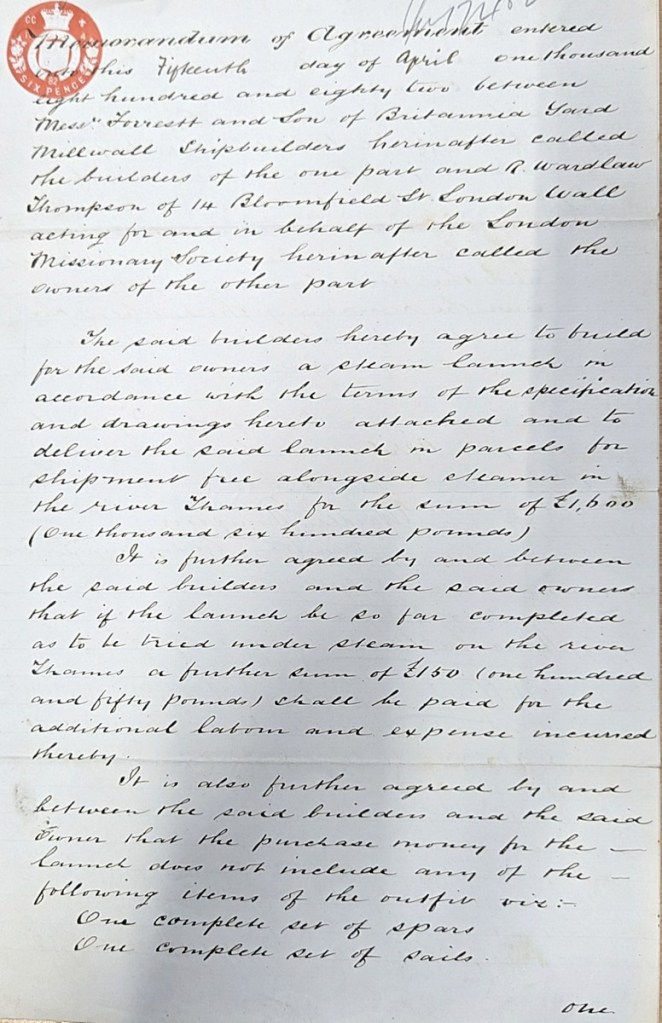
The first neat thing is the original contract for the SS Good News, signed by LMS Foreign Secretary R. Wardlaw Thompson and Forrestt and Son boatbuilders (photos at the top):

Memorandum of Agreement entered into this Fifteenth day of April one thousand eight hundred and eighty two between Messr. Forrestt and Son of Britannia Yard Millwall Shipbuilders hereinafter called the builders of the one part and R. Wardlaw Thompson of 15 Blomfield St. London Wall acting for and in behalf of the London Missionary Society hereinafter called the owners of the other part.

The said builders hereby agree to build for the said owners a steam launch in accordance with the terms of the specifications and drawings hereto attached and to deliver the said launch in parcels for shipment free alongside steamer in the river Thames for the sum of £1,600 (one thousand six hundred pounds).

It is further agreed by and between the said builders and the said owners that if the launch be so far completed as to be tried under steam on the river Thames a further sum of £150 (one hundred and fifty pounds) shall be paid for the additional labor and expense incurred thereby.

It is also further agreed by and between the said builders and the said owner that the purchase money for the launch does not include any of the following items of the outfit viz:-

  • One complete set of spars
  • One complete set of sails
  • One complete set of blocks
  • One large anchor
  • One compass

And the said owner hereby agrees to pay the said builder the before mentioned purchase money in these equal instalments viz:-

  • One third when the launch is in frame
  • One third when the launch is plated and the deck laid
  • And the remaining third when the launch is finished and delivered to the said owner.

As witness our hands this fifteenth day of April one thousand eight hundred and eighty two

R. Wardlaw Thompson – Foreign Secy London Missionary Soc

     J. Messtt Frm [?]

Witness to both signatures (Clerks to the London Missionary Society 14 Blomfield Street E.C.

     William Ford Brown

     Mm Ley Lerk [?]

After the contract the next neat thing is a letter from James Roxburgh to G.S. Goodwin, Esq. Mr. James Roxburgh was an engineer that went to Lake Tanganyika on behalf of the London Missionary Society to build the Good News. Looking back I should have written a biography of him in my Chronicle transcription. I didn’t because he’s not on the LMS list of missionaries because he wasn’t sent out as a missionary, but as a “practical engineer in the employment of the Society,” as the LMS put it (though they also referred to him at least once as “our missionary engineer”). I have a blog post on Building the SS Good News with excerpts from books by E.C. Hore and A.J. Swann, but it was Roxburgh that was the main man in charge of actually building the boat.

This letter came to the LMS archives when it was sent to them by Andrew Hamilton of A. Goodwin-Hamilton & Adamson Ltd, apparently a firm of naval architects (as I learned from their letterhead), some 40-odd years after it was originally sent to G.S. Goodwin, Esq. It is not clear to me from the letters or some subsequent googling why Mr. Roxburgh was writing to Mr. Goodwin. My guess is that Mr. Goodwin was the boss of a firm of engineers from whence Roxburgh was hired by the LMS. It’s a pretty chatty letter, starting with the story of launching the Good News and talking about parts still missing, but then at the end gets into the state of Roxburgh’s health. Unfortunately this is foreshadowing; James Roxburgh would die on Kavala Island on May 18, 1885, about three months after writing the below letter on the same day he launched the Good News.

The cover letter from A Goodwin-Hamilton & Adamson Ltd.:

A. Goodwin-Hamilton & Adamson Ltd.

Naval Architects, Consulting Engineers, Surveyors, &c.

Cunard Building, Liverpool, 27th February 1931

Dear Mr. Chamberlin,

I came across the enclosed letter written by Mr. Jas. Roxburgh, dated 3rd March 1885 from Lake Tanganyika at the time of the launch of the “Good News”.

This will I think be of interest and may deserve a place in the Society’s Museum & or History of the Tanganyika Mission.

With Kind Regards.

Yours truly,

Andrew Hamilton

And now the letter from Mr. Roxburgh:

Liendwe Central Africa

3rd March 1885

To G.S. Goodwin Esq.,

Alexandra Buildings,

James Street,

Liverpool.

Dear Mr. Goodwin,

This has perhaps been the greatest day that Central Africa has yet seen, and the Natives here have been privileged to see a work accomplished that has been a very great puzzle to them for a long time past. As they could not conceive how it would be possible for us to carry such a big heavy boat as the “Good News” into the water. I am glad to inform you that the “Good News” was successfully launched today at 10/30 a.m., everything went well. We had not a hitch of any kind.

She now lies at Anchor opposite our camp here on the Lofu river and I am sure if you were here to have a look at her as she is on the river at present I think you would say she is a good clean tidy job and a credit to all who have had an important part of her to do, especially to the designer of her. I got on board as soon as possible after the launch and made a complete examination of her all along and I am glad to say I did not find a single leak. I do not think there will be much work for the bilge pump in our little steamer as no part of her is depending on putty nor paint.

Our Motto here has been, that whatever is worth doing at all is worth doing well. I may say I laid the ways for Launching on the same principle as is carried out at home, but it was a very big job getting and making the ways out here with very poor tools, etc. We had to go to the forest and cut down no less than 42 trees, giving us a total length of 380 feet, as the boat was built a long way back from the river on account of the great floods that often come sweeping down here in great force during the rainy season. She had a clear fun of 105 ft on her ways before the stern touched the water, that length of a run as you know is much longer than usual.

However that part of it is all over now and I am very thankful it is a very great load off my mind to know she is safely afloat on the water.

Though the boat is launched there is still a great amount of work to do at her yet, but I cannot give you any opinion in regard to the time she will be finished, as I don’t know how long it may be yet before I get the fittings. I still want all the cabin combing plates yet, also 2 bulkhead plates and boiler seat plate, then I have got nothing of the boiler here yet but the smoke box and 2 pieces of the funnel.

I have written to the African Lakes Co. about the boiler and engine time after time but as yet my writing has had very little effect. However I have just received a note from one of the Company’s Agents informing me that he was about to try and form a very large Caravan to bring up our boiler fittings etc. from the North end of Lake Nyassa, if he succeeds in getting the men he says he expects to be at Tanganyika by the later end of April or early in May, that itself is very good news, but we shall be at a complete stand long before that time. My patience has been very much tried on account of these long weary waits from time to time. I can enjoy a good week’s holiday at home, but it is not so here with me, for as soon as I am idle for a few days here I get laid down with fever. I think the very best medicine a white man can have for the good of his health in Central Africa is a moderate amount of work to do every day, this has at least been my experience since I came here.

I hope you received my last letter dated January 1885, with the list of boiler fittings I want replaced and sent out as soon as possible, I believe there are more boiler fittings awanting yet but I cannot find out what they are till the boxes arrive here. I know for certain that there is a box lost that contained 60 boiler tubes, but as there is a complete spare set I have never re-ordered them yet.

Now for fear my last letter to you of January 1885 may not have arrived your length, I shall here below repeat the list of lost fittings that I want replaced and sent out here as soon as possible.

  • 2 test cocks.
  • 1 5/8 water gauge cock for the bottom end of glass.
  • 1 ½ steam jet and
  • 12 fire or flue box screws or stays
  • 1 spring for safety valve

I hope nothing else belonging to the boiler may be amissing, so that if the boiler plates etc. arrive here in April, I may be able to get it finished right off and put under steam.

I may here say that Capt Hore has not up till the present time seen much of the “Good News” yet, as he left here just 9 months ago to go and meet his Wife and child at Qillimani [Quelimane] and it happened rather unfortunately for him that the late native war down on the lower Shire river was going on and the river was blocked up for all traffic. However after some delay he got to Quillimane to meet his wife there, but on account of the native war he decided not to come via Nyassa with his Wife so he took steamer for Zanzibar and came up the Old Route, they arrived at Tanganyika on the 7th of January but he has never got this length yet, as I believe he is busy building a house at the other end of the Lake for his Wife and family, as it is a much healthier place than this is. After he gets this finished he informs me he is coming down to see the “Good News”. At the time he left here she was only in frame and she is now lying at anchor out in the Lufo River.

I am sorry to inform you that I have not been in very good health for a long time and if it does not improve very soon I am afraid I must come home. However I sincerely trust that I may soon get stronger again if it is the Lord’s Will, for it will be very grievous to me if I have to part with the “Good News” before she is under steam and has had run round the Lake.

I have been down for over 4 weeks with a severe attack of jaundice and although I seemed to get over it all right, so far I don’t seem to have regained my usual strength since I have been up and moving about for nearly 3 weeks now, but I am so weakly yet that I can only work two or three hours per day, after which I have to turn in to my bed again, in other words, I have to lay in my bed the best half of the day, nearly every day. However I feel pretty well about the body and my appetite is fairly good. My weakness is all in my legs. I send with this Mail a letter to our Secretary in London.

Hoping this may find you and your family all in good health, and may God Bless and Guide you in all you do.

I remain,

Yours faithfully,

James Roxburgh
Interlude: Strait of Gibraltar

The Strait of Gibraltar! Oh man. As I said last time, we were now wrapping up the Spain portion of our honeymoon and it was on to Part 2: Morocco! But of course those two places are separated by one of the most storied bodies of water on the planet, the Strait of Gibraltar, the entrance to the Mediterranean Sea and boundary to the great Atlantic. I had never been before and I was pumped to go across it.

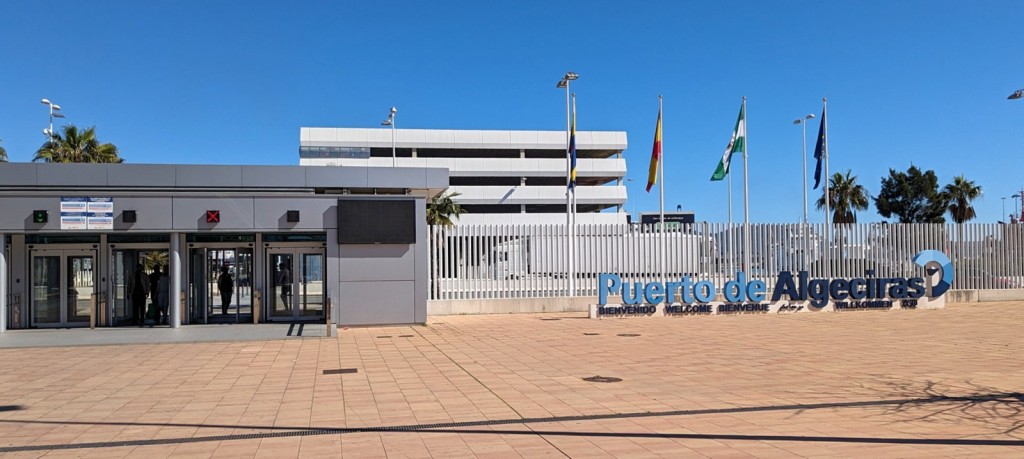
First we had to get there. There was no convenient way to take a train between Granada and Algeciras so instead of a very fun high-speed ride we took the bus. I suppose it was fine. It was from the bus that I caught the first glimpse in my life of the Mediterranean, so that was very cool. We arrived at the port rather early and were a bit confused and there was an initial mix-up with the tickets and at one point they closed off the gate and it seemed like we had missed the ferry and it was very stressful but it worked out in the end and we got on the ferry. It was much less crowded than I expected, just a smattering of people. Spanish passport control was on land but Moroccan passport control was actually on the boat, so not only did I get the “entry by ship” passport stamp that I coveted, I actually got it on a boat, which just takes the cake.And then it was time for the ferry ride! I was so excited about this. A large part was the mystique of arriving at a new continent via ship. The first and only time I ever went to Australia I went by sea. Bermuda, too, arrival by sea. It’s the best way to travel. This was not my first time in Africa of course but first time I got to arrive by ship. Just the utter magic of it, departing one place and traversing the (narrow strait of an) ocean to land upon a whole world of new experiences.

Gibraltar.
Can’t resist a sailboat.

I have actually thought about this particular Strait a lot. I used to be on submarines and a number of submarines have collided with merchant ships in the Strait. So we hear about it. The reason the Strait is a submarine-magnet is because it is a relatively narrow body of water and all the ships line up. Submarines can’t really “see” well directly behind them, which they overcome by maneuvering. Since you can’t do a whole lot of maneuvering in the strait, and because merchant ships go pretty fast actually, submarines can get pretty literally run over by merchant ships sneaking up behind them. The fact the submarine is underwater doesn’t save them, because they can get sucked up into the merchant ship via Bernoulli’s principle. And then on top of that, the Strait of Gibraltar has the ferries criss-crossing it all the time, and ferries themselves are kinda submarine magnets, because they go in unexpected directions and are faster than you think and if you’re worried about merchant ships sneaking up from behind and running you over then you might miss the ferry coming at you from the starboard quarter. All that to explain that I was very excited to keep an eye out for submarines and maybe crash into one, which I think would have been a lot of fun for me, personally.

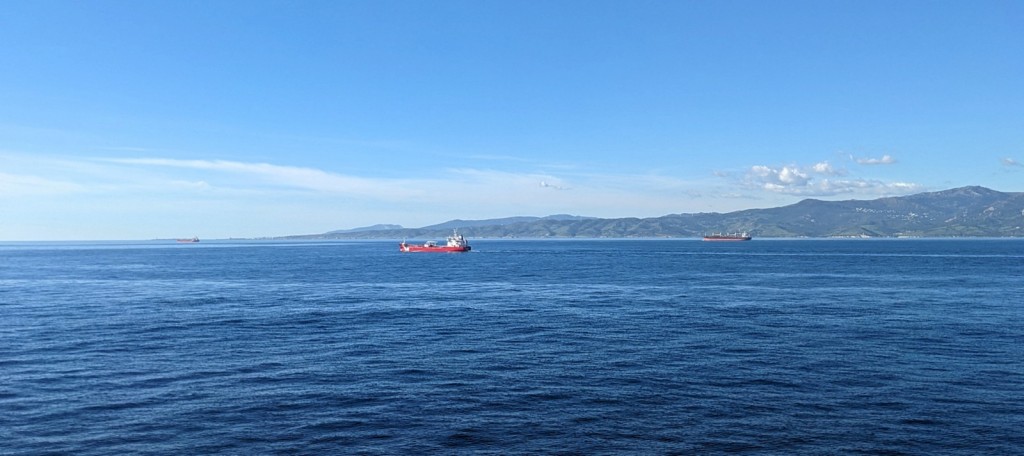
So while we were on the ship I spent as much time as possible up on the deck checking everything out. It was a gorgeous day and an easy crossing. The line for the passport stamp was a bit long and I was longing to look out a window. I did get to look out a window for a little bit while in that line and during that time I saw a dolphin jumping about which was just magnifique (a challenge of this part of the journey is we had to switch over from Spanish to French, and while I have been taught both languages I have learned neither and kept mixing them up, though really the whole time we got away with English and just peppered in some poorly pronounced phrases from each other language). Up on deck I was just dazzled. I suppose I knew the Strait was narrow (you know, like a strait), but I had imagined that you might be able to glimpse the distant shores of one continent from the other, not like, you had a really nice clear view of TWO CONTINENTS, each imbued with their own mystery and history, from your comfy viewpoint atop a ferry. I mean wow! I had a blast. I was taking so many different pictures of boats and looking up the AIS data and verifying that the ship I was clearly seeing with my own eyes really was a ship and now that I look at the pictures they look silly because the ships are tiny little dots on a vast horizon but again man! The Strait of Gibraltar! History! And not to mention it was cool seeing Gibraltar itself! Now we want to go someday. It was a great boat ride and took a little longer than expected but really a very luxurious way to travel, in my opinion!

Ferries that sadly didn’t run over any submarines.
Merchant ships that didn’t run over any submarines, either.

Eventually of course we docked in Morocco, the second country in our honeymoon trip. Since we left from Algeciras we arrived in Tangier Med, requiring us to somehow get to Tangier Proper (this was our next destination). We could have taken the bus but decided to live a little and take a taxi. Being experienced travelers we were going to ensure we had agreed upon a fair price before getting in, but that simply did not happen because the man loaded up our bags and off we went. He charged us a fair price in the end so no harm no foul I guess. And then we got to enjoy the ride to Tangier.

As I got my first glimpse of Morocco my overriding thought was that it was greener than I expected, which is stupid. Clearly I had thought you cross the Strait and suddenly it is men on camels in the Sahara. Instead it was grass and shrubland and a few trees, or maybe big shrubs, I couldn’t tell. There were rolling hills and as we drove along the coastline there were gorgeous views of Spain. I also realized I had seen a couple setups where people had like, espresso machines installed in the back of their cars where they were selling espresso, and, like, neat I guess. We passed a Navy base along the way and the Poste Connexion Electrique Maroc-Espagne, which was really just over-the-top as far as stuffing in all the things I like into one day. We also saw a good number of cows, a horse, and a whole herd of wooly goats so that was neat. And a donkey! Then, finally, after a long day of travel we approached Tangier. Arriving the way we did my first impression is that it resembled more Sarasota than anything else, seeing modern high-rises abutting the water. That impression faded away as we entered the old city to arrive at our hotel, and I guess I also don’t recall people offering pony rides on the beach in Sarasota, as they were doing on the beach in Tangier. For dinner instead of going out we enjoyed a to-die-for I think French fusion restaurant in the hotel and then pretty much collapsed asleep.

Spain II: Museo Naval

Reading this week:

  • Greasy Luck by Gordon Grant
  • A Working Woman by Elvira Navarro, translated by Christina MacSweeney

I have discussed before in this forum my Spanish roommate that I had during my Firstie year at the Naval Academy. His name was Francisco and he was a semester-long exchange student from the Spanish naval academy. He had been an enlisted sailor before going to the academy, and as such his lived experiences were unimaginable to me (specifically he was 29 and married). I still have fond memories of Francisco and the deep life lessons he bestowed upon me (see the linked post about sandwiches), and so in tribute to Francisco’s service in the afternoon of our first full day in Madrid my super amazing wife and I visited the Museo Naval!

If you Google the Museo Naval you will find reviews describing it has a “hidden gem” and man that is true. The entrance is unassuming and I wrote down in my journal that the foyer was “dingy.” I had greeted the nice lady at the front desk with my limited Spanish and she seemed very disappointed when I said I preferred English as she handed me a pamphlet on Jorge Juan (they had a special exhibit on him at the time). But you ascend the stairs and man WOW. It’s gotta be one of the better if not the best naval museums in the world. It is surprising how big it is as you wind through the twists and turns that reflect the twists and turns of the Spanish navy’s history. You really oughta go but if you can’t luckily it appears Google has turned it into a street view thing so you can catch a glimpse yourself.

The museum takes the prudent choice of starting at the beginning, with the early history of the Spanish navy (or I guess the Aragonian and Castilian naval forces). Apparently it took about a century between cannons being introduced to Europe in the 12th century and people thinking of putting them on ships in the 13th century, but the museum had the above examples of early 16th century shipboard artillery which is pretty neat.

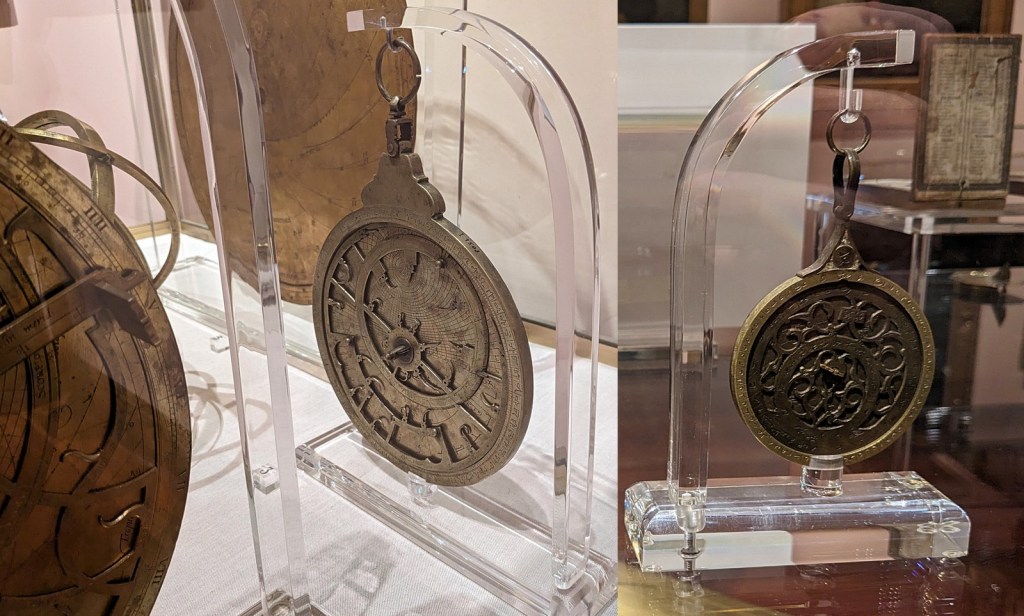
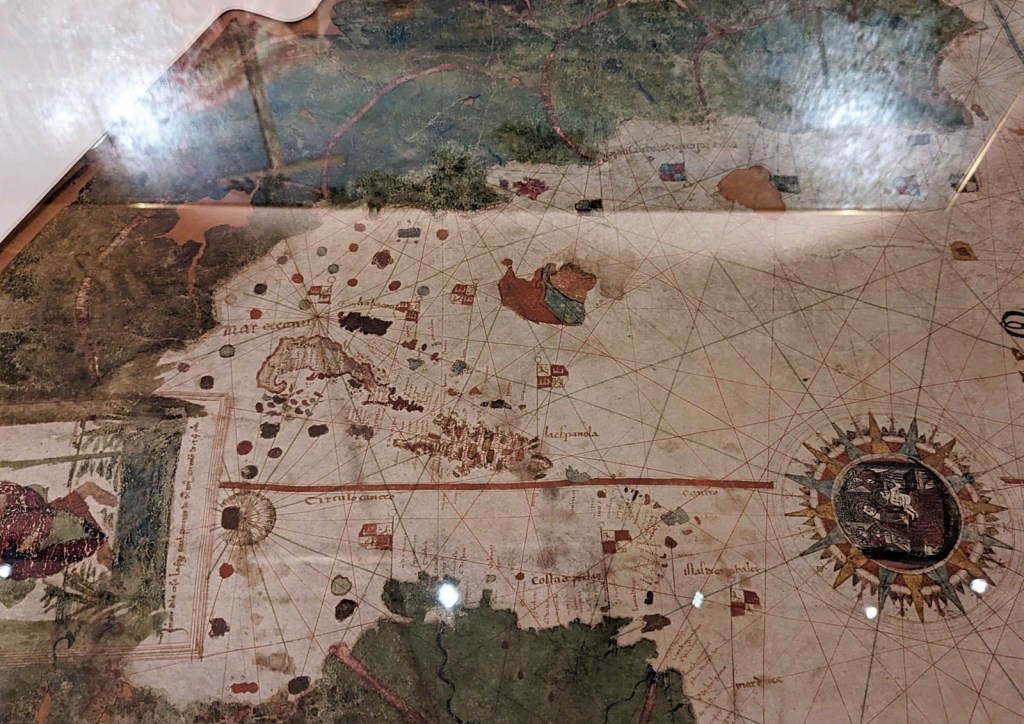
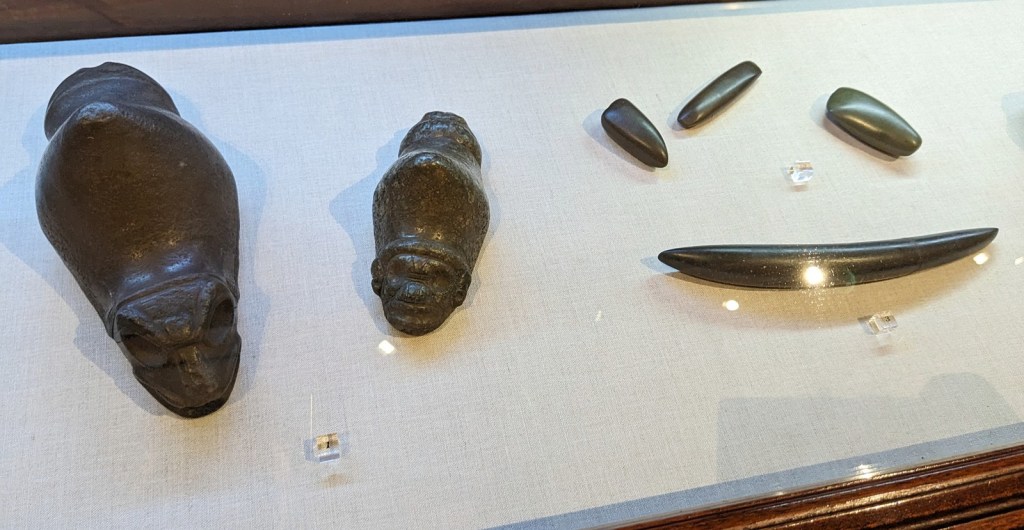
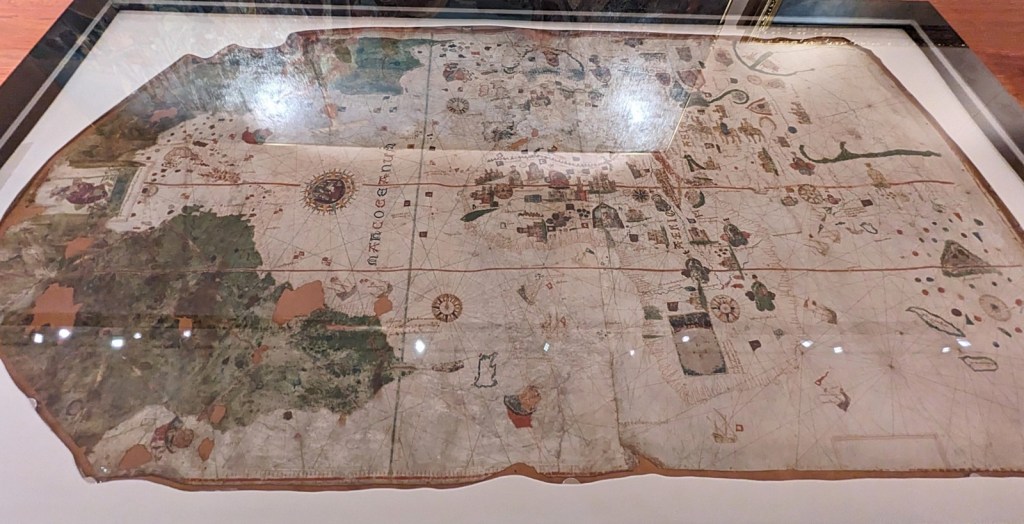
Especially exciting for me was all the bits about early navigation. The collection here really was especially extraordinary. I have just talked about how much I like astrolabes (man I want an astrolabe), and the museum had them in spades. They also had all sorts of old maps, including even a huge globe dating from 1688. The crown jewel of their map collection was the Juan de la Cosa map, below. This is the oldest known map to feature America. Ole Juan there took part in Columbus’ voyages and only 8 years later in 1500 was banging out the below relatively detailed depiction of the Caribbean to demonstrate the majesty and extent of the Spanish empire. On that note, the museum is pretty laudatory and I don’t recollect them struggling to cope with the cruel nature of colonialism. They had a pretty huge painting of Columbus and a collection of Taíno artifacts to really drive home the number of people subject to the Spanish crown. However even in the midst of all this what I personally was most interested in when it came to the Juan de la Cosa map is the depiction of Africa, especially how the Nile and Congo rivers meet in a lake in the mountains of the moon, because I have my very particular interests and those interests are boats and Africa and navigation and steam power and integrated farming.

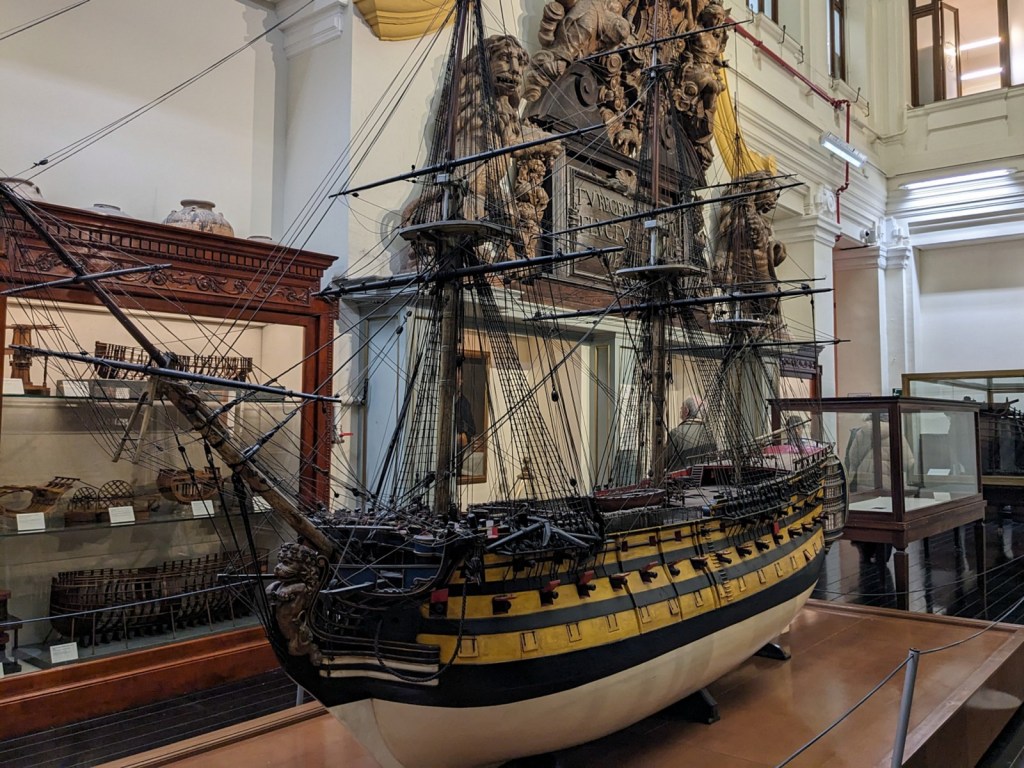
Really the sheer number of artifacts on display in the museum was overwhelming. They even had a whole section full of objects recovered from the Spanish nao San Diego, which was sunk by the Dutch in 1600 in the Philippines. A whole room choc-a-bloc with Chinese porcelain and Phillipines pots and Thai jars and man, you know, commerce! History! Boats! Stunning. And of course how could it be a naval museum without being absolutely stuffed to the brim with SHIP MODELS!!!!

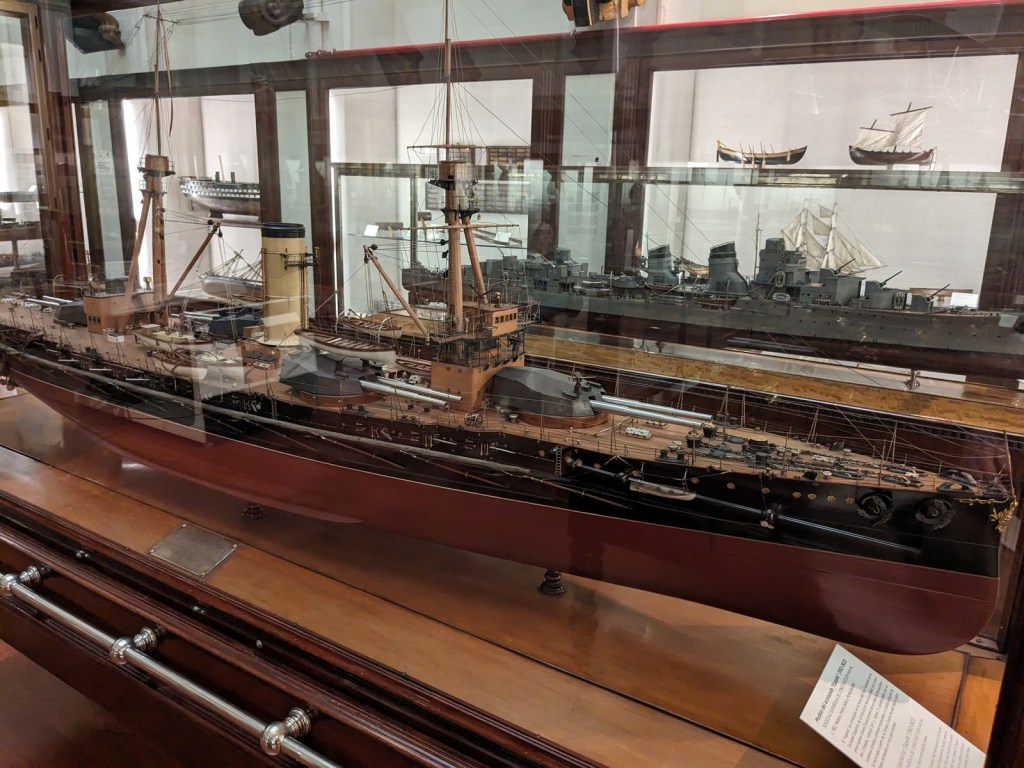
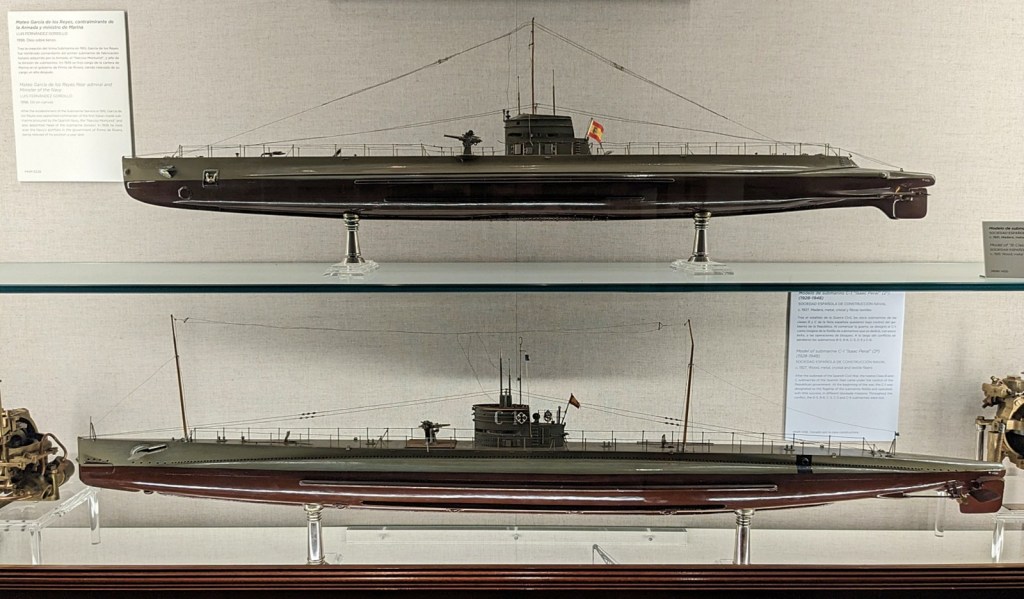
After our visit to the museum my super amazing wife suggested I get into ship model building and I don’t think she knows what she is suggesting. I could become so obsessive, you don’t even know. She clearly doesn’t. But they had a whole bunch of ship models, of ships from every era and from so many locations (check out the Malaysian war boat above), and not just of ships! I just told you I love steam power and they had a whole intricate model of the turbines from España-class battleships and even (not pictured) a model of a water-powered sawmill they used to saw all the planks to build all these ships! Unclear if the model sawmill sawed model planks for the model boats.

So all in all a great museum, perhaps the best Naval Museum. Spanning centuries and full of intricate details and all sorts of information about the huge lifespan of the Spanish Navy, presented in both English and Spanish, if you are in Madrid man you gotta go. And then, I forgot to mention in the last post, after the museum we went off and got churros and chocolate, and if you are in Madrid you have to do that too. Do both. Ships, and churros. This is what is best in life.

NS Savannah

Decked out for the big day!

I know I say this a lot around here, but last weekend I was finally able to achieve a dream and visit the NS Savannah! Look, I know I in fact already made a big deal about seeing the Savannah just a few weeks ago, but this time I got to actually go on it. And it was everything I had hoped and dreamed it would be.

I have known for a few years now that they open up the NS Savannah for tours once a year near National Maritime Day. Since I have known that I have been consistently thwarted in taking advantage of this awesome knowledge by the fact that I have either been like in Zambia or else there has been a pandemic, and then I was nearly thwarted again by not being able to find any details about the open day. But now I am here to save you: go to the Baltimore & Chesapeake Steamship Company website at bayheritage.org. They will have all the info and they are also super responsive on email and extremely nice to boot!

This year’s open house/boat was on Sunday and I arrived right at 10am when everything was kicking off. I walked as quickly as I could to the end of the pier where the gangway for the Savannah was and I was one of the first people onboard after a quick safety brief. I was also quickly one of the first offboard because you had to go back down to the pier to start the guided tour of the reactor compartment and engineroom, which of course are the coolest parts of the ship! Holy crap I love steam power.

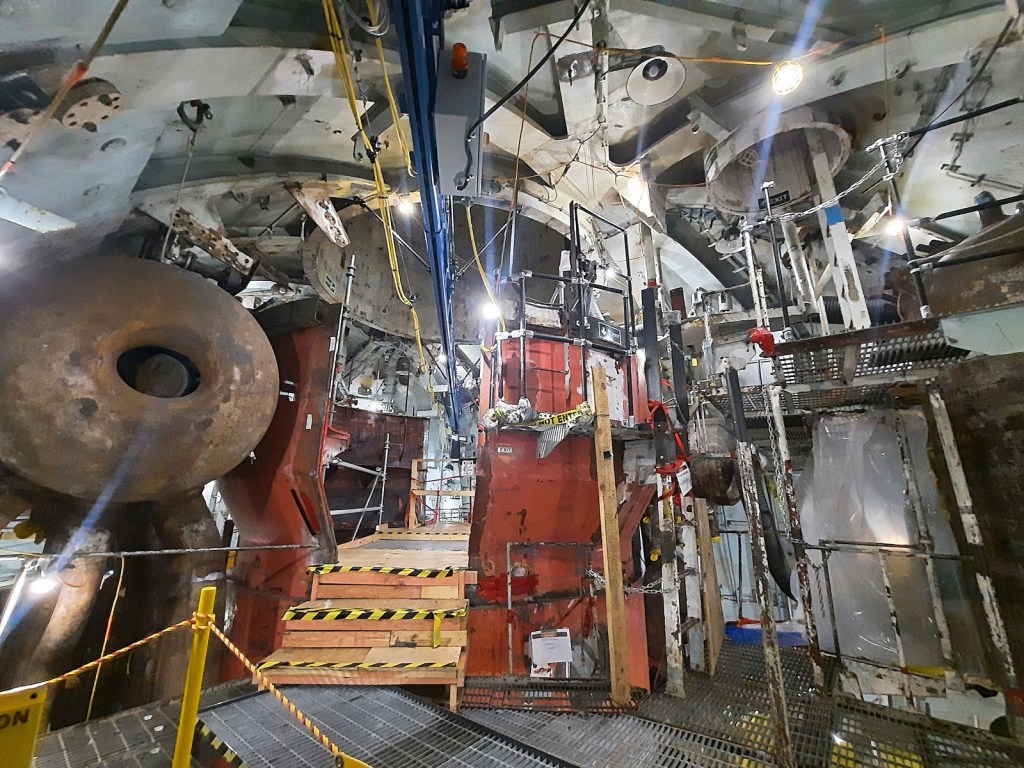
Anyways on our tour we were led around by one of the extremely friendly and knowledgeable reactor techs that normally work on the ship. The Savannah is actually well on its way to being a regular museum ship, and the largest chunk of that works seems to be sufficiently dismantling the reactor compartment so that the public can just wander around willy-nilly. In only the last couple of years they have cut a big hole in the side of the reactor compartment so they could more easily extract some of the components. The coolest effect of that is we got to see the cross-section of the secondary shielding, which was primarily composed of several feet of concrete and then several feet of wooden boards.

The primary shielding (where the reactor itself sat) is the red thing, with the refueling hatch above it. The rusty thing to the left is the steam dryer, above a horizontal U-shaped steam generator below the decking. Peaking in from the right of the frame is the pressurizer.

Inside the reactor compartment the primary shielding is half gone and the reactor vessel itself is long gone. I commented (lightheartedly!) that the place could use a paint job, and apparently it will get a paint job in the bright primary colors that turns out characterizes the engineering components of the ship. In addition to the remnants of the primary shielding, also easily visible was the pressurizer and the steam dryer, along with the hatch at the top of the ship that was used for refueling. If you peered down through the grating, you could also glimpse the U-shaped horizontal steam generator, which is pretty wild.

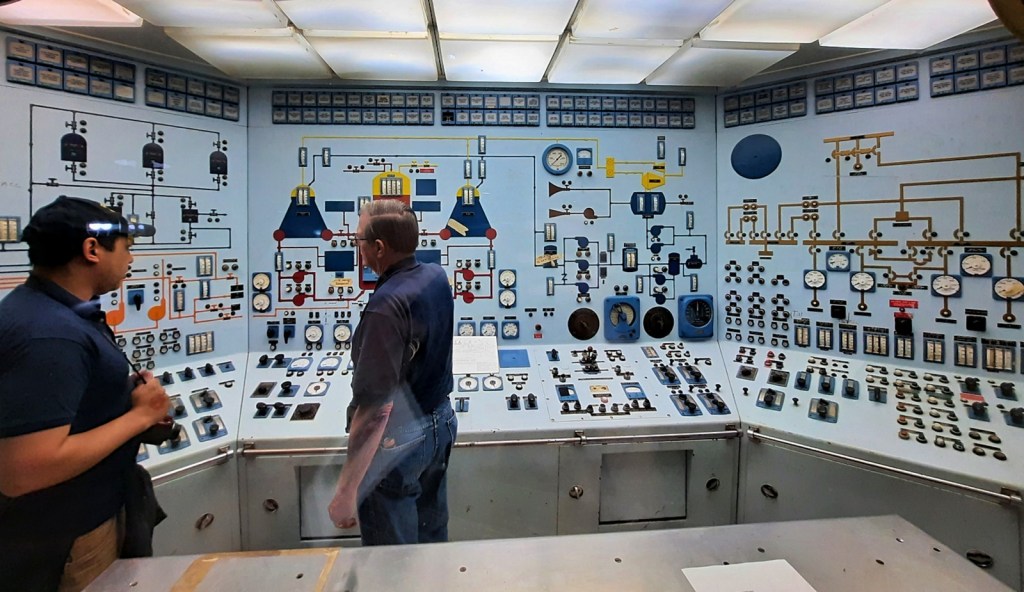
The control panel goes from rod control on the far left, to pumps and steam operations in the middle, to the electrical system far right.

From there we got to go to the control room. The control room was staffed by a man who was actually a reactor operator on the ship back when the reactor needed operating, so he had first-hand knowledge of all the workings of the place (detail I asked about is that it was normally manned by just two reactor operators, a primary and secondary). Reactor control panels are always very fun because they are designed to be the opposite of inscrutable (scrutable if you will), so everything is laid out in very logical orders and you can glean a lot of the reactor and steam plant operation from the layout of the control panel. I spent the whole time admiring rod control switches and coolant pump switches and scram buttons and the like.

Looking down into the engineroom; the control room is behind the woman in the yellow shirt. The red parts are mostly the turbines, and the yellow parts are the reduction gears. You can see the green emergency propulsion motor atop the yellow gears.

Just behind the control room is the engineroom itself, separated by just a window. On the submarine you could sense the engineroom around you from the control room, but you couldn’t actually see it, so this must have been pretty wild. The engineroom is museum-ready with a very colorful paint job. The Savannah only had one screw, so the engineroom only had a single high-pressure turbine and a single low-pressure turbine. We got to admire the emergency propulsion motor and off in a corner were the backup diesel generators. Another very knowledgeable docent pointed these all out to us.

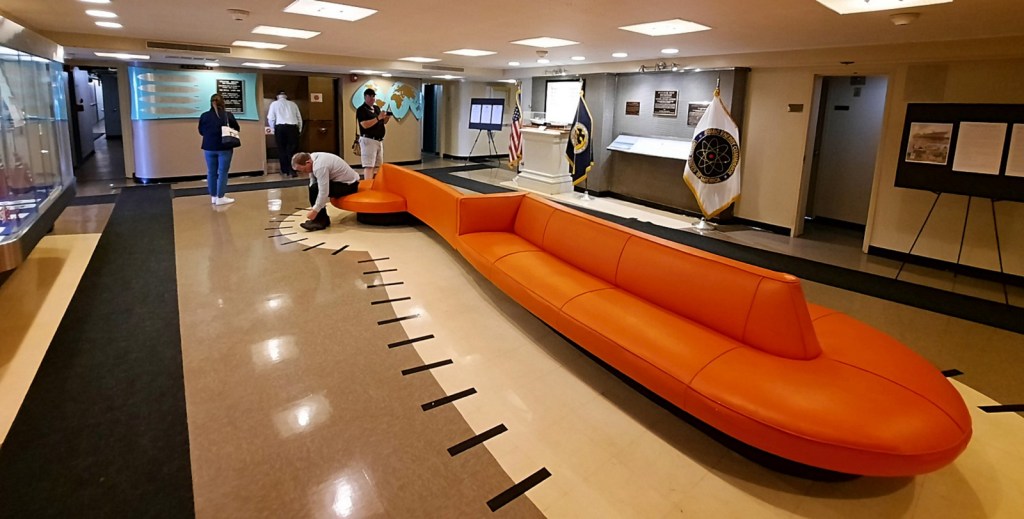
The entry hall into the ship.
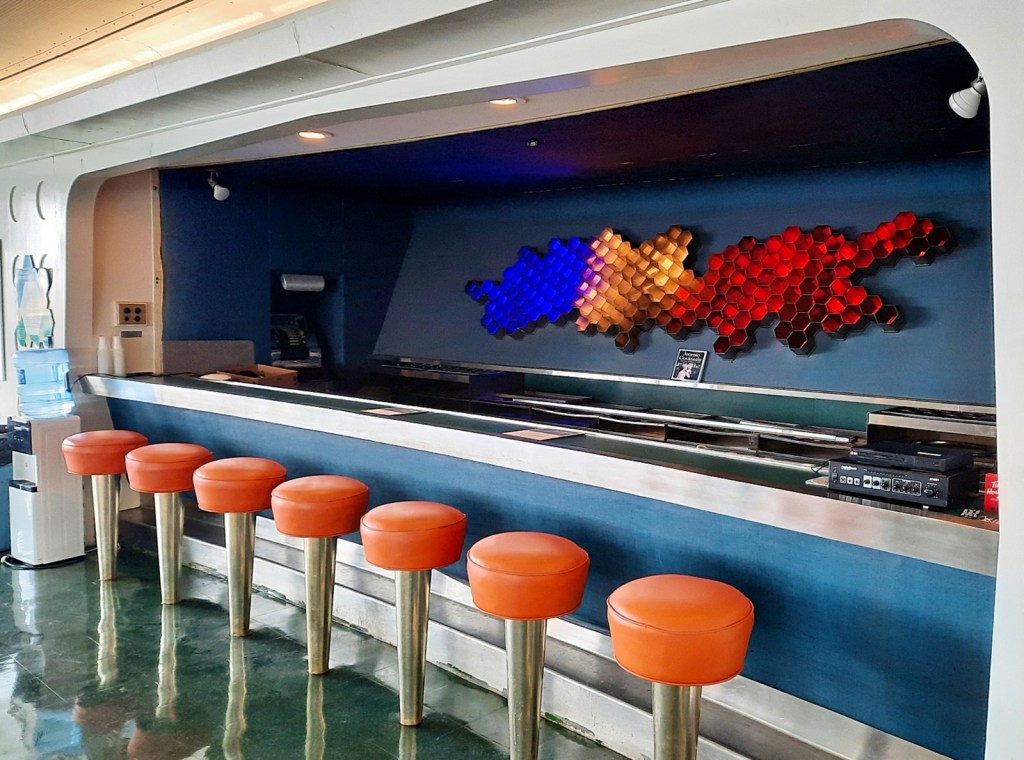
An absolute dream of a bar on the promenade deck.
The dining room; look at the atom symbols in the recessed lighting!!!
They need to sell reproduction sets asap!!!!!!

From there we were let loose for the unguided part of the tour. Let me tell ya, the Savannah is a mid-century dream. The ship was meant to distill every hopeful aspect of the atomic age and it absolutely nailed it. Totally perfect, no notes. For the first few years of its life it was a passenger ship in addition to being a cargo ship, so its entry lounge is dominated by a huge orange couch and a magnificent stairway leads you to the various decks. I’ll have to let the pictures speak for themselves, but when I showed her the pictures even my super amazing wife wanted that dining set. It also wasn’t until I was reviewing the photos that I noticed the recessed lights in the dining room were also atomic symbols. Perfect and gorgeous!!!!

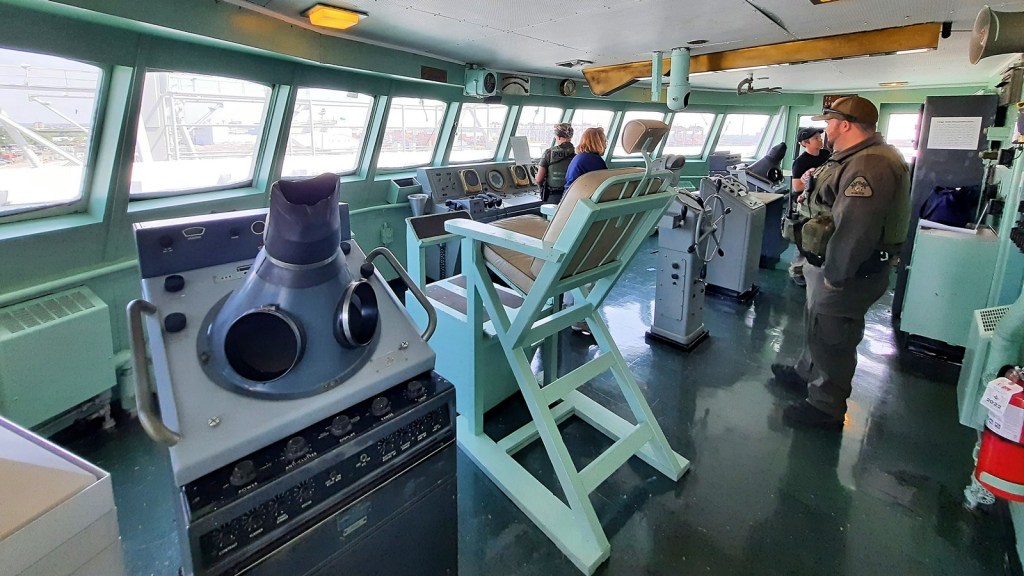
I’m always surprised by how sparse merchant ship bridges are; I’m used to tight-packed radar and sonar screens everywhere but these guys really just need a compass, a helm, and a radar screen (and a comfy chair).
She shares a pier with the SS John W. Brown.

Much of the rest of the ship was pretty ship-like (shipshape?). The bridge looked pretty much like a standard bridge and fairly sparse, so much so that I forgot to look for the scram button the bridge crew had up there (not to be trusted with actual reactor operation, the bridge’s scram button only functioned to turn on a light in the reactor control room that said “bridge scram;” the operators could do with that what they thought best I suppose). Topside was, you know, topside. However I couldn’t leave the ship without visiting the other biggest celebrity onboard, the Radarange!

I had been under the impression the Radarange on the Savannah was the first commercial microwave oven ever put into service, but some quick Googling does not seem to back me up on that supposition. It was still an early model and meant to show the true wonders of the future. I mean not only were we splitting the atom here but we could also harness the rotational spectra of O-H bonds to heat up dinner. Truly the embodiment of a world where the promise of clean and abundant energy would solve all humanity’s problems. If only we had kept at it.

I managed to visit the gift shop where I resisted buying a whole lot of swag, but I soon had to  literally run off because it came over the ship’s speaker system that I had illegally (though accidentally) parked my DeLorean and if I didn’t hustle it would get towed (speaking of visions of the future). I am so glad I got to  finally visit the NS Savannah, especially its super cool reactor compartment, engineroom, and microwave oven, and I am very much looking forward to it being finished with its museum ship conversion so the whole world can see it more than once a year!

Historic Ships of Baltimore

After a hearty lunch to replenish ourselves from a morning spent touring the National Aquarium in Baltimore, the next adventure my super amazing fiancée and I went on was to tour the historic ships of Baltimore! I suppose Baltimore probably has a large number of historic ships, being an historic port and all, but this specifically refers to four boats and one lighthouse scattered about the Inner Harbor, which you can tour all for one low low fee of like $20 (except for the lighthouse right now, which was closed when we were visiting).

The big draw today, as it should be every day, was the USS Torsk, which is a Tench-class submarine and bills itself as the last US submarine to sink an enemy ship in WWII. So pretty neat! I used to be a submarine officer, as I think we are all aware, and so I am a big fan of submarines, but my super amazing fiancée had never been on a submarine and wanted to see one to get a glimpse into that past life of mine. A WWII diesel boat is not a Los Angeles-class nuclear submarine, but it’s still a submarine and an astonishing amount of the stuff looks pretty much the same.

I think I did a pretty good job as a tour guide. Being a submarine it was pretty cramped and there were other tourists coming through so I only had so much time to point at things and you’ll have to ask her how I did but she seems to have enjoyed herself. She is now ready to fire torpedoes from both the forward and aft torpedo rooms to decimate enemy shipping in furtherance of the war effort. Hooyah!!!

Besides the Torsk, we also visited the light ship they have along with the Coast Guard Cutter, but the other highlight of the Historic Ships was the USS Constellation. The biggest thing I learned on this trip was the Constellation’s participation in the Africa Squadron, chasing down slave-runners, so that is pretty neat! Good job Constellation. It is a large and impressive ship, with a great number of detailed display placards and a lot of interesting stuff to look at. Her claim to fame is that she is the last all-sail ship the Navy ever built, with all of the subsequent ones having at least auxiliary steam power. Of course, the biggest thing that should actually draw you to the Constellation is all the hilariously spicy drama over what the ship actually is. You see there was a Constellation that was one of the original six frigates on the US Navy, and for a while they thought that this Constellation might have been that ship. The confusion stems from the name obviously but also that for fun 19th-century accounting purposes they built this Constellation out of “maintenance” funds, using a polite fiction to scrap the older Constellation and then have this Constellation replace it though on the books it would be the “same” ship. They also reused some (very small) amount of timbers, either for accounting purposes or sentimental reasons. This is all laid out in a lively report titled “Fouled Anchors” which is linked to here under question #12. However there is a group of people who are invested in the idea that the Constellation in Baltimore Harbor is the same Constellation that was launched in 1797 and they will go to great lengths to try to explain how the 1797 ship was stretched out to become the 1855 ship instead of just admitting it is a new ship, which leads to extremely exasperated historians writing rebuttals on official if little-visited US Navy websites. Absolutely fantastic.

One other point that is neat to consider. The Constellation was launched in 1855 and represents a pinnacle of wooden sailing warship technology. One of the other ships you can visit as I mentioned is the Coast Guard Cutter Taney, itself launched in 1935, only 80 years after the Constellation. But it is powered by high- and low-pressure steam turbines and actually overlapped in service with the Constellation by 20 years, as the Constellation was technically only finally decommissioned in 1955 having served as a flagship during the WWII years, which is absolutely mind-blowing to me. And then only six years after the final decommissioning of the last all-sail warship the US Navy bought, they launched the world’s first nuclear-powered cargo ship, the NS Savannah!

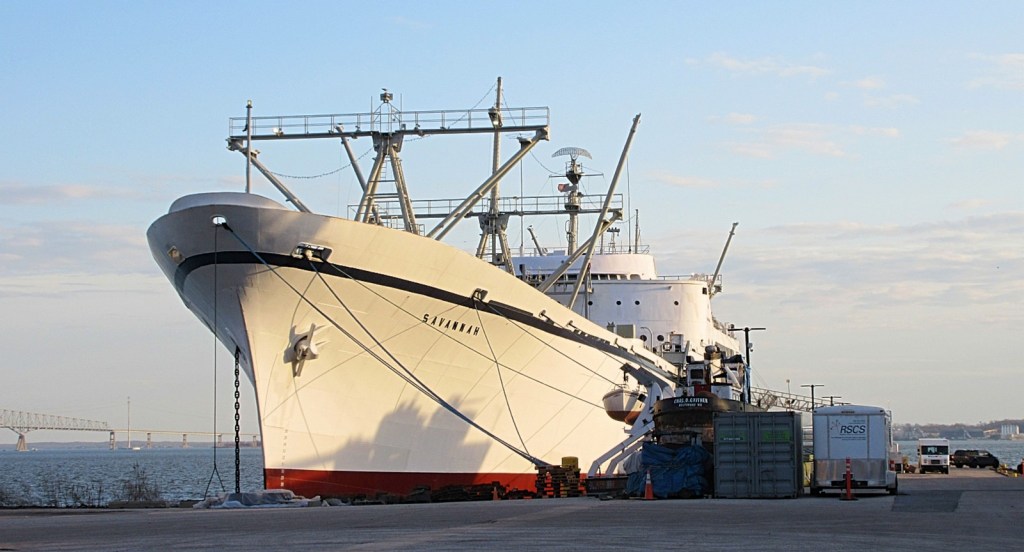
The NS Savannah was the last ship we visited that day, though it isn’t a part of the Historic Ships of Baltimore. You can’t actually tour it right now either, except maybe once a year, though that all has been a little unclear to me. I had wanted to see the Savannah for a while, and every time I drove south on I-95 I was trying to look for it but never spotted it. It is parked across the pier from the SS John W. Brown. I must have seen it before because I’ve been on the John W. Brown before, but maybe I missed it? Hard to miss, it is a pretty big ship. Anyways if you’re brave enough to drive into the industrial zone that abuts all these piers, you can go onto the pier and admire it. My super amazing fiancée was kind enough to indulge me in this, and I think it was really neat. The Savannah represented a unique time in the world of nuclear power, which was “what if we made nuclear power look really cool?” and the result was that it was very uneconomical but man is that a pretty ship. My super amazing fiancée especially liked the giant atom symbol on the side. We walked the length of the ship and then finally packed back up in the car and drove home. A wonderful day in Baltimore!

Lake Steamers of East Africa

Reading this week:

  • Vanishing Fleece by Clara Parkes

As has been discussed many times on this blog before I am a sucker for steamships on Lake Tanganyika. Also discussed is the fact that there are probably two whole books in the world about these steamships, and they are both extremely difficult to get one’s hands on for less than a notable amount of money. The first of these books was Steam and Quinine which I managed to get from Yale. The second book about the lake steamers of east Africa is of course The Lake Steamers of East Africa by L.G. “Bill” Dennis, and the only place within a few hundred miles of me that has a copy is the Library of Congress, which actually is very convenient once you know what to do. I did not used to know what to do! But I do now.

The most confusing part of getting a reading card at the Library of Congress is finding the room. It’s not that complicated, there are signs everywhere, except I missed the elevator but eventually I recovered. Or at least that was the most complicated part for me, for others it was apparently filling out the online form despite all the people who tell you to fill out the online form, but the guy making the readers cards took it all in stride. You need a reading card to read any of the books at the Library of Congress, but it is not my sense that a majority of people who actually get cards read any books or even use it twice, but just want to go in and check out the main reading room from the ground floor. It is gorgeous and this is a good use of time. After I got my reading card I proudly walked into the main reading room and very much did not know what to do to actually do any reading, but one of the very friendly and very helpful librarians who clearly gets this question all the time walked me through the process, which is you request an item online and ask for it to be delivered to the main reading room. Then it takes at least an hour for it to arrive but that’s okay because they had wifi. Once your book arrives you go pick it up from the other nice librarian person and then find a desk to sit at and then you can read all about lake steamers to your heart’s content!!!

Anyways this post was meant to be a book review, because I might as well review all both books about lake steamers on the African great lakes, but I vacillated between that and writing about my Library of Congress experience which is what the above paragraph was about. The Lake Steamers of East Africa is pretty good. It is a much different book from Steam and Quinine, which was somewhat more about the romance of steaming around on the great lakes and also much more about the paintings that are reproduced in the book. Lake Steamers has a number of small historical photographs throughout it, like the one at the top or the diagram below of the Kingani:

The reason both of these pictures look so bad here is sheer hubris. Since one time I managed to “scan” several things at home with good lighting using only my phone camera, I was like “oh I can just take pictures of these on my phone and it’ll look great,” but it doesn’t look great, and I am sorry. I have since discovered that the Library of Congress has fancy self-service overhead book scanner thingies, but you gotta bring your own USB flash drive, so in the future my Library of Congress book reproductions might be better (maybe!). Anyways. Like I said Steam and Quinine is about the romance of steaming around on the lakes, but Lake Steamers is much more about the history of commercial steamship operations on the great lakes. It is ordered chronologically (unlike Steam and Quinine), so information on Lake Tanganyika is scattered throughout instead of being lumped into its own chapter. But a relatively small portion of the book is about Lake Tang; this is due to there not being a whole lot of commercial steamship history of Lake Tanganyika, especially compared to Lakes Nyassa and Victoria. But what it does have is very in-depth. For example, it has a detailed description of the raising of the Goetzen/Liemba, only a small part of which is below:

The German ship Goetzen had to be raised. In early December, 1922, a small salvage party assembled at Kigoma under Commander Kerr, assisted by Commander Sharp, both late Royal Navy and both resident in Kenya. The technical adviser was Mr. J. Shepherd, previously holding the same position in Dar es Salaam during operations on the sunken dock in that harbor…

Using the leaky pontoons an attempt was made to lift the vessel, although when the bow rose to the surface, the ship turned onto its starboard side. She was allowed to sink again and later righted. Extra steel pontoons were fabricated using the few tools available, but even with these the stern stayed down in eleven fathoms of water. It was not before the divers had entered the engine room to seal the shaft-tunnel door enabling a deeper airlock towards the stern that the salvage was successful on the 16th of March, 1924… The reconditioning had cost £30,000 and she earned her first revenue thirteen years after launching.

It also contains a chart of every ship launched on the lakes, including name, type, builder, launch date and location and other details. The author did not neglect color however::

The whole of Sunday was spent loading and off-loading at M’pulungu, Northern Rhodesia and was a great day for the European inhabitants of the surrounding region who drove up to two hundred miles from copper mining areas for a day on the Liemba, the early arrivals boarding by ten o’clock. The bar was open all day, lunch was served from twelve onwards and it was not unusual by five o’clock to see lunch being served in one part of the saloon or tea elsewhere. Some eighty miles inland and upward is the town of Abercorn, where history has it that a resident of the local Abercorn Arms died and was not found for four days when the room maid turned up.

So all in all a pretty good book despite some passages reading a little less woke than they could, frankly, and it is a crime it did not get a second printing or more specifically a crime that I haven’t located an extremely cheap copy in my neighborhood used bookstore. But until then there will always be the Library of Congress.

Tall Ship Providence

In all her glory.

Reading this week:

  • Night and Morning in Dark Africa by Harry Johnson

My super amazing girlfriend knows me well, and so for my birthday got us a daytrip on the Tall Ship Providence (she pointed out that even if she didn’t know me well our home décor, or my half of it anyways, would be a constant reminder of the fact that I like boats). It was slated for, you know, my birthday, but on my birthday there was severe flooding in Alexandria and they had to cancel for that day. Ignore the fact that a boat seems like the absolute best place to be during a flood. Anyways that was the last sailing day of the season, so flash forward until now, when it is no longer my birthday, and we got to go on our boat ride!

Riding around on the Providence was an absolute hoot. We had been worried about thunderstorms and were thinking our trip was going to get cancelled again, but when our 4:30 departure rolled around it was a perfectly nice day. Sure there were a few sprinkles, and the severe lack of wind made it not much of a sailing trip, but the seas (my super amazing girlfriend: “we’re not at sea”) were calm and the views gorgeous.

I spent most of my trip explaining to (explaining at) my super amazing girlfriend what the various parts of the boat were called. This like the bow and stern and gunwhales. I also referred to the rear deck as the “poop” and the crew referred to it as the “quarterdeck,” but she was nice enough to let that slide unmentioned.

The biggest thing I learned on our boat ride is that while it is obvious that this Providence is supposed to be a recreation of an older boat named the Providence, I hadn’t realized the Providence to which they were referring had at one point been commanded by the late, great John Paul Jones! I know I am supposed to have known that already, but I was in many ways a terrible Midshipman. So that was a hoot. This led me to doing more mansplaining at my super amazing girlfriend, relating my favorite motivational story for why people should learn navigation. That story is that our buddy Jones (just John Paul at the time) was on a ship as like cabin boy or something. In those times usually only the captain and the first mate knew how to navigate. This was an anti-mutiny measure. I will not accept any fact-checking on this story. Anyways unusually John Paul knew how to navigate, which came in handy when the captain and first mate promptly died of yellow fever. He got the ship safely back to port, and the shipowners were so grateful they made him captain and he lived happily ever after (until he had to kill a guy and flee to America and hid his identity by craftily tacking “Jones” onto his name). Know how to navigate!

Upon learning this I sort of hoped we would find ourselves in a similar scenario. Specifically I was thinking that maybe those thunderstorms would hit and then I would have to come to the rescue. To prepare, I spent the rest of the voyage doing my best John Paul Jones poses, as you can clearly see above.

But back to boating. We launched from the DC Wharf and motored slowly down the Potomac. The crew did their jolly best to give us a great sailing experience, letting the passengers even handle some lines. They kept referring to them as “ropes,” but again in my magnanimity I let that slide. Those lines that were handled in turn handled the mainsails and jib which were raised for the benefit of our pictures, mostly. One of the crew explained that the Coast Guard only allowed them to raise certain combinations of sails lest the ship become too overpowered and capsized. I am sure this explains the reef in the mainsail given that I think at one point we experienced something in the range of 3 knots of wind. Breezy! They also opened a bar which definitely did a lot to contribute to the jolly atmosphere of the boat ride, and I recommend all boats come with bars. My super amazing girlfriend was kind enough to buy me a beer and we really got to pretend like it was 1776.

During the course of the cruise they also took us into the captain’s cabin and down below in the hold to check out those spaces. A fake rat added ambiance and we spent our time marveling at how they fit 70 dudes on a 110′ boat. Doing some back of the envelope calculations, if the submariner happiness factor (trust me here) is calculated by # of dudes / amount of space, they were much happier on this boat than I was on the submarine. All in all a wonderful trip. Eventually however we turned around, and sailed back up the Potomac, where we were treated to a beautiful view of wonderful clouds settling in over um, monumental monuments before docking at the conclusion of our three hour tour, accompanied by exactly zero Gilligan jokes (unfortunately). My super amazing girlfriend is super amazing and it was a great boat ride and you all should do it too.

Book Review: Steam and Quinine

Reading this week:

  • Gravel Heart by Abdulrazak Gurnah

We’re going to venture into all new territory for this blog and do a book review. The book in question is timely and relevant to our discussions here on this blog, which as my myriad loyal readers are aware has lately (though unlikely permanently) become more and more focused on the activities of the London Missionary Society in Central Africa. I promise I have other interests, which have also been documented on this blog, but it is winter and I am a working professional man now and Tim Harford tells me it is good to have serious hobbies so here we are.

One of the things I like about reading into the history of the London Missionary Society and especially the history of their steamer the Good News is that there is not a lot of competition in the space. There are a few other people I have found who have looked into all this which makes it interesting but it’s not like it takes all that much research to rocket to the top echelons of the field. However, the other edge of this sword is that it can make it difficult to access research items. One such item is the subject of today’s book review: Steam and Quinine on Africa’s Great Lakes: The story of the steamers white and gold on Africa’s inland waters by David Reynolds, with illustrations by Keith Watts Thomas.

Given the overall lack of interest in the topic, it is a little stunning that two books were published detailing the lake steamers of Africa in close order, namely The Lake Steamers of East Africa by L.G. Bill Dennis in 1996, and Steam and Quinine in 1997. Unfortunately, it doesn’t appear that either book got a second edition, and although there are copies of Steam and Quinine on sale for $60ish, I haven’t been able to find a copy of Lake Steamers except over in the Library of Congress. Fortunately for us, however, the Yale University Library is still willing to mail me books, which is how I got my grubby little hands on a copy of Steam and Quinine for us to peruse.

This book is clearly a work of passion for our friend David Reynolds. His biography on the back reveals he “was born to missionary parents near the shores of Lake Victoria in 1932” and completed his education in South Africa. This was his third book about African boats, the first being A Century of South African Steam Tugs (which apparently got three (!) editions) and Kenneth D. Shoesmith and Royal Mail, Royal Mail being a shipping line. This is clearly a man after my own heart, when it comes to steamships at any rate.

Although my specific interest in this book are the boats of Lake Tanganyika, and even more specifically as mentioned the Good News, he covers all the great lakes (Nyasa/Malawi, Tanganyika, Kivu, Albert, Victoria, and the honestly not-so-great Kioga) in a northward fashion. My expertise in this area is targeted, but I haven’t spotted any steamships (or some motor ships) that he missed, making this a very comprehensive review of steam navigation on the African Great Lakes. He does, however, devote more space attention to the boats that pique his personal interest, but honestly what is the point of being passionate about something if you’re not going to devote way too much space to it? *cough* this whole blog *cough*

But let’s circle back to my specific interest, the Good News. Honestly I gotta say this section does not come through shining. I think we’re both partisans here, but I am a much bigger fan (or devotee anyways) of Edward C. Hore than he is. Mr. Reynolds spends a good chunk of time maligning Captain Hore’s character, ending his biography with the note that Hore “died, impoverished and institutionalized, in Tasmania.” According to research published by Dr. G. Rex Meyer (kindly provided to me by the former editor of the unfortunately defunct Church Heritage journal), the only part of that sentence that is true is that he a) died b) in Tasmania, which for me throws much doubt onto his scholarship overall.

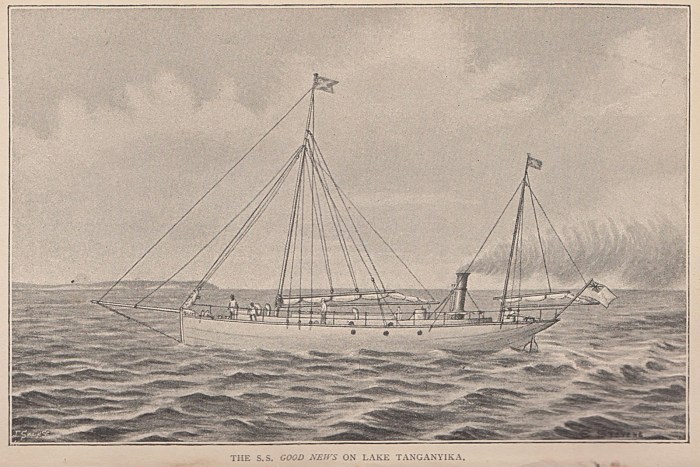
Although a feature of the book are paintings of several of the ships by Keith Watts Thomas, the book is also illustrated with sketches by David Reynolds. One of these sketches is of the Good News, included above. I have another nit-pick here. In his sketch, the ship is depicted with a sort of wheelhouse on top of the main cabin. Being as there are a limited number of pictures of the Good News and I have tried hard to see all of them, I think you, the reader, will agree with me that the sketch is derived from the below picture of the Good News in drydock. The ship that Mr. Reynolds has sketched does not match the layout of the real ship at all, which again puts me in fear for his scholarship, on my favorite boat anyways. The below picture isn’t perfect and shows a Good News under repair (for example, it is missing the booms and funnel), but I have also included below an engraving of the Good News under steam from Captain Hore’s book, Tanganyika: Eleven Years in Central Africa, which still doesn’t match the sketch.

Putative source of David Reynold’s sketch
Engraving of the Good News under steam.

I will try to avoid being entirely whiney here but noting that I did learn something intriguing about the eventual fate of the Toutou of Battle of Lake Tanganyika fame. This tidbit is hidden away in the section on the Graf von Goetzen / Liemba:

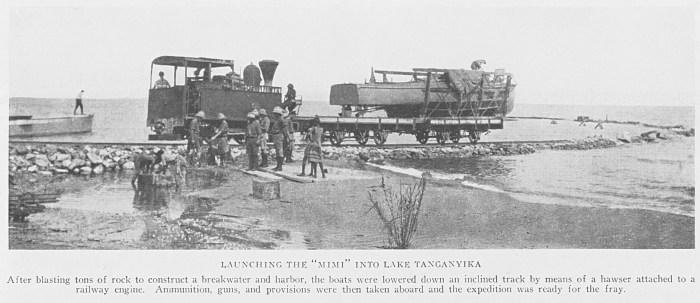
The Fifi, considered unserviceable, was towed out onto the lake and sunk in deep water on October 19, 1924. She went down with flags flying and all honours. The Toutou did not last long on the lake. She was transferred to Cape Town and could be seen in the Victoria docks with a brightly polished plate in her cockpit which read: ‘This launch served in the East African Campaign as an armed cruiser. Captured and sank three German gunboats with assistance of her sister launch, Mi Mi.’

This means now I gotta get my butt to Cape Town and see if she isn’t still there. Or better yet, anyone in Cape Town already?

Sketch of the Mimi by David Reynolds, along with the source image, below.

All in all if you want to get one book on the steamships that plied the African great lakes, honestly I’m not sure what book to recommend because there are astonishingly two and I haven’t read the other one. Though then again only one of them appears to actually be available. Though then again again the available one is like $60 and I’m not sure I can recommend it at that price. Then again again again they aren’t making more. I don’t know. It was at times a tedious and at times a very entertaining read, and as I said at the top a lot of passion went into it. I guess to conclude, please enjoy this final image I extracted from the book, the masthead of the African Lakes Corporation:

American Victory Ship

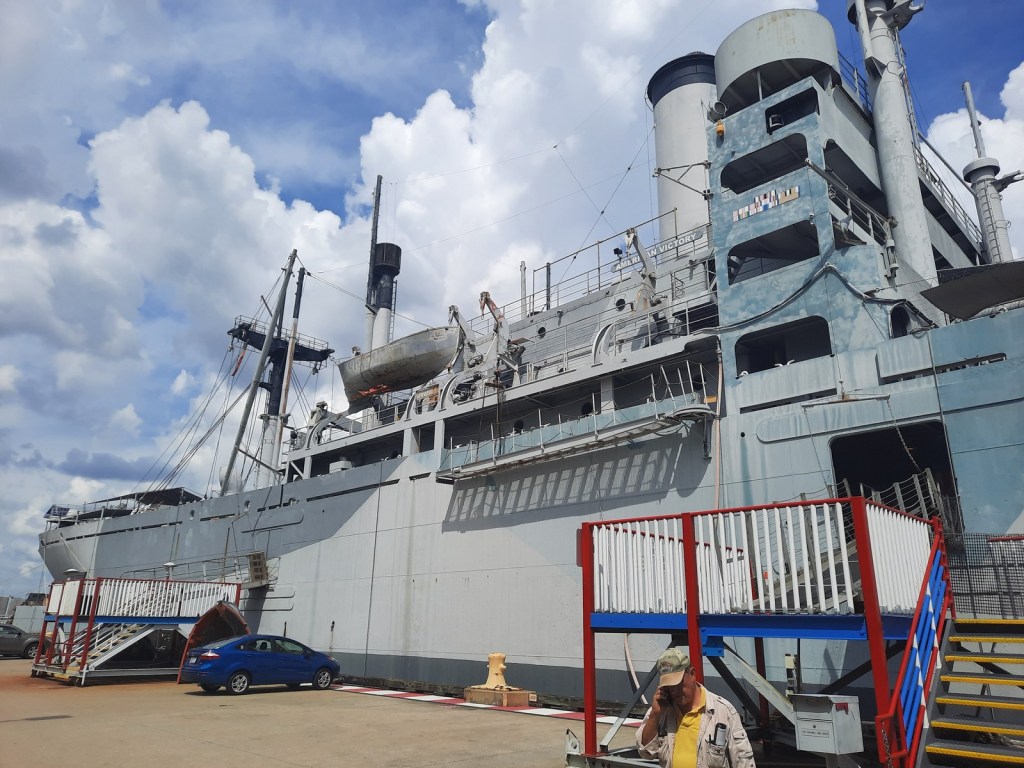
As one of the last trips I took as part of our Florida vacation, I went and visited the American Victory Ship in Tampa. You see, what had happened was that my parents recently retired and in a classic move went on down to Florida. Figuring my dad would need some hobbies, I got him a membership to this boat. Victory Ships are apparently like Liberty Ships except I guess just the next class down the line. The SS American Victory is in Tampa and I figured he could help out onboard or something. It’s apparently too far away for him to do that, but since I had gotten him the membership he decided to take me to see it.

The ship itself is pretty good! I mean look, I’ve seen a cargo ship before. I get it. The bunkrooms like, you know, exist or whatever. You can climb on up and get a pretty good look at the harbor, and admire the cranes and whatnot. As these sorts of places are wont to do, the boat had a bit of a museum right when you walked in and that was pretty nice. The neatest part was a full-scale replica of a German mini-sub, which reminded me of a North Korean mini-sub I saw once in South Korea. They also had other, smaller ship models, including one of the USS Saucy, which is a fantastic name for a ship.

One thing I appreciated about the ship is that they have tried hard to think through giving you a good tour. There is a proscribed path that walks you around, and they had a few regularly-spaced air-conditioned rooms to give you a break from the heat. This being COVID times, they also had handwashing stations, which more often than not were just the regular sinks that the ship had anyways, and I found that amusing.

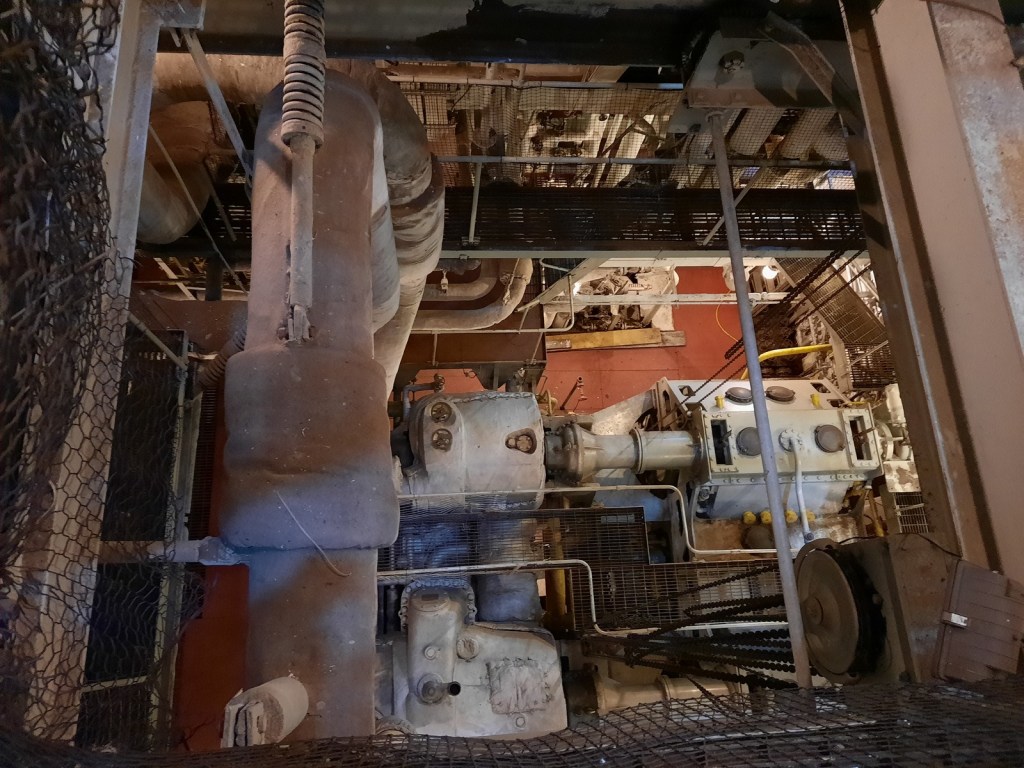
The most exciting part of any given ship is of course the engineroom, but unfortunately you could only really glimpse this one. Since the ship is a working ship in that it goes out every once in a while, I guess the Coast Guard forbids them from letting the riff raff into the engineroom. You could walk across the top though and peer down and get a bit of vertigo from the fear of dropping one’s phone right into the bowels of the bilge. For those interested, however, they do have a video of an engineroom walkthrough, and that’s pretty neat!

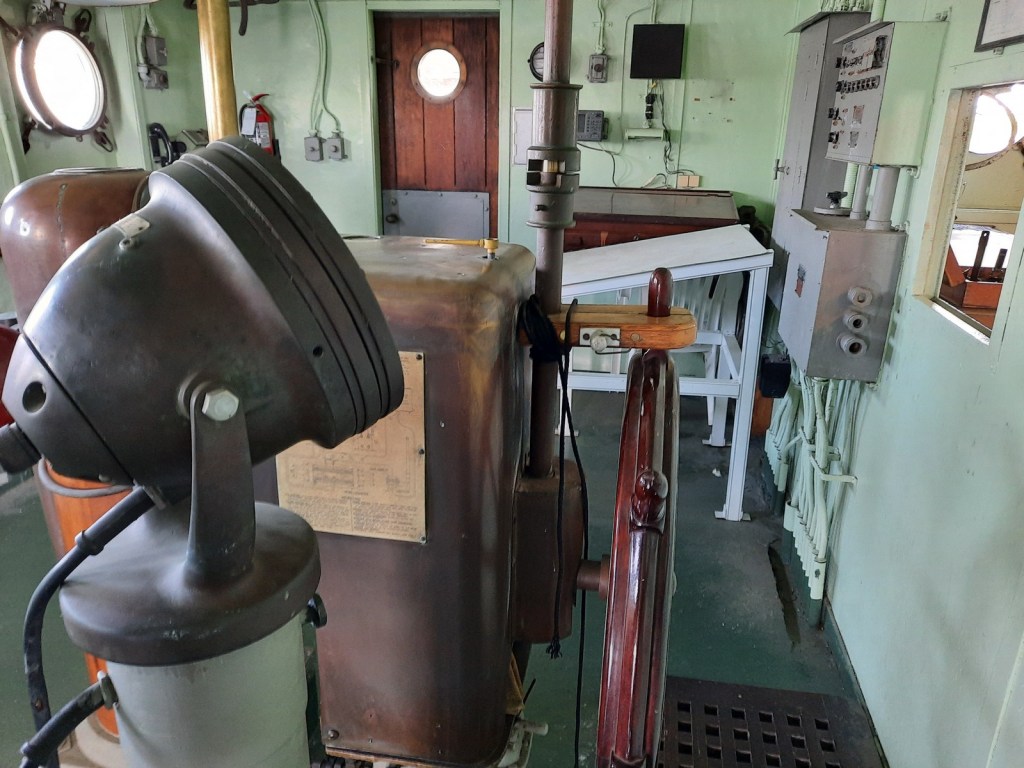
After taking a lap around the boat and seeing the sights we had to kill some time, so we hung out for a bit with the volunteer running the booth. He was pretty nice! We all swapped stories the way that disparate Navy veterans typically do, which is tell various stories unrelated to each other (except that they happened on boats) because we don’t really have a solid clue what the other one is talking about (I can’t tell if the guy we hung out with is the same guy from the engineroom walkthrough video, or whether all these veteran volunteer types just start to look alike). Then, you know, we left. So yeah a good time. Anyways, if you’re in Tampa, it might be worth checking the ship out, especially if you’ve never seen one before. Just remember to hydrate! And also please enjoy this picture of a nautical steering wheel lock:

New Bedford

Reading this week:

  • The Mind of the African Strongman by Herman J. Cohen
  • At Night All Blood is Black by David Diop
  • US Policy Toward Africa by Herman J. Cohen

This past week my super amazing girlfriend and I went to New Bedford. We went there because we both wanted to get away for a bit, she likes Massachusetts, and I like boats, and conveniently New Bedford catered to all of these interests. We drove up there on a chilly winter morning, leaving New Haven to pass through Old Saybrook and Old Lyme before waving at New London and New-port until we finally arrived at New Bedford. That last sentence was meant to make fun of all the things in New England named uncreatively for other places, but at one point we were contemplating visiting a 12th-century castle in Taunton, so maybe the naming convention makes sense. Still, if I was a pilgrim everything in New England would be named Patville and Patricktown and Patford.

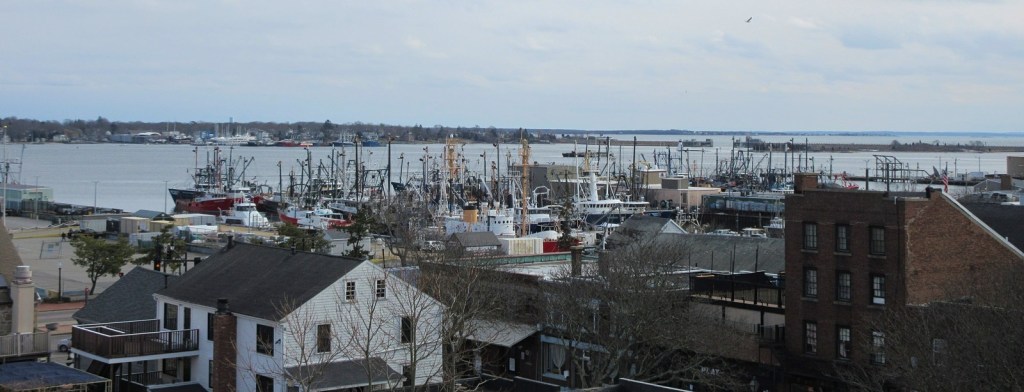
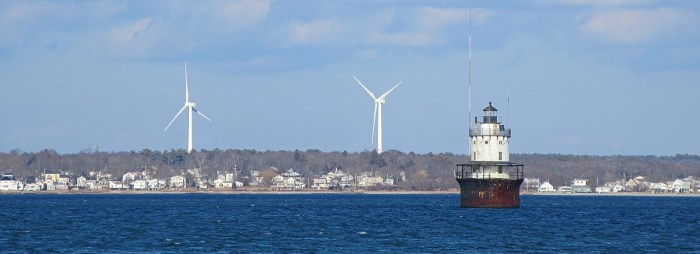
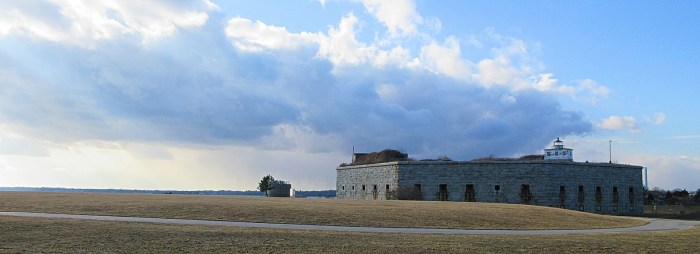
Upon arrival in New Bedford, we immediately got lunch. Then, having fortified ourselves, we proceeded quickly to Fort Rodman to enjoy the view. There’s a military museum that we wanted to visit, but it was mysteriously closed. Luckily, though, the views were nice, as you can see from the samples above. I enjoyed looking at the lighthouse and also the fort, and the trawlers that were motoring on by. We saw many dogs and a man playing rugby by himself. On the note of views, I can’t believe that anyone thinks that windmills are an eyesore. They are so cool. They spin and stuff and then make electricity. Maybe they could come in more creative paint schemes, like flame decals or something. The same goes with solar panels. I wouldn’t advocate cutting down trees to install ’em, but fields and fields of solar panels is an enticing view to me. Everyone should get on board.

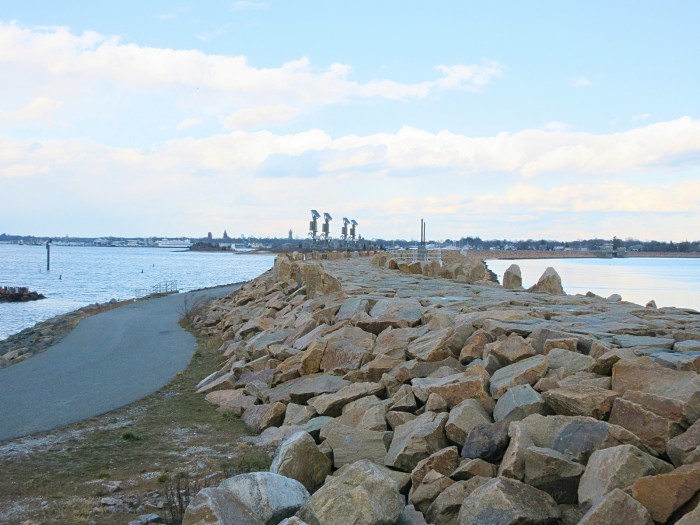
Next, because Fort Rodman hadn’t killed quite enough time and we couldn’t check into our AirBnB until 4, we went on the New Bedford Harbor Walk. That’s not the only reason we went, we also went because we like walking places together and enjoying each other’s company, and the walk provides lovely views of the harbor. I was somewhat disappointed to discover you weren’t supposed to walk out on the very nice path shown in the above photo, but mollified to discover the feat of engineering this wall was. They also have these big ole gates that normally let cars through, but make it possible to just like, cut off the lower peninsula of the city, which I think gave the whole affair some Game of Thrones vibes. It was also very cold while we were walking, and as we set out a lady warned us about the dangers of tearing up and getting frostbite on our cheeks, so that was on our mind. We eventually hustled off the wall and managed to park at our AirBnB shortly before a brief but furious snowstorm hit. We settled in and had a lovely night after getting some seafood takeout.

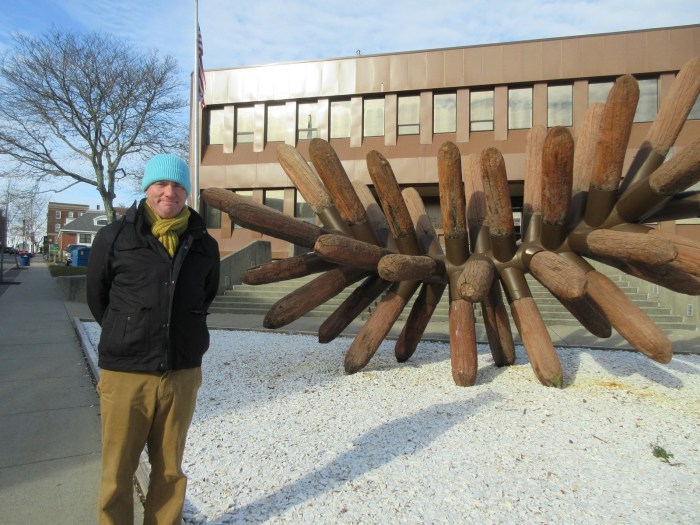
The next morning we set out bright and early (well, like 9:45) for our full day of New Bedford adventuring. The first stop was the Seaflower sculpture, because of course we support public art. Also, importantly, it let me check off a thing on Atlas Obscura, which is almost as important. This was a fairly good trip for checking things off on Atlas Obscura, as our next stop was an oozing whale skeleton:

I’m on the left.

The whale skeleton was housed at the New Bedford Whaling Museum, which was really good! We spent a few hours there looking at stuff. They had the first gallery with the whale skeletons, which was neat (and another one later on), and then an art gallery with a bunch of art, only most of which was whaling-related, and then of course a bunch of galleries that showed you a bunch of stuff about whaling. They had clothing and boats and harpoons and stuff like that. I recommend it. One of their major claims to fame is what they bill as the “World’s Largest Ship Model:”

I guess this counts as a model instead of just like, a ship, because it is half the size of the ship they modelled it after. The overall impression is a ship for children. You can see me on the above right steering it from one end of the hall to the other. We didn’t quite make it, but maybe someday.

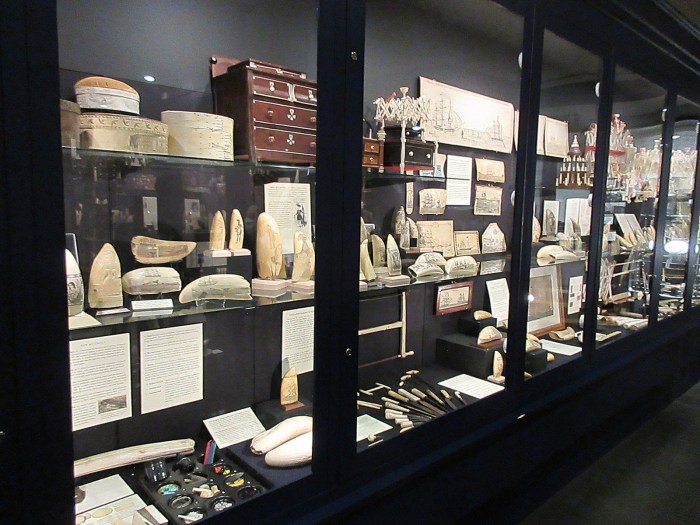
Man I uploaded more pictures of the place than I thought. One of the more interesting wings of the exhibit, at least as far as my super amazing girlfriend and I’s interests go, was their wing dedicated to the interactions between the whaling fleets as Asia. They had some super cool examples of Japanese whaling stuff, including a wide range of prints, which I was disappointed to find that the gift shop contained exactly zero reproductions of. They were very neat. The museum also of course boasts of the world’s largest collection of scrimshaw, which I have a particular fondness for out of an effort to make myself presidential. My super amazing girlfriend was very impressed by the swifts.

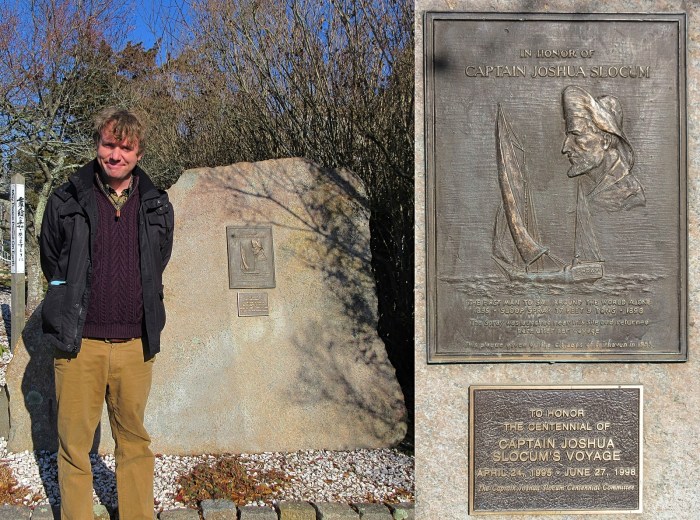
After leaving the museum and getting some lovely lunch, there wasn’t a whole lot else to actually do in New Bedford. This is largely the fault of COVID. But we spent the rest of a very lovely afternoon walking around and admiring the town, reading the various very informative signs and admiring the boats in the harbor. In the evening we had an expansive takeout dinner and then settled in for the night. That left us with our final morning in New Bedford. It dawned bright and clear and we took advantage of it by being lazy and hanging out until we had to check out of the AirBnB. Then we paid our respects to the Joshua Slocum memorial, which was important because Sailing Alone Around the World is a very good book and he was a cool guy (the memorial park is a lovely spot, too, you should check it out), oh and also for Atlas Obscura. Priorities.

Update: The museum tweeted me. I’ve never achieved this level of fame: