

Reading this week:
- Chief of Station, Congo by Larry Devlin
On the Wednesday of our Wool Week wanderings we had no planned activities. Well we did but we decided not to do it, the sunk cost fallacy obliterated by the fact that we had bought the tickets months before. We tried to give ‘em away but alas, no takers. This meant we spent the day driving around Shetland looking at various things in an even more touristy vein. At least things on the “mainland” anyway; we were too lazy to try to figure out the ferries.
Our first destination was the Crofthouse Museum. This museum was all about the traditional way of farming life in Shetland, each farm being a croft and the house being the crofthouse. The museum is set up as though it was the 1870s but the house was in fact lived in up through the 1960s. What had happened you see is back then a group of Shetland diaspora were visiting the islands from New Zealand where many Shetlanders had emigrated. Disappointed that the old ways of living were being lost but not having to live there themselves, they put the money together the money to preserve a crofthouse, and the museum was born.
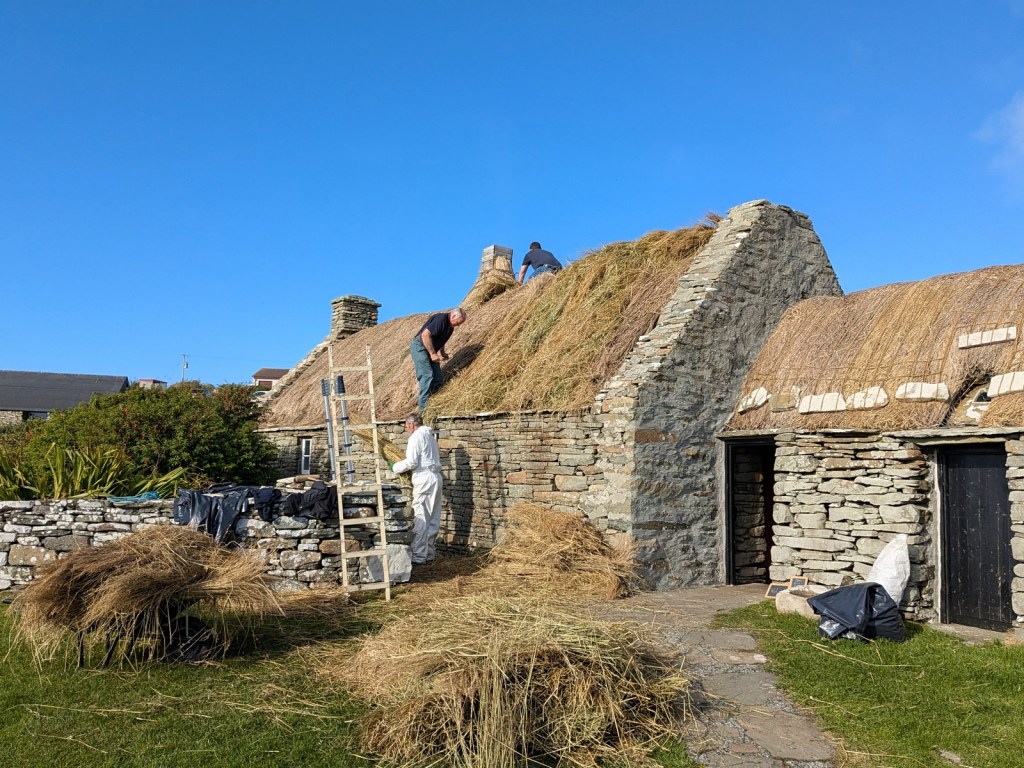
The crofthouse is a traditional but and ben with an attached barn. Upon our arrival we went on in to the house and promptly went into the barn and were very surprised by the utter lack of living quarters in the place. Then we figured out you had to open the door to the actual but (kitchen/living room) and ben (bedroom) part of the house. Thereupon we discovered Linda, who was that day giving tours of the place.

An aside. One of the most famous things about Shetland these days is Shetland, the TV series. This is a pretty great show and me and my super amazing wife are working our way through it to relive our glory days on the real-deal island. It’s a murder detective show and since it’s been going on for nine series now it has touched every part of the island. They have to; the fictional murder rate in the show would leave the real-life islands nearly depopulated. The upswing of this is that everyone we met seemed to have had some connection to the show, and everywhere we went had been a filming location at one time or another. The Westings Inn, where we were staying, had been the scene of a fictional murder. The star, Douglas Henshall, was known for biking around the island to the various filming locations. There is apparently a Facebook group where the show producers will put up posts about needing extras or various props to see if someone has something. Here at the crofthouse museum our guide Linda told us about her brush with fame, where the show needed an old-looking suitcase as a prop. She had one and sent in a photo and the production decided it was perfect. Linda volunteered to bring it on down, but instead they sent a car service for the suitcase, which marked it as a real celebrity. The show eventually returned her suitcase intact and significantly more famous.
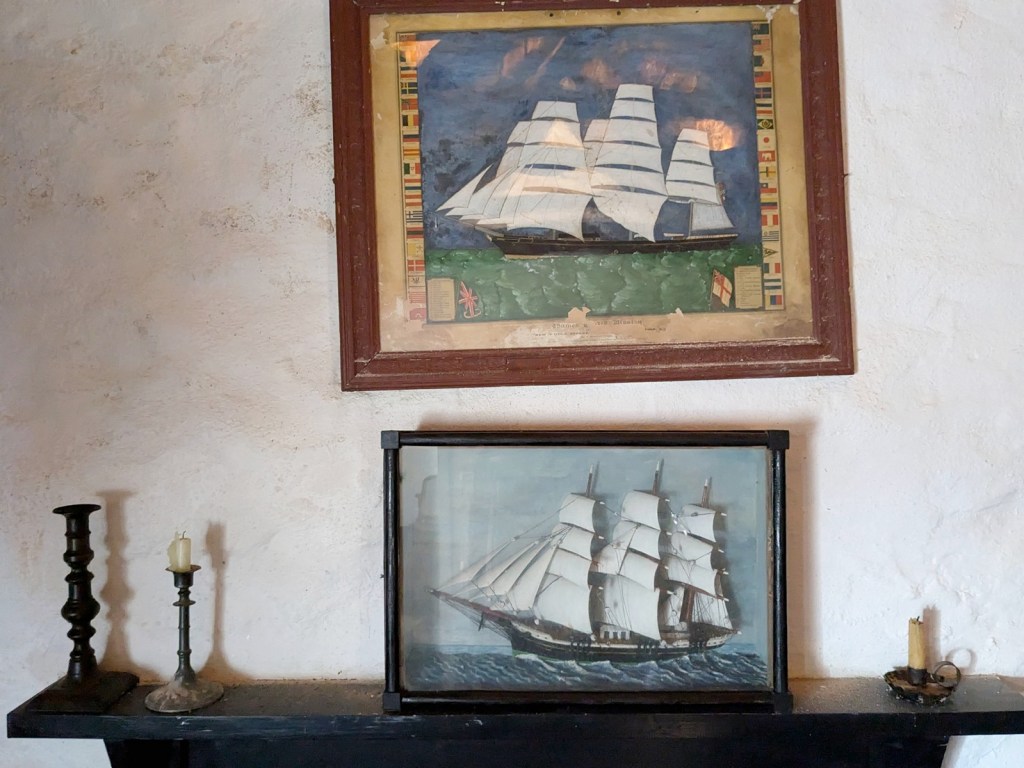

But back to the 1870s. The crofthouse was an all-in-one farm production facility, as referenced by us having gotten lost in the barn, which was under the same roof (having the cows next door provided warmth and was also convenient for doing chores without having to go outside). The but was where the cooking and knitting and other household activities would go on. They had there a big frame for doing lace and fish drying and the fireplace for cooking. While we were there Linda had a small peat fire going to keep the place warm (hence the closed door which confused us), and we learned that while Shetland has outlawed commercial peat harvesting since 2021, locals can still do it by hand for personal use (she showed us the tools and talked about having gone out to harvest peat as a youth). The crofthouse is really a very cozy home, though with a whole family I can see it feeling cramped. This example was a fairly well-decorated one, including a clock from Connecticut that was apparently all the rage in the 1840s. It said “E. Pluribus Unum” and like hells yeah man, ‘Merica. They also had some ship-themed art which is near and dear to my heart.

Another fun fact is that while the but is the living room of the house favored guests would actually be brought into the ben, which was considered the nice room despite or because of being the bedroom (since it was the bedroom it wouldn’t be full of cooking and laundry and chores). The beds themselves were encased in a sort of wooden chamber or cabinet. As you crawled in at night this gave you some privacy and extra protection from any cold winds blowing through the roof.
A driving consideration for the architecture of the house is that wood is precious on Shetland. There are no forests so all the wood that comes ashore is driftwood, either from natural causes or perhaps shipwrecks. So parts of the house will be cobbled together from whatever wood you can get; I think the stalls for the cows were separated by bits of barrel and ship rudder. Outside there was a shed roofed by an old boat that was no longer seaworthy but was still roof-worthy, I guess. Waste not, want not. And then finally and unrelatedly I just personally thought it was very funny that the museum had installed modern toilet facilities in what I think was another barn, which would have been quite the juxtaposition if it was historical.


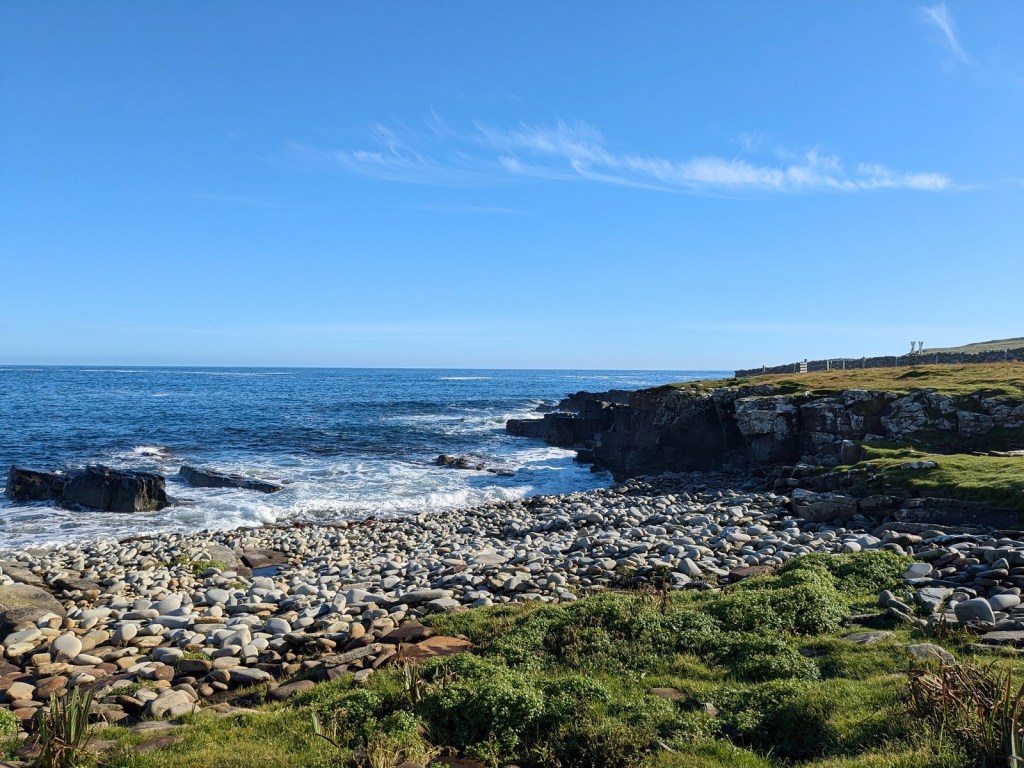
After seeing the crofthouse itself you can wander on down towards the seashore and check out the local mill. Inside the crofthouse there was a small hand-cranked mill for grinding grain, but also the neighborhood had gotten together and built a mill powered by a small local stream. I am kind of amazed it worked given how tiny the stream is. The building itself has signs outside warning you not to go in due to its dilapidated state, but looking underneath you can see the waterwheel and around there are the remnants of water control mechanisms. Then down on the seashore we just wandered around the rocks and admired the waves and enjoyed a very sunny and warm day. The crofting life could not have been easy, but there had to have been some real pleasant moments.
 Pat in the World
You must be logged in to post a comment.