

Reading this week:
- Tomorrow, and Tomorrow, and Tomorrow by Gabrielle Zevin
- The Africa House by Christina Lamb
Our first taste of Wool Week under our belt, it was time to learn more about Shetland itself and this brought us to the Shetland Museum & Archives.
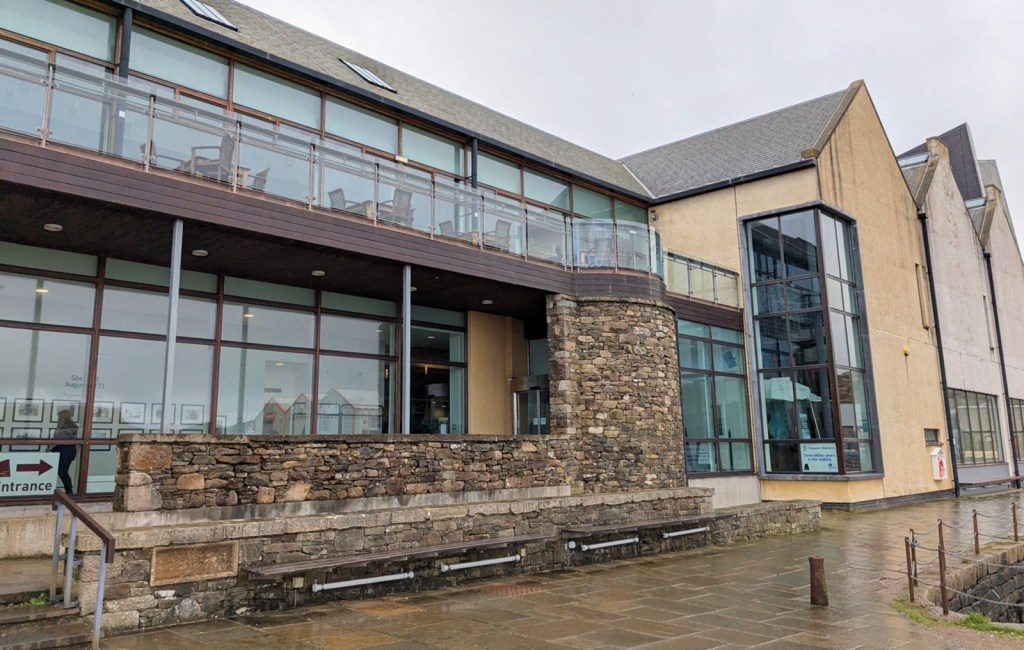
As mentioned last time, the museum was the home base for Wool Week, so there was a knitting room and if your event had a bus it picked you up there and the Wool Week swag store was there (they had very nice tote bags). It is also a very, very nice museum. Extremely well done and packed with artifacts from throughout Shetland’s history, from the geological underpinnings of the island to the modern-day economy. It’s also a very appropriate home base for Wool Week, because of its vast collection of knitting history.
For example while we were there the special exhibit they had was Chris Morphet, ALLOVER. Chris there, a man of fine taste, noticed all the Fair Isle knitwear in London back in the ‘70s and so started documenting it. The exhibition therefore was of all his pictures of Fair Isle knitwear and the way people wore it. It is fantastic stuff, and useful for a wide range of applications.
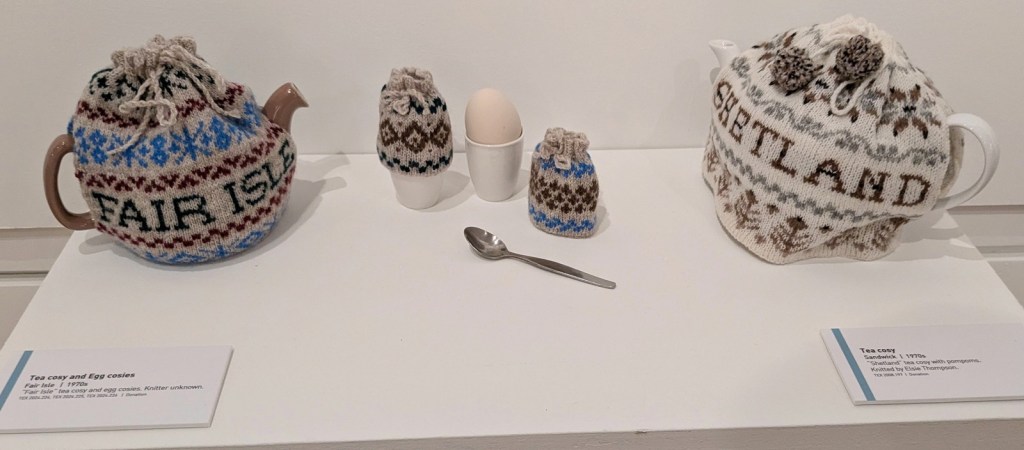
One thing I didn’t quite learn until the very tail end of the week, though it is covered some in the museum, the Shetland’s knitwear industry has always been export-driven. Like, okay, it is cold in Shetland and so people find sweaters very useful, but starting at least back in the 15th century fishermen associated with the Hanseatic League would use Lerwick harbor to salt all the fish they were catching. The Shetlanders would sell them stuff, including knitwear, and so there is a long history of Shetlanders spending all their spare time knitting so as to sell knitwear to visitors. The Fair Isle pattern evolved for the export market, and the designs don’t have any particular known meaning. Fashion baby.
But that’s towards the end of the museum. The beginning of the museum is all pre-history. Shetland has always been at a crossroads, seeing as it is equidistant-ish from a variety of places, and the gulf stream means that while it gets very blustery it never gets like way too cold (it’s way too cold for me most of the time but you know for the kind of people who live on Shetland it’s nice). The upswing of that is that Shetland has been settled for a very long time, and resettled several times, and so you can go to a place like Jarlshof (which we did) and see literally layers of history all stacked on top of each other.
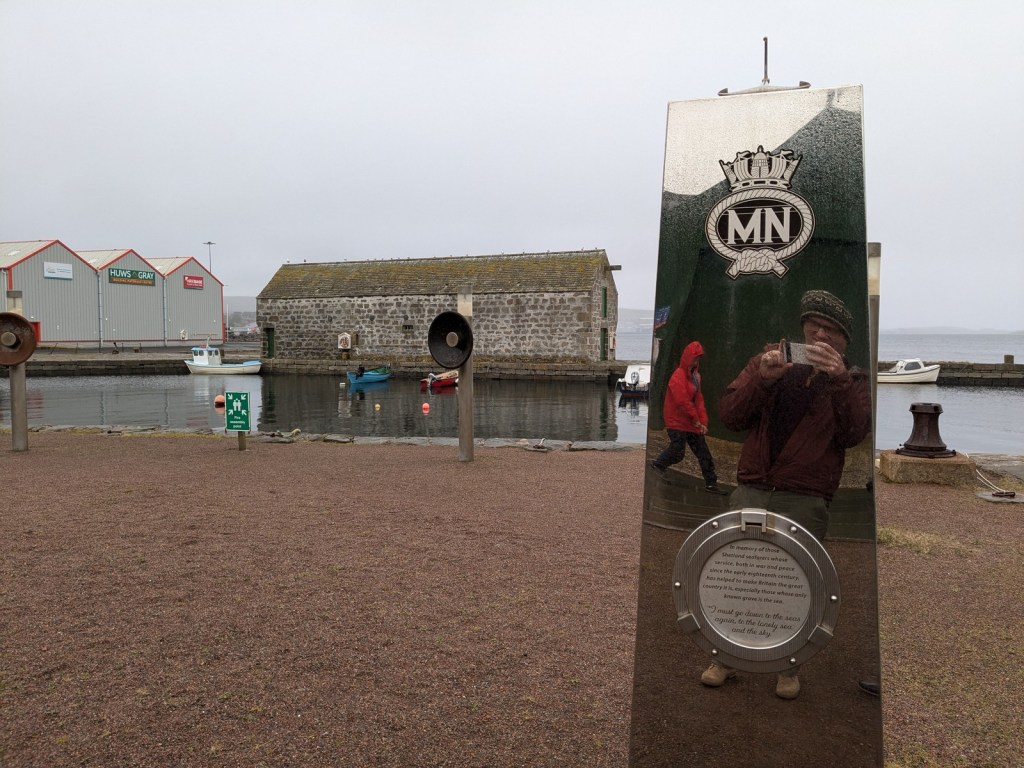
One of the most vibrant layers you see day-to-day is the Norse and Scottish history. Shetland was originally settled probably by Pictish people (or the people that would become Picts), but then eventually the Vikings came and took over. Shetland has signs up all over the place telling you what the name of the place means in old Norse. The Vikings were apparently very uncreative; “Lerwick” means “muddy bay.” Most of the names are like that. But then Christian I, King of Norway, pledged Shetland against the dowry he was going to pay when he married his daughter Margaret off to James III of Scotland. Christian never paid the dowry so Shetland was the dowry and the islands were Scottish once more. This was 1470 and it is still a thing they talk about all the time. During the week we had a lovely dinner at The Dowry, for example. This is of course strange to our American sensibilities; I am from Maryland we fought a war with Pennsylvania that one time but you never hear us talk about it.
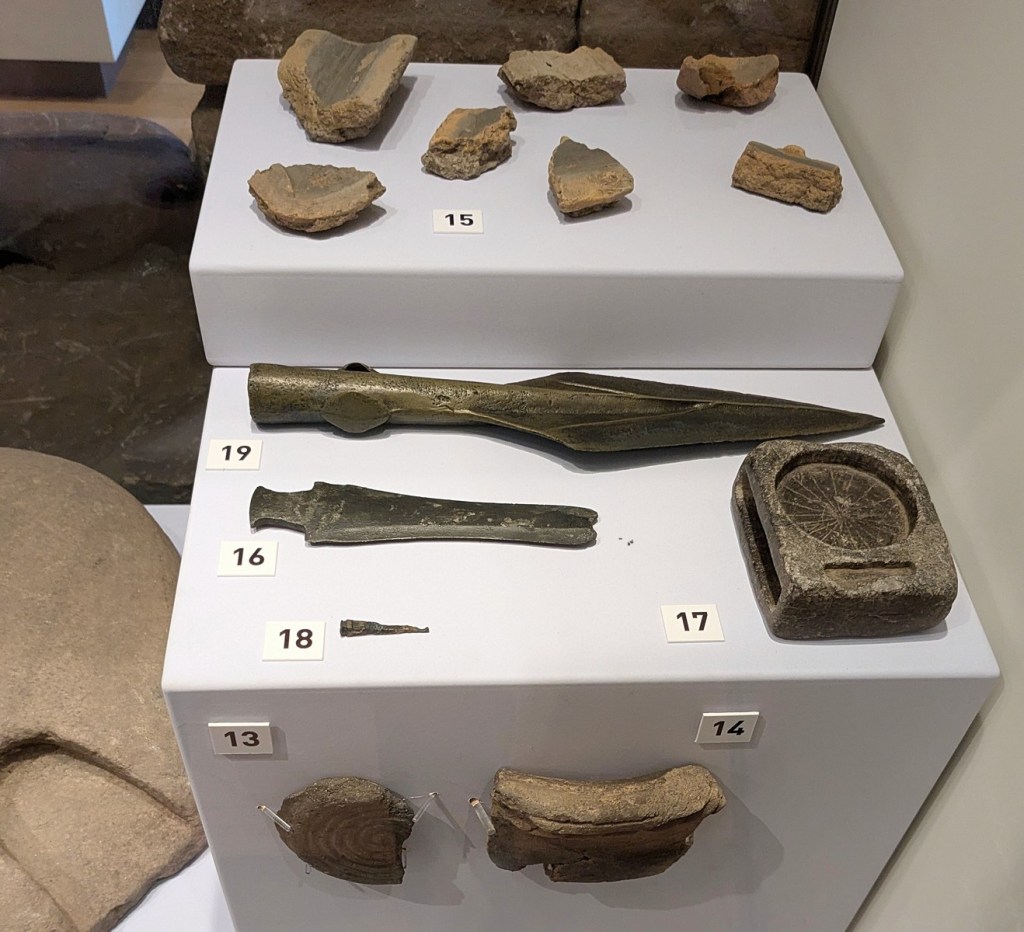

Anyways, I keep straying from the museum. Like I said it is great. They have bog butter (!), and again old food is one of my favorites types of museum artifacts and this was my first bog butter to boot. And they have all sorts of stone age and bronze age and iron age implements, and examples of houses, and boats! So many boats. They like boats in Shetland, being an island, and also descended from Vikings. The traditional Shetland boats are descended from Viking boats too.
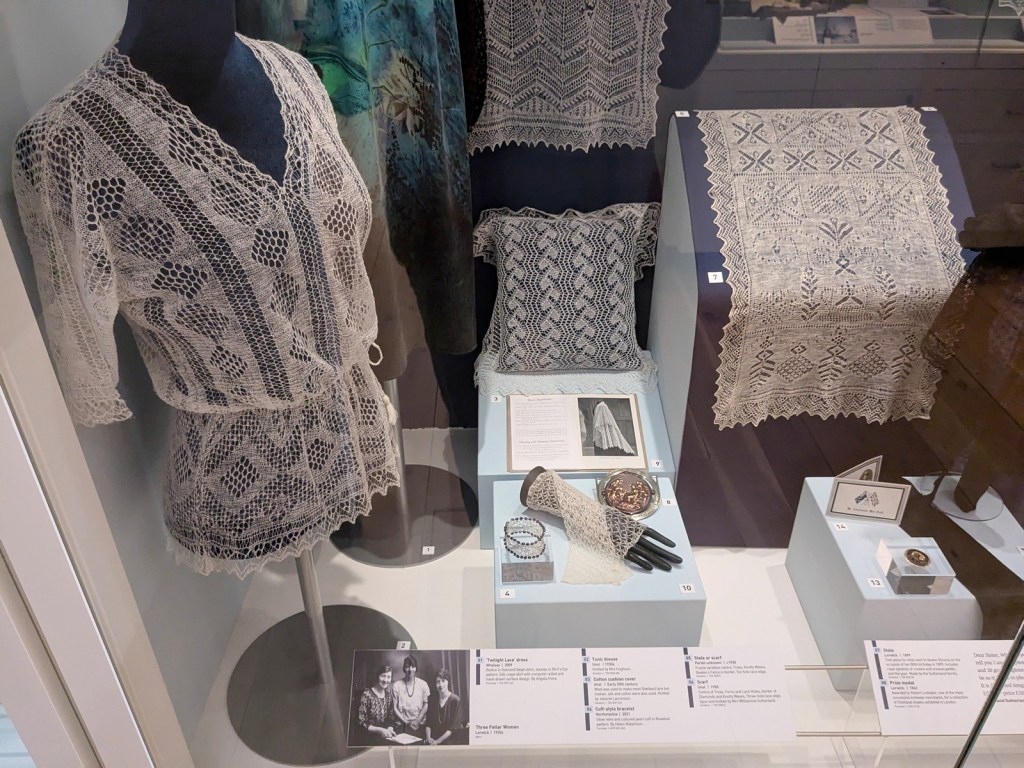
And then that brings us upstairs where they talk about all the industry of Shetland, which is a lot of fishing, and then more textiles! Besides regular ole’ knitting, the other most impressive textile export of Shetland is lace! Not true lace, as Wikipedia has just told me, but extremely fine knitted lacewear that is just so remarkably impressive. I saw some weaving of it and I just don’t know how they do it. That has got to take a lifetime of skill to master and the pieces they had on display are just so, so impressive. The height of fashion before I think even Fair Isle knitting was so man there you go.

And like, from there the day wasn’t even done! We hadn’t even checked into the inn yet! After the museum and some lunch we went over to the Wool Week craft fair where people had all sorts of stuff on display, and then drove back north again to go to Vidlin where there was another craft fair, and then the final exhibit we saw for the day was another tapestry! As part of Wool Week the absolutely gorgeous Murmuration Collaboration was on display. This was a series of tapestries, all made by different weavers around the world, coming together to display one long image of murmuration over a landscape. Like so many tapestries we had seen on this trip it was unbelievably stunning in person, with such intricate technique to depict the birds (and their murmuration) themselves. And this was I think the first time it came all together. Very much worth the drive.
And lo, with that, the day finally came to its end. We picked up some salads at Tesco for dinner and finally checked on into our inn.
 Pat in the World
You must be logged in to post a comment.