Living in the Village

Reading this week:

  • Into the Wild by John Krakauer
  • room full of mirrors: a biography of jimi hendrix by Charles R. Cross
  • Timeline by Michael Crichton
  • Zombie Spaceship Wasteland by Patton Oswalt

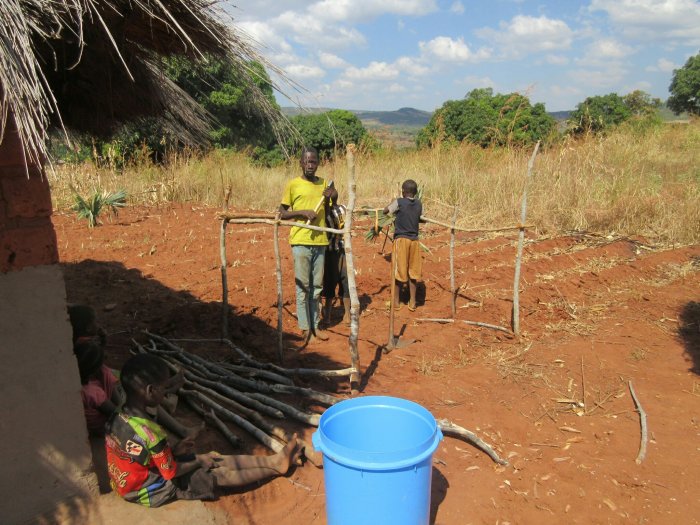
I am posted, like most volunteers in Zambia (especially agriculture volunteers) in a rural village. I have no running water or electricity from a utility. I have my own small hut (which I think is not actually that much smaller than my last apartment) and I take care of all my daily tasks myself. I have a host family here in the village, and they are willing to do things for me like fetch my water and cook my meals, but I think it is important to do a lot of that stuff on my own. First, it helps display gender equality – although there is some overlap, tasks like cooking, cleaning, and fetching water are largely considered women’s work, and by doing these things myself (as a man) it helps to break down gender roles. Second, I’m a adult and I don’t need to be babied, so there’s that too.

Water comes from the river that goes through the middle of the valley. It is about half a kilometer away, which isn’t too bad. Sometimes the river gets muddy, especially when they are irrigating the fields upstream, but it is usually quiet and clear. The local women carry the water on their head, but I usually wind up hefting it on my shoulder. Those women are strong, as you would expect – they have been hauling water on their heads since they were young enough to hoist a tiny bucket up there. To make the water safe to drink, the Peace Corps has issued me a filter. I also add a small amount of chlorine to kill any bugs the filters don’t get.

My bathroom (“chimbusu,” or “chim” as all the PCVs call it) is a small outhouse-like building. I am lucky enough to have a door on mine so I don’t have to chase out goats or chickens when I go to use it. Inside is just a hole in the ground, and you squat. Not the greatest feeling on old knees like mine, but you get used to it. Aiming is important.

I don’t have a stove and instead cook on a brazier. I use charcoal, and every day around 1600 (Zambia uses a 24-hour clock) I light my brazier to heat some bath water. I heat my bath water to boiling in a kettle, and then add some more cold water to bring it down to the right temperature. I carry the water and my soap over to my outdoor shower (olusasa) and bathe by pouring water over myself with a cup. It is pretty effective, and when it is dark out it is nice to look at the stars.

After my shower I get around to cooking dinner. I do most of the food prep inside my hut in my little kitchen nook, and then cook outside on my porch. I have a camp chair I like to lounge in. Once the brazier is going cooking doesn’t take too long. For dinner, I usually have fried rice, because I am lazy and a bachelor. For lunch, I usually eat with my host family (I tried to get them to stop feeding me, but that is apparently a bridge too far, and it is rude to turn down a meal in Zambia anyways). The local Zambians eat nshima, which is sort of like really thick grits. They eat it with “relish,” which is just anything that isn’t nshima. What the relish is depends on the time of year, but right about now we are eating a lot of beans and fish, which is good. The Zambians don’t use silverware – you take a lump of nshima, and then ball it up and then form a small scoop with it using your hands. Then you use the nshima to scoop up the relish. Keeps the amount of dishes down, for sure.

Besides my brazier, I also made myself a small pop can stove that I run off of methylated spirits. It is pretty good at what it does, but for heating anything big I wind up using a lot of spirits. It is perfect though for making some coffee in the morning in a small espresso maker I brought with me.

It was such a feeling of profound relief when I managed to make coffee in the village. It wasn’t the coffee itself, but being able to make it represented the first moment I was like “I think I can make it here.”

Laundry is done by hand here. The Zambians will do it entirely by hand, without even using a washboard, but I made myself a washing machine using two buckets and a plunger. I got the idea online. That works pretty well, and is a lot easier on my hands (like I said, the women around here are TOUGH). After you wash it in the bucket, you rinse the laundry in another bucket of water and then put it on the line to dry. Washing clothes takes a great deal of water and I wind up doing laundry about once a week. Clothes get dirty quick.

To power things like the phone I am typing this on, I have a few different solar devices. I have a large solar panel attached to a battery I use to power things like my laptop. To charge my phone I have a smaller portable solar panel, and then I also have a solar-powered light that provides illumination at night. I’m not able to operate hot plates or power tools, but the setup is plenty to keep my phone and kindle charged.

Transportation around the village is either by bike or by walking. My village is in a valley, so generally for shorter trips I am just walking. To get to my nearest town, which is about 12 kilometers away, I generally bike. The Peace Corps issues volunteers mountain bikes, which is just as well because we aren’t allowed to drive cars and we aren’t allowed to ride motorcycles at all. This is for safety purposes. The village grows some vegetables and a great deal of corn, but I do most of my shopping for food and items in the nearest town, known as a Boma. It isn’t a huge town, but there is a good selection of stuff and at least one pizza joint, so life isn’t too bad at all.

Mwela Rock Art

Reading this Week:

  • Packing for Mars by Mary Roach
  • One Hundred Years of Solitude by Gabriel Garcia Marquez
  • Jurassic Park by Michael Crichton
  • The Lost World by Michael Crichton

We are in Kasama this week for some Peace Corps meetings, and we decided to take advantage of the time to see the Mwela Rock Art.

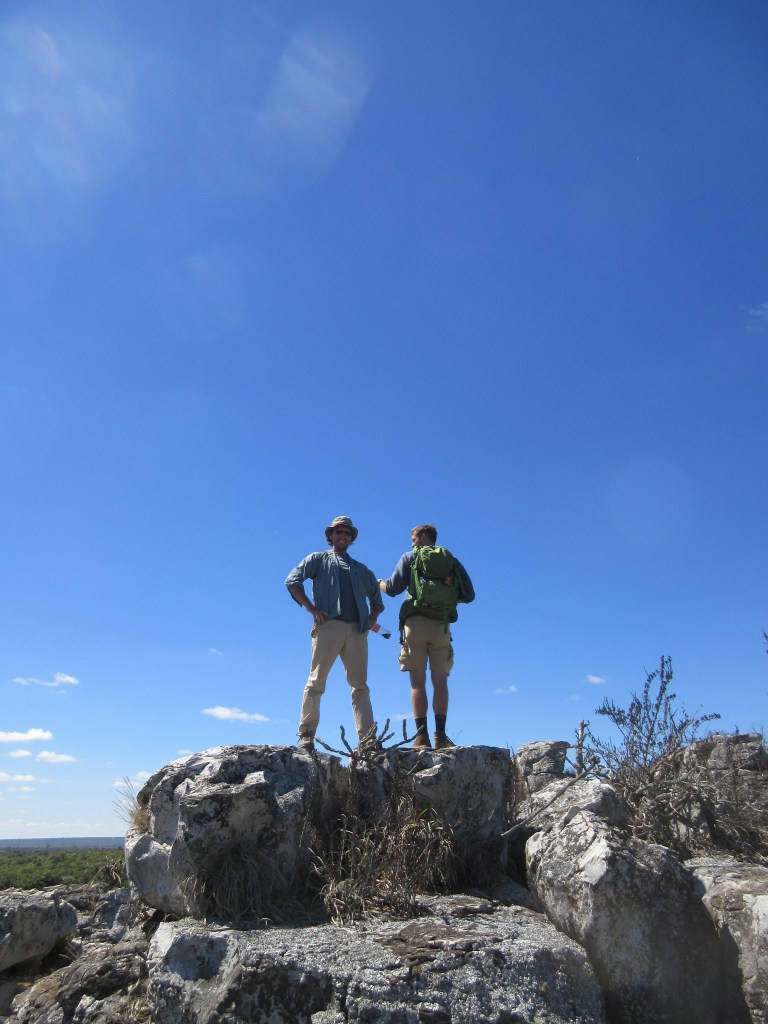
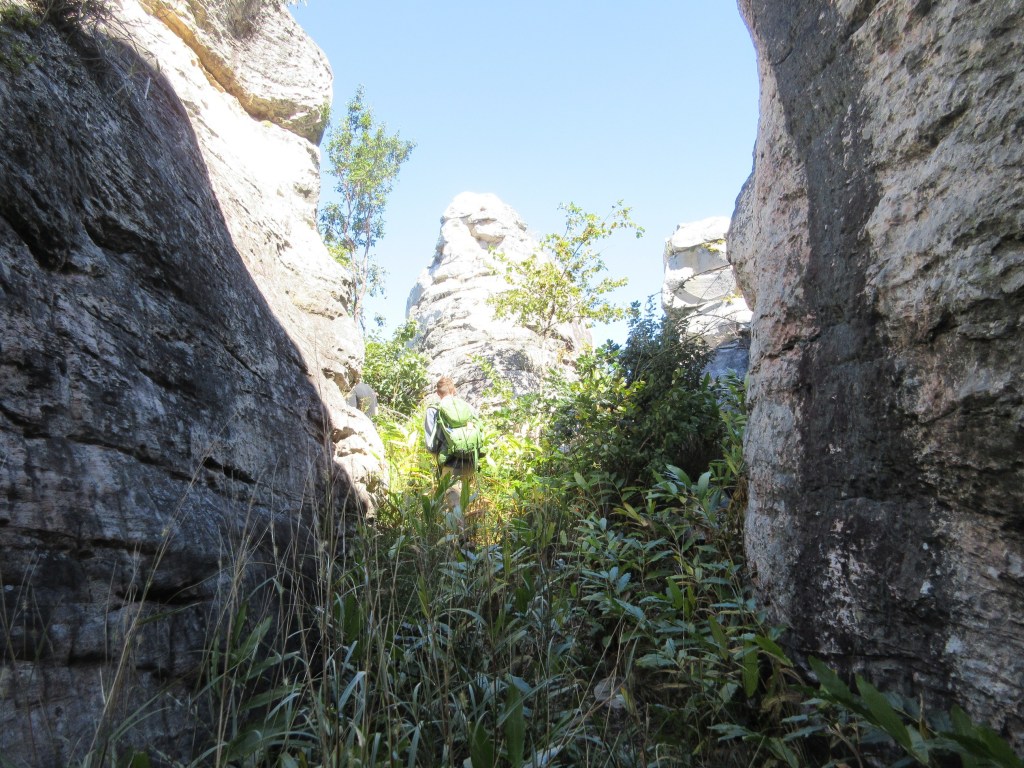
The Mwela Rock Art site is right outside the town of Kasama, and very walkable from most of it. Since we work here, we get in on the Zambia local rate of only 8 kwachaa, instead of $15 USD, which is quite a savings. The site is fairly gorgeous. It is in a series of rocky outcroppings that rise out of the surrounding plains in a weird kind of incongruous manner. It is easy to see why more primitive man would be attracted to the sites. Most of the outcroppings are easy to climb, it is is great to go to the top of the rocks and look out over the plains. You can see for miles into the rolling hills.

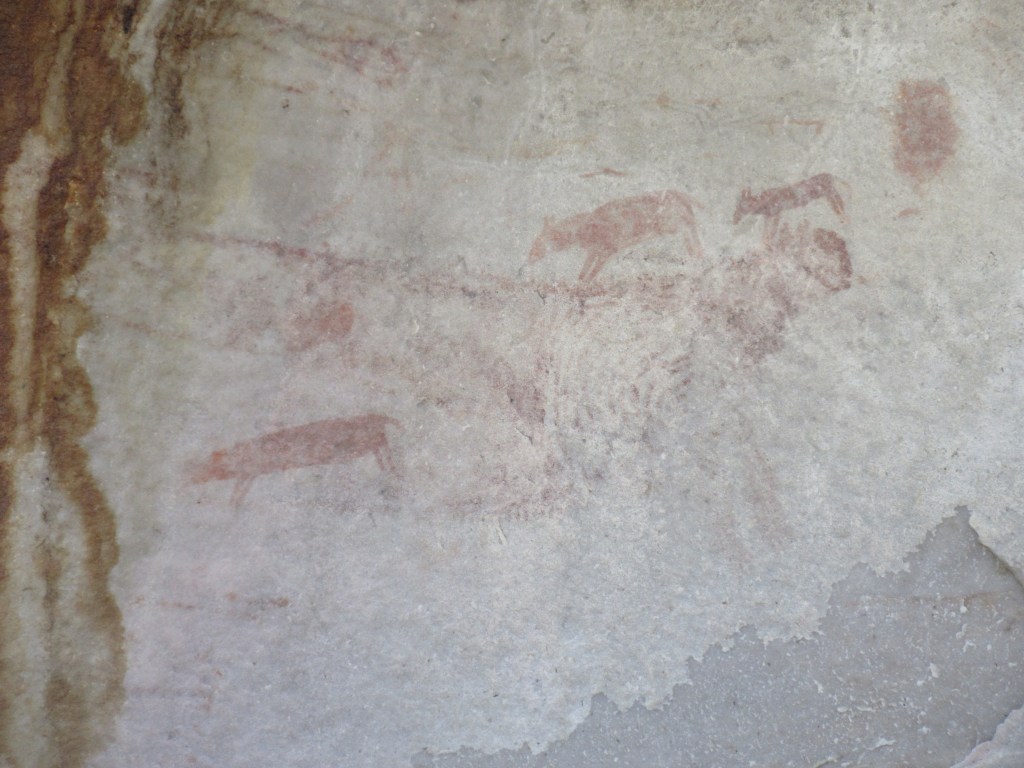
The man at the front entrance who takes the entry fee also acts as the tourguide. These men were extremely knowledgeable about the site and were great hosts. We initially tried to just find the art ourselves but this was not a good move. A lot of the art is hidden and not very noticeable, as you might expect after 10,000 years out in the weather. Once you know what you are looking for it is a bit easier. The paintings split into two categories – naturalistic and geometric. The naturalistic paintings were of local animals and birds and warthogs featured prominently. The geometric paintings consist of lines, and the guides told us the current conjecture is that these represented them counting the various types of animals that came through as a record for “collegues” to know about the game in the area.

We were also shown caves where the people who lived here slept, and it was obvious several were still used for that purpose occasionally. You can camp at the site for an extra fee, which is an idea I think would be cool just to carry on a millenia old tradition in that location. In a less awesome take on tradition though, the park was also covered in more modern grafitti, some of it over the ancient rock art itself. Zambia is doing a lot these days to protect its heritage and it is depressing to see some people not onboard with that message. But I highly recommend a visit to the caves to see the rock art and enjoy the views and weather. It is a place I will be going to again.

PST

IMG_3804

Reading this Week:

  • A Short History of Zambia edited by Brian M. Fagan
  • Dead Aid by Dambisa Moyo
  • Guerrilla Warfare by Ernesto “Che” Guevara
  • Roots by Alex Haley

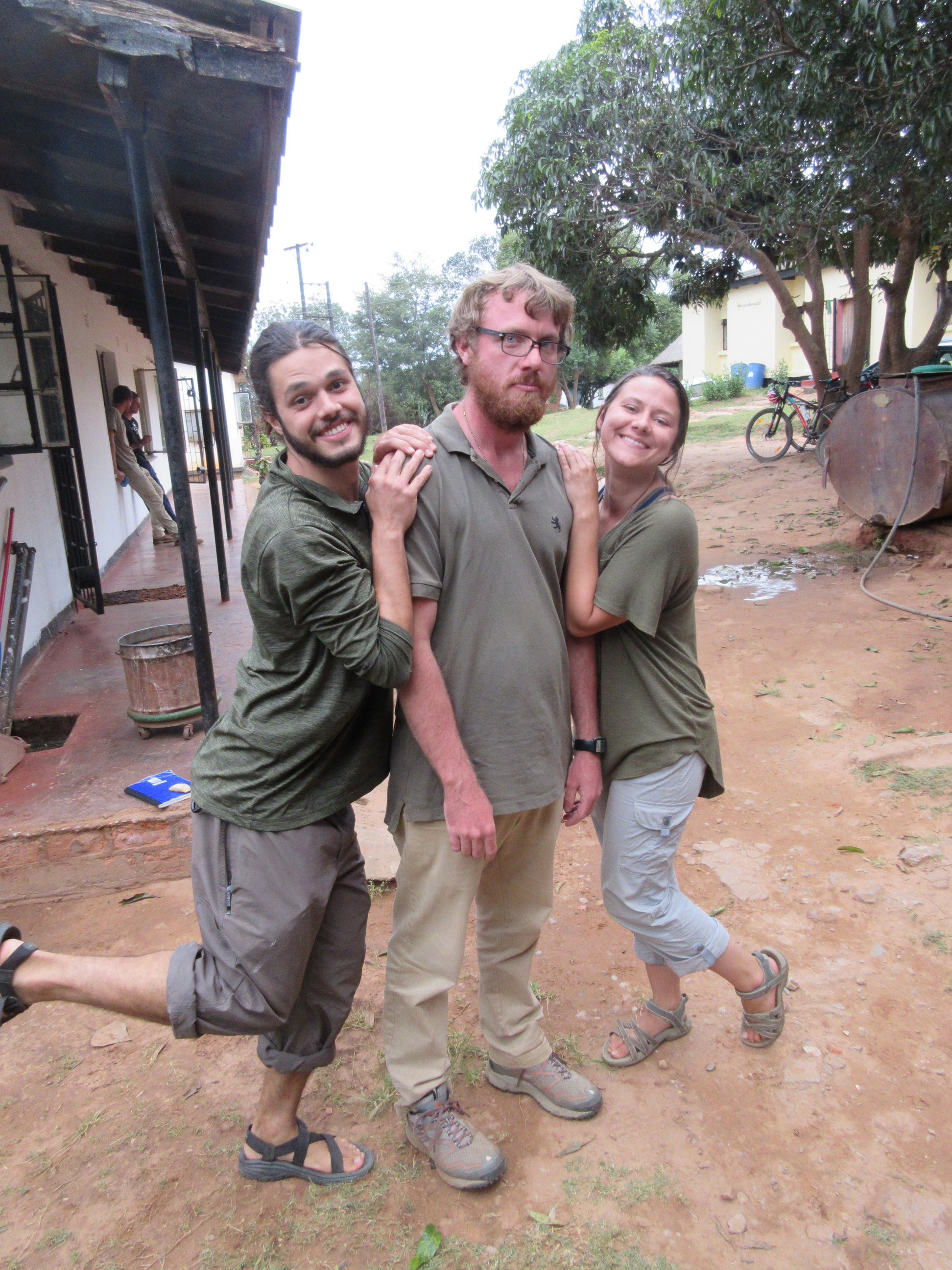
The first three months of Peace Corps is Pre-Service Training, or PST. During this time, we weren’t yet Volunteers, merely Peace Corps Trainees. After a few days in a motel in Zambia, where we got some basic briefs on Zambian culture and signed some documents (usual government type stuff), we were bussed to Chongwe, where the bulk of PST occurs. This is a town about 30km outside of Lusaka. We were brought to the training facility, taught how to say “hello” in our local language, and sent off to meet our host families.

During PST, you are hosted by a host family. These people have the responsibility to give you a place to stay, to feed you, and provide you bath water. They also speak the local language you are assigned. My assigned language was Mambwe. My host family setup was unusual because my host family had two trainees, myself and another guy, because of how few available host families there were for Mambwe. That was convenient because it provided someone else to talk to, and we could help each other during our conversations in Mambwe.

We settled pretty quickly into a routine during PST. I would wake up early and study, because that was usually the only time I could motivate myself to put my head in the books. It was important to study, given how much language we needed to absorb in so little time. Eventually, around 0645, our yamayo (“mom” in Mambwe) would alert us she had water ready for us to wash our faces. After we washed our faces, it was time for breakfast. This was usually a fried egg, along with some instant coffee, then bread with peanut butter and jelly. Not quite a traditional Mambwe breakfast, but our host mom had hosted a number of volunteers and had adjusted to providing a more American morning meal.

After breakfast we would get our stuff ready and then head off for language training. This usually lasted about four hours. Training was done in groups of 3-5 (there were only 3 Mambwe trainees, but larger language groups were split up), each with a dedicated instructor. Four hours is a long time to study anything, but necessary to learn so much language in so short a time. After language it would be back to our host family for lunch, and then off to the training center for technical training. Since we were Rural Aquaculture Promotion volunteers, most of this was fish farming. A big chunk of time during PST was also learning various core Peace Corps topics, which sometimes went on a little ad naseum. The afternoon training sessions were about three hours, and mixed lectures or hands-on training with fish farming.

After the afternoon training, it was back to our homestays for a bath and then dinner. The bath was a bucket bath. Yamayo provided a large bucket of hot water, which then you pour over yourself with a cup in order to bathe. Then it was dinner time. After dinner we usually sat around for an hour or more, trying to practice and speak in Mambwe. This was probably when we learned our most Mambwe. After talking for a while, we would go back to our huts to study and some and then sleep. Quite the routine.

Usually Saturday afternoons and Sundays we would have off. These were spent doing things like laundry, or else all of us trainees would hang out and the local bar or in town. This was a good time to hang out and built a real sense of comraderie among all the trainees. It was also a great way to relax from all the studying during the week.

Eventually training culminated in swear-in, held at the Peace Corps Zambia headquarters in Lusaka. The US Ambassador came along with the local Chief and Chiefteness and the Minister of Agriculture. The weirdest thing I learned is that we swear to defend and uphold the Constitution of the United States, which I suppose is probably standard for government employees that have to take an oath, but I think that’ll be an interesting conflict if a Peace Corps member ever meets an enemy, foreign or domestic. But after swear-in, that was that: we were volunteers!

Staging

Reading this week:

  • 2001: A Space Odyssey by Arthur C. Clarke
  • 2010: Odyssey Two by Arthur C. Clake
  • 2061: Odyssey Three by Arthur C. Clarke
  • 3001: The Final Odyssey by Arthur C. Clarke
  • Dolphin Island by Arthur C. Clarke
  • False Economy by Alan Beattie
  • The Philosophy of Andy Warhol by Andy Warhol

Once my background check finally cleared (I have to correct myself every time from thinking of it as my “security clearance”), I could actually begin joining the Peace Corps. The Peace Corps is a delightfully government affair, which felt comfortingly familiar. The details of where and when to show up and who to contact for travel arrangements came via email. The first part of becoming a Peace Corps Volunteer is staging, which occurs in Philadelphia. I was to travel by train, which I thought was just quaint. So on February 11th my parents (I had, by this time, moved once more out of my apartment and back into their basement) dropped me off on the train and off I was to Philly.

Upon arrival to Philly and the hotel, it was easy to spot the soon-to-be Peace Corps Trainees (you don’t become a Volunteer, PCV in the parlance, until swear-in, which follows pre-service training, aka PST) (back in the Nuclear Navy, it’s contrary to [C/T] the Submarine Interior Communications Manual [Sub-IC Manual] to speak acronyms [with minor exception], and this is a policy I firmly believe [because I have been brainwashed to believe so] that everyone should adopt): they were the people with too much luggage and looked like they were contemplating a beard. I got my room key and found I already had a roommate, the first fellow trainee I was to meet. Staging was full of the standard get-to-know-you-but-I-probably-won’t-remember-you-right-away-because-there-are-70-of-us conversations, which I always find entertaining if a bit stressful. Luckily we were all issued nametags that we wore pretty consistently, so with some effort I quickly got to know names and faces.

There was a short meeting the first night to make sure we were all alive, and a gentle warning to stay that way. On the first night, as on the next two nights, we all went out for dinner in various groups to meet our new friends and look around Philly while we had the chance. We were all pretty acutely aware that this was our last taste of America for a while, an so diets were pointedly varied. It was also cold in Philly, being February, and I was glad it was going to be my last taste of that.

Staging began in earnest the next day. Staging was comprised of a series of briefs about various aspects of culture and Peace Corps policies, and some stuff about the logistics of getting 70 people to Zambia safely. The one somewhat frustrating part about Staging is that it is fairly vague; the staff are reluctant to answer country-specific questions because, while they are all returned volunteers (RPCVs), Zambia isn’t their particular area of expertise. So while there was a great deal of content about how to deal with living in a new culture generally, there wasn’t anything about Zambia specifically. So by and large the briefs were uneventful, but interspersed with ice-breaker activities.

One thing I learned is that the average age of a Peace Corps Volunteer is 28 1/2. That put me exactly average. Based on my group though, it seems that average comes from a large number of people straight out of college (some with advanced degrees), and a small number of retirees pulling the average up, with a smattering of people in-between (like me). Before staging, I had pondered the likely demographics, so that was good to get that question answered.

Staging came to an end in the wee hours of the 14th. At I think 0200 we were loaded onto a bus and sent off to JFK Airport. Holding staging in Philly, and then bussing us to JFK, is apparently the most cost-effective way of doing things. Since it is about a two hour drive to New York, we all subsequently piled out of the bus at about 0400, and then waited two hours for the airport to open. Like I said, the snuggly warmth of government operations. Eventually though, with the usual various adventures and various grades of coffee one finds in airports, we managed to get all of us loaded on a place headed for Kenneth Kaunda Airport (via Johannesburg). Next stop – Zambia.

I joined the Peace Corps

IMG_3851.JPG

Currently reading:

  • Another Bullshit Night in Suck City by Nick Flynn
  • False Economy by Alan Beattie
  • For Whom the Bell Tolls by Earnest Hemingway

The first time I considered joining the Peace Corps was senior year of high school. I didn’t know what it was, but it was during that listless time when I hadn’t been accepted to any colleges (and didn’t really want to go to college, anyway) and I didn’t know what I wanted to do with my life. One friend of mine had written down on this life goals poster thing that she wanted to join the Peace Corps, and I said I might want to do that too.

A decade later, after I had gotten out of the Navy, I was again listless and not really knowing what I wanted to do with my life. I think I have detailed some of those feelings on this blog. Without review of my own blog, I spent a good chunk of time last year pursuing a 3rd Mate’s License, along with applying to the Peace Corps and various other jobs. In the fall, at nearly the same time, I was accepted into the Peace Corps and to a job at Amazon Web Services (AWS). It was probably lucky for me that the Peace Corps invitation came through just before the AWS gig, otherwise I probably would have rejected the Peace Corps in favor of a steady paycheck and boring time in Northern Virginia (NoVa is actually a pretty great place to live, for the record, and once that Silver Line extension finishes it’s going to be even better). Instead, I accepted both and worked at AWS for four months before departing for the Peace Corps. Without much detail, my time at AWS was really great and it was very encouraging to know that I had a skillset that was desirable in the civilian job market. It was a major morale booster to discover I could survive as a contributing member of society outside of uniform (debates on my contribution to society inside of uniform notwithstanding) and outside of my parent’s basement. I would recommend working for AWS to anyone.

Jumping back, in the fall of last year I was accepted into the Peace Corps. I got in on my first application, which is sometimes unusual. Your odds go up a lot, I think, if you mark down that you are willing to go anywhere. I actually specified anywhere that wasn’t cold, and that I was interested in anything but teaching, and to that end I received acceptance into the Rural Aquaculture Promotion program in Zambia. When I received the invitation, I went on the Peace Corps Zambia website and read the FAQs. The very first question is “Will I be living in a mud hut?” I thought the answer was going to be something along the lines of “you know, Africa is really a developed place with things like skyscrapers and you’re a bit of a dick for assuming that you’ll be living in a mud hut,” but instead the answer was “you bet your sweet ass you will” (paraphrased) and I was sold. I waited a day to think it all over to be sure and emailed back that I would like to accept the invitation. Adventure, here I come.

As is my wont, I like to keep things under wraps, and therefore no one knew about my intentions to join the Peace Corps except those people who wrote recommendation letters for me. My next task was therefore telling my mom about my life plans and why I wouldn’t be hanging around her basement (she prefers the term “guest room”) so much. I had actually waited until I got the job at AWS and told her about that first, and then explained “and in February, I’ll be throwing all that away and moving to Africa [ed note: Africa isn’t a country!] with the Peace Corps.” Her reaction was less than enthusiastic but accepting in that motherly way where your kids are doing something crazy instead of maybe combing their hair and settling down with a nice girl somewhere close so she can visit the grandkids. She took care of the whole “tell everyone else in the family” thing, and I settled down to save some money working for AWS and eat as much ramen (the good stuff, at ramen shops) as I could before heading off into the Peace Corps.

To that end, to do some obligatory blog stuff, apologies to my non-existent audience for not writing recently. Pat in the World is now very specifically Pat in the Northern Province of Zambia Promoting Fish Farming, and my goal is a blog post every Sunday detailing my adventures here and my journey (ugh, describing things as a “journey”) all the way from nuclear-powered warships to a mud hut with a pretty sweet solar setup if I do say so myself. I am already a far happier person than I was a year and a half ago, still on the boat and only knowing that I didn’t want to do that anymore. Thanks for reading!

Navy Life Story: Plebe Summer Part II

I might be in this photo? I was somewhere in this group.

A large part of the Plebe Summer experience is about being disoriented. No watches were allowed during Plebe Summer and the clocks were covered up. As part of this disorientation, they didn’t even let us see where we were going on the bus when we were being driven away from Alumni Hall. Since I knew the Academy so well that didn’t exactly disorient me, but they tried. The bus ride dropped you off at Bancroft Hall, where you met your first company Cadre. “Cadre” is the term for the 1/C Midshipmen that are running Plebe Summer. Three years later, when that was my role, we were called “Detailers,” but since I had the last real Plebe Summer they were called Cadre. The Cadre escorted you up to your room where you stowed your stuff and waited until the rest of your company arrived.

I was lucky because in my room waiting was my new friend and current security question answer for “First College Roommate,” Wes. Wes was a great boon because he had gone to NAPS, the Naval Academy Preparatory School, so he knew a great many of the ropes and was the first ally I had met on an already long hard day. He showed me how I was supposed to store my stuff and we chit-chatted for the next few hours while we waited and our other two roommates, Matt and Jester, showed up.

The next event on I-Day was our swearing in. After everyone had arrived in company area, the Cadre collected us and he proceeded down to T-Court. That bag that I had tossed on the truck earlier with all of my underwear that I had just been issued? On this trip to T-Court I spotted it in one of the hallways. I wasn’t going to see it again for three days, so for the next three days I did everything, including PT, in the same pair of underwear I showed up in that day.

In T-Court, we were directed to our seats. There are 30 companies in the Brigade of Midshipmen, and I was in 26th Company. It was an excellent company, but as I found out on I-Day and as I would experience for the next four years, we always wind up in the back and we never have any idea what is going on. So in a confused state and blinded by the sea of white uniforms in front of me, I suppose I was sworn in to the US Navy. I don’t really remember.

The rest of I-Day couldn’t have been much. We went to dinner, came back to company area, and sat down to write our first Thought of the Day. The Thought of the Day was a letter you were required to write every night to your squad leader. Its purpose was to keep tabs on the mental state of each Plebe. When I was a Plebe Summer Detailer, we would all go through each Thought of the Day and flag any as “yellow” or “red” if the Plebes were having suicidal thoughts or anything that needed addressing. The only Thought of the Day I remember was the one time I tried to make a joke – and was swiftly rebuked for it (as an extended explanatory parenthesis, later in the summer we were taking muster and our Squad Leader Assistant, who’s job it was to take muster, didn’t know where one of us was. Our squad leader yelled at us and commented, sarcastically, “did he just disappear into the ether?!” Since it was at the Academy that Michelson disproved the existence of ether, I found this ironic and reported it in my thought of the day. Result: squad leader in my face hissing “that was very witty and insightful and don’t you ever fucking write anything like that again.” Such is Plebe Summer). We came together as a group and, as we were to do every night for our entire Plebe Year, sang “Blue and Gold,” finishing with a resounding “BEAT ARMY.”

Then it was lights out. On our first night, Jester was caught not quite all the way in the covers at lights out. Our Company Commander told an incredulous Jester to burrow all the way to the bottom of his rack and then back to the top. The rest of us tried not to laugh. And that was day 1 of Plebe Summer.

Navy Life Story: Plebe Summer Part I

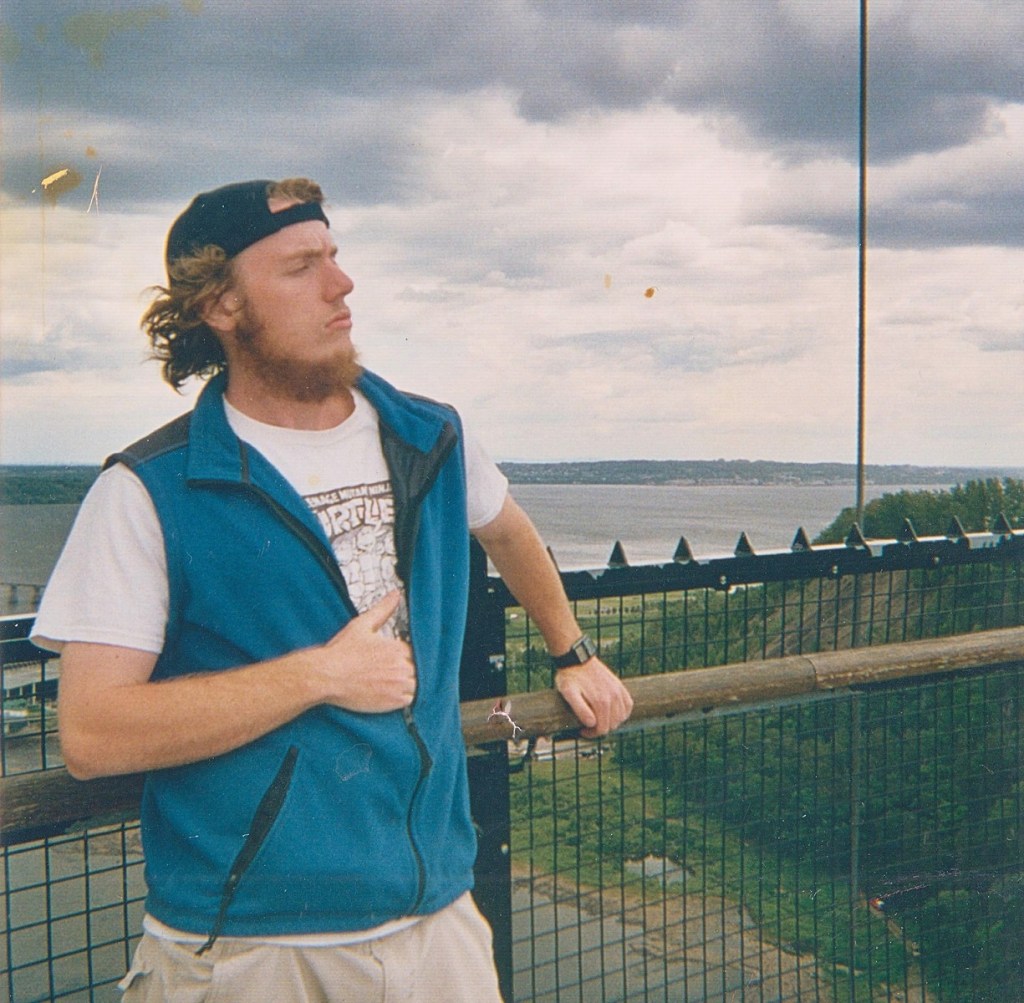
Me in Quebec. I kept this photo on my corkboard to remind me of the olden times.

After graduating from high school, I had only a fairly short summer to enjoy before I-Day. The highlight was probably a week-long trip to Quebec organized by my former French teacher. During the trip my girlfriend and I made out in a variety of exotic Canadian locations and I mispronounced “poutine.” Then, on June 27th, it was I-Day.

I-Day stands for “Induction Day” and it is the first day at the Academy. I woke up in the morning a civilian, put on a pair of cargo shorts and my favorite Hawaiian shirt, and dad dropped me off in front of Alumni Hall at my designated time. On the way there I made sure to listen to something memorable because we would not be allowed to listen to music for the summer. I forget what song it was. When we arrived at the drop-off point, dad turned to me, shook my hand, and said “worst case, we’ll always take you back.” Thanks dad.

There are some things that happen right off the bat when you walk in for I-Day. I-Day is run by Midshipman, and as you walk in the doors there is a table with a few of them. These guys make sure you’re supposed to be there, hand you a copy of Reef Points, and tell you from then on everything you say will begin and end with “sir” or “ma’am.” They also tell you to tuck in your shirt, which I failed to do and thus that managed to be the very first thing I was yelled at for. I felt sort of special actually because, as a local, I was supposed to get interviewed by the local newspaper. That plan got derailed when, in my confusion and nervousness and embarrassment of a hastily tucked-in Hawaiian shirt I just proceeded up the stairs to begin the first day of the rest of my life.

For the first part of I-Day, you follow a path through Alumni Hall, reporting to various tables and stations. Early on you are told that your basic responses are “Sir yes sir,” “Sir no sir,” “Sir aye aye sir,” “Sir no excuse sir,” and “Sir I’ll find out sir.” Unless asked a question that required some other information, like “what is your name?,” you were to respond with one of those five things. My second major mistake on I-Day after the shirt thing was deciding that, to avoid messing that my basic responses, I would just respond to everything by nodding or shaking my head. That didn’t last long.

As you snake through Alumni Hall, you wonder more and more what you had gotten yourself into. One station was an amnesty booth with a bin where you could dump any contraband you still had on you. I didn’t get a good look into the bin, but I still can’t figure out who would show up on day one with fake IDs or drugs. That seems like a bad idea, right? I also remember hastily signing a wide variety of legal documents. I didn’t have any time to review any of them but the one that stuck out was the “Don’t Ask Don’t Tell” sheet; not that it mattered much to me but it was the only one I noted.

Not me, but someone in my class. Oh Peg.

It is in Alumni Hall in a temporary barber shop that they give you your military buzzcut. This only annoyed me because I had, just days before, already shaved off the long flowing locks that I had been growing out for over a year. So I walked in with a buzzcut and was flabbergasted to receive an even shorter buzzcut. They don’t joke around; they cut everyone’s hair. You also spend a large chunk of your time in Alumni Hall getting issued your uniforms. This is probably the most important part of I-Day, because ill-fitting underwear or shoes will ruin your whole Plebe Summer experience, not that it is that great to begin with. During this process you change out of your civilian attire and into a set of the Plebe Summer uniform while the rest of your newly-issued underwear and socks and t-shirts goes into a large bag which you then put on a truck.

The best part of I-Day was when they drew your blood and gave you any shots you needed. This was nice because you were allowed to sit there and relax for as long as you needed, and there were cookies. This was all done for medical reasons, but still I thought it was funny that the only relaxing part of I-Day was the bit where they literally sucked the blood out of you. The last part in Alumni Hall was when they taught you how to salute. This was a quick and dirty lesson, but then, having entered Alumni Hall as a civilian, and having been given a haircut, put into your brand-new uniform, issued a copy of Reef Points, and taught to salute, you are loaded onto a bus and driven away.

Chrysler Museum of Art

Today I went to the Chrysler Museum of Art. I am in Norfolk again attending another class at the Mid-Atlantic Maritime Academy, and since I was driving down a day early anyways I figured I would stop by some of the sights.

I am a pretty quick study of art museums. I enjoy going to art museums but I don’t really have the education to appreciate most of what I see in them. So my usual style is to zip around at a pretty quick pace until I see something that catches my eye. This probably isn’t the best way to really absorb art, but at the ripe old age of 27 I’ve decided that I like what I like and I won’t make any apologies for it.

That being said, the museum had a lot that caught my eye. Like any art museum with its roots in somebody’s personal collection, the Chrysler Museum of Art has a pretty wide array of stuff. They have a large collection of glassware and glass sculptures, your standard assortment of Renaissance stuff, a modern & contemporary art section, and a selection of ancient western and non-western art.

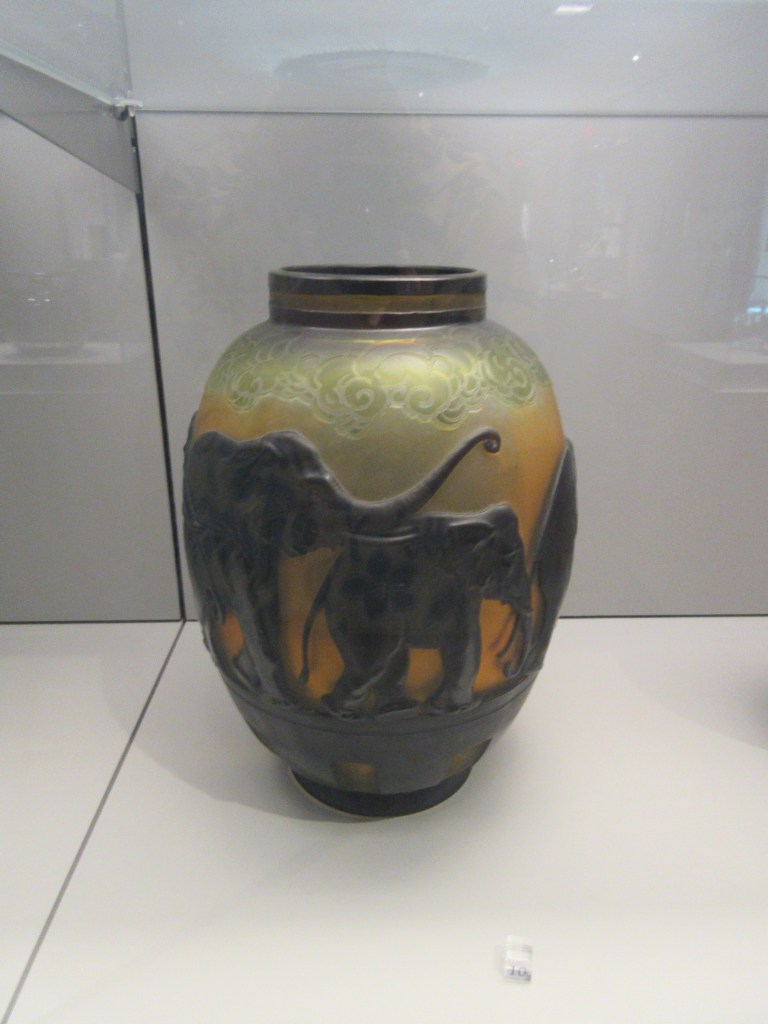
The first section I wandered into was their glass section. They are really proud of their glass. Like, really proud. They have a whole wing of the stuff. They have all sorts of glass as well. The first part of the exhibit is selections of glass stretching back to Roman times. I am always a big fan of ancient stuff like that because I try to really put the years into perspective. More on that in a second when I talk about their Egyptian stuff. I always wonder what whatever Roman craftsman was putting the finishing touches on a glass bowl would think of to learn that 2000 years later the thing was a) not broken and b) on display in an art gallery. The glass section stretches all the way into contemporary pieces done in glass. My favorites were a vase decorated with elephants (titled “Elephant Vase”) and a sculpture of an astronomical calendar encased in a sphere.

The next section was the “non-western” ancient art. This is where that ancient feeling really comes into play, but first off, even with that being said, I’m sort of over Egyptian stuff. I mean, I like it on its own, and it blows my mind to see sculptures and think that some dude painted that 5000 years ago, but I’m tired of seeing dead people boxes. Like, okay, they’re art, but that was a dead dude man. I think I’m the crazy one here, but still. There were also examples of African sculpture in the form of a stool and ceremonial weapons, and in the western section some excellent examples of Roman vases. There were a lot of vases in this museum, now that I’m thinking about it.

Upstairs in the museum is a great deal more of the paintings. Like I said before, they have a good chunk of Renaissance art, but I’m not a big fan. I’m sure its great, and its not the art, its me, but eh. I don’t like it. In the Modern art section I found a Lichtenstein I liked with a fighter jet so that was cool. Also, and perhaps most interestingly, tucked away in the corner somewhere near the Renaissance and Modern art sections is the Norfolk Mace. Apparently, municipal maces used to a thing. The Norfolk Mace was made back in 1753 and “when held by Norfolk’s mayor at public ceremonies, [it] signified that his colonial office was an extension of the British Crown’s prestige and power.” The museum boasts that it is the only municipal mace in the US in the possession of the city for which it was commissioned, but I didn’t even know these things were a thing. I think the world could use more maces.

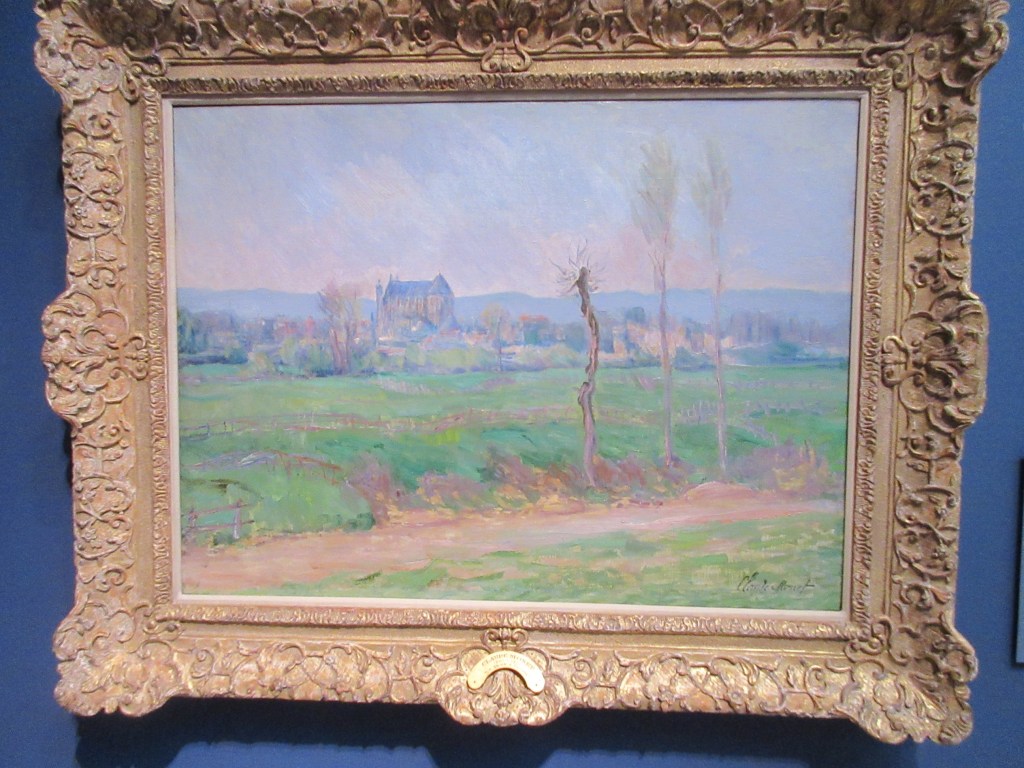
I rounded out my visit to the museum with a visit to their Monet, “View of Vernon,” because I knew the name and I felt like I should check it out. If you’re in town I highly recommend a visit to the Chrysler Museum of Art. Admission is free, so it is always worth the price, plus their collection is pretty great and I spent a lot of time just discovering that there was more to see. Sorry, by the way, that the pictures are terrible; I’m not really an art photographer.

Advanced Firefighting

This past week I took an Advanced Firefighting Course. This is a requirement to get a license as a 3rd Eng (maybe 3rd Mate, I forget). It is experiences like this that have me convinced that I could never go back to school.

First off, I didn’t really know what to expect out of “advanced” firefighting. On the ship we ran a lot of fire drills, and damage control is a big portion of your submarine indoctrination. Plus, in my three years on the ship I managed to get a pretty good routine down for not having to do anything: when the general alarm goes off, first wait a beat, then grab your EAB and wander up to see if anyone manned DC central. If it was unmanned, swoop in and save the day. If it was already manned, turn around and wander off to the scene. With my “wait a beat and check DC central” routine, I would find the scene chock full of Junior Officers trying to man phones and a rapid response team trying to get past the JOs so they could fight the fire. Seeing that I was obviously of no use, I would duly report to the staging area and wait out the end of the drill in comfort. To all my submarine friends out there, I recommend this technique highly.

Between the Naval Academy and nuclear power training, I got pretty well trained to absorb knowledge via an instructor reading a PowerPoint to me. The modern trend, for anybody who hasn’t been in an academic environment lately, is to encourage class participation and group exercises and get buy-in from the students, or something. I hate this sort of thing. I don’t like participating in class. I figure I’m paying your ass to teach this class, so don’t try to get me to do all the hard work. I’ll take care of my end, you take care of yours. I’m so averse to classroom participation that I also hate it when other people participate in class. I don’t mind it when people ask clarifying questions, but except for that, I vastly prefer when everyone else shuts up so we can get on with the PowerPoint.

In these classes, however, there is always at least one person who feels the need to comment on everything the instructor says. This particular class was bad because there was two. Furthermore, both these people had egos. What an environment like the Naval Academy taught me is that while it is okay to have an ego, it is best to keep quiet about it. If you are the best at something, people will figure it out all on their own, and if you aren’t the best at something, at least you didn’t embarrass yourself by trying to prove otherwise. These guys didn’t get the memo, so anytime either one made a comment in class (which they did often), the other would chime in to try to put himself on top. To top it off, however, our fearless instructor also had a bit of an ego, leading him to try to top the other two. The entire class became three dudes all trying to jockey for top spot. Meanwhile, the other three of us in the class were just trying to go home at a reasonable hour.

It was somewhat unfortunate that our instructor had a bit of an ego as well because he wasn’t as good as he thought he was. For the Advanced Firefighting class the institution got professional firefighters with some mariner experience to teach it. This sounds pretty alright, but of the two instructors we had, neither knew much about ship-specific stuff. After this week I’m confident I could fight the crap out of an apartment fire, but shipboard fire, maybe not so much. It would have been better taught by professional mariners with some firefighting experience. The most memorable part of the class was the time one of my fellow students commented he “wasn’t too good at this book learnin’,” which is, you know, fine, but prompted the instructor to ramble on for 15 minutes about the Forest Service, toilet paper, aspirin, and 9/11, the relevance of which to firefighting I had a hard time figuring out at four in the afternoon when I was trying to go home.

The only other worthwhile things to mention occurred on the day we went to the trainer and actually fought fires. First off, the only people in the world allowed to act like drill instructors are people who are, in fact, currently drill instructors. If you’re just a somewhat overweight firefighter trying to make sure everyone turns in their flash hoods, you acting like a drill instructor shoots my respect level way down. Second, the most significant thing I learned the whole week is that being a firefighter is hard and I would never want to do it. Those fire ensembles are hot, man. So yeah. Good on ya, professional firefighters, and if you’re ever on a ship with me and a fire breaks out, I’ll see you in DC central.

Mariner Training

Hello, it’s 2022 and I don’t have a good photo for this article but I have a DALL·E invitation. Please enjoy one output for the prompt “A man very proud to be rowing around in a large lifeboat by Winslow Homer.”

First off, sorry about that week I skipped there. It wasn’t intentional, it is just that the family and I went off to grandma’s house and it is very easy to sit there reading Hemingway and imagining myself as a writer and that kept me from actually writing. I did get a lot of reading done, however. In the week long vacation to grandma’s house I managed to get through The Sun Also Rises, The Book of Luelen, a book on K-Boats (creatively titled K Boats), The Warriors, and a book called Land Below the Wind which was a memoirs of Agnes Smith. Agnes Smith married a member of the British civil service and moved to Borneo in 1934. I am a sucker for most any book published between 1930-1960, especially ones about Oceania, and more especially written by adventurers, and most especially of all those written by women adventurers, so when I spotted this book in the Annapolis Bookstore there was no way I couldn’t not buy it, which I tried to do. I highly recommend it.

My major project as of late has been trying to get a license as a 3rd Mate and a 3rd Engineer. Of the many career options I have available one of the more attractive is working on merchant ships. This option is attractive because it pays fairly well, lets me grow a beard and stare steely-eyed into the sea, and allows me to apply many of the skills I acquired over my illustrious naval career. I do get a whole lot of credit for the things I have done in the Navy but to qualify to sit for either of the exams for 3rd Mate or 3rd Eng I have a few more classes I need to take. In an effort to get these completed as quickly as possible, I’ve concocted a fairly quick schedule that takes me to nearly every maritime training institution in the mid-Atlantic region. A started a few weeks ago at the Chesapeake Maritime Training Institute, and then the next week at the Mid-Atlantic Maritime Academy.

These classes have been an, um, experience. Prior to these classes I have had exactly zero experience with the wide world of civilian maritime. With that being said, the biggest thing I’m getting out of these classes isn’t so much the subject material itself but a feel for the background of it and what is the “norm” on civilian ships. In a lot of ways it is very similar to what I saw as a submarine officer (having looked into civilian requirements and experienced military requirements, it is very obvious the military requirements for being in charge of a sea-going vessel are written with the civilian requirements very much in mind), but I need to learn how the civilians do it. For example, I am learning what the hell it is that people like Chief Mates and Chief Stewards do. I also learned that there exists a thing called a “Navy Nozzle” that I had never heard of, despite being in the Navy. There are lies being spread somewhere and I don’t know if the fault is with the civilians or with the Navy.

The most entertaining day so far, however, was our on-the-water day in my lifeboatman course. This course was all about lifeboats: when to get into one, how to get into one, and what to do once your find yourself in one. As part of this course, we rowed around an open lifeboat. This is the kind that the Titanic had,so you’re familiar with it. Leading the class and teaching us how to row a lifeboat was our instructor, who in sunglasses had an uncanny resemblance to a low-rent Sylvester Stallone. The rowers were a rag-tag bunch of people from all levels of our exotic maritime industry. A big part of the day was learning all the various rowing commands. These strike me as a bit of a lost art, seeing that we invented motors, but it is comforting to know that if I were to wind up in 18th-century England I could land a job as a coxswain. It was less comforting to learn that rowing an open lifeboat was terrible, and I just kept trying to imagine how much it would suck to be stuck in one in anything resembling weather, especially with 30 other people who I liked a lot more before I was stuck in a lifeboat with them. I think I got a brief glimpse into how it is that people contemplate cannibalism. With a lot of “TOSS OARS” and “OUT OARS” and “GIVE WAY TOGETHER” and other such things we managed to make our little lifeboat go around the harbor. We also made several more or less graceful pier landings and only crashed once or twice. The power of teamwork! The major compliment I received that day was “you’re a deck guy, right?” and the major lesson I learned was “don’t let your ship sink.” These were important things to take to heart.