

Reading this week:
- Gastro Obscura by Cecily Wong and Dylan Thuras
- When Life was Rusted Through by Owen Letcher
Alright. In the last post my super amazing wife and I had travelled from one end of Tanzania to the other to arrive in the historic town of Kigoma on Lake Tanganyika. This and the next few posts will be a convoluted and involved effort of trying to unpack the experience and history of a single day trying to explore everything that Kigoma and Ujiji.
I must assure my dear readers that the confused and disjointed nature of the narrative is not a fault of the actual day we had, which was fantastic. Our guide on the experience was Kigoma Eco-Cultural Tourism, who were absolutely phenomenal. Consider this a ringing and unabashed endorsement. If you go to Kigoma you have to hit them up. On our journey we were led by the owner herself, Elizabeth, alongside our tour guide Peter. Elizabeth can put together just about any experience you want in just about any order, which is what she did for us. I wanted to go on three of the experiences (I actually wanted to go on many more but alas there is only so much time) and because I remained wishy-washy about what to do with the rest of our time in Kigoma I asked to do all three in one day and she was more than happy to accommodate.

The first stop on our tour was the Katonga fish market. This was not actually a specific part of any of our itineraries but Elizabeth wanted us to experience the eco-culture which was fine by me because I am always more than happy to admire any of the local boats. We went first thing in the morning so we could catch the boats coming in from fishing. This was indeed pretty cool. I suppose nothing too crazy, men coming in from fishing boats with fish and women buying and selling fish. The main type of fish on sale at this moment was mikebuka (I had it in my notes as “mugabuka” which I only mention here because later in the day I saw a sign that said “Make Ujiji Great Again,” so that made me think of MUGAbuka, but the internet consensus seems to be to spell it as “mikebuka” or, less melodiously, “sleek lates”).
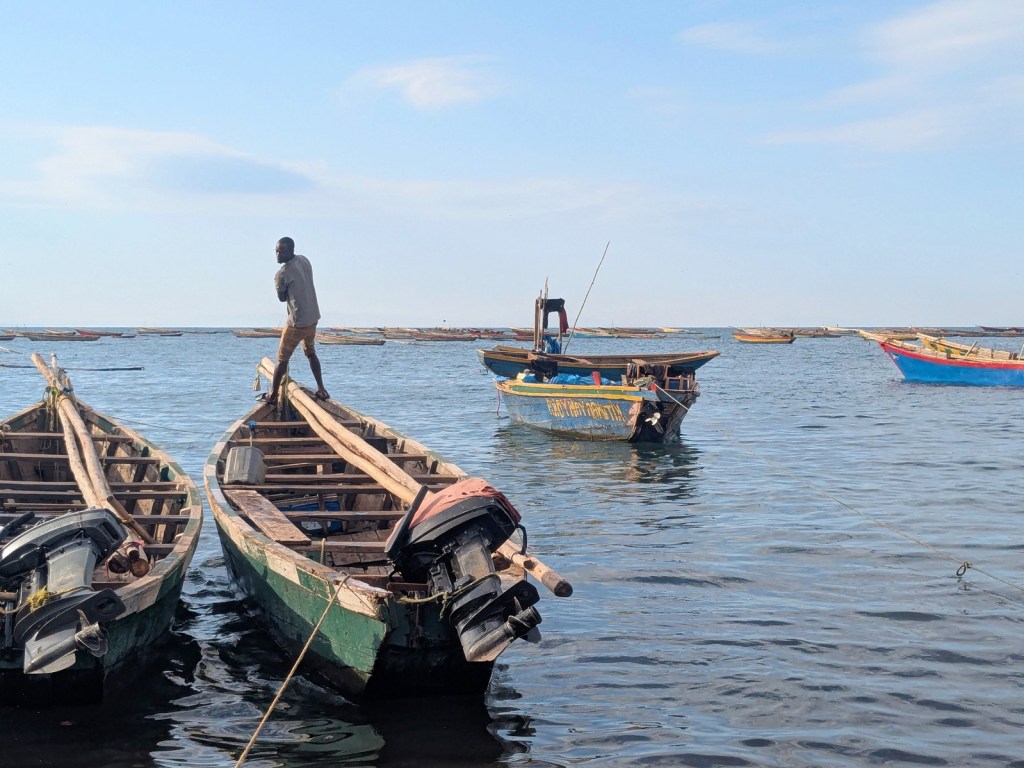
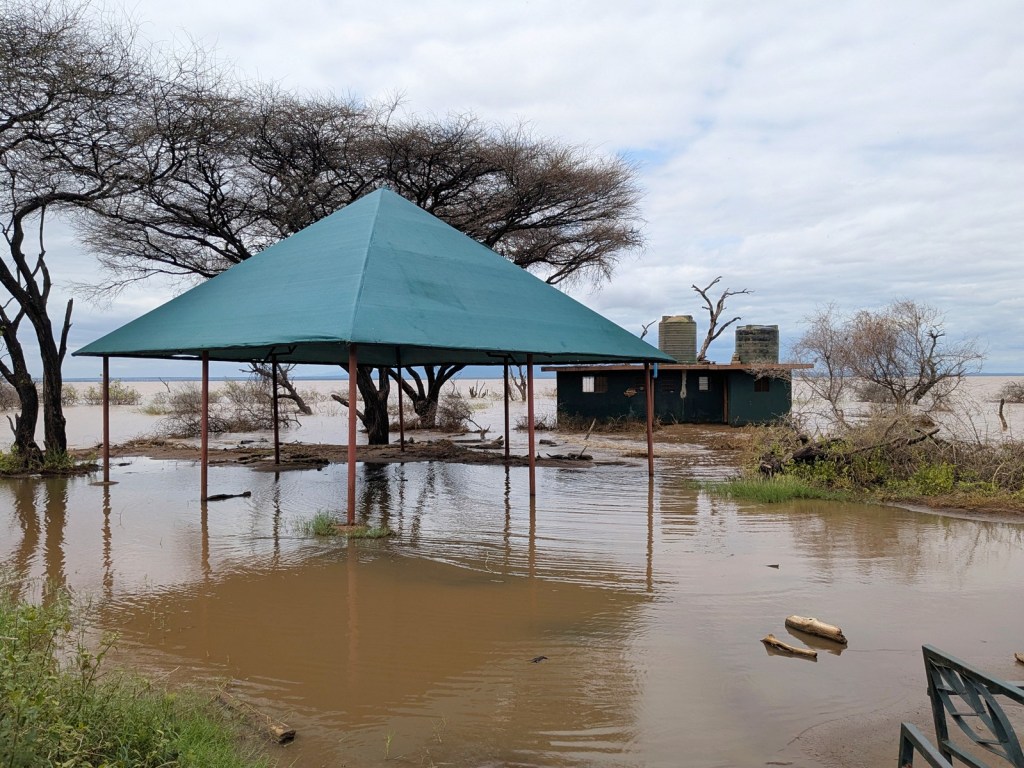
There is a rhythm of which fish get caught at which time of day and at what time of year which I didn’t manage to entirely gather during our visit. At night the men fish with lights to attract the fish, and so much of the bustle while we were there were the fishermen unfitting large LED lights mounted on poles. They are powered by racks of car batteries which in turn, Peter told us, are charged by solar panels during the day. Very ecological! Or maybe not so ecological. The lake is definitely being affected by human activity. Much like Lake Manyara, Tanganyika is rising. This was very noticeable throughout the day. This is not an entirely unusual phenomenon (and many explorers spent much time trying to figure out where all the lake’s water went) but it is bad right now and still getting worse. Fish stocks are also being depleted. Despite the efforts of the Lake Tanganyika Authority it is hard to equitably manage the lake when these fishermen need to put their kids through school. Nonetheless the fishing communities are aware of and feeling the strain of the lake’s ecology changing so rapidly.
But back to the fish market. Peter was proud to tell us that Tanganyika fish were very valuable, way better than those Lake Victoria fish. Tanganyika dagaa was reportedly going for 40,000 Tanzanian shillings (TSh) a kilo for export, whereas Victorian dagaa go for only 7,000 TSh. Fish wind up being exported even to the United States and Canada (again as reported by Peter) where there are Tanzanian ex-pats, and in fact when I was googling the spelling of “mikebuka” most of the results seem to be websites trying to ship you fish. But besides fish I tried to learn about people, and asked about people travelling around the lake. To which Peter reported that many people travel around the lake, and many of these fishermen will have wives on both sides, in Tanzania and Congo. Peter explained they are Muslim and polygamists, you see, but I suppose sailors are the same everywhere. For some more details I wrote down, Peter told us that small mikebuka were known as “nyam nyam” (no telling if I have the spelling right), and that sheep are called “kondoo” in Swahili; disappointingly for us apparently they are used only for meat, and not wool.

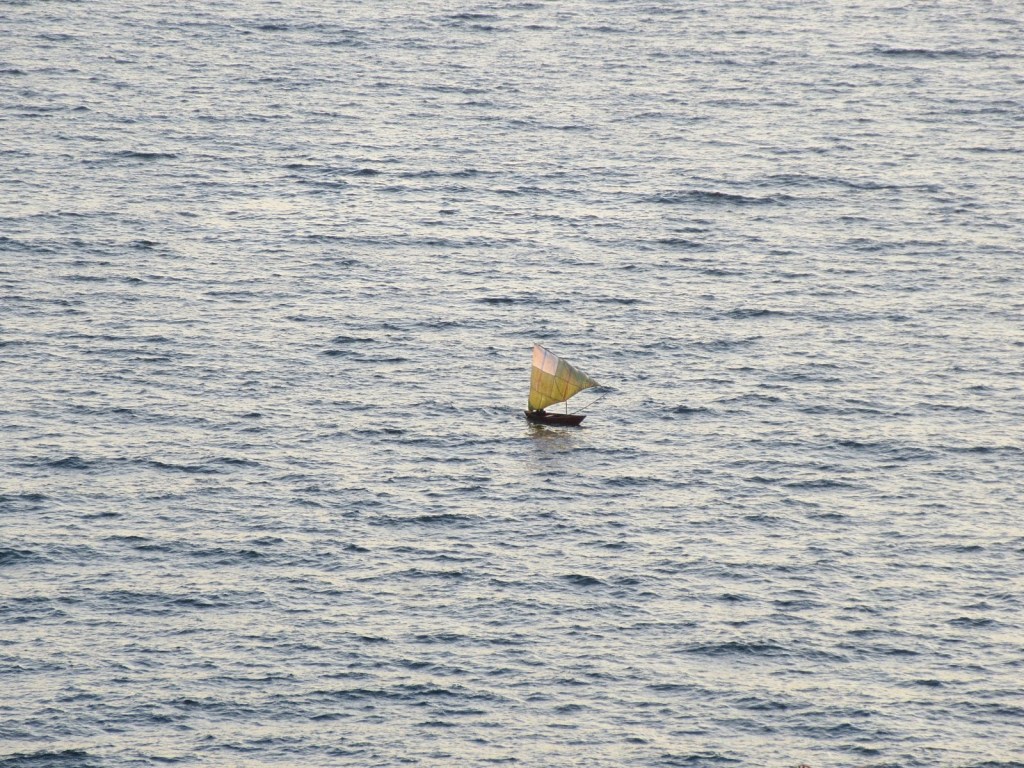
And then also of course were the boats. The ones at Katonga fish market were of average size for fishing boats. Peter explained that the caulking was made with cotton and palm oil. We later got to see this process in action. One of the most stunning things I learned about on this trip to Tanganyika were these absolutely massive canoes. I regret never being able to get a better photo of them, they were almost always too far away. I first spotted them from a distance as we were driving in from the airport, and later in the day I dragged Elizabeth and Peter to a boatyard across from the Livingstone Memorial impromptu to see some being made. “Canoe” is very much not the right word, but what I found so amazing is that they had the exact same construction as the fishing boats, but just on a much more massive scale. The photo I have above is of one under construction, and in this photo it doesn’t even seem so massive but to the right you can see a goat for scale. They are flat-bottomed with a huge freeboard and as far as I can tell powered just by a small outboard. I only ever saw a small poop deck on any of them, which must be where you steer from. Elizabeth and Peter told us they are primarily used for transporting goods to small villages up and down the lake and also to Congo and Burundi, and we saw one near our hotel getting loaded up with bricks. It was in the boatyard we saw the palm oil & cotton caulking in action, with several men in the midst of constructing one. They told us they can finish one in a month if they have all the materials and tools. Amazing.
That was later in the day though. For now we wrapped up our visit to the fish market. We had spent most of the time just hanging out watching the world go by. We spent probably slightly longer watching the proceedings than really felt not rude but no one really batted an eye to us being there. Peter told us to make sure to greet people which we tried to do. Eventually though we wound our way out between the fish and lights and batteries and got back to the car for our next stop: another boat.







































 Pat in the World
You must be logged in to post a comment.