Paperwork enthusiast seeking new frontiers of paperwork. Former submariner, former Peace Corps Volunteer. Opinions, thoughts, and comments reflect no actual persons, living or in the Navy.
The Fixer: Visa Lottery Chronicles by Charles Piot with Kodjo Nicolas Batema
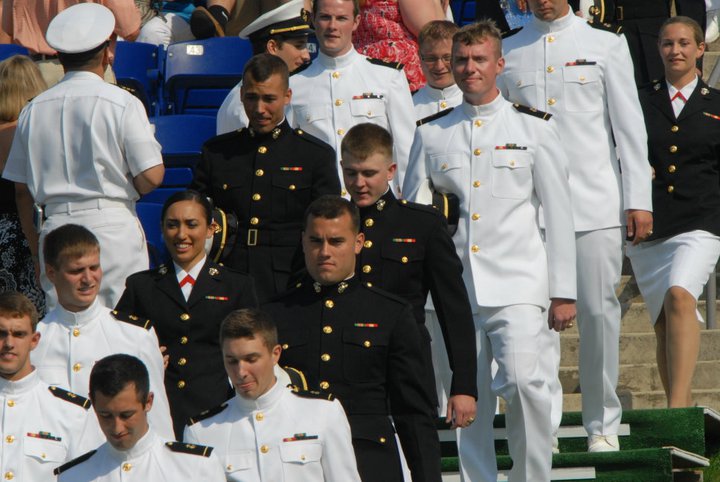
In and amongst everything else in the world that’s going on, this is largely an aside, but I want to talk about the combat shirt. I went to the Naval Academy, as I’ve covered before, and that was a really fortunate thing for me, sartorially speaking. It was far from unusual to have to wear a double-breasted suit to class. It was also important to have the fit of your uniform correct, and to be always well presented, and these are the day-to-day skills of wearing clothes well that I don’t think the average college kid is necessarily forced to pick up. I didn’t know how to iron before I had to start wearing uniforms. A lot of modern tailoring descends from military uniforms, and seeing as I am so familiar with them now I have a better understanding of why men dress the way they do. It also gave me a few weird neurosis. For a long time I found garters to be a bit of a turn-off because they reminded me too much of shirt stays:
But like I said, the combat shirt. You’ve seen them, and it’s what Colonel Assimi Goïta is wearing in the picture at the top. I find the fact that he is wearing one more than a little wild. I spotted that picture when I was catching up on old news, and our good friend the Colonel is now best known for being the leader of the coup that ousted the President of Mali.
You can read this rundown of the history of the combat shirt, but they really took off a bit into the wars in Iraq and Afghanistan. If you’ll recall your Vietnam movies, soldiers were typically wearing blouses over t-shirts into combat. Those blouses kinda suck under tactical vests or plate carriers, because the front pockets are useless (being covered by the vest) and it’s extra material that is hot and scratchy and all that. But the sleeves were useful to protect the arms, and also the pockets are nice, so what peeps did is cut the arms off the blouse and the body off a shirt and sew them back together to get the best of both worlds.
Since it was special forces guys who first started really being known for these shirts, and special forces guys are generally considered the epitome of cool, as far as military stuff goes, they became the hot hot item and everyone had to have one, whether you were regularly going into combat or not. And that means they have become the de rigueur military look. I am starting to sense I find a lot of things remarkable (though I guess what is a blog for but to remark on things), but I find remarkable how quickly the US military sets the international military fashion scene. Not long after the US switched to digi uniforms the rest of the world did too. And so it is with the combat shirt, as evidenced by the main character in the Chinese movie Wolf Warrior wearing one:
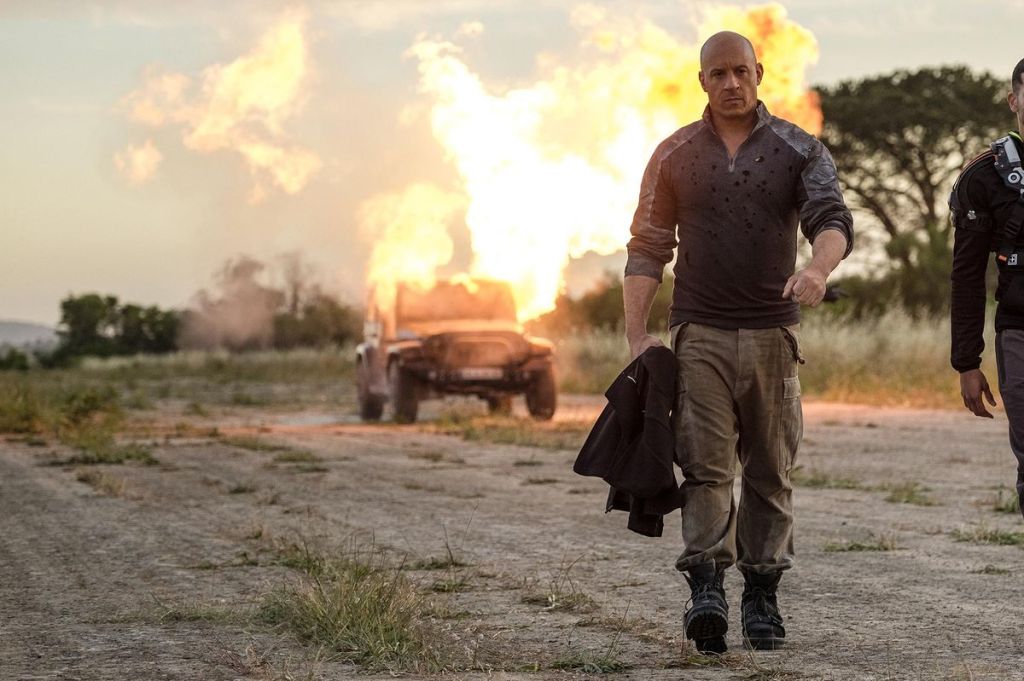
As soon as you know what you’re looking at too, it’s all over Hollywood. The below still is Vin Diesel being Vin Diesel-y in Bloodshot. He’s wearing quite the take on the combat shirt, reduced almost to its bare essence with just the hint of a different material on the sleeves and slanted pockets he doesn’t appear to be using for anything. I think Hollywood is a particular fan of the combat shirt because the light t-shirt material lets you show off the actor’s abs, while the thicker sleeve material helps you bulk up the arms.
The ubiquity of the combat shirt with Hollywood tough guys means it is also used by anyone trying to look tough, namely in this example the armed vigilante “militia” nitwit on the left in the below picture:
All of which brings me back to Colonel Goïta at the top. He actually has an excellent claim to wear a combat shirt. He was trained in the US, making him part of the proud tradition of US-trained foreign soldiers overthrowing their government in coups. He’s worked for years with the US forces that have been operating in Mali, and I assume it’s from them he got the wardrobe. But I find it interesting he’s wearing the shirt in that photo. The combat shirt is, you know, for combat, and he is surrounded by other guys wearing more normal blouses as you would expect from military people not actively running around in a plate carrier. Says something both about the ubiquity of US military imagery and the particular psyche of the Colonel that he chose to wear that particular outfit. I’ll leave it to the reader to figure out what.
Update Apr 27, 2021:
I just wanted to add this picture of Russian mercenaries in the Central African Republic. Everyone wants to look like US special forces:
This post is for me. It’s me trying to work some things out. I should have written it earlier, when I was angrier and more tense. I’m writing this on Wednesday night, still before it is clear who the winner is but with Biden the clear favorite.
With Biden pulling ahead, and behind me a day of being upset and distracted, I’ve calmed down considerably. But what have I calmed down about? I was hoping for a blue wave, a Democratic landslide, a firm repudiation of the vileness of the Republican party and what they stand for. That didn’t happen. Instead, while Biden has maybe squeaked out a win over Trump, I am still faced with the gut-wrenching reality that millions upon millions of Americans looked at a corrupted orange husk of a man and thought to themselves “that’s our guy.”
I have to keep reminding myself that this is historic, awesome, awe-inspiring. Biden has garnered more votes than any candidate in history, outstripping Trump by millions of votes, the votes of citizens that raised their heads and decided they wanted Biden’s fundamental decency to represent them on the world stage. No one has unseated a sitting president in nearly three decades, and before that it was the Democrats that got regularly knocked out. This is unprecedented, this is historic, this is great. I have to keep reminding myself of that instead of mourning the 55 Senate majority it is now clear we were never going to have.
Fundamentally, I don’t know how to feel. It’s frustrating to work through these emotions. I wish someone would tell me what I have a right to feel, which feelings are useful and should be cherished and which are harmful and should be tossed out. When it seemed like Trump was going to be reelected, I was angry. But what was I angry at? In so many ways, this election doesn’t affect me. I’m a mediocre white guy, which provides me boundless opportunity in America, no matter who wins.
I think to myself that maybe I could have been angry on behalf of all the vulnerable people affected by Republican policies in this country. This is a power of being a white guy; we are lauded when we get angry. It’s seen as machismo and leadership and daring. I could use that anger to protect the little guy. But what did I actually do to protect them? I did not help much this election. It didn’t seem worthwhile to campaign; I live and vote in Connecticut. Besides, I told myself, I was far too busy as a grad student to be able to do anything. I signed up for one phone banking shift, but when the day came I had homework to do and pulled out. When things seemed really bad I would assuage my guilt by throwing $25 or $50 at a campaign or cause I liked.
My worst impulse was feeling like I should run away from America. Facing the possibility of a Trump win, forced to face the cruel reality that enough voters would disagree with me to pick a man I hated, that maybe I could just move somewhere else. Where else? I don’t know. But the mere ability to contemplate just packing up and moving out, doing nothing to help the people left behind to survive in that awful vision is wrapped up in so much privilege and selfishness it’s mortifying to just be able to admit that the thought crossed my mind.
But the thought of staying is also overwhelming. Clearly something must be done. But what? I don’t know. My friend who is a nurse told me about a patient of hers who was hospitalized for COVID, and after the experience still felt that COVID was no big deal. What more could you possibly do to convince a person like that? Faced with their own terrifying mortality, they still can’t accept the truth. How do you sway a whole nation of people like that?
One of the major reasons I am interested in international development is that I fundamentally feel those problems are easy. I am viscerally aware that generations of development practitioners before me felt the same way, and I don’t want to get lost in the nuance. But you look at people in the world and the solutions seem so obvious. People are hungry? Feed them. People are homeless? House them. People are sick? Heal them.
The atrocious part is that these problems that people face there, our people face here. That is absurd. Here, in the United States, for every person facing hardship and need, we have the food to feed them, the homes to house them, and the medicines to heal them. We have the resources to make it all happen, and we simply don’t. I feel so small and powerless against this titanic moral breach in the American populace that lets them look at their own countrymen and say to themselves that those other people don’t deserve help. I would rather run away to Africa to try to solve their problems, because deep down I know that if I fail, I will still be okay. That doesn’t apply in America.
And so like I said at the top I should have written this when I was angrier. It would have felt more meaningful. It’s still not clear that Biden is going to win. But no matter what I get to calm down. Move on with my life. I’ve even wondered if my job prospects next summer wouldn’t be better under a Trump presidency, because even under him I want to work for the government and I feel like there would be less competition under Trump. I have massive privilege that lets me get angry, that lets me spend a day and a half wallowing in anger and frustration, looking for any remaining Republicans on my Facebook to lash out and yell at, before settling in to live the same life I would have led either way. That anger feels unjustified; I didn’t work to earn it, and my life doesn’t merit it. And so I don’t know what to feel. Happy, I suppose.
The pandemic hit and all my grad school classes went from being in-person to being on Zoom in the middle of a semester. I feel like this wasn’t as bad as it could have been (this is not a comment about the pandemic, which I don’t want to try to adequately address in a parenthetical). Since all of my classes had met in-person for half a semester, we all knew each other and so I think transitioning to seeing those same people on Zoom was pretty okay and you could maintain some of the same class dynamics. There were a lot of downsides, and frankly I couldn’t pay attention to online classes (I mostly just surfed Instagram in another tab), and my internet was pretty shitty then which made it difficult to attend class sometimes, but then again I had a pretty good excuse to simply not be in a class.
I dreaded the fall semester being online. I was pretty excited when Yale announced that we would be “hybrid,” which meant and as of this writing means a host of things, but I was excited for the chance to not be on Zoom. However, my internship over the summer was remote, so I got a lot more used to Zoom, and the prospect of being on Zoom all day no longer felt as bad. Plus my at-home setup improved significantly (I got a better chair and a second monitor), and now whenever I have to actually walk anywhere to go to an event it feels downright burdensome. All this is good, because all of the classes I am taking this semester are online anyways, so while some people are going to class in-person, I am not one of those people.
However, this has me thinking a lot about Zoom, and I think I have been to most versions of a Zoom class at this point, and so I think I have some authority to pontificate on the Dos and Don’ts of teaching over Zoom. My biggest regret on behalf of virtual students everywhere is that we missed a huge opportunity over the summer to really think through how an online class should work. The number one lesson we should all get out of this is that a Zoom class is not a regular class. I think a teacher that just tries to do their normal thing except into their webcam is not going to have crafted a particularly good experience. I also don’t think it would ever be easy to simply switch back and forth, because the kind of class you teach in person must be so different than the one on Zoom.
Other people have thought about this, but I don’t think we have thought about it enough. I particularly enjoyed this article about what videoconferencing could look like, and I think all the points are spot on. Zoom itself is probably a terrible way to classes in every scenario, and it is unfortunate that was what was ready to go when we all needed it. A quick google search for “zoom pedagogy” will also get you a number of articles giving you some tips, but I don’t think a lot of people have done that Google search. At the beginning of one of my classes this semester, the professor asked us to think of some ways to make sure the class was productive, and people were suggesting things like respect and making sure you do the readings. I was googling Zoom tips as fast as I could and people seemed surprised to be thinking about the idiosyncrasies of the Zoom format. All of which is to say we need to think more about how to teach a class over Zoom before we start barreling in! I shall now barrel into my thoughts:
An absolute minimum amount of time should be spent on Zoom. Staring at a computer screen is way shittier than staring at a teacher in real life, so I think lectures should not be held on Zoom. I think they should probably be pre-recorded, with automatic transcription added and then also posted in such a way that people can speed them up or slow them down. Then, class should be reserved for actual discussion and questions. Some teachers I know ask you to watch the pre-recorded lecture, and then just hold the lecture again. This is unhelpful and dumb.
Teachers need to make a much larger effort to make the class interactive. I think any class without time in the breakout rooms is an entirely wasted class. Even in a class of 15 people I hate trying to pipe up with everybody, but throw me in a breakout room with 3-4 people and suddenly we can actually have a conversation about a topic. Then maybe we can report back to the class or something, but have your students spend time actually being able to interact with people. I also think teachers should incorporate polls or other interactive things to just make students have to focus back into the class once again. There are also plenty of game platforms teachers could use to help students interact.
Make sure to enforce breaks! For serious, take a five-minute break every hour. Staring at Zoom sucks.
Teachers need to radically modify their expectations for presence. I think almost all of my classes at least state that students should be on-camera “as much as possible,” with a potential exception for bandwidth. I think this is a bad expectation and needs to be eliminated. There is an equity issue here, where students might not have the space at home where they can feel comfortable presenting themselves, even with virtual backgrounds or whatnot. It also helps with bandwidth, and although like I said many make an exception for it, once it is the class norm to be on-camera people feel pressured to be on-camera. I personally also find it very distracting to have myself staring back at me, and I suspect that builds anxiety for a number of people about how they look and how they’re presenting themselves. I realize people are visible in a classroom, but it’s a much different environment when people are largely focused on the teacher and the students are just another member of the “audience.” On Zoom, everyone is on equal footing, and everyone can be watched, and given that you can see yourself you are very aware of this. Just eliminate this expectation to be on camera. Zoom is never going to be a good substitute for the classroom, and so it will take some getting used to but we need to establish different norms for that presence. Also in here should be a point about being very flexible about whether people can show up to class at all.
Teachers should call on people. As a guy who will pipe up readily in real-life class, I find it awkward to say anything in a Zoom class. It feels more like a performance I have to get ready for when I’m framed on a camera, and it’s just awkward to figure out who’s trying to talk or who is about to unmute or who has their virtual hand raised or their real hand raised or whatever. Teachers should be in charge of calling on people and coordinating who is speaking when. My super amazing girlfriend teaches a section with few enough students that they can all see each other on one Zoom screen and everyone can see who wants to talk, but Zoom can quickly scale to where that’s no longer really possible, and that changes too if someone is screen sharing. This is probably also a great opportunity to ensure equity in the classroom, and making sure it isn’t just white guys dominating a conversation. So just call on people.
These are just technology complaints. I don’t think you should try to play a video over Zoom. You run into bandwidth issues and it becomes choppy half the time and the other half of the time you listen to it without the audio because the teacher didn’t click the right button. My super amazing girlfriend thinks there shouldn’t be any videos in a class anyways, so there. Also please teachers double-check the breakout rooms. I spent part of a Spanish class in a breakout room by myself, which was kind of relaxing but not very helpful.
Overall, I actually think it is a really great thing that the world has become much more adept to videoconferencing. A year ago, if you wanted to meet someone virtually, that would have been difficult to coordinate. But now, I am able to ask a whole range of people all over the world for a Zoom call and that is a perfectly normal request people are adept at handling. I think that radically changes the ability to network and connect with people, because instead of dragging someone out to a Starbucks you just need to ask them to click a Zoom link, and you could be in say, Connecticut while they are in DC. I also was able to conduct an internship remotely that in other years would have been in DC. It was much different than an in-person internship I think, but I really really hope the world retains this capability. That would open up internships and other opportunities to all sorts of people who would not otherwise be able to move themselves to DC or New York for the summer, or who need to be able to take care of a child at home or any other reason they can’t sit in an office 9-5.
I really hope there are a lot of people out there really thinking through how to improve the online presence and online teaching paradigm, in ways that aren’t just improving the camera quality. Now that we’re all comfortable with the concept of having classes and meetings online, we can really think through a new paradigm to make it as good and equitable an experience as possible. A boy can dream.
I googled “Africa cellphone” to find this picture, and I know I have seen it on at least one company’s marketing materials.
Reading this week:
Kenya: The Struggle for a New Constitutional Order edited by Godwin R. Murunga, Duncan Okello, and Anders Sjögren
I spent the summer at an internship reviewing old grants for development projects. This was a lot more interesting than it sounds!! There were all sorts of grant applications, from all over the world, and grantees provided regular updates on their progress. That meant as I reviewed the old grants I got to see these people face new problems and overcome them (or not).
The major schtick of the place I was interning was that they did innovative ideas. This is the 21st century, so a lot of time “innovation” is synonymous with “cell phone app.” This isn’t exactly crazy; a lot of the reason that development is hard is that development requires interconnectedness between people, and the whole point of cell phones is to make that easier. So I reviewed a number of app grants. Like all the grants, these too were pretty interesting to me mostly because of all the unexpected problems that people ran into.
Before we get too into this, I want to apologize for vague blogging. Seems like a lot of work to get permission to publish people’s processes, so I’m just going to allude to stuff.
The app with perhaps the most lessons learned had to be one that was designed to help with patient follow-up. Right from the outset they wanted to make it usable to the most number of people possible, so they designed it to be used on feature phones, aka dumb phones. This is a good instinct! They worked real hard to make it super accessible. But man were some of their assumptions off.
One of the funniest to me is that they discovered just how limited some people’s phones were. They initially designed it so you had to reply with a text message, like “yes” or “no,” typing that stuff out T9 style. But then they discovered that some people didn’t even have the capability to do that, and had to switch it up so you could just reply with a number, like “1” or “2” (one creative solution to this technology problem was that some people just gave smartphones to their target audience; for one of those developers, the deal was that if you got a smartphone you were supposed to text vital information to people with dumbphones).
Another assumption they made was that people could read. They figured out a lot of their users were in fact illiterate, and had memorized the menu. That was actually the sort of problem I had read about before! I can’t find the original article I read detailing it, but over in India YouTube has become the search engine of choice for many people. Two things made that possible: really cheap data, and voice search. This WSJ article makes voice search (aka voice-to-text into the search box) just sound like a feature they just added for fun, but there is a huge number of illiterate phone users in India. However, these illiterate users can just talk to their phone, and get a video back, which gets around the reading thing (I’m not worried about this as some Black Mirror future scenario, but it kinda plays into this analysis that everyone in Star Wars is functionally illiterate). This pops up all the time in apps and app designers should think about how to make their app usable by the illiterate (Maybe the blind or disabled too? Dream big). Ignitia, which texts weather forecasts to farmers, found that using keywords consistently helps illiterate farmers decipher their forecasts (they text things along the lines of “Heavy rain today. Sun tomorrow.” Farmers can recognize “rain” in the first sentence, and know it will rain today, and that “sun” in the second sentence means no rain tomorrow).
Yet another non-intuitive assumption that designers made is that every phone or phone number corresponded to a particular person. This was a bad assumption! A lot of times a single phone would be shared between several people, such as a group of friends or a family. I didn’t actually discover anyone who came up with an elegant way to solve this problem, but if you’re designing an app make sure that it can be used by several people on the same phone pretty smoothly. And maybe don’t just send a push notification for sensitive information? Yet another company ran into a problem when people’s phone numbers kept changing. They tried to maintain a database of people’s contact information, but people would switch service providers all the time, and therefore switch phone numbers, whenever a different service provided a slightly better deal. The company’s database got out of date really quick, and again I didn’t see them come up with an elegant solution to solve it. Things to keep in mind!
Another thing just from my personal experience using a phone in a rural village in Zambia is that make sure your app doesn’t use a lot of data! Optimize the shit out of that thing! And data access can be spotty! Make sure your app works with only an intermittent connection to data! I have a lot of vague hypothetical thoughts about this, but make sure your app also functions elegantly when it reconnects to data! Don’t have it download out of date stuff just because it was in the queue! And make sure that your app can pick up right where it left off after a failed download, instead of making a large download start over just because data was interrupted for a second!
One solution people have tried to implement to the whole data being expensive thing is to subsidize their user’s data cost. Unless you have the engineering chops of Facebook, this is probably a bad idea. My favorite was one company that had it set up so that their agents were supposed to text them back, and so had provided their agents with prepaid texting plans. Turns out their agents used all their text messages to chat up girls, and when the time came to actually use their text messages for their intended purpose, they had none left. The company had to switch to a different system to avoid having to get their agents to text them, all because they couldn’t resist hitting on women. Men, amiright?
There were more lessons, but they’re hard to convey in a vagueblog. I also think that the best design ideas for development apps are yet to come. There are a whole lot of efforts to leverage the technology, but I don’t know if I’ve seen a “killer app” (or, since it’s for development, “lifesaving app”) for the developing world. That being said, there are a number I like. A few different apps that give users information via a map (like vegetation data) have been good, so maybe better geospatial information could be useful. I also like the simple implementations; one company trains people in first aid, and then loads onto their phones refresher videos so they can review the lessons at any time. Very neat! Maybe excellent avenues to pursue. The deepest lesson however is, like everything else in development, to let your users guide your app. You’ll find they manage to use it for things you didn’t think of, and have suggestions that could make it way better.
Addition 10/25/2020:
One lesson learned I didn’t include above is one company that tried to distribute their app via the Google Play Store, only to find out that 95% percent of attempted downloads couldn’t be completed because the Play Store required people to have an email address, which was very uncommon in the developing country context they were working in. This was literally something like a million potential users who tried to access the app but just couldn’t. It seemed niche so I excluded it from this post, but then today I come across this New York Times article about Seesaw’s experience suddenly being a critical pandemic-era app. The line I wanted to quote here was that “Numerous students didn’t have email addresses and needed a different way to log in from home.” It looks like the assumption that a potential user has an email address or will attempt to get one is a very bad assumption indeed!
It, uh, it sparked some feelings and thoughts and frankly I’m not entirely sure what all of them are. Fortunately I have a blog on which I can write whatever half-baked thoughts I have, and also fortunately no one ever reads it so there is little risk of repercussion. So here we go.
The article is about the so-called “militias” (“armed gangs” or “terrorists” is a better term) that have grown over the past decade or so, and as you have gleaned from the headline, how a number of them include a high percentage of veterans.
My first half-baked idea has to do with the type of gun nut who thinks the second amendment exists because people might have to literally take up arms against a tyrannical government. This, in the 21st century, always seemed more than a bit whack to me, mostly because I don’t think it would work. While there are more guns than people in the US, gun ownership is concentrated in a fairly small number of people, and the government’s military has the advantage of things like warships with Tomahawk missiles and special forces soldiers and satellites and drones and all the other things that make it really effective at killing people, more so than civilians with rifles, even if they are assault rifles with high-capacity magazines. I have other objections to the general notion, including the fact that if you want to overthrow a government violent rebellion isn’t even the best way to go about it, but let’s just stick with the government-versus-people scenario.
Mostly I need a convenient place to stick this link, but first off the Pentagon has wargamed a scenario where it goes against a domestic threat. I don’t know what their assumptions are, but the probably deciding factor in a second civil war is which way the military would go in the scenario. This is part of what that New York Times article speaks to, I think. I think that the veterans in these groups sort of assume that the military would be on their side. On one level, that’s not a crazy assumption. I know I just said you can’t pigeonhole veterans, but I think it is fair to say that the military leans right on the political spectrum. I would hesitate to ascribe that, Heinlein-style, to any particular characteristics of the military lifestyle. I think the military mostly recruits from right-leaning areas of the country and so the people that wind up in the military are right-leaning. So these gangs/militias are right-wing, they have right-wing veterans who know a bunch of other right-wing military, so they might assume that the military would favor these groups. Not a crazy assumption.
The next half-baked notion I want to talk about has to do with the oath to uphold and defend the Constitution of the United States. First off, and I will mention this because I don’t know where else to put this in, but I took the Oath of Office as a Peace Corps Volunteer which really threw me off. I didn’t know we did that, and so I was surprised when it happened, and for a while there I really had to think about my role in the Peace Corps and how I would defend and uphold the Constitution if called upon. I eventually just decided the enemies of the United States, foreign and domestic, weren’t going to be storming into my Zambian village, and gave up thinking about it. But of course I took the oath far more often as a member of the military.
The most significant thing I want to point out in this half-baked section is that upholding that oath is not necessarily a straightforward thing to do. This intersects with the article when it comes to the Oath Keepers. They’re another one of these gangs, but their schtick is that they claim to be continuing their oath to uphold, etc. The fact that these guys can claim to be doing that while the Southern Poverty Law Center calls them “one of the largest radical antigovernment groups in the U.S. today” should be telling. Like I just said, I took the oath a lot as a member of the military. Specifically, as an officer, I took the Oath of Office. However, enlisted members of the military, and therefore the majority of the military, take the Oath of Enlistment. These are pretty similar, except that the Oath of Enlistment includes specifically the line that they swear to obey “the orders of the officers appointed over me,” while officers simply don’t swear that.
Why the difference? I always figured it was because while saying you’re going to “uphold and defend the Constitution of the United States against all enemies, foreign and domestic,” sounds all nice and straightforward, man that is hard to put into practice. If you were to be serious about it, every single person who swears that oath would need to be a constitutional scholar. How else could you decide with any certainty whether or not any particular order you are given is against your oath to uphold and defend the Constitution?
I don’t think you could spin a scenario that would be obvious 100% of the time. If, as a member of the military, your commanding officer orders you to storm the White House and capture the President, that seems pretty straightforwardly like an unlawful order and unconstitutional. But then again what if the President is there illegally, because he refused to concede in a contested election, or something? Then maybe getting him out of there is pretty constitutional? But how is any member of the military really supposed to be able to tell? Even if you’re the Chairman of the Joint Chiefs, I’m going to bet you’re probably not an expert on that sort of thing, and you’re just going to have to go with the best advice you can get. If you’re some enlisted guy, what chance do you have?
The answer to the conundrum is mostly “well this doesn’t really come up all that often,” and the other part of the answer is the difference between the Oath of Enlistment and the Oath of Office, mentioned above. Every member of the military has an obligation to not follow an unlawful order. But for enlisted members (in my interpretation), the default assumption is that an order given to you by an officer is probably lawful. Unless there is a pretty specific reason you should know it’s unlawful, you won’t be faulted for carrying out those orders (and I think the bar is pretty high; you can seriously argue after massacring a village that you were just following orders). Officers, on the other hand, don’t get that pass. You have a responsibility, as an officer, to not simply assume an order you are given is lawful, and actively counter all those orders that you receive that don’t pass that bar.
But then again, I just pointed out that even the Chairman of the Joint Chiefs probably isn’t going to be an expert on these things. So how is some random junior officer to know what to do? This is why I don’t think the military is likely to break from the government in power. In a scenario where the legality of a given order is in question, I personally think the military is going to default to the most conservative approach (do you have to emphasize “small-c” in writing?), which will be to follow orders. Even the almost universally beloved (within the military) “Mad Dog” Mattis will make the legally shaky move to deploy troops to the southern border when asked, and only actually balk when it came to not deploying troops to Syria. All that to say, I don’t think there is much chance of the military breaking with the government, even if the government orders it to deploy against American civilians.
The final half-baked bit is the alignment of these armed gangs. A few points here. The original NYT article I linked to notes that these gangs are “traditionally” anti-government. That makes sense to me, from a “the second amendment is in case we have to take up arms against a tyrannical government” perspective. But the alignment of a number of these groups have been changing, and again as the article notes “as [the militias] have inserted themselves in cities with large protests, the groups have found themselves sometimes welcomed by local law enforcement” (I personally wonder how much of that is due to the efforts of white supremacists actively working to infiltrate both the military and law enforcement, so that it’s not so much law enforcement welcoming the militias, but simply a case of overlapping membership). But these gangs aligning themselves in any way with either law enforcement or the military really undercuts the notion of fighting against a tyrannical government. It’s hard to say you’re defending the people of the United States when you kill those people. However, the point I was trying to wander to is that although I think it is unlikely that the military will break with the government, if these gangs are aligned with the government, they could wind up on the same side anyways. The real driving force behind these gangs isn’t to uphold freedom and democracy (because frankly you can’t do that from behind a gun), but just hateful, fearful, American racism. If your goal is to kill Black and brown people, aligning yourself with the American government is historically not a bad way to go about it.
Those are my half-baked thoughts. Maybe someday they’ll coalesce into something meaningful.
This is another in my burgeoning genre of “op-eds I tried to publish somewhere else but couldn’t so here you go.” I wrote it in fall of last year when I knew slightly less about African infrastructure development.
For the past two years I served as a Peace Corps Volunteer in Mbala District, Zambia, teaching fish farming to rural farmers. I also worked on projects in malaria and HIV prevention, nutrition, and women’s empowerment. I was enthusiastic about the work and unlike many PCVs I came back feeling energized about the ability to impact change in developing countries. But I also came back convinced that in a whole career of development work, there is nothing anyone could do in that village that would help them as much as building a paved road would.
My village was a mere 12km from the town of Mbala and connected via a dirt road. The quality of the road changed throughout the year, with the community spending weeks repairing it during the dry season only to have the rainy season carve deep chasms and massive mud pits into it. When rain hadn’t turned the road into a river, it took a 4×4 Land Cruiser about an hour to make the trip. Based on my experiences with that road, I have become an absolute convert to the school of infrastructure development.
I think the biggest long-term impact of building infrastructure will be on education. Newly hired teachers in Zambia are assigned to rural schools which probably don’t have access to electricity or running water. Teachers work as hard as they can to get transferred from these schools as quickly as possible. Building a road to a village followed quickly by power lines means rural schools will be better able to recruit and keep teachers so the kids in a village actually have a shot at education.
Even in schools with the best teachers, the lack of infrastructure massively hampers education. There are basic problems: students in Zambia have a required computer course to graduate secondary school, but at a school without electricity students will never see a computer, let alone get experience on one. Schools in Zambia are also responsible for printing standardized tests. At a school near me, which had only one government teacher and no electricity, printing these tests meant he had to walk 12km to town during the week. After printing them, he then had to walk back, leaving his students without a teacher for the day. With electricity and a printer, this all-day task becomes a 20-minute one.
Better infrastructure leads directly to better health outcomes. One of the major determining factors for the risk of a child dying of malaria in Zambia is the distance between that child and the nearest hospital. Right now, a child sick with malaria faces a walk under the African sun or an impossibly expensive taxi ride. Hiring a taxi to drive to my village over the dirt road cost 150-200 kwatcha. The farmers I knew struggled to earn 60 kwatcha for school fees every year. But in Zambia, paved roads are quickly followed by minibus service provided by plucky entrepreneurs. A minibus service over the same distance on a paved road would probably cost about 10 kwatcha. With paved roads, a sick child can actually get to a hospital when they need one.
Patients living with HIV have to travel to the hospital monthly to receive their medicine. An all-day 24km round trip walk every month can be insurmountable. That paved road and minibus service would save their lives too. Lacking their own transportation, health outreach workers rarely if ever make it to distant villages. A paved road makes it possible for these workers to actually go out and conduct bed net checks, provide training on malaria transmission and sexual health, and help make sure people are sticking to their regimens. Northern Zambia has one of the highest rates of malaria and HIV and both are problems that will never be kept in check until the infrastructure network is in place to make sure change happens.
The existence of basic infrastructure spurs other aid and development. Despite there being a variety of NGOs based in the town of Mbala, none of them operated in my area. They were willing to drive 50km west along the paved Chinese-built Mbala-Nakonde road (pictured up top), where they could access target villages in under an hour from town, but would not drive 12km east over a dirt road to my village. A village with a paved road is suddenly actually connected to the world’s development resources.
Roads extend the rule of law. The police in Zambia are chronically underfunded, and getting them to travel to a rural village often requires covering their expenses. Given the difficulty of getting to a rural village like mine, the police are unlikely to ever come. With a road in place, the police can actually show up. It would be easier for every other aspect of government to show up too: forestry officers can come and fight illegal logging, land surveyors can come and do the inspections necessary for rural farmers to get deeds to their farms, and the list goes on.
The United States has not helped to contribute to Zambian road infrastructure. From 2013-2018, the Millennium Challenge Corporation spent $332 million to help upgrade Lusaka’s water supply, which is necessary infrastructure I support, but nothing advertises America’s good will like a road. I never heard anyone talk about the water supply, but every road I traveled over people knew exactly who built it. Zambia is nearing completion of their Link 8000 project, named for the 8201km of roads constructed under the program. This should have been an ideal project for the US to get involved in; it was initiated by the local government and had clear, tangible goals. The US was invited to participate, but did not join. Zambia turned to China for funding instead, with work done by Chinese contractors. Spending America’s time and money on basic road infrastructure is a fantastic way to show the world how to do it right: at a reasonable cost, with as much skill and technology transfer as possible, to produce a high-quality product. Every kilometer of road America helps pave accrues good will and helps improve people’s lives.
The citizenship status of American Samoans has long bothered me. The status of all the people in the outlaying territories of the United States has bothered me since I was stationed in Guam, but America Samoa seemed particularly egregious. People forget that these places even exist; I knew a guy from Guam that liked to quiz people to get them to name the five territories, and I don’t know if I ever saw anyone get it. With the most recent upswell of the Black Lives Matter movement, I was thinking about American Samoans and how they were screwed by a lack of citizenship, so I decided to write an op-ed about it. After some Googling, turns out the situation was more complex than I thought, but I tried to write an op-ed about it anyways. After some reflection, I have come to the conclusion that as a white guy who’s never even been to America Samoa, I wasn’t in a great position to speak to the issues in a way that ensured I was getting them right. I pondered trying to reach out to some American Samoans to see if I had successfully grasped the issues, but then worried I would be just trying to find a random American Samoan only to confirm my own viewpoints. So I decided to not try to get it published in any publication more widely read than my blog that no one reads, but I needed to get it out of my head. This is that attempt at an op-ed:
As the United States continues to reckon with the racist legacies of its systems, I think an appropriate issue to raise is the citizenship status of American Samoans. Despite being a part of the United States, and under US jurisdiction, the people of American Samoa are not citizens, but are instead “US nationals.” The most straightforward way to say it is that this renders them second-class citizens, but of course they are not citizens at all. Because of their status, American Samoans are unable to hold certain federal jobs, vote in federal elections, or run for elected office. And as a mark of their status, their passports are stamped “This bearer is a United States national and not a United States citizen.”
American Samoan’s status as US nationals is rooted in the Insular Cases – a series of Supreme Court cases decided in 1901, during one of the most aggressive periods of US overseas expansion. During those cases, the Court invented a doctrine that allowed the United States to extend sovereignty over foreign lands, but without necessarily granting the people in those lands rights under the Constitution. The United States wanted the resources, but not the people. They believed that the “primitive” people inhabiting the Pacific islands the United States was claiming as its own were unworthy of full inclusion into the “civilized” society of the mainland, or else that granting them full citizenship could potentially “dilute” the US racial makeup.
The reason, therefore, that American Samoans are not automatically granted US citizenship at birth is rooted in century-old racism. On this topic we have luckily progressed somewhat – unlike in American Samoa, the people in the other US territories, including Puerto Rico, the US Virgin Islands, Guam, and the Northern Marianas Islands are citizens from birth. They gained this right via acts of Congress, as required by the Insular Cases.
In the 120 years since the US acquired the islands, there have in fact been several attempts to grant the people of American Samoa birthright citizenship. The most recent was last December, when a federal judge in Utah ruled that American Samoans had automatic citizenship under the Constitution, a ruling he immediately stayed pending appeals. However, these attempts have been opposed every single time by an extremely invested actor: the local government of American Samoa itself. The government of American Samoa fears that automatic citizenship would fundamentally threaten their way of life.
The American Samoan way of life, or fa’a Samoa, is rooted in communal land ownership and community networks. The American Samoans fear that, were they to fall under an increased scrutiny by the United States government, this method of communal land ownership would be declared unconstitutional and lead to the destruction of their culture. Based on the experience of other indigenous groups in the United States, I would say they are right to worry.
Here is the central tragedy of American Samoan’s position: their status as US nationals, and the indignities that heaps upon them, is because of outright racism in the burgeoning American Empire over a century ago. However, it is that same status that protects them from another aspect of American racism, the racism that disrespects native culture and indigenous ways of life, and has historically opened up native lands to expropriation and exploitation by colonizers and settlers.
There has to be a better solution than the status quo. American Samoans are able to gain full US citizenship via an abbreviated naturalization process that requires living in a US state or territory other than American Samoa for three months and paying $725 in fees. These requirements can be burdensome, preventing American Samoans that desire it from obtaining citizenship. Congress could instead allow American Samoans to automatically become citizens upon request, without a fee.
A better solution, of course, would be a United States that allowed for automatic citizenship to all the people under its jurisdiction, while managing to respect indigenous peoples and their ways of life. With a political movement dedicated to undoing the consequences of white supremacy against Black and Indigenous people of color, that America might be possible. In the meantime, it would help simply to grant American Samoans an easier path towards claiming the rights they deserve.
Joe Biden is a man I am increasingly excited to vote for this fall. He was not my favorite during the primary, mostly because he was an old boring white guy. But his political talent is of course tacking to wherever the party is going, and the party is going left. It wasn’t until he started announcing his policies, however, that I finally came to appreciate the power of an old white guy to make things seem boring. The dude more or less adopted the Green New Deal whole cloth (okay, not quite, but like, mostly), and I don’t think there was much of a reaction! So I am excited to hopefully see the man lead the country into the most progressive era the country has ever seen, and see people mostly shrug it off for being obvious and commonsense (which it is, but I guess we needed an old white guy to tell us that).
That being said, this post is not about Joe Biden’s policies. This post is about Joe Biden’s ties.
Most politicians wear boring ties and boring clothes. Biden isn’t in the picture up top, but that picture does have a whole bunch of other politicians wearing boring things. The women are wearing the most exciting things, but even then the most exciting we get is Tulsi Gabbard with a red jacket over black pants and a black blouse with black shoes. The men all wear blue, and half of them wear a blue tie with it, one an aquamarine (?) tie, then one purple and one red tie. I think this is partially the fault of television, because a CRT television doesn’t mix well with stripes and radical colors can look weird on an improperly tuned screen, but also because politicians are never trying to seem too radical to begin with. So they wear boring clothes.
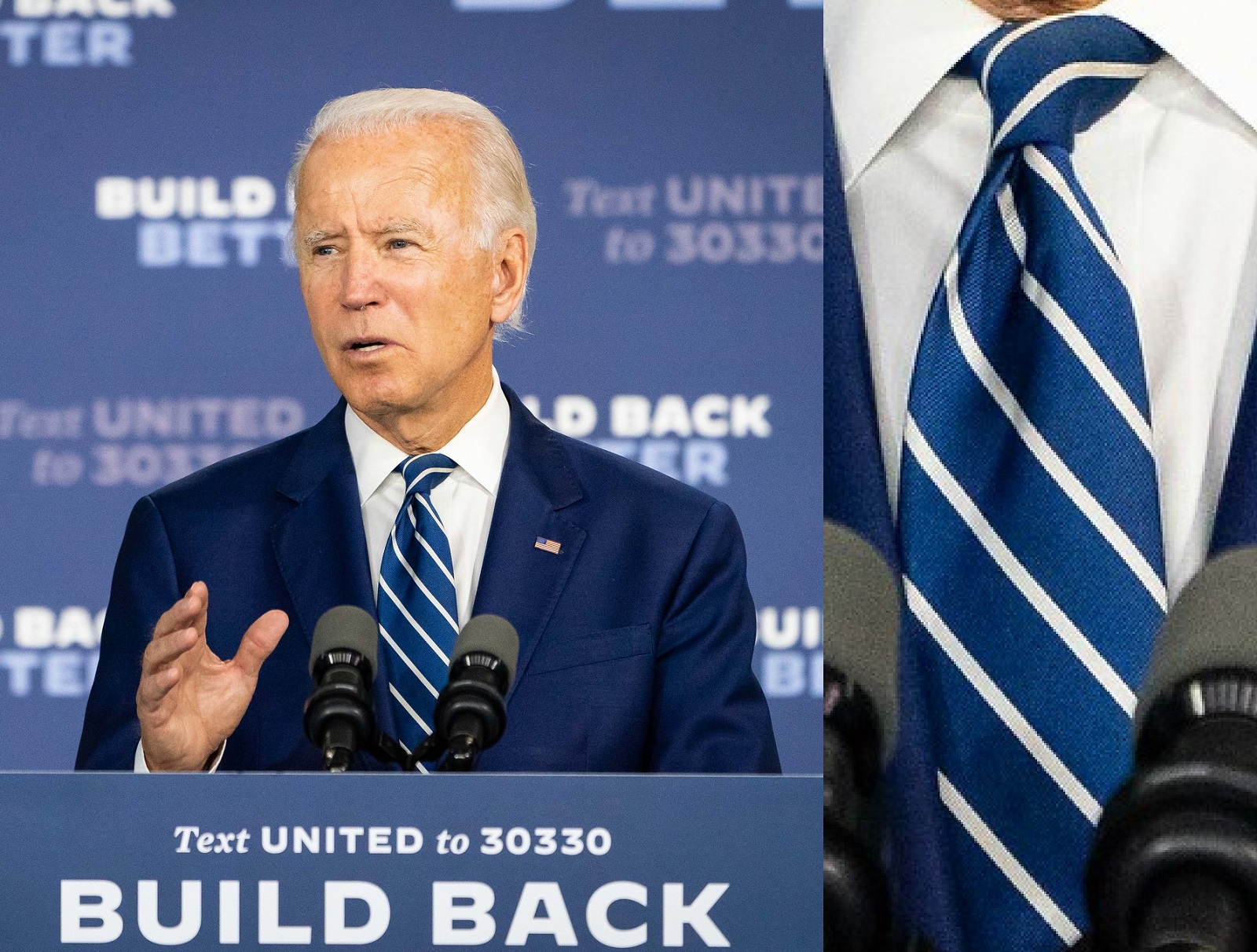
Joe Biden, for all his aviator glasses flair, is like any other politician and well within the bounds of generally boring dress. Here he is wearing a plain blue tie, for example:
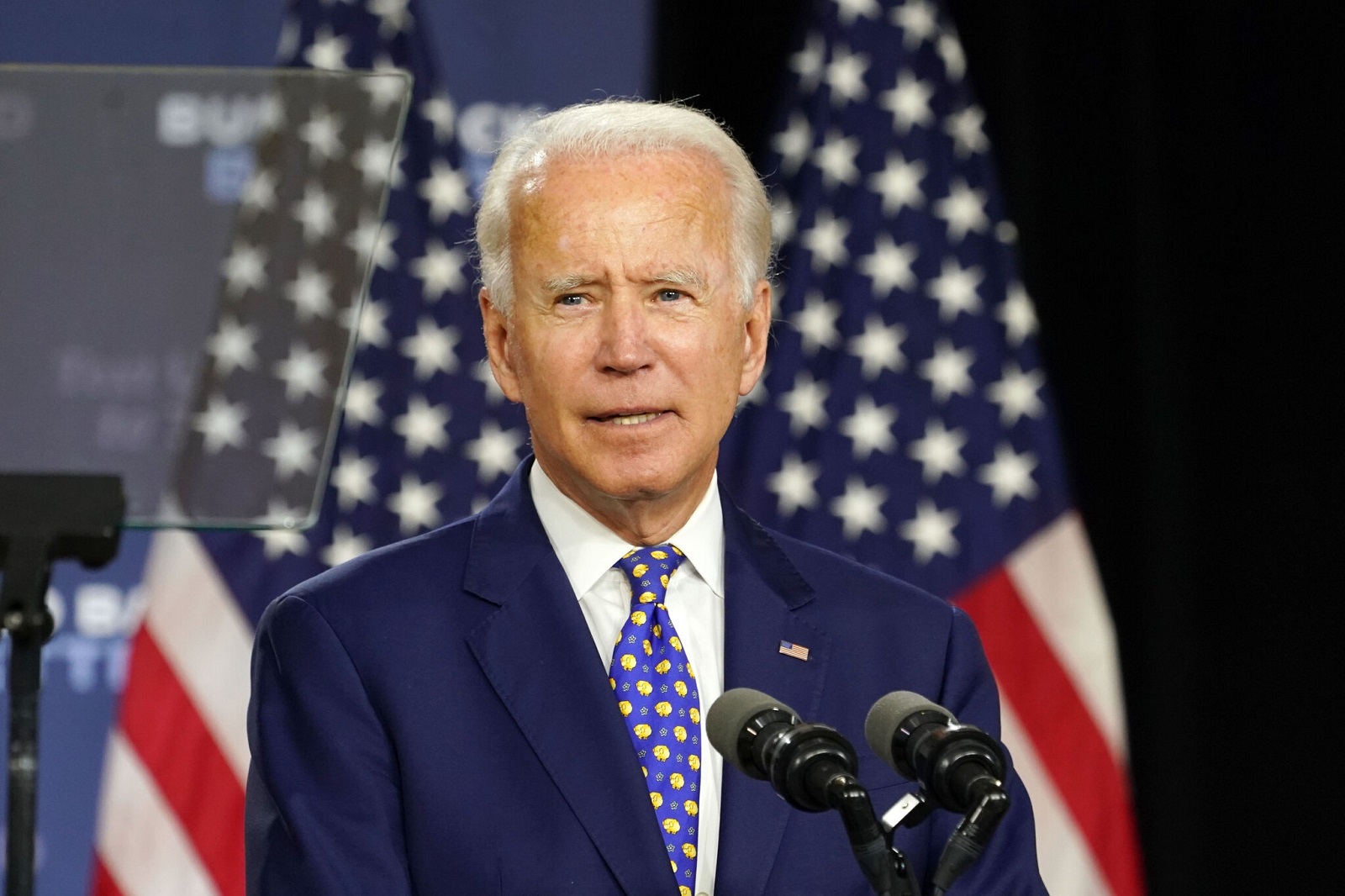
But then, there I was, reading the New York Times to make John Kerry proud, when I came across this article which featured at the top the below image. I thought to myself, huh, that’s an interesting pattern for a tie, not the normal boring tie you see politicians wear:
So I opened up the image in a new tab, and I zoomed in. Do you know what I saw???
That’s right I saw little sheep! Joe Biden was wearing a sheep tie, for no discernible reason except maybe that he liked sheep! This wasn’t a speech at a sheep industry event, this was just Joe Biden giving a normal speech, wearing a sheep tie! I had to know more, so I launched a brief investigation of Joe Biden’s ties (somewhat for my own benefit, but mostly for my super amazing girlfriend, who wants this talked about more).
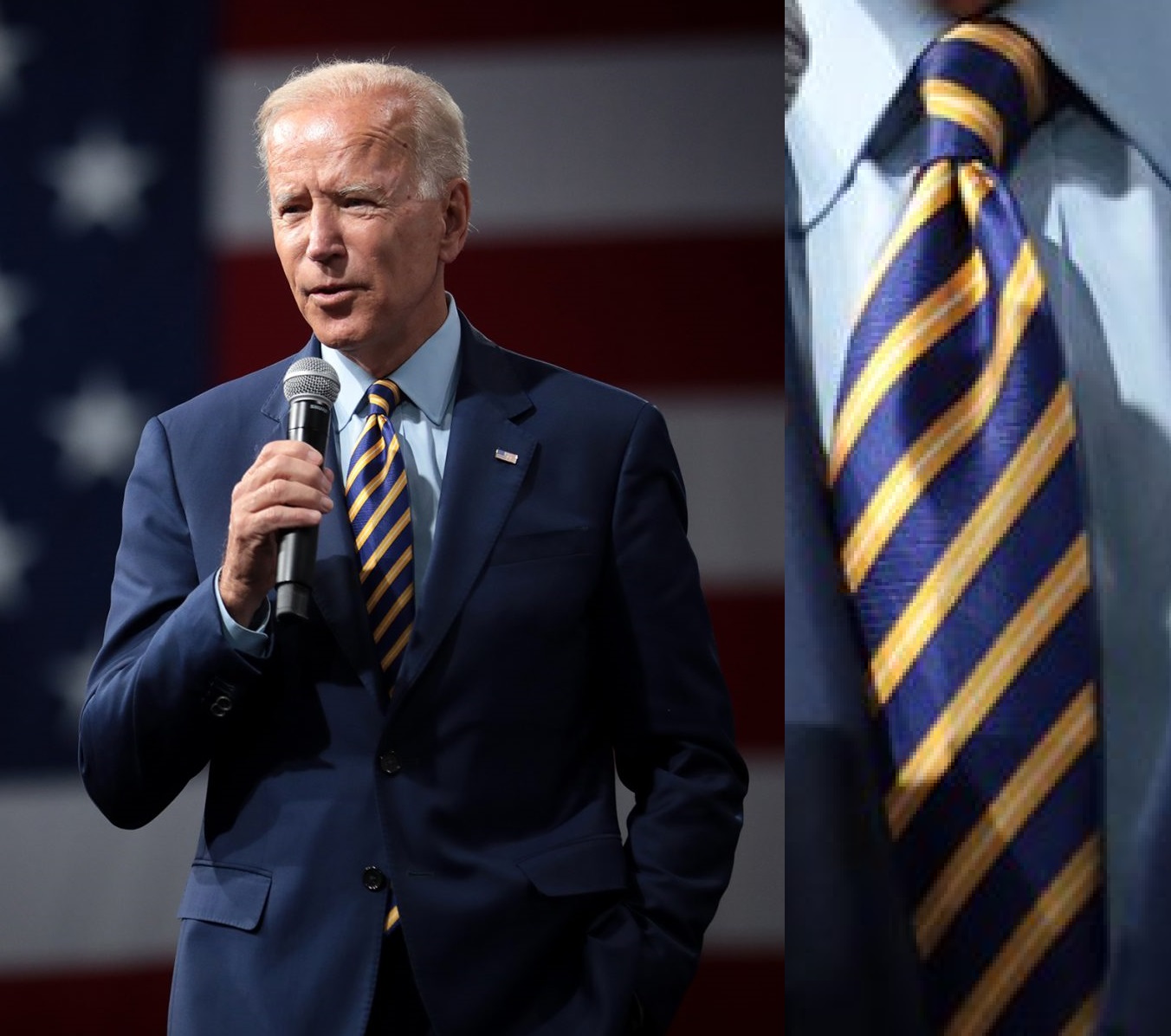
Turns out, for a politician, Joe Biden has a nice little range of ties. Below, he is showing his patriotism by matching an American flag lapel pin (I hate those; politicians could do so much with their lapel but they all do the same boring thing) with a rep tie with American stripes:
But in a nod to the importance of diplomacy, and the future work he will do to restore America’s diplomatic ties (get it?) with the world, here we see him with a European-striped tie:
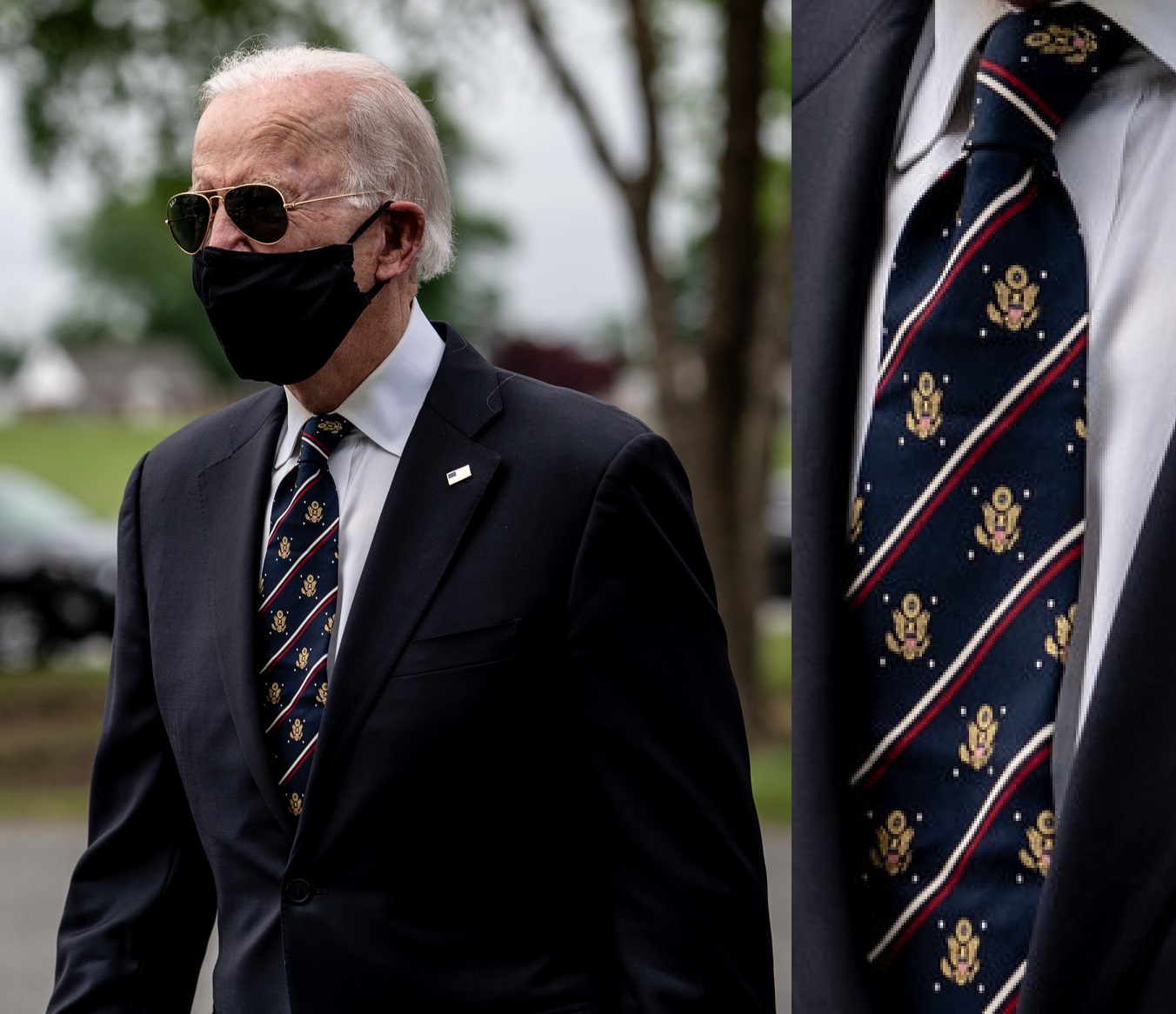
But he does have some swagger! Below is a tie that I initially interpreted as having the Vice Presidential Seal on it, but now which I think is simply the Great Seal, which, hell yeah, ‘Merica:
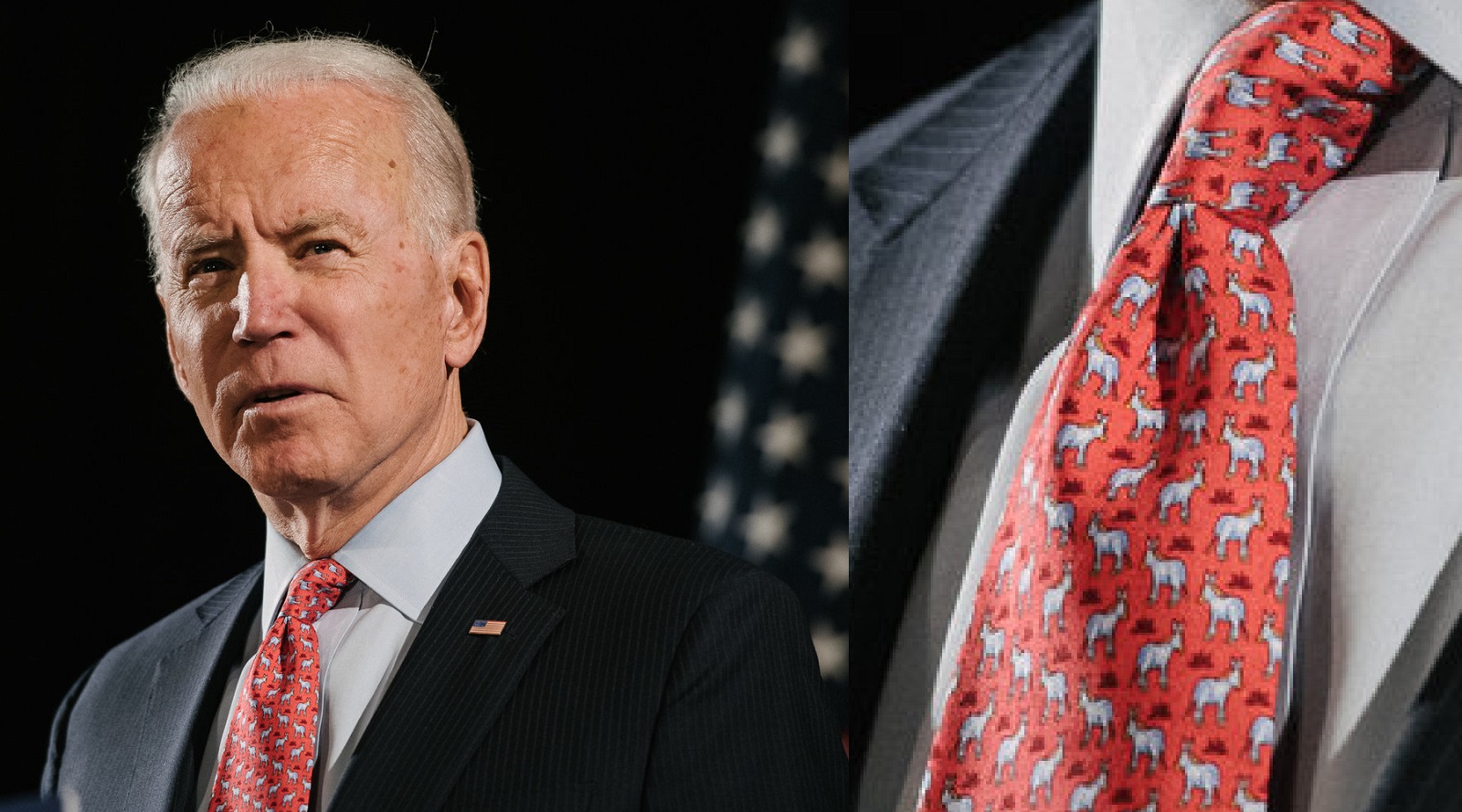
What initially got us on this path was a tie with cute animals on it, and so to cute animals we return. Below is a picture of a serious-looking Joe Biden sporting a tie with a donkey motif on it, which, hey, very on-brand for a Democrat, rock on:
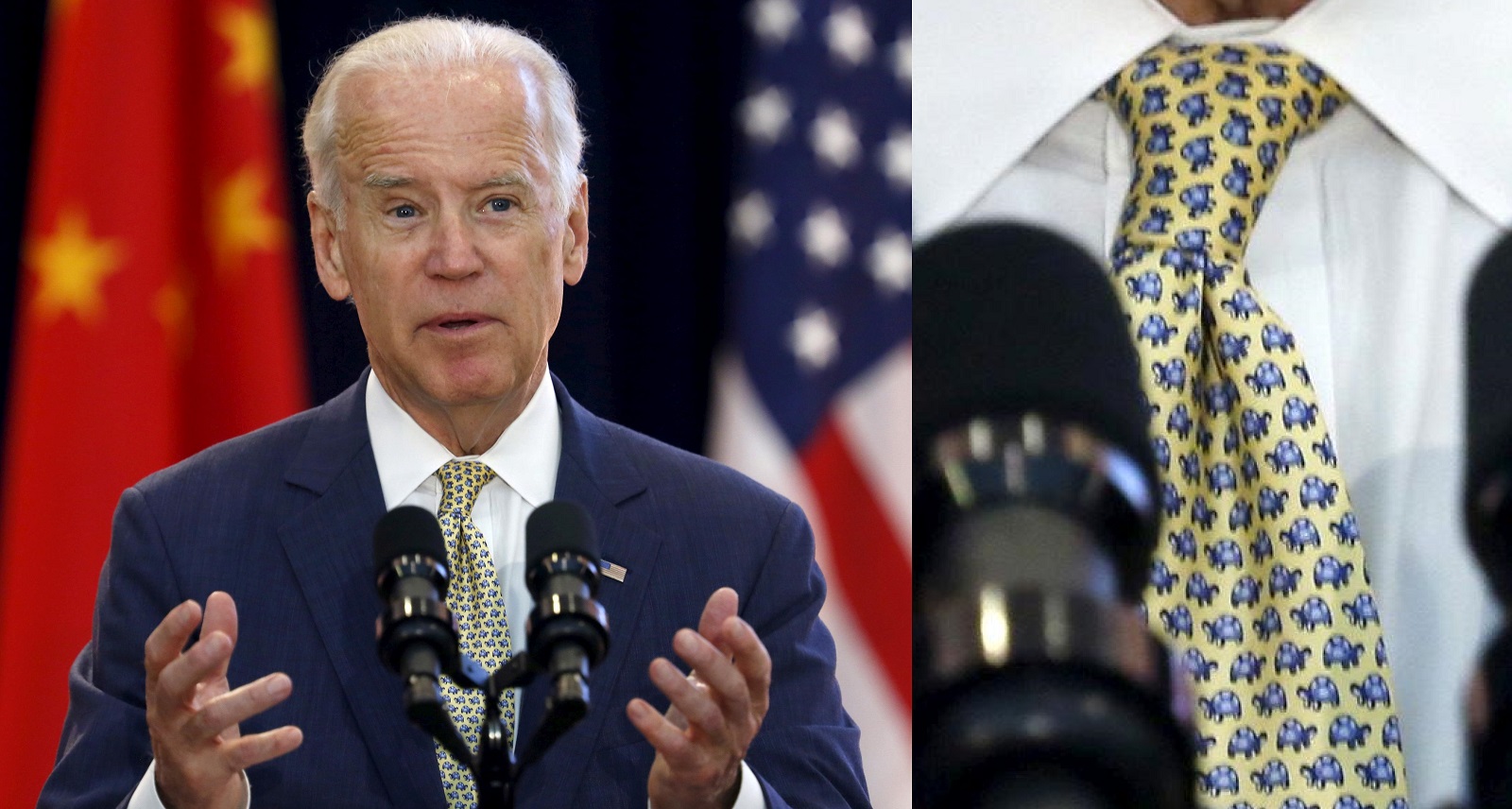
But let me tell you, I have saved the best for last!!!!! Below is a picture of the person who, for the sake of our country, we desperately hope is the next President of the United States, saying presumably important things in front of both Chinese and American flags, while wearing, for absolutely no reason I can think of, a tie with little turtles on it!
Please vote this fall, and please vote for every Democrat you can.
Do Morals Matter? by Joseph S. Nye (this was not, as I was hoping, an analysis of how moral frameworks impacts presidential foreign policy decision-making)
Disasters and Development by Frederick C. Cuny
Famine, Conflict, and Response by Frederick C. Cuny with Richard B. Hill
It was a lie by omission, to be sure. I very purposefully didn’t tell the Engineer what I had done. Instead I frantically tried to call the divers back down and get them to sign my tagout sheet, because if they signed that then there would be no evidence that I cleared the tags improperly. I guess that’s more than just lying by omission, and I was trying to implicate others (unbeknownst to them) into my scheme. Eventually the diver came back down, because he realized he had not signed the sheet. He signed it, and we were Good to Go. Until I was discovered the next day when my Shutdown Reactor Operator reported me to the Chief of the Boat. He didn’t actually know I lied, he just thought there were double standards at play over what an officer would get in trouble for versus an enlisted sailor. But he made the right call and I never begrudged him for reporting me.
Once I was discovered to have lied, everything I thought would happen did in fact happen. I was removed from watchstanding, issued a letter of reprimand, and it affected my reputation with the crew and the chain of command. I learned lessons from all of that, but that’s not really the lesson I wanted to share with you. I learned that day why people lie.
I learned that it isn’t stupid people that lie, or lazy people, or bad officers, or bad people. I learned there isn’t anything inherently wrong with someone that lies (let’s except sociopaths and the like from this discussion). I learned that people will take the easiest path, and people lie because it is the easiest path.
That sounds disingenuous to people. People make the tough decision all the time. They take the courageous path and certainly don’t take the easy way out. But I think it is a matter of framing. We train people on integrity so as to make the thought of lying so distasteful and so unimaginable that it won’t be perceived as the easy way out. We try to make it so that to lie would be to condemn yourself to endless days of questioning your own identity and self. We punish lying severely so the consequences of lying are clear to all. But still I lied that day about the tagout violation, and I lied because the consequences of telling the truth and reporting myself seemed so unimaginably overwhelming that lying was simply the easier thing to do, and I did it.
The lesson I learned about leadership is that if one of your subordinates lies, that is a huge and immediate signal that something has gone wrong with your leadership and the system you have set up. If someone lies, they are still responsible for that lie, and that lie should be met with the appropriate consequences. But if a person lies that means that you, as a leader, have set up an environment where telling the truth is no longer the easy answer, and you need to immediately rectify that. Sometimes that is hard or impossible. The sheer nature of the submarine service means that there are huge pressures on everyone nearly all the time, and so a lot of times the only option is to make lying have even more devastating consequences.
But nonetheless analyze the rest of the situation. Why did this person feel like lying was the easy way out? Is it that when they tell the truth, it is met with such negative consequences that it doesn’t make telling the truth worth it? Have you set up bad incentives? Do you shoot the messenger so no one wants to tell you the truth and only tells you what you want to hear? Maybe instead your subordinate has been heaped with such responsibility and innumerable tasks where it is impossible to get them all done. If they’re honest that the tasks they have been assigned are impossible, is something done about that, or are they told to just get it done anyways? And if the answer is that these impossible tasks have to get done, no matter what, why wouldn’t they lie? What other choice were they left?
When a subordinate lies, look at the situation they were in and figure out why the choice they made was the easy choice to make. Expand your scope to the other people that work for you. See if they are in a similar situation, and be proactive to make telling the truth the easy and obvious answer. Training people on integrity is important, and it is important to do it regularly. But people only ever act in response to the situation and environment they are placed in. You, as a leader, don’t get to make people’s choices for them. But you are the one that creates the environment in which they make those decisions. Make sure it is an environment in which people can make the good choices you want them to make.
I came across an article about the CO of the USS Decatur getting fired for lying, so I wanted to share some thoughts on lying. I’m on a “thoughts on leadership” kinda kick with my posts on decision making, and this dovetails with my post on regrets. The other regrettable and regretted decision I considered writing about was the time I lied to cover up a tagout violation.
I now believe that the most important trait in a leader is honesty, which is a much larger concept than just not lying. Not lying is an important part of that though. Back at the Academy, and throughout my time in the fleet, we had regular training on integrity. I was going to say these training sessions were annoying, but that’s not quite the right expression. They were fine to go to, and I didn’t particularly mind going, it’s just that if you don’t lie you’ve already kind of achieved max integrity. You could achieve no higher level of integrity by like, not telling lies moreso than you already were (or uh weren’t) if you weren’t a liar. I believed myself to be a person of integrity who, when faced with a difficult choice, would make the right decision. Until I went ahead and found myself in that position and lied anyway, and learned an important leadership lesson about lying.
The story involves some nuclear reactor stuff and some work controls stuff I’ll try to avoid going into detail over in order not to bore you. This was of course back when I was on the submarine, and the ship was going to do some testing which had not been performed in Guam ever, or at least in anything resembling recent memory. This involved discharging some nuclear material from the submarine to the submarine tender which, for various reasons involving piping connections and the possibility of spewing boiling radioactive water all over the harbor if it went poorly, made people nervous.
To cope with the work and the schedule, the engineering department was split into two watch teams that would stand back-to-back 12 hour watches. I was selected to be the Engineering Duty Officer (EDO) for the day shift, and was therefore the lead guy for this whole project. I wasn’t in charge of planning it, but I was in charge of actually doing it, leading my team and all that. This evolution took what was supposed to be days and turned into weeks of preparatory work. It went from days to weeks because so many things went poorly. They mostly went poorly on the submarine tender side of things, but people’s hackles were raised. Naval Reactors was keeping a close eye on all this and so was everyone else and there were these big wigs and in and among this whole massed operation somehow check valves could still get installed backwards. My counterpart EDO on the night shift had already been replaced like twice, for relatively minor stuff that blew up only because everyone was so nervous.
So it was in this environment that I went to go clear diver’s tags one day. Diver’s tags are part of the maintenance system, and function to prohibit the operation of any equipment that could harm the SCUBA divers that would do work on the ship underwater. When you want to have divers work on the ship, you “hang” these tags, and when the work is done you “clear” them. To ensure these tags are hung properly and cleared safely, there is a system of checks where a representative for the divers will come onto the ship and authorize the tags to be cleared. They have to (back then anyways) sign out of the tags on the computer, and then physically sign on a sheet for every tag that is authorized to be cleared. So the divers came down, signed out of the tags on the computer, and I went ahead and authorized for the tags to be cleared. The mechanic went around and cleared the tags, and I checked them all, and went to go file the paperwork, at which point I realized I had fucked up big time.
The divers, you see, hadn’t signed for the individual tags. I had, at that point, committed a tagout violation by clearing tags that weren’t properly authorized to be cleared. Tagout violations are treated as a huge deal, because they are a huge deal, because the tagout system is what keeps people from being killed when they work on equipment. It has to be respected and little mistakes could easily get someone hurt. The proper answer was to go report to the Engineer and the Captain what I had done.
Then again, this wasn’t really a big deal. The diver’s tags exist to keep divers safe. If there are no divers in the water, they don’t really have a point. And the divers were not in the water, they had no intention of going in the water, and were in fact not authorized to go into the water. So really I had just made a paperwork error. And in my scenario, I knew what would happen if I reported my tagout violation. I would be relieved as EDO. I would let down the whole team, and someone else would have to take my spot. Besides having shucked my duty onto someone else, me getting fired from the EDO job would probably cause more delays, which would hurt the guys, and someone else would have to learn all the things that I had learned to do the job. And on a personal level, it would be a failure on my part and I would be reprimanded. So I lied.
This turned into like 1800 words so I split it into two parts. Come back next week for the thrilling conclusion.






.jpg)







 Pat in the World
You must be logged in to post a comment.