Spain IV: Love Yarn Madrid

I wrote just last time that the reason we went to Spain was to go to art museums. Reader, this is a bald-faced lie. The real reason we went to Spain is for yarn. And so on our third full day in Spain we went to Love Yarn Madrid (site might not be updated as they prep for the next year, but they have an Instagram).

We are of course yarn people around here. We wanted to make the most of our time at the festival so we woke up early with the goal of getting there right when it opened. This didn’t quite happen but we weren’t far off the mark, and would have been on the mark probably if I had figured out the Spanish metro system better. I told you I would write about this later, but after finally navigating our way through the metro station and on to a train we had a lovely ride and got to enjoy the real sea of humanity that rides the Madrid metro. There was a guy who was riding holding a whole yerba mate setup in his hands, including a gourd and a thermos with more hot water, and another guy playing panpipes for cash but the guy I wanted to tell you about is a whole different guy playing the accordion, which marked like the second accordion I had ever seen played in real life, having been lucky enough to see a Weird Al concert at the Kennedy Center last year. That was great. So was this guy. But eventually the metro served its purpose, having delivered us to the Pabellón de Cristal and thus to the yarn festival itself.

This was of course a yarn festival and not a sheep and wool festival, so sheep were only there in spirit, but it was a really good festival. There was a great deal of enthusiasm and it was really well run and had a pretty excellent array of food trucks out back to satiate our baser desires (though on that note, I always thought it was a little overblown when Italians would get upset at American intpretations of Italian food, except here they had a Mexican food truck from which we got nachos, and man, like, I get it now). The first thing we did on arrival was to buy a tote bag and go to the coat check and then it was off to the races. We went through every single vendor stall to figure out scope out the selection, which again was really good. A lot of your standard yarns you see everywhere but there were some cool Spanish brands and my super amazing wife of course prefers the brands that are not only quality but have some history.

While she was deciding what yarns she wanted to buy we checked out some of the other sites. The funnest thing they had going on was a “Yarn Olympiad.” The idea there was a series of competition of standard yarn skills, such as yarn ball winding which is a fun idea. The competition was fierce and the prizes delightful. They had that throughout the day. They also had a yarn fashion show which I don’t recall seeing at the Maryland Sheep & Wool Festival. The particular show (they had a couple) that we stopped and watched featured the work of Midori Hirose, a designer I had not heard of but with which my super amazing wife was familiar. They had the models walk the little runway with the designs and then eventually Midori herself came out which, you know, amazing to be in the midst of yarn stardom.

Midori in the middle.

Having seen the sites and carefully considered which moves to make, it was time to buy stuff. The biggest single purchase was that my super amazing wife got enough yarn from a Bolivian brand for a sweater. Before we arrived we were not expecting to find so yarn sellers hailing from former Spanish colonies, but in retrospect it made perfect sense and the reason you come to a yarn festival in Madrid is to be exposed to a whole new segment of the yarn world you hadn’t through much about. The yarn from Bolivia is made from baby llama wool and man, so soft. Those baby llamas know what they’re doing. Unusually, I also got some yarn. It is unusual because I don’t knit, but my super amazing wife said she would make me a hat which is extremely kind of her. The brand is Xolla, and I thought it was cool because the wool they use is from Ripollesa sheep which, according to their website, is one of the three native Catalan sheep breeds, and all are endangered. So good to support! My super amazing wife wasn’t originally going to get any from that brand but then saw mine and totally got jealous and got enough to make herself a scarf. Her final yarn I think was of some alpaca wool, and she got enough to make some socks.

Exhausted at this point from all the yarn shopping and fashion shows and crowds, but resplendent with natural fiber purchases, we head on out and boarded the train back into central Madrid. Love Yarn Madrid is apparently one of the newer yarn festivals, but the organizers really knew what they were doing and there was a wide selection of vendors that we normally wouldn’t have run across. It was cool to get some yarn tied to sheep so particular to Spain along with more exotic fibers from overseas. I am sure we’ll go back someday.
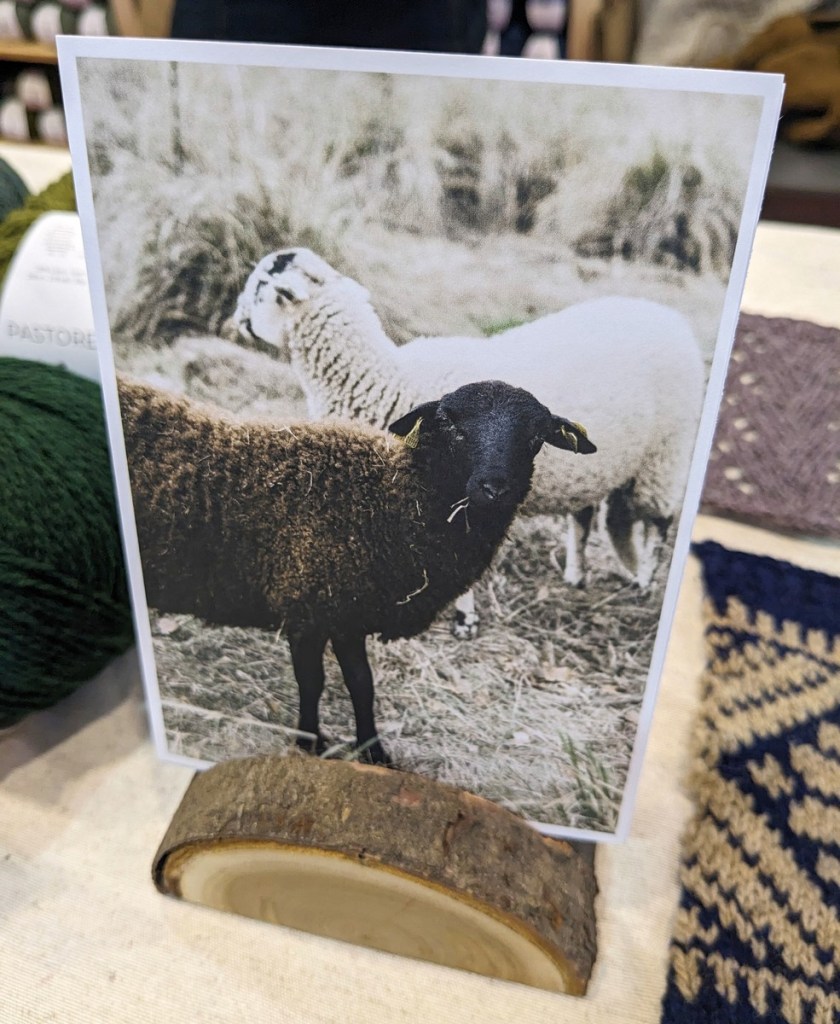
The sheep at the festival were only there in spirit, like the above Ripollesa cuties.

Spain III: Museo Reina Sofia

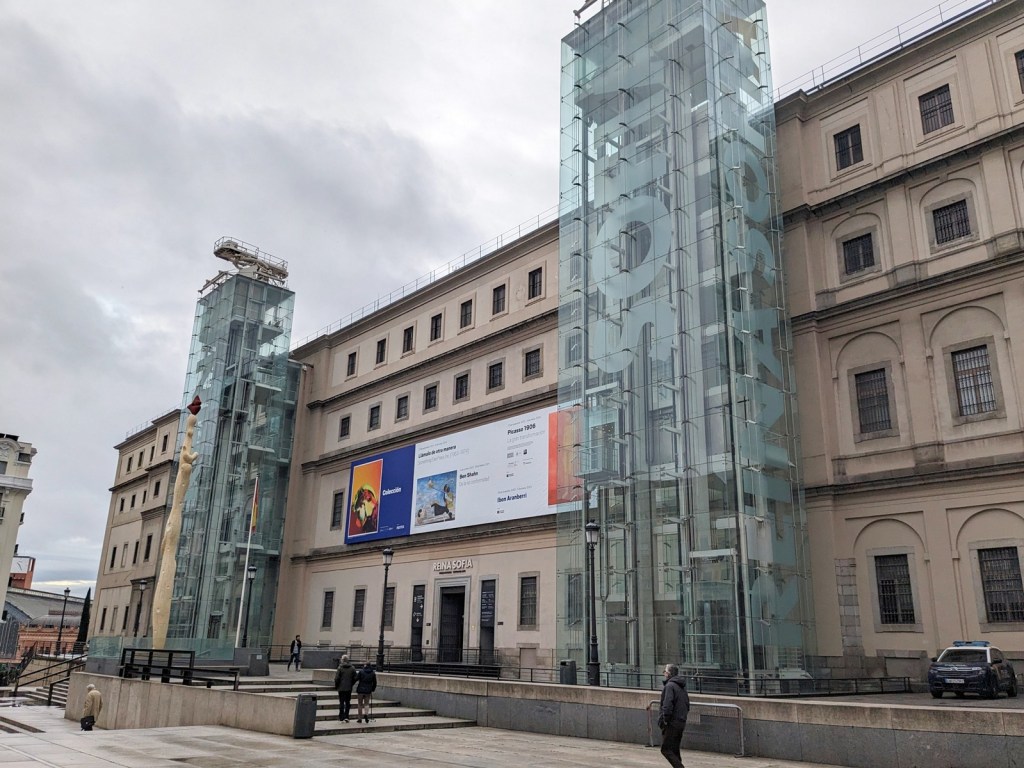
One of the primary reasons we came to Spain was not for the rain on the plains (though it was kinda gloomy in Madrid when we first showed up) but for the art museums. So on the second full day in Madrid we got our butt over to the Museo Nacional Centro de Arte Reina Sofia as early as we could!

“As early as we could” was in fact early enough for breakfast, which we had at the trippy café (“70s fever dream,” I wrote in my journal) they have there. We were not so adept at flagging down waiters in the European style so it took us a while to get some traction and we were a bit grumpy due to low blood sugar because we hadn’t had breakfast (I was grumpy at least, maybe my super amazing wife wasn’t) but it was an alright breakfast in the end. I recall the Reina Sofia being almost oppressively large and confusing. Another grumpiness factor is that we had timed tickets to the “Picasso 1906” exhibition and were rapidly coming up on that time but had no idea where the room was. The Reina Sofia is a very large square but with other shapes poking out of it, and on multiple floors, and maybe our blood sugar wasn’t all the way up from breakfast, but we were at a little bit of a loss until we stumbled across the exhibit finally. I don’t think the timed ticket mattered anyway.

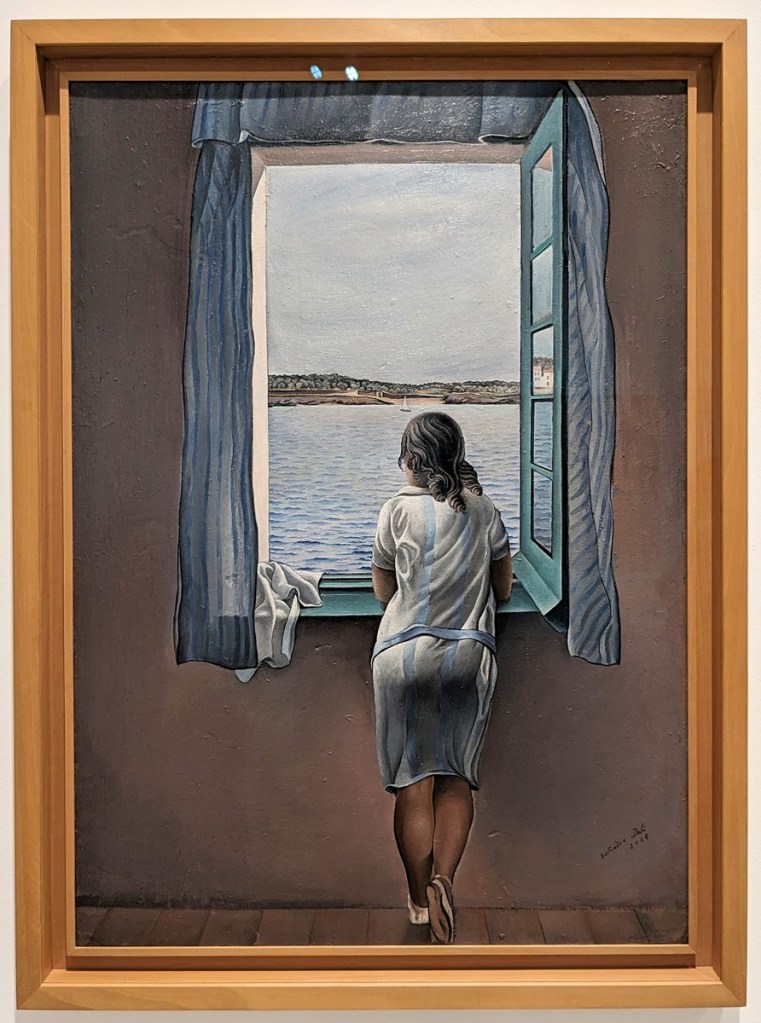
Figura en una finestra, 1925

I did enjoy the exhibit on Picasso (I learned he sculpted in addition to his other work, I don’t think I knew that before), but I think the first thing I was really stunned by was the Dalí above. We of course have a long history with Dalí on this blog, so I thought I knew the man. But lo! Here was something new, a normal-looking painting. Reading about the painting on the internet I found out that the left side of the window is actually missing (for composition purposes), and so maybe that is the surrealist touch. Or maybe the surrealist touch is a surrealist painting a non-surrealist painting as a huge meta commentary on something something something. It’s of his sister, Anna Maria. Later on in the gift shop we bought another portrait (titled “Portrait“) of Anna Maria, so enamored were we with this part of the ouevre. (Do you think when Salvador told Anna Maria he was going to paint her, she was ever nervous? “I’m not going to have large spindly legs and be striding across a desolate landscape or something, am I, Sal?” “No, of course not,” says Salvador, with a wink, “I would never ever do that to you Ann.”)

But back to Picasso. The biggest celebrity in the Reina Sofia is of course Guernica. It is not the only thing in the hall in which is resides, but it is the only thing anyone was looking at. We went on a gloomy weekday but there was still a huge crowd (as you can see above), with tons of schoolkids being lectured about the piece. The only other reaction I wrote down about the painting is that it is “really impressively large,” a controversial statement I am nonetheless willing to stand by. Or sit by maybe, like the kids did.

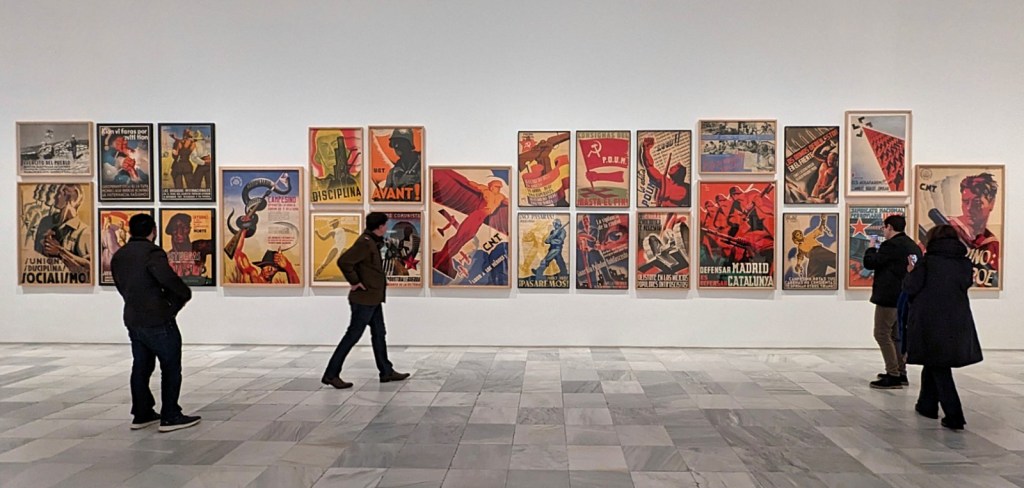
Speaking of the controversial, another thing hammered home in this museum for me is that context matters. Since the art in the Reina Sofia is more modern than the art in the Prado, I didn’t really know what was going on. I mean I’ve read Homage to Catalonia and I am aware that WWII happened, but the intricacies of modern Spanish history that so much of the art was responding to were rather lost on me. There was some people in the art world that will tell you not to read the label next to the art but when there are explanatory notes man do I find those helpful. But lacking those contextual clues I had to enjoy the below posters ONLY for the pretty colors:

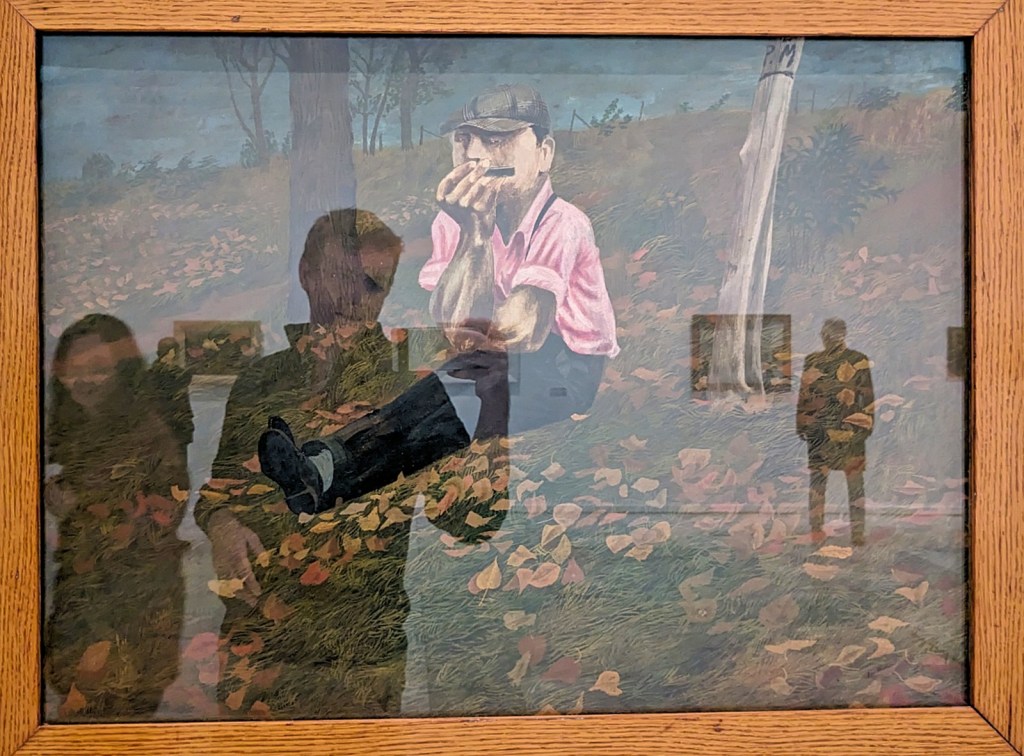
Thankfully though, as we were wandering out in a contextless white void, we eventually stumbled upon something we did have a whole lot of context for, that being an exhibit on the works of Ben Shahn, whose artworks focused on “the rights or workers and immigrants” and “the abuses of the powerful and the privileged” in the U.S. (and globally) during the Depression, New Deal, and into the Vietnam war. We Americans abroad had finally found America abroad and it all made sense. I knew what was going on in this exhibit. An admission though. I included both the pictures below because I thought both works were by Beh Shahn, but it turns out the work on the left (A Mule and a Plow) is by Bernarda Bryson Shahn, who did happen to the “life partner” of Ben but man she’s good. Though unfortunately for Bernarda, Ben had the single funniest work of art in the whole museum, by virtue of naming the painting on the right “Pretty Girl Milking the Cow.” Man I love art.

Anyways full of art it was time to get full of food. To do this we went off to the Mercado de San Miguel, Saint Michael being (I assume from context clues) the patron saint of tapas. We spent a while wandering the place buying ourselves all the little treats we deserved, starting with a calamari sandwich and croquettas before giving into our baser instincts and picking up towering plates of cheese and washing it all down with some very fancy sangria. A wonderful way to spend an afternoon and maybe like in the museum context clues would have helped but are carbs not the universal language?

The remainder of the day was spent wandering in and out of little shops to buy souvenirs and the sort of knick-knacks and olive oil bottles that really drive home to any visitors we have that my super amazing wife and I are seasoned world travelers. To top off the evening, on our final walk back to where we were staying we also of course stopped by to say hi to Cervantes. I left with a sudden urge to buy myself an old suit of armor.

Spain II: Museo Naval

Reading this week:

  • Greasy Luck by Gordon Grant
  • A Working Woman by Elvira Navarro, translated by Christina MacSweeney

I have discussed before in this forum my Spanish roommate that I had during my Firstie year at the Naval Academy. His name was Francisco and he was a semester-long exchange student from the Spanish naval academy. He had been an enlisted sailor before going to the academy, and as such his lived experiences were unimaginable to me (specifically he was 29 and married). I still have fond memories of Francisco and the deep life lessons he bestowed upon me (see the linked post about sandwiches), and so in tribute to Francisco’s service in the afternoon of our first full day in Madrid my super amazing wife and I visited the Museo Naval!

If you Google the Museo Naval you will find reviews describing it has a “hidden gem” and man that is true. The entrance is unassuming and I wrote down in my journal that the foyer was “dingy.” I had greeted the nice lady at the front desk with my limited Spanish and she seemed very disappointed when I said I preferred English as she handed me a pamphlet on Jorge Juan (they had a special exhibit on him at the time). But you ascend the stairs and man WOW. It’s gotta be one of the better if not the best naval museums in the world. It is surprising how big it is as you wind through the twists and turns that reflect the twists and turns of the Spanish navy’s history. You really oughta go but if you can’t luckily it appears Google has turned it into a street view thing so you can catch a glimpse yourself.

The museum takes the prudent choice of starting at the beginning, with the early history of the Spanish navy (or I guess the Aragonian and Castilian naval forces). Apparently it took about a century between cannons being introduced to Europe in the 12th century and people thinking of putting them on ships in the 13th century, but the museum had the above examples of early 16th century shipboard artillery which is pretty neat.

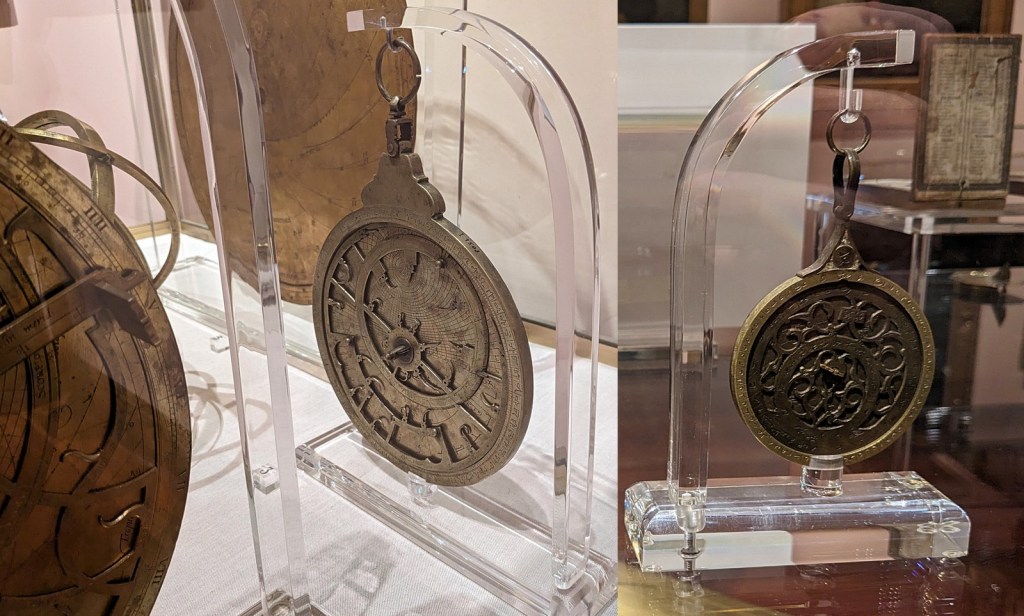
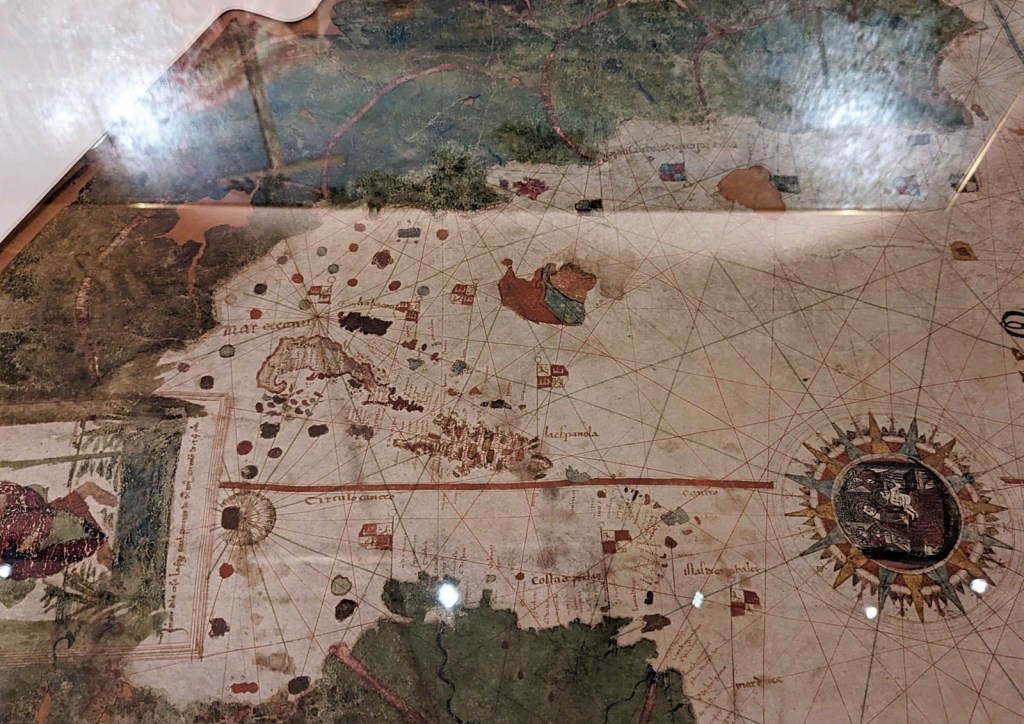
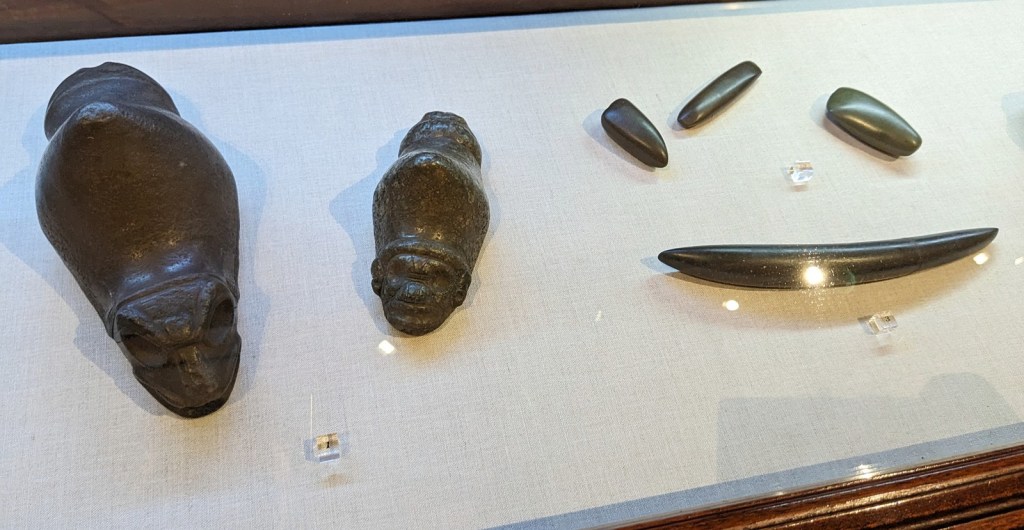
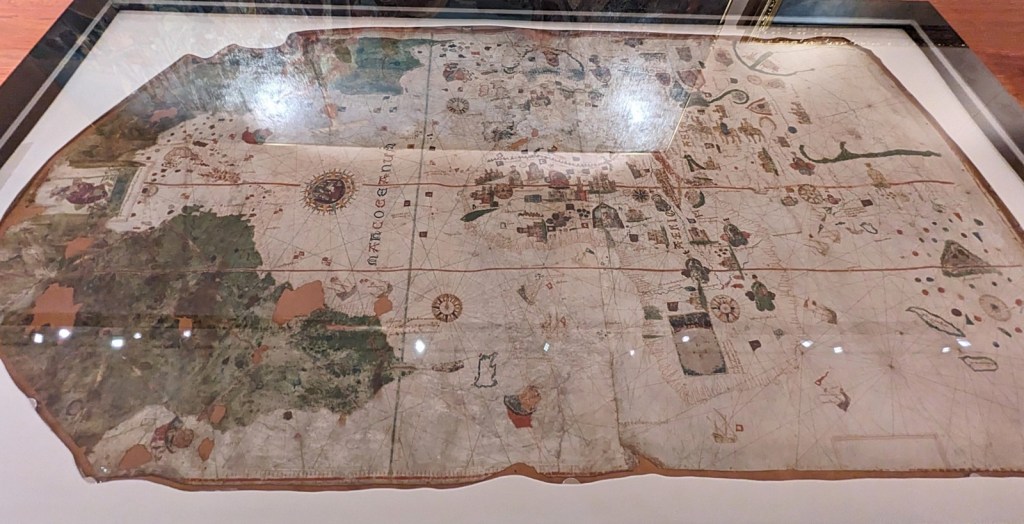
Especially exciting for me was all the bits about early navigation. The collection here really was especially extraordinary. I have just talked about how much I like astrolabes (man I want an astrolabe), and the museum had them in spades. They also had all sorts of old maps, including even a huge globe dating from 1688. The crown jewel of their map collection was the Juan de la Cosa map, below. This is the oldest known map to feature America. Ole Juan there took part in Columbus’ voyages and only 8 years later in 1500 was banging out the below relatively detailed depiction of the Caribbean to demonstrate the majesty and extent of the Spanish empire. On that note, the museum is pretty laudatory and I don’t recollect them struggling to cope with the cruel nature of colonialism. They had a pretty huge painting of Columbus and a collection of Taíno artifacts to really drive home the number of people subject to the Spanish crown. However even in the midst of all this what I personally was most interested in when it came to the Juan de la Cosa map is the depiction of Africa, especially how the Nile and Congo rivers meet in a lake in the mountains of the moon, because I have my very particular interests and those interests are boats and Africa and navigation and steam power and integrated farming.

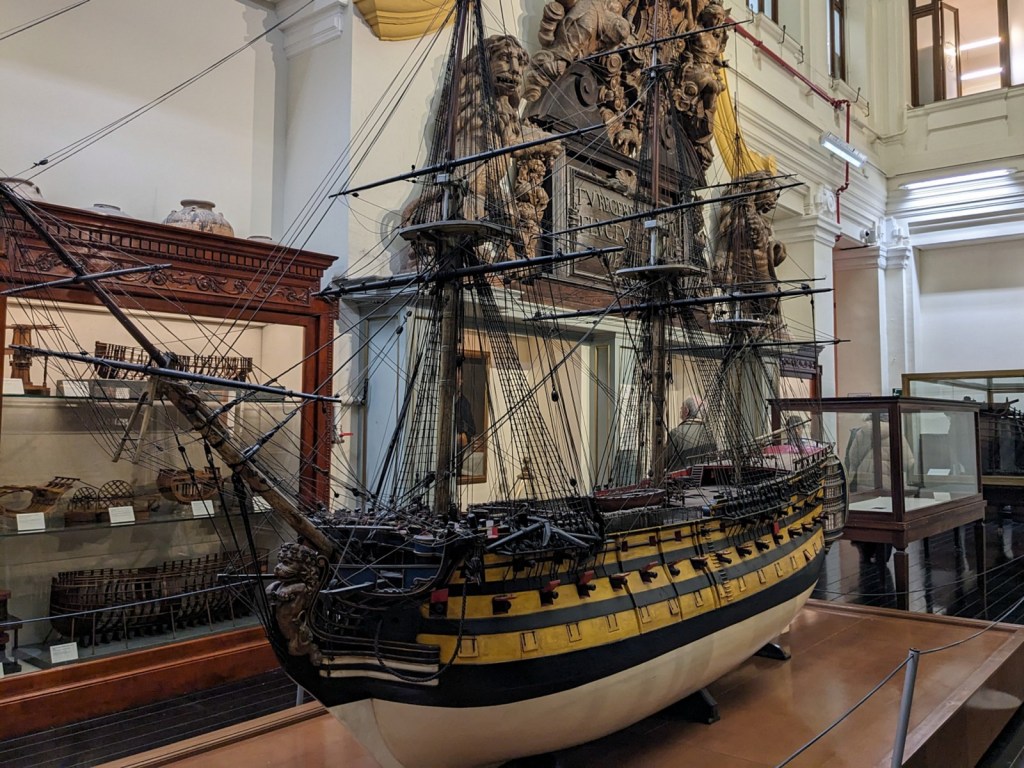
Really the sheer number of artifacts on display in the museum was overwhelming. They even had a whole section full of objects recovered from the Spanish nao San Diego, which was sunk by the Dutch in 1600 in the Philippines. A whole room choc-a-bloc with Chinese porcelain and Phillipines pots and Thai jars and man, you know, commerce! History! Boats! Stunning. And of course how could it be a naval museum without being absolutely stuffed to the brim with SHIP MODELS!!!!

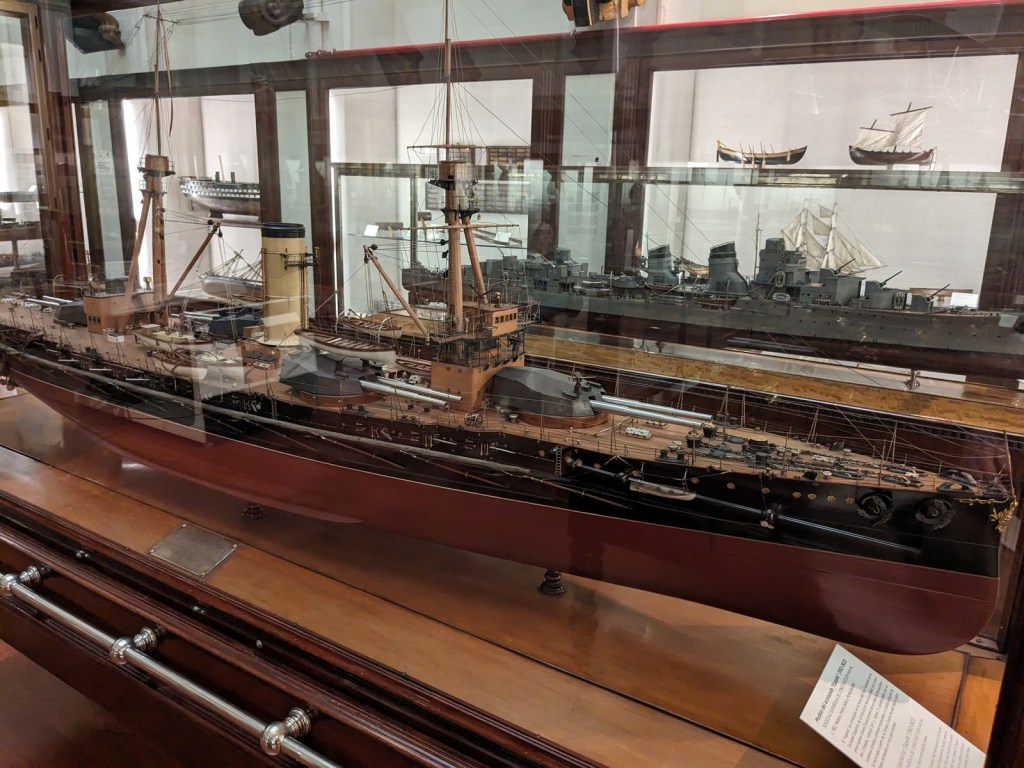
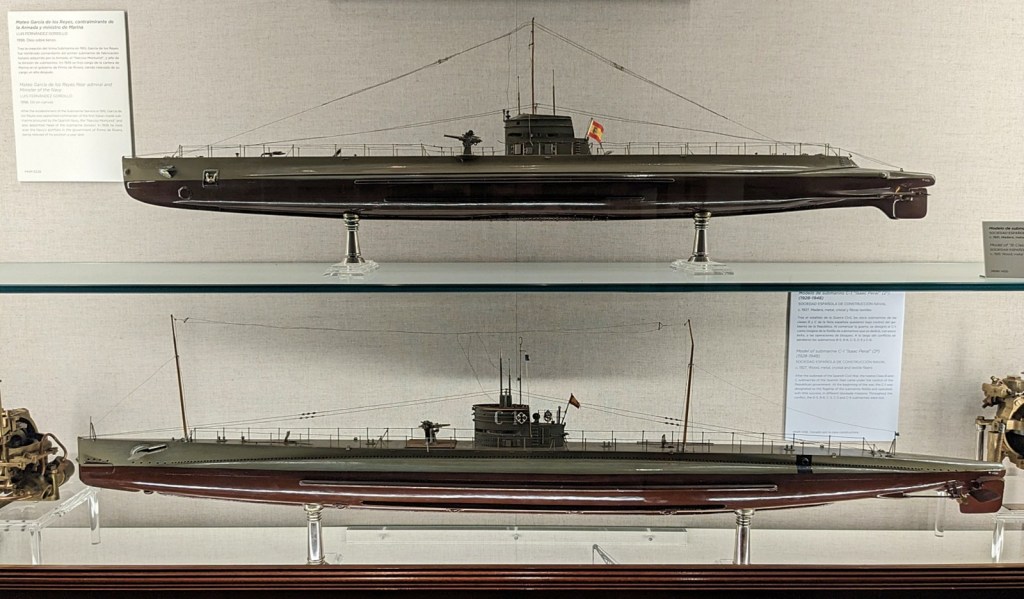
After our visit to the museum my super amazing wife suggested I get into ship model building and I don’t think she knows what she is suggesting. I could become so obsessive, you don’t even know. She clearly doesn’t. But they had a whole bunch of ship models, of ships from every era and from so many locations (check out the Malaysian war boat above), and not just of ships! I just told you I love steam power and they had a whole intricate model of the turbines from España-class battleships and even (not pictured) a model of a water-powered sawmill they used to saw all the planks to build all these ships! Unclear if the model sawmill sawed model planks for the model boats.

So all in all a great museum, perhaps the best Naval Museum. Spanning centuries and full of intricate details and all sorts of information about the huge lifespan of the Spanish Navy, presented in both English and Spanish, if you are in Madrid man you gotta go. And then, I forgot to mention in the last post, after the museum we went off and got churros and chocolate, and if you are in Madrid you have to do that too. Do both. Ships, and churros. This is what is best in life.

Spain I: Museo del Prado

Reading this week:

  • Freedom’s Debtors by Padraic X. Scanlan

My super amazing wife and I got married about a year ago (as loyal reader(s) of this blog will recall) but we never went on a honeymoon so we decided it was time to go on a honeymoon. We also decided that honeymoon is a state of mind and that we can call any vacation a honeymoon but this is the first vacation we called a honeymoon so we had to go big. Specifically, we had to go to Spain.

Travel to Spain was straightforward and everything went perfectly smoothly. The first city we were going to was Madrid. We arrived in the evening and got a taxi to the place we were staying, the biggest hiccup being that I couldn’t figure out how the key worked but luckily my super amazing wife saved the day and so we had a place to sleep. We were pooped but needed dinner so we grabbed something easy, spotting on the way a fantastical-looking pastry shop which we returned to for dessert. The only mistake we made here is that within mere hours of landing in Madrid I had one of the best cheesecakes I have ever had in my life and I spent the rest of the trip chasing that same high with only varied success.

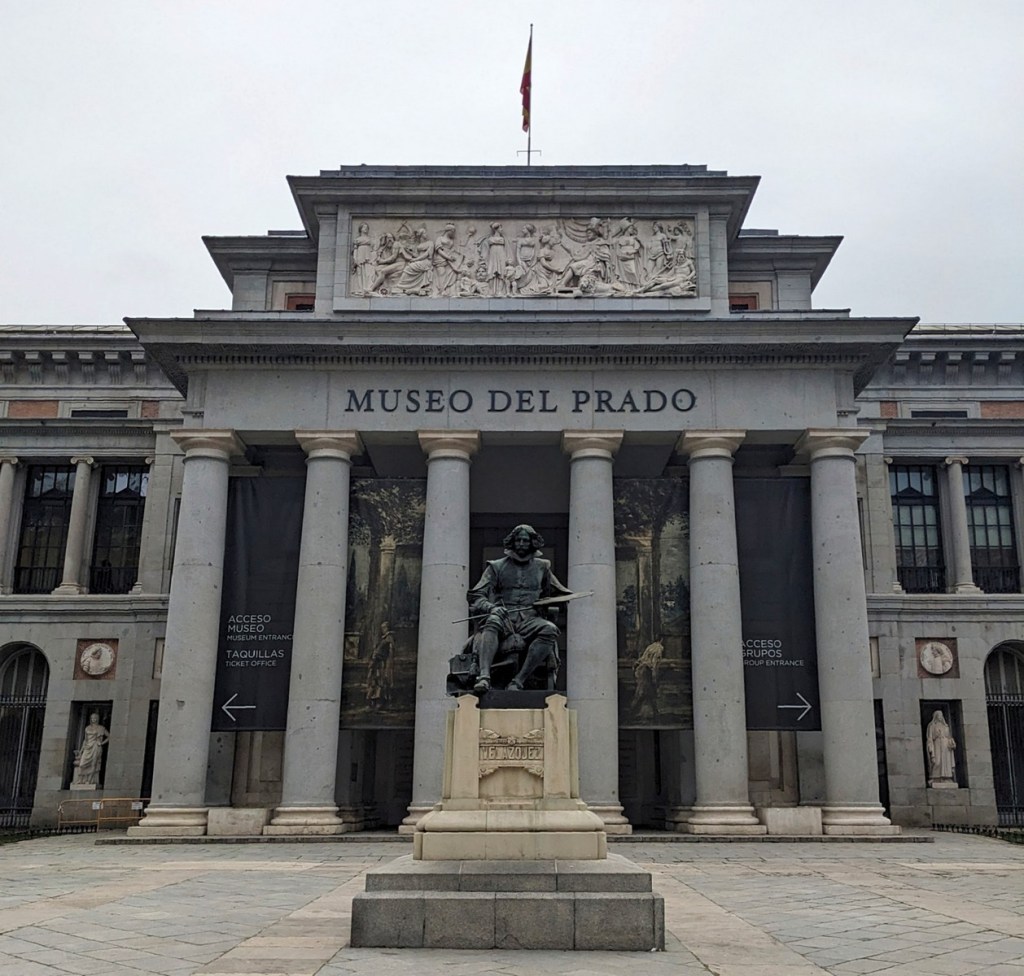
The next morning our first destination was yet another wondrous pastry shop where we got some heavenly pastries for breakfast. Fortified, we quickly made it to our first big honeymoon adventure: Museo del Prado. The museum was great! For those that haven’t clicked the link, it’s an art museum, and a big one, focused on classical art. In line with their pre-20th-century vibe, photography was not allowed, so I can’t do my normal thing of showing you bad photos of great art. Instead I will have to simply describe the journey and use links along the way.

Overwhelmed by the layout, the first wing we managed to focus on was where they kept all their Hieronymus Bosch works. I already used “fantastical” in this post to describe a pastry shop but man that was a waste because now I need to talk about Bosch. The biggest work with the biggest crowd was The Garden of Earthly Delights of course. I had seen pictures of that thanks to the Spanish classes I did poorly in (I would also have seen it if I had done well), but his other works were more astounding. I am disappointed to learn it is merely attributed to the “workshop of,” but the single most surprising was The Temptations of Saint Anthony Abbot, which features prominently an old lady that is also a house (which apparently makes it a brothel? Or maybe it is the naked lady that makes it a brothel. Not knowing St. Anthony I don’t know which is the tempting part for him). I mean, look, if this was a Dalí that would be run-of-the-mill, pedestrian, expected. But Bosch(‘s workshop) painted this in 1510! How did they know to do that? The past is both a foreign country and yet exactly the same, I don’t know how they do it.

From Bosch we wandered into some religious iconography which I am usually pretty whatever about, but all the works in the Prado were bright and beautiful and being a big fan of art restoration YouTube I was desperately impressed by their restoration department. Those people know what they are doing, it is evident. Another extremely fun exhibit they had was “Reversos,” which was all about the backs of paintings. A couple of things fell under that bracket. One was the literal backs of paintings, which held other sketches and earlier works and clues to the history of the paintings on the front. Another batch were painters being cheeky, imagining works from another perspective or painting the literal backs of paintings as a meta-joke. Even meta-er was the painting we bought a print of, which featured a cat busting through some canvas to try to eat some sardines that are hanging off the back of a painting, which is not where I would store sardines but there you go.

You of course also can’t go to the Prado without talking about Goya. They got a lotta Goya at the Prado. A whole lot. Multiple rooms are dedicated to the Black Paintings. I knew about the Black Paintings and was expecting all of Goya to be surreal and dark and wicked but the Black Paintings wing was one of the later ones we visited, and there is whole other wing full of his earlier works which are bright and cheery and meant to portray beauty. These are also cheeky in their way, the museum displayed side by side both The Naked Maja and The Clothed Maja, which is funny in addition to being an interesting exploration of the cultural background of the time. Sometimes I think I should spend more time in art museums focused on single paintings, but zooming through such a massive collection of one person’s oeuvre has its attractions as well. In the rest of the museum there was tons more to see, and just to name some others I liked there was La suerte de varas, Margarita delante del espejo, La aguadora (so achingly bright even in paint), and The Pearl and the Wave (which is funny for the name alone).

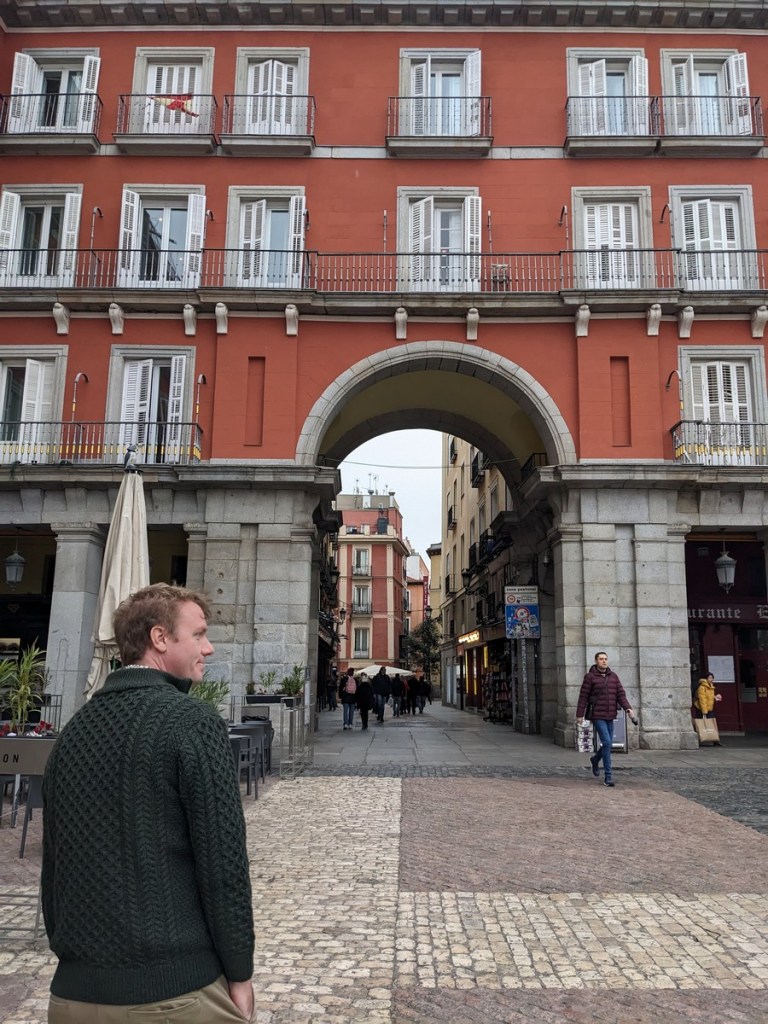
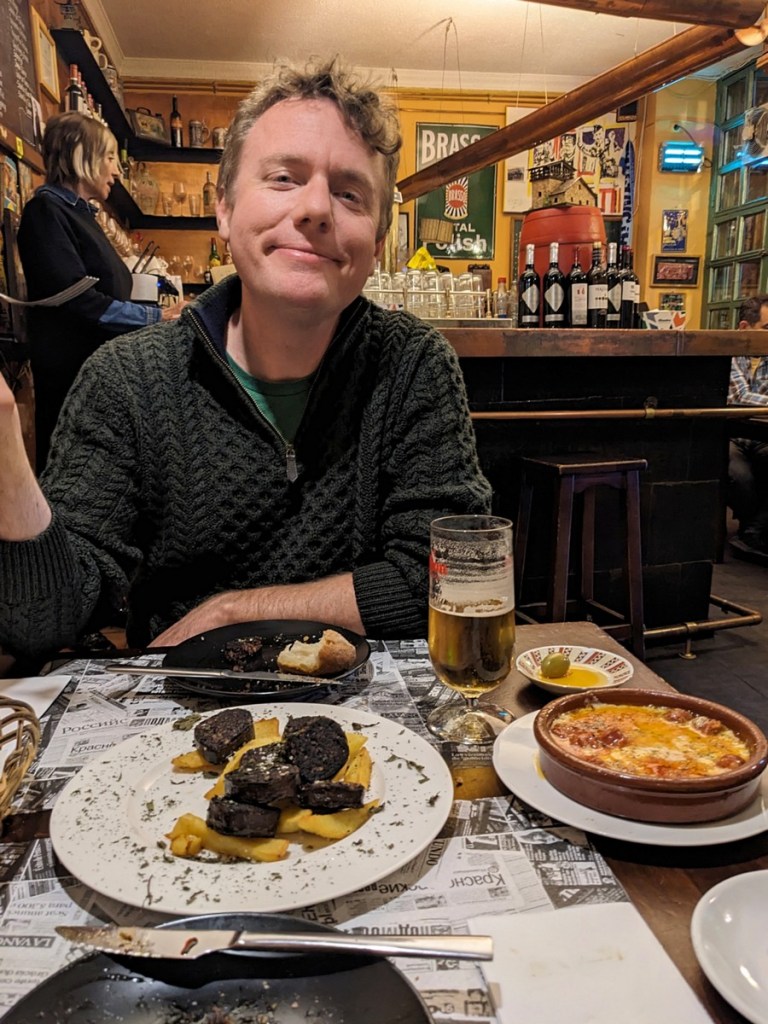
Full of art, we needed to get full on food and found a wonderful little cafe for lunch. Full of lunch we needed to get full of Naval History and so then went to the Museo Naval! But they let me take pictures so I will cover them in the next entry. After the Museo Naval we then had some time to poke more around Madrid and carved a touristy path, exploring the shops and the statues and the Plaza Mayor (above) before finally winding up back at the place we were staying and checking out the closest restaurant which had the significant advantage of being achingly delicious. I did not know if I would be a fan of the blood sausage but I didn’t want it to stop, as you can see below. As a final note, man I enjoy being able to order “una cerveza” and subsequently being served a cerveza without all the hassle of picking one. This is the height of luxury, don’t let anyone lie to you.