

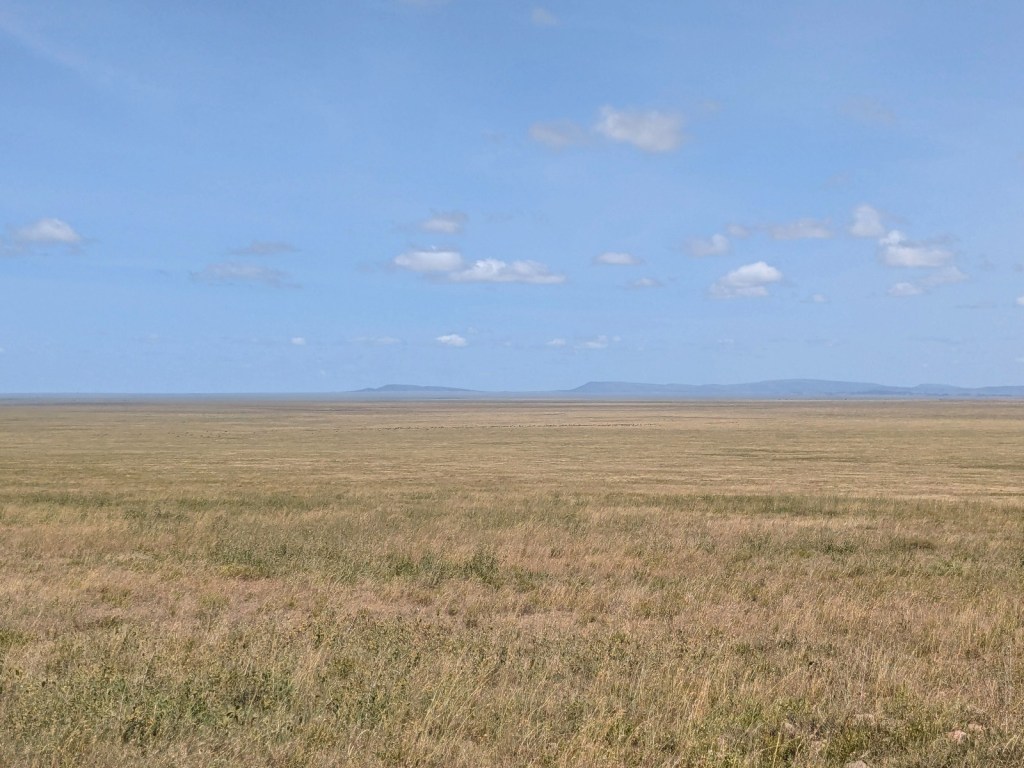
Having spent our second night in the infinite Serengeti plains, today we would be heading out. I was about to type that we would take the scenic route out, but that’s silly because all the routes in the Serengeti are scenic.
Given that cheetahs were my super amazing wife’s favorite animal to see, Obedi mostly spent the game drive trying to find more for us. Despite checking out it seemed nearly every single kopje we never did find any more, so Obedi tried to make up for it by pointing out a bunch of birds (I denounce being a birder but I am in my 30s and it sneaks up on you and Obedi had noticed). I wrote down in my notes that we had spotted a “Butaloo eagle” but it seems much more likely it was a bateleur eagle. We also stopped at one point to admire a very small parrot-looking bird that he identified as a (Fischer’s) lovebird. There was only the one though so we’ll try not to dwell on that.

We then spent some time (unintentionally) herding wildebeest around. There was a whole herd right on the road we were meaning to traverse, so as we inched along the wildebeests inched along too, grunting at us as we went. Also I have not found a spot to mention this so I will shove it in here, but the zebras would stand together with their necks touching and looking in opposite directions, which is of course to keep an eye out for predators but looked very loving.

Before long though we were back to what I thought of as kopje surfing. Each kopje is surrounded by a circle of road and branching out are roads connecting them. As we travelled over the Serengeti I kept switching metaphors, thinking of the safari vehicles as either ships in the sea or as slot cars on the track. It was easier to think of each of us as ships when the horizon really opened up, and you could spot the other vehicles from far off, waving at their occupants as they came close. When we were bouncing between kopjes though it did seem more like we were slot cars on our little tracks, bunching up and spreading out. Bunching out when we all crowded around a kopje which featured a lion, and spreading out to investigate the other kopjes which were inevitably unoccupied if they didn’t already have a safari vehicle around.

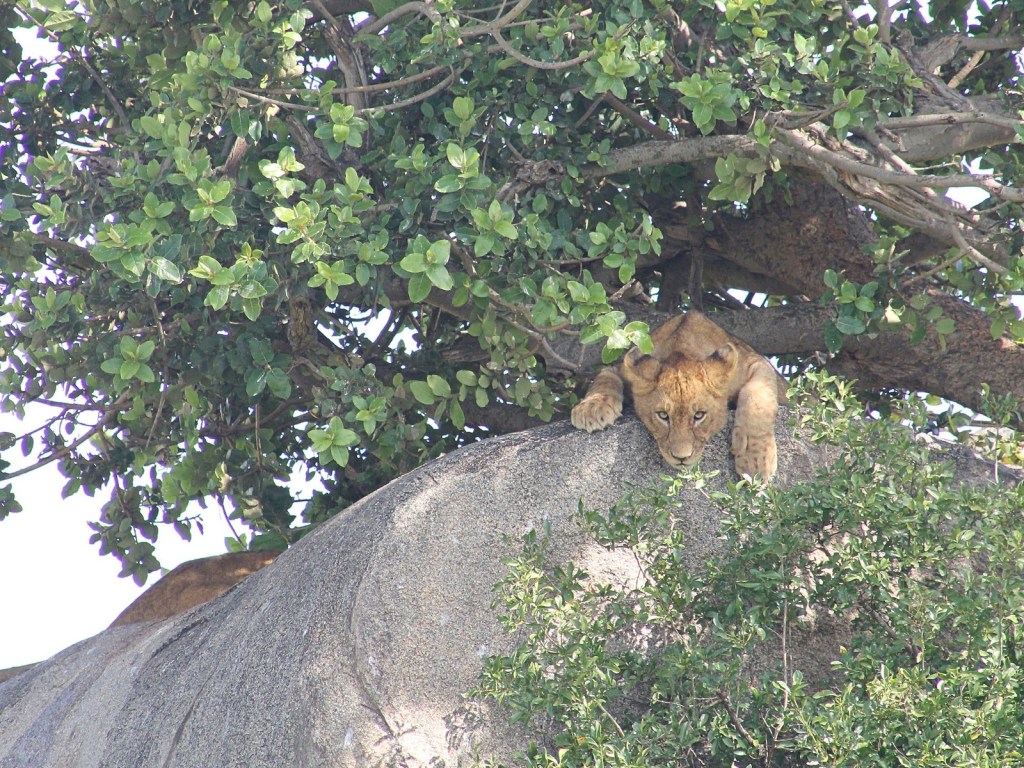
As just mentioned on the occupied kopjes the occupants were lions. Which were very cool. We did see a whole lot. We were especially rewarded on one kopje (kopje kopje kopje) with cubs. One hammed up its cuteness by looking very bored as it slouched off the edge of the rock. Another youngin’ cured its boredom by getting up and grabbing a bone to chew on that was just laying around. Oh, a lion’s life.
The closest we did come to seeing another cheetah is when I thought I spotted one drinking from a pool, but it was in fact a hyena. Which brings me to the “ugly five,” which safari operators point out after you’ve seen the Big Five. I think the “ugly five” is a very rude term. None of these things are official, but one list I have includes as the ugly five hyenas, marabou storks, wildebeest, vultures, and warthogs. Tell you what, all of those animals think you’re the one with an ugly mug. Both my super amazing wife and I both think warthogs are pretty cute to boot, for the record.

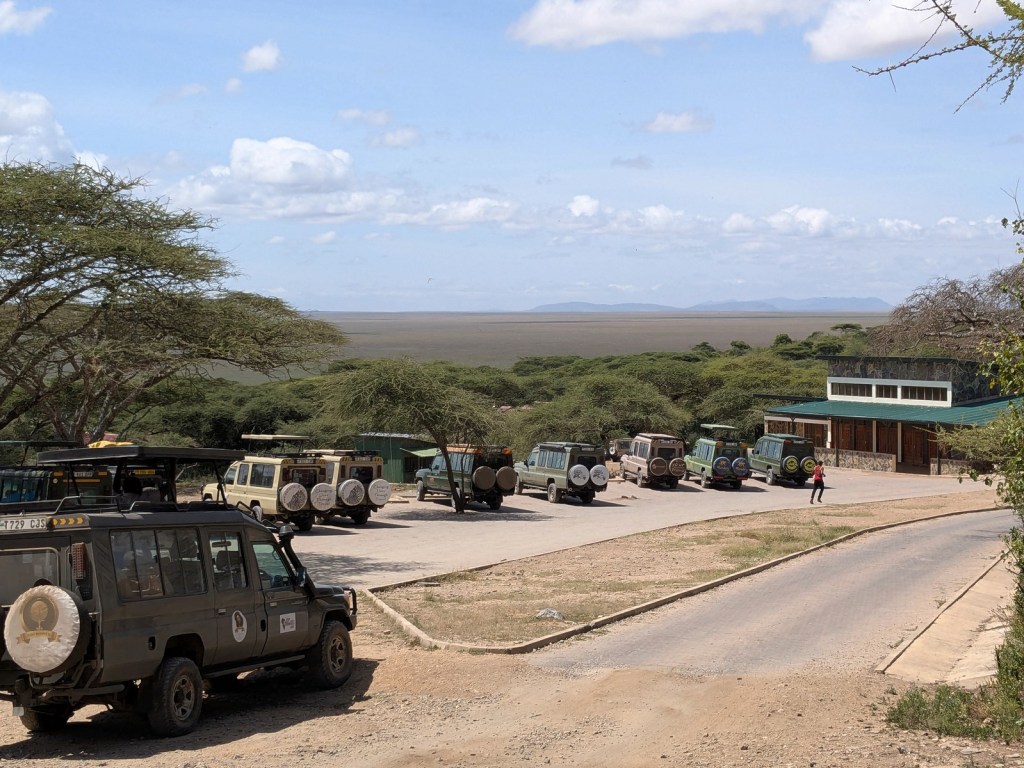
But anyways. All our winding over the Serengeti brought us almost inevitably to the gate (only almost because over lunch we got Obedi to tell us about getting lost on the plains during his first solo tour guide trip) where we stopped for lunch. Obedi pointed out the procession of tour guides heading for the only empty picnic table only to turn away when they discovered the rather large amount of elephant poop next to it. Besides the carbon cycle the picnic spots were also a handy place to admire all the safari vehicles lined up. I was pretty intrigued that every single safari vehicle was the same, differentiated only by the various animals and natural features they named themselves after. There has got to be a reason they all settled on the one design but I haven’t figured out what that is.
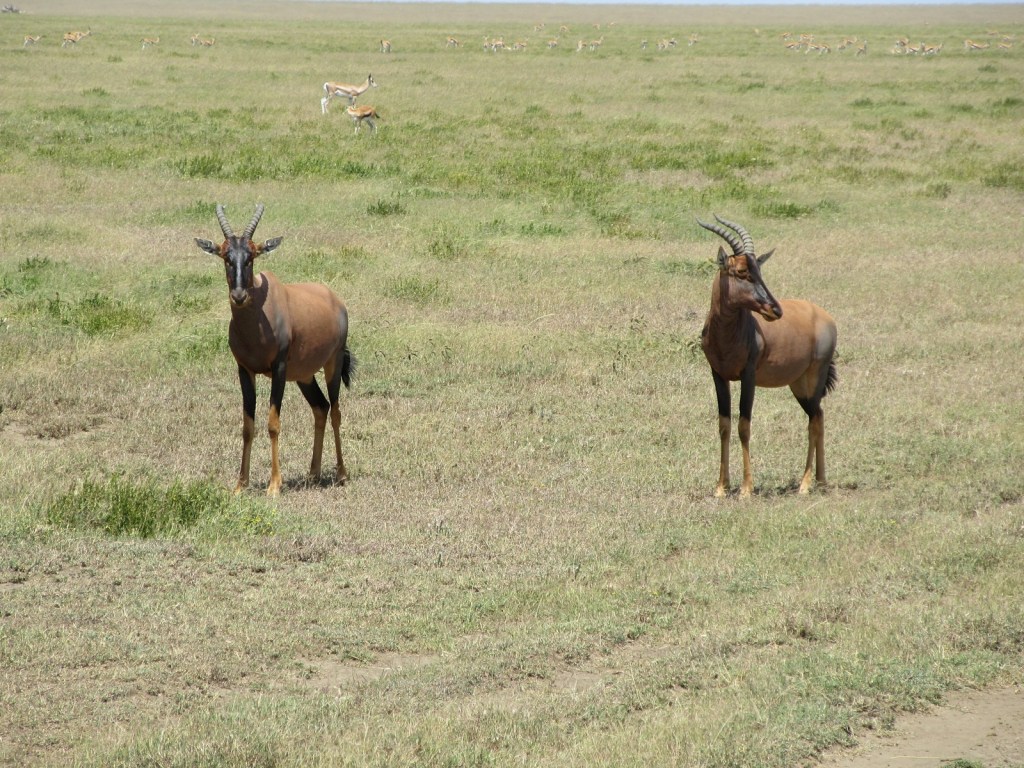
With lunch eaten we began the reverse of the long and dry trek that had brought us to the Serengeti in the first place. We saw several more animals along the way, gazelles and elands and topi and warthogs and I think a couple more lions. The dust though man. When we arrived at the lodge the lady taking our bags to the room spent some time beating all the dust off. Obedi told us as we were heading out that the reason the Serengeti is lacking in trees is the layer of volcanic ash deposited when Ngorongoro erupted (which resulted in the crater) keeping the trees from taking root. The dust is harsh; it stuck to my teeth. And deadly – as we zoomed down the road we solemnly passed the remains of two cars that had been in a head-on collision the previous day. Looking down at my seat belt I was not sure it would do much if we had the same crash. But we didn’t crash and by the evening we were back in the highlands, in the same greenery-filled lodge we had stayed in on the way out, relaxing with Stoney Tangawizis as the sun set over coffee plantations. Only one more day in our safari to go.
 Pat in the World
You must be logged in to post a comment.