

Reading this week:
- My Second Journey Through Equatorial Africa by Hermann von Wissman
We alighted from the train station in Bath and were instantly enamored. How does it keep all this Georgian architecture intact? We had arrived in the morning, much before check-in time at the hotel, but they nonetheless were kind enough to store our bags so we were off to priority #1: the Jane Austen Center!

The Center, or Centre, is a museum dedicated to Jane Austen with its home in a house down the road from where Jane Austen lived alongside her mother and sister after her father died. It is a fun place and works to give you a good insight into the Regency setting of Austen’s novels. You start the tour with a lecture from one of Austen’s characters, in our case Emma from Emma, who was great. I learned a lot of interesting stuff on the tour, like the fact that there is no real contemporary portraits of Jane Austen. I was very hurt on her sister’s behalf however, because at one point Jane’s sister Cassandra painted a watercolor of Jane, but as soon as they tell you that they go on and on about how terrible of a painting it is and like, come on. Be nice. Sorry she didn’t have a camera.
From there we wandered Bath for a bit. The Regency atmosphere we just learned about in the Jane Austen Center was heightened by the fact we were visiting Bath in the midst of the Jane Austen Festival. We didn’t attend any of the Jane Austen-specific events, but what it did mean is that we would be in a restaurant and at the next table over would be a couple in full Regency dress, which was a delight. Another highlight of our wanderings was Persephone Books, which is based out of Bath. They specialize in neglected books by (mostly) women and besides being a very good concept for a shop is just also a very nice shop. Be sure to stop by.

But enough dilly-dallying, on to the main event: the Baths! The Roman Baths, specifically, the reason the town is named Bath. But you knew that. This was a significantly better museum and experience than I thought it was going to be. I thought it was going to be hokey and it has a bit of a hokey veneer but is in fact quite in-depth. We were on a guided tour but they tell you to show up an hour early, and we did, and that is actually a good idea. The guided tour and self-guided tour are different experiences so it is worth it to make time for both.
On the un-guided tour you of course walk around the complex. You start on the terrace of the baths and eventually descend to bath-level, which is now below ground. The baths themselves do not look too relaxing these days. Because they are open-air and the water is at a perfect petri-dish temperature, they are full of algae and green. They do clean them occasionally but we were on the tail-end of a cleaning cycle. Back in the day the baths would have had a roof which would have kept the pool much more pool-looking. But after admiring the baths then you wind through the museum, which was really fascinating.
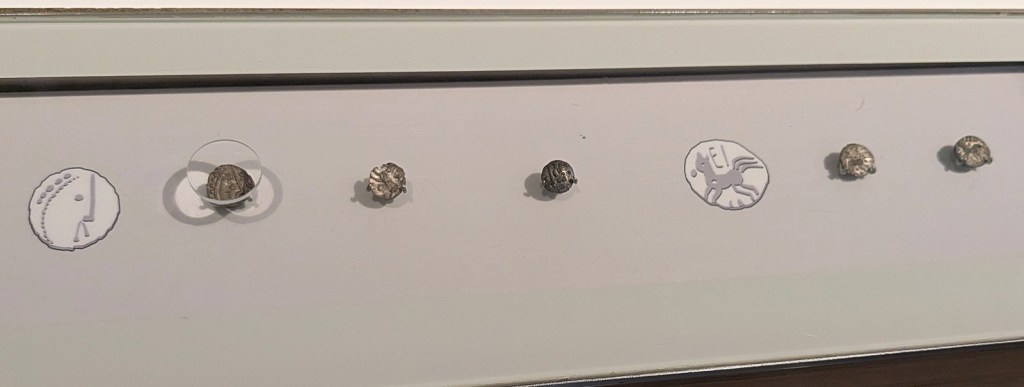
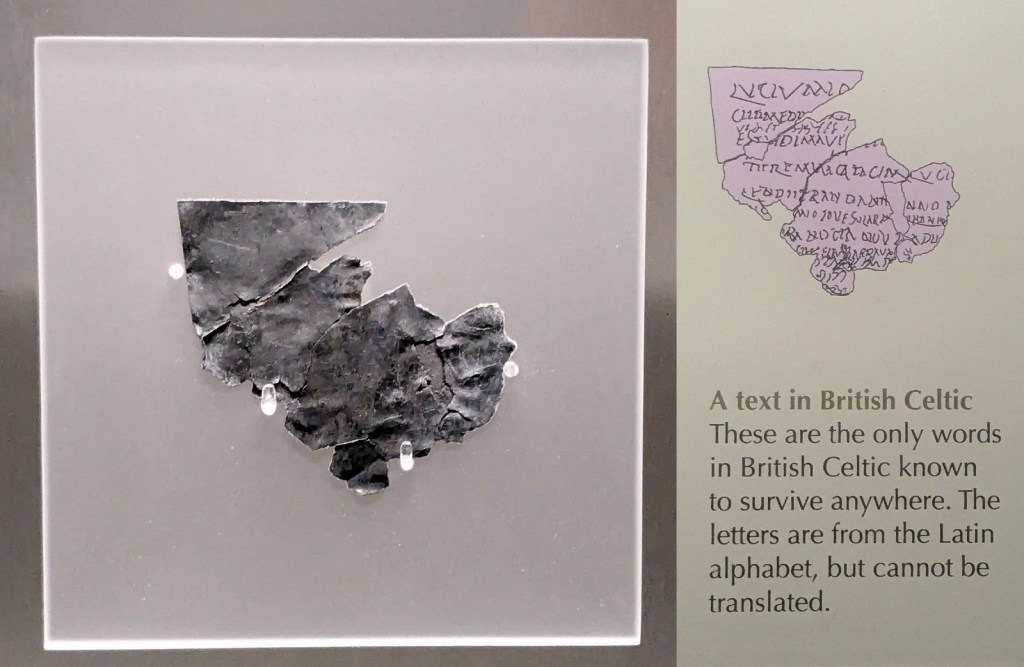
The museum really works to paint the long, long history of the site. Before the Romans showed up in 43 and built a big ole’ temple/spa complex on top, the hot springs had long been a pilgrimage site for the peoples of Britain. Which means that the museum has all sorts of artifacts from the Roman and pre-Roman eras. The second coolest thing they have in there are pre-Roman coins which I think is fantastic just because it is a glimpse into a whole strange and alien civilization. Plus some of the coins had boats on them. But that of course leaves the coolest thing, which had to be the only words in British Celtic known to survive anywhere. One of the uses for the springs was cursing people, and you could write your curse on a lead tablet and fold it up and toss it into the waters for the gods to take care of. They have in the collection one of these curse tablets written with Latin letters but in British Celtic. They don’t know what it means, because this is the only surviving record of the language and like, imagine that person. Speaking Celtic, but a) knows Latin and b) has a beef with someone they want the Gods to take care of. That is a person who bridged worlds.

At the designated time we met our guide and compatriots for the guided tour, which focused a lot more on the archeology of the baths. Like the Globe, there are chunks of the baths that they can’t do much archeology on because the buildings on top of the baths are also historical. Oh well. But our guide was deeply knowledgeable and really loved the site and really tried to let us see the site through his eyes. Like at one point on the floor there are indentations apparently where the oyster bar used to be (common bath snack doncha know), and he explained these were from generations of people clamoring for oysters as they enjoyed the holy and very relaxing waters. At the end of the tour there is a fountain of Bath water which you can sample (but direct from the spring of course, not the green stuff). Our guide said he drank it every day and it kept him fit and healthy. I thought it was fine-tasting but my super amazing wife didn’t like it. The highlight of the gift shop was me saving the day by nabbing a small dog that had escaped from its owners and was evading them in the store. Fun stuff!
After the baths and a bit more walking, dinner was Sally Lunn’s very historical bunns. That was a lovely meal orchestrated by two women who were absolutely running trying to keep up with the dinner service. Sally Lunn’s also has a museum but it was closed by the time we finished dinner, so it was finally time to retire to our hotel room, which my super amazing wife was delighted to discover included a bathtub.

 Pat in the World
You must be logged in to post a comment.