

Because I was very lucky I was able to go to the Musée National de la République Démocratique du Congo! The lucky part was that I was in Kinshasa and therefore able to go. Getting to Kinshasa is the hard part. If you’re already in Kinshasa it is pretty easy and you should definitely go, it is great.
Although the institution is older the physical museum itself is pretty new, having opened only in 2019. It’s a really nice location, with a brick fronting and an open and airy interior. It is such a nice location that when I arrived I originally thought it might be closed for an event as there was a wedding (I think) going on out front. But it was very much open, and despite it being a Saturday is was rather packed with school groups, which is just awesome. It is those kids that this museum should really exist for and by golly it was existing for them. Though I suppose it is a pretty alright wedding venue as well.
I took a taxi to the museum and he was nice enough to wait for me in the parking lot, which itself was pretty neat because it had shade structures built of solar panels and a cool display showing you how much power the solar panels were generating. Paying for admission was a bit confusing though, because from the parking lot I actually had to go back out the gate to find a guy who took down my info and who handed me a slip of paper. This slip of paper I handed to lady in a booth across from info guy, along with the entry fee. This lady gave me a receipt. I then walked in past the wedding to the front desk, who took my receipt and at that point handed me a ticket, at which point I was I guess fully in the museum.

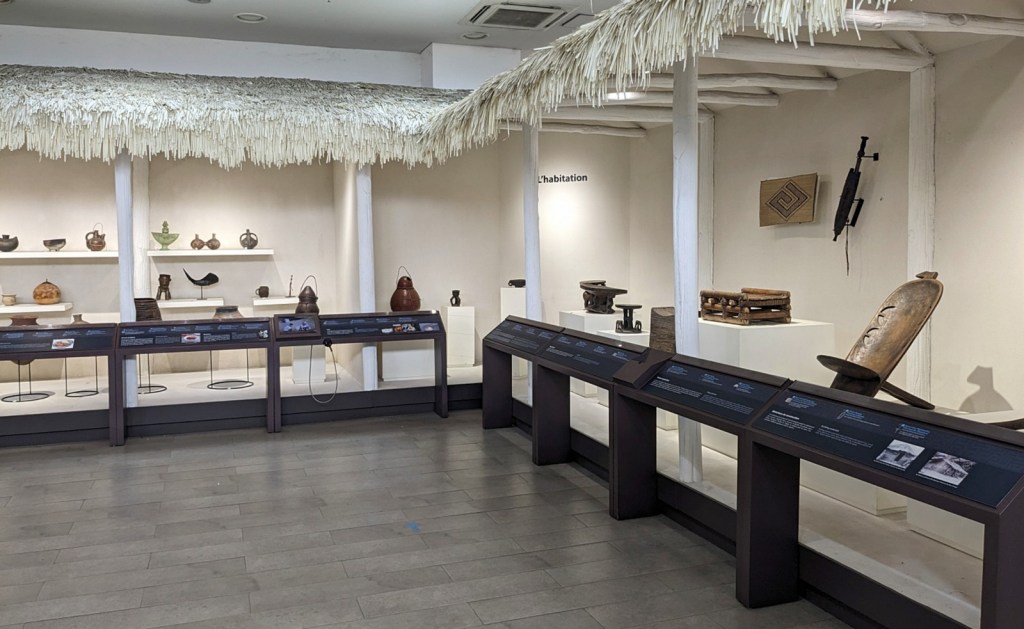
The museum is not terribly large but packs in a good chunk of stuff. There are several permanent and a couple temporary exhibits, arranged on two floors. Since the museum is new the displays are very well done with explanations mostly in both French and English. One thing that confused me is I couldn’t tell at first if different exhibit halls were open, as they are behind rather large sliding doors/walls. The exhibits are in fact open, it’s just that the exhibit rooms are air conditioned while the hallways are not, so they doors are keeping in the cold air. A lot of the items on display were familiar to me, what with having gone to the Royal Museum for Central Africa. One object that it took me a moment to realize was familiar was a Kakuungu mask, pictured below:

What was significant about this mask is that the Royal Museum had made a bit of hay about having returned it to the DRC, with President Tshisekedi himself having participated in a ceremony. So I recognized it from the Royal Museum and now here I was seeing it in the flesh, pretty cool. The mask isn’t officially owned by the National Museum, as Belgium doesn’t have the laws on the books to officially return it, so when you go to Kinshasa to see this mask it is merely “on loan.” As I discussed in my post on the Royal Museum this is a bit of a thin excuse but I guess possession is nine tenths of the law and right now the mask is in possession of the DRC so that’s something I guess.
Despite my familiarity with a good chunk of the objects on display, a good many were new to me. We are interested in witchcraft and divination on this blog, so seeing the divination basket was pretty cool. I was also entranced by the collar in the below gallery. That sucker must have been really heavy to wear but I suppose that is the burden of status. And when I first looked at the Monzombo backrest, I thought it was trying to be a chair of some sort (it was next to some other chairs), but I thought surely it must be something more utilitarian like a sword stand or something. But I guess it is the sort of chair you give to dignitaries. But maybe it was for dignitaries you don’t like? Or maybe it is more comfortable than it looks? And then finally in addition to being fans of witchcraft on this blog we are also fans of palm wine, and now I need a palm wine cup and a palm wine cork or else my kitchenware collection will never be complete.

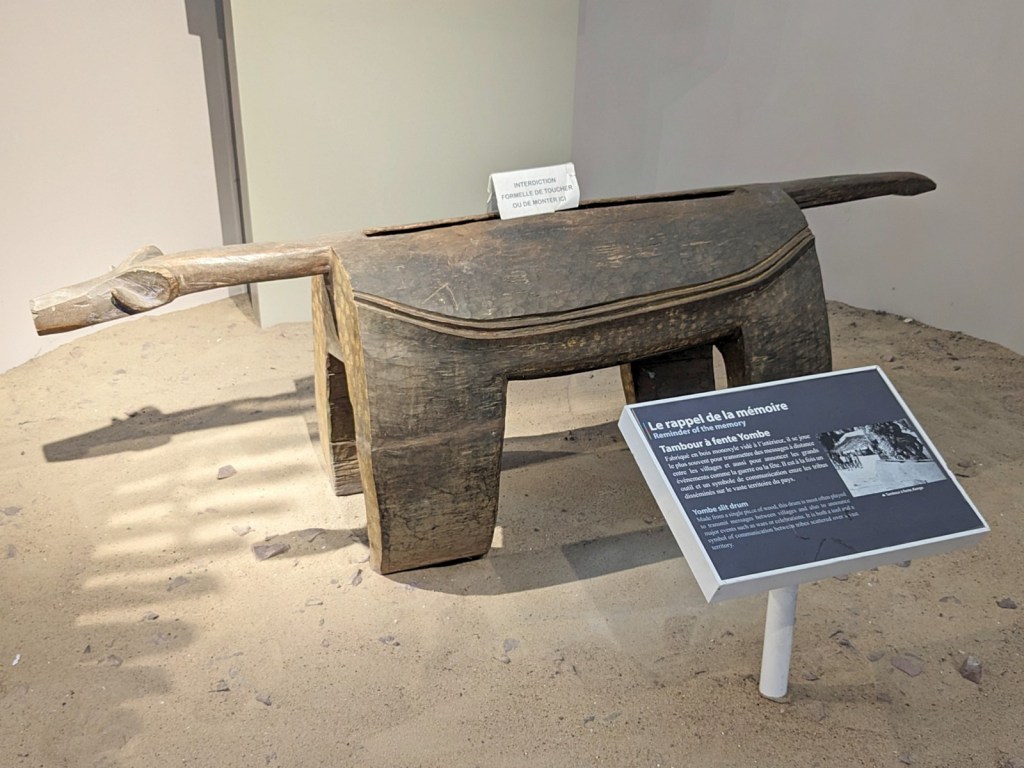

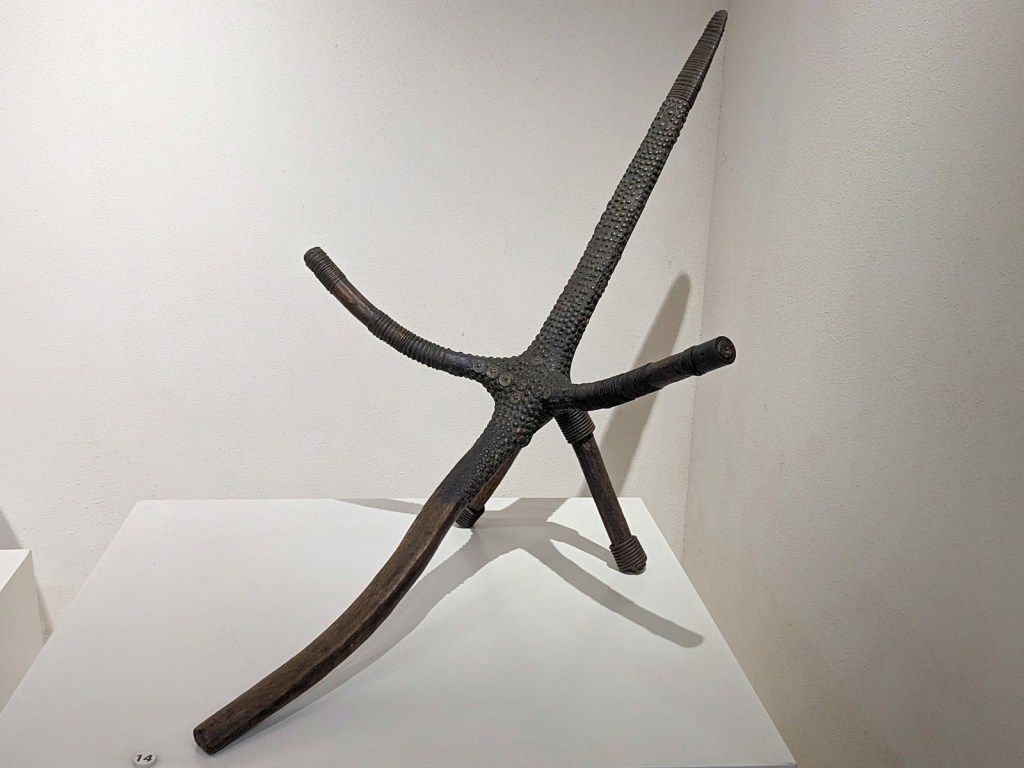
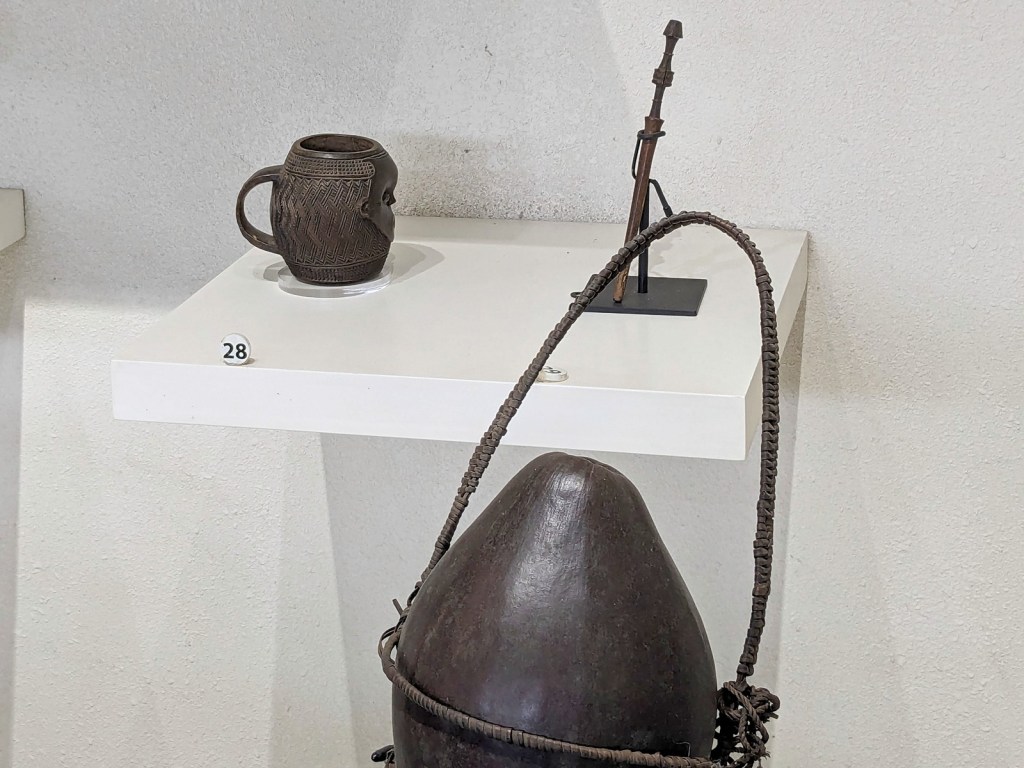
In addition to the household objects it is was the mellurgy and blacksmithing displays that I was particularly interested in. They had a whole recreated forge set up with hammers and anvils and bellows and everything so that was very neat to see. Then on the wall next to it they had the blacksmiths’ products on display. The utilitarian objects that the blacksmiths produce, like hoes and other farm equipment, are impressive in their own right, but the arts pieces are really what blow me away. I saw more decorative and ceremonial knives and objects like the bells shown below are really what give you an insight into the mastery of craft that these guys had achieved.


Alas I am sad to say that I didn’t spend way too long in the museum. Like I said it is not particularly large anyways but the masses of schoolkids moving through the place made it feel pretty hectic. I am super glad to have seen those kids in the museum though; me visiting all by myself would have been rather sad. The museum isn’t really meant for me and I have access to places such as the Royal Museum for Central Africa in Belgium that these kids might not be able to see. But here they were very, very excitedly going around the museum entranced by the tour guides telling them about their own history and culture and that was really great. After kind of zooming through I instead found refuge in the gift shop, where the very kind sales lady showed me the different crafts and postcards and souvenirs. I eventually bought a ceremonial stole covered in cowrie shells that was really beautiful before heading back out into Kinshasa. The National Museum of the DRC is really really great and really well done and is existing to serve the people of the DRC and Kinshasa and if you are in town you should visit too to see all the cool culture they have on display and to support their mission. And maybe get married, who knows?
 Pat in the World
You must be logged in to post a comment.