
Reading this week:
- A Residence at Sierra Leone by Mrs. Elizabeth Helen Melville and edited by Mrs. Norton
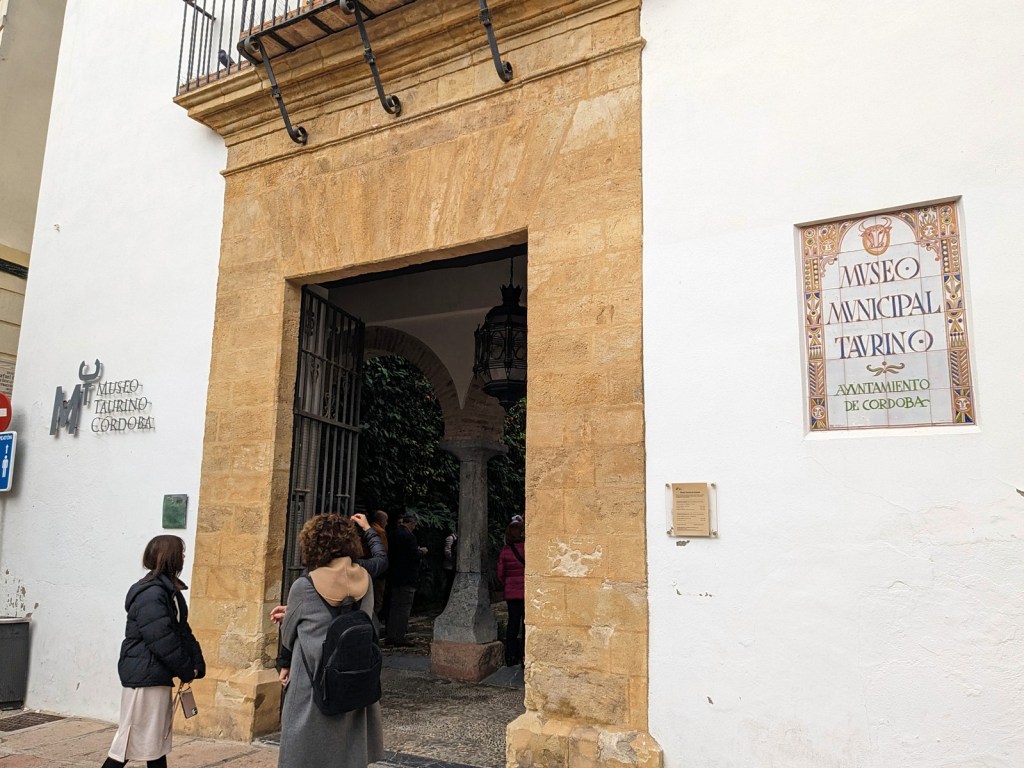
Although the Mezquita was large by the time we finished the day was still young and there was so much more to see in Córdoba. One of the places I wanted to go in Córdoba was the bullfighting museum. Being an American who’s main exposure to Spanish culture is Hemingway, I am into the concept of bullfighting. When I went to Cancun on spring break one time I did actually see a bullfight. I would call it a pastiche of one but they did actually kill the bull. The opening act was dancing and cockfights (not to the death, though I later saw those in Guam). I have a poster from it as an homage to a poster my dad has from a Spanish bullfight we went to. All that to say that if it was the correct season I would have dragged my super amazing wife to a bullfight while we were in Spain, but it was not the season, so the next best thing was dragging my super amazing wife to the Museo Taurino de Córdoba.
Honestly it was a little bit disappointing. Maybe I didn’t know enough Spanish to really appreciate it for what it was but mostly it was just a bit small. I guess I am spoiled, or maybe I was expecting to be fed context that the museum already expected you to have. Again, being a reader of Hemingway I know a thing or two about bullfighting, or think I do, so I could understand some of what was going on but the treatment of bullfighting in the place seemed a bit light. There was some cool stuff about the history of bullfighting in Spain reaching back to ancient times, and the main focus of the museum I think was on some of the more famous matadors, the “Five Caliphs” of bullfighting. I was hoping for more that explained the art of bullfighting, maybe a more intricate cultural history, something like that. Nonetheless it was probably worth the price of admission, but not a place to spend the whole afternoon.

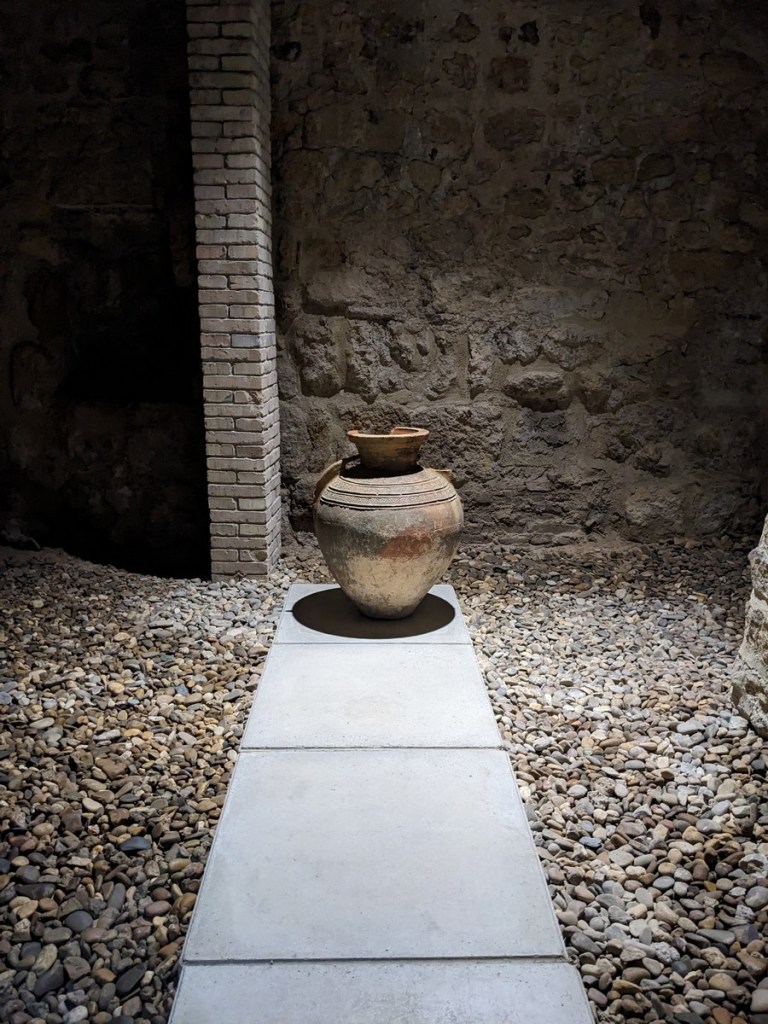
Almost the whole rest of the day in Córdoba was spent poking into interesting little place we more or less stumbled upon. After the bullfighting museum and even after some additional souvenir shopping we had plenty of time so when we stumbled upon the Baños del Alcázar Califal (Caliphal Baths) it was worth wandering in. Here’s the virtual site map, though maybe the Spanish Wikipedia page is more useful. It is a small museum built into the ruins of a hammam built in the 10th century by the Cordoban caliph al-Hakam II, Wikipedia tells me. They were used for a couple centuries and then destroyed when the city was taken over. There’s not a whole lot in the museum, mostly a guided path through the old rooms of the place. Once again lacking context for much of what was going on I didn’t really understand what I was looking at most of the time but I guess neat to wander around. The thing I was most interested in was the heating system for the hot room; apparently there was some cool pipes and there would have been a boiler (I love boilers) but I couldn’t really tell what I was looking at unfortunately. Oh well.

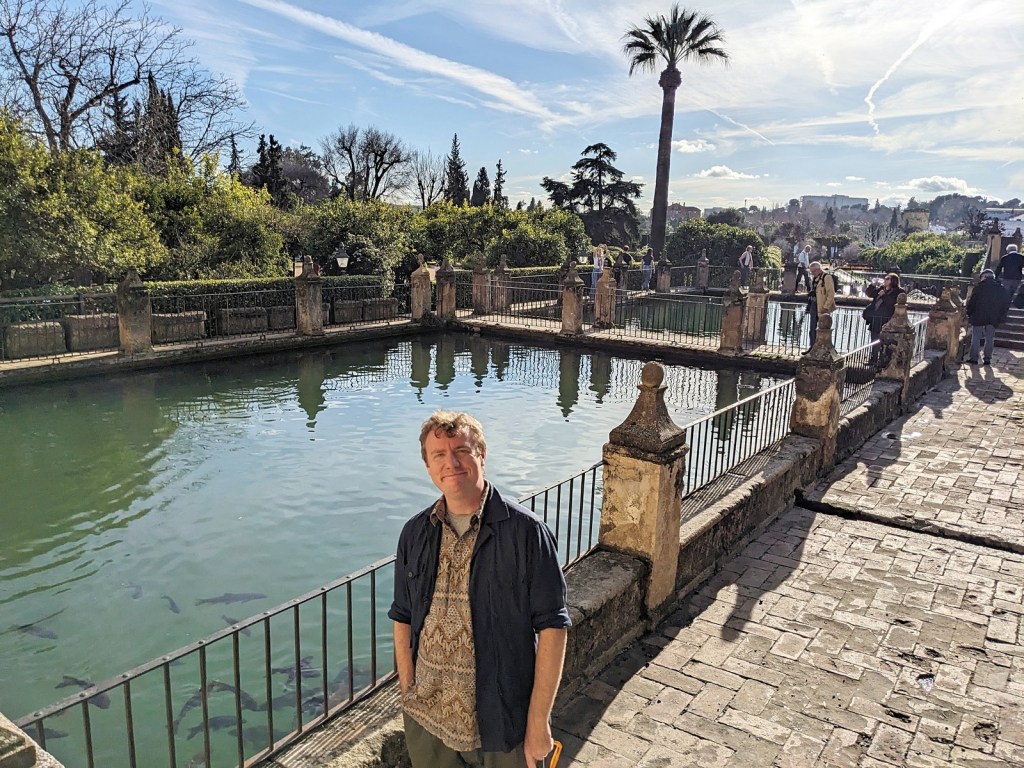
Two places wandered through, it was on to the next location: the Alcázar de los Reyes Cristianos. This is the thing I am most embarrassed about not realizing what it was. I am going to go on and on in this blog post about my lack of context and like, some of that is not my fault. If I grew up in Spain a lot of this stuff would resonate on a deeper level than “cool” or “aesthetic.” But a large chunk is my fault. Like I knew Córdoba was apparently an important city or whatever, but I didn’t realize how important. We had popped on into the Alcázar because it was supposed to have some pretty gardens. And pretty gardens it did have! Super pretty. You had to wander around some throne-room looking thing (reader this is foreshadowing) before getting to them, and we skipped going up the tower because the line was too long, but man the gardens are great:


Huge, too. Several levels, multiple water features, including really cool ones where there are like little water channels that empty into ponds and stuff or go around and all sorts of things. I love any kind of fruit tree, every garden should be full of fruit trees, and this place had a whole orchard of orange trees. In the middle was also a statue of a Columbus-looking guy. Weird, I thought. They also had a section with a bunch of stray cats, each of which was extremely cute. Besides the large garden there were little courtyards with more orange trees. It was calm and peaceful and beautiful.
Walking out, I finally looked up what the place was on Wikipedia. And like, oh. The Reyes Cristianos. Turns out the place was a primary residence of Isabella I and Ferdinand II! The statue of the Columbus-looking guy was because that was Columbus and this was the spot where he had his first audience with Isabella and Ferdinand in order to get support for the whole “journey to the new world” thing! A lot of important stuff happened in this spot and I thought it was just weird there was a throne room attached to the pretty gardens! I felt very silly. I could have really absorbed some history, even some nasty bits I guess. But hey the gardens were cool no matter what.
 Pat in the World
You must be logged in to post a comment.