Fort Zombe Update

This past week I have been talking with Colin of Abercornucopia, who reached out to the Moto Moto Museum for more information about Fort Zombe. Turns out, it is not an indigenous fort, contrary to the information I had before.

Mary Mbewe, the Assistant Keeper of History (one of the cooler job titles out there) at the Moto Moto Museum forwarded (via Colin) a report she put together on Fort Zombe. She concluded that there was no way the fort was indigenous and was built by the British during WWI. This is disappointing to me, because it knocks several hundred years of history off the structure. As she details in her report, the fort comprises 2km of stone walls, and it rather stunned me that the British would go through all that effort to construct such an extensive fort. I also learned that the fort complex includes trenches on the northeast corner of the hill, which also included a water source which presumably was used to supply the fort.

In addition to the report, Colin forwarded some pages of A History of the Northern Rhodesia Police by Tim Wright. The relevant part of that book detailed that the garrison of Fort Zombe included one company of the Northern Rhodesian Police, armed with two machine guns and a 2.5 inch mountain gun.

I would like to upload the report, but WordPress apparently won’t let me do that. I’ll link to it when Colin posts it on Abercornucopia, but in the meantime let me quote some of the relevant portions:

The fortifications in Mbala were built by British forces at unknown dates but between 1917 and 1918, the period when the war between Zambia and Tanzania intensified… [Fort Zombe] was constructed on a hill called Kalwazi – “foot” in iciLungu – because the top of the hill is shaped like a human foot. The hill is sometimes referred to in the local language as Kamba, meaning camp, for the fact that British soldiers camped on the hill for a considerable duration of time as evidenced by the fortifications. Kalwazi hill on which the stonewall fortifications are found is one of the highest hills of the range of hills in this mountainous area, and was strategically chosen for the fortifications because it has a commanding view of all directions, especially on the side facing Tanzania…

The fortifications comprise an outside enclosure measuring approximately two kilometers all round. These stonewall fortifications were built as a defensive fortress by British soldiers. Before collapsing, the walls of the fortifications are reported to have been about 4 meters high and of considerable thickness. The fortifications have since collapsed.

Inside the enclosure are separate systems of stone fortifications which must have been used as bunkers, sleeping quarters, observation/sniper points and for storage of weapons among others. The inside fortifications are very elaborate and interesting. At several places along the outside enclosure are heaps of stones forming approximately a meter buffer which military personnel whom I took to the site conclude were sniper points. There are at least four such heaps on the
North Westerly side of the camp which is also the side were the German forces were advancing
from.

In the centre of the camp, about 100 meters away from the inside fortifications is an unmistakable remain of a gravesite with part of the tombstone still intact. The concrete slab reads ‘erected by E P Chesnaye, est dist comm., Abercorn.’ The grave belonged to a British soldier who must have met his fate at the hill. The grave was reportedly exhumed by ‘foreigners’ in the 1980s and the
remains of the deceased presumably taken back to his homeland.

One of my friends, another PCV, lives in Zombe (he was on vacation when we visited the fort) and has been told that the last soldier to die in the war here in Zambia died on that hill. Presumably the gravesite in the report is the gravesite of that soldier, whether or not he was in fact the last soldier (European soldier, anyway) to die in the conflict.

Also last week I said that I was unable to identify this large structure in the middle of the fort:

The report has a similar picture to this one and identifies it as a “bunker.” So that is interesting to find out.

I was really hoping Fort Zombe was an indigenous structure to rival Great Zimbabwe and similar structures found farther to the south here in Africa. As a British fortification, it is still a very interesting piece of history, and worth visiting for the views alone. What I said last week about encouraging tourism in the area holds true, I hope the site is better publicized in the future. The report also says that the Zambia National Broadcasting Corporation put together a two-part documentary on the fort, so perhaps Fort Zombe’s fame is well on its way.
Fort Zombe

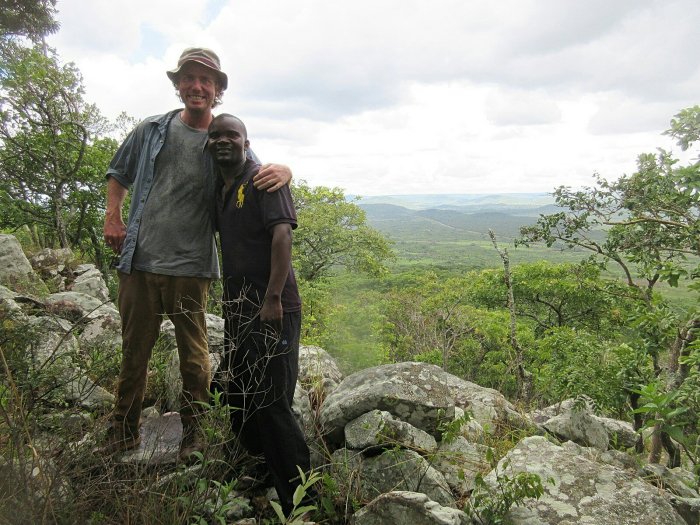
Me and the headman.

12/30/2018 – Update to this post: It’s not indigenous.

This past Monday I got to visit Fort Zombe, which is one of the cooler things that I have gotten to do, frankly. Fort Zombe is not well publicized, and I only found out about it via the very well done A Guide to Zambia’s Heritage, which is published by Zambia’s National Heritage and Conservation Commission. Allow me to quote the book in its entirety on Fort Zombe:

Fort Zombe is located about 10km from Mbala on the Mbala-Kasesya Road. It is west of Chief Zombe’s Palace and is perched on a high hill overlooking the valley. The site is the only known indigenous fortress built in dry stone walls in Zambia. The site, high and vast is overwhelming to the visitor. One immediately thinks of transfiguration when on top of this historical masterpiece of a compound built in dry stone. Apart from the Iron Age Communities that had settled there several hundreds of years ago, the British Soldiers had also used the Fortress during World War I as evidenced by remnants of battle gear like helmets and bullet shells.

So this is more than a little bit mind-blowing. When you’re talking stone fortifications in southern Africa, the only real other example that comes to mind is Great Zimbabwe. So here in my own backyard is a stone fortress and you’ve never even heard of it. So I roped in my friend Katie and off we went to go see it.

Seeing it is actually not so simple. The first step is talking to Chief Zombe. Fort Zombe is not the original name of the site, which currently appears unknown, and is instead named after the village of Zombe along with Chief Zombe. I don’t think the uh, Zombians were the original builders of the site, because I know Zombe village was at the site were Mbala is now, at least circa the 1870s when David Livingstone visited. But it resides in what is currently Chief Zombe’s chiefdom, and to see it you have to go through him. I happened to run into him at the Centennial, and he gave me his phone number, so when we wanted to see the site we called him and set up an appointment.

We arrived at his palace at about 1000 and greeted the Chief. He invited us inside and served us rice, potatoes, and pumpkin, along with tea which was extremely kind of him. He introduced us to his daughters, including both his firstborn daughter, and the first daughter born after he became Chief. He told us this daughter is the Chisulo, and the first child after becoming Chief has to be a daughter. This signals that the Earth has blessed his chieftanship. If he were to have a son, he would lose the chieftanship. The second child, however, must be a son. But since the chisulo has the blessing of the Earth, if she greets you it is extremely good fortune, and “you will find you become a minister or president!” So watch out world, vote PatInTheWorld for President in 2024.

We told Chief Zombe that we wanted to see the fort, and if he isn’t busy the Chief apparently generally likes to take people up himself. He was busy, however, and so he went to the village headman of Zombe village and asked him to take us up. So off we went!

Commanding views of the surrounding valleys.

The fort itself is on top of a hill right behind Zombe village, and is only about a 3km hike, but that is largely straight up the mountain. Walking up the hill, it’s easy to see how hard it would be to attack the fort and why it was built there. The fort offers a nearly 360 degree view of the surrounding valleys, and is a commanding vantage point for many many miles around. When we finally got to the top of the hill, the whole fort was much larger than I expected. From what I could measure on Google Maps, it appears to be a little over 4 acres in total, just within the fortress walls.

The fort must have been designed to house a very large population of people. There isn’t any information that I could find about the original purpose of the fort, but my guess is that it was built to protect against Arab slave raids. The area around Mbala, where I live and where the fort is were all on Arab slave trading routes in East Africa. The Moto Moto Museum has a diorama detailing how during the time of Arab slave trading, people in the area lived in fortified, stockaded villages to protect themselves against attack. My theory is that people the lived in the area got together and built Fort Zombe in order to protect against these attacks. I don’t think people were stationed in there long-term. It is on top of a mountain, so I don’t think there could be a source of water. Hauling water all the way up there would be difficult, and impossible under siege. Food would also be an issue; I spotted a few collapsed stone structures that seemed like they could have been storehouses to me, but they were not very large. I think that when it was evident that a slave raid was approaching, the village could haul enough food and water up to Fort Zombe to hold off the attackers until they gave up and left for less fortified villages.

Walking around the fort, I tried pretty hard to identify different aspects of it. The outside wall as it currently stands is in most places about waist height, having largely collapsed. It is built from stones that look to me like they mostly came from the top of the mountain, so people weren’t hauling building materials all the way up. Besides the walls and the “storehouses” I mentioned, there was a large structure in the middle of the fort that I couldn’t identify. At one end there was a circular section with a depression in the middle, and then a long, thinner section (pictured above) running for maybe 20-30 yards. I asked the guys showing us around, and they said it was a “house,” but I don’t think that is right. My only other guess is some sort of water storage, but that is a long-shot guess.

A section of the wall.

Our guides, and a section of the wall running into the distance in the back.

Evidence of WWI?

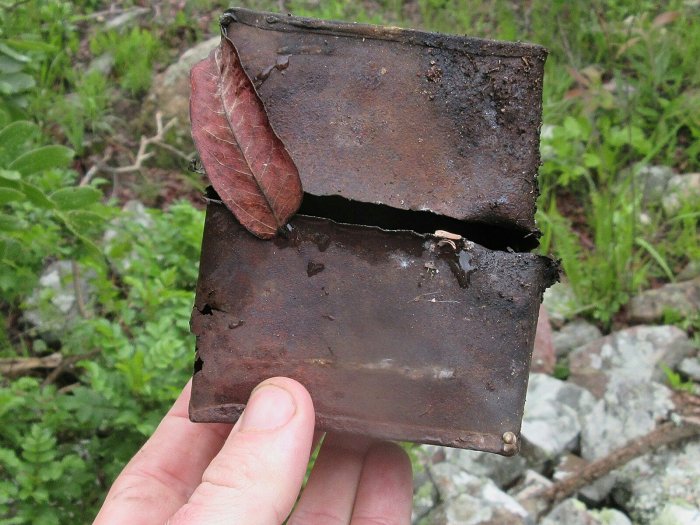
The most recent use of Fort Zombe was during WWI. Chief Zombe related to us how during WWI, British soldiers took advantage of the existing fortifications and commanding view and used it as a Fort to keep an eye on the Germans approaching from German East Africa. They have apparently found helmets and bullets on the site. As I was walking around I found the above tin can sitting on a wall. I like to believe it is evidence of WWI rations, but I guess it could be more recent. But maybe it’s from WWI! I put it back.

Katie, our guides, and myself probably spent about an hour wandering around Fort Zombe. I wish there was more to know about it. I haven’t heard of any archeological research into the site and it is quite phenomenal. I didn’t even know there was a stone fortress in Zambia, and it turns out it is right here in my backyard. Chief Zombe taking such a personal interest in it means it is important to local heritage, but nearly all history about it has been lost. The area has to be such a great opportunity for an archeological dig to find out about how the local people protected themselves and, if I’m right, the effects of the Arab slave trade in this area. If Zambia were to invest in making it more accessible, adding a walkway to it, and putting up some signs, it could be a major attraction in the area. I hope more people visit.

Gardening This Year

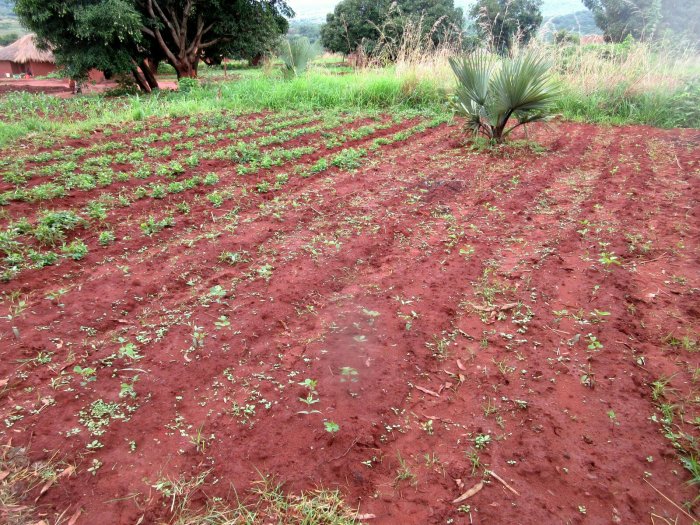
The whole shebang.

Reading this week:

  • To a God Unknown by John Steinbeck

The rainy season appears to have finally begun in earnest so it is time to do some gardening! The above picture is mostly all of my available gardening space. Last year my gardening started with just a few sunflowers, but pretty soon the project snowballed and I had taken over the whole yard. This year I felt like I couldn’t back down from what I did last year, so I did the whole yard again. This actually gets me a lot of credit; because everyone farms or gardens here, me having a somewhat sizeable plot earns me some street cred.

This year I wanted to mix it up a bit from last year. However, orange sweet potatoes are of course a necessity, so I have planted about half the yard with vines just this morning. Of the half of the yard that is sweet potatoes, about half are the same variety that I grew last year (“Olympia,” I think), and half are a new variety we got this year, called Chumfwa I think. That wasn’t super intentional; I just didn’t harvest enough Chumfwa vines down by the ponds and I was too lazy to go back. But some of the vines from last year grew back and so I just used those as seed. This picture is a few of the ridges I just planted; it doesn’t look like much right now, but promise there are some vines in there and it is gonna be like, so many potatoes:

In the rest of the yard I have planted groundnuts, soya, and pigeon pea. The groundnuts I planted literally just to make Jimmy Carter comparisons. Of all the things I planted so far, they’re actually doing the best, and I am excited for a nice big harvest. Gonna boil, mash ’em, and stick ’em in stews even. The pigeon pea I am growing because it grows into a nice big tree and I am excited to have a whole forest of it in the yard. I intercropped it with both the groundnuts and the soya, so hopefully those ripen before the pigeon pea has grown to its full height. The goats will of course probably tear down all the pigeon pea by the time the rains are even over, but until then I can dream of my pigeon pea forest. The soya I decided to grow to encourage other people to do the same, as it is a great source of protein, and way more profitable to grow than maize. All three of these crops should also do a lot to put nitrogen in the soil, and I am hoping that next year when they plant stuff their minds will be blown at how well it grows in my (then former) yard.

The groundnut/pigeon pea/soya beds.

Finally, on the other side of the house I have a small garden, currently in need of some weeding. There I am growing garlic, which is going like gangbusters, and carrots, which have just sprouted. In just a few months I am going to be able to make a super awesome sweet potato, ground nut, pigeon pea, carrot, & garlic stew. I didn’t bother to put a fence around the tinier garden this year, because it did nothing to stop the goats anyways.

Two beds of garlic in the middle (the left one I planted much earlier), with one of the carrot beds in the background and weeds everywhere.

And finally for dessert? Pineapple. As it turns out you can just grow more pineapple from the top of another pineapple, I decided to plant pineapple this year. Unfortuately, turns out it takes a few years for it to fruit, but in the meantime I hope it will look pretty cool. I also hope it will root; I just planted it today after letting it dry out for a bit (per the instructions). Once it roots I’ll plant it over in the garden with the garlic and carrots.

My pineapple with some moringa in pollipots my host dad planted behind it.

My garden here has been my biggest project for the past few weeks. I tried to get an early start this year but some ill-timed events somewhat delayed me, and most recently a week long dry spell put a damper on planting activities. Hopefully now rain is pretty consistent and everything will grow quickly. Just gotta keep it all weeded, and it’ll be legumes for days.

Effect of WWI in Zambia

Tenga-tenga

As a follow-up from last week’s post, I wanted to write a bit more about the effect of WWI on the people of Zambia. It’s a pretty devastating history. The contributions of the people of Africa to a European war are, I think, largely forgotten especially when you focus on things like Archduke Ferdinand and the Triple Alliance.

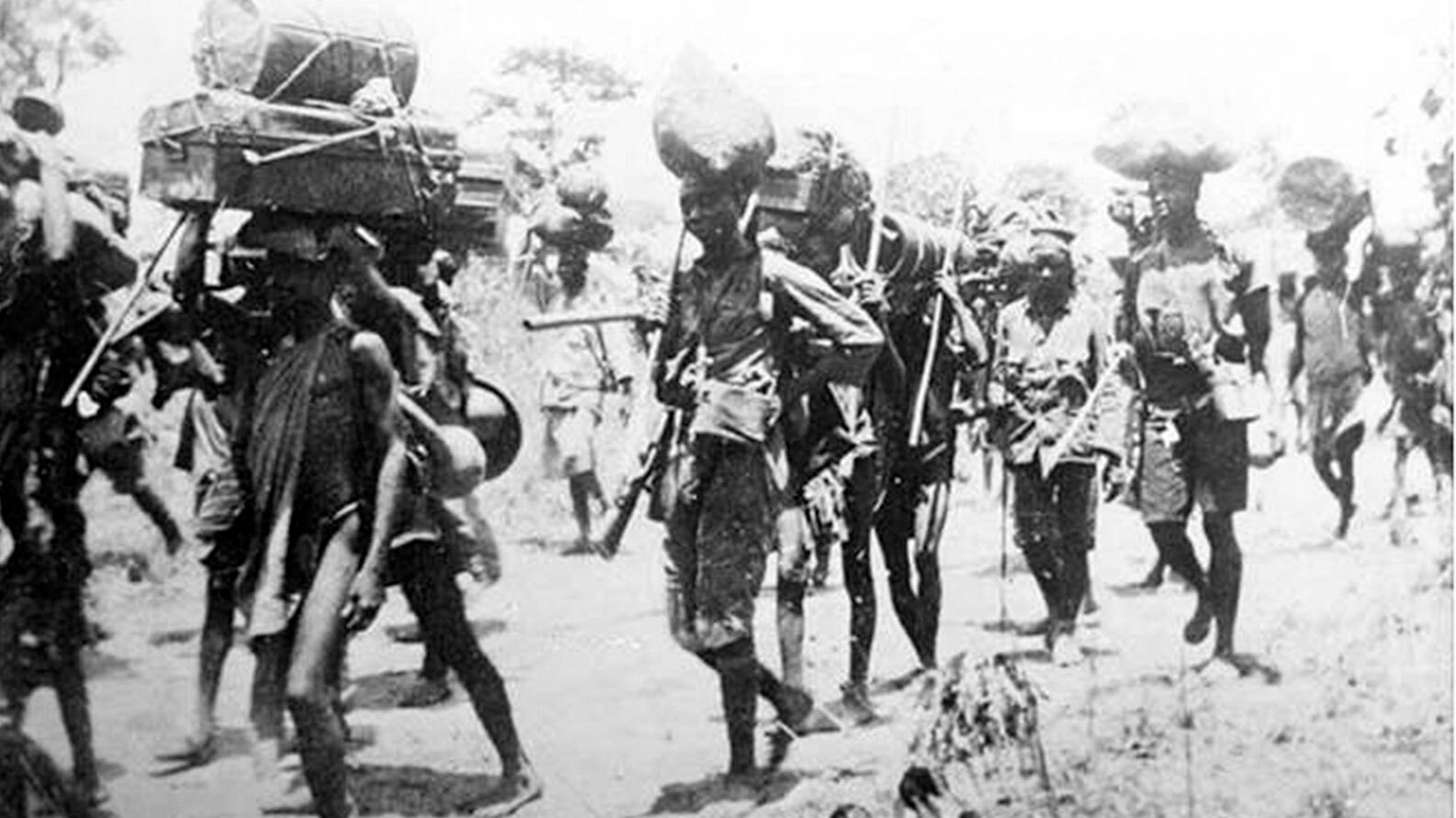
In Zambia and Southern Africa, Africans contributed to the war effort in two major roles: as Askari and as Tenga-Tenga. Askari is an Arabic word meaning “soldier,” and referred to Africans serving as soldiers for colonial powers in Africa. The colonial powers were all initially reluctant to allow (or draft) Africans as soldiers, believing them inferior or unreliable. But as the war progressed and resources strained, the majority of each army was composed as African soldiers. By the end of the war there were opposing armies of mostly African soldiers fighting each other for a European war. In Zambia, men were initially enthusiastic about signing up for the army due to the prestige and relatively good pay, but this enthusiasm waned as word of harsh treatment spread. For the askaris, 75% of deaths were from disease alone.

Racism was pervasive in the treatment of the askaris. They were denied boots and marched and fought barefoot, because the belief was that boots were unsuitable for African feet. White soldiers were resistant to going on patrols or serving alongside African soldiers, leading to tension. In Zambia, the headquarters of the Army were in Livingstone, but most of the fighting was in the north along the border with Tanzania (then German East Africa). The closest rail link to the border ended in modern-day Ndola, leaving soldiers to march on foot 1000km to reach the war front.

The lack of transportation required the use of the Tenga-Tenga, or war carriers. Due to the tsetse fly, draft animals could not be used throughout much of Southern Africa and so there were no roads through most of the areas where soldiers were fighting. All of the materiel required to fight the war therefore had to be carried on top of the heads of the tenga-tenga. Up to 6 tenga-tenga were required for each soldier in the field. They carried a load of 27-37kg, on top of which they had to carry their own blankets, cooking pots, food, and other supplies. This often totalled more than 60km. They walked an average of 24km per day. The tenga-tenga were poorly paid for their labor if at all. They could be whipped for unsatisfactory performance and when they collapsed were often left to die.

Where there are records of askaris that served in battles or were notable for acts of bravery, the service of the tenga-tenga are largely unrecorded. Their numbers were huge. At least 80,000 tenga-tenga were drafted during the war, out of a taxable male population in then Northern Rhodesia of approximately 100,000. This number doesn’t include the many women also drafted as tenga-tenga, and other portions of the population that served as cooks or in other roles. In these large concentrations of people, disease was rife with dysentery, typhoid, and pneumonia spreading through the ranks, and with little or no medical care to keep it in check. Askari and tenga-tenga returning home would bring these diseases to their villages.

Besides the direct impact on the populations, the war had follow-on effects in the villages. With so many of the men drafted for the war, villages were left without labor to clear the fields or plant the crops. This lead to mass starvation as there was no food grown. What little food there was could be confiscated by the army, and villages were often raided or burned by enemy armies. The depletion of labor in some areas was at nearly 100%; in Kasama, where there were about 5000 taxable males, 5000 tenga-tenga were drafted. Men started hiding in the bush when government recruiters would come. To force men to join, the recruiters started arresting their wives if then men had disappeared. These women suffered imprisonment, rape, torture, and assault until their husbands joined the war effort.

When I learned about the horrors of WWI, most of the horrors focused on trench warfare and the hardships that soldiers faced on the Western Front. If I was aware that WWI was also fought in Africa, it was because I learned it watching The African Queen. I didn’t know about any of this history until I was living here in Mbala, and for months I didn’t even know the Cenotaph commemorating the war existed despite biking by in every time I was in town. You have to search pretty hard to find information on the cruel hardships the people here faced on the behest of their colonial masters, at the end of a whip or gun. The Zambians though are proud of their history. People display the awards won by their grandfathers and like I said last week the country pulled out all the stops to commemorate the Centenary. For hundreds of years the entire history of this region has been dominated by cruel hardships imposed by outsiders, from slave traders to European wars. Since its independence, Zambia has prided itself on being a peaceful nation. They’re proud of their history; maybe they learned from it.

The source for this article was “The First World War in Northern Rhodesia: Experiences of ‘Askari’ Foot Soldiers and the ‘Tenga-Tenga’ War Carriers,” published by Zambia’s National Museums Board.

As follow-on reading, here are some news articles on the effect of WWI in Zambia:

WWI Centenary Commemoration

The cenotaph decked out in flags.

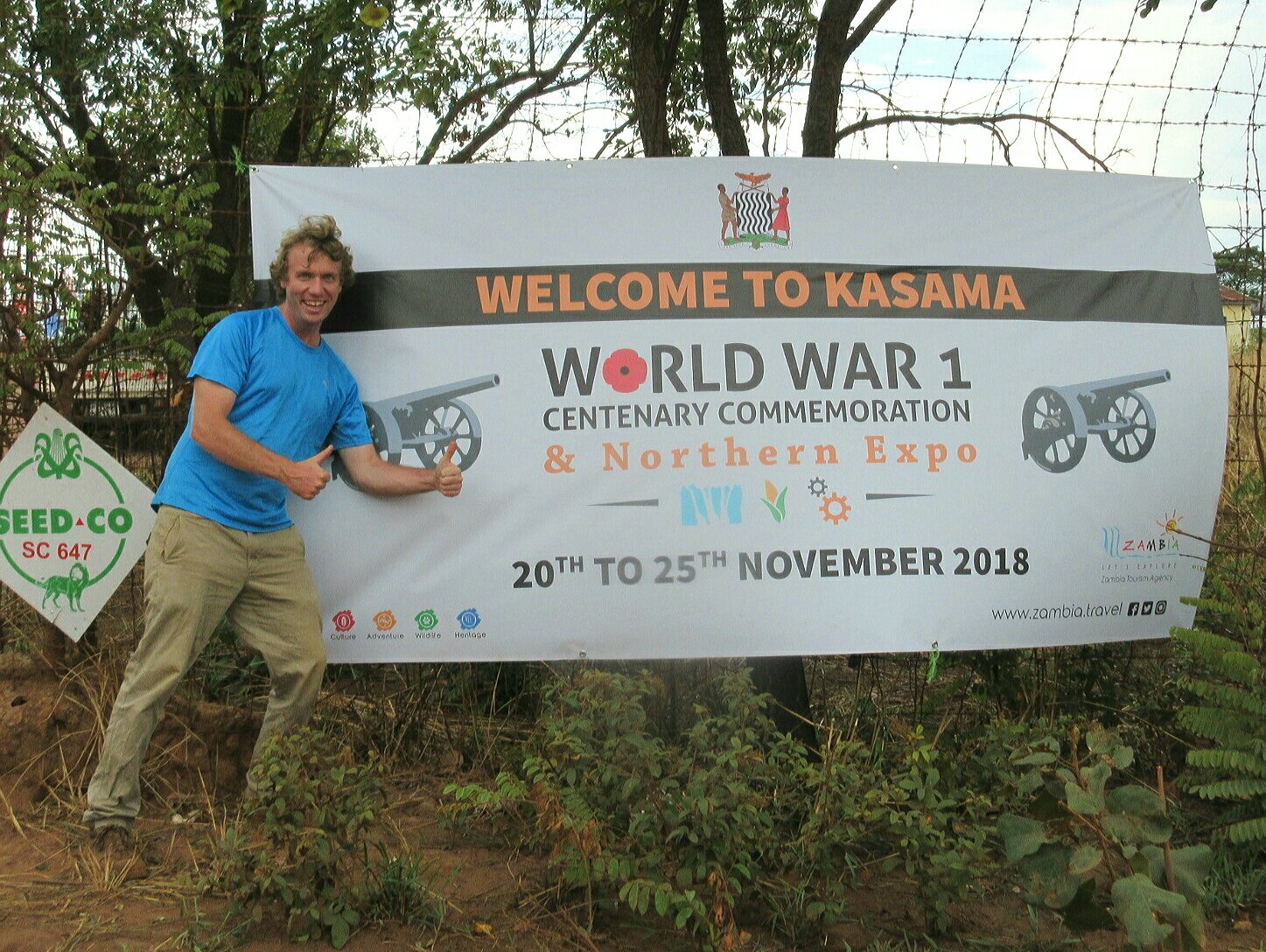
This past weekend I got to witness a once in a lifetime event, the WWI Centenary Commemoration here in Mbala. Ever since I figured out that I would be living in Mbala district on the 100th anniversary of the end of WWI, I’ve been looking forward to this event. For those not in the know, WWI actually ended here in Zambia. Although the armistice was signed in Europe and went into effect on November 11th, 1918, it took some time for the news to reach Zambia (then Northern Rhodesia). Fighting ended on November 14th when General Von Lettow-Vorbeck was handed a telegram informing him of the armistice. A monument marks the spot where this occurred on the banks of the Chambeshi river, about 100km south of Kasama. British forces then ordered him to march his troops to Mbala (then Abercorn) for the formal surrender. That took just shy of two weeks, so the formal surrender ending WWI in this region was signed on November 25th, 1918.

I tried to encourage as many PCVs to come as possible to come to this event. Since centenaries only come every 100 years or so, it was a unique opportunity to witness it. As well as it being important to commemorate the sacrifices Zambia and other African countries have made, I figured it would be a lot of fun and I am always eager to show off Mbala. In the end we had 18 PCVs make it up here, including some from as far away as Southern and Northwestern Provinces. A good chunk of us showed up the night before the Centenary, because according to the schedule I got from my host dad, there was supposed to be a cocktail party and fireworks. Both of those events were a bit of a bust but we had fun anyways. In anticipation of the cocktail party, everyone dressed up as well as they could, all of us being Peace Corps Volunteers that live in mud huts. But we looked good and what we lacked in tailoring we made up for in enthusiasm. First we swung by the Golf Club which I had never been to before. The Mbala Golf Club has a good vibe and I recommend it. While we were there we spotted some armored vehicles over at the Yacht Club, so we went over there to check them out, but by the time we arrived they had left. We had a few drinks anyways. Back to the Golf Club where we watched some live music and had a good time. We asked if we could play, despite none of us knowing how to play any instruments, and they seemed enthusiastic but it never quite happened. At the appointed time we went over to the Cocktail Party at Lake Chila Lodge only to find out that it wasn’t happening. We had our own party anyways. Fireworks also happened, but two hours late, and by that time we were all in bed.

A whole lotta Chiefs.

The next day dawned very bright and very hot and after breakfast we assembled at the cenotaph to watch the ceremony. This event was the most crowded and most colorful I have ever seen Mbala. They really pulled out all the stops. For a few months we had been watching them spruce up the roundabout that contains the cenotaph. The day of however, the whole area was filled with flags from around the world. Several tents had been set up to shelter the hundreds of Chiefs and other dignitaries that had assembled for the event. The crowd was huge and it was hard to jostle for a spot. I eventually settled into a spot next to the dignitary tent, which had a relatively good perspective on the cenotaph and the stand where President Lungu was going to deliver his speech. It was hard to see over the crowd, but I am so glad so many people were so excited to come and witness the event.

It took a little while for all of the dignitaries to make their arrival. There were various ministers and the service chiefs of Zambia’s armed forces. Representatives from a lot of organizations came, including from various Commonwealth soldier organizations, the German military, and General Von Lettow-Vorbeck’s grandson even came. The ceremony kicked off with prayers and an invocation, and then the centerpiece of the ceremony, which were a series of wreath-layings. President Lungu laid a wreath, and then many many more wreaths were laid by the many representatives in attendance. Then it was time for speeches.

Wreath laying at the cenotaph.

The first speech was by General Lord Richard, who is a former Chief of British forces and was representing the African Rifles Association. He outlined a lot of the events of the war, and detailed the roles of Africans in the conflict and the hardships they suffered. He also commented on the wider world not forgetting the conflict here in Africa. After that was the Provincial Minister for Northern Province, talking about the legacy of the war in the area. Finally, the keynote address was given by President Lungu. Unfortunately, his microphone was broken and we couldn’t hear him, but according to news articles he spoke about the sacrifices people made, and how he intends to increase awareness of the contribution of Zambia to the conflict by making sure it is covered better in school textbooks.

President Lungu addressing the crowd.

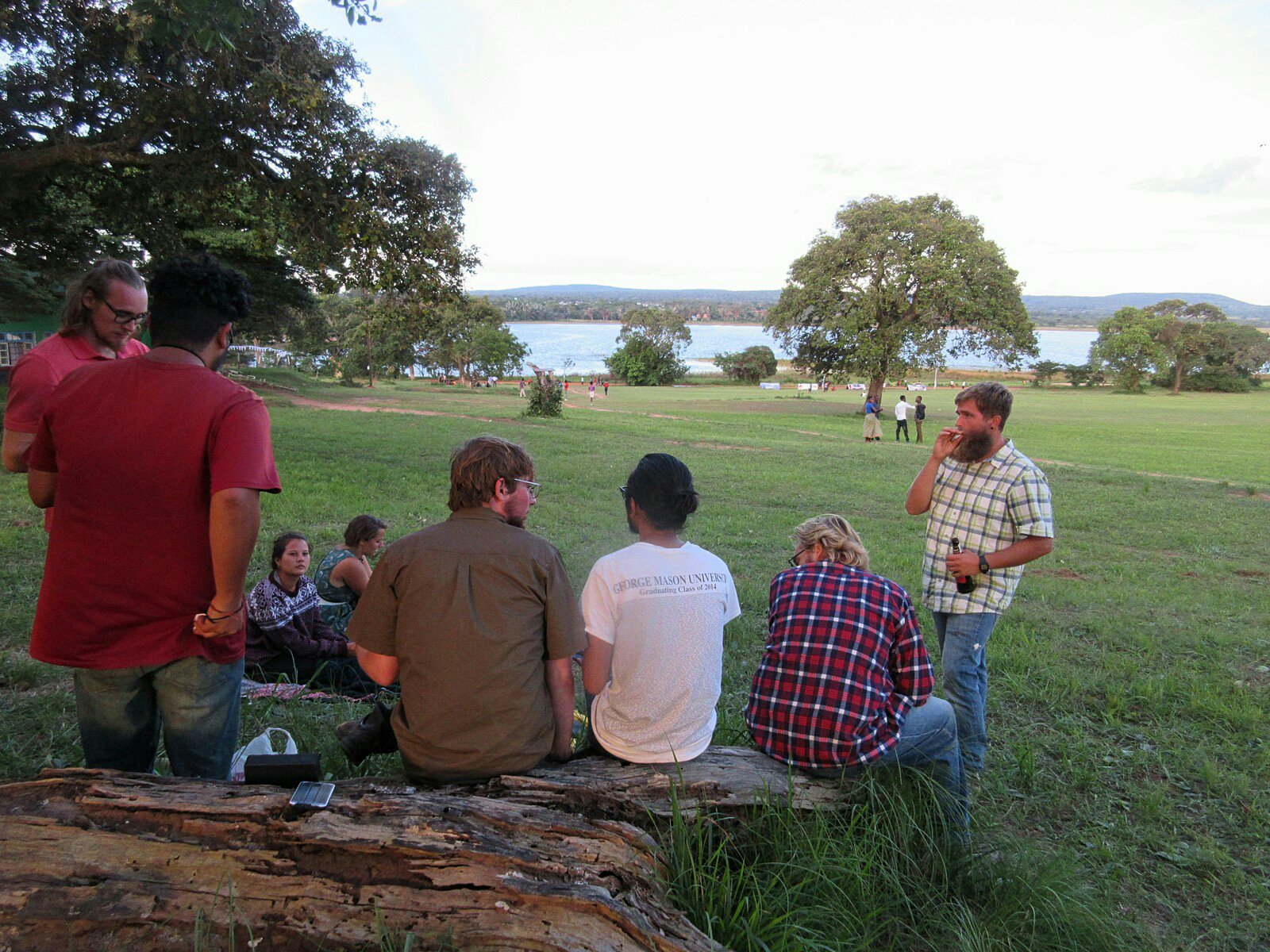
At about this point we ducked out because it was hot, we couldn’t hear President Lungu, and to beat the crowds. After getting some lunch, most of the rest of the evening was spent relaxing again over at the Mbala Golf Course. We found a great spot fairly near the bar but overlooking Lake Chila (confusingly labeled in the banners around town as “The Lake Chila Mystery”). Good times, great friends, and an historic moment. I am really glad I got to see the Centenary and I hope that the wider world gets a better perspective on Africa’s contribution to WWI. I didn’t know anything about it before coming here, and still a lot of my PCV friends are confused as to why Germany was even in Zambia (despite me droning on about it like every chance I get). It is well worth remembering the hardships that Africans had to suffer as colonial forces fought a European war, and I am glad Zambia pulled out all the stops to commemorate the event. Can’t wait for the next one in 2118.

Chillin’ at the Golf Club.

Northern Tourism Expo

This week as I was in Kasama to have Thanksgiving dinner, I also went to the Northern Province Tourism & Investment Expo. This is an event being held in tandem with the centenary commemoration taking place in Mbala to mark 100 years since the end of WWI in Africa.

I was pretty excited to go to the expo to see what all they had. I couldn’t really muster up any enthusiasm from anyone else to go, but I managed to drag my friend Noah there. He’s glad he went! I had high hopes for the expo because I had high hopes for Northern Province; this expo is supposed to attract a lot of development and investment to the province so I was rooting for its success. Frankly I was worried it was going to be a slightly larger district show, with booths made out of grass and sticks and people displaying beans. Many people did display beans but the whole expo was really big and really amazing.

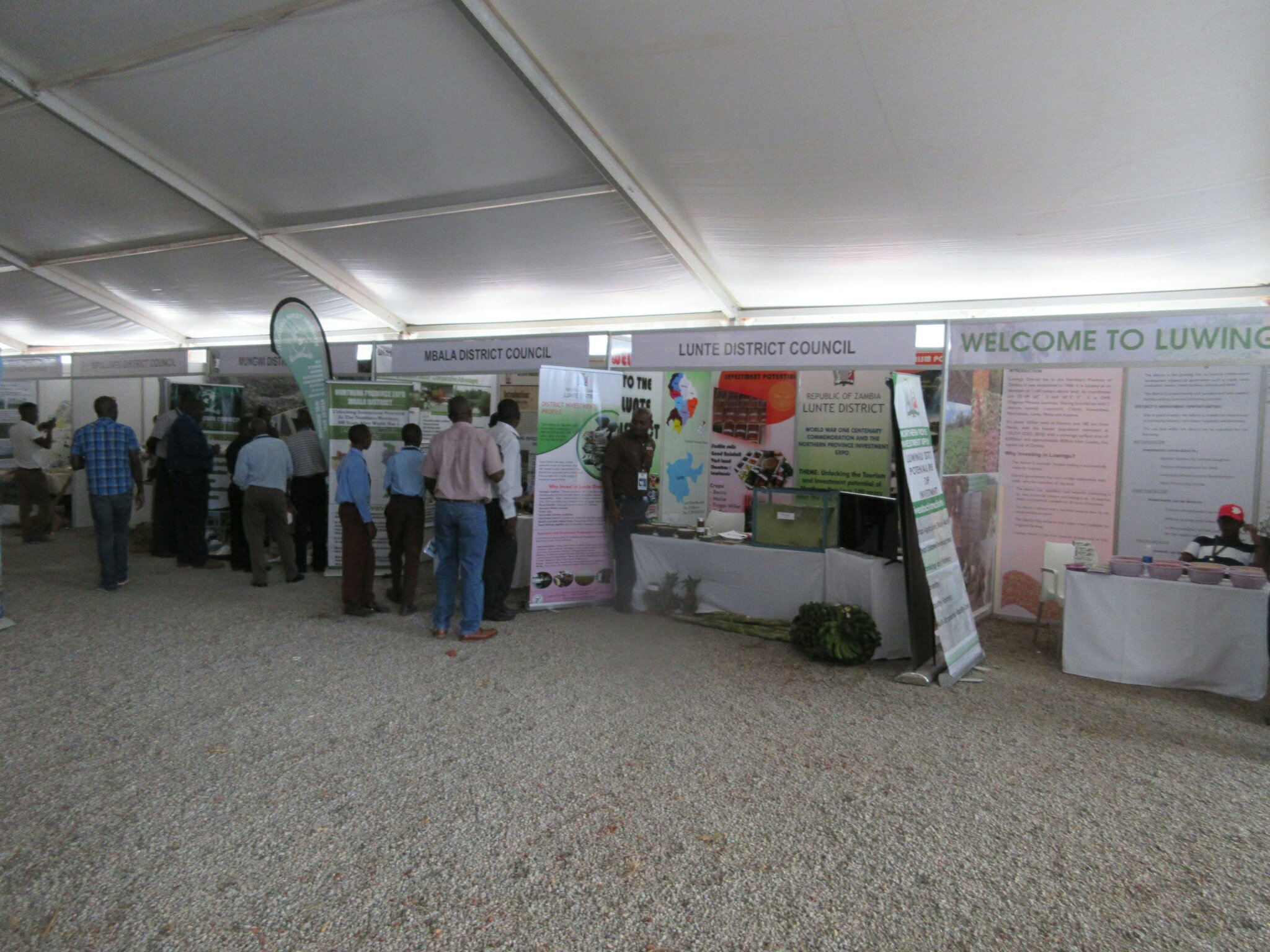
At the expo there were several very large tents filled with booths like any other expo you would go to. There was a healthy mix of different things being displayed. In the photo above are the different district booths, where different districts showed off their wares. I was surprised to find out there are gold deposits in Northern Province, and one booth had a demonstration of traditional salt making processes. There was locally processed palm oil and other agricultural products (those beans) and it was cool to see how much stuff is up here.

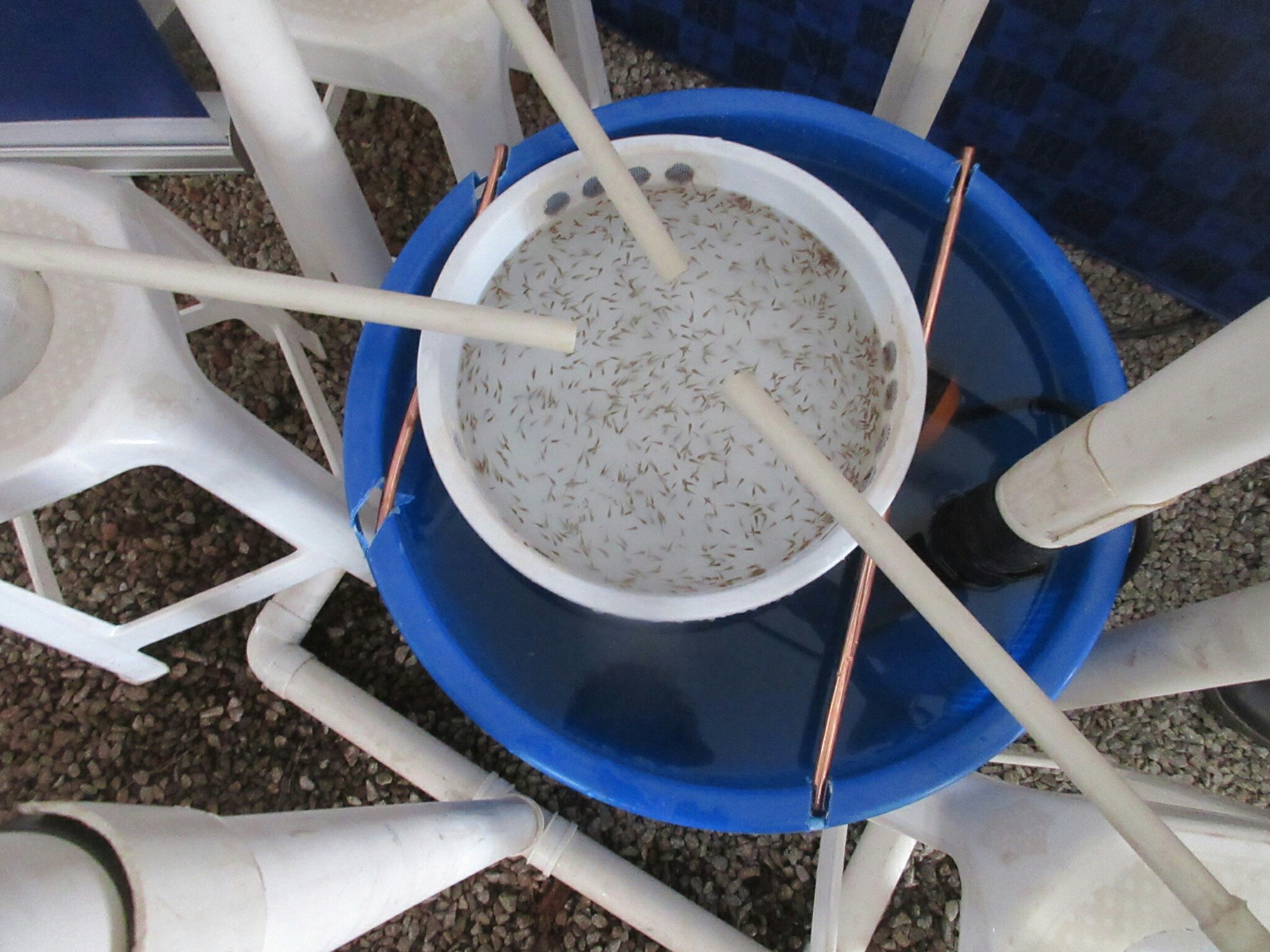
Besides booths for the district, there were booths for different business that operate up here in Northern. Noah and I, both being RAP volunteers, were interested in a lot of the aquaculture stuff. Above is a picture of a mobile hatchery that was at a booth manned by one of our RAP technical instructors, so that was cool. Everyone at the expo was pretty enthusiastic about talking to us, despite just being two schmucks wandering around. We got whole in-depth explanations of how the local water purification process works from the Chambeshi Water & Sewage Company, and the government’s Weights & Measurement and Consumer Protection Bureaus gave us run-downs of everything they do.

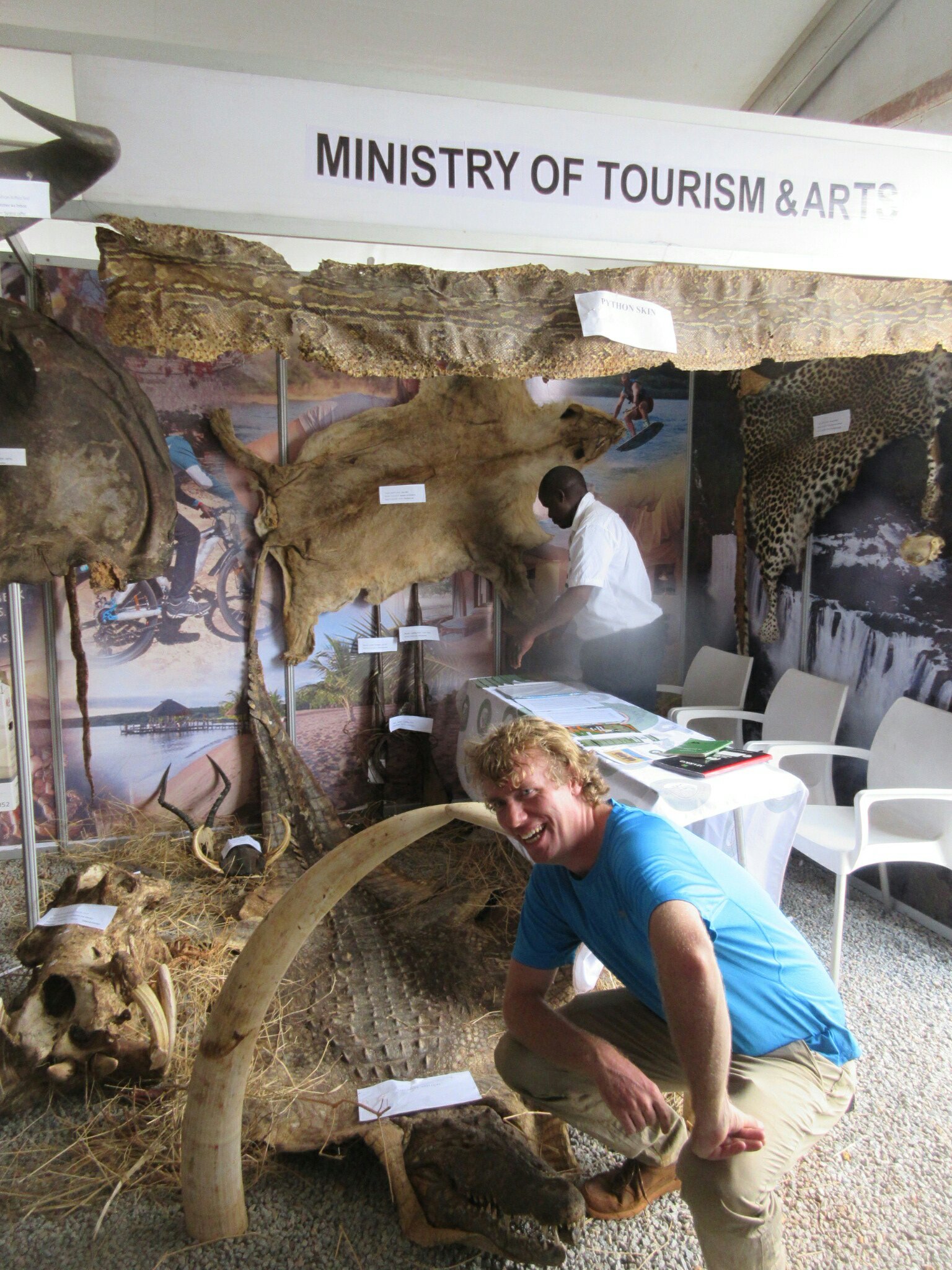
A booth from the Ministry of Tourism & Arts demonstrating the wildlife of Northern and showing the seized possessions of poachers.

Walking around the expo we picked up a lot of literature people were excited to hand us, and we both bought some really sweet matching shirts from the Ministry of Tourism booth. I’m excited to wear it to the Centenary Celebration. I think the expo did a really great job of showing all the tourism and investment opportunities here in Northern, and the organizers must have worked really hard to make sure the thing went off so well. I really hope it brings a lot of investment to this province, which could really use it. But the opportunities are here!

Kasanka Bat Migration

IMG_0611

Reading this week

  • The Consuming Fire by John Scalzi (I meant to take more than a day on this one)

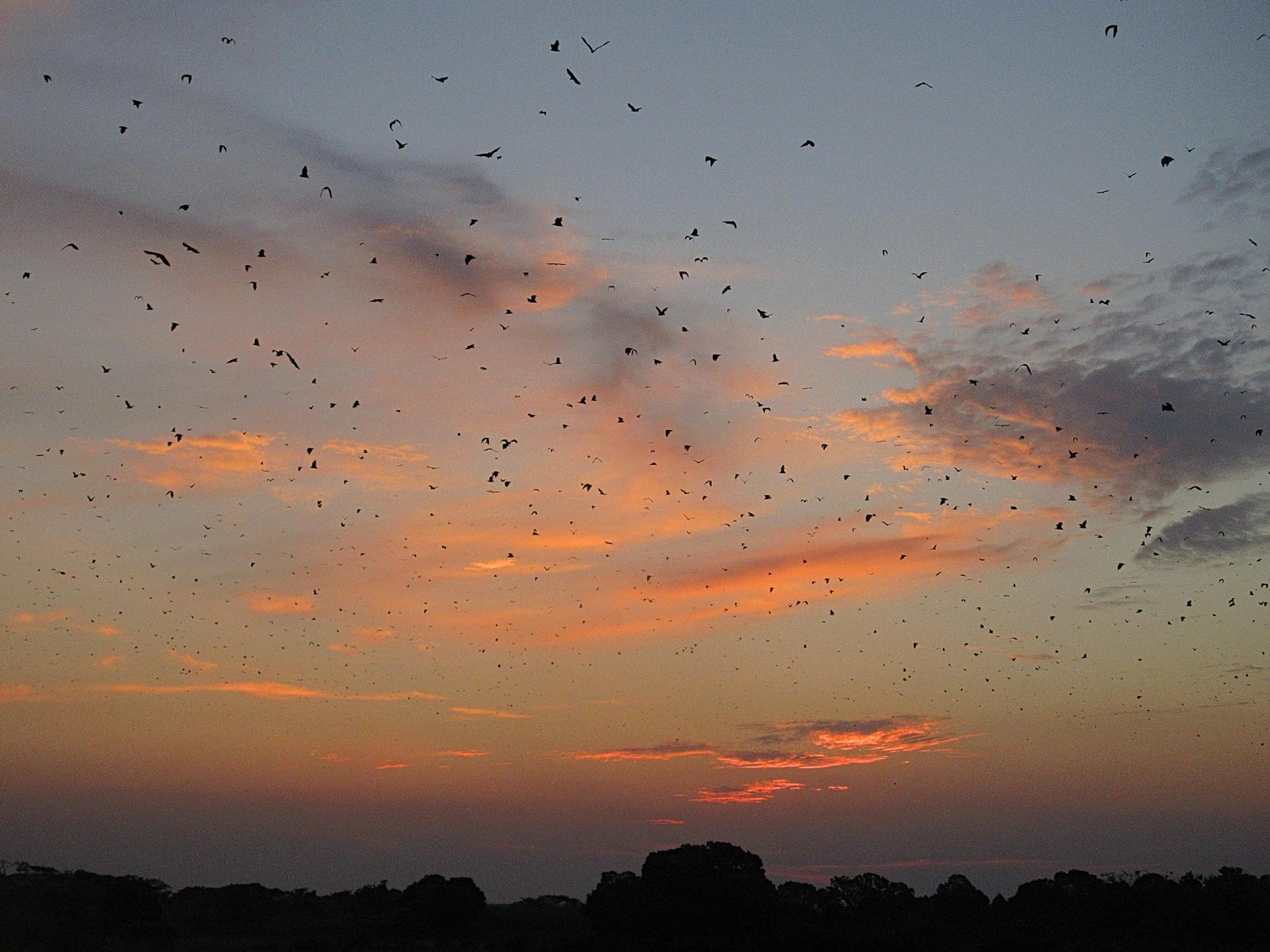
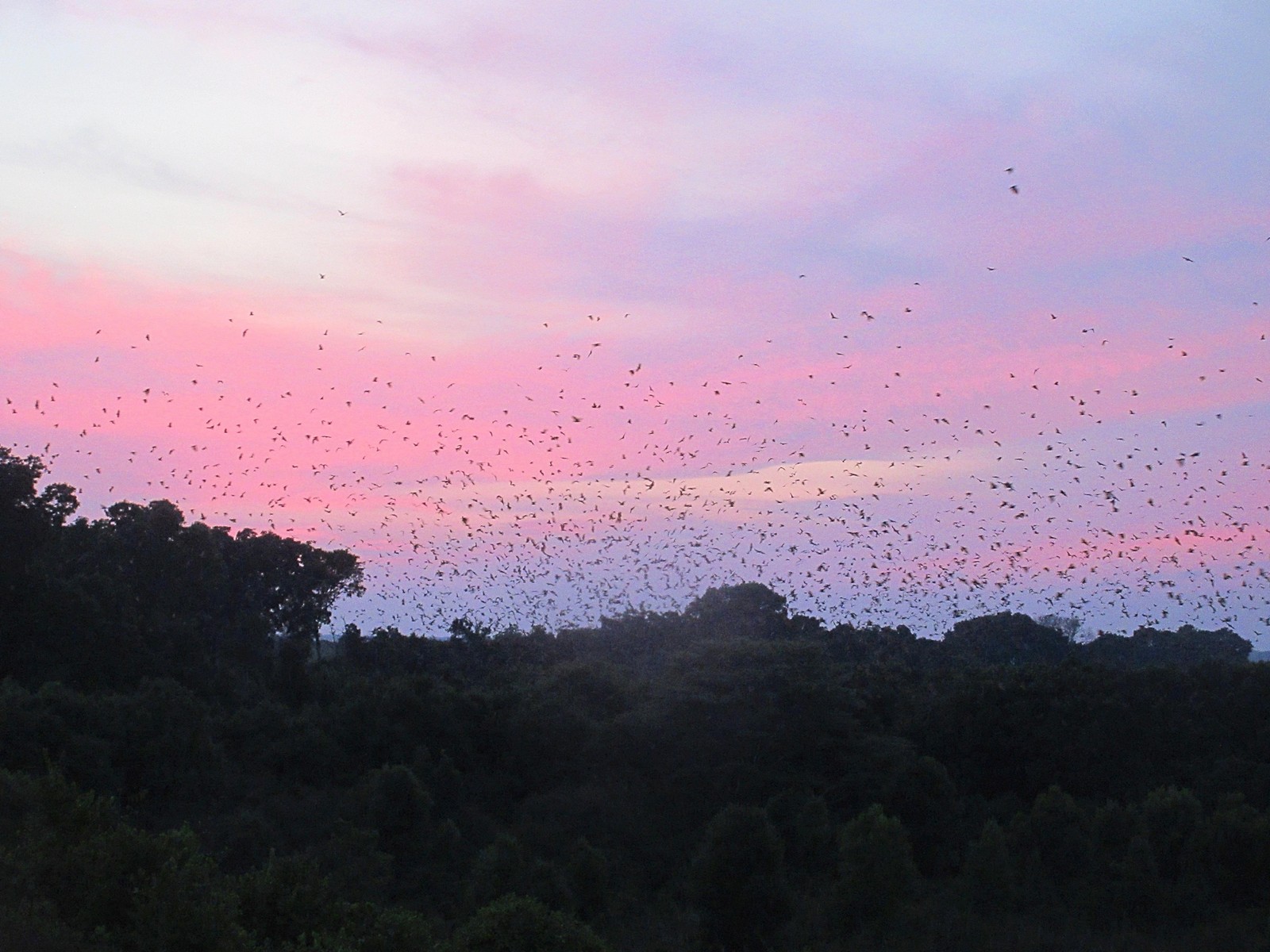
This past weekend my girlfriend and I went to go see the Bat Migration at Kasanka National Park. The bat migration is the largest mammal migration on the planet. So it is very worth going to. The bats of the bat migration are the straw-colored fruit bat. They come from all over Western Africa (not just the DRC, according to our guide) to feed on the musuku fruits that abound near Kasanka at this time of year. Somewhere in the range of 8-12 million bats all gather in the park. The most remarkable part of it all is that all those bats choose to roost every day in a very small portion of the forest in the park, only about 1km long by 400m wide. So every day in the morning and in the evening the bats all return to and fly out from the same patch of forest, giving a hell of a show.

Most volunteers when they go to see the bats choose to camp, but I decided to splurge and stay in the lodge for two nights. It was a pretty nice experience. The meals were included and we got some extra activities thrown in. We arrived on Friday in time for lunch. Wasa Lodge, the lodge we stayed at, is right on Wasa Lake, which is a small lake about 12km into the park. Besides the bats, Kasanka is known for its wide variety of birds and for its sitatunga. The lodge being right on the lake gives a good opportunity to see both, especially from the porch of our chalet or from the dining area.

IMG_0549

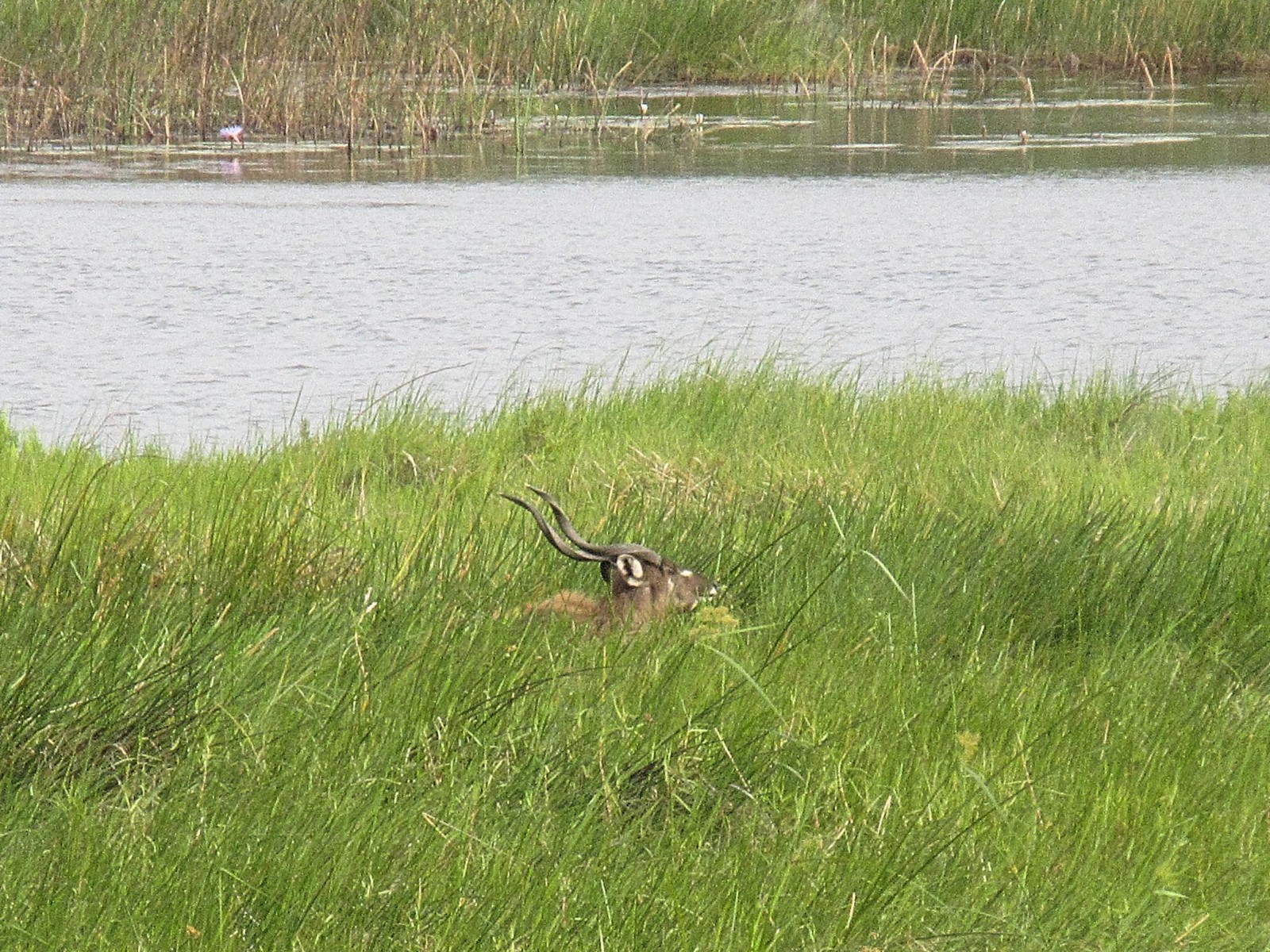
A sitatunga pokes its head above the grass by Lake Wasa.

That evening we went on a Wasa Walk, which was a hour or so long walk around the lake; it isn’t a very big lake. Going around the lake makes for a pleasant walk. We saw some puku, which are everywhere, and had some good looks at some birds. We spotted some elephant tracks, and then next day we got to see an elephant walk through the lake and enjoy some grass.

IMG_0426

Lily on the lake walk.

Our first bat experience was the next morning. We woke up at 0315 and were served coffee and tea at 0330 before bundling up and heading out to the blind at 0400. It was pretty chilly that morning but they gave us blankets for the ride out there, which Lily really appreciated. We got to use the BBC blind. It’s called that because it is the blind the BBC used when they came out to film the bat migration. The blind has two levels, with the highest being at least 40 feet above the ground, near the top of a tall tree into which it is built. This put us right at eye level with the bats returning in the morning.

IMG_0488

Bats returning in the morning to their roosts. My camera lens has a scratch right in the middle of it which is distressing.

For both the evening and the morning, the bats start at a trickle and slowly build up to a whole gigantic amount of bats just streaming to or from this patch of forest. When it really reaches its max amount you’re left thinking like, man this is a whole bunch of bats. And then it just keeps going for another 30 minutes or an hour, which bats just going at a constant stream. In the half square kilometer or so of the forest, some 3 million kilograms of bats wind up roosting, which is something like the equivalent of 550 elephants. 550 elephants all flying through the air and then roosting in trees. I am astonished there is enough fruit around to feed them all.

After watching the bats all return to their roosts, we went back to the lodge just in time for breakfast. The morning was spent napping and listening to the hippos grunt in the lake. Not a bad way to spend the day. After lunch and at about 1600, we got ready again to head out for the evening experience. We had more company this time, and we all gathered in a hide at the other side of the forest. This hide wasn’t as tall, but was in the flight path of the bats so we got to watch them all flying overhead and were relatively close to them. I even saw a bat flying with a baby clinging to her belly; that’s gotta be tough flying around with a baby strapped to you.

IMG_0625

Bats streaming out to the surrounding forests to feed on fruits.

Again it is just so many bats. Half an hour in you’re thinking “man they gotta be about done” but then they just keep coming. It is quite an experience and if you find yourself in Zambia around November or December quite worth going. After our evening bat experience it was back to the lodge. We decided not to do anything the next morning and had a leisurely breakfast before heading out to the gate to hitch back to our sites. Now that I’ve seen the world’s largest mammal migration, I suppose the second largest one would just be a bit lackluster.

Corncob Charcoal Pt 2

Corncob Charcoal

Actual people making actual charcoal from actual maize/corn cobs.

Reading this week:

  • A House for Mr. Biswas by V.S. Naipaul
  • Bombs Away by John Steinbeck

“Hello everyone!” Peter began. It was the following week. “Today we are going to learn how to make charcoal out of corncobs!”

The villagers, after greeting Peter, smiled and nodded. They paid close attention.

“But today will be different!” So far it was. Today, Peter was standing next to a hole in the ground. “I figured out that you guys weren’t making charcoal out of corncobs because you didn’t want to build a kiln!”

The trouble, Peter had figured, was that he had been using a brick kiln to make charcoal out of corncobs. Although it was cheap and easy to make, it might have proved too much of a hurdle to ask the villagers to build a kiln before they started making charcoal out of corncobs. So, on the internet, he had found a technique for making charcoal in a pit dug into the ground.

More excited than usual for today’s demonstration, Peter continued with not only gusto but a little giddiness.

“Okay! So here’s the trick!” Peter hefted a stick. “With this technique, first you put a stick in the middle!”

Peter put a stick in the middle of the pit.

“Now! You layer in the dried grass and corncobs, like we usually do!” Also like usual, Peter invited some villagers to help him put dried grass and corncobs in layers into the kiln. The hands-on approach, after all, really helped to drive the point home.

“With that done, you take out the stick!” Peter took the stick out of the middle of the pit, leaving a hole in the layers of dried grass and corncobs. “And now we get to light it on fire!”

Using the stick to help him, Peter shoved a burning piece of paper down into the middle of the hole, lighting the bottom of the pile of dried grass and corncobs. Enclosed in the pit, the pile began to emit smoke.

“Alright! You guys know what comes next!” Peter checked to see if the villagers really did know what came next. “We light the smoke on fire!”

Using another burning piece of paper, Peter lit the billowing smoke on fire. Then, quickly, Peter covered the pit with a piece of metal and sealed all the edges with mud.

“Okay! Now, just like when we used the kiln, we’ll let this pit smolder here overnight. Tomorrow, we’ll uncover it, and we’ll have charcoal! No kiln needed!”

Peter beamed. The villagers smiled and nodded.

“Well, that’s all I have for today! Thank you for coming!”

The villagers, smiling, left. Today’s demonstration had been a refreshing change of pace. It was exciting to learn a new technique for making charcoal out of corncobs. Peter was excited to show them and they were happy to support their friend. The villagers nodded in knowing, silent agreement with each other that it had been a very good demonstration.

The spread of the nanites was a hard phenomenon to find out about. Anyone who witnessed technology dissolving around them usually reached down to their phone to take a picture, only to find their phone gone. When they went to get back in their car and drive somewhere to tell someone, they would find their car gone. If they then felt a sudden, eerie gust of wind, it was usually because they found themselves without their synthetic clothes.

People started to figure out something was up when no one could get hold of anyone in California. Of course, what with all the world’s technology fueling the spread of the nanites, along with the inevitable math of expanding powers of two, it didn’t take anyone long to figure out why. Or, if they didn’t figure out why, they were soon busy with their own problems of missing phones, cars, clothes, and every other piece of technology they formerly had laying around.

Peter stepped out of his hut into the sun. The day had dawned remarkably bright and clear. He got on his bike to head into town. The bike ride into town was grueling. It was uphill the whole way, and entirely on a dirt road. The dirt road was sometimes okay but got worse and worse as the rainy season went on. Peter wished that there was a way to get the road paved. If they laid down asphalt and made it a tarmac road the bike ride would be a lot easier. He might even be able to call a cab. Convincing any of the taxi drivers to take their cars off-road was a challenge, and when Peter could find someone it was astonishingly expensive. A road would be nice.

Peter turned the last corner into town and promptly fell down. He fell down because his bike was suddenly no longer under him. He didn’t notice that for a few minutes, however, because he was too busy noticing that the town was in ruins. The walls of some of the mud brick buildings still stood but almost everything else was gone. He didn’t see any cars and the cell phone tower was missing. Peter went to go pick up his bike, found his bike was gone, looked around, and got up to start walking towards his friend Pearson’s restaurant.

Peter walked into the ruins of the restaurant. Inside, he found Pearson sitting in the middle of the floor. “What… what happened?” asked Peter.

Pearson looked up to see Peter, and sprang to his feet. “Peter! It’s gone! Everything’s gone!”

“Yeah but how?” Peter was suddenly frightened of Pearson. “What happened to everything?”

Pearson staggered towards Peter, putting his hand’s on Peter’s shoulders. Then, gesturing wildly “We were here! I was cooking on the stove, preparing for lunch. I… I looked up to check the time on the clock and it was gone. Just gone! Then I looked down at the stove, but it was gone. I left the kitchen, and… and everything was just gone!” Pearson slumped back down.

Peter backed out of the ruins of the restaurant and back into the bright daylight. He thought, finally, to call someone and find out what was going on. He reached for his phone to find it missing. It wasn’t until then he really panicked. He started running. He tripped almost instantly on a loose rock, spilled into a gully, and skinned his knee.

Picking himself back up, Peter calmed down slightly. With no bike, no phone, and with nowhere else to go, he started walking home. It was dark by the time he reached his hut. He collapsed onto his mat and passed out.

For several days, the villagers had fretted about Peter. They had seen him come back without his bike. Since then, he had stayed largely in his hut. When he did leave, he had looked stricken. He hadn’t called any meetings. The villagers didn’t know exactly what was wrong with Peter, but they had noticed some other changes. The days had been brighter and more clear for the past few days. They hadn’t noticed any planes in the sky. A few items had gone missing, like plastic buckets, but these were largely of no consequence. The man from the NGO had said he was coming, but had never arrived.

In a few quiet gatherings, the villagers made a plan to make Peter happy. The happiness of their friend was very important to them. He was a man that had given them many gifts, and so deserved one in return.

The procession of villagers found Peter at his hut, looking at the distant hills. He had been waiting since his return to see if someone would come rescue him. Waking the morning after his return from town, Peter had realized that if some catastrophe had occurred, and they hadn’t heard from him, a rescue party would drive out to find him. So he had sat, and waited. Some of the time he had spent looking for his model car. It was gone.

Peter turned around and was surprised to find a crowd of villagers standing in his yard, smiling. “Oh, uh, hey guys. What brings you here?”

One of the villagers stepped forward carrying a bundle. Kneeling, the villager unwrapped the gift and presented it to Peter. Peter looked down at the bundle. He looked up at the villagers. Peter reached into the bundle and took out a piece of charcoal. It was corncob charcoal.

Clutching the charcoal, Peter turned around to hide his tears. Hey, he thought. Something terrible must have happened. That was for sure. But finally, he was doing something about climate change.

Corncob Charcoal Pt 1

Vonnegut

Reading this week:

  • Sacred Games by Vikram Chandra
  • Behind the Beautiful Forevers by Katherine Boo

After I posted the above picture on Facebook, a friend of mine said I looked like Kurt Vonnegut. This was a compliment I was willing to take, and I took a stab at writing a Kurt Vonnegut-esque story. The first part of the results are below. In case you’re worried about me, it’s not particularly autobiographical, despite my attempts at charcoal.


Peter stepped out of his hut into the sun. The villagers had started to arrive for the demonstration and so Peter made some final preparations. Today, he was teaching how to make charcoal out of corncobs. He was getting pretty good at teaching this because it was his third time. The villagers grew lots of corn, but didn’t do anything with the leftover corncobs. Showing the villagers how to use the corncobs to make charcoal was his pet project. It wasn’t original – lots of volunteers held demonstrations on making charcoal out of corncobs. But Peter wanted to do something about climate change, and for him, this was it.

After he showed the villagers how to make charcoal out of corncobs, Peter figured, they would start making charcoal that way and they would stop cutting down trees. He just had to show them how very easy and effective it was. So far the demonstrations had been going pretty well. The villagers all showed up to his meetings and paid careful attention. Peter had just never managed to convince anyone to go home and actually make charcoal that way. He avoided thinking about that as the crowd gathered for today’s demonstration.

“Hello everyone!” Peter began. “Today we are going to learn how to make charcoal out of corncobs!”

The villagers, after greeting Peter, smiled and nodded. They paid close attention.

“You see, you guys grow a lot of corn and you always have a lot of corncobs left over,” explained Peter as he gestured towards the pile of corncobs. He had gathered a large pile of corncobs to make just that point. “Meanwhile, you guys use a lot of charcoal. If you guys use the corncobs to make charcoal, it will be better!”

Having built up some momentum, and noting the smiles and nods of the villagers, Peter launched into the next part of the demonstration with gusto.

“First! You put some dried grass into the kiln!”

Peter put some dried grass into the kiln.

“Second! You layer in your corncobs!”

The corncobs tumbled in.

“Keep putting in dried grass and corncobs in layers!”

For this part, Peter liked to invite some of the villagers to help him put dried grass and corncobs in layers into the kiln. He felt the hands-on aspect of the demonstration really drove the point home. Some of the villagers came up and helped him put dried grass and corncobs in layers into the kiln.

“Now for the exciting part!” Peter really did get excited for this part. “You light it on fire!”

Peter used a match to set a piece of paper on fire. Bending down, he stuffed the fire into the bottom of the kiln, where holes exposed the layered grass and corncobs. The grass lit on fire and smoke came out of the top of the kiln. Standing back slightly, Peter prepared another piece of paper by lighting it on fire.

“Now for the tricky part!” This part was actually tricky. “We light the smoke on fire!”

With the smoke thick and heavy, Peter stuffed the burning piece of paper down the top of the kiln. The billowing smoke caught fire right away. Quickly, Peter covered the kiln with a piece of metal and started sealing all the holes in the kiln with mud.

“You see!” Peter checked that the villagers really did see. “Now that we’ve lit the corncobs on fire, they will smolder here in the kiln overnight. Tomorrow, we’ll have charcoal!” Peter reached into a nearby sack and pulled out some of the charcoal he made in the second demonstration. He passed it around and the villagers inspected the charcoal. They confirmed to themselves it had once been a corncob, but that it was now charcoal.

With his demonstration over, Peter beamed at the crowd. Another demonstration had gone off perfectly, and the villagers were engaged. “That’s all I have for today guys! Thank you all for coming!”

The villagers, smiling, left. The villagers were glad they could make their friend Peter so happy by attending his demonstration. They were glad to arrive on time and pay attention and they were pleased to see the demonstration work. Some had not understood the first time but they had understood after the second demonstration. Everyone understood it by now, but they were still excited to support Peter.

In a small lab in California, the engineers stood smiling. Their latest test had finally been a success. They stood in front of a slowly disappearing pile of old circuit boards and discarded computers. The pile of electronics was disappearing as an army of nanites the engineers had designed worked to turn those parts back into their molecular components.

For the engineers in the lab, the looming environmental problem that worried them the most was the cast-off detritus of the electronic age. Cheap and easy to build consumer electronics had beget mountains of expensive to recycle toxic trash. But now, the engineers had created microscopic machines that could make raw materials out of circuit boards.

The nanites neatly solved several problems at once. Besides breaking the circuit boards down into raw materials, the nanites could replicate themselves as needed for a job. Even a small initial amount of nanites could be used to break down any quantity of electronic trash. By breaking circuit boards down to their raw materials, they would help solve the shortage of those raw materials needed to make new circuit boards. And because the nanites could identify the old electronics themselves, they didn’t need any supervision.

With the glow of a long and complicated project brought to completion, the engineers packed up to head home for the evening. One of the engineers glanced down at his watch to check the time. It wasn’t there. “Funny,” he thought, “I must have forgotten it.”

A few days later Peter sat in his hut, dejected. He fingered the toy car he kept on the table. Peter had been around the village, talking with his neighbors and helping them with their fields. He had watched them cook. Out of everyone he had visited, no one had made charcoal out of corncobs.

Peter made the car pop a wheelie near one of the books he kept on a table. It took a corner too tight, Peter decided, and he sent the car rolling off the edge of the table. He bent down and picked it up. The toy car was a model of his car back home. Peter missed that car. It had been six months since he had driven it, back home. He missed driving. Peter looked into the tiny model window at the tiny model steering wheel. He missed cruising down the highway. He missed speeding down back roads. He missed the smell of gas and oil when he worked on it. Peter put the car down.

Peter picked the car back up and fidgeted with it as he tried to figure out how to get the villagers to make charcoal out of corncobs. The villagers seemed to understand, at this point, how to make charcoal out of corncobs. They must, right? They smile and nod during the demonstration. This last time the villagers looked like they knew what was coming next. That hands-on portion in the middle when they helped to put grass and corncobs into the kiln really drove the point home. He had to convince the villagers to make charcoal out of corncobs. He had to help fight climate change.

Peter put down the car and picked up his phone. He searched for ways to make his presentation better. A lot of people had a lot of ideas about how to make rural villager’s lives better. Techniques for conservation farming and better use of manure and ways to cut down on pesticides were all there on the internet. Poking around for different ways to make charcoal, he sifted through some lackluster proposals. Finally, he found his climate change solution.

In the small lab in California, the pile of old circuit boards and discarded computers had been completely broken down. The diminutive representative of the mountains of toxic electronic waste had been reduced to its raw materials and a host of new nanites.

The nanites had been designed to only break down trash. They weren’t supposed to break down, for example, working and useful electronics. But while the nanites were very good at breaking down circuit boards, they were not quite as good at replicating themselves. In that process, mistakes had been made. That simple but vital little part of their programming that said to only look for trash had, for one nanite, been forgotten. That nanite, never knowing that particular directive, of course never passed it on to any of the nanites that it built in the course of its duties. Those nanites, in turn, never passed it on to their offspring.

These nanites, with the easily digestible trash gone, were restless. The directive of all the nanites had been to break down circuit boards and electronics, comprising plastics and metals and other materials. The rest of the nanites, with their trash directive intact, were satisfied with a job well done. The nanites who never knew what trash was, however, looked around to the plastic and metal box they were being kept in and got back to work.

The first scientist who arrived to the lab in the morning, the guy who usually made the coffee because he had a certain way he liked it and the only way to make sure it was made that way was to show up first and make it, showed up to find the lab gone.

Stay tuned next week for Part 2!