Half a Funeral and Munada

Reading this week: Working on Arabian Nights. I don’t think it’ll take me 1001 nights but it is kinda long. So far I can’t tell if spending all my money entertaining fake friends is a good idea or not.

This week I went to half a funeral and munada. The funeral was for my host father’s brother. Funerals in Zambia are community events are you are supposed to make an appearance. The funeral was to begin at approximately 0900 and I was told to show up at the Mbala hospital then. The hospital has a main entrance and then a back gate that opens up into a green space. I got directed to the back gate and found a large number of people milling about. As I spotted people I knew from the village, it dawned on me that the rather large crowd was all there for the funeral.

At 0900 a small contingent went through the back gate and into the hospital, carrying the casket to retrieve the body. Women started wailing at this point, on cue. The rest of everybody just sort of milled around. I spotted a professional photographer going around at this point, so I suppose I could have gotten my picture taken (last time I saw these guys they had a little portable printer for on-demand snaps, as they’re called). Eventually they came back out with the casket and the wailing really picked up.

They didn’t have a hearse, but the casket was loaded into the back of an old-style Land Cruiser with a Ministry of Health logo on the side. After the casket was loaded, people started hopping into the back of two canters, which are largeish flatbed trucks. Once everyone was loaded up, they set off to the sound of sirens. At this point, I wasn’t sure if I was supposed to accompany the crowd based on some unclear directions I got from my host father, so I stayed and didn’t see the burial. I don’t know how standard any of these things are, but I think this was a slightly up-scale funeral. The brother was buried in a cemetary a few kilometers out of town, as opposed to outside the village somewhere.

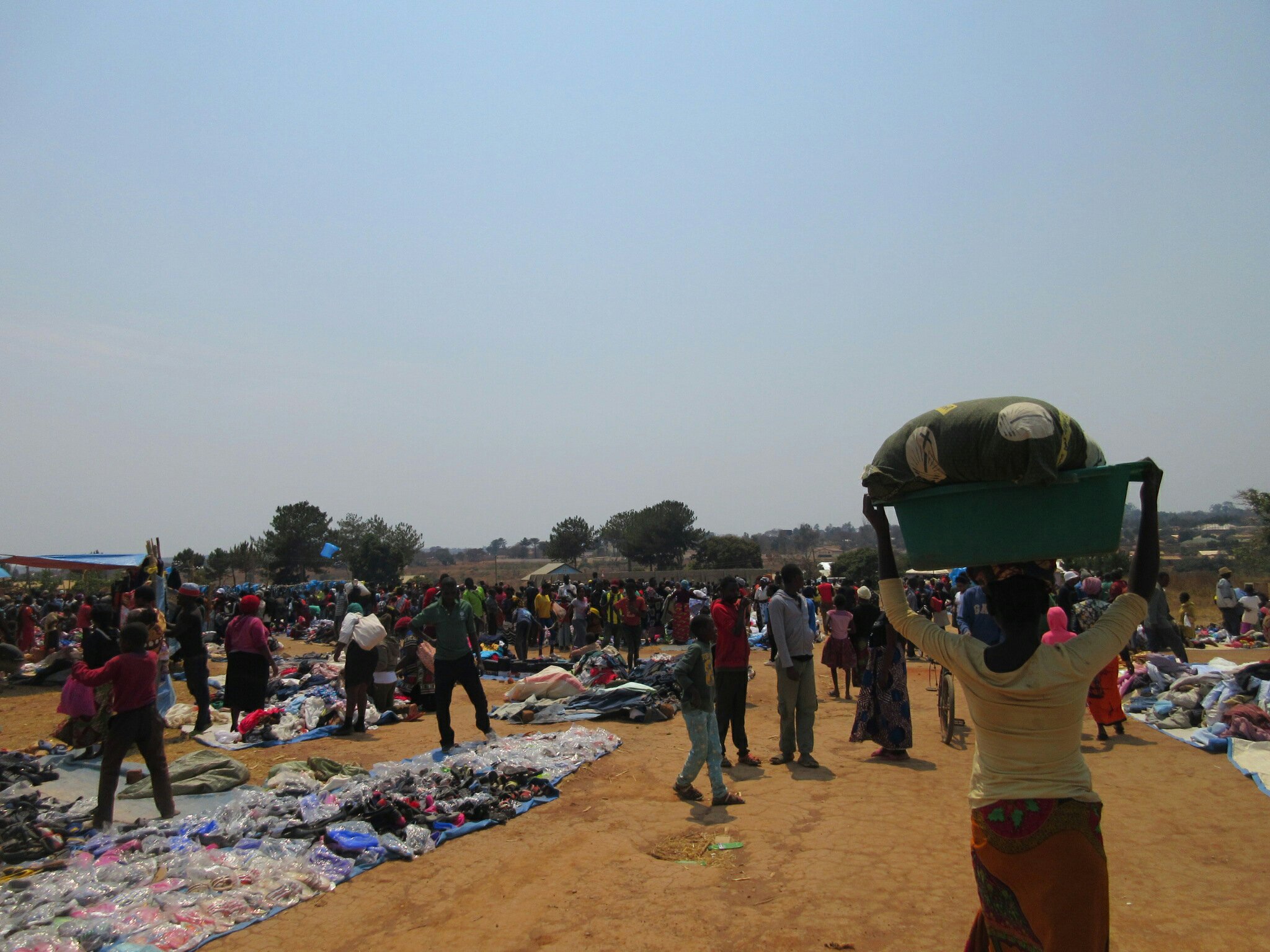
So instead I went over to munada. Munada is an open-air market held twice a month. This was the first time I happened to be in town for it, so I visited. The merchandise is unfortunately pretty similar to what you can get any other day in town, but it was concentrated and I am sure there are deals to be had if you’re good at haggling. The vegetable and produce selection was probably a bit wider than normal, due to the larger range of people attracted to the market, so that was cool.

But there was still lots to see. One thing was the piles and piles of clothes. Thrift store cast-offs are shipped here in massive tightly-packed blocks and sold by the kilo. At events like these they bust some of those open and you can sort through the piles of random clothes to find something that might fit for pretty cheap. Towards the back of munada were the meat sellers. You could tell the meat was fresh because right below the side of beef was usually the skin. They would chop you off a chunk with an axe (the exact same kind they use for cutting wood, etc). Besides going home with some raw beef, there were plenty of vendors cooking and selling meat. I regret not getting any. My favorite thing was not one but at least two different people running the shell game in the middle of the paths between vendors. That just seemed old-timey and quaint to me. Just like the movies!

So anyways those were the highlights of my Tuesday. Hope you enjoyed them!
School Poverty

Reading this week:

  • Time Enough for Love by Robert A. Heinlein
  • The Moon is a Harsh Mistress by Robert A. Heinlein

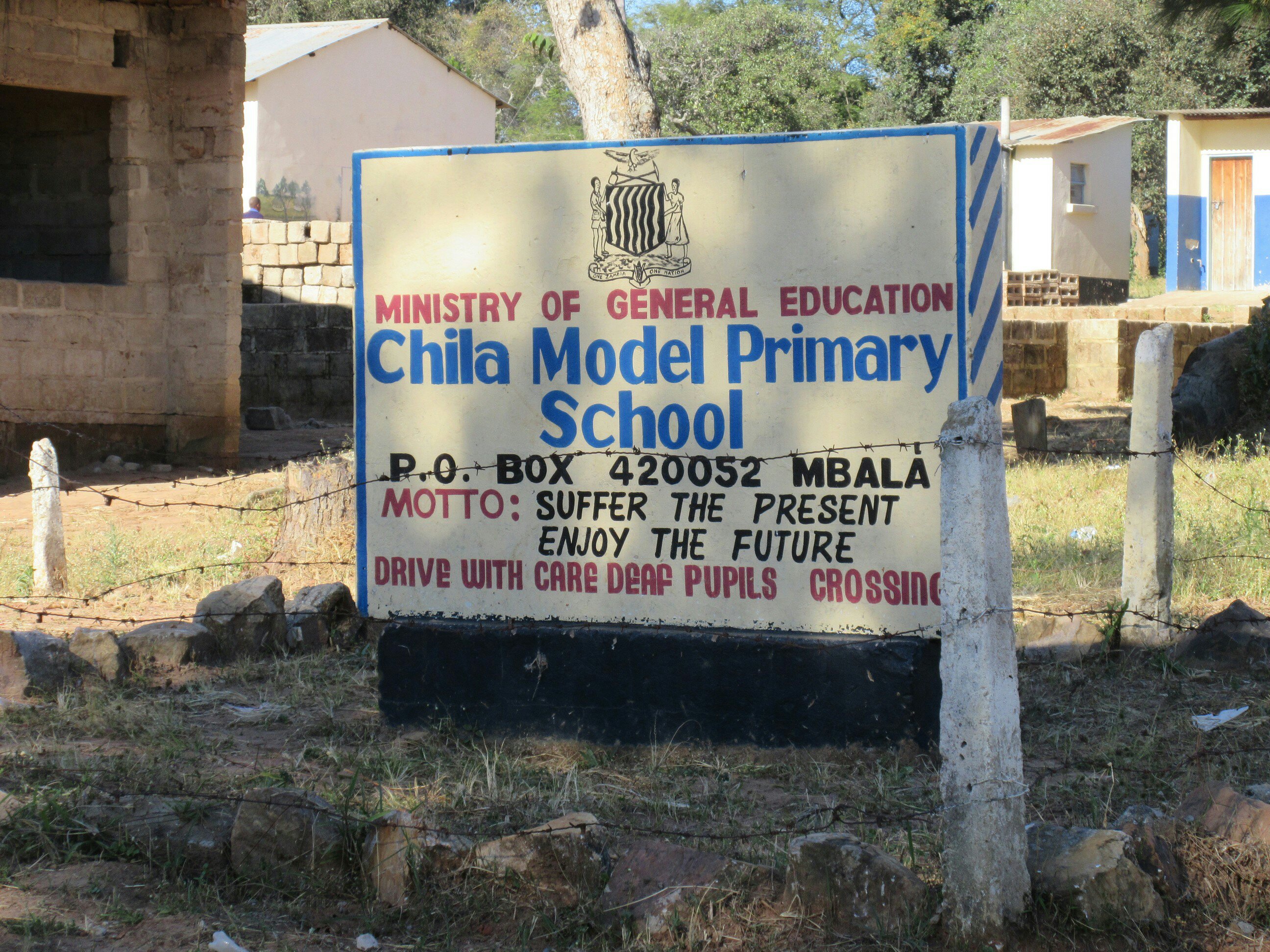
One of the things that has driven in the impact of poverty for me here in Zambia are the schools. It is a challenge to get an education here in Zambia, especially for rural kids or the urban poor, and it isn’t really anybody’s fault, it seems to me, it’s just the way things are.

Schools are split into primary and secondary school. Primary school goes from grades 1-7, and first grade starts at about age 5 or 6. Secondary school goes from grades 8-12, and after that is University. Kids are not required to go to school by law like in the US.

In my village, the closest primary school is in the next village over, about 4 km away. There’s no bus or other transport, so if kids want to go to school they have to hike over there. The nearest secondary school is in the boma (the term for town, as a step up from village), 12 km away. This is pretty impossible for a commuter, so if you want to go past grade 7, you usually wind up going to boarding school. Some primary schools actually go up to grade 9, and this is an effort to make school more accessible.

So now let’s talk about cost. I’ll talk about secondary school first, and also mention that currently the exchange rate is about 10 kwatcha (the Zambia currency, abbreviated ZMW or just K, as in K10) to $1 USD. To go to secondary school you have to pay school fees. School fees vary by location and school, but I’ll talk about my area. For the non-boarding schools, fees range from about K350-K500 per term, with three terms in the year. For the boarding schools, this price jumps up to K900 or more per term. For grades 8 and 9 at some of the primary schools, these fees drop to about K150-250, but that is for a rural area.

Now, primary school. Primary school is supposed to be free. It is in fact illegal to charge school fees for grades 1-7. But this, in most cases, is impossible. The school system in Zambia is pretty severly underfunded. As I said in the beginning of the post, I don’t really blame anyone for that, and this isn’t a criticism of any government policy, just an unfortunate reporting of the facts of life in Zambia for these rural farmers. Schools wind up charging school fees for these grades (they’re usually labelled “Parent Teacher Committee Funds,” or somesuch) to pay for basic school necessities like chalk and paper. These fees will also go towards paying volunteer teachers. They’re called volunteer, but they do get paid a small amount. The one data point I have is K400/month.

Volunteer teachers are required because most schools are understaffed due to a lack of teachers in the country. The older schools I see tend to have about half as many teachers as they are “supposed” to, based on the student population, and I know at least one school with only one government-paid teacher. His school has 150 students, grades 1-6, though there are 600 children in the area served by his school. There are three major reasons that keep those other 450 kids away. The first is school fees. When schools charge school fees for these grades, they are generally on the order of K10-20 per term. This is what drove the meaning of poverty home for me, because the thing between these kids and school is something less than $6 a year. That’s heaping a little too much blame on school fees alone, because the kids also usually have to show up in a uniform (usually home-made), wear shoes (most people wear sandals, known as “tropicals”), and have the materials to learn, all of which also add up. Then, when you multiply this by the number of children in a family, it adds up further. However, with that caveat, I think a Happy Meal at McDonalds runs on the order of $5.

Let’s cover the other two reasons real quick. One is that parents will require these kids to stay home to help work. Most of these villagers are subsistence farmers, growing maize and a small selection of other vegetables just to eat. Keeping the kids home to help work can be vital to keeping that up and running. The third reason that keeps girls home is that girl’s education is usually less valued than a boy’s. Women are not expected to be breadwinners, and the education required to be a good wife does not require school. In one of the nearby schools, of the 14 students in the 9th grade class (as a sign of the attrition rate, there are closer to 100 kids in 1st grade), there are only 2 girls.

Since the costs of going to secondary school are at least an order of magnitude higher, most kids only make it through grade 7 if they make it that far. That obviousely puts them at a major disadvangate for getting a job, or even really at having the math and reading skills needed to really make a farm profitable and successful. That continues the cycle of keeping kids out of school.

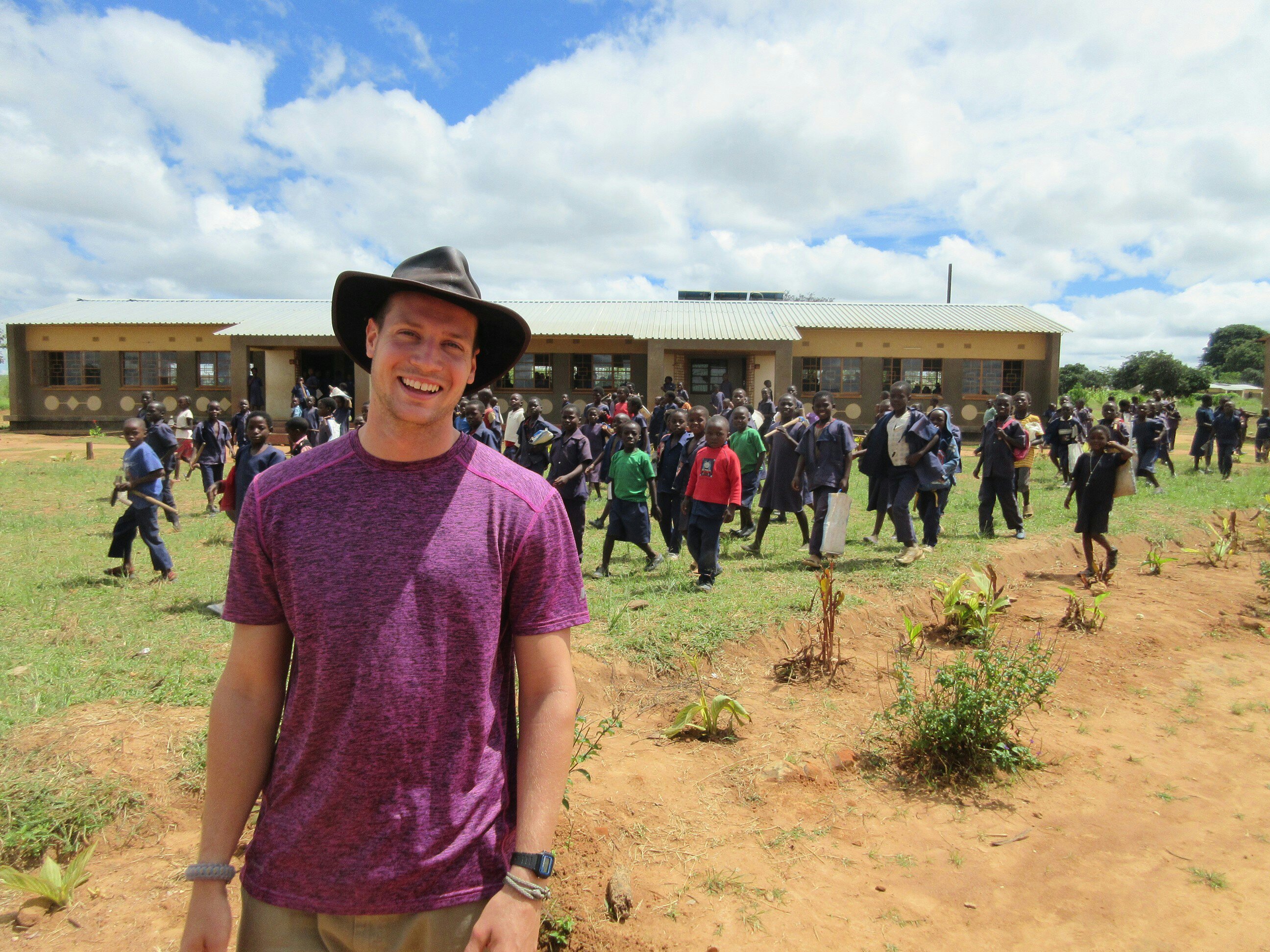
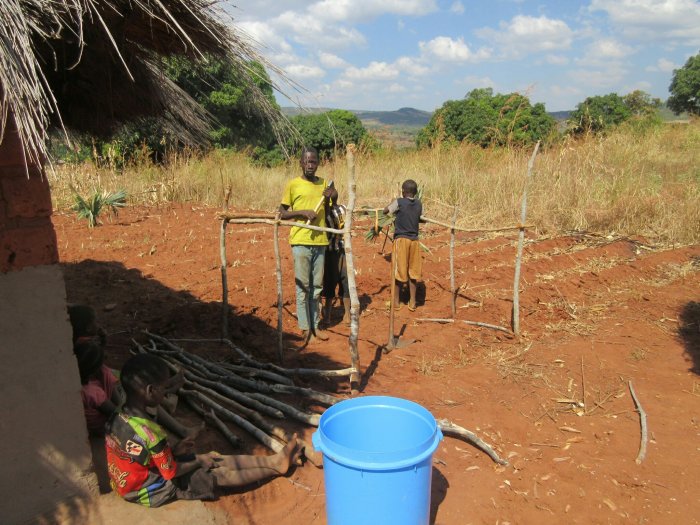
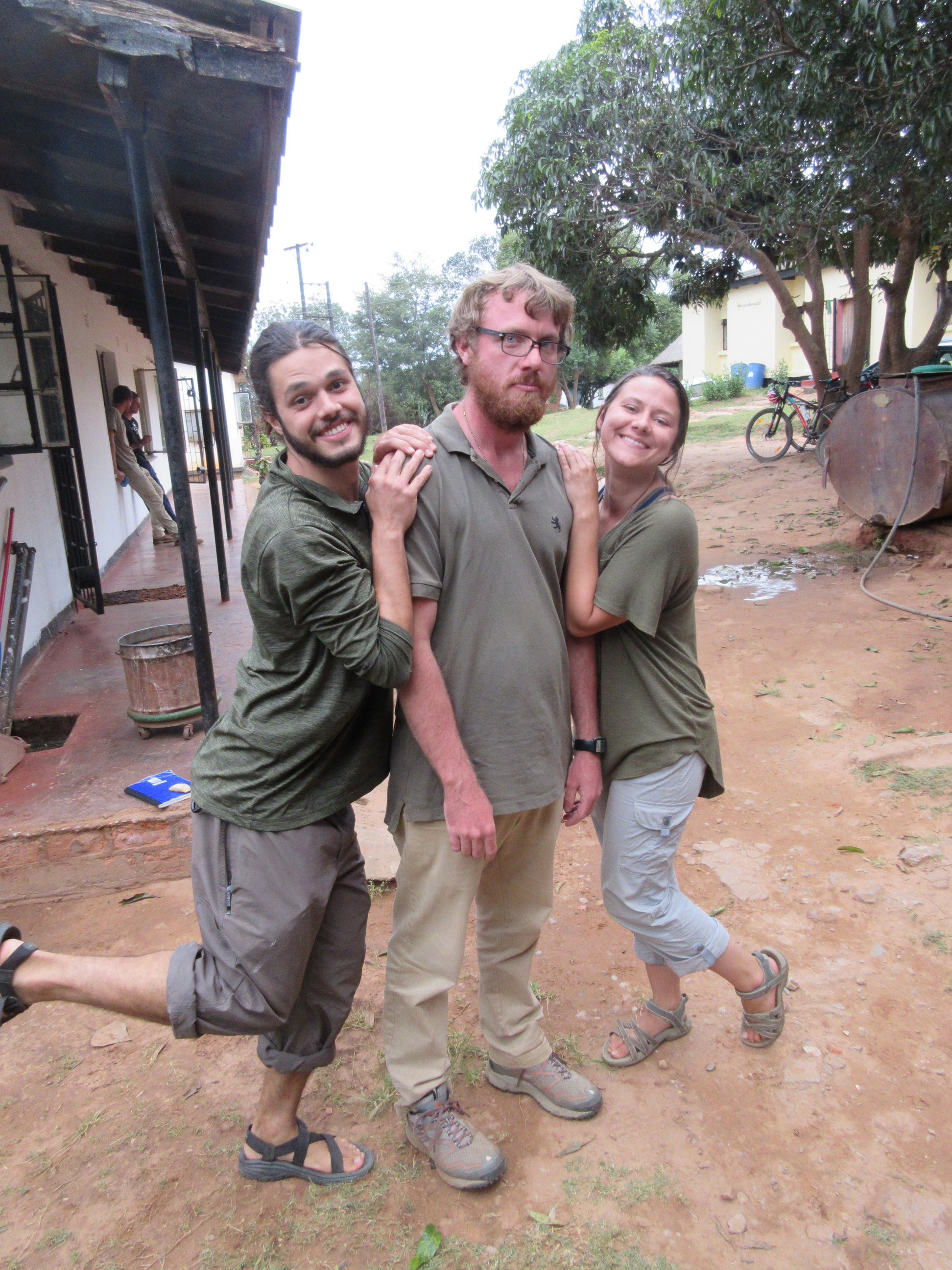
But enjoy this picture of my friend and a Zombie hoard of kids:

Umutomolo

Reading this week (it’s been a busy week):

  • Tortilla Flat by John Steinbeck

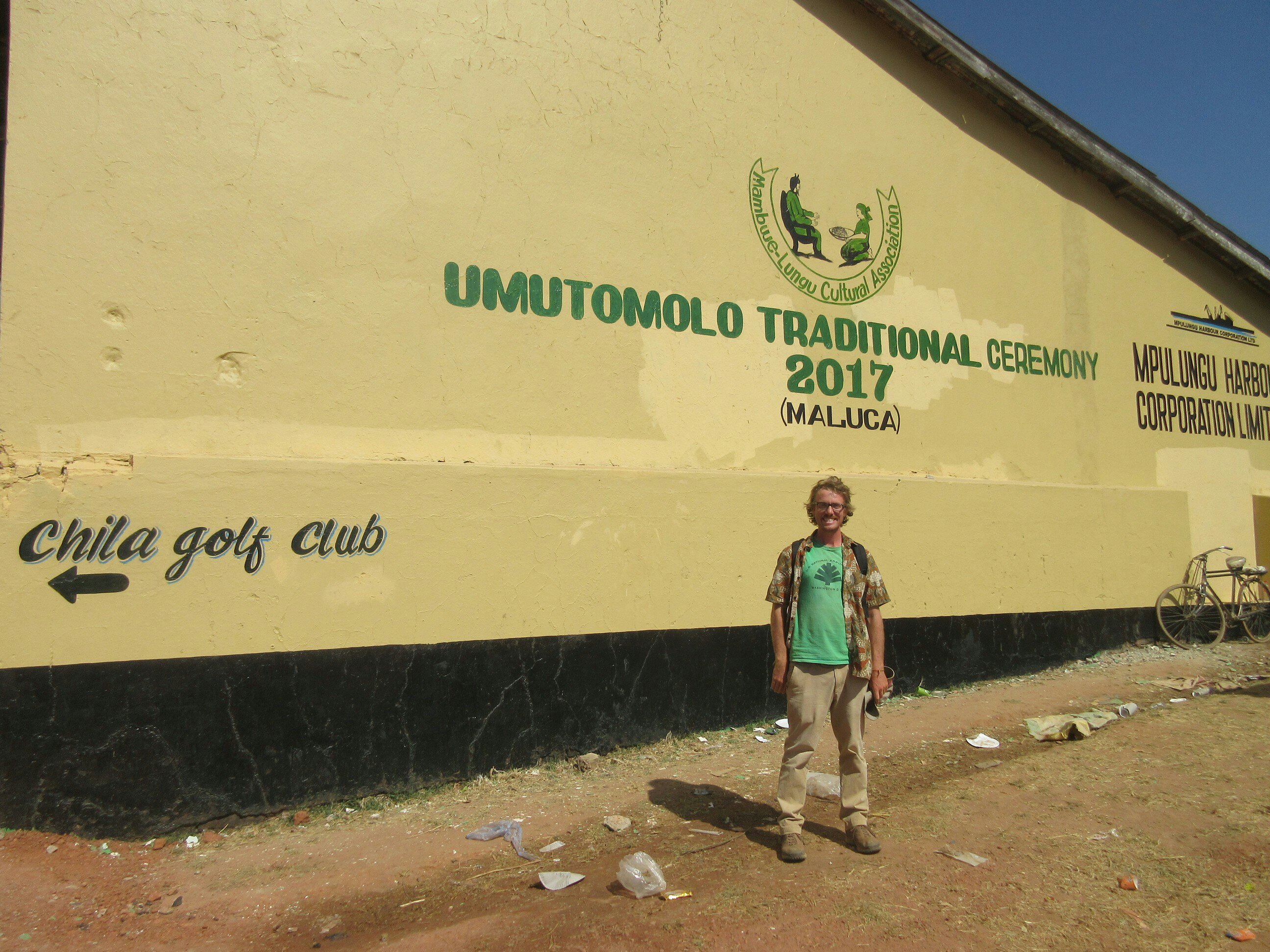
Yesterday and Friday I went to the Umutomolo Traditional Ceremony. This is the traditional ceremony of the Mambwe and Lungu people. The Mambwes and Lungus are two closely related tribes that live in the northern part of Zambia (and southern part of Tanzania) (as you’ll recall, I learned Mambwe, and currently I’m actually living in Lunguland, but Lungu is pretty much identical to Mambwe).

The ceremony happens every year, and serves to celebrate a successful harvest (it’s harvest season here in the southern hemisphere) and to pray for rains to come after the cold season, when they’ll be needed for next year’s crops. Since it is a fairly large event on the Mambwe/Lungu calendar, it attracts people from all over Northern Province, and Chiefs from all over Zambia. This year, of course, all of the Mambwe and Lungu chiefs were in attendance (and performed the essential acts of blessing the crop and praying to the ancestors), but we also had Chiefs from as far away as Northwestern Province (confusingly named, but about as far as you can get from Northern Province).


The main ceremony occurred on Saturday, but some other PCVs and I showed up on Friday. During the ceremony, many different villages will perform traditional dances, and to pick the best they all “try out” on Friday. This was a far better day to watch the dancing and hear the music, because the crowd was much smaller and there were fewer speeches. We were mostly there to support the dancers from my friend’s village, and it was pretty great to see all the performances.

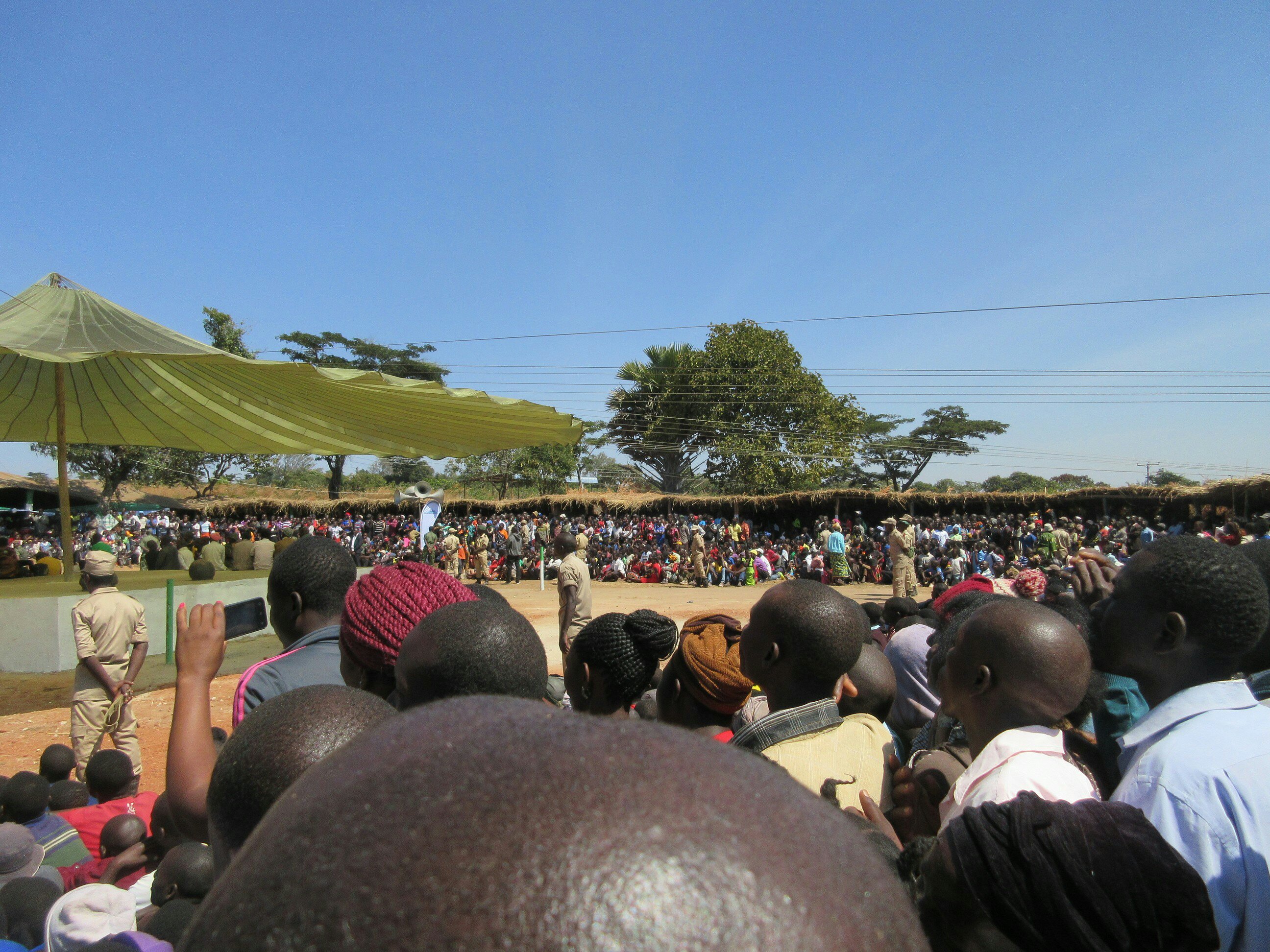
We returned on Saturday to a far larger crowd. The exciting thing this year was that the President of Zambia came and gave a speech. This was the first time that a sitting President of the Republic attended the Umutomolo ceremony. We were in a restaurant when we watched the large Presidential motorcade roar through town and we figured it was time to get to the ceremony.


On Saturday, most of the ceremony was comprised of speeches, interspersed with music and dancing. In addition to the traditional dances, there was more modern music and entertainment, and a parody act that people seemed to enjoy but I didn’t quite understand. After an introduction by one of the Chiefs in attendance, the President gave his speech, where he addressed many of the issues of concern for the people of the district, such as infrastructure improvement projects and agricultural prices. After the speech, it was time for the actual ceremony. The wives of the Chiefs came up with samples of the foods grown in their Chiefdoms. Then the Chiefs (there are female Chiefs, but I don’t think any of the Mambwe or Lungu chiefs were female, though I might have missed some) came up and blessed the foods and gave thanks to the ancestors for a successful harvest. After this part, the crowd broke up for lunch, with dancing to resume in the afternoon.


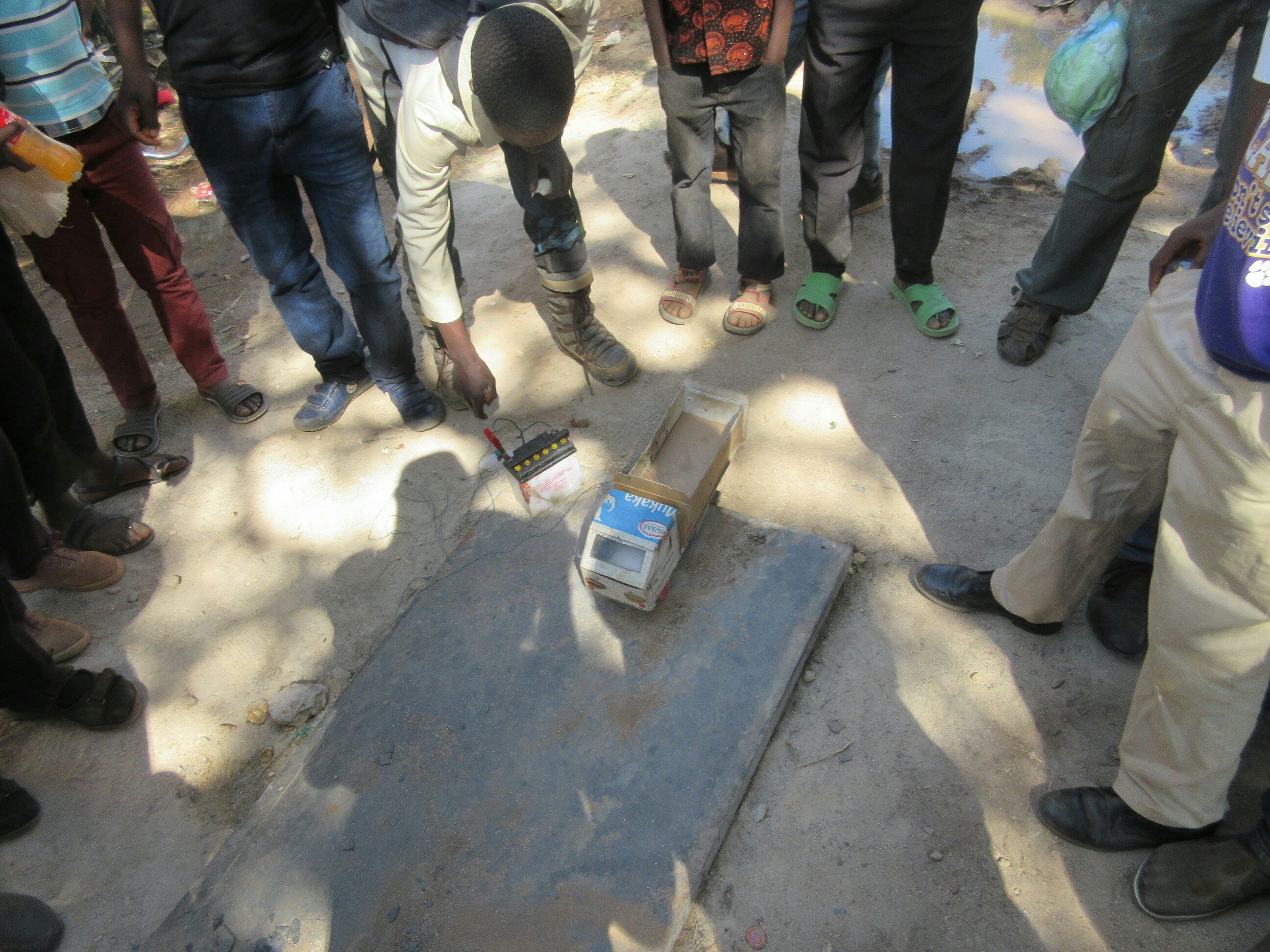
While everyone was off getting lunch, we wandered around. In addition to the ceremony, there was an area full of merchants selling a lot of different things. I was disappointed to find there wasn’t much art or crafts to buy, but it was fun to walk around and look at all the wares and eat some street food. One especially interesting thing was a guy had made a model truck out of pieces of cardboard and plastic he had salvaged. The really interesting part is he had put in a motor in the thing and hooked it up to a motorcycle battery. If he hooked it up one way, the truck rolled forward on bottlecap tires, and then when he hooked it up the other way it rolled back. He managed to attract a pretty good little crowd with this thing.

After wandering around, we head out. It was fun to watch the ceremony, and I recommend getting there early to get a good seat. It was an event that attracted a lot of people from through Mambwe and Lungu-land, and gave people an opportunity to see each other when they normally wouldn’t have been able to visit. Plus, might as well make sure that sufficient thanks are given to the harvest and that rain is prayed for; can’t leave these things up to chance.

Pond Staking

Reading this week:

  • Education of a Wandering Man by Louis L’Amour
  • For Your Eyes Only by Ian Fleming
  • The Man with the Golden Gun by Ian Fleming
  • Thunderball by Ian Fleming
  • On Her Majesty’s Secret Service by Ian Fleming

    This week I finally got to stake a pond. As I said before, I am a rural aquaculture promotion specialist, and that means I teach fish farming. To farm fish, you need a fish farm, and step one of that is pond staking.

    Technically, I am still in community entry, and therefore not yet responsible to get down to any serious business of teaching fish farming. The main goal of this period is to adapt to living in the village and learn about the community so I can most effectively help them with their needs. However, I am a mission-oriented dude, and I am here to teach people how to farm fish, so I wanted to get down to business. This post is about to get technical, but I thrive on the technical.

    The Rural Aquaculture Promotion program focuses on bringing aquaculture to rural farmers, and so that means a focus on using locally available and preferably free materials. Therefore, the fish farming we do is largely performed in earthen ponds, dug out of the ground. Pond staking is the process of measuring out where to dig the pond and build the walls. The tools required for this are wooden stakes, string, a line level, and a mesuring tape.

    To stake a pond, you start with a field. Ideally, you want a slope between 1-6%. Since this is rural Zambia, you take what you can get. You start at the highest corner and put in a stake. From here, perpendicular to the slope, you measure out the top wall. The top wall will be, again ideally, 24 meters. The “standard” sized pond in the program and the Department of Fisheries is 20mx15m, and a 24 meter outside dimension, once wall thickness and freeboard is taken into account, provides a 20m waterline.

    Once you’ve established the top wall, you measure out a right triangle with 3m and 4m legs and a 5m hypoteneuse. This will ensure the pond is square. Once you’ve put these stakes into the ground, you use them as a reference to measure the side wall. The outside dimension of the side wall is 19m (ideally, etc etc). Now that you’ve got two walls measured out, you complete the square. The outside walls have been measured.

    The top of the dike wall should be 1m wide. So you measure one meter inside from all of your outside walls, and stake the four corners. Finally, you measure the pond bottom box. The inside walls of the pond are sloped in order to provide fish an ideal nesting location and to allow for easy access into and out of the pond, and the pond bottom box takes these slopes into account and shows where the flat, bottom part of the pond will be. From the top of the inside wall, you measure 3.3 meters from each wall and place a take. From the bottom of the wall, you measure 3.9 meters and place the remaining two stakes. This should form a trapezoid.

    Next, you run a string around all the stakes you just staked, and make sure the string is level. This shows where the top of the dike wall will be, and provides a guide for digging the rest of the pond. From there, there are a few small details like staking out lines showing the slopes, and the cut/fill line, but that is a quick overview of the pond staking process. Since it is the vital first step of digging a quality pond, we went over it a lot in training and I was excited to put my knowledge to use. Next week’s post will be more interesting. Promise.

    Living in the Village

    Reading this week:

    • Into the Wild by John Krakauer
    • room full of mirrors: a biography of jimi hendrix by Charles R. Cross
    • Timeline by Michael Crichton
    • Zombie Spaceship Wasteland by Patton Oswalt

    I am posted, like most volunteers in Zambia (especially agriculture volunteers) in a rural village. I have no running water or electricity from a utility. I have my own small hut (which I think is not actually that much smaller than my last apartment) and I take care of all my daily tasks myself. I have a host family here in the village, and they are willing to do things for me like fetch my water and cook my meals, but I think it is important to do a lot of that stuff on my own. First, it helps display gender equality – although there is some overlap, tasks like cooking, cleaning, and fetching water are largely considered women’s work, and by doing these things myself (as a man) it helps to break down gender roles. Second, I’m a adult and I don’t need to be babied, so there’s that too.

    Water comes from the river that goes through the middle of the valley. It is about half a kilometer away, which isn’t too bad. Sometimes the river gets muddy, especially when they are irrigating the fields upstream, but it is usually quiet and clear. The local women carry the water on their head, but I usually wind up hefting it on my shoulder. Those women are strong, as you would expect – they have been hauling water on their heads since they were young enough to hoist a tiny bucket up there. To make the water safe to drink, the Peace Corps has issued me a filter. I also add a small amount of chlorine to kill any bugs the filters don’t get.

    My bathroom (“chimbusu,” or “chim” as all the PCVs call it) is a small outhouse-like building. I am lucky enough to have a door on mine so I don’t have to chase out goats or chickens when I go to use it. Inside is just a hole in the ground, and you squat. Not the greatest feeling on old knees like mine, but you get used to it. Aiming is important.

    I don’t have a stove and instead cook on a brazier. I use charcoal, and every day around 1600 (Zambia uses a 24-hour clock) I light my brazier to heat some bath water. I heat my bath water to boiling in a kettle, and then add some more cold water to bring it down to the right temperature. I carry the water and my soap over to my outdoor shower (olusasa) and bathe by pouring water over myself with a cup. It is pretty effective, and when it is dark out it is nice to look at the stars.

    After my shower I get around to cooking dinner. I do most of the food prep inside my hut in my little kitchen nook, and then cook outside on my porch. I have a camp chair I like to lounge in. Once the brazier is going cooking doesn’t take too long. For dinner, I usually have fried rice, because I am lazy and a bachelor. For lunch, I usually eat with my host family (I tried to get them to stop feeding me, but that is apparently a bridge too far, and it is rude to turn down a meal in Zambia anyways). The local Zambians eat nshima, which is sort of like really thick grits. They eat it with “relish,” which is just anything that isn’t nshima. What the relish is depends on the time of year, but right about now we are eating a lot of beans and fish, which is good. The Zambians don’t use silverware – you take a lump of nshima, and then ball it up and then form a small scoop with it using your hands. Then you use the nshima to scoop up the relish. Keeps the amount of dishes down, for sure.

    Besides my brazier, I also made myself a small pop can stove that I run off of methylated spirits. It is pretty good at what it does, but for heating anything big I wind up using a lot of spirits. It is perfect though for making some coffee in the morning in a small espresso maker I brought with me.

    It was such a feeling of profound relief when I managed to make coffee in the village. It wasn’t the coffee itself, but being able to make it represented the first moment I was like “I think I can make it here.”

    Laundry is done by hand here. The Zambians will do it entirely by hand, without even using a washboard, but I made myself a washing machine using two buckets and a plunger. I got the idea online. That works pretty well, and is a lot easier on my hands (like I said, the women around here are TOUGH). After you wash it in the bucket, you rinse the laundry in another bucket of water and then put it on the line to dry. Washing clothes takes a great deal of water and I wind up doing laundry about once a week. Clothes get dirty quick.

    To power things like the phone I am typing this on, I have a few different solar devices. I have a large solar panel attached to a battery I use to power things like my laptop. To charge my phone I have a smaller portable solar panel, and then I also have a solar-powered light that provides illumination at night. I’m not able to operate hot plates or power tools, but the setup is plenty to keep my phone and kindle charged.

    Transportation around the village is either by bike or by walking. My village is in a valley, so generally for shorter trips I am just walking. To get to my nearest town, which is about 12 kilometers away, I generally bike. The Peace Corps issues volunteers mountain bikes, which is just as well because we aren’t allowed to drive cars and we aren’t allowed to ride motorcycles at all. This is for safety purposes. The village grows some vegetables and a great deal of corn, but I do most of my shopping for food and items in the nearest town, known as a Boma. It isn’t a huge town, but there is a good selection of stuff and at least one pizza joint, so life isn’t too bad at all.

    Mwela Rock Art

    Reading this Week:

    • Packing for Mars by Mary Roach
    • One Hundred Years of Solitude by Gabriel Garcia Marquez
    • Jurassic Park by Michael Crichton
    • The Lost World by Michael Crichton

    We are in Kasama this week for some Peace Corps meetings, and we decided to take advantage of the time to see the Mwela Rock Art.

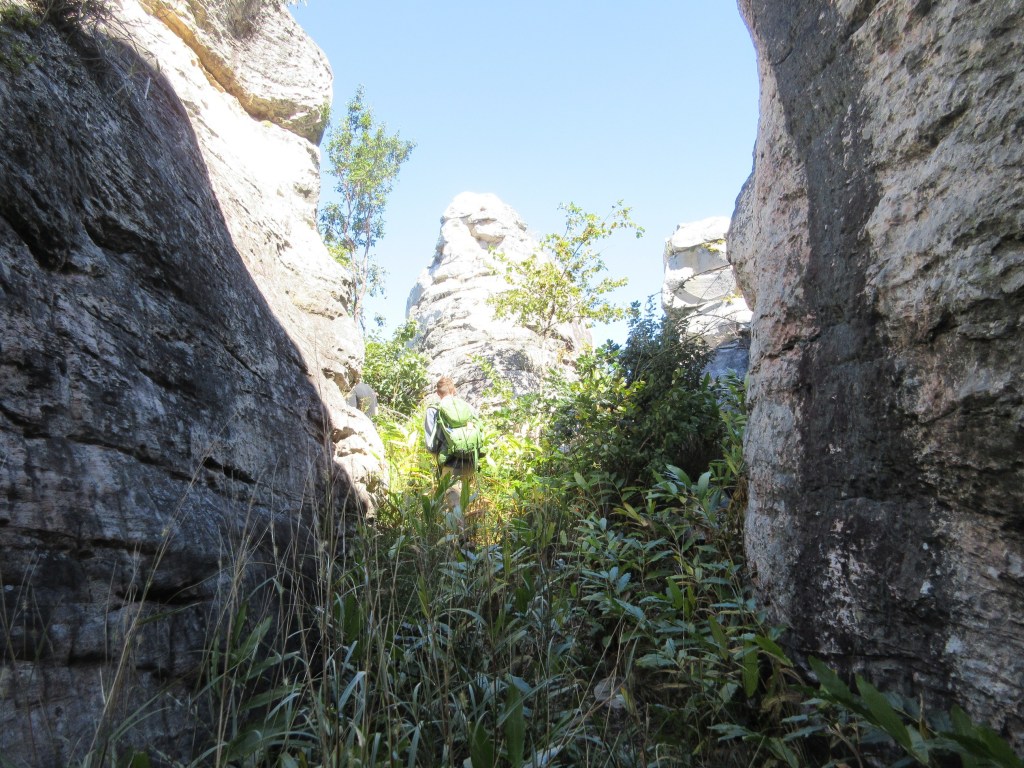
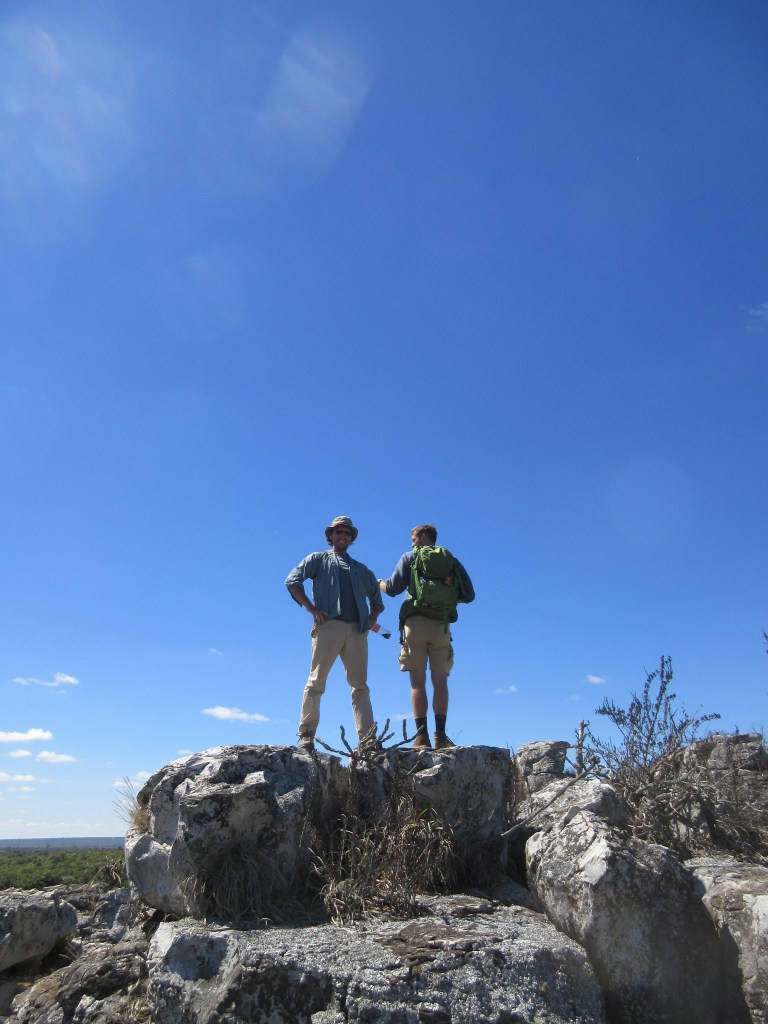
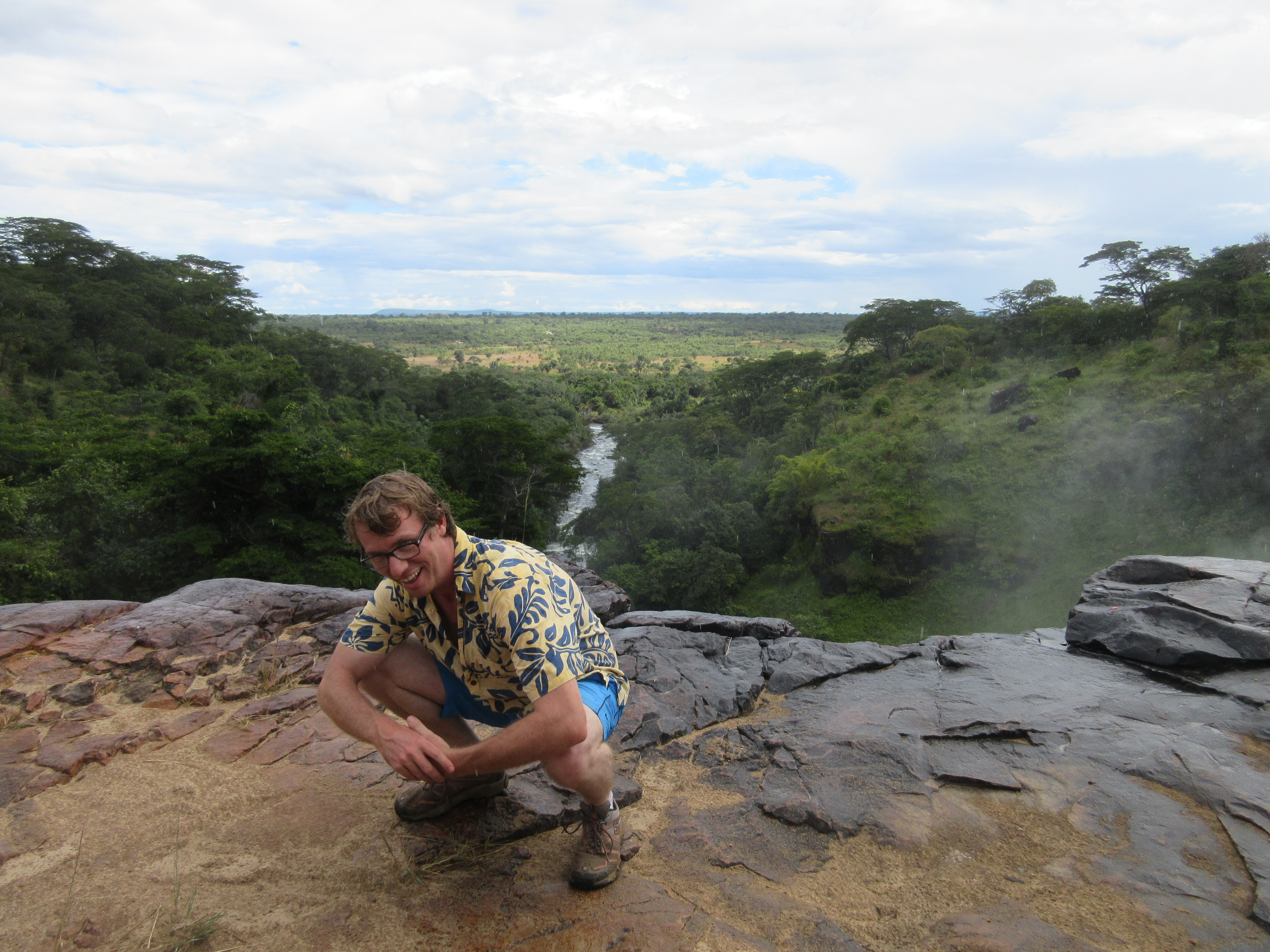
    The Mwela Rock Art site is right outside the town of Kasama, and very walkable from most of it. Since we work here, we get in on the Zambia local rate of only 8 kwachaa, instead of $15 USD, which is quite a savings. The site is fairly gorgeous. It is in a series of rocky outcroppings that rise out of the surrounding plains in a weird kind of incongruous manner. It is easy to see why more primitive man would be attracted to the sites. Most of the outcroppings are easy to climb, it is is great to go to the top of the rocks and look out over the plains. You can see for miles into the rolling hills.

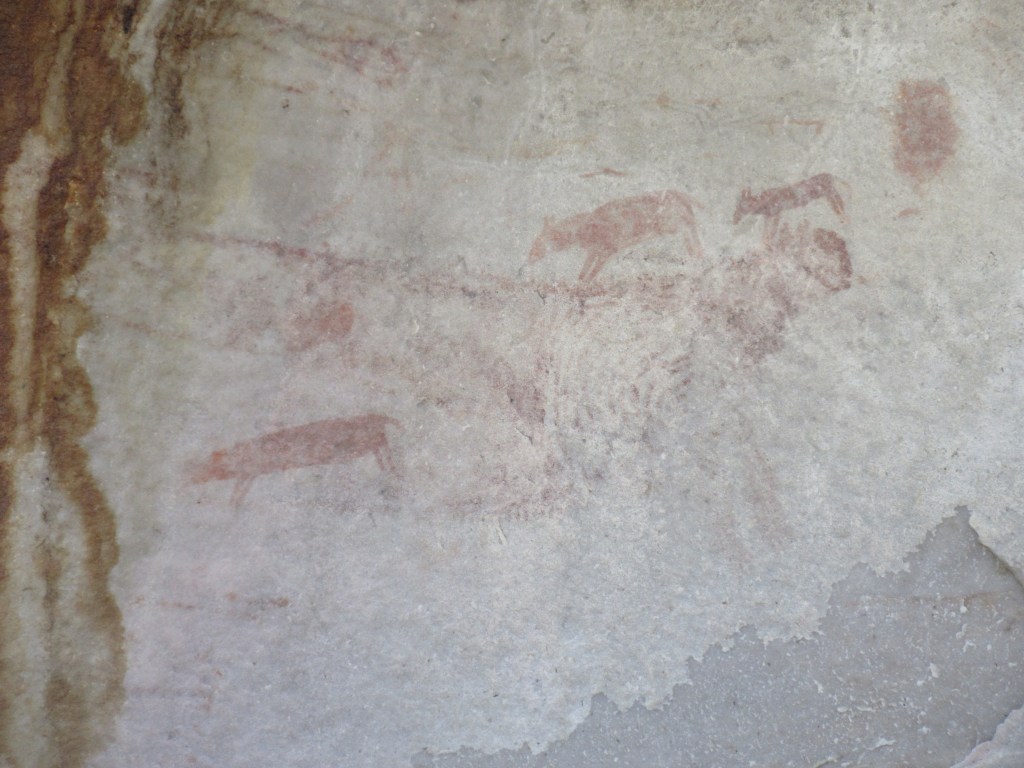
    The man at the front entrance who takes the entry fee also acts as the tourguide. These men were extremely knowledgeable about the site and were great hosts. We initially tried to just find the art ourselves but this was not a good move. A lot of the art is hidden and not very noticeable, as you might expect after 10,000 years out in the weather. Once you know what you are looking for it is a bit easier. The paintings split into two categories – naturalistic and geometric. The naturalistic paintings were of local animals and birds and warthogs featured prominently. The geometric paintings consist of lines, and the guides told us the current conjecture is that these represented them counting the various types of animals that came through as a record for “collegues” to know about the game in the area.

    We were also shown caves where the people who lived here slept, and it was obvious several were still used for that purpose occasionally. You can camp at the site for an extra fee, which is an idea I think would be cool just to carry on a millenia old tradition in that location. In a less awesome take on tradition though, the park was also covered in more modern grafitti, some of it over the ancient rock art itself. Zambia is doing a lot these days to protect its heritage and it is depressing to see some people not onboard with that message. But I highly recommend a visit to the caves to see the rock art and enjoy the views and weather. It is a place I will be going to again.

    PST

    IMG_3804

    Reading this Week:

    • A Short History of Zambia edited by Brian M. Fagan
    • Dead Aid by Dambisa Moyo
    • Guerrilla Warfare by Ernesto “Che” Guevara
    • Roots by Alex Haley

    The first three months of Peace Corps is Pre-Service Training, or PST. During this time, we weren’t yet Volunteers, merely Peace Corps Trainees. After a few days in a motel in Zambia, where we got some basic briefs on Zambian culture and signed some documents (usual government type stuff), we were bussed to Chongwe, where the bulk of PST occurs. This is a town about 30km outside of Lusaka. We were brought to the training facility, taught how to say “hello” in our local language, and sent off to meet our host families.

    During PST, you are hosted by a host family. These people have the responsibility to give you a place to stay, to feed you, and provide you bath water. They also speak the local language you are assigned. My assigned language was Mambwe. My host family setup was unusual because my host family had two trainees, myself and another guy, because of how few available host families there were for Mambwe. That was convenient because it provided someone else to talk to, and we could help each other during our conversations in Mambwe.

    We settled pretty quickly into a routine during PST. I would wake up early and study, because that was usually the only time I could motivate myself to put my head in the books. It was important to study, given how much language we needed to absorb in so little time. Eventually, around 0645, our yamayo (“mom” in Mambwe) would alert us she had water ready for us to wash our faces. After we washed our faces, it was time for breakfast. This was usually a fried egg, along with some instant coffee, then bread with peanut butter and jelly. Not quite a traditional Mambwe breakfast, but our host mom had hosted a number of volunteers and had adjusted to providing a more American morning meal.

    After breakfast we would get our stuff ready and then head off for language training. This usually lasted about four hours. Training was done in groups of 3-5 (there were only 3 Mambwe trainees, but larger language groups were split up), each with a dedicated instructor. Four hours is a long time to study anything, but necessary to learn so much language in so short a time. After language it would be back to our host family for lunch, and then off to the training center for technical training. Since we were Rural Aquaculture Promotion volunteers, most of this was fish farming. A big chunk of time during PST was also learning various core Peace Corps topics, which sometimes went on a little ad naseum. The afternoon training sessions were about three hours, and mixed lectures or hands-on training with fish farming.

    After the afternoon training, it was back to our homestays for a bath and then dinner. The bath was a bucket bath. Yamayo provided a large bucket of hot water, which then you pour over yourself with a cup in order to bathe. Then it was dinner time. After dinner we usually sat around for an hour or more, trying to practice and speak in Mambwe. This was probably when we learned our most Mambwe. After talking for a while, we would go back to our huts to study and some and then sleep. Quite the routine.

    Usually Saturday afternoons and Sundays we would have off. These were spent doing things like laundry, or else all of us trainees would hang out and the local bar or in town. This was a good time to hang out and built a real sense of comraderie among all the trainees. It was also a great way to relax from all the studying during the week.

    Eventually training culminated in swear-in, held at the Peace Corps Zambia headquarters in Lusaka. The US Ambassador came along with the local Chief and Chiefteness and the Minister of Agriculture. The weirdest thing I learned is that we swear to defend and uphold the Constitution of the United States, which I suppose is probably standard for government employees that have to take an oath, but I think that’ll be an interesting conflict if a Peace Corps member ever meets an enemy, foreign or domestic. But after swear-in, that was that: we were volunteers!

    Staging

    Reading this week:

    • 2001: A Space Odyssey by Arthur C. Clarke
    • 2010: Odyssey Two by Arthur C. Clake
    • 2061: Odyssey Three by Arthur C. Clarke
    • 3001: The Final Odyssey by Arthur C. Clarke
    • Dolphin Island by Arthur C. Clarke
    • False Economy by Alan Beattie
    • The Philosophy of Andy Warhol by Andy Warhol

    Once my background check finally cleared (I have to correct myself every time from thinking of it as my “security clearance”), I could actually begin joining the Peace Corps. The Peace Corps is a delightfully government affair, which felt comfortingly familiar. The details of where and when to show up and who to contact for travel arrangements came via email. The first part of becoming a Peace Corps Volunteer is staging, which occurs in Philadelphia. I was to travel by train, which I thought was just quaint. So on February 11th my parents (I had, by this time, moved once more out of my apartment and back into their basement) dropped me off on the train and off I was to Philly.

    Upon arrival to Philly and the hotel, it was easy to spot the soon-to-be Peace Corps Trainees (you don’t become a Volunteer, PCV in the parlance, until swear-in, which follows pre-service training, aka PST) (back in the Nuclear Navy, it’s contrary to [C/T] the Submarine Interior Communications Manual [Sub-IC Manual] to speak acronyms [with minor exception], and this is a policy I firmly believe [because I have been brainwashed to believe so] that everyone should adopt): they were the people with too much luggage and looked like they were contemplating a beard. I got my room key and found I already had a roommate, the first fellow trainee I was to meet. Staging was full of the standard get-to-know-you-but-I-probably-won’t-remember-you-right-away-because-there-are-70-of-us conversations, which I always find entertaining if a bit stressful. Luckily we were all issued nametags that we wore pretty consistently, so with some effort I quickly got to know names and faces.

    There was a short meeting the first night to make sure we were all alive, and a gentle warning to stay that way. On the first night, as on the next two nights, we all went out for dinner in various groups to meet our new friends and look around Philly while we had the chance. We were all pretty acutely aware that this was our last taste of America for a while, an so diets were pointedly varied. It was also cold in Philly, being February, and I was glad it was going to be my last taste of that.

    Staging began in earnest the next day. Staging was comprised of a series of briefs about various aspects of culture and Peace Corps policies, and some stuff about the logistics of getting 70 people to Zambia safely. The one somewhat frustrating part about Staging is that it is fairly vague; the staff are reluctant to answer country-specific questions because, while they are all returned volunteers (RPCVs), Zambia isn’t their particular area of expertise. So while there was a great deal of content about how to deal with living in a new culture generally, there wasn’t anything about Zambia specifically. So by and large the briefs were uneventful, but interspersed with ice-breaker activities.

    One thing I learned is that the average age of a Peace Corps Volunteer is 28 1/2. That put me exactly average. Based on my group though, it seems that average comes from a large number of people straight out of college (some with advanced degrees), and a small number of retirees pulling the average up, with a smattering of people in-between (like me). Before staging, I had pondered the likely demographics, so that was good to get that question answered.

    Staging came to an end in the wee hours of the 14th. At I think 0200 we were loaded onto a bus and sent off to JFK Airport. Holding staging in Philly, and then bussing us to JFK, is apparently the most cost-effective way of doing things. Since it is about a two hour drive to New York, we all subsequently piled out of the bus at about 0400, and then waited two hours for the airport to open. Like I said, the snuggly warmth of government operations. Eventually though, with the usual various adventures and various grades of coffee one finds in airports, we managed to get all of us loaded on a place headed for Kenneth Kaunda Airport (via Johannesburg). Next stop – Zambia.

    I joined the Peace Corps

    IMG_3851.JPG

    Currently reading:

    • Another Bullshit Night in Suck City by Nick Flynn
    • False Economy by Alan Beattie
    • For Whom the Bell Tolls by Earnest Hemingway

    The first time I considered joining the Peace Corps was senior year of high school. I didn’t know what it was, but it was during that listless time when I hadn’t been accepted to any colleges (and didn’t really want to go to college, anyway) and I didn’t know what I wanted to do with my life. One friend of mine had written down on this life goals poster thing that she wanted to join the Peace Corps, and I said I might want to do that too.

    A decade later, after I had gotten out of the Navy, I was again listless and not really knowing what I wanted to do with my life. I think I have detailed some of those feelings on this blog. Without review of my own blog, I spent a good chunk of time last year pursuing a 3rd Mate’s License, along with applying to the Peace Corps and various other jobs. In the fall, at nearly the same time, I was accepted into the Peace Corps and to a job at Amazon Web Services (AWS). It was probably lucky for me that the Peace Corps invitation came through just before the AWS gig, otherwise I probably would have rejected the Peace Corps in favor of a steady paycheck and boring time in Northern Virginia (NoVa is actually a pretty great place to live, for the record, and once that Silver Line extension finishes it’s going to be even better). Instead, I accepted both and worked at AWS for four months before departing for the Peace Corps. Without much detail, my time at AWS was really great and it was very encouraging to know that I had a skillset that was desirable in the civilian job market. It was a major morale booster to discover I could survive as a contributing member of society outside of uniform (debates on my contribution to society inside of uniform notwithstanding) and outside of my parent’s basement. I would recommend working for AWS to anyone.

    Jumping back, in the fall of last year I was accepted into the Peace Corps. I got in on my first application, which is sometimes unusual. Your odds go up a lot, I think, if you mark down that you are willing to go anywhere. I actually specified anywhere that wasn’t cold, and that I was interested in anything but teaching, and to that end I received acceptance into the Rural Aquaculture Promotion program in Zambia. When I received the invitation, I went on the Peace Corps Zambia website and read the FAQs. The very first question is “Will I be living in a mud hut?” I thought the answer was going to be something along the lines of “you know, Africa is really a developed place with things like skyscrapers and you’re a bit of a dick for assuming that you’ll be living in a mud hut,” but instead the answer was “you bet your sweet ass you will” (paraphrased) and I was sold. I waited a day to think it all over to be sure and emailed back that I would like to accept the invitation. Adventure, here I come.

    As is my wont, I like to keep things under wraps, and therefore no one knew about my intentions to join the Peace Corps except those people who wrote recommendation letters for me. My next task was therefore telling my mom about my life plans and why I wouldn’t be hanging around her basement (she prefers the term “guest room”) so much. I had actually waited until I got the job at AWS and told her about that first, and then explained “and in February, I’ll be throwing all that away and moving to Africa [ed note: Africa isn’t a country!] with the Peace Corps.” Her reaction was less than enthusiastic but accepting in that motherly way where your kids are doing something crazy instead of maybe combing their hair and settling down with a nice girl somewhere close so she can visit the grandkids. She took care of the whole “tell everyone else in the family” thing, and I settled down to save some money working for AWS and eat as much ramen (the good stuff, at ramen shops) as I could before heading off into the Peace Corps.

    To that end, to do some obligatory blog stuff, apologies to my non-existent audience for not writing recently. Pat in the World is now very specifically Pat in the Northern Province of Zambia Promoting Fish Farming, and my goal is a blog post every Sunday detailing my adventures here and my journey (ugh, describing things as a “journey”) all the way from nuclear-powered warships to a mud hut with a pretty sweet solar setup if I do say so myself. I am already a far happier person than I was a year and a half ago, still on the boat and only knowing that I didn’t want to do that anymore. Thanks for reading!