

Reading this Week:
- The Log from the Sea of Cortez by John Steinbeck and E.F. Ricketts
- Slaughterhouse-Five by Kurt Vonnegut
Important Dates:
- Keel Laid – 21st October 1883
As I alluded to in last week’s post, my latest obsession is researching the SS Good News. To that end, I downloaded two books from the Internet Archive: Tanganyika: Eleven Years in Central Africa by Edward C. Hore (1892), and Fighting the Slave Hunters in Central Africa by Alfred J. Swann (1910). These two men describe the construction and launch of the SS Good News. Edward Hore was the master mariner in charge, having been employed by the London Missionary Society in Africa for some time. Swann was hired to help with the Good News along with the Morning Star, a sail lifeboat they transported overland from Zanzibar to Ujiji (meanwhile the parts of the Good News were shipped via the Shire river and Lake Nyasa [Malawi] with the African Lakes Company). Hore provides the best description of the Good News:
The design for our missionary vessel was on a liberal scale. The ample funds provided, and the liberal donation by Mr. G. S. Goodwin of Liverpool of his services as marine architect in the design and building, secured to us a first-class vessel of best material and form, and specially suited to the service. The Habari Ngevia (Good News), built of the best mild steel, with deck and all woodwork of Indian teak, is an auxiliary screw steam yacht 54 feet long by 12 feet beam, strongly built and fitted as for sea service. Two masts, with rigging and sails ketch rigged, make her a complete sailing vessel, and the internal fittings secure safety and comfort. The whole material, fittings, machinery, and outfit, in small pieces suitable for overland transport, and marked and numbered for re-erection,—a mass of material weighing altogether about fourteen tons,—was delivered to the care of the African Lakes Company for dispatch to the south end of Tanganyika by their Quilimane and Nyassa route.
Hore and Swann had to locate a suitable place to build the steam ship. In their original choice of location, raids from neighboring tribes and Arab slave traders had caused all the local Lungu people to flee. This sent Hore and Swann to the Lofu (or Lofubu) river in search of a place suitable for construction a boat, including people they could hire to assist. From Hore’s account:
In sixteen days we reached the south end. In vain I looked for the many well-to-do villages of my old acquaintances, the prosperous and lively Walungu; of some of them all vestige was gone, the sites overgrown with jungle, of others nothing remained but the blackened ruins. Of the people we saw nothing, until, coming upon a solitary fisherman in his little canoe, we heard something of the sad story. The neighbourhood we thus examined was that of Niamkolo and the surrounding district. Niamkolo was the place we intended to settle at to build the Good News, and was in every way a desirable locality. But the disturbed condition of the country made it unsuitable at that time for our purpose; for, for some months at least, we must concentrate on the building of the Good News at some place where food and native labour were to be had. Sailing on round the south end, we found the same signs of destruction everywhere, until we made the Lofu River, where I judged, if anywhere, the remnant of the tribe would be collected.
Here we found—some of them on a little floating island just within the river mouth, some on a sandy spit which had formerly been its bar—a number of refugees, mostly women and children, several of whom were evidently dying of starvation. That night we gave a supper of hot porridge to the poor women and children, by cooking what meal we had in the boat. The news spread fast that the wazungit (white men) had come—news of old friends come back—news of work for food supplies—of protection from their enemies—hope of brighter things all round… All this, as giving opportunity for befriending the natives, had great weight with us; and although somewhat away from direct communication with Nyassa, the neighbourhood otherwise suited us, and was soon decided upon. Moving up river to explore on 27th July, we came to at a bend of the river, and by next day we settled on this spot as the site of our “temporary marine depot.” The natives, advised us to go farther up river; but I knew its treacherous nature.
On the 28th the boats were moored alongside the river bank, and we began clearing the ground; native labourers were engaged, and a tariff arranged of prices for poles and other building materials. The next fortnight was indeed a busy time. Two houses of three compartments each quickly grew into shape: at either end a dormitory—in the centre, in one case, a store in the other a general living- room. At the river bank a jetty was run out as a landing-place, and a little village of grass huts at one side accommodated our men.
As soon as the houses were built, the ship-building shed was commenced near the river bank, abreast of the spot chosen for the launch. It was a large building, 60 feet by 20 feet, high enough to give space for work both above and below the vessel as it came into shape; the blocks were laid down the centre, and one side extended as a workshop.
Swann’s account of choosing a location:
At the south end we sailed up the Lofu River, having taken sixteen days from Eavala Island. The river, which drains the great valley, was nearly blocked up by sud. Numerous hippopotami gave us to understand we were interlopers by raising their enormous heads uncomfortably near the boat. Ugly crocodiles, in large numbers, slid off the sandbanks as we drew near. Storks, cranes, ibis, cormorants, and egrets adorned every creek, whilst thousands of wild geese and duck of many kinds stood closely packed together on the mud-flats; never having been shot at, they took no notice of us until we passed within a few yards of where they stood. It was fortunate for us they lived here in such numbers, as eventually they became our food-supply during famine. We were now amongst the Walungu, who owned nearly the whole of the southern end of the lake. Formerly a numerous tribe, at this time they were a scattered people, exposed to the Arab raids on one hand and to the fierce Awemba on the other… Small groups of villages were built on the floating sud, which was banked in mid-stream, forming small islands, thus affording protection from enemies on the mainland. They were naturally suspicious; only one old fisherman ventured to paddle out to sell fish, but of course he was in reality spying on us. He said that the whole country was at war, and that we were not safe from attack anywhere up the river. A mile or two ahead a broad valley opened out, on which could be seen several villages surrounded by stockades. Near this we formed a permanent camp, and prepared ground on which to lay the keel of the S.S. Good News, which was expected to arrive at any time.
We had not long to wait; for whilst sitting at breakfast, a stranger suddenly appeared in our camp, and without form or ceremony introduced himself as “Lieut. Pulley, of her Majesty’s Navy.” He had accompanied Mr. Fred Moir from Lake Nyasa with the first consignment of our vessel. In a few days we were surrounded with steel frames, keel-plates, tools, etc. The cheerful society of these strangers acted as a tonic. They told us of their exciting journey across country, of war on the Shire River, where, unfortunately, brass bearings had been cut out of our cylinders, brass steam-cocks chopped off to make ornaments, angle-irons bent double, and rod-iron stolen to make spears. Chapter after chapter of such misfortunes to our vessel followed in succession, until one wondered which end of the ship to attempt to construct first.
The most amusing of all was to find that the great iron rudder could not be traced. It must be borne in mind into what a multitude of pieces a steam vessel has to be divided in order to permit of its being carried by porters; also that the whole had to pass up the Zambezi and Shire Rivers in barges, then through the Shire Highlands and up Lake Nyasa, and finally across the Plateau to Tanganyika, a journey of nearly 1000 miles. War against the white man was raging at the time, and these thousands of loads of metal presented great temptation to the half-savage tribes through whose country they were transported by the African Lakes Corporation. The departure of Hore for Zanzibar left but three of us to build the vessel. It was slow work. Those thousands of rivets haunted my dreams. Fever was sapping our constitutions, and the task at times seemed too great. Day by day plate was added to plate; but, as the structure neared completion, it was obvious to me that one more of my comrades would not long survive the physical strain of such hard work and fever combined.
Hore again:
News had also come to us (not long indeed before his arrival on the scene) of a very valuable accession to our staff in the shape of an engineer, Mr. Roxburgh, whose services were to be specially devoted to the erection of the Good News. When we arrived at the south end of the lake in July, and were looking for the Walungu, we were also looking for the African Lakes Company; we almost expected, from what we had heard, to find a station erected—at least we expected to see, or hear of, an extensive expedition bringing us the material of the Good News. No sign or news of any such were to be obtained, and at once on settling on our site parties of messengers were despatched Nyassa-wards to inquire after them, but still no news.
On 29th September our settlement was all astir with the cry, “A white man is coming,” and in a few minutes he appeared, in the shape of Lieutenant Pulley, R.N., who had accompanied Mr. F. Moir from Nyassa, and on reaching the lake near Niumkorlo had followed the coast round and thus found us here. Mr. Roxburgh was with them, and the loads they were conveying were coming along by relays. This was on Saturday night… Mr. Roxburgh soon made himself at home with us; he had had a long and trying journey of many shifts and changes, and had already done a lot of work in looking after the goods and vastly accelerating their arrival to us. On 21st October the first two pieces of keel were laid—the Good News was commenced.
And for the next sixteen months, except for the intervals, alas, in which we were waiting for materials, the wild banks of the Lofu River resounded to the noise of the anvil and riveting, as the skeleton, and then the shell, of the vessel slowly rose into shape. Three weeks sufficed for all that could be done with the materials now on hand, and Mr. Roxburgh sailed with me on a voyage to Uguha and Ujiji. And so the whole year was spent in voyages and spells of shipbuilding as materials arrived. And all through the stay in the Lofu River we were gradually laying the foundation of eventual Christian teaching amongst the people by making their acquaintance and making known our errand, while our native sailors and workmen and two or three Uguha boys were serving a sort of apprenticeship to civilisation and industrial work which has resulted in many able helpers on our stations and boats ever since.
The shell of the vessel was now rapidly coming into shape. Everybody took part in the riveting; but Mr. Roxburgh, whose whole time was devoted to it, had the hardest and most continued manual labour, resulting in the best of work upon our vessel, but, sadly to him, in the eventual failure of his health and strength.
 Reading this week:
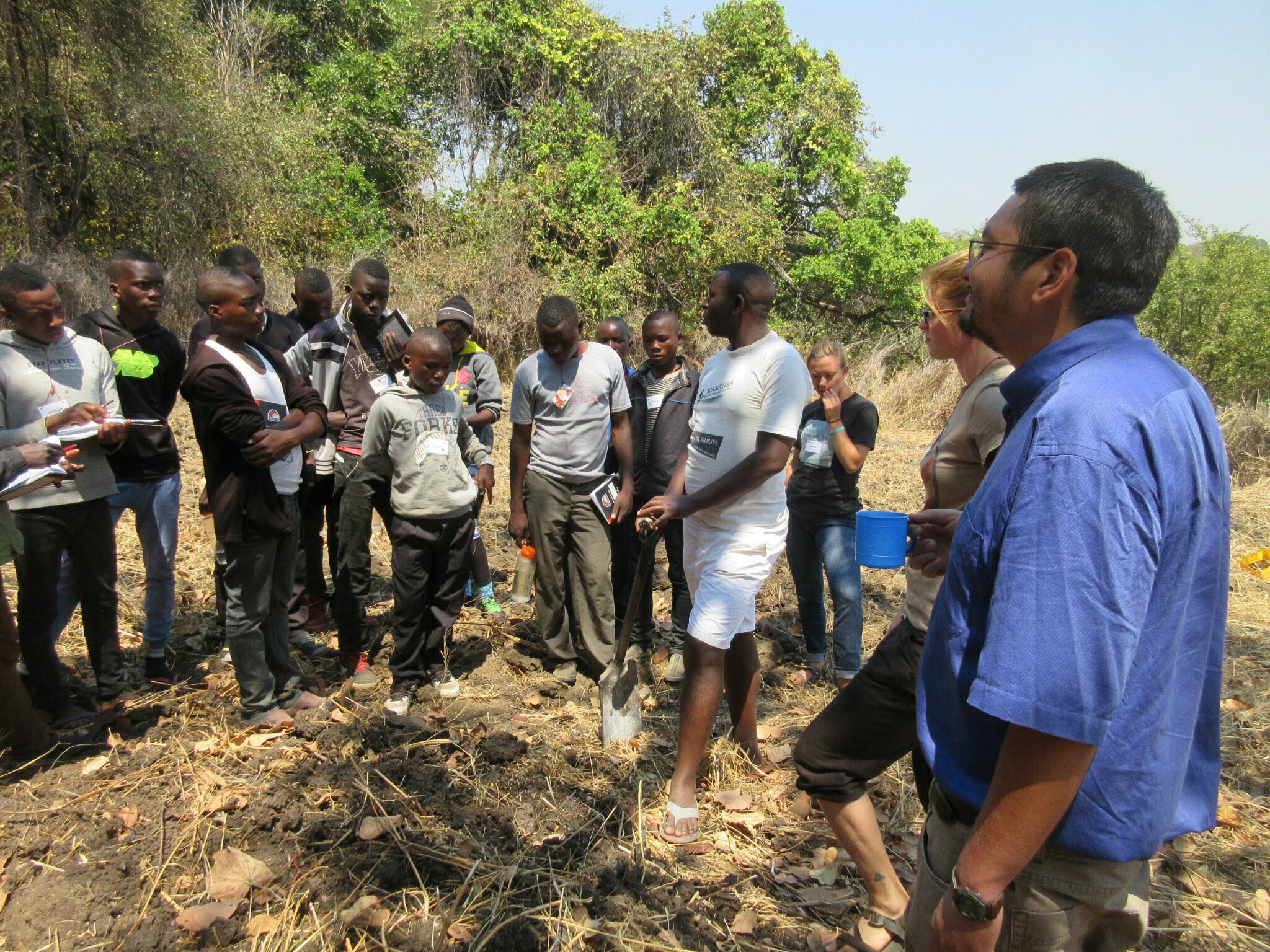
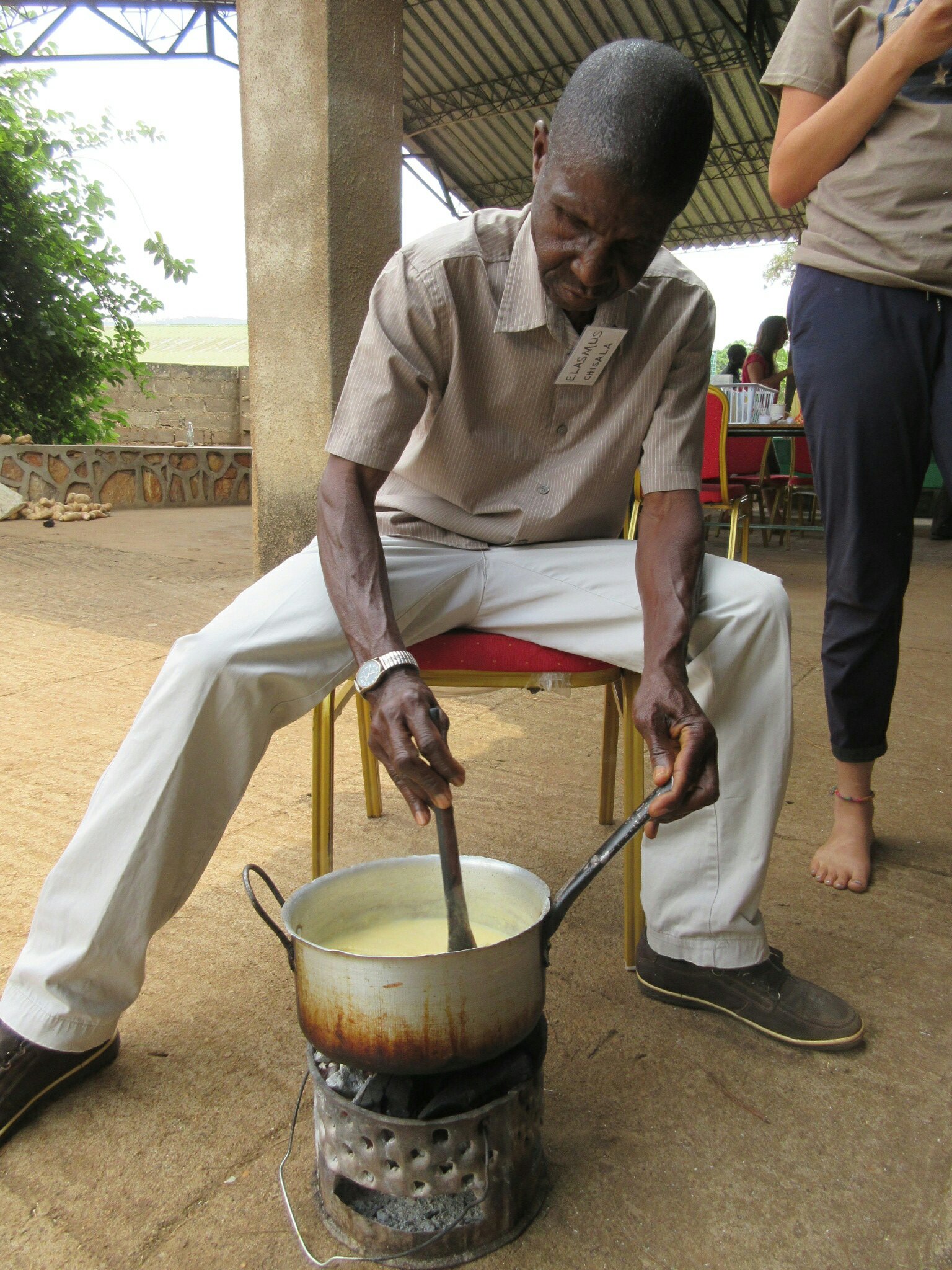 The third day was all about cooking. This was entertaining because in my group all of the counterparts were male, and men don’t usually cook. Men do actually know how to cook, but the women are so much better at it. So you got these yamayos doing all this cooking stuff, and in our group the volunteers were kinda struggling but then every once in a while one of the men would step in and actually be pretty awesome. Or maybe I just have no idea how to cook porridge and they have at least a bit of a clue.
 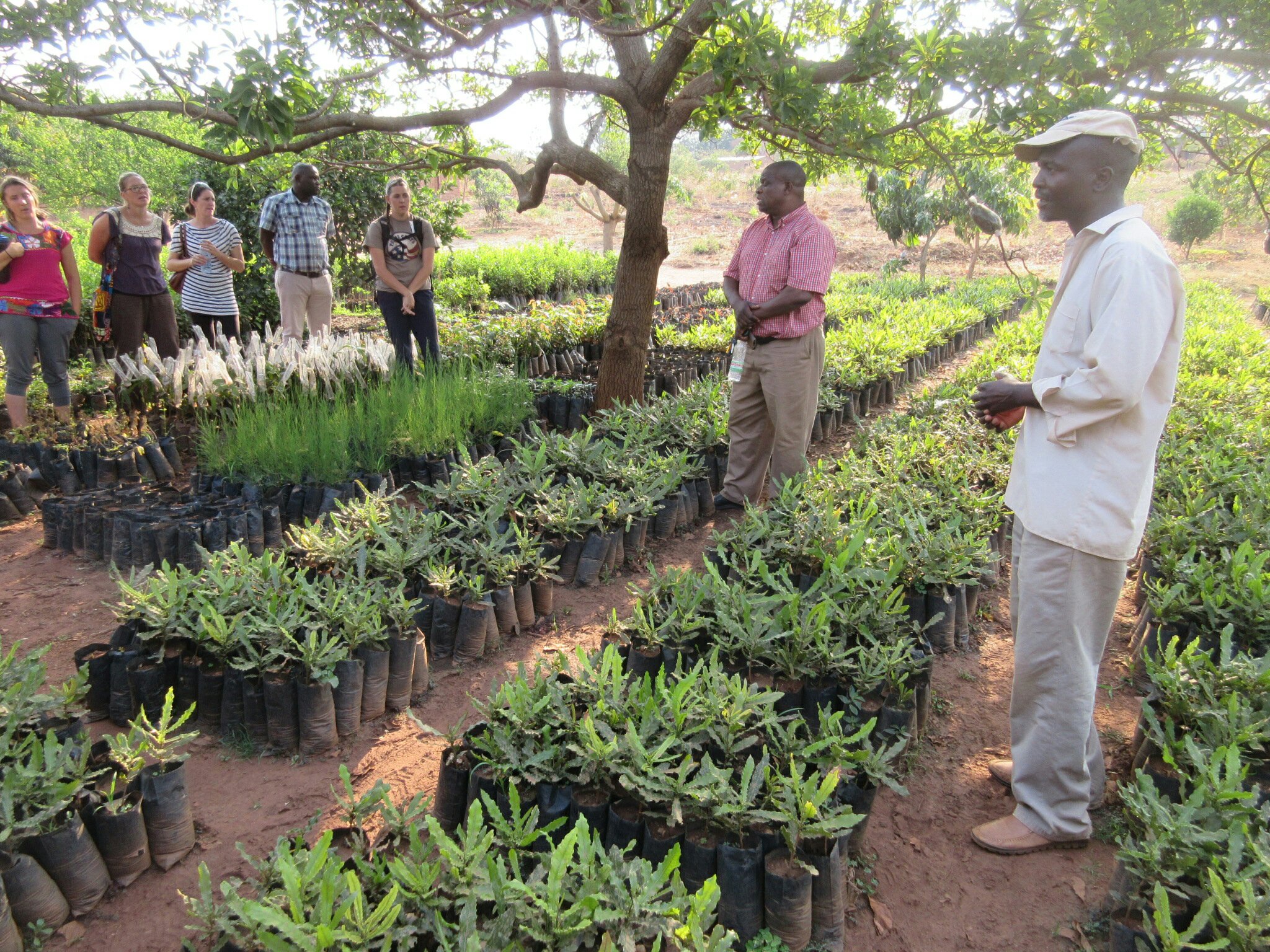 The final day we also went to go see a tree nursery. The purpose of this trip was mostly to inspire the counterparts to start tree nurseries. The dude running this one makes, apparently, gobs of money so that is fairly inspirational. It worked on my host dad, at least, who now wants to start a tree nursery. So my next job is learning how to make a tree nursery so I can teach it to them. I’ll let you know how it goes.
 Reading this week:
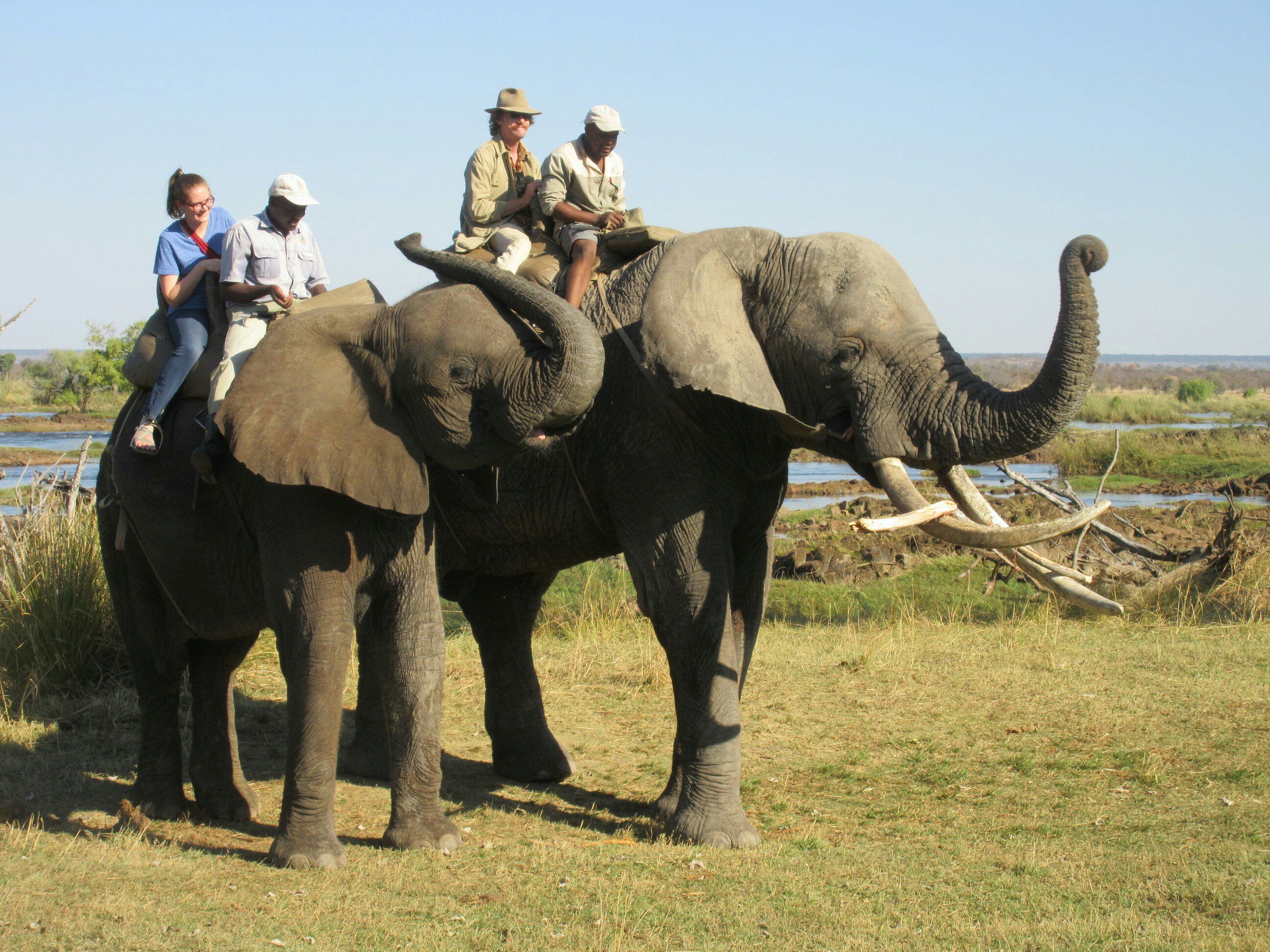
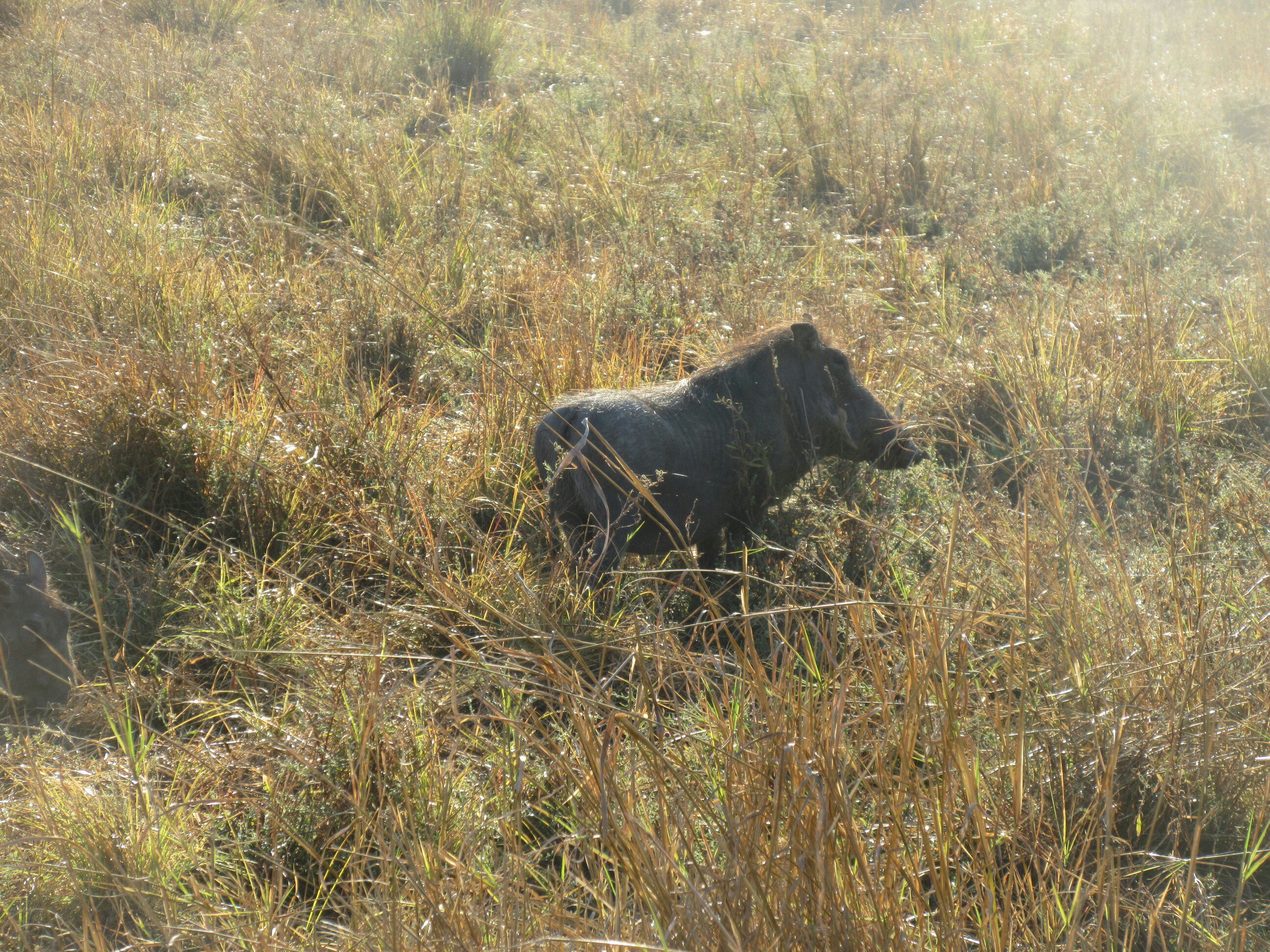
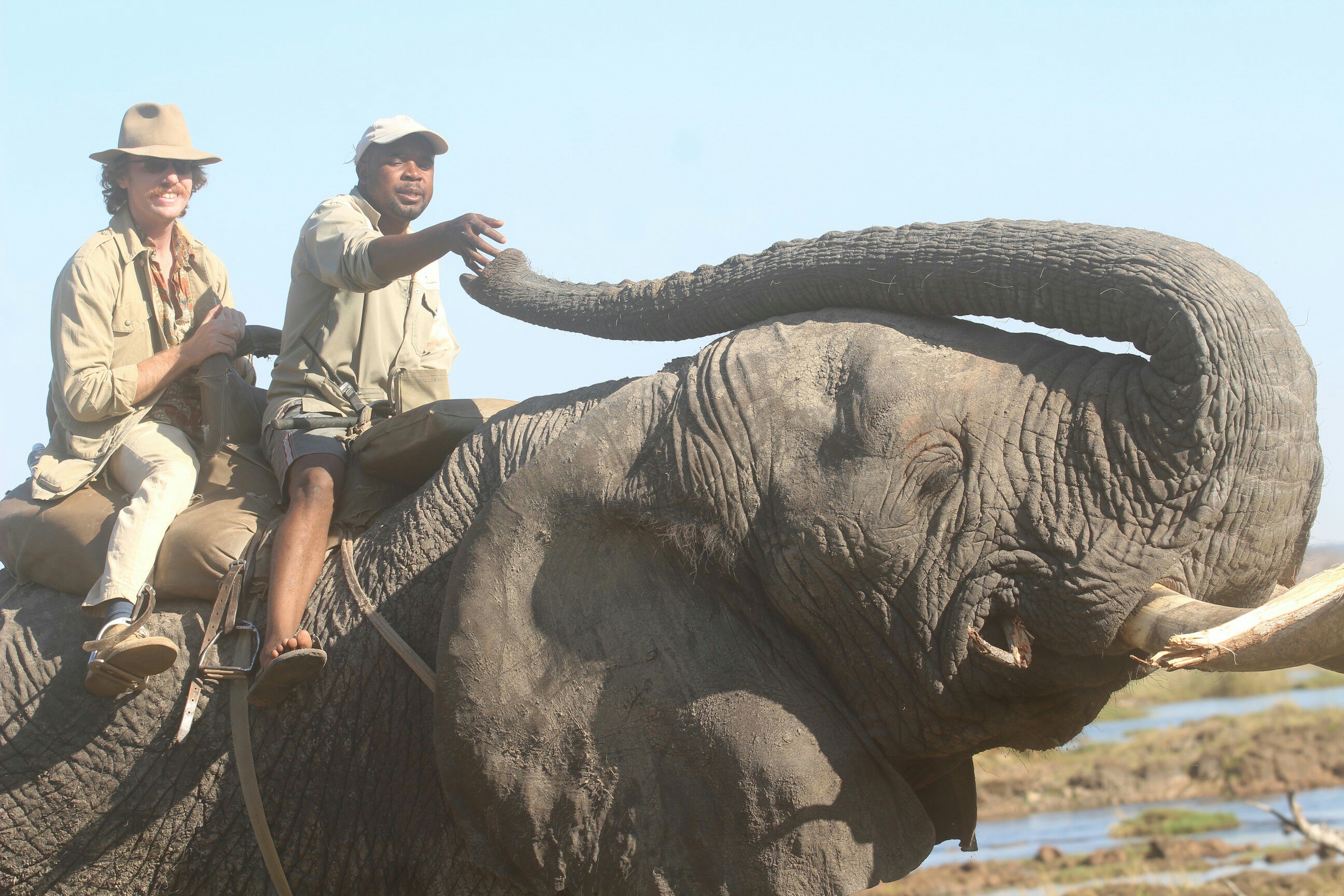 On each elephant it is you and then the elephant’s trainer. Most of the trainers, it seems, came over with the elephants from Zimbabwe, and have been working with and caring for these animals for years. My elephant was named Danny and was the current bull. He was about 50 and was a very nice guy. The ride itself was probably about two hours, and took us on a jaunt through the park. We saw a good chunk of animals, including a giraffe, warthogs, impala, and zebras. Mostly it was cool to be riding around on an elephant and taking in the Zambian landscape. After the ride you got to do a meet n’ greet sorta thing with the elephants. You dismounted and then wandered over to feed the elephants some and thank them for carrying you around. Danny was really nice though suddenly being on the ground next to him and his giant tusks was rather imposing. He was calmer than I was and I sat on his knee so that was cool. You can pay to have a dude follow you around and take pictures and a video, and we did, and they produced a really cool video we’ll get to show to disinterested relatives for years to come. The next day we took a game drive through the park. For various reasons ours was kinda hokey (but cheap) and we went in an old British taxi. Once in the park you have free reign to drive around, with the only mild requirement being you stick to the roads. In the park we saw elephants, warthogs, impala, buffalo, and zebras, so that was pretty phenomenal. We also briefly glimpsed in the park some rhinos.
  Deep in the park you can go see white rhinos. These are a few re-introduced white rhinos and their offspring, and they are kept under constant armed guard. You can, however, go walk up to see them. That was a pretty cool experience and given the watchful eyes of the guards they seem pretty safe from poachers. The rhino we saw had a calf with her, and they were sleeping.
  The final animal experience we went on was a booze cruise. The main attraction here was, of course, the booze, though for me I was absolutely tickled pink to be on a boat and I asked to drive it and the dude for whatever silly reason totally said yes:
  The tour takes you up and down a stretch of the Zambezi actually only a little upriver of the falls, though given the amount of rocks I think it would be more than difficult to go over accidentally. It is on the banks of the national park, so there are plenty of animals around. We saw crocodiles and a whole lot of hippos, along with a very large amount of other booze-cruisers.
  The cruise ended after we watched the sunset over the Zambezi. It was gorgeous and I highly recommend. My favorite part is that the guy driving the boat, the bartender, and the grillmaster were all qualified to do each other’s job’s, which was the sort of skills egalitarianism I like.
 Pat in the World
You must be logged in to post a comment.