LMS Biographies, Part IV

Reading this week:

  • In Quest of Gorillas by William K. Gregory and Henry C. Raven

To make up for a whole bunch of blog posts, I am publishing in post format the biographies I compiled for my world-famous “The Chronicle of the London Missionary Society for all articles relating to their Central Africa Mission from 1876-1905.” I appreciate your patience!
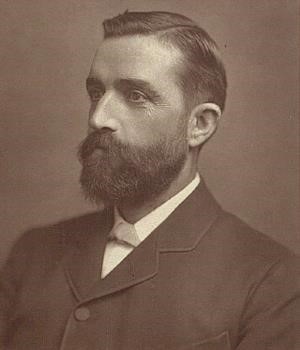
Edward Coode Hore
Born: July 23, 1848, in Islington
Died: April 1912, in Hobart

Mr. E.C. Hore departed England for Zanzibar on April 14, 1877 [May 1877] and arrived on August 1. He arrived at Ujiji a year later on August 23, 1878 [Dec 1878]. He explored the southern end of Lake Tanganyika in the Calabash in February 1879 [Jan 1880] and March 1880. Mr. Hore returned to England, departing Ujiji on November 3, 1880 [Jun 1881] and arriving on February 23, 1881 [Apr 1881]. On March 29, 1881 he married Annie Boyle Gribbon and while in England passed the examinations for Master Mariner. On February 4, 1882 the couple had a son, John Edward, nicknamed Jack [Mar 1882]. They departed England on May 17, 1882 [Jul 1882], reaching Zanzibar on June 19 [Sep 1882]. Due to difficulties Mrs. Hore and Jack returned to England, arriving on December 24, 1882 [Feb 1883]. Mr. Hore arrived at Ujiji on February 23, 1883, conveying sections of the Morning Star. He returned to Zanzibar to meet Mrs. Hore and his son Jack, arriving on September 26, 1884 [Feb 1885]. The family arrived in Ujiji on January 7, 1885 [May 1885]. They settled at Kavala Island. They returned to England in 1888, departing Lake Tanganyika in June [Ninety-Fifth Depart] and arriving on October 26 [Dec 1888]. On April 5, 1889, Jack died in London [May 1889]. In April 1890 Capt. Hore departed on a deputation tour [Apr 1890]. Mrs. Hore had a daughter on August 22, 1890 [Oct 1890]. Capt. Hore resigned from the London Missionary Society in December 1890 and visited the United States, returning to England in April 1891. He then joined the London Missionary Society steamer John Williams as First Officer and then Captain from 1893 [Nov 1894] until 1900 [Apr 1900]. The family settled in Tasmania.

Annie Boyle Hore, née Gribbon
Died: April 28, 1922, in Sydney

Ms. Gribbon married Mr. Edward C. Hore on March 29, 1881 and on February 4, 1882 had a son John Edward, nicknamed Jack [Mar 1882]. They departed England on May 17, 1882 [Jul 1882], reaching Zanzibar on June 19 [Sep 1882]. Due to difficulties Mrs. Hore and Jack returned to England, arriving on December 24, 1882 [Feb 1883]. Mrs. Hore and Jack departed again on June 11, 1884 for Quelimane [Jul 1884]. The family arrived in Ujiji on January 7, 1885 [May 1885]. They settled at Kavala Island. They returned to England in 1888, departing Lake Tanganyika in June [Ninety-Fifth Depart] and arriving on October 26 [Dec 1888]. On April 5, 1889, Jack died in London [May 1889]. On August 22, 1890, Mrs. Hore had a daughter [Oct 1890], named Joan1.

Walter Hutley
Born: January 18, 1858, at Braintree
Died: 1931 in Adelaide, South Australia2

Mr. W. Hutley had six years’ experience as a builder and joiner3. Appointed to the Central Africa Mission as an artisan missionary, he left England on April 14, 1877 [May 1877]. He arrived at Ujiji on August 23, 1878 [Dec 1878]. He departed Ujiji October 22, 1879 alongside Rev. W. Griffith to establish a station at Mtowa [Mar 1880]. He returned to Ujiji in November 1880. Due to failing health, he departed Ujiji on January 11, 1882 and arrived in England March 1 [Apr 1882]. In February 1883 Mr. Hutley married Laura Palmer, the sister of Dr. Walter Palmer4. His connection with the London Missionary Society ceased in June 1883. In 1884 the couple moved to Adelaide, South Australia.
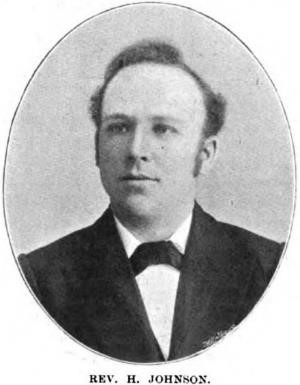
Rev. Harry Johnson
Born: December 17, 1868, at Market Harborough
Died: 1964†

Rev. Harry Johnson studied at Cheshunt College and was ordained on April 23, 1896 [Jun 1896]. He departed England on May 15, 1896 [Jun 1896]. He worked at Kawimbe for one year and then transferred to Kambole. On August 26, 1897, he married Minne A. Allen in a ceremony presided by Commissioner Alfred Sharpe [May 1898]. The couple had a daughter on July 23, 1898 [Dec 1898] and a son on December 21, 1899 [May 1900]. The family departed for England on furlough on June 1, 1900 [Jul 1900], arriving on August 18, 1900 [Oct 1900]. There they had another daughter on August 23, 1901 [Oct 1901]. Rev. Johnson may have returned to Central Africa alone, departing England on April 30, 1902 [Jun 1902], and arriving back in England on January 6, 1905 [Feb 1905]. He visited Australia on a Deputation tour in 1906 and then became a pastor in Bradford before finally retiring in New Zealand†.
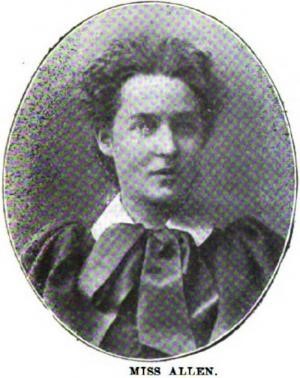
Minnie A. Johnson, née Allen
Died: March 10, 1915, at Christchurch, New Zealand

Ms. Allen departed England on June 8, 1897 [Jul 1897] and married Rev. Harry Johnson at Zomba on August 26 [May 1898]. The couple had a daughter on July 23, 1898 [Dec 1898] and a son on December 21, 1899 [May 1900]. The family departed for England on furlough on June 1, 1900 [Jul 1900], arriving on August 18, 1900 [Oct 1900]. There they had another daughter on August 23, 1901 [Oct 1901]. Mrs. Johnson retired in New Zealand with her husband†.

Notes:

Unless otherwise noted, missionary biographies are derived firstly from London Missionary Society: A Register of Missionaries, Deputations, Etc. From 1796 to 1923, prepared by James Sibree, D.D., Fourth Edition, published by the London Missionary Society, London, 1923. Brackets with [Month Year] indicate the issue of The Chronicle of the London Missionary Society which records the preceding event. Information denoted by a dagger (†) is from Christian Missionaries and the Creation of Northern Rhodesia 1880-1924, by Robert I. Rotberg, published by Princeton University Press, Princeton, New Jersey, 1965. Other sources are denoted by a footnote.

1 “Captain Edward Coode Hore (1848-1912): Missionary, Explorer, Navigator, and Cartographer, Part 1,” by G. Rex Meyer, Church Heritage, March 2013.

2 The Central African Diaries of Walter Hutley 1877 to 1881, edited by James B. Wolf, published by the African Studies Center, Boston University, 1976.

3 Ibid.

4 Ibid.

LMS Biographies, Part III

To make up for a whole bunch of blog posts, I am publishing in post format the biographies I compiled for my world-famous “The Chronicle of the London Missionary Society for all articles relating to their Central Africa Mission from 1876-1905.” I appreciate your patience!

Rev. William Griffith
Born: November 6, 1853, at Llangadock, Carmarthenshire

Rev. W. Griffith studied at Carmarthen and Western Colleges and was ordained April 1, 1879, at Gwynfe, Carmarthenshire [May 1879]. He departed England for the Central Africa Mission on April 18, 1879 [May 1879], arrived in Zanzibar May 27 [Jul 1879], and set out for Lake Tanganyika on June 13 [Aug 1879]. He arrived at Ujiji on September 23, 1879 [Jan 1880] and departed for the western side of the lake on October 22 [Mar 1880]. He settled at Mtowa and then Butonga [Jun 1882]. He departed Butonga September 3, 1883 and arrived in London on February 23, 1884 [Apr 1884]. He resigned from the London Missionary Society in June 1885.

Rev. John Harris
Born: February 3, 1856, at Staveley, Derbyshire
Died: May 29, 1885, at Niamkolo [Oct 1885]

Rev. John Harries studied at Rotherham College and was ordained on April 21, 1884, at Garden St. Church [May 1884]. He departed England on June 11, 1884 [Jul 1884], and travelled to Lake Tanganyika via Lake Nyasa, arriving at Liendwe on December 16, 1884 [May 1885]. He travelled to Uguha, arriving January 27, 1885, before returning to the southern end of Lake Tanganyika at Niamkolo.

James Henry Emmanuel Hemans
Born: December 6, 1856, in Manchester County, Jamaica
Died: September 1908, in Hampton, Jamaica

Mr. J.H.E. Hemans arrived in England alongside his wife on October 16, 1887 [Nov 1887]. He was appointed a schoolmaster at Fwambo for the Central Africa Mission and the couple departed England on June 2, 1888 [Jul 1888]. They arrived at Lake Tanganyika on October 18, 1888 [Ninety-Fifth Report] and at Fwambo on November 3. In 1891 they transferred to Niamkolo but returned to Fwambo in September 1894. The Hemans returned to England on furlough, arriving October 16, 1895 [Dec 1895], and then travelled to Jamaica, departing England on May 20, 1896 [Jun 1896] and arriving back on February 3, 1897 [Mar 1897]. They departed England on June 8, 1897 [Jul 1897] to return to Niamkolo [Jan 1903]. The Hemans returned to England a final time, arriving October 15, 1905 [Nov 1905], after which their connection with the London Missionary Society was terminated. They returned to Jamaica, departing England on February 23, 1907.

Maria Cecilia Clementina Hemans, née Gale
Born: September 20, 1876, at Fourth Paths Mission Station, Jamaica

Having married Mr. Hemans on December 25, 1884, Mrs. Hemans arrived in England alongside her husband on October 16, 1887 [Nov 1887]. She worked alongside him in Central Africa, returning to England and Jamaica once on furlough before settling again in Jamaica after their connection with the London Missionary Society ceased.

Notes:

Unless otherwise noted, missionary biographies are derived firstly from London Missionary Society: A Register of Missionaries, Deputations, Etc. From 1796 to 1923, prepared by James Sibree, D.D., Fourth Edition, published by the London Missionary Society, London, 1923. Brackets with [Month Year] indicate the issue of The Chronicle of the London Missionary Society which records the preceding event. Information denoted by a dagger (†) is from Christian Missionaries and the Creation of Northern Rhodesia 1880-1924, by Robert I. Rotberg, published by Princeton University Press, Princeton, New Jersey, 1965. Other sources are denoted by a footnote.

LMS Biographies, Part II

To make up for a whole bunch of blog posts, I am publishing in post format the biographies I compiled for my world-famous “The Chronicle of the London Missionary Society for all articles relating to their Central Africa Mission from 1876-1905.” I appreciate your patience!

Rev. Joseph Henry Dineen
Born: July 14, 1853, at Keighley, Yorkshire
Died: July 25, 1883, at Uguha [Dec 1883]

Rev. J.H. Dineen studied at Regent’s Park College in London and was an ordained pastor of a Baptist Church at Gildersome, near Leeds. He was ordained as a medical missionary to the Central Africa Mission on April 27, 1882 [Jul 1882] and departed England on May 17 [Jul 1882], arriving at Zanzibar on June 19 [Sep 1882]. He left Zanzibar on July 10 for Ujiji. From Ujiji he eventually went to Uguha on the west side of Lake Tanganyika on account of ill-health.

Rev. Arthur William Dodgshun
Born: July 5, 1847, at Leeds
Died: April 3, 1879, at Ujiji [Jan 1880]

Rev. Arthur W. Dodgshun studied at Cheshunt College and was ordained March 15, 1877 at Queen St. Church, Leeds [Apr 1877]. He departed England on March 29, 1877 at arrived at Ujiji on March 27, 1879 [Jan 1880] where he died a week later.

Walter Draper
Born: April 8, 1861, at Hoddesdon, Hertfordshire
Died: 1927†

Mr. W. Draper was appointed as an artisan missionary to Urambo and departed England on June 2, 1888 [Jul 1888]. He reached Urambo on November 2, 1888 [Ninety-Fifth Report]. After Rev. Shaw resigned from the London Missionary Society due to ill-health, Mr. Draper was the sole missionary at Urambo. In 1898, the Urambo Mission was transferred to the Moravians and Mr. Draper returned to England, arriving on August 2, 1898 [Sep 1898]. He was reappointed to Kawimbe and departed England on June 21, 1900 [Aug 1900]. He arrived at Kawimbe September 22, 1900. On June 14, 1903, he held the first Christian service ever at Mbala (then Abercorn) [Oct 1903]. He returned to England on furlough, arriving November 9, 1904 [Jan 1905] and departing again May 26, 1906. He married May P. Blantyne, of the Livingstonia Mission, on June 25, 1915.

Photo: Abercornucopia

James Dunn
Born: September 19, 1859, at Kingston-on-Thames
Died: March 6, 1884, in Uguha [Jul 1884]

Mr. Dunn was appointed as an artisan missionary, slated to form an industrial station at the south end of Lake Tanganyika [Jun 1882] alongside his friend Arthur Brooks [Mar 1889]. He departed England on May 17, 1882 [Jul 1882], arriving at Zanzibar on Jun 19 [Sep 1882], from where he went onward to Uguha on the western side of Lake Tanganyika.

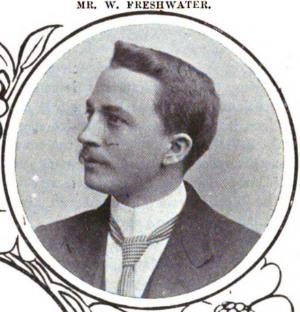
William Freshwater
Born: November 1, 1872, at Market Harborough
Died: 1936†

Mr. W. Freshwater initially apprenticed as a cabinet-maker† before studying at Harley House, London. Appointed as a lay missionary, he was dedicated to missionary service on April 10, 1902 [May 1902]. Slated for Mbereshi [May 1902], he departed England on April 30, 1902 [Jun 1902]. He arrived at Mbereshi on September 6 [Nov 1902]. He returned to England on furlough in 1907 and married Nancy Swingler (1874-1959†) on May 15, 1908. The couple worked at Mbereshi, Mporokoso, and Kafulwe†.

Notes:

Unless otherwise noted, missionary biographies are derived firstly from London Missionary Society: A Register of Missionaries, Deputations, Etc. From 1796 to 1923, prepared by James Sibree, D.D., Fourth Edition, published by the London Missionary Society, London, 1923. Brackets with [Month Year] indicate the issue of The Chronicle of the London Missionary Society which records the preceding event. Information denoted by a dagger (†) is from Christian Missionaries and the Creation of Northern Rhodesia 1880-1924, by Robert I. Rotberg, published by Princeton University Press, Princeton, New Jersey, 1965. Other sources are denoted by a footnote.

LMS Biographies, Part I

To make up for a whole bunch of blog posts, I am publishing in post format the biographies I compiled for my world-famous “The Chronicle of the London Missionary Society for all articles relating to their Central Africa Mission from 1876-1905.” I appreciate your patience!

Arthur Brooks
Born: October 5, 1860, at Edgware
Died: January 21, 1889, at Mkange [Mar 1889]

Mr. Brooks was appointed as an artisan missionary, slated to form an industrial station at the south end of Lake Tanganyika [Jun 1882] alongside his friend James Dunn [Mar 1889]. He departed England on May 17, 1882 [Jul 1882], arriving at Zanzibar on Jun 19 [Sep 1882]. He assisted in the construction of the steamer Good News at Liendwe. On the way to his return to England, he was shot at Mkange [Mar 1889].

Alexander Carson, B.Sc.
Born: February 26, 1850, at Stirling, Scotland [Aug 1896]
Died: February 28, 1896, at Fwambo [Aug 1896]

Mr. Carson studied at Glasgow. Appointed as an engineer to the Central Africa Mission, he departed England on February 19, 1886 [Apr 1886] and arrived at Quelimane on March 28, 1886 [Jul 1886]. He arrived at Kavala Island on July 4, 1886 [Dec 1886]. He returned to England on furlough, arriving April 15, 1891 [Jun 1891]. He departed England again on April 30, 1892, returning to Central Africa for more general missionary work [Aug 1896]. He arrived at Fwambo in August 1892 [Jan 1893]. He had intended to resign [Aug 1896], but before he could depart he died of malaria. He was noted as a hard and honest worker, taking a special interest in teaching [Aug 1896].

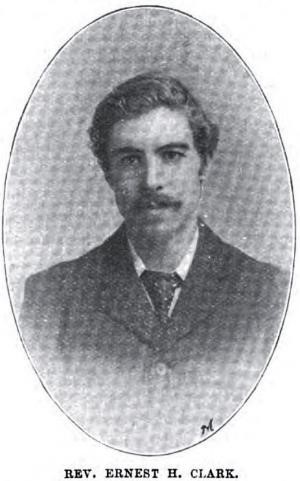
Rev. Earnest Howard Clark
Born: October 21, 1898, at Wathamstow

Rev. Ernest H. Clark studied at Cheshunt College and took a course in the elements of surgery and medicine at Livingstone College [May 1903]. He was ordained on February 11, 1903 and departed England on April 10 [May 1903]. He reached Kawimbe on June 24 [Aug 1903] and was appointed to Niamkolo [Feb 1904]. On July 23, 1904, he married Harriett Emily Thom at the Mbala (then Abercorn) Registry and then the Kawimbe Church [Nov 1904]. The couple worked in the Central Africa Mission until 1936†.

Harriet Emily Clark, née Thom

Ms. Thom trained as a nurse and departed England on April 21, 1904 [Jun 1904]. She married Rev. Ernest H. Clark on July 23, 1904, first at the Mbala (then Abercorn) Registry and then the Kawimbe Church [Nov 1904]. She later took additional training in Midwifery and worked in the Central Africa Mission until 1936†.

Elbert Sills Clarke
Born: 1850, at St. Mary Cray, Kent

E.S. Clarke studied at the East London Institute and had joined a mission in South Africa. Invited to join the Central Africa Mission, he departed directly for Zanzibar while his wife and family went to England [Sep 1877]. After making it to Kirasa with the Mission he suffered from fever and returned to Zanzibar on January 2, 1878. He resigned from the London Missionary Society and returned to South Africa [Apr 1878]. His wife was born Emma Forthergill and did not join him in Central Africa.

Notes:

Unless otherwise noted, missionary biographies are derived firstly from London Missionary Society: A Register of Missionaries, Deputations, Etc. From 1796 to 1923, prepared by James Sibree, D.D., Fourth Edition, published by the London Missionary Society, London, 1923. Brackets with [Month Year] indicate the issue of The Chronicle of the London Missionary Society which records the preceding event. Information denoted by a dagger (†) is from Christian Missionaries and the Creation of Northern Rhodesia 1880-1924, by Robert I. Rotberg, published by Princeton University Press, Princeton, New Jersey, 1965. Other sources are denoted by a footnote.

The Chronicle, 1876-1905

At long last, I have finally completed my transcription of The Chronicle of the London Missionary Society for all articles relating to their Central Africa Mission from 1876-1905. This represents the first 30 years of the mission, starting from when Robert Arthington offered £5,000 to get them to put a steamer on Lake Tanganyika.

This was definitely a project of the “we do this not because it is easy, but because we thought it would be easy” category. I had been using the Chronicle as a resource because it is convenient documentation of early observations of the peoples and lands around Lake Tanganyika. Although modern technology is wonderful and nigh-magical, when it comes across PDFs of century-old missionary magazines sometimes the text recognition software doesn’t do so well (honestly amazing we have this technology at all, just to emphasize) and so the search function can be hit or miss. “No problem,” I thought, “I’ll just manually scroll through and transcribe everything so I can ensure that I get all the relevant information.” Very nearly three years after I began that project in earnest I have finally compiled my “complete” edition. It is only 322,104 words and 686 pages long.

My dream for this transcription is that it will be an easy reference document. That is why I compiled biographies for all the missionaries associated with the mission during this time period, available in the front of the PDF. I had also thought of putting together an index, to really add a sense of academic pizzazz, but upon further reflection I thought that the search function would now be a lot easier to use since I typed everything out and also adding an index would be a whole lot more work on top of what I already did and I couldn’t bring myself to do it. But, as I say throughout the document, if anyone out there in this big beautiful world of ours actually uses this resource please please please let me know I will be absolutely over the moon. I think my blog has been cited in at least one student’s college paper and I am happy about that. Please though if you do use it as a reference verify your quotes with the actual source document. I change a lot of spellings and although in this edition I went through and proofread everything, I can’t 100% guarantee I transcribed it all correctly. I’m only one guy.

I think I will put this project down for a while. I initially chose this time period because after 1905 the issues of the Chronicle available online began to peter out. That is until I made the extremely distressing discovery that the SOAS website now has (nearly) them all listed. So there is scope to do the next 30 years. However, I have a lot of Central Africa Mission books to read (and a lot of other books to read) and I want to get a move on with those. My other dream is to be able to spend a whole lot of time in the SOAS archives themselves and my other other dream is to do some on-the-ground research in Zambia, but for now the usual life things stand in the way. But this project will continue in one form or other.

Previous entries on my Chronicle series available here!

Gardening Anew

Reading this week:

  • The Portugal Story by John Dos Passos

One of the things I was excited about for moving to undisclosed country was the ability to garden. As we’ve discussed, gardening on a balcony is not the easiest thing in the world. In undisclosed country we got a house, and like many houses this one came with a yard. And a yard means we can garden in earnest!

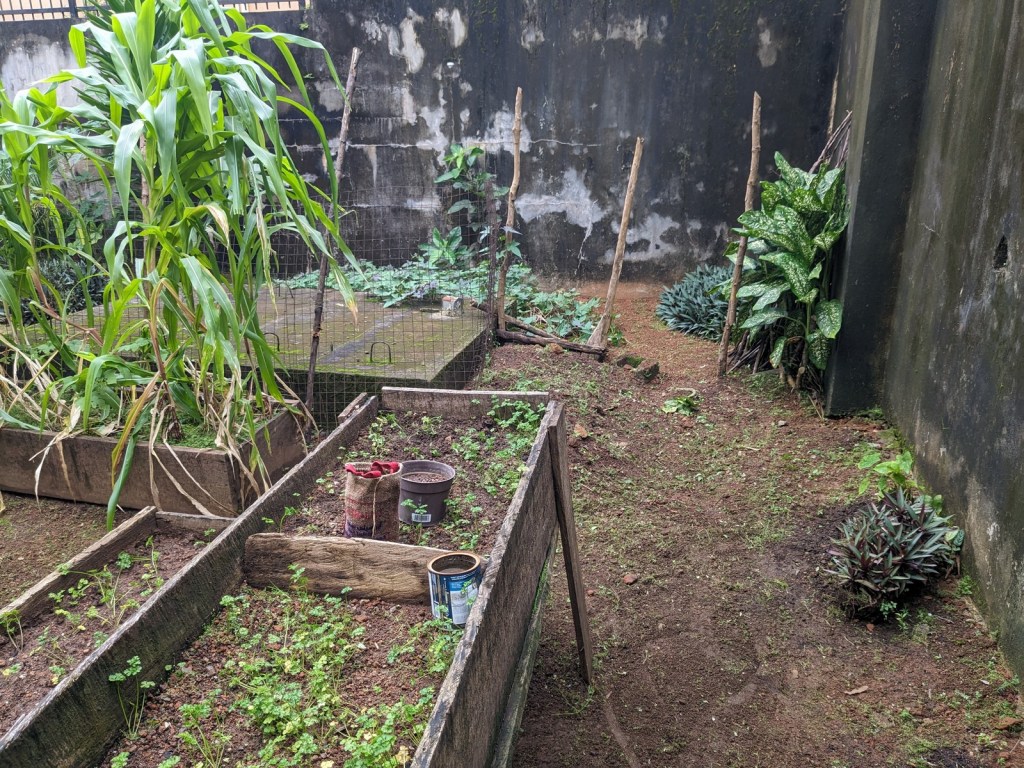
Mostly anyway. It is not exactly a field outside my old mud hut, the most important distinction being that there is a landlord with this one and we can’t really do major landscaping work without permission and that seems like a hassle to ask. Plus I have to be worried about digging up like a sewer or electrical line or something. So we can only do so much. But luckily for us we inherited a garden! That is very exciting. The previous tenants had constructed some garden boxes and had some plants going already when we arrived. As you can see from the top picture the garden was suffering a bit from neglect when we arrived, which is not the fault of the previous tenants, they had left undisclosed country so it was hard for them to do some weeding.

Another big difference between here in undisclosed country and back in Zambia is that here we have a gardener. Besides the garden the house comes with a lawn that has to be mowed. There was not an easy way to do this. I guess not a lot of people have lawns so I couldn’t find like a lawnmower to mow the lawn. So because we had no real way to do it ourselves we hired a gardener. He is almost too good. What we hired him to do was just mow the lawn (which he does an excellent job at) but since he is a gardener he also works on the garden. Above is what the garden looked like after he took a first pass at it, getting rid of a lot of the overgrowth and weeding out the garden beds. I say he is almost too good because I thought I would do some gardening as a hobby around here but I seem to have accidentally subcontracted that out. I only really wanted the guy to mow the lawn but he is really enthusiastic so who am I to stop him?

The crops the previous tenants had going were maize, kale, peppers, and parsley. Some of these were fairing better than others. The maize has grown tall but I think besides being too close together the climate just isn’t as suited to it. Maize needs some time to dry out and undisclosed country is simply not affording it that luxury. So a lot of the stalks have fallen over in the damp soil and weren’t really growing any fruit anyways. Oh well. The kale is growing well though, we have harvested some of that and used it in various dishes. It is also very popular with the snails, unfortunately. We also got a small harvest of peppers which was very neat:

As for the parsley, unfortunately tragedy struck. You can see better in the second picture, but the parsley was growing in an elevated garden bed. When we arrived it was already a bit rickety, being held up by a cinder block shoved underneath it, and I had meant to take it down and move it over. We had already transplanted some parsley (to mixed success) with that in mind. But then a heavy rain came in and we were down a garden bed:

The poor parsley! The other thing about having a gardener is that I feel like the garden can’t be too bad when he shows up. I hear people tidy up before their housekeeper arrives as well. So I had to do something with the garden bed before he arrived the next day. The rain didn’t let up, I didn’t have a hammer yet (it’s still coming), but I had to go out there anyways and do something about the poor fallen over garden bed so I wouldn’t be too embarrassed. Using some of the wood scraps I bodged this together:

It could be worse but it is pretty terrible I admit. It is held up by those boards in the front and the rock on the side. The dirt is just shoveled in there. When our gardener came the next day I explained it was the rain that took the raised garden bed out, lest he think I was just knocking over his hard work. He seemed suspicious but accepted my explanation. Then the next time I came out, there were two garden beds:

He not only fixed up and leveled out the garden bed I had put together, he had also transplanted some tomato plants into it and taken the rest of the scrap wood and created a whole second garden bed! He is too good man, showing me up, I am embarrassed. Seriously he is fantastic. But that is where we are at for the beginning of our gardening. We have hired a professional, gained a garden bed, harvested some of the previous tenants’ crops, and now just need to figure out how to get some seeds. That has not been as easy as I thought it would. But we’ll figure out a way. Can’t wait to see how it looks in a few months!

National Cathedral

As the last major sight on our DC Staycation tour, my super amazing wife and I visited the National Cathedral. We had been wanting to go for a while, but we hadn’t figured out the bus system until recently, so it was vaguely annoying to get to from where we lived. But since our time in the good ole’ U.S. of A. was running short we finally made the trip.

It was pretty nice? I dunno man I’m not much of a cathedral guy. They don’t do it for me. I like certain churches, but overall Christian religious structures just don’t have the pizzazz of like the one Buddhist temple I’ve seen in person (lots of gold and cushions and statues, good stuff). But one of the appeals of the National Cathedral after all of our recent Staycation touring is that it provided a convenient endcap to some of the stuff we had seen. One example is that the Cathedral, like many of the places we visited, had very nice floors. But a more concrete example is just the previous day we had seen Woodrow Wilson’s old house, and the National Cathedral houses a dead Woodrow Wilson:

Dead Woodrow Wilson

Speaking of racists, one intriguing display the Cathedral had going was about the former location of a stained glass window dedicated to Robert E. Lee and “Stonewall” Jackson. They took those windows down because, you know, hella racism, and they are in the process of replacing them with much better windows. It is always nice to see an institution being so thoughtful about racism, even if it is a century late or whatever. On a much different tone, also nearby is a Flying Buttress dedicated to the memory of Huldah Graeske Morris and George William Morris. I have previously told close friends and acquaintances that when (or if) I die I want a commemorative shoe buckle made in the spirit of George Washington, but upon seeing a commemorative flying buttress I immediately told my super amazing wife I want one of those too. A flying buttress! Who would have thought?

But back to tying this into our previous staycation adventures. Back in the Anderson House, which still has a number of centuries-old tapestries, there used to be even more tapestries. They were hanging in the ballroom, which is now these days decorated with some Japanese screens. After they died the Andersons donated those tapestries to the National Cathedral, so it was nice on this visit to round out seeing some of the Anderson’s old stuff we didn’t get to see when we visited their house:

The Cathedral was actually a fairly alright place for textile art. Besides the tapestries, the children’s chapel had all sorts of embroidery of like cute animals and other stuff that would appeal to kids (presumably, I don’t know what the kids like these days, maybe internet dancing? That could make a good tapestry). One thing they seemed really proud of was that in St. John’s Chapel they had all these kneepads decorated in needlepoints all about “noted Americans.” I picked a few of my favorites below, including John Paul Jones, who I assume is the namesake of the chapel, along with ole’ Bobby Fulton and one of my favorite authors Nathaniel Bowditch (who’s name is pronounced bao-ditch, not BOW-ditch, which should save you some embarrassment if you are ever trying unsuccessfully to impress the Commandant of the Naval Academy when you highlight the books he has on his bookshelf because you are so passionate about navigation):

Anyways that was the ground floor. You can also descend into the basement of the Cathedral, which has more chapels and the like and a sadly closed (while we were visiting) gift shop. But the two best parts of the chapel were first the towers and then the grounds. We only stumbled upon the fact that you could ascend up into the towers of the Cathedral because we noticed the elevators, but if you head on up you can get some really nice views of northwest DC from like the opposite perspective you (I) usually do because I have been up to the top of the Washington Monument twice and been up in the National Cathedral only the one time. It was very pretty when we were visiting in the summer with everything green! Make sure you go up if you visit the Cathedral:

After thoroughly exploring the interior of the Cathedral we head out to walk the grounds. It was pretty hot so we only did so much walking, but the best part of that walking was going through the Bishop’s Garden. It is “inspired by medieval walled gardens” with “terraced landscape features sculpture nestled amid plants of historical interest, native plants, and plants of the Bible and Christian legends.” So that’s neat. The fountains were tranquil and the flowers were pretty and the pathways picturesque and you got some nice views of the Cathedral (including the cranes doing repair work on the exterior which was very neat too) and it is a lovely little place to stroll. Make sure you don’t miss it while you are gawking at various space-related things.

Wilson House

Reading this week:

  • His Very Best: Jimmy Carter, a Life by Jonathan Alter
  • Remote Corners by Harry Mitchell

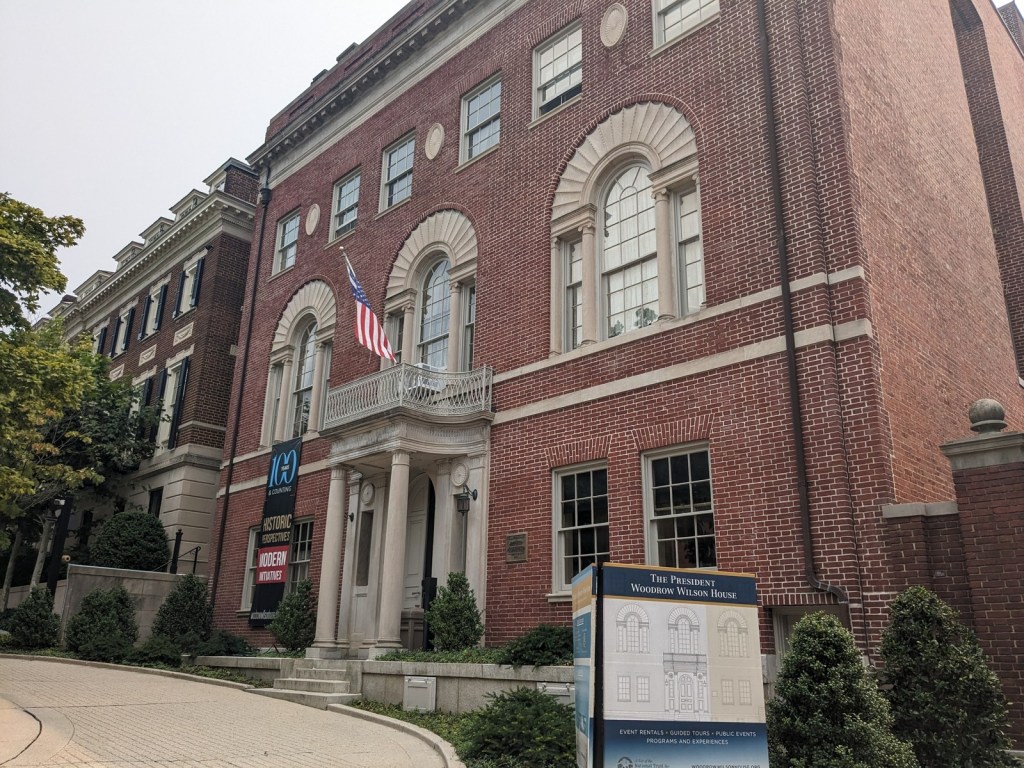
Our continuing staycation non-journey brought us to the Woodrow Wilson House in DC. This is the house that Woodrow Wilson lived in post-presidency. We went because my super amazing wife is a fan of presidential sites and hey this one was there!

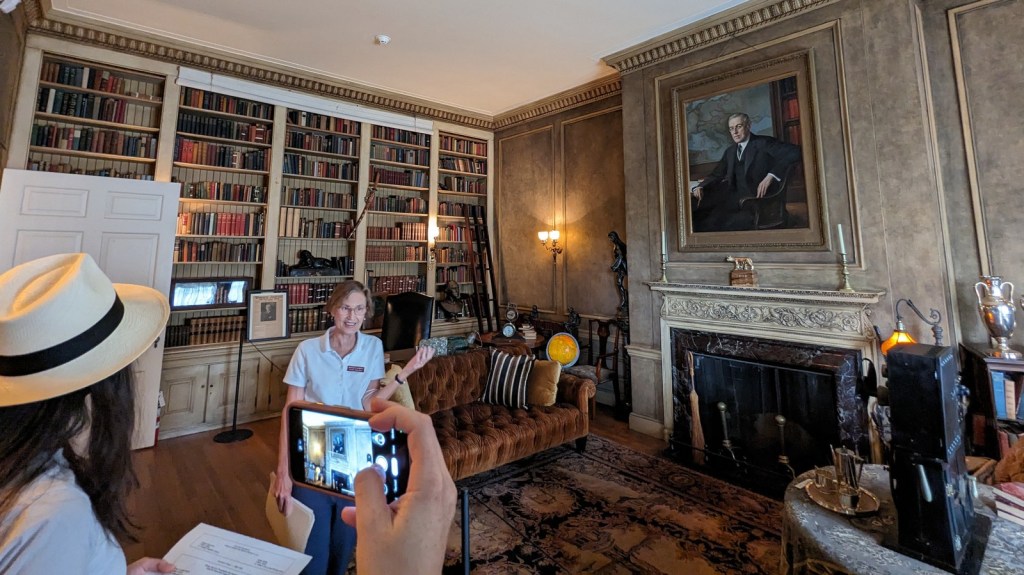
The tour we went on was the “Three Generations of Wilson Women” tour because in addition to presidents my super amazing wife likes women. Plus is was the only tour that worked with our schedule that day but we would have been delighted to go anyways. We were joined by a woman who was on her second Wilson House tour for the day along with three foreign women who I guess were hitting the highlights of America. I don’t know if the other tours the house offers focused much on Wilson’s politics but this one mostly skipped it in favor of telling the story of Wilson’s life via the women that surrounded him. And he seemed to have a pretty good chunk of women surrounding him. He had three daughters with his first wife and the tour also takes time to focus on Mary Scott who worked for the Wilsons along with her husband Isaac.

The place is called the Woodrow Wilson House but it was really more the Edith Wilson house. Like I said Wilson moved here post-presidency in 1921 and then died in 1924. He had married Edith while president in 1915. She was 16 years his junior and a whopping 14 years older than his eldest daughter and outlived him by 37 years, dying in 1961. She very much liked being Mrs. Wilson (according to the tour) and spent the next few decades after Wilson’s death sprucing up the house and preserving her version of his legacy.

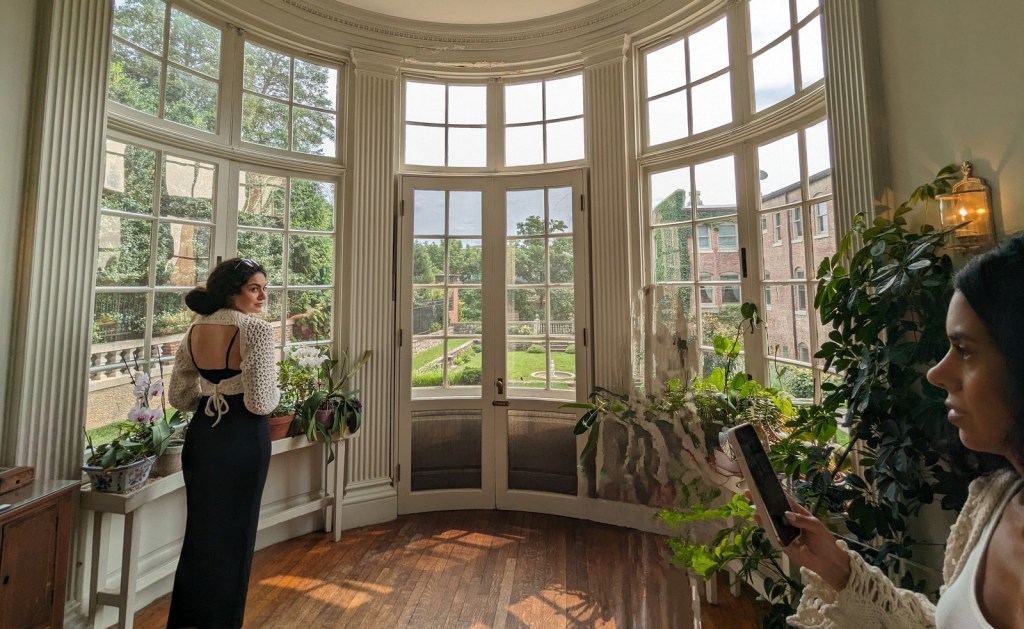
As house tours go, I guess it is a pretty nice house? I haven’t seen the inside of many of these sorta embassy row mansions so hard for me to compare. The staycation, besides featuring very nice floors also featured a good number of tapestries, including at least one large one in this house. The most popular spot was the lovely little sunroom at the top of the stairs that looked out over the garden, and as you can see it was a great spot for pictures:

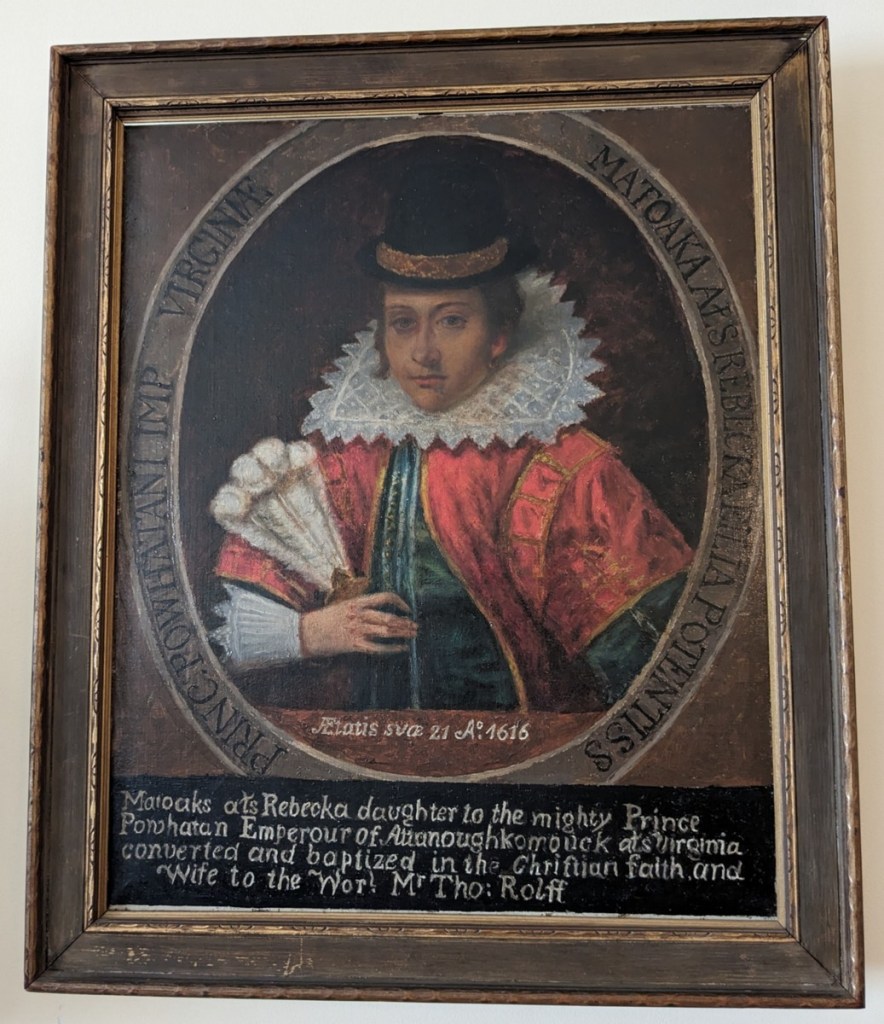
The final detail I’ll note is that up in Edith’s bedroom I saw a statue and then a painting of Pocahontas which our guide hadn’t mentioned but from having recently gone to the Museum of the American Indian I had learned that a good chunk of well-to-do Virginians liked to claim descent from Pocahontas (nee Amonute). This caused problems when Virginia was starting to implement some hella racist laws saying anyone with non-white descent was going to be non-white, which would have included these well-to-do Virginians until the lawmakers included a carveout. Oh racism. Anyways I spotted these Pocahontas things and asked and one of those well-to-do Virginians claiming descent from Pocahontas included Edith Wilson, so there is some cross-museum synergy for you.

And that was pretty much the Wilson House. The staff there are passionate and are working hard to highlight the diverse aspects of the house and Wilson’s legacy though as long as we have a culture that glorifies “Great Men” you are only going to be able to do so much. Nice paintings though!

Anderson House

Another staycation site we visited was Anderson House. We first noticed the place during one of the Embassy Open Days they do in DC. We had wanted to see a bunch of embassies but turns out the lines for all of them were quite long and as we were wandering around we saw a sign for the Society of the Cincinnati and their free museum. We considered going in but were worried that something as serious and pretentious sounding as “Society of the Cincinnati” might be some weird right-wing dark money operation so we wanted to do some research before diving in. After doing that research it seems fine? Clubs like this are always going to be weird but this one seems relatively benign.

The headquarters of the Society of the Cincinnati is now in the former house of Larz and Isabel Anderson. These were two rich people that got married. Man tell you what to be rich in the gilded age. There was a period of time, well-evidenced in DC and also the Met, when you could just bop around Europe and buy up large chunks of all the cultural history there. For the people offended on behalf of Europe, don’t worry, they did this in Asia too apparently, the house has tons of Buddha statues scattered all over the place in niches or in the back yard. The tour guide leading us around mentioned that the Andersons weren’t even religious particularly, “if they saw something they liked they just bought it.” I think The Great Gatsby is supposed to be about how this is all terrible and I suppose for most of the world it was but oh to be gilded in the gilded age.

The two big focuses of the house are Larz Anderson’s diplomatic career and his love of the Society of the Cincinnati. The only two uses the house ever saw were as the personal residence of the Andersons and then has headquarters of the Society. The house incorporates various bits of Society of the Cincinnati symbols in like the plaster work and the like, and after the Andersons died they left it to the Society to use as their headquarters. The single most interesting thing I learned on the tour is that the city of Cincinnati is named after the Society, and not directly after Cincinnatus as I would have assumed. On the tour they talk up the history of the Society a bit, but they’re not exactly trying to get you to join, because you can’t, sorry (not sorry).

As for Larz’s diplomatic career, again, man, to be rich. I guess he was really passionate about diplomacy, no knocking him there, but his storied diplomatic career around which he built is personality was like 8 years total? Very much a hobby. According to Wikipedia, he dropped out of law school, but since his dad had connections to the U.S. minister to the Court of St. James Robert Todd Lincoln he got a job over there as first secretary (this was his first job!) for three years and then went over to Rome to be the chargé d’affaires! Then he went on hiatus for like 15 years and then he is Minister to Belgium and then Ambassador to Japan for a whopping one day, later styling himself as “the first American to rise all the way through the diplomatic ranks from the lowest position to the highest.” Rich people never change. But since he was such a big fan of diplomacy once he built himself a nice big fancy house he let the State Department use it all the time to host fancy parties and the like so that was nice of him.

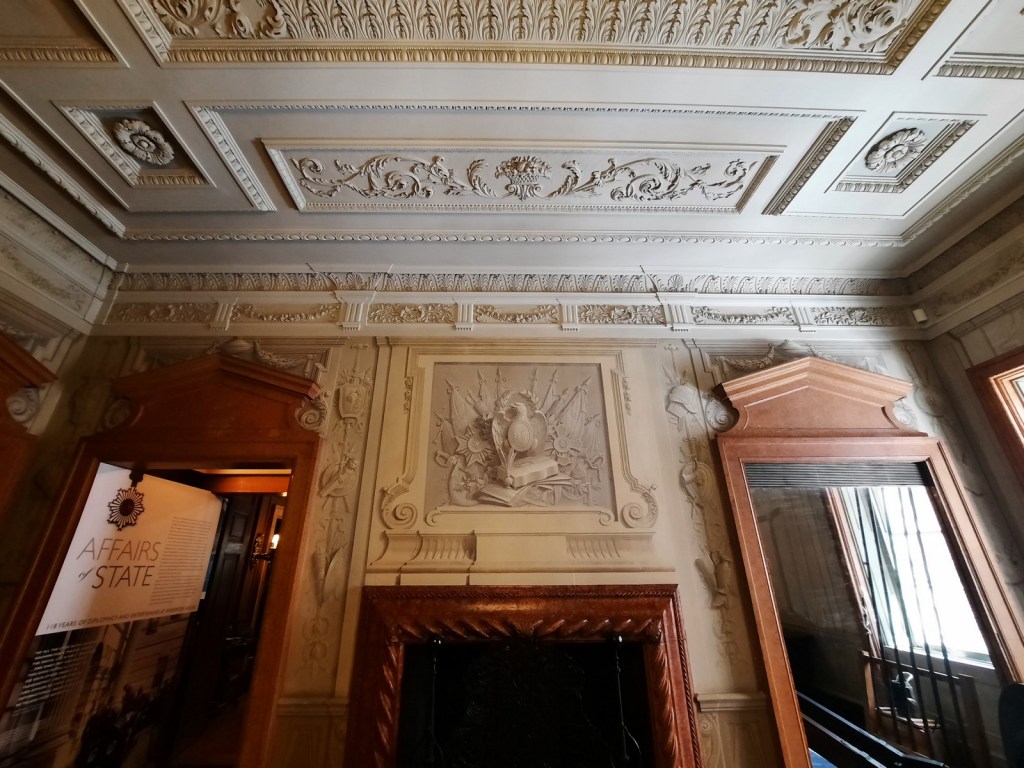
It is a very fancy house, and very gilded age in that I noticed there was a bunch of trompe-l’œil all over the place (see first pic). There was also fancy stuff all over the place, like 400 year-old tapestries and big ole paintings and a table that I thought was pretty neat which is pictured below. I think it was picked up by Isabel Anderson when she was doing the grand tour and features a tabletop made of tons of different bits of granite. Apparently the usefulness of this table is you bought it abroad and then when you came back to build your house you could use it to show your architects/builders which marble you wanted in various bits of the house. To be fair the house had some very nice floors (the whole staycation was a series of very nice floors), but I liked the table because it was like the day before at the Building Museum that I saw the different granite samples and so this was the same thing a century apart and that is neat I thought.

Anywho that was the Anderson House and the Society of the Cincinnati. Their temporary display while we were there was about the history of diplomacy in the house (all those nice parties the State Department threw there) which intrigued me and my super amazing wife suitably, and the house was certainly very pretty to look at. And since the tour was free, it was definitely worth the price.

National Building Museum

As part of our pre-departure staycation my super amazing wife and I went to the National Building Museum. It was alright.

The National Building Museum had been on our list for a while. It got in our heads at some point we should go (I first found out about it years ago when I stumbled across Bantam King ramen, the best ramen shop in DC, and looked across the way to see the museum), but we had never gone because it costs money and neither of us were too sure we were actually all that into buildings. But since we were leaving the country for the forseeable future it was time to see the things we hadn’t seen, and the Building Museum was on the list.

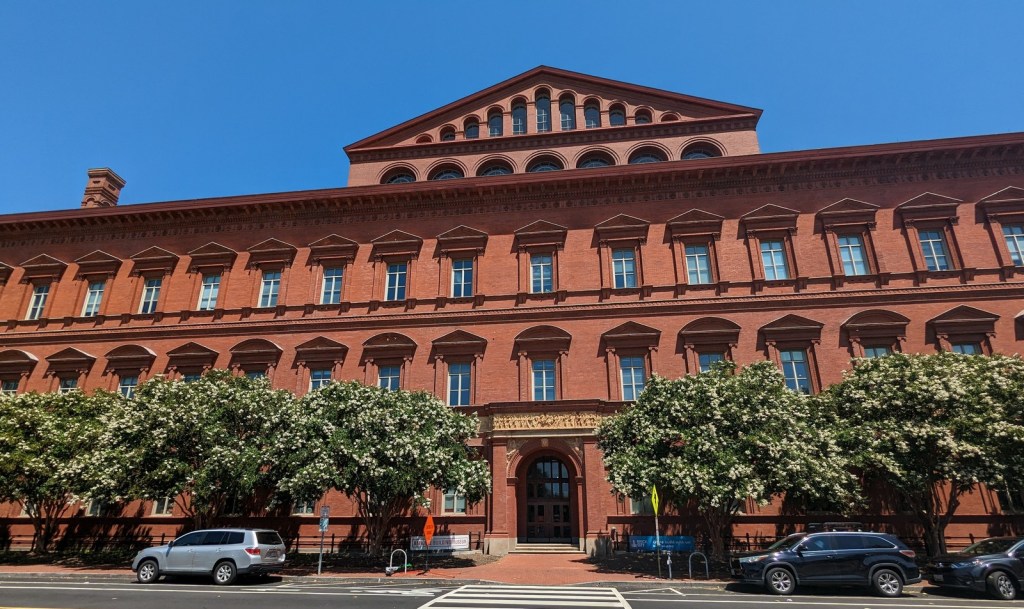
When you enter the museum, man is it impressive. It is certainly a building, I can tell you that. It was originally built for the National Pension Bureau. I was unclear while I was wandering around the museum why the Pension Bureau needed a whole lot of empty space instead of like, offices, but now that I am reading the museum website the space was meant to be large and grand so they could hold large and grand events inside like Presidential Inaugural Balls. Dual-use architecture, nice. As is so often the case the picture just doesn’t do it justice. Those columns are massive. Biggest I’ve ever seen, and I have seen some columns. This huge middle space makes the rest of the museum seem small in comparison.

That was sorta the thing with the museum. It just didn’t feel like there was a whole lot of there there? I don’t know what I was expecting. The exhibits didn’t feel too meaty. There was one very nice one about animals being used in architecture, with a lot of neat items like the below bitumen molds for plaster ornaments. There were also multiple rooms full of legos at the time that kids could use to build buildings out of, but neither my super amazing wife nor I felt like shoving kids out of the way so we could play on legos. The museum had opened with a sort of conceptual gallery of different types of urbanism I guess (the above samples of different granites comes from that), and we very much enjoyed a gallery full of photographs of different buildings, but I’m not sure I walked away with a whole lot more knowledge of buildings than I had before? Maybe I didn’t read closely enough. A building museum has to be tough to curate though, like, I guess there are a lot of different ways you could go with that so any which way you go might make someone a bit unsatisfied.

One really cool thing was the art installation they had in that central hall that sometimes hosts balls. It is in that second photo I included in this post, and is called Look Here by Suchi Reddy. The sculpture included a range of polished metal shapes, all very large, hanging around this sorta central platform thingy that you approached via curved ramps. As you wandered the museum you got to see the piece from a lot of different angles, but the best angle was from the platform. Specifically, laying down on one of the large bean bag chair/furniture thingies they had scattered around the platform, which let you look up at the shapes suspended in space and immersed in the grand hall but more importantly were very comfortable and felt like a nice place to take a nap. From that vantage point it felt like the Building Museum was a place meant for dads to take their kids on a hot summer afternoon so they (the dads) can finally get some lay-down time. So a pretty good place then!