
Reading this week:
- Narrow Boat by L.T.C. Rolt
Continuing our story from last week:
Turning away from the river you are looking at the main part of the castle itself, with the ruins still standing two stories tall. Looping around clockwise the guide pointed out the remains of what he said was the secretariat (record storehouse), a blacksmith shop, and the kitchen, before taking us through the gate into the main slave yard. Here the enslaved people would have been housed while their captors waited on another ship to come.
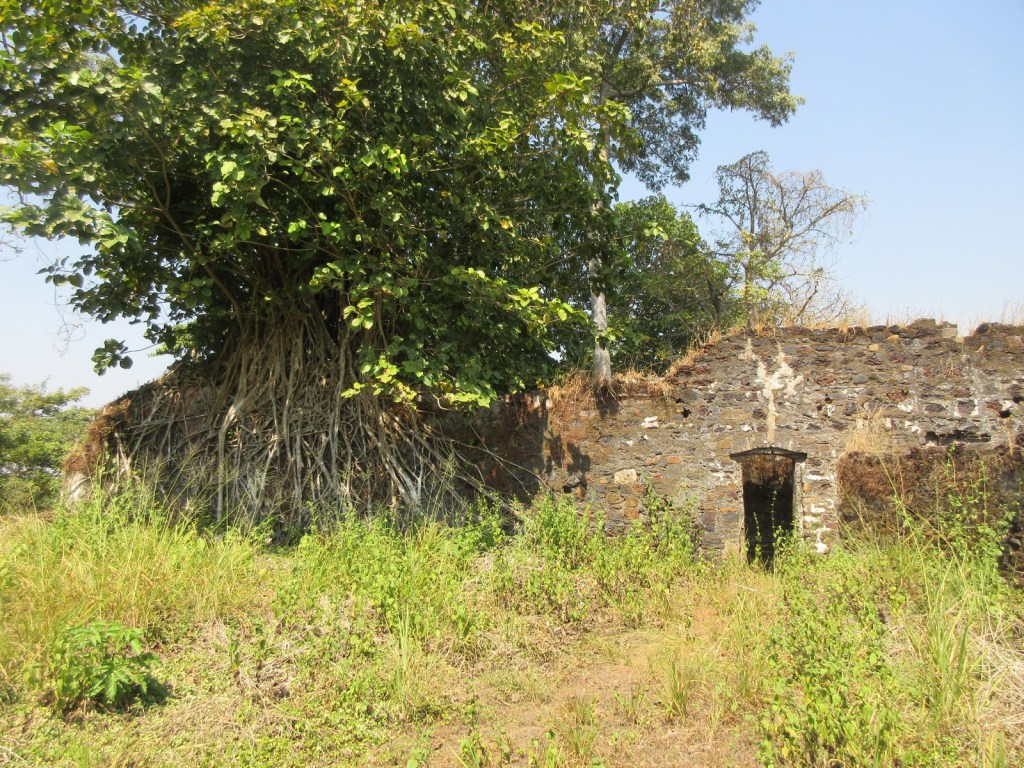
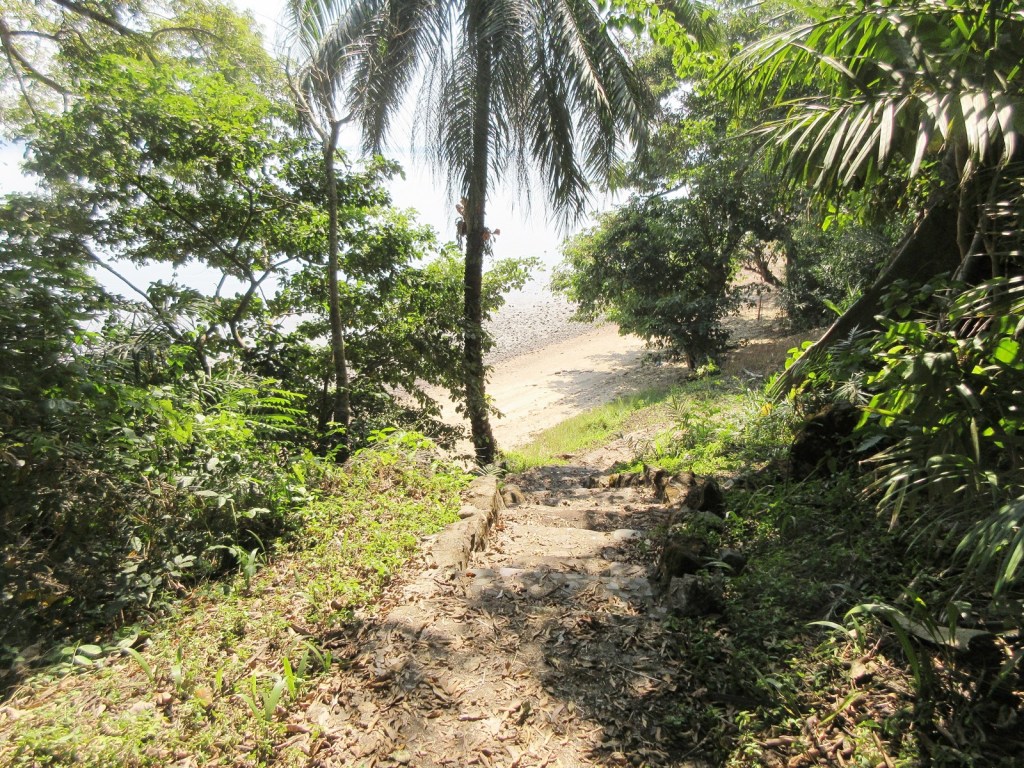
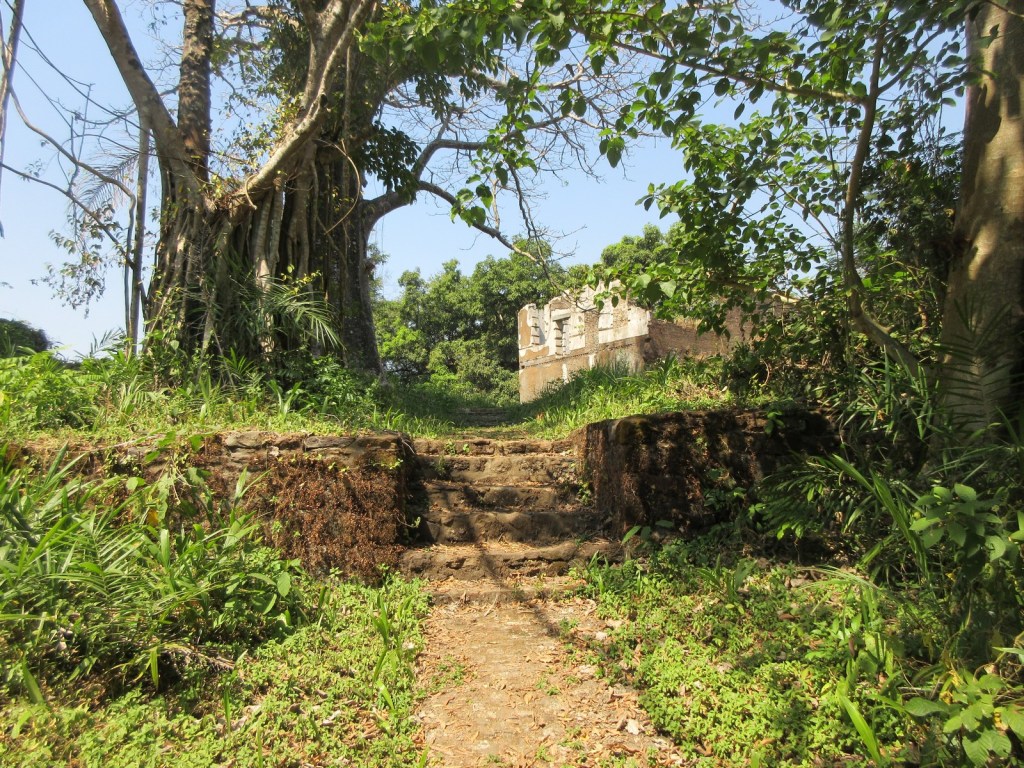
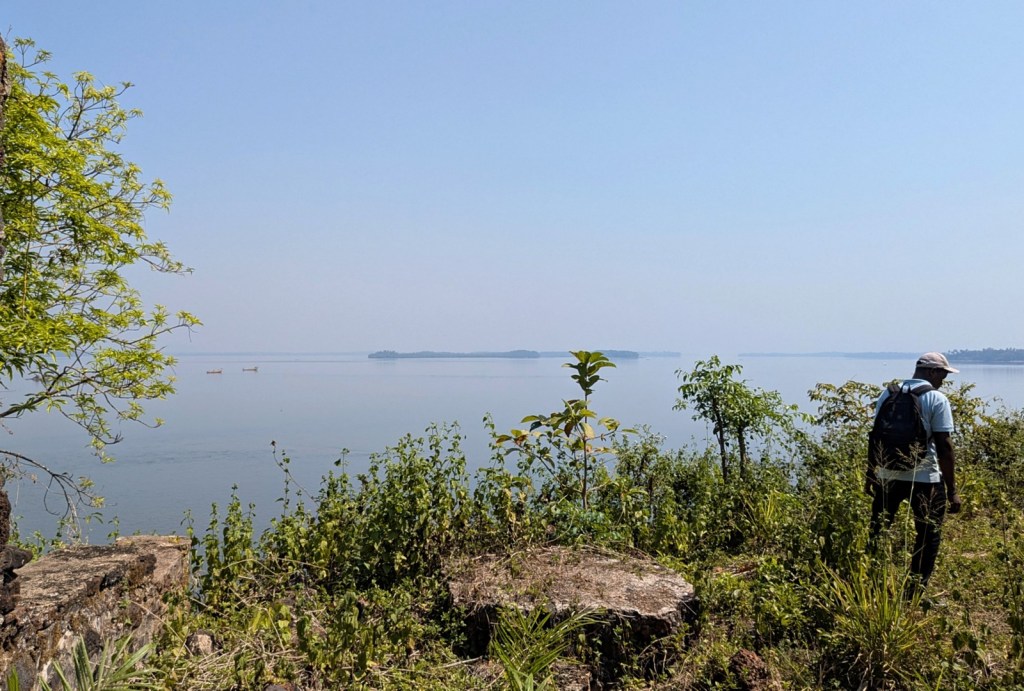
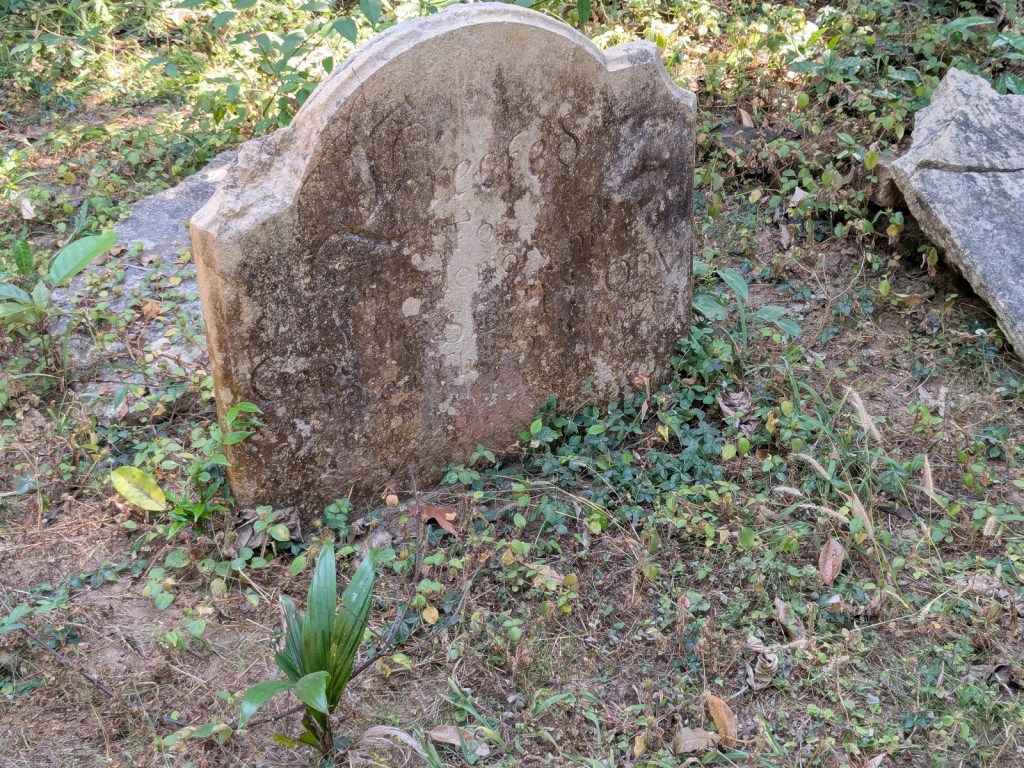
Outside the slave yard and on a path leading down to the beach there is a cotton tree with roots that have followed the square of the brickwork, making a convenient photo spot. Our guide encouraged people to cycle through to take pictures, if they liked. He explained that behind him was the powder store room, in which now lives a large number of bats. On the beach side there is a very small door into the cave-like room, which must have attracted the bats. He said that you could hear the bats, “singing hallelujah praises,” and you know what you could. It must be really cool when they all come out at dusk. Along the beach he also pointed out old piles of oyster shells that would have been used to produce lime. After walking back up the hill this concluded the tour of the fort itself. From there we walked down a short path to the other side of the island to see the graveyard. We didn’t linger and guide shuffled us back to the boats playing more praise songs on his speakers.
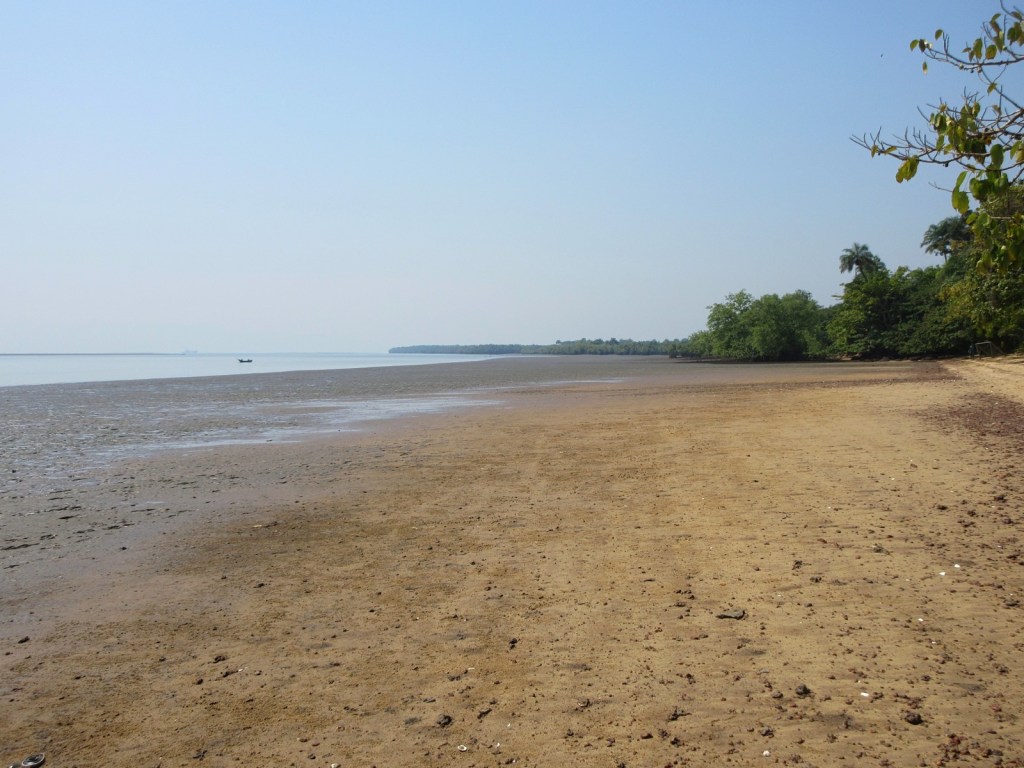
With the A Boat having been replaced in the interim, it was a short hop over to Tasso Island, which was an unexpected treat. Going to Tasso wasn’t unexpected, we were always going to have lunch there, but our short visit was really something. The tide was far out when we landed which meant we alighted onto a rock/concrete structure that looks like it is covered at high tide and got to walk along the beach, admiring some very cool rocks and having a lovely stroll. Up at the restaurant we had a great lunch of rice, fried fish, and plantains, but then the real surprise was being taken up to the Tasso Heritage Center.

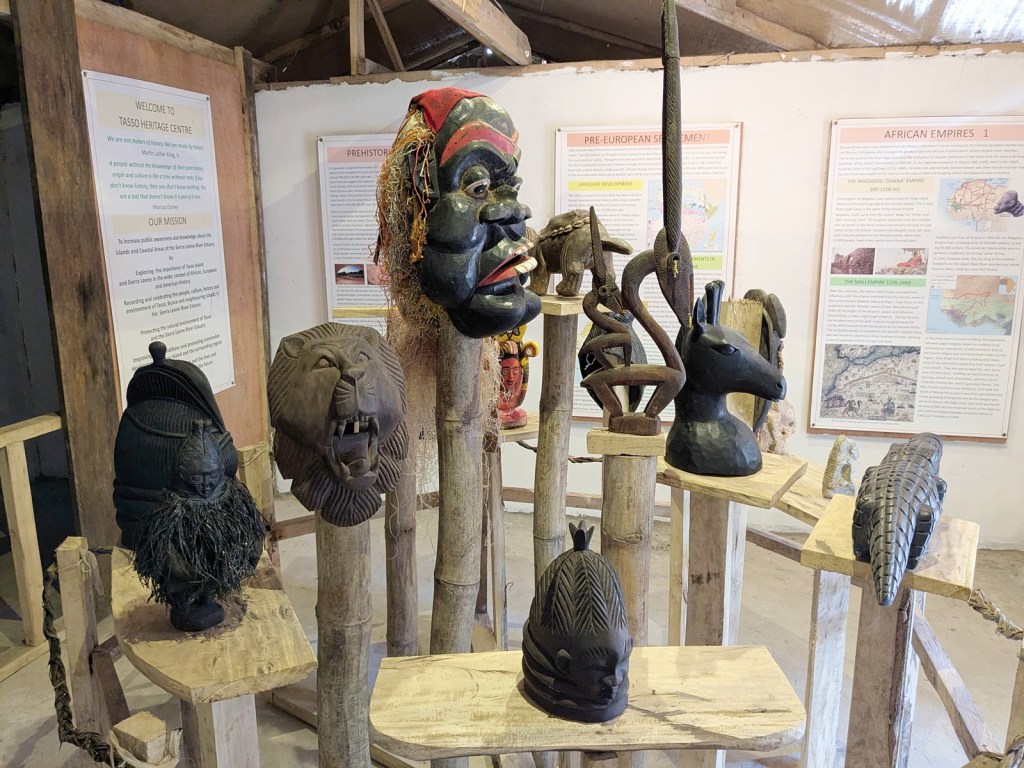
The reason Tasso had lunch facilities is because of the Tasso Ecotourism Project, which as the name suggests is encouraging ecotourism on Tasso Island. It’s part of these overall efforts along with the tour companies that they developed the Heritage Center, which was brand new when we visited, having opened only two months prior. One of the people from the island showed us around the center. Right inside the door there is an impressive collection of Sierra Leonean masks, including Temne, Bundu, and Krio masks. The pride of their collection is an “original carving of the ‘camel’ or ‘horse traveler,’ still wearing its cowrie bead charm, which was carried in front of the Chief on long journeys. It comes from the time of the African Empire invasions, when camels were first seen in Northern Salone.”
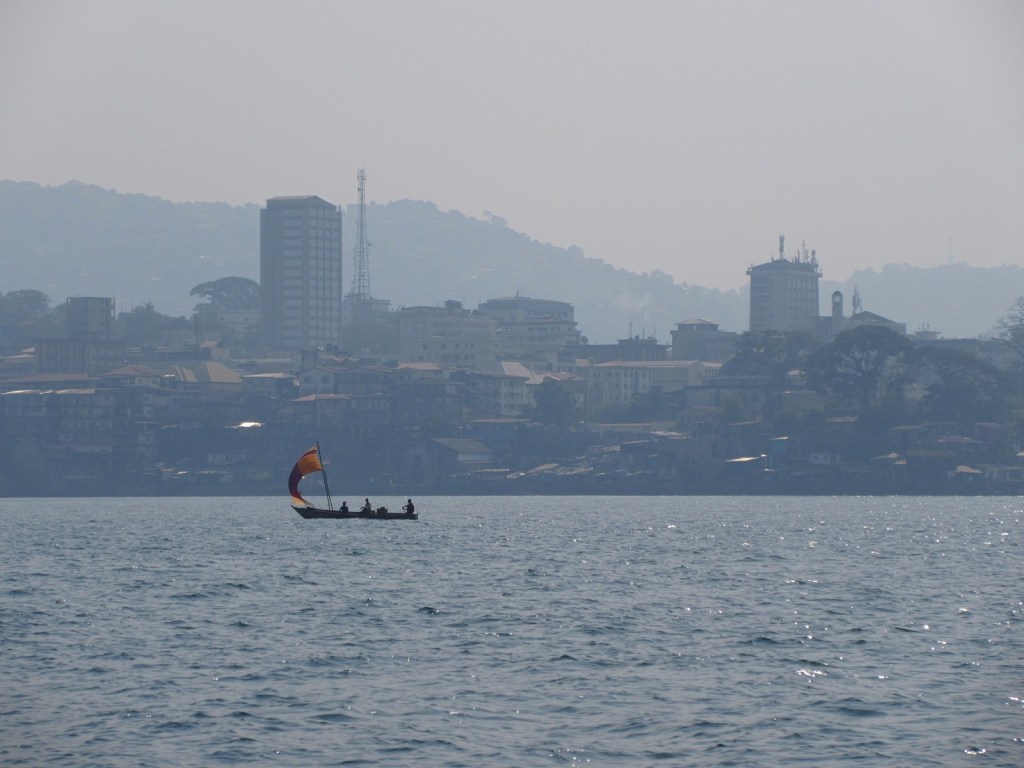
The largest room of the museum discusses the history of slavery in Sierra Leone, and especially the relationship of Tasso to Bunce Island. Since, as discussed, Bunce is very small and primarily chosen as a fortification, Tasso was used as a plantation to provide food and water to Bunce. There were also signs on the longer history of Sierra Leone and its relationship to the rest of west Africa, and a room displaying some of the normal wares of a household. We didn’t get too long to linger but frankly the heritage center rivals the national museum in Freetown, especially for the scholarship on display. But from there it was time to load up onto the boats for the final ride back to Freetown. This went smooth and quick. I ensured my super amazing wife and I sat on the port side for the ride back so I could see all the things I didn’t see on the way out to Bunce. It was so lovely seeing Freetown from the water, spotting downtown and the different hills over which the city spills. It was the cap to a fantastic trip full of history and a showcase for the enduring connections between Sierra Leone and the world.
 Pat in the World
You must be logged in to post a comment.