
Reading this week:
- Visions from the Forests, General Editors Jan-Lodewijk Grootaers and Alexander Bortolot
- Sacred River by Syl Cheney-Coker
- Afro Sport
This fall I got to visit the London Missionary Society archives kept at SOAS in London! It was super cool. I had wanted to visit them for a long, long while, and if I was rich I would pay to have them all digitized, transcribed, and hosted online. I only was able to spend a morning in the archives but I thoroughly enjoyed it. The process of accessing the archives was super simple and everyone was really friendly, but since it was only a morning worth of looking I could only look at so much. I will write more about my visit to London (don’t you worry about that) and what else I could find in the archive, but one priority was pictures. I’ve seen a variety of LMS-related pictures in lots of places but I figured the archives would have a pretty good selection. Below is what I found, all photographed hastily on my phone camera as I tried to look through as many scraps of the archive as possible.
Good News
The first chunk of photographs I looked at were of the S.S. Good News, which of course you know is my particular obsession.
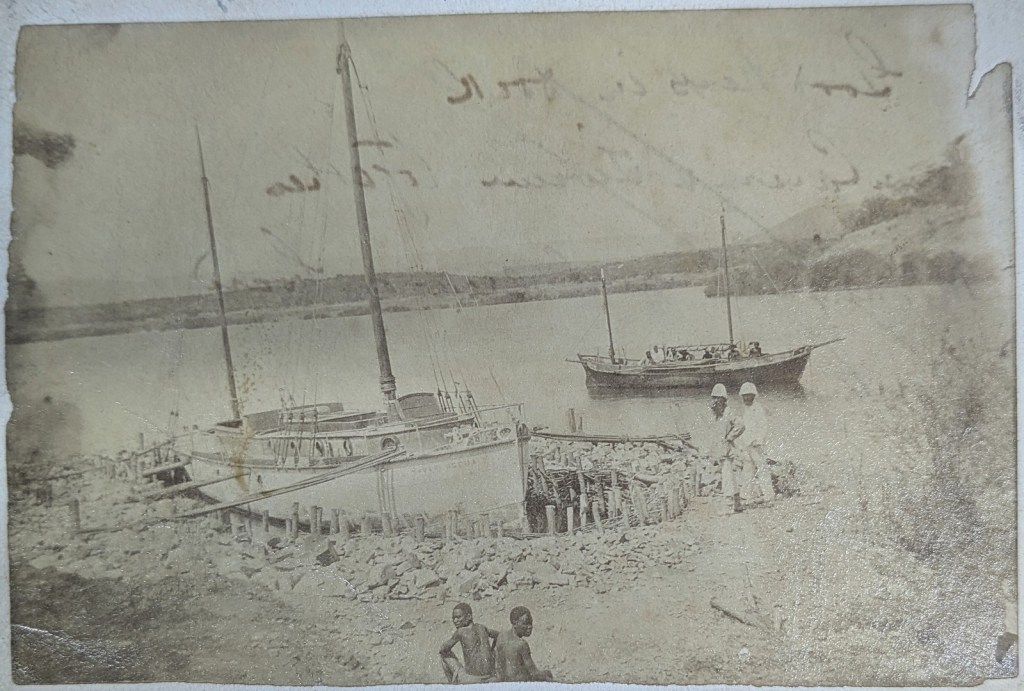
The above photograph is of the Good News in drydock following some damage, with the Morning Star alongside it. This was not a new photo for me but neat to see it in the flesh.
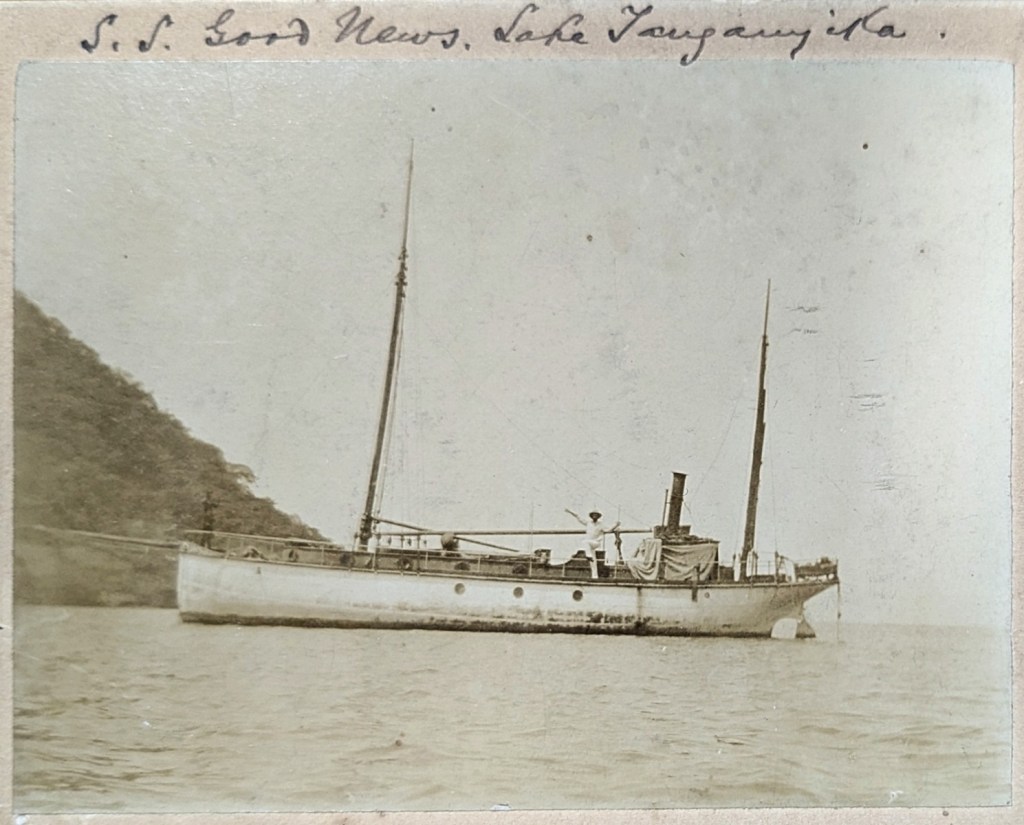
The above photo and the next two were new to me, and it seems like they might have been from the same photo session. If they are, then the above photo must have been taken by Alexander Carson, because the caption on the back says that is A.J. Swann in the photo. I think this is corroborated by the hat.

Here’s what I mean by the hat; the caption on this photo identifies that as A.J. Swann on the deck of the Good News; his mate is unnamed.

And then above is Alexander Carson, which is why I think the first of these three photos was taken by him. At first I had actually thought this was another picture of Swann given the similar outfits and beards. I guess this is why they had different hats.
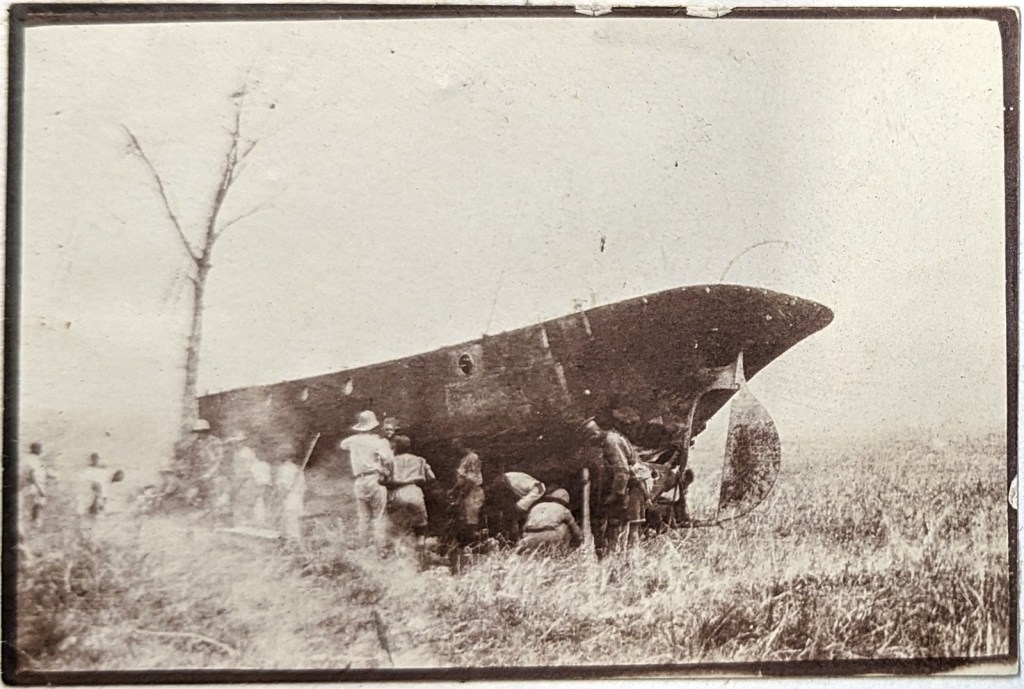

These two photos, one of the hull of the Good news and the other of a young man, were pasted onto a piece of paper. The only context was given by a short letter, originally typed on a different piece of paper but cut out and pasted onto the same paper as the photos. I’ve seen this exact photo of the Good News before, as in someone else took a photo of this same document out of the archives (I can tell from the larger crop of that photo). The letter reads:
Dear Mr. Chamberlain,
Yours of yesterday to hand. Considering the fact that the photo was taken at Kituta, and that the only steamer there was the “Good News” you will be safe I think to conclude it is the hull of that vessel. The “Morning Star” & the “Good News” were both damaged by the Huns but the latter was not completely destroyed. It is the properly of the A.L.C. [African Lakes Corporation].
Trusting you are well and with kind regards.
Yours sincerely
If Rev Wright took the photo, that dates it to between 1915 (when he left the Mission) and the start of WWI (when the Germans shelled any other potentially workable steamer on Lake Tanganyika to ensure their naval superiority). However, it doesn’t give a lot of clues to the identity of the man.
Portraits
The next section is portraits. The first two are particularly cool because I’ve seen them before, but as engravings instead of as pictures.
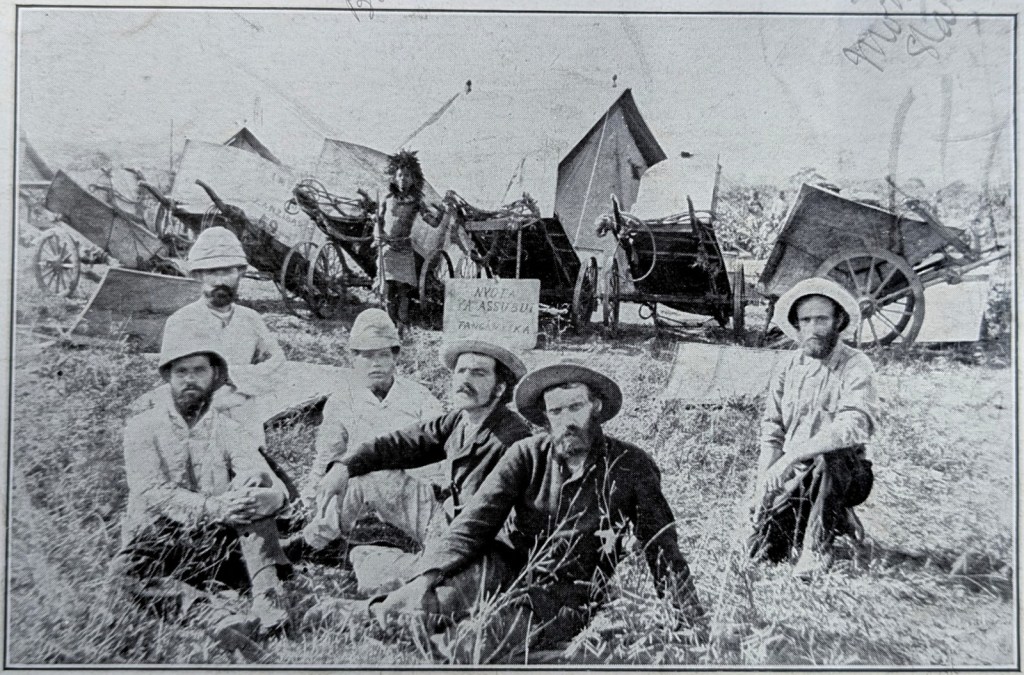
The caption for the above photo, from the January 1884 edition of the Chronicle (where it was included as an engraving) was: “The group of figures in the above engraving from a photograph will be recognized by many of the Society’s friends. From left to right the names are as follow: – Rev. D.P. Jones, behind him Captain Hore, Mr. A. Brooks, the late Rev. J.H. Dineen, the late Rev. J. Penry, and Mr. A.J. Swann. The trucks in the background contain the larger sections of the life-boat.” That life-boat was the Morning Star.
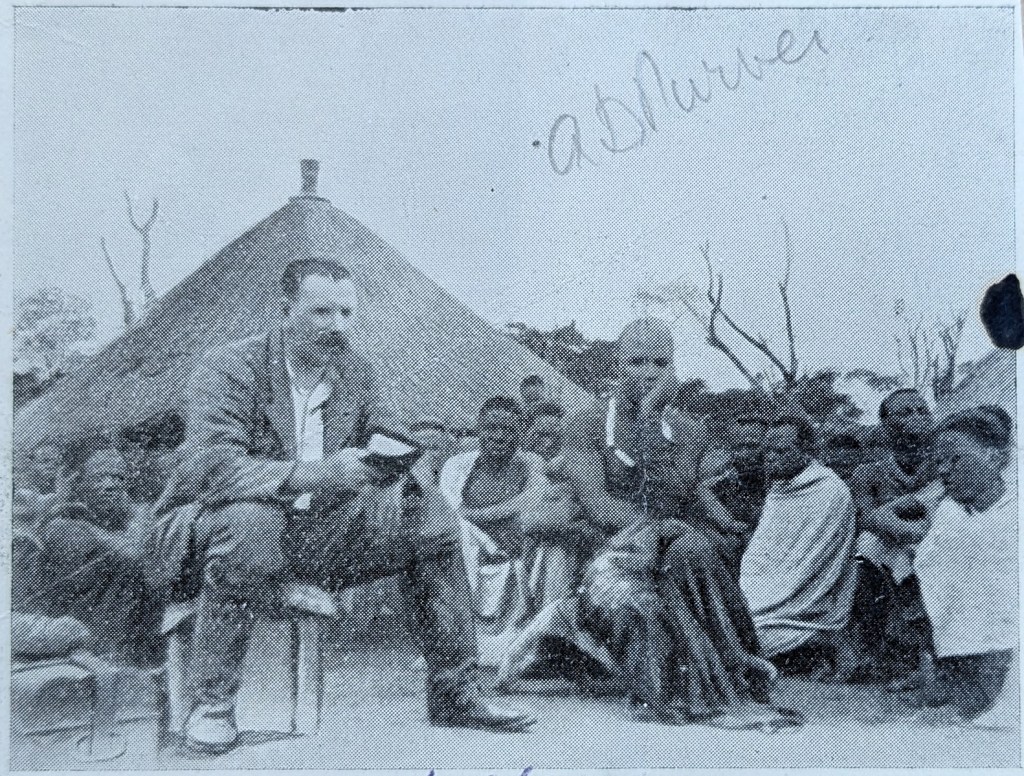
The above photo is Adam Purves, and was featured (as an engraving) in the December 1900 edition of the Chronicle with the caption “Mr. Purves Preaching to the Awemba.”
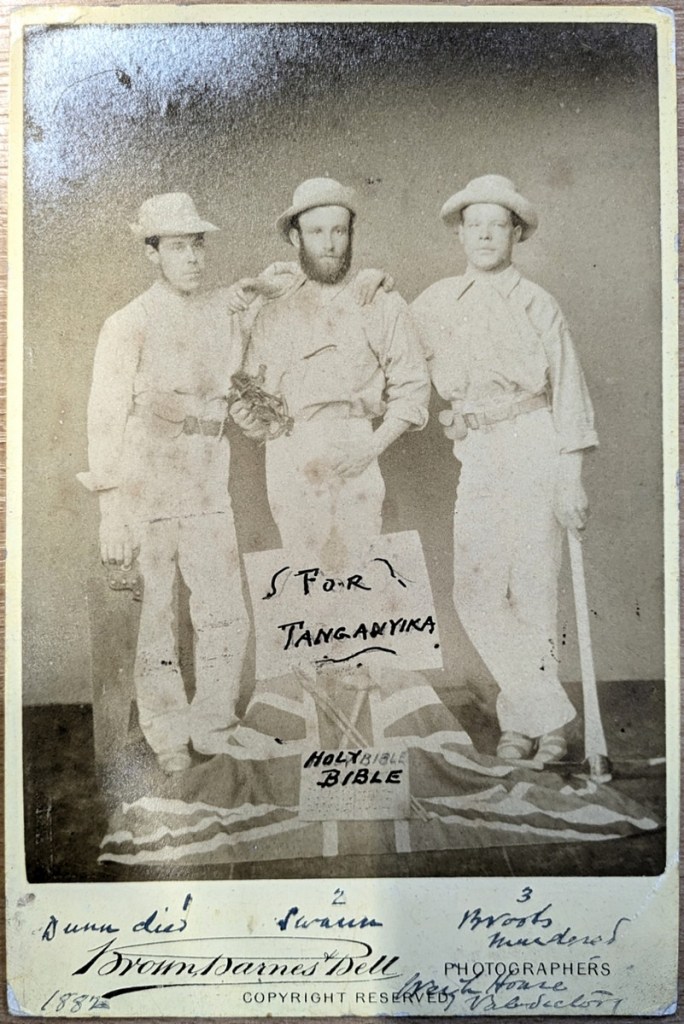
There were a few different copies of this photo in the archives, of James Dunn, A.J. Swann, and Arthur Brooks. It was taken in 1882 before they set out, apparently at the studios of Brown, Barnes & Bell. They’re posing with the tools of their trade(s), as they all were artisan missionaries. Dunn (with a saw) and Brooks (with a pickaxe) were slated to form an industrial station at the south end of Lake Tanganyika, and Swann (holding a sextant) of course joined the marine department. This copy of the photo has been updated with their eventual fates, with Dunn having died of fever in 1884 and Brooks killed as he was returning to the coast on his way home to England in 1889.
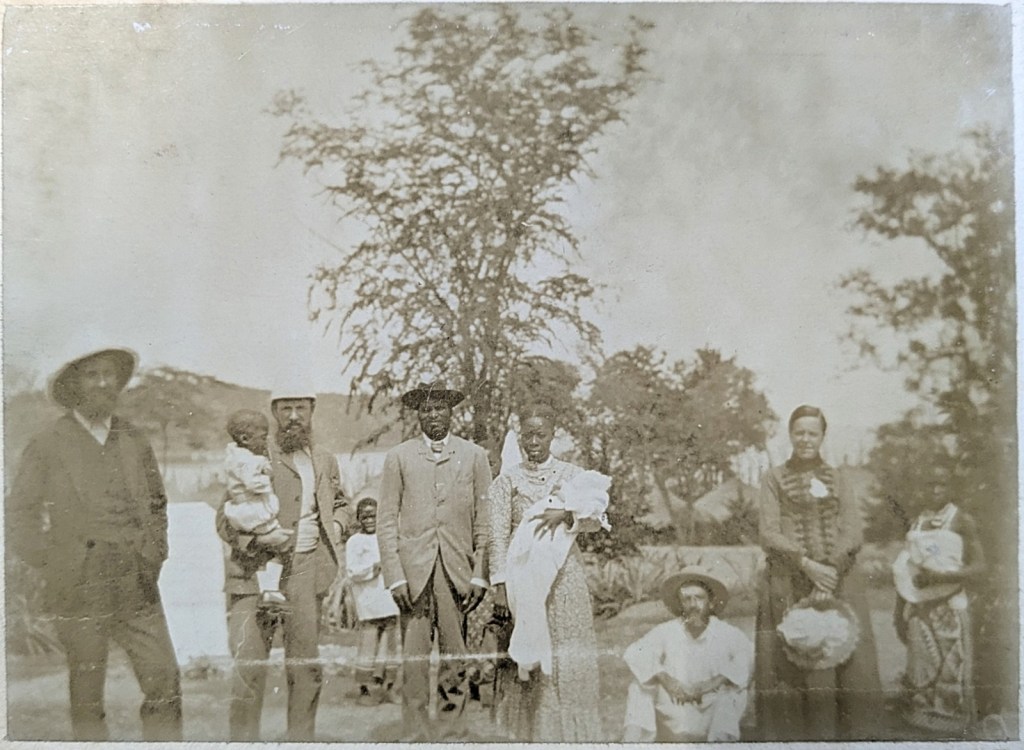
I can’t quite make out the names listed on the back of this photo; they were written in pencil and were a bit faded and I took a poor picture. The couple in the middle are Mr. and Mrs. James Hemans (also here).

This one is also a bit mysterious, I think the caption identifies the seated missionary as Rev. W.C. Willoughby, and it doesn’t name the missionary in the back (Swann maybe?), nor does it name any of the people with them (except as “natives”).

Now this is pretty neat because this is Mirambo. You can find this photo in a few different spots already on the internet (like his German Wikipedia page) or the cover of the book on Mirambo by Dr. Bennett, but hey here is a slightly wider shot even if I could have done a better job reducing glare. Someday I’ll go back to the archive and digitize these things with more skill.
Lifestyle

And then finally we have two photos that just show some of the lifestyle in and around the mission stations at the turn of the century. The above photo is just labelled “Swann’s tent.”

And then our final photo is only really notable to me because a nearly identical version is online in the USC archives, they must have been taken one right after the other. It was taken at Kambole, and according to the USC page it was more specifically taken by Rev. James Ross circa 1925, featuring a tip cart made at Kambole in front of a wheat field.
So pretty neat. The trip to the archives was fun and I will milk it for several more posts as I figure out all I was able to take a look at; I took a bunch of pictures of documents without having a chance to really read them in the moment but I will work my way through them. I’ve already learned a few significant details and will have to update my transcription of the Chronicle with more photos and biographic details when I get the chance.
 Pat in the World
You must be logged in to post a comment.