The Chronicle, 1876-1905

At long last, I have finally completed my transcription of The Chronicle of the London Missionary Society for all articles relating to their Central Africa Mission from 1876-1905. This represents the first 30 years of the mission, starting from when Robert Arthington offered £5,000 to get them to put a steamer on Lake Tanganyika.

This was definitely a project of the “we do this not because it is easy, but because we thought it would be easy” category. I had been using the Chronicle as a resource because it is convenient documentation of early observations of the peoples and lands around Lake Tanganyika. Although modern technology is wonderful and nigh-magical, when it comes across PDFs of century-old missionary magazines sometimes the text recognition software doesn’t do so well (honestly amazing we have this technology at all, just to emphasize) and so the search function can be hit or miss. “No problem,” I thought, “I’ll just manually scroll through and transcribe everything so I can ensure that I get all the relevant information.” Very nearly three years after I began that project in earnest I have finally compiled my “complete” edition. It is only 322,104 words and 686 pages long.

My dream for this transcription is that it will be an easy reference document. That is why I compiled biographies for all the missionaries associated with the mission during this time period, available in the front of the PDF. I had also thought of putting together an index, to really add a sense of academic pizzazz, but upon further reflection I thought that the search function would now be a lot easier to use since I typed everything out and also adding an index would be a whole lot more work on top of what I already did and I couldn’t bring myself to do it. But, as I say throughout the document, if anyone out there in this big beautiful world of ours actually uses this resource please please please let me know I will be absolutely over the moon. I think my blog has been cited in at least one student’s college paper and I am happy about that. Please though if you do use it as a reference verify your quotes with the actual source document. I change a lot of spellings and although in this edition I went through and proofread everything, I can’t 100% guarantee I transcribed it all correctly. I’m only one guy.

I think I will put this project down for a while. I initially chose this time period because after 1905 the issues of the Chronicle available online began to peter out. That is until I made the extremely distressing discovery that the SOAS website now has (nearly) them all listed. So there is scope to do the next 30 years. However, I have a lot of Central Africa Mission books to read (and a lot of other books to read) and I want to get a move on with those. My other dream is to be able to spend a whole lot of time in the SOAS archives themselves and my other other dream is to do some on-the-ground research in Zambia, but for now the usual life things stand in the way. But this project will continue in one form or other.

Previous entries on my Chronicle series available here!

Gardening Anew

Reading this week:

  • The Portugal Story by John Dos Passos

One of the things I was excited about for moving to undisclosed country was the ability to garden. As we’ve discussed, gardening on a balcony is not the easiest thing in the world. In undisclosed country we got a house, and like many houses this one came with a yard. And a yard means we can garden in earnest!

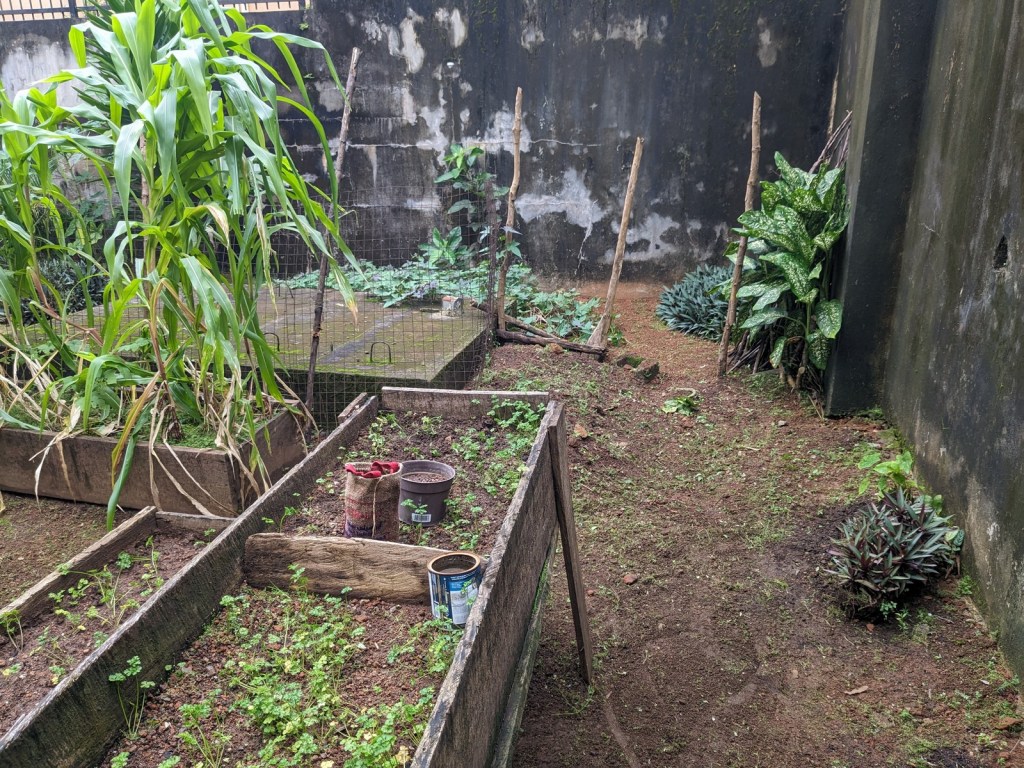
Mostly anyway. It is not exactly a field outside my old mud hut, the most important distinction being that there is a landlord with this one and we can’t really do major landscaping work without permission and that seems like a hassle to ask. Plus I have to be worried about digging up like a sewer or electrical line or something. So we can only do so much. But luckily for us we inherited a garden! That is very exciting. The previous tenants had constructed some garden boxes and had some plants going already when we arrived. As you can see from the top picture the garden was suffering a bit from neglect when we arrived, which is not the fault of the previous tenants, they had left undisclosed country so it was hard for them to do some weeding.

Another big difference between here in undisclosed country and back in Zambia is that here we have a gardener. Besides the garden the house comes with a lawn that has to be mowed. There was not an easy way to do this. I guess not a lot of people have lawns so I couldn’t find like a lawnmower to mow the lawn. So because we had no real way to do it ourselves we hired a gardener. He is almost too good. What we hired him to do was just mow the lawn (which he does an excellent job at) but since he is a gardener he also works on the garden. Above is what the garden looked like after he took a first pass at it, getting rid of a lot of the overgrowth and weeding out the garden beds. I say he is almost too good because I thought I would do some gardening as a hobby around here but I seem to have accidentally subcontracted that out. I only really wanted the guy to mow the lawn but he is really enthusiastic so who am I to stop him?

The crops the previous tenants had going were maize, kale, peppers, and parsley. Some of these were fairing better than others. The maize has grown tall but I think besides being too close together the climate just isn’t as suited to it. Maize needs some time to dry out and undisclosed country is simply not affording it that luxury. So a lot of the stalks have fallen over in the damp soil and weren’t really growing any fruit anyways. Oh well. The kale is growing well though, we have harvested some of that and used it in various dishes. It is also very popular with the snails, unfortunately. We also got a small harvest of peppers which was very neat:

As for the parsley, unfortunately tragedy struck. You can see better in the second picture, but the parsley was growing in an elevated garden bed. When we arrived it was already a bit rickety, being held up by a cinder block shoved underneath it, and I had meant to take it down and move it over. We had already transplanted some parsley (to mixed success) with that in mind. But then a heavy rain came in and we were down a garden bed:

The poor parsley! The other thing about having a gardener is that I feel like the garden can’t be too bad when he shows up. I hear people tidy up before their housekeeper arrives as well. So I had to do something with the garden bed before he arrived the next day. The rain didn’t let up, I didn’t have a hammer yet (it’s still coming), but I had to go out there anyways and do something about the poor fallen over garden bed so I wouldn’t be too embarrassed. Using some of the wood scraps I bodged this together:

It could be worse but it is pretty terrible I admit. It is held up by those boards in the front and the rock on the side. The dirt is just shoveled in there. When our gardener came the next day I explained it was the rain that took the raised garden bed out, lest he think I was just knocking over his hard work. He seemed suspicious but accepted my explanation. Then the next time I came out, there were two garden beds:

He not only fixed up and leveled out the garden bed I had put together, he had also transplanted some tomato plants into it and taken the rest of the scrap wood and created a whole second garden bed! He is too good man, showing me up, I am embarrassed. Seriously he is fantastic. But that is where we are at for the beginning of our gardening. We have hired a professional, gained a garden bed, harvested some of the previous tenants’ crops, and now just need to figure out how to get some seeds. That has not been as easy as I thought it would. But we’ll figure out a way. Can’t wait to see how it looks in a few months!

National Cathedral

As the last major sight on our DC Staycation tour, my super amazing wife and I visited the National Cathedral. We had been wanting to go for a while, but we hadn’t figured out the bus system until recently, so it was vaguely annoying to get to from where we lived. But since our time in the good ole’ U.S. of A. was running short we finally made the trip.

It was pretty nice? I dunno man I’m not much of a cathedral guy. They don’t do it for me. I like certain churches, but overall Christian religious structures just don’t have the pizzazz of like the one Buddhist temple I’ve seen in person (lots of gold and cushions and statues, good stuff). But one of the appeals of the National Cathedral after all of our recent Staycation touring is that it provided a convenient endcap to some of the stuff we had seen. One example is that the Cathedral, like many of the places we visited, had very nice floors. But a more concrete example is just the previous day we had seen Woodrow Wilson’s old house, and the National Cathedral houses a dead Woodrow Wilson:

Dead Woodrow Wilson

Speaking of racists, one intriguing display the Cathedral had going was about the former location of a stained glass window dedicated to Robert E. Lee and “Stonewall” Jackson. They took those windows down because, you know, hella racism, and they are in the process of replacing them with much better windows. It is always nice to see an institution being so thoughtful about racism, even if it is a century late or whatever. On a much different tone, also nearby is a Flying Buttress dedicated to the memory of Huldah Graeske Morris and George William Morris. I have previously told close friends and acquaintances that when (or if) I die I want a commemorative shoe buckle made in the spirit of George Washington, but upon seeing a commemorative flying buttress I immediately told my super amazing wife I want one of those too. A flying buttress! Who would have thought?

But back to tying this into our previous staycation adventures. Back in the Anderson House, which still has a number of centuries-old tapestries, there used to be even more tapestries. They were hanging in the ballroom, which is now these days decorated with some Japanese screens. After they died the Andersons donated those tapestries to the National Cathedral, so it was nice on this visit to round out seeing some of the Anderson’s old stuff we didn’t get to see when we visited their house:

The Cathedral was actually a fairly alright place for textile art. Besides the tapestries, the children’s chapel had all sorts of embroidery of like cute animals and other stuff that would appeal to kids (presumably, I don’t know what the kids like these days, maybe internet dancing? That could make a good tapestry). One thing they seemed really proud of was that in St. John’s Chapel they had all these kneepads decorated in needlepoints all about “noted Americans.” I picked a few of my favorites below, including John Paul Jones, who I assume is the namesake of the chapel, along with ole’ Bobby Fulton and one of my favorite authors Nathaniel Bowditch (who’s name is pronounced bao-ditch, not BOW-ditch, which should save you some embarrassment if you are ever trying unsuccessfully to impress the Commandant of the Naval Academy when you highlight the books he has on his bookshelf because you are so passionate about navigation):

Anyways that was the ground floor. You can also descend into the basement of the Cathedral, which has more chapels and the like and a sadly closed (while we were visiting) gift shop. But the two best parts of the chapel were first the towers and then the grounds. We only stumbled upon the fact that you could ascend up into the towers of the Cathedral because we noticed the elevators, but if you head on up you can get some really nice views of northwest DC from like the opposite perspective you (I) usually do because I have been up to the top of the Washington Monument twice and been up in the National Cathedral only the one time. It was very pretty when we were visiting in the summer with everything green! Make sure you go up if you visit the Cathedral:

After thoroughly exploring the interior of the Cathedral we head out to walk the grounds. It was pretty hot so we only did so much walking, but the best part of that walking was going through the Bishop’s Garden. It is “inspired by medieval walled gardens” with “terraced landscape features sculpture nestled amid plants of historical interest, native plants, and plants of the Bible and Christian legends.” So that’s neat. The fountains were tranquil and the flowers were pretty and the pathways picturesque and you got some nice views of the Cathedral (including the cranes doing repair work on the exterior which was very neat too) and it is a lovely little place to stroll. Make sure you don’t miss it while you are gawking at various space-related things.

Wilson House

Reading this week:

  • His Very Best: Jimmy Carter, a Life by Jonathan Alter
  • Remote Corners by Harry Mitchell

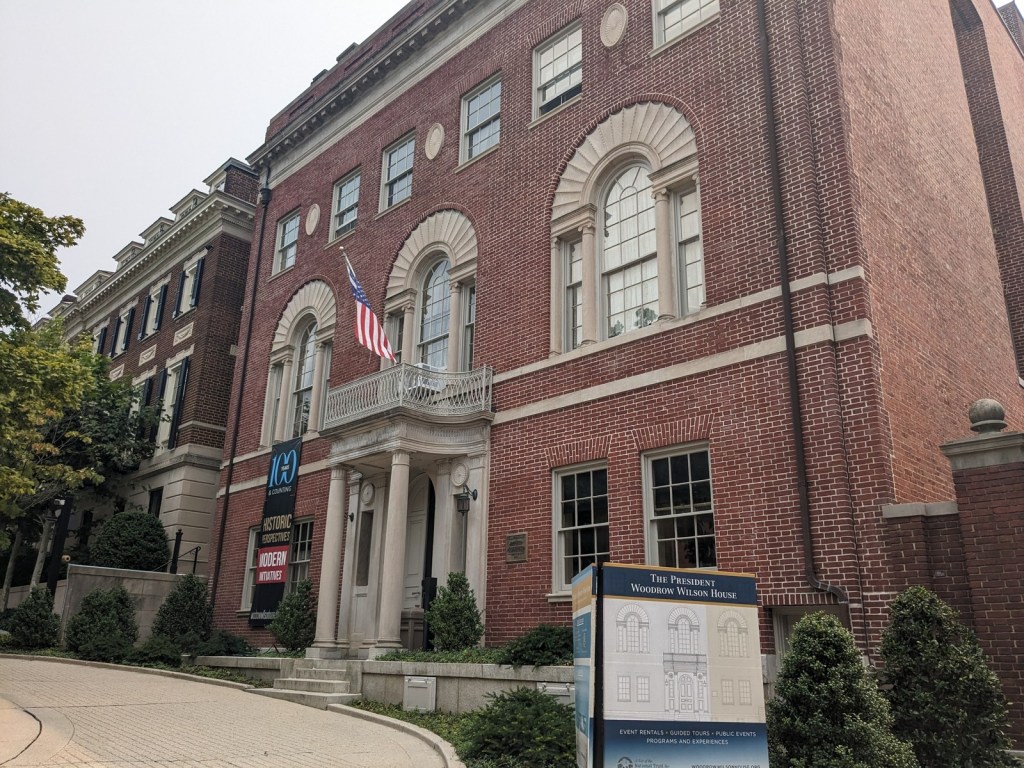
Our continuing staycation non-journey brought us to the Woodrow Wilson House in DC. This is the house that Woodrow Wilson lived in post-presidency. We went because my super amazing wife is a fan of presidential sites and hey this one was there!

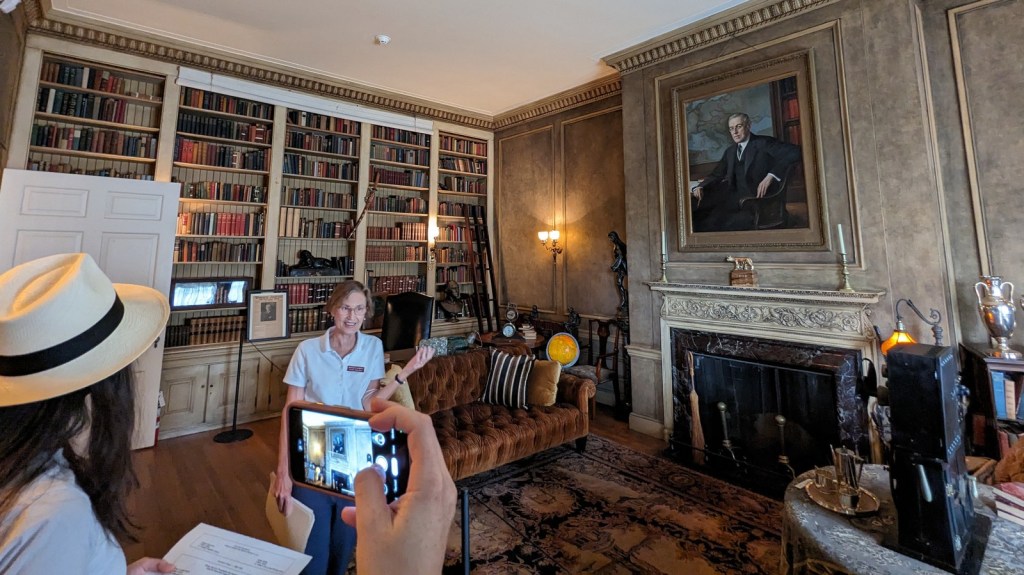
The tour we went on was the “Three Generations of Wilson Women” tour because in addition to presidents my super amazing wife likes women. Plus is was the only tour that worked with our schedule that day but we would have been delighted to go anyways. We were joined by a woman who was on her second Wilson House tour for the day along with three foreign women who I guess were hitting the highlights of America. I don’t know if the other tours the house offers focused much on Wilson’s politics but this one mostly skipped it in favor of telling the story of Wilson’s life via the women that surrounded him. And he seemed to have a pretty good chunk of women surrounding him. He had three daughters with his first wife and the tour also takes time to focus on Mary Scott who worked for the Wilsons along with her husband Isaac.

The place is called the Woodrow Wilson House but it was really more the Edith Wilson house. Like I said Wilson moved here post-presidency in 1921 and then died in 1924. He had married Edith while president in 1915. She was 16 years his junior and a whopping 14 years older than his eldest daughter and outlived him by 37 years, dying in 1961. She very much liked being Mrs. Wilson (according to the tour) and spent the next few decades after Wilson’s death sprucing up the house and preserving her version of his legacy.

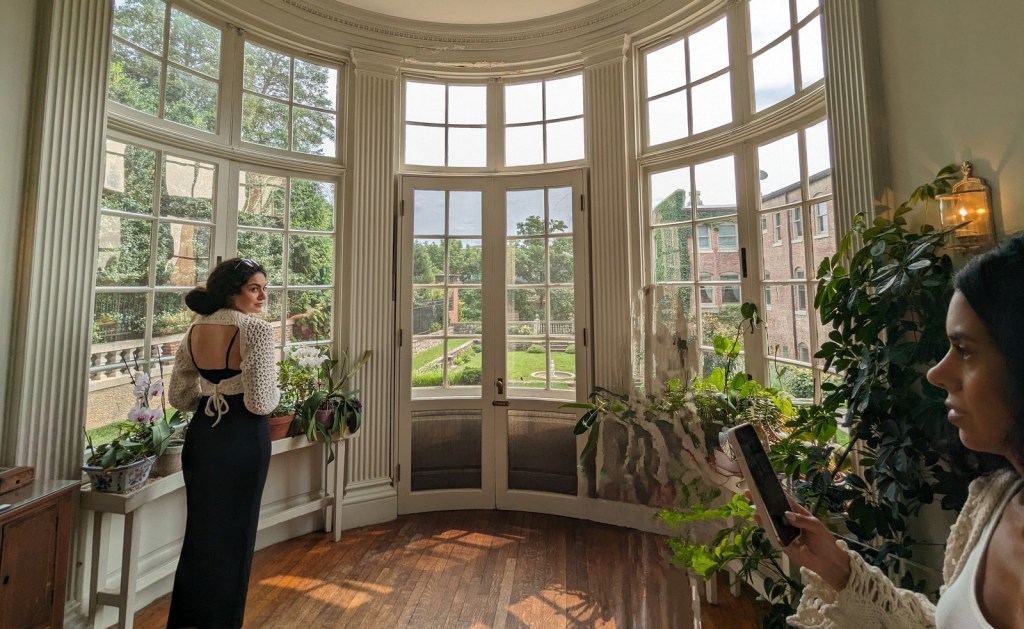
As house tours go, I guess it is a pretty nice house? I haven’t seen the inside of many of these sorta embassy row mansions so hard for me to compare. The staycation, besides featuring very nice floors also featured a good number of tapestries, including at least one large one in this house. The most popular spot was the lovely little sunroom at the top of the stairs that looked out over the garden, and as you can see it was a great spot for pictures:

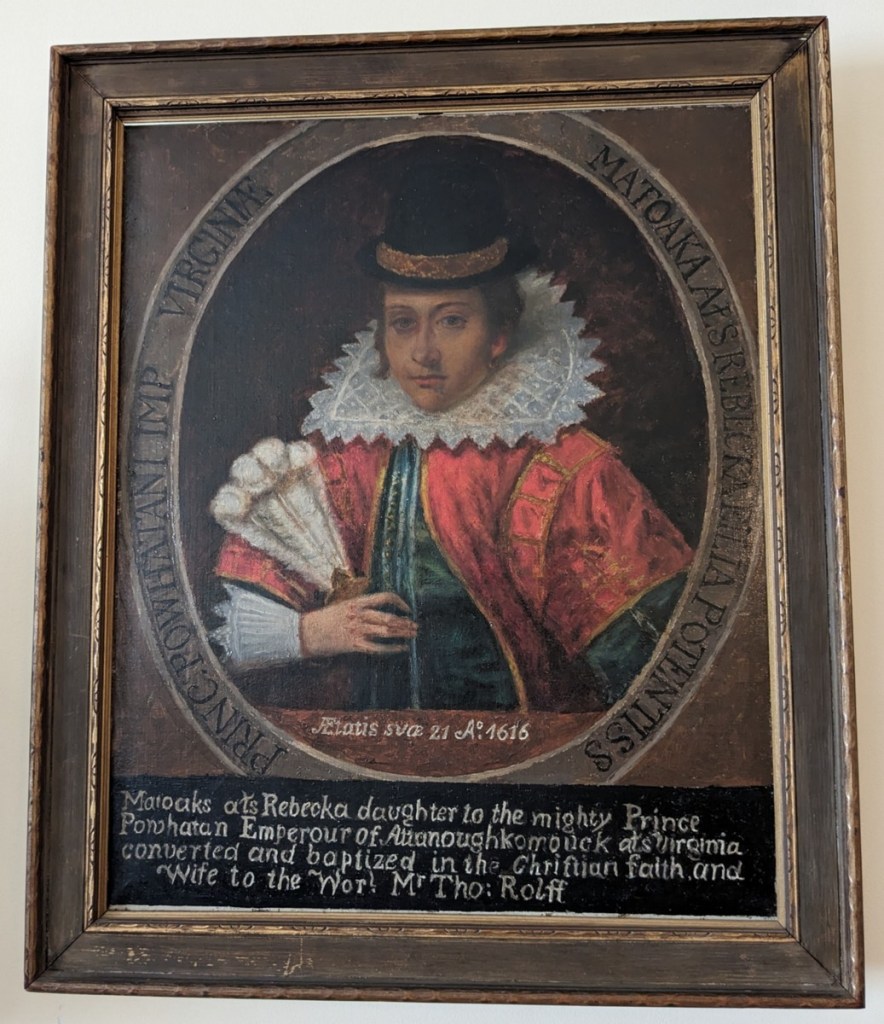
The final detail I’ll note is that up in Edith’s bedroom I saw a statue and then a painting of Pocahontas which our guide hadn’t mentioned but from having recently gone to the Museum of the American Indian I had learned that a good chunk of well-to-do Virginians liked to claim descent from Pocahontas (nee Amonute). This caused problems when Virginia was starting to implement some hella racist laws saying anyone with non-white descent was going to be non-white, which would have included these well-to-do Virginians until the lawmakers included a carveout. Oh racism. Anyways I spotted these Pocahontas things and asked and one of those well-to-do Virginians claiming descent from Pocahontas included Edith Wilson, so there is some cross-museum synergy for you.

And that was pretty much the Wilson House. The staff there are passionate and are working hard to highlight the diverse aspects of the house and Wilson’s legacy though as long as we have a culture that glorifies “Great Men” you are only going to be able to do so much. Nice paintings though!