
Reading this week:
- To Lake Tanganyika in a Bath Chair by Annie B. Hore
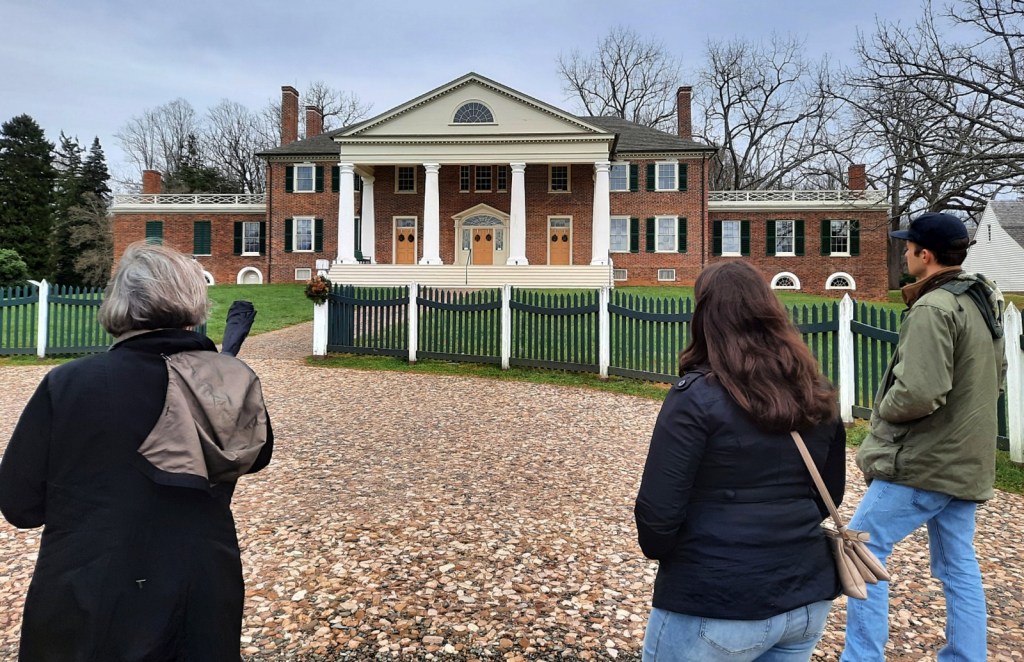
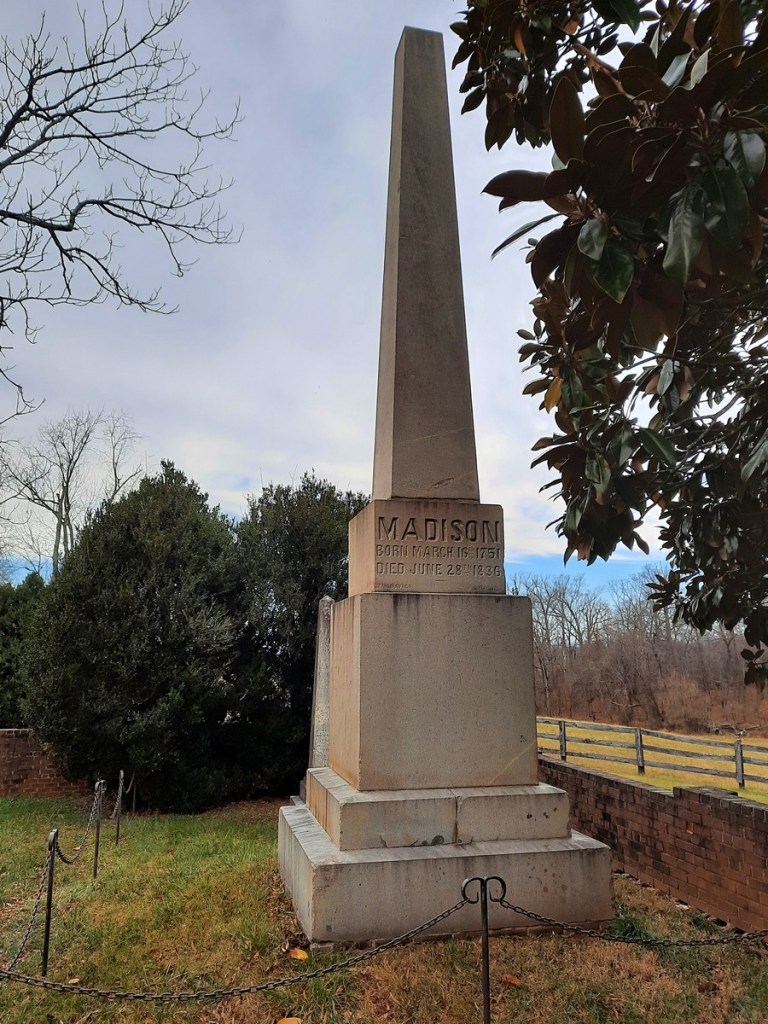
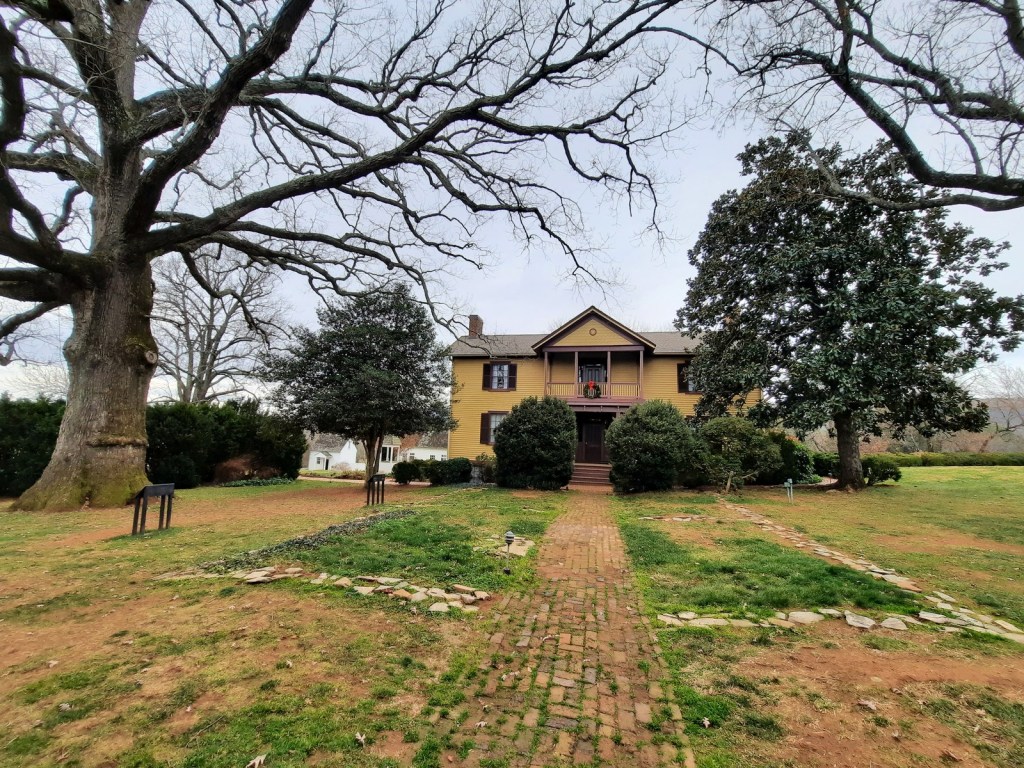
After an extremely good weekend full of poffles and yarn and books and excellent times and of course presidential sites, we rounded out our journey with a trip to James Madison’s Montpelier.
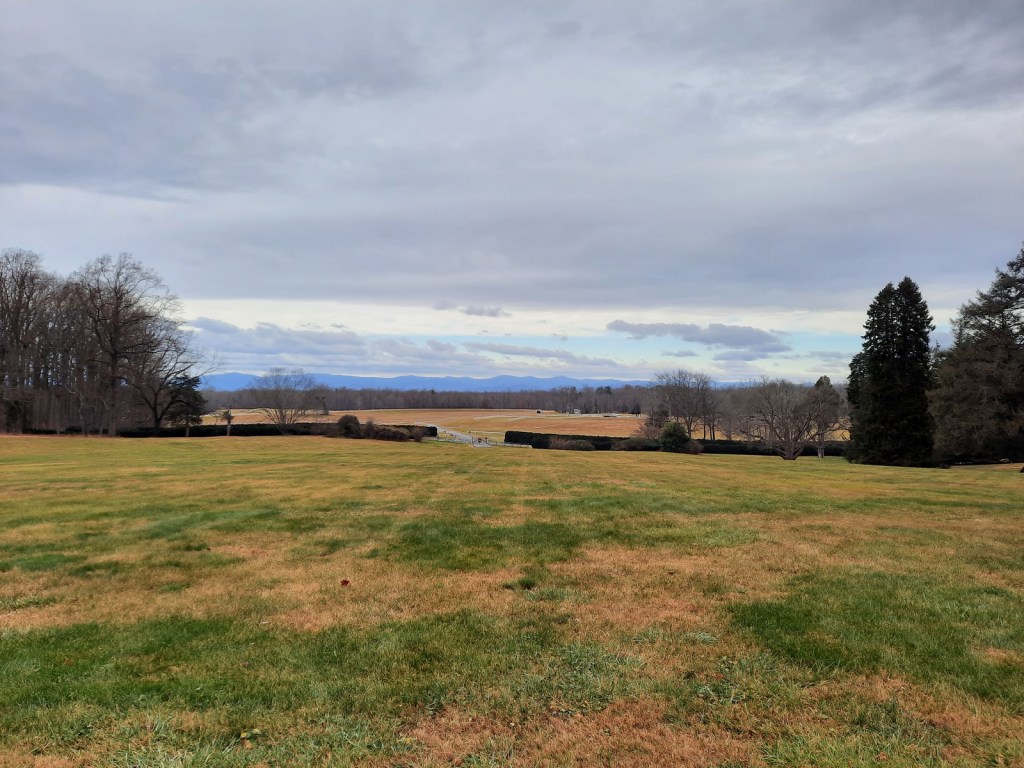
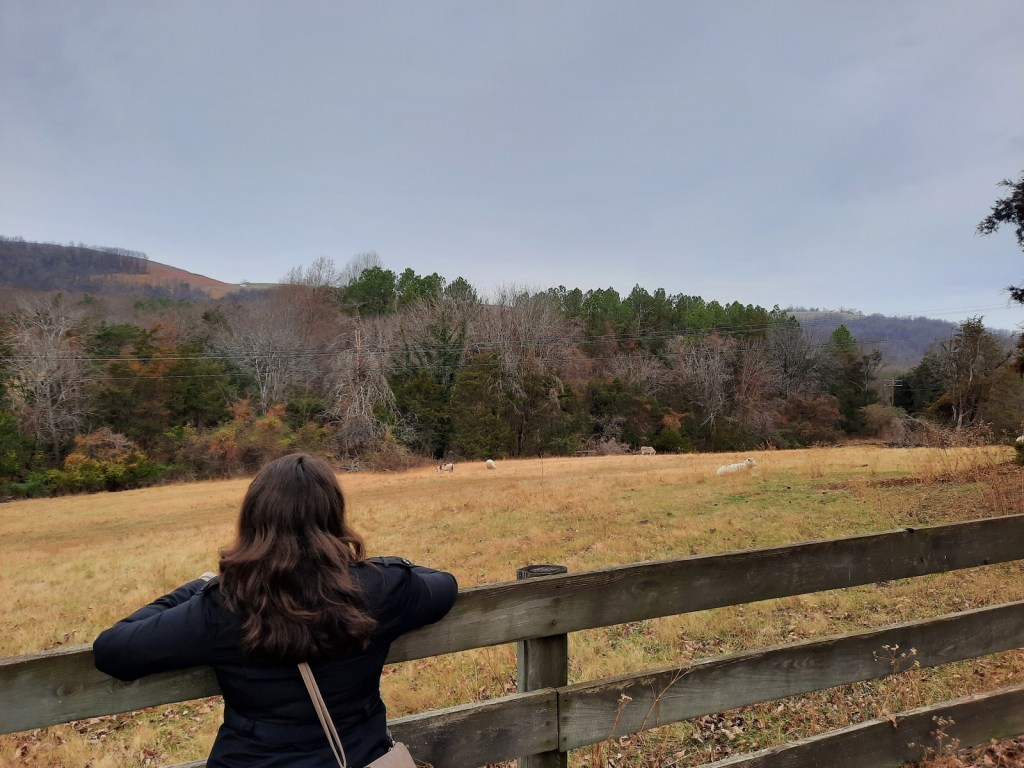
As much of the weekend had been it was cloudy when we arrived and some rain was just thinking of clearing up, but the entrance to Montpelier is meant to impress and does. As you enter the gate you drive through some shallow rolling hills across massive fields of a massive estate. The weather meant it was quiet and we saw deer grazing across the road from a full-sized horse track as we made our way to the visitor’s center. Popping out of the DeLorean in the nearly empty car park, I quipped “busy day” to the only other woman around, who replied with the remarkable comment “you know I only ever met John DeLorean once – and helped his wife over a fence.”
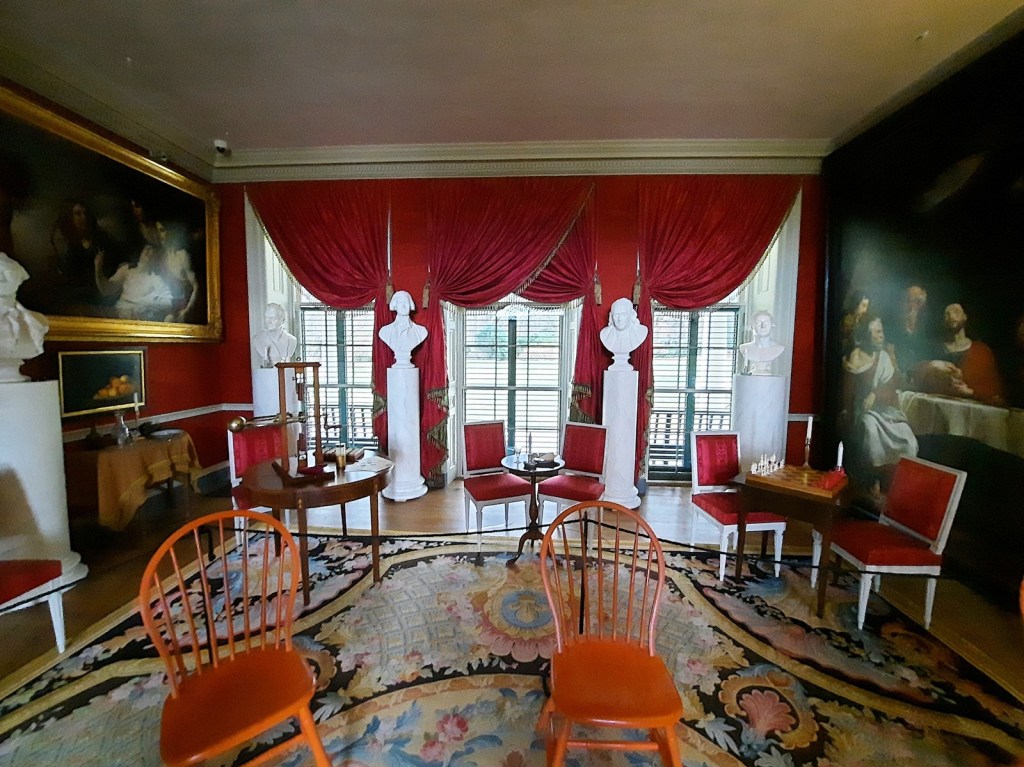
Our guided tour of the house and grounds was once again fantastic. We had one other person join us, and our tour was given by a member of the estate’s board and part of the conservation team, so she was extremely knowledgeable. The estate had been in the hands of several generations of Madisons and she walked us through that history and how it was intertwined with the Virginia tobacco trade, first near the coast and then migrating to the Piedmont. Much like Highland, I think a lot of what was most interesting about Montpelier was the history of the estate itself as an historic site. Again like Highland, it has only been in the past five years or so that they have restored the house to something like Madison would have known and done the archeology to establish the history of all the people who lived there.
Our guide contrasted that to someplace like Mt. Vernon, which has been a historic site catering to visitors since 1853. Since our tour guide was on the board, we got to learn a lot about how they choose which artifacts to put in the building and where they get them, and a lot of what I was thinking about was the historiography. I extracted myself from that line of thinking for long enough, however, to pause in Madison’s study, the room where he did so much research on the nature of freedom and confederations while overlooking his land worked by people he enslaved.
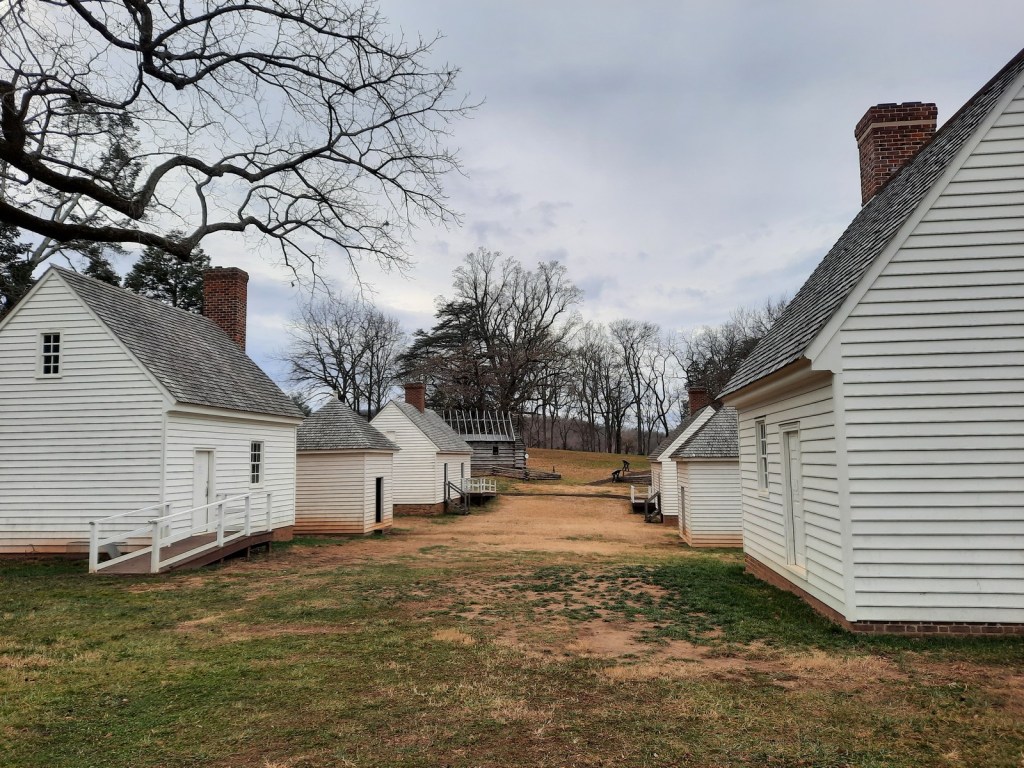
Much like Highland, the story of slavery at Montpelier felt a little tacked on, though with a significantly better budget. They have an award-winning exhibition on slavery at Montpelier, awkwardly tucked into the cellar. The exhibit was brutal and honest and enlightening, but was a thing to do after the tour proper. They have also reconstructed a number of dwellings for enslaved persons and other plantation buildings on the south yard. Here the story of slavery on the plantation continues, and maybe I am an old fogey but I wondered if there was too much attention to the flash instead of substance. But overall it was good and honest.
The most recent owners of the estate were the DuPont family, and a great deal of the modern appearance is due to them. Marion Scott, née DuPont was the last heir to the estate, and loved horses, so the horse track was her doing. She is also responsible for the formal garden on the grounds, which in Madison’s day was a vegetable garden and orchard. The formal garden was nice, but I am much more a sucker for a vegetable garden and orchard. You add a fish pond to the mix and I go absolutely gaga. Much like Highland the estate has extensive, miles-long trails, and apparently a wonderful old-growth forest, but our clothing did not quite match the weather so we didn’t wind up taking advantage of it.
I am sitting here trying to reflect on what I learned about Madison by coming here. I learned a lot about his family history. He was definitely born into privilege and which afforded him the opportunity to go to the University of New Jersey, ie Princeton. Our tour guide compared that, however, to Berkeley in ’69 which is a useful perspective. I still wonder at revolutionaries – many people think they dream big, but how many people dream big enough to start a whole new country? But I think it is easier to dream big when you are already safe and secure. By that measure, a man like Madison, secure for generations nestled in the Virginia foothills and living off the labor of generations enslaved workers, would have been able to dream big indeed.



 Pat in the World
You must be logged in to post a comment.